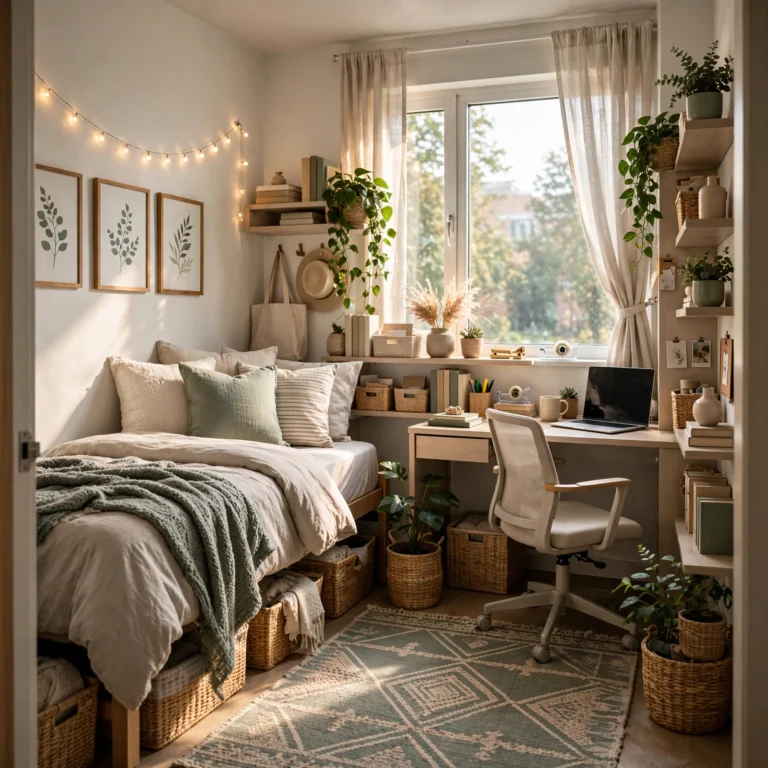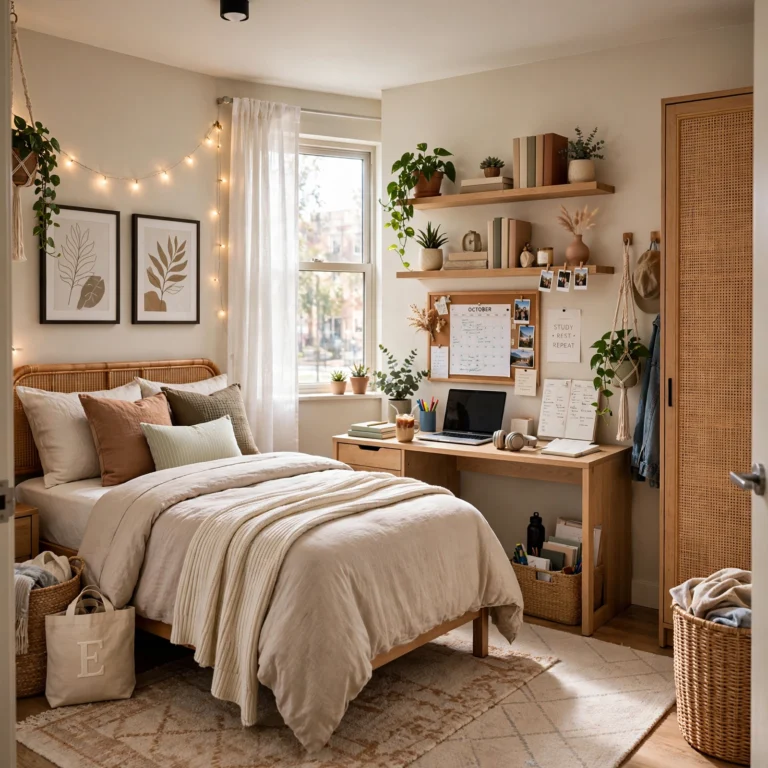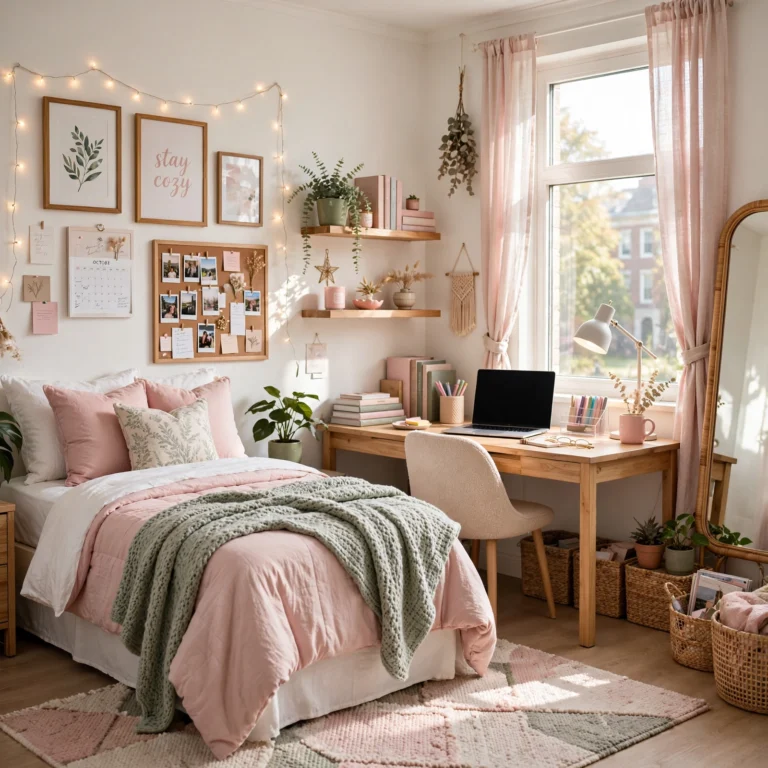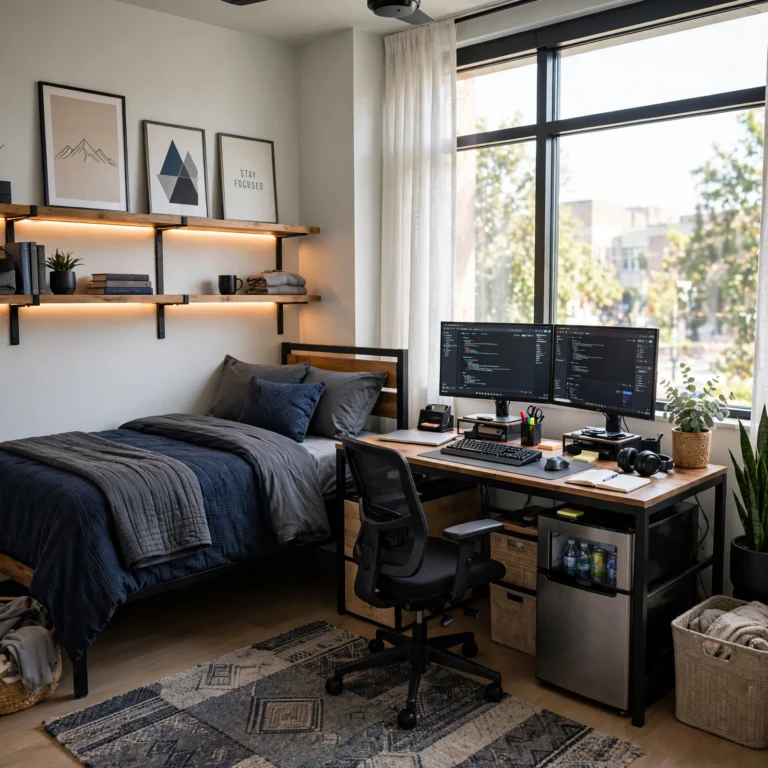
16 Gorgeous Dorm Room Decor Ideas to Personalize Your Space With Cozy, Stylish, and Creative Touches
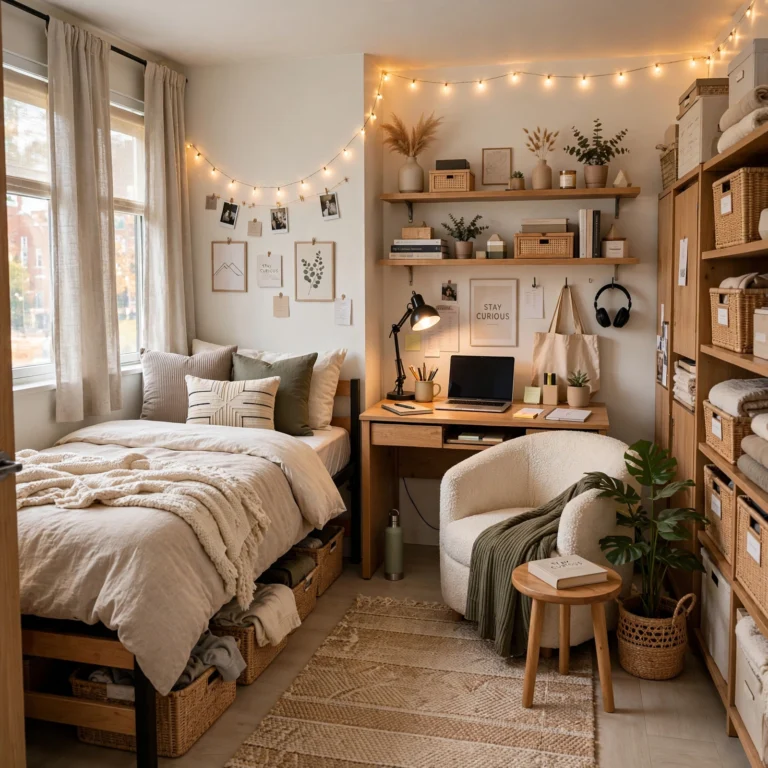
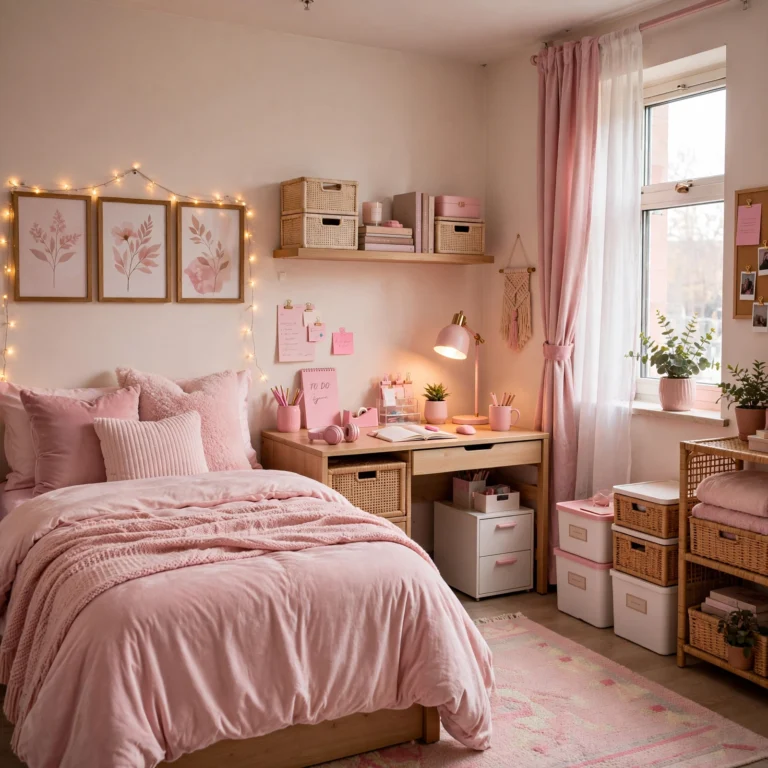
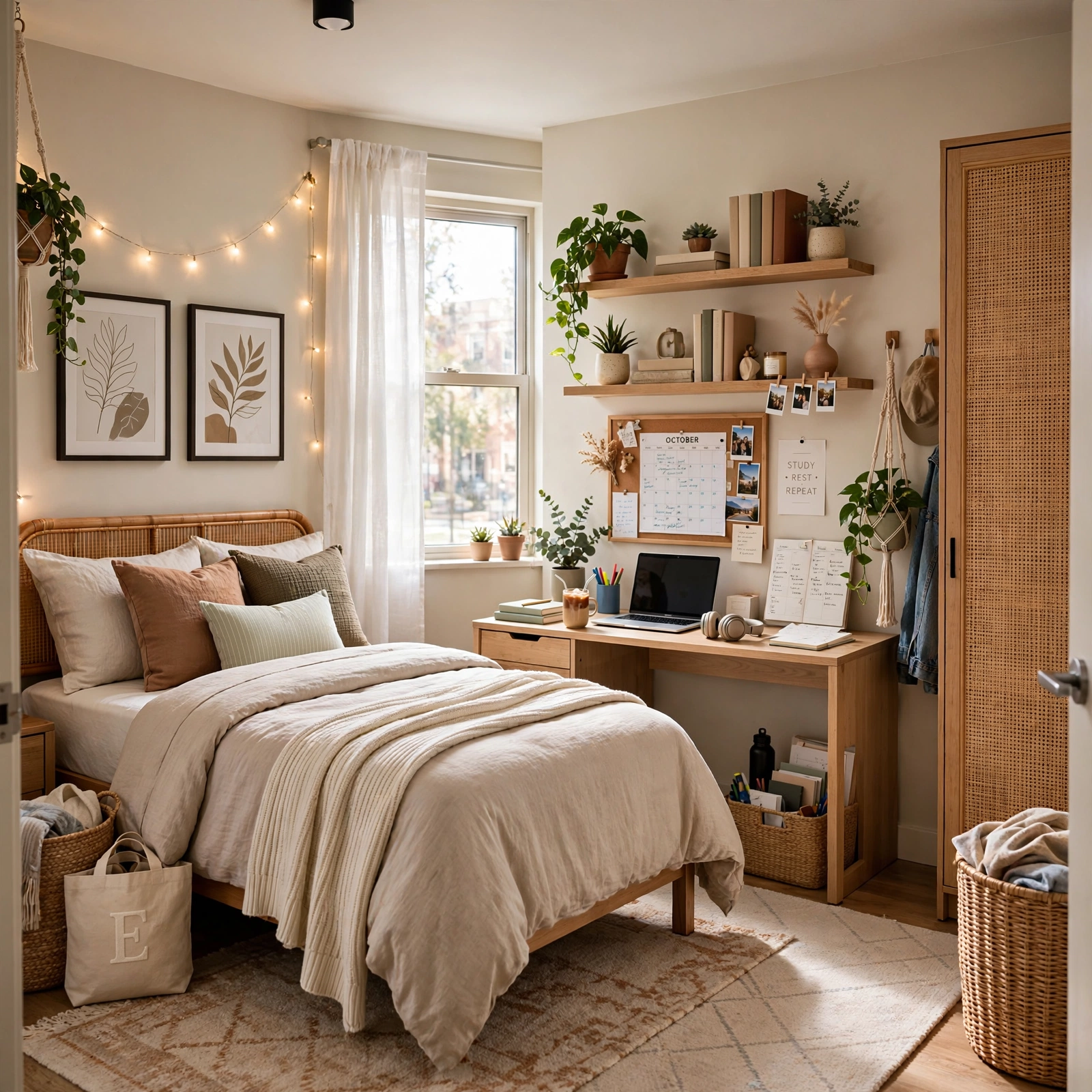
Dorm room decor ideas often get reduced to string lights and a single poster, but a genuinely personalized room usually layers a few different categories together: textiles, wall art, lighting, and small personal touches. This guide walks through sixteen ideas that work within typical university housing restrictions, since most schools prohibit paint, nails, and other permanent changes. Each idea is chosen for how much visual impact it delivers relative to its cost and how easily it comes down at the end of the year.
Trend & Background
University housing policies have grown stricter over the past decade around wall damage, open flames, and permanent modifications, which has pushed dorm decor trends toward removable, reusable solutions. Command strip hardware, tension rods, and peel-and-stick materials have replaced nails, tape, and paint as the default tools for personalizing a shared space. At the same time, social media has made dorm room tours a genre of their own, which has raised the bar for how coordinated and intentional a room’s color palette and layout tend to look compared to the mismatched dorm rooms of a decade ago.
Key Takeaways
- Dorm room decor ideas work best when they’re removable, since most housing contracts restrict paint, drilling, and permanent wall changes.
- Textiles tapestries, rugs, and pillows cover the most visual space for the lowest cost and risk.
- Layering two or three decor categories, like lighting plus wall art plus textiles, creates a more finished look than relying on one alone.
- Small personal touches, such as photos or a moodboard, do more to make a shared room feel like home than large statement pieces.
1. Tapestry Headboard Wall
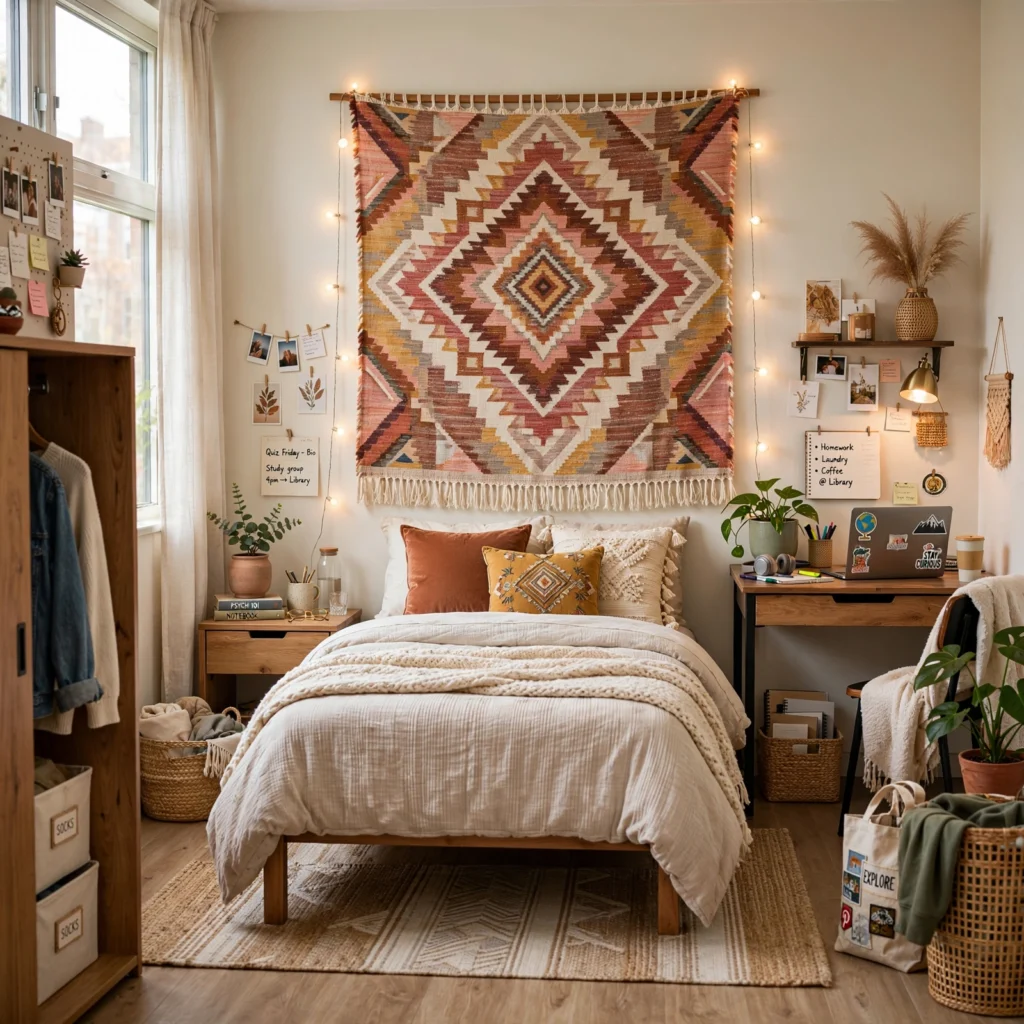
Hanging a large tapestry behind the bed creates the visual effect of a headboard in a room where the bed frame itself is usually plain metal or wood provided by the school. Mount it with a tension rod or command hooks along the top edge so it drapes naturally without pulling at the corners. Choose a tapestry sized to extend slightly beyond the width of the mattress for the most finished, intentional look.
| Bed Size | Recommended Tapestry Width | Mounting Method |
| Twin XL | 60–70 in | Tension rod or hooks |
| Full | 75–85 in | Tension rod or hooks |
| Queen (rare in dorms) | 85–95 in | Tension rod or hooks |
2. Peel and Stick Wallpaper Accent
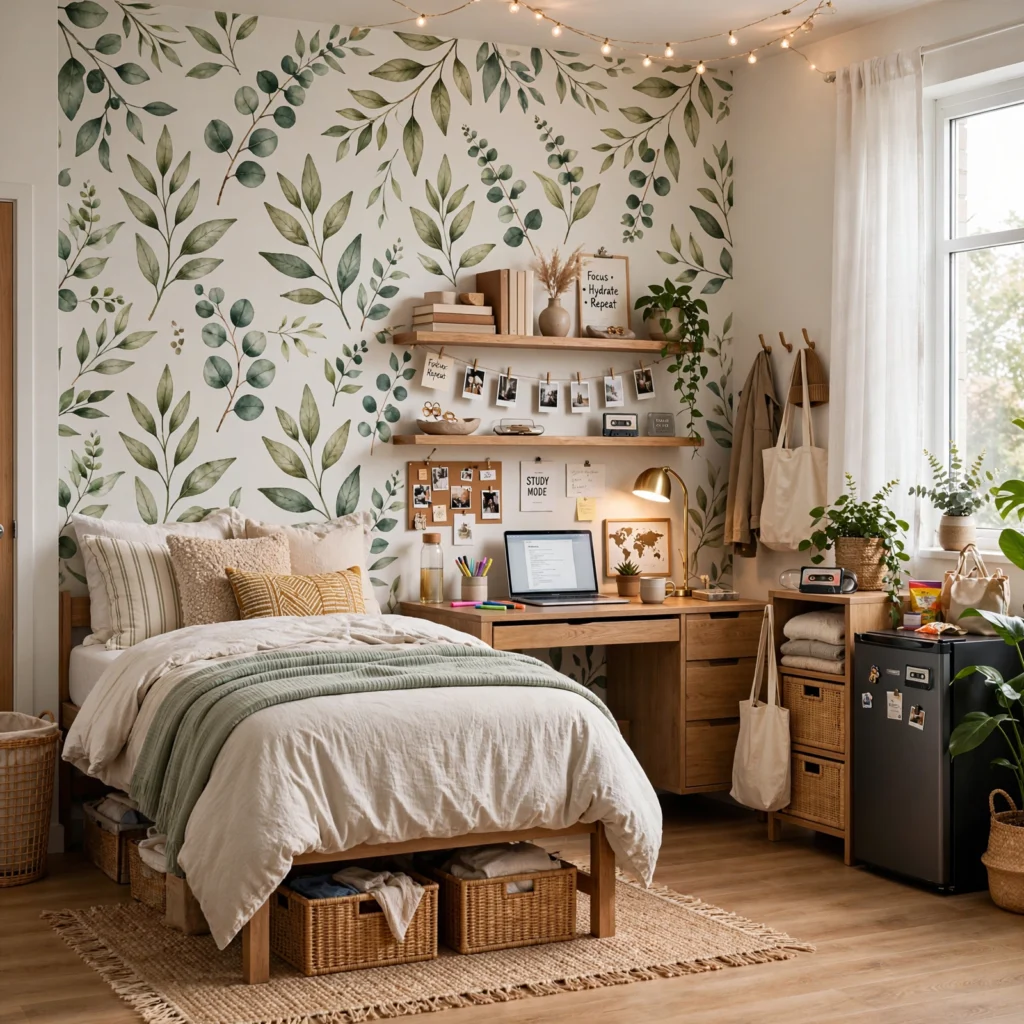
A peel-and-stick wallpaper panel applied to a single accent wall or the inside of a closet door adds pattern and color without violating most no-paint policies, since it removes cleanly at the end of the year. Choose a smaller-scale pattern for a shared wall to avoid overwhelming a roommate’s side of the room, and test an inconspicuous corner first to confirm the adhesive won’t damage the paint underneath. This works especially well on the wall behind a desk, where it becomes a backdrop for video calls.
3. Fairy Light Canopy
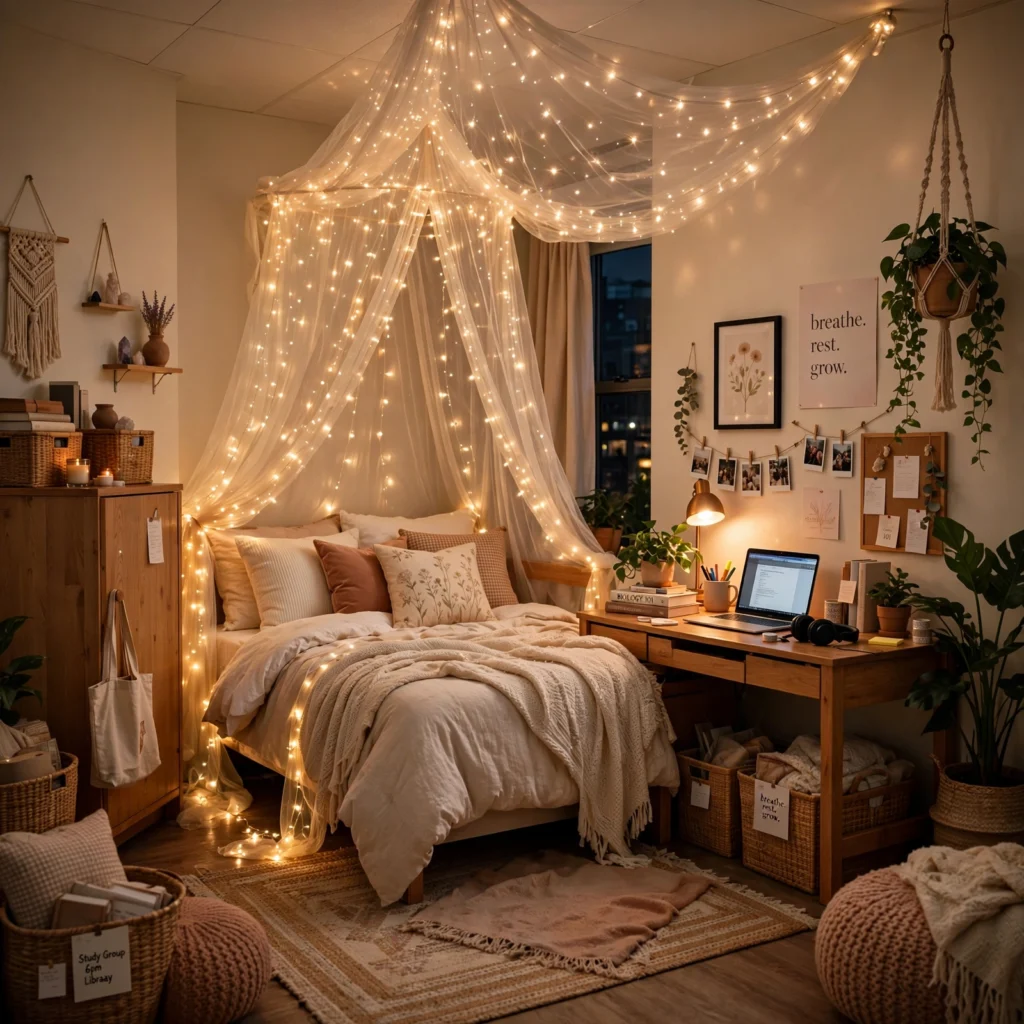
Draping a string of warm white fairy lights across the ceiling above the bed creates a soft canopy effect that reads as more considered than lights simply taped along a wall. Use small adhesive clips rated for the string’s weight, spaced evenly to keep the drape consistent rather than sagging unevenly. Battery-powered or USB-powered strings avoid any need for an extra outlet near the ceiling, which most dorm rooms don’t have anyway.
4. Gallery Wall Frame Set
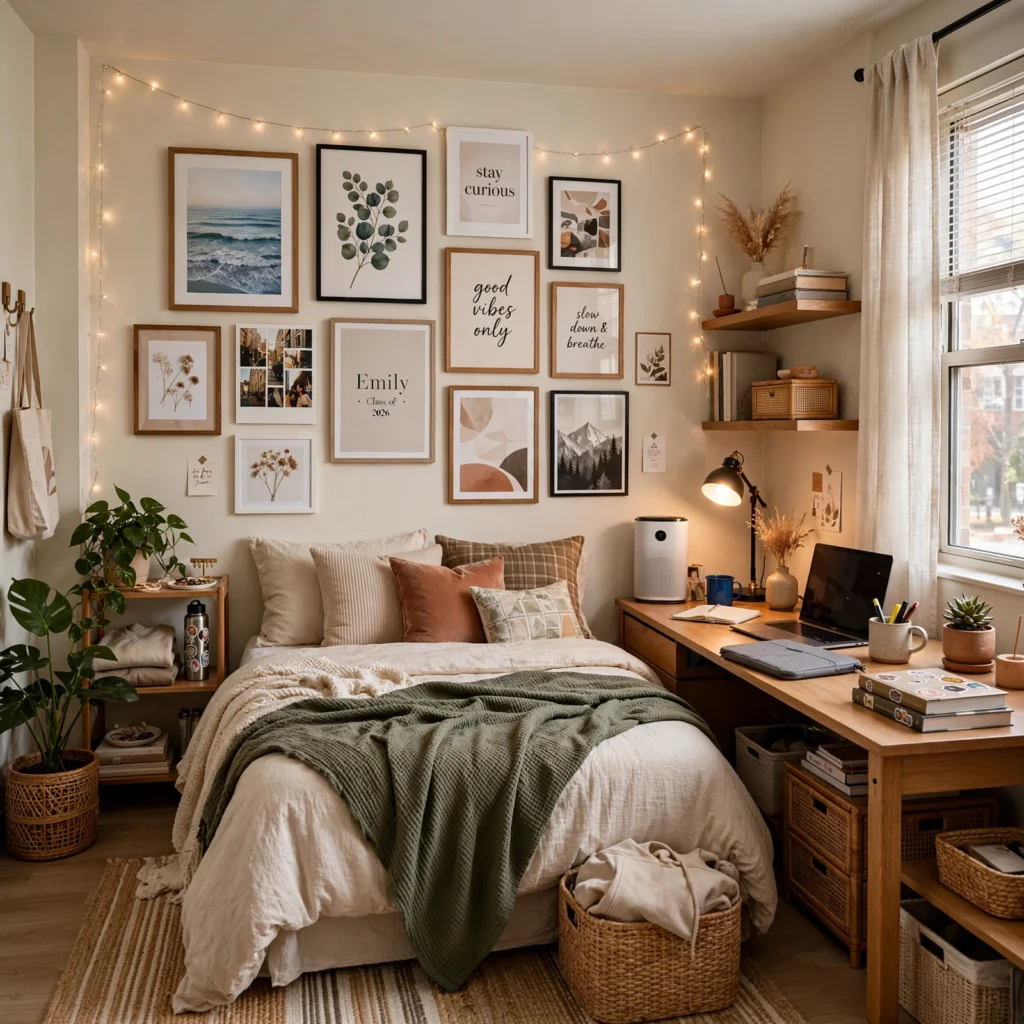
A coordinated set of frames in matching or complementary finishes, hung in a grid or loose cluster above a desk or dresser, gives photo and print displays a more polished look than individually taped posters. Use a paper template taped to the wall first to plan spacing before committing to any command strips, keeping roughly two to three inches between frames for a balanced grid. Mixing frame sizes within a single consistent color keeps the display visually interesting without looking cluttered.
To see more options for aesthetic dorm room ideas CLCK HERE
5. Faux Fur Throw Pillow
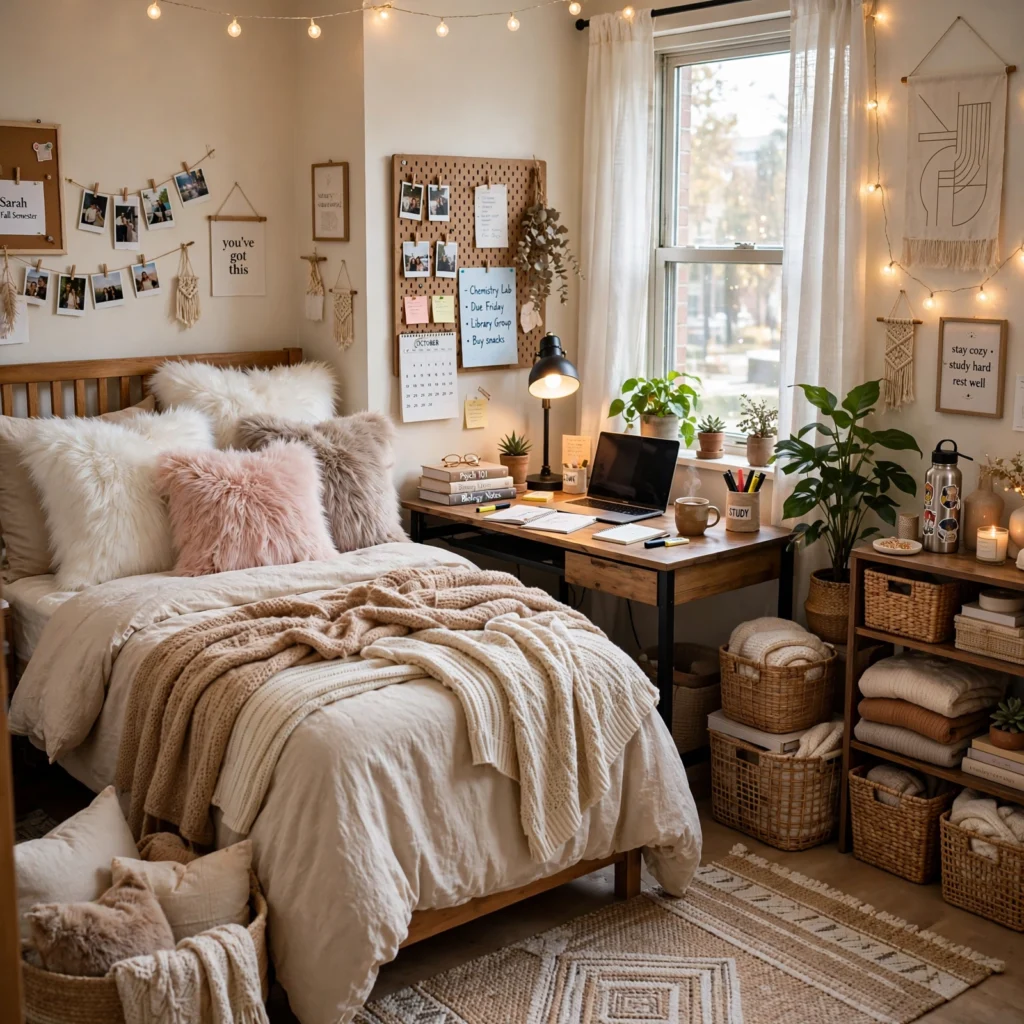
A faux fur or textured throw pillow adds softness and color to an otherwise plain dorm-issued bed or desk chair, and it’s one of the easiest single items to swap out if your color scheme changes partway through the year. Choose a pillow cover with a removable, washable case given how much use a dorm bed gets as a study spot, seating area, and bed all at once. Two or three pillows in varying textures typically look more intentional than a single flat pillow alone.
6. Woven Area Rug
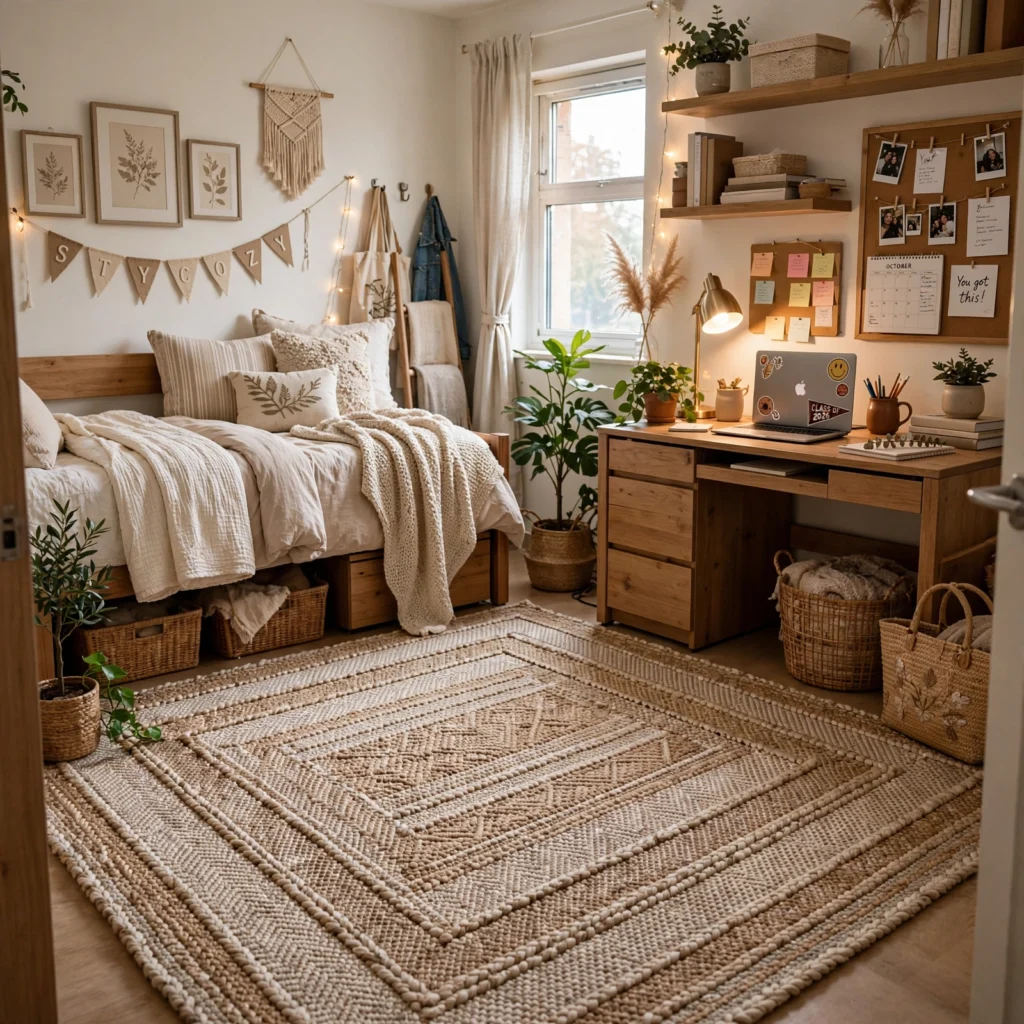
A woven area rug placed at the foot of the bed or centered in the room’s open floor space softens the typically hard tile or industrial carpet most dorms come with by default. Choose a rug sized to leave a small border of visible floor around the edges rather than one that runs wall-to-wall, which tends to look more deliberate. A low-pile or flatweave rug is easier to vacuum and dries faster than a thick shag style, which matters in a room without great ventilation.
| Room Size | Recommended Rug Size | Placement |
| Standard single | 3×5 ft | Foot of bed |
| Standard double | 4×6 ft | Center of open floor |
| Larger suite-style | 5×7 ft | Under seating area |
7. Command Strip Floating Shelves
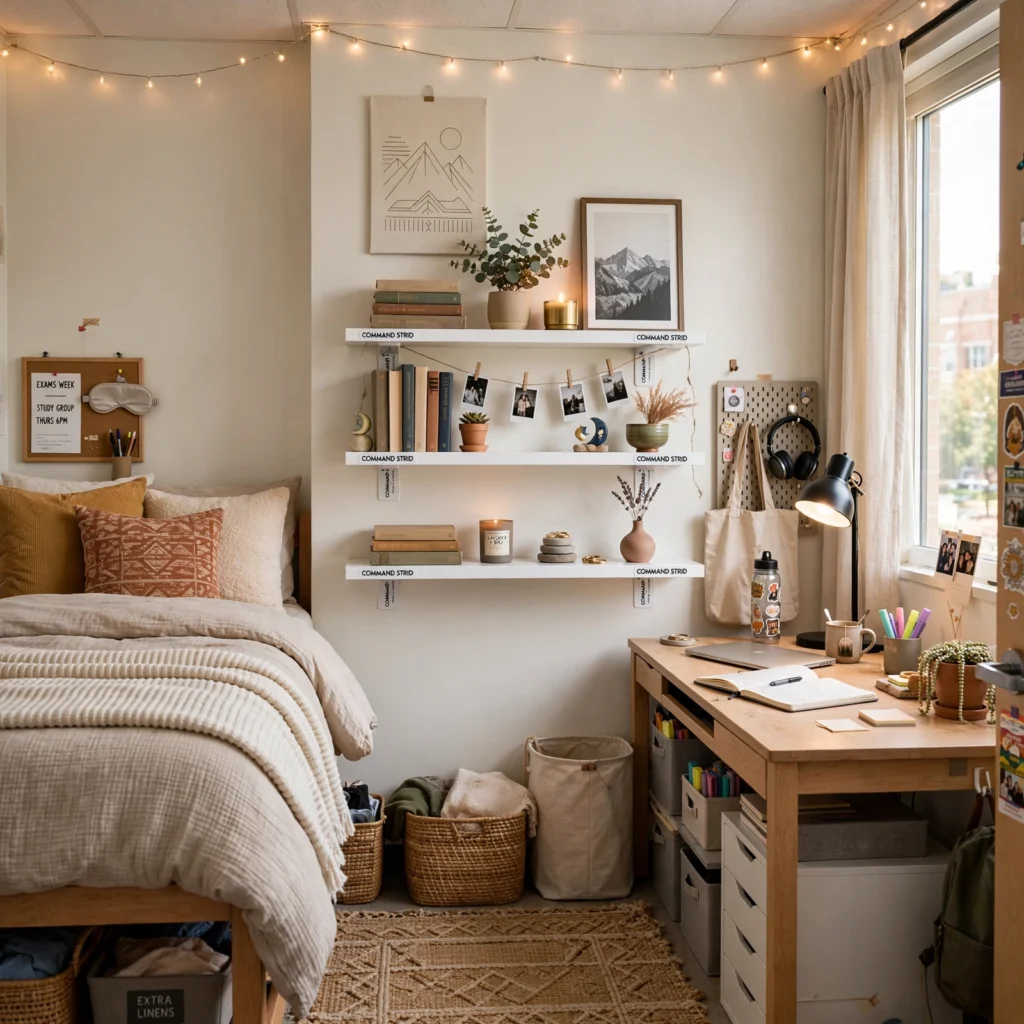
Small floating shelves mounted with weight-rated command strips give the room extra display and storage space without requiring any drilling into cinderblock or drywall. Use them to display books, small plants, or framed photos, and keep the total weight well under the strip’s rated capacity to avoid the shelf loosening over the semester. Grouping two or three shelves at slightly different heights creates a more dynamic display than a single long shelf.
8. Polaroid String Display
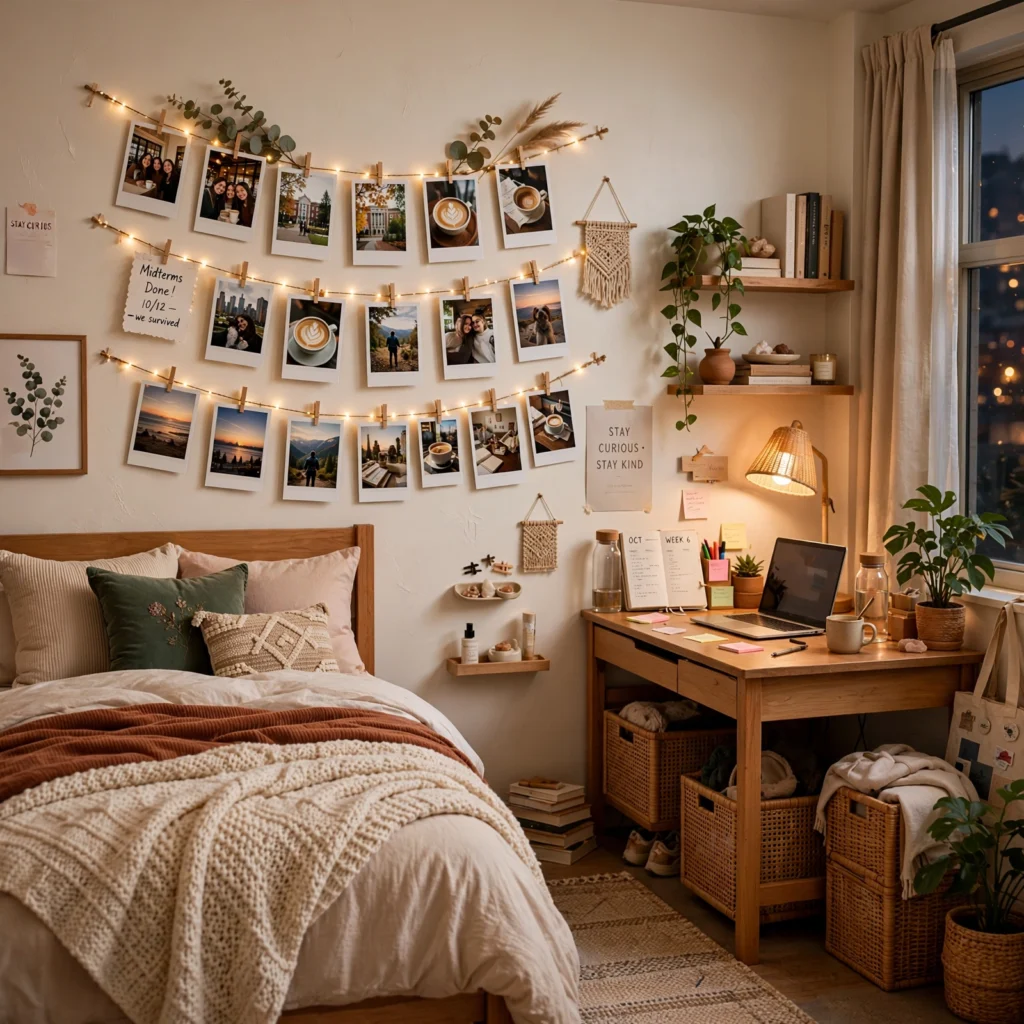
A string of polaroid or instant-print photos clipped along a length of twine or ribbon adds a personal, collected look to a wall for very little cost, and it’s easy to add to throughout the year as new photos come in. Hang the string with two small command hooks at either end, and use mini clothespins or binder clips to attach each photo without any adhesive on the images themselves. This works well above a desk or along the side of a closet where a full gallery wall wouldn’t fit.
9. Neon Sign Accent
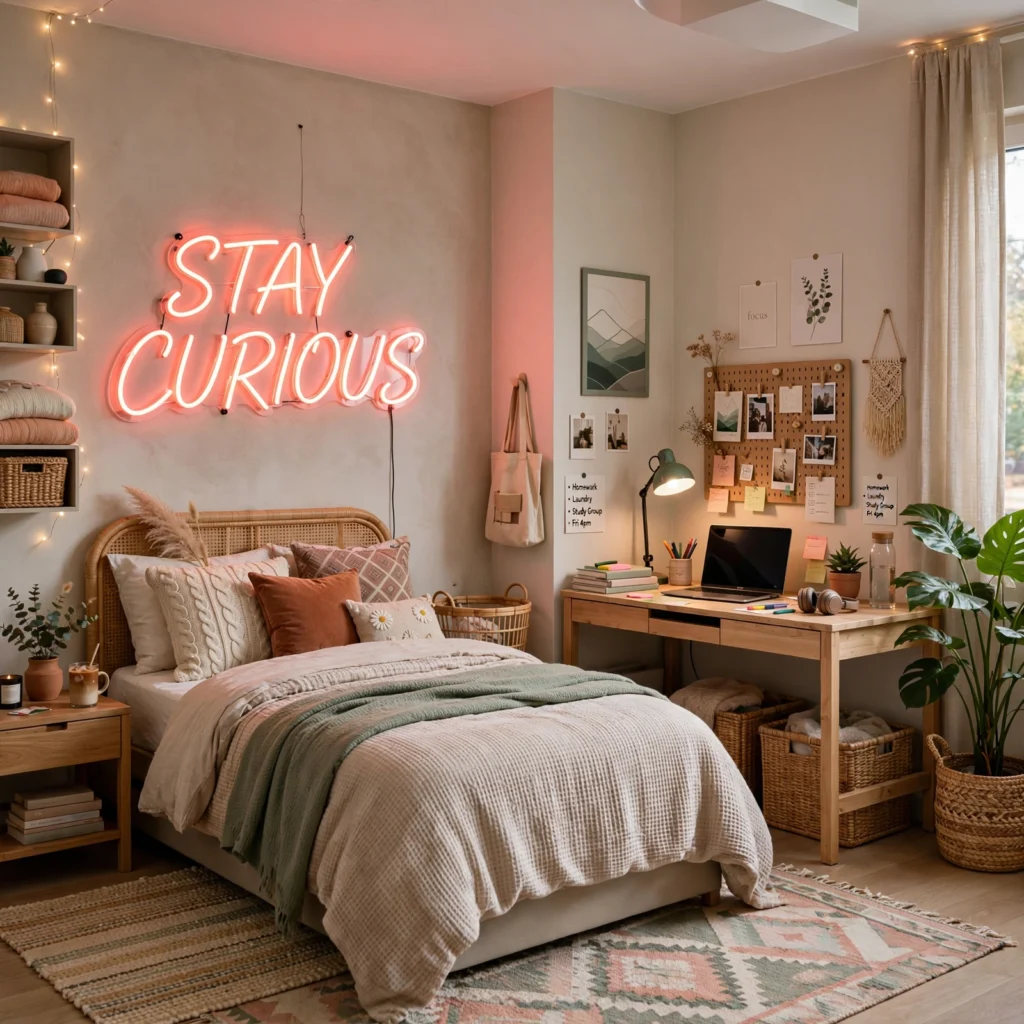
A small battery or USB-powered LED neon sign adds a focal point and soft, colorful ambient light without the wiring or heat concerns of a traditional glass neon sign. Choose a short word, phrase, or simple shape rather than a large, busy design, since a smaller sign is easier to mount and less likely to dominate a small room. Position it away from bedding and curtains, and confirm your school’s policy on LED signage before purchasing, since some campuses restrict any always-on plugged-in decor.
10. Velvet Bed Runner
A velvet or textured bed runner laid across the foot of a plain dorm comforter adds color and a slightly more elevated look without requiring a full bedding replacement. This is a lower-cost way to update a bed’s look partway through the year or to coordinate with a roommate’s side of the room without buying an entirely new comforter set. Choose a machine-washable velvet blend given how often dorm bedding needs cleaning.
11. Macrame Wall Hanging
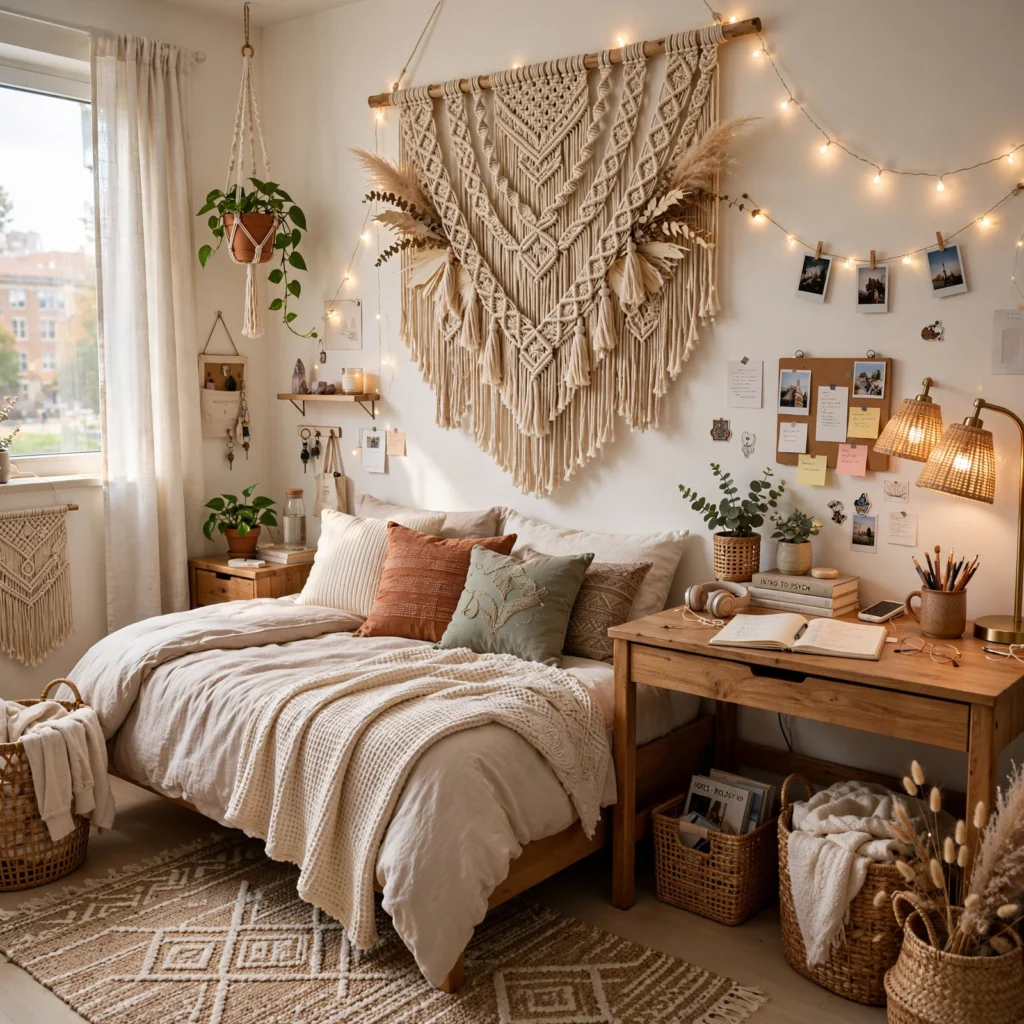
A macrame wall hanging adds texture and a handmade look to a bare wall, and its neutral, natural color palette pairs easily with almost any other decor scheme in the room. Hang it with a single command hook rated for its weight, typically light enough that most small to medium hangings only need one point of contact. This works particularly well above a desk or reading nook where a busier framed print might feel too visually heavy.
12. Desk Plant Corner
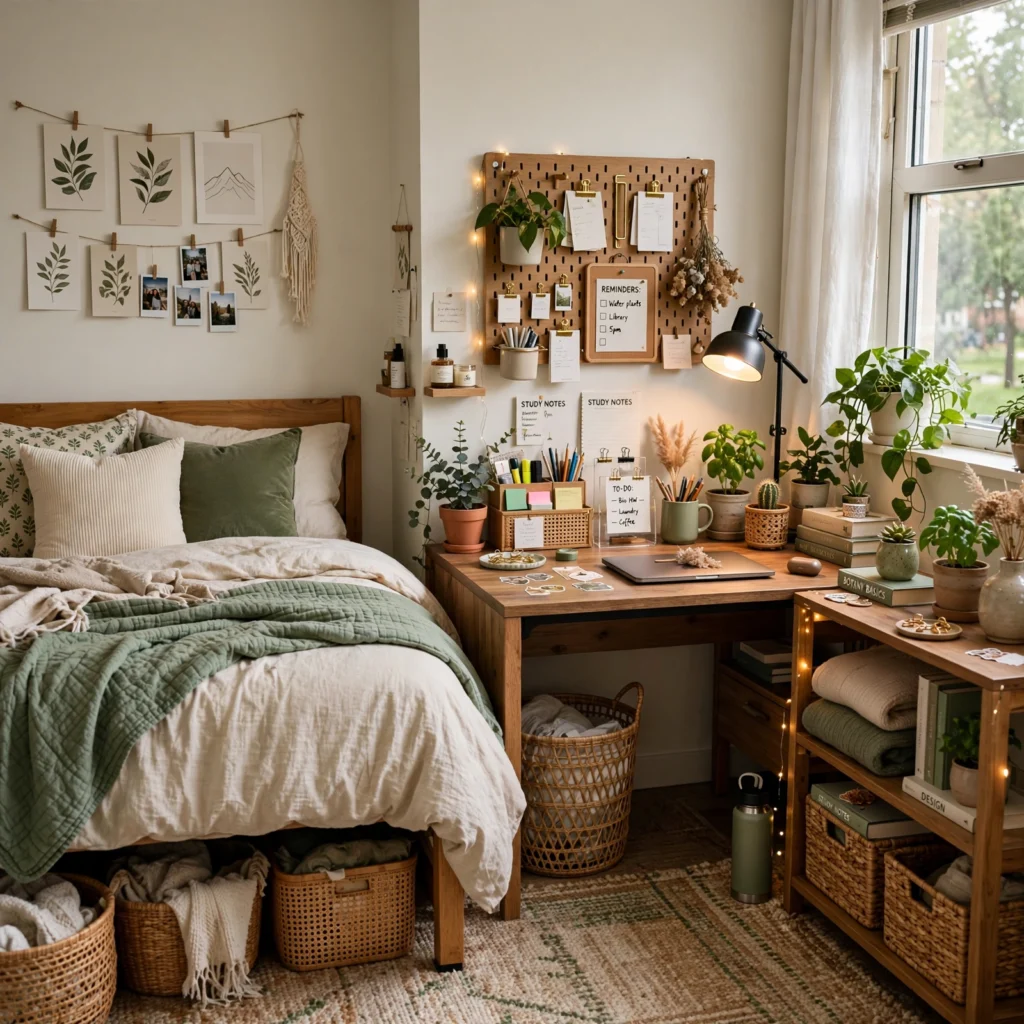
A small cluster of low-maintenance plants, such as pothos, snake plant, or a succulent, brings life and color to a desk or windowsill without requiring much natural light or care between classes. Choose plastic or lightweight ceramic pots to keep the setup easy to move during cleaning or finals-week desk reorganizing. Grouping two or three plants of varying heights reads as more intentional than a single plant placed alone in the center of the desk.
13. Curtain Room Divider
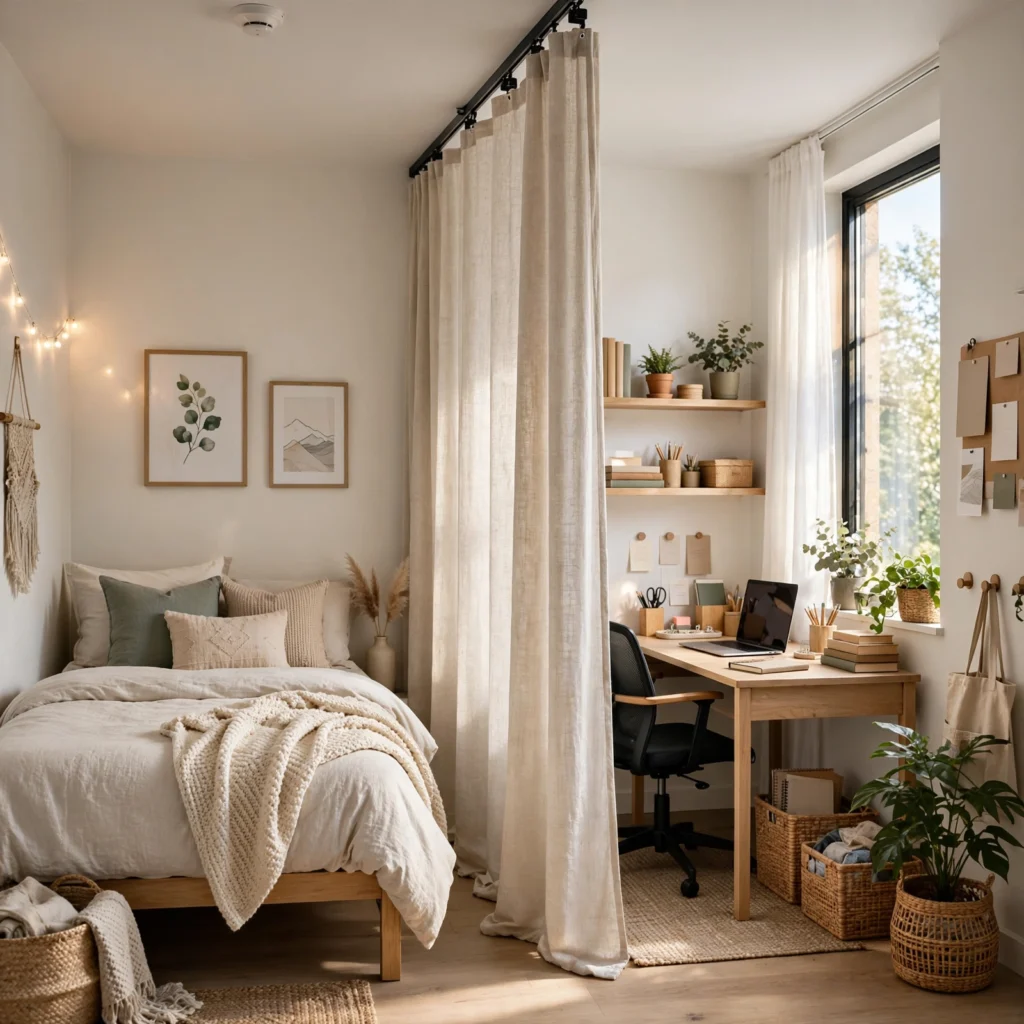
A tension-rod-mounted curtain hung between a bed and the rest of the room creates a soft visual boundary in a shared or open-layout dorm, useful for signaling private versus shared space without any permanent construction. Choose a lightweight linen or cotton fabric so it doesn’t feel heavy in a small room, and select a rod that tensions against the ceiling or wall without hardware. This also works well as a closet curtain if your dorm’s closet doesn’t have a door.
14. Vinyl Record Wall Display
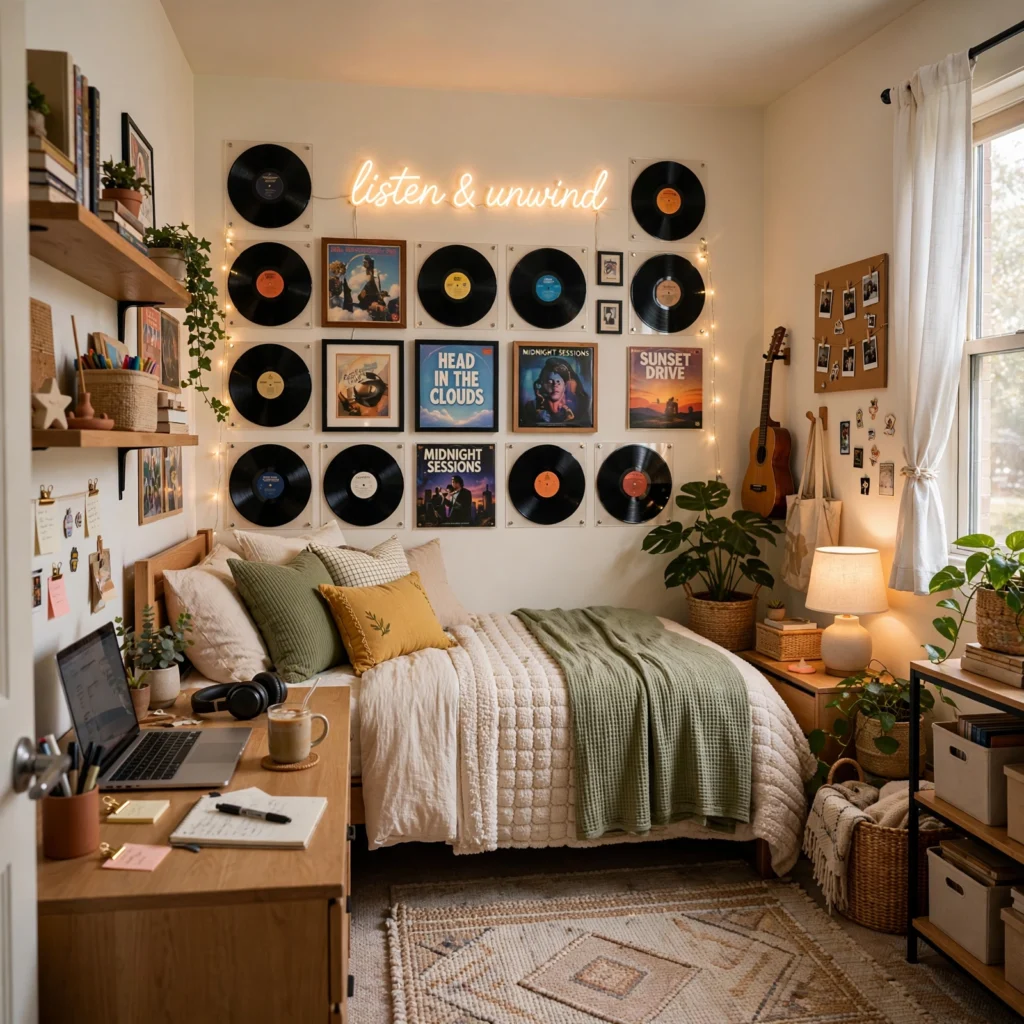
Mounting a few vinyl records on the wall using small adhesive record clips adds a collected, personal look that doubles as a conversation piece for guests. Space records evenly in a simple row or loose cluster, and keep the total count to five or six records so the display doesn’t overwhelm a shared wall. This idea works especially well paired with a small record player setup on a nearby shelf or desk corner.
15. Bulletin Board Moodboard
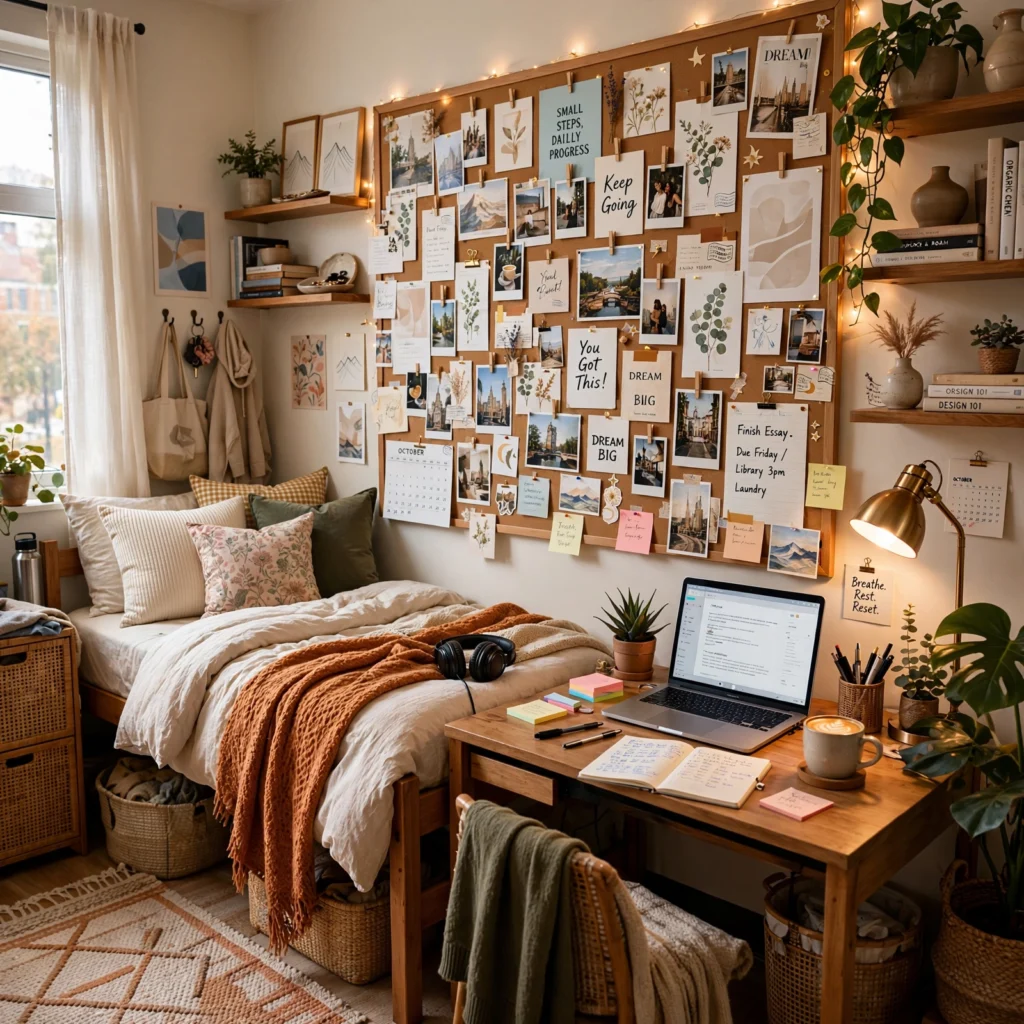
A bulletin board styled as a moodboard, layered with photos, ticket stubs, fabric swatches, and small prints, gives the room a personal, evolving display that can change throughout the year as new memories come in. Use a mix of pushpins and small binder clips to layer items without damaging photos, and leave a small amount of open space so the board doesn’t feel maxed out on day one. This works well positioned near the desk as both decor and a visual reminder of upcoming plans.
16. Scented Candle Vignette
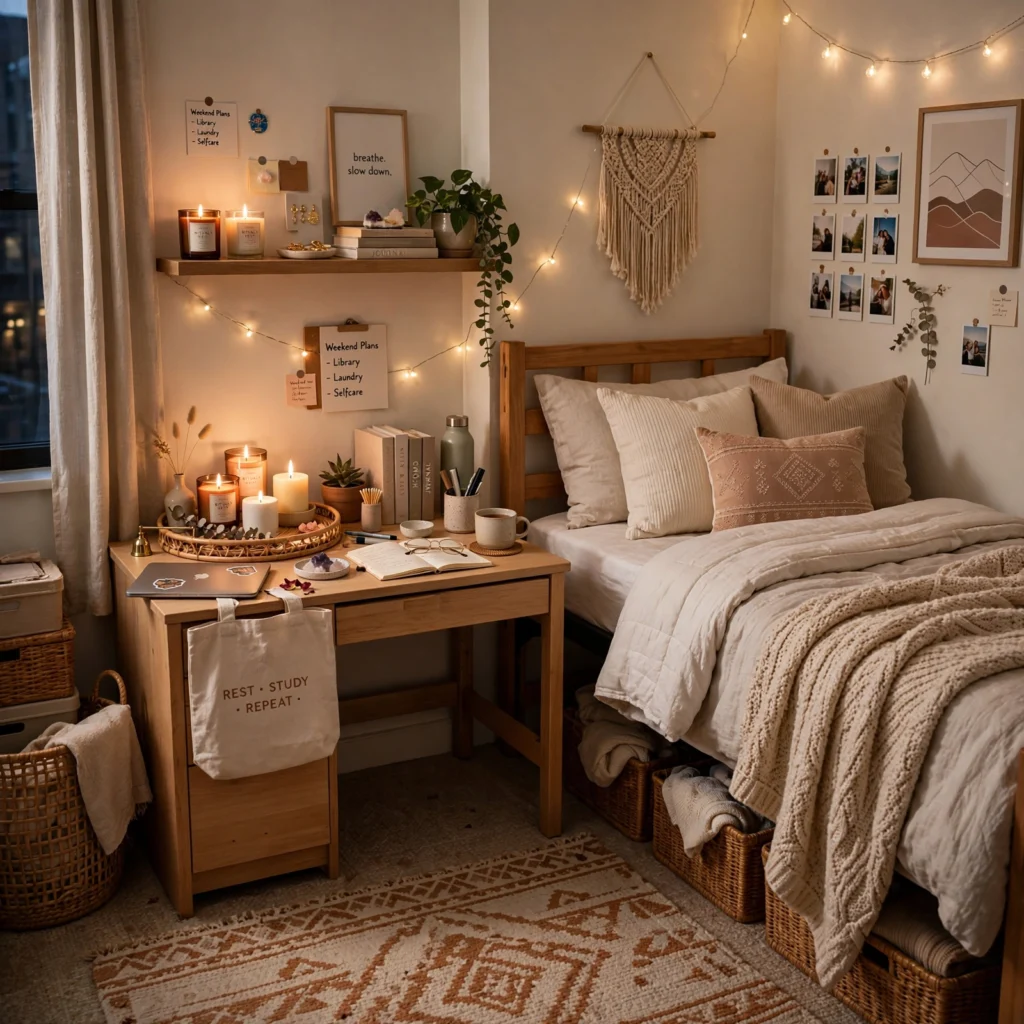
A small grouping of candles, whether real or flameless depending on your school’s fire policy, arranged on a tray with a small plant or stack of books creates a simple styled vignette on a dresser or shelf. Flameless LED candles are the safer choice for most dorm buildings, since open flames are prohibited in the vast majority of university housing. This is a low-cost way to add a finished, styled moment to a room without committing to a larger decor category.
Shop the Look
Look for a set of matching command strip hooks rated for at least three pounds, along with a warm white fairy light string long enough to canopy a twin XL bed. A woven flatweave rug in a neutral tone anchors the floor, while a set of three matching gallery frames gives photo displays a coordinated look. Round out the room with a set of flameless LED candles and one or two low-maintenance plants for a finished, styled feel.
Common Mistake to Avoid
The most common mistake with dorm room decor ideas is buying too many small, unrelated pieces without a shared color palette or material theme, which leaves the room looking busy rather than personalized. Choosing two or three core colors and repeating them across textiles, wall art, and small accessories creates a far more cohesive look than a room filled with mismatched trinkets. It’s also worth checking your specific housing contract before buying anything that requires drilling, painting, or open flame, since violations can result in fines or mandatory removal.
FAQs
What dorm room decor ideas don’t damage the walls?
Command strips, tension rods, and peel-and-stick materials are the most widely accepted damage-free options, since nearly all university housing contracts allow them as long as weight limits aren’t exceeded. Removable adhesive hooks work well for lightweight items like photos, small shelves, and macrame hangings, while tension rods are better suited to heavier items like curtains or tapestries. Always test adhesive products in an inconspicuous spot first, since some painted cinderblock surfaces react differently than drywall.
How much should I budget for dorm room decor?
Most students can put together a coordinated dorm room for somewhere between one hundred and three hundred dollars, depending on how many categories of decor they layer in. Prioritizing higher-impact items first, like a rug, tapestry, or lighting, tends to deliver more visible change than spreading the same budget across many small trinkets. Secondhand or previous-student decor, often available through campus resale groups, can also stretch a decor budget significantly further.
Can guys and girls use the same dorm decor ideas?
Yes, nearly all of the ideas covered here lighting, textiles, wall art, and plants work regardless of gender, since the underlying goal is personalizing a small shared space rather than following a specific aesthetic. Color palette and material choice are what typically differentiate a room’s style, not the decor category itself. A tapestry, rug, or gallery wall can be styled in dozens of different color schemes to match any preference.
How do you make a small dorm room feel less bare without cluttering it?
Layering two or three decor categories, such as a rug plus lighting plus a small gallery wall, usually creates a more finished look than filling every available wall and surface with individual items. Leaving some negative space, particularly around a desk or door, keeps the room feeling functional rather than overwhelming. Focusing decor on one or two key walls, like above the bed or behind the desk, also concentrates visual impact instead of spreading it too thin.
What decor items should you avoid bringing to a dorm room?
Real candles, string lights that aren’t UL-listed, and any decor requiring nails or paint are the most commonly restricted items across university housing policies, though specific rules vary by school. Bulky furniture pieces are also worth reconsidering given how little floor space most dorm rooms have to spare. Checking your school’s specific housing handbook before purchasing anything permanent or open-flame related will save both money and a potential fine at move-in inspection.
Conclusion
The best dorm room decor ideas combine a few coordinated categories textiles, lighting, wall art, and small personal touches rather than relying on any single statement piece to do all the work. Starting with damage-free basics like command strips and tension rods keeps the room flexible to change throughout the year while staying within most housing policies. Save this guide to Pinterest for move-in planning, and check out our related post on small space storage solutions for more ideas.