17 Trending Gothic Home Decor Ideas for a Dramatic, Elegant & Mysterious Space
A room built around gothic home decor trades soft, neutral styling for depth, drama, and a sense of history in every corner. Done well, it feels rich and intentional rather than heavy-handed or theatrical. This guide covers seventeen ideas spanning furniture, lighting, and detailing, so you can bring gothic elements into a space gradually or all at once, depending on how far you want to take the look and how it fits your existing home.
Trend & Background
Gothic home decor has moved beyond its Victorian and medieval roots into a broader design trend often labeled dark academia or modern gothic, blending ornate detailing with cleaner, more livable layouts. This shift matters now because more homeowners are moving away from all-white, minimal interiors toward spaces with more personality and visual depth. Social platforms have also fueled interest in maximalist and moody interiors, making dark, dramatic rooms feel current again rather than dated or overly niche.
Key Takeaways
- Gothic home decor leans on deep color palettes, ornate detailing, and dramatic lighting rather than clutter or costume-like decor.
- Materials like dark wood, wrought iron, and velvet do most of the work in setting the mood across a room.
- Balancing heavy, dark elements with mirrors or candlelight keeps a gothic space from feeling flat or overly dim.
- Small detailing, like hardware and trim, can shift a room toward gothic style without a full furniture overhaul.
1. Velvet Upholstered Sofa
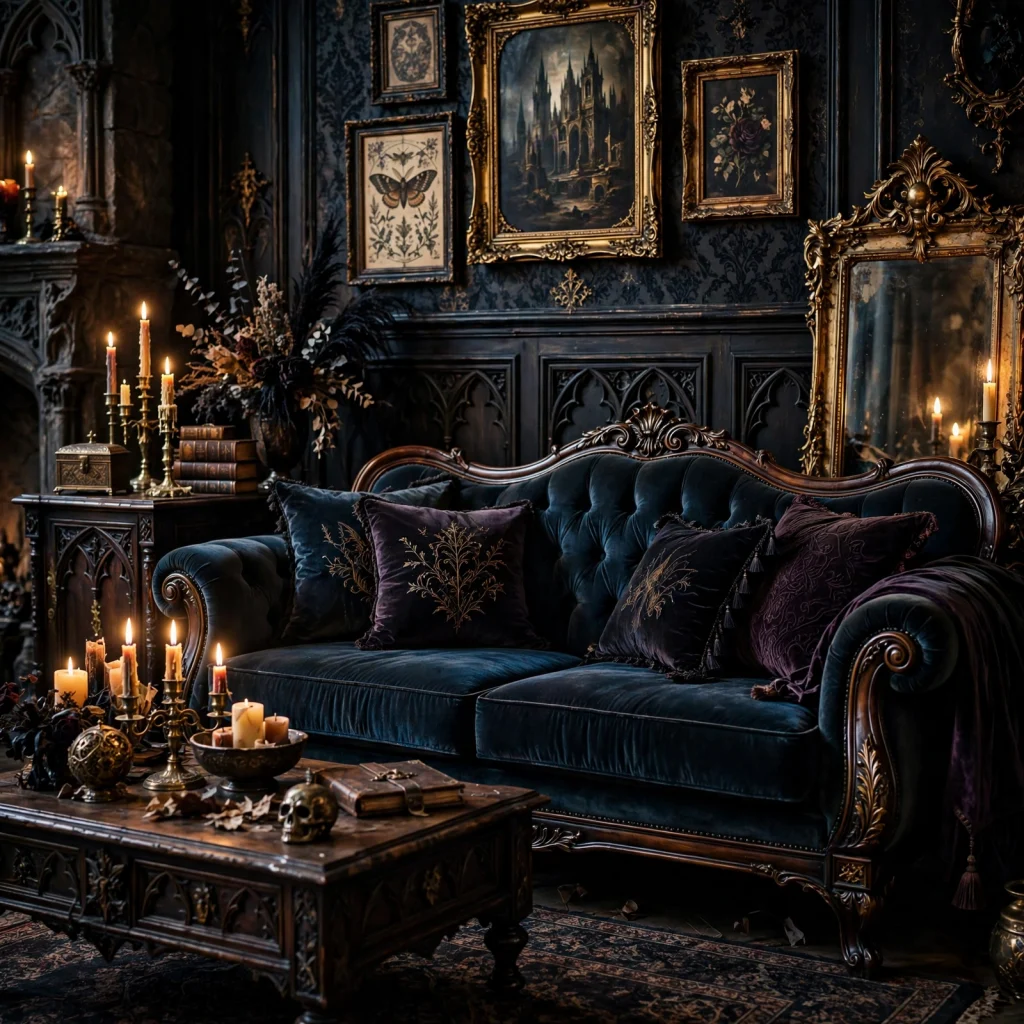
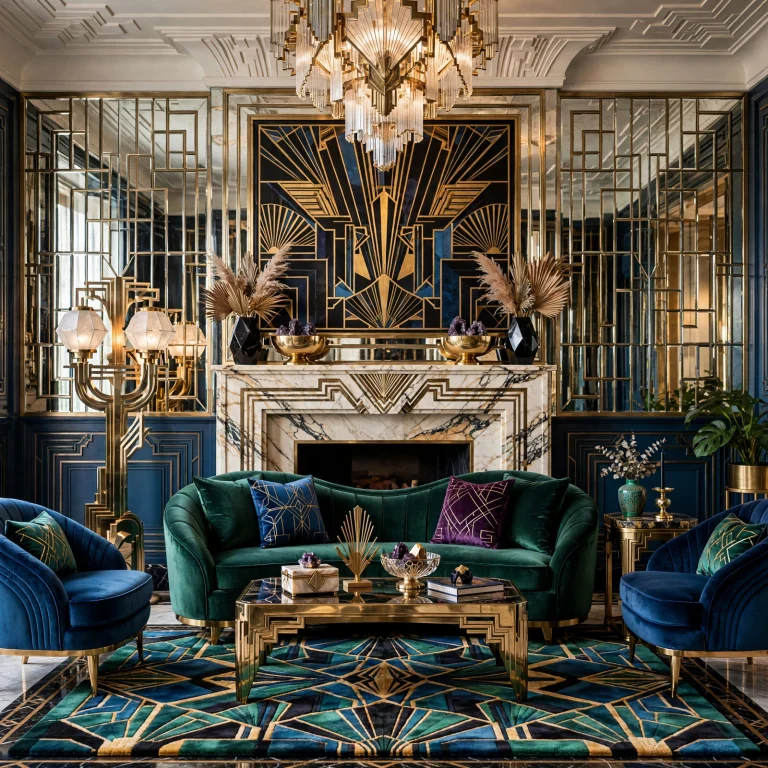
A velvet sofa in a deep jewel tone like emerald, burgundy, or midnight blue anchors a room with both color and texture, since velvet catches light differently than flatter fabrics. Rolled arms or a slightly curved silhouette lean the piece further into a Victorian-inspired look, while a straighter frame keeps it more modern. This works as the single boldest piece in a room, letting everything else stay slightly more restrained around it.
2. Wrought Iron Chandelier
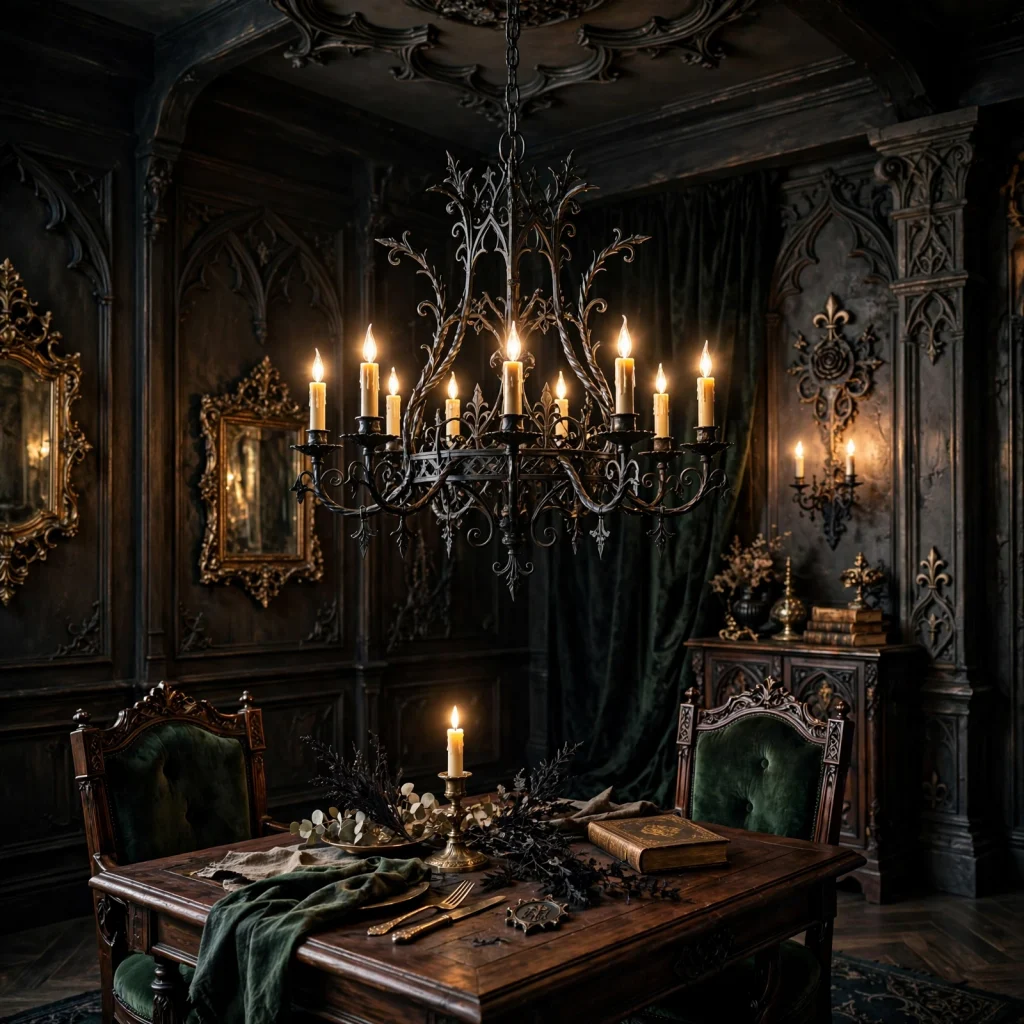
A wrought iron chandelier with candle-style bulbs brings dramatic, layered lighting to a room in a way that flush-mount fixtures can’t replicate. Its dark, textured metalwork reads as gothic even before any bulbs are lit, and dimmable candle-style lights allow the fixture to shift between bright and moody depending on the time of day. This piece works particularly well over a dining table or in an entryway with higher ceilings.
For more home decor items
3. Dark Academia Bookshelf
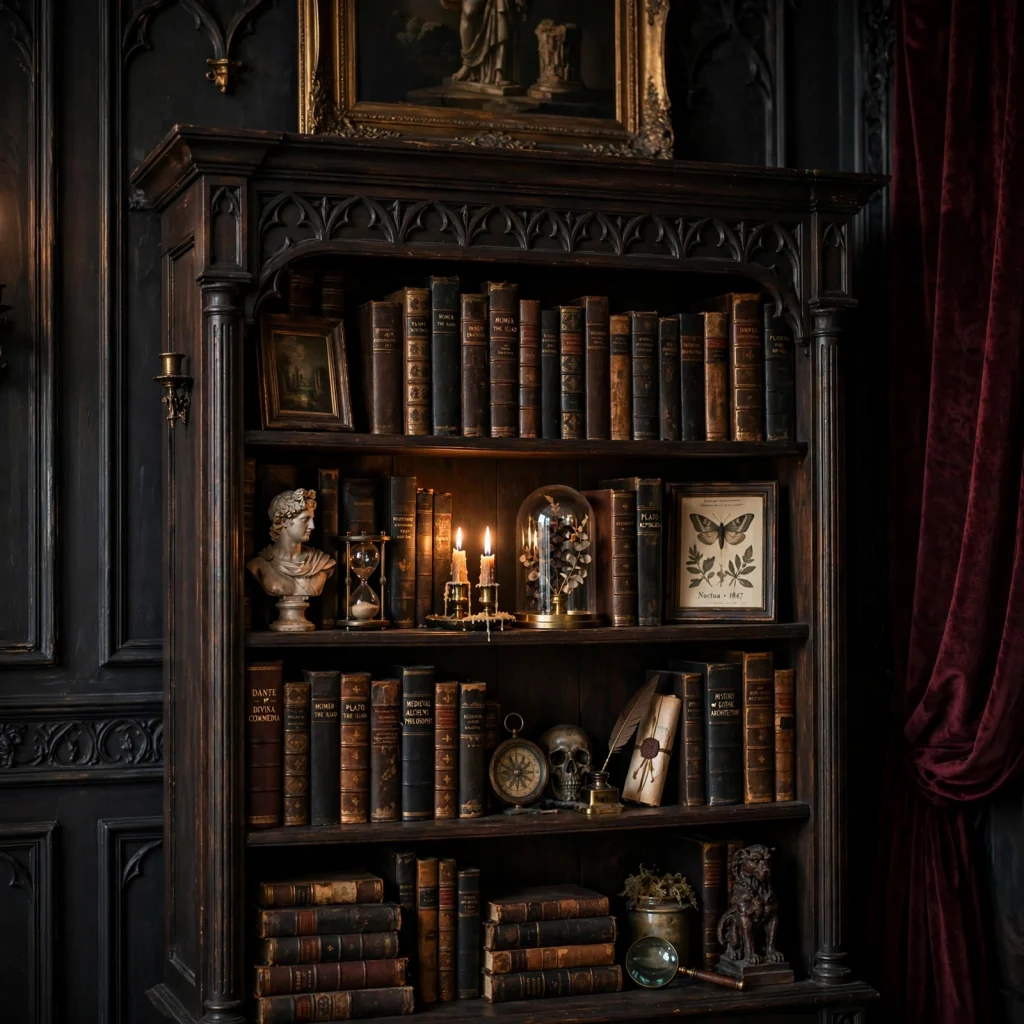
Floor-to-ceiling wood bookshelves stocked with leather-bound and hardcover books create an instant sense of history and depth in a room. Adding a rolling ladder, brass bookends, or a small bust or globe among the shelves reinforces the dark academia aesthetic without requiring a full library’s worth of books. Deep walnut or mahogany-toned shelving reads warmer and more established than lighter wood finishes in this context.
4. Ornate Mirror Frame
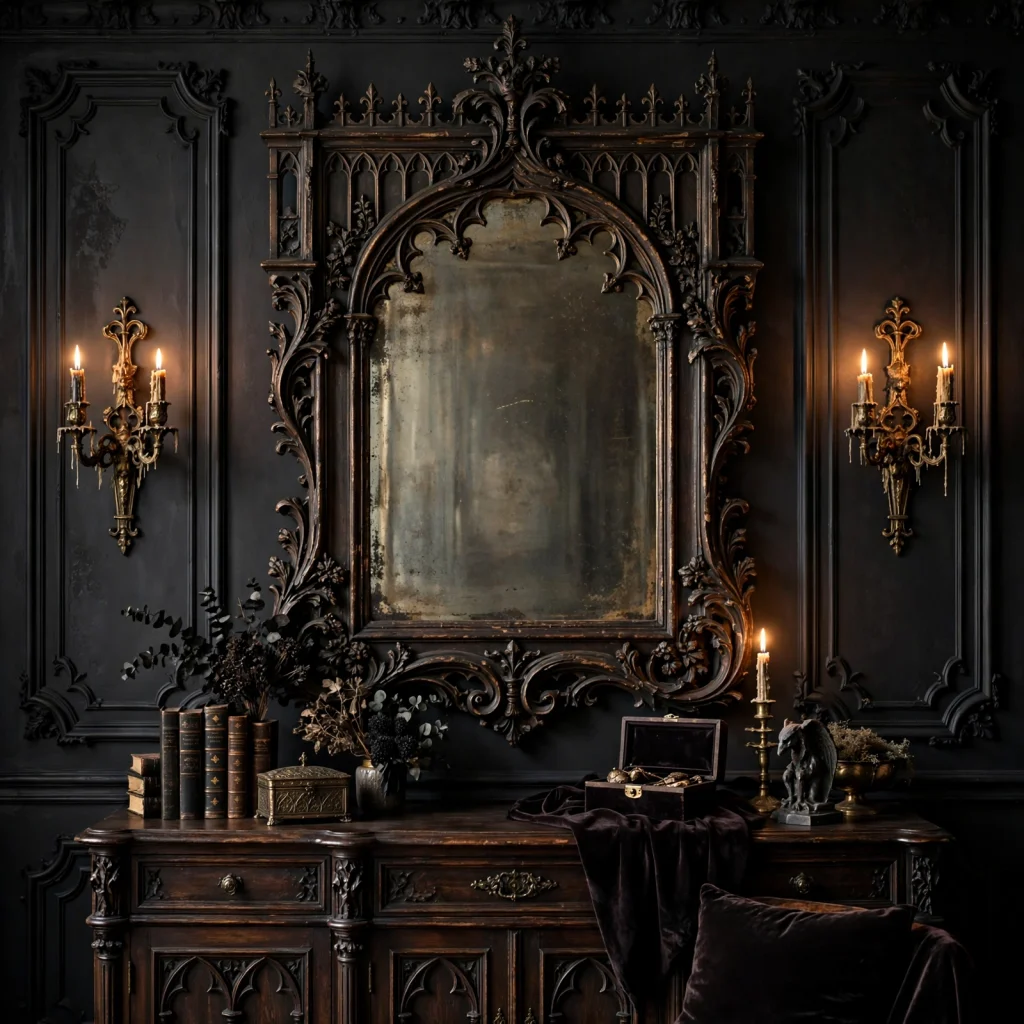
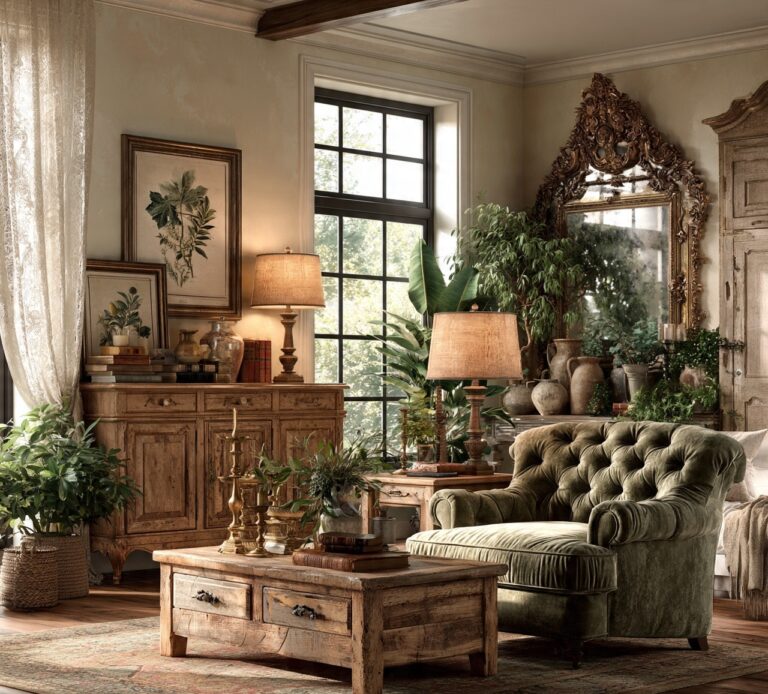
A large mirror with an ornate, blackened metal or carved wood frame adds both visual interest and reflected light to a room that might otherwise feel dim under a darker palette. Arched or cathedral-shaped frames lean further into a gothic architectural reference than simple round or rectangular options. Placed opposite a window, this piece also helps bounce natural light deeper into the room during the day.
5. Damask Wallpaper Accent Wall
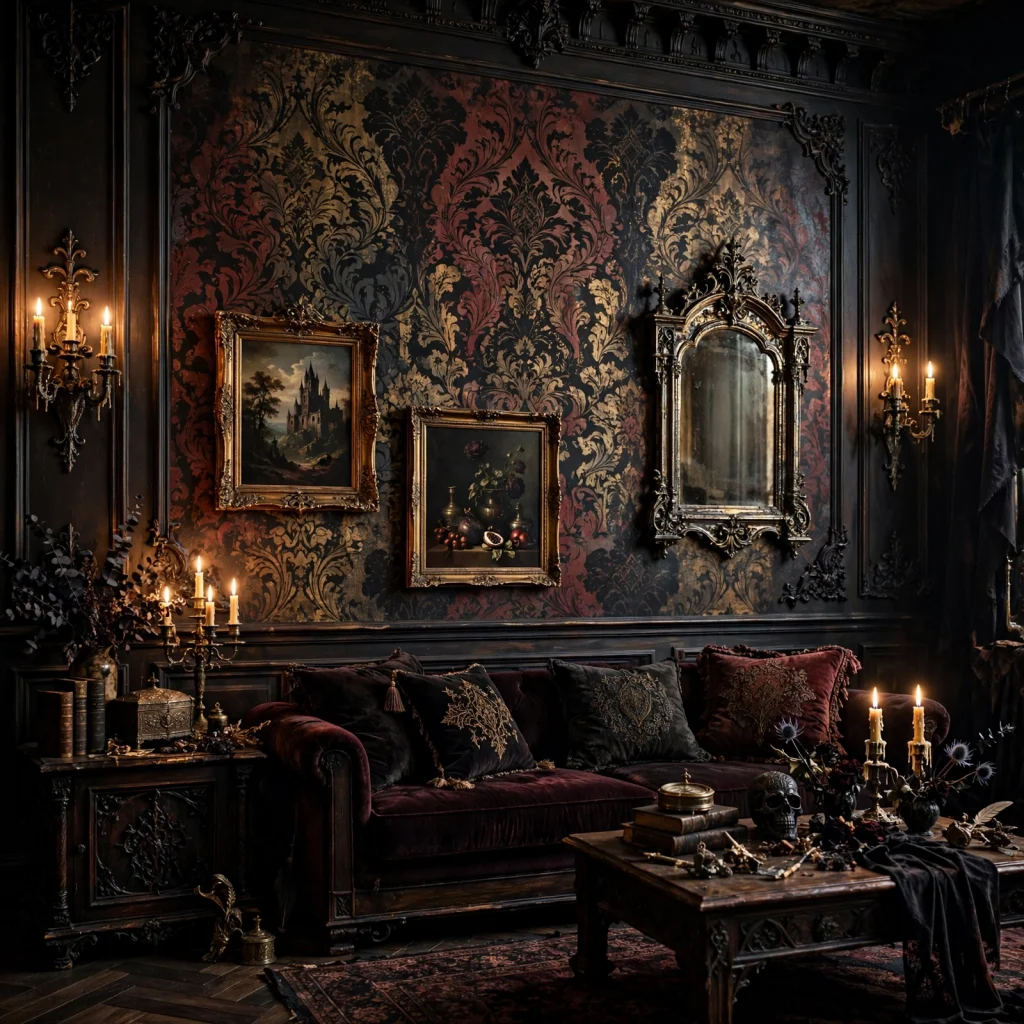
A single wall covered in dark damask or baroque-pattern wallpaper adds ornate texture without the commitment of covering an entire room. Deep charcoal, black, or oxblood tones with a subtle metallic thread in the pattern keep the look rich rather than overwhelming. This works especially well behind a bed or sofa, where the pattern acts as a backdrop rather than competing with the furniture in front of it.
6. Black Iron Bed Frame
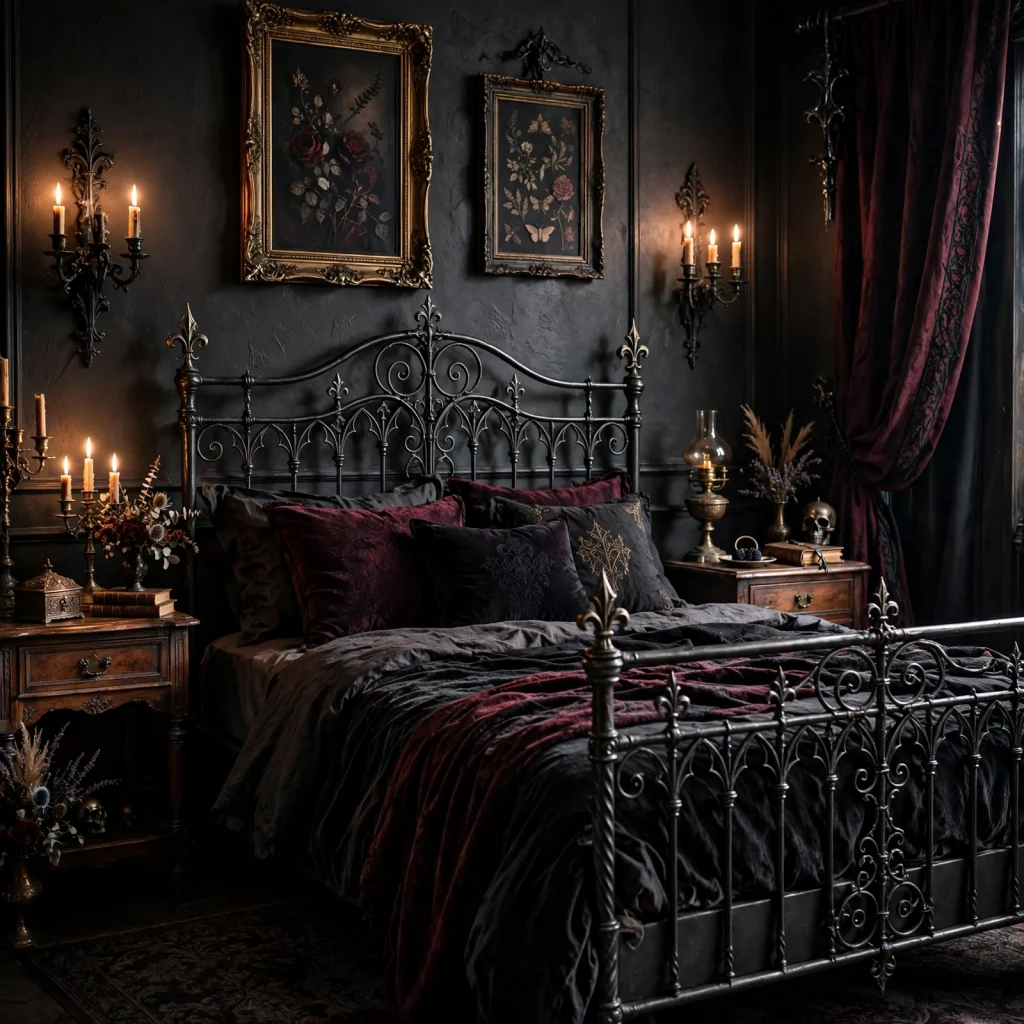
A black wrought iron bed frame, especially one with scrollwork or finial detailing at the corners, becomes the room’s architectural centerpiece without requiring additional headboard styling. This style pairs naturally with deep bedding tones and layered textures like velvet throws or embroidered pillowcases. Because the frame itself carries so much visual weight, the surrounding furniture can stay simpler without leaving the room feeling unfinished.
7. Gothic Home Decor Candle Wall Sconces
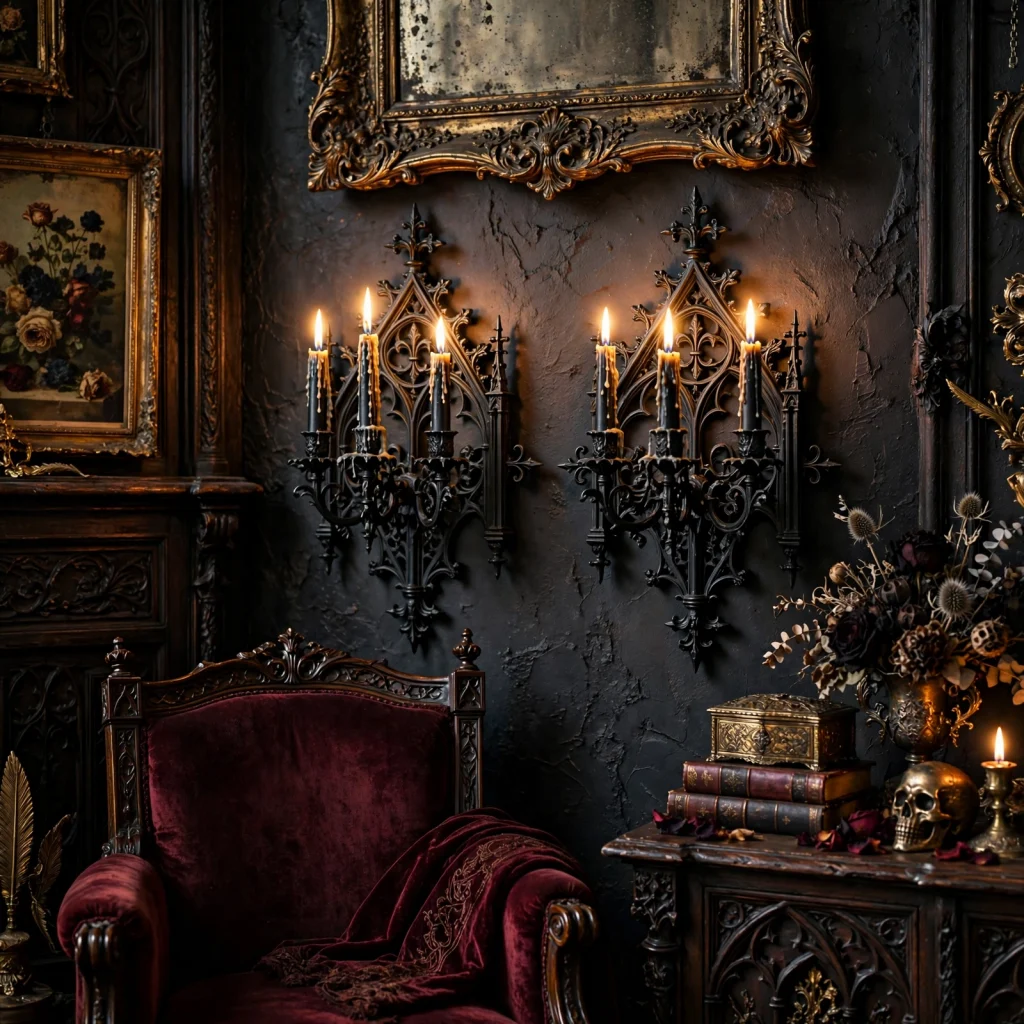
Gothic home decor relies heavily on layered, warm-toned lighting, and wall-mounted candle sconces in blackened metal deliver that atmosphere without the upkeep of real flame if fitted with flicker-style bulbs. Placing sconces in pairs flanking a mirror, doorway, or fireplace creates a symmetrical, intentional feel. This detail works in almost any room and requires minimal wall space compared to floor or table lighting options.
8. Stone or Faux-Stone Fireplace Surround
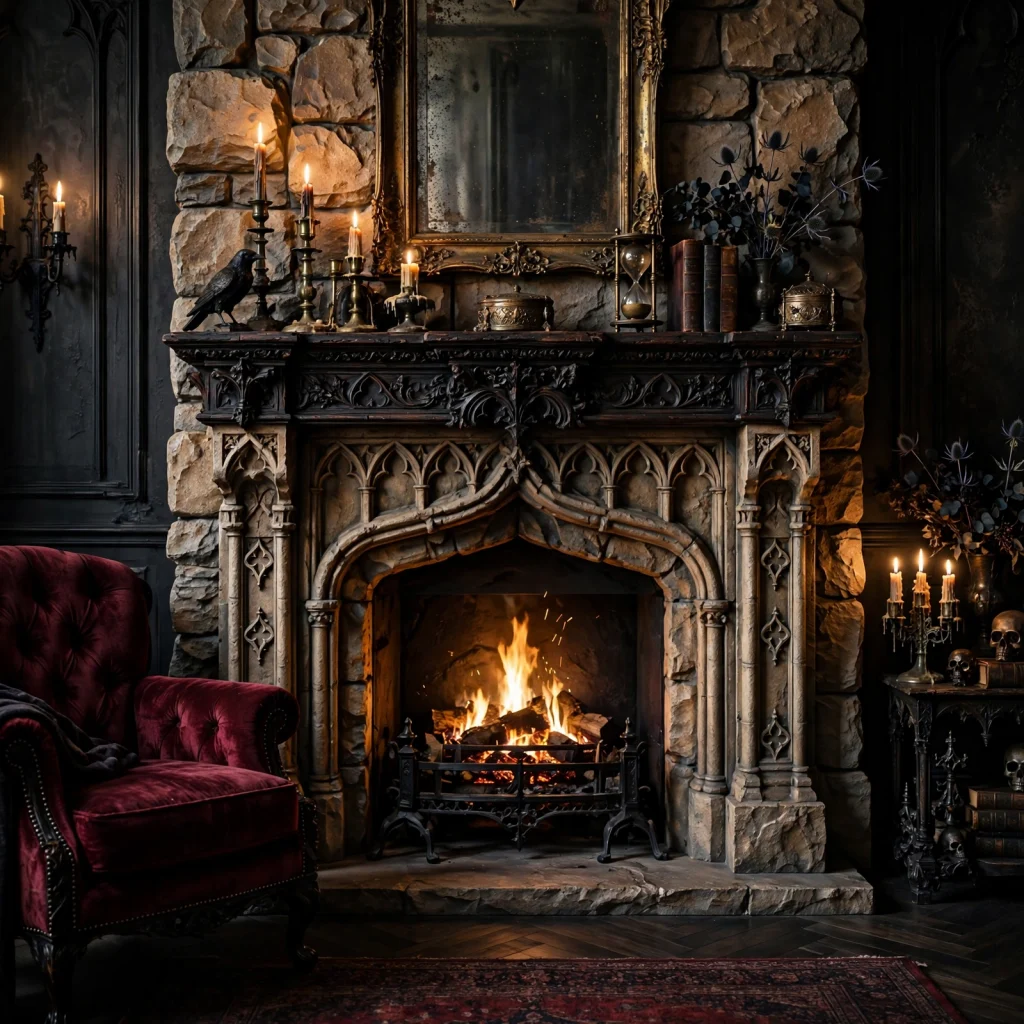
A stone or faux-stone fireplace surround, whether original to the home or added as a mantel upgrade, brings texture and a sense of permanence central to the gothic aesthetic. Rough-hewn or slightly weathered stone reads more authentic than polished, uniform finishes. Styling the mantel with candles, a mirror, or dried botanicals on either side completes the look without requiring structural changes to the fireplace itself.
9. Tufted Velvet Accent Chair
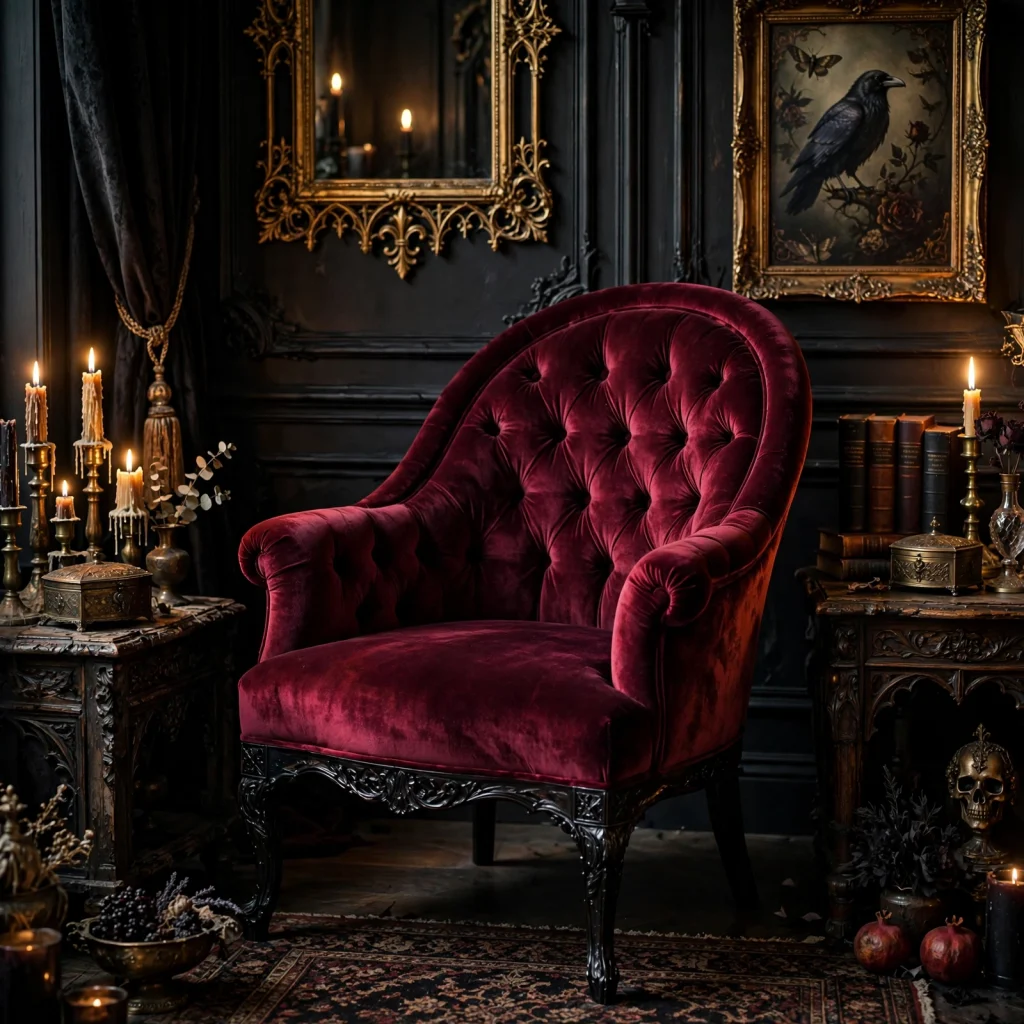
A single tufted velvet chair in a deep color adds seating and texture to a corner or reading nook, working well alongside a bookshelf or beside a fireplace. Wingback or barrel-back silhouettes lean further into a traditional gothic reference than a low, modern frame. Dark wood legs, rather than metal or painted finishes, keep the piece visually consistent with the deeper tones used elsewhere in the room.
10. Cathedral-Arch Doorway Detailing
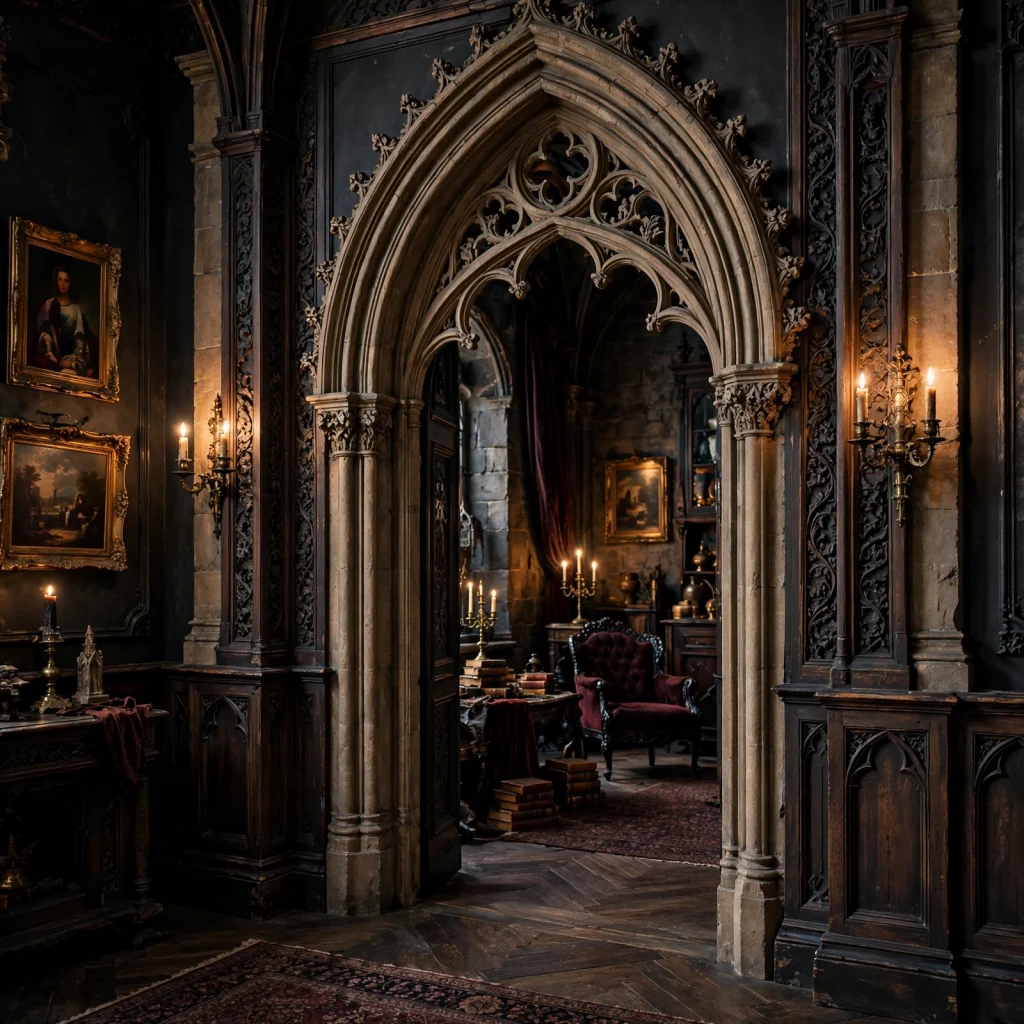
Adding an arched trim detail above a doorway, either through molding or a painted archway effect, references gothic cathedral architecture on a smaller, home-friendly scale. This detail works particularly well at the entrance to a study, bedroom, or dining room where it frames the transition between spaces. Even a temporary or removable arch-shaped decal can approximate the effect without permanent construction.
11. Antique Brass Hardware
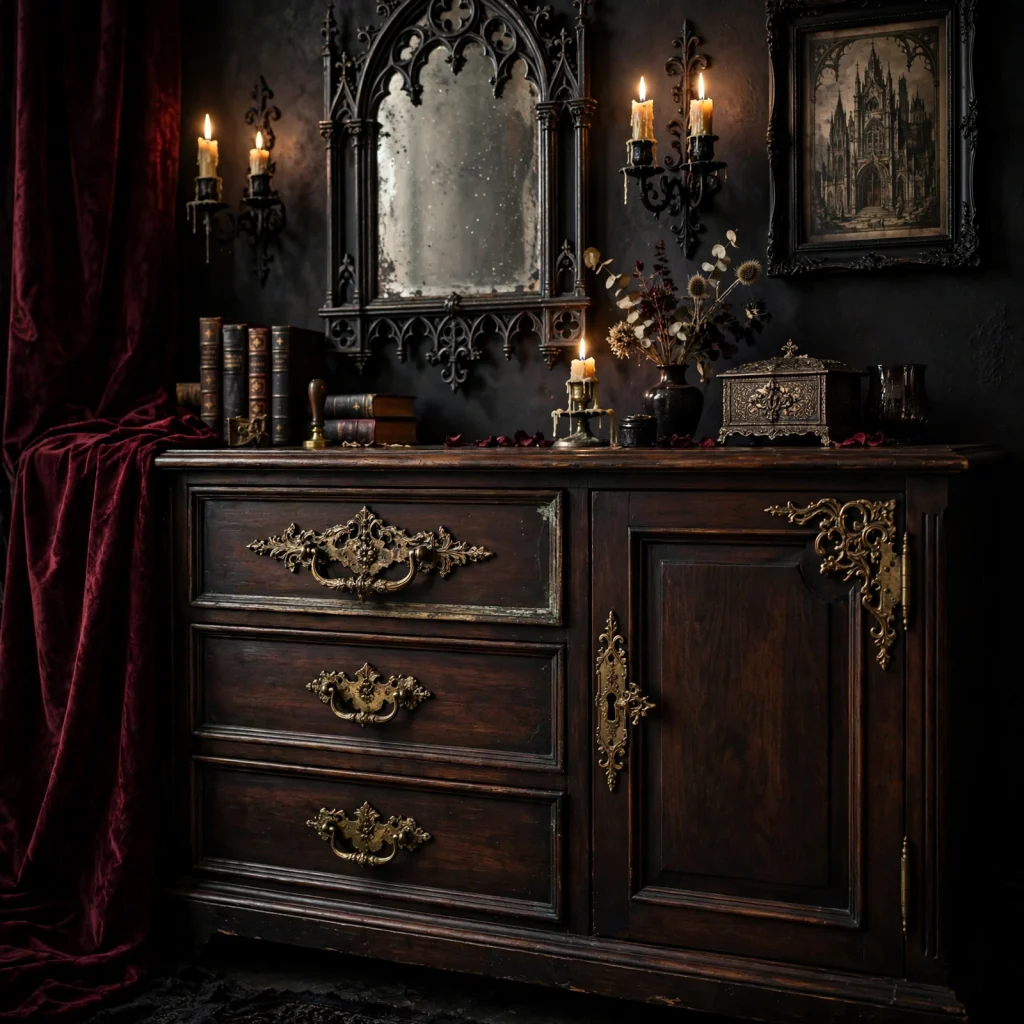
Swapping standard cabinet pulls, doorknobs, and drawer handles for antique or aged brass hardware adds detailing that reads as gothic without touching furniture or paint. Ornate, slightly oxidized finishes work better here than polished, bright brass, since the aged look suggests history rather than a recent renovation. This is one of the lowest-cost ways to shift a room’s mood, since hardware swaps rarely require more than a screwdriver.
| Detail Type | Cost Level | Effort Level |
| Hardware swap | Low | Low |
| Wallpaper accent wall | Medium | Medium |
| Wrought iron chandelier | Medium-High | Medium |
| Stone fireplace surround | High | High |
12. Dark Botanical Arrangements
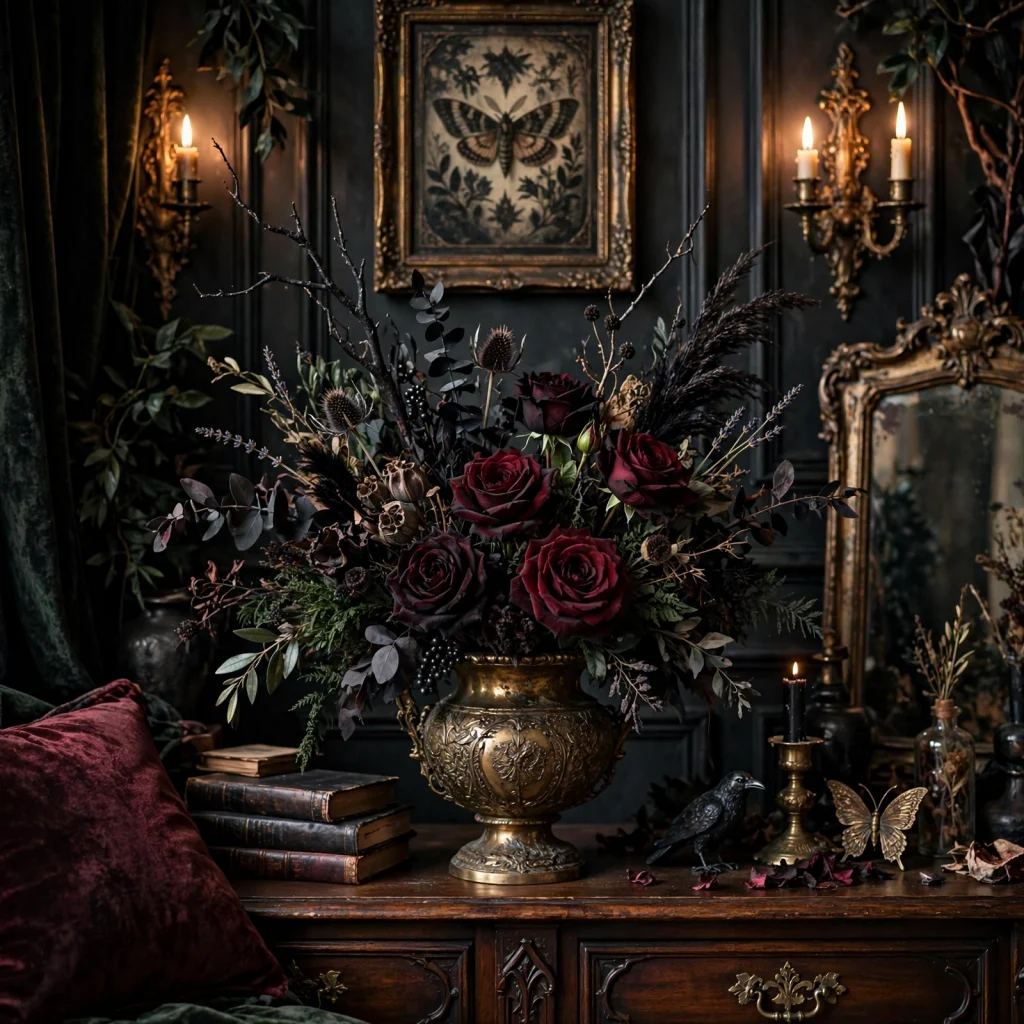
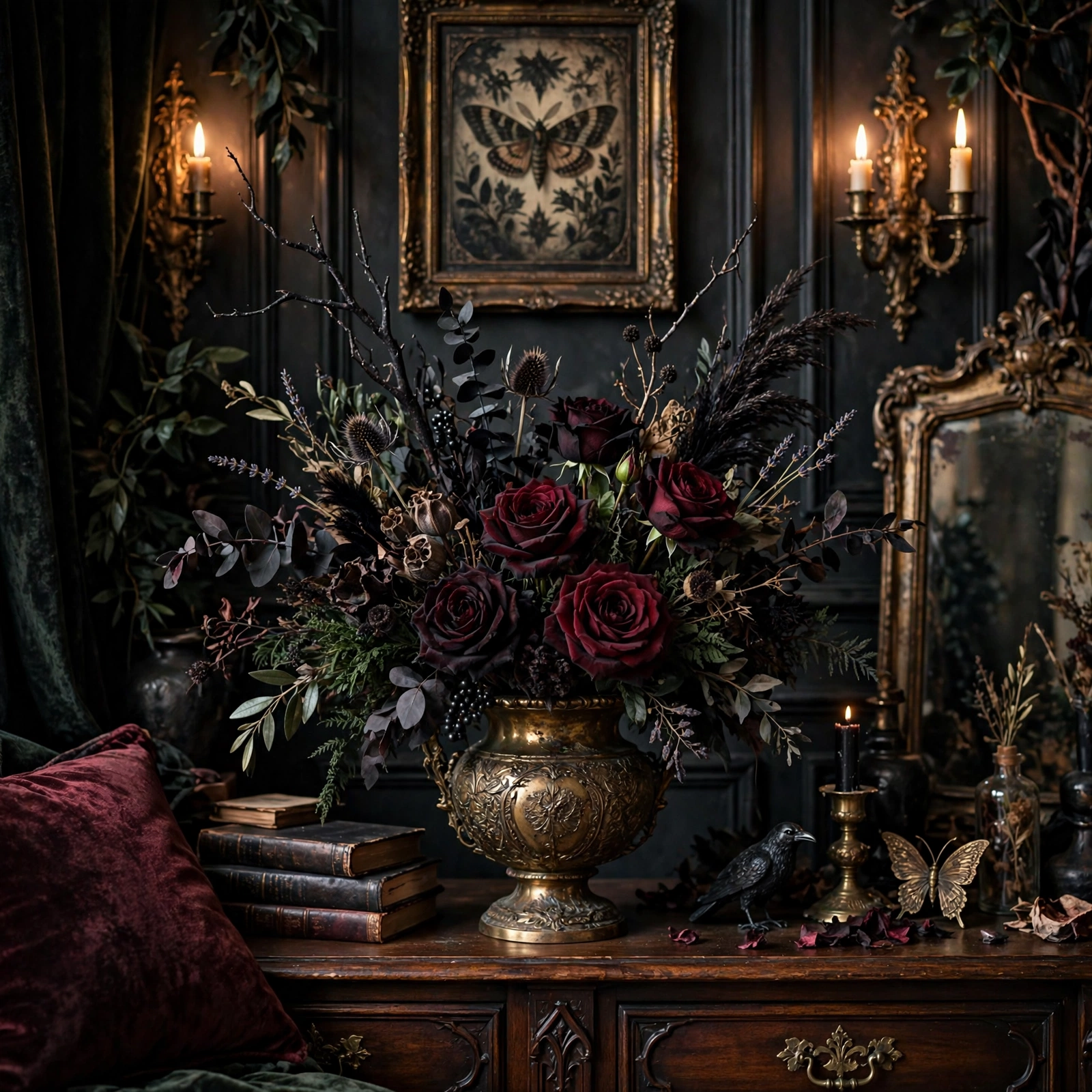
Dried or preserved botanicals like eucalyptus, pampas grass, or dark dried roses arranged in a ceramic or metal vase bring an organic element into an otherwise heavily furnished room. Choosing deep burgundy, rust, or near-black stems keeps the arrangement in line with the room’s palette rather than introducing bright, contrasting color. This detail also requires no maintenance, unlike fresh flowers, which suits a room styled for long-term drama rather than seasonal refreshes.
13. Leather and Nailhead Trim Furniture
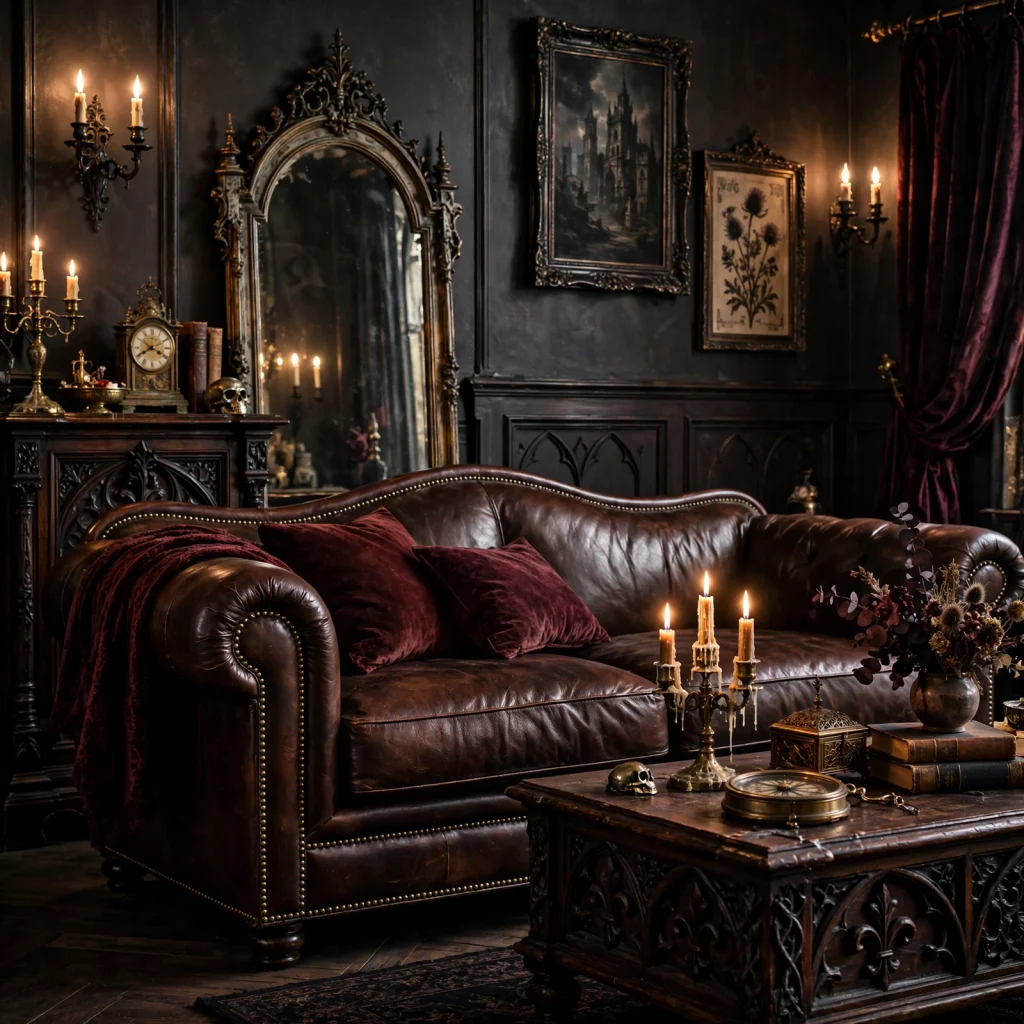
Leather furniture finished with visible nailhead trim along the arms or base adds structure and a slightly worn, historical character to a seating area. Deep oxblood or espresso-toned leather works particularly well against darker wall colors, where lighter leather might read as too casual. This detailing suits a study, library, or formal living room more than a casual family space, given its more traditional visual weight.
14. Stained Glass Window Panel
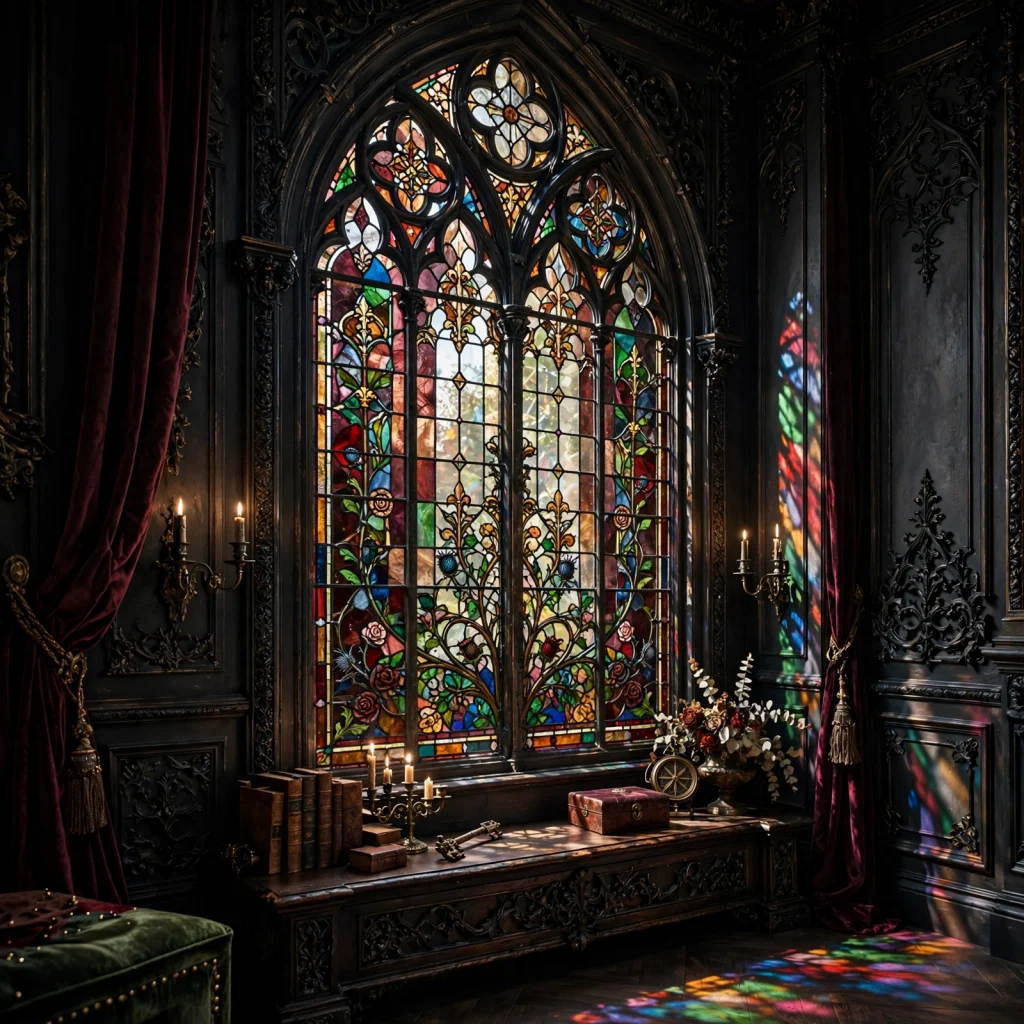
A small stained glass panel, either installed in an existing window or hung decoratively in front of one, filters daylight into colored fragments across the floor and walls. Jewel-toned patterns in deep reds, blues, and purples reference traditional gothic and cathedral windows without requiring architectural changes to the home. This piece works well in a stairwell, bathroom, or any window that doesn’t require full transparency for privacy.
15. Dark Wood Four-Poster Bed
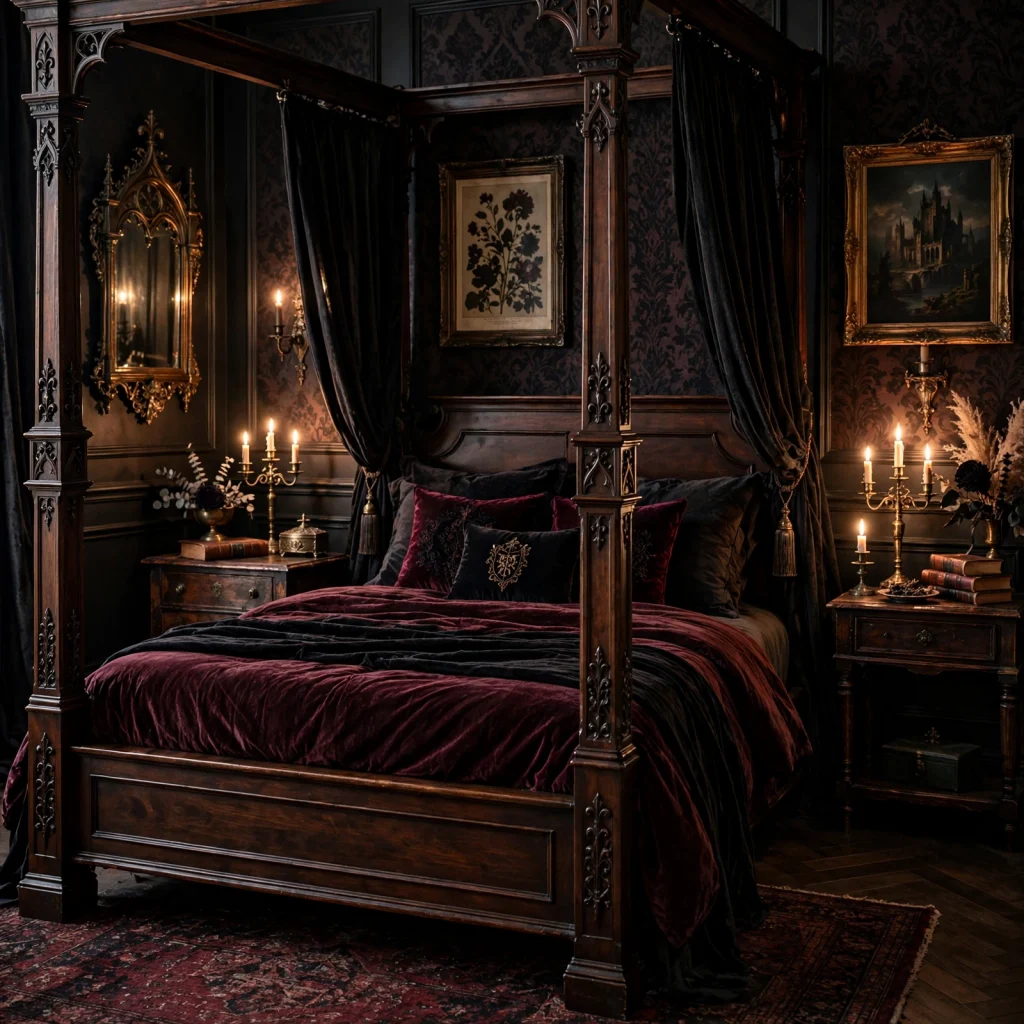
A four-poster bed in dark mahogany or espresso-stained wood creates architectural height and drama in a bedroom without any additional decor required. Adding sheer or velvet curtain panels between the posts allows the bed to be fully enclosed at night, reinforcing the room’s sense of intimacy and depth. This piece works best in rooms with at least eight-foot ceilings, where the frame has enough vertical space to feel proportional.
16. Raven and Skull Motif Accents
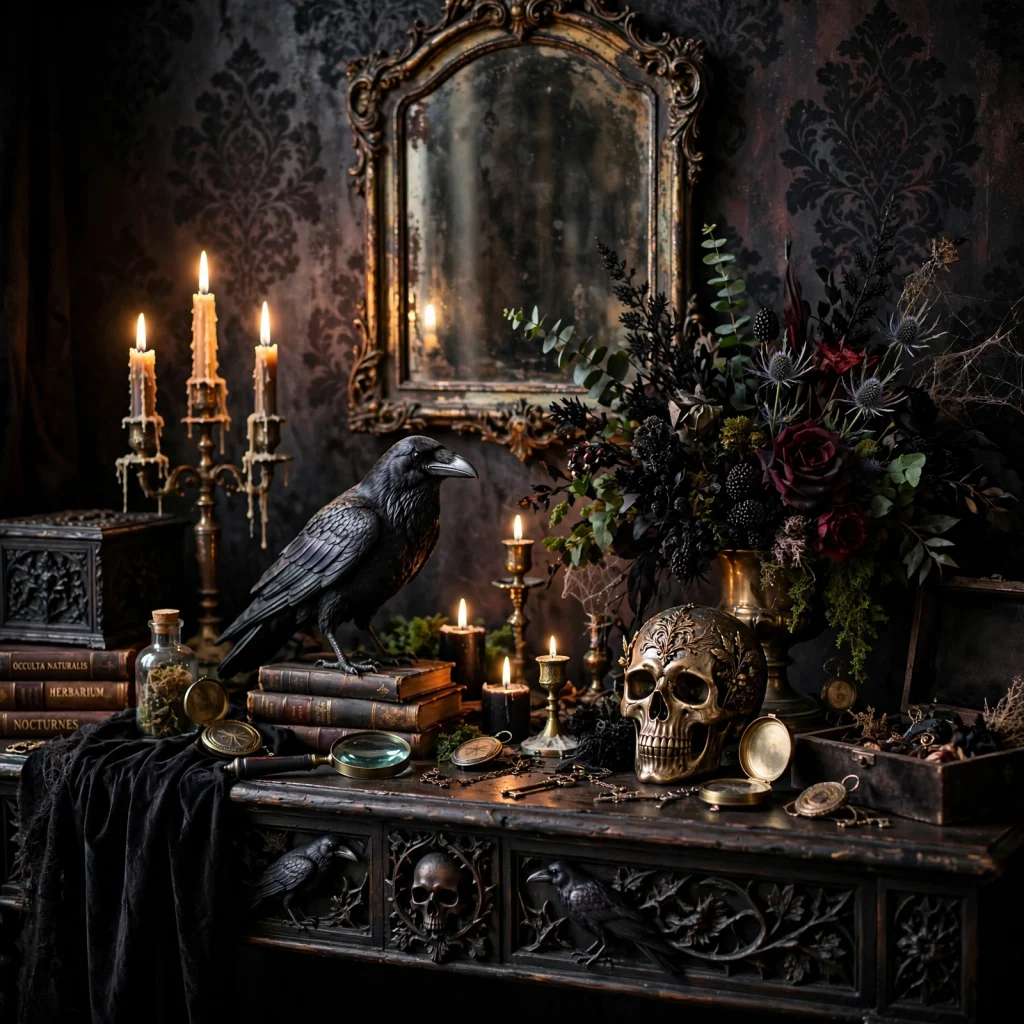
Small decorative accents featuring raven, skull, or moth motifs, whether as wall art, bookends, or drawer pulls, add gothic symbolism without overwhelming a room when used sparingly. Sticking to one or two pieces per room, rather than covering every surface, keeps the styling feeling curated rather than costume-like. Metal or ceramic finishes in aged black or bronze tend to blend more naturally with the room’s other detailing than glossy or brightly colored versions.
17. Heavy Velvet Drapery
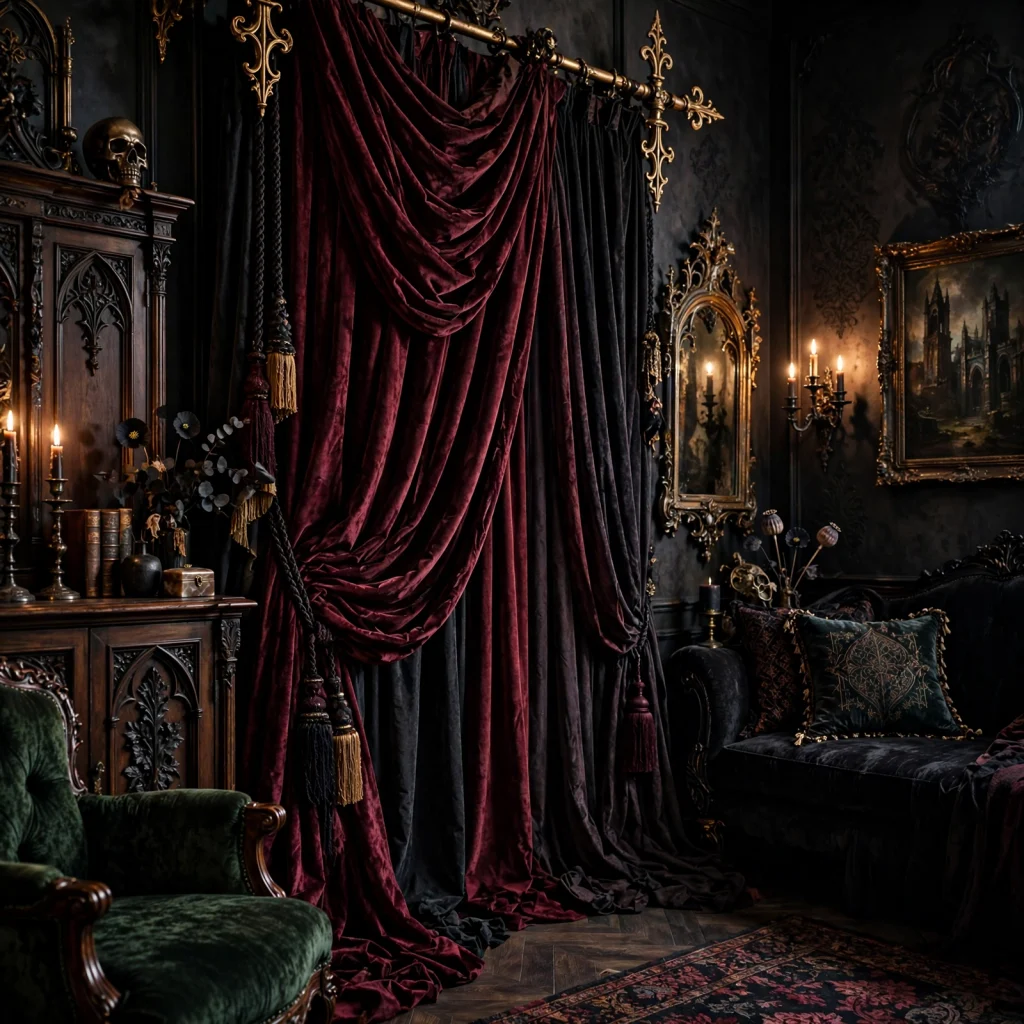
Floor-length velvet curtains in deep colors block light effectively while adding a rich, textured backdrop to a window or doorway. Hanging the rod close to the ceiling and letting the fabric pool slightly at the floor exaggerates the room’s height and adds to the overall sense of drama. This works particularly well paired with a lighter-toned wall behind it, letting the drapery stand out as the room’s darkest, most textural element.
Shop the Look
For a velvet sofa, look for deep emerald or burgundy options with rolled arm detailing in the 80 to 90-inch range. Wrought iron chandeliers with candle-style bulbs are widely available at mid-range price points and instantly add drama to a dining or entry space. Antique brass hardware swaps are one of the most affordable updates available, and a stained glass window panel adds color and texture to an underused window.
Common Mistake to Avoid
The most common mistake is going too dark across every surface at once, which can leave a room feeling cramped and poorly lit rather than dramatic and intentional. Balancing dark walls, furniture, or drapery with mirrors, metallic accents, and layered lighting keeps the space from feeling like a single flat block of color. Introducing gothic elements gradually, one or two pieces at a time, also makes it easier to gauge how much darkness a room can hold before it starts to feel heavy.
FAQs
What colors are used in gothic home decor?
Deep, saturated tones like black, burgundy, emerald, and midnight blue form the base of most gothic color palettes. These are often paired with metallic accents in aged brass, pewter, or blackened iron to add contrast and dimension. White or cream is typically used sparingly, often on trim or ceilings, to keep the room from feeling completely closed in under so much dark color.
How do I make a small room gothic without making it feel cramped?
Keep the darkest colors to one or two focal surfaces, like an accent wall or a single piece of furniture, rather than covering every wall and surface. Mirrors and metallic hardware help bounce light around a smaller space, and layered lighting from lamps or sconces prevents the room from feeling flat. Choosing furniture with visible legs also keeps the floor feeling more open in a tighter layout.
Is gothic home decor the same as goth style?
They’re related but not identical, since gothic home decor draws primarily from Victorian, medieval, and cathedral architectural references, while goth as a broader aesthetic often includes punk, horror, or subculture-specific elements. Gothic home decor tends to read as more formal and historically inspired, focusing on materials like velvet, wrought iron, and dark wood rather than overtly alternative or subcultural imagery.
What lighting works best for a gothic-style room?
Warm, layered lighting from candle-style chandeliers, wall sconces, and table lamps works better than a single bright overhead source, which can flatten the room’s mood. Dimmable fixtures allow the space to shift from functional daytime lighting to a moodier evening atmosphere. Avoiding cool white bulbs in favor of warm tones keeps the lighting consistent with the deeper color palette used elsewhere in the room.
Can gothic home decor work in a modern house?
Yes, pairing gothic detailing like dark wood furniture, wrought iron fixtures, or velvet upholstery with a cleaner, more minimal layout creates a modern gothic look that fits contemporary architecture. Limiting ornate detailing to a few key pieces, rather than layering every traditional gothic element at once, keeps the style from clashing with a home’s existing clean lines and open floor plan.
Conclusion
Gothic home decor works best when dramatic elements like velvet, wrought iron, and dark wood are balanced with enough light and reflective surfaces to keep a room feeling rich rather than heavy. From a single tufted chair to a full four-poster bed, these seventeen ideas offer entry points at nearly any budget or commitment level. Save this guide to Pinterest for later, or check out our related post on cozy home decor ideas for a softer take on layered, moody styling.
Author Expertise Note
This guide is based on years of styling client homes toward richer, more dramatic interiors, where lighting balance consistently determined whether a dark room felt intentional or simply dim.