Trending Home Decor Ideas Living Room Finishing Touches That Matter
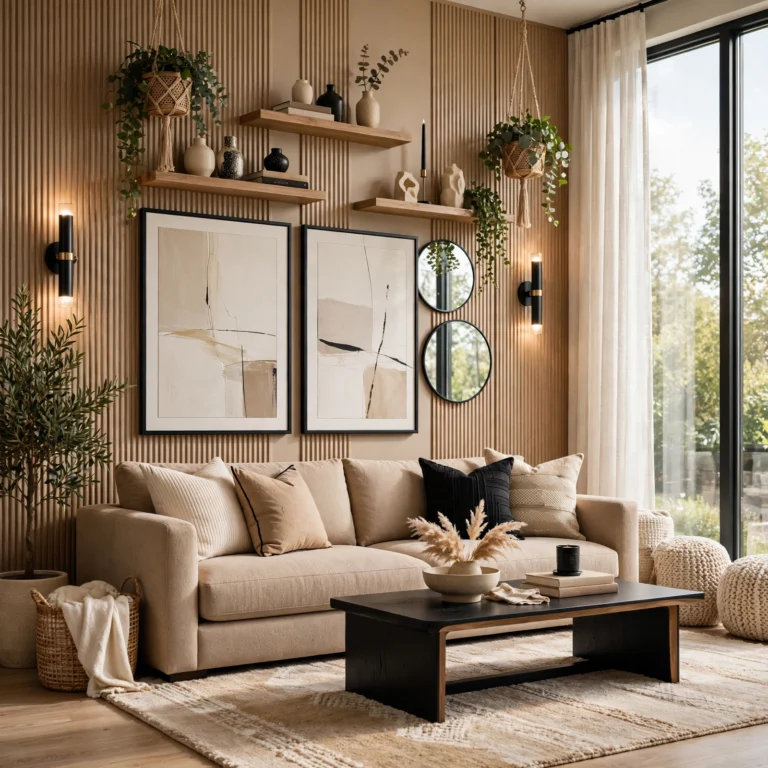
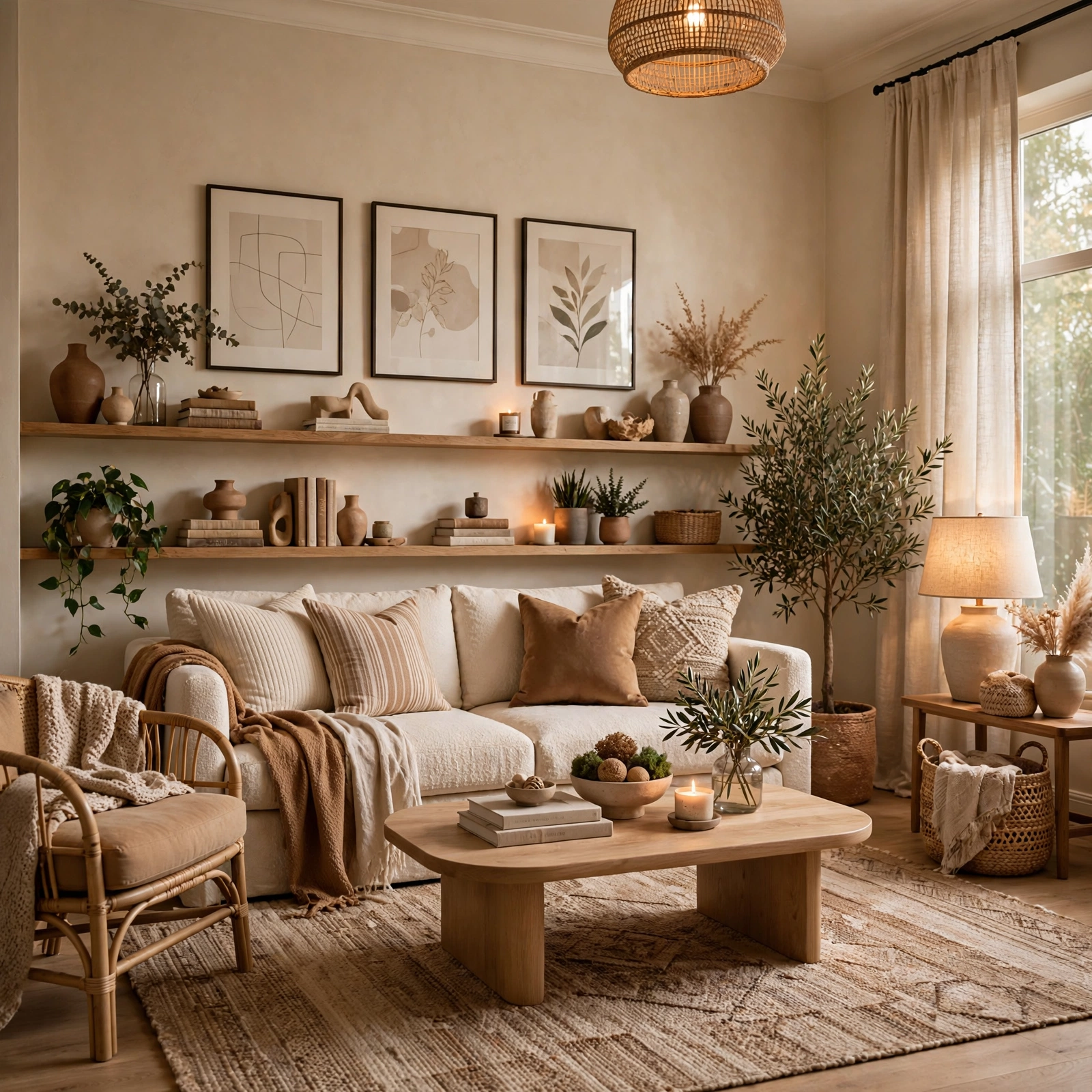
Once the furniture is in place, a living room’s real personality often comes down to the smaller finishing touches that get added last and updated most often. This guide walks through sixteen home decor ideas living room spaces can use for these final layers, covering styling technique, seasonal rotation, and sensory details that go beyond the sofa and rug. By the end, you’ll have specific placement guidance and styling approaches to make a room feel finished and personal, even with furniture that’s already been settled for years.
Trend & Background
Living room styling has increasingly focused on these smaller finishing layers, with accessory rotation, curated tray displays, and sensory details like scent and sound getting the same design attention once reserved mostly for furniture and paint color. This reflects a broader shift toward treating a living room as a space that evolves throughout the year rather than staying static after an initial decorating push. This matters now because most people aren’t replacing furniture frequently, making these smaller, more affordable updates the primary way a living room actually changes and stays feeling current over time.
Key Takeaways
- Small accessory-level choices, like tray styling and throw placement, often finish a room more than any single furniture purchase.
- Seasonal rotation of textiles and small decor keeps a living room feeling current without ongoing furniture investment.
- Scent, sound, and lighting details round out a room’s feel beyond what’s visually decorated.
- Grouping small objects in odd numbers and varying heights reads as more intentional than scattering them individually.
1. Seasonal Textile Rotation
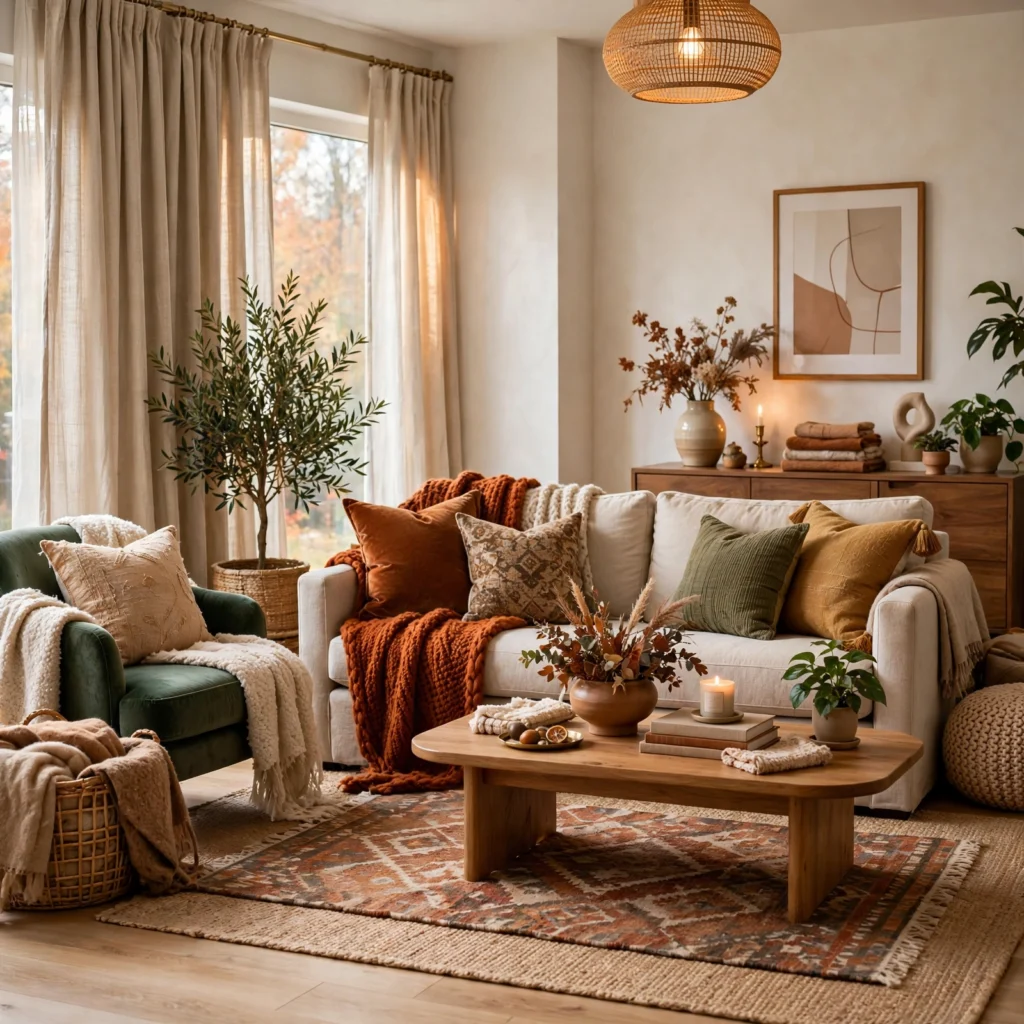
Seasonal textile rotation swaps throw pillow covers, a blanket, and sometimes a smaller accent rug two to four times a year, shifting the room’s palette and texture without touching any larger furniture pieces. Storing off-season textiles in a labeled bin keeps this rotation simple to manage each time the season changes. This is one of the most cost-effective home decor ideas living room spaces can use to feel genuinely refreshed throughout the year.
2. Curated Tray Styling
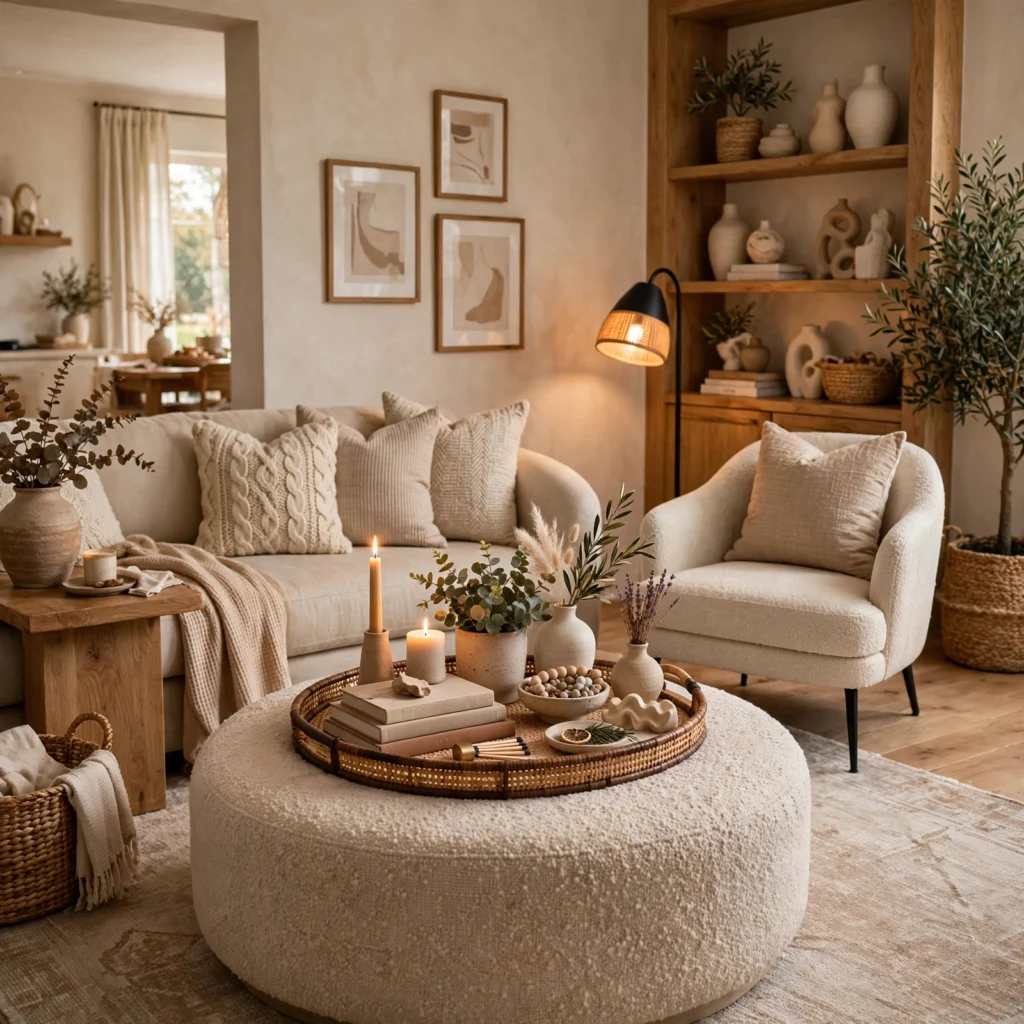
Curated tray styling groups a candle, a small stack of books, and one decorative object onto a single tray placed on the coffee table or ottoman, corralling smaller items into one intentional grouping rather than scattering them across the surface. Choosing a tray in wood, marble, or a mixed material ties the grouping together visually. This technique works on almost any surface throughout the living room, from a console table to a side table beside the sofa.
| Tray Size | Best Surface | Item Count |
| Small (8–10″) | Side table | 2–3 items |
| Medium (12–14″) | Ottoman or coffee table | 3–4 items |
| Large (16″+) | Console table | 4–5 items |
3. Layered Candle Grouping
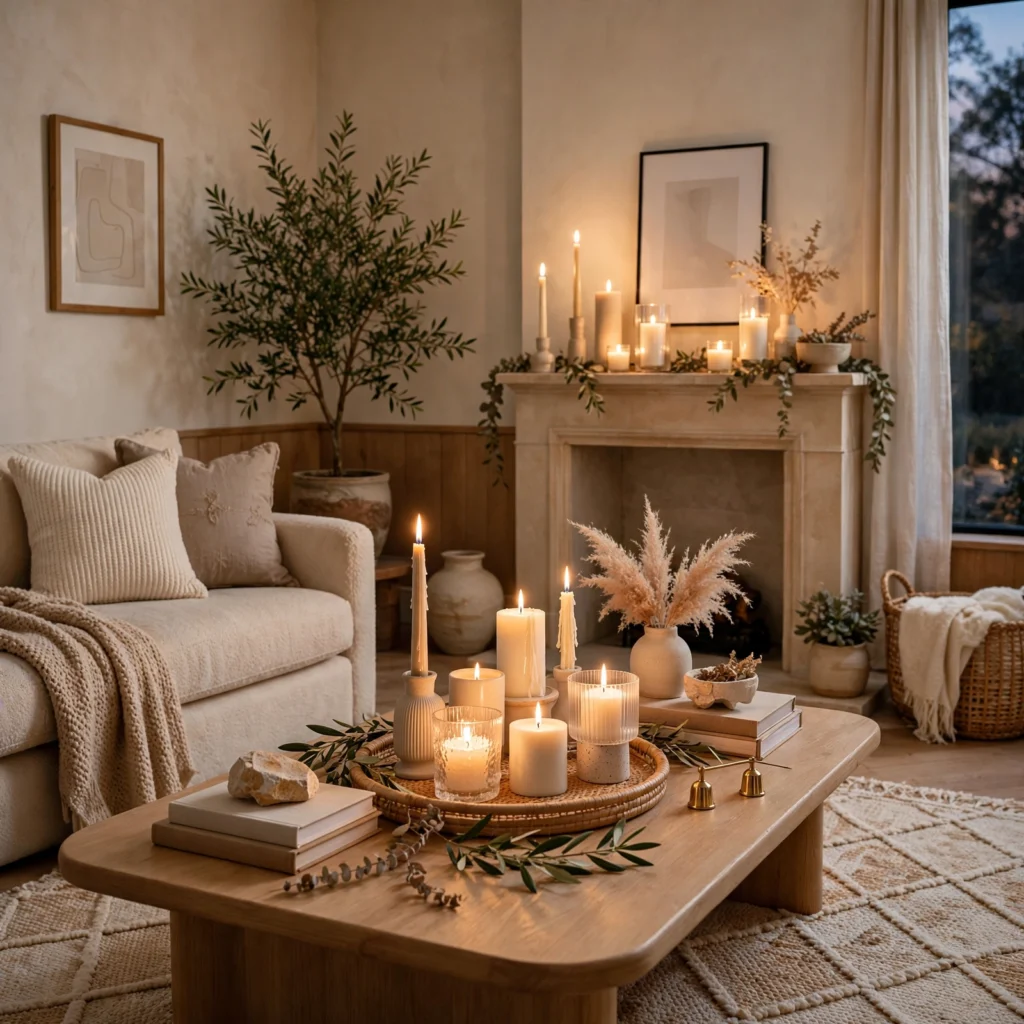
A layered candle grouping combines pillar candles of varying heights, typically in a single wax color, clustered together rather than placed individually around the room. This creates a warmer, more intentional glow in the evening than scattered single candles would provide. Choosing an odd number, generally three or five, tends to produce a more visually balanced grouping than an even count.
In order to see more options for teen room decor CLICK HERE
4. Rotating Coffee Table Book Stack
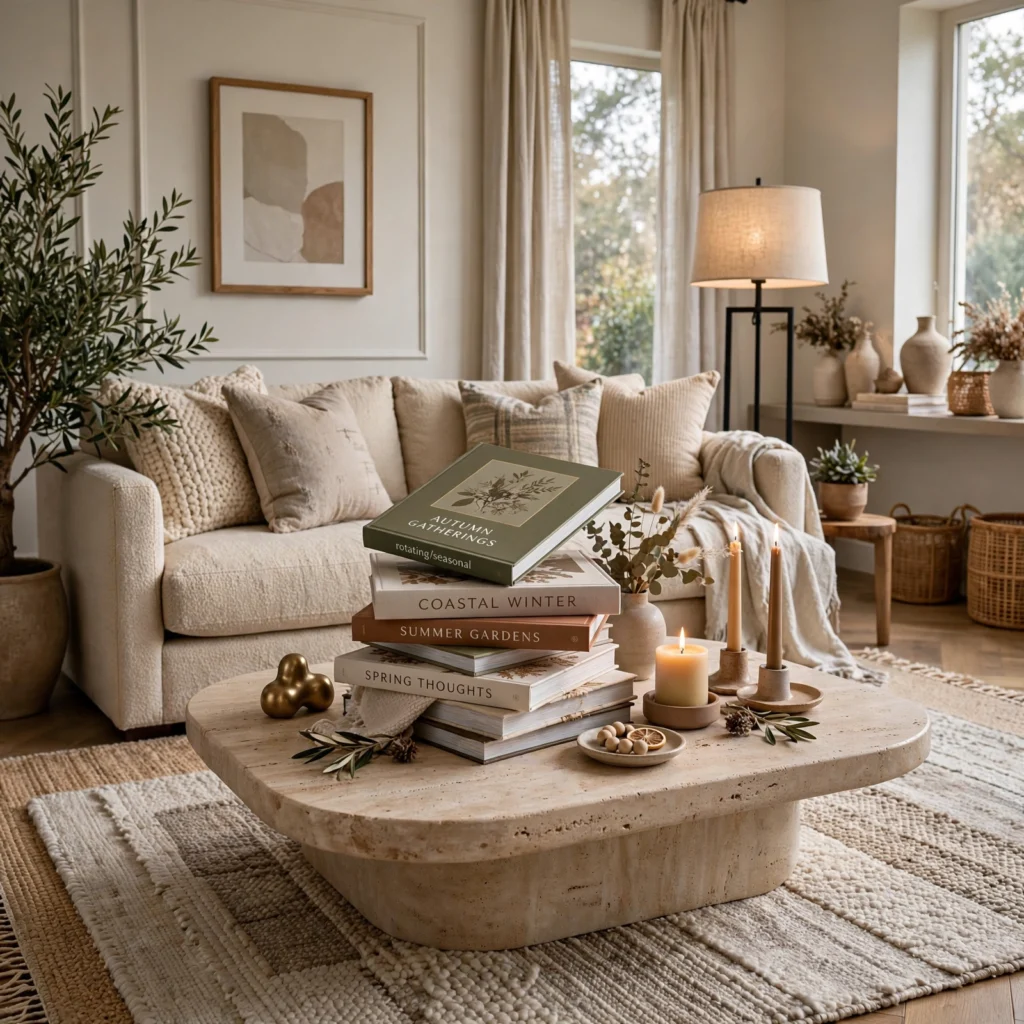
A rotating coffee table book stack swaps out two or three larger-format books every couple of months, choosing titles that reflect current interests or simply have visually appealing spines and covers. Stacking them at varying heights, with a small object like a candle or bud vase on top, adds dimension beyond a flat stack alone. This detail costs very little to update regularly and gives the room’s most visible surface a reason to feel fresh throughout the year.
5. Home Decor Ideas Living Room Scent Layering
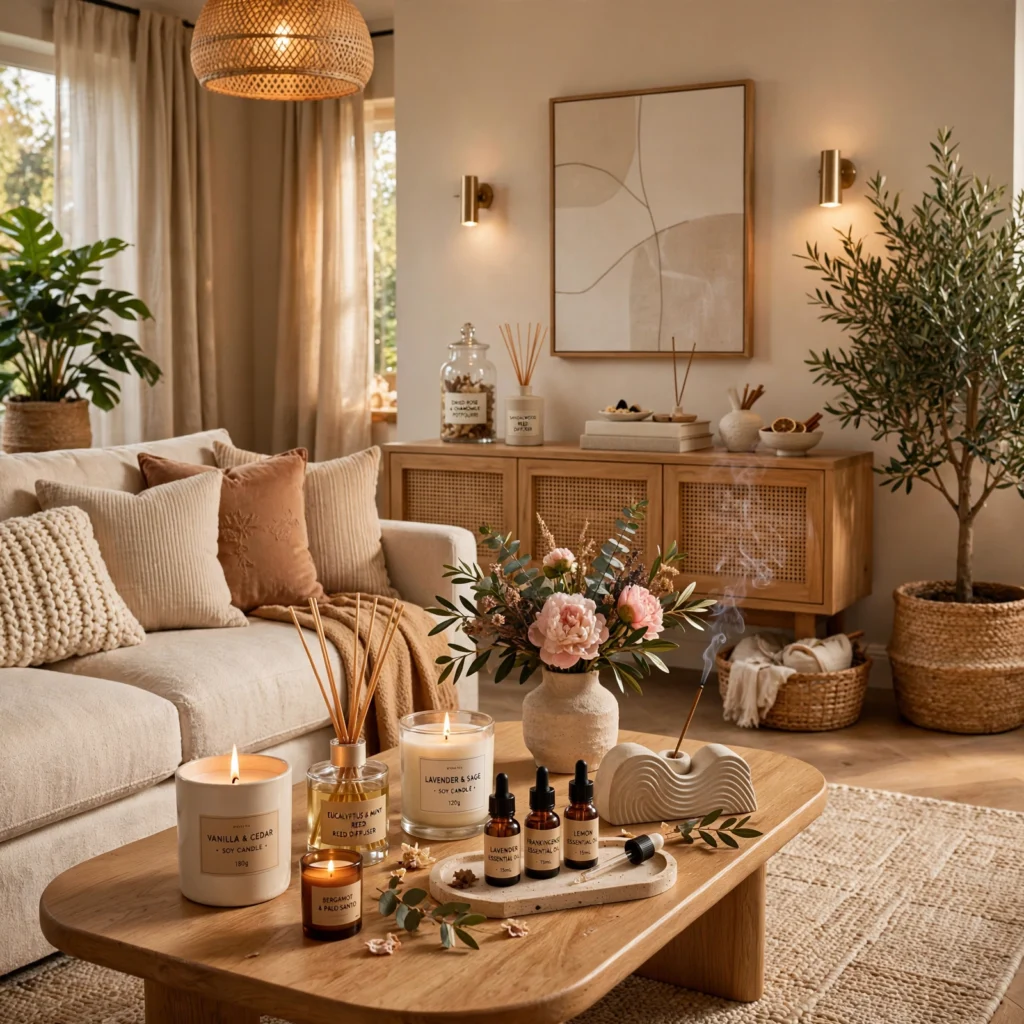
Scent layering combines a candle, a reed diffuser, and sometimes fresh greenery or citrus to create a consistent, evolving fragrance throughout the living room rather than relying on a single strong scent source. This approach to home decor ideas living room styling addresses a sensory detail that’s easy to overlook despite how much it affects how a room actually feels to spend time in. Choosing complementary rather than competing scents, like a woodsy candle alongside a citrus diffuser, keeps the overall effect from becoming overwhelming.
6. Textured Throw Draping Technique
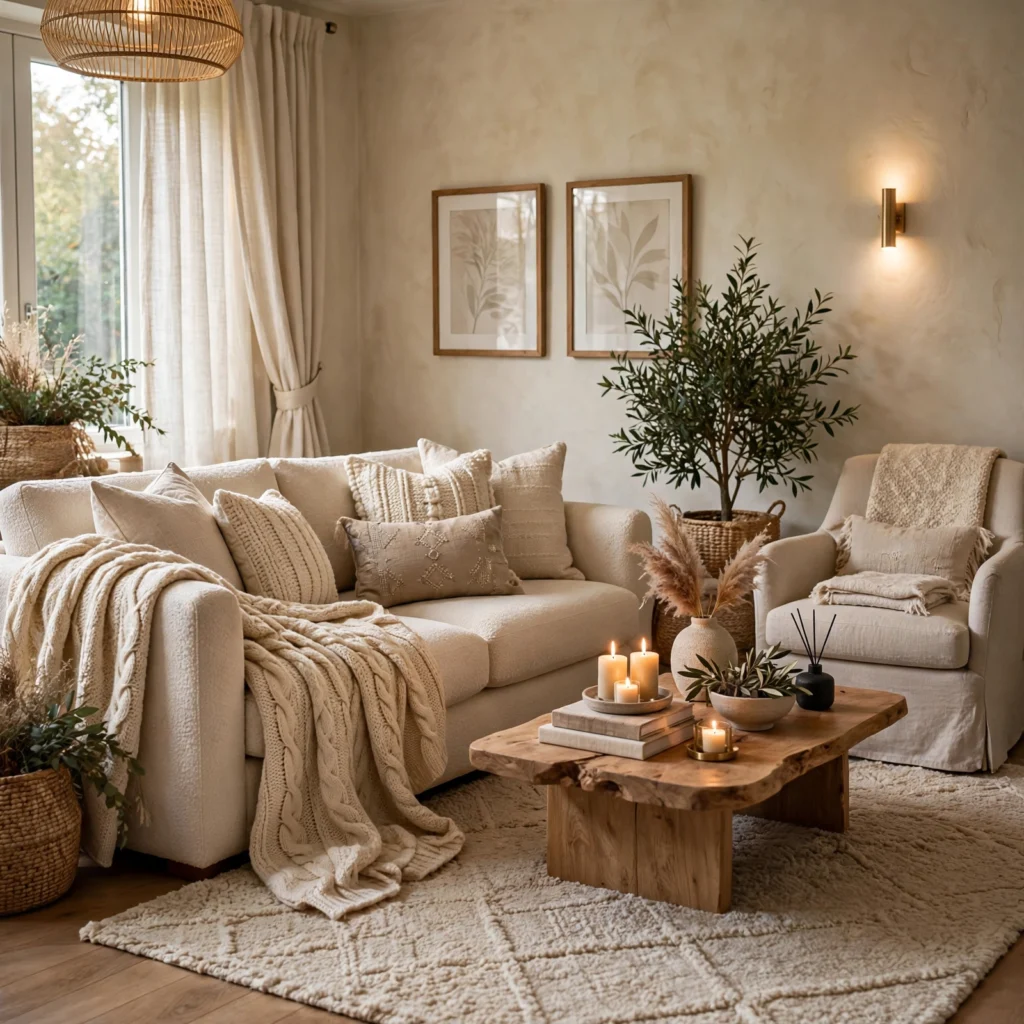
The textured throw draping technique folds a blanket in thirds and drapes it over one arm of the sofa, rather than balling it up in a corner or leaving it flat across the back cushions. This small styling detail makes a noticeable difference in how intentional the sofa looks day to day. Choosing a throw with visible texture, like a chunky knit, adds more visual interest to this technique than a flat, smooth fabric would.
7. Small Sculptural Object Placement
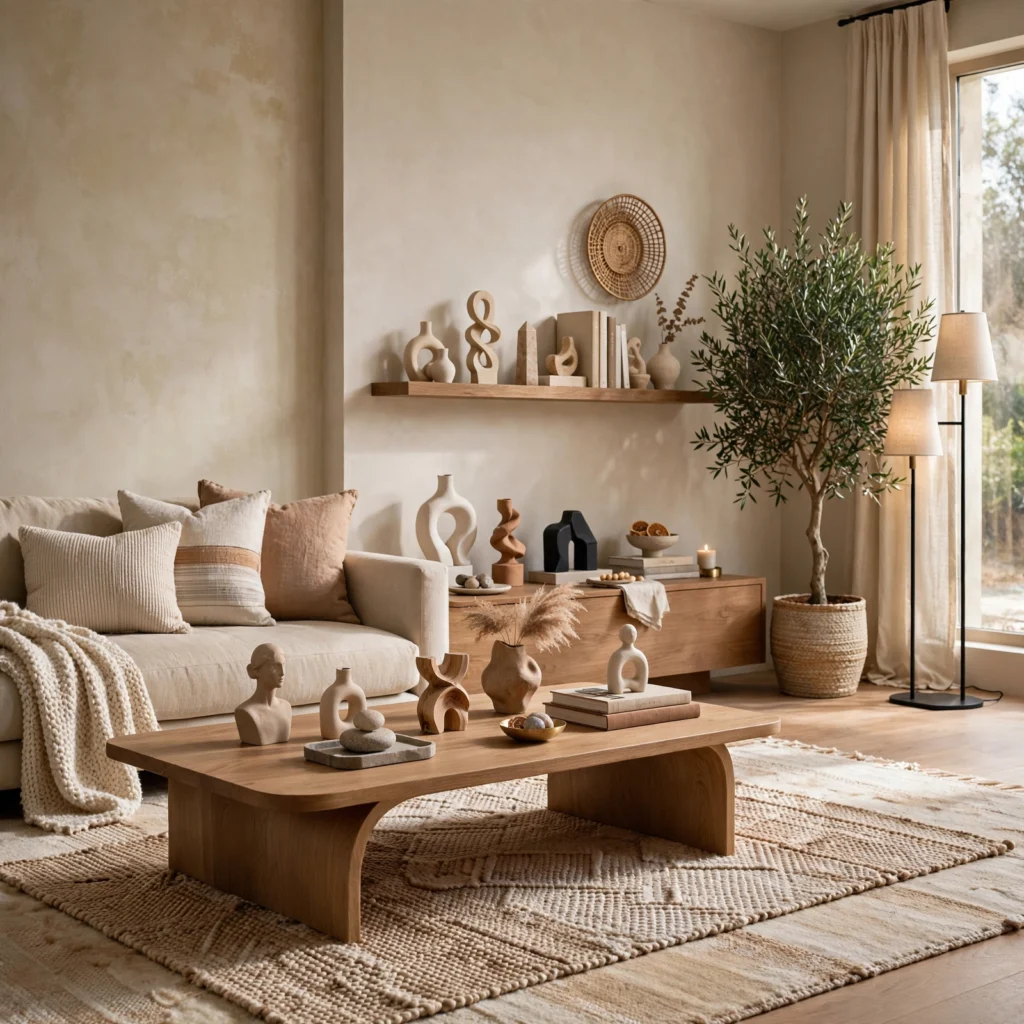
Small sculptural object placement adds one or two simple decorative pieces, like a ceramic form or a piece of carved wood, to a bookshelf, mantel, or console table, giving the room a few genuinely artistic touches beyond purely functional decor. Choosing pieces with an organic, irregular shape tends to read as more considered than a mass-produced decorative object. Placing these pieces where they have some breathing room around them, rather than crowded among other items, lets them actually function as a focal point.
8. Layered Frame Leaning Display
A layered frame leaning display rests two or three framed pieces against the wall on a mantel or console rather than hanging them, with a smaller frame propped in front of a larger one to create depth. This technique offers more flexibility to swap and rearrange art than a fixed gallery wall, and it works particularly well above a low console or mantel where there’s a surface to lean against. Choosing frames in varying but complementary finishes keeps the leaning grouping from looking mismatched.
9. Fresh or Faux Greenery Rotation
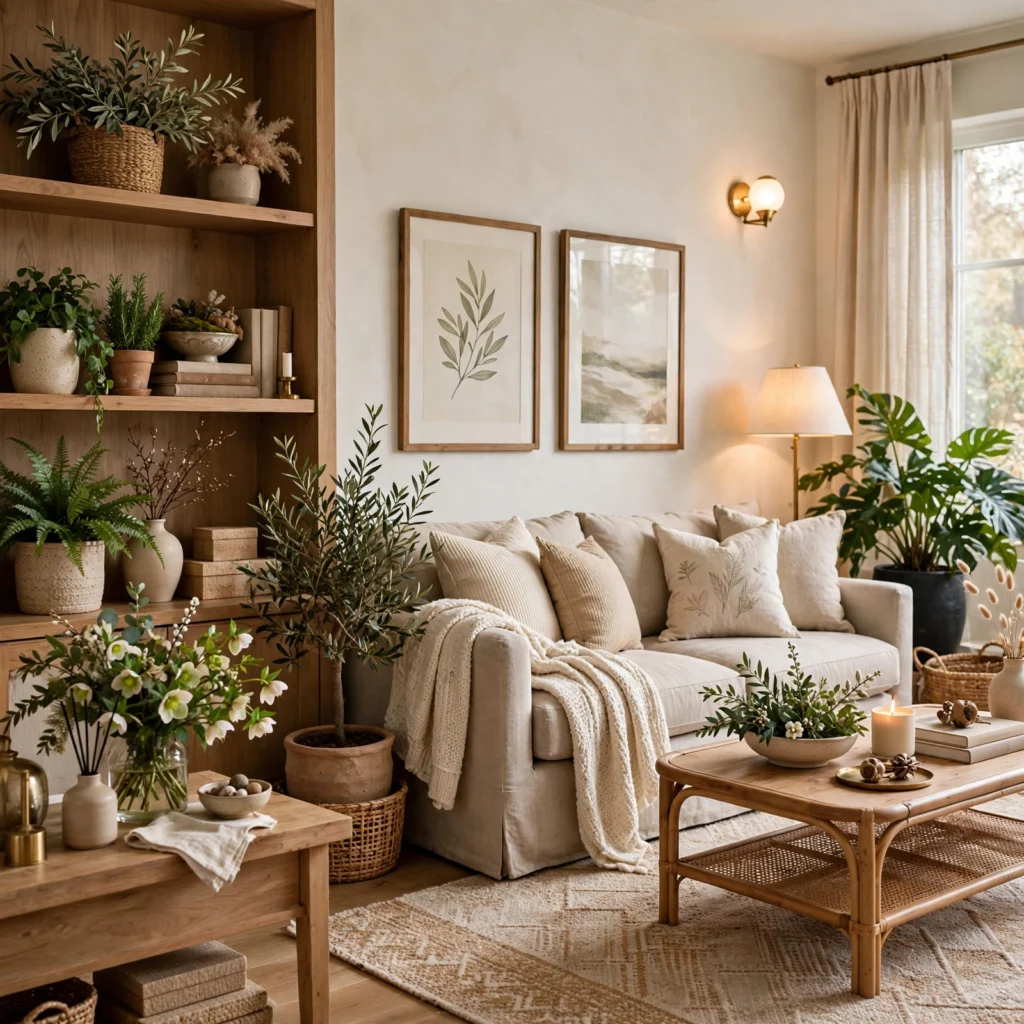
Fresh or faux greenery rotation swaps a vase of cut stems or a small potted plant every few weeks, keeping a consistent spot in the room, like a console table or mantel, feeling current without requiring any furniture changes. Choosing seasonal or affordable grocery store flowers for the fresh option keeps this update low-cost and easy to repeat regularly. A high-quality faux stem works as an alternative for those who want the same visual refresh without ongoing upkeep.
10. Ottoman as Flexible Surface
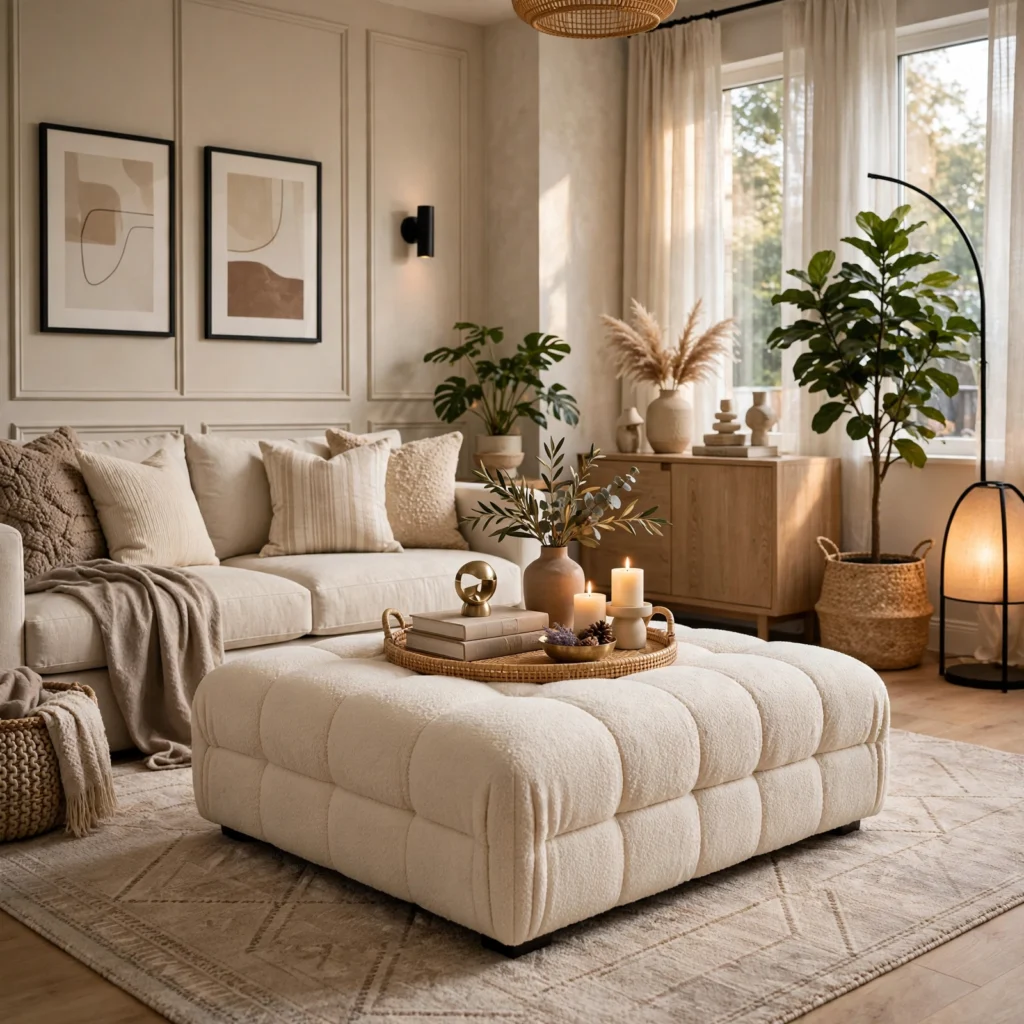
Using an ottoman as a flexible surface alternates its function between a footrest, a small side table with a tray on top, and extra seating depending on the day’s need, rather than committing it to a single fixed purpose. This flexibility matters more in a living room than a purely decorative piece, since the same ottoman can visually and functionally serve different needs without requiring separate furniture for each. Choosing an ottoman with a sturdy, flat top surface supports this multi-use approach most effectively.
11. Mirror Placement for Light Bounce
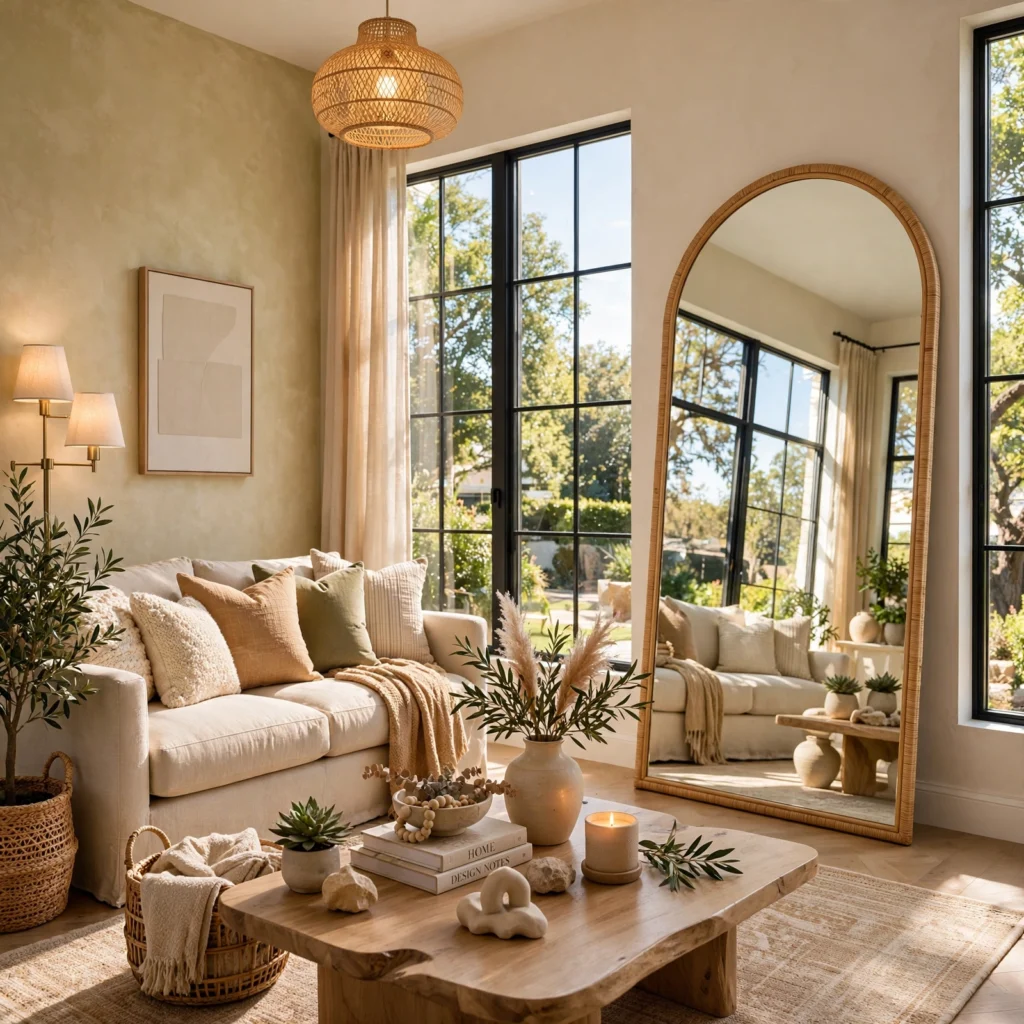
Mirror placement for light bounce positions a mirror across from a window or a lamp specifically to reflect additional light into a darker corner of the living room, rather than treating mirror placement purely as a decorative afterthought. This technique addresses a functional lighting need through what still reads as a decorative choice. Choosing a mirror sized appropriately to the wall it’s placed on, generally not overwhelming a smaller wall section, keeps the piece feeling proportional to its surroundings.
| Mirror Placement | Light Source Reflected | Effect |
| Opposite window | Natural daylight | Brightens whole room |
| Beside a lamp | Warm artificial light | Softens dark corner |
| Above console | Ambient room light | General reflection boost |
12. Basket as Functional Decor
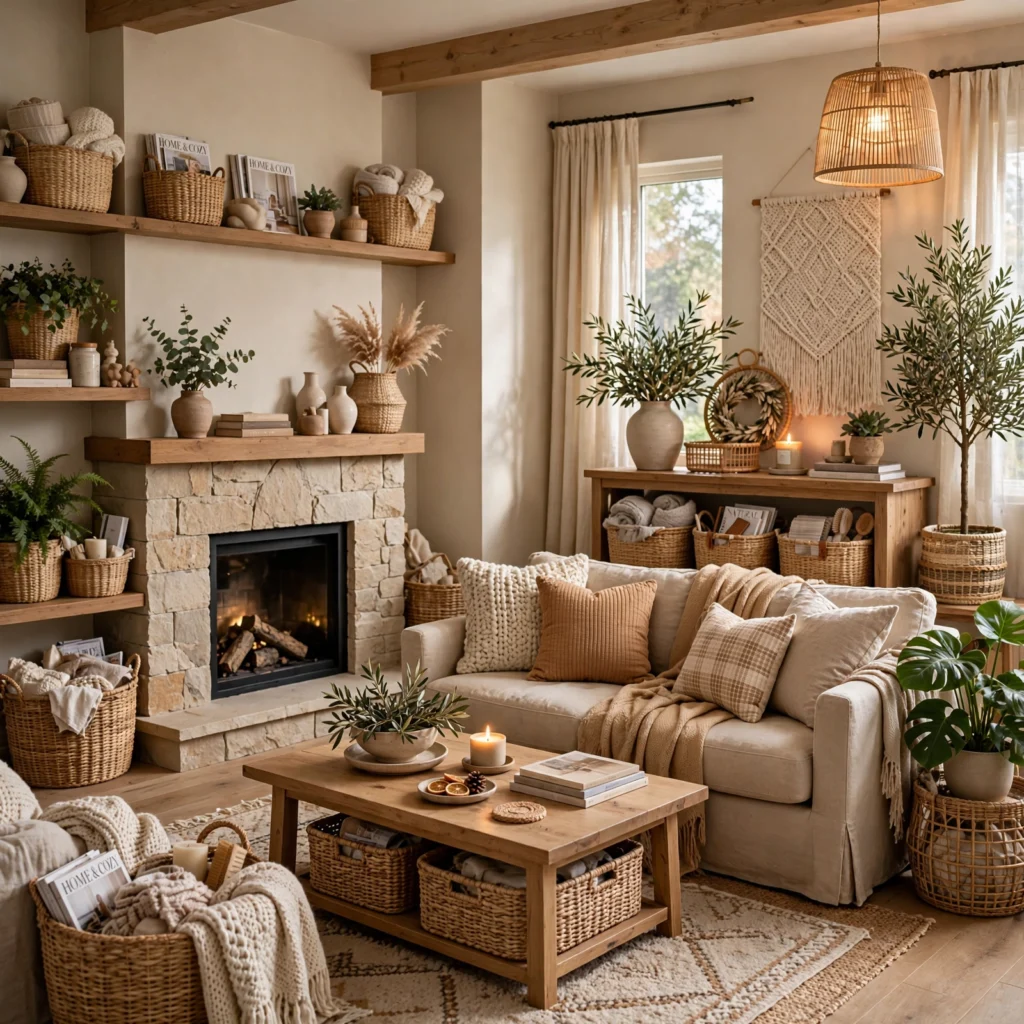
Using a basket as functional decor holds blankets, magazines, or remote controls in a woven container placed beside the sofa, turning a purely practical storage need into a textural decor element at the same time. Choosing a basket in seagrass or rattan adds natural warmth against a living room’s often harder, smoother surfaces like upholstery and wood furniture. This detail addresses everyday clutter while still contributing positively to the room’s overall styled look.
13. Layered Lighting for Evening Ambiance
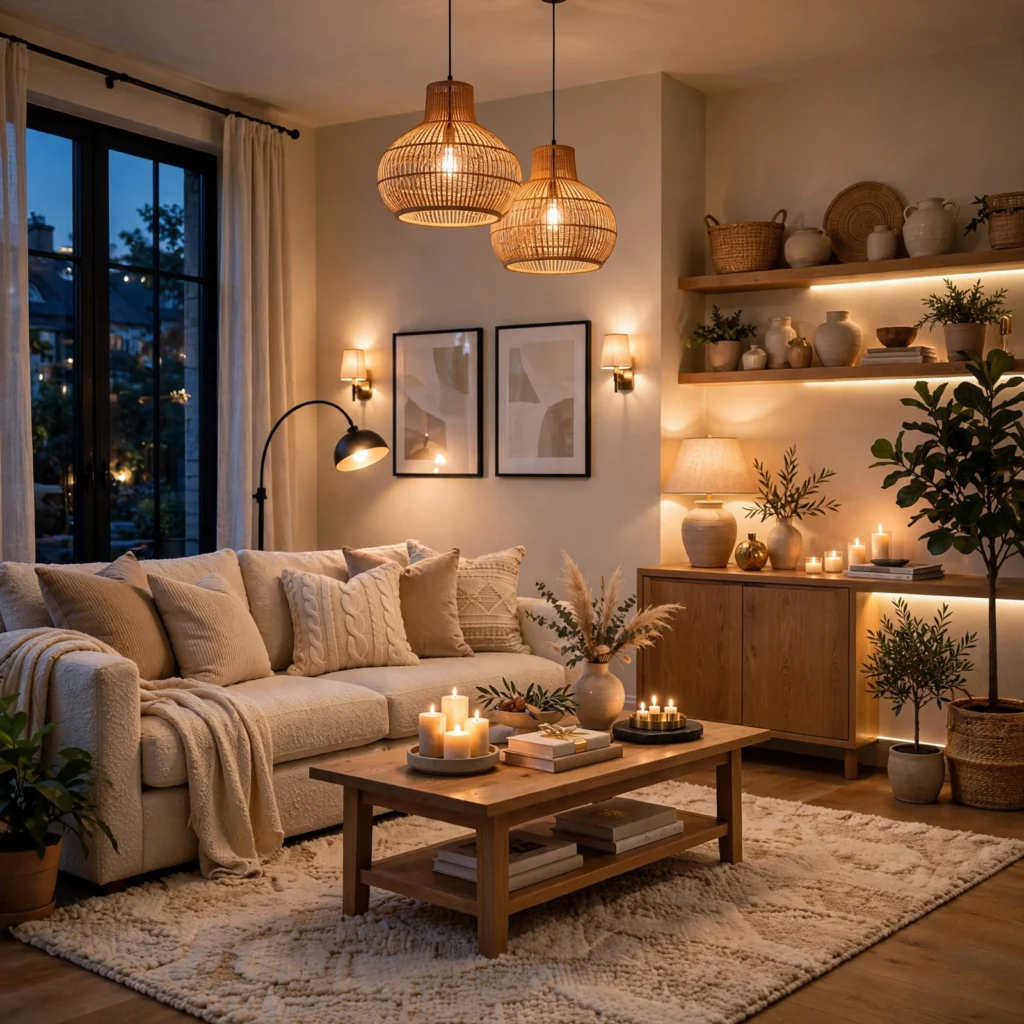
Layered lighting for evening ambiance combines a dimmed overhead fixture with one or two table lamps, creating a warmer, more intentional glow once natural light fades in the evening. This approach matters as a finishing touch because it changes how the room actually feels to spend time in, beyond how it photographs during the day. Choosing warm-toned bulbs around 2700K throughout keeps the various light sources feeling cohesive rather than mismatched in color temperature.
14. Curated Music or Sound Layer
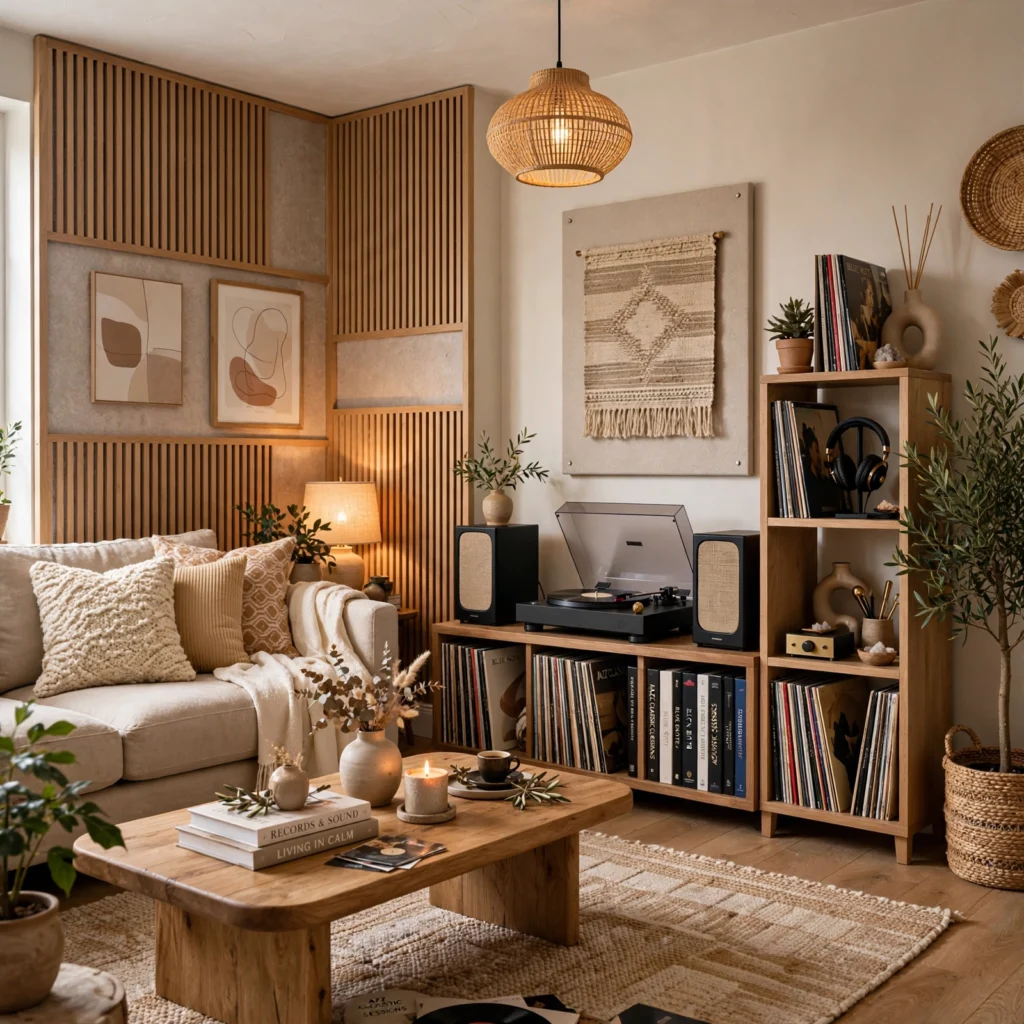
A curated music or sound layer, through a well-placed speaker or a small record player setup, adds an auditory element to the living room’s overall atmosphere that purely visual decor can’t achieve on its own. Placing the speaker where it’s visible but not obtrusive, like on a low shelf or side table, allows it to double as a decor object even when not in active use. This detail rounds out a fully sensory-considered living room beyond just what’s visible to the eye.
15. Seasonal Wreath or Door Accent
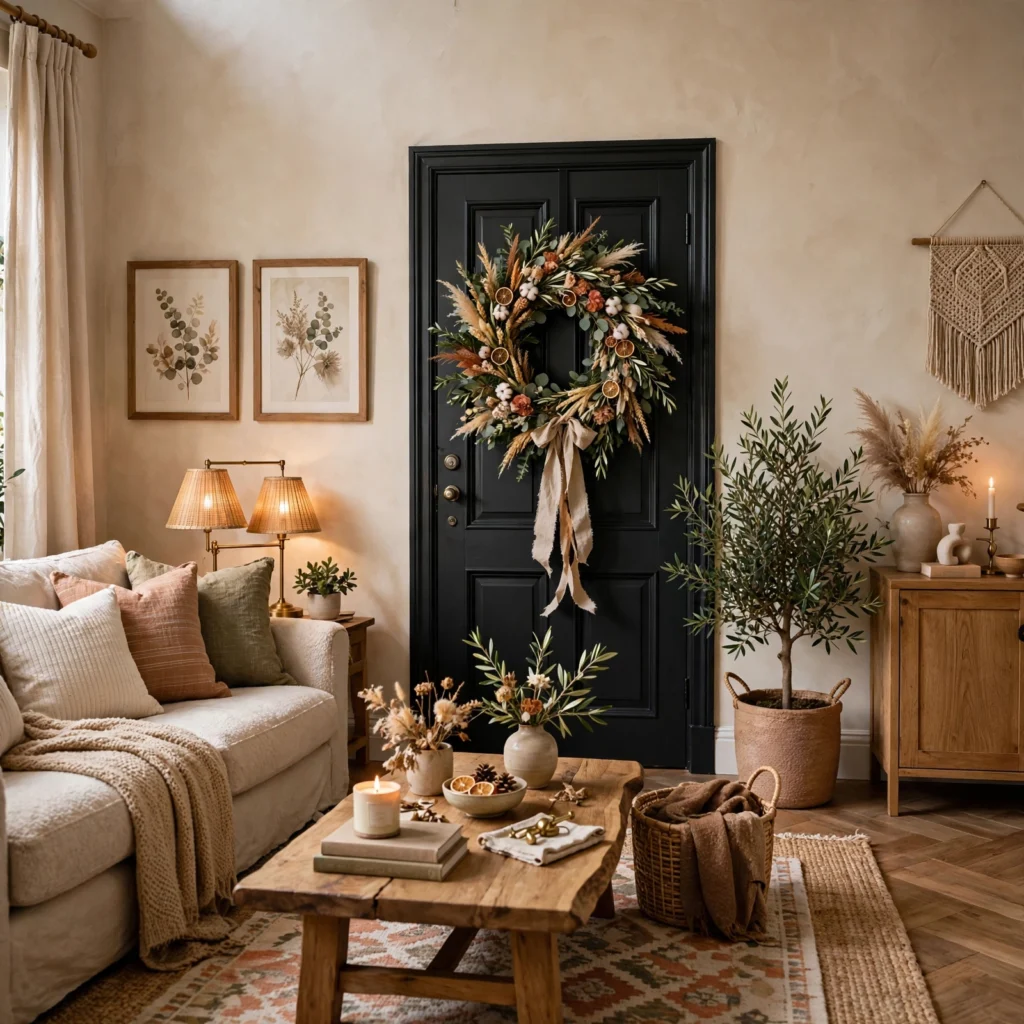
A seasonal wreath or door accent placed on an interior door or above a mantel within the living room, rather than reserved solely for the front entrance, extends seasonal decorating into the room itself. Choosing a wreath sized appropriately to the door or wall space, generally 16 to 24 inches, keeps the accent from looking undersized. This idea works as a low-cost way to mark seasonal transitions throughout the year without any larger decor investment.
16. Personal Object Integration
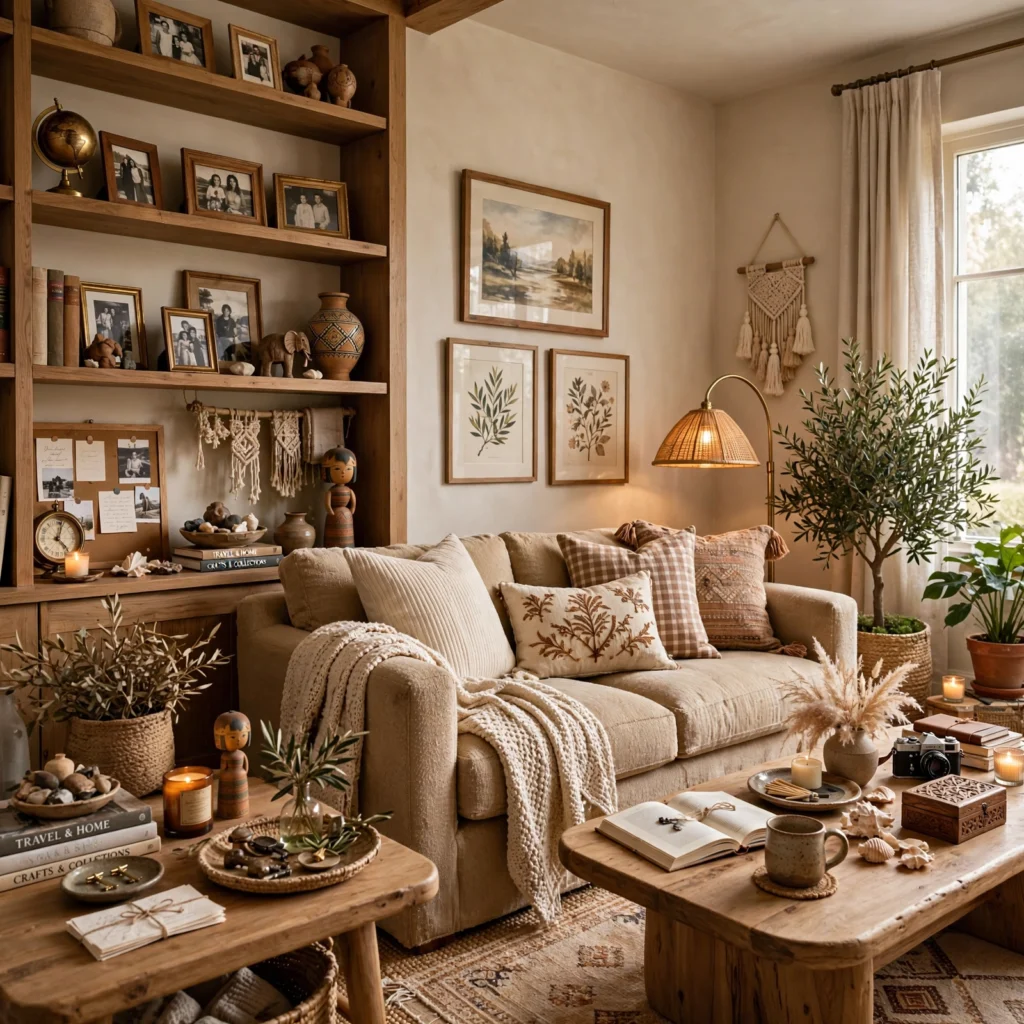
Personal object integration weaves meaningful items, like travel souvenirs, family heirlooms, or handmade pieces, into the room’s overall styling rather than storing them away separately from the more obviously decorative choices. Placing one or two of these personal pieces prominently on a shelf or console gives the room a layer of authenticity that purchased decor alone can’t replicate. This detail often matters more to how a living room actually feels lived-in and personal than any single trend-driven purchase.
Shop the Look
For this palette, look for a set of layered pillar candles, a wood or marble tray for coffee table styling, a woven seagrass basket for blankets, a mirror sized to reflect the room’s main window, and a rotating set of coffee table books with visually appealing spines. These pieces work together across several of the ideas above without requiring any furniture changes.
Common Mistake to Avoid
The most common mistake is treating a living room as finished once the furniture is in place, skipping the smaller styling layers that actually make a room feel considered rather than simply furnished. A room with a nice sofa and rug but no tray styling, layered lighting, or rotating small decor often reads as unfinished despite the significant investment already made in the larger pieces. Budgeting time and a small amount of ongoing effort for these finishing touches, even after the main furniture decisions are settled, produces a noticeably more polished result.
FAQs
What home decor ideas living room finishing touches make the biggest difference?
Curated tray styling, layered lighting for evening ambiance, and mirror placement for light bounce tend to make the biggest difference among home decor ideas living room finishing touches, since these three address both visual organization and how the room actually functions at different times of day. Seasonal textile rotation is a close fourth, since it’s one of the most affordable ways to keep the room feeling current throughout the year. These four updates require relatively little investment compared to furniture changes while noticeably improving the room’s finished feel.
How often should living room decor be refreshed?
Smaller decor elements like throw pillows, a coffee table book stack, and greenery generally benefit from refreshing every one to three months, keeping the room feeling current without requiring significant ongoing cost. Larger elements like furniture, rugs, and wall art typically stay in place for several years at a time, refreshed only when personal taste shifts or the pieces show wear. This tiered approach, frequent small updates alongside infrequent larger changes, tends to keep a living room feeling considered without constant major investment.
How much does it cost to add finishing touches to a living room?
A budget refresh using curated tray styling, a candle grouping, and a rotating book stack can run under $75 total, while adding a woven basket, layered lighting elements, or a properly sized mirror typically pushes the range to $150–$400. These finishing-touch updates generally cost significantly less than furniture or rug investments, making them a practical way to notice regular improvement in a living room’s overall feel without a large budget commitment.
Do small decor items really make a noticeable difference in a living room?
Small decor items do make a noticeable cumulative difference in a living room, particularly when applied consistently across several techniques like tray styling, layered lighting, and intentional textile draping, rather than as a single isolated change. Individually, one small item might not transform the room, but the combined effect of several thoughtfully placed details often does more to make a space feel finished than people initially expect. This is part of why professional stagers and designers spend real time on these smaller layers rather than stopping once furniture is placed.
What’s the easiest living room finishing touch to start with?
Curated tray styling is generally the easiest living room finishing touch to start with, since it requires only a tray and a few items already likely on hand, like a candle or a small stack of books, rather than any new furniture purchase. This single technique also demonstrates the broader principle behind most of these finishing touches, grouping and intentional placement over scattered individual items, making it a useful starting point before tackling other styling layers throughout the room.
Conclusion
These home decor ideas living room finishing touches cover everything from a five-minute tray rearrangement to seasonal textile and lighting updates throughout the year, giving you options regardless of how much time or budget you want to dedicate to ongoing styling. Start with tray styling and throw draping, since those take the least effort while making an immediate visible difference, then build in seasonal rotation and sensory details as a regular habit. Save this guide to Pinterest for later, and check out our related post on living room decor ideas for more furniture-focused guidance.