15 Exquisite Luxury Living Room Designs Classy to Transform Your Home With Elegance
Walk into any five-star hotel lobby and you’ll notice something: nothing is loud, yet everything feels expensive. That’s the quiet logic behind the best luxury living room designs classy homeowners actually live in, not just photograph. This post breaks down fifteen specific, buildable ideas covering furniture, lighting, textiles, and layout so you can borrow real techniques instead of vague inspiration. By the end, you’ll know exactly which pieces to shop for and which mistakes quietly cheapen an otherwise good room.
Key Takeaways
- Rich materials like velvet, marble, and brass form the backbone of any high-end living room and instantly signal quality over quantity.
- Lighting layers, from statement chandeliers to sculptural floor lamps, do more to elevate a room’s mood than any single furniture piece.
- Texture and color restraint, not clutter, are what separate a refined interior from a merely expensive-looking one.
- Small styling choices like curated books and mirrored surfaces can make a modest room read as high-end without a full renovation.
Why Luxury Living Room Designs Classy Interiors Are Trending Now
Interior design has shifted away from maximalist trends and fast-furniture layering toward “quiet luxury,” a term borrowed from fashion that now dominates home design searches and Pinterest boards alike. Homeowners are investing in fewer, better pieces: solid wood over veneer, natural stone over laminate, linen over synthetic blends. This shift matters now because remote work and slower home life have made living rooms the most-used room in the house, and people want that space to feel considered, calm, and built to last rather than trend-chasing.
1. Velvet Chesterfield Sofa
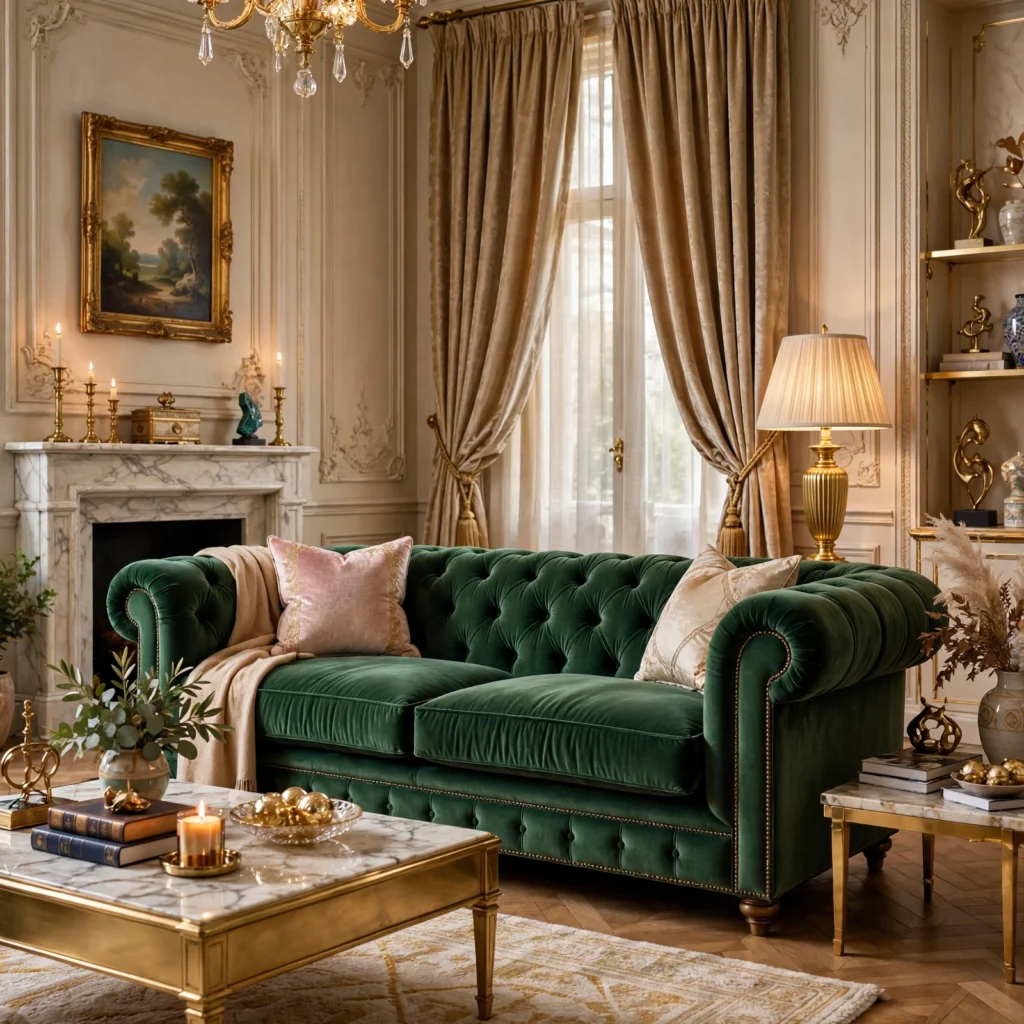
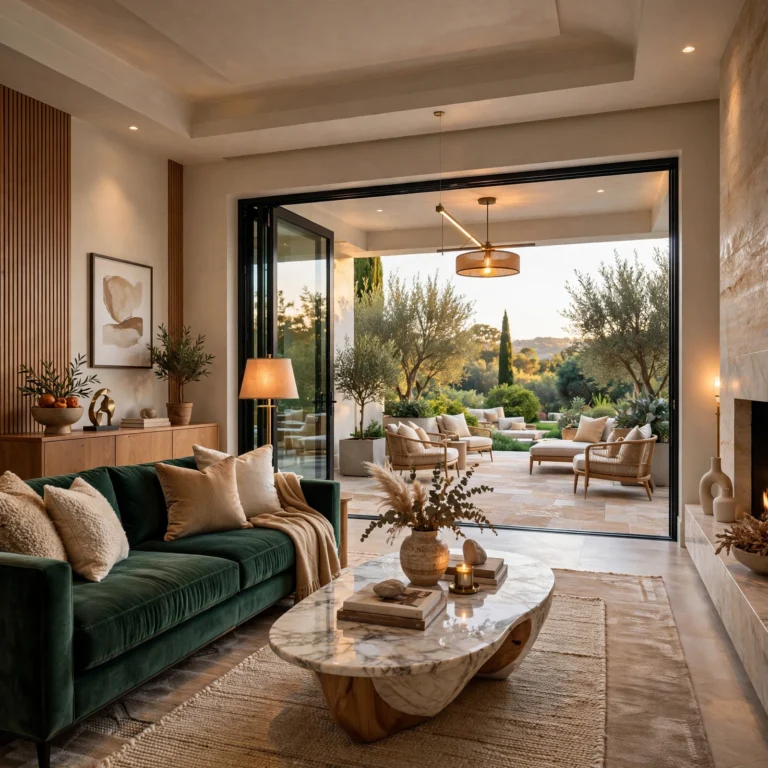
A velvet Chesterfield sofa anchors a room with its deep button-tufted back and rolled arms, giving even a simple layout an established, collected-over-time feel. Choose jewel tones like emerald or sapphire for drama, or oatmeal and charcoal for a quieter palette that ages well. Pair it with brass or bronze nailhead trim rather than chrome for warmth. Because the silhouette is timeless, it works in both traditional and transitional rooms without looking dated in five years.
2. Marble Coffee Table
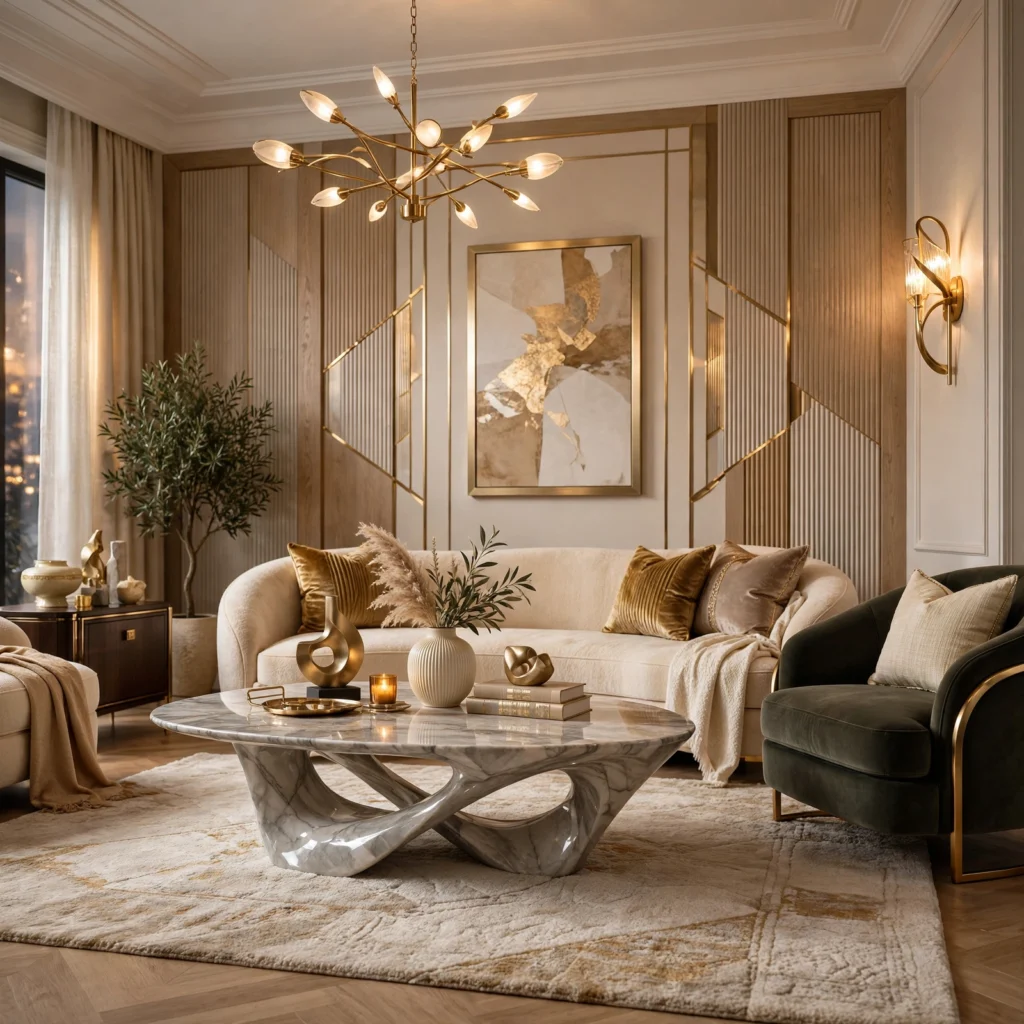
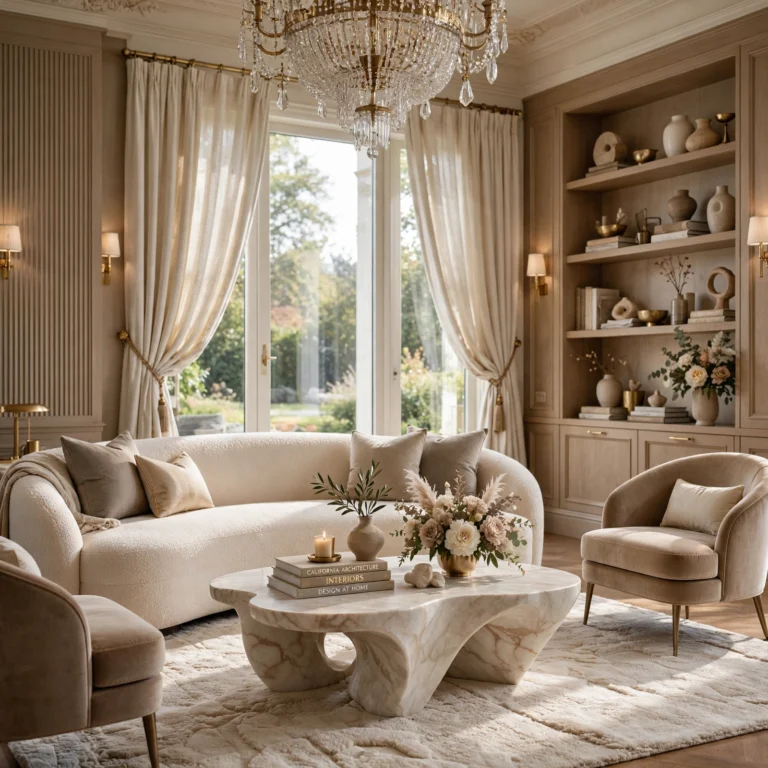
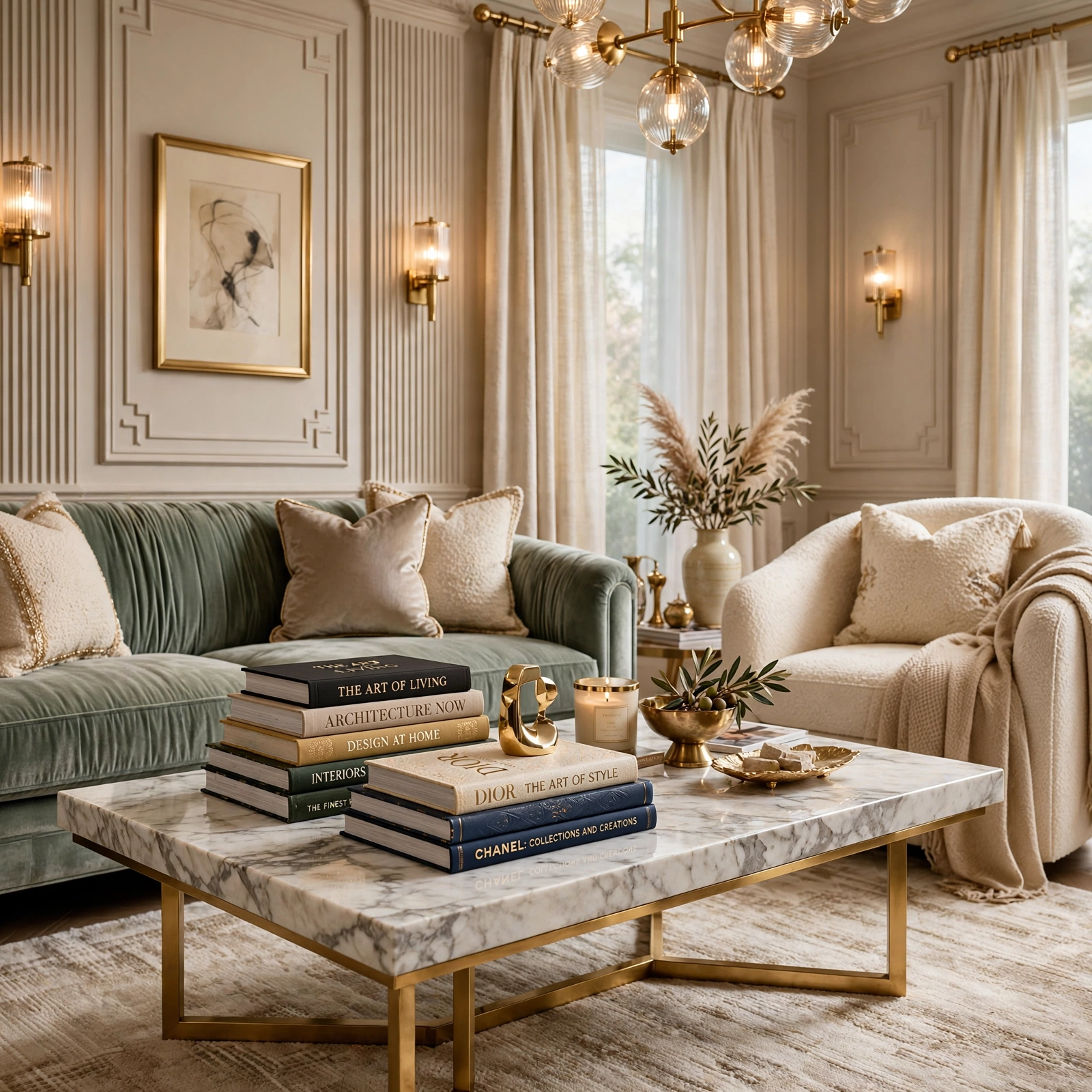
A marble coffee table, whether Carrara, Calacatta, or a more affordable quartz composite, introduces natural veining that no printed laminate can replicate convincingly. The cool stone surface contrasts beautifully against warm wood flooring or a plush wool rug, and a brass or blackened-steel base keeps the piece from feeling heavy. Round profiles suit smaller rooms with tighter walking paths, while rectangular slabs work better in front of longer sectional sofas.
| Table Shape | Best Room Size | Approx. Budget Range |
| Round, 36″ | Under 250 sq ft | $400–$1,200 |
| Oval, 48″ | 250–350 sq ft | $700–$2,000 |
| Rectangular, 54″+ | 350+ sq ft | $900–$3,500 |
3. Brass Accent Lighting
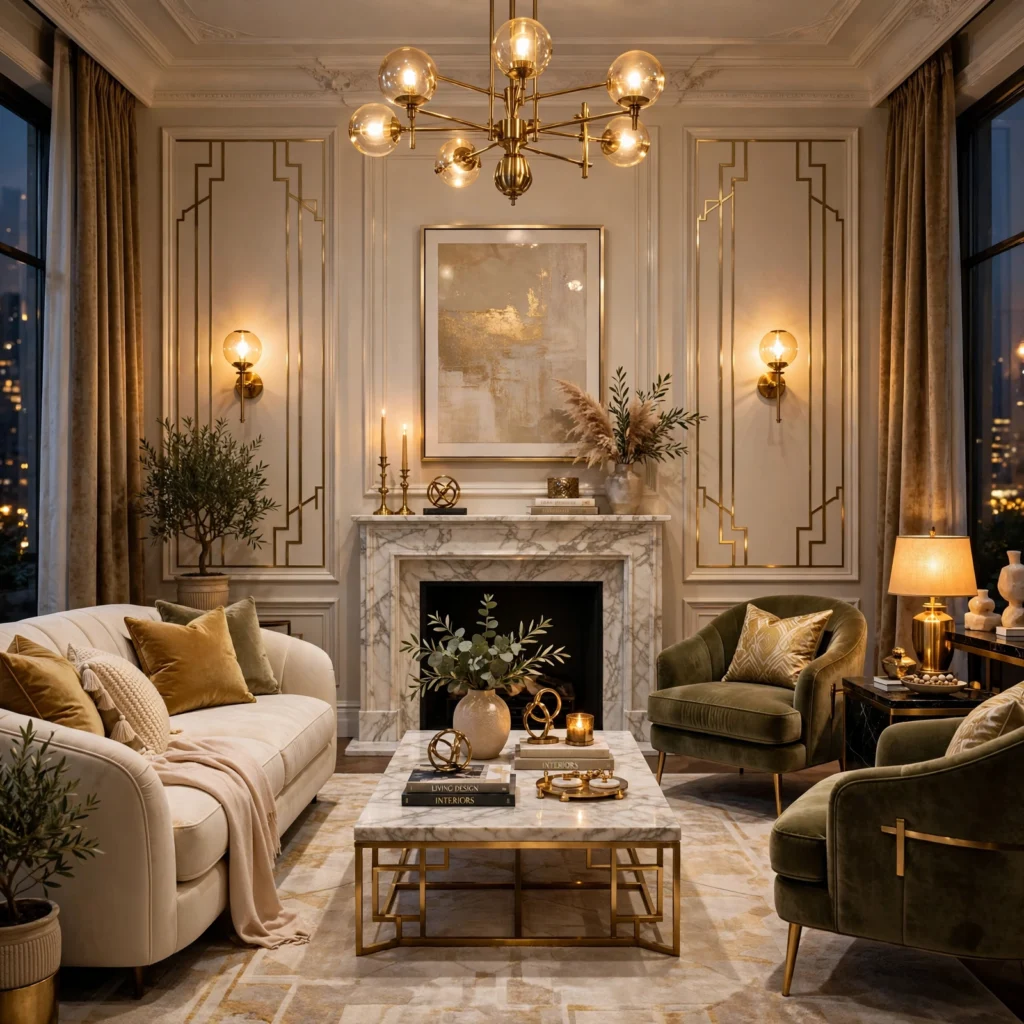
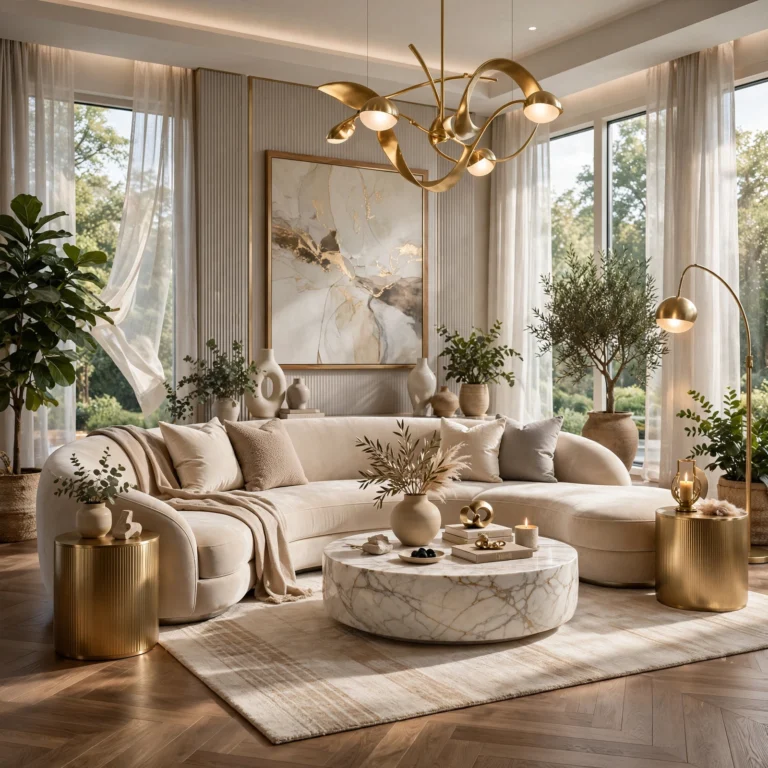
Brass accent lighting, from picture lights over artwork to slim wall sconces flanking a fireplace, adds a warm metallic glow that photographs beautifully and reads as intentional rather than accidental. Unlike overhead-only lighting, these fixtures create pools of light at different heights, which designers rely on to make ceilings feel taller and corners feel finished. Choose an unlacquered or antique brass finish so the metal develops a soft patina over time instead of staying artificially shiny.
To see more options for luxury living room inspiration
4. Herringbone Hardwood Flooring
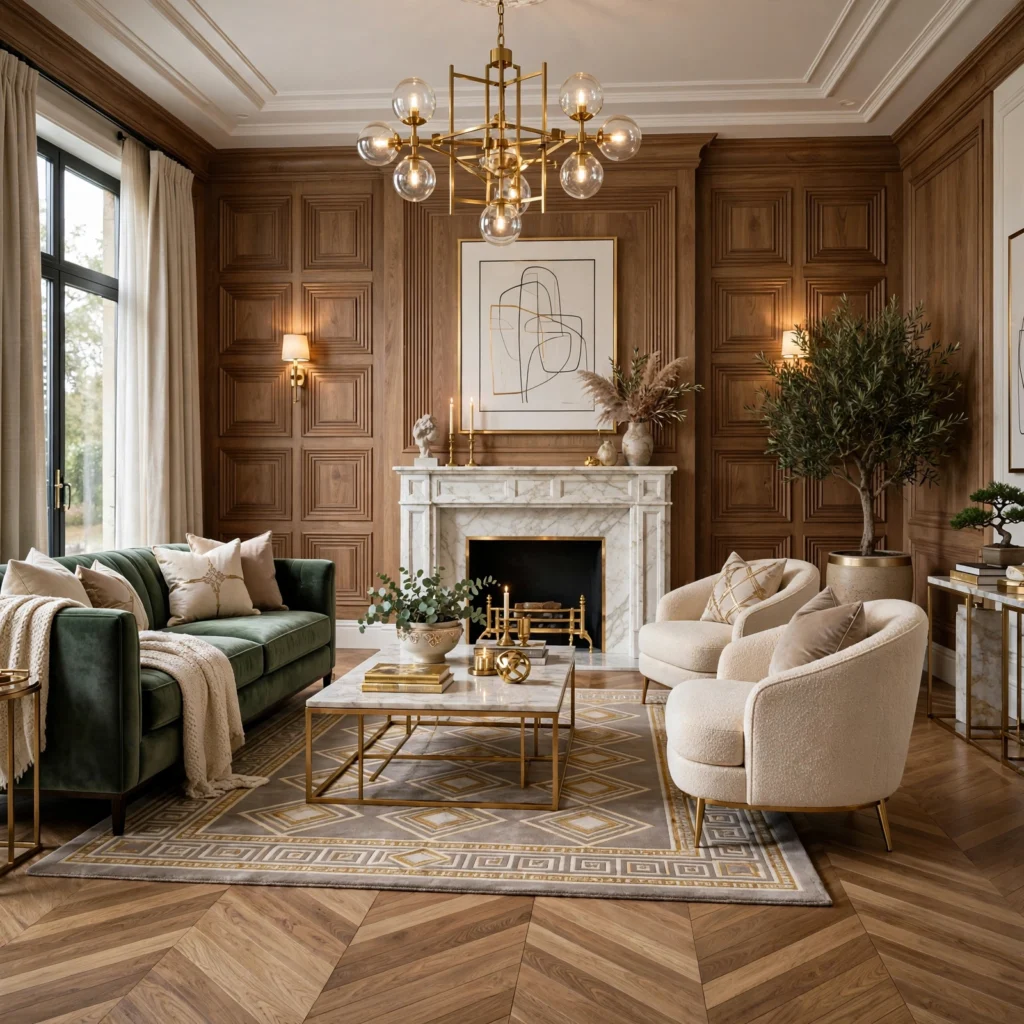
Herringbone hardwood flooring uses a classic zigzag parquet pattern that instantly reads as European and custom, even when installed with standard oak planks. The angled pattern also tricks the eye into perceiving more square footage than a straight-lay floor of the same size. White oak with a matte or hardwax-oil finish keeps the look current, while darker walnut versions suit more formal, traditional living rooms. Professional installation is worth the added cost here, since misaligned angles are immediately noticeable.
5. Floor-to-Ceiling Drapery
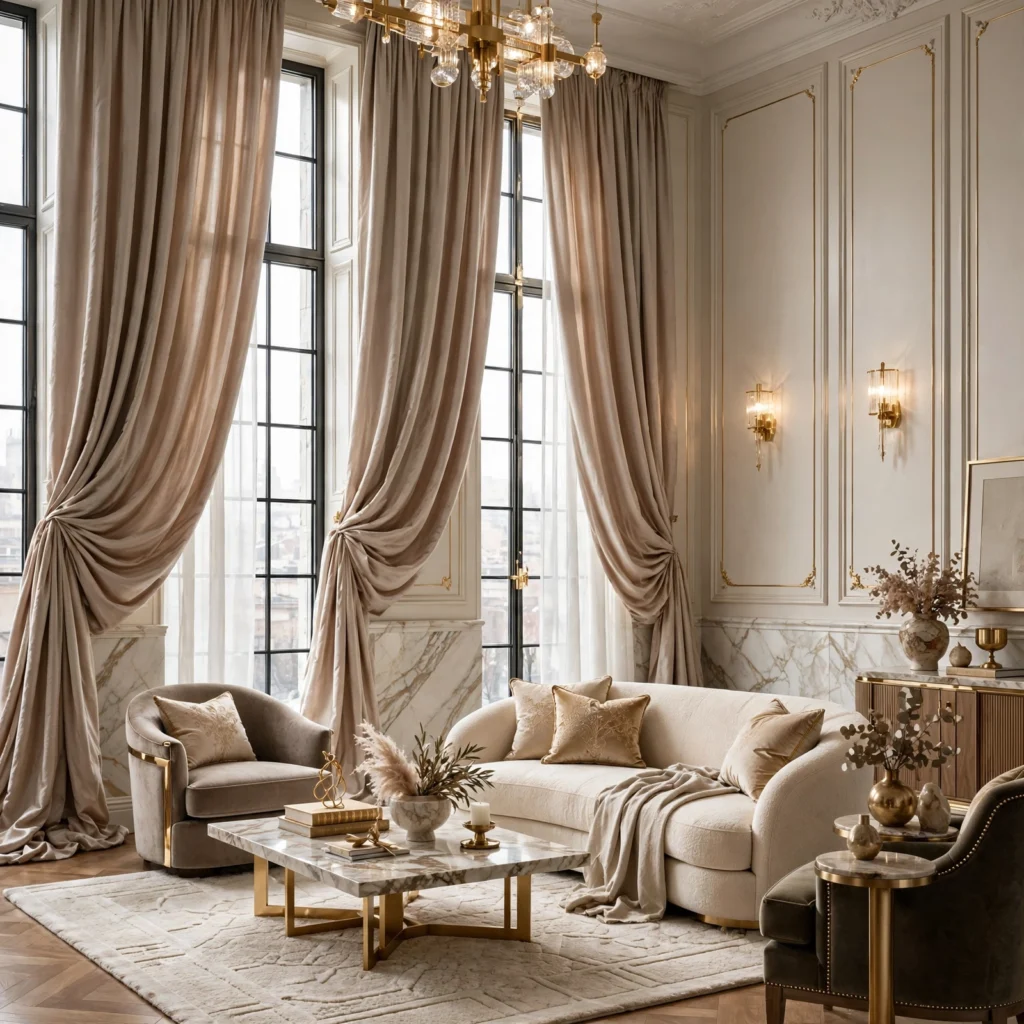
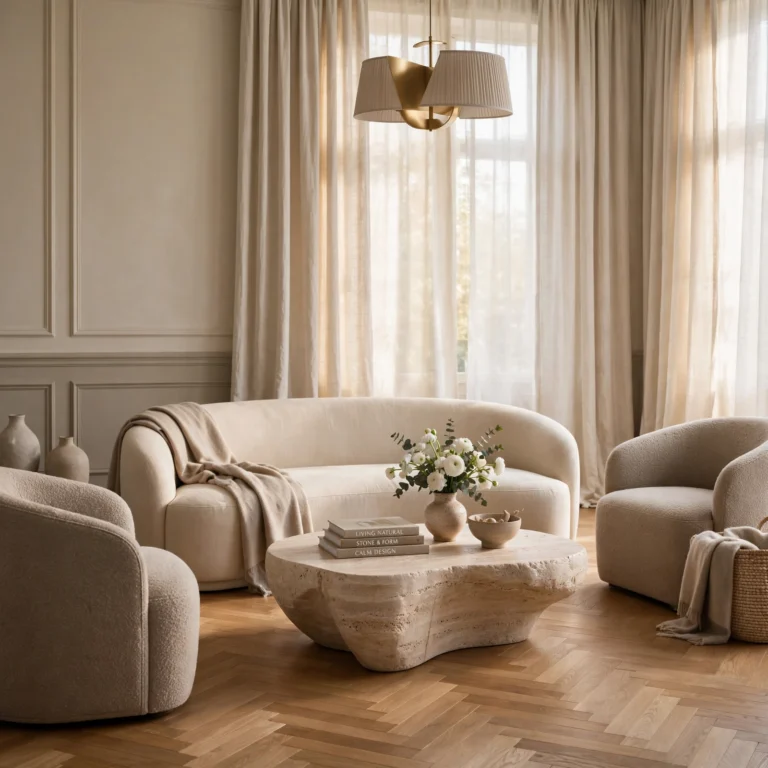
Floor-to-ceiling drapery mounted just below the crown molding, rather than directly above the window frame, is one of the simplest tricks for making a living room feel grander than its actual dimensions. Linen or a linen-cotton blend drapes with more elegant movement than heavy blackout fabric and still filters light softly during the day. Panels should graze the floor or pool slightly, never hover above it, since a visible gap between fabric and floor reads as an afterthought.
| Ceiling Height | Recommended Panel Length | Mounting Point |
| 8 ft | 84″–96″ | 4″–6″ above window frame |
| 9 ft | 96″–108″ | 6″–8″ above window frame |
| 10 ft+ | 108″–120″ | Just below crown molding |
6. Gallery Wall Art Arrangement
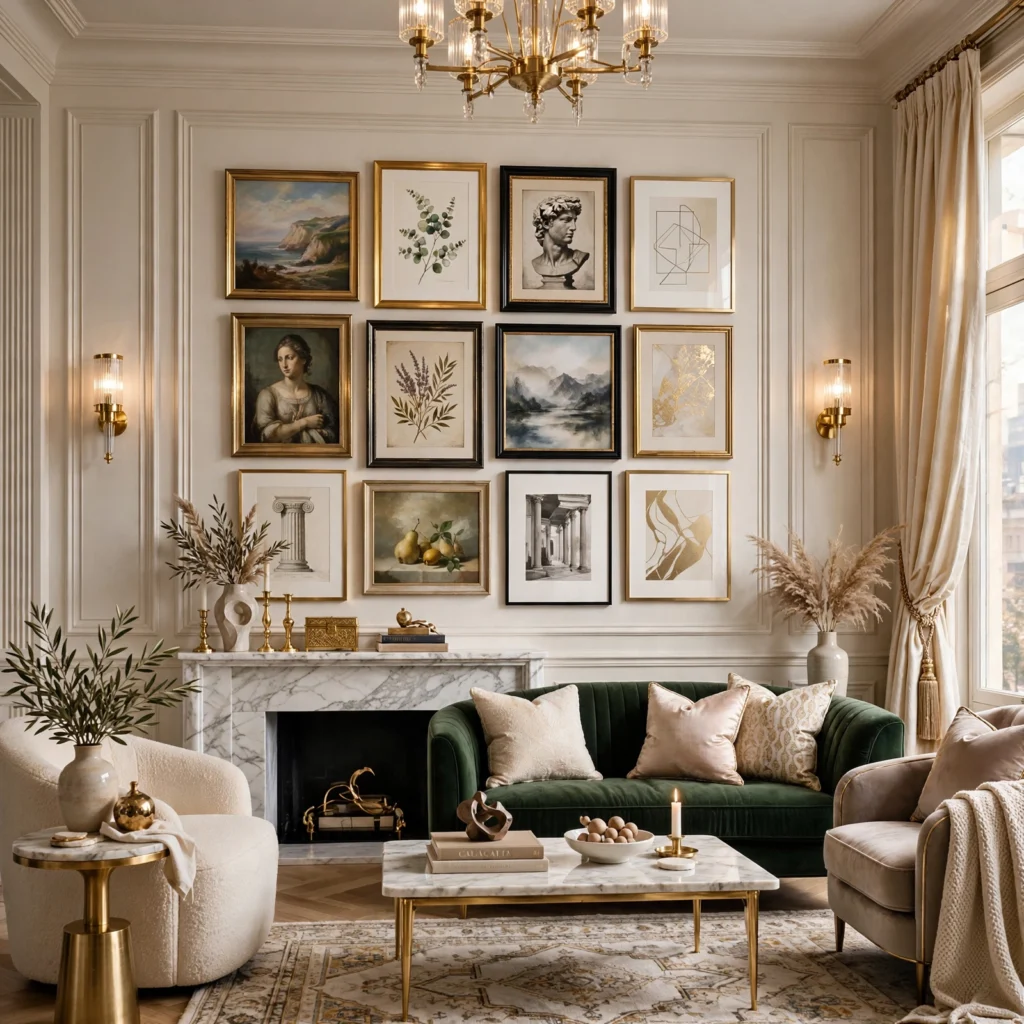
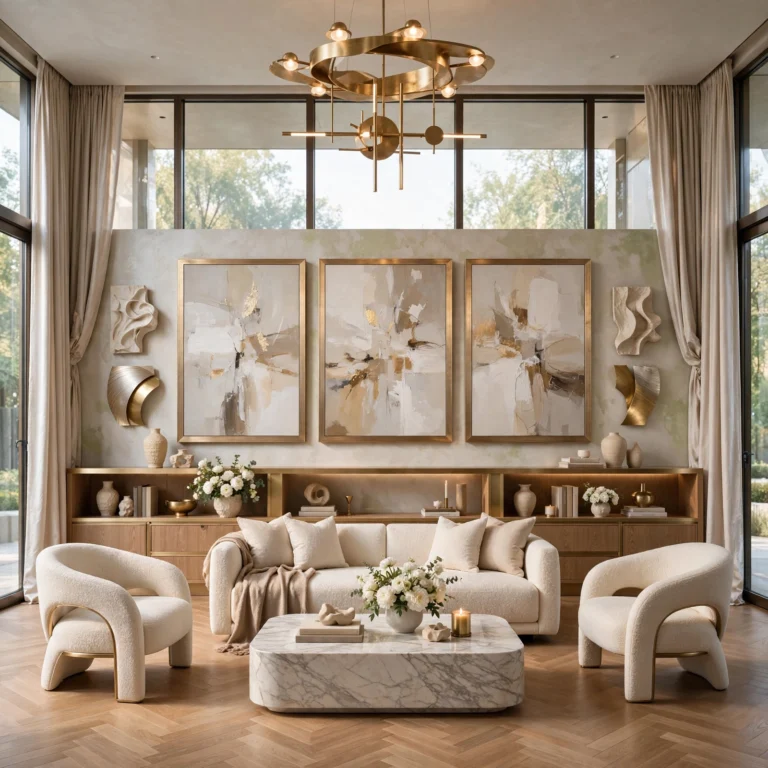
A gallery wall art arrangement built from a mix of original paintings, framed prints, and one or two mirrors gives a living room the layered, personal feel of a home that was decorated over years rather than in a single weekend. Keep frame finishes consistent, black, gold, or walnut, so the variety in artwork doesn’t tip into visual clutter. Leaving two to three inches between frames and grouping around a single anchor piece, usually the largest or most colorful, keeps the arrangement feeling curated rather than random.
7. Statement Chandelier
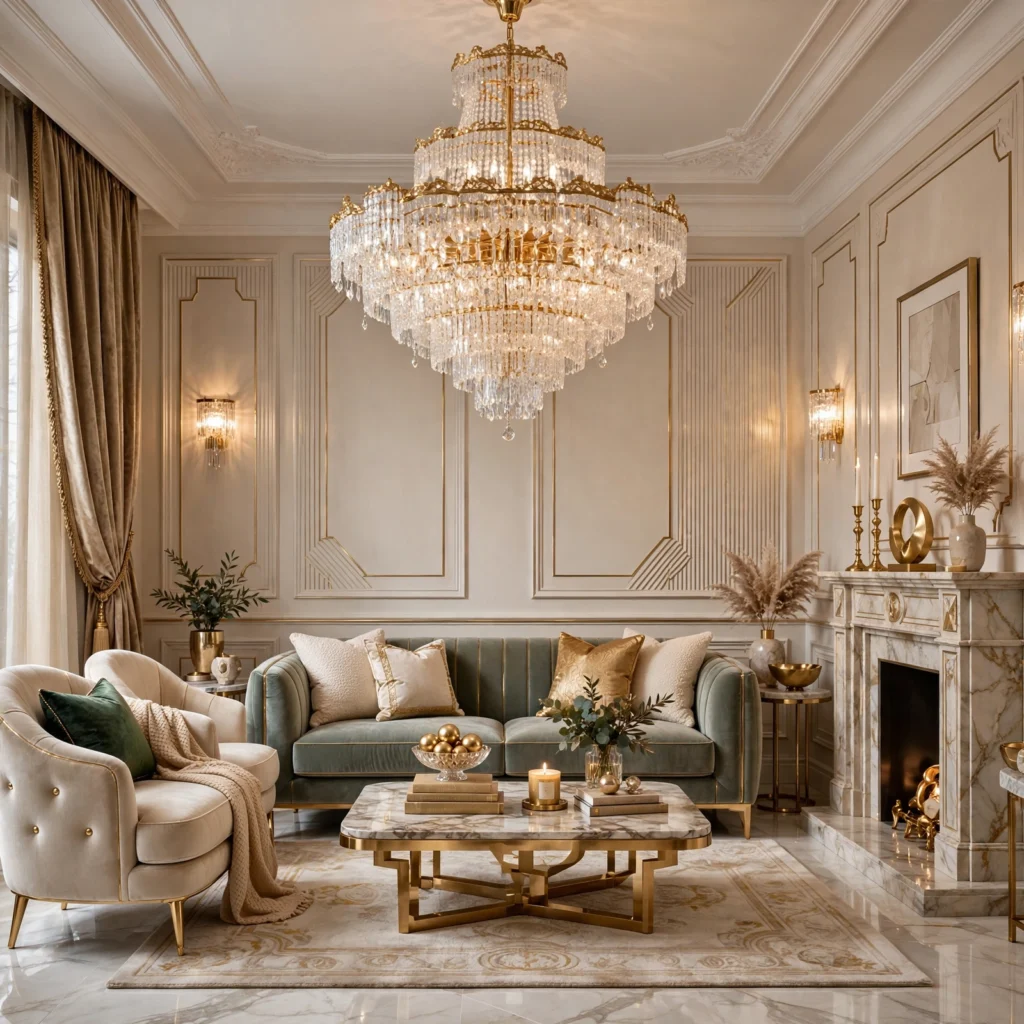
A statement chandelier in hand-blown glass, aged brass, or linear crystal draws the eye upward and becomes the room’s focal point the moment someone walks in, doing more visual work than an entire wall of decor. Scale matters most here: a fixture that’s too small will look like an afterthought no matter how expensive it is. Dimmable warm-white bulbs, rather than cool daylight ones, keep the fixture flattering for evening entertaining and everyday lounging alike.
| Room Width | Recommended Chandelier Diameter | Typical Budget |
| 10–12 ft | 20″–24″ | $300–$900 |
| 13–16 ft | 24″–30″ | $700–$2,500 |
| 17 ft+ | 30″–40″ | $1,500–$5,000+ |
8. Silk Area Rug
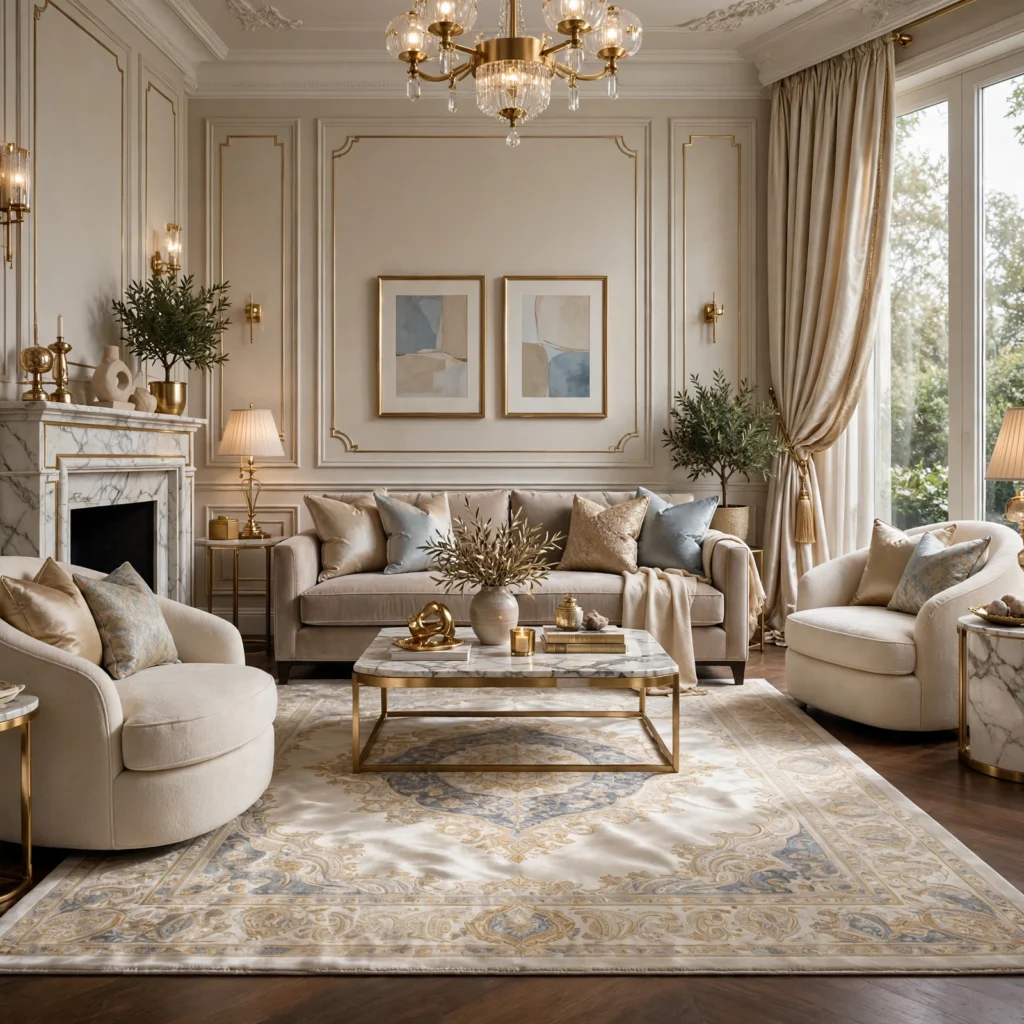
A silk or silk-blend area rug introduces a subtle sheen that shifts depending on the angle you view it from, giving the floor a sense of movement that a flat-pile wool rug can’t match on its own. Because pure silk is delicate underfoot, a silk-wool blend offers similar luster with better durability for a high-traffic living room. Sticking to muted, tonal patterns rather than high-contrast designs keeps the rug feeling refined instead of busy next to patterned upholstery.
9. Built-In Bookshelves
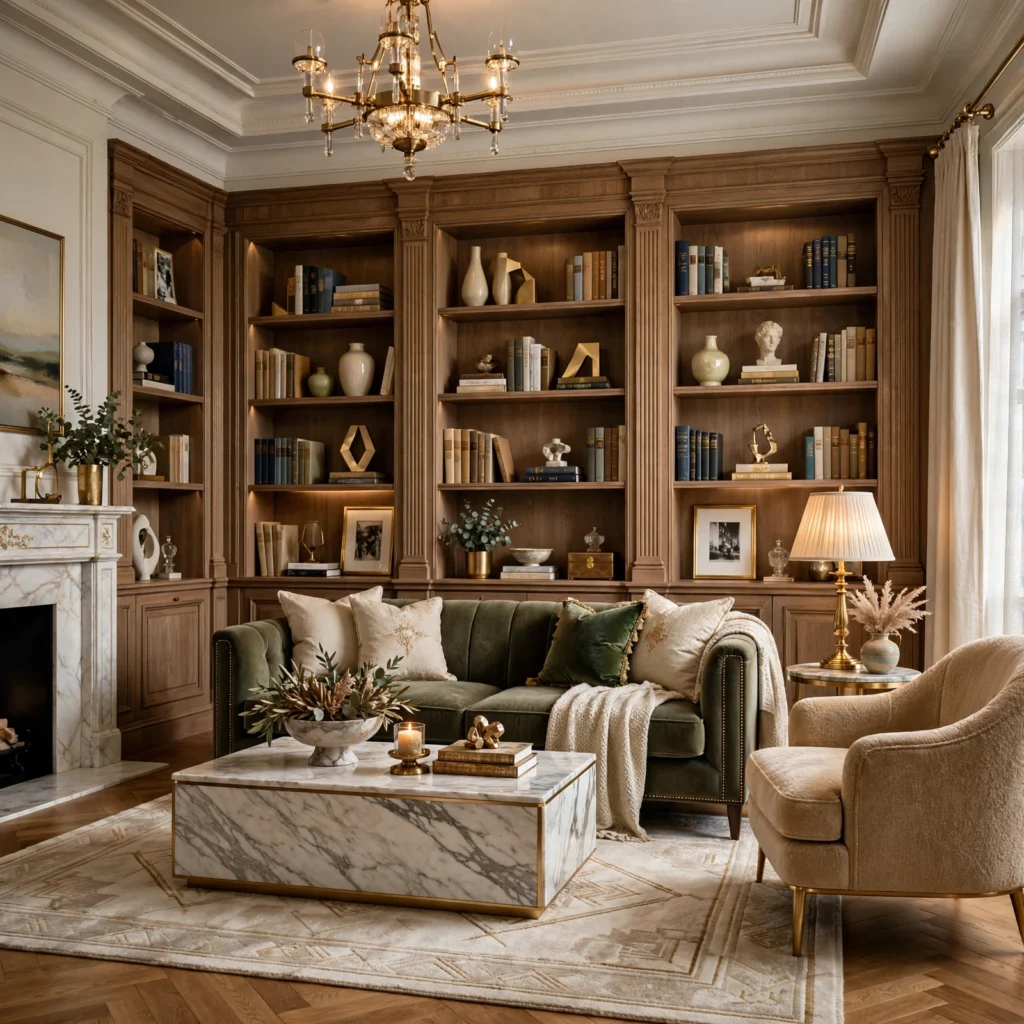
Built-in bookshelves flanking a fireplace or window use the full wall height, drawing the eye up and making standard 8-foot ceilings feel taller than they are. Painting the shelf interior a deep color like ink blue or hunter green while keeping the trim white creates depth and a boutique-library feel. Mixing vertical books with horizontal stacks, small sculptures, and negative space, rather than filling every inch, is what keeps the styling from looking like storage instead of design.
10. Tufted Ottoman Bench
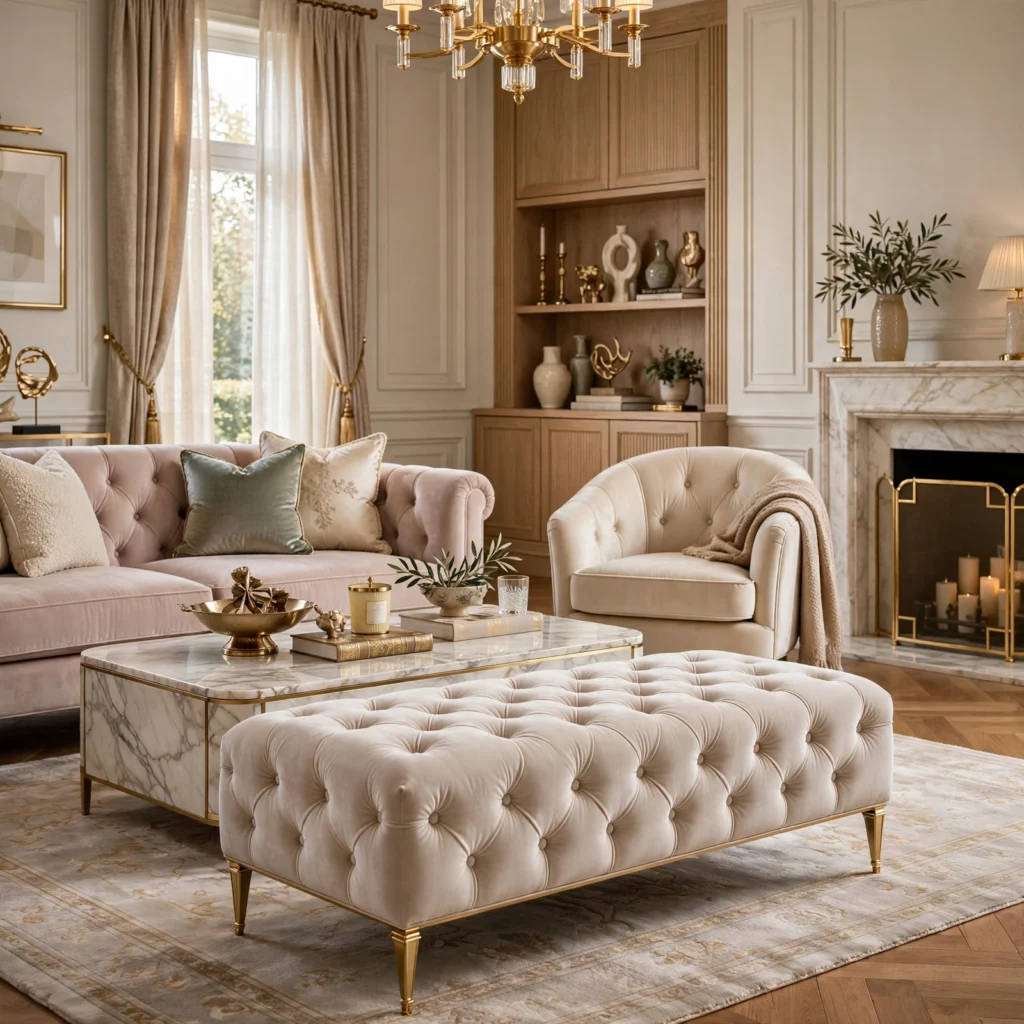
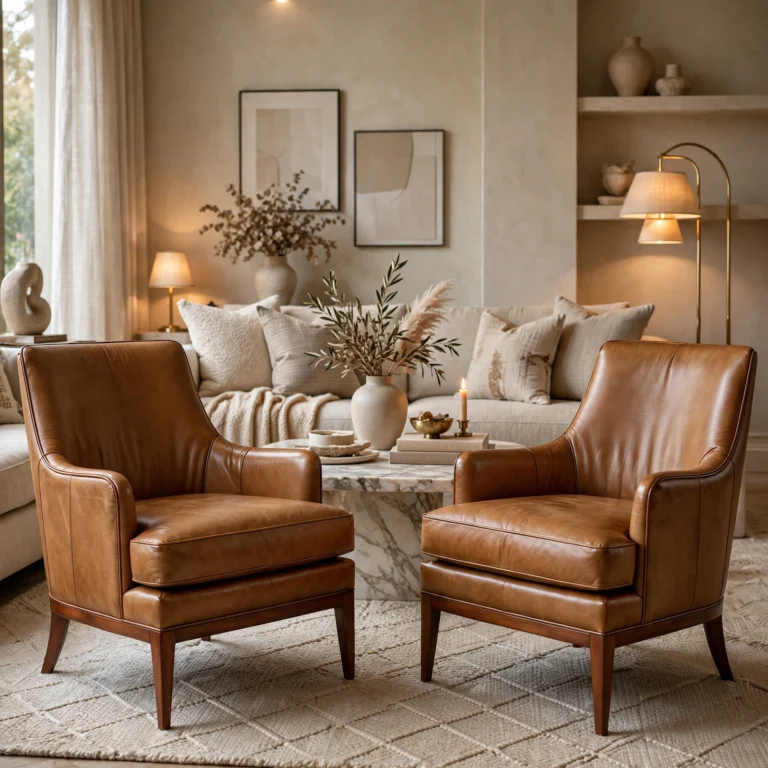
A tufted ottoman bench in leather or boucle serves as a coffee table alternative that softens a room full of hard surfaces and sharp furniture edges. Placed at the foot of a sectional or between two accent chairs, it doubles as extra seating during gatherings without requiring a full second sofa. Choosing a neutral leather like cognac or a bouclé in oatmeal keeps it flexible enough to restyle the room around later without needing to replace the piece itself.
11. Mirrored Console Table
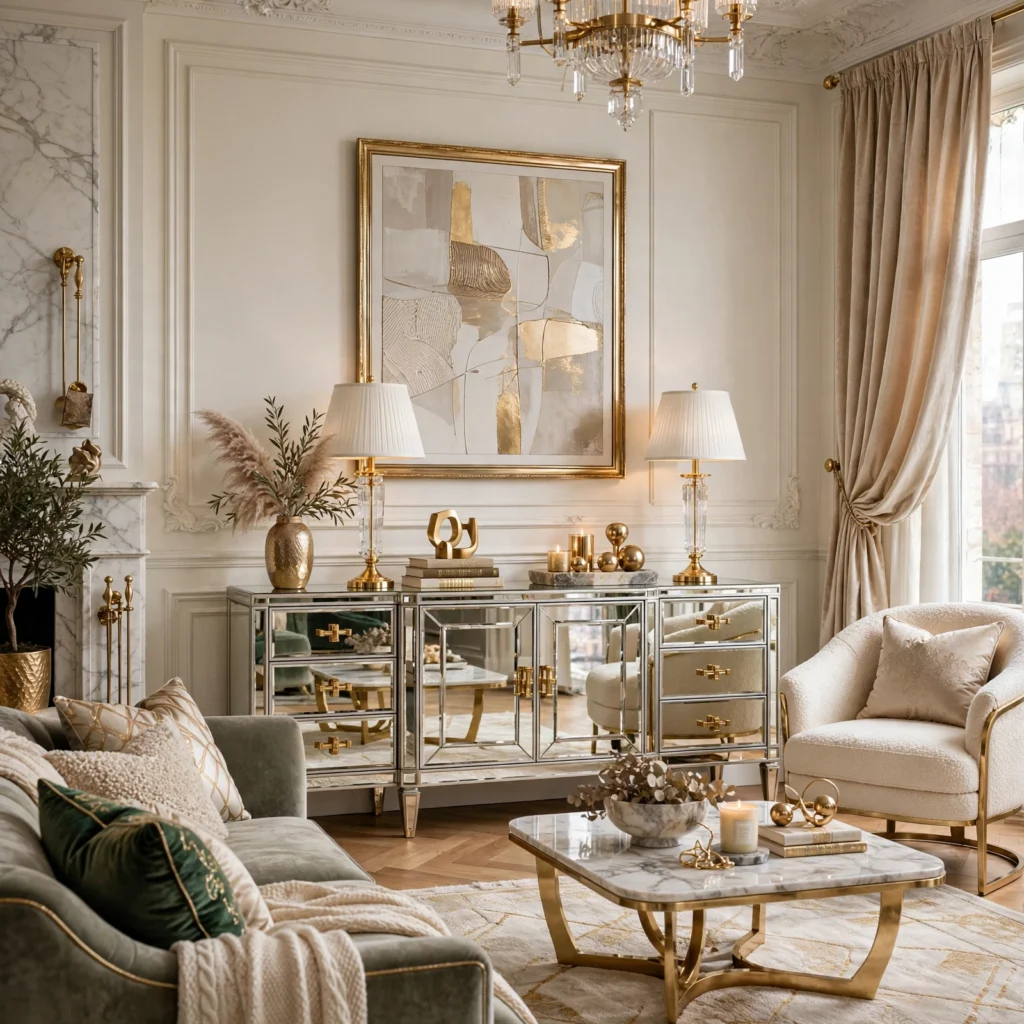
A mirrored console table placed against an entry wall or behind a sofa bounces available light around the room and adds a reflective, jewelry-box quality that flat wood consoles can’t achieve. Antique-mirror finishes, with their slightly smoky, imperfect glass, look more expensive and less trend-driven than bright, new mirror glass. Styling the top with a single lamp, a small stack of books, and one sculptural object keeps the reflective surface from feeling cluttered or overly busy.
12. Layered Textile Throws
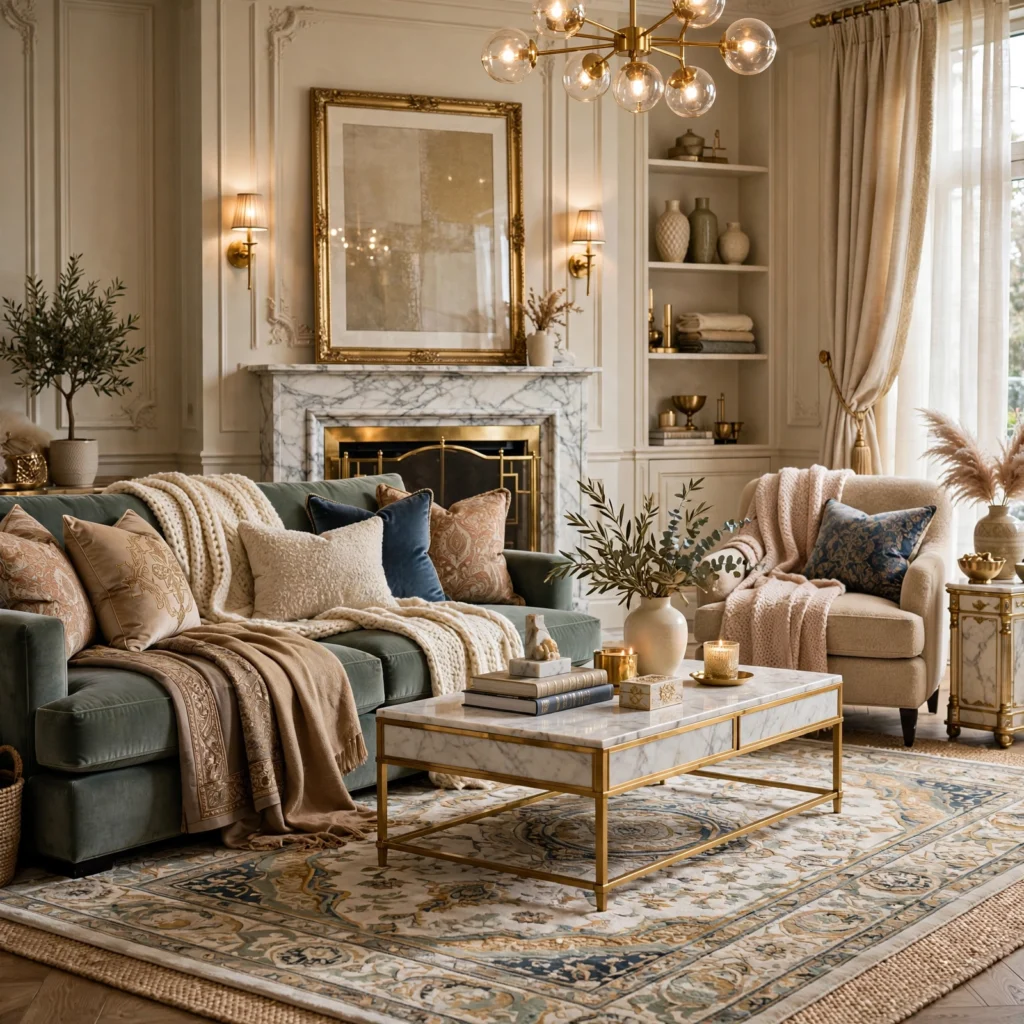
Layered textile throws in cashmere, mohair, and lightweight wool, draped rather than folded, over the arm of a sofa or the back of an accent chair, add tactile richness that photographs and feels expensive in equal measure. Sticking to two or three coordinating, not matching, tones keeps the layering intentional. This is one of the lowest-cost ways to introduce texture into a living room, and it’s easy to rotate seasonally without touching any of the larger furniture pieces.
13. Sculptural Floor Lamp
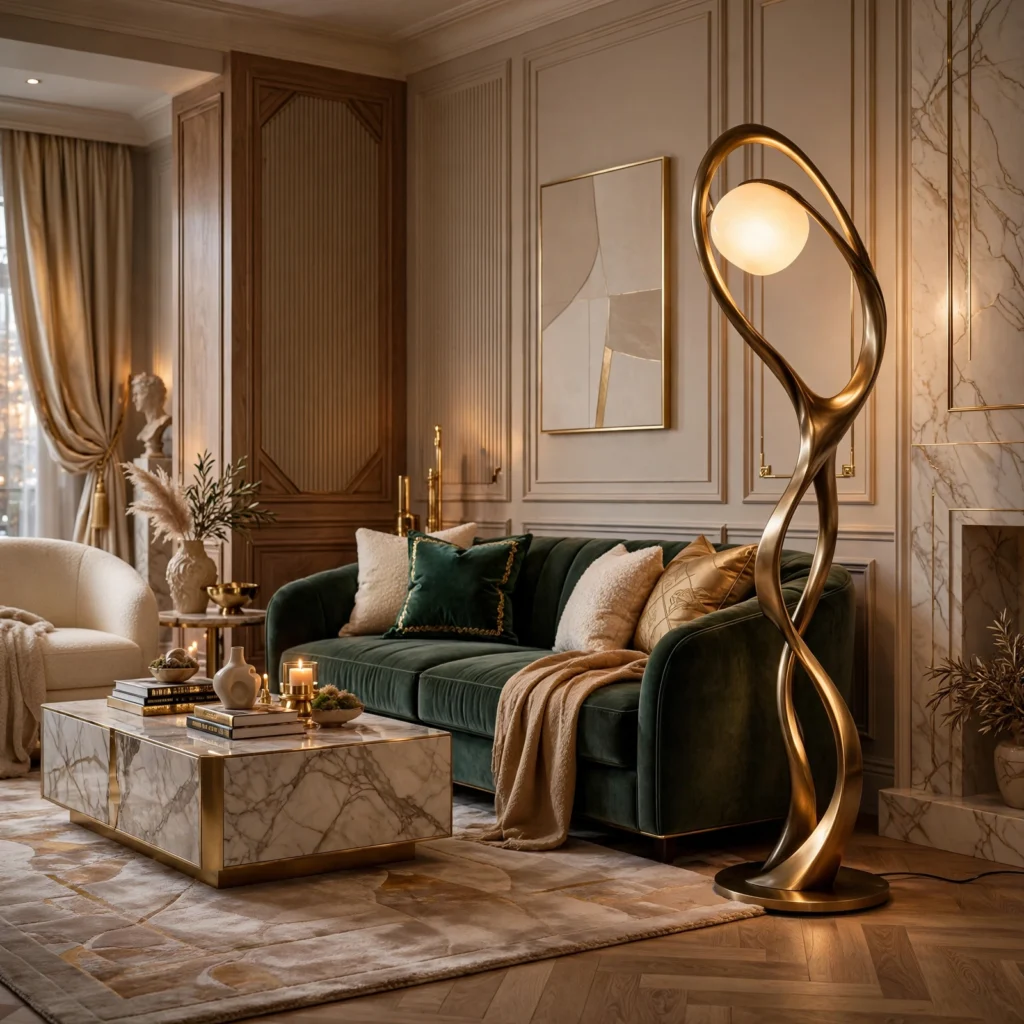
A sculptural floor lamp with an organic, curved silhouette in travertine, alabaster, or brushed metal functions as both lighting and art, filling an empty corner that would otherwise need a plant or side table. Unlike a standard arc lamp, these pieces are meant to be seen even when unlit, so placement near a reading chair or beside a sofa works better than tucking it into a dim corner where its shape gets lost.
14. Curated Coffee Table Books
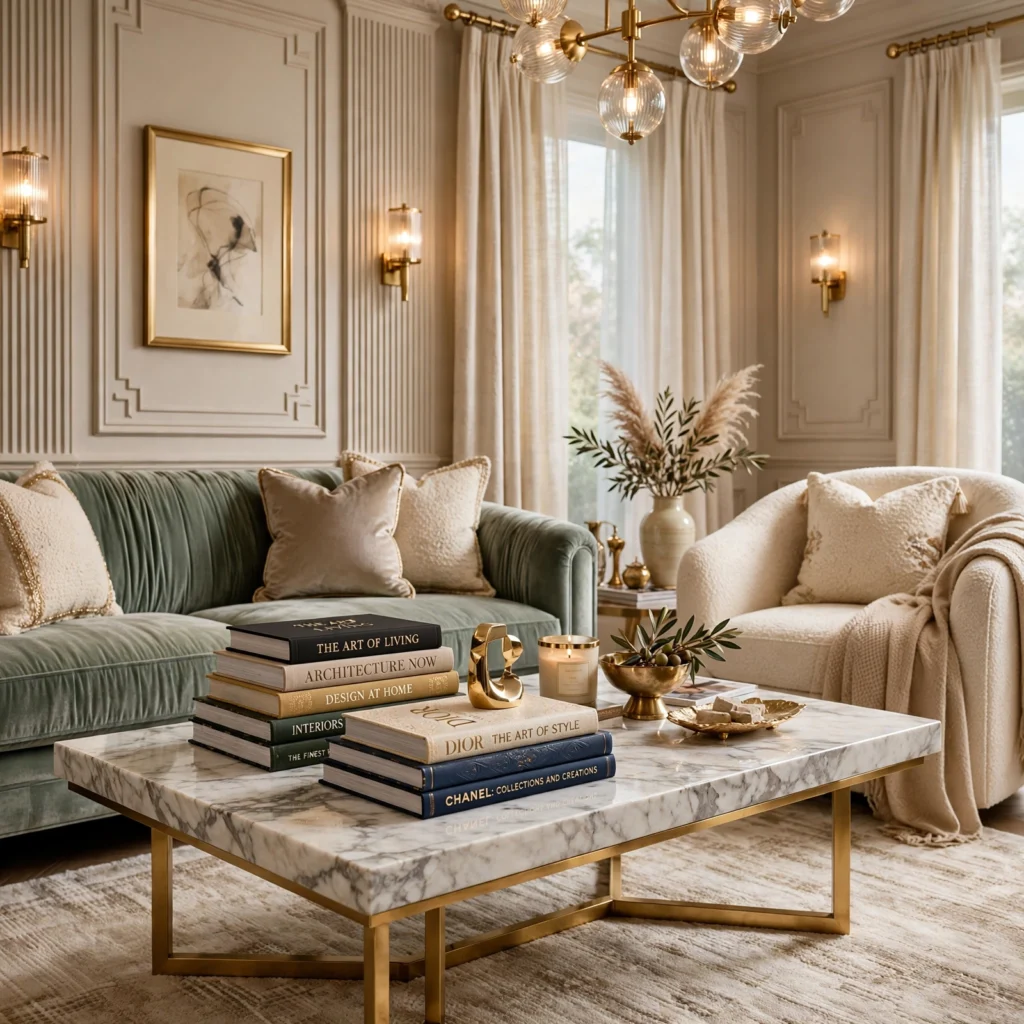
Curated coffee table books, chosen for their design, photography, or subject matter rather than grabbed at random, are one of the cheapest ways to make a living room feel intentional. Stacking three to five oversized art or travel books, topped with a small object like a stone sphere or vintage box, gives the coffee table a finished look without covering the surface. Rotating titles seasonally keeps the styling feeling current rather than static.
15. Neutral Plaster Wall Finish
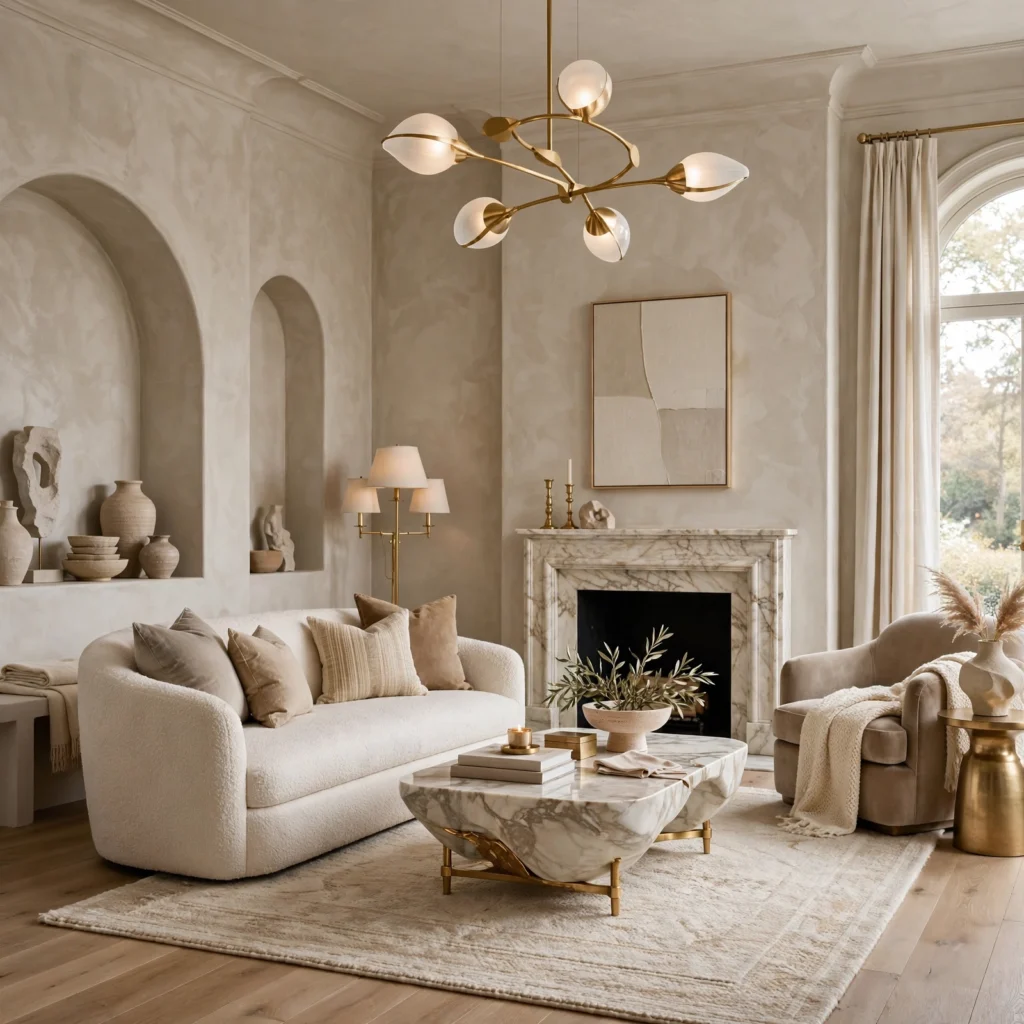
A neutral plaster wall finish, whether Venetian plaster or a limewash paint, introduces subtle texture and depth-of-color that flat paint simply cannot replicate, especially under lamp light in the evening. Warm greige, soft taupe, or clay tones work particularly well because they shift subtly throughout the day as natural light changes. This finish also acts as a quiet backdrop that lets furniture, art, and lighting stand out instead of competing with a busy or high-contrast wall color.
Shop the Look
For this look, start with a performance velvet Chesterfield sofa in a deep emerald or oatmeal tone, a round Carrara-style marble-top coffee table with a brass base, an antique-brass three-arm picture light for above the mantel, a hand-knotted silk-wool blend area rug in a tonal ivory pattern, and a travertine sculptural floor lamp to anchor an empty corner. Together these five pieces cover furniture, lighting, and texture without requiring a full room overhaul.
Common Mistake to Avoid
The most common mistake is buying everything in the same finish and tone at once, matching brass to brass, wood to identical wood, so the room ends up looking like a single furniture-store showroom instead of a collected home. Real luxury interiors mix metals, such as brass lighting with blackened-steel table legs, and mix wood tones deliberately. Another related error is skipping window treatments entirely because “the room already has enough going on,” which almost always leaves the space feeling unfinished no matter how good the furniture is.
People Also Ask
What makes a living room look luxurious on a budget?
Layering texture and controlling your color palette matters more than spending on any single expensive item. A tightly edited palette of two or three tones, one substantial textile layer like a wool rug or velvet throw, and warm brass or bronze accents can make an inexpensive sofa or rental-friendly space look considerably more refined. Avoiding mismatched trends and instead choosing a handful of timeless pieces is usually more effective than a bigger budget spent on trend-driven items.
What colors are considered luxury for a living room?
Deep, saturated jewel tones like emerald, sapphire, and burgundy paired with warm neutrals such as greige, oatmeal, and taupe are the colors most associated with high-end interiors. These tones photograph well under warm lighting and pair naturally with brass, walnut, and marble finishes. Stark white or overly cool gray palettes, by contrast, tend to read as clinical rather than upscale unless they’re paired with substantial texture and warm-toned lighting to soften them.
Is velvet or leather more luxurious for a sofa?
Both read as high-end, but they suit different moods: velvet feels softer, more formal, and pairs naturally with jewel tones and brass accents, while leather feels more masculine, tailored, and works well in rooms with a lot of wood and stone. Performance velvet is now durable enough for daily family use, so the choice mostly comes down to the room’s overall style rather than practicality, since both materials age well when properly maintained.
How do you make a small living room look expensive?
Use a diagonal flooring pattern like herringbone, hang drapery close to the ceiling rather than the window frame, and choose furniture with visible slim legs instead of heavy skirted bases, since all three tricks make a small footprint feel taller and airier. Mirrored or glass-top furniture also helps bounce light around a tight space. Avoiding oversized furniture and instead choosing a handful of well-proportioned pieces prevents a small room from feeling cramped or overcrowded.
Do luxury living rooms need a chandelier?
No, a chandelier isn’t required, but a properly scaled statement light fixture, whether a chandelier, a large pendant, or a cluster of picture lights, does more to signal a finished, high-end room than almost any other single change. If a chandelier doesn’t suit the ceiling height or style, a large sculptural pendant or a pair of oversized brass sconces can achieve a similar sense of intentional, layered lighting.
Conclusion
Building a room around these luxury living room designs classy homeowners can genuinely live in comes down to material choices, layered lighting, and restraint rather than a bigger budget. Start with one or two anchor pieces, like a marble coffee table or a statement chandelier, and build outward from there. Save this guide to Pinterest for your next redesign, and check out our related post on quiet luxury bedroom ideas for the rest of the house.