16 Gorgeous Luxury Living Room Inspiration Ideas to Achieve a Premium Designer Look
Luxury in a living room isn’t defined by price alone — it’s defined by material quality, proportion, and a level of custom detail that a purely trend-driven room rarely achieves. This post covers eighteen luxury living room inspiration ideas built around genuine craftsmanship, from custom millwork to statement lighting to material selection. You’ll get specific materials, finishes, and placement guidance so you can identify what actually separates a luxury room from a simply well-decorated one.
Trend & Background
Luxury interior design has moved away from the overtly glossy, heavily branded maximalism of past decades toward a quieter, more material-driven definition of luxury, where craftsmanship, proportion, and genuine natural materials like stone, brass, and hand-finished wood carry more weight than visible logos or purely decorative excess. This shift mirrors a broader cultural move toward understated wealth signaling across design and fashion alike, sometimes referred to as quiet luxury. This matters now because this updated definition of luxury is considerably more achievable through thoughtful sourcing and fewer, better pieces than the older, more overtly opulent version of the style, which required a much larger budget to execute convincingly.
Key Takeaways
- Luxury living room inspiration relies on genuine material quality, custom detailing, and scale as much as it relies on any specific color or style.
- A small number of investment pieces, chosen for craftsmanship rather than trend, consistently reads as more luxurious than a room full of moderately priced items.
- Layered lighting, bespoke millwork, and natural stone are among the details that most reliably separate a genuinely luxury room from a merely expensive-looking one.
- A size and material comparison table is included for the statement furniture ideas so you can plan proportion against your actual room dimensions.
1. Custom Millwork Wall Paneling
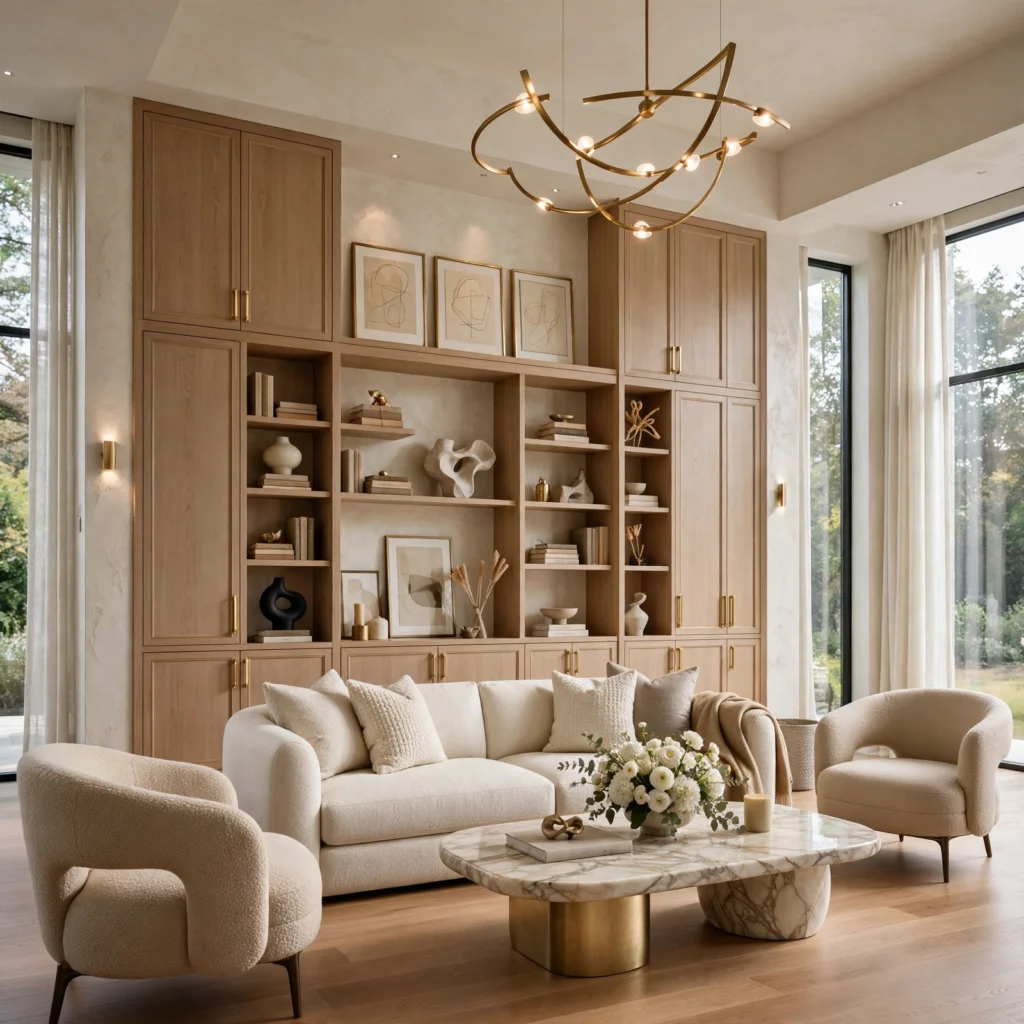
Custom millwork wall paneling, built to the specific dimensions and proportions of a room rather than installed from a standardized panel kit, is one of the clearest signals of genuine luxury design, since the fit and scale are calculated specifically for that space. Raised or fluted panel details in a painted or natural wood finish add depth and craftsmanship that a flat painted wall can’t replicate. Plan panel proportions around existing architectural features, like windows and doorways, so the millwork reads as integrated rather than applied as an afterthought.
2. Natural Stone Fireplace Surround
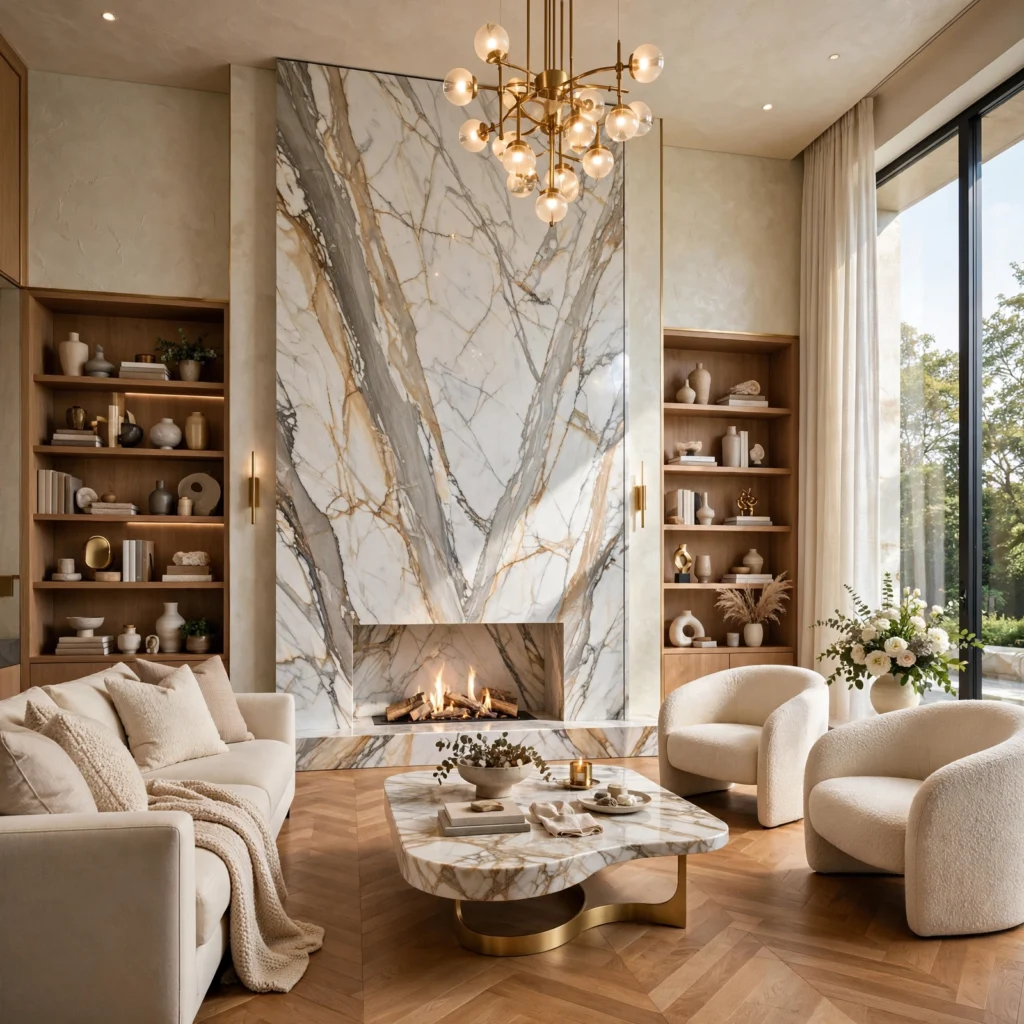
A natural stone fireplace surround, in marble, travertine, or limestone rather than a manufactured stone veneer, anchors a living room with genuine material weight and natural veining that no engineered alternative fully replicates. This is typically one of the higher-cost single investments in a luxury living room, but it also functions as the room’s clear focal point for years without needing a trend-driven update. Choose a slab with visible, dramatic veining for the strongest visual impact, positioned so the veining pattern flows naturally across the full surround.
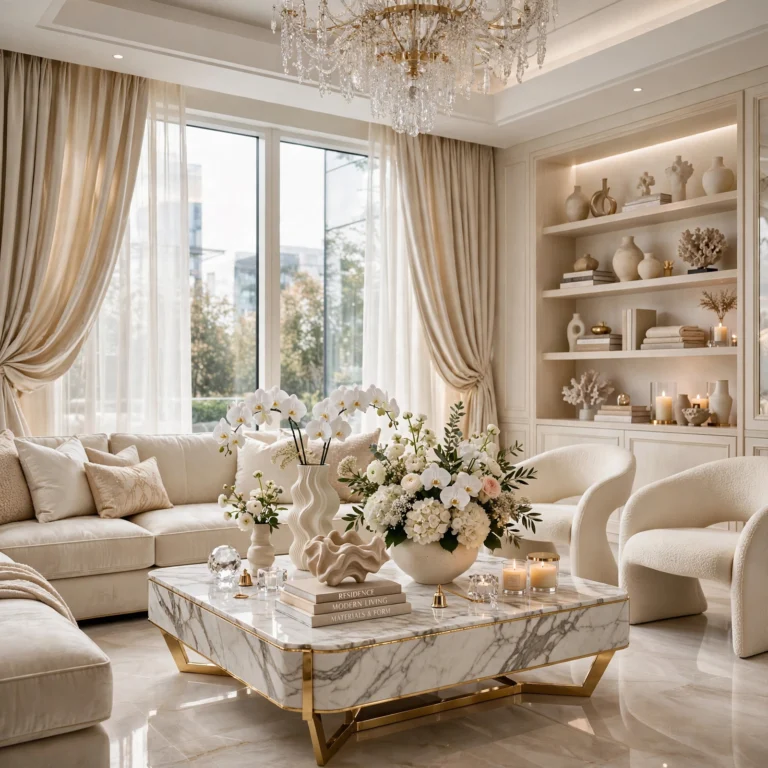
3. Statement Crystal Chandelier
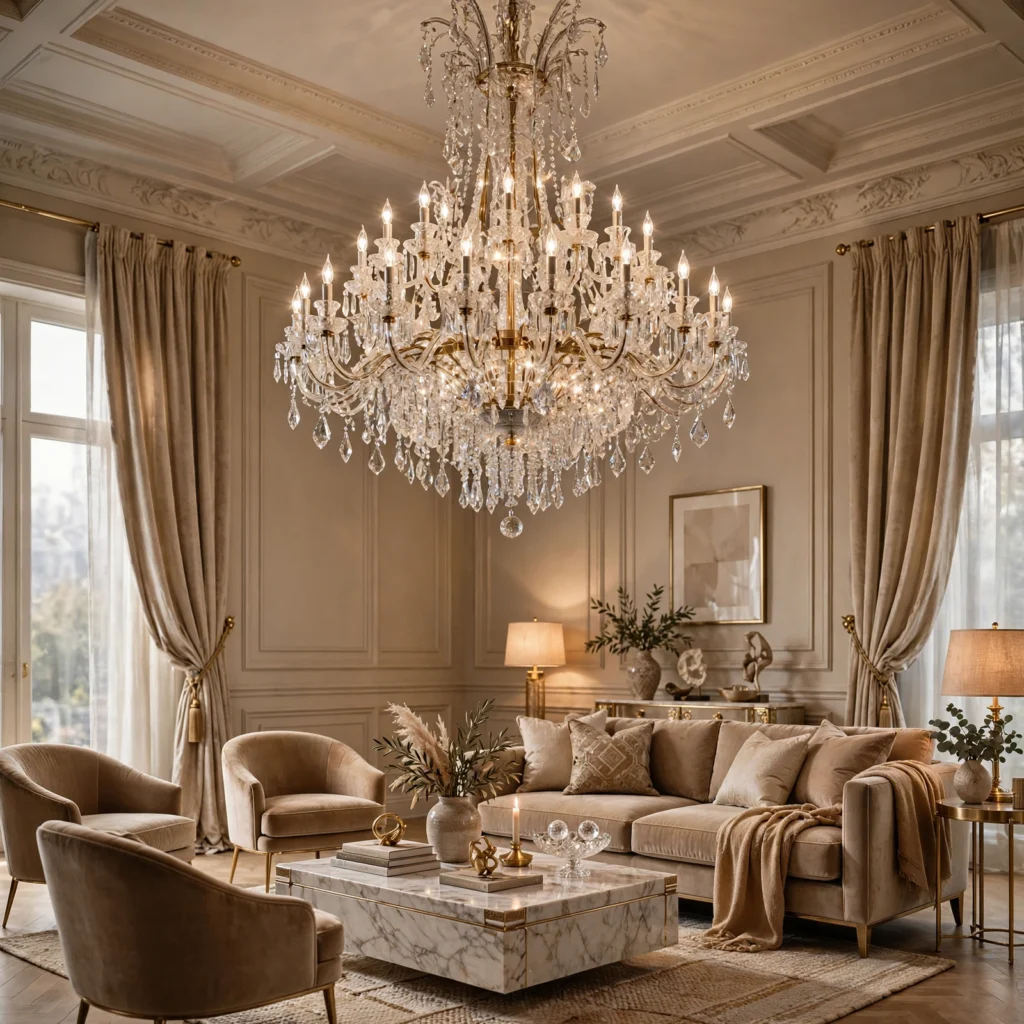
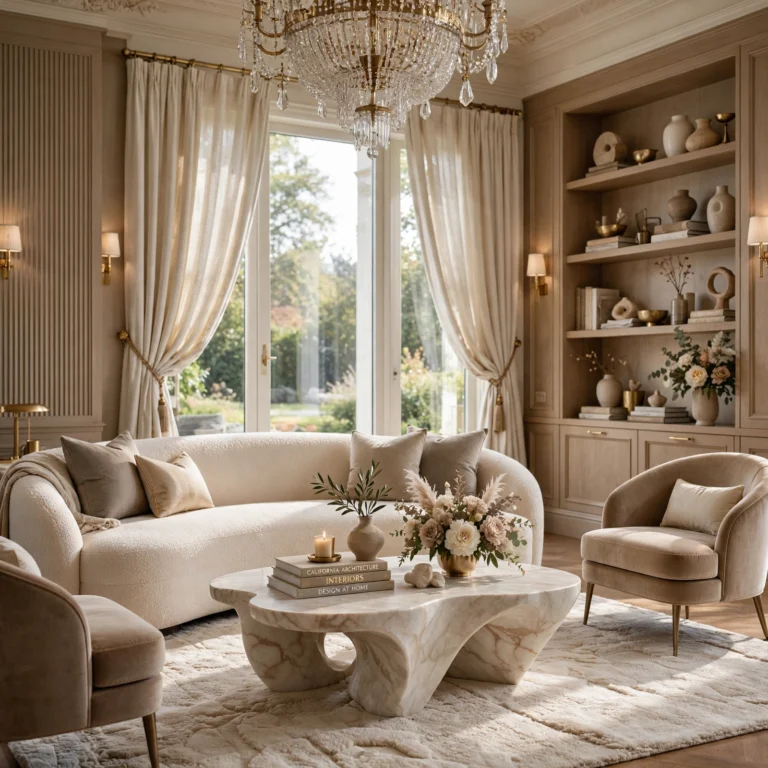
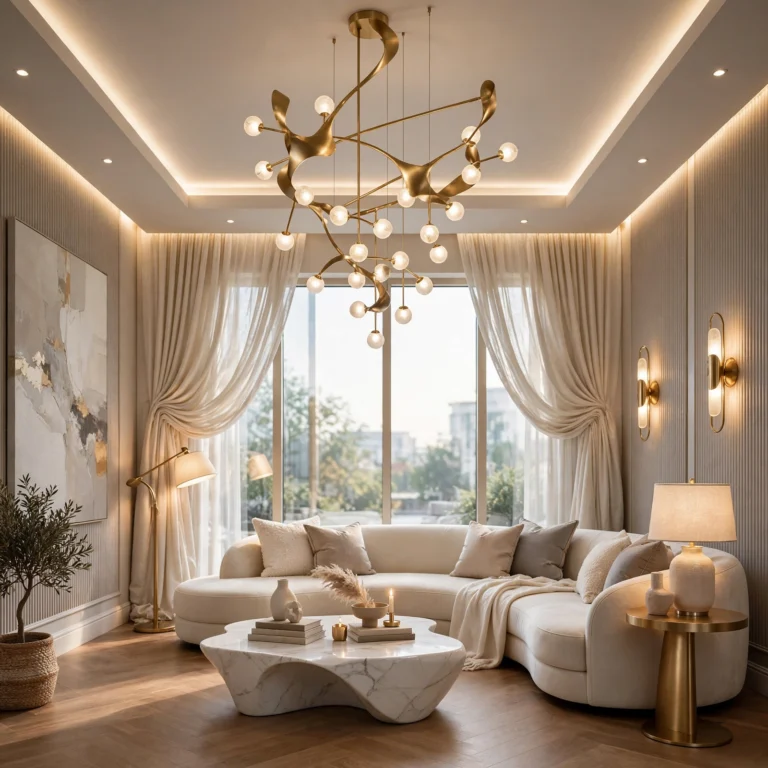
A statement crystal chandelier, sized generously relative to the room, replaces a standard overhead fixture with one that functions as genuine jewelry for the space. Hand-cut crystal or blown glass reads as considerably more luxurious than a mass-produced faceted acrylic alternative, even at a similar visual scale. Size the fixture to roughly one-half to two-thirds the width of the furniture arrangement directly beneath it, and ensure at least 7 feet of floor clearance in a room with regular foot traffic.
To see more options for luxury curtains living room
4. Hand-Knotted Area Rug
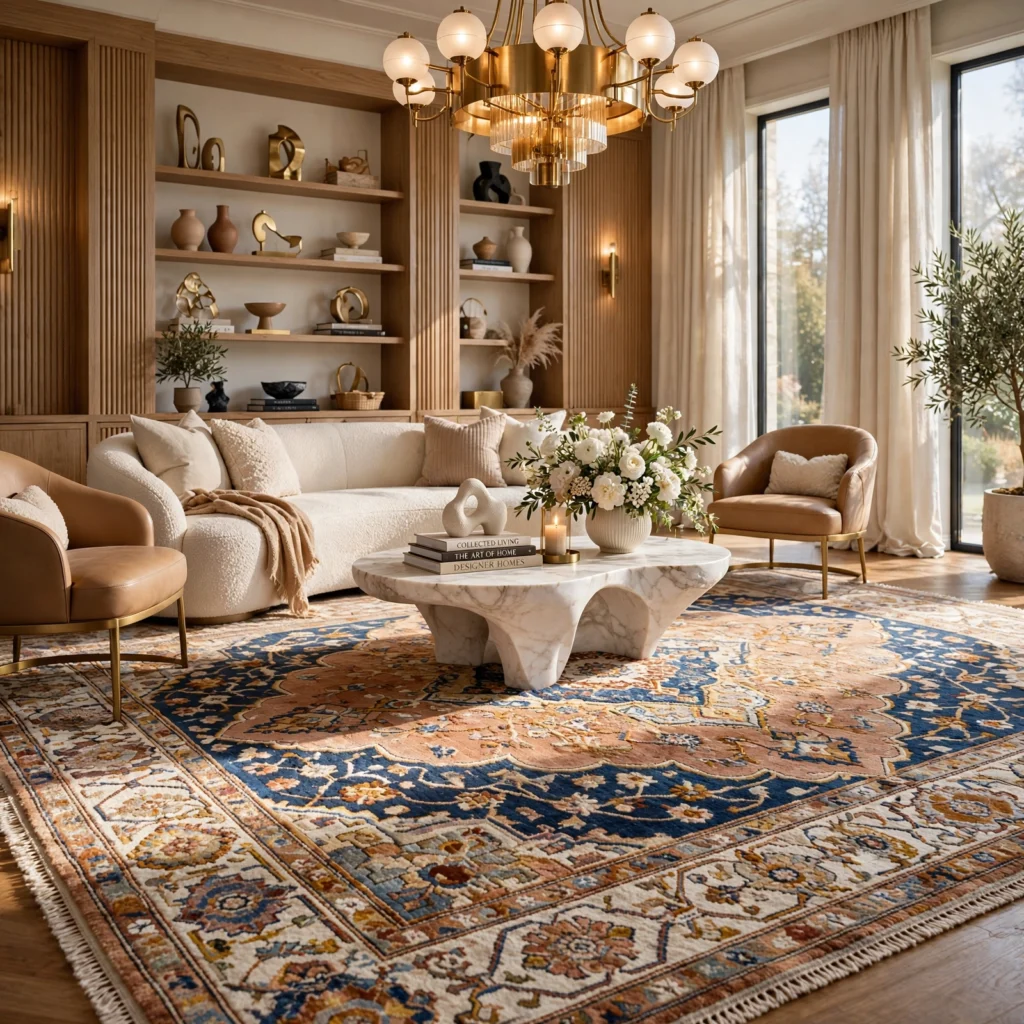
A hand-knotted area rug, in wool or a wool-silk blend, provides a level of texture, density, and longevity that a machine-made rug simply doesn’t match, and the visible knotting itself is a recognizable marker of genuine craftsmanship to those familiar with the material. Size the rug generously enough that all major furniture pieces sit at least partially on it, rather than floating a smaller rug in the center of the room. A well-maintained hand-knotted rug can last decades, which factors meaningfully into its higher upfront cost relative to a machine-made alternative.
5. Bronze and Brass Hardware Details
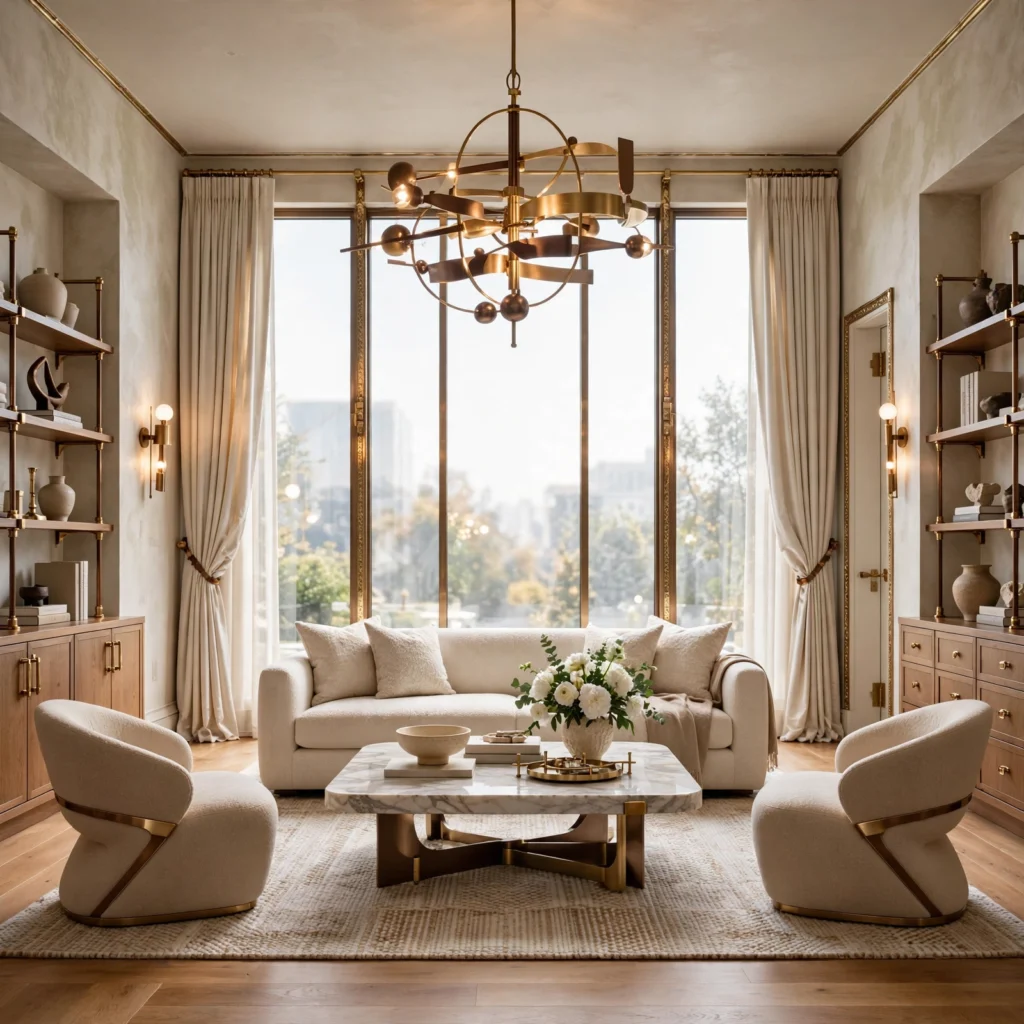
Bronze and brass hardware details, used consistently across door handles, cabinet pulls, and lighting fixtures throughout the living room, tie smaller architectural elements together into a single cohesive material story. Solid brass or bronze, rather than a plated finish, develops a genuine patina over time that reads as more luxurious than a finish that simply wears down. Commit to one metal finish throughout the room rather than mixing several, since consistency across small details matters as much as any single larger investment piece.
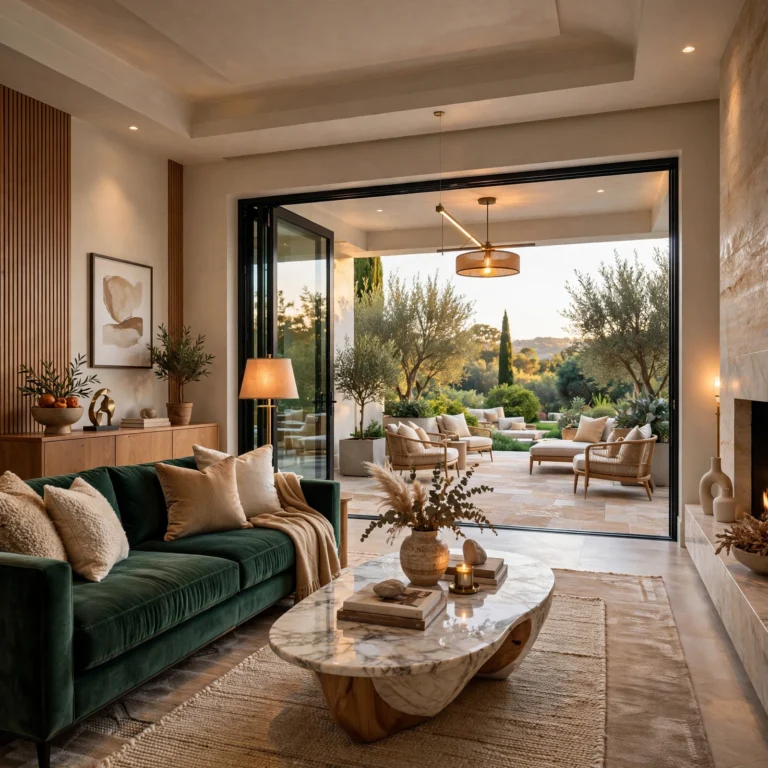
6. Marble Coffee Table
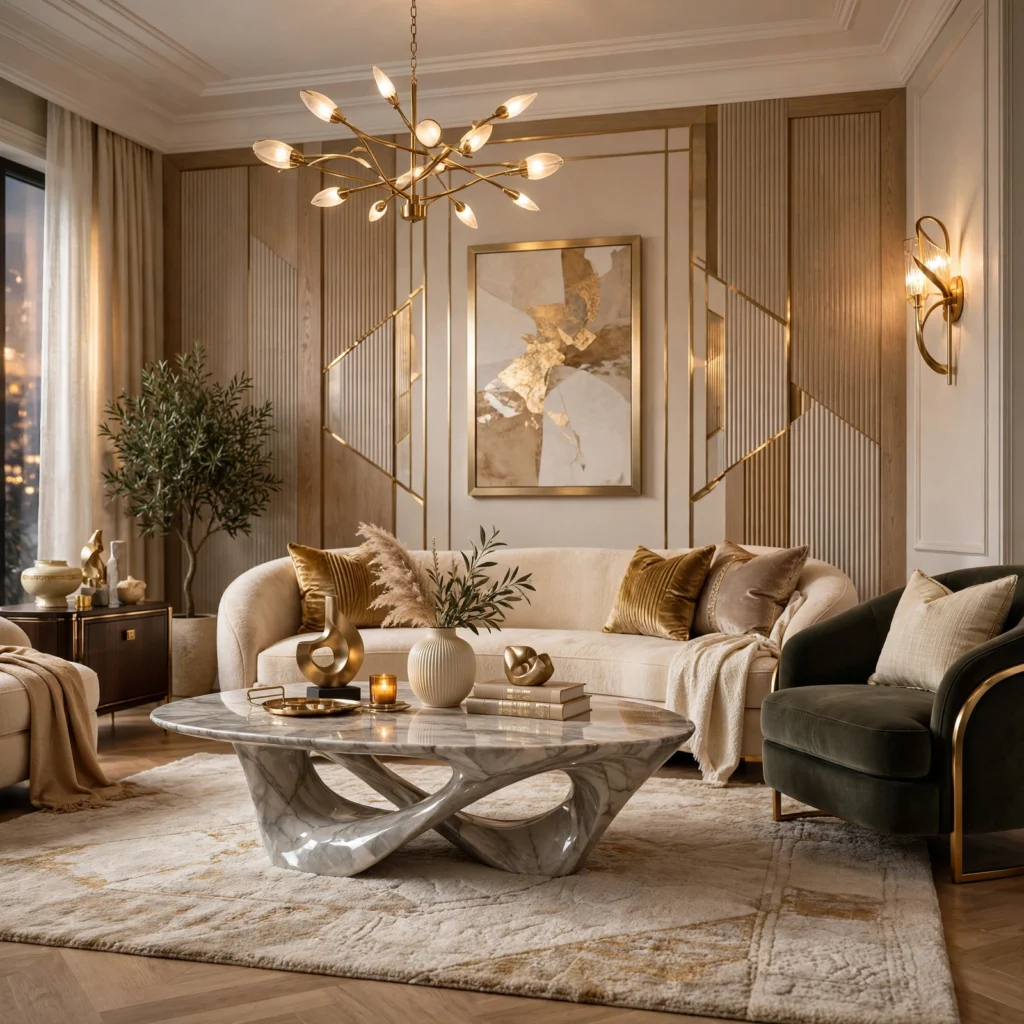
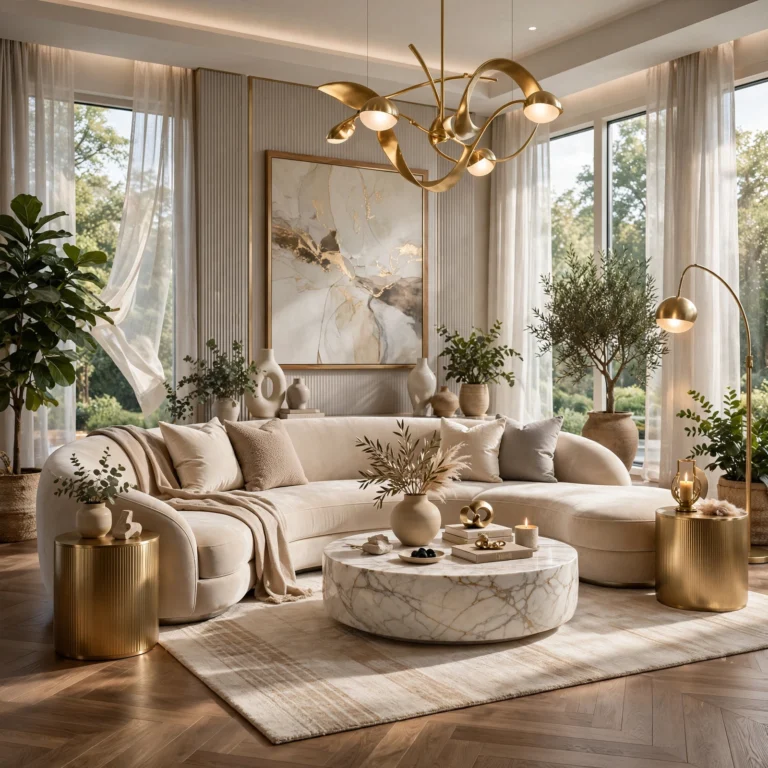
A marble coffee table, either a full slab top or a genuine marble base, introduces cool, veined natural stone as a central room element that also reads clearly as an investment piece rather than a purely functional surface. Choose a table with a substantial, sculptural base rather than a thin, minimal metal frame, since visual weight and material presence are central to how this piece reads within a luxury room. Position it at a height close to the seating cushion level, typically 16 to 18 inches, for both function and proportional balance.
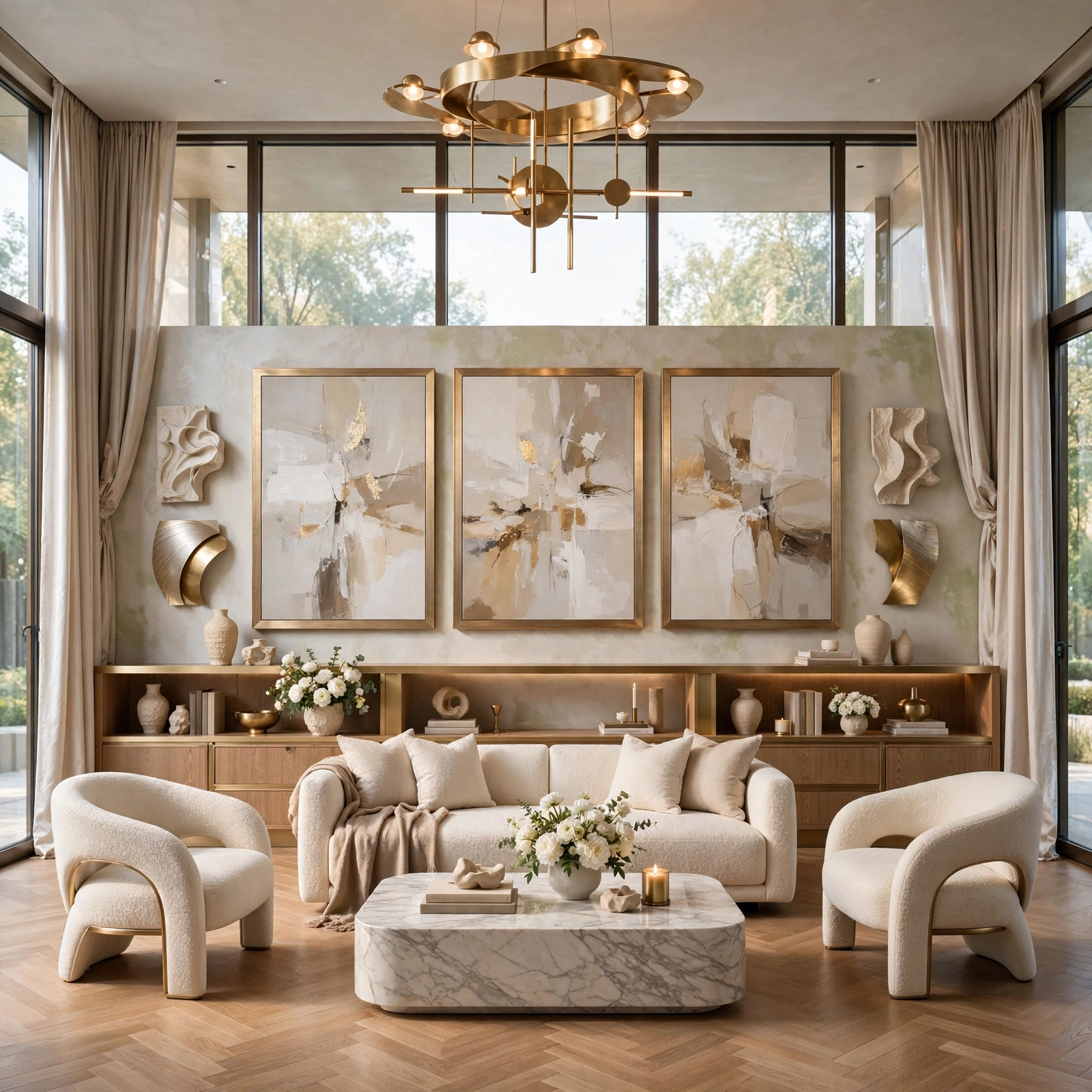
7. Luxury Living Room Inspiration Art Collection
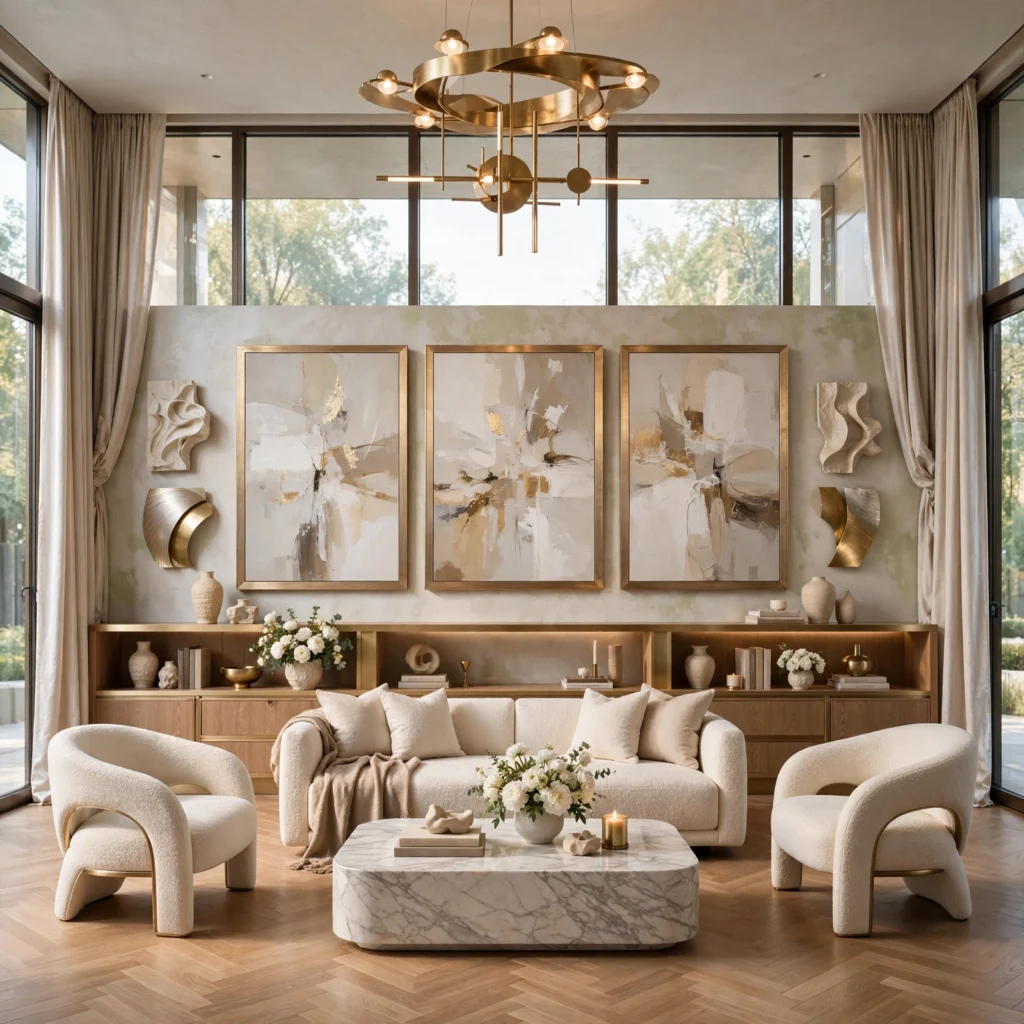
A luxury living room inspiration art collection favors a small number of genuinely significant pieces, whether original paintings, limited edition prints, or investment-grade photography, over a larger volume of decorative prints purchased purely to fill wall space. Proper museum-quality framing and UV-protective glazing protect the investment and signal the same level of care applied to the artwork itself. Light each piece individually with a dedicated picture light or adjustable recessed fixture rather than relying on general room lighting alone.
8. Exotic Wood Furniture Accents
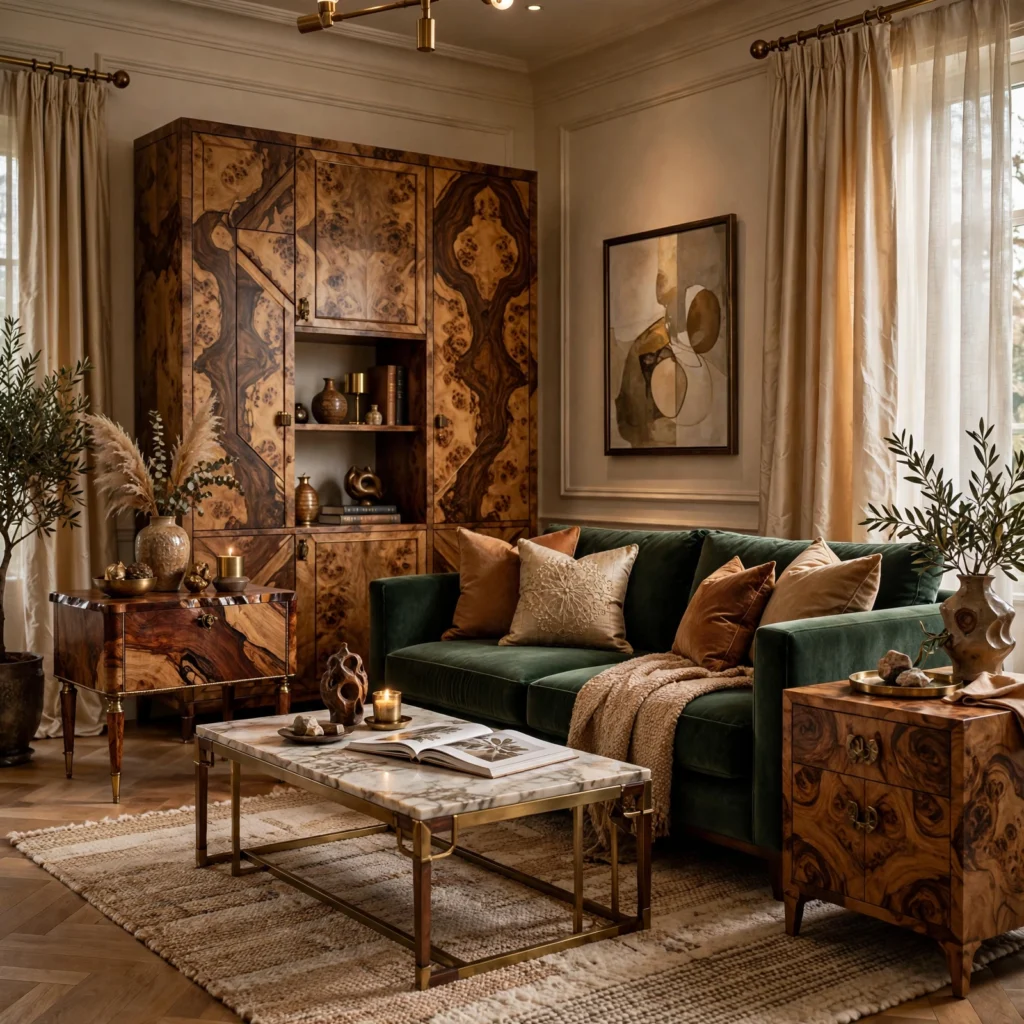
Exotic wood furniture accents, in materials like rosewood, ebony, or burl walnut, bring a rare, highly figured grain pattern into a room that standard oak or maple furniture can’t replicate. These materials work particularly well in a single statement piece, like a console table or a media cabinet, rather than throughout every furniture item in the room. Choose pieces with a hand-rubbed oil or lacquer finish that showcases the wood’s natural grain rather than a heavily painted or distressed treatment that obscures it.
9. Layered Ambient and Task Lighting
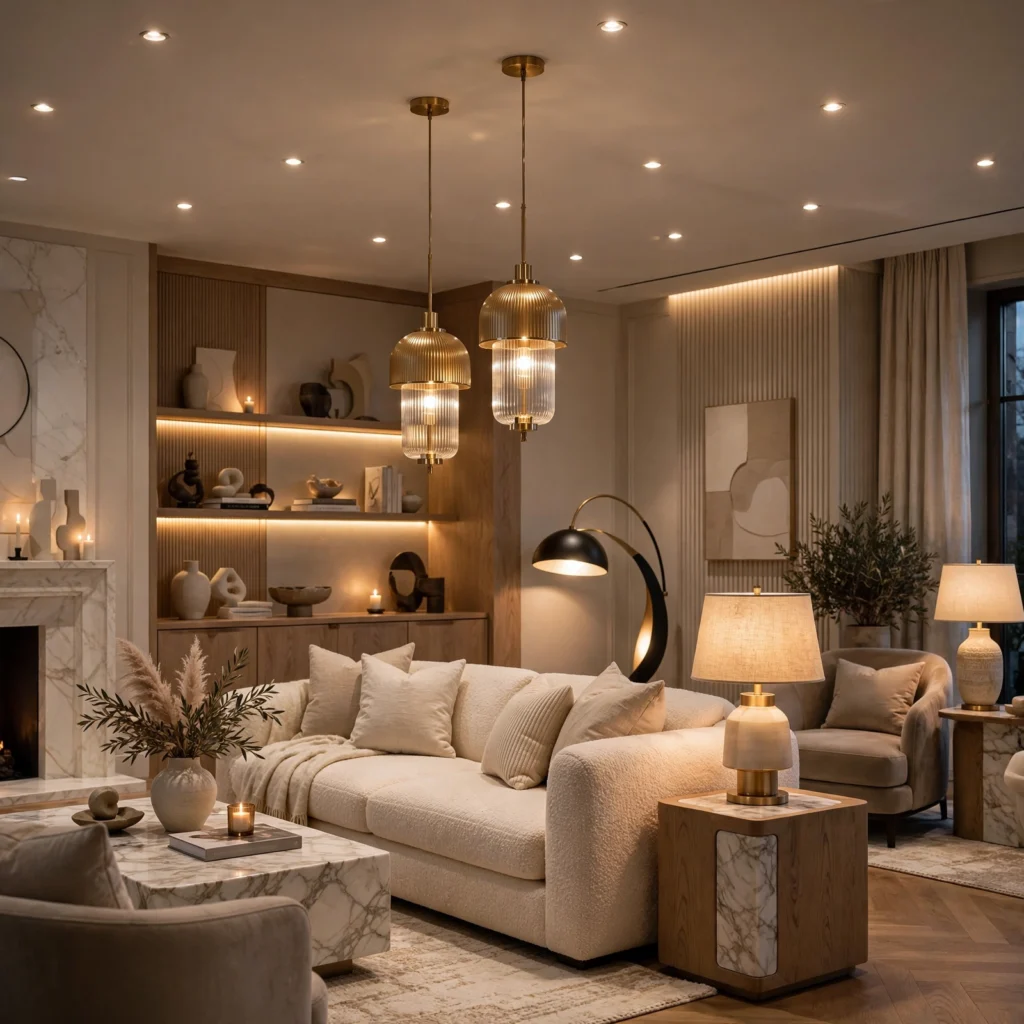
Layered ambient and task lighting combines a statement overhead fixture with at least two table or floor lamps and dedicated picture lighting, creating a room that can shift between a bright, fully lit state and a warmer, more intimate evening mode. This matters significantly in a luxury living room, since flat, single-source lighting flattens the texture and material quality that define the rest of the room’s investment pieces. Put every major fixture on an independent dimmer for full control over the room’s atmosphere at different times of day.
10. Cashmere and Mohair Throw Layer
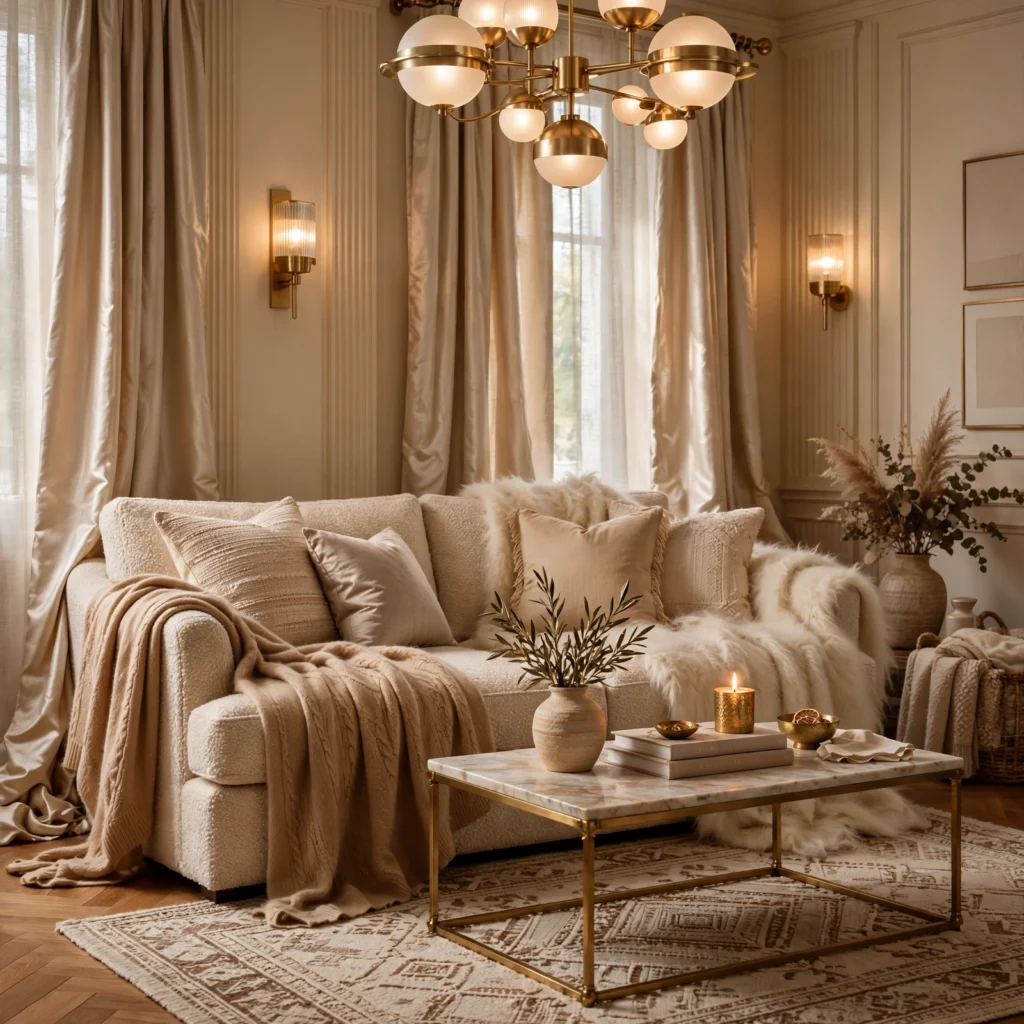
A cashmere and mohair throw layer adds a tactile, genuinely luxurious textile element to a sofa or chair, distinguishing itself immediately through hand feel in a way that’s difficult to replicate with a synthetic alternative. Choose a solid, deep tone rather than a busy pattern, since the material’s texture and drape are the point of the piece rather than any printed design. Fold and drape the throw casually across an arm or the back of a sofa rather than laid flat, for a more natural, lived-in luxury feel.
11. Custom Upholstered Ceiling Detail
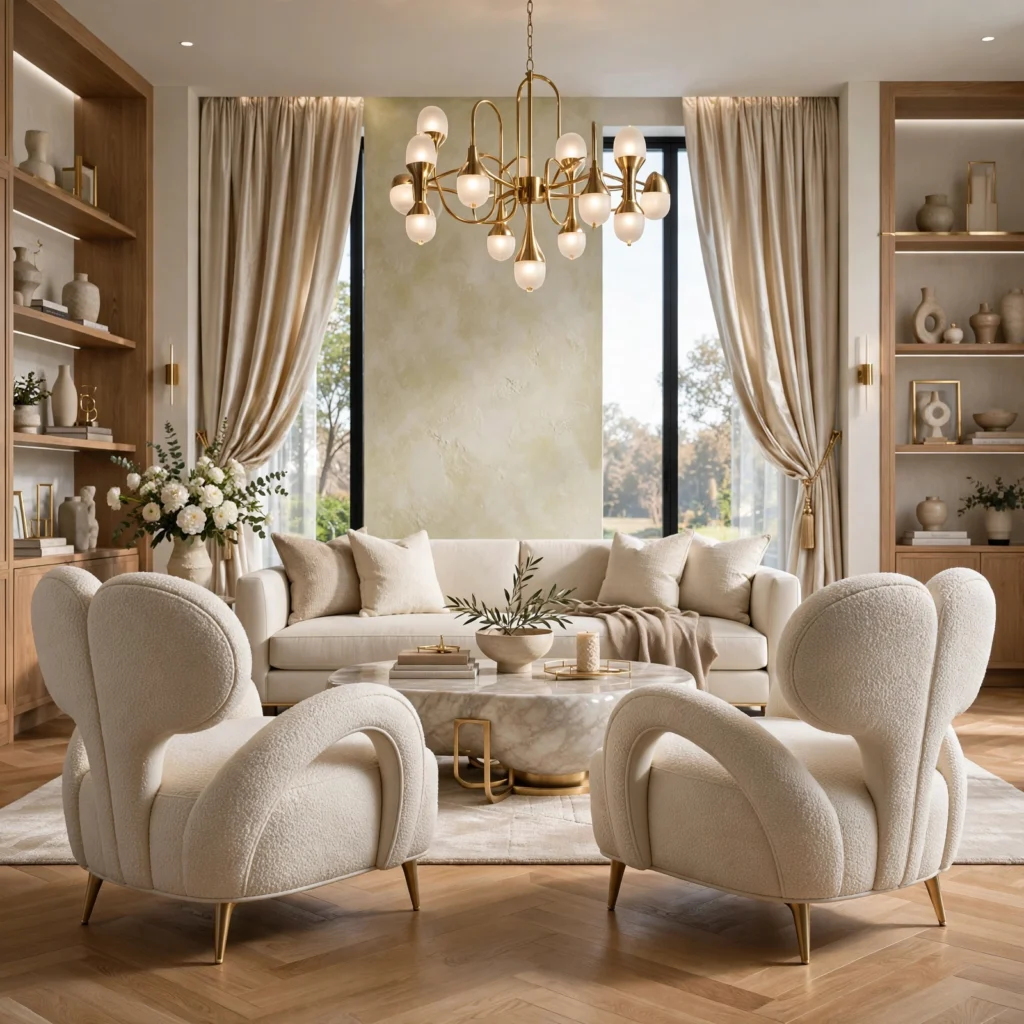
A custom upholstered ceiling detail, using fabric or a padded panel treatment on the ceiling itself rather than paint or wallpaper, is a considerably rarer and more labor-intensive design choice that immediately signals a custom, high-investment approach to the room. This works particularly well in a smaller, more intimate living room or a formal sitting room rather than a large, high-traffic family space. Choose a subtle tone-on-tone fabric rather than a bold pattern, letting the texture and craftsmanship of the upholstery itself carry the visual interest.
12. Luxury Living Room Inspiration Bar Cart Styling
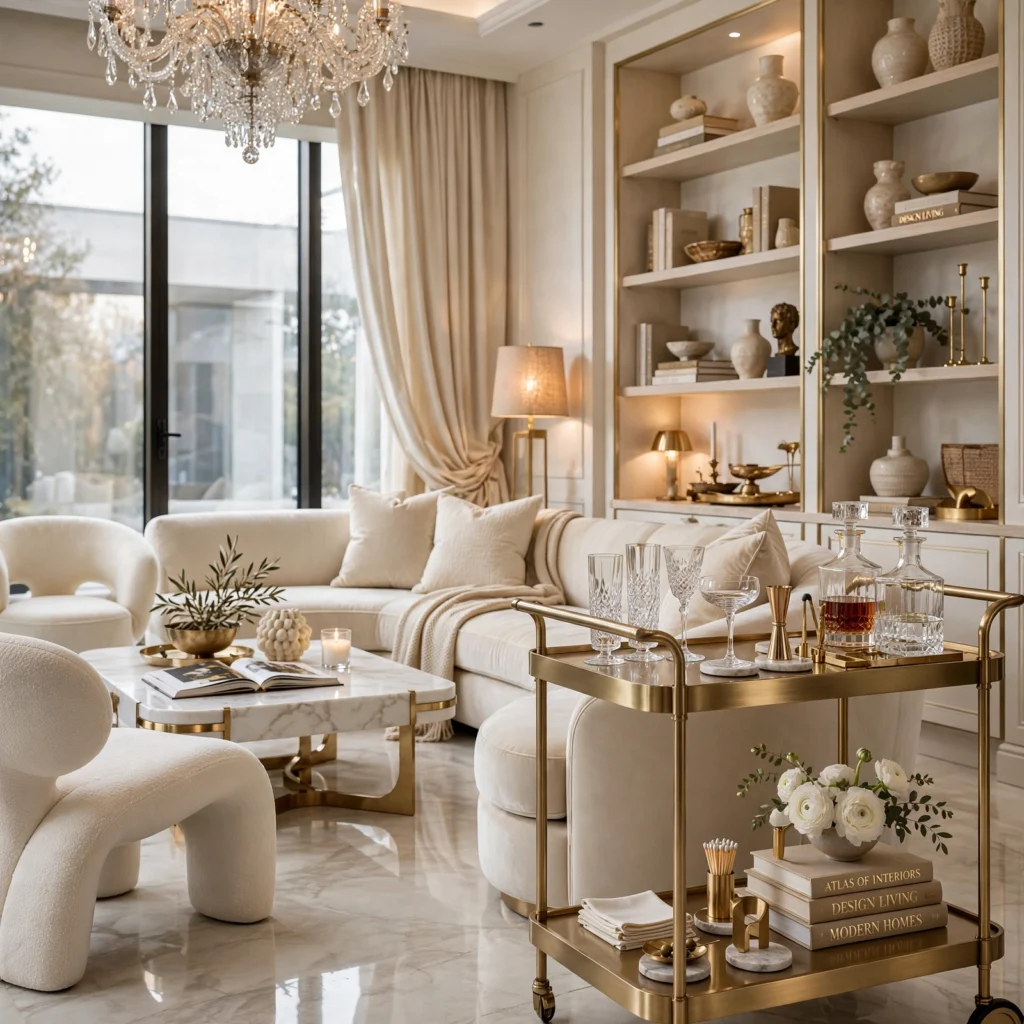
Luxury living room inspiration bar cart styling favors crystal decanters, sterling or silver-plated barware, and a genuinely well-curated small liquor selection over a larger, more casual assortment of mismatched glassware. Choose a cart or cabinet in a material that matches the room’s existing metal finish, whether brass, bronze, or nickel, so the piece integrates with the rest of the room’s hardware story. Limit the display to a curated selection of six to eight pieces rather than a fully stocked, cluttered arrangement.
13. Sculptural Console Table
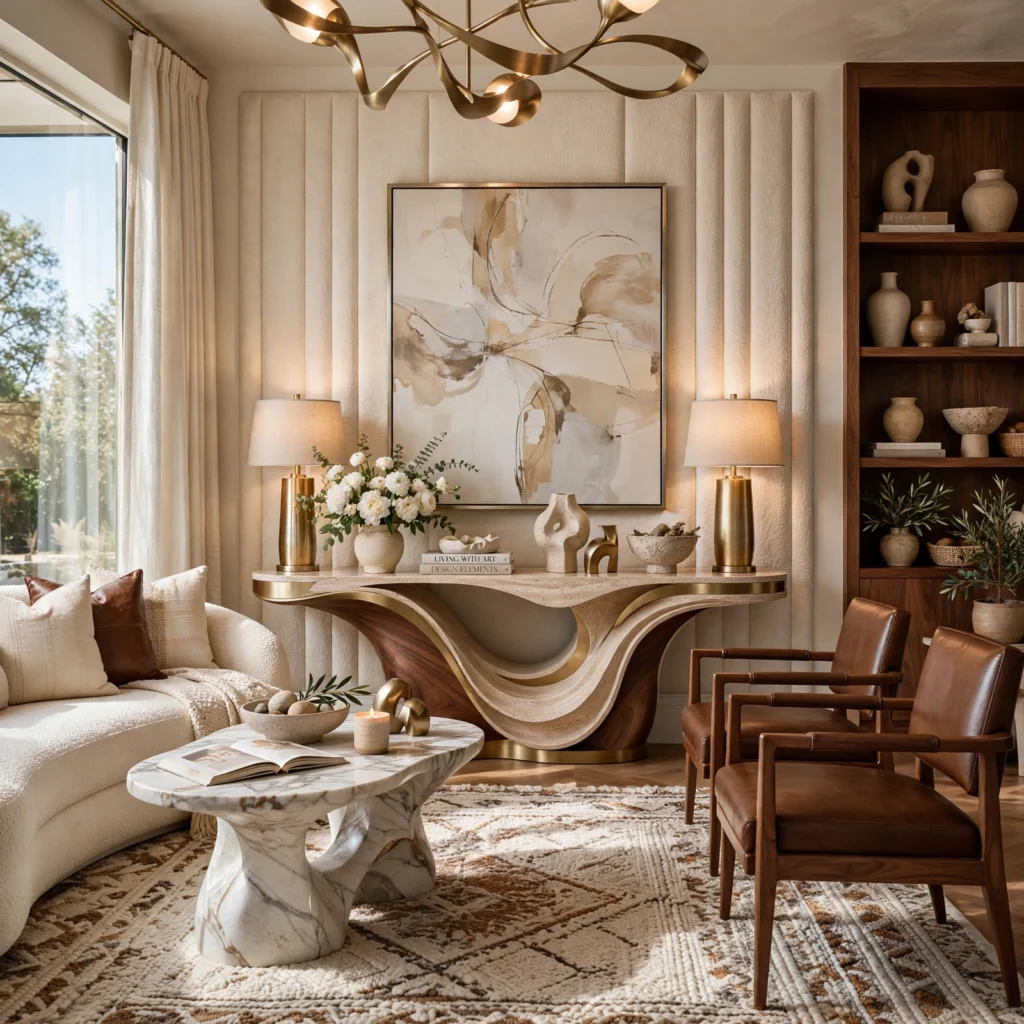
A sculptural console table, with a distinctive cast bronze, stone, or hand-carved wood base, functions as a genuine art piece positioned along an entry wall or behind a sofa, rather than a purely functional surface. This works particularly well as a single, confident statement piece in a room otherwise built around simpler furniture silhouettes. Style the top with no more than three objects, allowing the table’s own sculptural quality to remain the primary visual focus.
14. Antique or Vintage Statement Piece
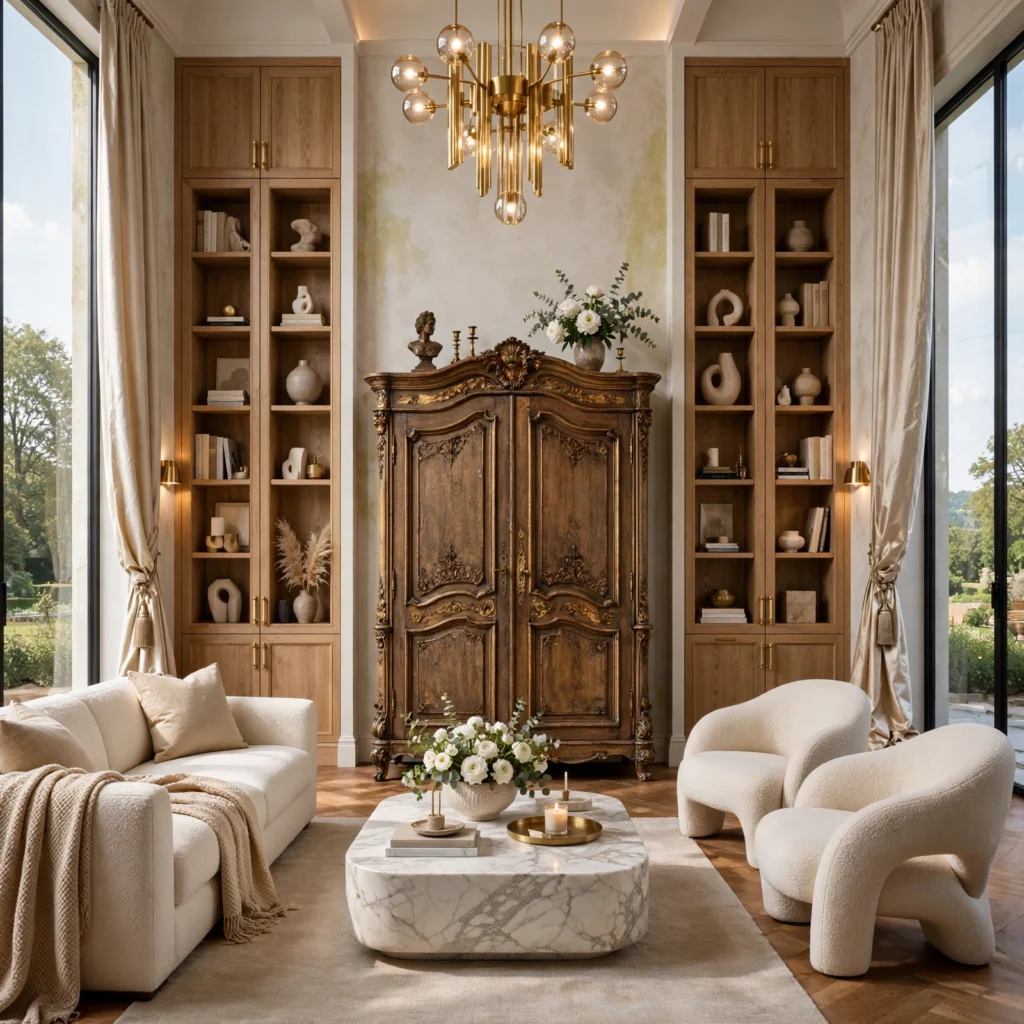
An antique or vintage statement piece, whether a single chair, a mirror, or a small side table sourced from an estate sale or specialty dealer, brings a layer of genuine history and provenance that no new furniture, regardless of price, can fully replicate. This works particularly well paired with more contemporary furniture elsewhere in the room, since the contrast between old and new reinforces that the vintage piece was chosen deliberately rather than inherited by default. Have any significant antique piece professionally appraised and, if needed, restored before placing it in active daily use.
15. Integrated Smart Lighting Controls
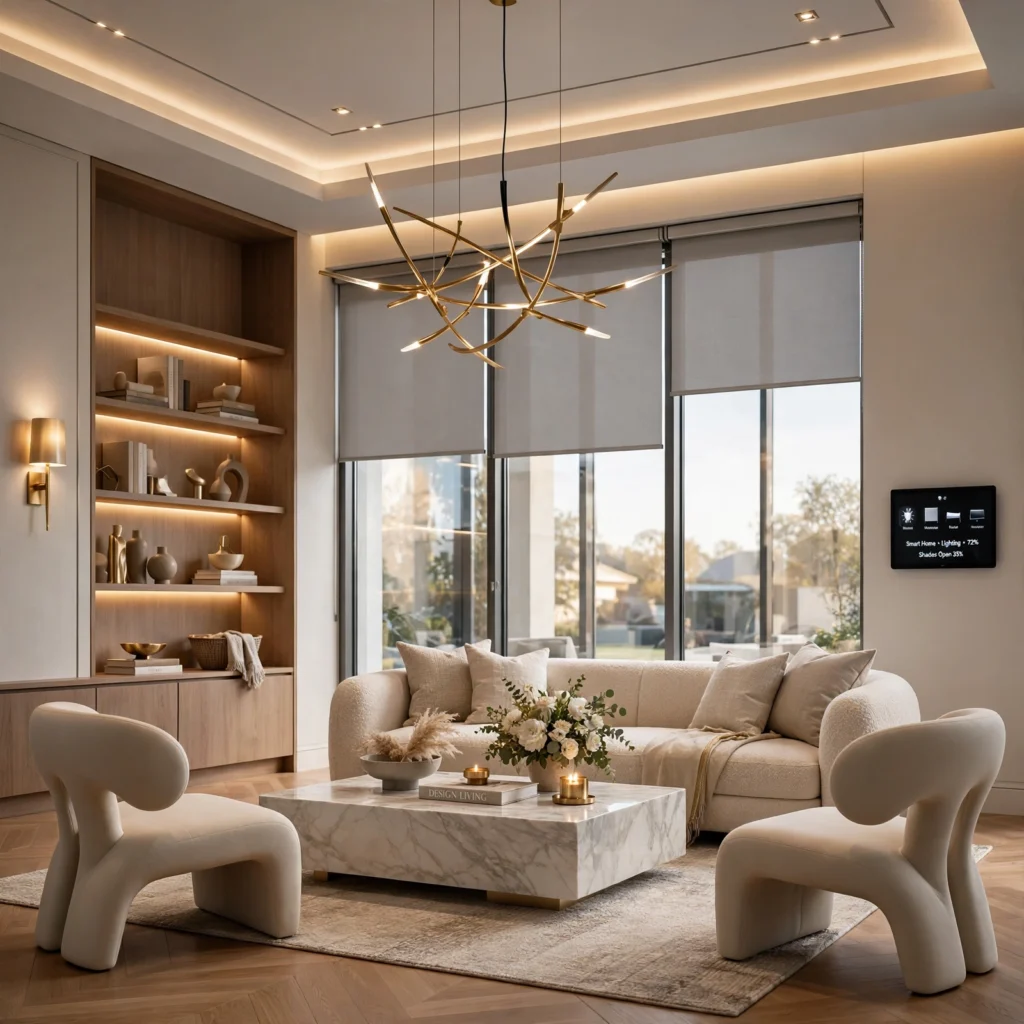
Integrated smart lighting controls allow every layer of a luxury living room’s lighting, from the chandelier to picture lights to lamps, to be adjusted and scened together through a single control point, rather than managed fixture by fixture. This reflects how genuinely high-end residential design has increasingly folded technology directly into the architecture rather than treating it as a visible, separate system. Plan wiring and control locations during initial design or renovation, since retrofitting a fully integrated system into finished walls is considerably more limited in scope.
16. Luxury Living Room Inspiration Symmetrical Layout
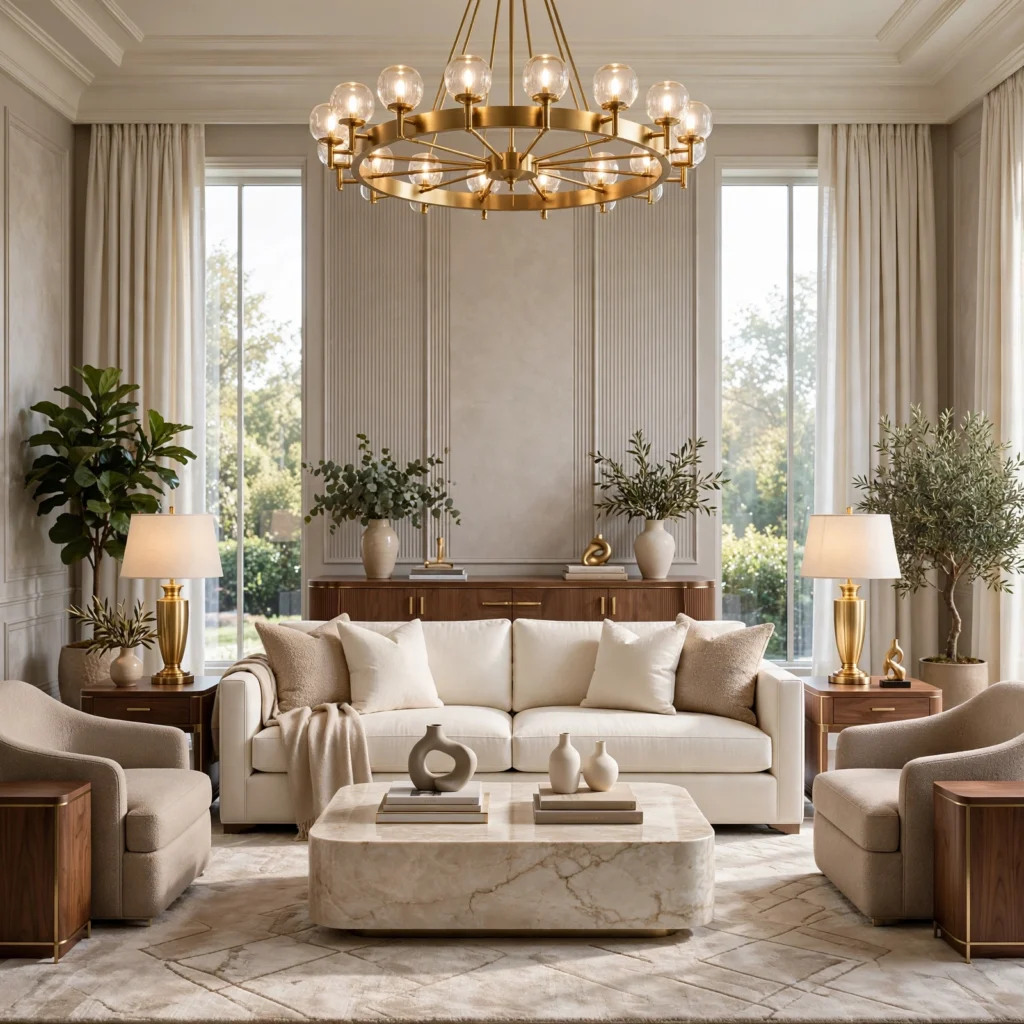
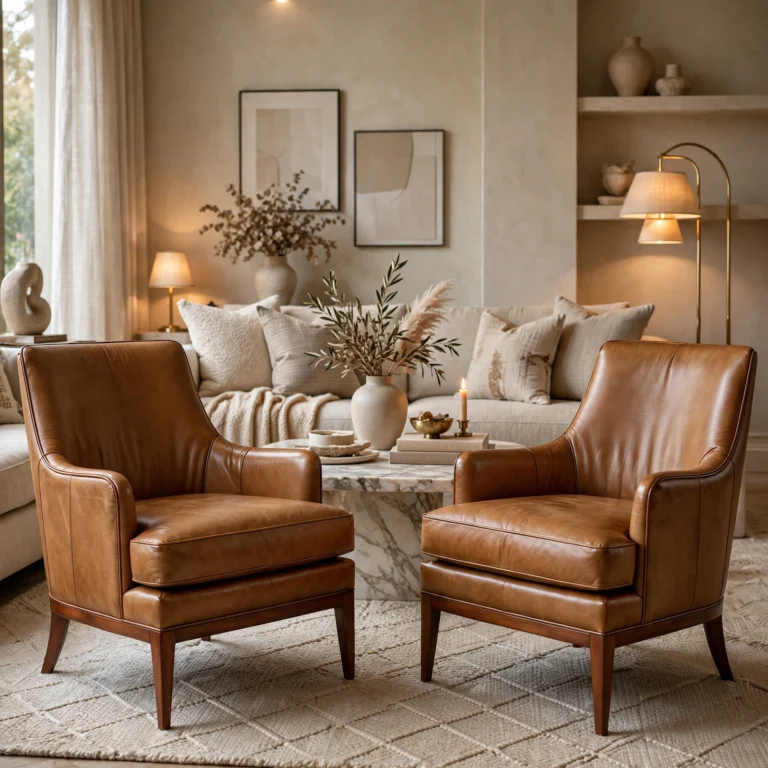
A luxury living room inspiration symmetrical layout places matching furniture pairs, like two identical accent chairs or matching table lamps, on either side of a central point such as a fireplace or a large window, reinforcing the sense of formality and intentional proportion central to a genuinely luxury space. This single layout decision does more to create a polished, considered feel than almost any individual furniture choice, since symmetry reads as deliberate in a way an asymmetric, casually collected arrangement doesn’t. Measure the room’s true center line carefully before placing furniture, since even minor misalignment undermines the symmetry the layout depends on.
Shop the Look
A hand-knotted wool area rug in a neutral tone anchors a room built around a mohair sofa and a pair of leather accent chairs. A marble coffee table on a sculptural bronze base pairs well with a crystal chandelier sized generously to the room. Round out the space with silk drapery panels, brass hardware throughout, and a curated crystal bar cart display.
Common Mistake to Avoid
The most common mistake in pursuing luxury living room inspiration is prioritizing visible cost or brand recognition over genuine material quality and proportion, resulting in a room that reads as expensive without actually reading as luxurious. A room filled with recognizable designer pieces that don’t share a coherent scale, material story, or color relationship to one another often looks less considered than a room built around fewer, carefully chosen pieces in genuine natural materials. A better approach is prioritizing craftsmanship, proportion, and material honesty over recognizability or price alone.
People Also Ask
What makes a living room look luxurious?
Genuine material quality, like natural stone, solid wood, and real metal hardware rather than plated or laminate alternatives, along with careful proportion and layered lighting, are the elements that most consistently define a luxurious living room, more than any single expensive piece or recognizable brand. Custom details, like millwork or a hand-knotted rug, also signal a level of investment and craftsmanship that off-the-shelf furniture generally can’t match, regardless of its price point.
Do I need a large budget to achieve a luxury living room look?
A genuinely luxury room typically does require a larger investment than a standard living room, since materials like natural stone, hand-knotted rugs, and solid brass hardware cost significantly more than their manufactured alternatives. That said, focusing a limited budget on fewer, higher-impact pieces, like a statement lighting fixture or a quality area rug, while keeping the rest of the room simpler, generally produces a more convincing luxury result than spreading a similar budget thinly across many moderately priced items.
What colors are best for a luxury living room?
Deep, rich tones like emerald, navy, and burgundy paired with warm neutrals like cream and taupe are consistently associated with luxury living room design, since they read as considered and refined without leaning on any particular passing trend. Metallic accents in brass or bronze, used consistently rather than mixed with several other metal tones, also support a cohesive, elevated color story throughout the room.
How do I mix antique and modern pieces in a luxury living room?
The most reliable approach is choosing one or two genuine antique or vintage pieces to serve as focal points, then keeping the surrounding furniture simpler and more contemporary in silhouette, rather than mixing eras across every single object in the room. This contrast between old and new, when handled deliberately, reads as curated and confident rather than mismatched, provided the color palette and overall proportion stay consistent across both the antique and modern pieces.
What lighting works best for a luxury living room?
Layered lighting combining a statement overhead fixture, at least two table or floor lamps, and dedicated picture lighting for any significant art consistently reads as more finished and luxurious than a single overhead source alone. Warm bulb temperatures in the 2700K to 3000K range support the room’s material quality by casting a flattering, rich light across stone, wood, and metal surfaces, while independent dimmers on every fixture allow the room to shift between bright and intimate settings as needed.
Conclusion
Luxury living room inspiration comes down to material honesty, deliberate proportion, and a handful of genuinely well-made investment pieces working together, rather than the sheer volume or visible cost of what fills the room. Save this list to Pinterest for your next design project, and check out our related posts on elegant living room decor and cool room decor for more ways to shape the rest of the home.