Quiet Luxury Living Room 17 Ideas for an Understated Space
A quiet luxury living room favors understated elegance over anything flashy, relying on material quality, craftsmanship, and restraint rather than obvious status symbols. This guide walks through seventeen distinct quiet luxury directions, each tied to a specific material, furniture piece, or styling technique so you can picture the finished room before making a purchase. By the end, you’ll have a clear shortlist of ideas matched to your existing furniture, room size, and preferred level of warmth.
Trend & Background
Quiet luxury has extended from fashion into interior design, favoring understated neutrals, natural materials, and subtle craftsmanship over the more visibly branded or ornate maximalism of previous years. This matters now because homeowners increasingly want their living rooms to feel timeless and considered rather than trend-driven, prioritizing pieces that age well over those chasing a passing aesthetic. Tonal color palettes, natural fibers like linen and wool, and unlacquered or aged metals have become the leading markers of this understated approach, replacing the bold jewel tones and heavy gilding associated with more traditional luxury styling.
Key Takeaways
- A quiet luxury living room relies on restrained neutrals, natural materials, and craftsmanship rather than visible branding or bold statement pieces.
- Cashmere, linen, and unlacquered brass remain the most requested materials for 2026 quiet luxury interiors.
- Editing decor down to fewer, well-made pieces reads as more sophisticated than filling a room with matched furniture.
- Tonal, low-contrast color palettes allow texture rather than color to carry a room’s visual interest.
1. Tonal Neutral Color Layering
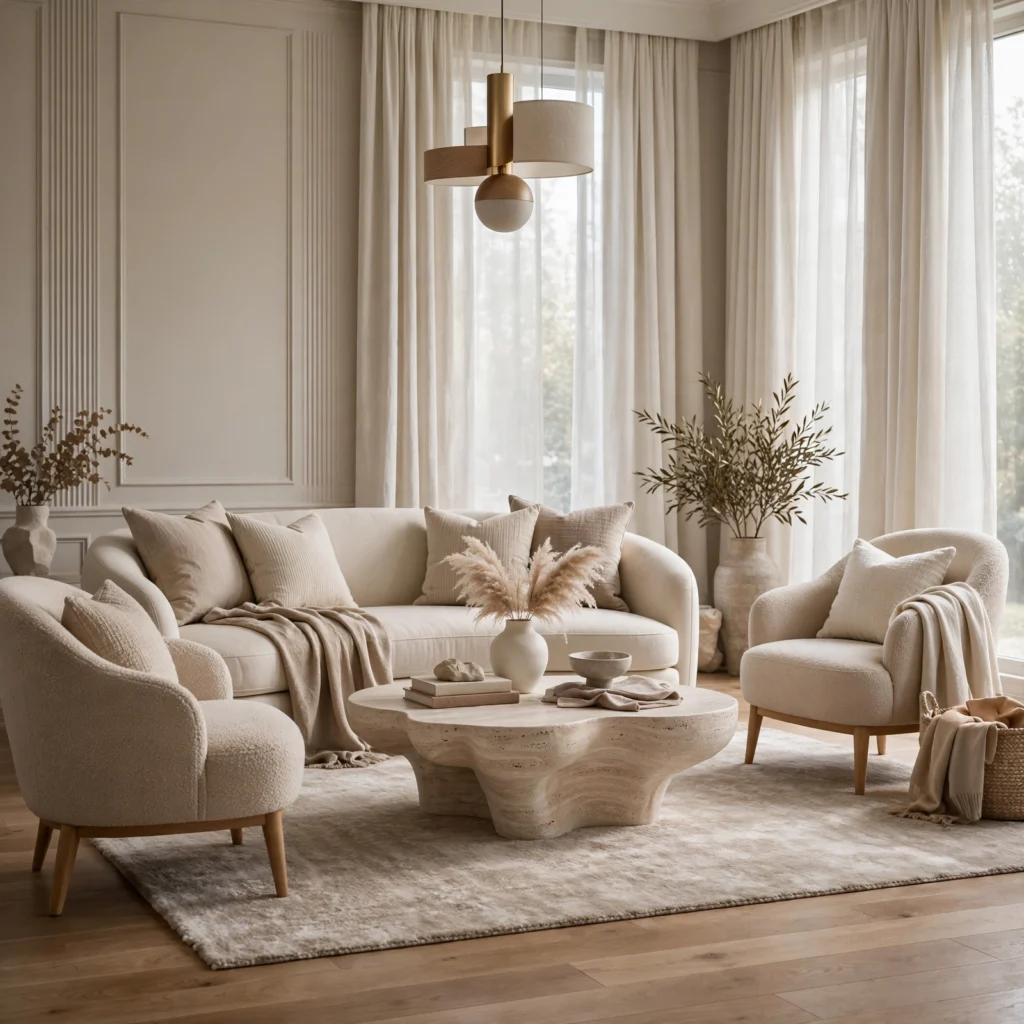
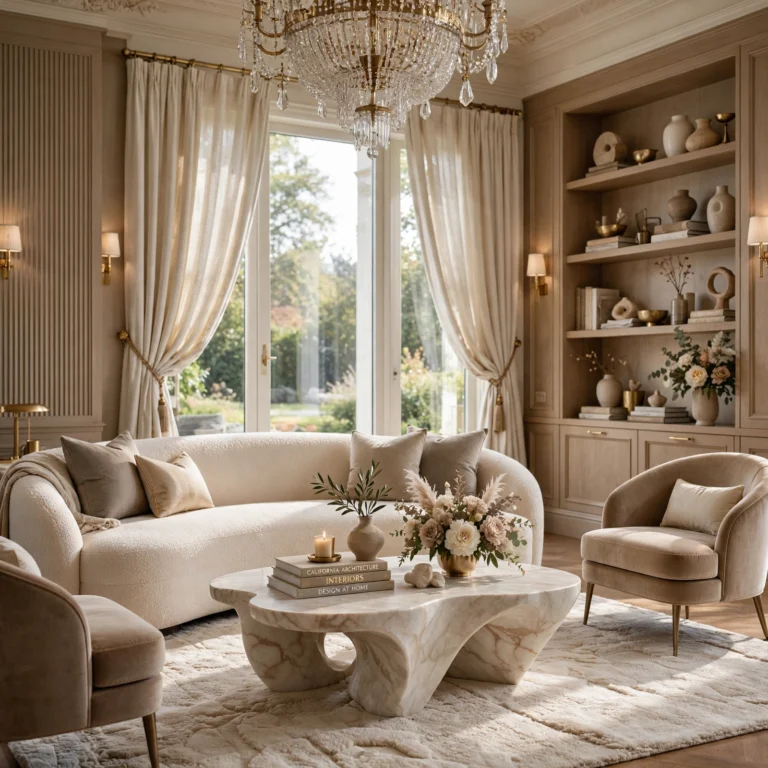
Layering several shades within a single neutral family, such as oatmeal, taupe, and warm gray, rather than introducing a separate accent color, creates the calm, cohesive backdrop central to a quiet luxury living room. This approach suits homeowners wanting a timeless palette that won’t need updating with passing color trends. Choose two or three closely related tones, and rely on differing textures, such as a bouclé chair against a linen sofa, to add visual interest without introducing additional color.
2. Unlacquered Brass Hardware
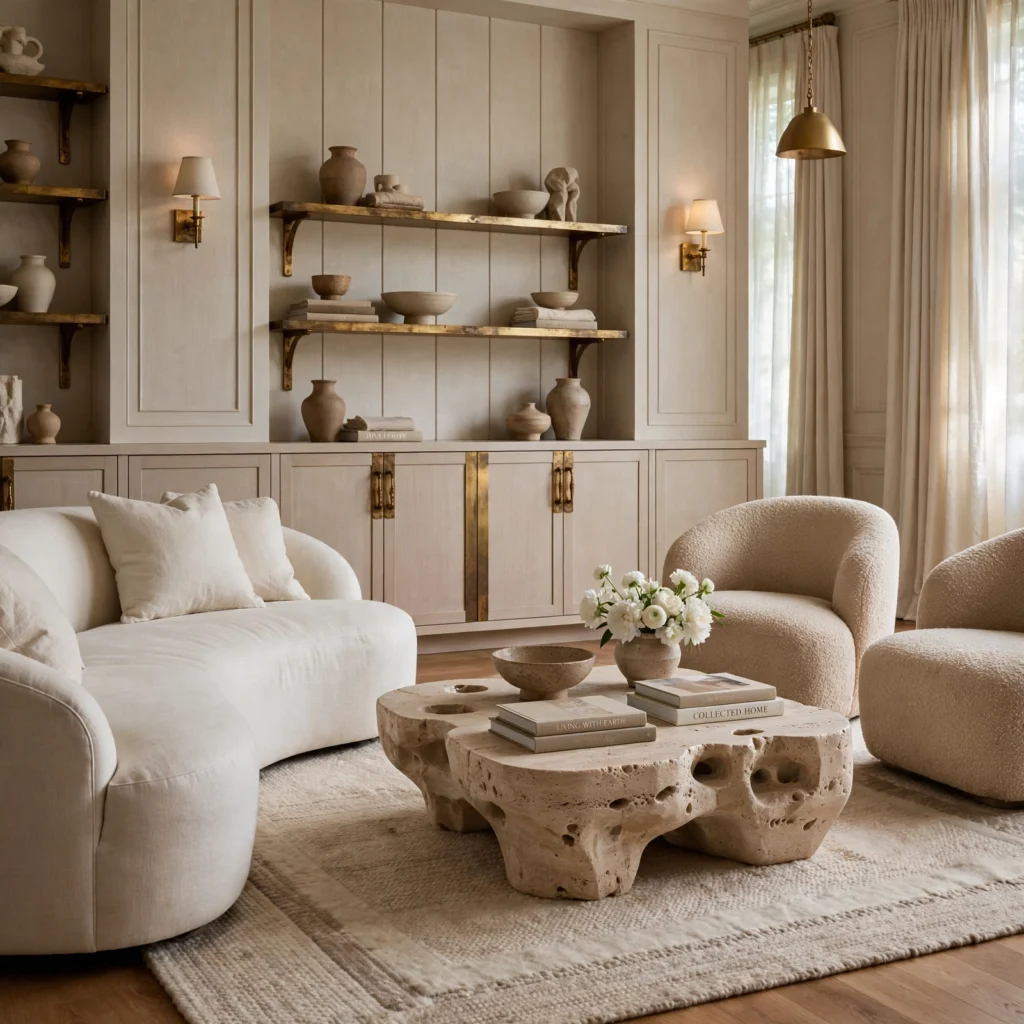
Unlacquered brass hardware, which develops a soft, natural patina over time rather than staying artificially shiny, suits a quiet luxury living room’s preference for materials that age gracefully rather than looking freshly polished. This approach works well on cabinet pulls, lamp bases, and picture frame hardware throughout the room. Choose unlacquered over lacquered brass specifically for this aging quality, and avoid polishing it too frequently, since the developing patina is part of its intended appeal.
3. Linen Upholstered Sofa
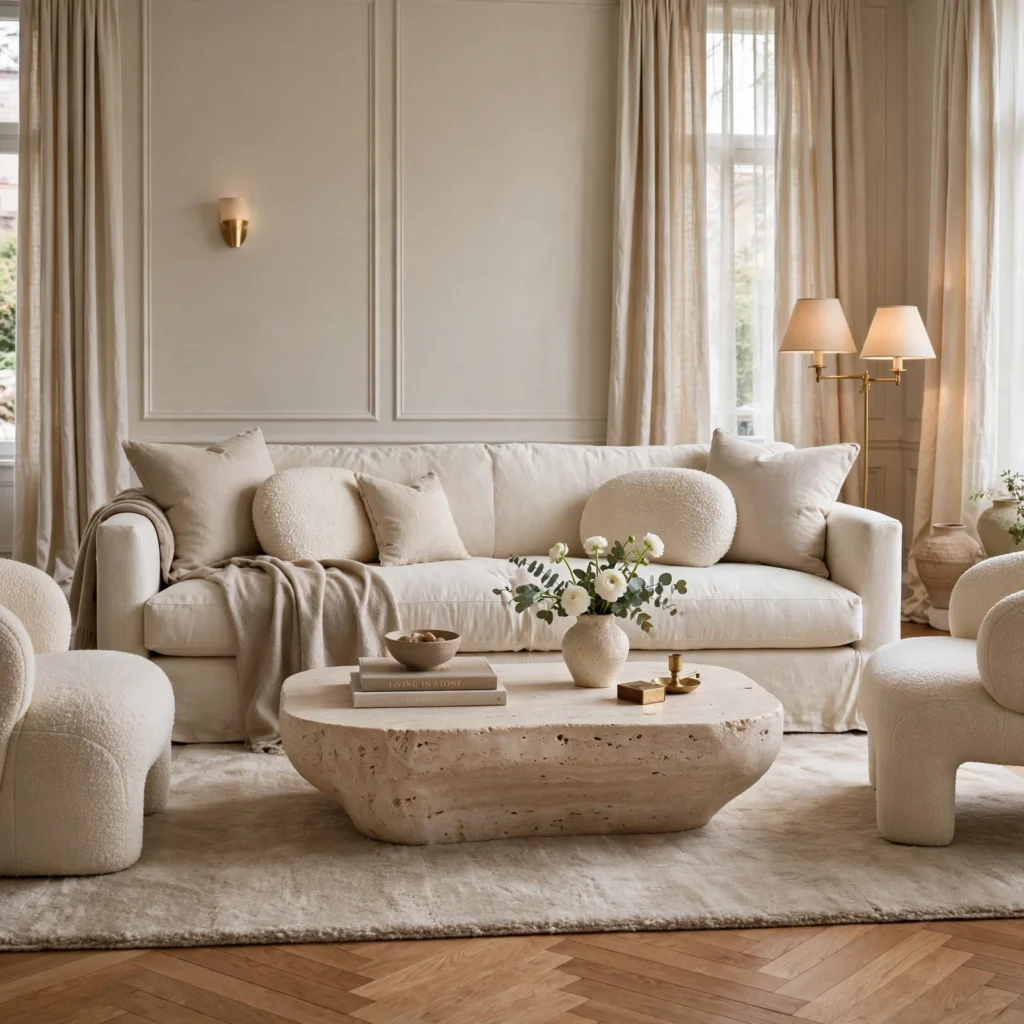
A linen-upholstered sofa, in a soft, slightly textured weave rather than a smooth or shiny fabric, embodies the relaxed, understated quality central to quiet luxury styling. This piece suits living rooms wanting a sofa that looks equally at home dressed up or down. Choose a natural, undyed or lightly dyed linen in a neutral tone, and select a tailored, simple silhouette rather than an overly structured or ornate frame to keep the piece feeling effortless.
See more options for luxury living room ideas
4. Cashmere Throw and Pillow Layering
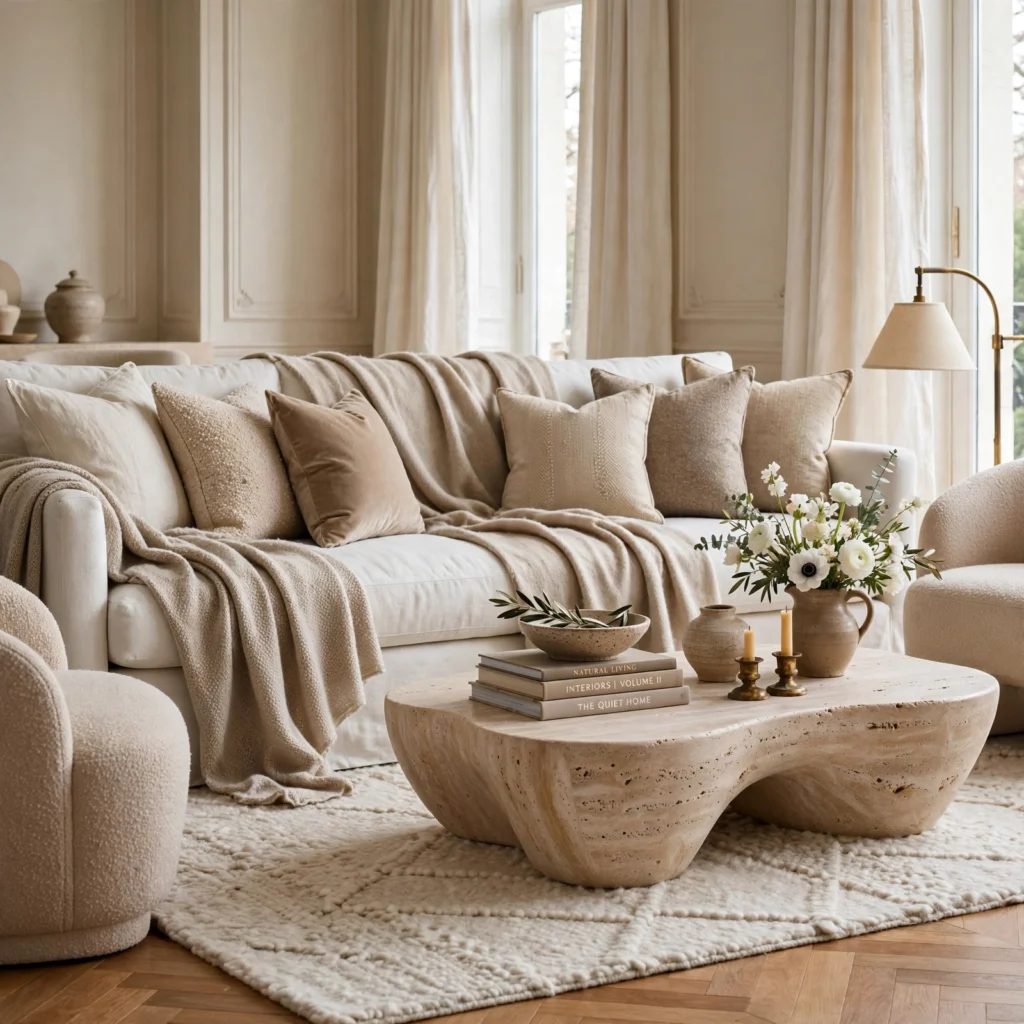
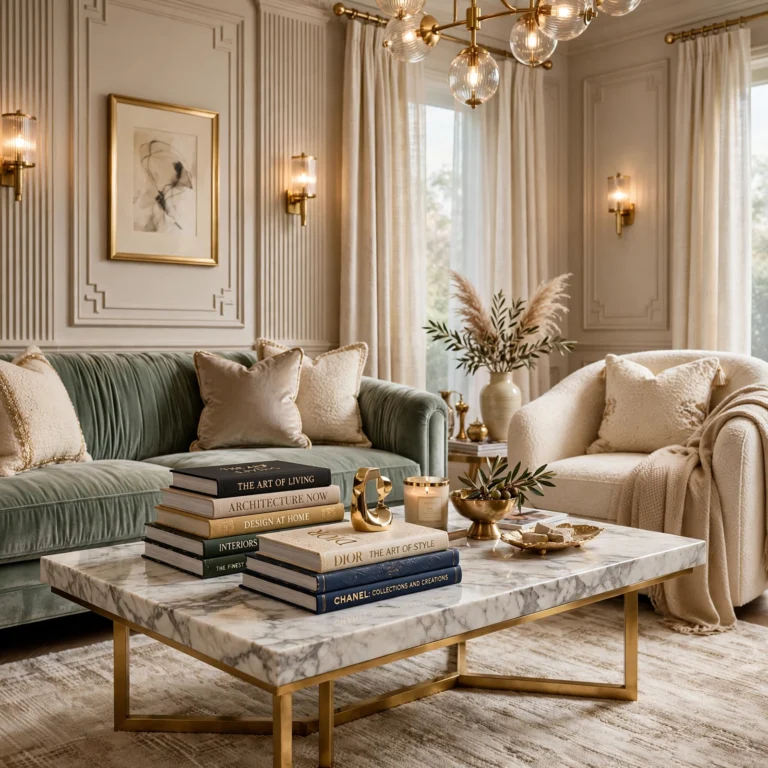
Layering cashmere throws and pillows in tonal neutral shades adds a tactile softness that signals quality more effectively than pattern or visible logos ever could. This approach suits any existing sofa color, since neutral cashmere pairs easily across most palettes. Choose two to three pillows in slightly varying shades of the same neutral, and drape a single cashmere throw loosely over one arm of the sofa rather than folding it too precisely for a relaxed, natural look.
5. Natural Stone Coffee Table
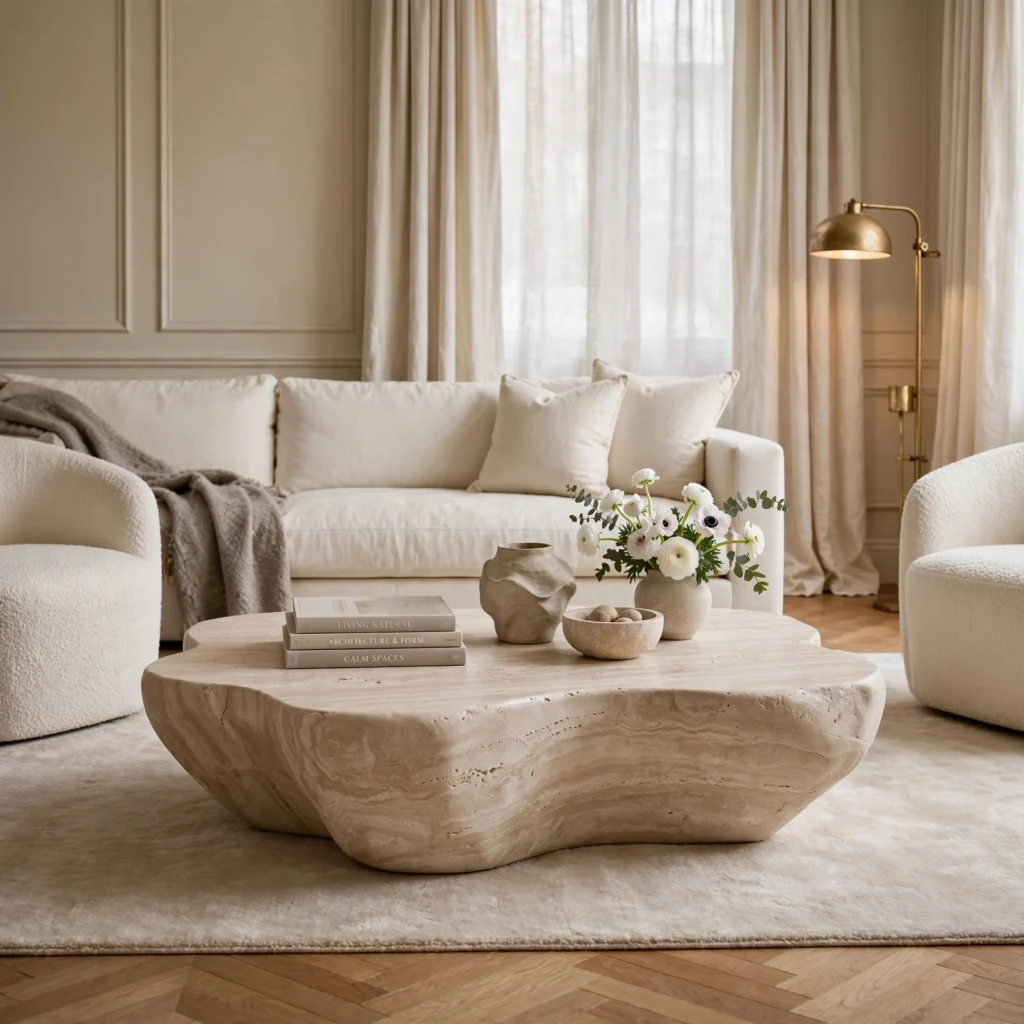
A coffee table in a natural stone like honed travertine or limestone, rather than a high-polish marble, suits quiet luxury’s preference for softer, matte finishes over glossy, reflective surfaces. This piece suits living rooms with predominantly soft, textured upholstery, where the stone provides subtle material contrast without visual competition. Choose a honed rather than polished finish for a more understated sheen, and style the surface with only one or two objects to preserve the stone’s quiet presence.
6. Wool Bouclé Accent Chair
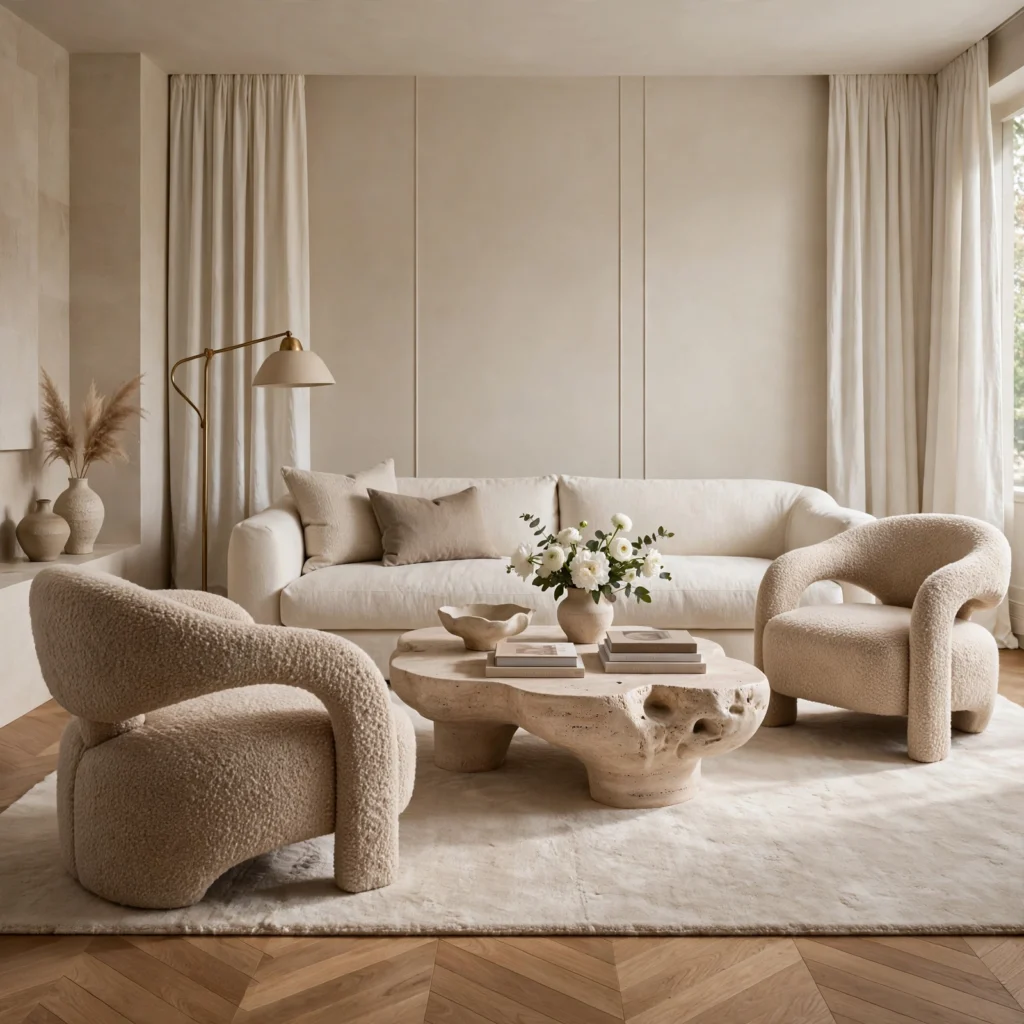
A wool bouclé accent chair, in a natural cream or oatmeal tone, introduces texture without pattern or bold color, aligning closely with quiet luxury’s restrained aesthetic. This piece suits corners or spots near a window that benefit from an additional textured seat beyond the primary sofa. Choose a chair with a simple, rounded silhouette and wood or brass legs, and position it at a slight angle rather than squared off for a more relaxed, natural arrangement. The table below compares common quiet luxury materials by texture and typical price.
| Material | Texture | Best Application | Price Range |
| Linen | Matte, textured | Sofa, drapery | $$-$$$ |
| Cashmere | Soft, plush | Throws, pillows | $$-$$$$ |
| Honed Travertine | Matte stone | Coffee table | $$$-$$$$ |
| Unlacquered Brass | Aging metal | Hardware, lamps | $$-$$$ |
7. Handwoven Jute or Wool Rug
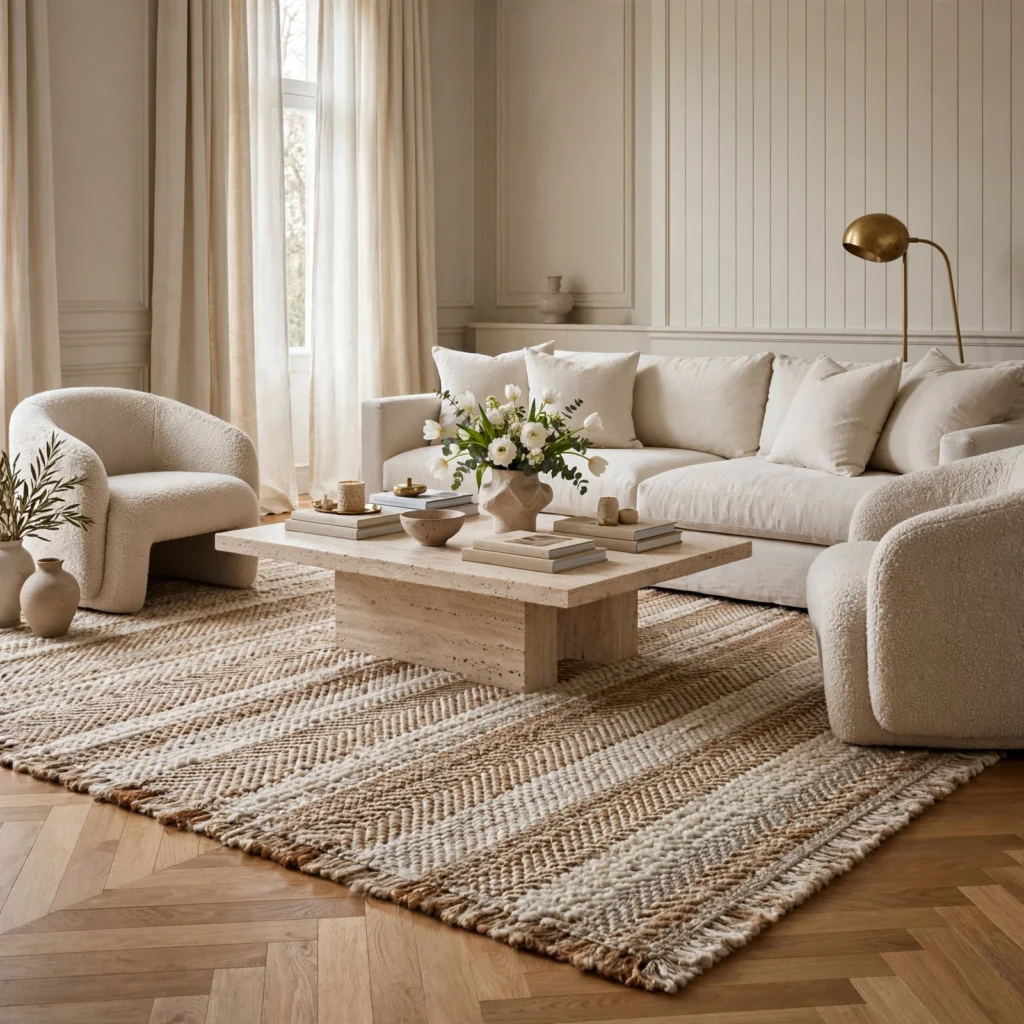
A handwoven jute or wool rug, in a natural, undyed tone rather than a bold pattern, grounds a quiet luxury living room with texture and craftsmanship while staying visually understated. This piece suits rooms with hardwood or stone flooring, adding warmth without introducing additional color or pattern. Choose a rug sized to fit under the front legs of all major seating pieces, and select a subtle weave variation rather than a busy repeating design to maintain the room’s calm visual tone.
8. Curated Single Art Piece
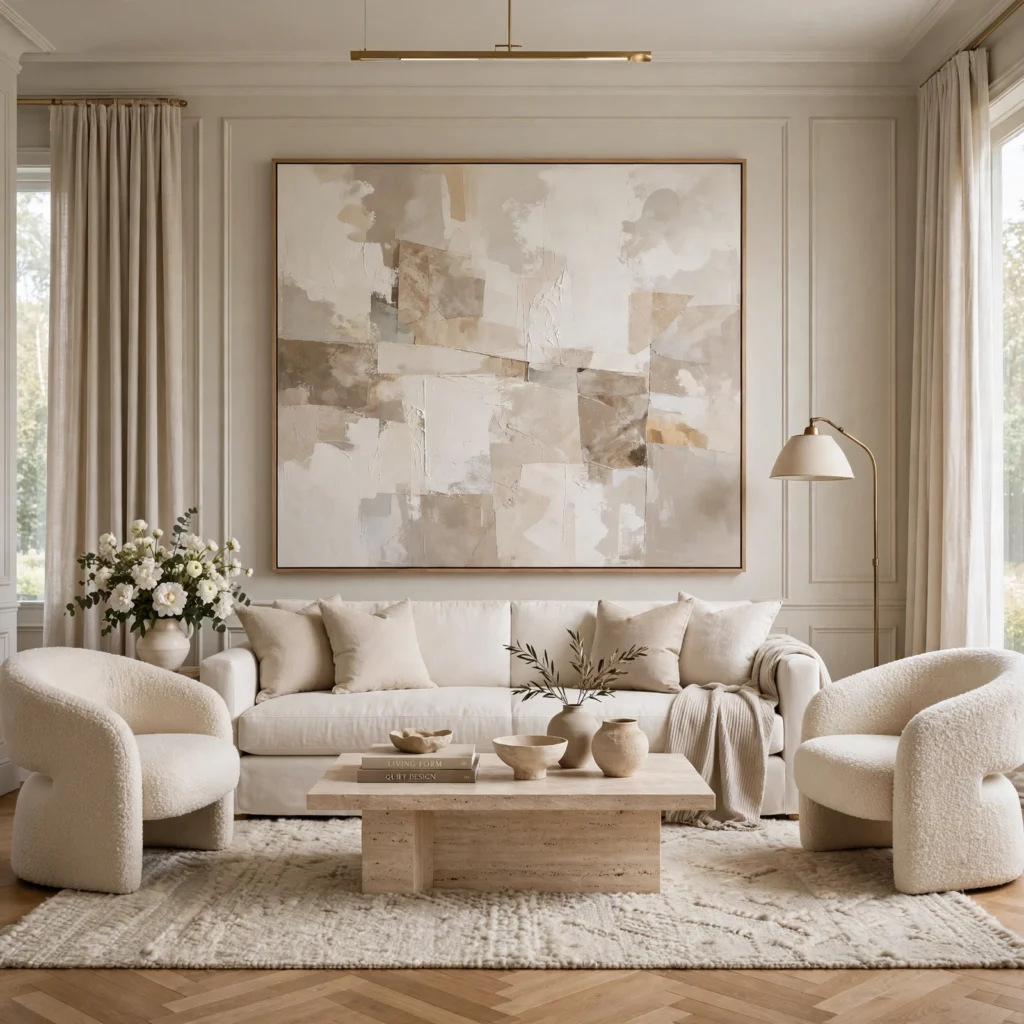
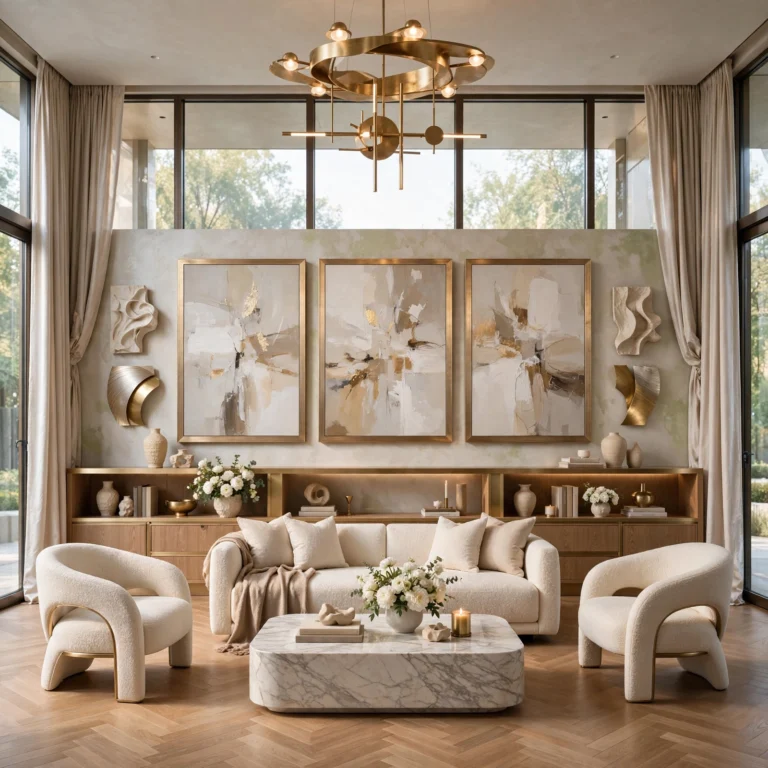
A single, well-chosen piece of art, rather than a full gallery wall, suits quiet luxury’s preference for restraint and negative space over an abundance of visual elements. This approach works particularly well above a sofa or media console, where one large piece reads as more intentional than several smaller ones. Choose a piece with a muted, tonal color palette that complements the room’s neutrals, and have it framed simply, avoiding ornate or heavily gilded frame styles.
9. Matte Black Metal Accents
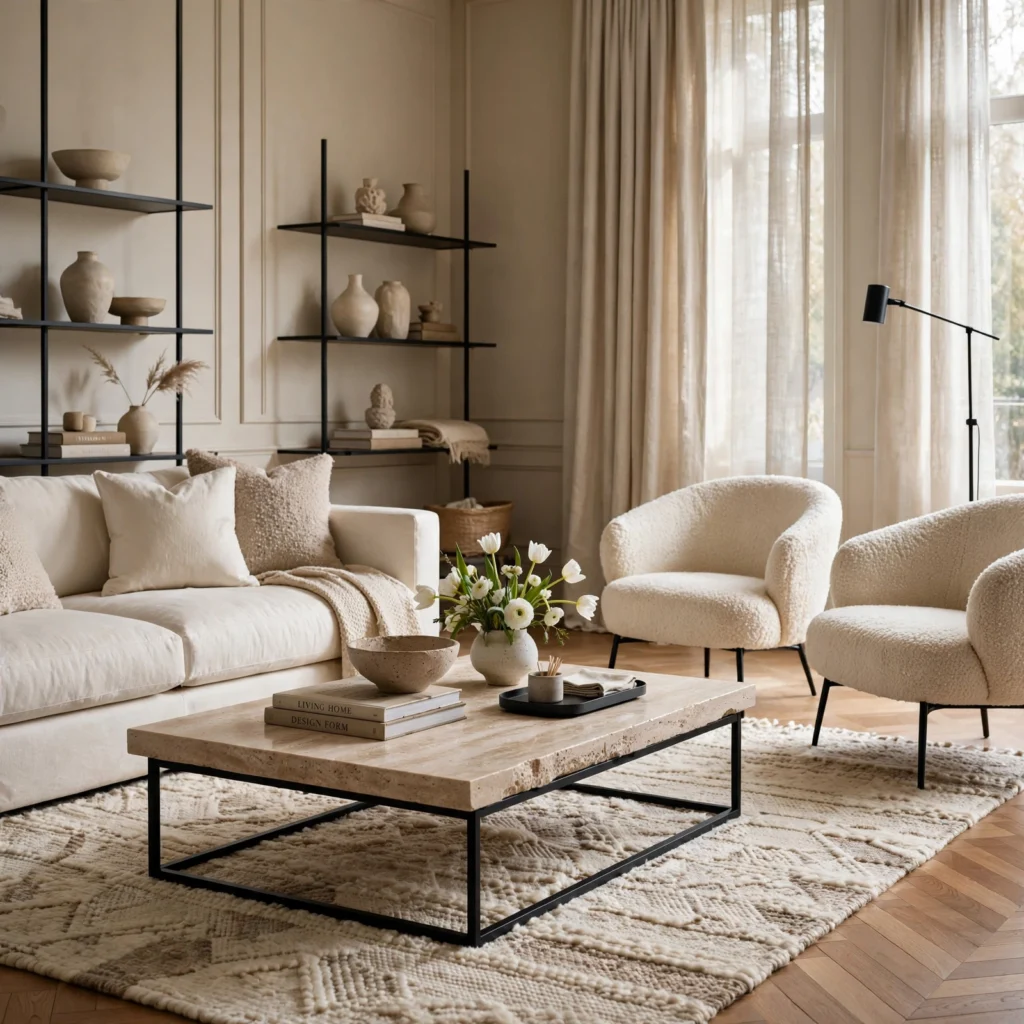
Matte black metal accents, used sparingly through a lamp base, window frame, or picture rail, introduce quiet contrast against a neutral palette without disrupting the room’s overall restraint. This approach suits living rooms wanting a subtle grounding element beyond wood and brass tones alone. Limit matte black to one or two fixtures rather than repeating it throughout the room, keeping it as a quiet accent rather than a dominant material.
10. Sheer Linen Drapery
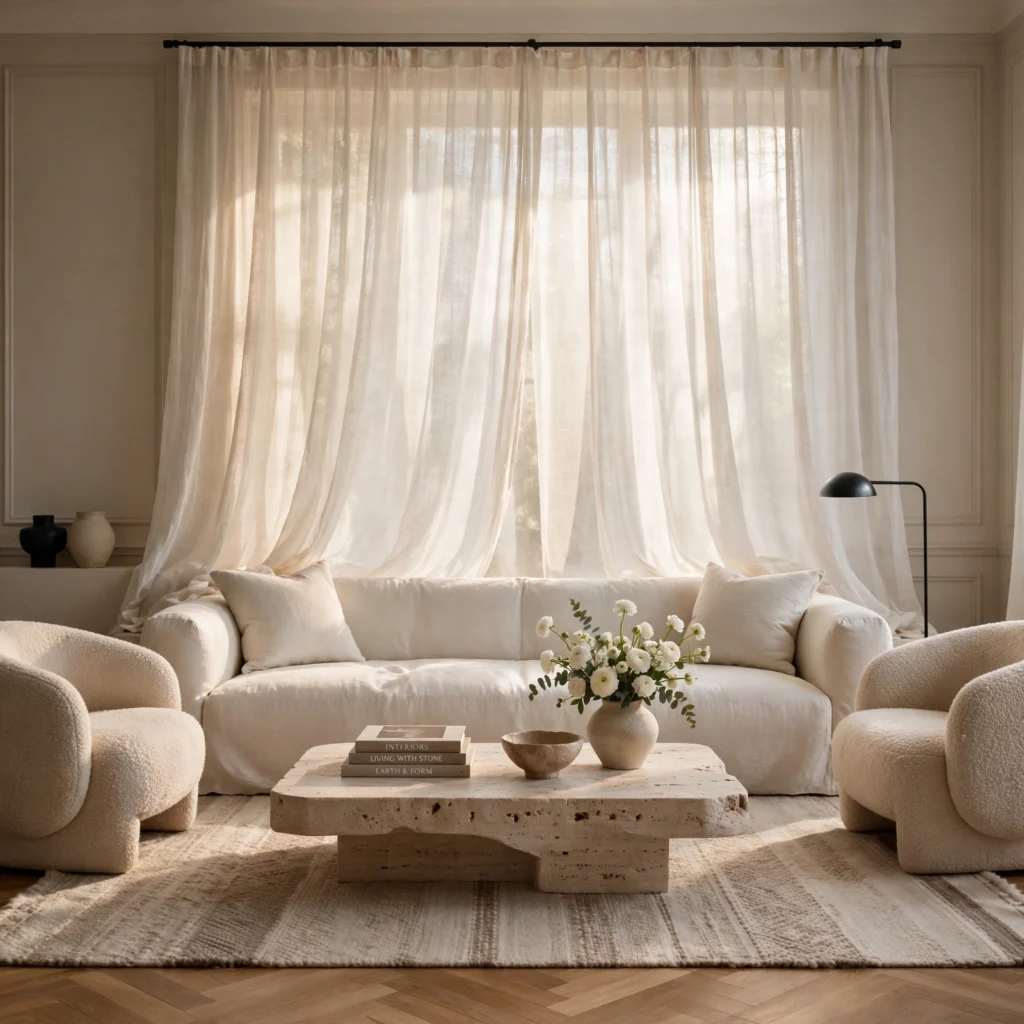
Sheer linen drapery, in a soft white or natural undyed tone, filters natural light gently while maintaining the relaxed, understated quality central to a quiet luxury living room. This approach suits rooms with good natural light, where privacy from blackout lining isn’t the primary concern. Choose a lightweight, slightly textured linen, and hang panels floor-length with enough fullness to fall in soft, natural folds rather than a stiff, flat drape.
11. Woven Rattan or Cane Accent
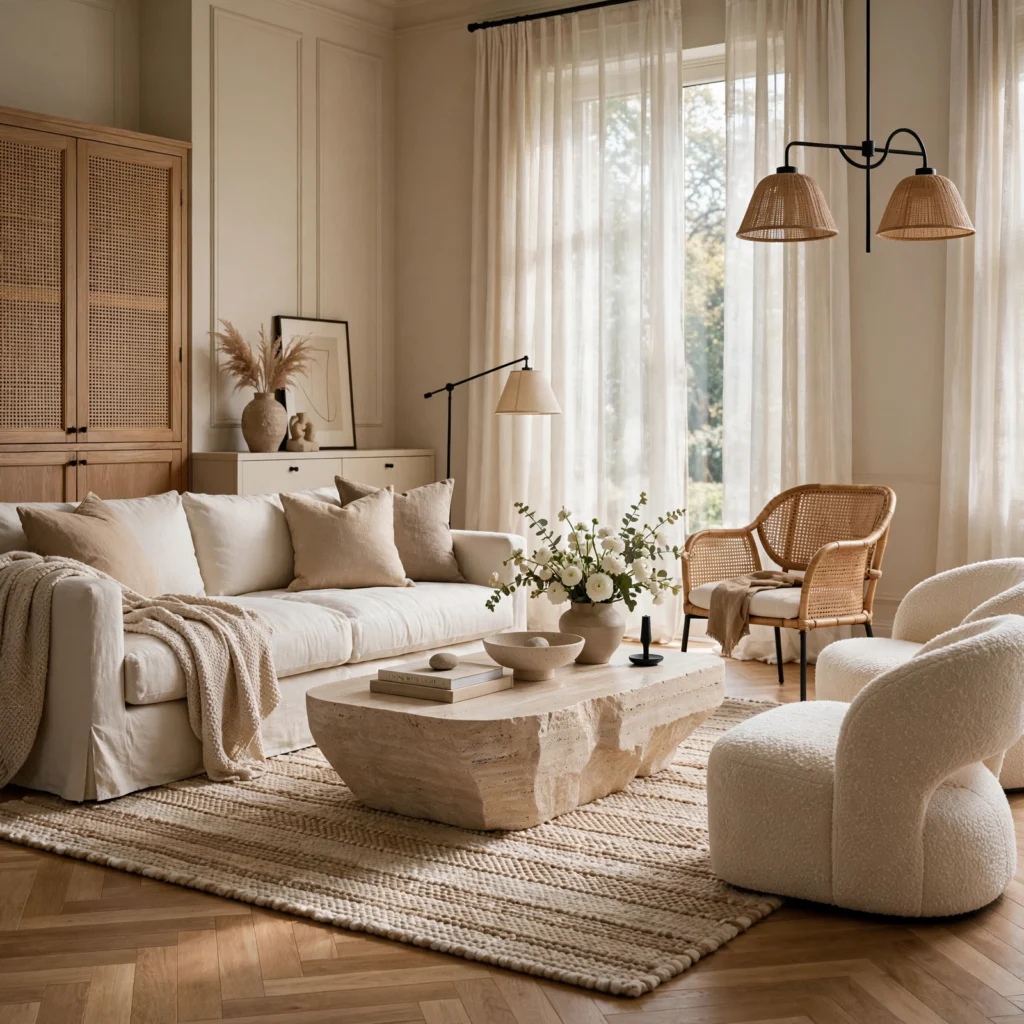
A single rattan or cane-detail piece, such as a side table or a cabinet with cane inserts, introduces natural texture and warmth without disrupting a quiet luxury living room’s restrained palette. This piece suits rooms wanting an organic material beyond wood and stone. Choose one rattan or cane piece rather than multiple, positioning it as an accent table or a media console detail so the natural texture reads as intentional rather than overwhelming.
12. Minimal Ceramic Vase Styling
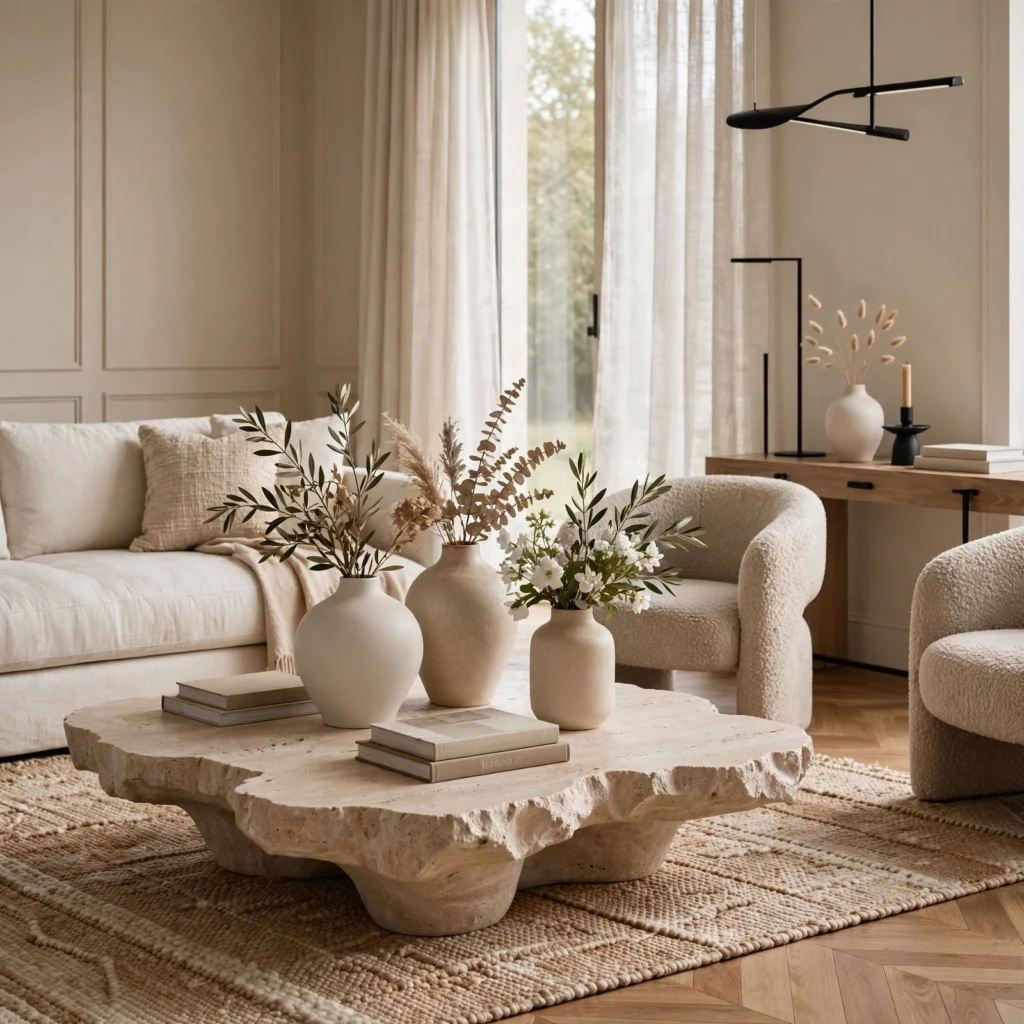
A small grouping of minimal, unglazed or matte-finished ceramic vases, displayed without flowers or with a single simple stem, suits quiet luxury’s preference for understated, sculptural objects over decorative abundance. This approach works well on a coffee table, console, or shelving display. Choose vases in varying heights but a consistent neutral tone, and group them in odd numbers with generous negative space around the display rather than crowding the surface.
13. Tailored Drapery Header
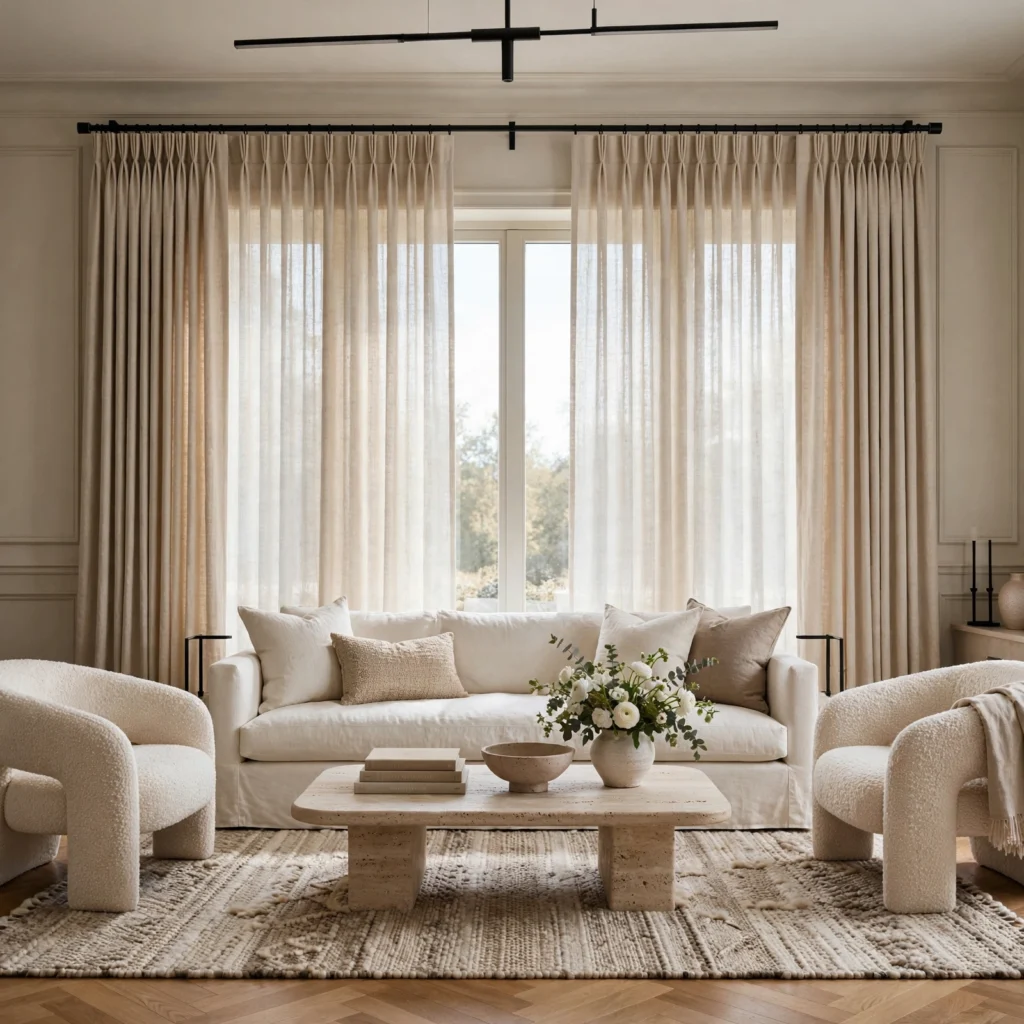
A tailored, simple drapery header, such as a plain pinch pleat without decorative trim, suits quiet luxury’s preference for clean lines over ornate detailing. This styling works well paired with linen or a linen-cotton blend fabric throughout a living room’s windows. Choose a simple metal rod in a matte or brushed finish rather than an ornate finial style, keeping the overall window treatment understated and tailored rather than decorative.
14. Edited Bookshelf Styling
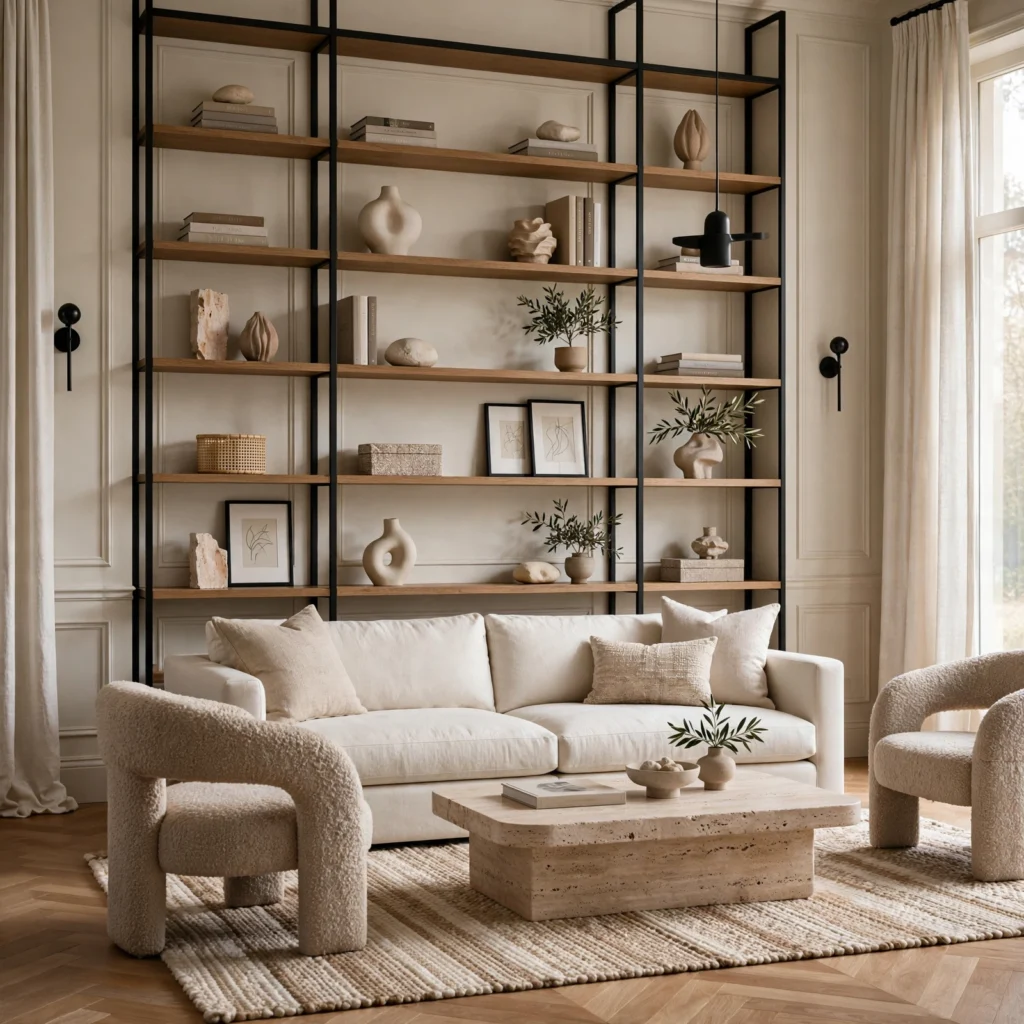
Styling built-in or freestanding shelving with a small, carefully edited selection of books and one or two sculptural objects, rather than filling every shelf, reflects quiet luxury’s preference for negative space over abundance. This approach suits homes with existing architectural shelving. Leave significant open space between groupings, and choose books with plain or muted spines rather than colorful covers to maintain the room’s overall tonal restraint.
15. Natural Wood Console Table
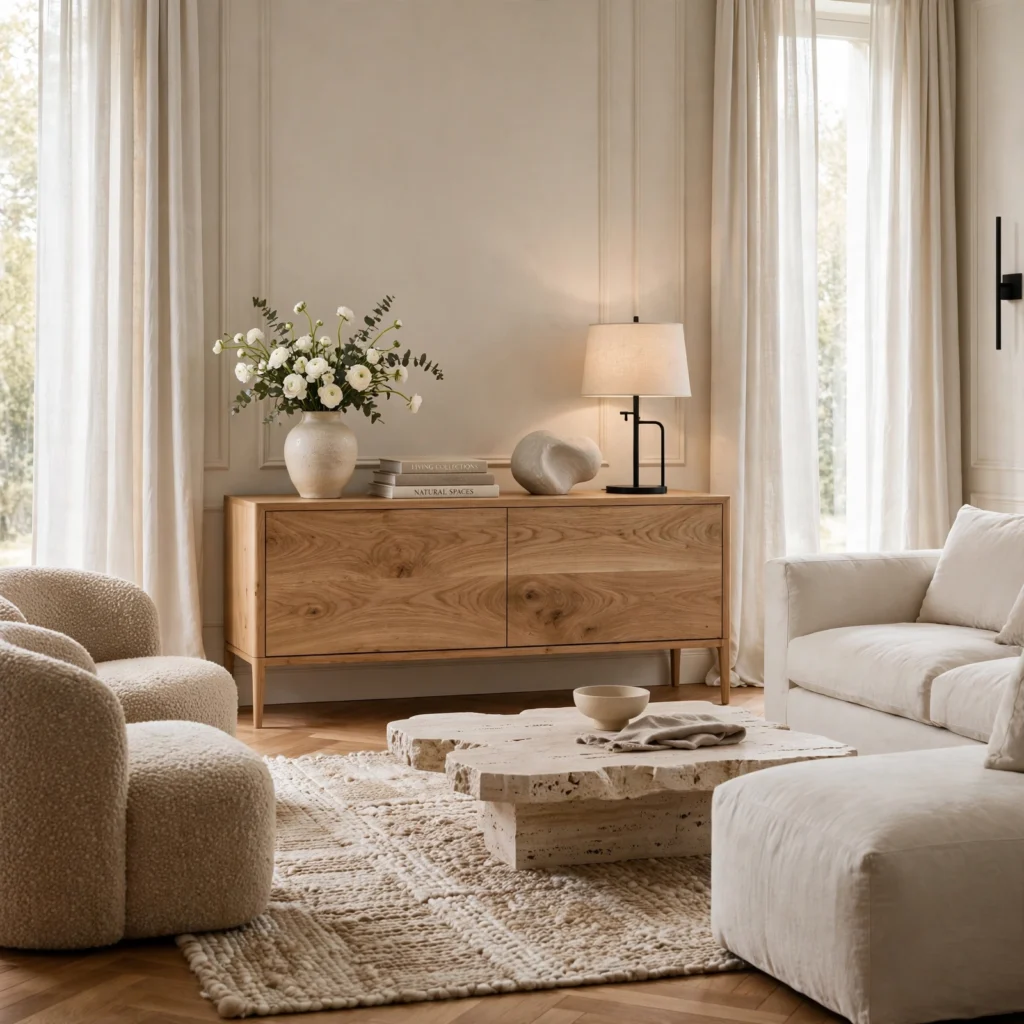
A console table in a natural, lightly finished wood like white oak or ash, rather than a heavily stained or lacquered finish, suits quiet luxury’s preference for materials that showcase their natural grain and texture. This piece suits entryways or the space behind a sofa in an open floor plan. Choose a console with simple, tapered or straight legs, and style the top with a single lamp and one small object rather than a fuller decorative arrangement.
16. Layered Table Lamp Lighting
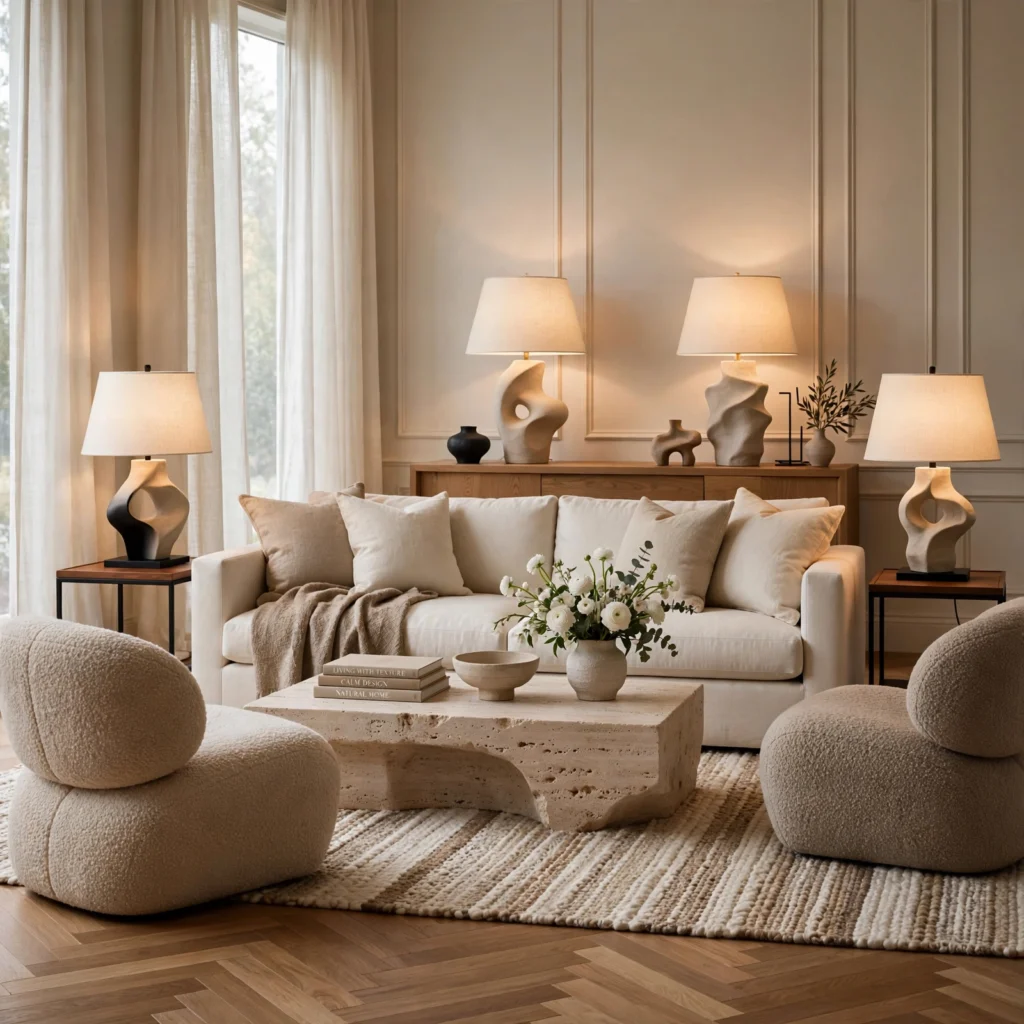
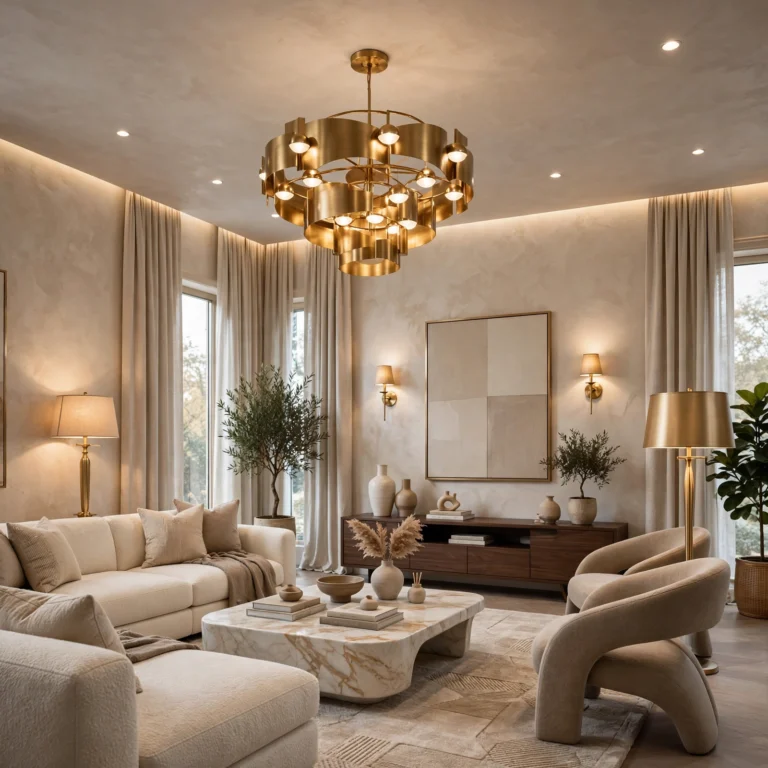
Layering two or three table lamps with linen or parchment shades throughout a living room, rather than relying on a single overhead fixture, creates the soft, warm glow associated with quiet luxury interiors. This approach suits any room size and can be added gradually without electrical work. Choose lamps with simple ceramic or wood bases, and use warm-toned bulbs around 2700 kelvin to maintain the room’s soft, understated ambiance.
17. Understated Cashmere Ottoman
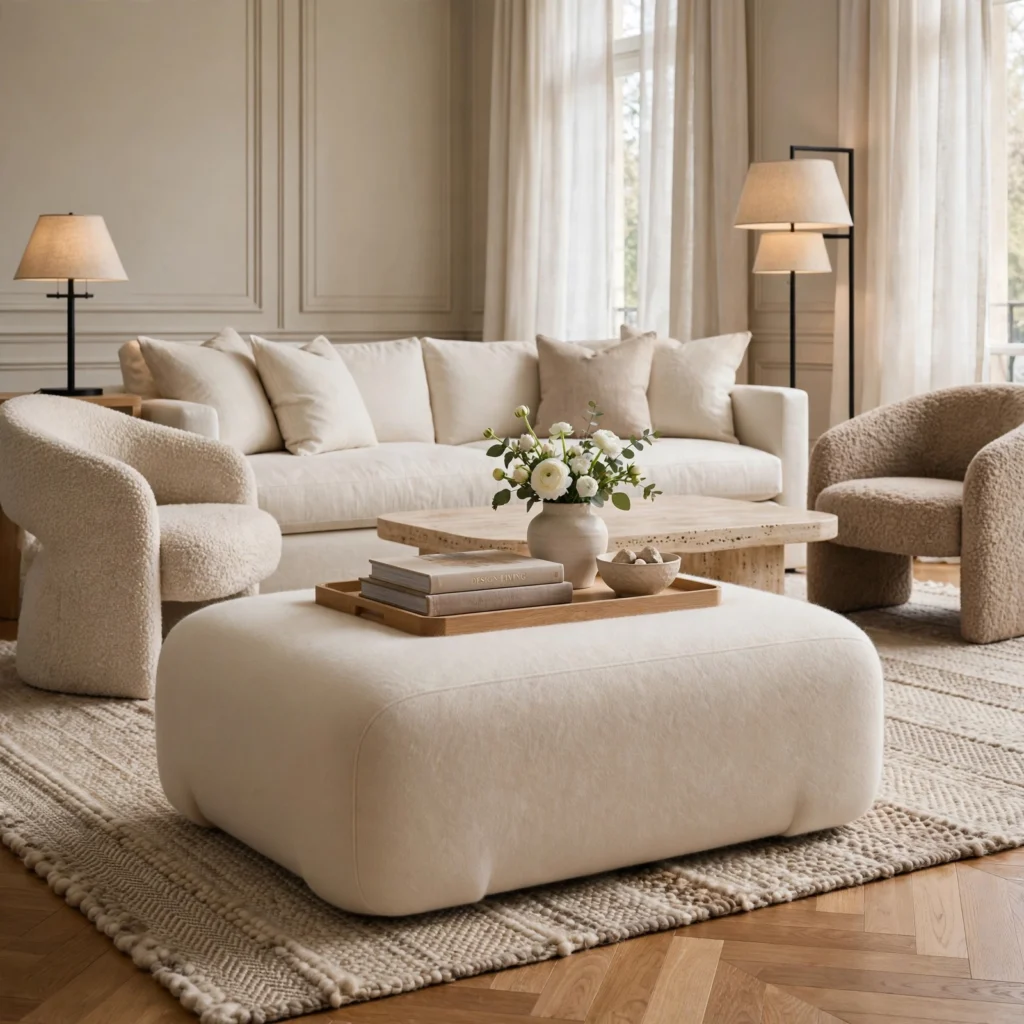
An ottoman upholstered in cashmere or a cashmere-wool blend, in a neutral tone matching the room’s existing palette, adds soft seating or a footrest option without introducing a bold pattern or color. This piece suits living rooms wanting flexible seating that still aligns with the room’s tonal restraint. Choose a simple, rounded or rectangular silhouette, and use it as a coffee table alternative or additional seating when the room needs to accommodate more guests.
Shop the Look
For a linen and brass styling, look for a linen-upholstered sofa, an unlacquered brass table lamp, and a honed travertine coffee table. For a bouclé and stone pairing, a wool bouclé accent chair, a natural jute rug, and a set of matte ceramic vases complete the look. Those pursuing tonal neutral layering can start with a cashmere throw in warm oatmeal, linen throw pillows in a slightly deeper shade, and a white oak console table.
Common Mistake to Avoid
The most common mistake with a quiet luxury living room is introducing too many competing textures or a stray bold color, which disrupts the tonal restraint that defines this style and makes the room feel inconsistent rather than intentional. Sticking to two or three closely related neutral tones and layering texture through natural materials like linen, wool, and stone, rather than color or pattern, keeps the room cohesive and true to the quiet luxury aesthetic throughout.
People Also Ask
What defines a quiet luxury living room?
A quiet luxury living room is defined by restrained neutral color palettes, natural materials like linen and wool, and an editorial approach to styling that favors fewer, higher-quality pieces over visible branding or bold statement decor. Craftsmanship and material quality carry the room’s sense of luxury rather than obvious cost signals or ornate detailing.
What colors are used in a quiet luxury living room?
Quiet luxury living rooms typically rely on tonal neutrals like oatmeal, taupe, warm gray, and soft white, layered together within the same color family rather than introducing a separate accent color. This restrained palette allows texture, from bouclé to linen to natural stone, to provide the room’s primary visual interest instead of color contrast.
How is quiet luxury different from other luxury living room styles?
Quiet luxury distinguishes itself through restraint and understated materials, avoiding the bold jewel tones, heavy gilding, or obvious status pieces sometimes associated with more traditional luxury styling. Where other luxury approaches might use a statement chandelier or bold velvet sofa, quiet luxury favors a linen sofa, unlacquered brass, and a curated, editorial approach to negative space.
Can a quiet luxury living room work on a moderate budget?
Yes, since much of the quiet luxury aesthetic comes from restraint and careful material choices rather than sheer spending, a moderate budget can achieve the look by prioritizing one or two natural-material investment pieces, such as a linen sofa or a stone coffee table, while keeping everything else simple and tonal. Avoiding unnecessary decorative clutter also keeps costs controlled while maintaining the intended aesthetic.
What materials should I avoid in a quiet luxury living room?
Highly polished chrome, bold patterned fabrics, and heavily lacquered or gilded finishes tend to work against the quiet luxury aesthetic, which favors matte, natural, and aging materials like honed stone and unlacquered brass instead. Avoiding overly shiny or visibly branded pieces helps maintain the understated, timeless quality central to this design approach.
Conclusion
A quiet luxury living room relies on restraint, natural materials, and tonal color layering rather than bold statement pieces or visible cost signals, and any of these seventeen directions provides a solid starting point depending on your existing furniture, room size, and preferred level of warmth. Save this guide to Pinterest for reference while gathering pieces, and check out our related post on choosing the right paint sheen for high-traffic rooms.