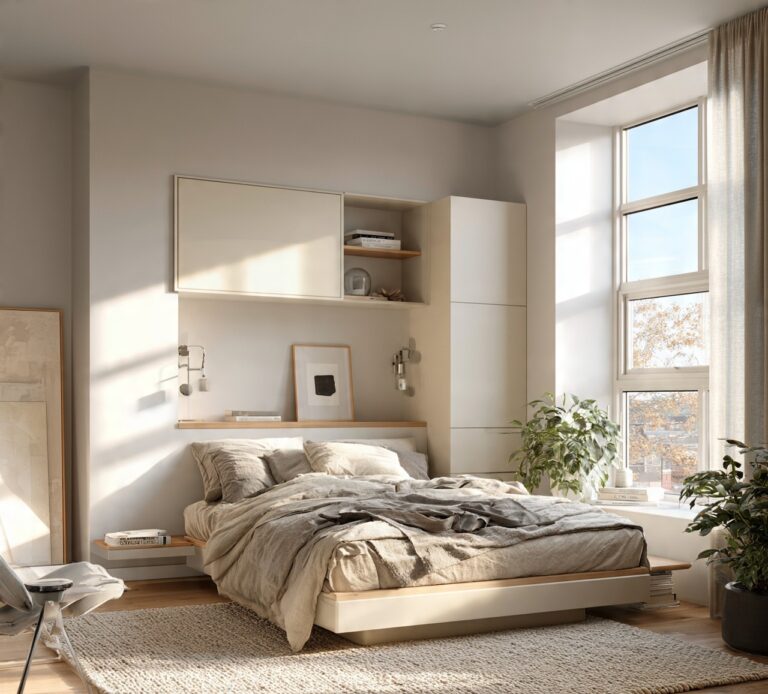
12 Trending Tiny Bedroom Ideas That Actually Work
A tiny bedroom forces every piece of furniture to justify its footprint, and the rooms that work best are the ones built around that constraint instead of fighting it. These twelve tiny bedroom ideas cover furniture choices, storage builds, and layout tricks that make the most of a limited floor plan, from loft beds to fold-down desks. By the end, you’ll have a list of specific, practical updates sized to fit rooms as small as 80 to 100 square feet.
Trend & Background
Tiny bedroom design has become more of a mainstream focus as housing costs push more people into smaller apartments, converted offices, and starter homes with bedrooms far below the traditional standard size. Rather than treating a small room as a compromise, designers and homeowners are increasingly building around its constraints, using vertical storage, multi-purpose furniture, and light reflection to make the space function well. This matters now because a growing share of new construction and city apartments include bedrooms under 100 square feet, making these space-maximizing strategies far more relevant than they were even a decade ago.
Key Takeaways
- Tiny bedroom ideas rely on vertical space and multi-purpose furniture rather than trying to fit standard-size pieces into a small footprint.
- Wall-mounted storage and fold-away furniture free up floor space that a tiny room can’t spare.
- Light colors, mirrors, and low-profile furniture all work together to make a small room read as larger than it is.
- Several of these ideas require no permanent installation, making them practical for rentals as well as owned homes.
1. Loft Bed Frame
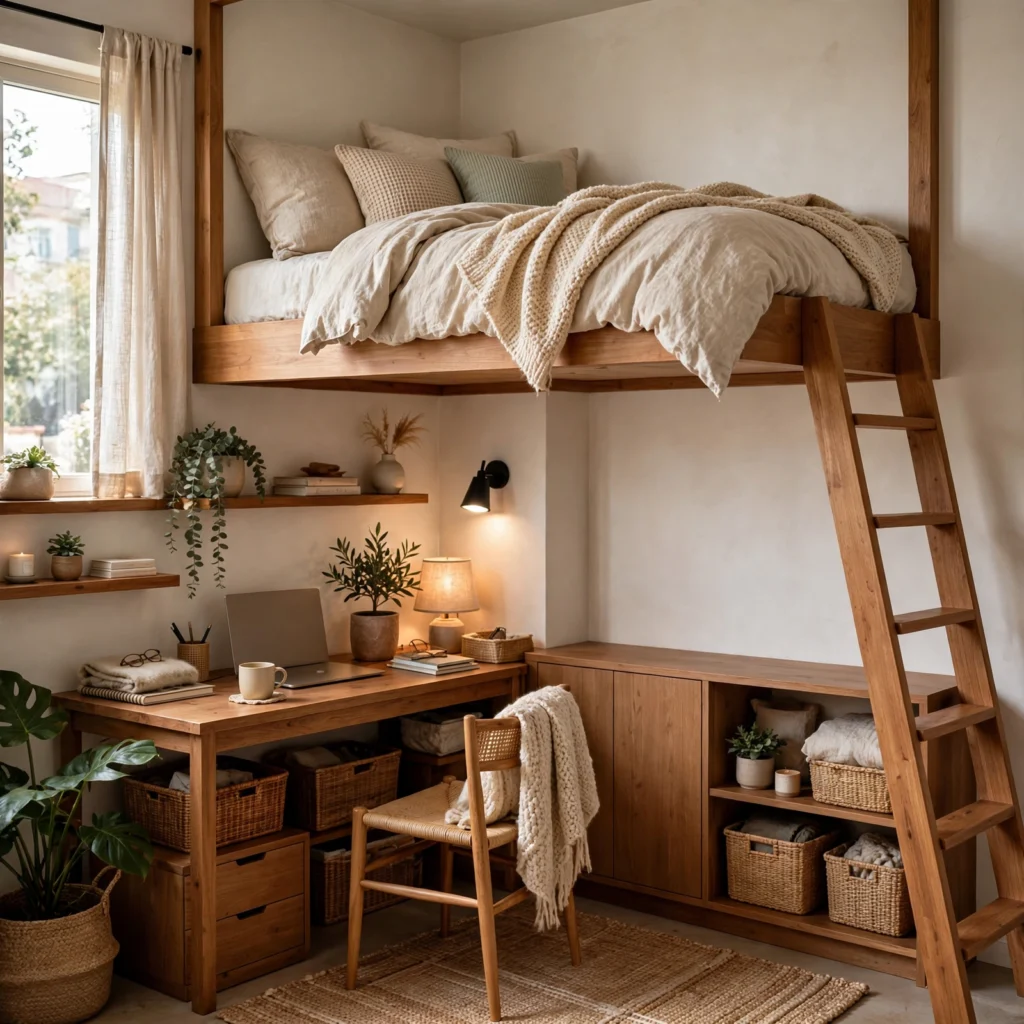
A loft bed raises the mattress up on a frame, opening up the entire floor area underneath for a desk, storage, or seating that a tiny room otherwise couldn’t fit. Metal frames tend to feel less bulky than wood in a small space, keeping sightlines open beneath the bed. This works especially well in rooms with at least eight feet of ceiling height, since the raised sleeping area needs enough clearance both above and below to remain comfortable.
| Room Size | Recommended Bed Style | Floor Space Gained |
| Under 80 sq ft | Loft bed or wall bed | High |
| 80–100 sq ft | Platform bed with storage | Moderate |
| 100+ sq ft | Standard frame | Minimal |
2. Wall Bed (Murphy Bed)
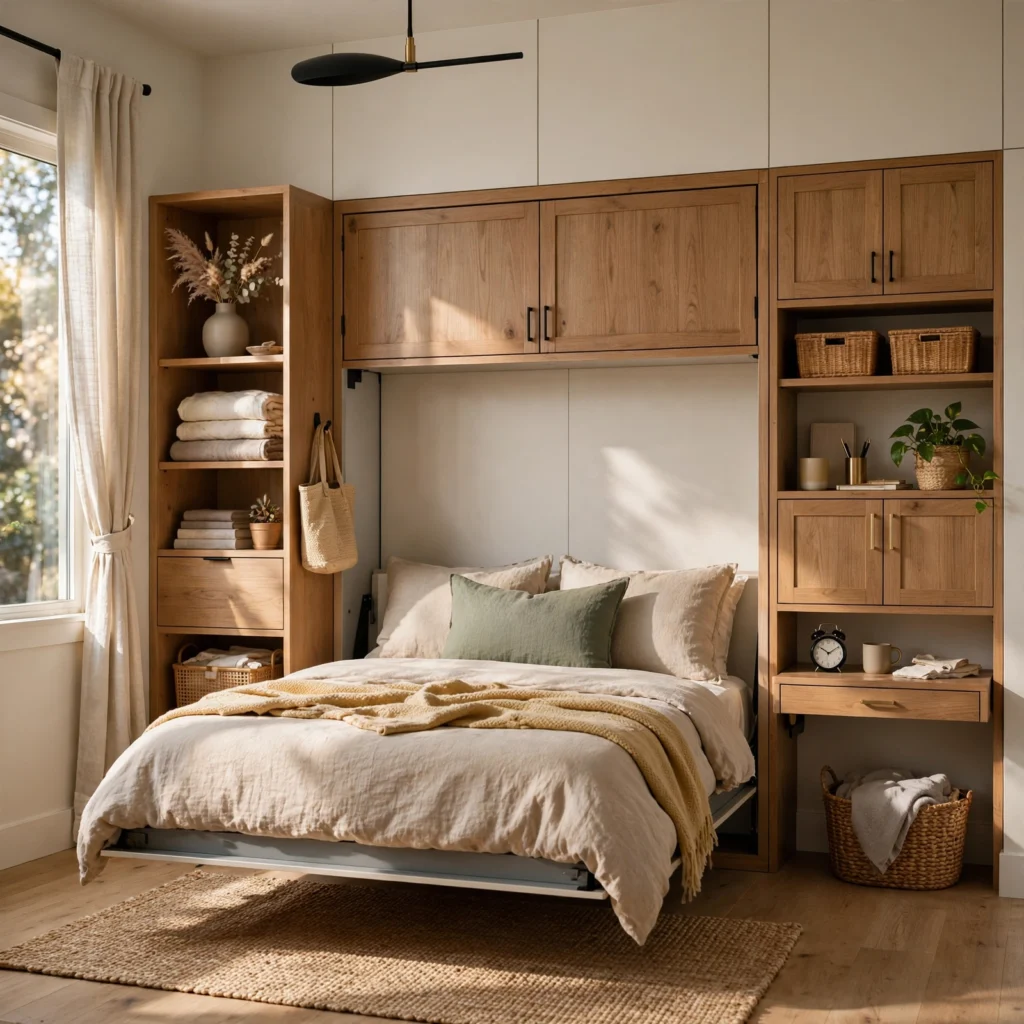
A wall bed folds up vertically into a cabinet or frame during the day, freeing the entire floor for other use when the bed isn’t needed. This is one of the more effective solutions for a tiny bedroom that also needs to function as a home office or living space during waking hours. Modern wall bed kits include built-in shelving on the front panel, so the folded-up bed doubles as a bookcase or display shelf rather than a blank surface.
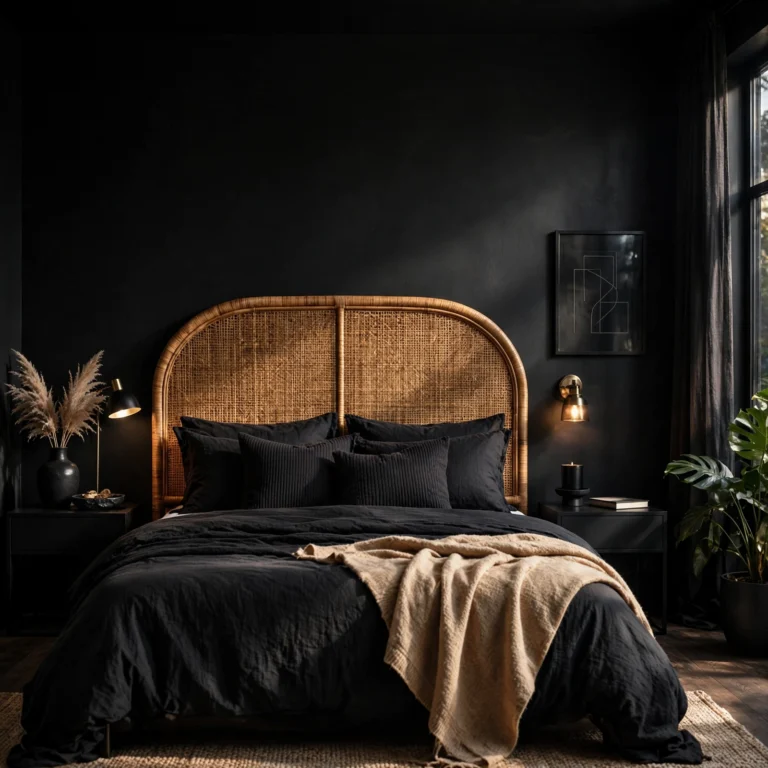
Refresh your home with our creative black and white bedroom ideas featuring smart layouts, trendy décor, and practical storage solutions.
3. Fold-Down Wall Desk
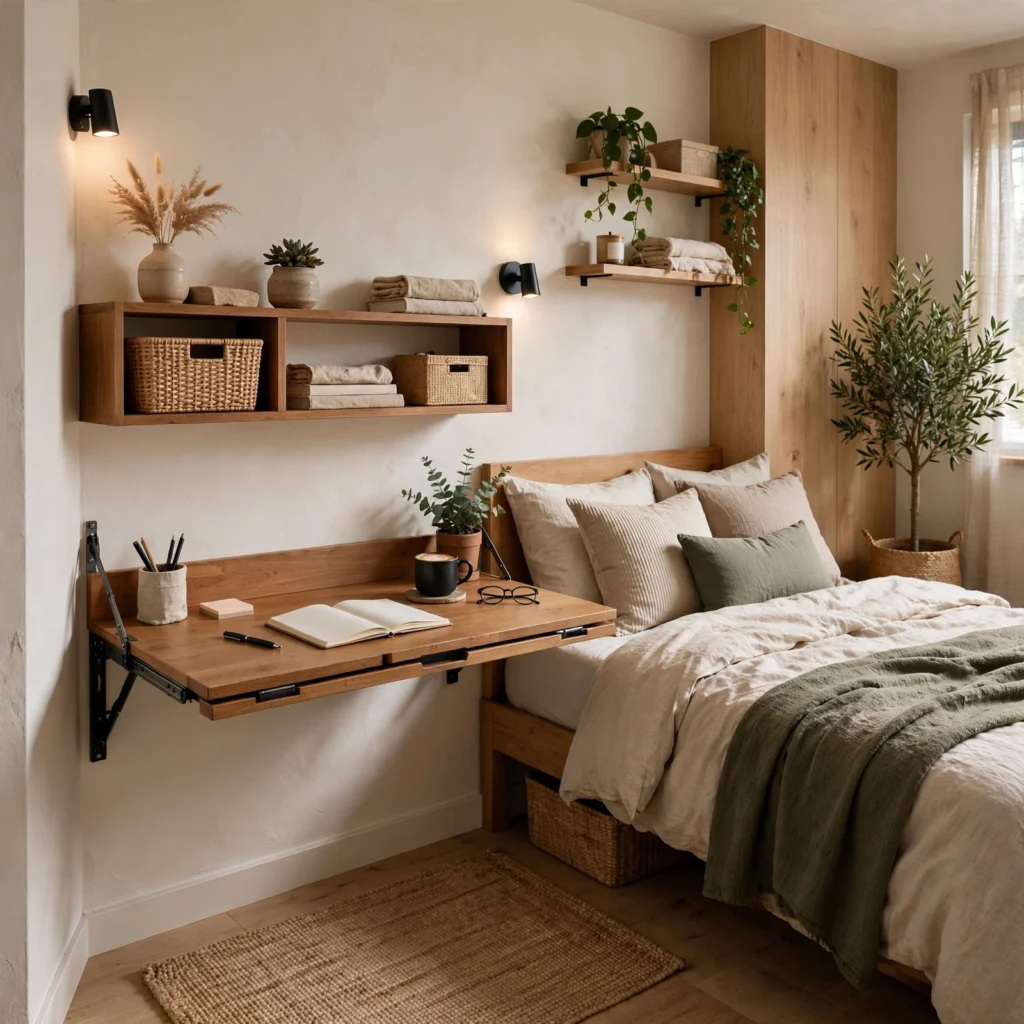
A fold-down desk attaches to the wall on a hinge, providing a flat work surface that folds flush against the wall when not in use. This solves one of the biggest tiny bedroom problems, fitting a workspace into a room with almost no spare floor area. When folded down, the desk typically takes up less than a foot of depth, and some versions include a small shelf underneath for a chair to tuck away when not in use.
4. Under-Bed Storage Drawers
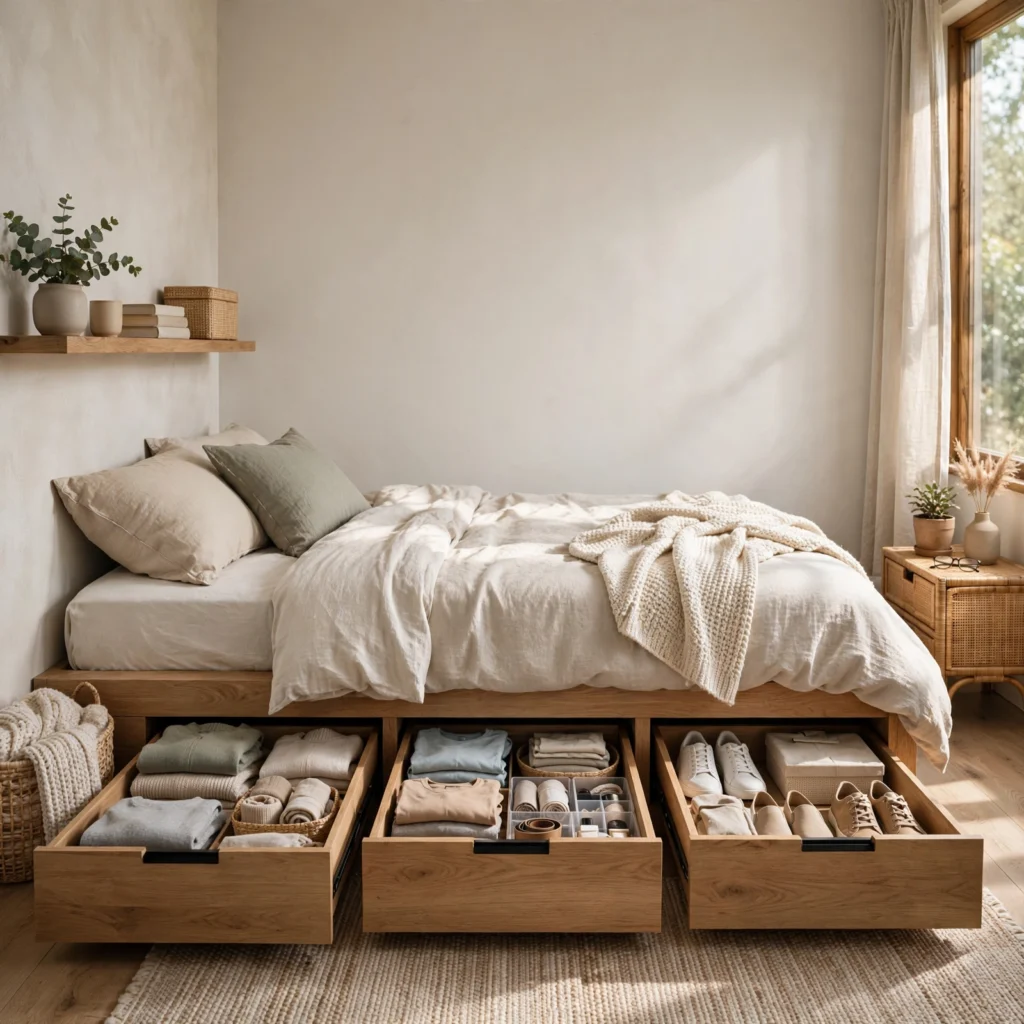
Rolling drawers or bins sized to the exact clearance under a bed frame turn otherwise wasted space into storage for clothing, shoes, or bedding. This matters more in a tiny bedroom than almost anywhere else in the home, since there’s often no room for a dresser at all. Choosing a bed frame with built-in drawers, rather than adding separate bins later, keeps the look integrated and avoids extra bulk along the sides of the bed.
5. Floating Wall Shelves
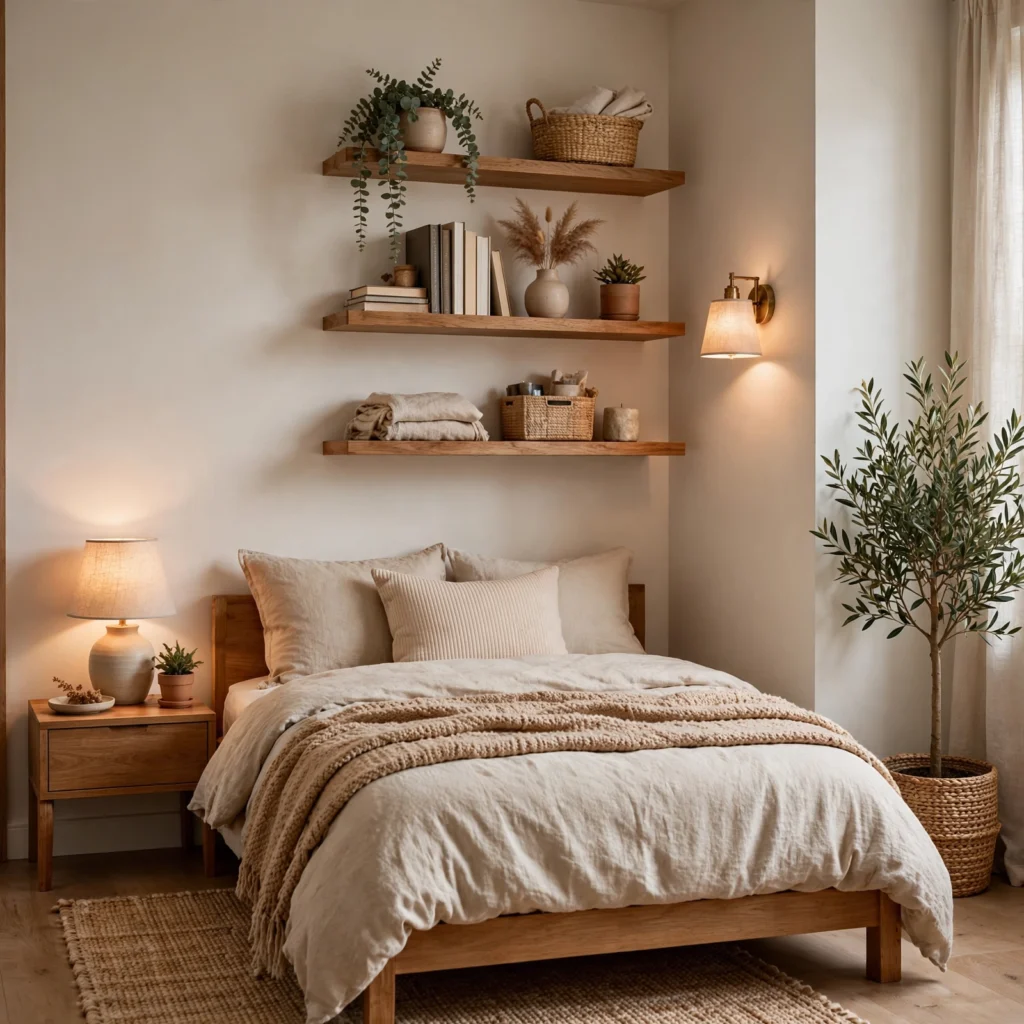
Floating shelves mounted directly to the wall studs replace the need for a bookcase or dresser top, holding books, small decor, and folded items without any floor footprint. Staggering two or three shelves at different heights makes better use of a tall, narrow wall section than a single long shelf would. This is one of the lower-cost, lower-effort updates on this list, and it works in nearly any tiny bedroom layout regardless of furniture already in place.
6. Mirror Opposite the Window
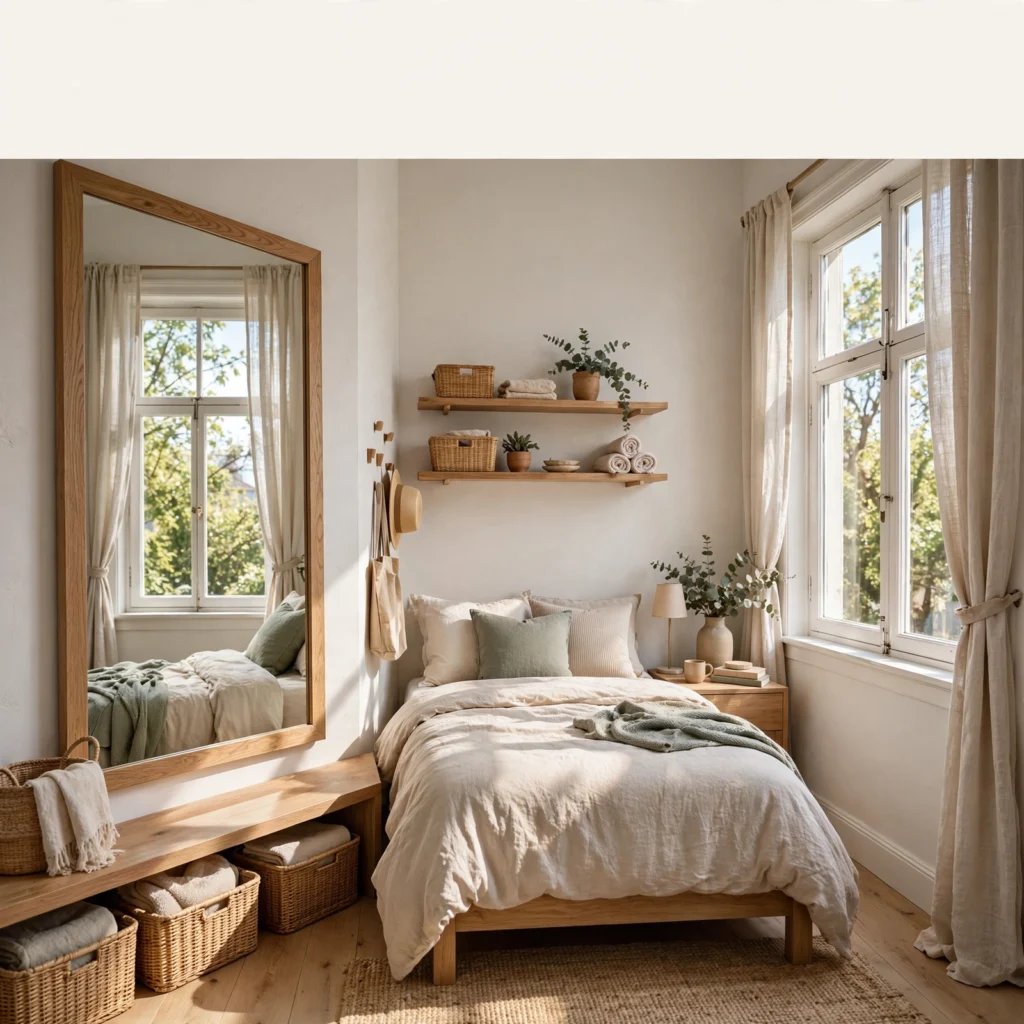
Hanging a large mirror on the wall directly across from the room’s main window bounces natural light back across the space, which has a noticeable effect on how open a tiny bedroom feels. This works best with a mirror sized close to the width of the window itself, rather than a small decorative piece, since the goal is maximizing the amount of light reflected. A frameless or thin-framed mirror also avoids adding visual bulk to the wall.
7. Corner Wrap Desk
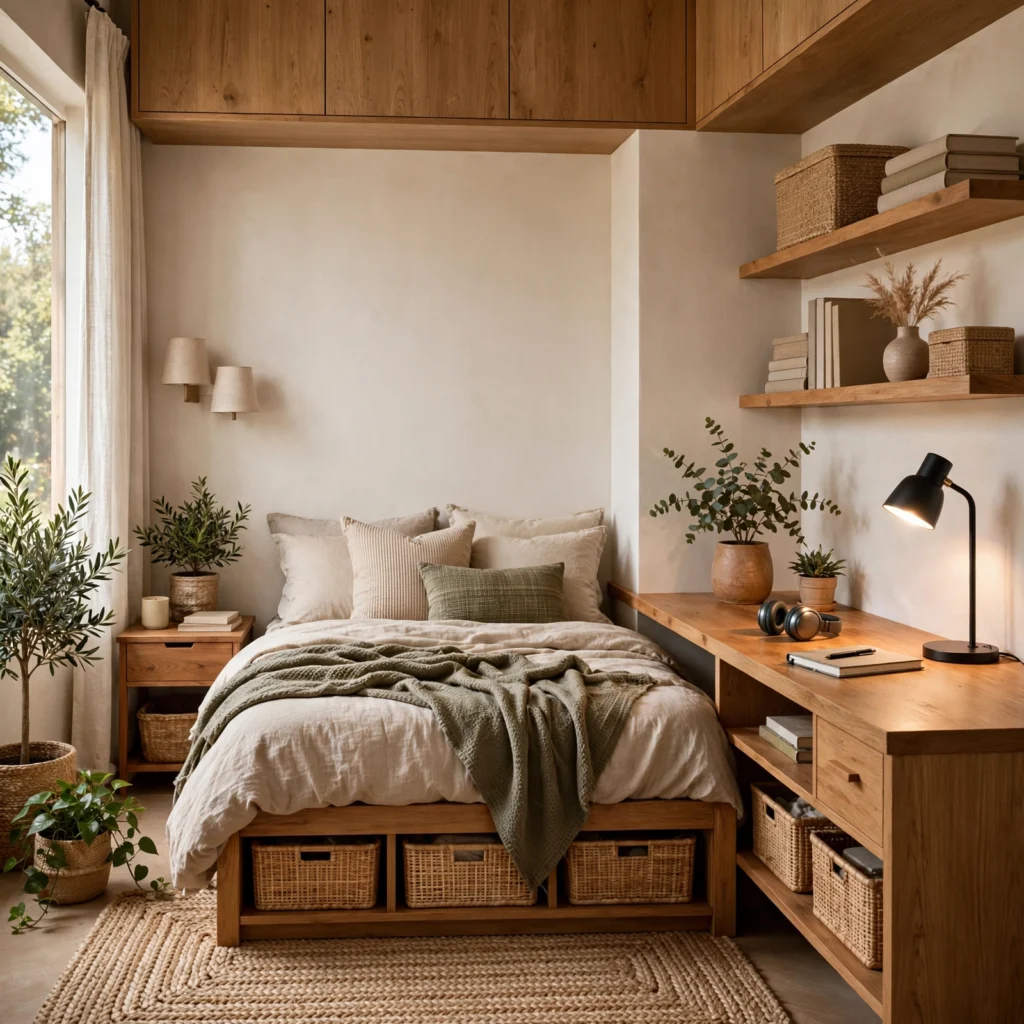
Building or buying a desk that wraps into a corner, rather than sitting against a single flat wall, makes use of a section of the room that’s often left empty in a tiny layout. This shape leaves more of the room’s remaining floor space open for walking or additional furniture, compared to a standard rectangular desk placed against one wall. Pairing the desk with a slim, armless chair keeps the footprint as compact as possible.
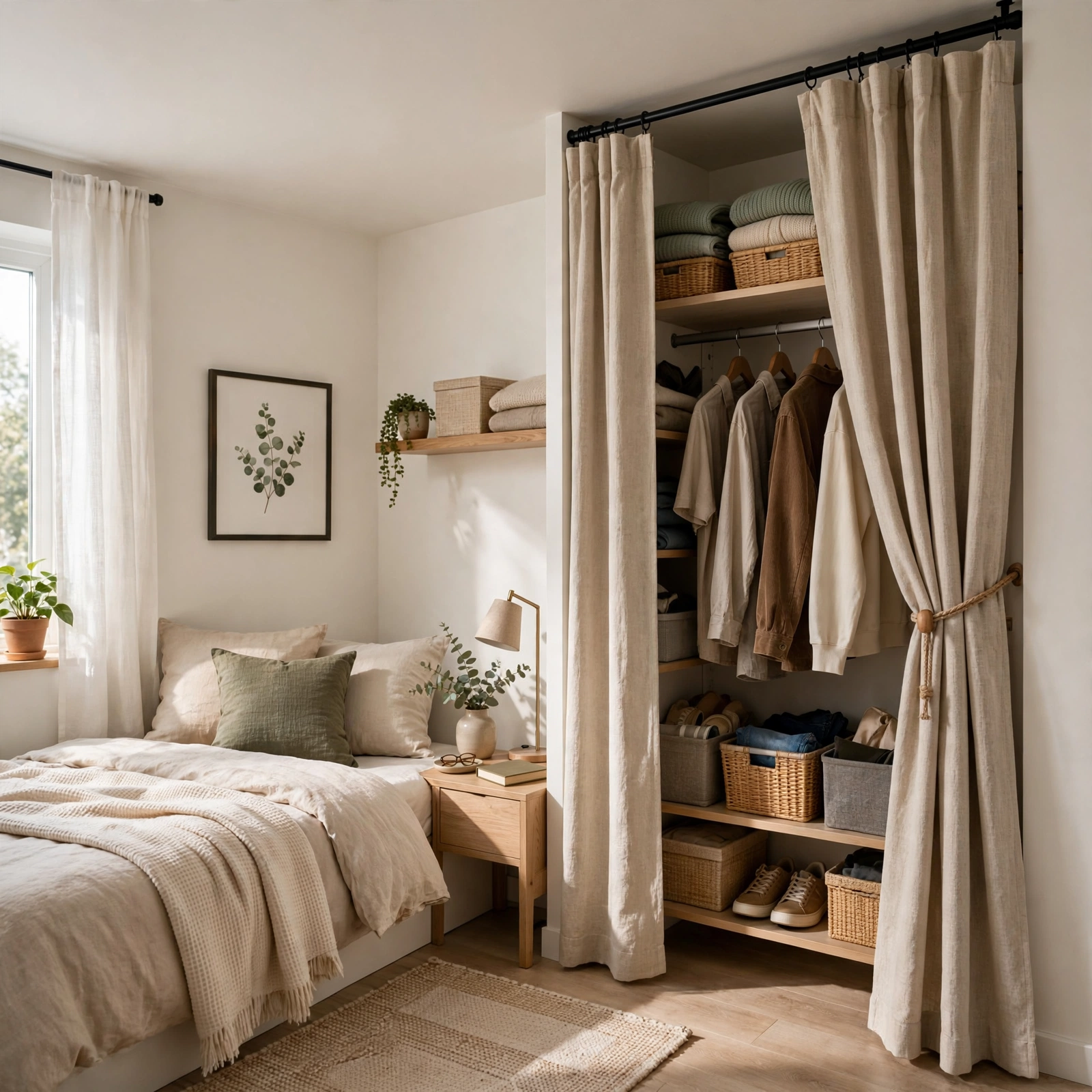
8. Curtain-Enclosed Closet
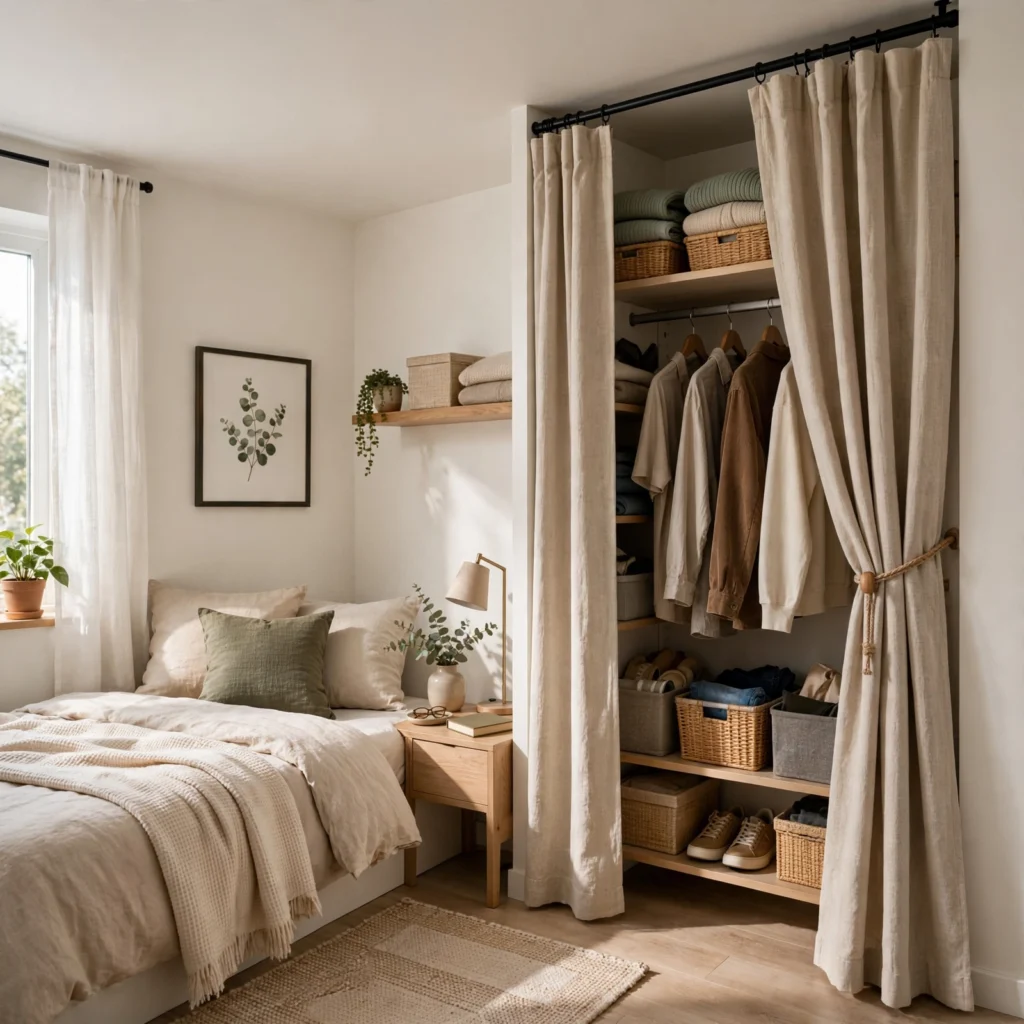
Replacing a bulky wardrobe with an open clothing rod hidden behind a floor-length curtain saves several inches of depth compared to a freestanding piece of furniture. A tension rod and a curtain panel are enough to build this, making it one of the more budget-friendly storage solutions on this list. This works especially well in a tiny bedroom without a built-in closet, since it adds hanging storage without the bulk of a wardrobe cabinet.
9. Nesting Furniture
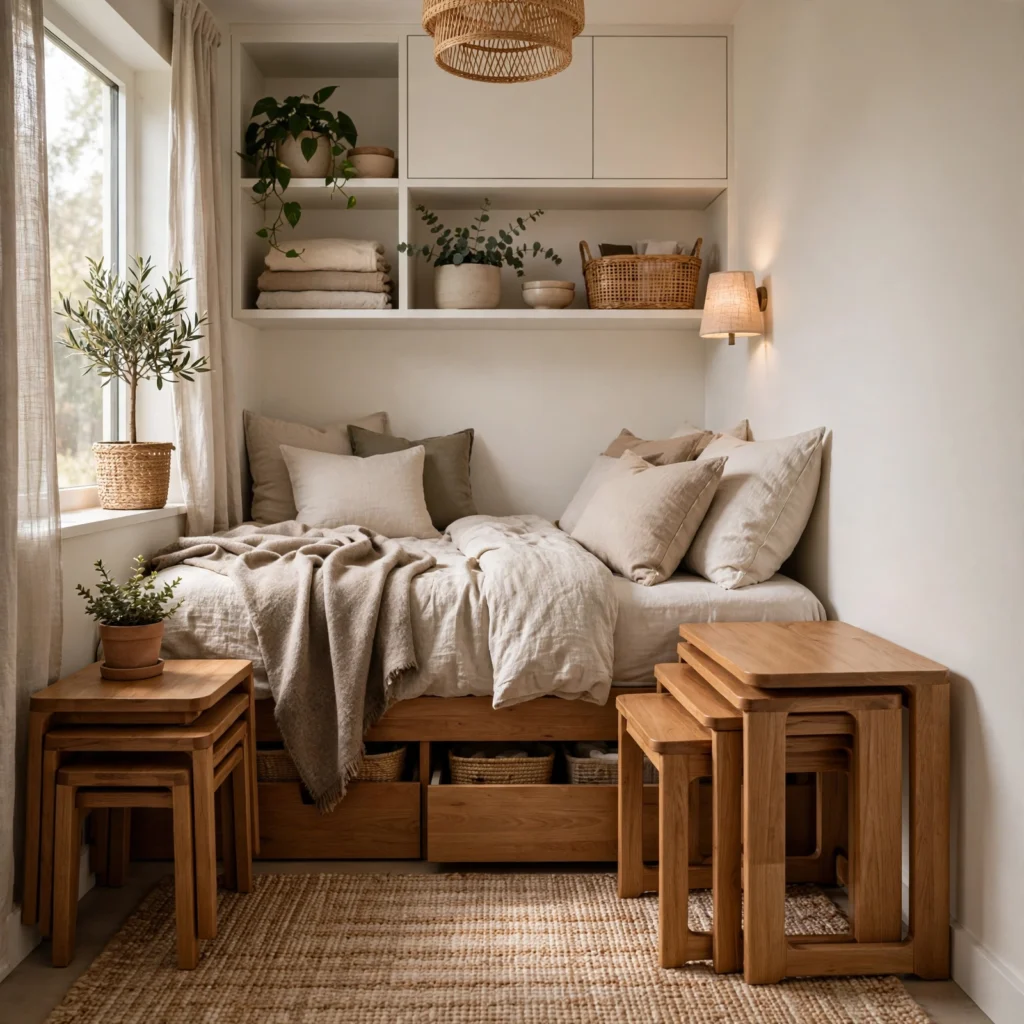
Nesting tables or stools that stack together when not in use take up a fraction of the floor space of separate, fixed pieces, and can be pulled apart when extra surface area or seating is needed. A small nesting side table beside the bed, for example, can expand into two surfaces for guests without permanently occupying that footprint day to day. This approach works particularly well in a tiny bedroom that occasionally needs to host a second person.
10. Door-Mounted Organizer
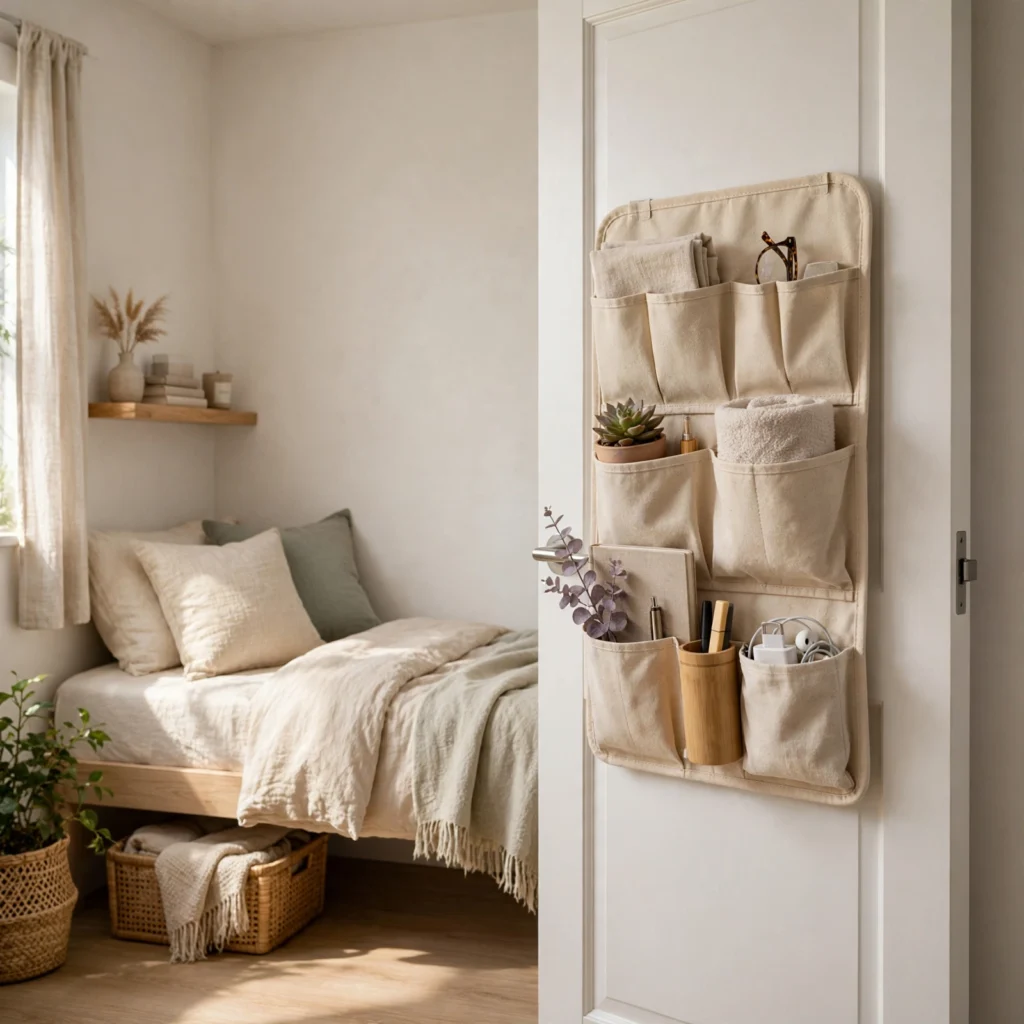
A hanging organizer mounted on the back of the bedroom or closet door adds storage for shoes, accessories, or small items without using any wall or floor space at all. This is one of the easiest additions to a tiny bedroom, since it requires no tools beyond the hooks included with most organizers. It works especially well for items that would otherwise clutter a nightstand or dresser top, like jewelry, belts, or chargers.
11. Light, Monochromatic Color Palette
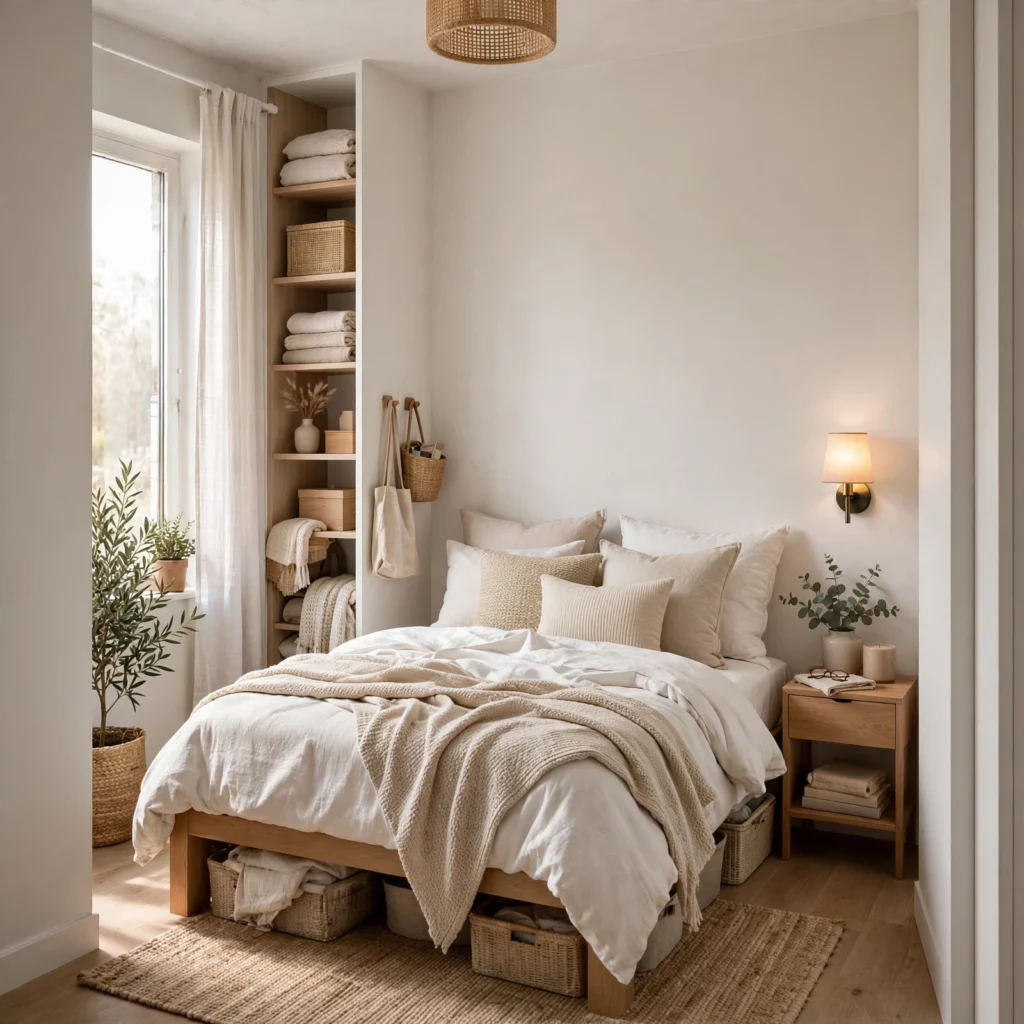
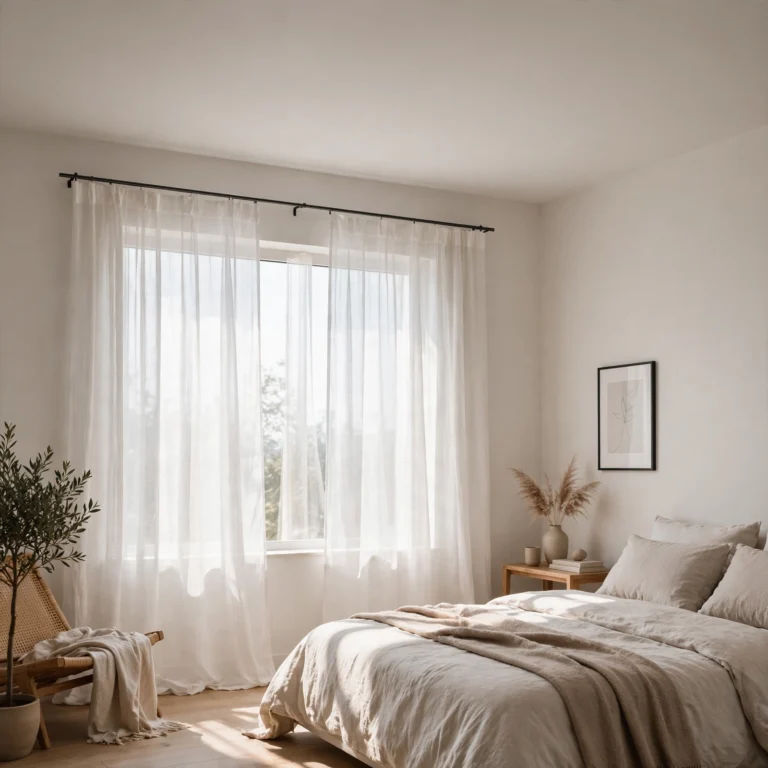
Painting the walls, and in some cases the ceiling and trim, in a single light color removes the visual breaks that can make a tiny room feel more divided and smaller than it is. A soft white, cream, or pale gray reflects more light than a darker or more saturated color, which matters directly in a room with limited square footage to begin with. Keeping furniture in a similar light tone extends the effect rather than interrupting it with contrasting dark pieces.
12. Low-Profile Platform Bed
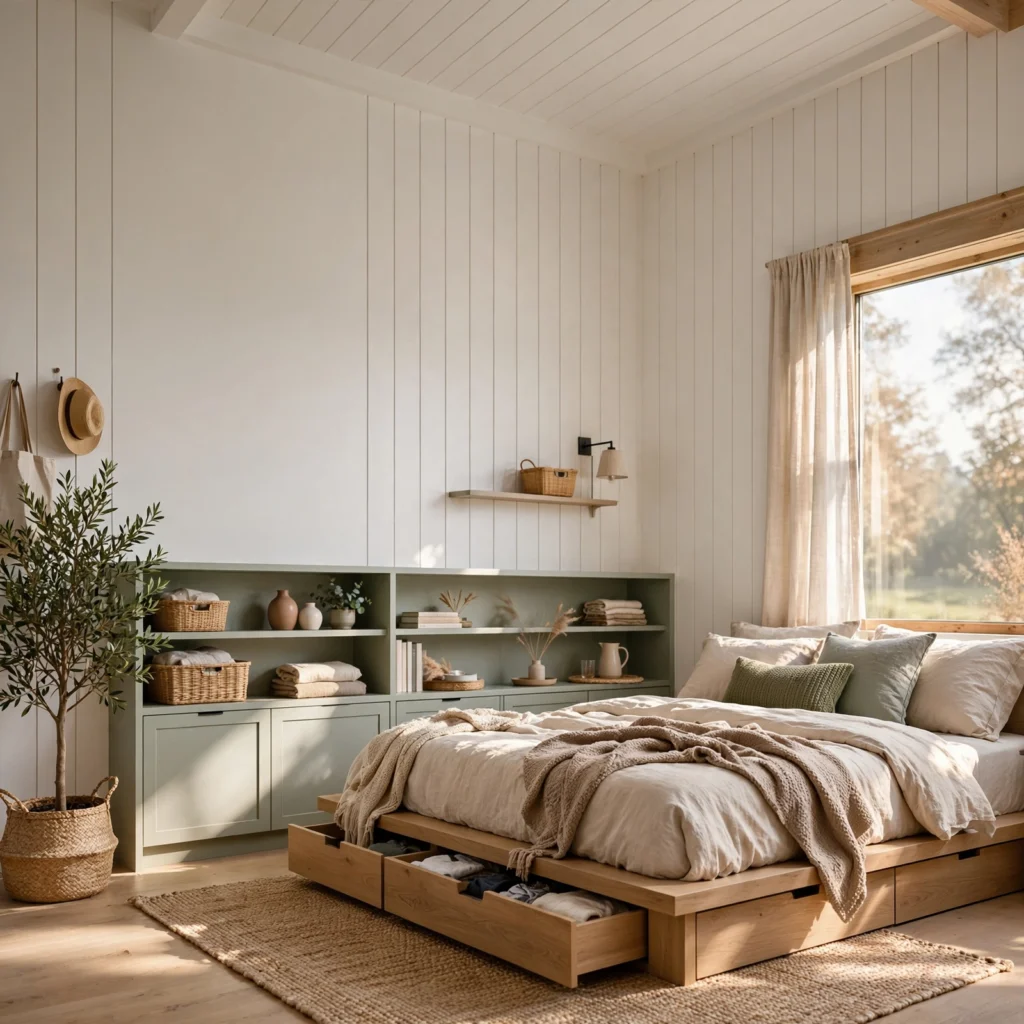
A platform bed sits closer to the floor than a standard frame with a box spring, which keeps sightlines open across the room and avoids the bulkier visual footprint of a taller bed. In a tiny bedroom, this lower profile makes the ceiling feel proportionally higher and the room less cramped overall. Many platform frames also include built-in drawers underneath, adding storage without requiring a separate dresser.
Shop the Look
A few specific pieces make these ideas easier to execute. Look for a metal loft bed frame rated for adult weight capacities, a fold-down wall desk with an integrated hinge bracket, a set of three staggered floating wall shelves, a large frameless mirror sized to match a standard window width, and a set of under-bed storage drawers with locking casters.
Common Mistake to Avoid
The most common mistake with tiny bedroom ideas is buying furniture based on style alone without measuring the room’s actual clearances first, particularly around doors, closets, and walking paths. A bed or desk that looks right in a showroom can block a closet door or leave less than two feet of walking space once it’s actually in the room. Always measure the full floor plan, including door swings, before purchasing any furniture for a tiny bedroom.
FAQs
How do you make a tiny bedroom feel bigger?
Light wall colors, a mirror placed opposite the main window, and low-profile furniture all help a tiny bedroom feel more open than its actual square footage. Reducing visual clutter by using wall-mounted storage instead of freestanding furniture also keeps more of the floor visible, which has a strong effect on how spacious the room feels.
What is the best bed for a tiny bedroom?
Loft beds and wall beds tend to work best in the smallest rooms, since they free up the entire floor area for other use. In rooms with slightly more space, a low-profile platform bed with built-in storage drawers offers a good balance between comfort and space efficiency without requiring a raised sleeping area.
How much furniture should go in a tiny bedroom?
Fewer, multi-purpose pieces generally work better than several single-function items. A bed with built-in storage, a fold-down desk, and a few floating shelves can cover sleeping, working, and storage needs without overcrowding a small floor plan.
Can a tiny bedroom still have a desk?
Yes, a fold-down wall desk or a corner wrap desk can fit a workspace into a tiny bedroom without permanently occupying much floor space. Choosing a slim, armless chair that tucks fully under the desk also helps keep the footprint as small as possible when the desk isn’t in use.
What colors make a small bedroom look bigger?
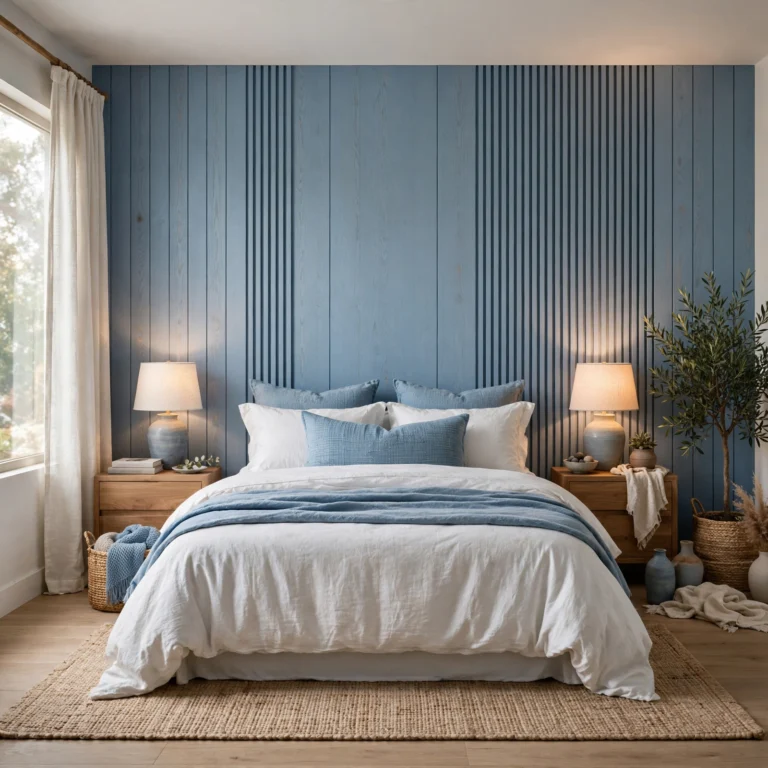
Light, cool-toned colors like soft white, pale gray, and light blue tend to reflect more light and make a small bedroom feel more open. Painting the walls and ceiling in the same or a very similar shade also removes visual breaks in the room, reinforcing the sense of more space than the room actually has.
Conclusion
These tiny bedroom ideas work because they treat every piece of furniture and every wall as an opportunity for dual-purpose use rather than trying to fit a standard bedroom layout into a space that can’t support it. Whether you start with a loft bed or a smaller update like floating shelves, each idea here scales to fit your room’s exact dimensions and constraints. Save this post to Pinterest for later, and check out our related guide on small bedroom storage solutions for more space-saving inspiration.