15 Easy DIY Room Decor Ideas Anyone Can Finish This Weekend
Store-bought decor can only take a room so far before it starts to look like every other apartment on the same online catalog page. This post covers fifteen easy DIY room decor ideas that require no advanced tools or carpentry experience, just an afternoon or two and a modest budget. You’ll get specific materials, approximate costs, and enough detail to start each project today rather than just admire it in a photo.
Trend & Background
Interior decorating has moved noticeably toward personalized, handmade touches over the past few years, driven by rising furniture costs, renter restrictions that limit permanent changes, and a general shift toward rooms that reflect the person living in them rather than a single retailer’s catalog. Platforms built around short tutorials have also made DIY techniques far more accessible than they were a decade ago, when most projects required specialized skills or equipment. This matters now because renters in particular need decor that’s reversible, affordable, and doesn’t require landlord approval, which is exactly what most DIY projects offer by design.
Key Takeaways
- Easy DIY room decor ideas work best when they use materials already available at a hardware or craft store, not specialty tools or custom fabrication.
- Most projects on this list cost under $50 and take less than a weekend to complete, from start to hanging or placement.
- Texture, layered lighting, and framed personal items consistently outperform store-bought decor in making a room feel finished and specific to the person living in it.
- A budget and time comparison table is included so you can plan a full room refresh against your actual weekend availability.
1. Gallery Wall Frame Cluster
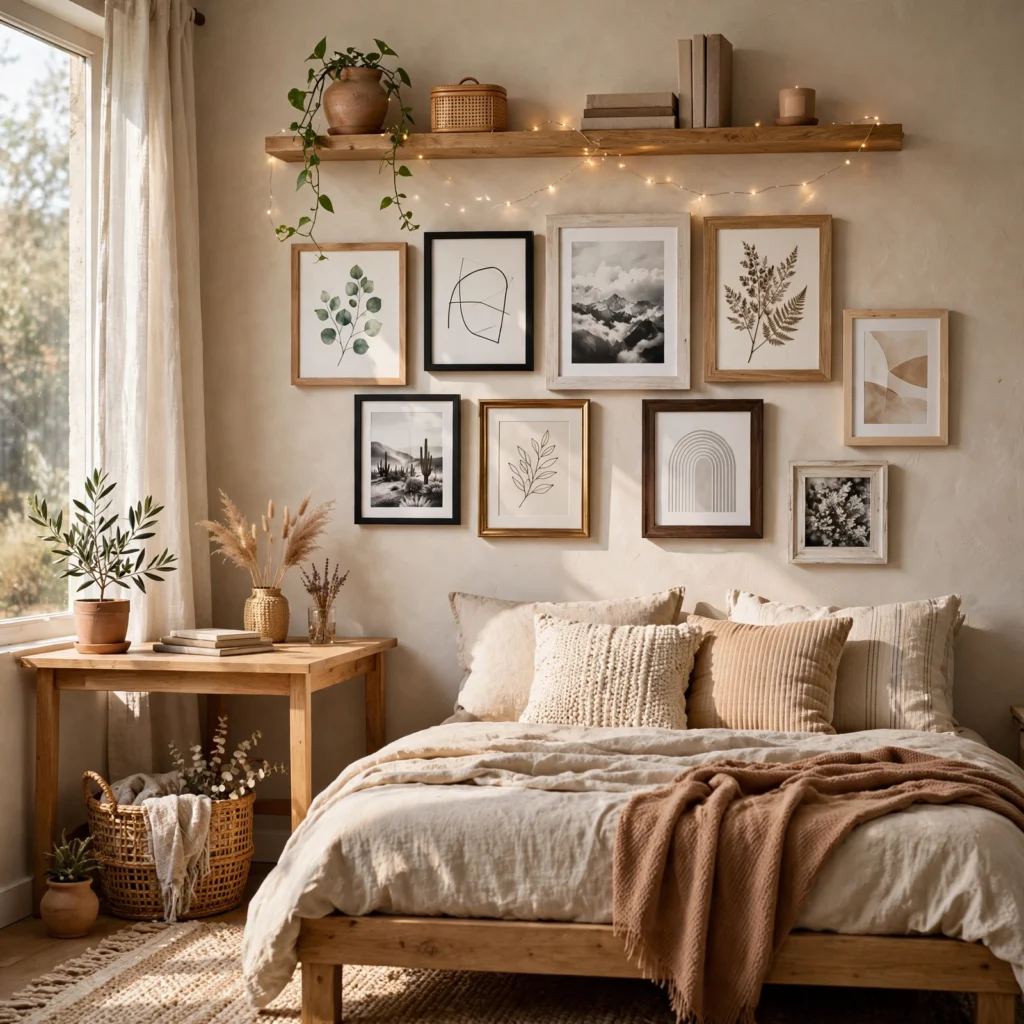
A gallery wall frame cluster groups five to nine frames of varying sizes in an asymmetric arrangement on a single wall, mixing personal photos, prints, and small art pieces rather than matching store-bought sets. Lay the arrangement out on the floor first, then trace each frame onto kraft paper and tape the paper to the wall to test spacing before any nails go in. Keep 2 to 3 inches between frames throughout the cluster so the arrangement reads as intentional rather than crowded.
2. No-Sew Throw Pillow Covers
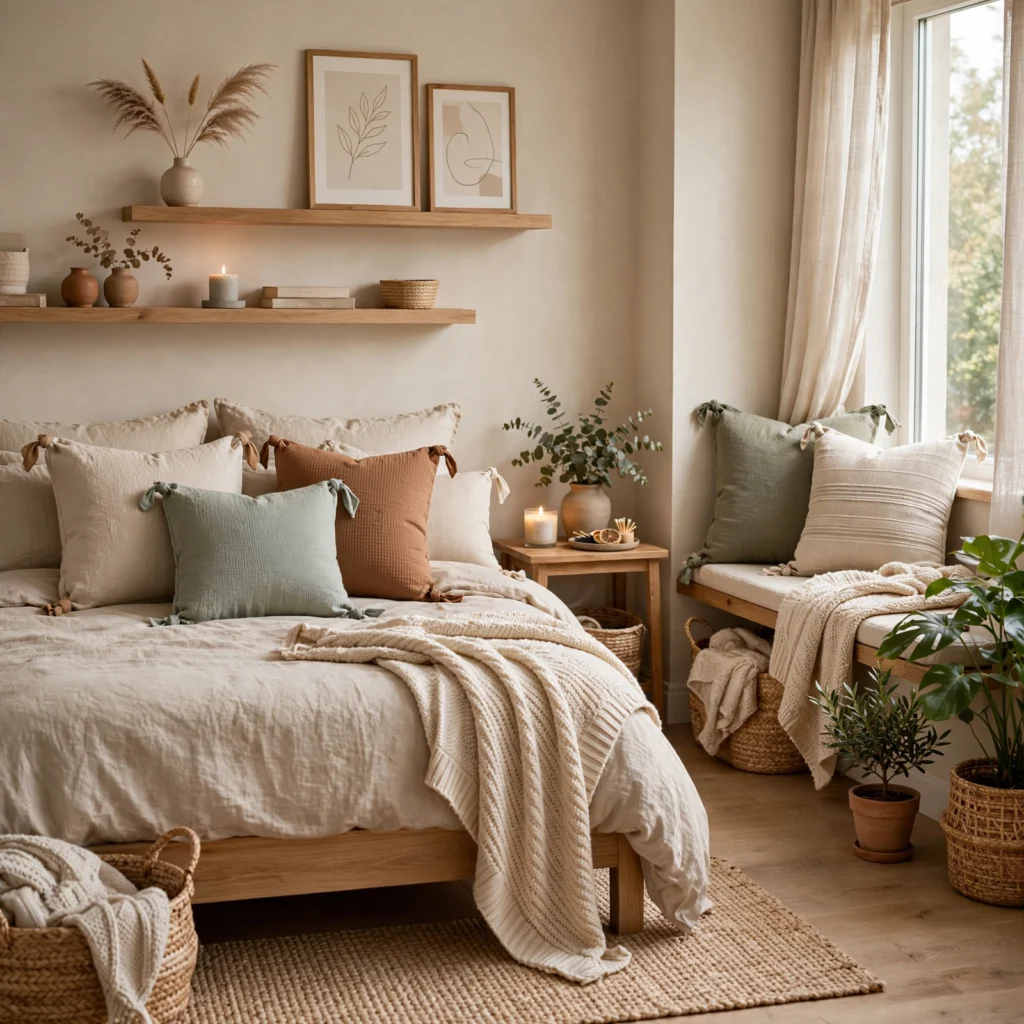
No-sew throw pillow covers use fabric glue or hem tape instead of a sewing machine, making them accessible to anyone without sewing experience or equipment. A single yard of fabric typically covers two 18-inch pillow forms, and the technique works with any woven fabric from linen to canvas. Iron the fabric flat before cutting, fold the edges under twice for a clean finish, and press the hem tape with a warm iron rather than a hot one to avoid scorching lighter fabrics.
3. Macramé Wall Hanging
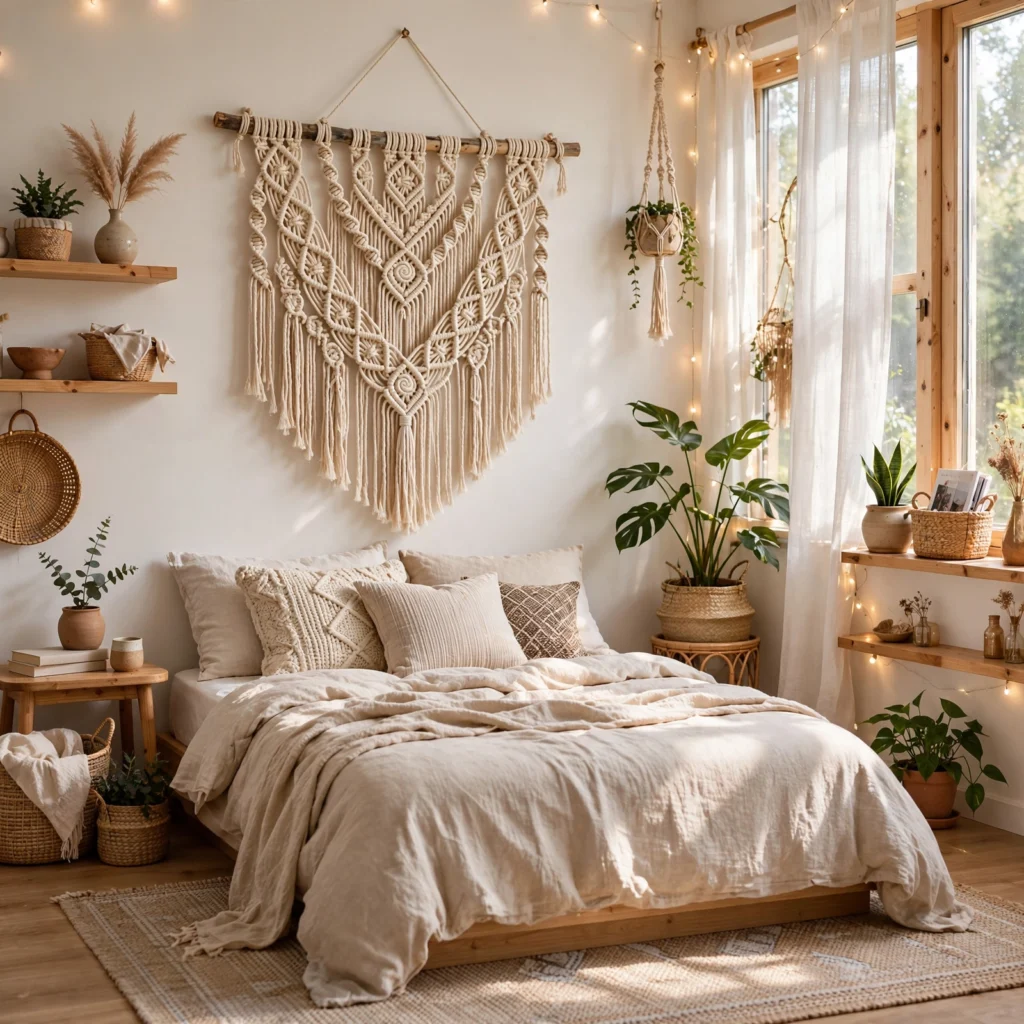
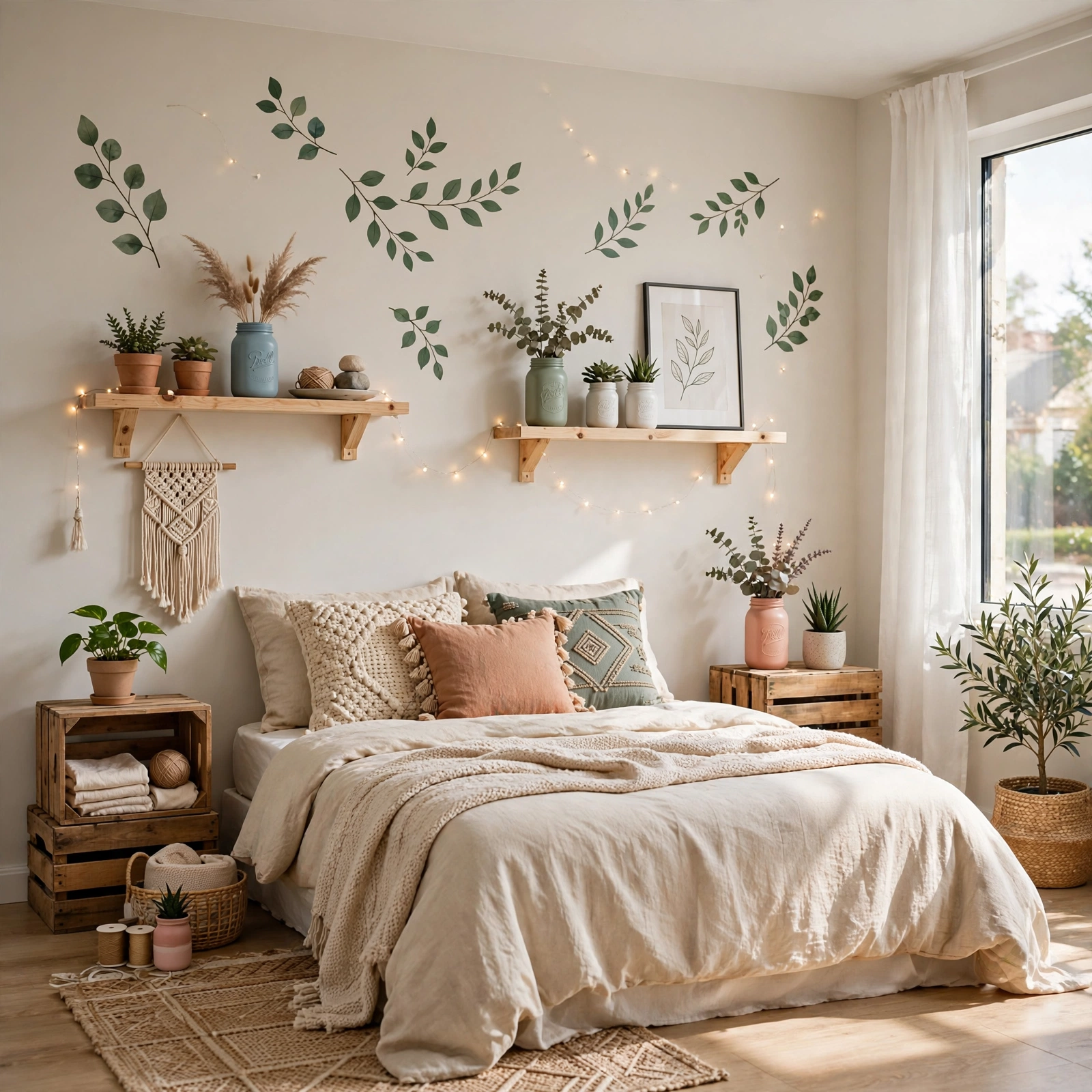
A macramé wall hanging, made from cotton cord and a single wooden dowel, adds texture to a bare wall without requiring paint, tools, or wall damage beyond a single nail or hook. Basic square knots and half-hitch patterns are learnable from a single tutorial in under an hour, and a beginner-sized hanging typically uses one 100-yard spool of 4mm cord. Hang it at eye level or slightly above on a wall that currently has no other art, since the texture alone provides enough visual weight.
4. Peel-and-Stick Wallpaper Accent Panel
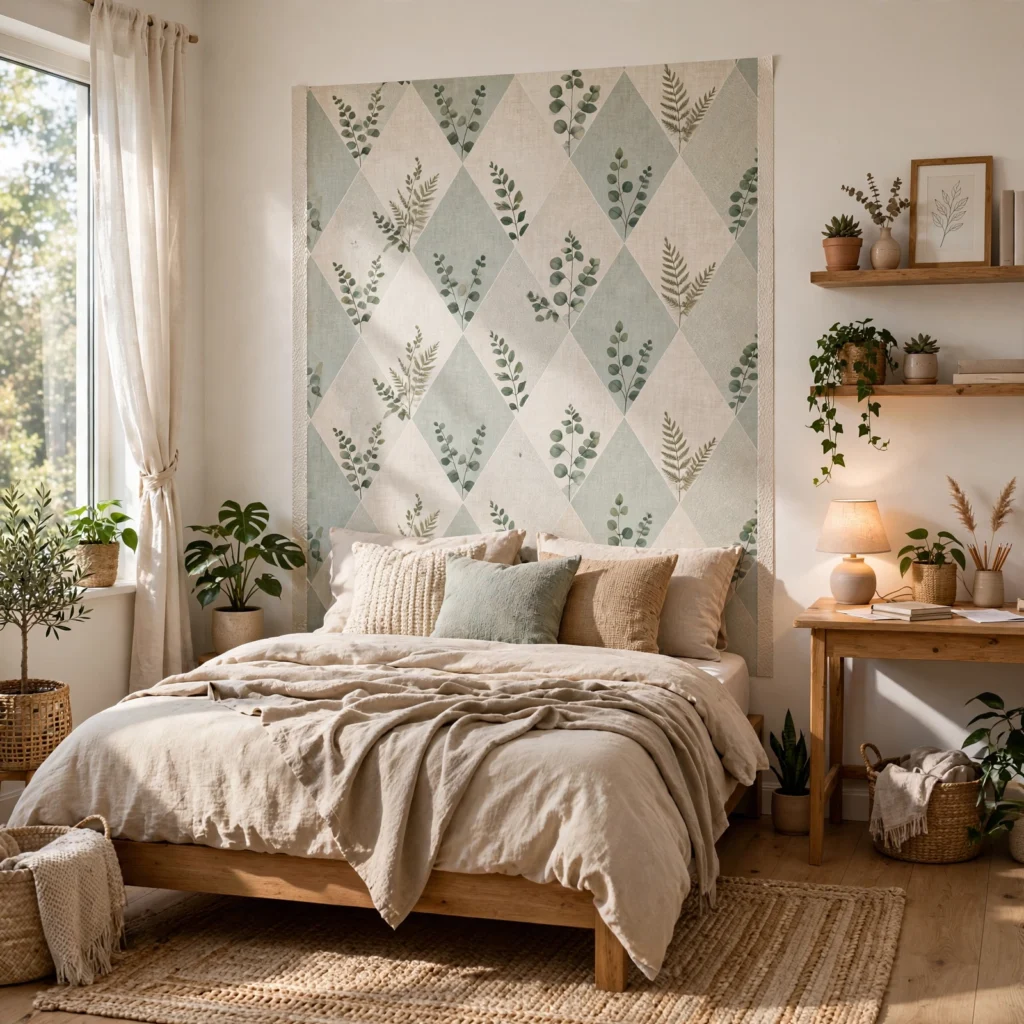
A peel-and-stick wallpaper accent panel applied to a single wall or the back of a bookshelf adds pattern and color without the commitment or mess of paint or traditional wallpaper. Because it’s removable, this is one of the most renter-friendly options on this list, and most rolls cover a standard accent wall for under $60. Smooth the panel from the center outward with a plastic scraper or old credit card to avoid trapping air bubbles underneath.
In order to see more options for small room decor CLICK HERE
5. Painted Terracotta Planters
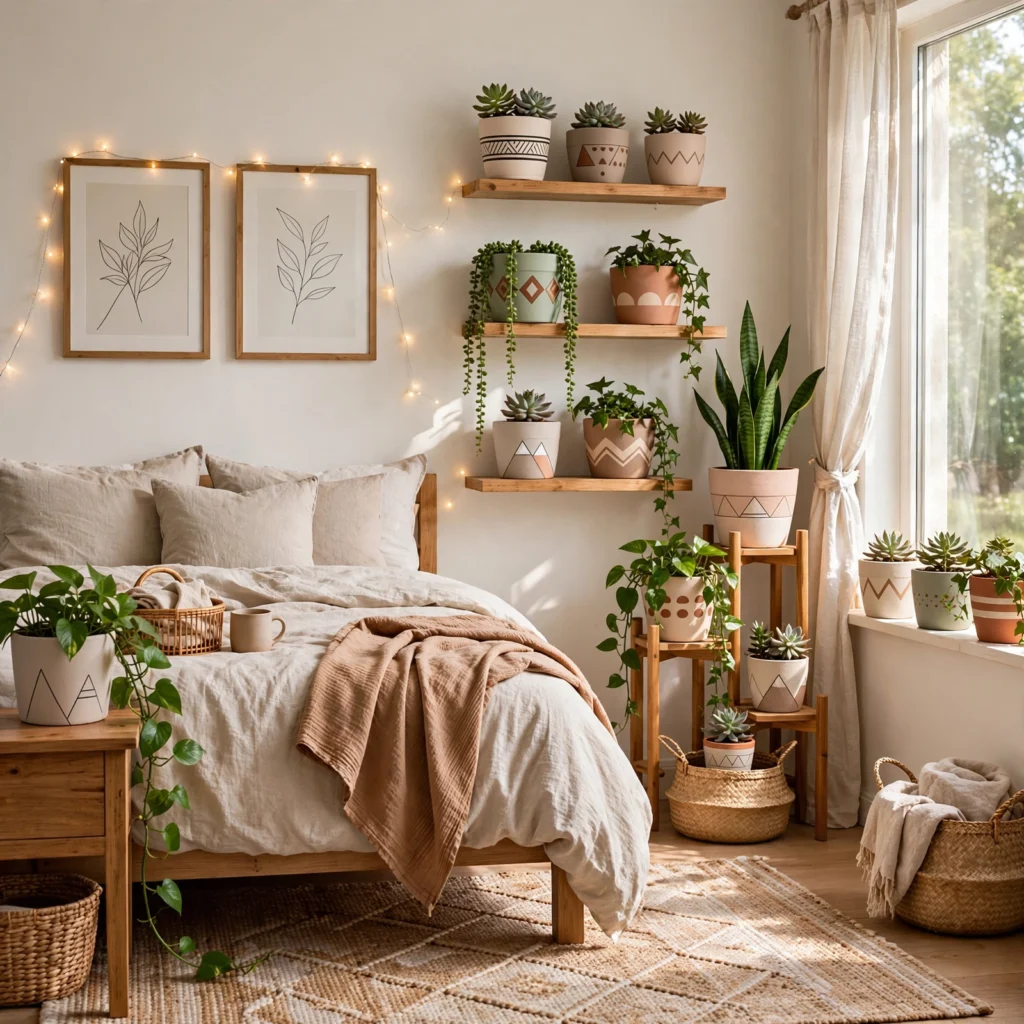
Painted terracotta planters, finished with acrylic paint in a simple geometric or color-block pattern, turn a $2 plain pot into a decor piece that matches an existing room palette exactly. Seal the finished design with a matte spray sealant so the paint holds up against watering and humidity over time. Grouping three planters of different sizes on a windowsill or shelf reads as more finished than a single large plant in a single generic pot.
6. Floating Bookshelf Ledge
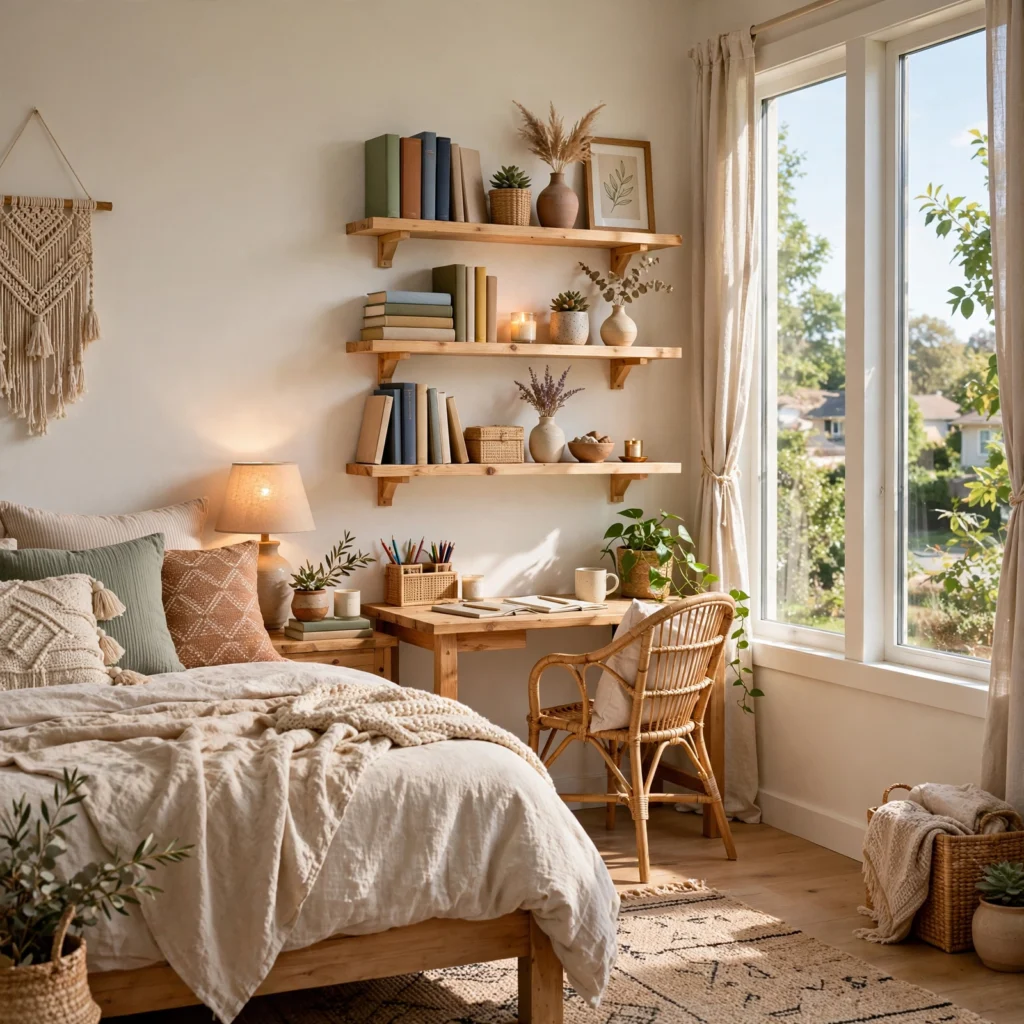
A floating bookshelf ledge, mounted with concealed brackets, displays books spine-out or cover-out along with small decor objects without the visual bulk of a traditional bookshelf frame. A single 24- to 36-inch ledge holds roughly eight to twelve standard paperbacks or four to six larger hardcovers, depending on how much open display space is left around them. Mount ledges in a staggered vertical arrangement of two or three for a stronger visual effect than a single horizontal shelf alone.
7. String Light Canopy
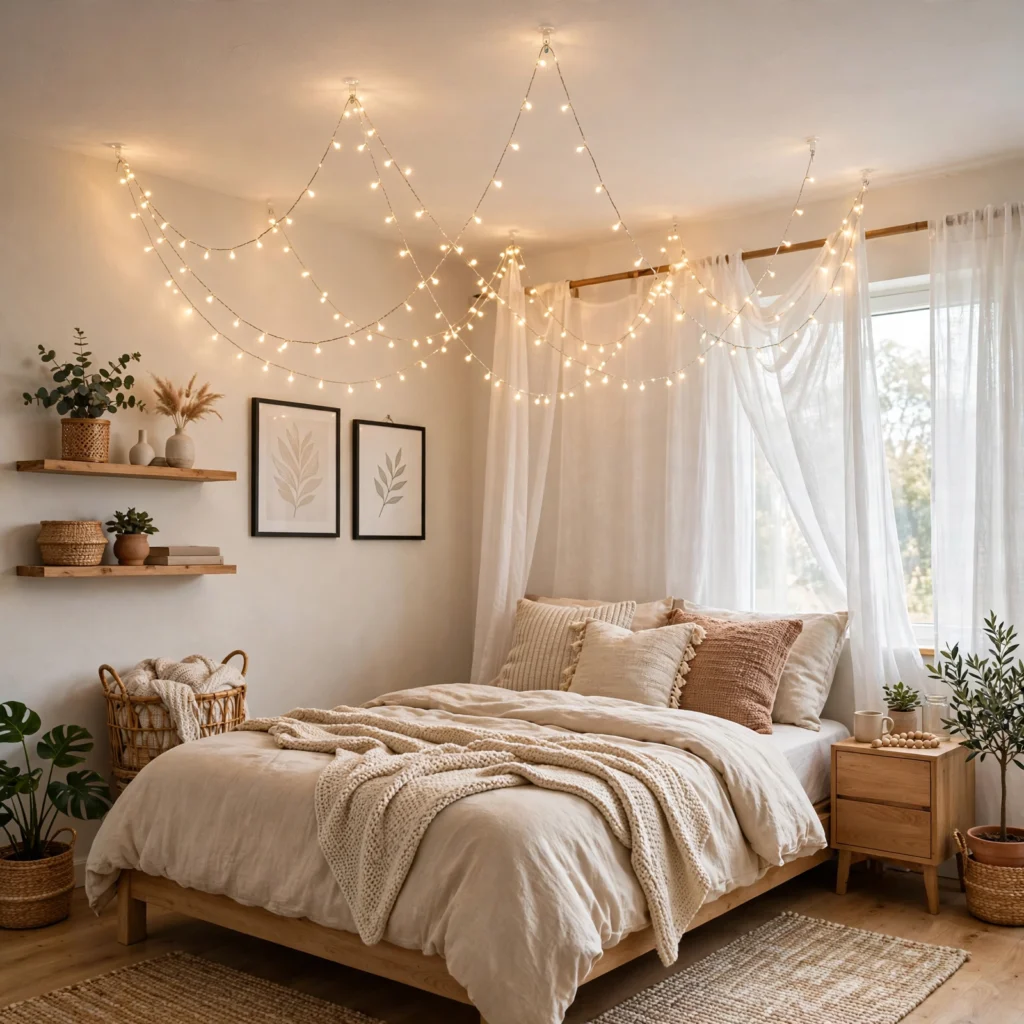
A string light canopy, draped across the ceiling or along a headboard wall, adds warm ambient lighting without an electrician or permanent fixture installation. LED string lights in the 2700K warm-white range read as cozy rather than cold, and battery-powered or USB-powered sets avoid the need for an outlet near the ceiling. Use adhesive clips rather than nails to route the string along the ceiling line, since clips remove cleanly without damaging paint or plaster.
8. Fabric-Wrapped Cork Board
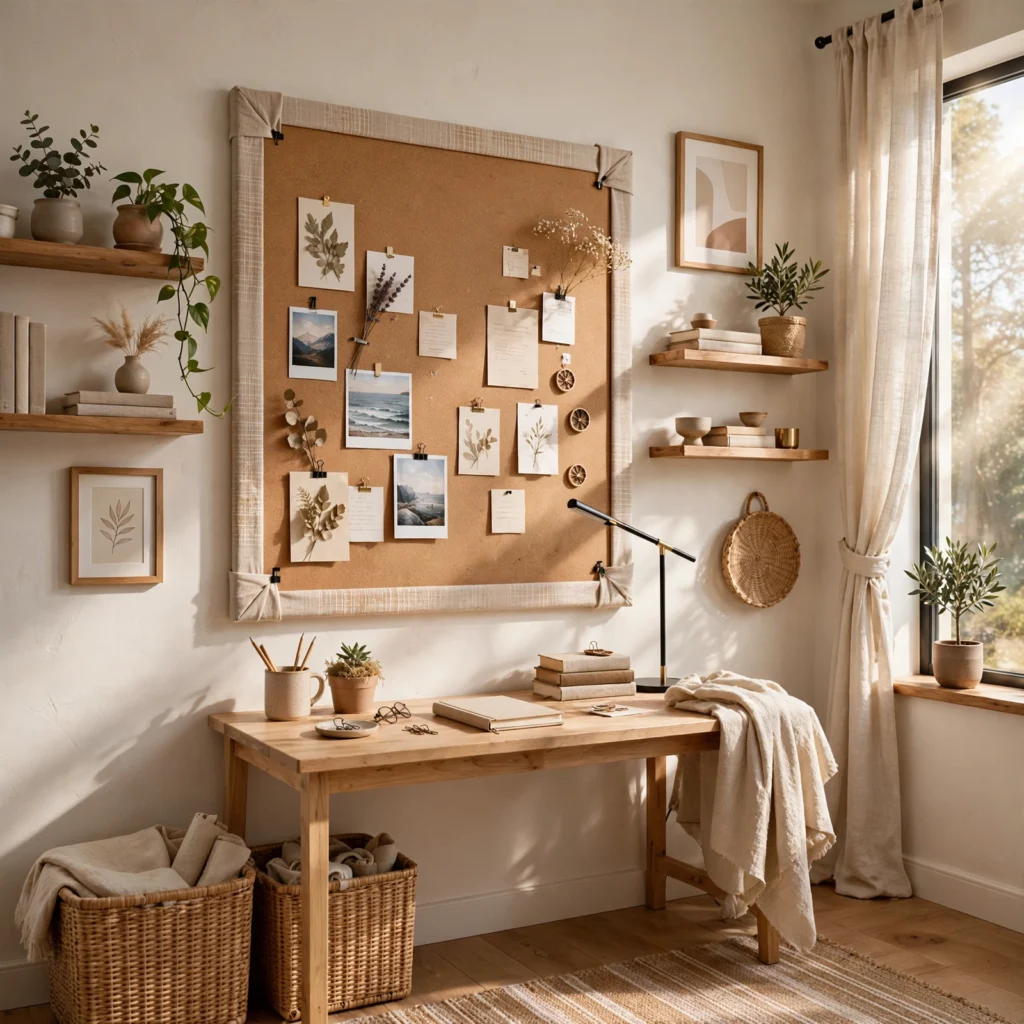
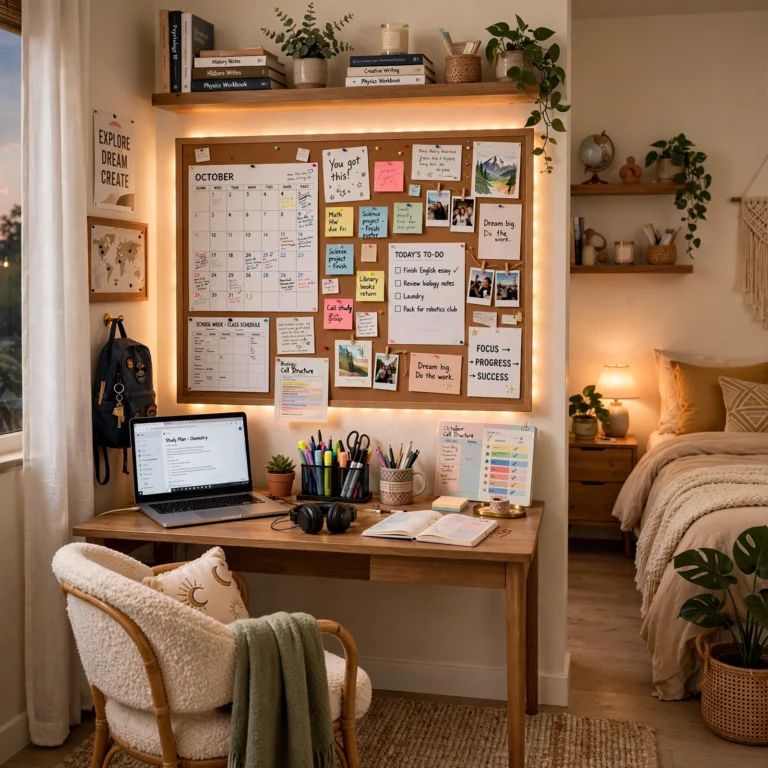
A fabric-wrapped cork board covers a standard cork board with a coordinating fabric before mounting, turning a utilitarian office item into a decor piece that matches the rest of the room. Wrap the fabric around the board’s edges and secure it on the back with a staple gun, pulling taut at each corner to avoid loose fabric on the front face. This project takes under 30 minutes and works well above a desk for pinning notes, photos, or small art prints.
9. Painted Accent Furniture Piece
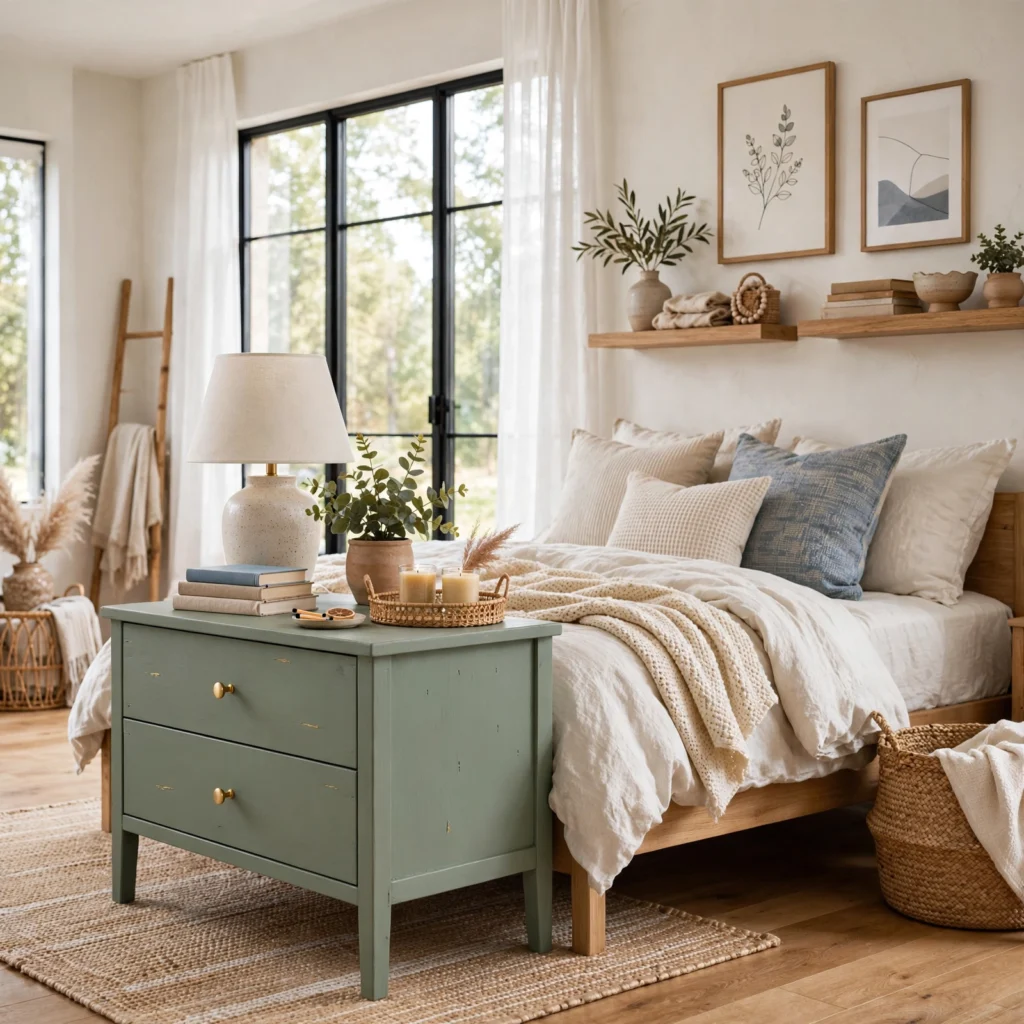
A painted accent furniture piece, typically a small side table, dresser, or nightstand, refreshes an existing item or a secondhand find with a new color rather than replacing it entirely. Sand the surface lightly first to help the paint adhere, apply two thin coats rather than one thick coat, and finish with a clear polyurethane topcoat if the piece will see daily use. This is one of the higher-impact easy diy room decor projects on this list because it changes the anchor piece of a room rather than a small accessory.
| Project Type | Approximate Cost | Estimated Time |
| Small accessory (pillow cover, planter) | $10–$25 | 1–2 hours |
| Wall feature (gallery wall, macramé) | $20–$60 | 2–4 hours |
| Furniture refresh (painted table, headboard) | $30–$80 | 4–8 hours |
10. Braided Rug from Fabric Scraps
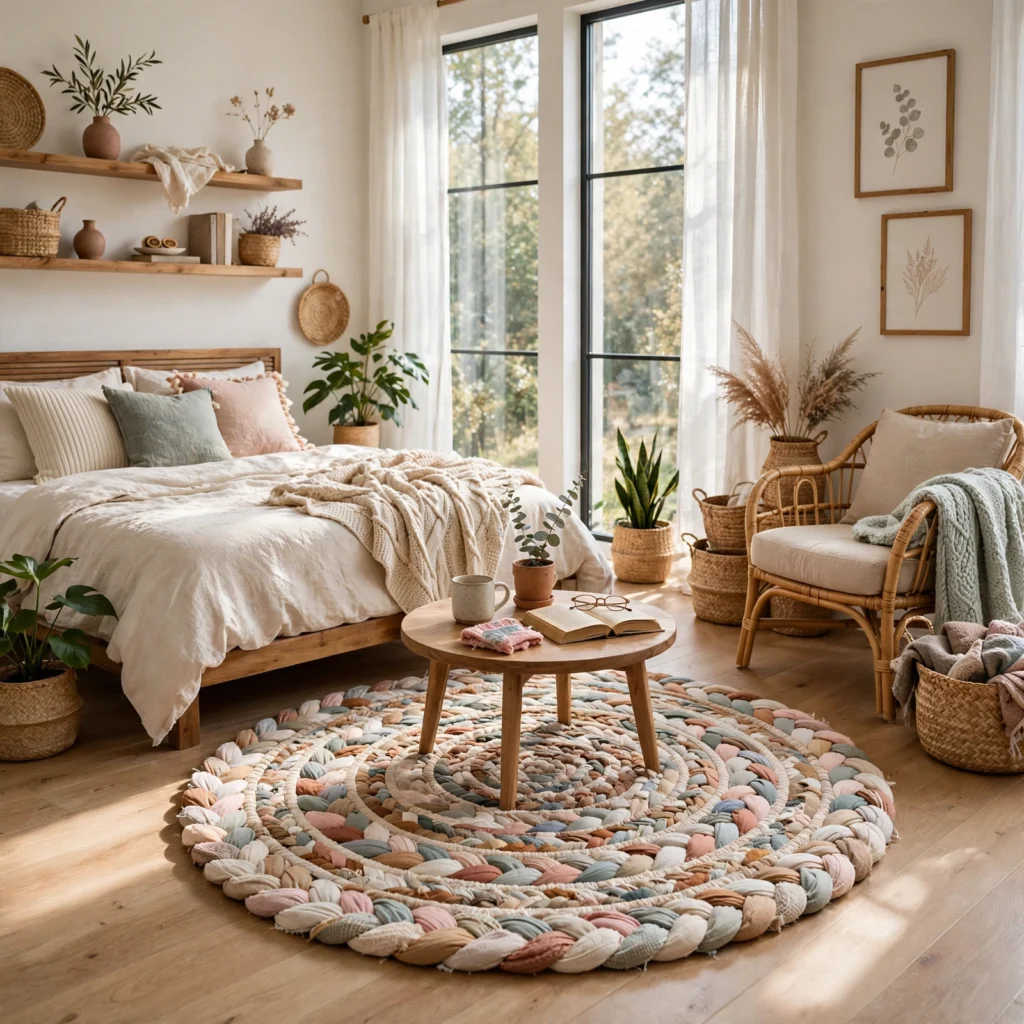
A braided rug made from fabric scraps or an old bedsheet cut into strips uses material that would otherwise be discarded to create a functional accent rug for a reading corner or beside a bed. Cut fabric into 2-inch-wide strips, braid three strips together at a time, and coil the braid into a spiral, hand-stitching the underside every few inches to hold the shape. A small 18-inch rug typically uses one full bedsheet cut into strips.
11. Washi Tape Wall Pattern
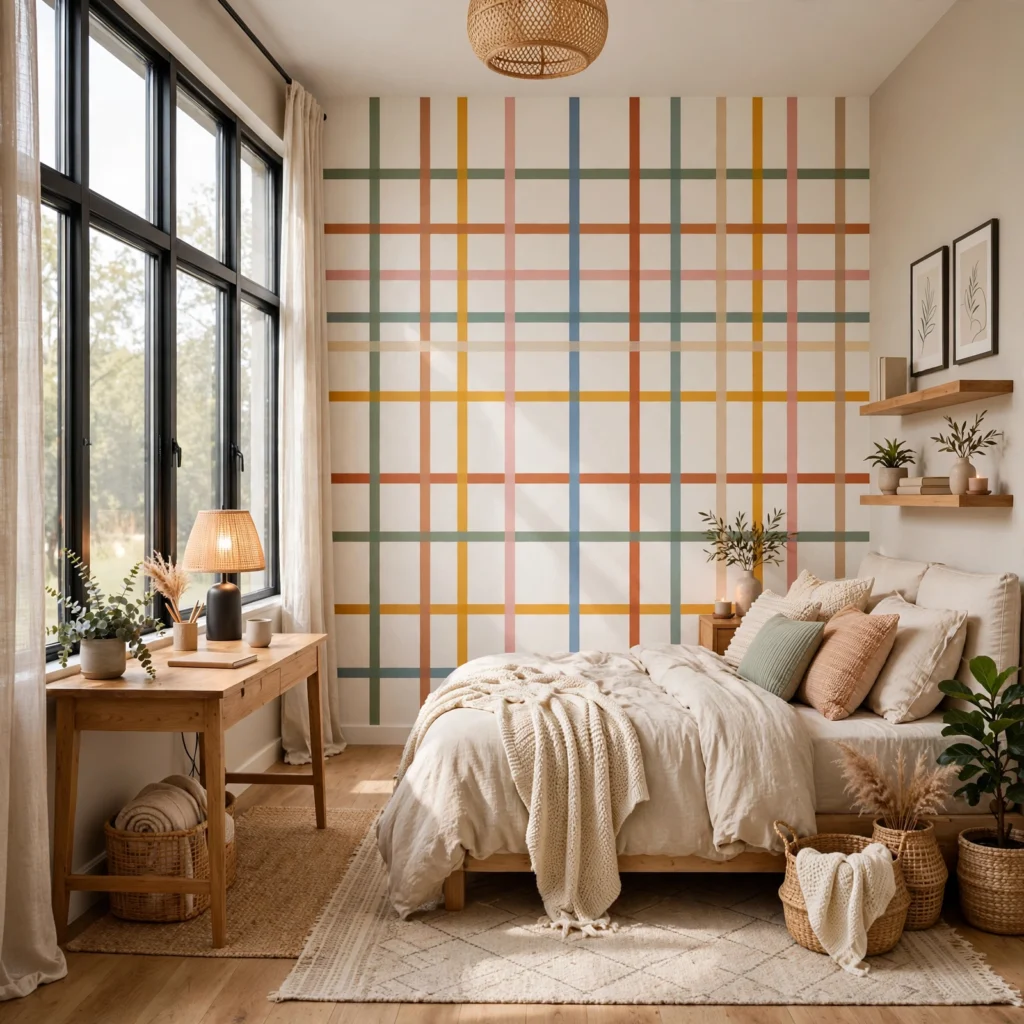
A washi tape wall pattern uses removable decorative tape applied directly to the wall in a geometric shape, such as a triangle, arch, or line pattern, behind a bed or desk. Because washi tape removes cleanly without pulling paint, this is one of the safest options for renters who want a bold visual statement without any wall damage. Measure and mark the pattern lightly in pencil first, then apply the tape following the marks for a clean, symmetrical result.
12. Framed Botanical Prints
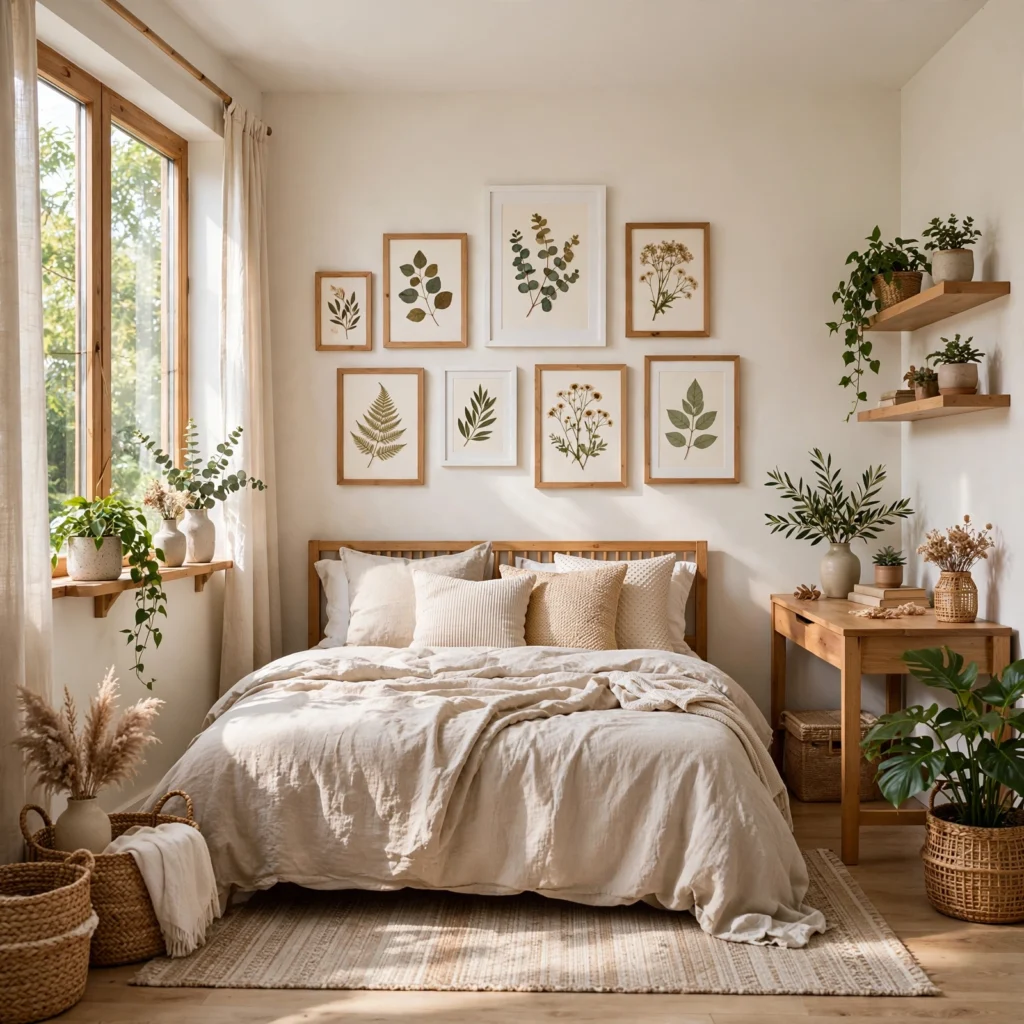
Framed botanical prints, either printed at home from free public-domain scans or cut from an old calendar or book, add gallery-style art at a fraction of retail print cost. Choose a uniform frame style and color across all prints even if the images vary, since consistent framing is what makes a mixed print set read as curated rather than random. Three to five prints in a horizontal row above a console table or sofa works well for most standard wall widths.
13. Corkboard Photo String Display
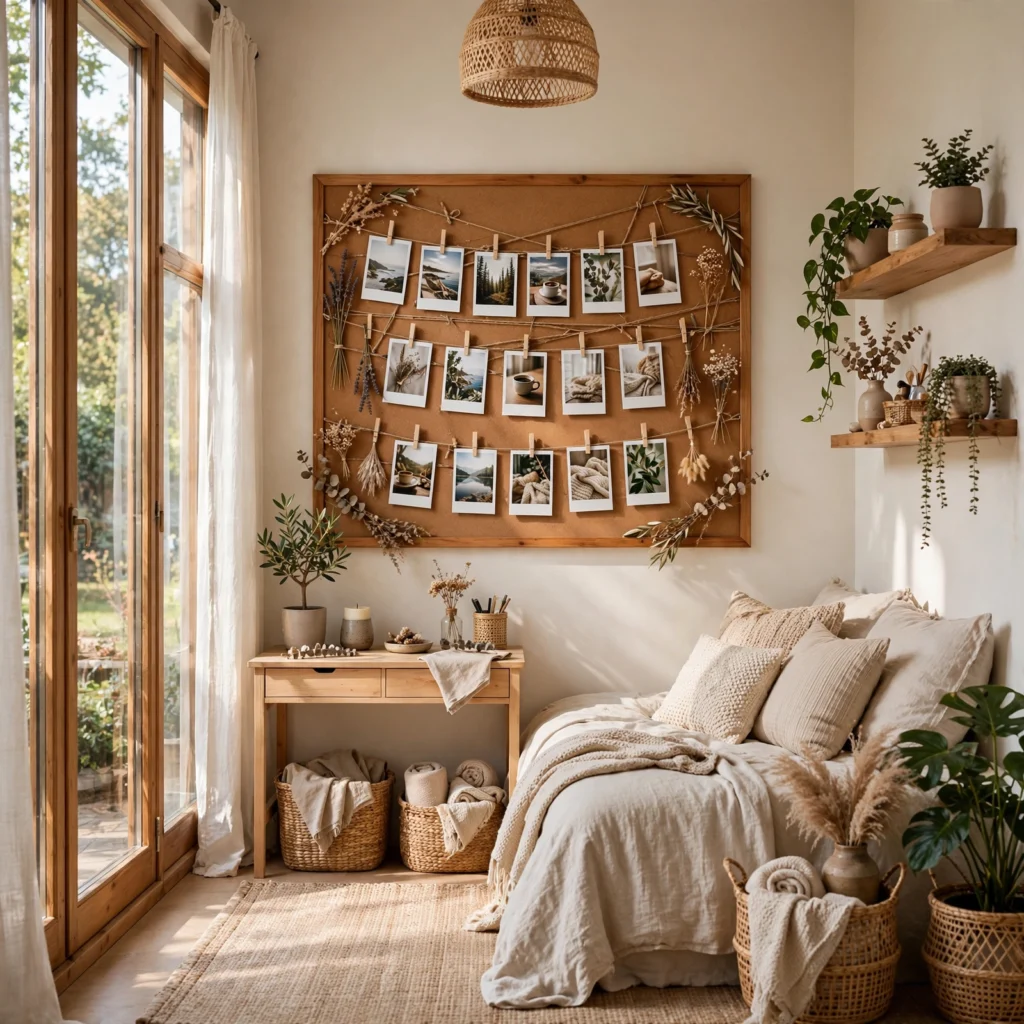
A corkboard photo string display swaps a traditional bulletin board for a length of twine strung across a wall with photos or notes clipped on using small wooden clothespins. This is one of the fastest projects on this list, typically finished in under 20 minutes, and it doubles as a rotating display that’s easy to update without new holes or hardware. Use two small hooks at either end of the twine span so the whole display can be removed as one piece if needed.
14. DIY Headboard from Reclaimed Wood
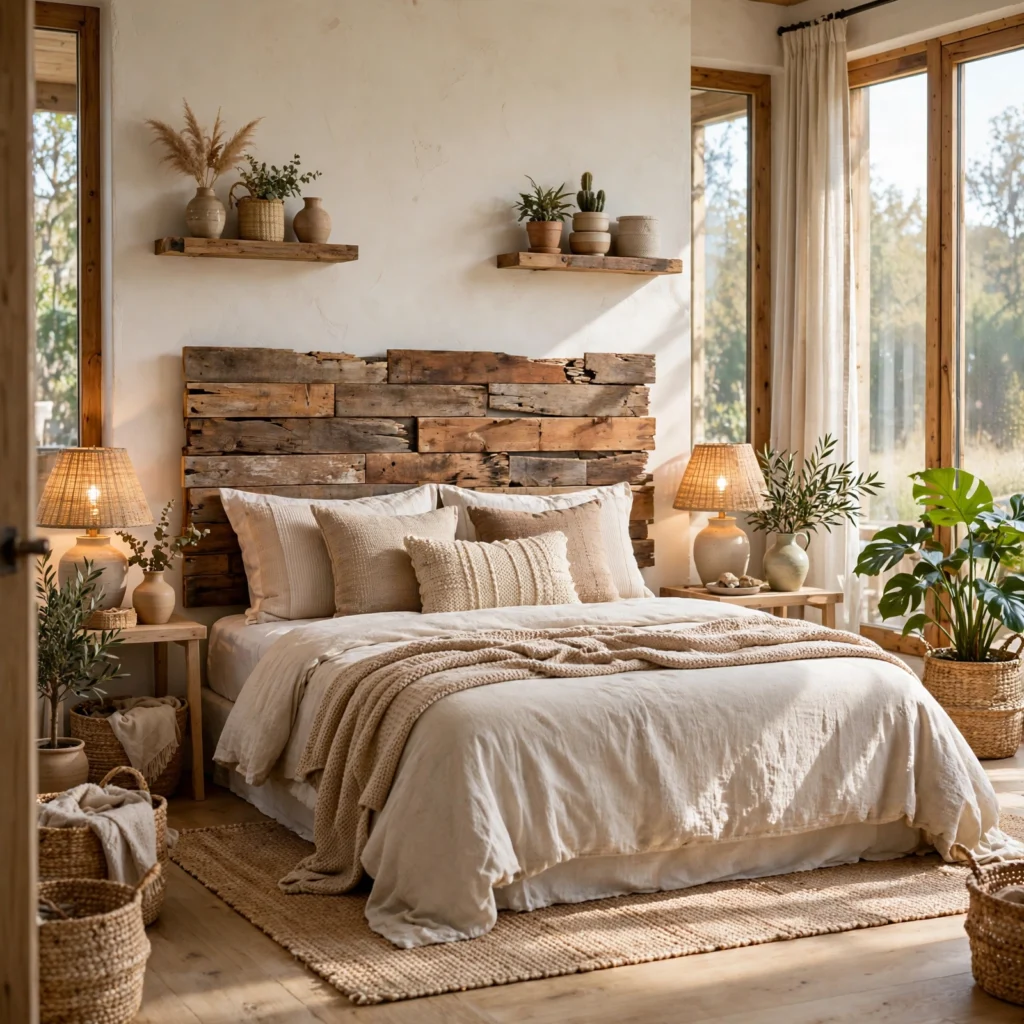
A DIY headboard from reclaimed wood, built from pallet boards or fence panels sanded smooth, adds a focal point to a bedroom without the cost of a retail upholstered headboard. Arrange the boards vertically or horizontally against a plywood backing, secure with wood screws from the back, and finish with a wood stain or clear sealant depending on the desired tone. Mount using a French cleat system so the headboard can be removed without damaging the wall behind it.
15. Layered Area Rug
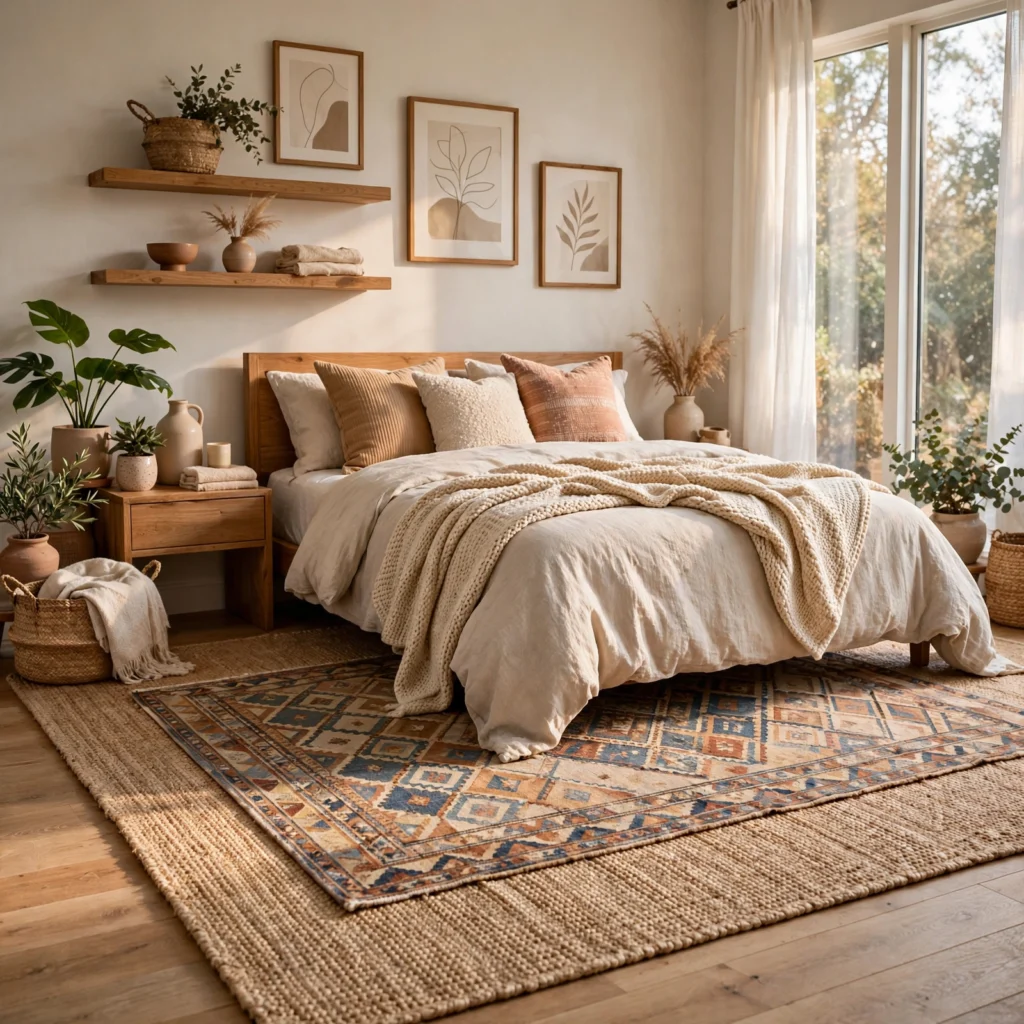
A layered area rug places a smaller patterned or textured rug on top of a larger neutral base rug, adding visual depth and warmth to a room without replacing existing flooring or a large rug already owned. This technique works particularly well over hardwood or laminate floors where a single rug alone can look sparse in a larger room. Keep the top rug roughly one-third to one-half the size of the base rug so the layered edge remains visible on all sides.
Shop the Look
A roll of peel-and-stick wallpaper in a botanical or geometric print pairs well with a set of uniform black picture frames for a gallery wall. Warm-white LED string lights on adhesive clips add ambient lighting without any wiring. A spool of natural cotton macramé cord and a wooden dowel round out the texture layer, and a small can of matte spray sealant finishes any painted terracotta or furniture project cleanly.
Common Mistake to Avoid
The most common mistake in easy diy room decor projects is skipping surface prep, particularly sanding or cleaning a surface before paint, adhesive, or tape is applied. Paint applied over a dusty or glossy surface without light sanding often peels or chips within weeks, and adhesive-backed products like peel-and-stick wallpaper won’t bond properly to a wall with residual grease or moisture. Spending ten extra minutes on prep before starting almost always determines whether a project lasts months or falls apart within days.
5 FAQs
What is the cheapest way to decorate a room with DIY projects?
Projects that repurpose materials already on hand, like fabric scraps for a braided rug or an old calendar for framed prints, are consistently the cheapest DIY decor option since they require little to no new material purchase. Washi tape wall patterns and corkboard photo displays also rank among the lowest-cost projects, typically finishing under $15 total. Focusing on one statement piece rather than several small purchases usually stretches a limited budget further.
How long do most easy DIY room decor projects take?
Most easy DIY room decor projects finish in one to four hours, with smaller accessory projects like painted planters or pillow covers taking closer to an hour and wall-based projects like gallery walls or macramé hangings taking closer to three or four. Furniture refresh projects, including painted tables or a reclaimed wood headboard, typically require a full afternoon plus drying time between coats. Very few projects on a beginner list require more than a single weekend.
Are DIY decor projects good for renters?
Yes, many DIY decor projects are specifically suited to renters because they avoid permanent wall damage, using tools like washi tape, adhesive hooks, and peel-and-stick materials instead of paint or drilled holes. Projects like a string light canopy, a corkboard photo display, or a layered area rug add significant visual impact while remaining fully removable at move-out. Always check a specific lease for any restrictions before starting a wall-based project, even a removable one.
What tools do I need for basic DIY room decor?
Most easy DIY room decor projects require only basic tools already common in most households: a hammer or adhesive hooks, scissors, a hot glue gun, and a small level for anything involving frames or shelving. A few projects, like a reclaimed wood headboard, benefit from a power drill, but nearly all of the fifteen ideas above can be completed with hand tools alone. Specialty equipment is rarely necessary for beginner-level projects.
How do I make a room look more expensive with DIY decor?
Consistent framing across multiple art pieces, layered lighting from at least two sources, and texture from materials like macramé, woven rugs, or reclaimed wood are the details that most consistently read as higher-end, even in fully DIY projects. Avoiding mismatched hardware finishes across a single room, like combining brass and matte black, also matters more to the overall impression than any single expensive piece. Cohesion across smaller details typically outweighs the cost of any one item.
Conclusion
Easy diy room decor comes down to matching the right project to the time and budget actually available, rather than attempting a full room overhaul in a single weekend. Save this list to Pinterest for your next room refresh, and check out our related post on small kitchen ideas for more budget-friendly design projects across the rest of the home.