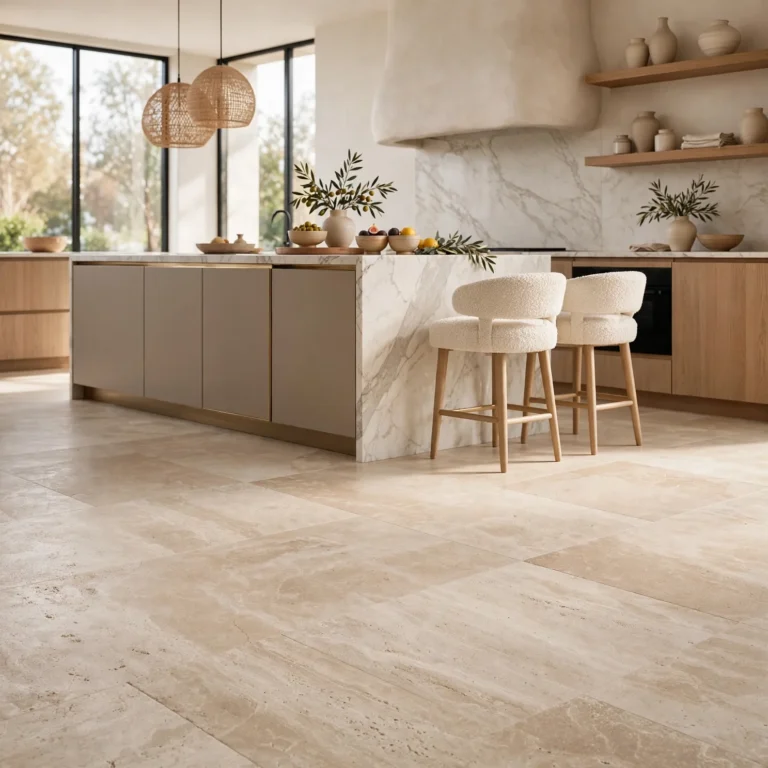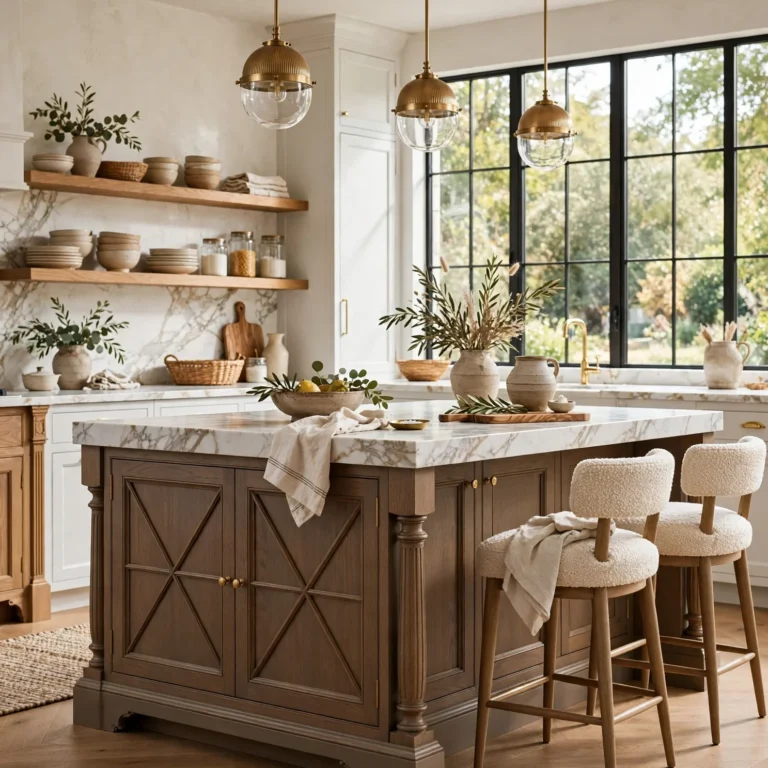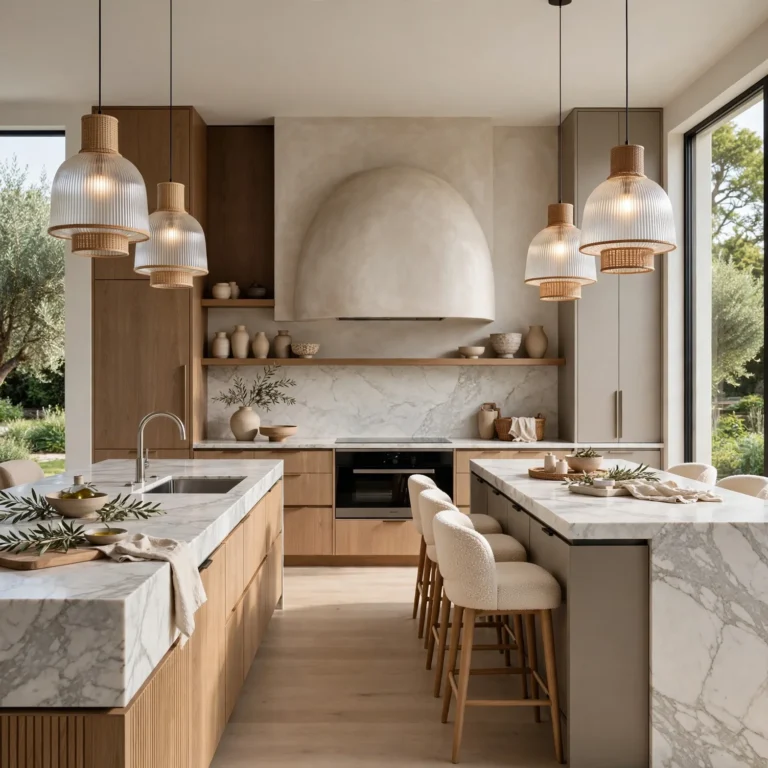
12 Trending Simple Kitchen Design Ideas for a Clutter-Free Space
A simple kitchen design isn’t about doing less for its own sake, but about making sure every cabinet, fixture, and surface earns its place in a space people use every single day. Stripping away unnecessary ornamentation actually makes daily cooking easier, since a pared-back kitchen has fewer visual distractions and fewer surfaces to keep clean. This post covers twelve practical, simple kitchen design ideas, from shaker cabinetry to open shelving, with real material guidance for a kitchen that stays functional and current without chasing every passing trend.
Trend & Background
Simple kitchen design has gained renewed attention as homeowners push back against the ornate, heavily layered kitchens popular in prior years, favoring instead spaces that photograph well without requiring constant styling to look finished. Budget constraints have also played a role, since a simple palette of two or three consistent materials generally costs less than a kitchen built from multiple specialty finishes and custom detailing. At the same time, a growing preference for low-maintenance surfaces has pushed more households toward straightforward shaker cabinetry and solid-color countertops that hide daily wear better than heavily patterned or textured alternatives.
Key Takeaways
- These simple kitchen design ideas focus on function-first layouts without unnecessary decorative detail.
- Neutral palettes and consistent materials keep a modest kitchen from feeling busy or dated.
- Smart storage does the visual work instead of relying on trend-driven finishes.
- Several ideas suit budget renovations and small kitchens as easily as larger remodels.
1. Shaker Cabinetry
Shaker cabinetry uses a simple recessed center panel with a clean, flat frame, giving a kitchen a timeless look that works across farmhouse, transitional, and modern-leaning spaces without looking dated in a few years. Painted white, sage, or soft gray finishes all suit this cabinet style well, since the simple profile doesn’t compete with color the way more ornate raised-panel doors would. This style also tends to cost less than heavily detailed cabinetry, since the door construction requires less machining.
2. Neutral Color Palette
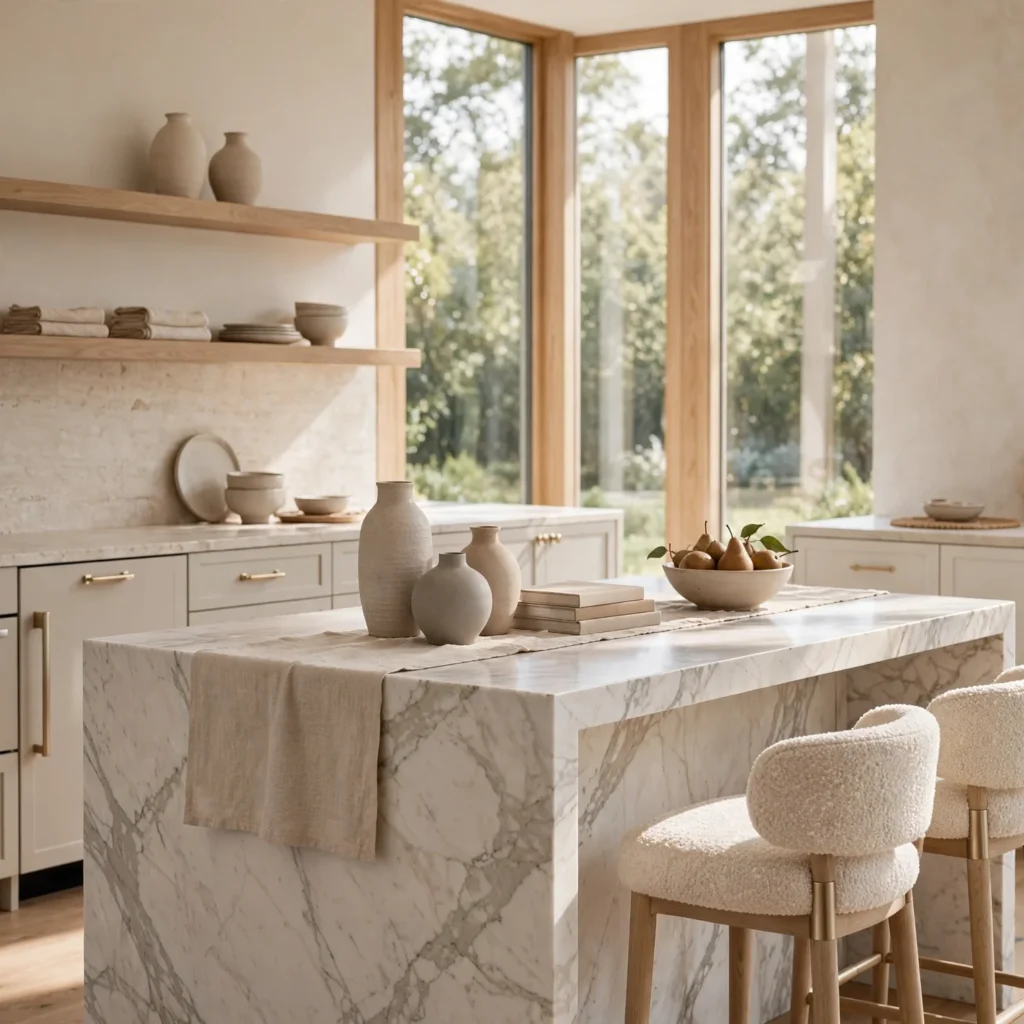
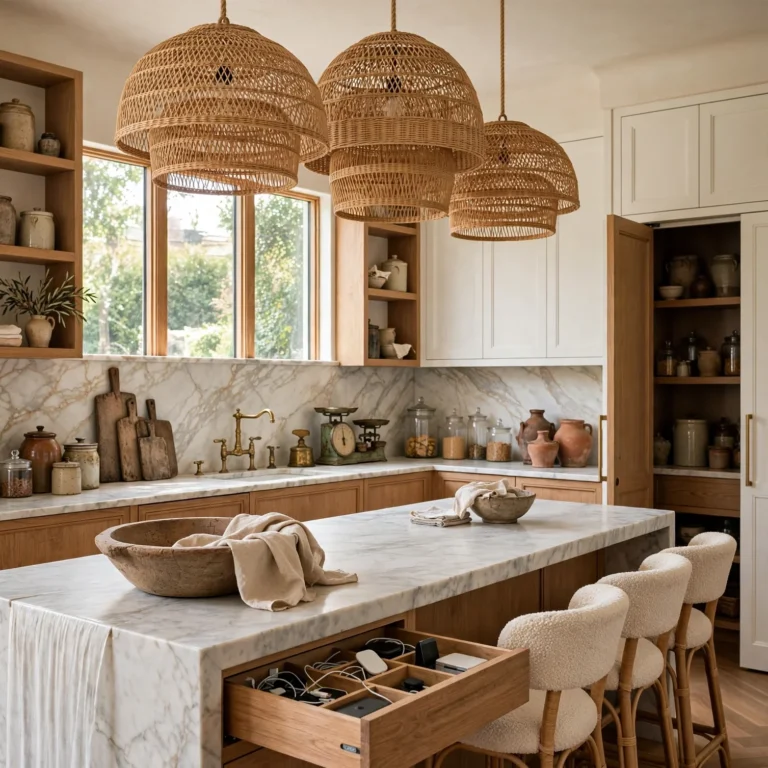
A neutral color palette built around white, warm gray, or soft beige keeps a simple kitchen design from feeling busy, letting texture and material choice carry the visual interest instead of competing colors. Limiting the palette to two main tones, one for cabinetry and one for walls, with a single accent material like a wood cutting board or woven light fixture, prevents the space from reading as flat or sterile. This approach also ages well, since neutral tones don’t tie the kitchen to a specific design year the way bold colors often do.
| Palette Choice | Feel | Longevity |
| All white | Bright, classic | High |
| Warm gray + white | Soft, transitional | High |
| Sage green + cream | Casual, current | Medium-high |
3. Open Shelving
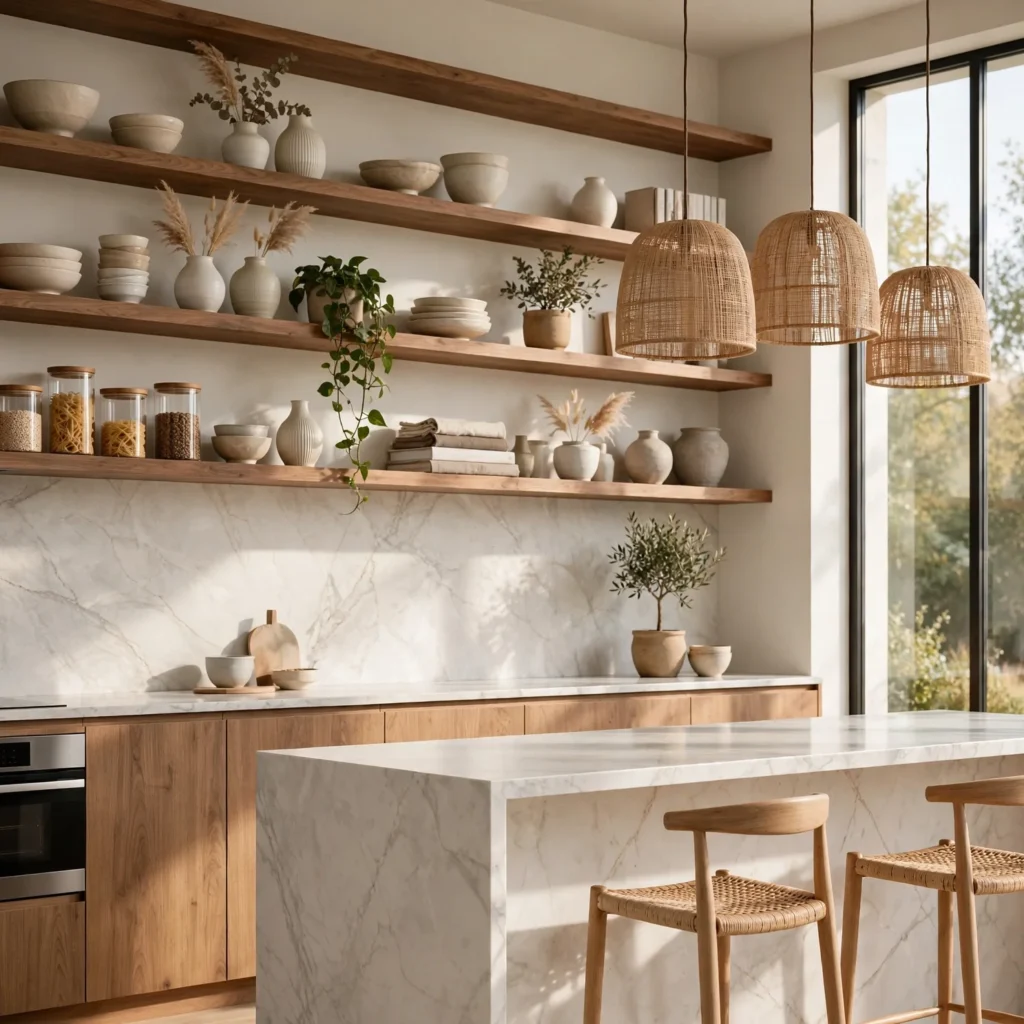
Open shelving replaces a portion of upper cabinets with simple floating shelves, giving a kitchen a lighter, less boxed-in feel while keeping everyday dishware within easy reach. Solid wood shelves on steel brackets handle everyday plate and glass weight well, though this detail works best kept to one or two shelves rather than the entire upper cabinet run, since fully open storage requires constant tidiness to actually look simple rather than cluttered. Positioning shelves away from the stove avoids grease buildup on exposed dishware.
Looking for more inspiration? Browse our collection of modern kitchen design to discover stylish layouts, smart storage solutions, and timeless designs.
4. Single-Material Countertop
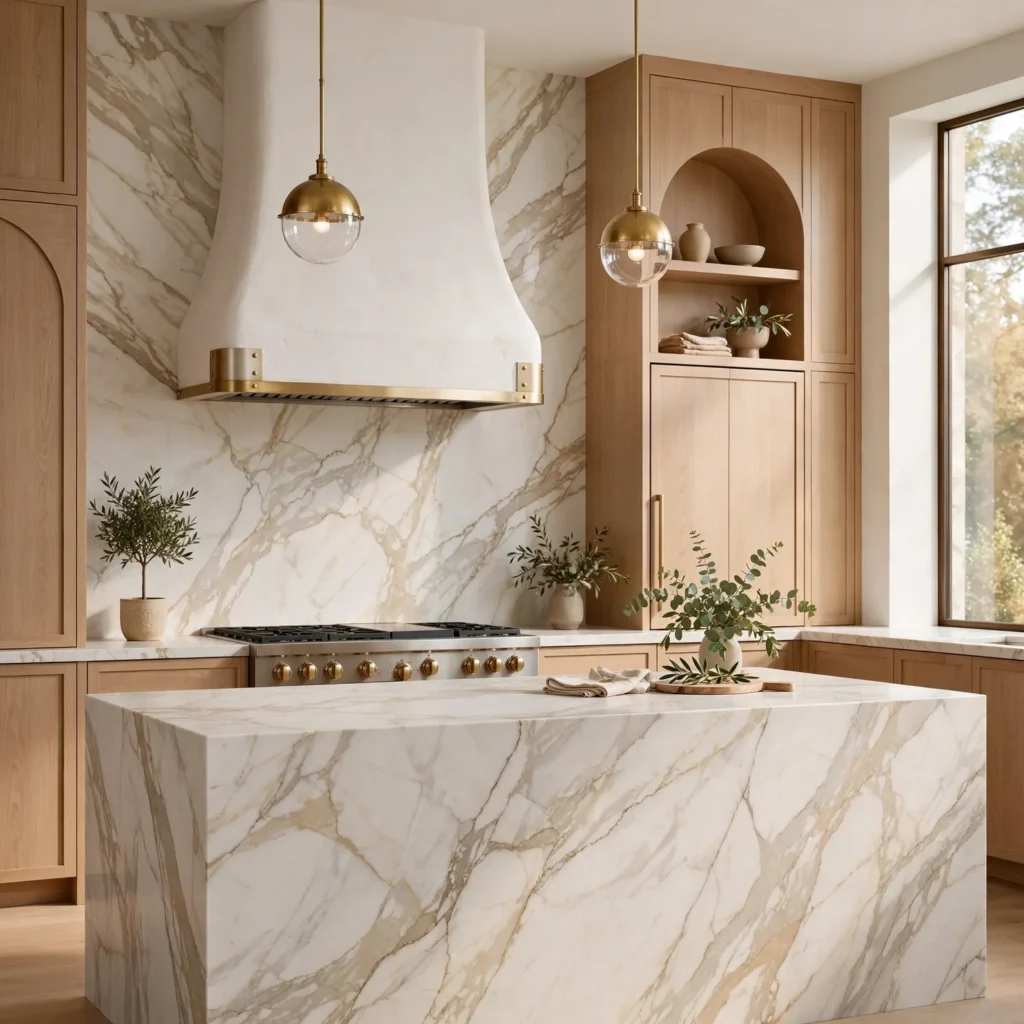
Using one consistent countertop material throughout the entire kitchen, rather than mixing stone, butcher block, and laminate across different zones, keeps a simple kitchen design visually calm and easy to maintain. Quartz in a solid color or subtle veining pattern handles this role well, since it resists staining without introducing a busy pattern that would compete with the rest of the space. This approach also simplifies future repairs or replacement, since there’s only one material and finish to match.
5. Minimal Hardware
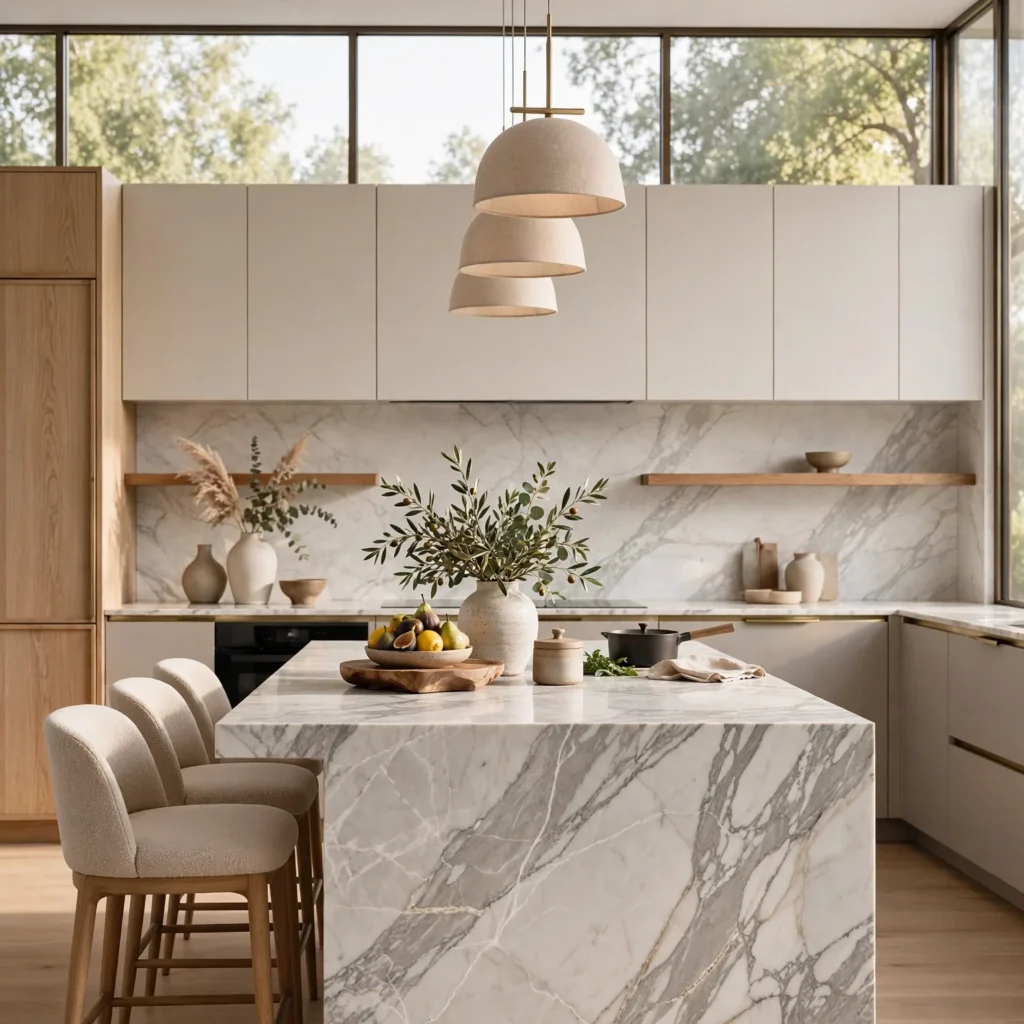
Simple bar pulls or knobs in a single consistent finish, rather than mixed metals or ornate detailing, keep cabinetry looking clean without drawing unnecessary attention away from the room’s overall proportions. Brushed nickel or matte black both work well in this reduced role, chosen more for durability and fingerprint resistance than for decorative impact. Keeping the same hardware style and finish throughout the entire kitchen, rather than varying it by cabinet section, reinforces the simple, cohesive look this approach is going for.
6. Subway Tile Backsplash
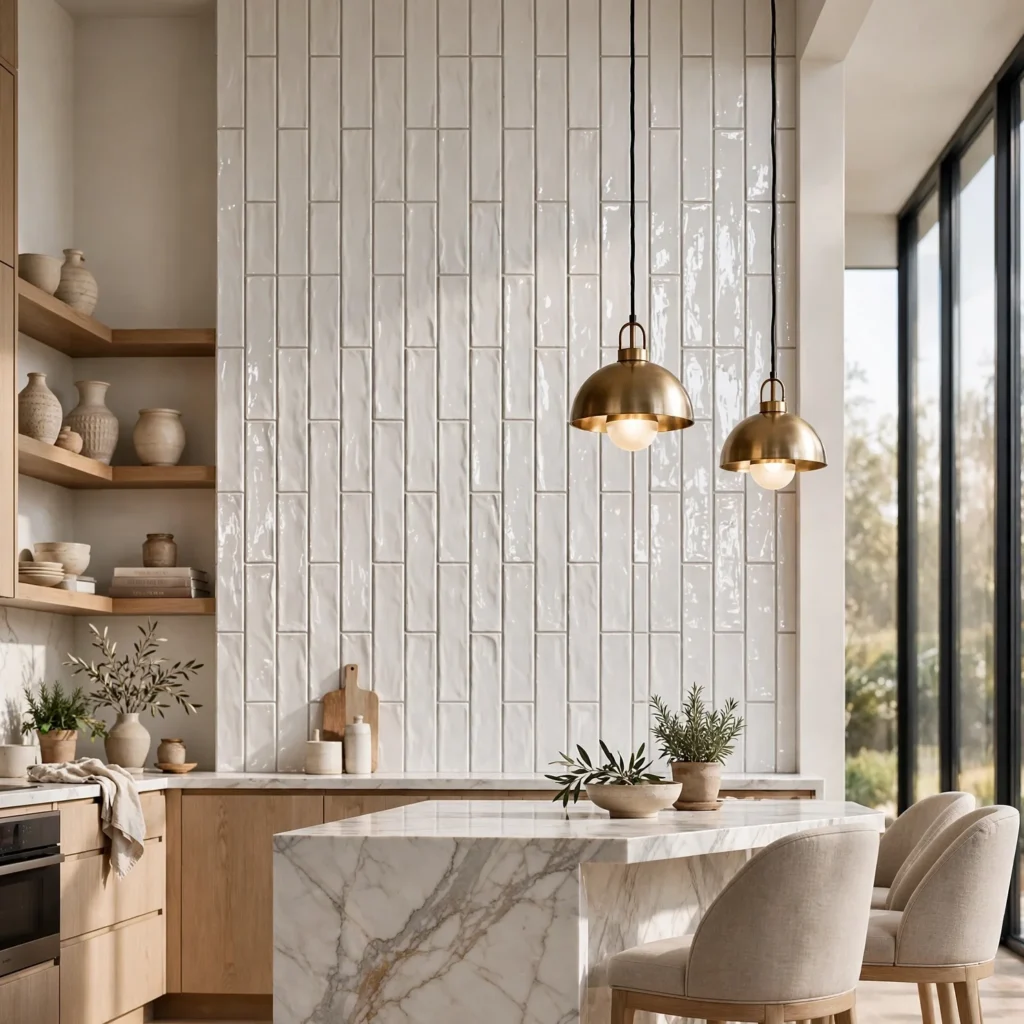
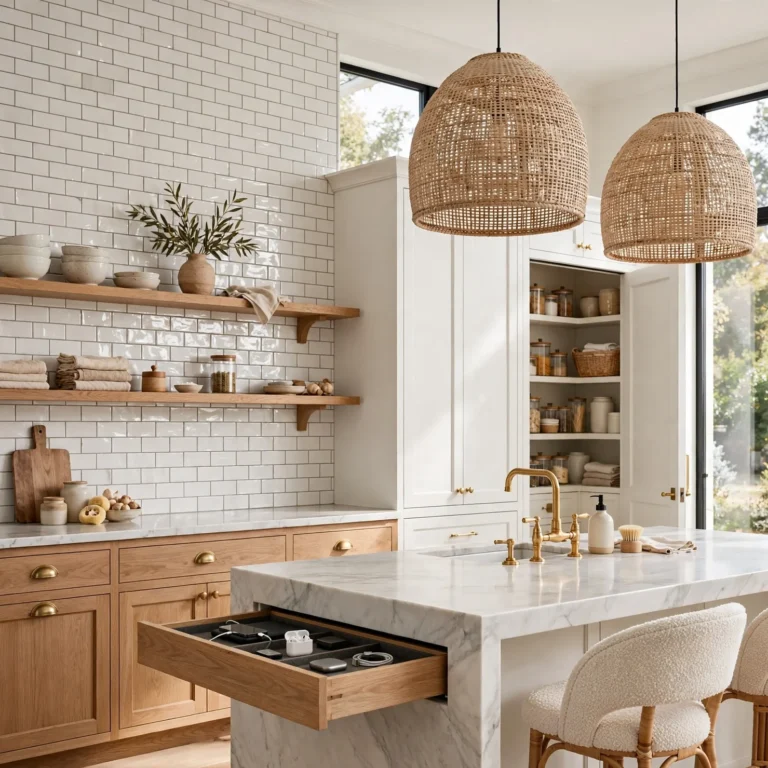
A classic subway tile backsplash in a simple running-bond pattern gives a kitchen a clean, recognizable look that pairs easily with almost any cabinet color or countertop material without competing for attention. White ceramic subway tile remains the most straightforward and budget-friendly option, though a soft gray or cream tone works equally well within a neutral palette. Keeping the grout color close to the tile color, rather than using a high-contrast grout, maintains the understated look this backsplash style is meant to achieve.
7. Galley Layout
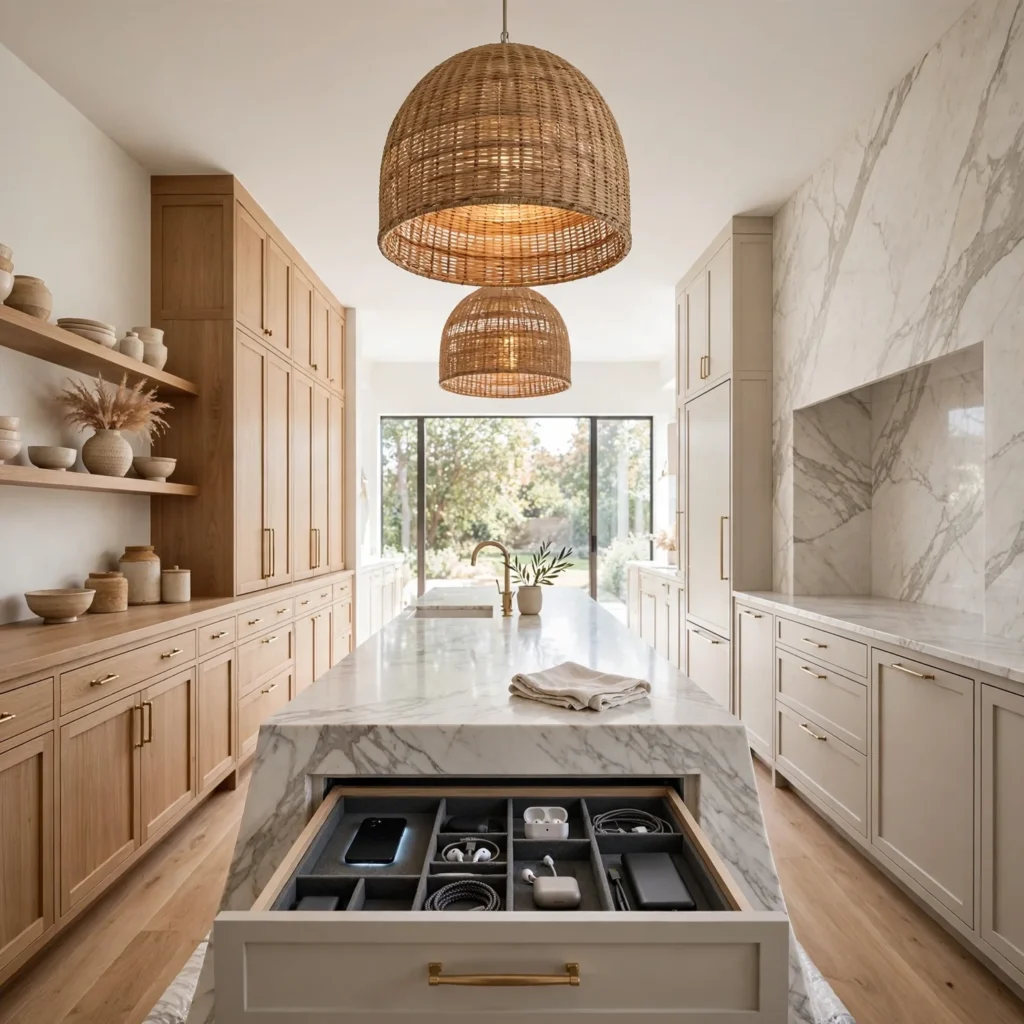
A galley layout runs counters and cabinets along two parallel walls, creating one of the most efficient and visually simple kitchen configurations available, since it keeps the stove, sink, and refrigerator within a tight, functional triangle. This layout naturally limits how much can be added to the space, which keeps a simple kitchen design from accumulating unnecessary extra cabinetry or decorative elements. A galley kitchen with at least 42 inches of walking clearance between the two counter runs stays comfortable even with two people cooking at once.
8. Under-Cabinet Lighting
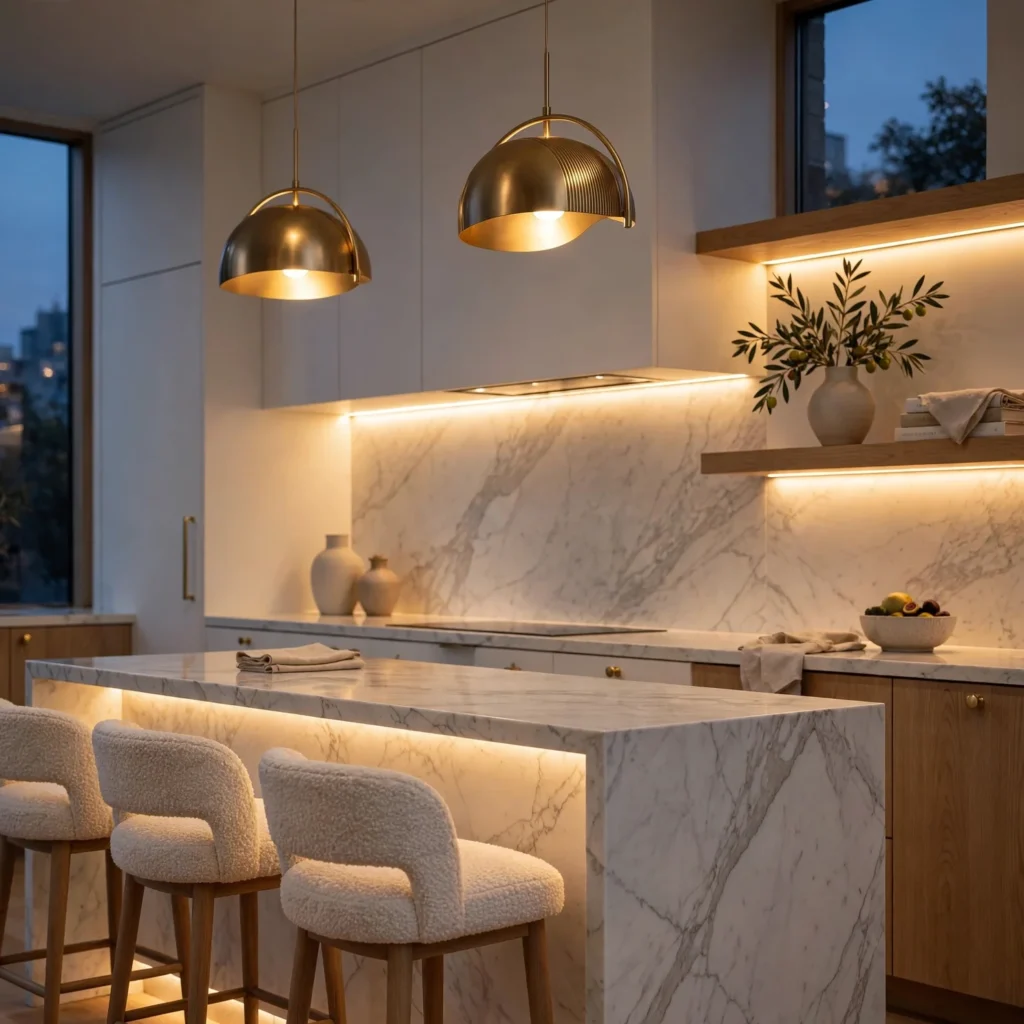
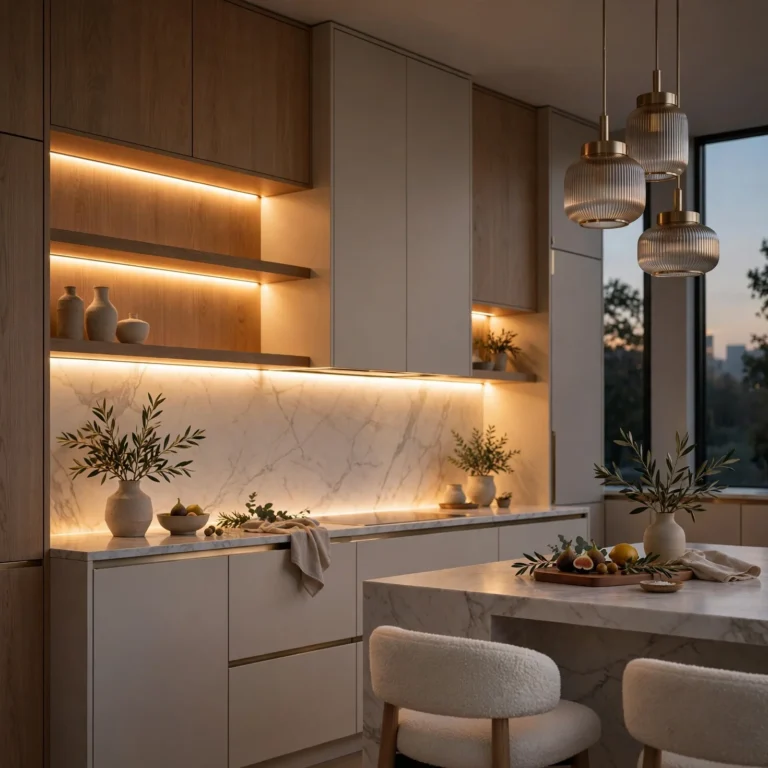
Under-cabinet lighting installed along the bottom edge of upper cabinets adds functional task lighting directly onto the counter workspace without requiring additional pendant fixtures or decorative lamps. LED strip lighting handles this role well, providing even illumination while staying essentially invisible during the day when the cabinets are viewed from a standing position. This detail supports a simple kitchen design’s function-first approach, solving a practical lighting need without adding a single visible design element.
9. Integrated Appliance Panels
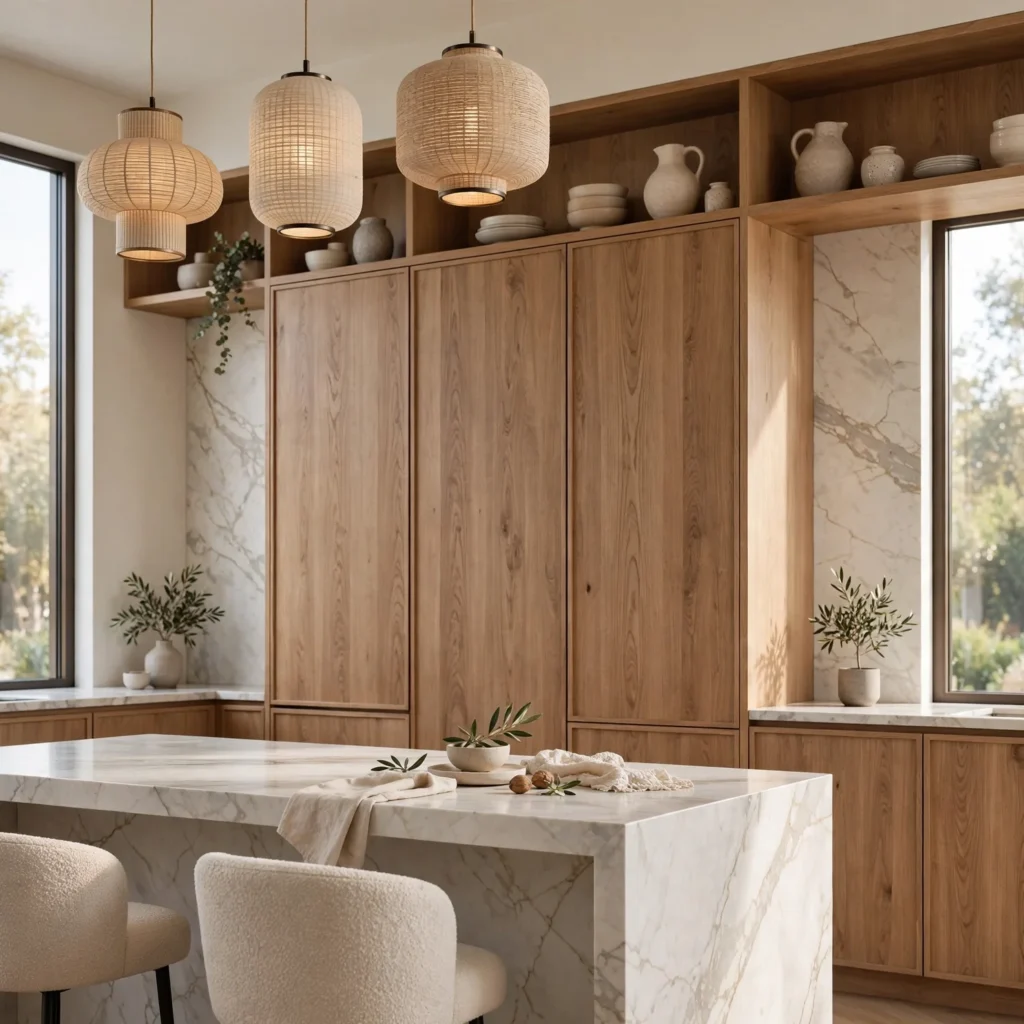
Fitting the refrigerator and dishwasher with panels that match the surrounding cabinetry, rather than leaving them as standard stainless steel fronts, keeps large appliances from breaking up the clean, uninterrupted look a simple kitchen design relies on. This detail costs more upfront than standard appliances but reduces the number of separate visual elements competing for attention across the room. Kitchens without the budget for full panel-ready appliances can achieve a similar calming effect by choosing a single stainless finish across every visible appliance instead.
10. Simple Pendant Lighting
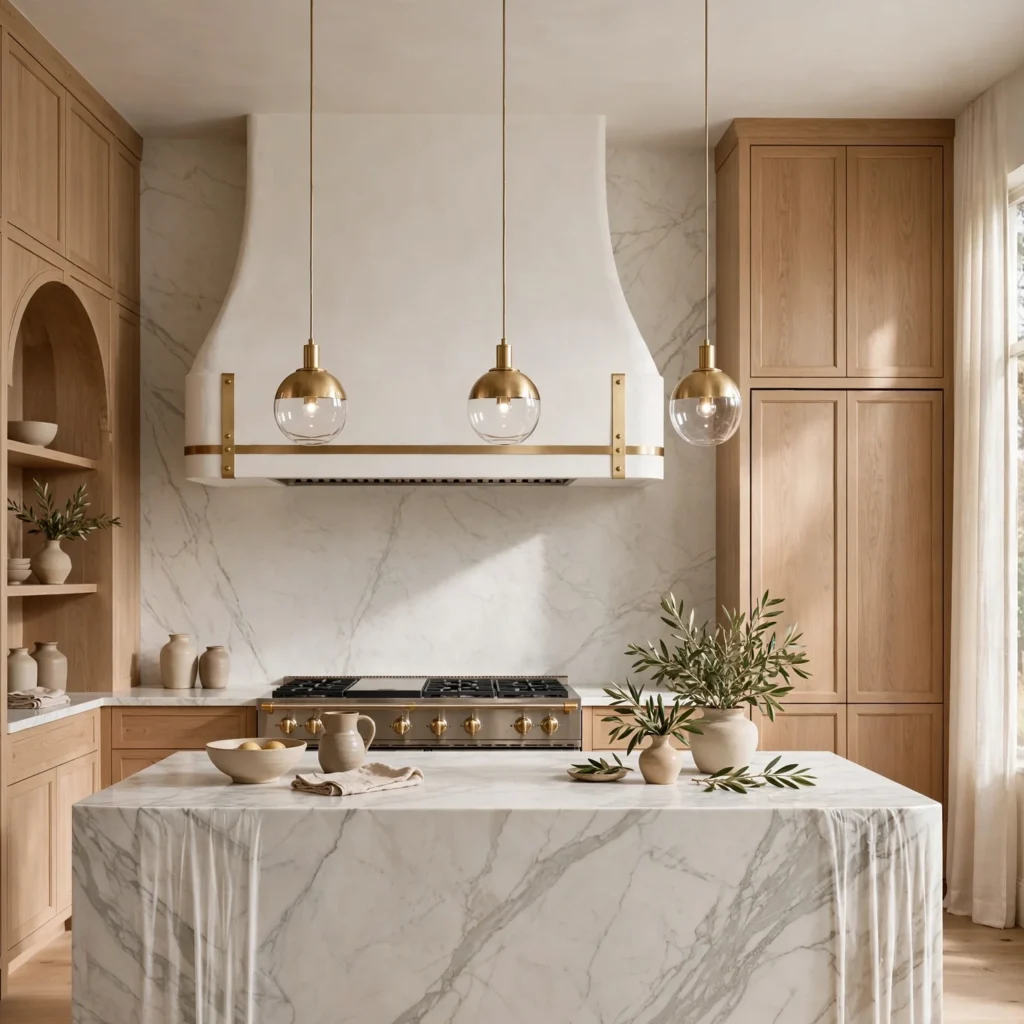
A single pendant light or a matching pair positioned above a sink or small island introduces just enough visual interest to avoid a flat, purely utilitarian look without overwhelming the rest of the simple kitchen design. A plain glass globe or a matte black dome shade both work well in this reduced role, chosen for clean lines rather than ornate detailing. Limiting the kitchen to one lighting statement, rather than layering multiple decorative fixtures, keeps the overall look restrained and intentional.
11. Pantry Cabinet Storage
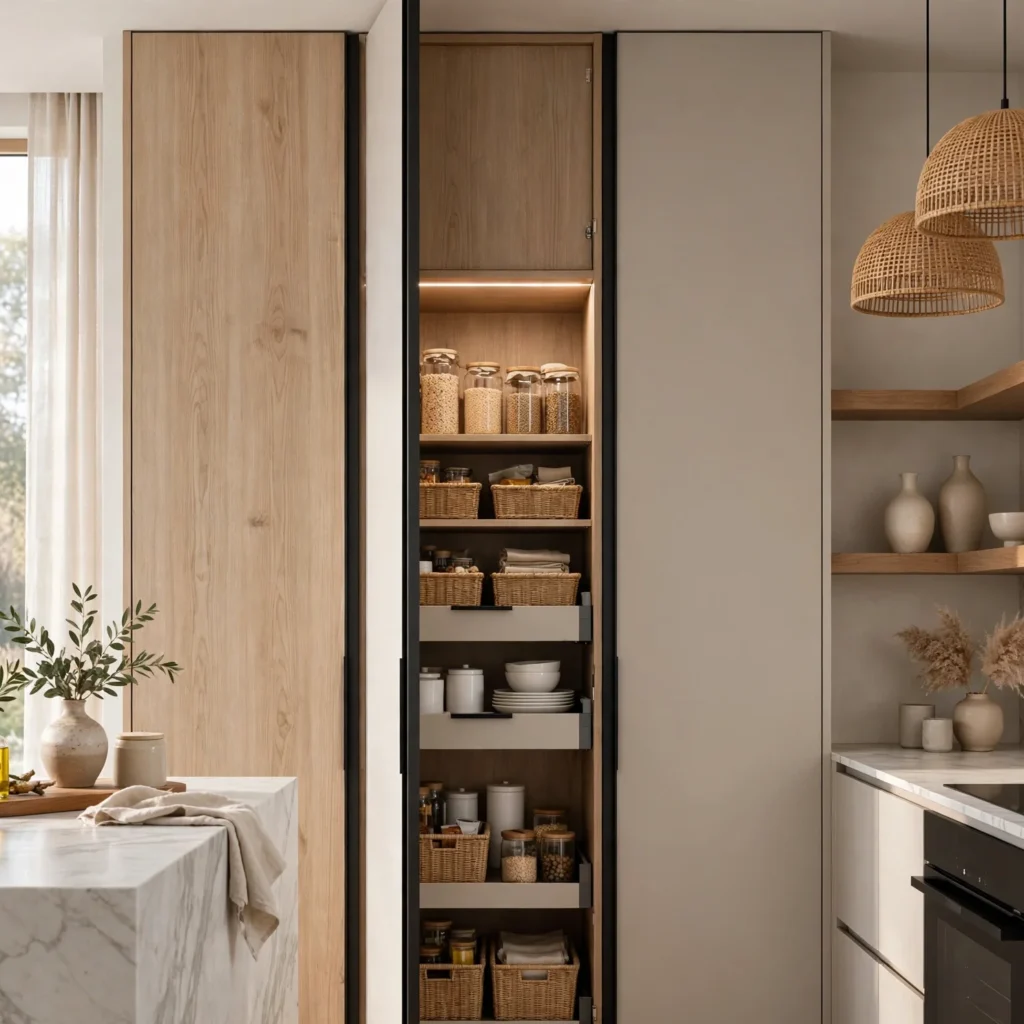
A single tall pantry cabinet, rather than scattered smaller storage solutions throughout the kitchen, consolidates dry goods and pantry items into one organized space that keeps countertops and open shelving clear of clutter. Pull-out shelves within the cabinet make every item visible and accessible without requiring several separate cabinets to store the same volume of goods. This approach directly supports a simple kitchen design’s goal of minimizing visible storage clutter across multiple surfaces.
12. Simple Kitchen Design With a Farmhouse Sink
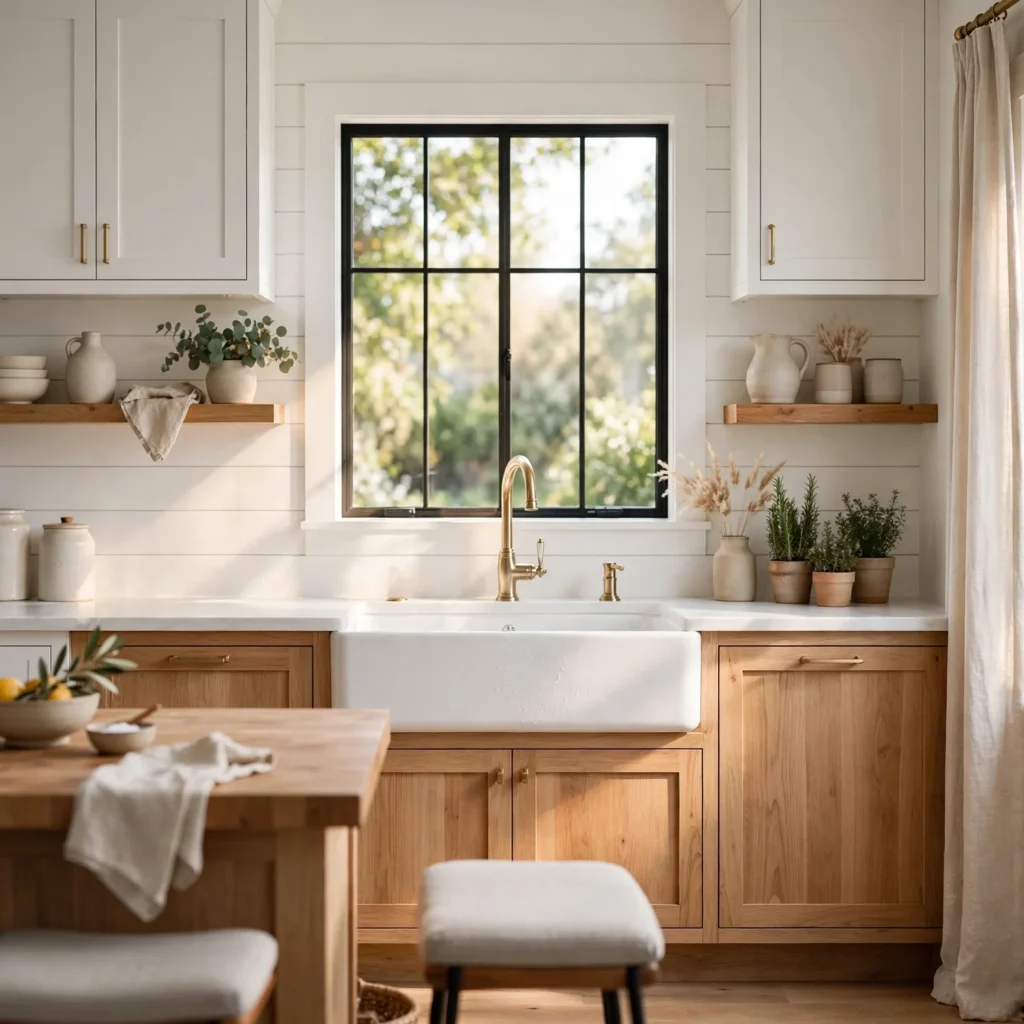
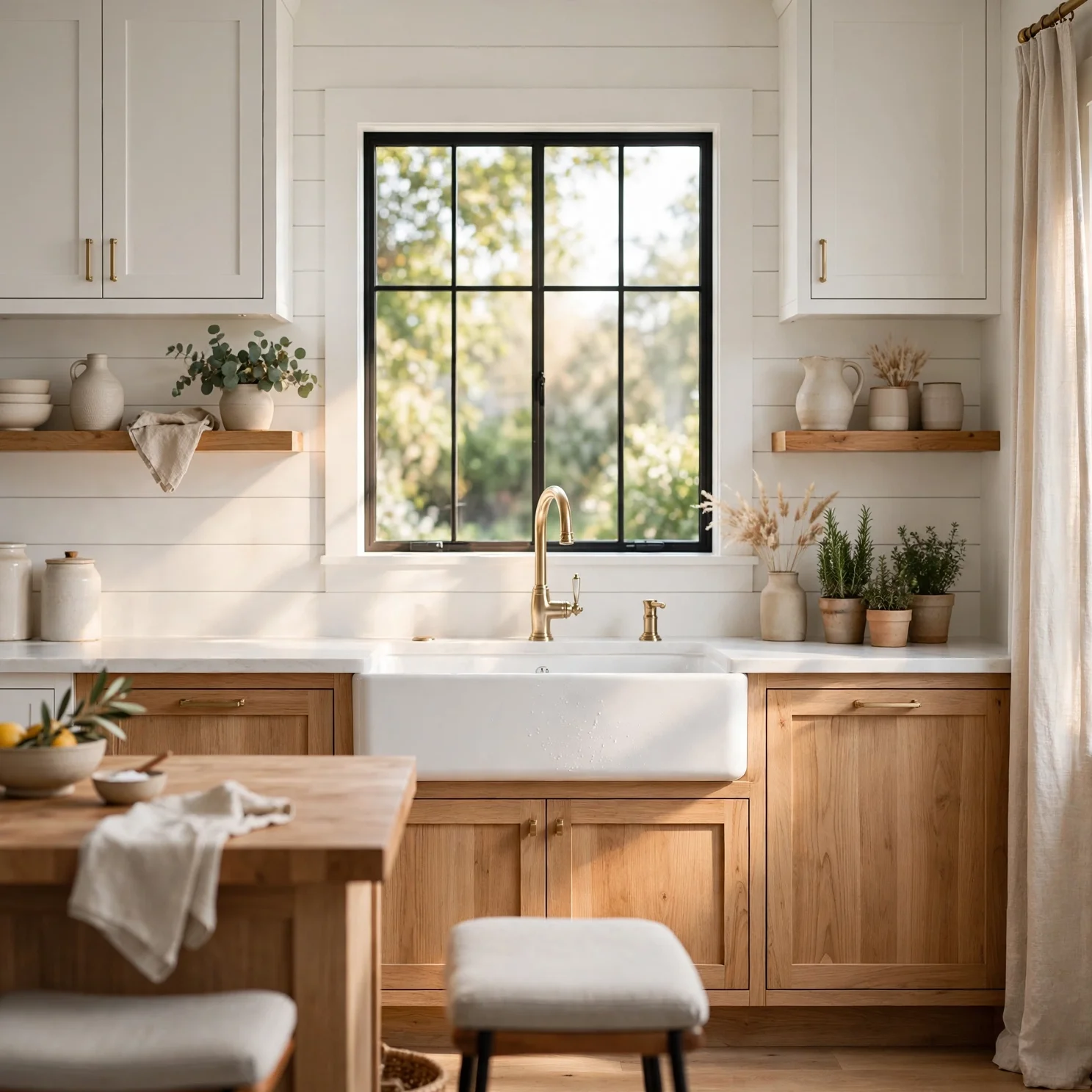
Among the most recognizable simple kitchen design choices is a farmhouse sink, a deep, apron-front basin that replaces a standard undermount sink with a single clean, substantial focal point at the counter’s edge. A fireclay or stainless steel farmhouse sink both handle daily use well, though fireclay resists scratching better over years of heavy use. Positioning it beneath a window, where natural light highlights the sink’s clean lines, reinforces its role as the kitchen’s understated centerpiece.
Shop the Look
A fireclay farmhouse sink in white gives a simple kitchen a substantial, clean focal point without added ornamentation. A set of brushed nickel bar pulls keeps cabinetry hardware consistent and unobtrusive throughout the space. A solid-color quartz countertop in a soft white or gray tone handles daily wear without introducing a busy pattern. A single glass globe pendant light adds just enough visual interest above a sink or small island.
Common Mistake to Avoid
The most common mistake in simple kitchen design is confusing “simple” with “cheap,” which leads to skimping on material quality in ways that actually undermine the clean look the design is going for, since lower-grade laminate or thin hardware tends to show wear and looks noticeably worse within a year or two. A genuinely simple kitchen relies on the quality and consistency of a few materials rather than the quantity or variety of finishes used, so budget should go toward durable cabinetry construction and a solid countertop material rather than being spread thin across many decorative extras.
FAQs
What makes a kitchen design simple rather than plain?
A simple kitchen design differs from a plain one by using intentional material choices, consistent hardware, and functional lighting that all work together, rather than just leaving out decorative elements without replacing them with anything considered. Shaker cabinetry, a single countertop material, and a classic subway tile backsplash all read as deliberately simple rather than incomplete or unfinished. The distinction comes down to whether restraint is a design choice or simply the absence of one.
How much does a simple kitchen design cost compared to an elaborate one?
A simple kitchen design typically costs less than an elaborate one, since consistent materials and shaker-style cabinetry generally require less specialized fabrication and labor than custom detailing, mixed materials, or panel-ready appliances. A mid-range simple kitchen renovation often runs $20,000 to $45,000, while an elaborate remodel with custom features can exceed $75,000 for a similarly sized space. Choosing fewer, higher-quality materials rather than many budget-tier finishes also keeps a simple kitchen design from needing costly repairs or replacements within a few years.
What is the easiest kitchen layout to design simply?
A galley layout is generally the easiest kitchen layout to design simply, since running cabinets along two parallel walls naturally limits how much can be added to the space while keeping the stove, sink, and refrigerator within an efficient working triangle. An L-shaped layout is the next easiest option, particularly for slightly larger kitchens that still want to avoid the complexity an island or peninsula introduces. Both layouts support a simple kitchen design’s function-first approach without requiring extensive custom planning.
Do simple kitchens work well for small spaces?
Simple kitchen design works particularly well for small spaces, since a limited color palette and consistent materials help a compact kitchen feel larger and less visually cluttered than one built from multiple competing finishes. Open shelving and under-cabinet lighting both support this small-space approach without requiring additional floor space the way a large island or extensive upper cabinetry would. Avoiding an oversized single focal feature, like an elaborate range hood, also keeps a small simple kitchen from feeling overwhelmed by one dominant element.
What colors work best for a simple kitchen design?
White, warm gray, and soft beige work best for a simple kitchen design, since these neutral tones let material texture and hardware finish carry visual interest rather than relying on color contrast or pattern. A single accent color, like sage green on an island or navy on lower cabinets, can be introduced without disrupting the overall simplicity as long as it stays limited to one section of the kitchen. Avoiding more than two or three total colors throughout the space keeps the simple design intact rather than drifting toward a busier, more layered look.
Conclusion
These simple kitchen design ideas range from a single farmhouse sink swap to a full shaker cabinetry and single-material countertop overhaul, giving homeowners entry points at nearly any renovation budget. Focusing on consistent materials and functional storage first, then adding just one or two intentional design statements, keeps a simple kitchen design feeling deliberate rather than unfinished. Save this post to Pinterest for reference, and check the related post on modern kitchen design ideas for additional layout inspiration.