12 Trending Kitchen Cabinet Design Ideas Worth Considering
Cabinetry makes up the largest visual surface in most kitchens, which means the door style, finish, and hardware chosen here shape the entire room’s character more than any other single decision. Kitchen cabinet design has moved toward warmer, more textured choices, replacing the flat white shaker look that was standard for the last several years. This guide covers twelve cabinet design ideas currently used in real kitchen renovations, from door profiles and finishes to the interior organization systems that make cabinetry actually functional.
Trend & Background
Cabinetry remains one of the highest-cost line items in any kitchen renovation, which has pushed homeowners to think more carefully about door style and finish choices that will hold up visually over a decade or more rather than following a short-term trend. Semi-custom cabinet lines have also expanded their finish and hardware options significantly, making higher-end looks like two-tone cabinetry or fluted panels accessible outside of a fully custom budget. At the same time, cabinet manufacturers have responded to demand for better interior organization, building more accessory options directly into standard cabinet boxes.
Key Takeaways
- Kitchen cabinet design in 2026 favors natural wood tones and matte finishes over the high-gloss, all-white look that dominated recent years.
- Shaker-style doors remain the most versatile cabinet profile, working across traditional, transitional, and modern kitchen styles.
- Mixed cabinet heights, finishes, and hardware are increasingly common instead of one uniform cabinet run throughout the kitchen.
- Interior cabinet organization, not just the door style, is where much of a cabinetry budget is now spent.
1. Shaker Cabinet Doors
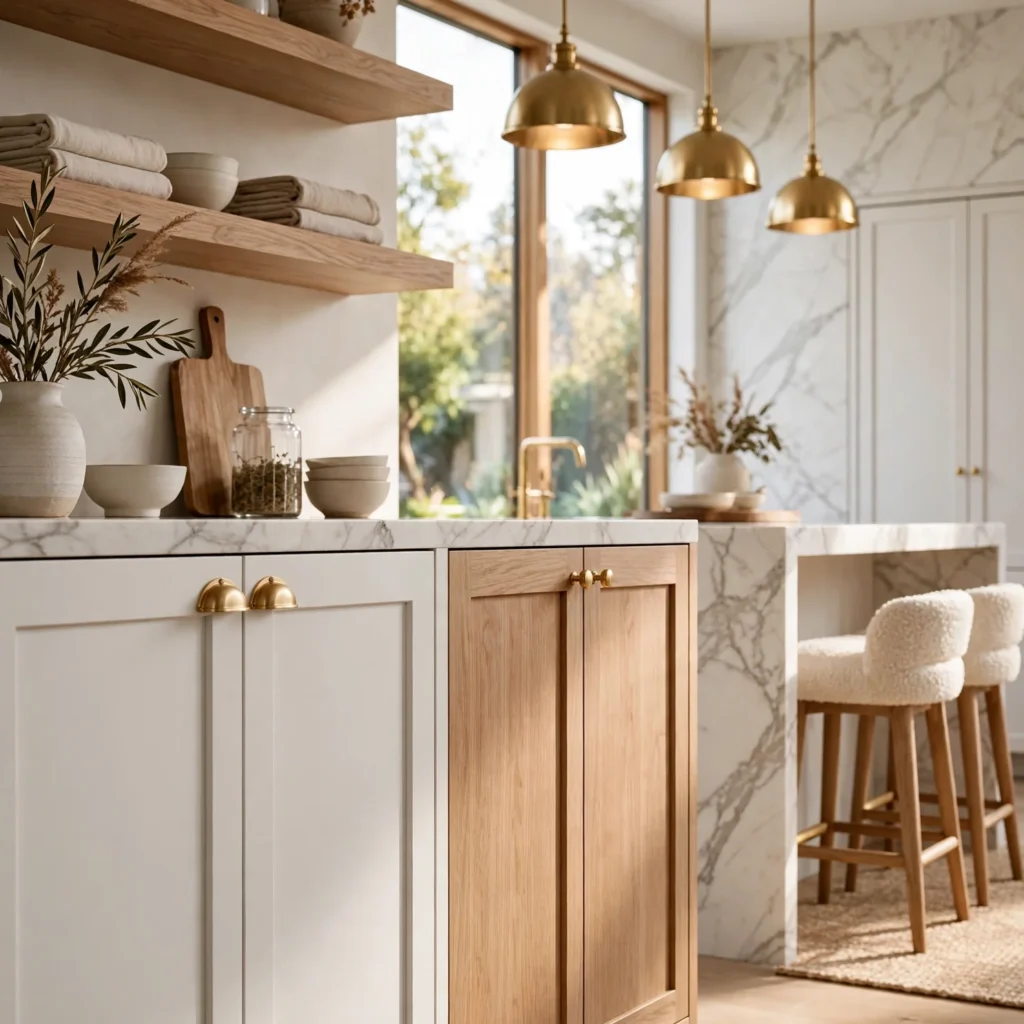
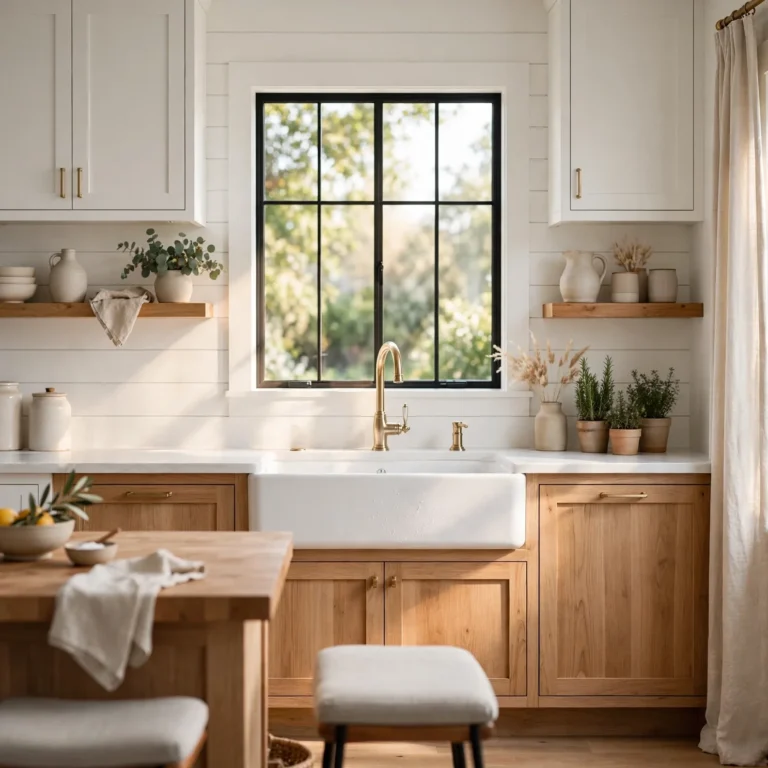
The shaker profile, with its flat center panel and simple recessed frame, remains the most requested cabinet door style because it works across nearly every kitchen aesthetic, from farmhouse to modern. Its clean lines don’t compete with other design elements in the room, which is part of why it has stayed popular longer than more ornate raised-panel styles. Painted finishes in white, sage, or navy are common on shaker doors, though a natural wood stain also works well for a warmer, more traditional look.
2. Two-Tone Cabinet Scheme
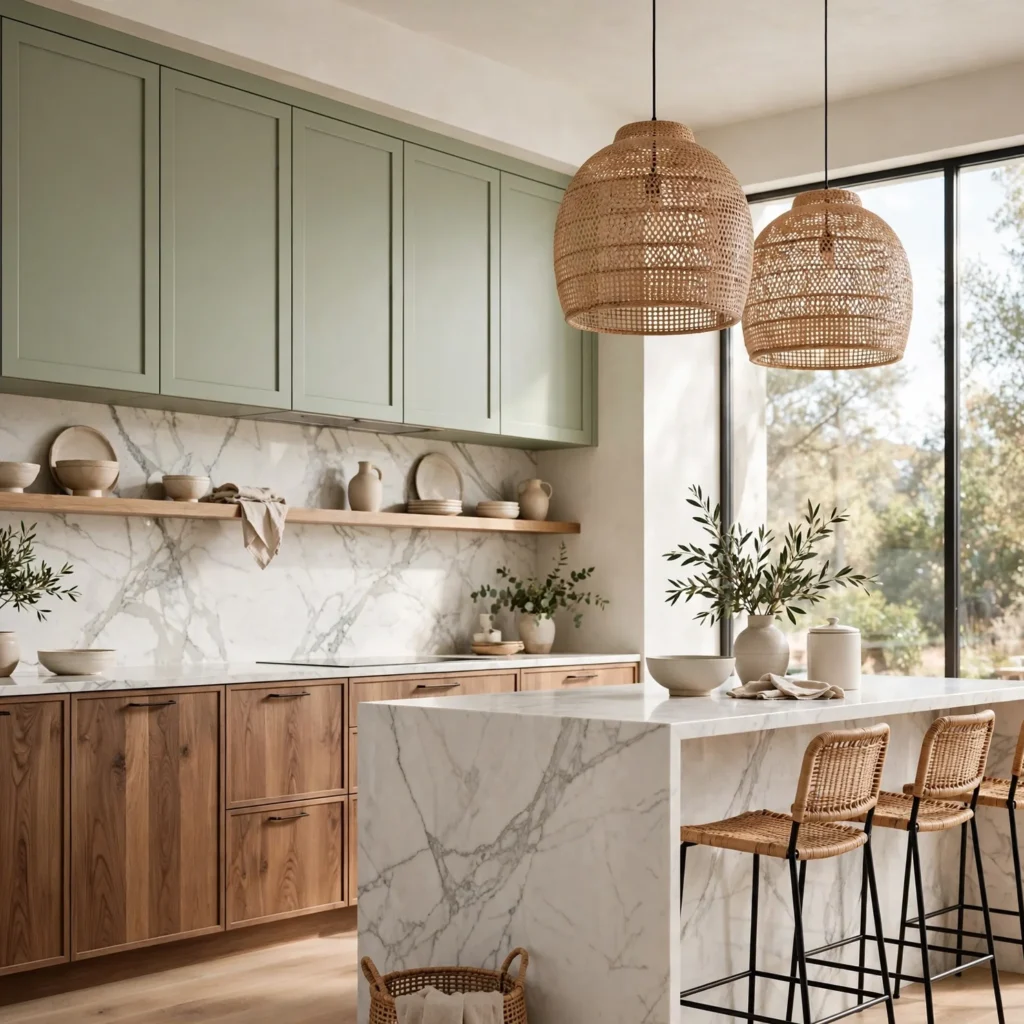
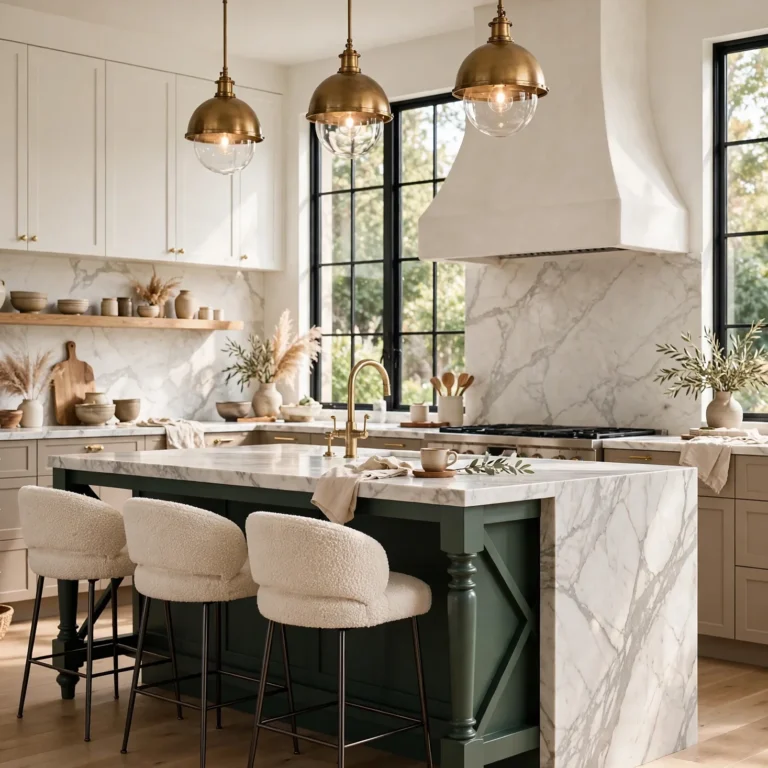
Pairing two different cabinet colors, typically a darker tone on lower cabinets and a lighter tone above, or isolating one color to the island alone, adds visual interest without requiring a fully custom cabinet order. Common combinations include navy lowers with white uppers, or a walnut island against painted surrounding cabinetry. Keeping the contrast strongest at eye level, where the color break is most visible, produces the clearest result rather than splitting the tones evenly top to bottom.
3. Fluted Cabinet Panels
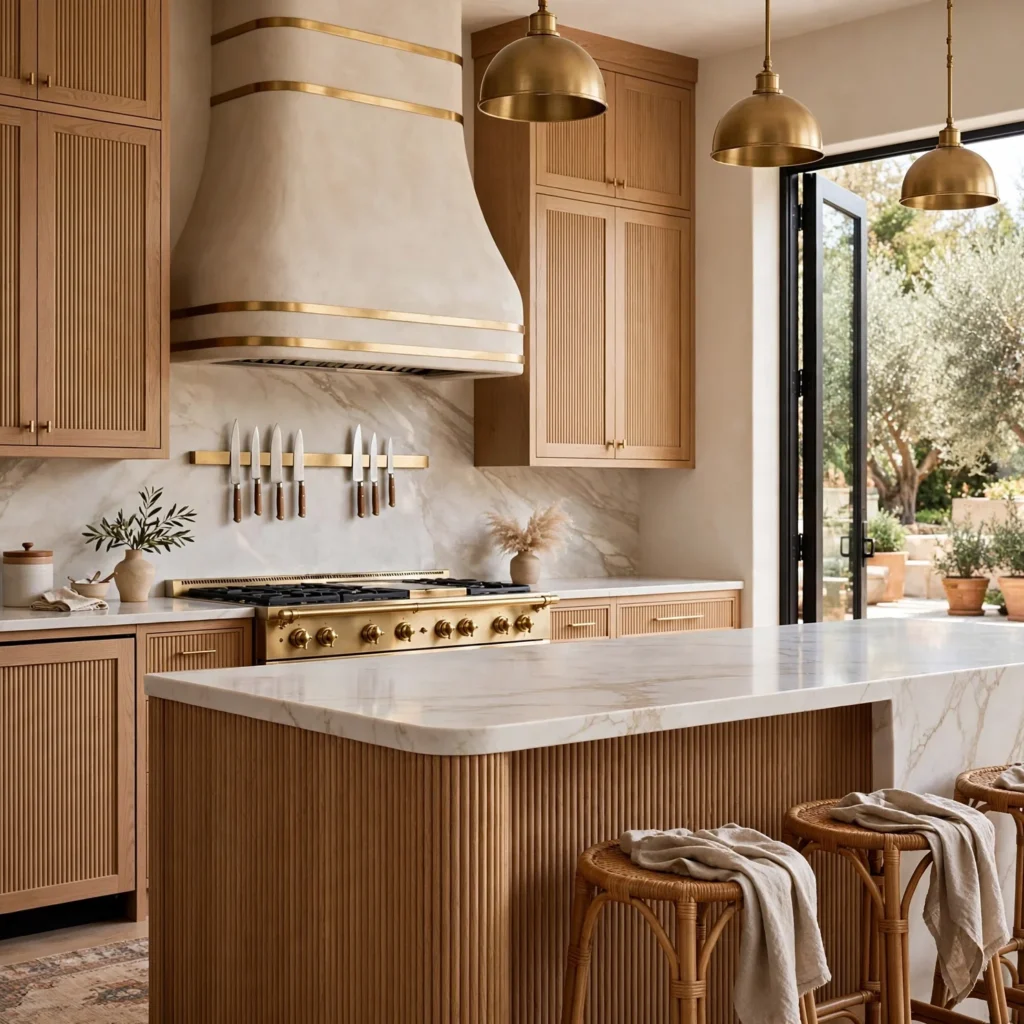
Fluted or reeded detailing on cabinet fronts adds a tactile, architectural texture that reads as custom millwork even on a semi-custom cabinet line. It’s typically used selectively, on an island front or a single run of upper cabinets, rather than across the entire kitchen, since too much texture can flatten the overall effect. Oak and walnut are the most common substrates for this detailing, usually finished with a matte lacquer that keeps the wood grain visible.
4. Glass-Front Upper Cabinets
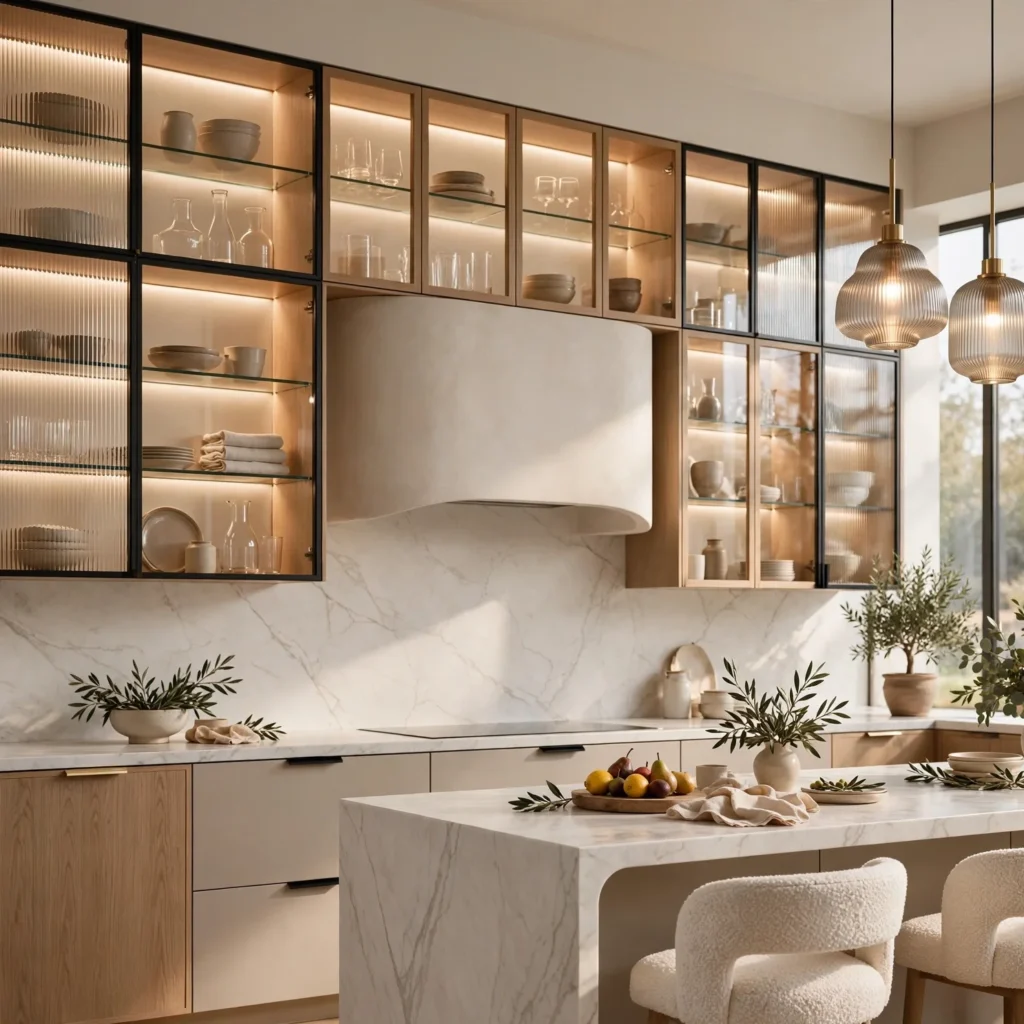
Replacing solid doors with glass fronts on one or two upper cabinets breaks up what would otherwise be a solid wall of cabinetry, adding a sense of depth to the room. This works best paired with a lighter interior cabinet color, since the glass reveals a bit of that tone rather than a dark, closed-off box behind it. It’s most effective used near eye level and in moderation, since keeping every shelf tidy behind glass requires more regular upkeep than a closed cabinet.
Looking for more inspiration? Browse our collection of tiny kitchen designs to discover stylish layouts, smart storage solutions, and timeless designs.
5. Handleless Cabinet Design
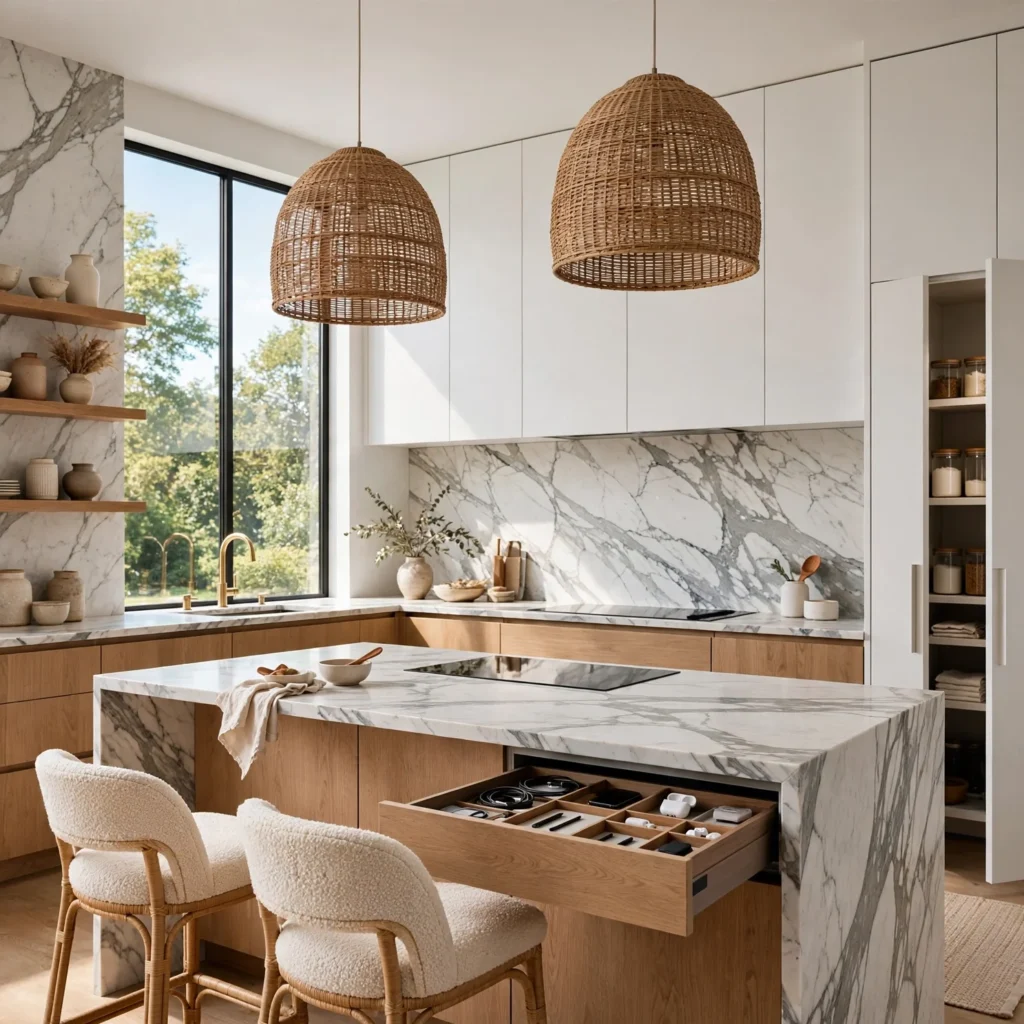
A handleless cabinet system uses a routed finger-pull groove or push-to-open mechanism instead of visible knobs and pulls, creating a cleaner, more streamlined look across the cabinet run. This style is most common in modern or minimalist kitchens, where visible hardware would otherwise interrupt the flat, uninterrupted cabinet surface. Push-to-open mechanisms cost more per cabinet than a standard hinge and pull setup, which is worth factoring into the overall cabinetry budget.
| Hardware Style | Relative Cost |
| Standard Pulls | Baseline |
| Finger-Pull Groove | +10–15% |
| Push-to-Open | +20–30% |
6. Open Shelving Combination
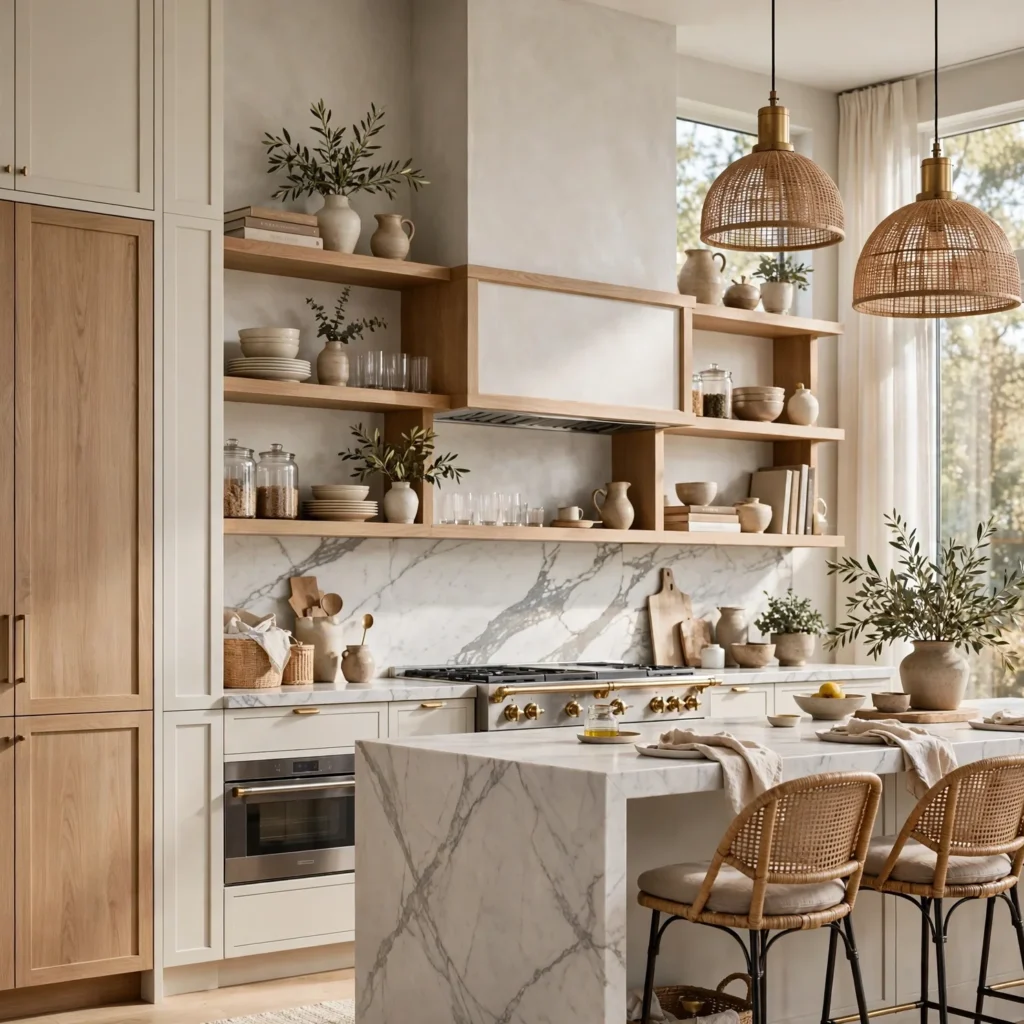
Swapping a section of upper cabinets for open wood or floating shelves, rather than converting the whole kitchen, gives the room visual breathing room while keeping the bulk of storage in closed cabinetry. It works best positioned near the range or a frequently used prep zone, where items naturally rotate through use rather than sitting untouched and collecting dust. Limiting the display to a curated handful of items per shelf keeps the combination looking intentional rather than cluttered.
7. Furniture-Style Island Cabinetry
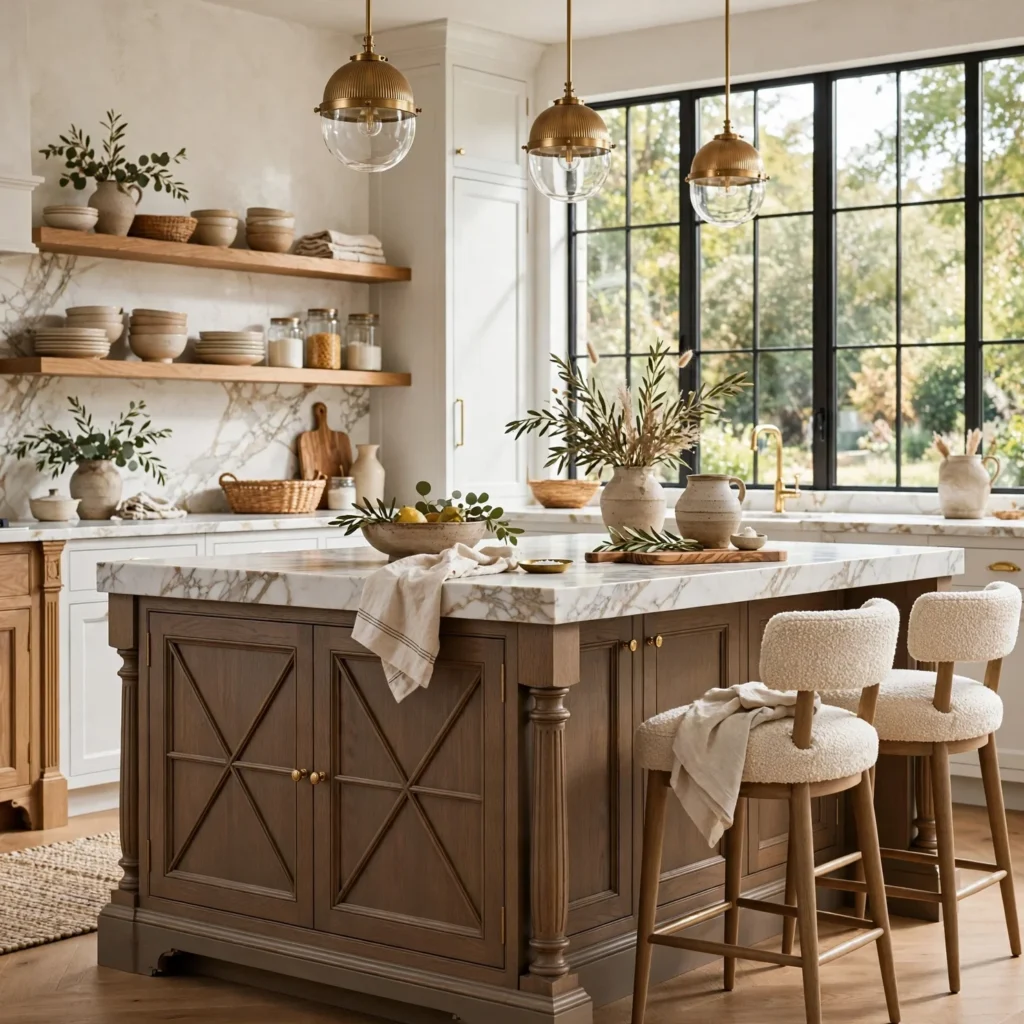
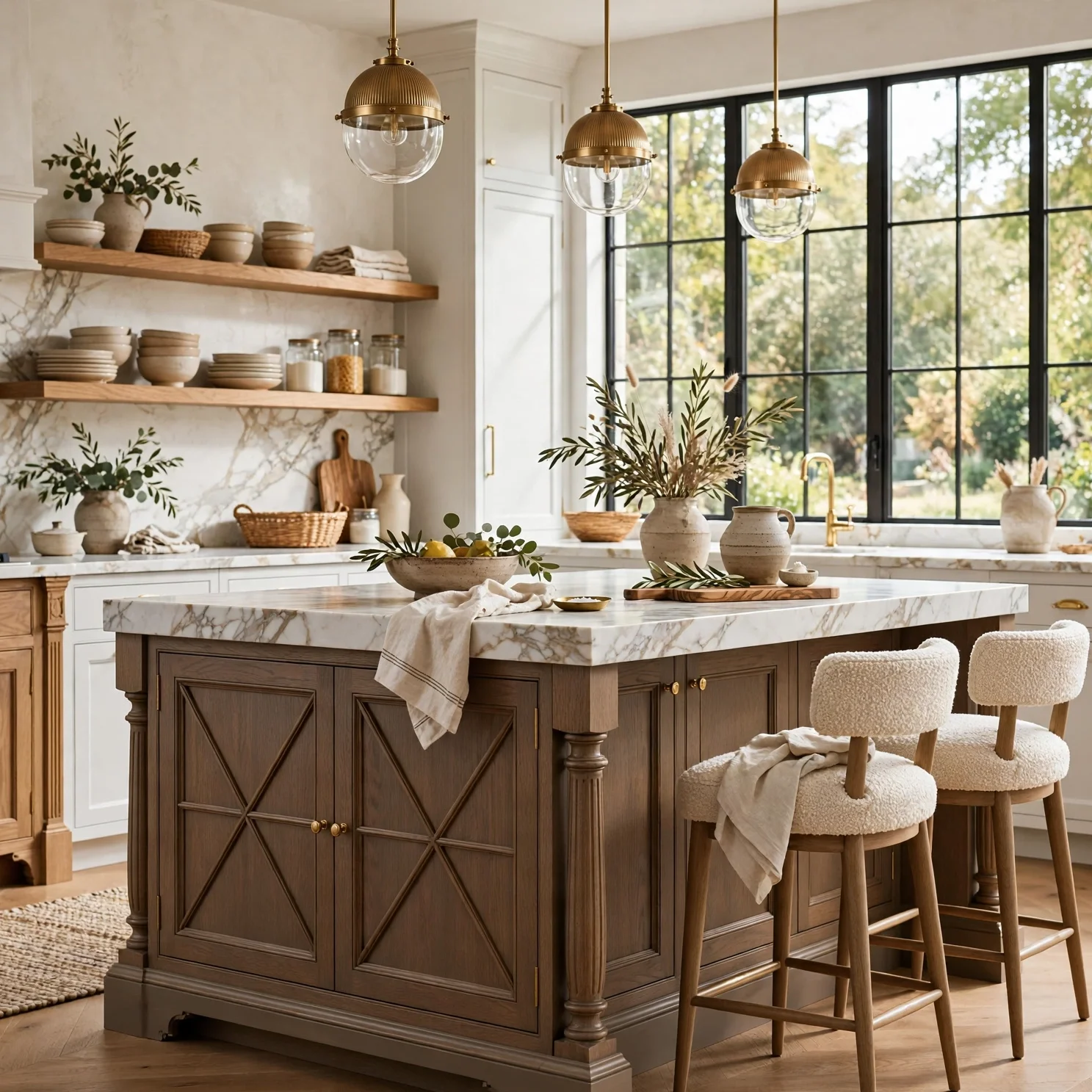
Designing the island’s cabinetry to resemble a stand-alone furniture piece, with turned legs, a contrasting finish, or an antique-inspired base, sets it apart visually from the surrounding built-in cabinet run. This approach works particularly well in traditional or transitional kitchens, where it softens the uniform, fully built-in look of matching cabinetry throughout the room. It typically costs more than a standard island cabinet box, given the additional millwork detail involved.
8. Pull-Out Interior Organizers
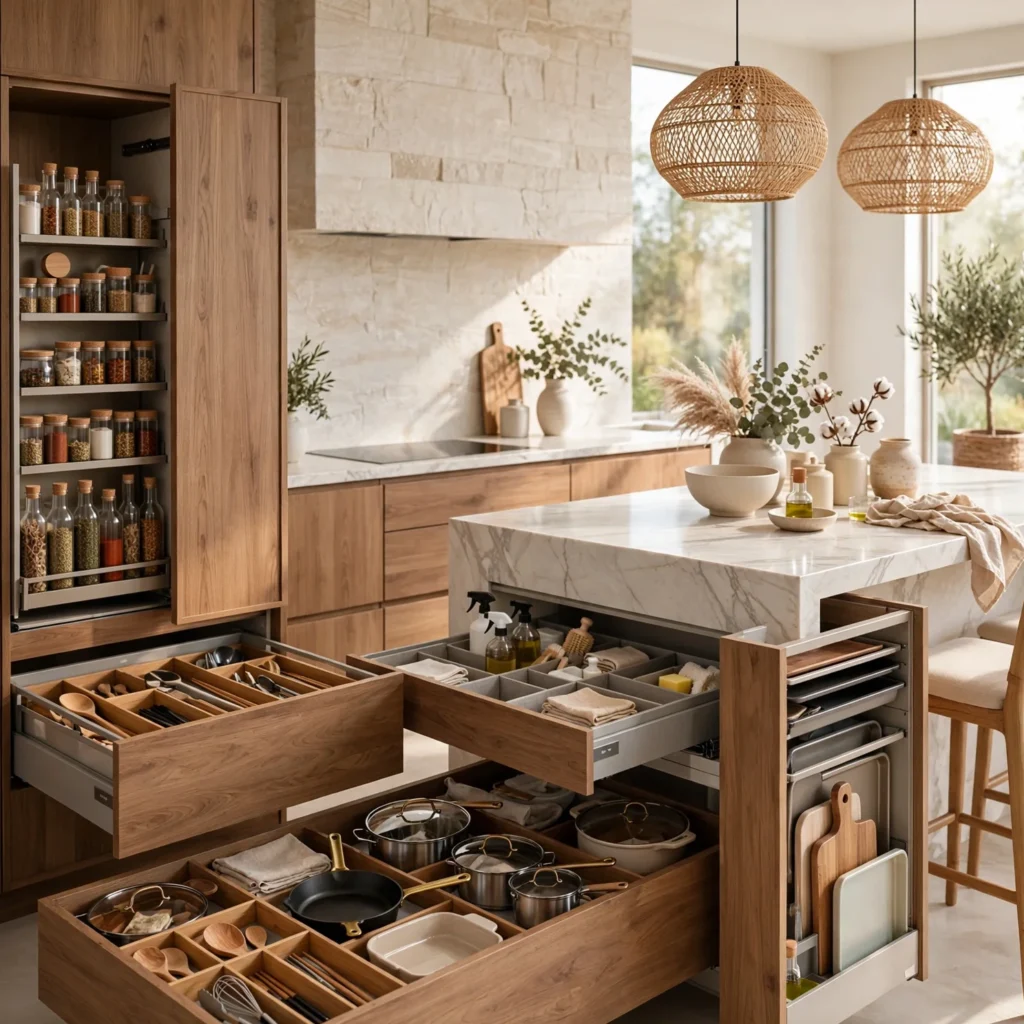
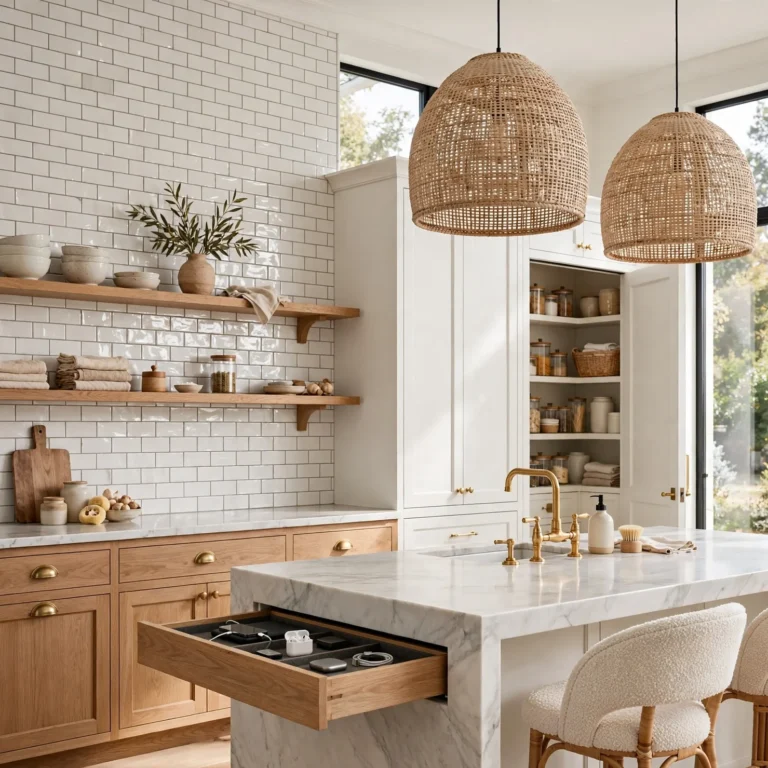
Pull-out spice racks, tray dividers, and pot-lid organizers built into the cabinet interior turn otherwise wasted vertical or awkward space into usable, accessible storage. These accessories are now commonly offered as add-ons through most semi-custom cabinet lines rather than requiring a fully custom cabinet shop. Prioritizing these organizers in high-traffic cabinets, like the ones nearest the stove or sink, produces the most noticeable day-to-day improvement in kitchen function.
9. Corner Cabinet Solutions
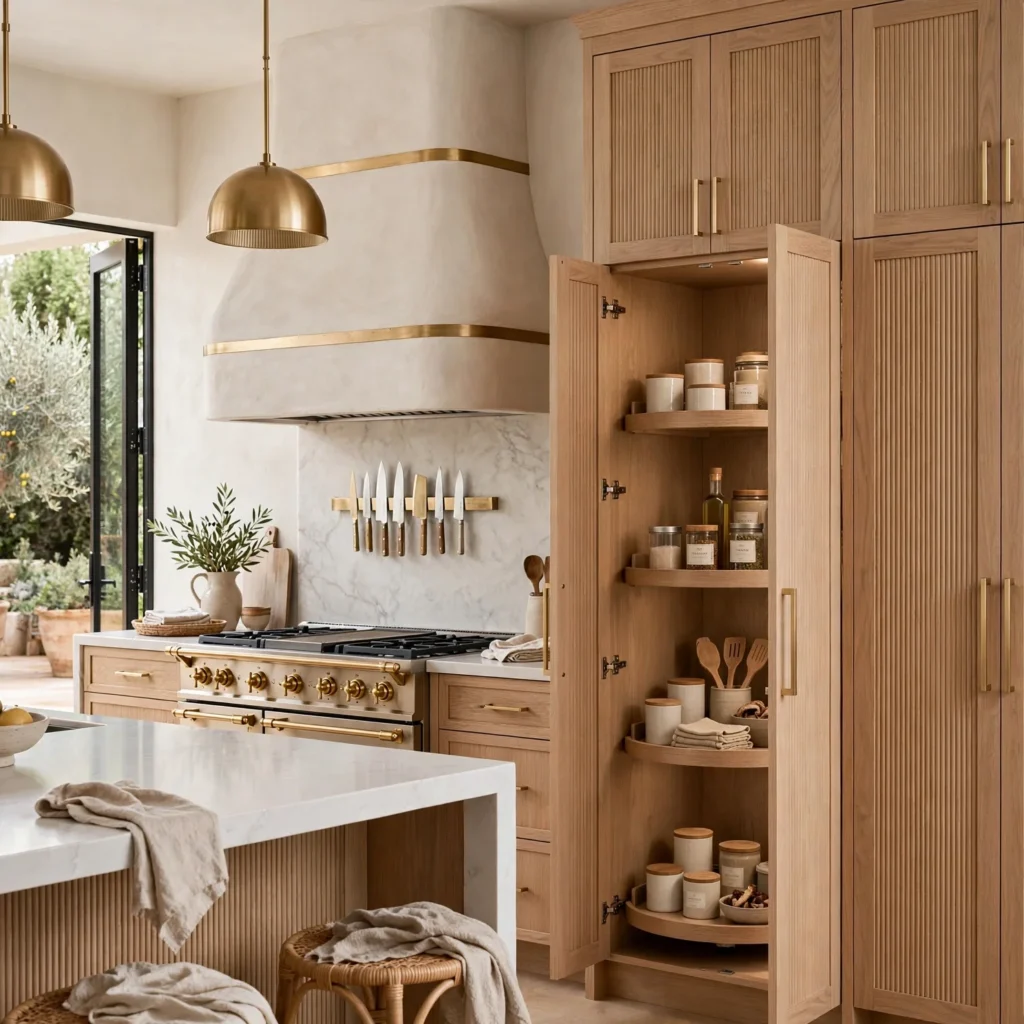
Diagonal or curved pull-out systems designed specifically for corner cabinets make use of space that standard shelving typically wastes, since a deep, dark corner cabinet is otherwise difficult to access fully. A lazy Susan is the most familiar version of this, though newer diagonal pull-out systems offer more complete access to the full depth of the corner. These units cost more per linear foot than standard cabinetry, but the reclaimed storage capacity usually justifies the added expense in a kitchen with limited overall footprint.
10. Floor-to-Ceiling Cabinetry
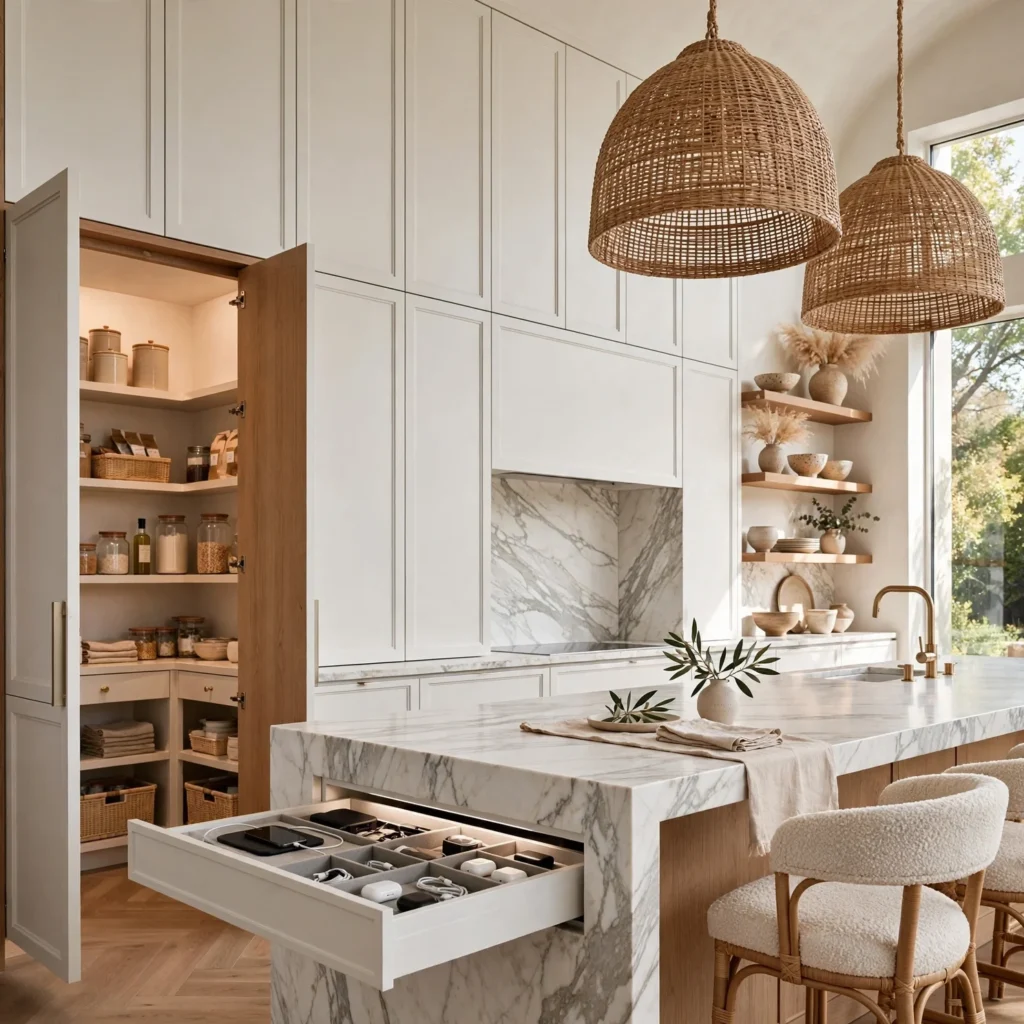
Extending cabinets all the way to the ceiling, rather than leaving an open gap above standard-height uppers, adds meaningful storage capacity without requiring any additional floor footprint. The topmost section is typically reserved for rarely used items, like large serving platters or seasonal cookware, since it requires a step stool to access comfortably. This approach also eliminates the dust-collecting gap above cabinets that’s common in kitchens with standard-height upper cabinetry.
11. Mixed Material Cabinet Fronts
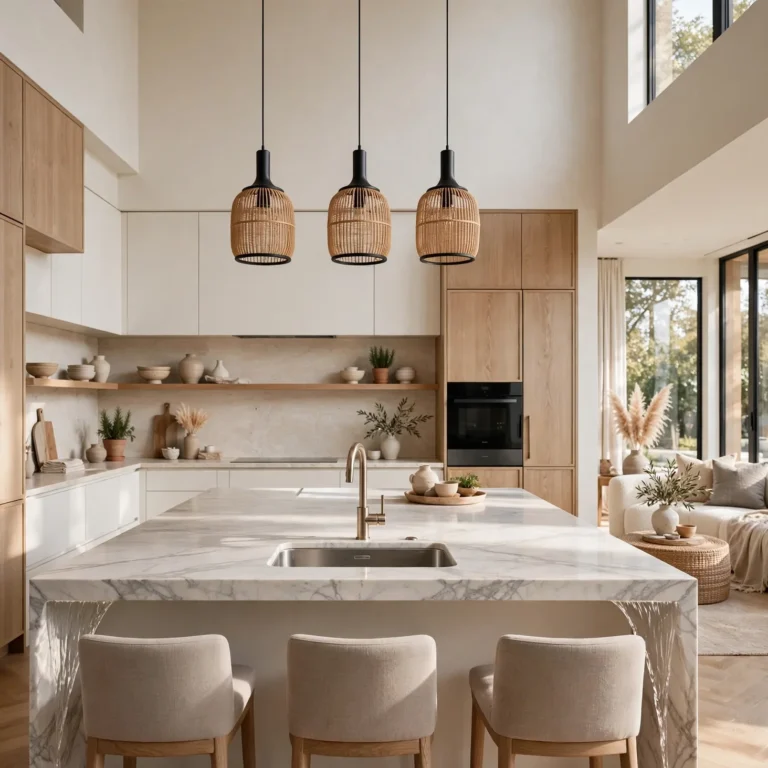
Combining a wood-toned cabinet material with a painted or lacquered finish elsewhere in the same kitchen, such as a walnut island against white painted perimeter cabinets, adds depth without requiring a fully custom cabinet order. This mixed approach has become more common as an alternative to painting an entire kitchen’s worth of cabinetry one uniform color. Keeping one material dominant and using the second as an accent, typically on the island or a single wall, produces the most balanced result.
12. Integrated Appliance Panels
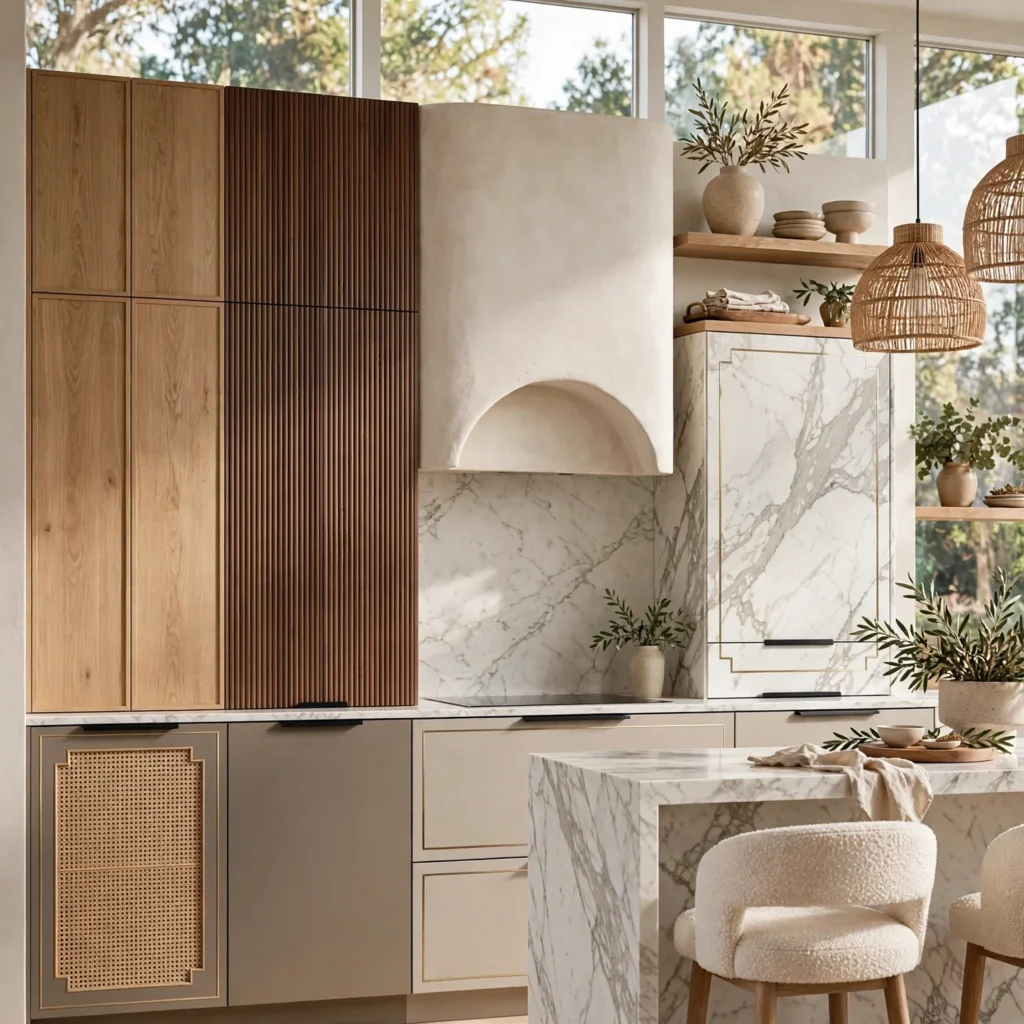
Panel-ready cabinet fronts that conceal a refrigerator, dishwasher, or wine column behind matching cabinetry removes the visual break between appliances and surrounding cabinet doors. This is a distinct design decision from the cabinet door style itself, since it requires ordering both the appliance and a separate panel kit sized to match. Budgeting for the panel kit separately from the appliance purchase is worth confirming early, since it’s not typically included with a standard appliance order.
Shop the Look
A semi-custom shaker cabinet line offers a versatile base that works with most of the finish and hardware ideas covered here. A walnut furniture-style island base pairs well with painted perimeter cabinetry for the mixed material approach. A finger-pull hardware kit gives an existing cabinet run a handleless look without a full cabinet replacement. Pull-out spice rack and tray divider inserts, sized to standard cabinet widths, add functional storage to an existing kitchen without new cabinetry at all.
Common Mistake to Avoid
A frequent mistake is choosing a cabinet door style and finish based purely on current trend photos without considering how it will hold up to the kitchen’s actual daily use, particularly around the stove and sink. High-gloss finishes show fingerprints and water spots more readily than matte finishes, and pale colors near a cooking zone require more frequent cleaning to stay looking fresh. Matching the finish choice to the household’s actual cooking habits prevents a beautiful cabinet order from becoming a maintenance burden.
FAQs
What is the most popular kitchen cabinet style right now?
Shaker-style cabinet doors remain the most requested profile because their simple, flat-panel design works across a wide range of kitchen aesthetics, from farmhouse to modern. Painted finishes in white, sage green, and navy are currently the most common colors, though natural wood stains have grown in popularity for a warmer look. Its versatility is largely why it has outlasted more ornate cabinet profiles that tend to date a kitchen more quickly.
Should kitchen cabinets match throughout the whole room?
Not necessarily, since two-tone schemes and mixed material cabinetry have become increasingly common alternatives to a single uniform cabinet color throughout the kitchen. A common approach pairs a distinct island finish, like a wood tone, against painted perimeter cabinetry, or splits upper and lower cabinets into two complementary colors. The main consideration is keeping the palette limited to two, or at most three, finishes so the room doesn’t feel visually scattered.
Are handleless cabinets practical for everyday use?
Handleless cabinets, using either a routed finger-pull groove or a push-to-open mechanism, work well for everyday use once the household adjusts to the slightly different opening motion compared to a standard pull. Push-to-open mechanisms do require a bit more mechanical upkeep over time compared to a standard hinge and knob setup. This style is most popular in modern or minimalist kitchens where visible hardware would otherwise interrupt the cabinetry’s clean lines.
How much does custom cabinet detailing like fluting add to the cost?
Fluted or reeded cabinet panels typically cost more per linear foot than a standard flat shaker door, since the detailing requires additional milling work regardless of whether it’s done through a custom shop or a semi-custom line offering the option. Because of this added cost, fluting is usually applied selectively, such as on an island front or a single accent section, rather than across an entire kitchen’s cabinetry. This keeps the design impact high while limiting the overall budget increase.
What interior cabinet organizers are worth prioritizing in a renovation?
Pull-out spice racks, tray dividers for baking sheets, and corner cabinet solutions like diagonal pull-outs tend to deliver the most noticeable day-to-day improvement in kitchen function. Prioritizing these accessories in the cabinets nearest the stove and sink, where they get used most often, produces a more immediate impact than adding them throughout every cabinet in the kitchen. Most semi-custom cabinet lines now offer these as standard add-on options rather than requiring a fully custom cabinet order.
Conclusion
Kitchen cabinet design ultimately shapes the character of the entire room, which is why door style, finish, and interior organization deserve as much planning attention as any other part of a renovation. Save this guide to Pinterest for your next project, and check out our related post on kitchen design ideas for finishes and layouts that pair well with your cabinetry choice.