12 Trending Classic Kitchen Design Ideas That Never Date
Classic kitchen design draws on details that have stayed consistent for decades, like raised-panel cabinetry, farmhouse sinks, and natural stone counters, rather than chasing whatever finish happens to be trending this year. It’s a style built around warmth, symmetry, and craftsmanship-forward details, appealing to homeowners who want a kitchen that will still look right in fifteen years rather than needing a refresh in five. This guide covers twelve ideas that define classic kitchen design, from cabinetry profiles to lighting choices that reinforce the traditional aesthetic.
Trend & Background
Interest in classic kitchen design has held steady even as more modern and minimalist styles have dominated design media, particularly among homeowners renovating older or historic homes where a stark modern kitchen would feel out of place architecturally. Cabinet manufacturers have continued to offer raised-panel and inset door options specifically to serve this demand, alongside farmhouse sink and furniture-style hardware lines that support the look. This consistency has made classic kitchen design one of the more resale-friendly styles, since it tends to appeal across a broader range of buyers than a highly trend-specific look.
Key Takeaways
- Classic kitchen design in 2026 draws from traditional profiles like raised-panel cabinetry and farmhouse sinks rather than trend-driven finishes.
- Warm wood tones, natural stone, and brass or oil-rubbed bronze hardware remain the defining materials of this style.
- Symmetry and proportion matter more in classic design than in modern kitchens, where asymmetry is often embraced.
- Classic doesn’t mean dated; many current renovations pair traditional details with updated appliances and functional layouts.
1. Raised-Panel Cabinet Doors
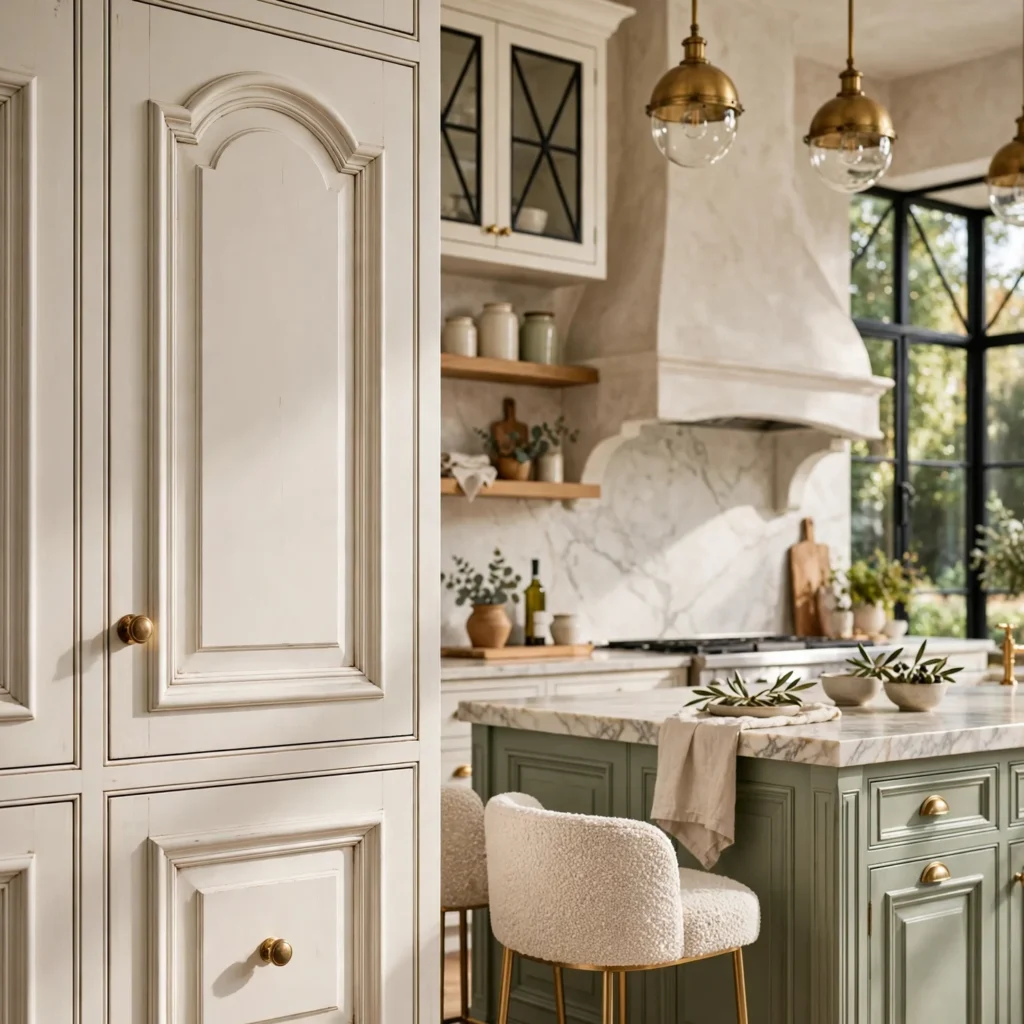
Raised-panel doors, with their carved, dimensional center panel and traditional profile, are the clearest visual marker of classic kitchen design, distinguishing it from the flat shaker doors common in transitional kitchens. This profile works especially well in painted finishes like cream, soft white, or sage green, which highlight the panel’s dimensional detail without overwhelming it with a busy wood grain. Solid wood construction, typically maple or cherry, holds the carved profile more cleanly over time than an MDF substitute.
2. Farmhouse Apron Sink
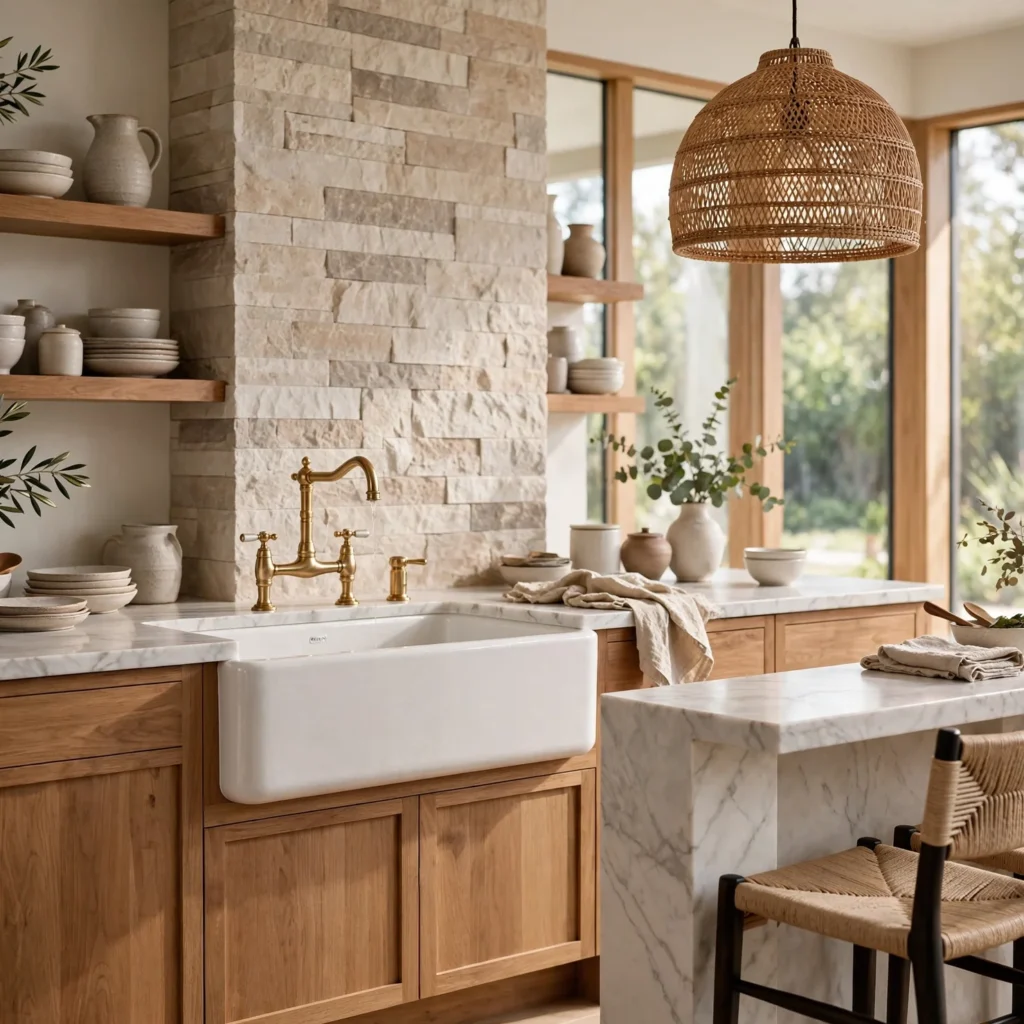
A farmhouse sink, with its exposed front apron extending past the cabinet face, is one of the most recognizable fixtures in classic kitchen design, offering both a traditional look and a noticeably deeper basin than a standard undermount sink. Fireclay and cast iron are the most common materials, both chosen for their durability against daily scratching and staining. Installing this sink requires cabinetry built specifically to accommodate the exposed apron front, so it’s not a simple drop-in replacement for an existing cabinet run.
3. Furniture-Style Hutch Cabinet
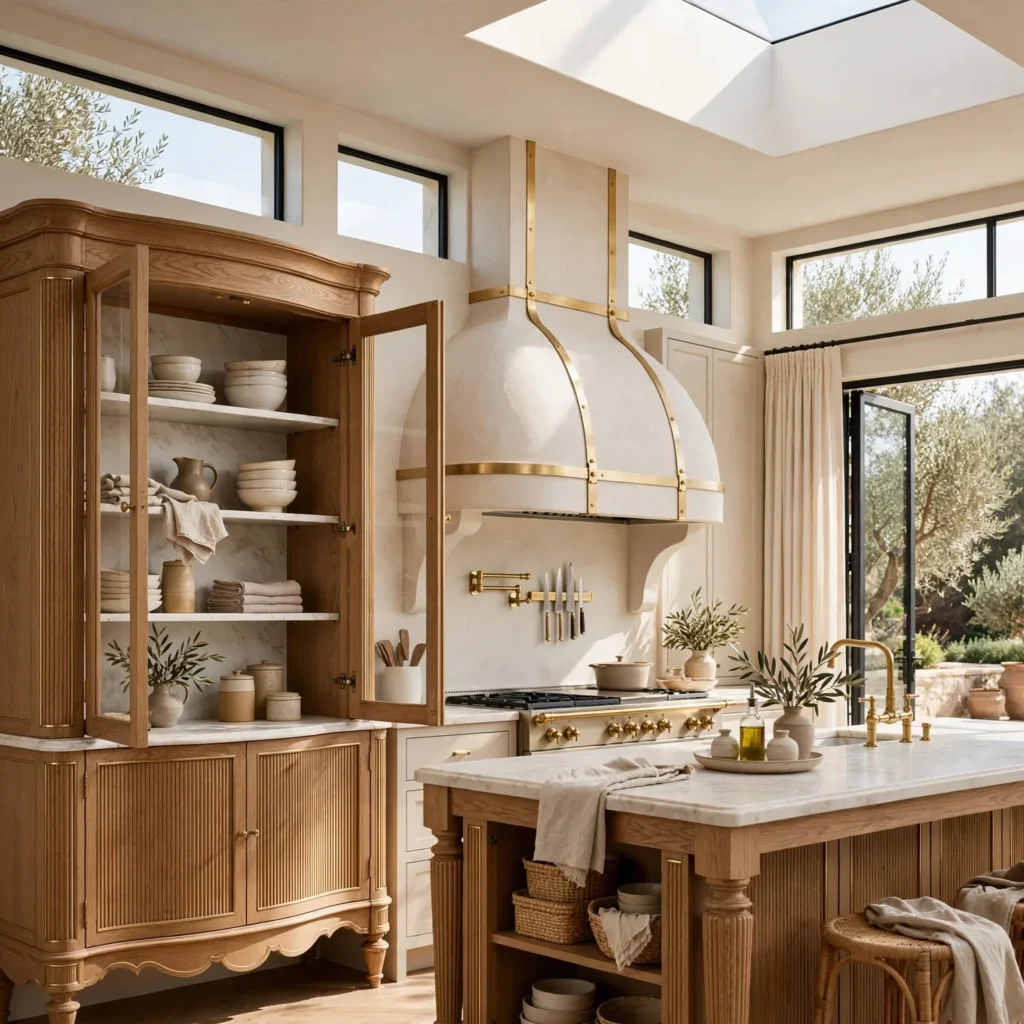
A built-in hutch, styled to resemble a freestanding furniture piece with glass-front upper doors and open plate racks, brings a dining-room level of craftsmanship into the kitchen for displaying china or serving pieces. It’s typically positioned along a dedicated wall rather than integrated into the main working cabinet run, giving it visual separation as a distinct feature. This detail works particularly well in kitchens with a connected breakfast nook or dining area, since it echoes traditional dining room furniture.
4. Natural Stone Countertops
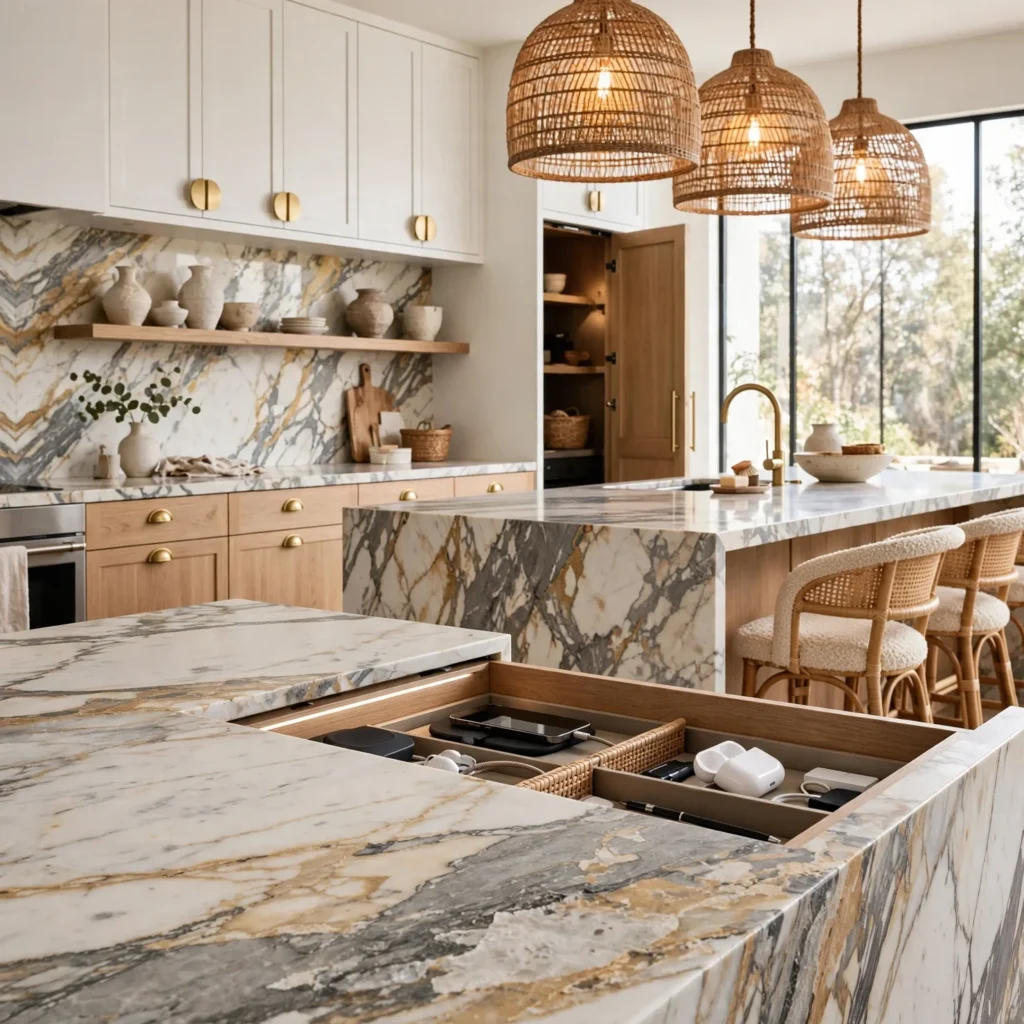
Honed or polished marble and granite remain the defining countertop materials for classic kitchen design, chosen for both their timeless veining patterns and their historical association with traditional kitchen construction. Granite offers more day-to-day durability against scratching and staining, while marble delivers the softer, more classic veining most associated with this style. Both require periodic sealing to maintain their appearance, which is a maintenance tradeoff worth discussing before committing to either material.
| Material | Sealing Frequency | Best For |
| Marble | Every 6–12 months | Low-traffic counters |
| Granite | Every 1–2 years | High-traffic prep zones |
5. Brass or Oil-Rubbed Bronze Hardware
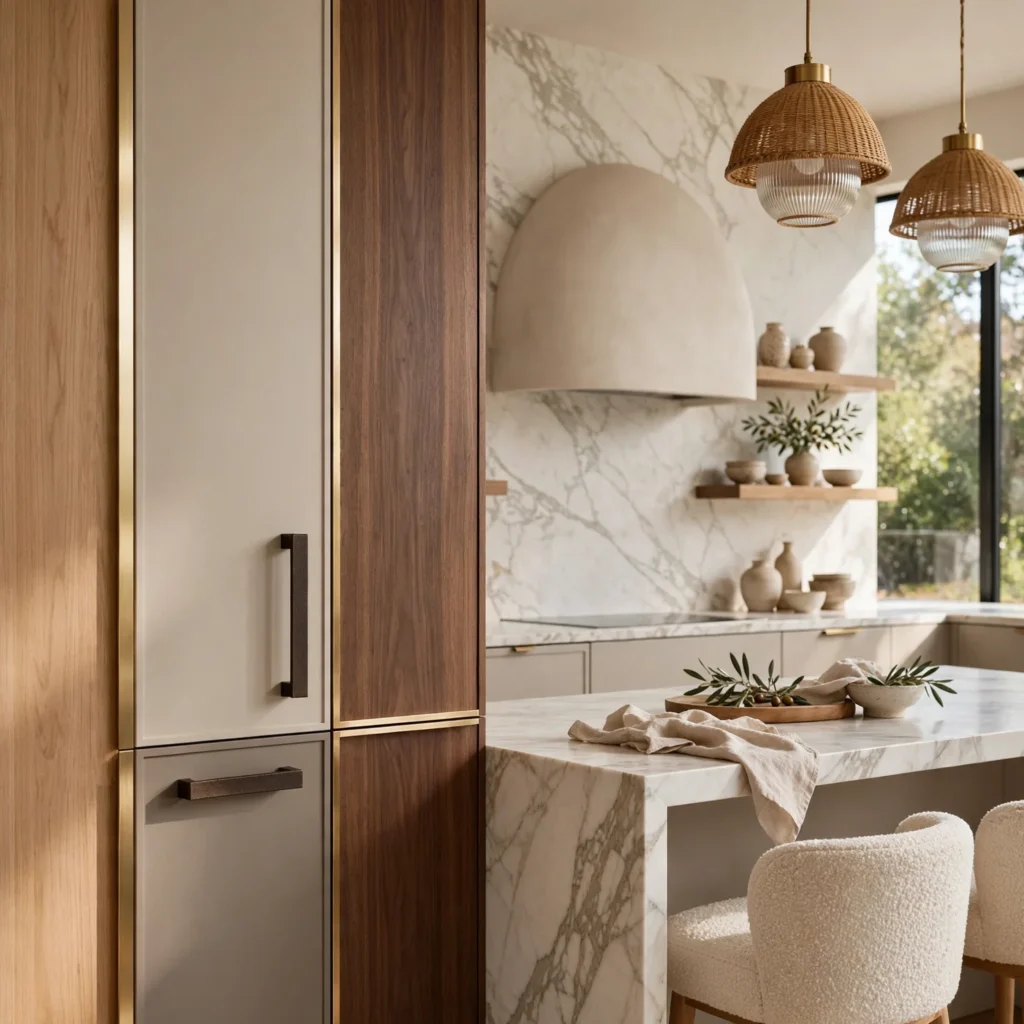
Cabinet pulls, knobs, and faucet fixtures finished in brass or oil-rubbed bronze reinforce the warm, traditional character central to classic kitchen design, standing in contrast to the matte black and brushed nickel finishes common in more modern kitchens. These finishes develop a soft patina over years of use, which is generally viewed as part of their appeal rather than a flaw to avoid. Committing to one metal finish throughout the kitchen, rather than mixing several, keeps the traditional look cohesive.
Looking for more inspiration? Browse our collection of kitchen island designs to discover stylish layouts, smart storage solutions, and timeless designs.
6. Beadboard Paneling
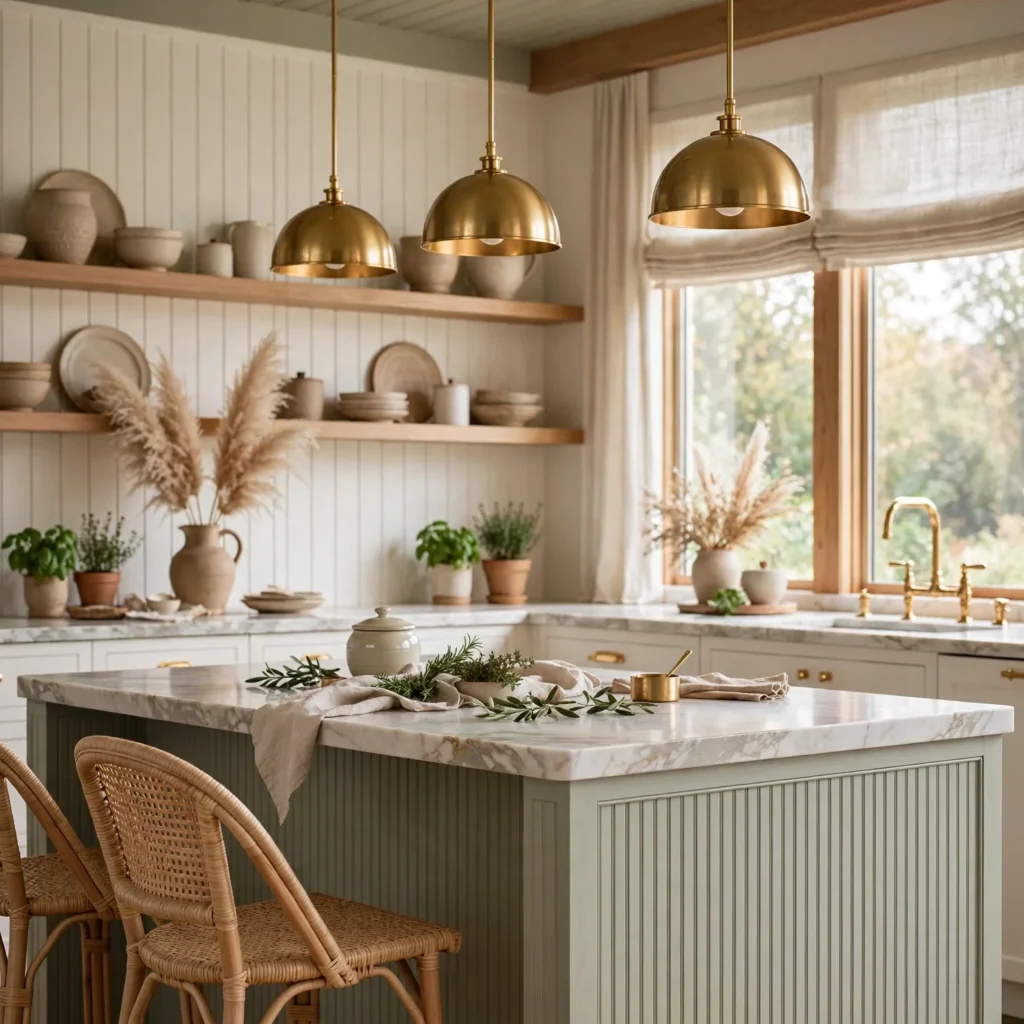
Beadboard, with its narrow vertical grooves, commonly appears on a kitchen island base, a lower cabinet run, or a ceiling detail, adding a traditional textural element that’s distinct from flat painted surfaces. It’s especially common in cottage or farmhouse-adjacent classic kitchens, where it reinforces the overall handcrafted feel of the room. Painting beadboard the same color as surrounding trim, rather than a contrasting tone, keeps the detail subtle rather than overly rustic.
7. Coffered or Beamed Ceiling
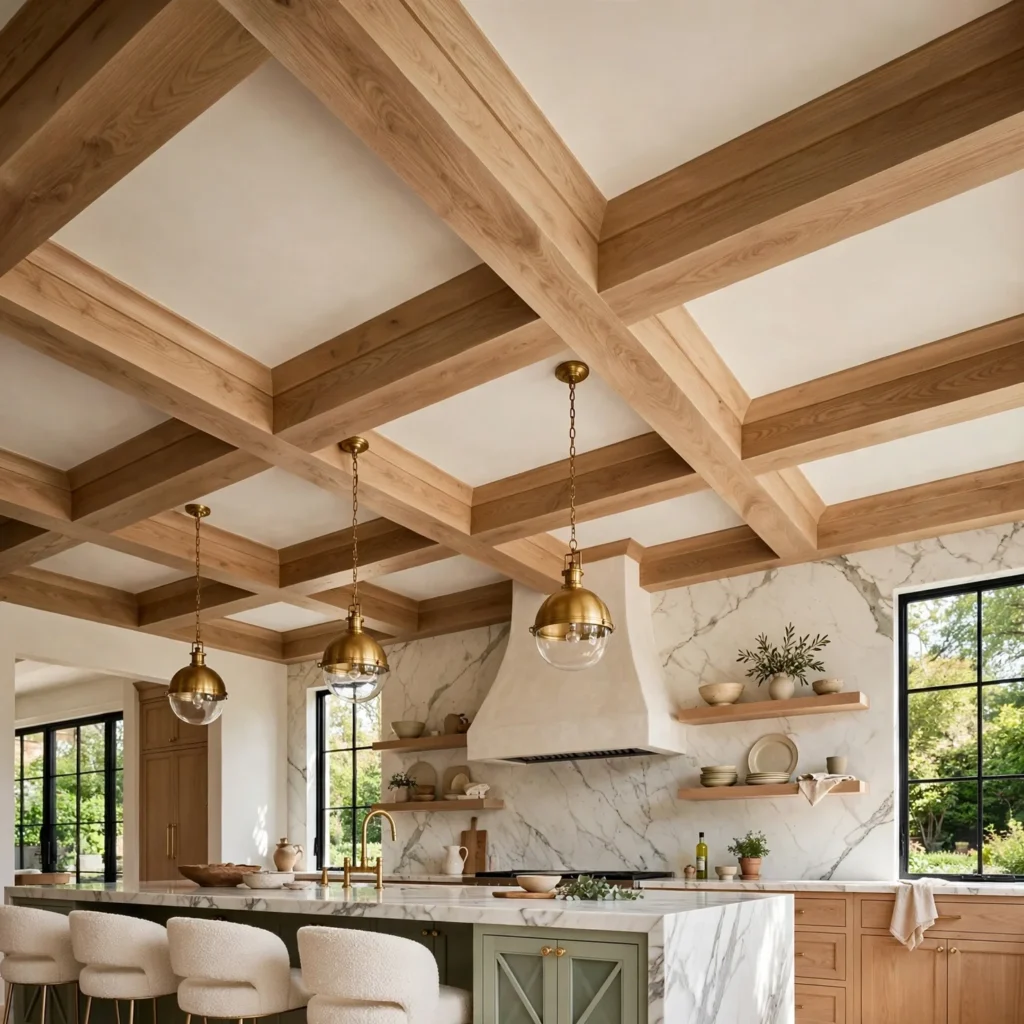
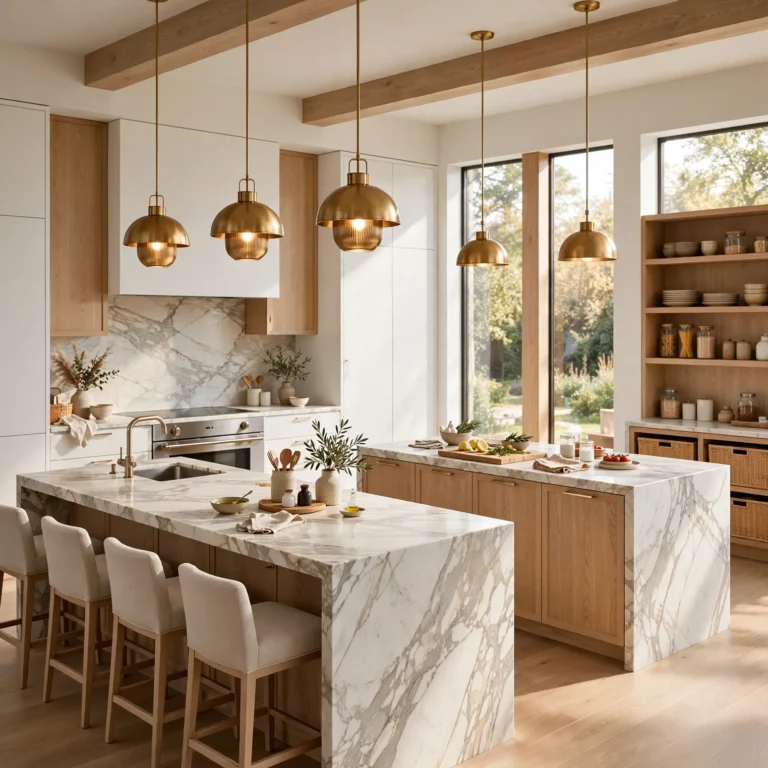
A coffered ceiling, with its grid of recessed panels framed by wood trim, or a simpler exposed wood beam treatment, adds architectural weight overhead that’s characteristic of classic kitchen design in larger, higher-ceilinged rooms. This detail works best in kitchens with at least 9 feet of ceiling height, since a coffered grid can make a lower ceiling feel more compressed rather than more distinguished. Painting the coffers a soft white or cream, matching the surrounding trim, keeps the detail from feeling too heavy in an all-white kitchen.
8. Turned Wood Island Legs
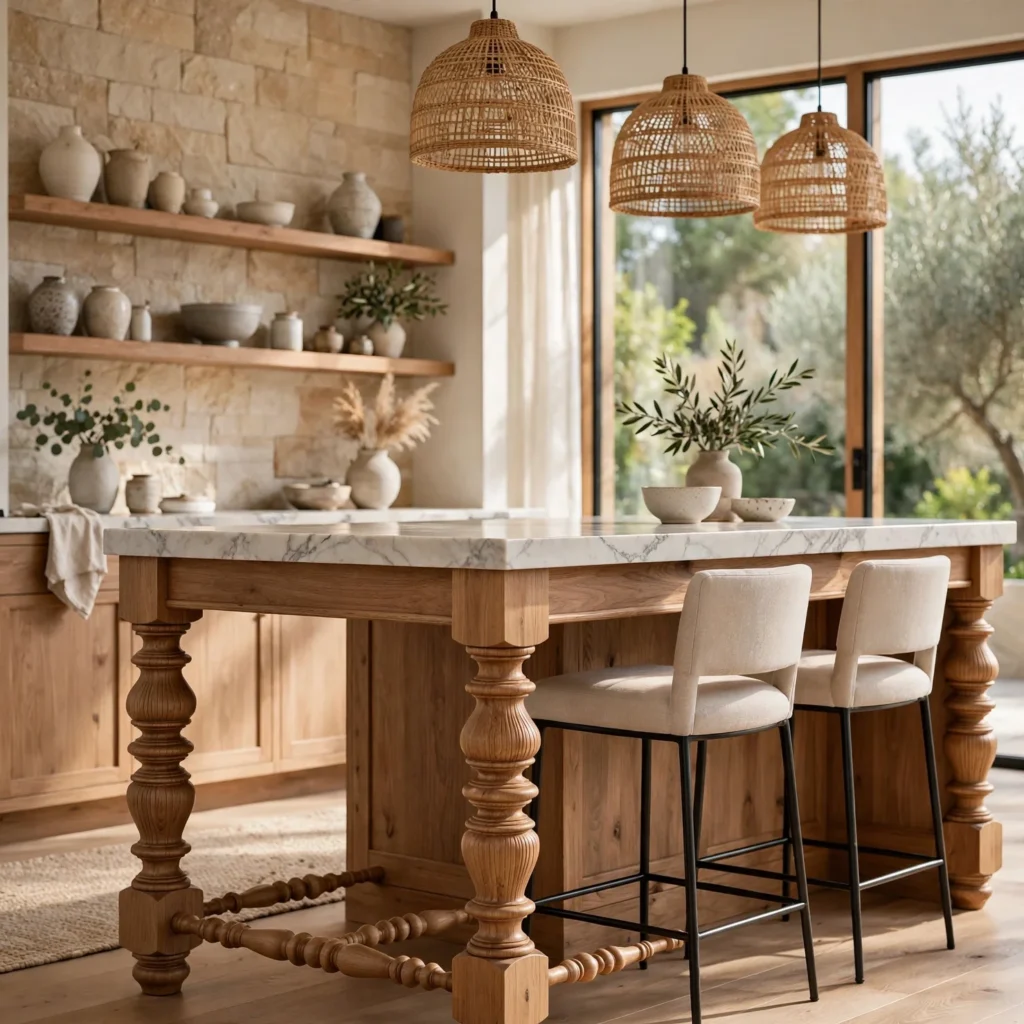
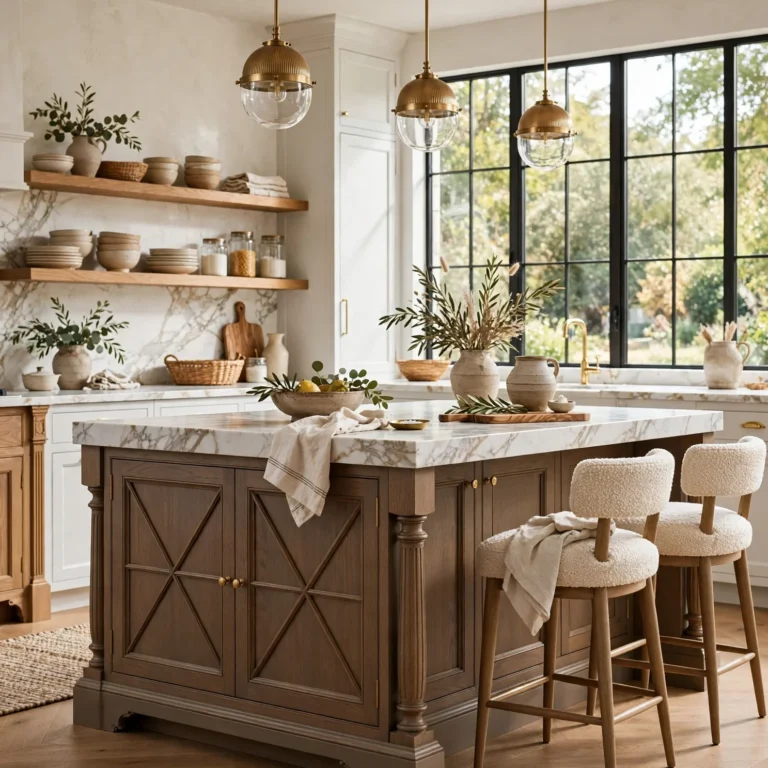
Turned, tapered wood legs supporting the island, rather than a flush cabinet base, bring the furniture-style detailing central to classic design directly into the room’s most functional piece. This detail is typically paired with an open shelf between the legs, further reinforcing the freestanding furniture look rather than a built-in cabinet appearance. Solid maple or cherry legs, stained or painted to match the surrounding cabinetry, are the most common choice for this detail.
9. Multi-Pane Cabinet Glass
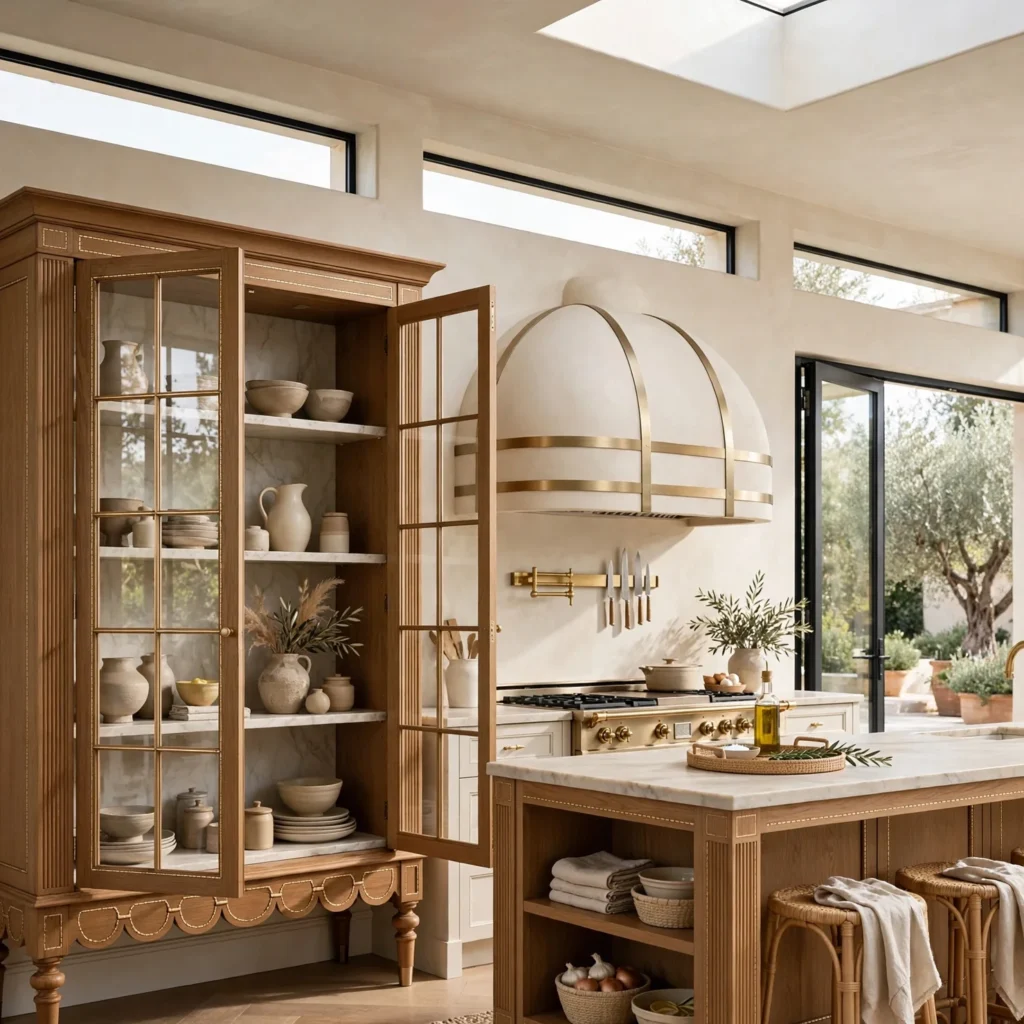
Cabinet doors with multiple small glass panes, divided by thin wood mullions, rather than a single large glass pane, echo the window styles common in traditional and colonial-era homes. This detail is typically reserved for a hutch, a corner cabinet, or a small section of upper cabinetry rather than the entire kitchen, since the mullion pattern adds significant visual detail. It pairs particularly well with a curated display of white or cream dishware behind the glass.
10. Classic Subway Tile Backsplash
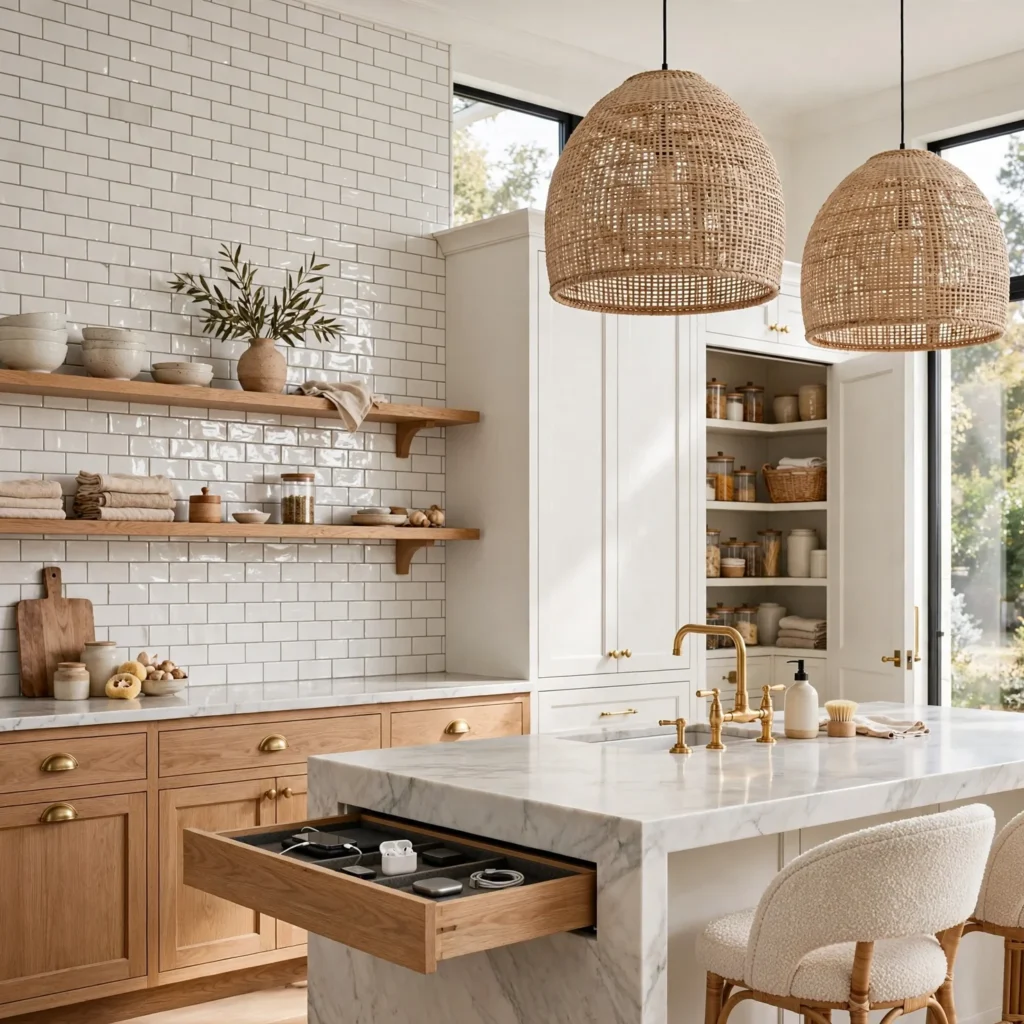
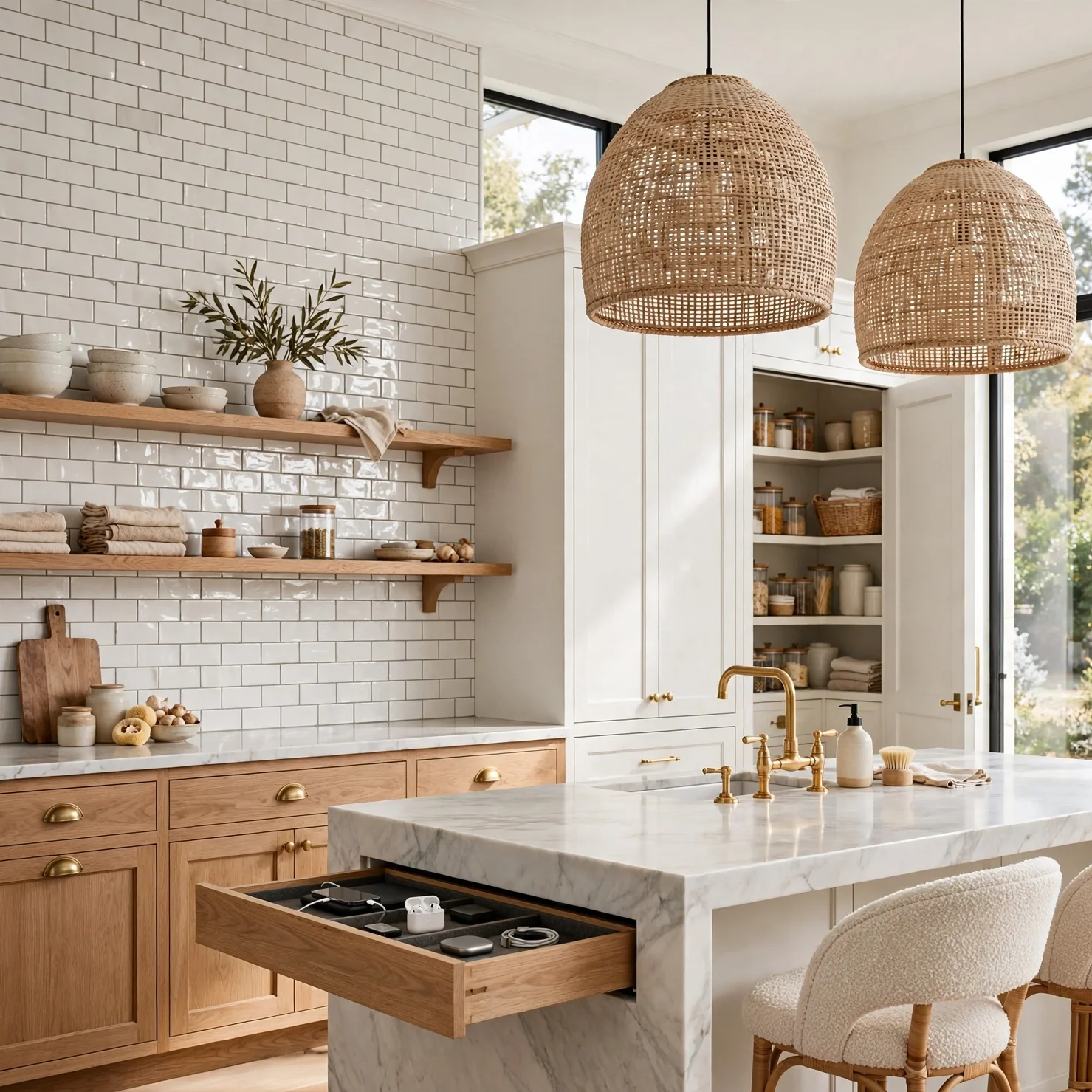
A white subway tile backsplash, laid in the traditional running-bond brick pattern with contrasting grout, remains one of the most enduring classic kitchen details, having stayed in continuous use since its earliest kitchen and bathroom applications. Ceramic subway tile in a 3-by-6-inch size is the standard choice, offering a clean, historically accurate look without the higher cost of handmade tile. This detail pairs well with nearly every classic cabinet color, from white to sage to navy.
11. Decorative Range Hood Surround
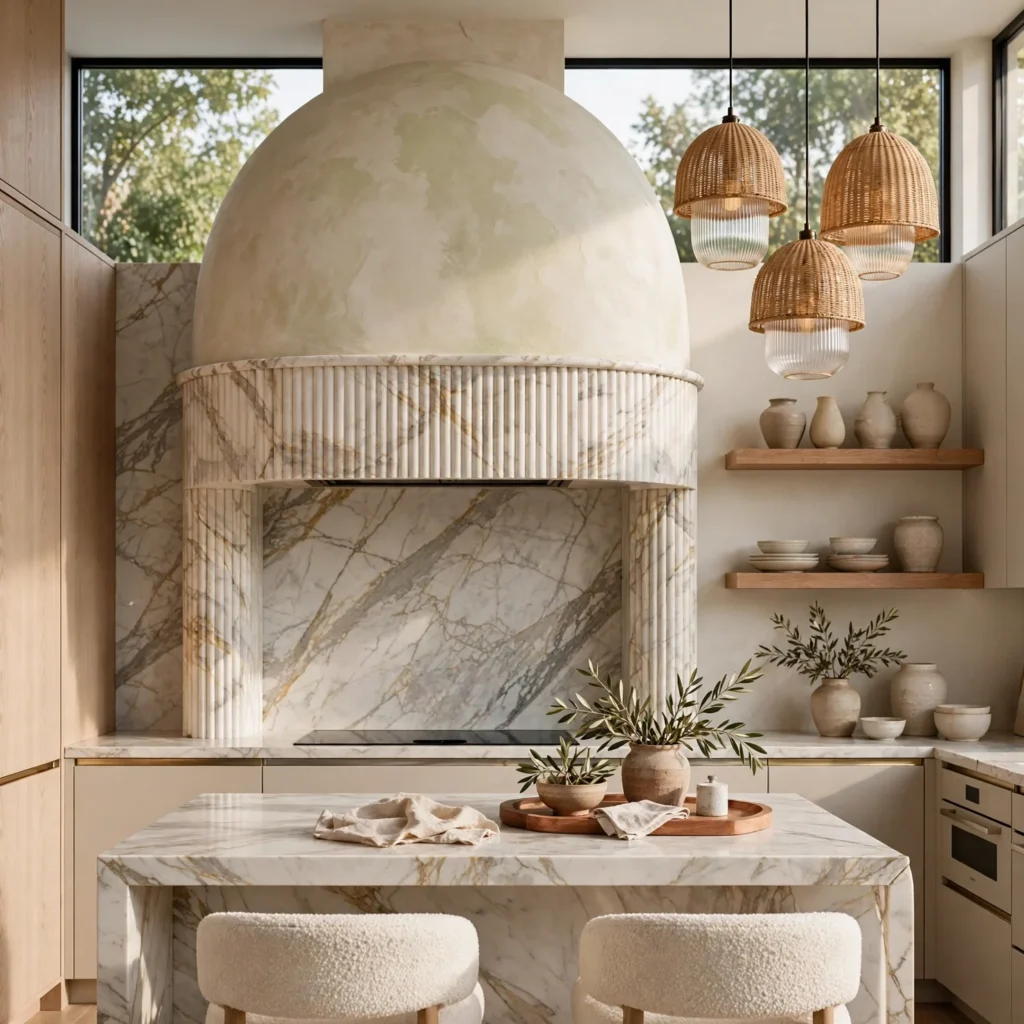
A plaster or wood-paneled range hood surround, often shaped with a gentle arch or curved silhouette, treats the cooking area as an architectural focal point rather than a purely functional appliance housing. This detail commonly incorporates decorative corbels or trim molding that matches the room’s existing millwork. It works particularly well in kitchens with generous ceiling height, since the surround typically extends higher than a standard stainless hood would.
12. Warm Wood Flooring
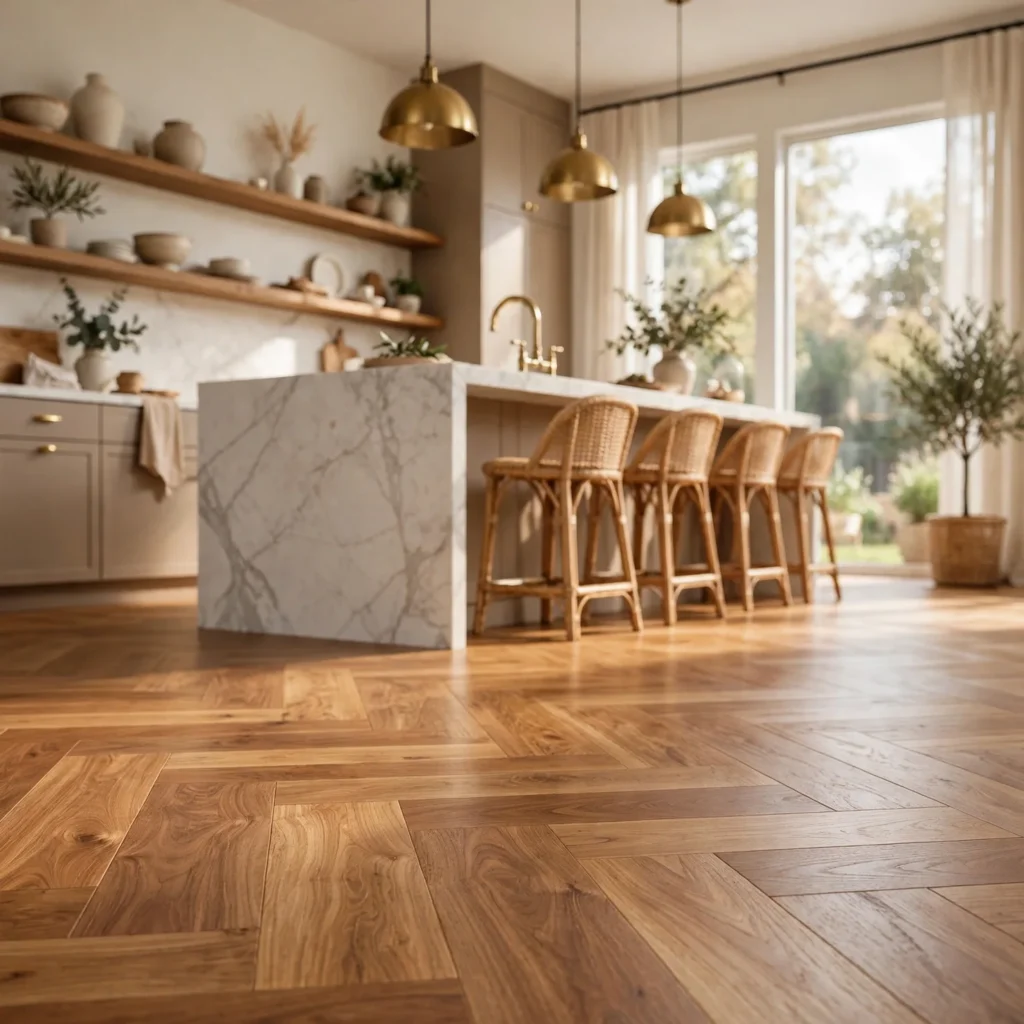
Traditional hardwood flooring, in oak or maple with a warm stain rather than a gray or whitewashed finish, reinforces the overall warmth central to classic kitchen design. Wide-plank flooring in a matte or satin finish is currently the most requested option, offering a slightly more relaxed traditional look than a narrow, high-gloss plank. Area rugs in a traditional pattern, placed in a sink or breakfast nook zone, add further warmth without covering the full floor.
Shop the Look
A fireclay farmhouse apron sink anchors the classic look at the kitchen’s main workstation. A raised-panel cabinet line in a solid maple or cherry substrate supports the carved door profile central to this style. A brass or oil-rubbed bronze hardware set, covering pulls, knobs, and faucet, ties the metal finish together throughout the room. A traditional 3-by-6-inch ceramic subway tile completes the backsplash in a historically accurate, versatile pattern.
Common Mistake to Avoid
A common mistake in classic kitchen design is overloading the room with too many traditional details at once, such as raised-panel cabinetry, a coffered ceiling, and multi-pane glass all in the same kitchen, which can start to feel busier than intended rather than cohesively traditional. Choosing two or three defining details, rather than every classic element available, tends to produce a more balanced, considered result. Restraint in a classic kitchen matters just as much as it does in a more minimalist design.
FAQs
What defines classic kitchen design compared to traditional or farmhouse styles?
Classic kitchen design overlaps significantly with both traditional and farmhouse styles, generally referring to raised-panel cabinetry, natural stone counters, and warm wood tones without leaning as heavily into the more rustic details, like exposed beams or reclaimed wood, associated with farmhouse specifically. It’s best understood as a broad umbrella term for timeless, non-trend-driven kitchen design rather than a narrowly defined style category. The distinctions between these related styles often come down to degree rather than fundamentally different elements.
Is classic kitchen design good for resale value?
Classic kitchen design tends to appeal to a broader range of buyers than a highly specific trend-driven style, since its timeless materials and details don’t read as dated the way a very of-the-moment finish choice might a decade later. Real estate agents often cite neutral, quality materials like natural stone and solid wood cabinetry as safer renovation investments for this reason. That said, resale value always depends significantly on the local market and comparable homes in the area.
Can classic kitchen design work in a modern home?
Yes, though it requires more intentional detailing to avoid feeling mismatched against a modern home’s existing architecture, often by simplifying some classic elements rather than including every traditional detail available. A raised-panel cabinet paired with simpler, cleaner hardware and lighting can bridge the two styles more successfully than combining every classic element at full intensity. Many current renovations blend classic cabinetry with more streamlined lighting and appliance choices for this reason.
What’s the most cost-effective way to achieve a classic kitchen look?
A subway tile backsplash paired with brass or oil-rubbed bronze hardware delivers a strong classic look for a relatively modest cost compared to full cabinetry replacement or a coffered ceiling. Painting existing cabinetry a warm classic color, like cream or sage green, and swapping hardware can transform a kitchen’s character without a full renovation. These smaller updates are typically the first recommended steps for anyone wanting the classic aesthetic on a limited budget.
Do classic kitchens require natural stone counters?
Natural stone isn’t strictly required, though marble and granite are the most historically associated materials with this style and remain the most requested choices among homeowners pursuing a classic look. Engineered quartz with a marble-look pattern offers a lower-maintenance alternative that still supports the overall aesthetic. The choice ultimately comes down to how much stone maintenance, like periodic sealing, the household is willing to take on.
Conclusion
Classic kitchen design endures because it favors timeless materials and proportions over passing trends, giving homeowners a kitchen that holds up visually well beyond a typical renovation cycle. Save this guide to Pinterest for your next project, and check out our related post on kitchen cabinet design for more traditional door style options.