16 Trending Green Bathroom Ideas That Instantly Make Your Bathroom Feel Luxurious
Green has become one of the most popular colors for a bathroom refresh, offering a calm, natural feel without the starkness of an all-white space or the risk of a bolder, less flexible hue. This guide breaks down sixteen distinct green bathroom ideas, from a soft, muted sage to a dramatic deep forest green, each with real paint and tile names, hex codes, and pairing notes so you can move from inspiration to an actual sample in your own space. Whether you’re refreshing a powder room or a full primary bathroom, there’s a specific shade and styling direction here suited to your room’s size and light.
Trend & Background
Green bathrooms have grown alongside a broader interest in biophilic design, bringing natural, plant-inspired colors and materials into spaces that have traditionally leaned heavily on white and gray. Green in particular photographs and lives especially well in a bathroom, since the color pairs naturally with both warm brass fixtures and cooler chrome, giving it more flexibility than many other bold color choices. Zellige and other handmade tile finishes have also driven renewed interest in green specifically, since the color’s natural variation looks especially rich when applied across a textured, irregular tile surface rather than a flat painted wall alone.
Key Takeaways
- Sixteen shades and styling approaches ranging from soft sage to deep forest green tile and vanity color
- Hex codes and popular paint or tile names are included so you can bring an exact reference to a showroom
- A reference table covers fixture finish pairing so a green bathroom reads as cohesive rather than piecemeal
- Five FAQs cover resale value, small bathroom sizing, and keeping a bold green from feeling dark
1. Green Bathroom Ideas Sage Vanity
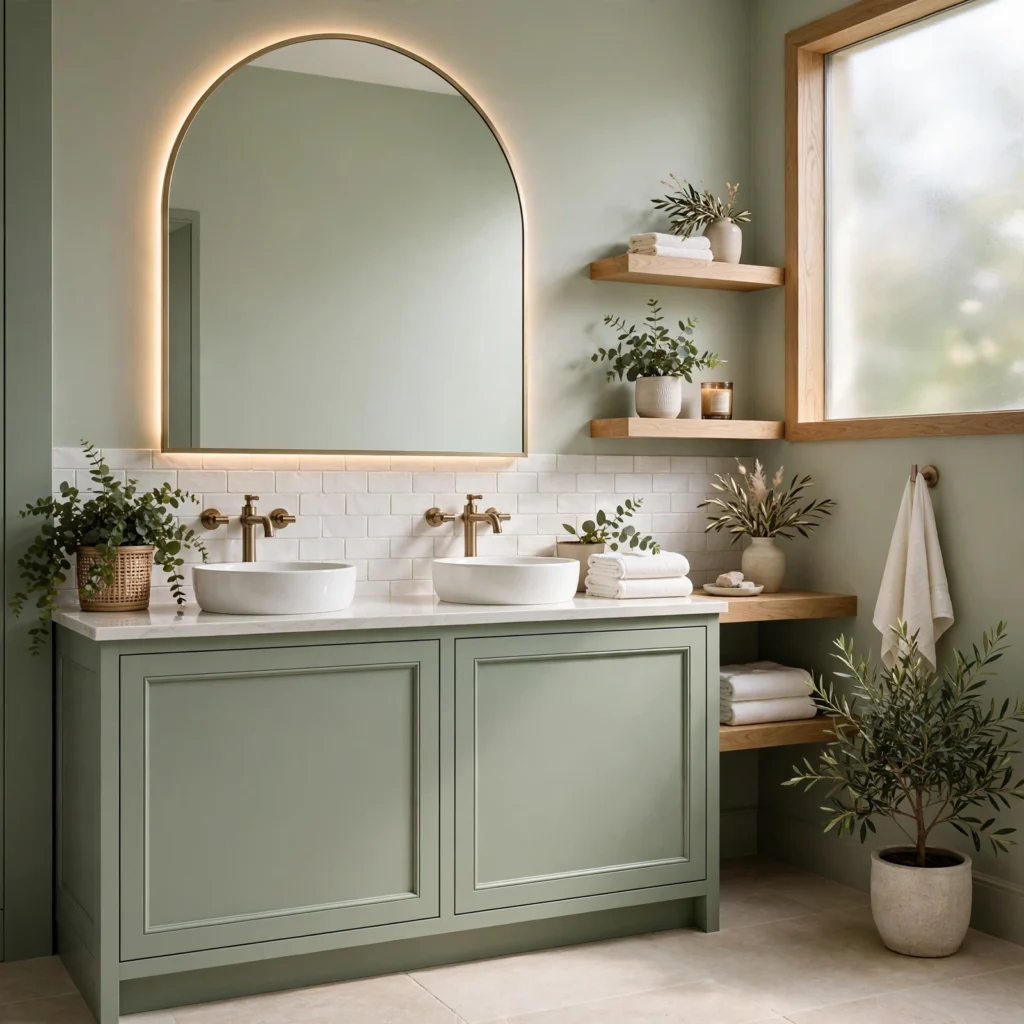
A soft, muted sage green vanity, paired with white walls and a simple white or marble countertop, introduces color in a way that feels calm and easy to live with rather than a bold, high-commitment statement. Sage works particularly well on shaker-style vanity cabinetry, since the simple recessed panel profile lets the color read clearly without competing with additional detail. Benjamin Moore’s “Saybrook Sage” or Sherwin-Williams’ “Evergreen Fog” both fall into this muted sage family and pair well with either brass or nickel hardware depending on the room’s other finishes.
| Green Shade Family | Best Fixture Finish | Overall Feel |
| Sage, soft green | Brass or brushed nickel | Calm, versatile |
| Emerald, jewel tone | Brass, gold | Rich, formal |
| Forest, deep green | Matte black, aged bronze | Moody, dramatic |
2. Emerald Green Powder Room
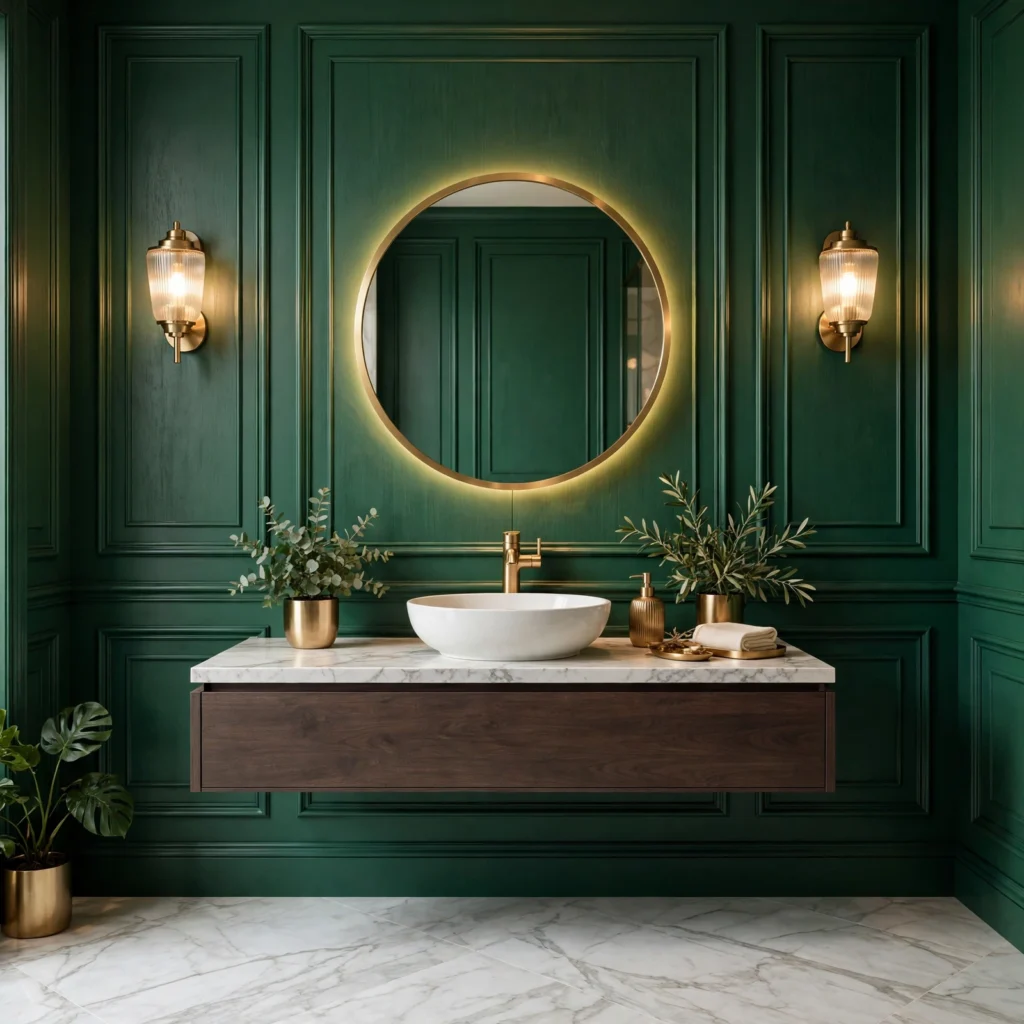
A deep, saturated emerald green on the walls of a smaller powder room delivers real drama without the commitment risk of applying the same bold color to a full primary bathroom used daily. This approach works especially well in a powder room specifically because the smaller footprint means the room reads as intentionally rich rather than overwhelming, and it’s typically the least expensive room in the house to fully repaint if needed later. Sherwin-Williams’ “Emerald” or Benjamin Moore’s “Essex Green” both work well in this jewel-toned emerald family, particularly paired with brass fixtures and a statement mirror.
3. Green Zellige Tile Shower
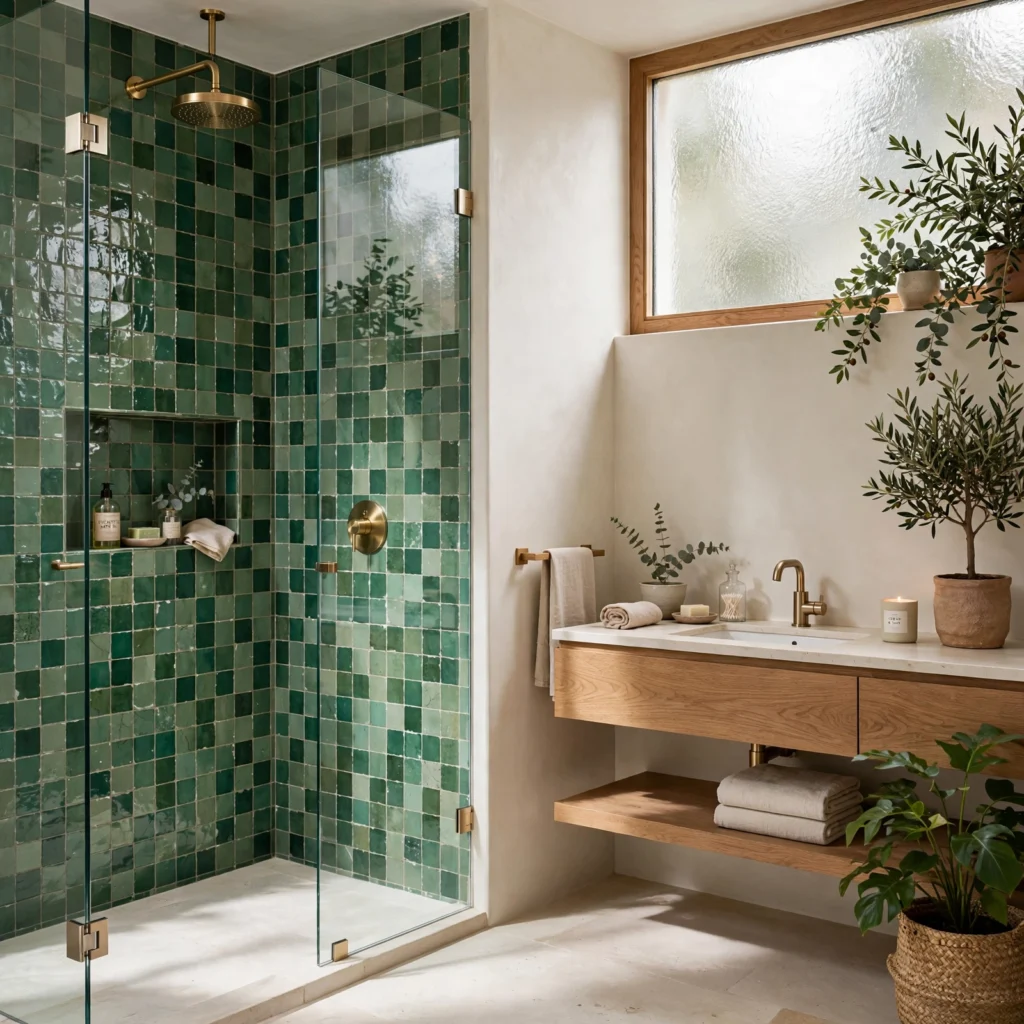
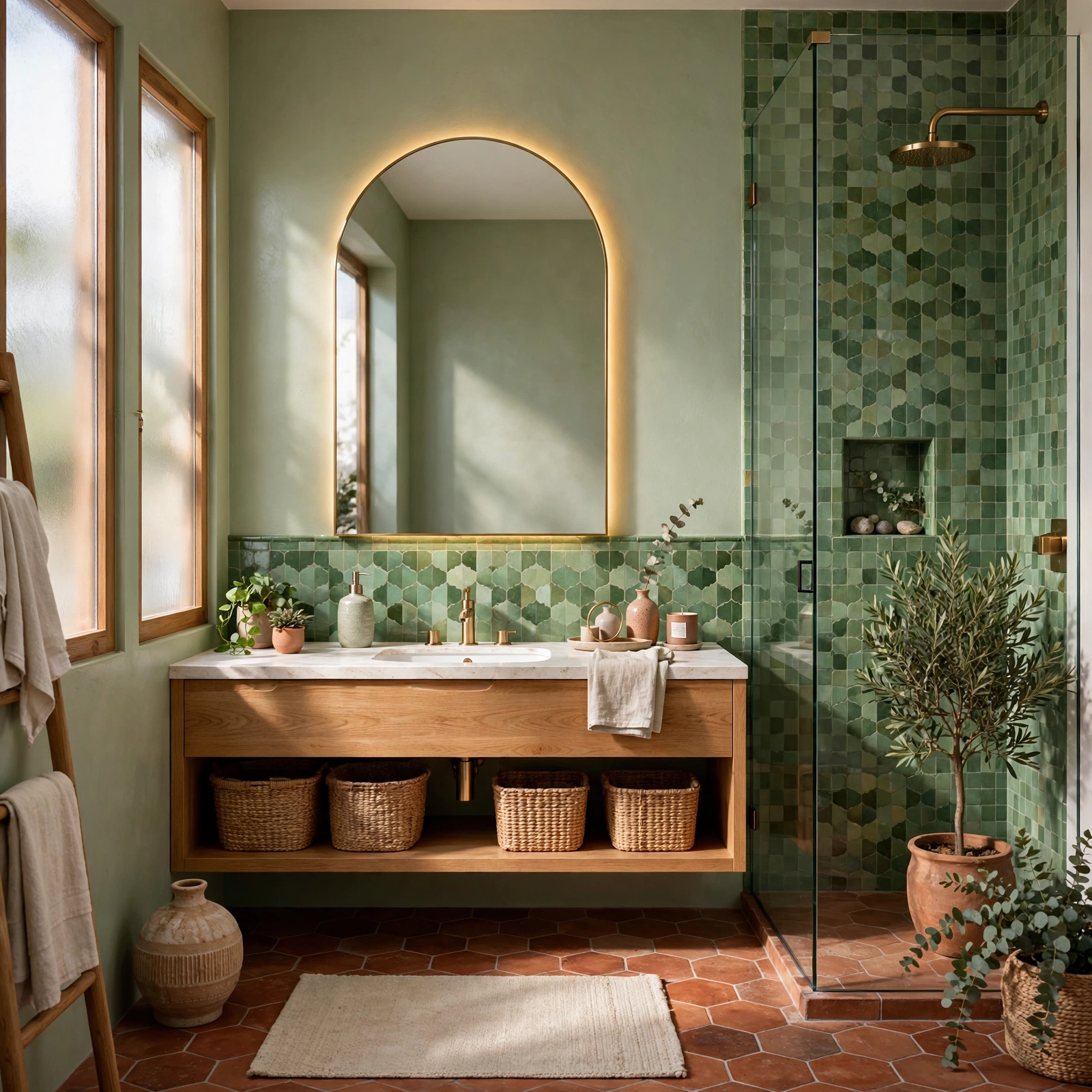
Handmade green zellige tile, with its natural variation in tone and slightly irregular surface, adds texture and depth to a shower wall that a flat, uniform tile simply can’t replicate. This tile works especially well as a full shower surround, letting the natural color variation between individual tiles create visual movement across the wall. Pair with simple white grout and a matte black or brass shower fixture, since the tile’s texture and color variation already provide plenty of visual interest without needing additional pattern elsewhere in the shower.
In order to see more bathroom design ideas CLICK HERE
4. Olive Green Bathroom Cabinetry
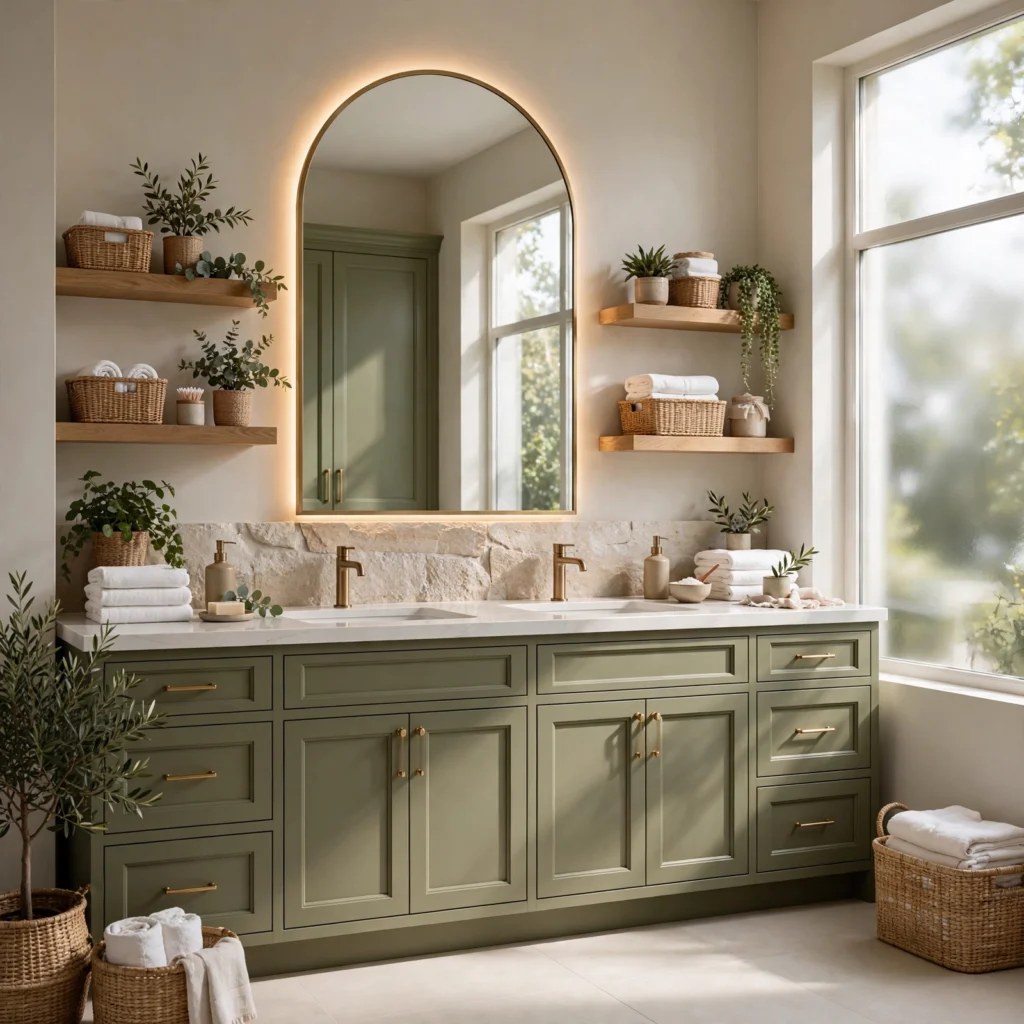
Olive green, a muted, slightly brownish-green shade, suits a bathroom vanity or built-in cabinetry wanting an earthy, grounded feel rather than a brighter, more saturated green. This shade pairs naturally with warm wood accents, unlacquered brass hardware, and a cream or warm white wall color, since the combined warmth throughout reinforces the olive’s own undertone. Farrow & Ball’s “Bancha” or Sherwin-Williams’ “Roycroft Bottle Green” both work well in this olive-adjacent family for bathroom cabinetry specifically.
5. Two-Tone Green and White Bathroom
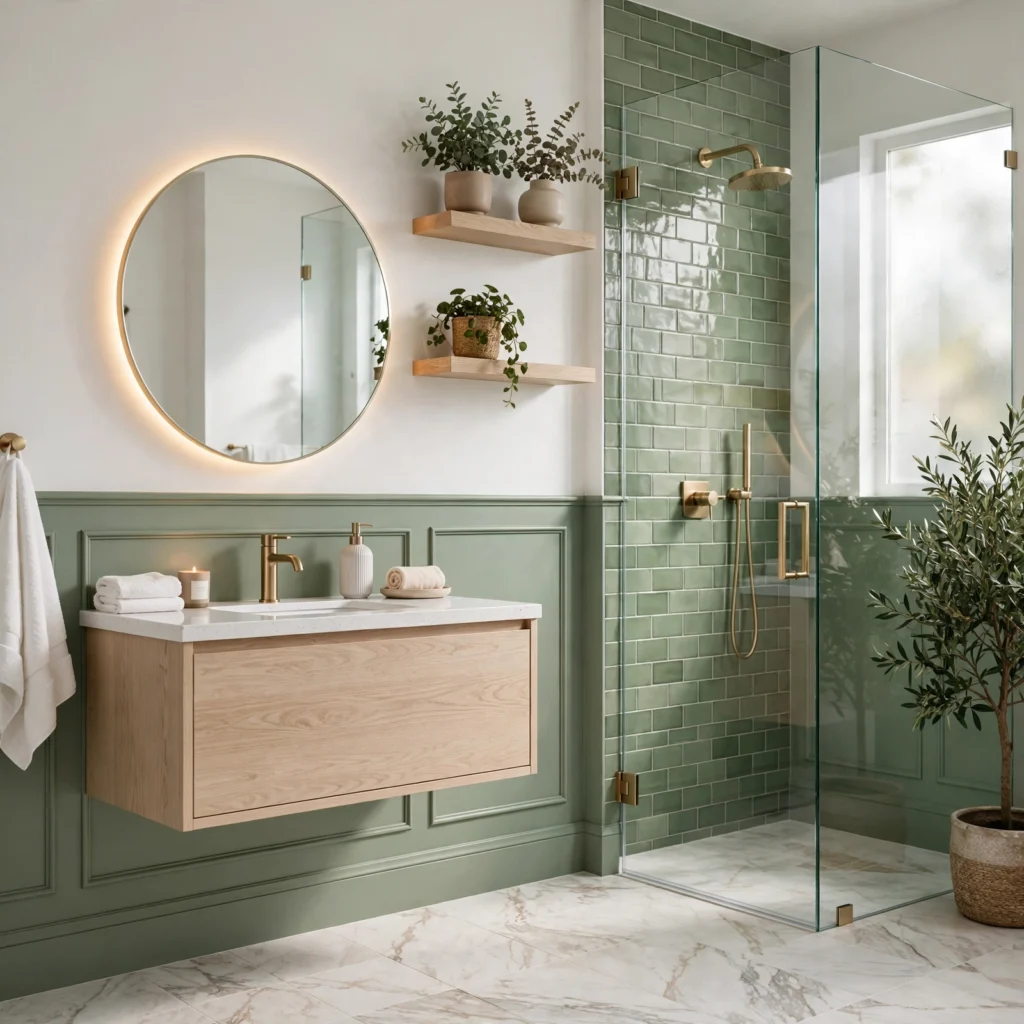
Painting the lower half of a bathroom wall a saturated green, with a chair rail or simple painted line dividing it from white above, adds color impact while keeping the upper portion of the room feeling bright and open. This approach works particularly well in a smaller bathroom, since a fully green room can feel more enclosed than one with a lighter upper wall reflecting more available light. Keep the dividing line at a consistent height throughout the room, typically thirty-two to thirty-six inches from the floor, for the most classic and balanced proportion.
6. Forest Green Freestanding Tub
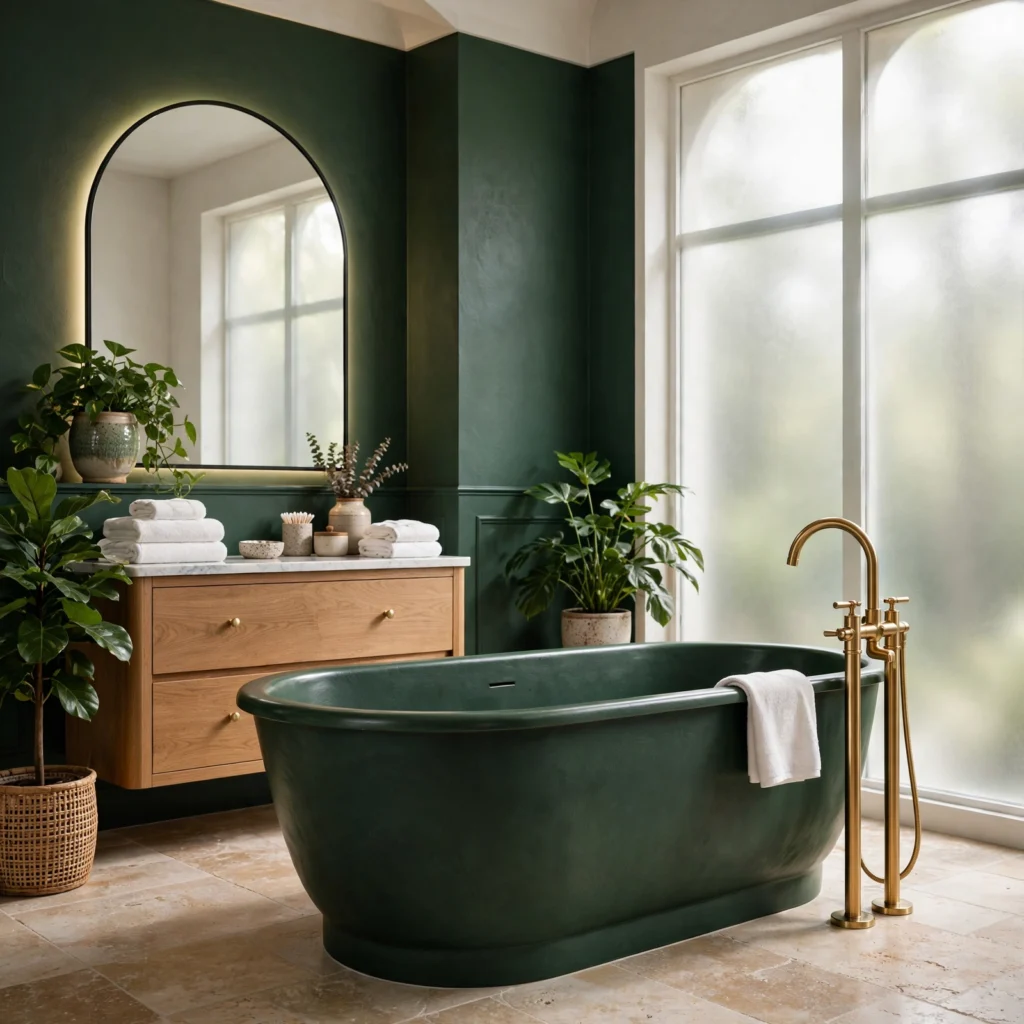
A freestanding tub finished in a deep forest green, rather than the traditional white, becomes an immediate focal point in a bathroom, particularly when paired with simpler, more neutral surrounding walls and flooring. This approach concentrates bold color into a single, high-impact piece rather than spreading it across the whole room, making it a strong option for anyone hesitant to commit to a fully green bathroom. Cast iron tubs with a specialty exterior finish or an acrylic tub with a colored gel coat both offer routes to this look, though cast iron typically holds its finish better over the long term.
7. Mint Green Vintage Bathroom
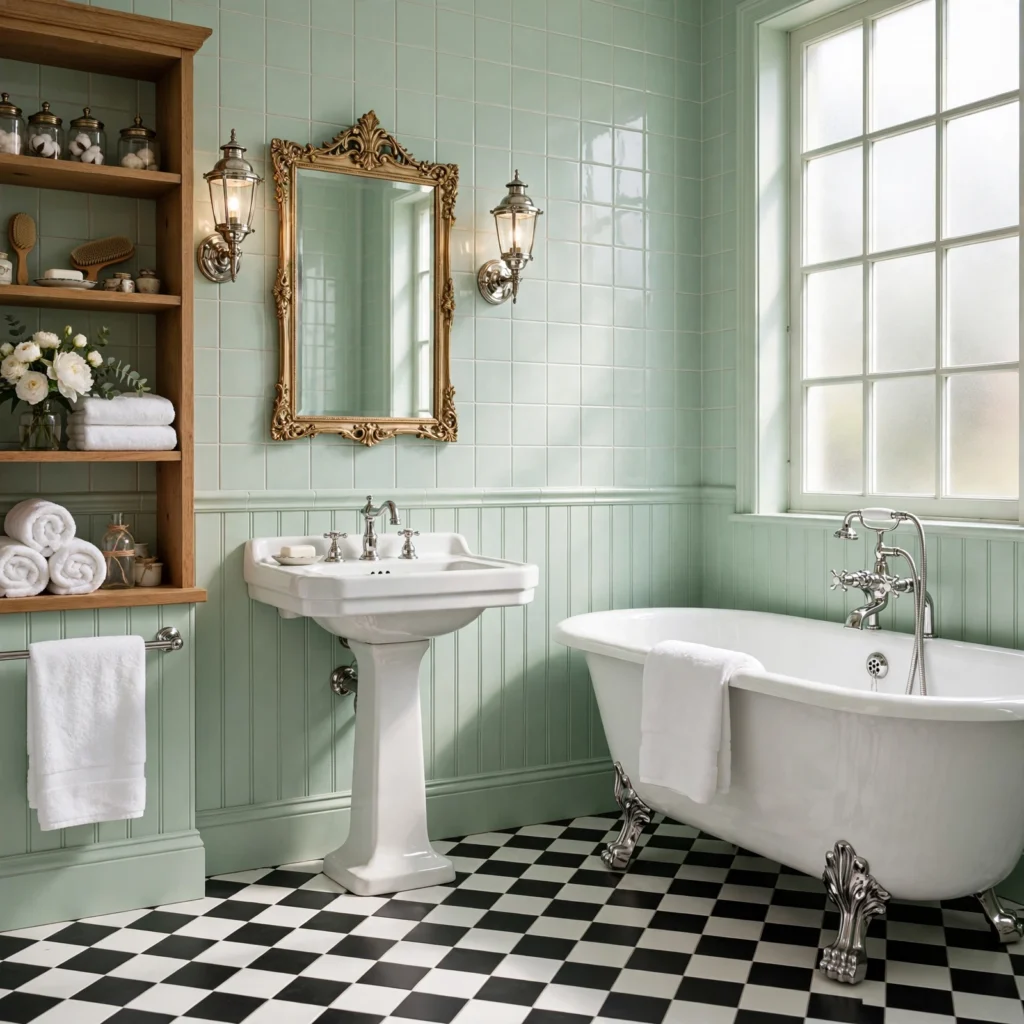
A soft, pastel mint green, whether as wall paint or classic square tile, suits a vintage or retro-inspired bathroom drawing on mid-century color palettes common in original bathroom tile from that era. This shade pairs especially well with chrome fixtures and black and white checkerboard flooring, both period-appropriate choices that reinforce the vintage reference. Original mint tile is sometimes salvageable in older homes during a partial renovation, offering a genuinely authentic version of this look rather than a newly manufactured reproduction.
8. Green and Brass Powder Room
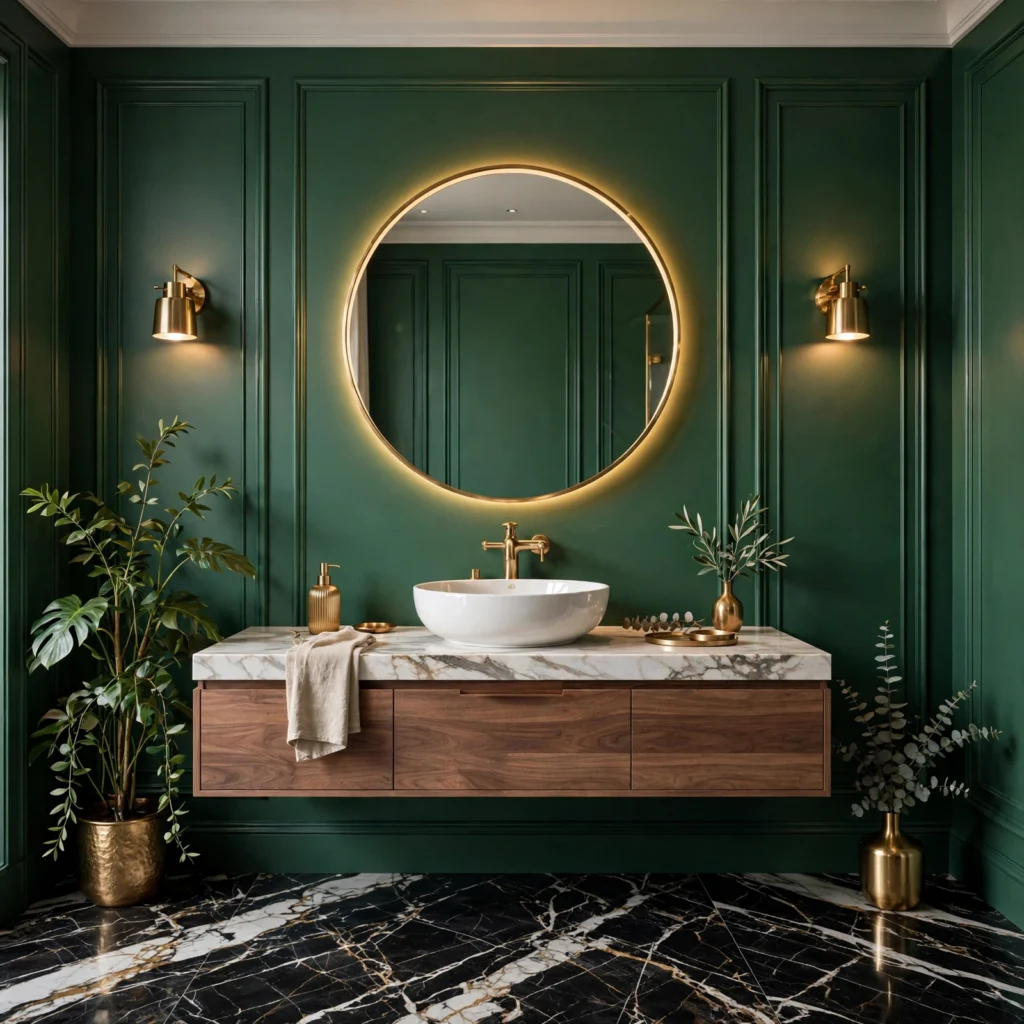
Pairing a botanical or textured green wallpaper with brass fixtures, a brass-framed mirror, and brass sconces creates a rich, layered powder room look that goes beyond a single flat wall color. Grasscloth or a subtle textured green wallpaper adds depth that paint alone can’t achieve, particularly under warm, dim powder room lighting. This combination tends to photograph and read as more elevated than a simply painted green room, making it a strong choice for a smaller, more design-forward guest bathroom specifically.
9. Green Marble Bathroom Accents
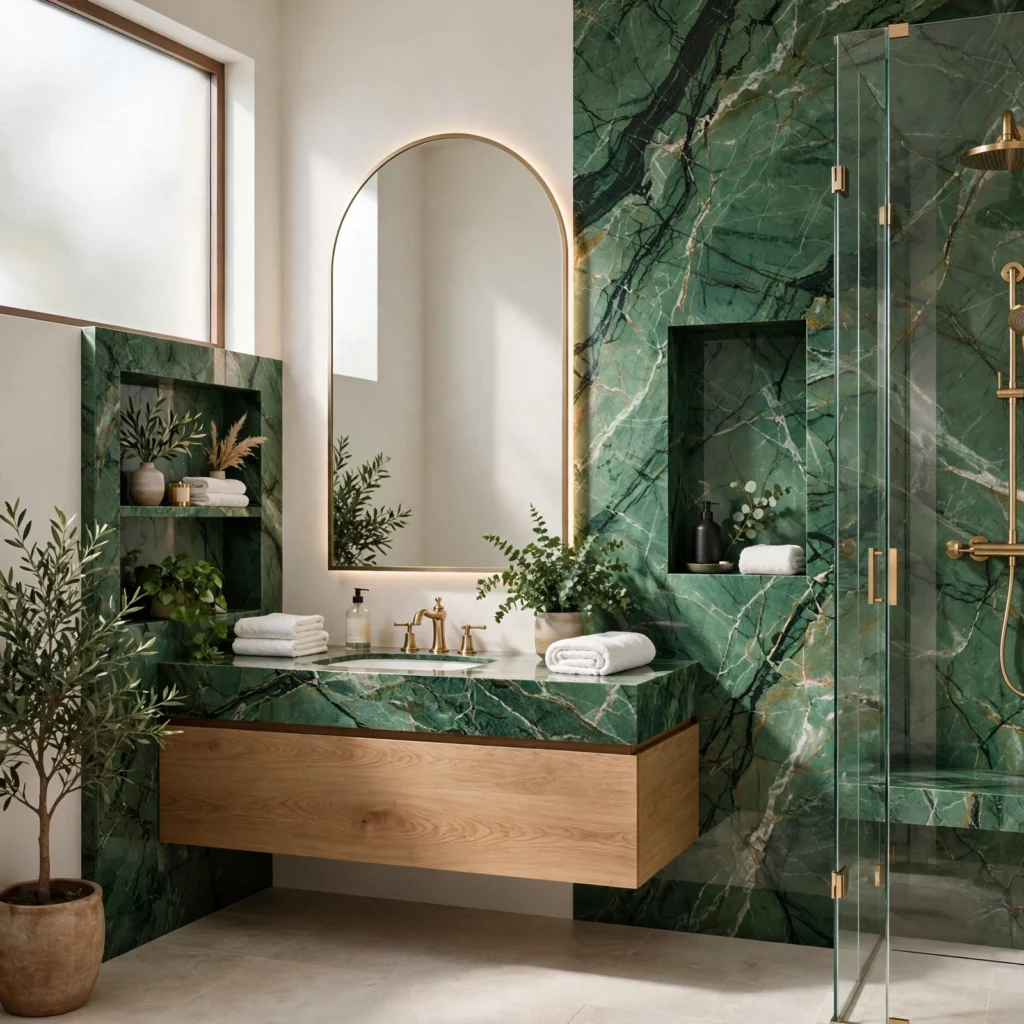
Green-veined marble, whether on a vanity countertop, a shower niche, or a full accent wall, brings genuine material luxury and natural color variation into a bathroom without relying on paint or tile alone. This material works particularly well against white surrounding surfaces, since the contrast highlights the marble’s distinctive veining pattern rather than letting it blend into a busier overall palette. Green marble requires proper sealing and regular maintenance to prevent staining, an important consideration given how frequently bathroom surfaces are exposed to moisture and product residue.
10. Deep Hunter Green Wainscoting
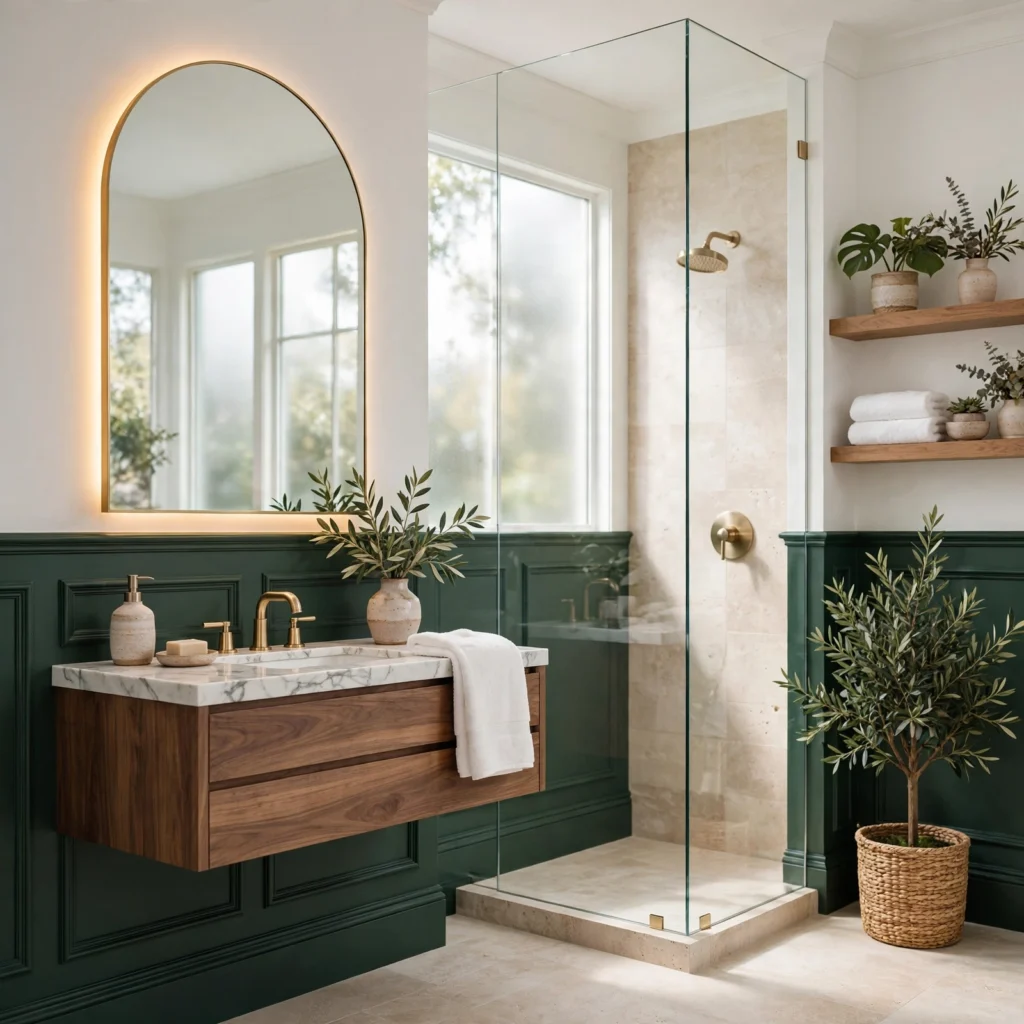
Painted wainscoting in a deep hunter green, with white walls above, adds architectural texture to a bathroom while introducing bold color in a way that feels grounded rather than overwhelming. This treatment suits a traditional or transitional bathroom particularly well, since wainscoting itself carries a more classic architectural reference than a flat painted wall alone. Beadboard or a simple flat-panel wainscoting profile both work with this approach, though beadboard tends to read as slightly more traditional and cottage-inspired than a flat panel.
11. Green Bathroom with Black Fixtures
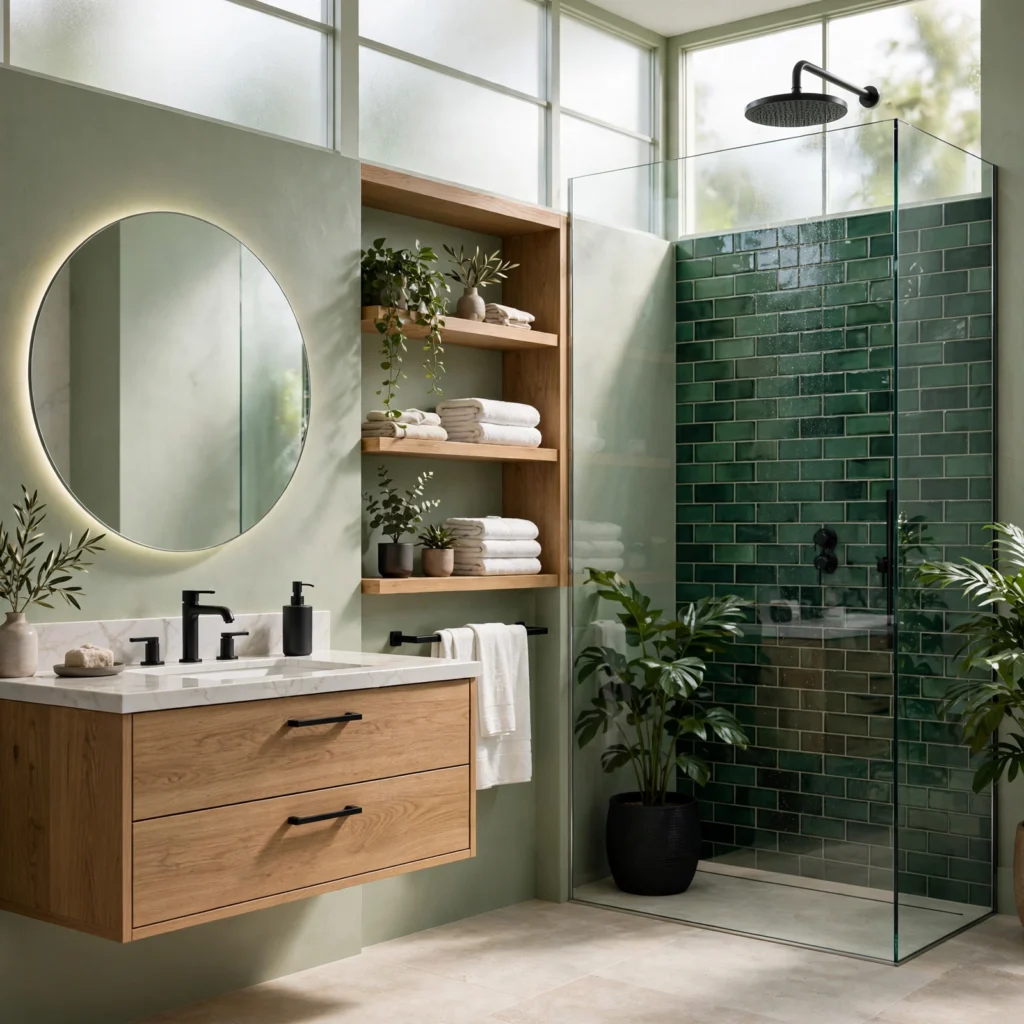
Pairing a saturated green tile or paint with matte black fixtures, faucets, and hardware creates a modern, high-contrast look that reads as more current than the warmer brass pairings common with other green bathroom approaches. This combination works especially well with cooler, more blue-leaning greens rather than warmer olive or sage tones, since black pairs most naturally with cooler undertones overall. A black-framed mirror or black window frame, if applicable to the room, reinforces this pairing further and ties the black accent throughout multiple elements of the space.
12. Green Pedestal Sink Bathroom
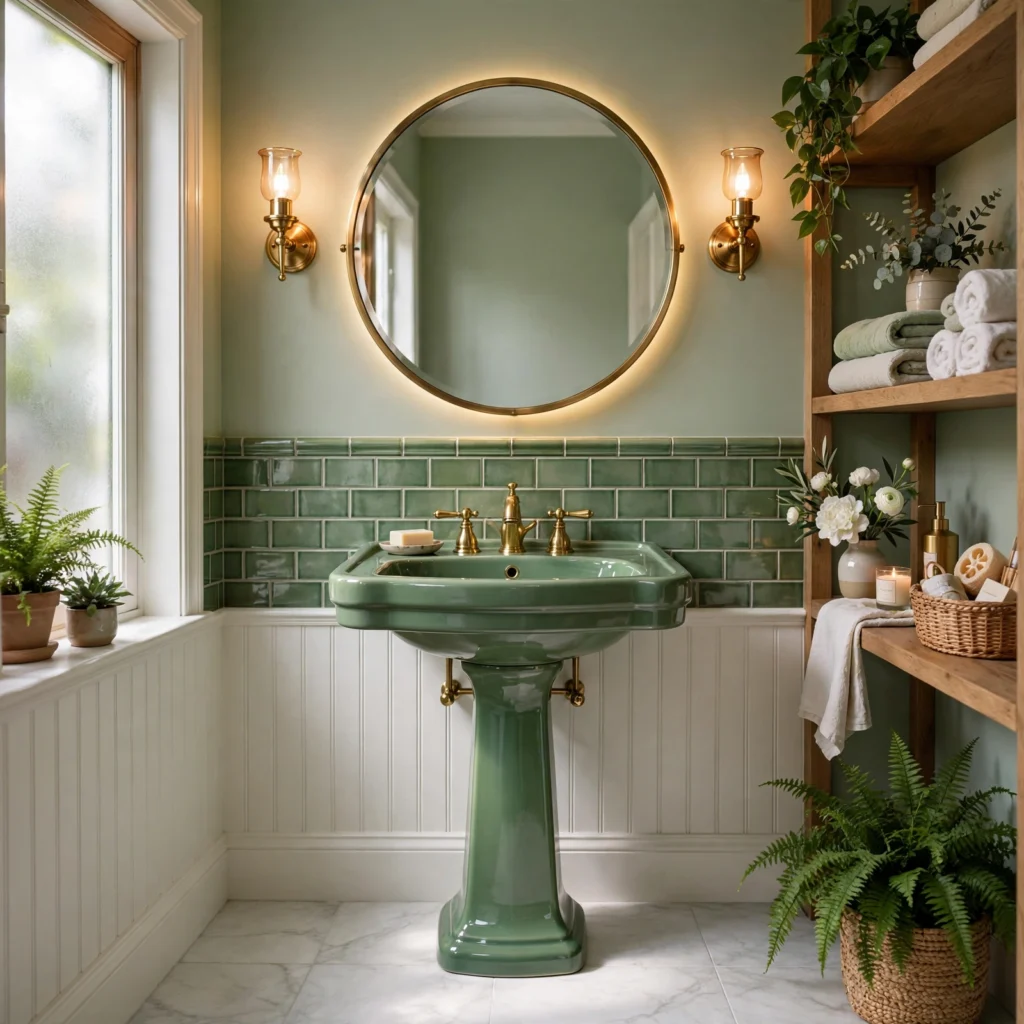
Painting or selecting a colored pedestal sink base in green, rather than the traditional white, is an unexpected way to introduce color into a smaller bathroom that may not have room for a full vanity cabinet. This approach works especially well in a small powder room, where the sink itself becomes one of the room’s few substantial visual elements. Some pedestal sink manufacturers now offer colored finishes directly, though a custom paint job by a specialist familiar with painting porcelain or fiberglass fixtures is also an option for an existing white pedestal sink.
13. Green and Terracotta Warm Palette
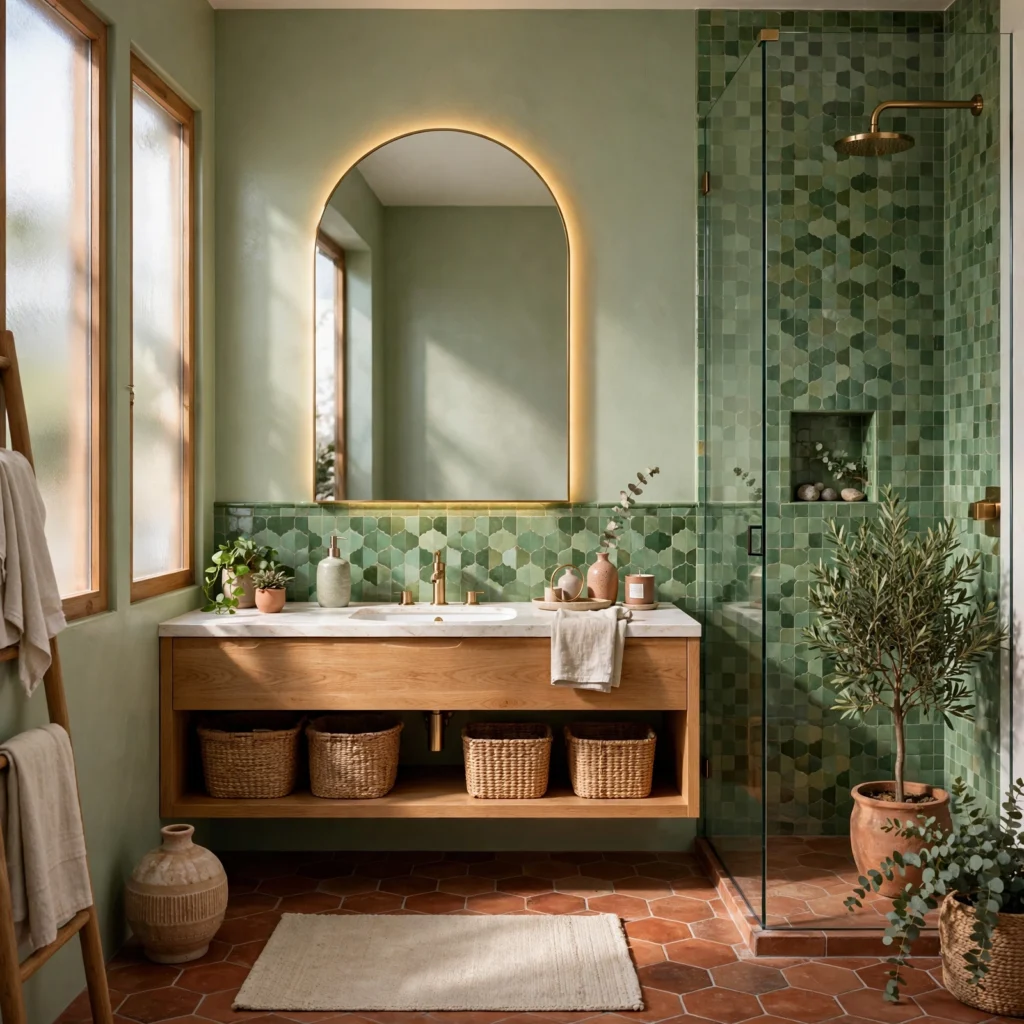
Combining a muted, earthy green tile or paint with terracotta accents, a terracotta planter, woven textiles, or unglazed ceramic accessories, creates a warm, Mediterranean-inspired bathroom palette distinct from the cooler green and white combinations more common elsewhere on this list. This pairing suits a bathroom wanting an earthy, natural feel over a crisper, more traditional look. Natural materials, wood, woven baskets, and stone, reinforce this warmer direction more effectively than glossy or polished surfaces would within the same palette.
14. Green Bathroom with Wood Vanity
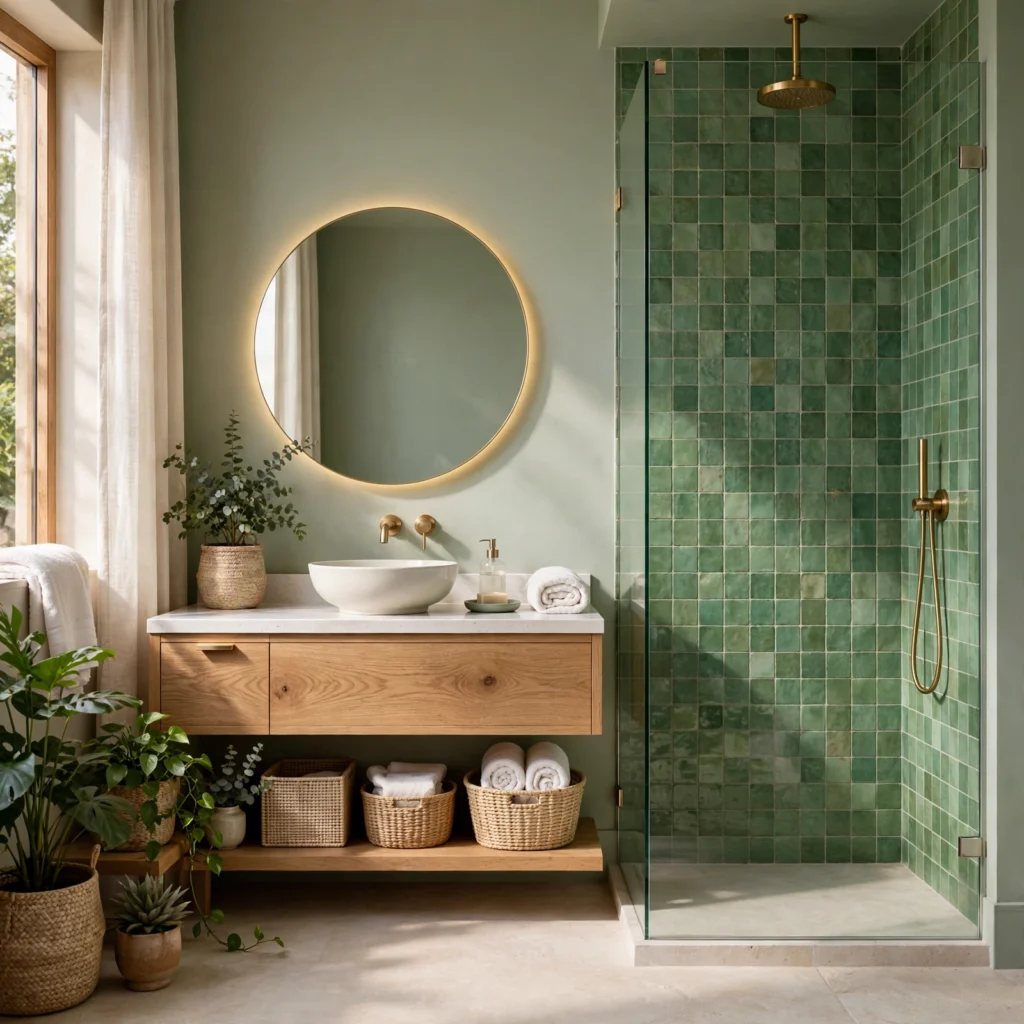
Pairing green tile or painted walls with a natural wood vanity, rather than a painted or lacquered cabinet, adds warmth that balances green’s inherent coolness, particularly in cooler-leaning shades like emerald or forest green. White oak or a lighter ash wood vanity works especially well against most greens, since the wood’s warmth provides genuine contrast without introducing an entirely separate color into the room. This combination also tends to feel more current than an all-painted green bathroom, since the mixed materials add texture beyond color alone.
15. Green Bathroom Floor Tile
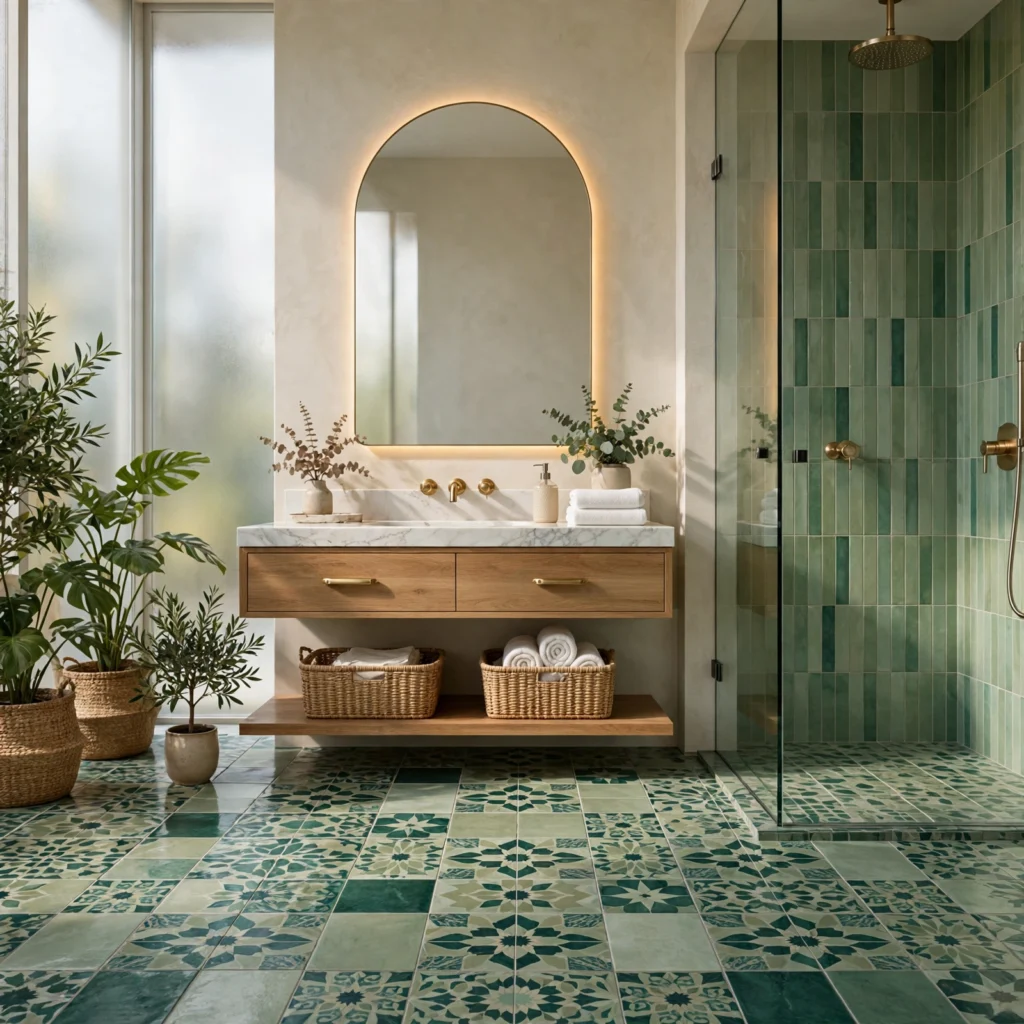
Concentrating green on the floor through a patterned or solid green tile, rather than the walls, introduces color from an unexpected direction while keeping wall space free for a simpler white or neutral paint. Hexagonal or geometric patterned tile in a green and white combination works particularly well for this approach, adding both color and pattern in a single material choice. This works especially well in a smaller bathroom, since a patterned floor tends to draw less visual weight than the same color and pattern applied to a full wall would in a tighter space.
16. Deep Botanical Green with Wallpaper Mural
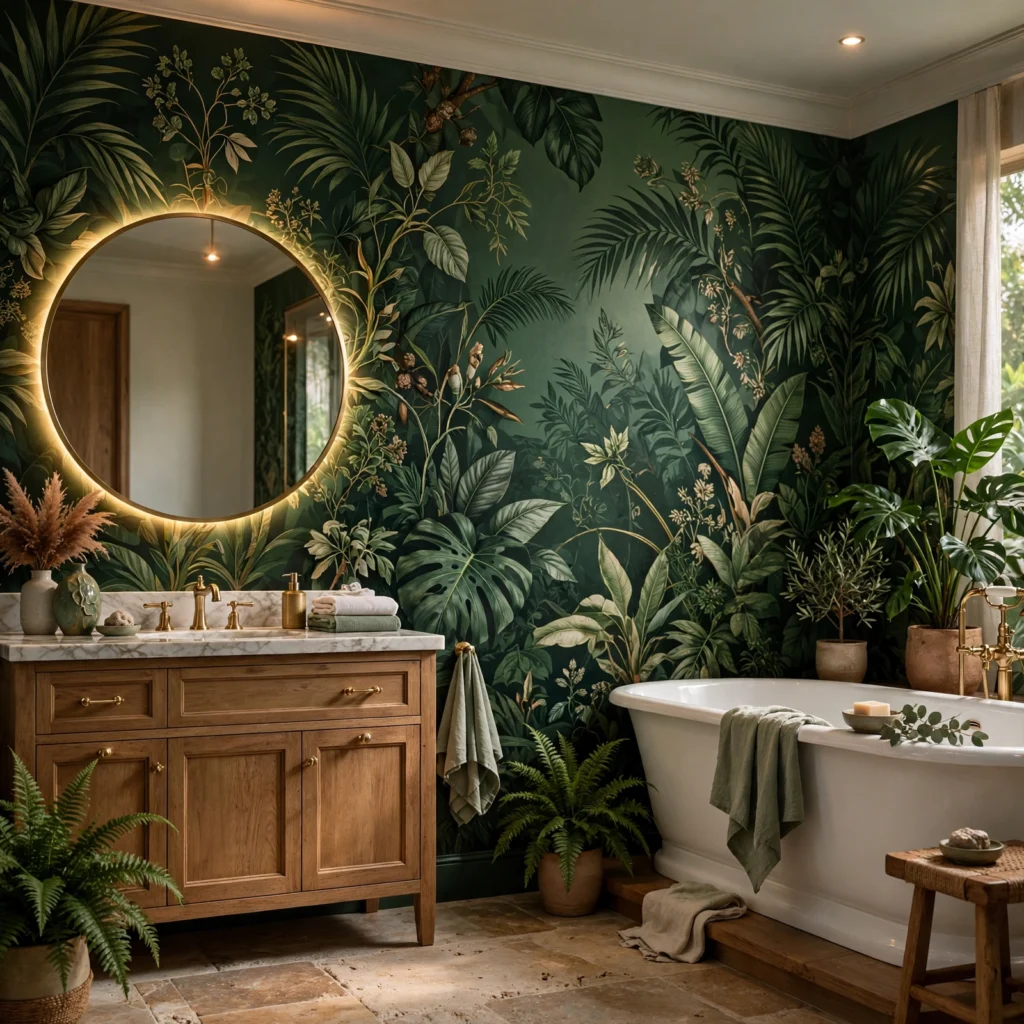
A deep, botanical-print wallpaper mural, featuring layered green tones in a jungle or leaf pattern, transforms a single bathroom wall into an immersive, nature-inspired focal point. This approach works particularly well in a bathroom with a tub or shower positioned to face the mural wall, since that sightline gets the most benefit from the immersive pattern. Choosing a moisture-resistant, vinyl-coated wallpaper specifically rated for bathroom use is essential here, since standard wallpaper won’t hold up to a bathroom’s humidity and moisture exposure over time.
Shop the Look
For sage and olive green vanity paint, Benjamin Moore’s “Saybrook Sage” and Farrow & Ball’s “Bancha” remain reliable, widely available options. Handmade green zellige tile is best sourced through Clé Tile or a specialty tile importer rather than a big box retailer. Green-veined marble for vanity tops and shower niches can be sourced through a local stone yard or fabricator. Botanical wallpaper murals rated for bathroom use are available through Anthropologie or a specialty wallpaper company like Milton & King, and brass fixtures from Kohler or Delta round out the warmer green pairing options above.
Common Mistake to Avoid
The most common mistake with green bathroom ideas is choosing a paint or tile shade without confirming it’s actually moisture and mildew resistant where it matters most, since a bathroom’s humidity level is considerably higher than most other rooms in the house. Always use a paint specifically rated for bathrooms, typically a satin or semi-gloss finish with mildew-resistant additives, rather than a flat or matte paint intended for lower-humidity spaces. Similarly, confirm any wallpaper is vinyl-coated and rated for bathroom use before installing it near a shower or tub, since standard wallpaper will bubble or peel under sustained moisture exposure.
Do green bathrooms hurt resale value?
Green bathrooms, particularly in more muted, classic shades like sage or a soft forest green, generally have a neutral to positive effect on resale value according to most recent real estate market data, since green has become common enough that it no longer reads as an unusual or risky color choice to most buyers. Very bold or saturated greens applied throughout a full primary bathroom may appeal to a somewhat narrower pool of buyers than the same color used more selectively in a powder room or as a vanity accent, though this varies by local market and the overall quality of the bathroom’s other finishes.
How do I make a small bathroom feel bigger with a green color scheme?
Choosing a lighter, more muted green like sage or mint, rather than a deep forest or hunter green, generally keeps a small bathroom feeling more open, since lighter colors reflect more available light than darker, more saturated shades. Concentrating green on a single element, the vanity, the lower half of the wall, or the floor tile, rather than covering every surface, also helps a small bathroom avoid feeling enclosed. A larger mirror positioned to reflect natural light, paired with adequate lighting throughout, further helps a green small bathroom read as bright rather than closed in.
What fixture finish pairs best with a green bathroom?
Warm metals, brass and gold, generally pair best with warmer, muted greens like sage or olive, since the metal’s warmth balances the green’s natural coolness. Cooler, more saturated greens like emerald or a deep forest green pair well with either warm brass for a richer, more formal look or matte black for a more modern, high-contrast combination. Chrome and brushed nickel work reliably across nearly any green shade as a safer, more universally flexible option if you’re not fully committed to a specific warmer or cooler direction.
Does a dark green bathroom feel too dark or moody?
A deep green bathroom can feel appropriately moody and intentional rather than simply dark when paired with adequate lighting, layered ambient and task lighting rather than a single overhead fixture, and at least some lighter, contrasting surfaces like a white countertop or light flooring. Confining the deepest green shades to a smaller powder room, rather than a full primary bathroom used daily, also helps the mood read as a deliberate design choice rather than an impractical everyday space. Testing a large sample under the bathroom’s actual lighting, including any evening or artificial-only lighting conditions, helps confirm the shade works for how the room actually gets used.
What’s the easiest way to add green to a bathroom without a full renovation?
Painting the vanity alone, rather than the full room, delivers meaningful color impact for a fraction of the cost and time of a full bathroom repaint or retile. Swapping towels, a bath mat, and a shower curtain for green textiles is an even lower-commitment option that requires no paint or permanent changes at all, making it a genuinely renter-friendly way to test whether a green palette works for the space before committing to anything more permanent. A single piece of green-veined marble, like a small tray or soap dish, can also introduce the color and material reference on a very small scale.
Conclusion
The sixteen ideas above cover soft neutrals, bold jewel tones, and everything in between, giving you enough range to find a green bathroom approach suited to almost any space and budget. Whether you start with a simple sage vanity or commit to a full emerald tile shower, the goal is a green choice built around your bathroom’s specific size, light, and moisture considerations rather than a shade picked from a photo alone. Save this list to Pinterest for your next bathroom project, or check our related post on gray kitchen cabinets ideas for another room’s worth of color-specific inspiration.
I’ve spent the last six years sourcing materials and consulting on bathroom renovations for residential clients, which means I’ve watched which green bathroom choices actually hold up under real moisture and daily use, and which ones only look good in a single styled photo.