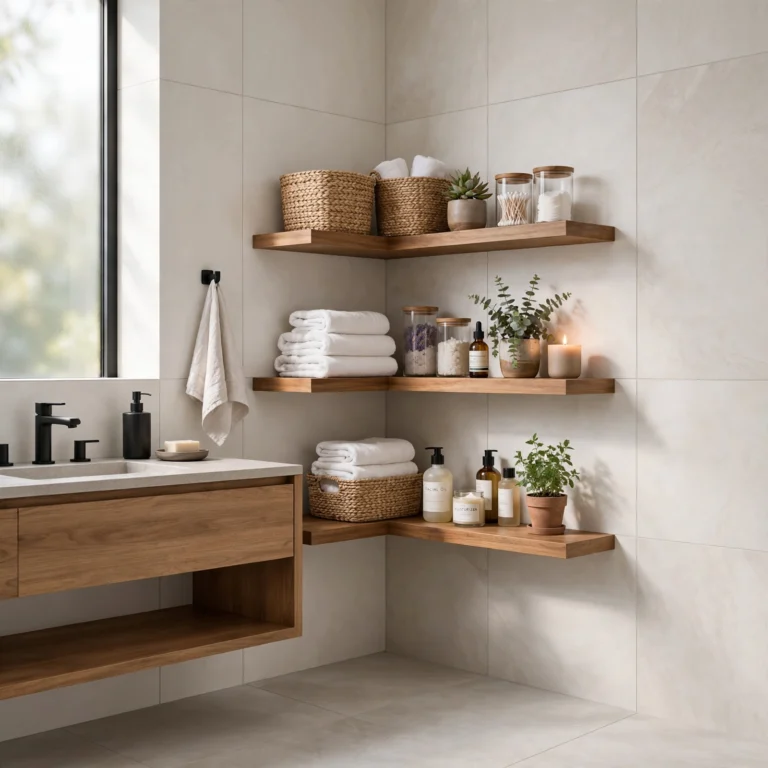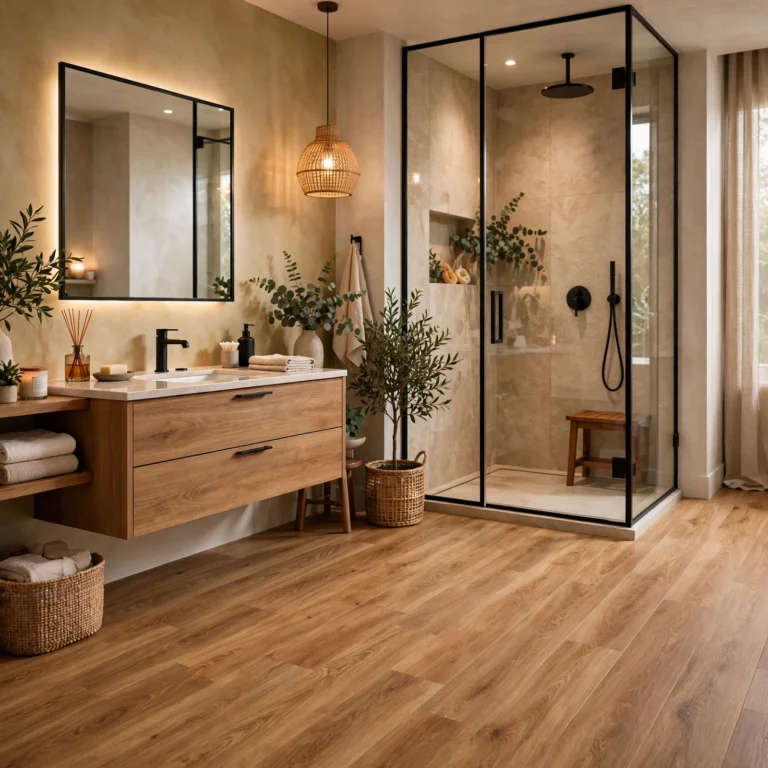
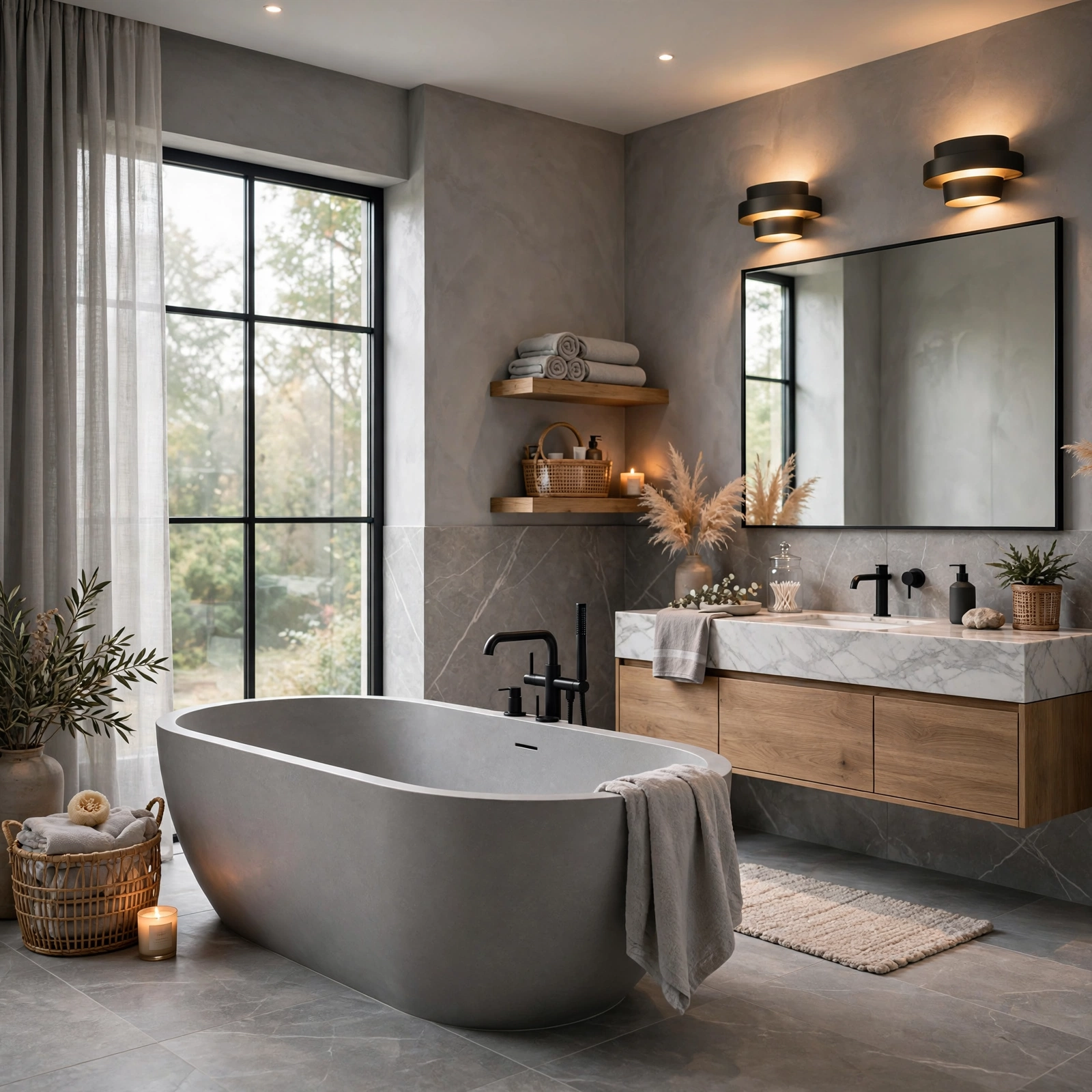
16 Trending Grey Bathroom Ideas That Blend Comfort and Contemporary Design
Grey has remained one of the most requested bathroom palettes for years, offering a calm, neutral backdrop that works with nearly any fixture finish or material choice. This post walks through sixteen specific, real grey bathroom ideas, covering exact shades, tile pairings, hardware, and lighting so you can plan a room that feels intentional rather than generic. Whether you’re doing a full remodel or a lighter refresh, you’ll come away with concrete direction instead of a vague grey-on-grey mood board.
Trend & Background
Grey has stayed a top choice for bathrooms even as bolder colors have gained ground elsewhere in the home, largely because it functions as a flexible neutral that pairs with nearly any countertop, tile, or hardware finish. Tile and paint brands have responded by expanding their grey lines to include more warm, greige-leaning options rather than the cooler, blue-based greys popular a decade ago. This matters now because bathrooms are increasingly treated as calming, spa-like retreats rather than purely functional rooms, and warm grey delivers that mood better than a starker, all-white palette typically can.
Key Takeaways
- Grey bathroom ideas range from soft warm greige to deep charcoal, and the undertone you choose determines whether the room feels cozy or sleek and modern.
- Pairing grey tile or paint with the right metal hardware and natural materials matters more than the exact shade of grey for a finished look.
- Contrast, whether through white trim, wood accents, or black fixtures, keeps an all-grey bathroom from feeling flat or cold.
- Layered lighting currently outperforms a single overhead fixture for keeping a grey bathroom feeling warm rather than clinical.
1. Warm Greige Wall Paint
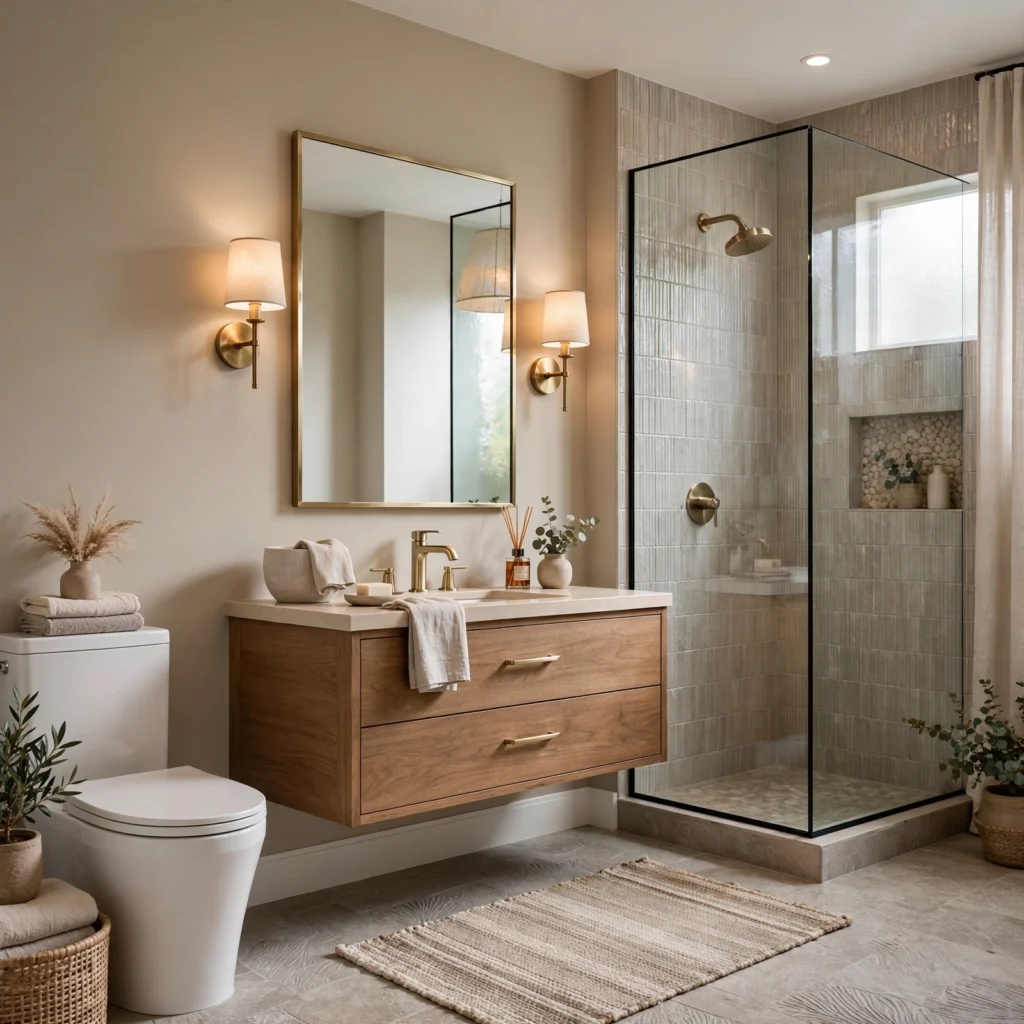
Warm greige wall paint blends grey with a subtle brown undertone, giving a bathroom a softer, more livable look than a cooler, blue-based grey. This shade works particularly well in bathrooms with limited natural light, since it doesn’t read as cold the way a blue-toned grey can under artificial lighting. Greige pairs especially well with brushed nickel or unlacquered brass fixtures, both of which complement the warm undertone better than cool chrome.
To see more bathroom organization ideas
2. Charcoal Grey Vanity
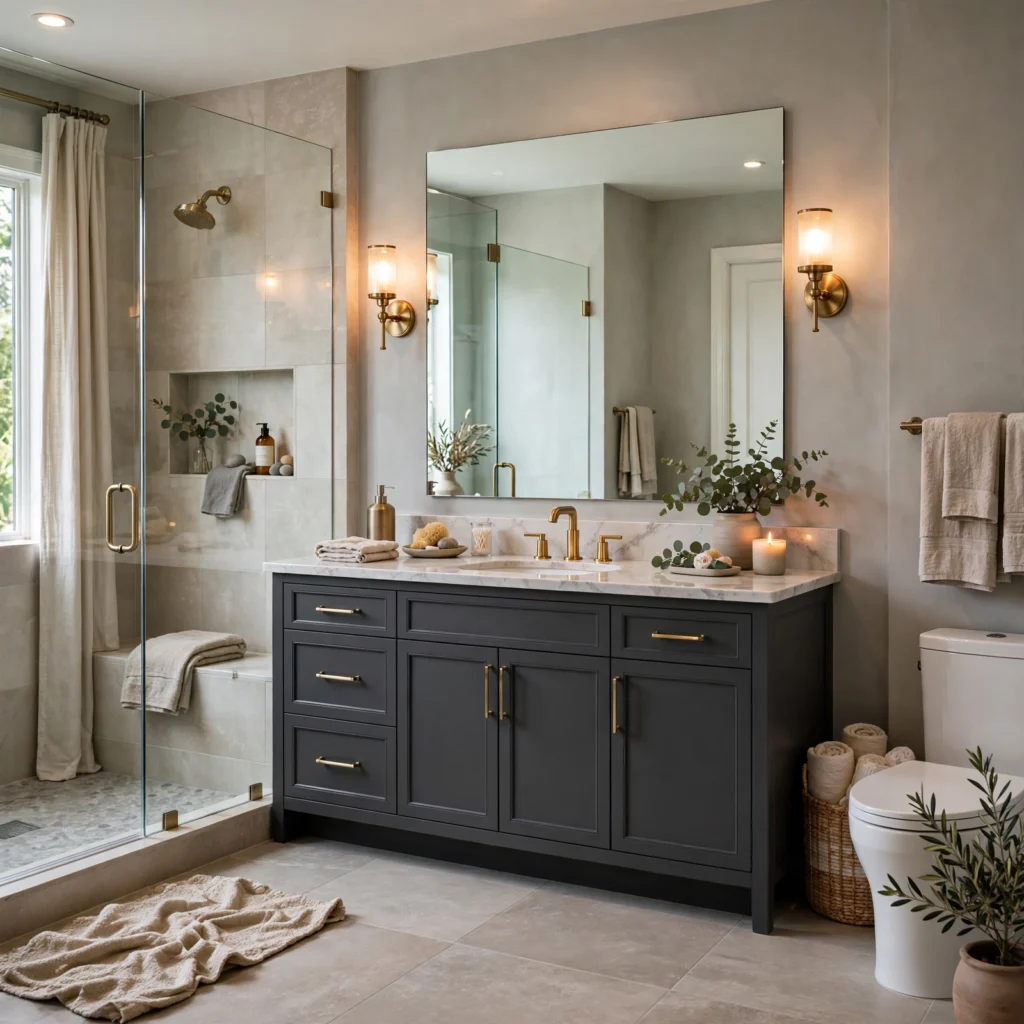
A charcoal grey vanity, left as the darkest element against lighter walls and tile, anchors the room and gives it a clear focal point without darkening the entire space. This approach works well in both small and large bathrooms, since the vanity’s contained footprint means the color commitment is lower than painting the full room charcoal. Pairing it with a white or light stone countertop keeps the vanity from feeling too heavy.
| Bathroom Size | Vanity Approach | Recommended Countertop |
| Under 50 sq ft | Single charcoal vanity | White quartz |
| 50–80 sq ft | Charcoal double vanity | Marble or quartz |
| 80+ sq ft | Charcoal vanity + accent wall | Marble or soapstone |
3. Grey Zellige Tile Shower
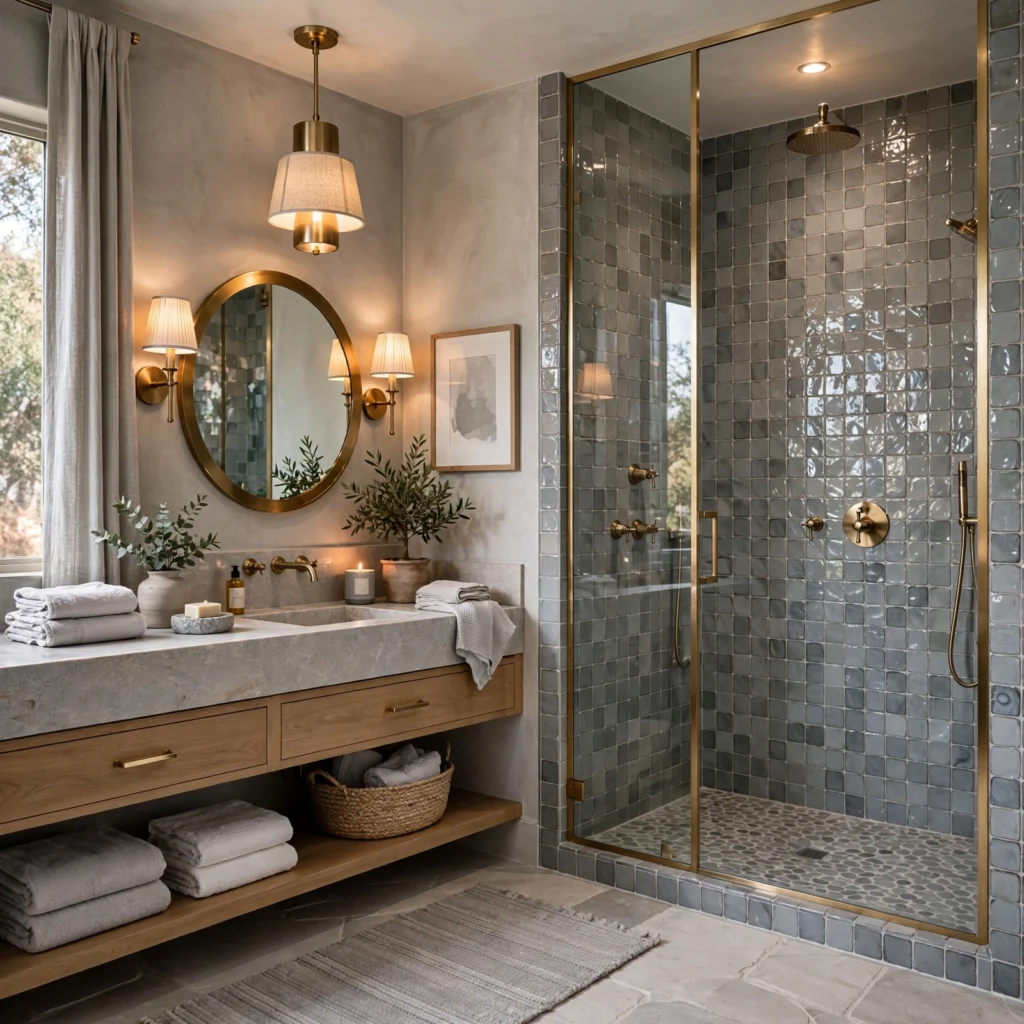
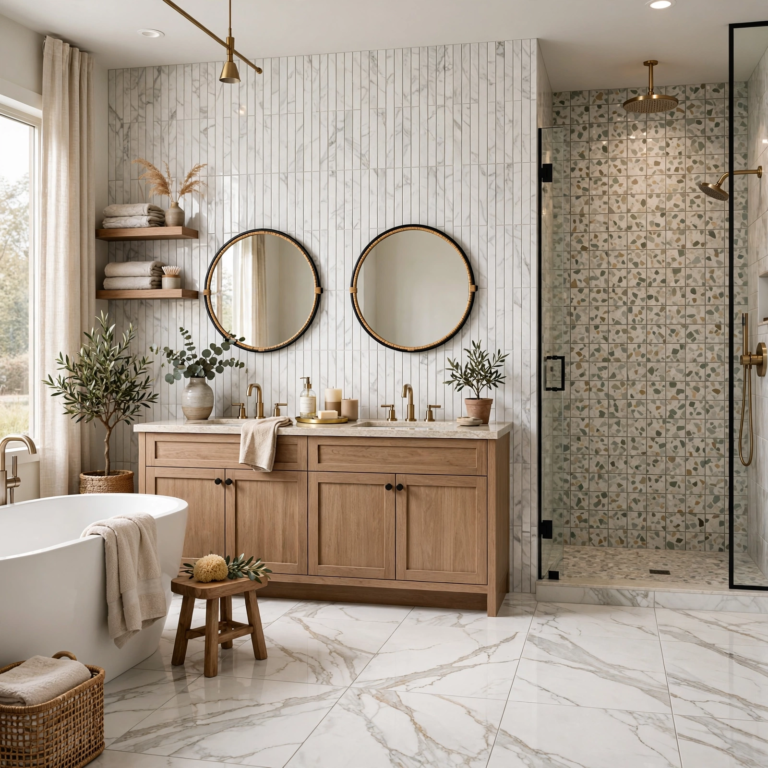
Grey zellige tile, a handmade Moroccan ceramic tile with slight variation in each individual piece, brings texture and light-catching movement to a shower that uniform, machine-made tile can’t replicate. The subtle color and surface variation between tiles is part of the material’s appeal, giving the shower a handcrafted, custom look. Because the tile is more porous than standard ceramic, proper sealing is essential to keep it performing well in a wet environment.
4. Grey and White Two-Tone Bathroom
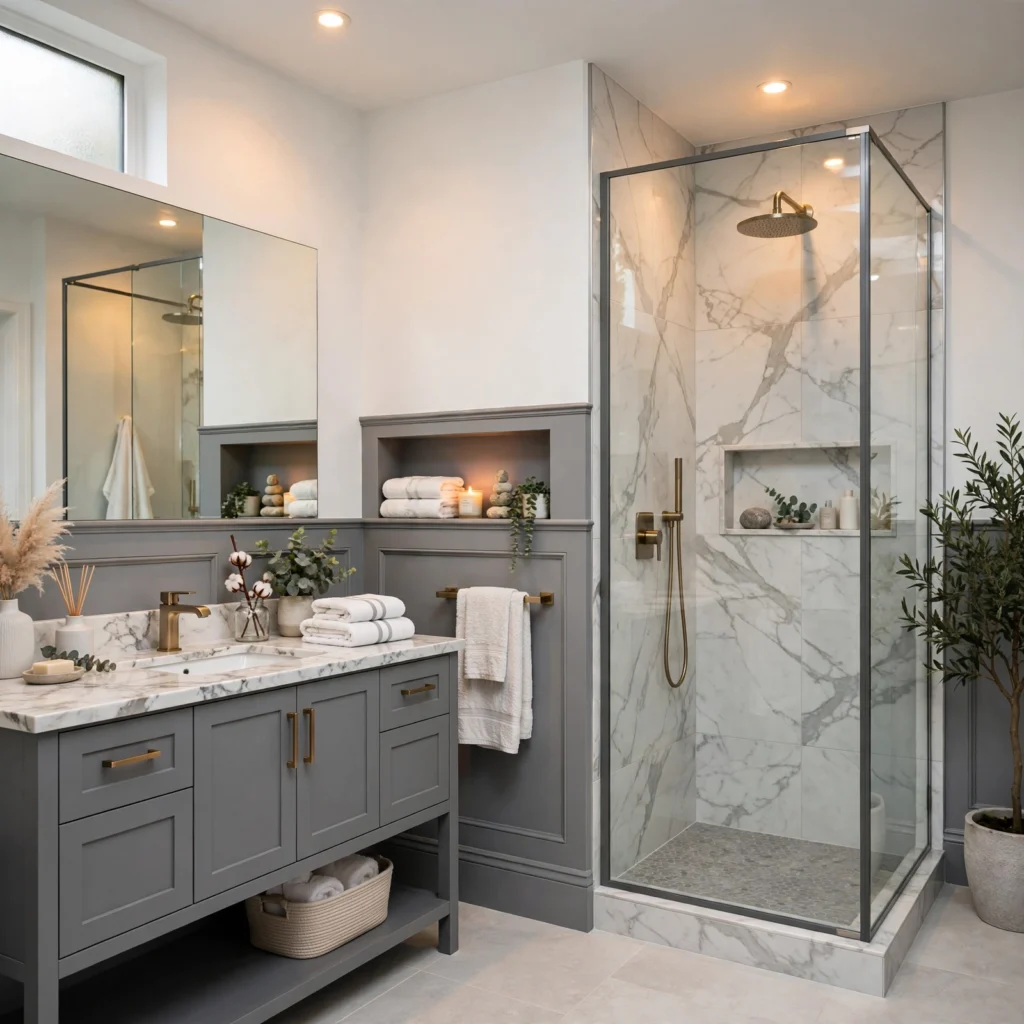
A two-tone grey and white bathroom, with grey on the lower half of the walls and white above a chair rail or tile line, keeps the room feeling bright while still introducing color and depth. This layout is particularly common in bathrooms with wainscoting or half-tiled walls, where the natural break point gives an easy place to transition between the two tones without needing a hard painted line.
5. Slate Grey With Black Fixtures
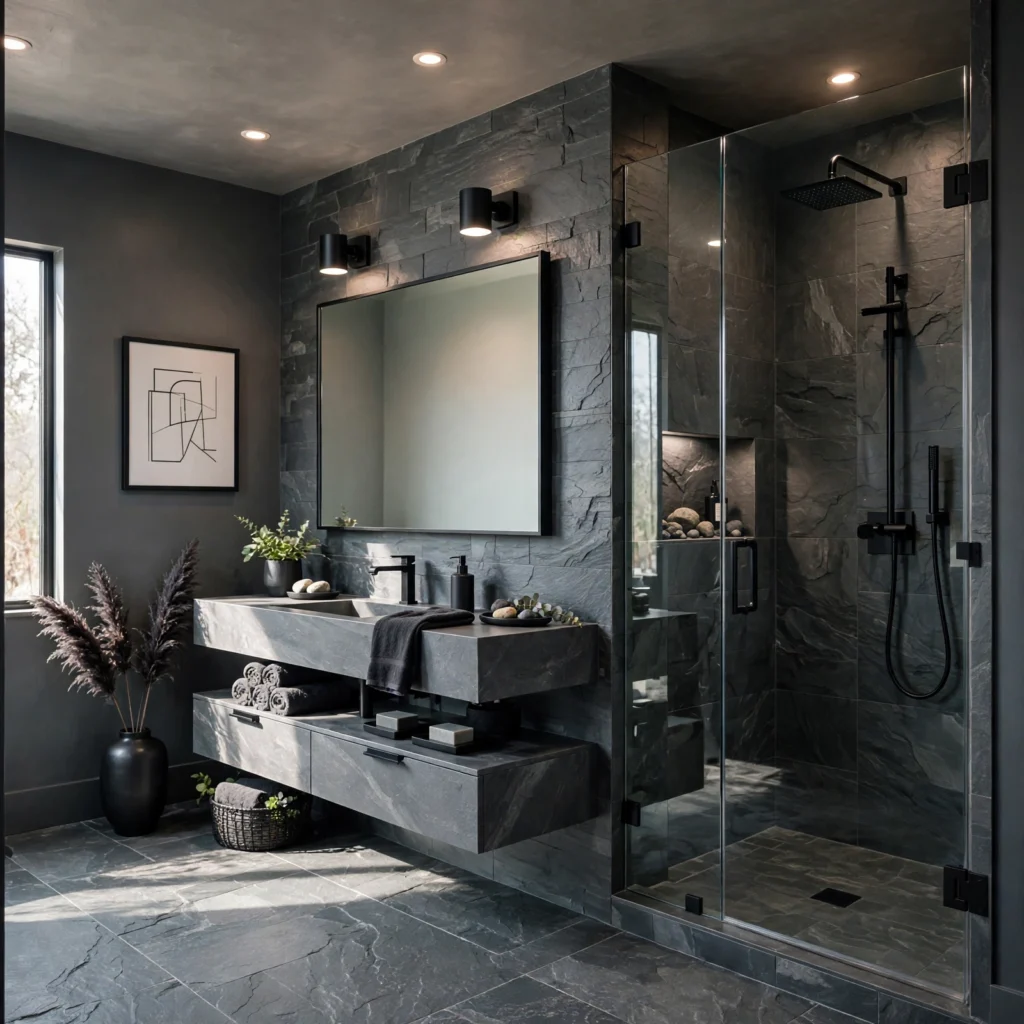
Slate grey, a deep, near-charcoal shade with cool undertones, pairs particularly well with matte black fixtures, faucets, and hardware for a higher-contrast, more dramatic bathroom. The black elements don’t compete for attention against the already-saturated grey, unlike a pairing with a lighter grey shade. Keeping the black elements limited to fixtures and hardware, rather than large surfaces, prevents the room from feeling too dark overall.
6. Dove Grey With Brass Fixtures
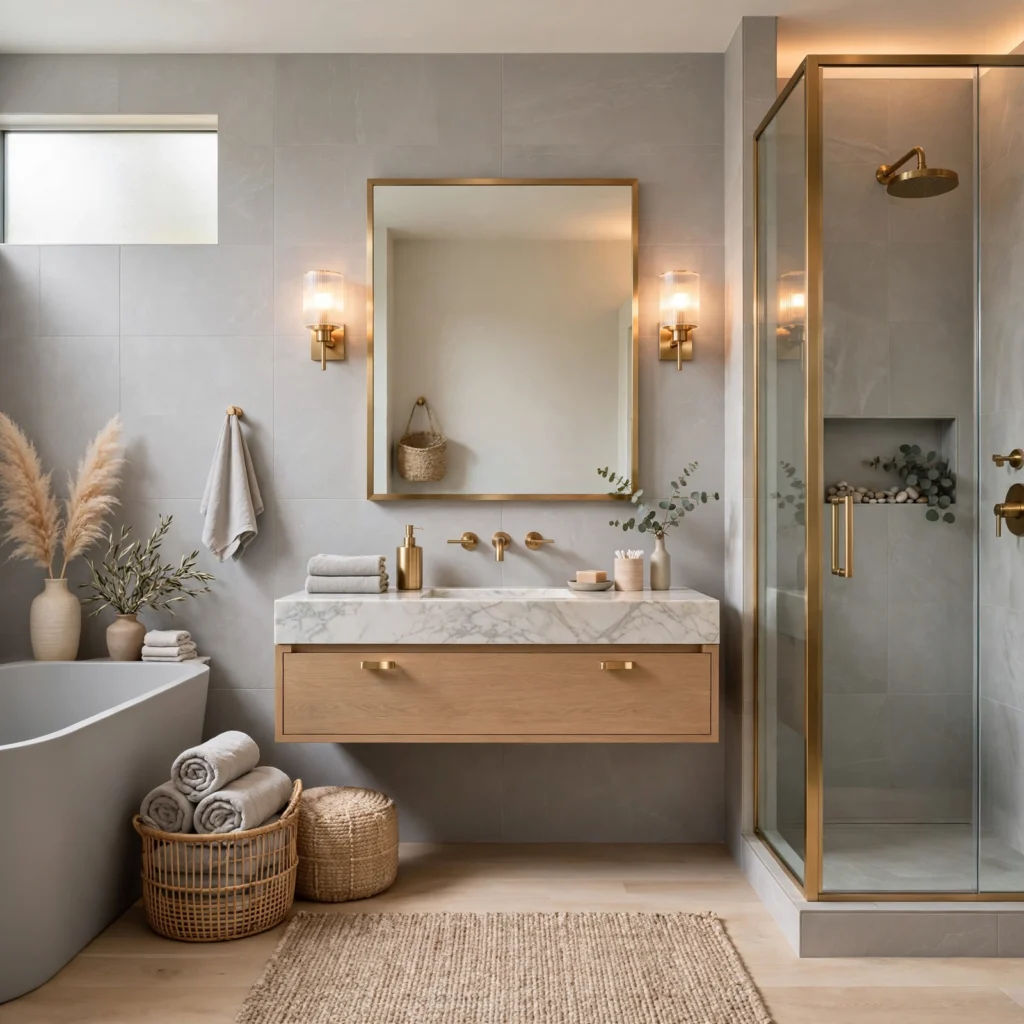
Dove grey, a soft, light shade close to a warm off-white, pairs surprisingly well with unlacquered brass fixtures, which add warmth that keeps the room from reading as cold or clinical. This lighter grey works particularly well in bathrooms with limited natural light, since it reflects more light than a deeper charcoal or slate shade would. Brass fixtures in particular develop a soft patina over time that suits this softer, more traditional grey tone.
| Fixture Finish | Best With | Style Fit |
| Unlacquered brass | Dove grey, warm greige | Traditional, transitional |
| Matte black | Slate, charcoal grey | Modern |
| Brushed nickel | Cool, blue-based grey | Contemporary |
7. Grey Bathroom With Wood Vanity
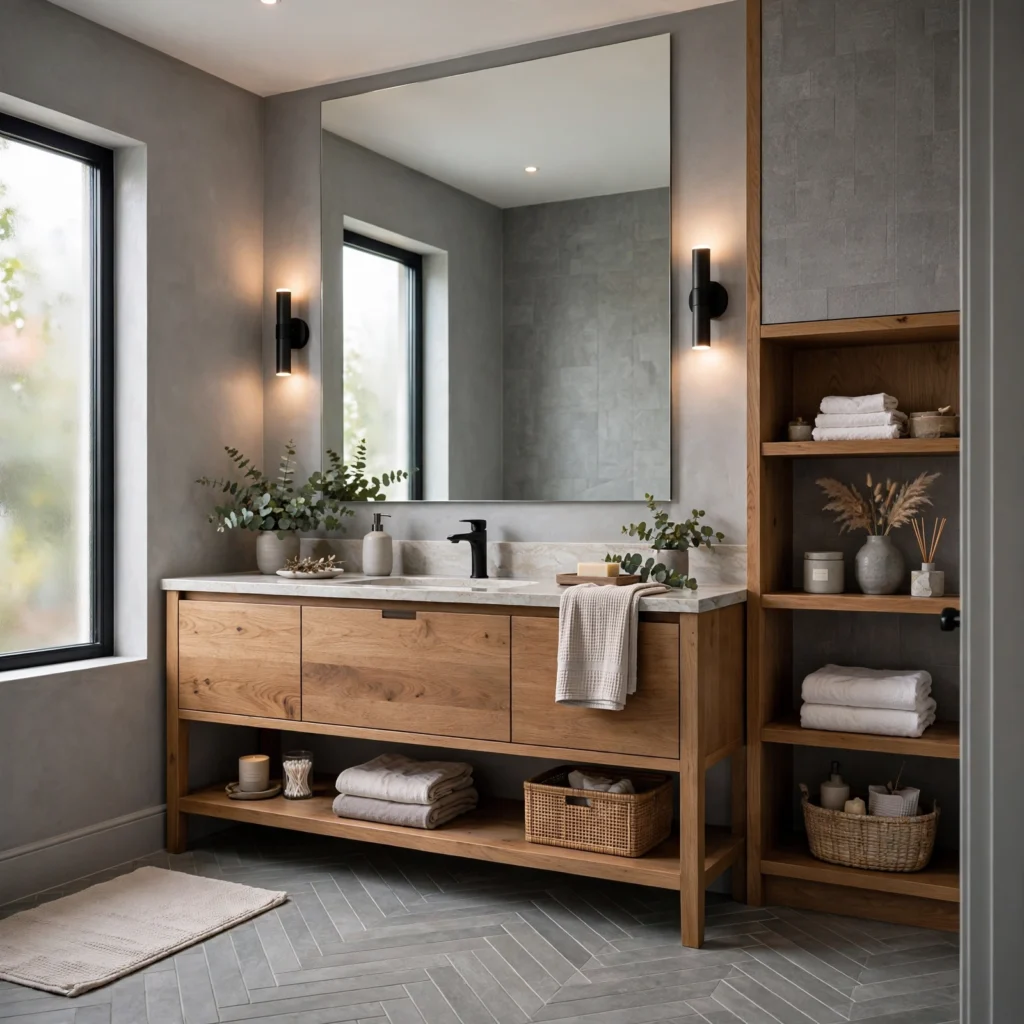
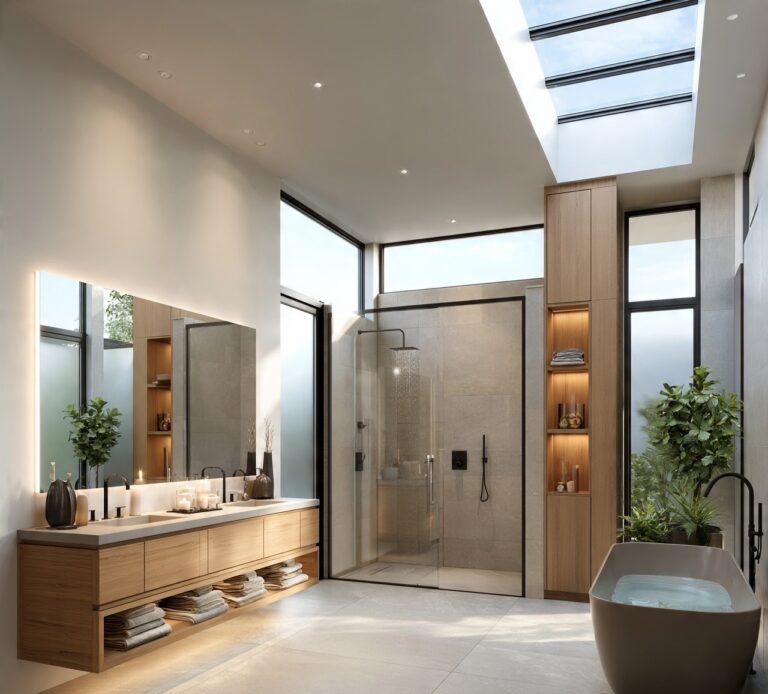
Pairing grey walls or tile with a warm wood-tone vanity keeps a bathroom feeling grounded rather than cold, which matters most with cooler, blue-based grey shades. A floating wood vanity in particular pairs well against grey tile, since the warmth of the wood softens the coolness of the surrounding surfaces. Choosing a wood tone with warm undertones, like white oak or walnut, keeps the pairing from feeling like two unrelated finishes.
8. Grey Marble Countertop
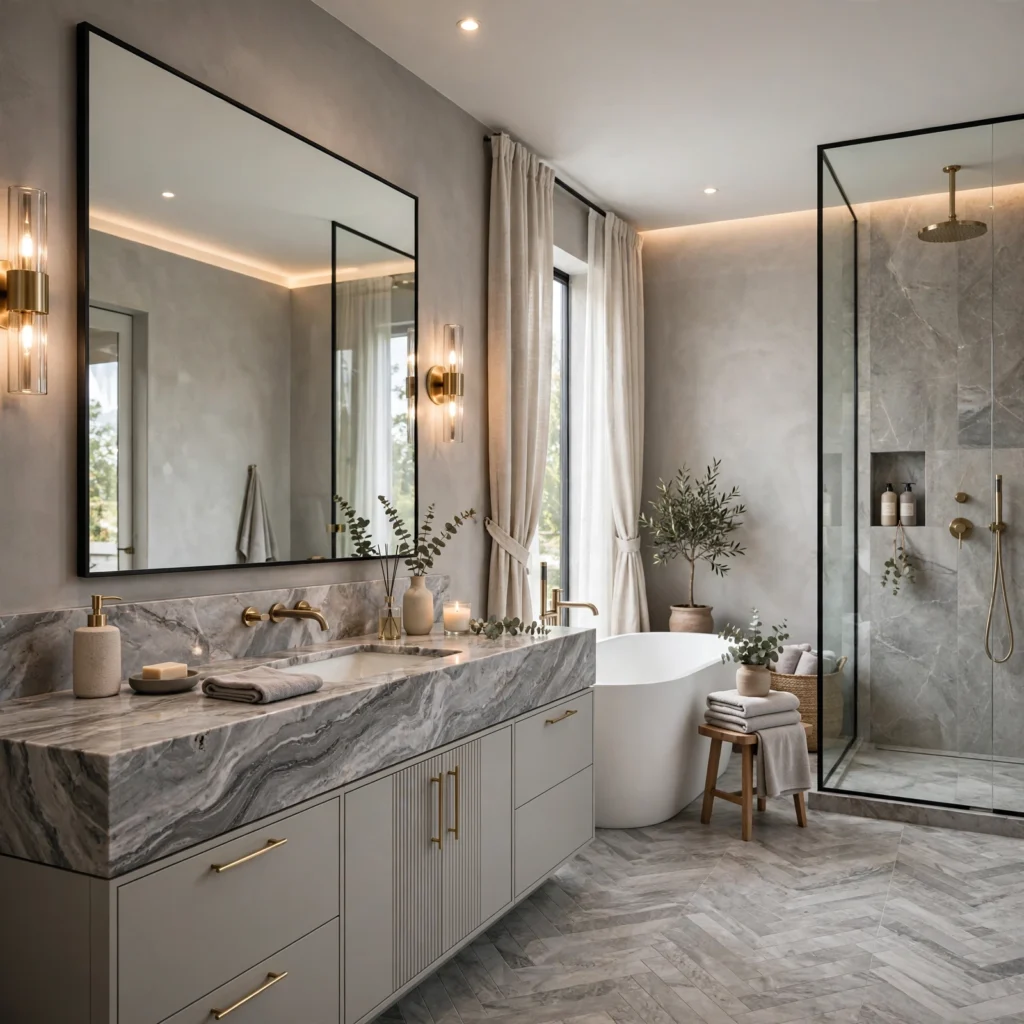
A grey-veined marble countertop, particularly a stone with soft, natural movement, echoes the surrounding grey palette while adding depth that a solid-color quartz can’t replicate. This works especially well in an all-white bathroom looking to introduce grey subtly, since the veining brings in the color without a full wall or floor commitment. A honed rather than polished finish keeps the stone from feeling too glossy in a wet room.
9. Grey Herringbone Floor Tile
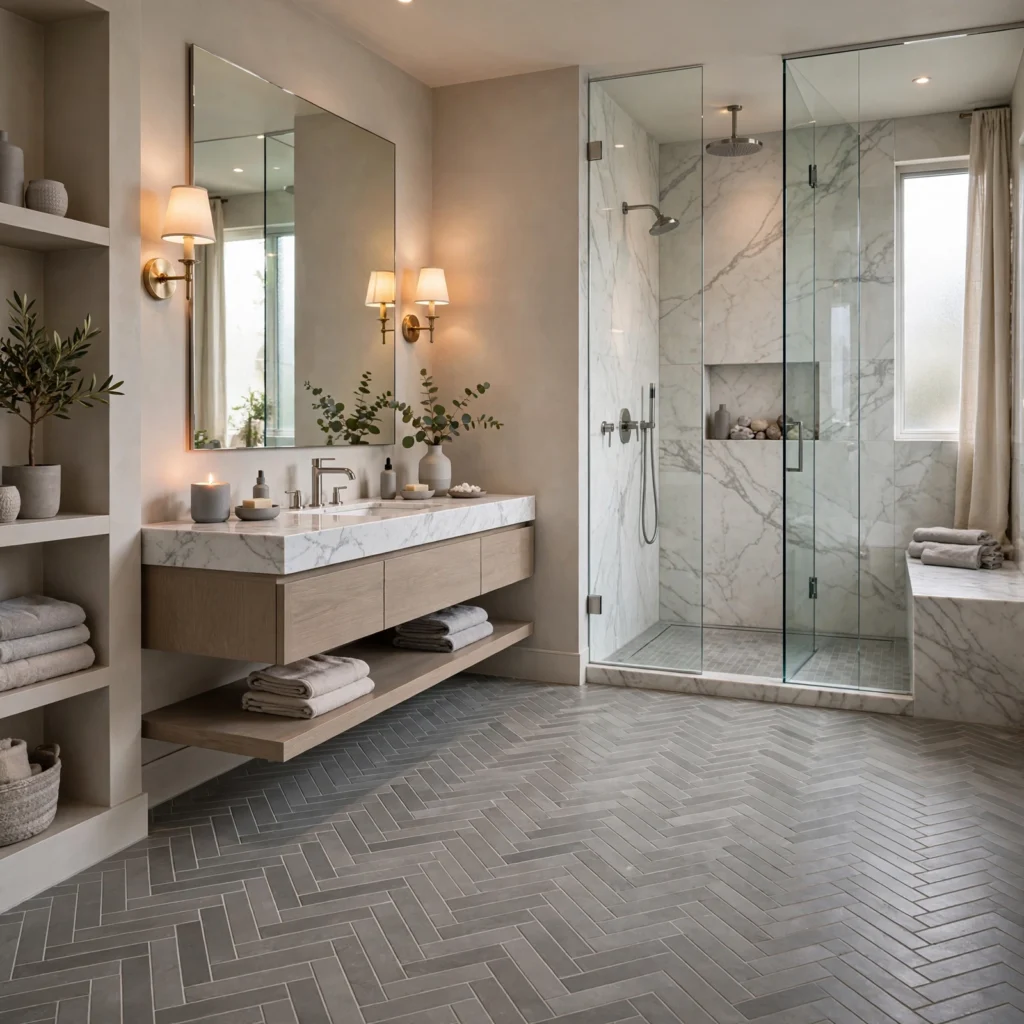
Grey herringbone floor tile uses a classic zigzag pattern that adds visual interest to the floor without requiring a bold color choice, and the angled layout tends to make a small bathroom feel larger than a straight-lay tile of the same size. This pattern works particularly well in a hexagonal or small-format tile, since the pattern reads more clearly at a smaller scale than it would with larger tile pieces.
10. Grey Bathroom With Statement Lighting
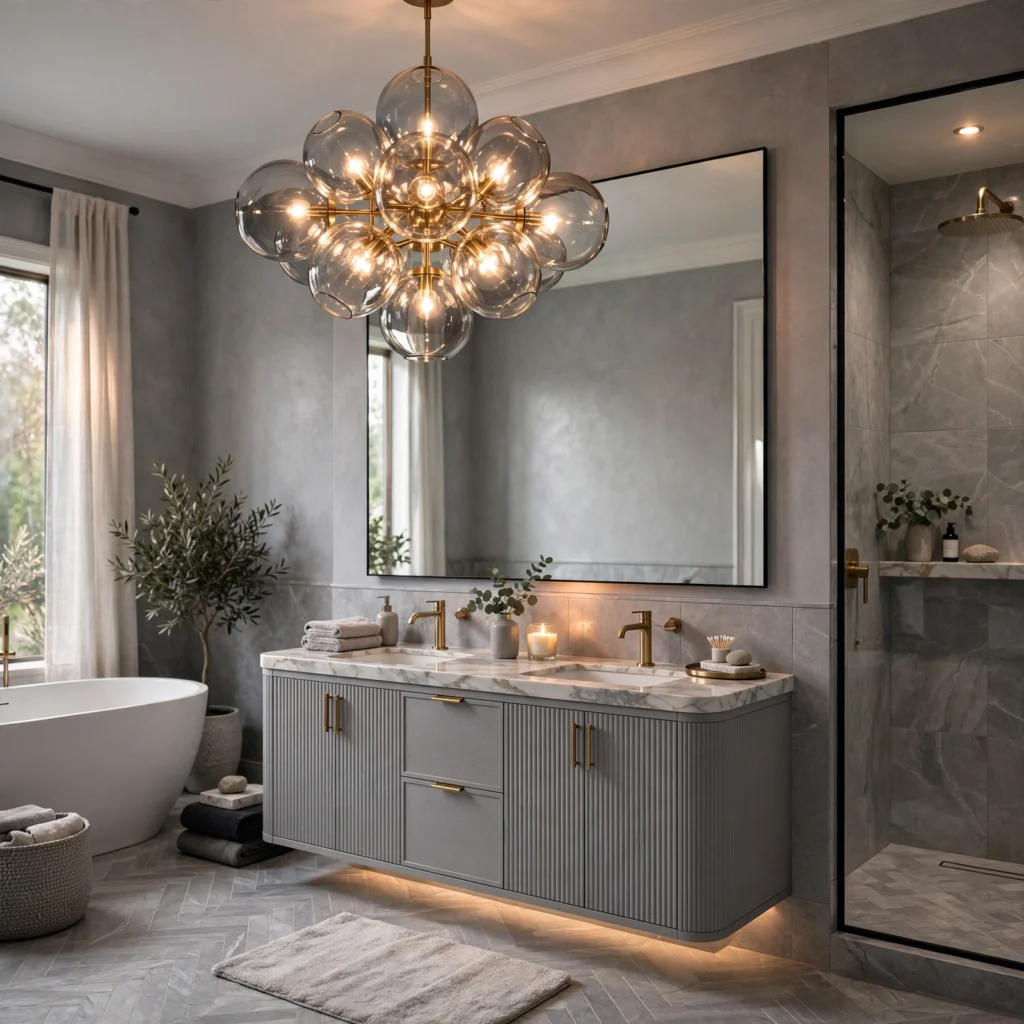
Statement lighting, whether a pair of sconces or a single linear fixture over the vanity, does more to elevate a grey bathroom’s overall feel than almost any other single change, since a cooler grey palette benefits particularly from warm lighting to offset any coldness. Warm-white bulbs, rather than cool daylight ones, keep the room feeling calm and spa-like rather than clinical, especially in the evening.
11. Grey Accent Wall
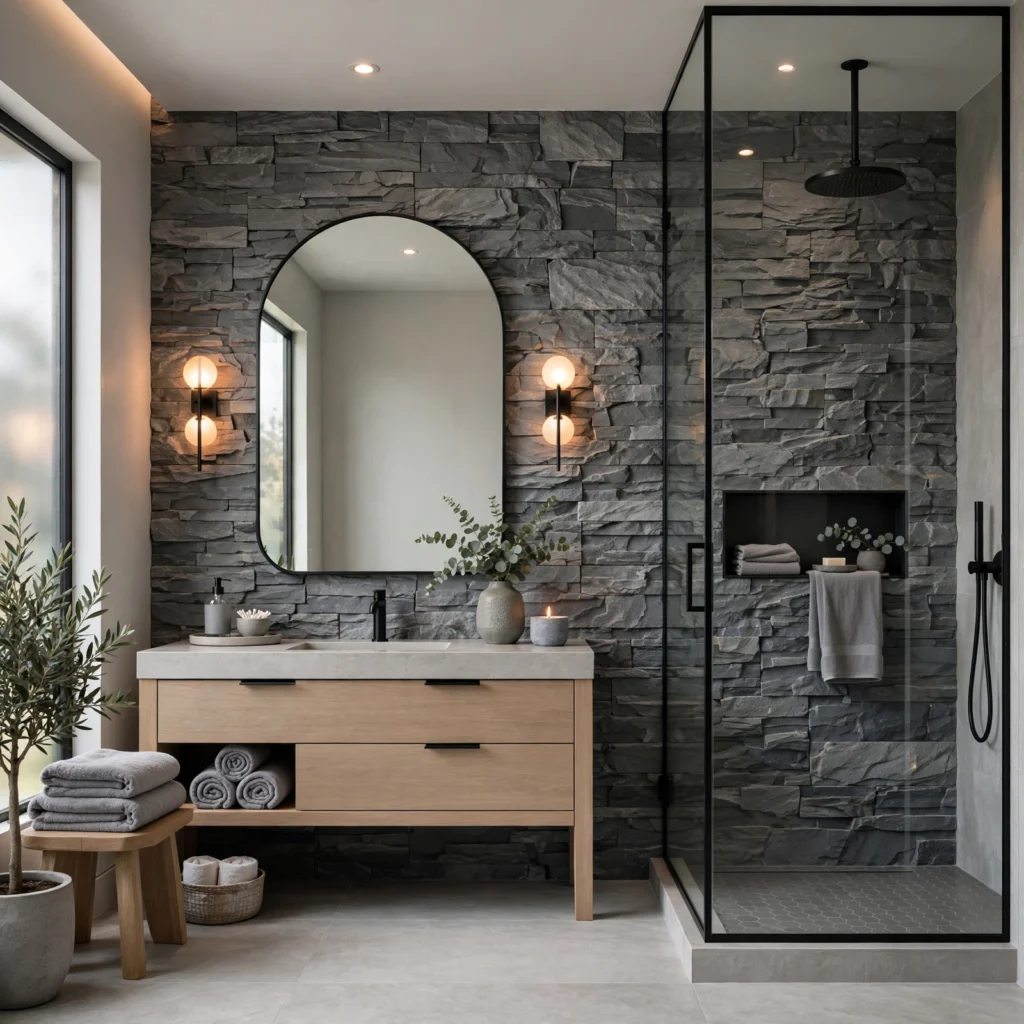
A single grey accent wall, whether painted, tiled, or finished in limewash plaster, adds depth to an otherwise white bathroom without the full commitment of an all-grey room. This works particularly well behind a freestanding tub or as the wall directly facing the door, since it becomes the first thing seen when entering the room. Limiting the grey to one wall keeps the effect from overwhelming a smaller space.
12. Grey Bathroom With Terracotta Accents
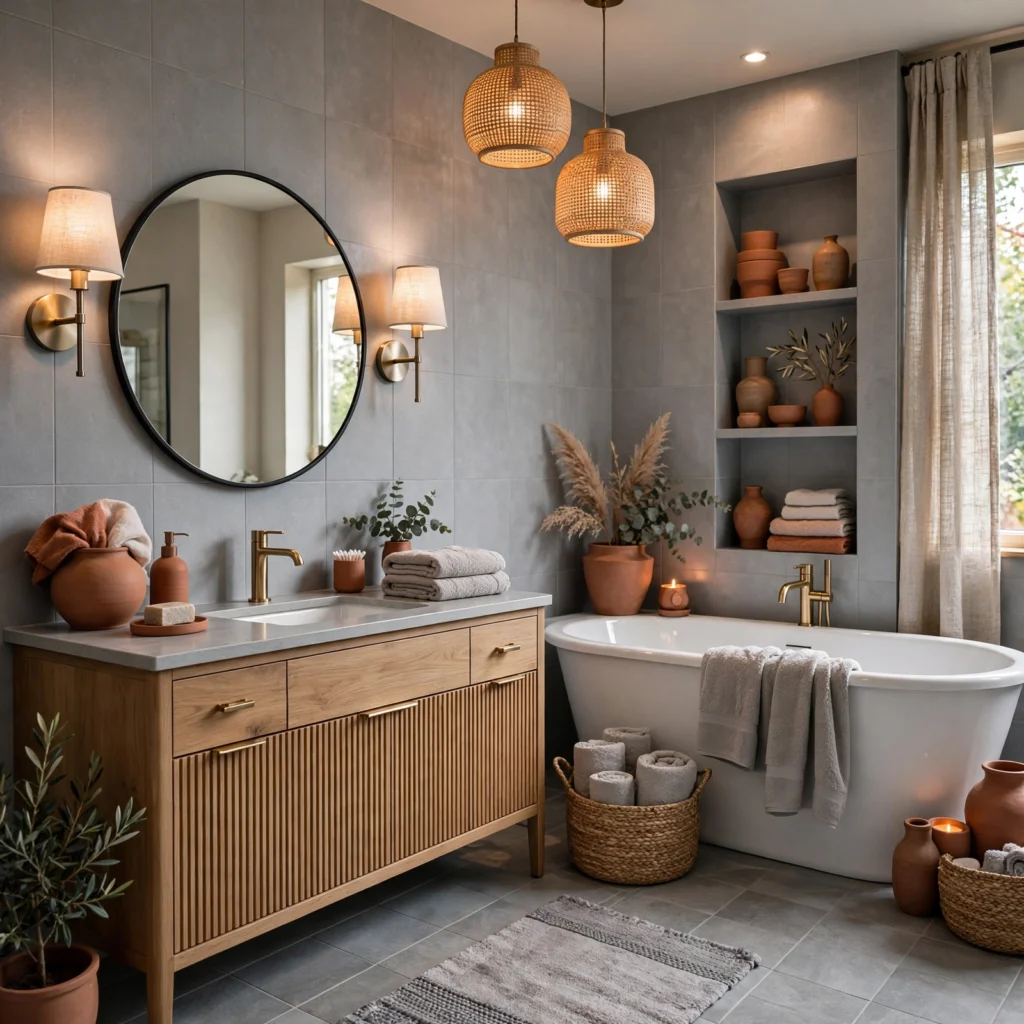
Grey walls or tile paired with a terracotta-toned accent, such as a woven rug, ceramic vessel sink, or clay planter, bring warmth into a bathroom that might otherwise feel cool or clinical. Warmer, greige-leaning grey works particularly well here, since it echoes the warmth of the terracotta rather than competing against it. This pairing suits bathrooms with a more organic, Mediterranean-leaning design direction.
13. Grey Bathroom With a Freestanding Tub
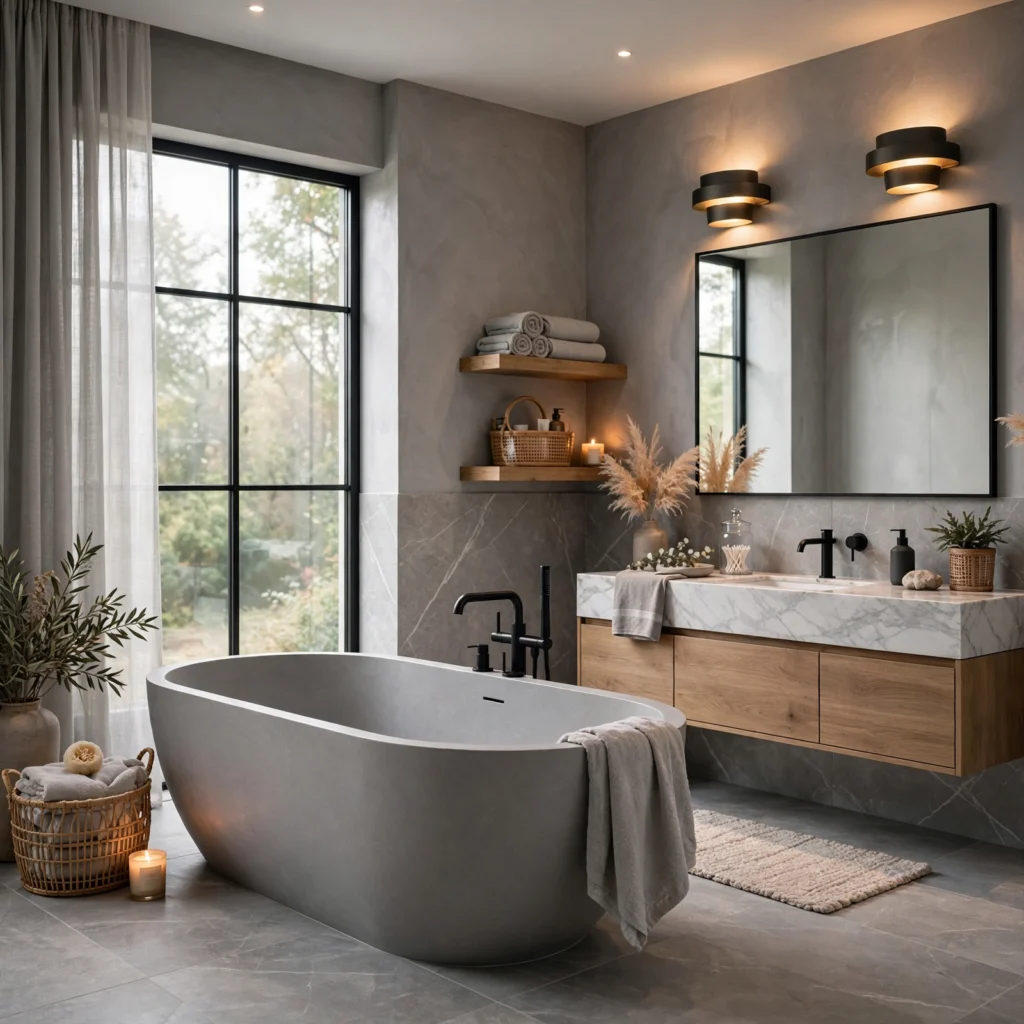
A freestanding tub set against a grey accent wall becomes a clear focal point, with the contrast between the tub’s material, typically white cast iron or solid surface, and the surrounding grey creating natural visual separation. Positioning the tub near a window, where privacy allows, adds natural light without requiring additional fixtures, and further softens the coolness of a darker grey wall behind it.
14. Grey Bathroom With Fluted Vanity Panels
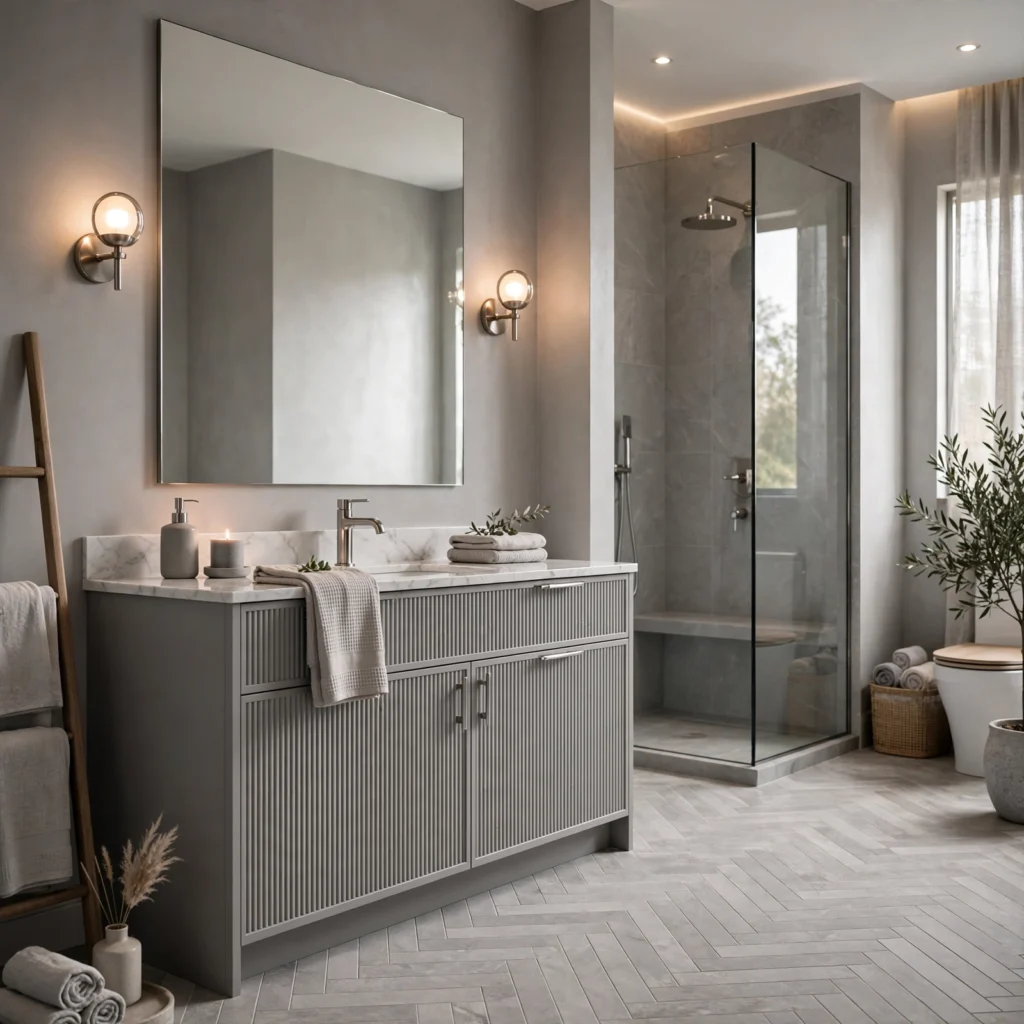
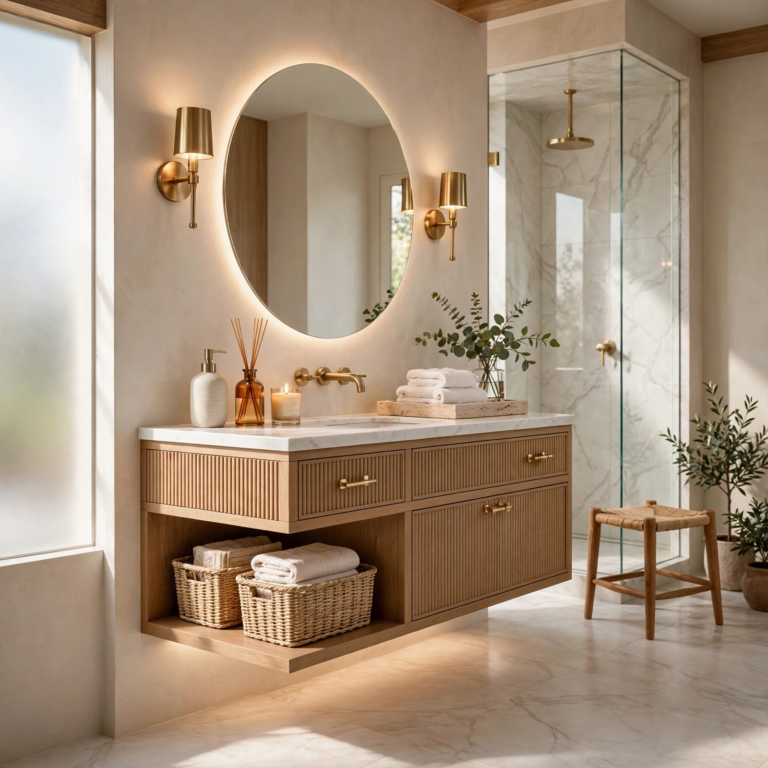
Fluted vanity panels, cut with vertical grooves across the cabinet face, add texture and a subtle play of light and shadow to a grey vanity that a flat slab door doesn’t offer on its own. This detailing works particularly well on a grey vanity specifically, since the grooves catch shadow differently depending on the lighting, adding dimension to what might otherwise be a flat expanse of a single color.
15. Grey and Sage Green Bathroom
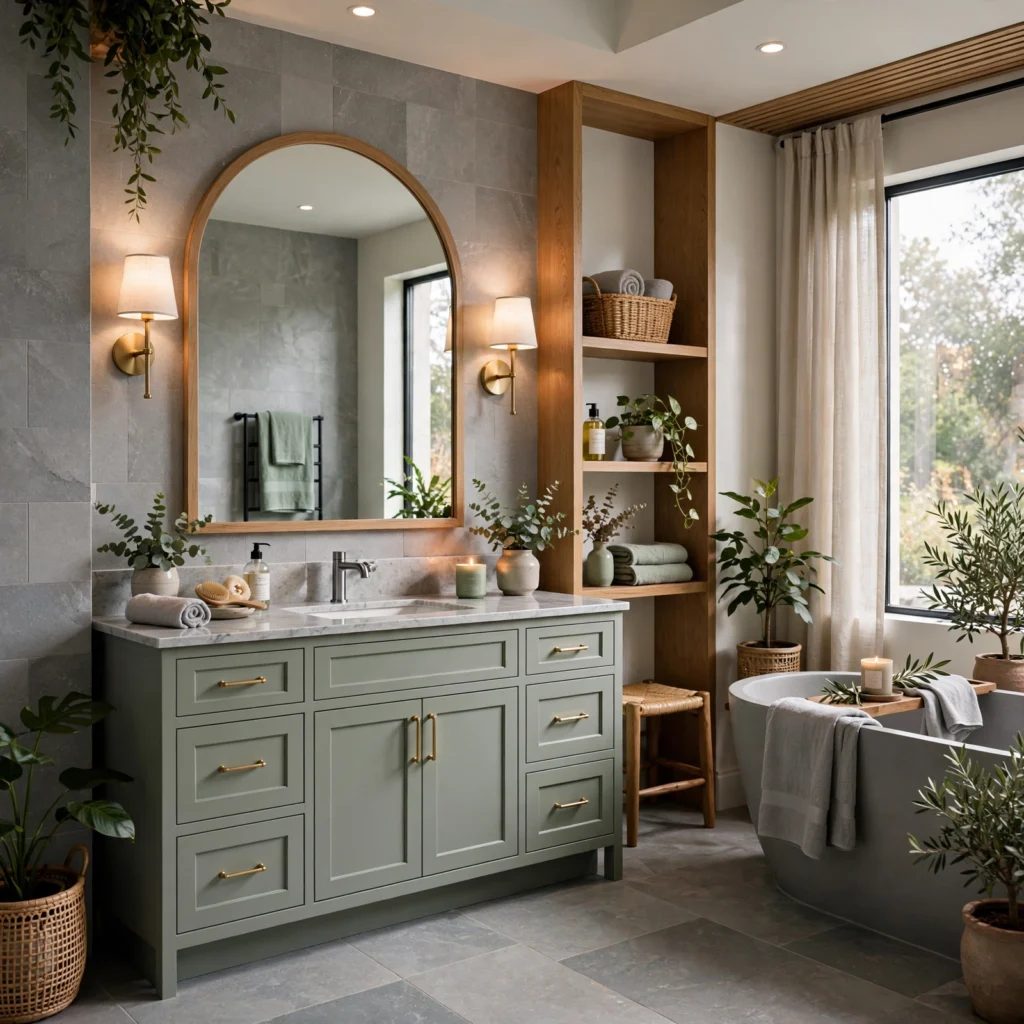
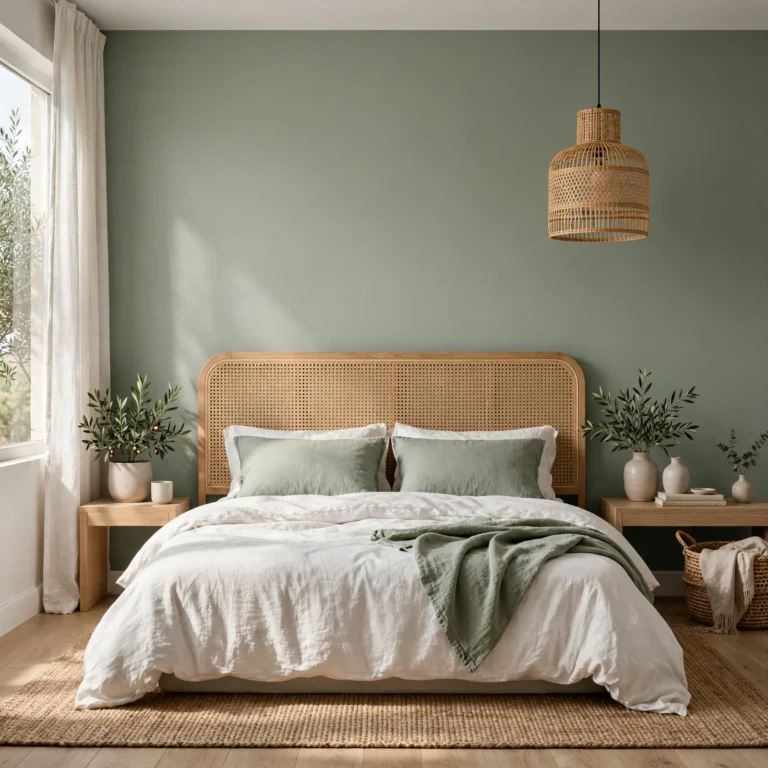
Combining grey walls or tile with sage green accents, whether on cabinetry, a vanity, or textiles, brings a muted, earthy pairing that feels calm rather than bold. The grayed-down green tone doesn’t compete with the grey the way a brighter color might, keeping the overall palette cohesive. This combination is particularly popular in bathrooms designed around a natural, spa-like feel.
16. Grey Bathroom With Mixed Metal Accents
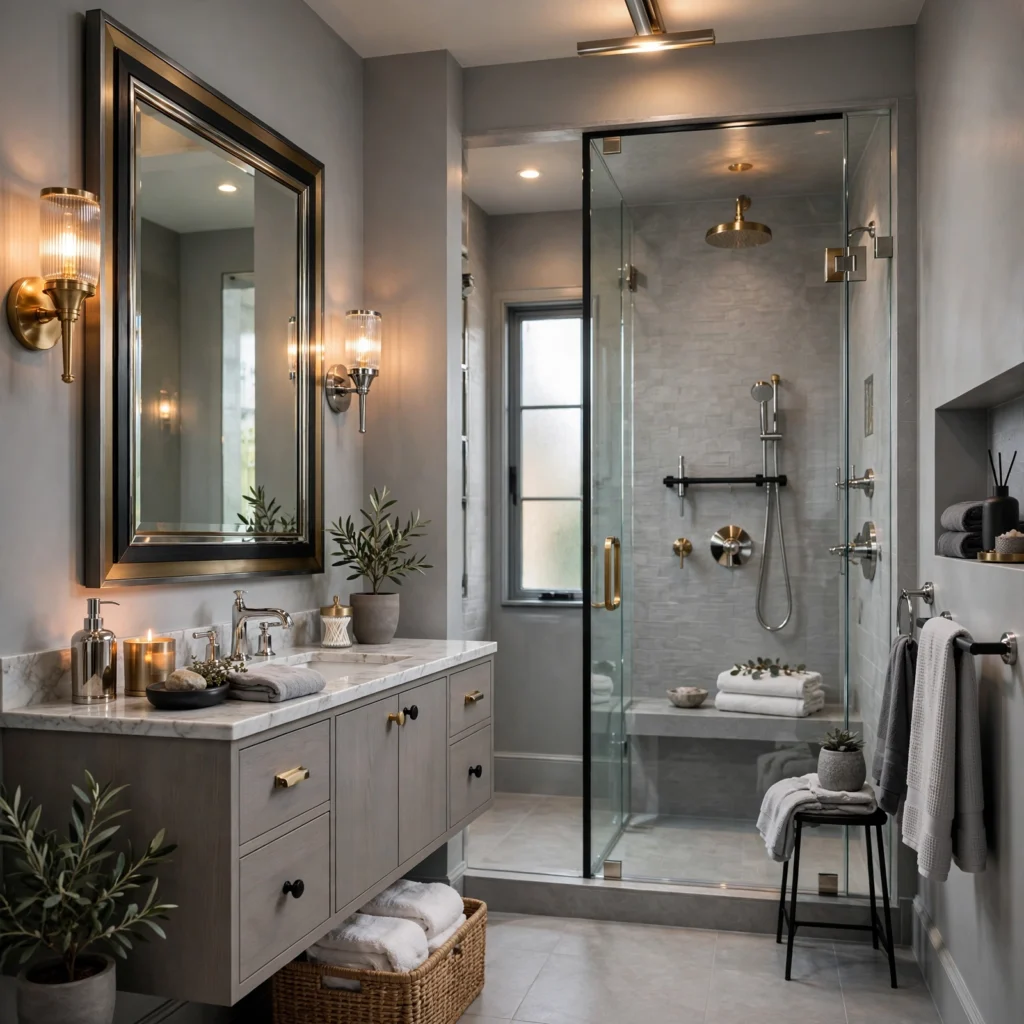
Using two complementary metal finishes, such as brushed nickel for the shower fixtures and unlacquered brass for the mirror and lighting, adds subtle variation to a grey bathroom without introducing another color into the palette. This approach works best when one finish clearly dominates and the second is used more sparingly, such as on a single mirror frame or light fixture, to avoid the room feeling visually busy.
Shop the Look
Start with a quart of warm greige or charcoal bathroom-grade paint, a set of unlacquered brass or matte black fixtures, a honed grey-veined marble countertop, a handmade zellige tile for the shower, and a pair of warm-white sconces for the vanity. These five elements cover paint, fixtures, surfaces, and lighting without requiring a full bathroom renovation.
Common Mistake to Avoid
The most common mistake is choosing a grey shade under warm store lighting and then discovering it looks distinctly blue or purple once it’s on the walls under the bathroom’s actual lighting, particularly in rooms with limited natural light. Always test a large sample swatch directly on the wall and view it at different times of day before committing. A related mistake is pairing a cool, blue-toned grey with cool white fixtures and no warm accents at all, which can leave the room feeling clinical rather than calm.
People Also Ask
What is the best shade of grey for a small bathroom?
Lighter, warm greys like dove grey or a soft greige tend to work best in small bathrooms, since they reflect more available light than a deeper charcoal or slate shade would in a room that often lacks generous natural light. Pairing a lighter grey with a white countertop and ample mirror surface further helps a small bathroom feel more open rather than closed in by a darker palette.
Do grey bathroom ideas go out of style?
Grey has stayed in favor longer than many other bathroom colors because it functions as a flexible neutral, pairing easily with changing fixture, tile, and hardware trends over time. Warm, greige-leaning shades tend to age better than very cool, blue-based greys, which were more closely tied to a specific design era. Choosing timeless tile shapes and layouts alongside the grey palette also helps the bathroom age well overall.
What color goes best with a grey bathroom?
White is the most common pairing, whether on trim, fixtures, or tile grout, since the contrast keeps a grey bathroom from feeling uniformly heavy or flat. Warm wood tones also pair well, particularly on a vanity or open shelving, softening the coolness of a blue-based grey. Brass or gold accents add warmth to nearly any grey shade, making them one of the most flexible pairing choices available.
Should a grey bathroom have matte or glossy tile?
Matte and low-sheen finishes are generally favored for grey bathroom walls and floors, since they read as more custom and closer to natural stone than a glossy, mass-produced tile would. Glossy tile does reflect more light, which can help a small or dim bathroom feel brighter, so the choice often comes down to balancing the room’s available natural light against the desired overall finish and mood.
What lighting works best in a grey bathroom?
Warm-white bulbs, rather than cool daylight tones, are generally more flattering in a grey bathroom, since they help offset any coolness from the palette and keep the room feeling calm rather than clinical. Layered lighting, including vanity sconces at eye level alongside a central overhead fixture, avoids the harsh shadows a single light source often creates and makes the space feel more finished overall.
Conclusion
These sixteen grey bathroom ideas show just how much range the palette offers, from a single charcoal vanity to a full spa-like room layered with warm wood, brass fixtures, and zellige tile. Start small if you’re unsure, a grey accent wall or a charcoal vanity is a low-risk way to test the palette before committing further. Save this guide to Pinterest for your next renovation, and check out our related post on bathroom remodel ideas worth the investment.
Author Expertise Note
Written by a design writer who has covered residential renovation and interior design trends for home publications for several years, working closely with contractors and designers to track which finishes and palettes actually hold up over time.