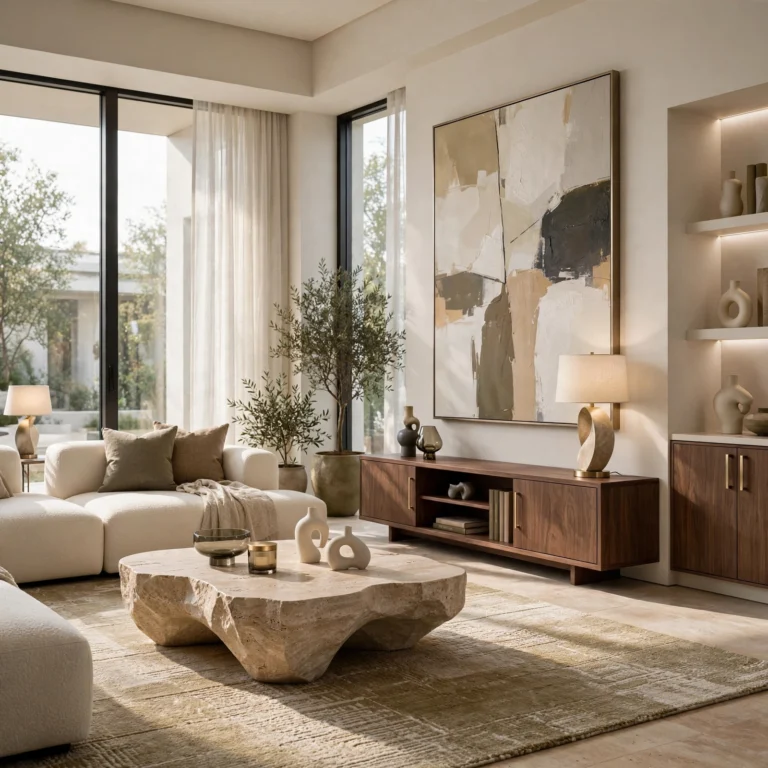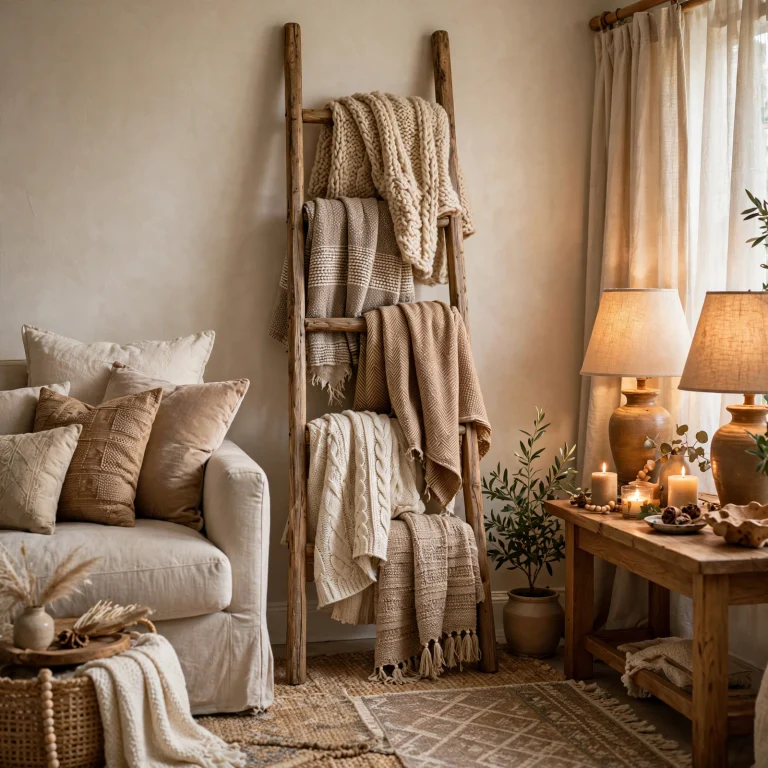
15 Trending Luxury Home Decor Ideas That Look Custom, Not Trendy
There’s a real difference between a room that looks expensive and one that’s actually well-designed, and that difference usually comes down to material choices most people overlook. This guide covers fifteen specific luxury home decor ideas from wall treatments to lighting to textiles each explained with enough detail to apply to your own space, whether you’re working on one room or an entire home. You’ll come away with concrete, sourceable ideas rather than vague inspiration.
Trend & Background
Luxury interiors have shifted noticeably over the past several years, moving away from the glossy, heavily branded maximalism of previous decades toward a quieter, more material-driven definition of luxury. Today’s high-end interiors favor natural stone, hand-applied plaster, and custom millwork over obvious logos or mass-produced statement pieces. This shift matters because it’s made luxury design more attainable in pieces a single well-chosen marble console or a custom lighting fixture can elevate a room in a way that used to require a full high-budget renovation, making these ideas relevant at multiple price points.
Key Takeaways
- Luxury home decor relies on material quality plaster, marble, silk, brass more than on brand names or price tags alone.
- Lighting and hardware finishes tie a room together and are often the most cost-effective way to raise the perceived quality of a space.
- Layering textures like bouclé, velvet, and natural wool prevents a high-end room from feeling cold or showroom-staged.
- Custom or semi-custom details, such as millwork and monogrammed textiles, separate a genuinely luxury interior from one that simply looks expensive.
1. Venetian Plaster Walls
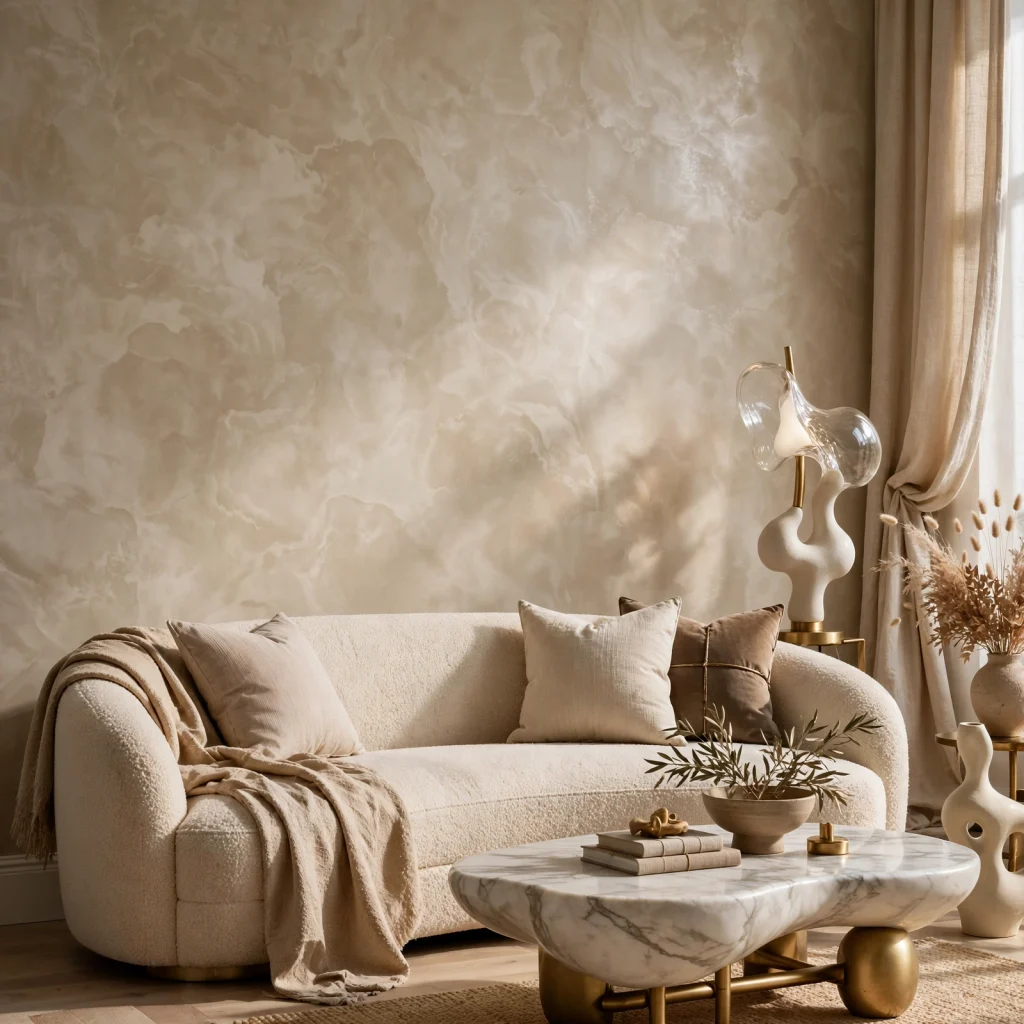
Hand-applied Venetian plaster gives walls a soft, marbled depth that flat paint simply can’t replicate, catching light differently throughout the day. It’s especially effective in entryways, powder rooms, or a single accent wall in a living or dining room, where the texture becomes a focal point rather than a background element. True lime-based plaster requires a skilled applicator, but tinted plaster-effect paints now offer a reasonably close alternative for a fraction of the cost, making this technique accessible beyond full custom renovations.
| Finish Type | Approx. Cost per Sq Ft | Best Use Case |
| Plaster-Effect Paint | $3–$6 | DIY accent walls |
| Tinted Venetian Plaster | $12–$20 | Feature walls, powder rooms |
| Polished Lime Plaster | $20–$35 | Full-room application |
| Marmorino Plaster | $25–$40 | High-traffic formal spaces |
2. Marble Console Table
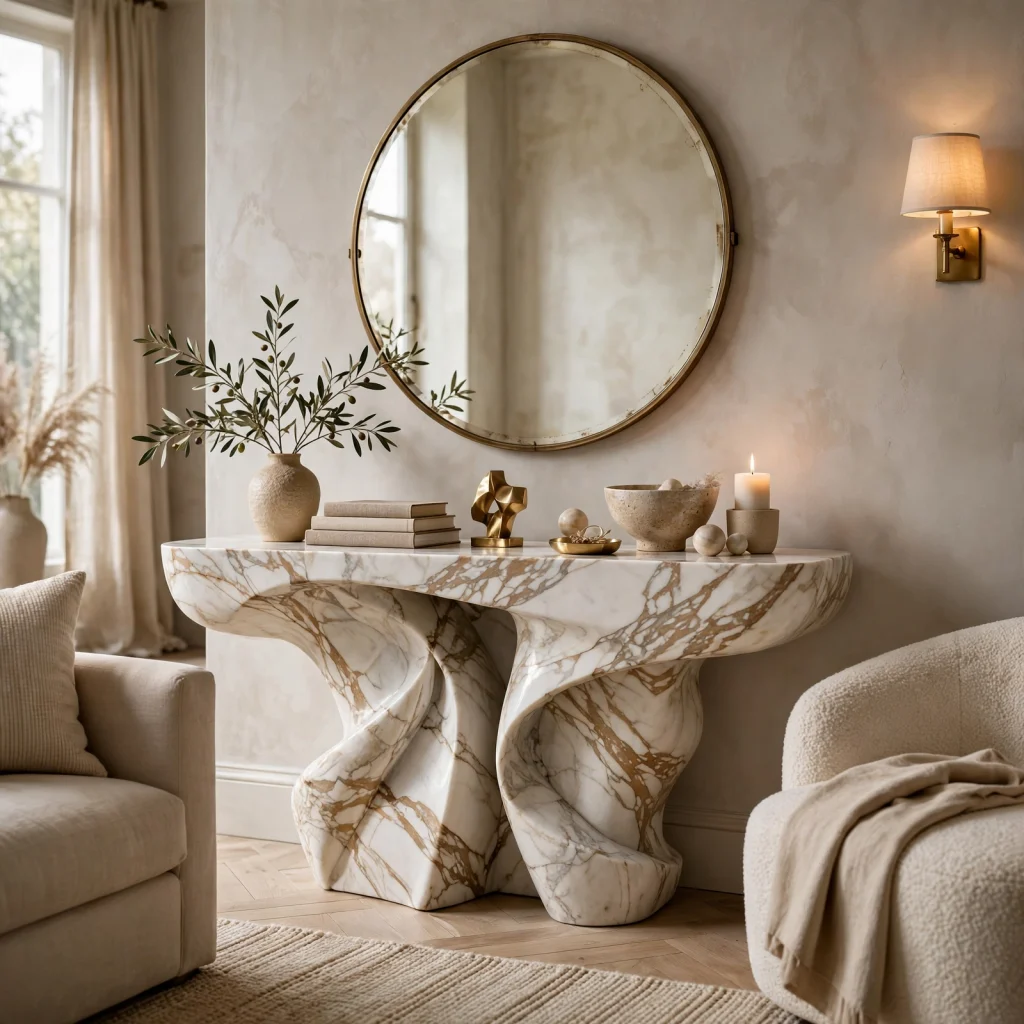
A marble-top console table, whether solid slab or a marble veneer over a wood core, introduces cool, natural texture into an entryway or living room. Choose Carrara, Calacatta, or a warmer travertine depending on the room’s undertone, and pair it with a brass or blackened steel base rather than an ornate carved wood frame, which can read as more traditional than current. Style it sparingly with one or two objects a sculptural lamp, a single vase so the stone’s natural veining stays the visual focus rather than competing with clutter.
3. Brass Hardware Accents
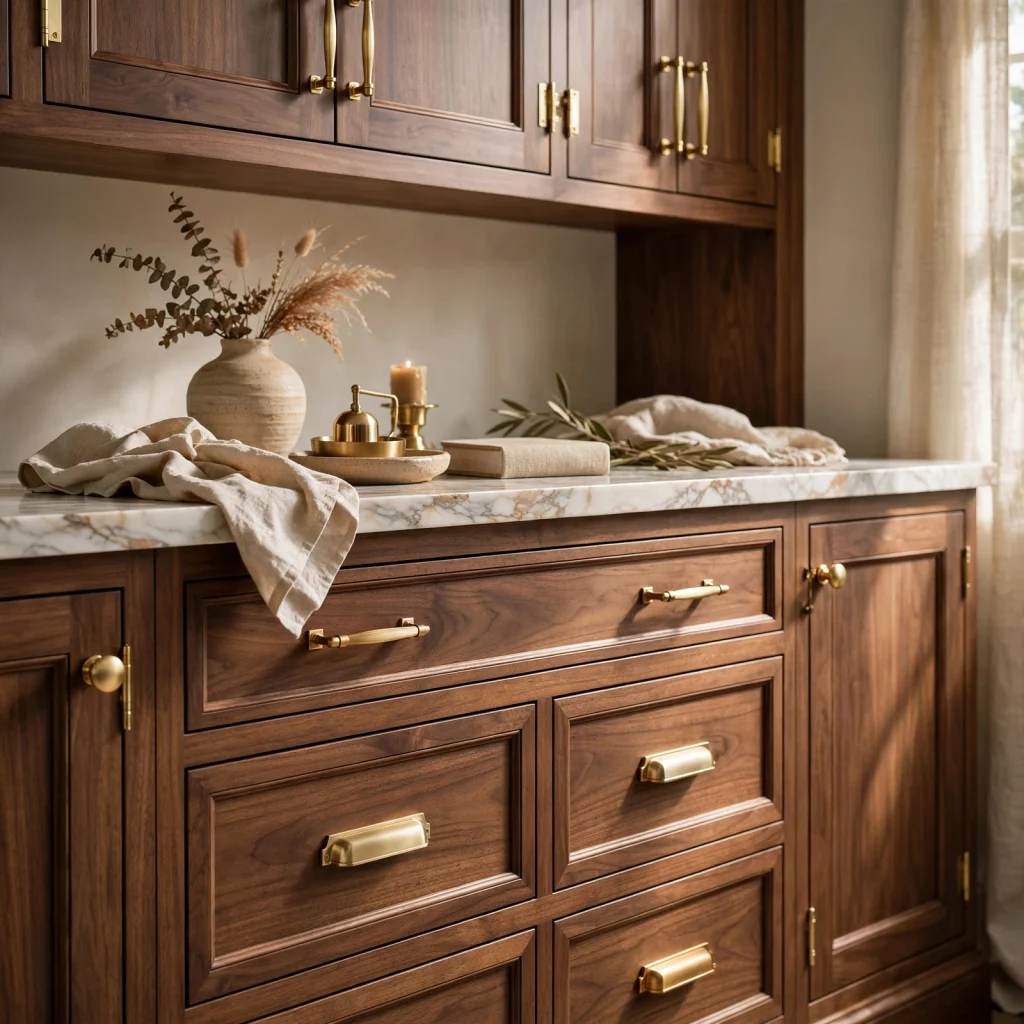
Swapping cabinet pulls, door handles, and faucet fixtures to unlacquered or aged brass is one of the most cost-effective ways to raise a room’s perceived quality without a full renovation. Unlike polished brass, which can look artificial under direct light, unlacquered brass develops a natural living patina over time that reads as genuinely high-end. Apply the finish consistently across a room or entire floor rather than mixing metals randomly, since consistency in hardware finish is one of the more overlooked signals of an intentionally designed space.
To see more spring home decor
4. Statement Chandelier
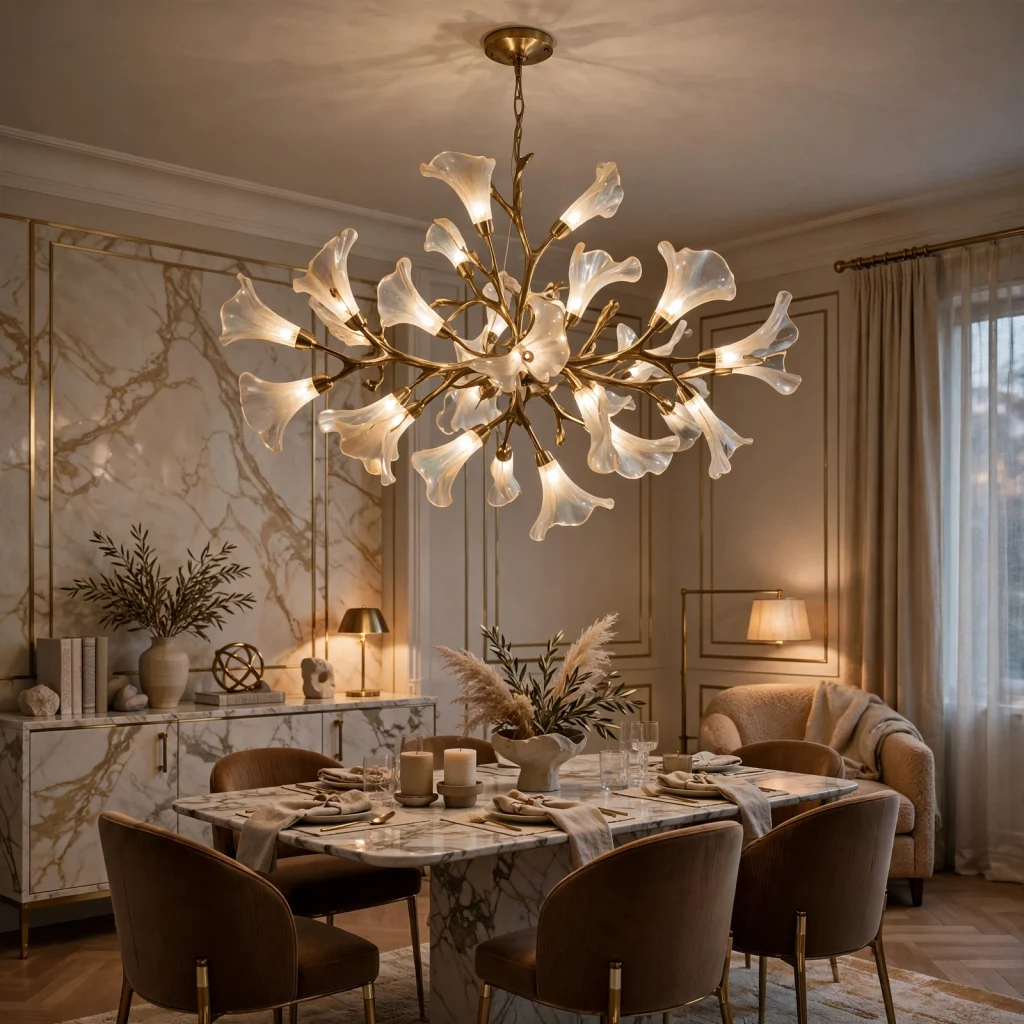
A sculptural chandelier whether hand-blown glass, a linear brass fixture, or a cluster of small glass globes functions as a piece of art as much as a light source. Scale it to the room rather than defaulting to a standard builder-grade fixture, and consider a dimmer so it can shift from bright task lighting to soft ambient glow in the evening. In dining rooms and entryways especially, this single fixture often does more to establish a luxury feel than any other individual purchase in the space.
5. Silk Drapery Panels
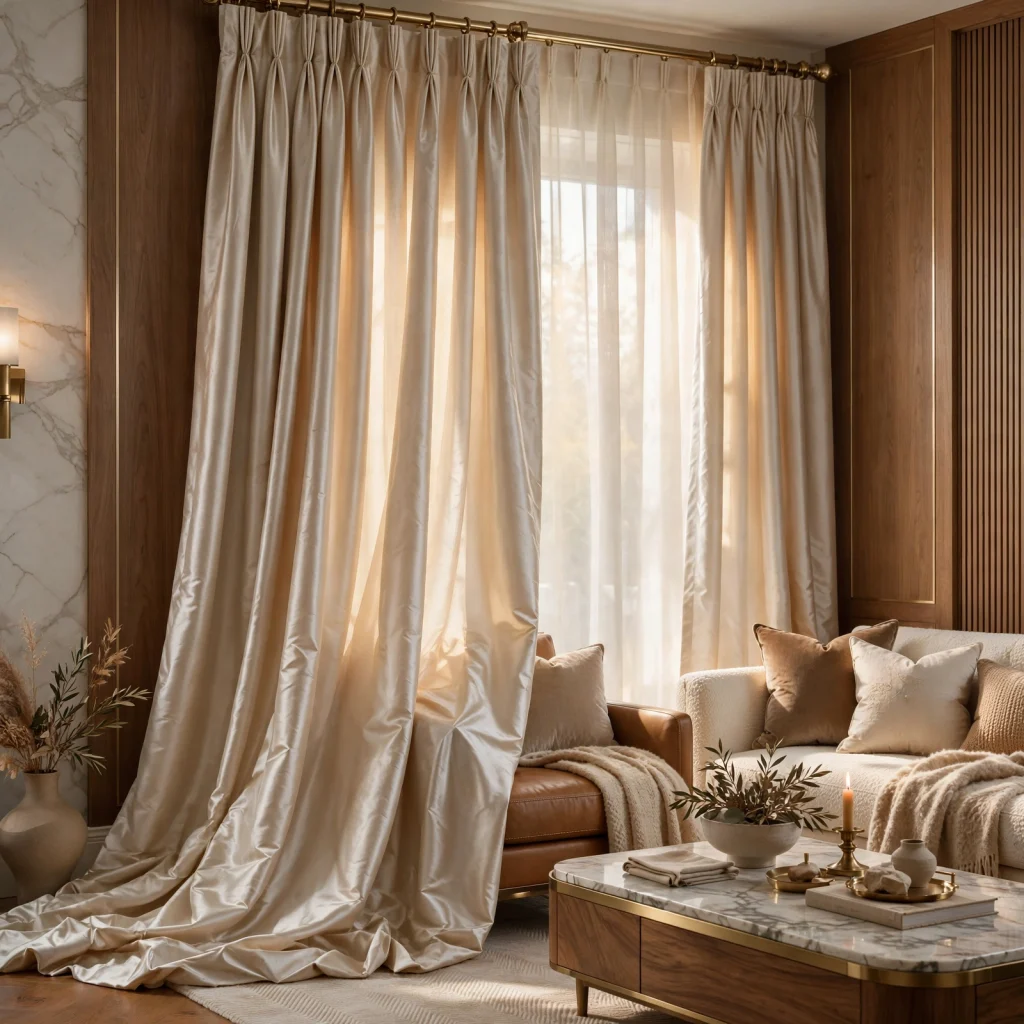
Floor-to-ceiling silk or silk-blend drapery panels add a soft sheen and fluid drape that cotton or polyester curtains can’t match, catching and reflecting light subtly throughout the day. Hang them from ceiling height on a substantial rod, ideally extending several inches beyond the window frame on each side, to make the window and ceiling both feel larger. Line the panels to protect the silk from sun damage and to add body, since unlined silk can look thin and flat once installed.
6. Bouclé Upholstery
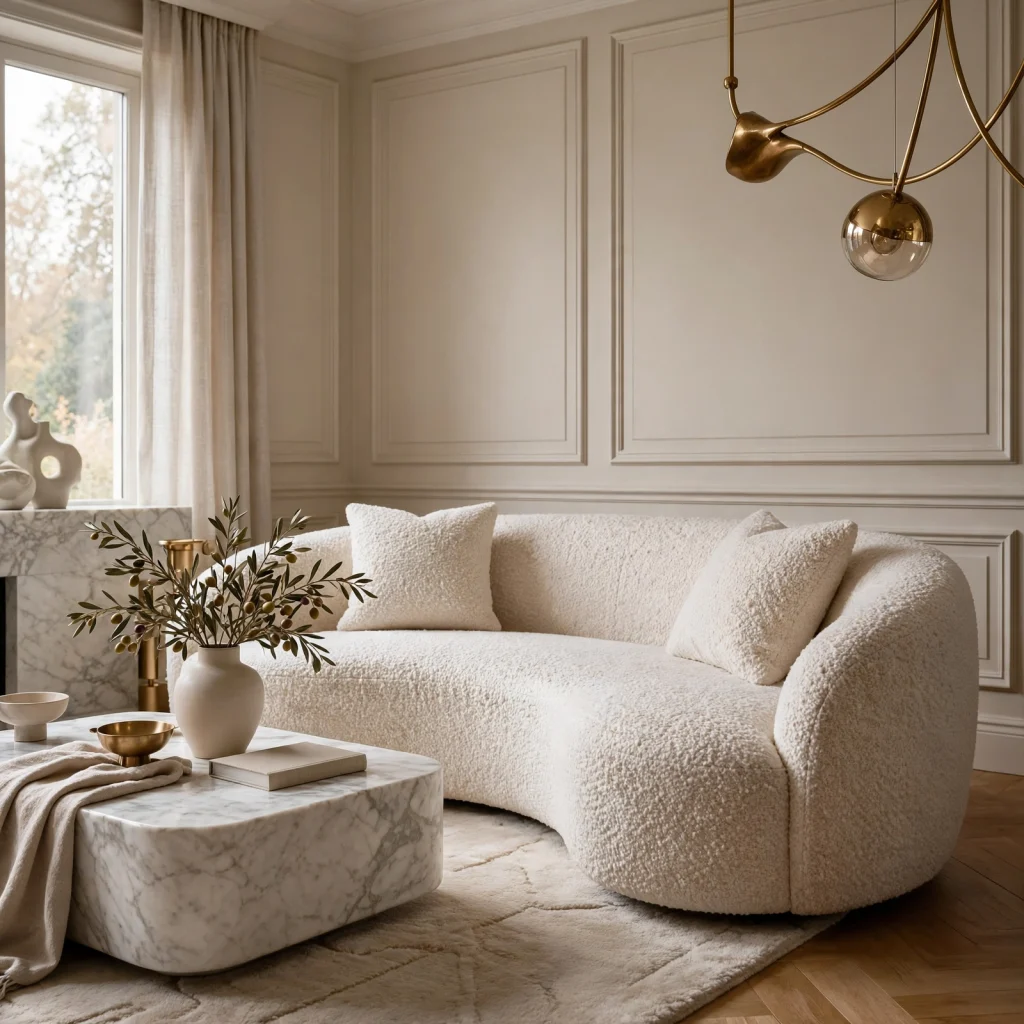
Bouclé’s looped, textured weave has become a defining fabric choice in current luxury interiors, offering tactile richness without the maintenance concerns of silk or the formality of leather. An accent chair or small sofa in ivory, oatmeal, or soft taupe bouclé adds visual softness and works well against harder surfaces like marble or brass. Because the texture is already visually rich, keep the silhouette simple rounded arms, tapered wood legs so the fabric itself remains the star of the piece rather than competing with an overly ornate frame.
7. Custom Millwork
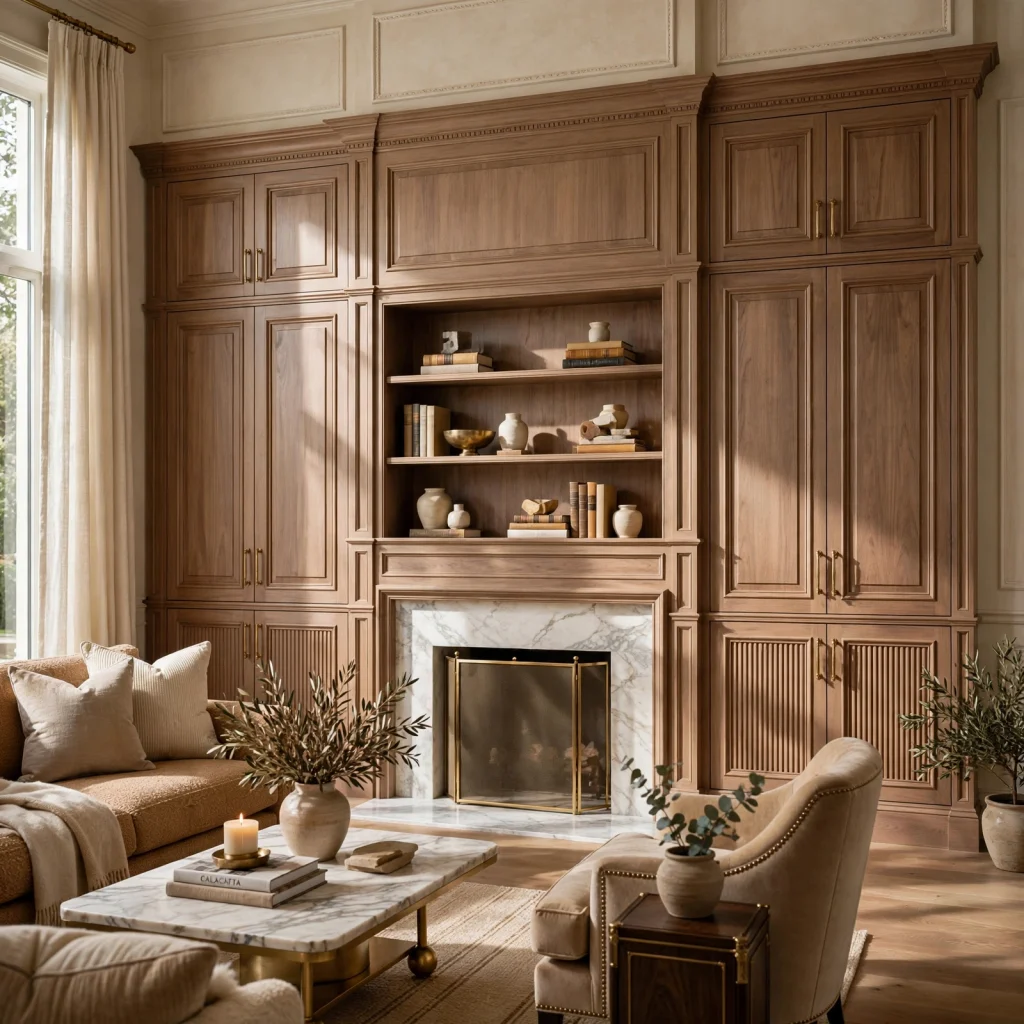
Built-in millwork paneled walls, coffered ceilings, or a custom bookcase wall signals a level of intentional design that off-the-shelf furniture can’t replicate. Even a single accent wall of fluted or reeded wood paneling, painted to match the surrounding walls, adds dimension and shadow play without introducing another color. This is a larger investment than most ideas on this list, but it tends to have the most lasting impact on a room’s perceived value, since it becomes part of the architecture rather than furniture that can be swapped out later.
8. Layered Persian Rugs
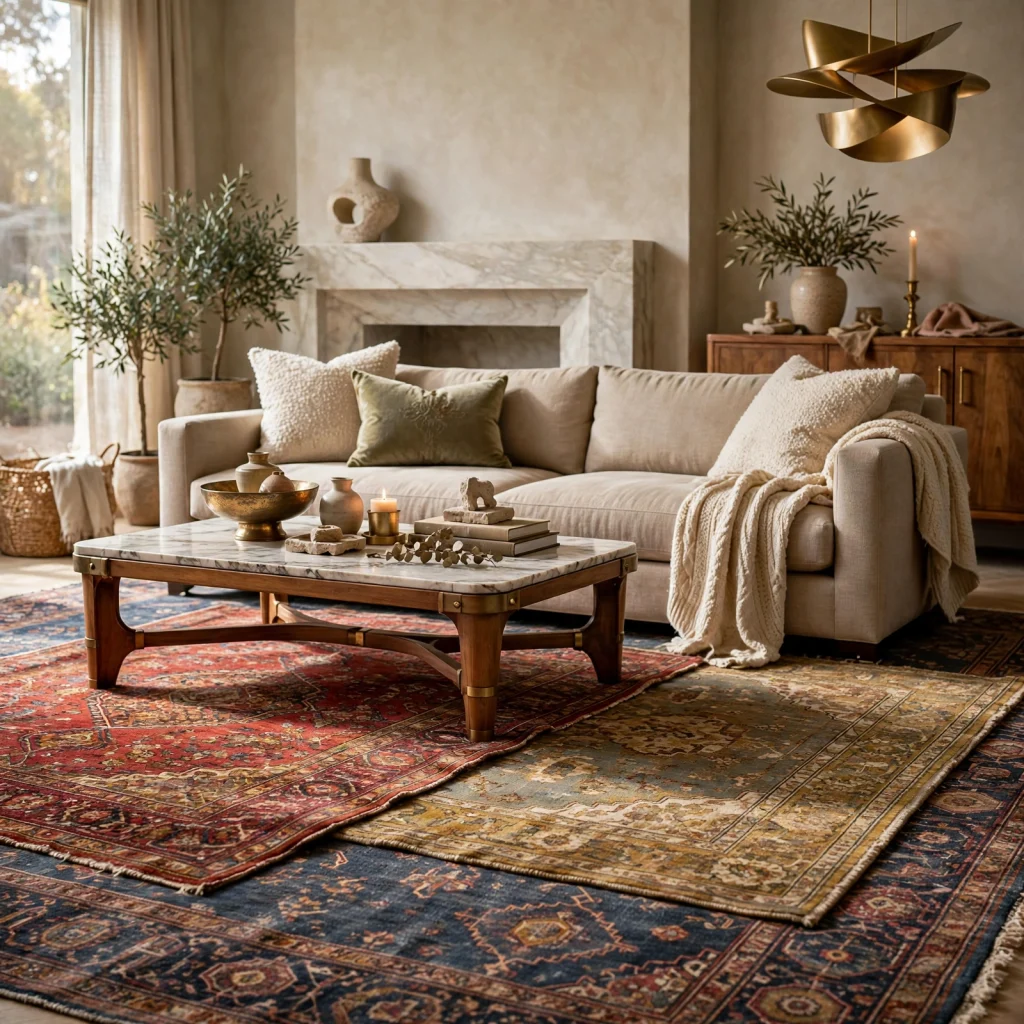
An antique or vintage Persian rug, layered under or alongside a solid-color wool rug, adds pattern, history, and depth in a way that a single new rug rarely achieves. Look for muted, faded colorways soft rust, dusty blue, aged ivory rather than the bold, saturated reds often associated with traditional Persian rugs, since faded tones read as more current and less formal. Sizing correctly is critical here, since an undersized rug is one of the fastest ways to undercut an otherwise well-furnished room.
| Room Size | Recommended Rug Size | Placement Rule |
| Small (10×10 ft) | 6×9 ft | Front legs of furniture on rug |
| Medium (12×15 ft) | 9×12 ft | All furniture legs on rug |
| Large (16×20 ft) | 10×14 ft | All furniture legs on rug |
| Formal dining room | Table + 24″ overhang | Chairs fully on rug when pulled out |
9. Gallery-Framed Art
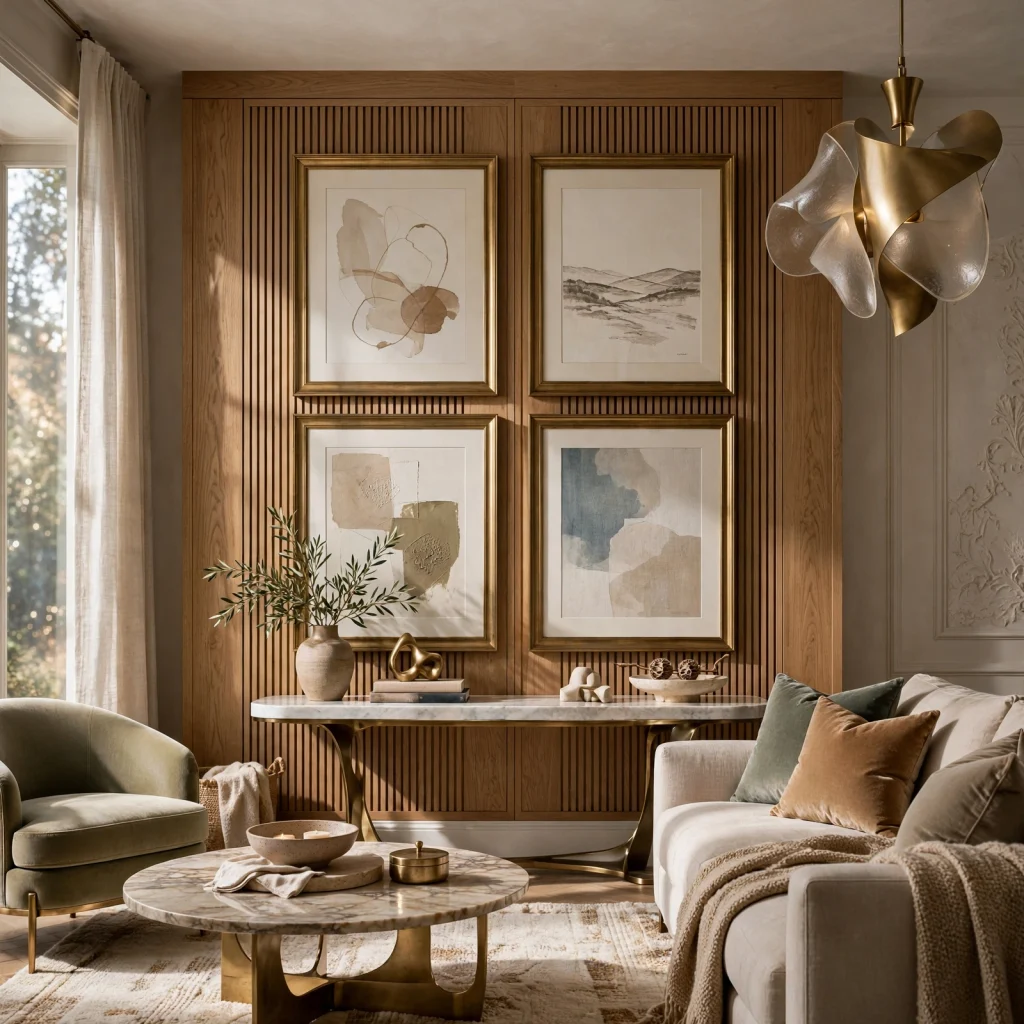
A collection of original or limited-edition art, uniformly framed in a single material like fluted wood or slim brass, reads as far more considered than mismatched prints in varied frame styles. Work with a framer who can advise on museum-quality matting and UV-protective glass, which preserves the work and adds a subtle formality to the presentation. Even a modest art budget looks significantly more polished once everything is framed consistently, since frame uniformity is often what separates a curated gallery wall from a cluttered one.
10. Crystal Table Lamps
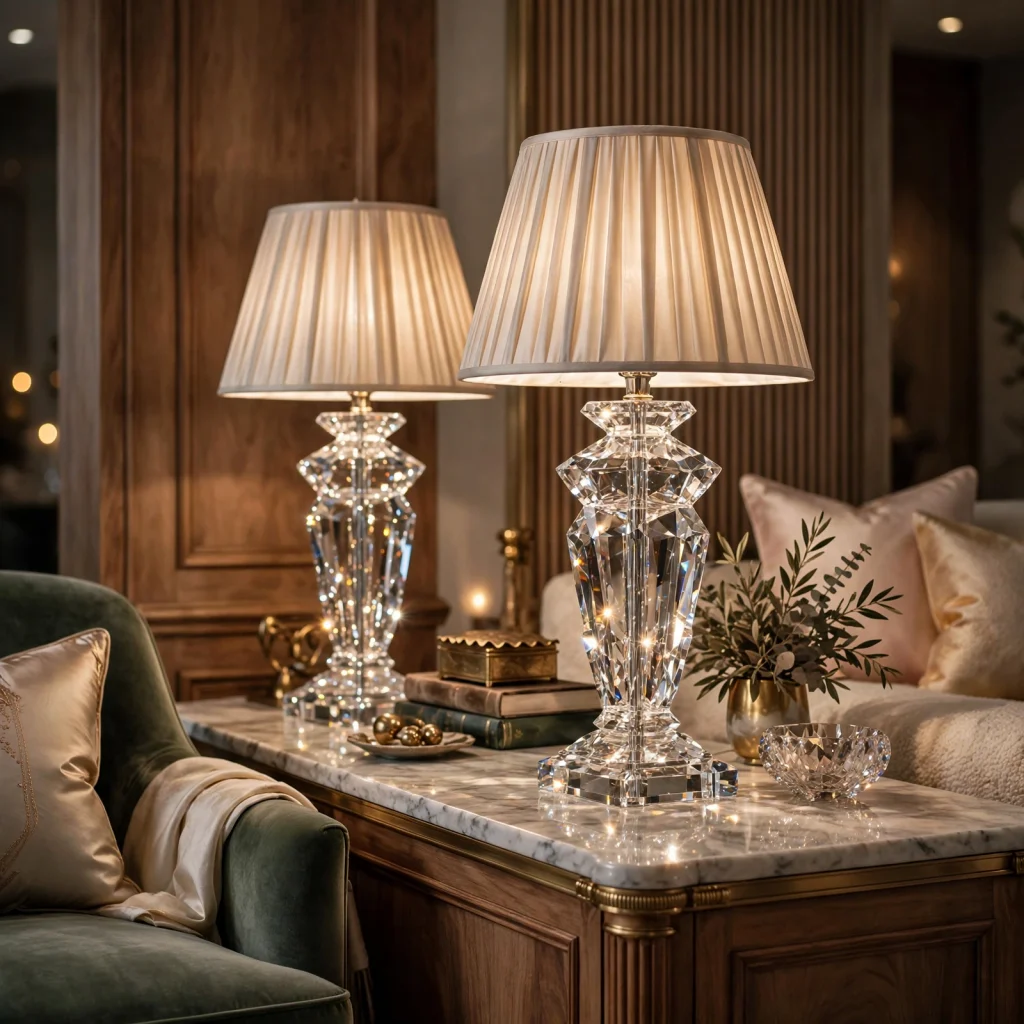
A pair of crystal or cut-glass table lamps on a console or sideboard introduces sparkle and dimension without the commitment of a full chandelier swap. Choose a lamp with a substantial, faceted base and a simple linen or silk shade rather than an ornate patterned shade, which can quickly tip the look from elegant to dated. Using lamps in pairs, rather than a single asymmetric placement, is a classic technique in high-end interiors for creating visual balance across a console or mantel.
11. Velvet Accent Chair
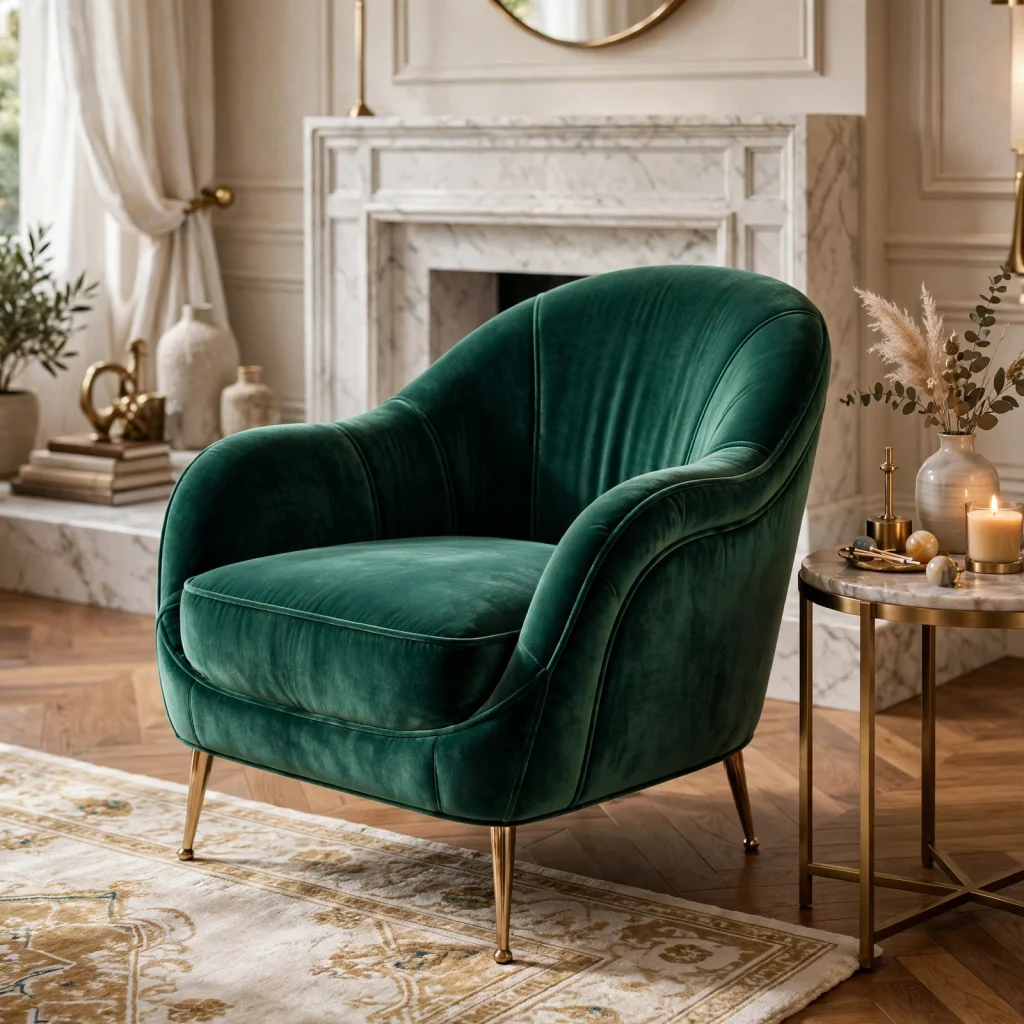
A single accent chair upholstered in a rich jewel-tone velvet emerald, sapphire, or deep burgundy introduces color and a sense of formality into an otherwise neutral room. Velvet’s light-catching pile gives even a simple silhouette a sense of depth and weight, especially under warm ambient lighting. Limit this bold color choice to one piece per room, paired with brass or dark wood legs, so it reads as an intentional statement rather than clashing with the rest of the palette.
12. Herringbone Wood Flooring
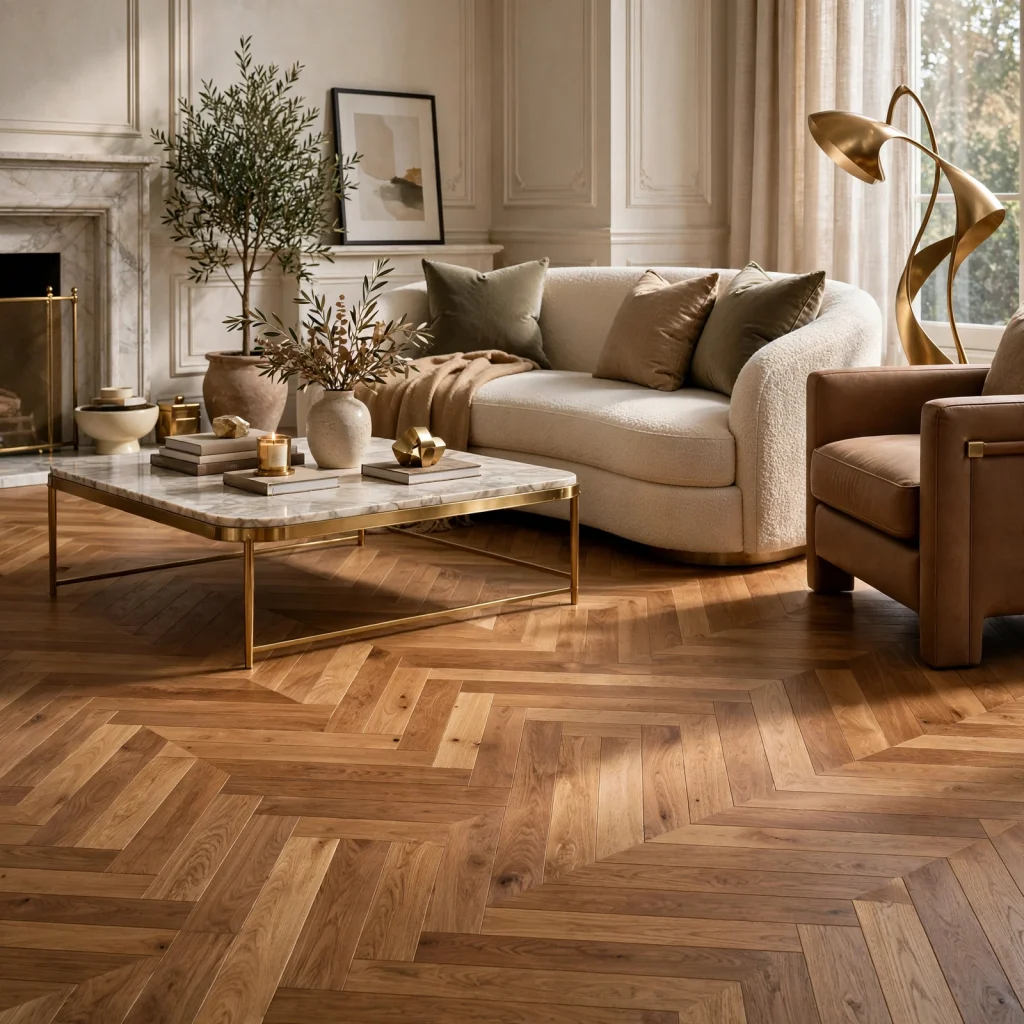
Wide-plank herringbone flooring, particularly in white oak or walnut, adds architectural pattern underfoot that standard straight-plank flooring lacks. The angled pattern draws the eye and adds a sense of craftsmanship to a room even before any furniture is added. A matte or hand-scraped finish tends to look more current and less formal than high-gloss flooring, and it hides everyday wear better in high-traffic rooms like entryways and living areas, making it both a design and a practical choice.
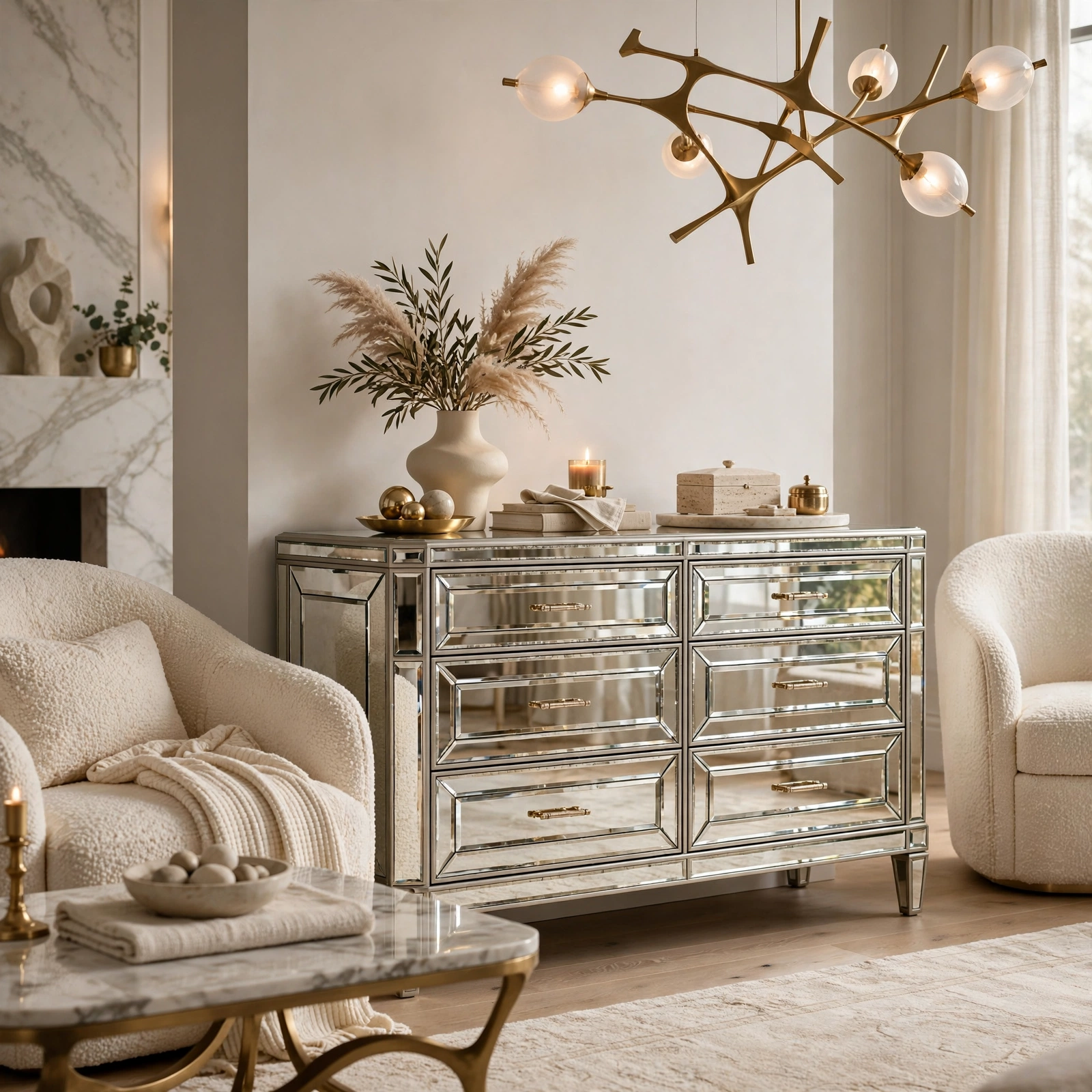
13. Mirrored Furniture
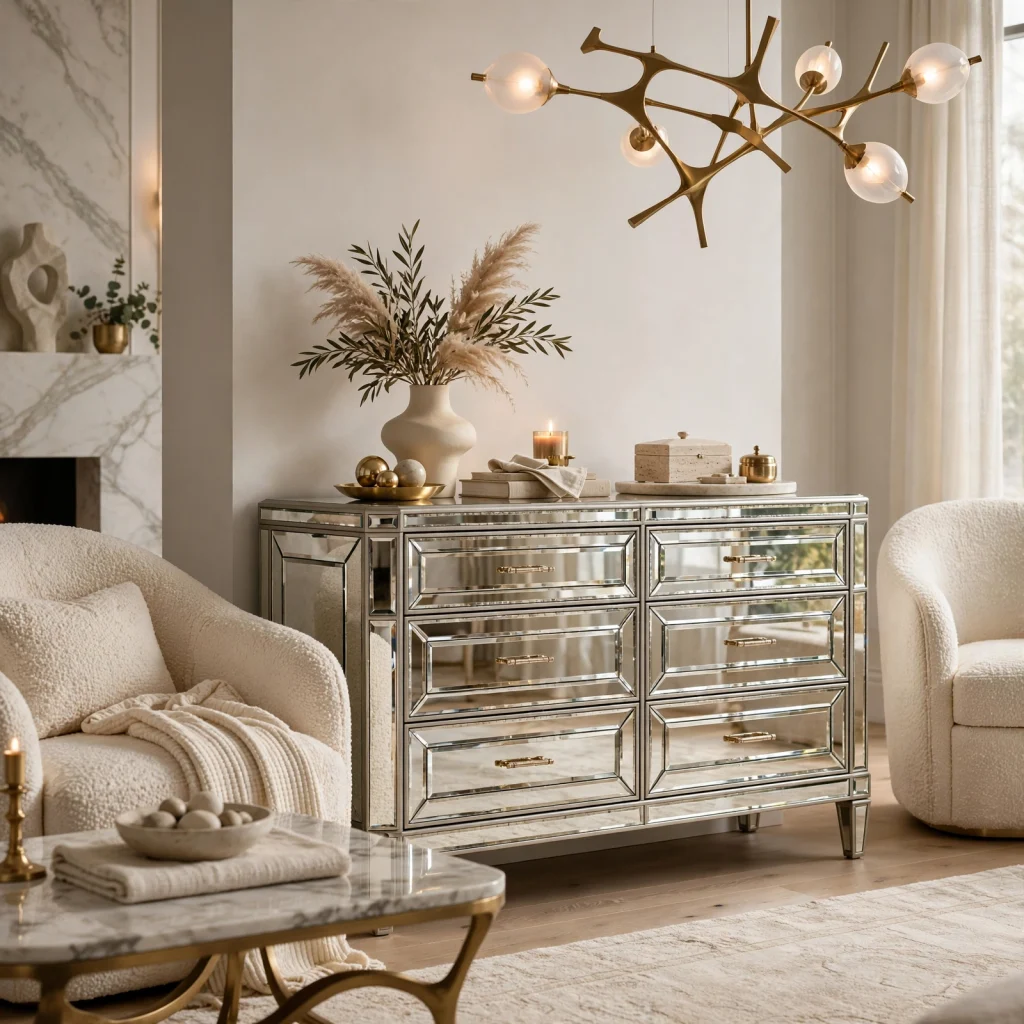
A single mirrored or antiqued-glass furniture piece a side table, a bar cart, or a console introduces reflective depth and makes a room feel larger by bouncing light around the space. Choose antiqued or smoked glass over clear mirrored surfaces, which can read as dated or overly glam depending on the rest of the room. Use this sparingly, typically one piece per room, since too much reflective surface can start to feel more like a retail display than a considered home.
14. Fresh Floral Arrangements
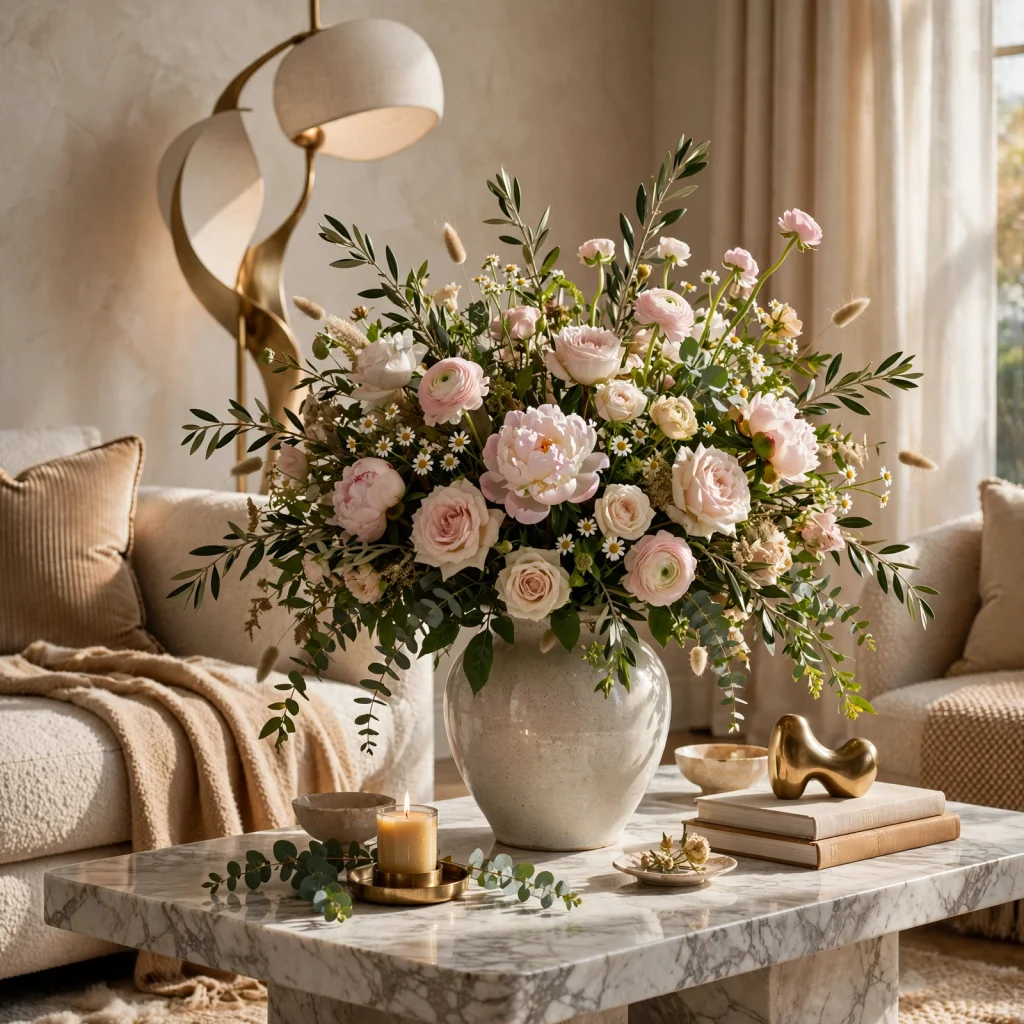
A large, loosely arranged bouquet of seasonal flowers on a dining table or entry console signals ongoing care and investment in a home in a way that permanent decor can’t replicate on its own. Work with a florist for an arrangement using varied stem heights and a mix of blooms and greenery rather than a tightly uniform, symmetrical shape, which tends to look more current. This is a recurring cost rather than a one-time purchase, but it’s one of the most reliable ways to make a space feel actively lived in and maintained.
15. Monogrammed Linens
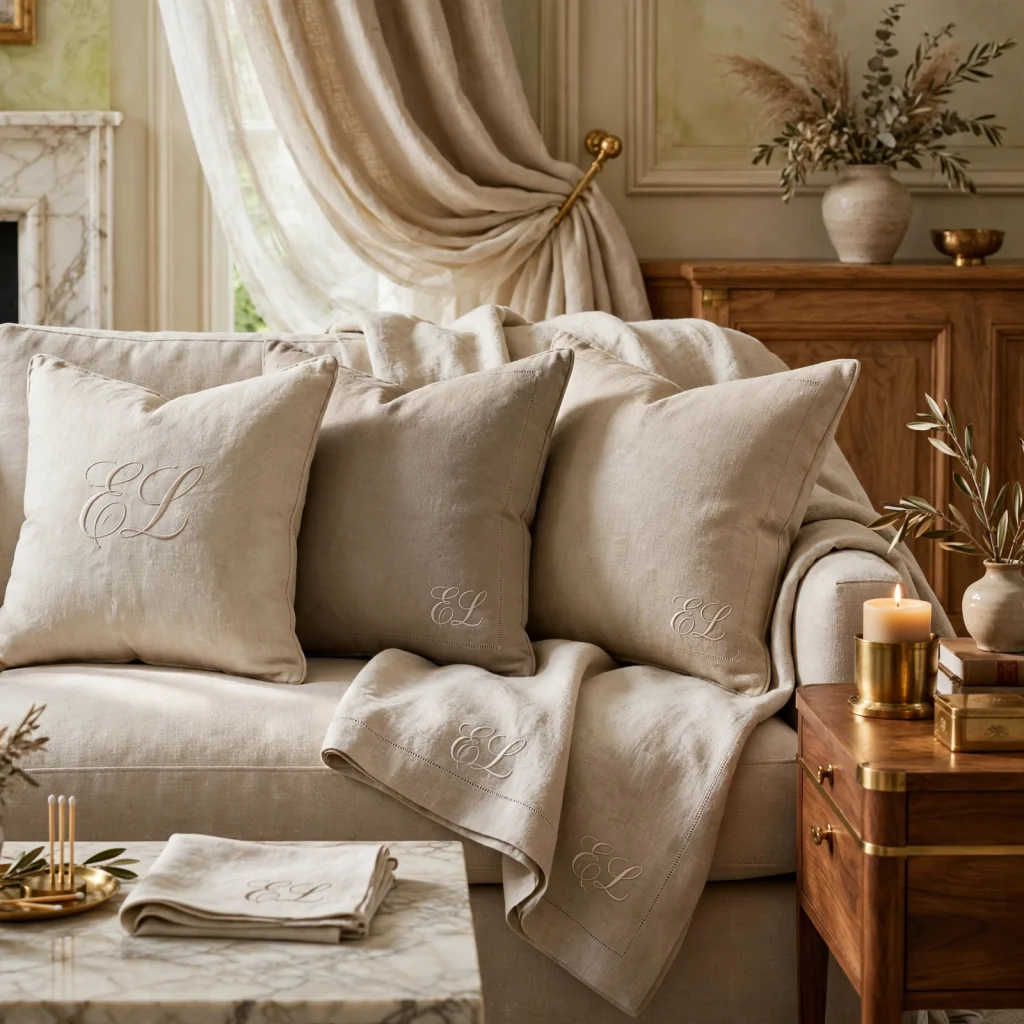
Custom monogrammed throw pillows, bath towels, or table linens add a personal, tailored detail that mass-produced decor can’t replicate, signaling a level of intentional customization throughout the home. Keep the monogram subtle a single small initial or set of initials in a matching or tonal thread color rather than large or brightly contrasting lettering, which can look more novelty than refined. This detail works particularly well in guest bathrooms and formal dining settings, where the small personal touch tends to get noticed most.
Shop the Look
Look for a solid marble console table with a slim brass base, a pair of faceted crystal table lamps, an antique or vintage-style Persian area rug in a faded colorway, a bouclé-upholstered accent chair with tapered wood legs, and a sculptural glass or brass chandelier for the entryway or dining room. Most of these pieces are available across mid-to-high-end home furnishing retailers and specialty antique dealers, making it possible to build the look in stages rather than all at once.
Common Mistake to Avoid
The most common mistake is mixing too many finishes and metals in a single room brass hardware, chrome lighting, and black iron furniture all competing for attention. A cohesive luxury look typically commits to one or two metal finishes per space and repeats them consistently across hardware, lighting, and furniture legs. Similarly, buying every piece brand new at once, rather than layering in a vintage rug or antique mirror over time, often reads as showroom-staged rather than genuinely collected and considered.
FAQs
What makes decor look luxury versus just expensive?
Luxury decor is defined more by material quality, proportion, and consistency than by price alone a well-scaled, correctly proportioned room with unlacquered brass and natural stone can outperform a room filled with expensive but mismatched pieces. Consistency across finishes, correctly sized furniture and rugs, and restraint in how many statement pieces appear in one space all contribute more to a refined look than the total dollar amount spent, which is why budget alone doesn’t guarantee the result.
Can luxury home decor work on a moderate budget?
Yes, by prioritizing a small number of high-impact changes rather than trying to upgrade everything at once. Swapping hardware to unlacquered brass, adding one well-chosen vintage rug, and reframing existing art consistently can meaningfully shift a room’s feel for a fraction of a full renovation budget. Focusing spend on lighting and one anchor furniture piece, while keeping everything else simple, tends to deliver better results than spreading a moderate budget thinly across many smaller purchases.
What colors are common in luxury home interiors right now?
Warm neutrals cream, taupe, warm white paired with one or two deep jewel tones like emerald or navy in a single accent piece have become the dominant approach, replacing the stark white-and-gold palettes popular in previous years. This combination keeps rooms feeling warm and layered rather than cold or overly formal. Metallics have also shifted toward warmer, more matte finishes like unlacquered brass and aged bronze rather than the high-shine chrome and polished gold common in earlier decades.
How important is lighting in a luxury home decor scheme?
Lighting is one of the highest-impact elements in the entire scheme, since it affects how every other material in the room reads throughout the day. Layered lighting an overhead statement fixture, table lamps, and dimmable accent lighting creates depth that a single overhead source can’t achieve alone. Warm bulb temperatures, generally in the 2700K to 3000K range, also make natural materials like brass, marble, and wood appear richer than cooler, bluer light temperatures would.
Do luxury interiors need to match a specific style, like traditional or modern?
No single style defines luxury; the approach applies across traditional, modern, and transitional interiors alike, since it’s rooted in material quality and proportion rather than any particular aesthetic. A modern space can achieve a luxury feel through marble, brass, and bouclé just as effectively as a traditional space achieves it through millwork and antique rugs. The unifying thread across styles is intentionality consistent finishes, correctly scaled furniture, and a restrained, considered approach to how each piece is chosen.
Conclusion
Genuine luxury home decor comes down to material honesty and consistency natural stone, quality textiles, and considered lighting rather than any single expensive purchase. Start with one high-impact change, like hardware or a statement light fixture, and build outward from there rather than trying to update everything at once. Save this guide to Pinterest for your next project, or check out our related post on timeless interior design principles for more room-by-room ideas.
Author Expertise Note
I’ve sourced materials and furnishings for both full home renovations and single-room refreshes, and these fifteen ideas reflect the specific details that consistently separate a genuinely well-designed space from one that simply looks costly.