16 Amazing Coffee Bar Ideas for Home to Transform Every Room Into a Cozy Retreat
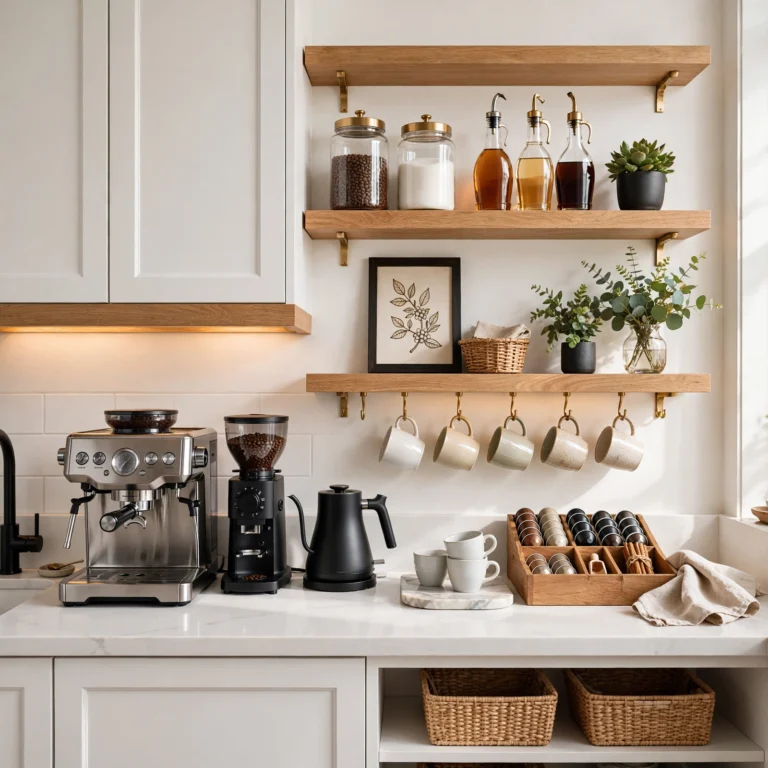
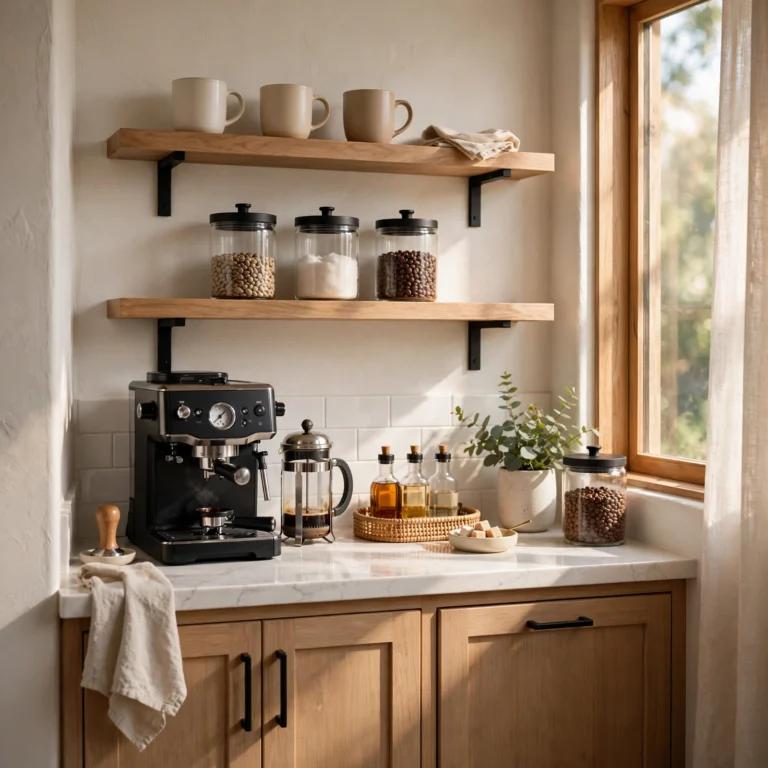
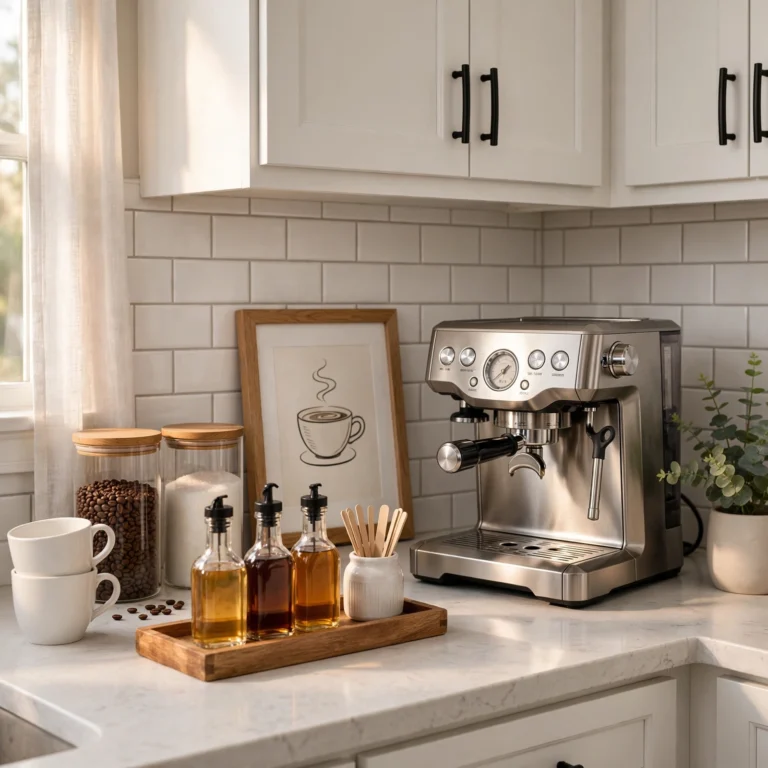
Coffee bar ideas for home don’t need to be confined to the kitchen, since a well-placed station in a home office, bedroom, or even an outdoor patio can fit a household’s actual daily routine better than a station tucked into an already busy kitchen. This list walks through coffee bar setups suited to different rooms throughout the house, each with notes on what equipment and styling actually make sense for that specific location. Whether you work from home, entertain outdoors, or simply want your coffee routine closer to where you actually spend your morning, these ideas should help you find the right room for your own setup.
Trend & Background
As home routines have grown more varied, with more people working from home, entertaining in outdoor spaces, or simply spending more waking hours throughout different parts of the house, coffee bars have followed that same expansion beyond the kitchen. This shift reflects a practical recognition that the kitchen isn’t always the most convenient spot for coffee, particularly for a household member who works from a home office all day or someone who prefers their first cup in bed before getting up. As a result, coffee stations increasingly get designed around a person’s actual daily path through the house rather than defaulting to the kitchen simply because that’s where coffee has traditionally been made.
Key Takeaways
- Coffee bar ideas for home don’t have to live in the kitchen, since a dedicated station can work just as well in a home office, a primary bedroom, or even an outdoor patio.
- The right location often depends more on where your daily routine actually starts than on which room has the most available space.
- A coffee station suited to a specific room, like a bedroom or a home office, typically needs less equipment and storage than a full kitchen-based setup.
- Matching the station’s style to the room it’s actually in, rather than a generic kitchen aesthetic, helps it feel like a natural part of that specific space.
1. Apartment Countertop Mini Station
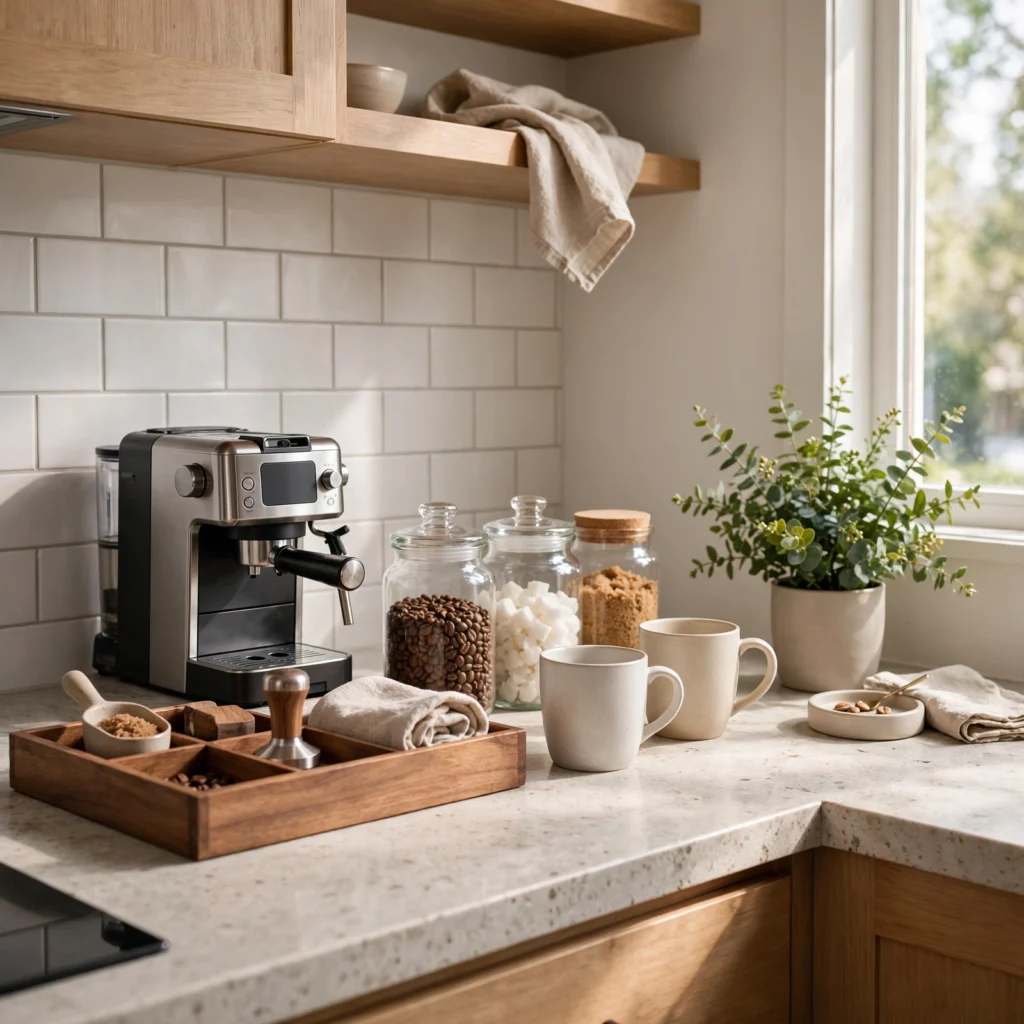
An apartment countertop mini station scales a coffee bar down to fit a genuinely small apartment kitchen, using a compact single-serve brewer and a minimal set of supplies within just one to two feet of counter space. This setup works especially well for a studio or one-bedroom apartment where kitchen counter space is already at a premium for general cooking needs. Choosing multi-purpose accessories, like a canister that also functions as a scoop holder, keeps the footprint as efficient as possible.
| Home Location | Typical Equipment | Best For |
| Kitchen | Full brewer, grinder, storage | Households with daily use by everyone |
| Home Office | Single-serve brewer, kettle | Remote workers |
| Bedroom | Kettle, minimal supplies | Early risers, in-bed coffee |
2. Home Office Coffee Corner
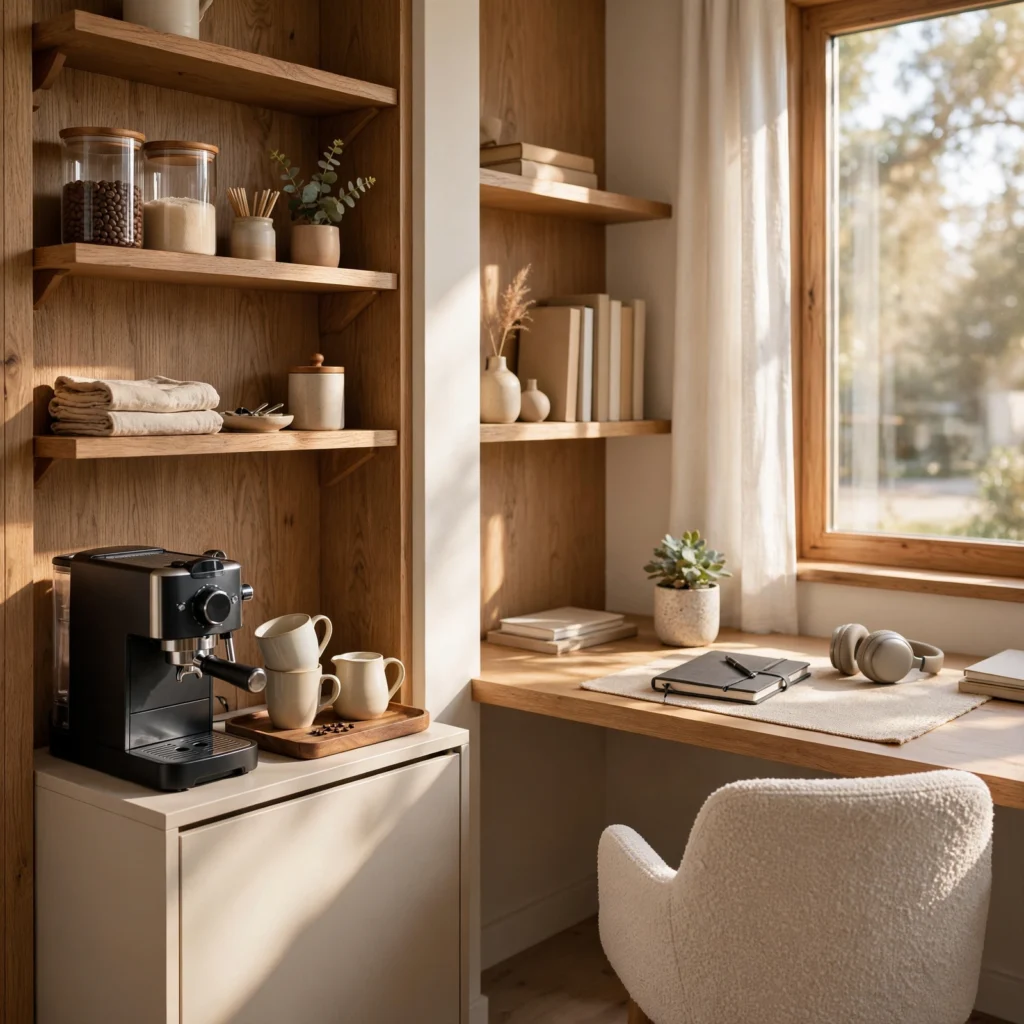
A home office coffee corner places a small coffee-making setup directly within a home office, eliminating the need to leave a work session and walk to the kitchen every time a refill is needed. A simple electric kettle paired with a pour-over dripper or a single-serve pod machine suits this location better than a bulkier full-sized coffee maker, given the typically limited desk or shelf space available. This setup works particularly well for anyone who works from home regularly and wants to minimize interruptions to a focused work session.
3. Guest Bedroom Welcome Tray
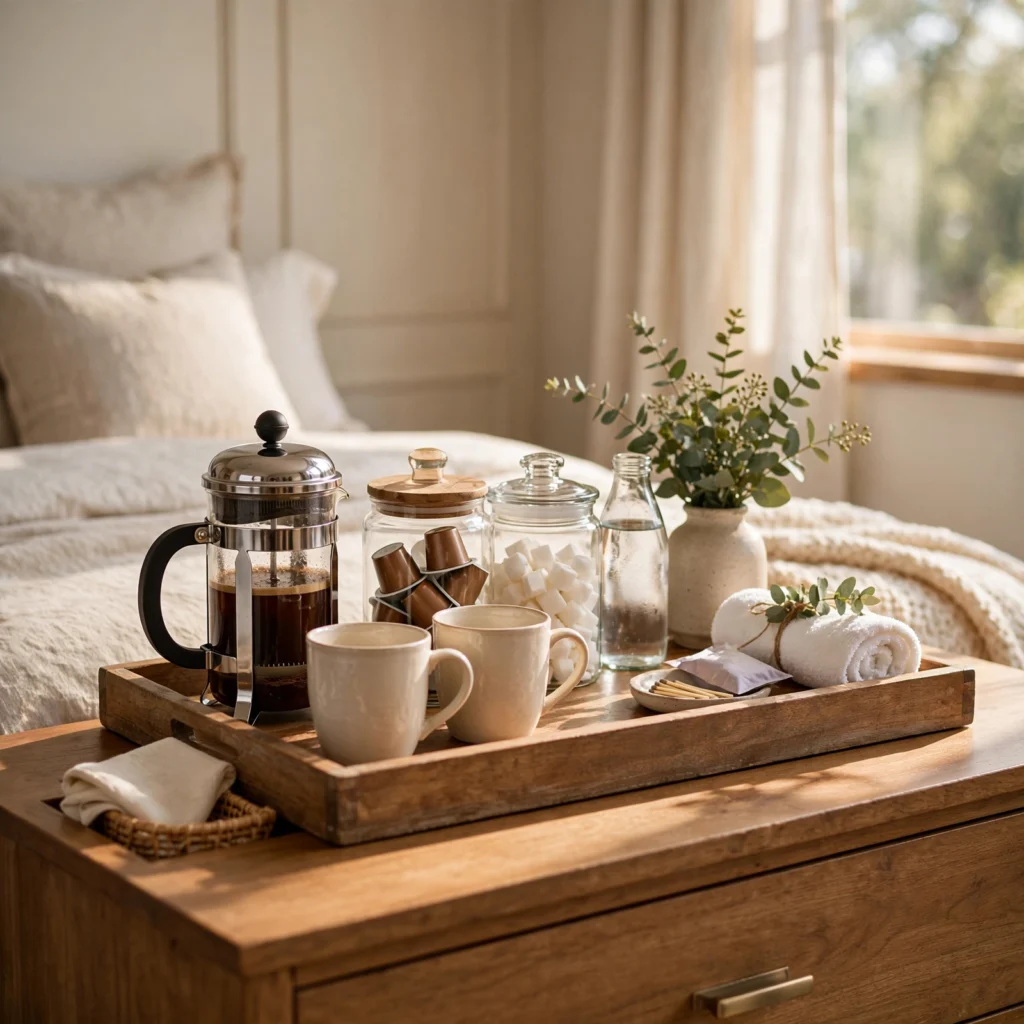
A guest bedroom welcome tray places a small selection of coffee and tea supplies directly in a guest room, giving visitors the option to make a cup first thing in the morning without needing to navigate an unfamiliar kitchen. A simple electric kettle, a couple of mugs, and a small selection of individually packaged coffee or tea bags covers the basics without requiring a full brewing setup. This detail is a small but genuinely thoughtful touch that guests tend to notice and appreciate during a stay.
4. Outdoor Patio Coffee Cart
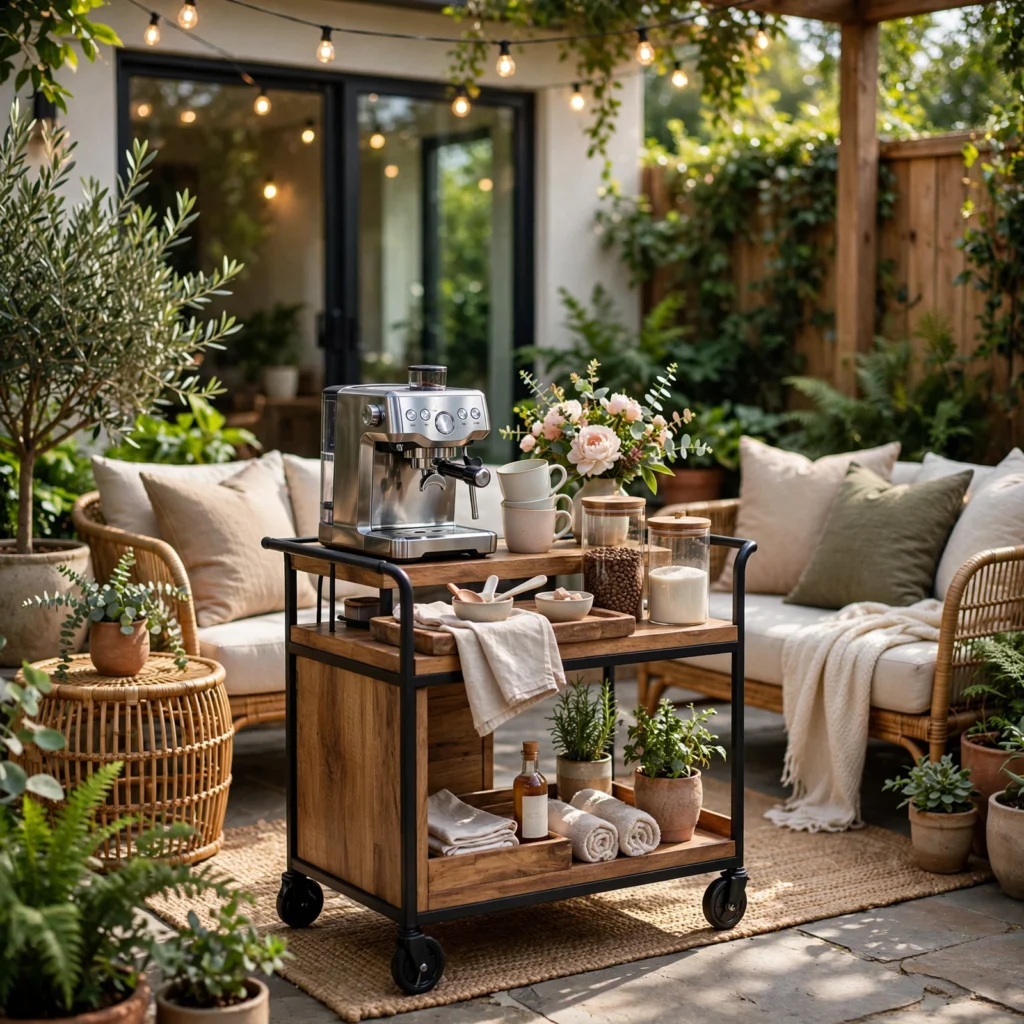
An outdoor patio coffee cart brings a coffee station outside to a deck, patio, or backyard seating area, using a weather-resistant cart or cabinet to protect equipment and supplies from the elements when not actively in use. This setup works especially well for a household that regularly enjoys morning coffee outdoors during warmer months. Choosing appliances and supplies that can be easily carried back inside, rather than left permanently exposed to weather, protects the equipment’s longevity between uses.
In order to see more options for ideas for small coffee bar CLICK HERE
5. Basement Entertainment Bar Addition
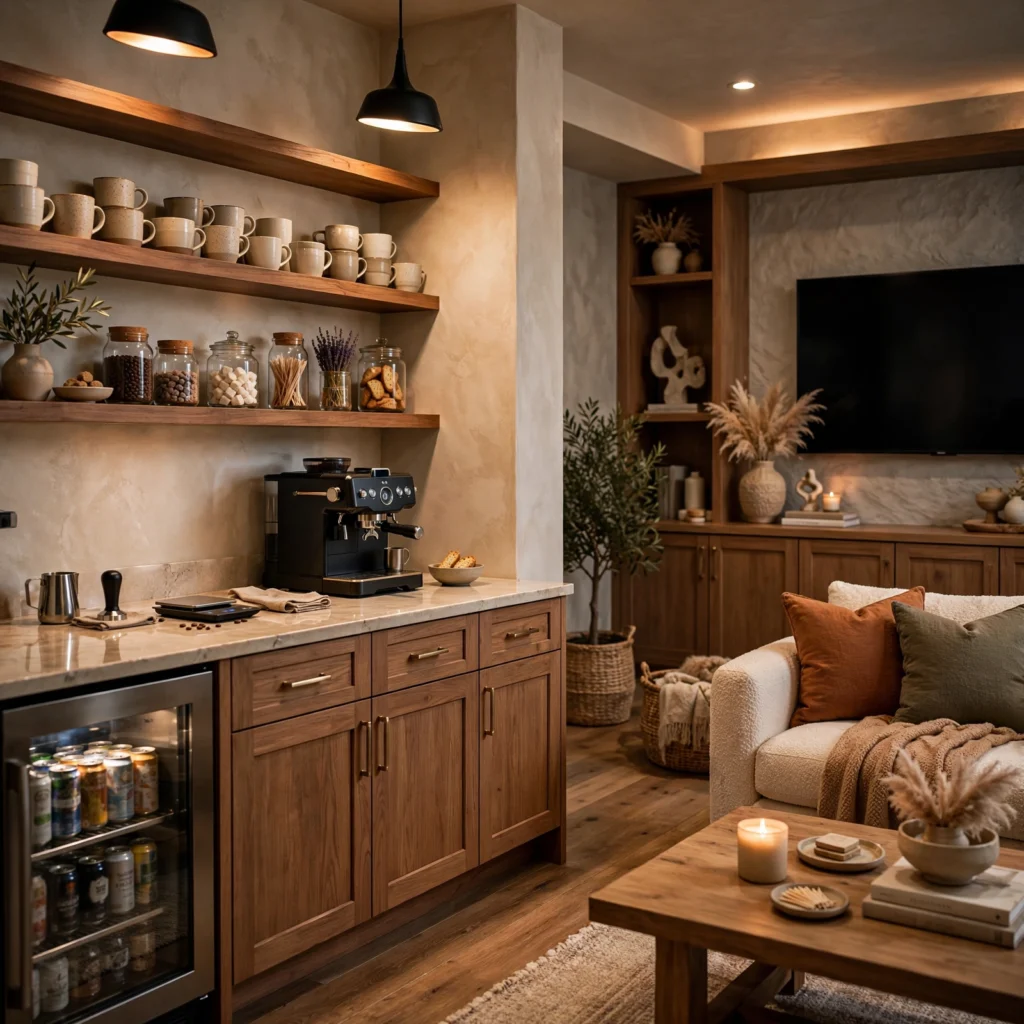
A basement entertainment bar addition incorporates a coffee station alongside an existing basement bar or entertainment area, giving the lower level its own self-contained refreshment setup separate from the main kitchen upstairs. This works particularly well in a finished basement used regularly for movie nights, game days, or hosting guests, where trips upstairs for coffee or hot chocolate become an unnecessary interruption. Pairing the coffee station with the same cabinetry style as the rest of the basement bar keeps the addition feeling integrated rather than separately tacked on.
6. Dining Room Sideboard Station
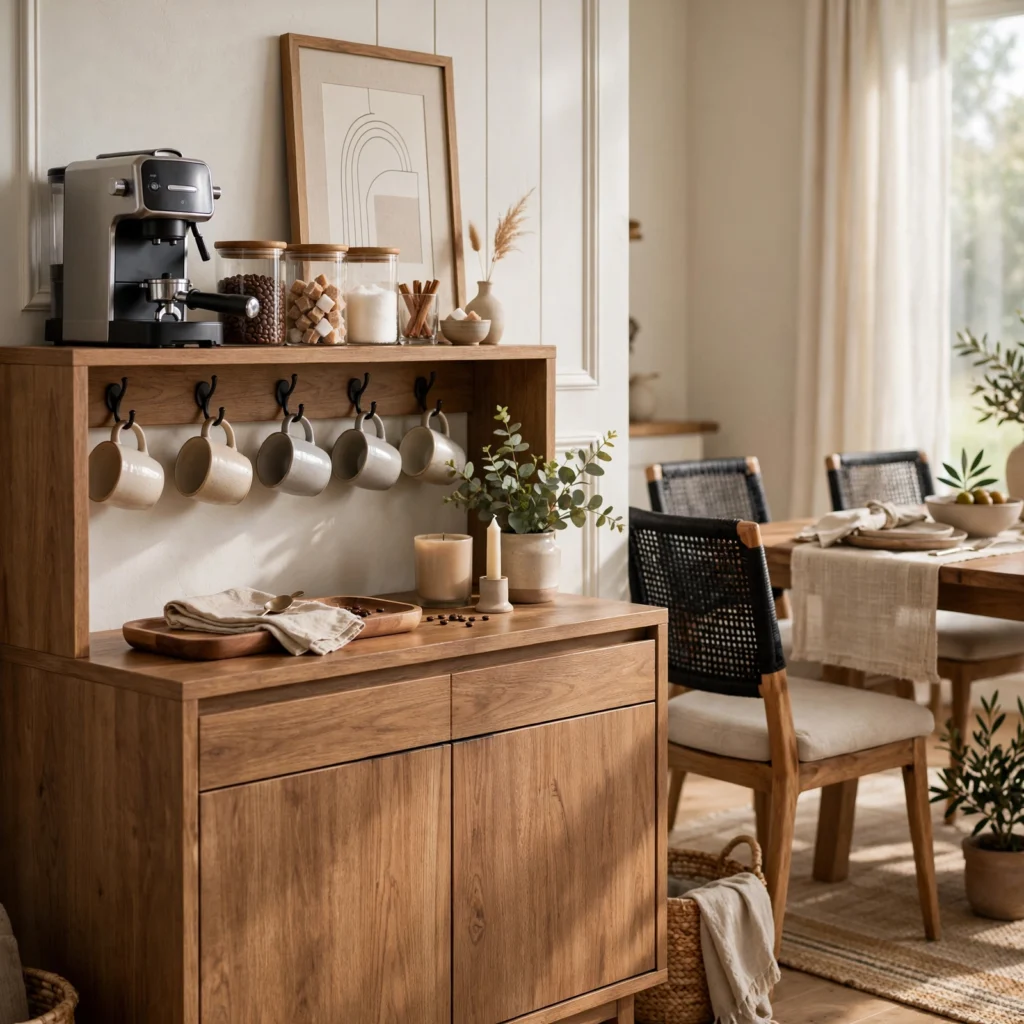
A dining room sideboard station sets up a coffee bar on top of or within an existing sideboard or buffet, making use of furniture already present in the dining room rather than requiring anything new. This setup works especially well for households that regularly host dinner parties or brunches, where guests can serve themselves coffee directly from the dining area rather than crowding into the kitchen. Choosing a compact carafe-style coffee maker, rather than a bulkier drip machine, suits the sideboard’s typically narrower surface depth.
7. Garage Workshop Coffee Nook
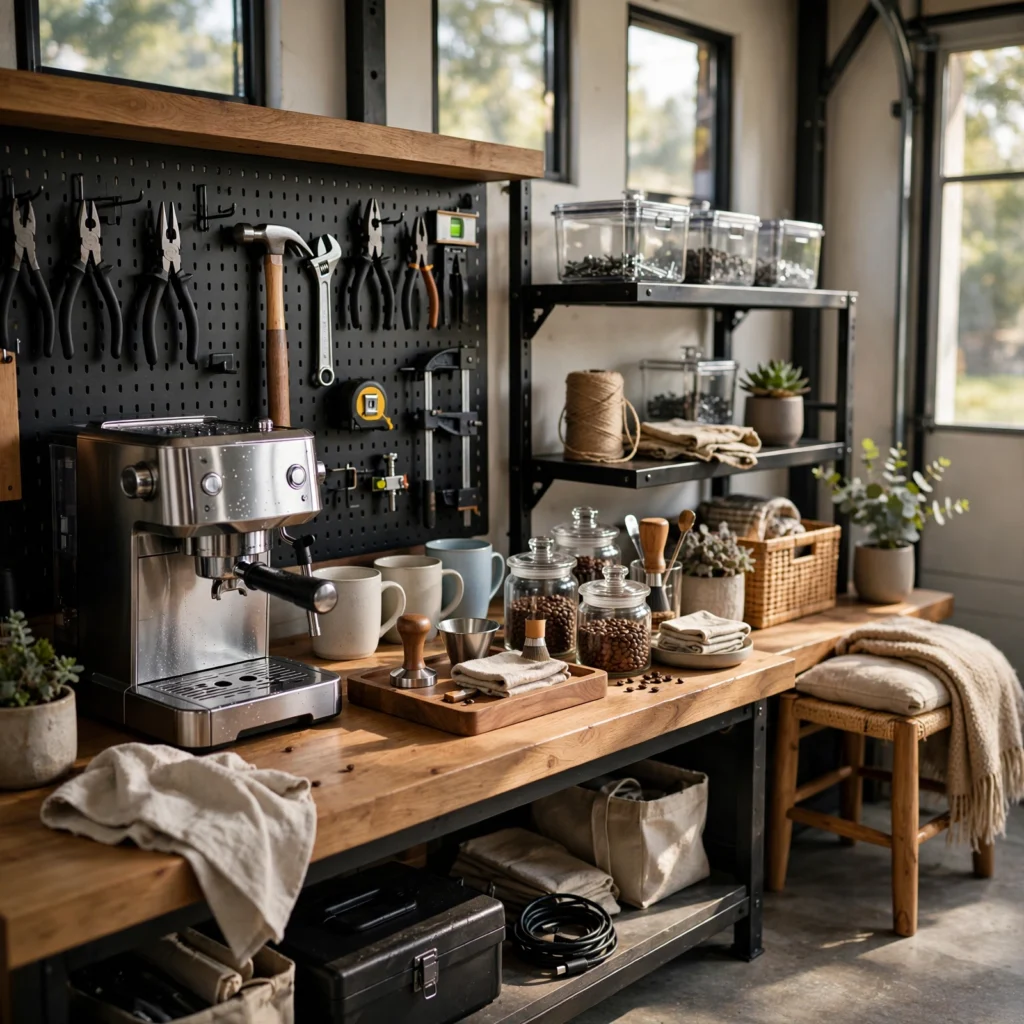
A garage workshop coffee nook places a small, durable coffee setup within a garage or workshop space, convenient for anyone who spends significant time working on projects in that area and doesn’t want to make repeated trips back into the house. A simple, rugged single-serve machine suited to a less climate-controlled environment works better here than delicate equipment more sensitive to temperature swings. This setup benefits from proximity to an existing outlet already present for power tools or other garage equipment.
8. Sunroom Coffee Lounge Setup
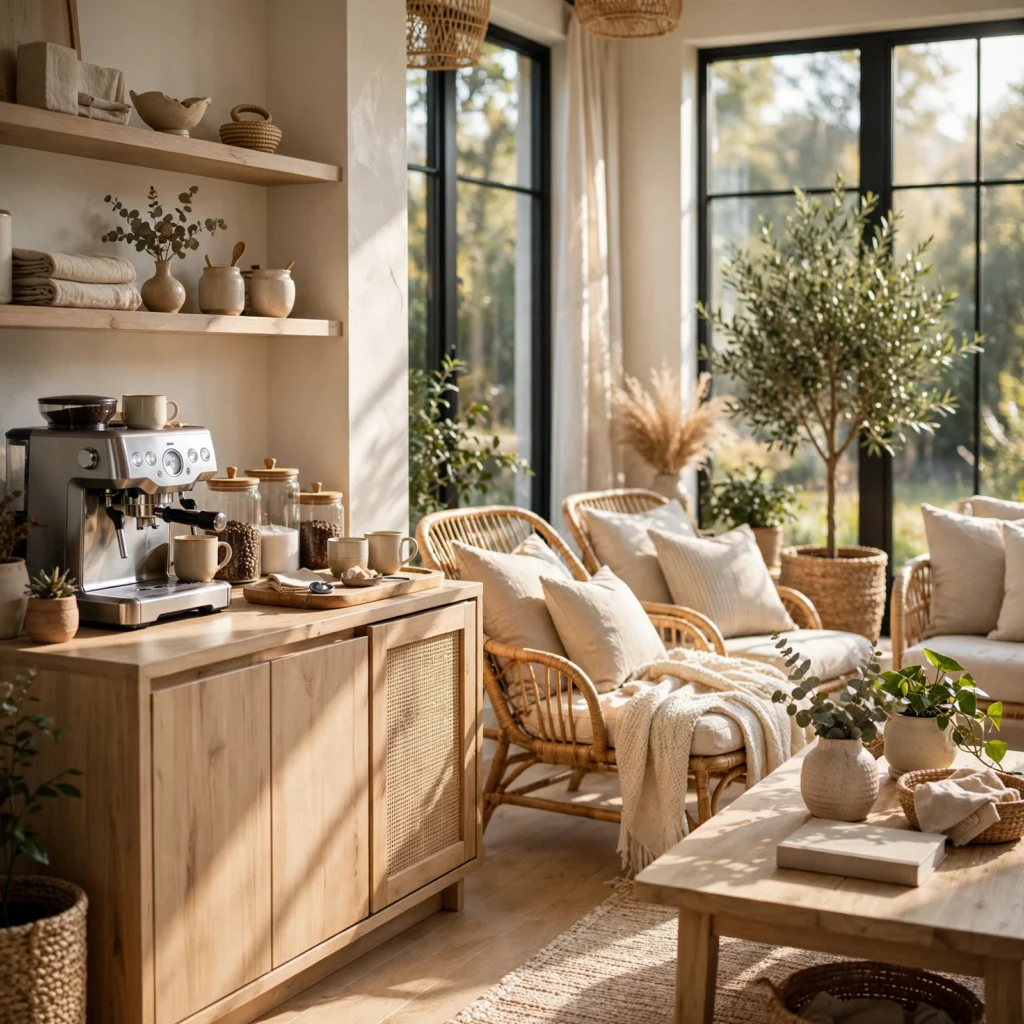
A sunroom coffee lounge setup places a coffee station within a sunroom or three-season porch, taking advantage of the space’s natural light and typically more relaxed, lounge-oriented furniture arrangement. This setup works particularly well paired with comfortable seating nearby, encouraging a slower, more deliberate coffee routine rather than a quick grab-and-go cup from the kitchen. Choosing furniture and finishes that complement the sunroom’s existing wicker, rattan, or other natural material choices ties the station into the room’s overall look.
| Room Type | Coffee Bar Style Fit | Typical Furniture |
| Sunroom | Relaxed, natural materials | Wicker, rattan |
| Home Office | Compact, functional | Desk shelf, small cart |
| Basement Bar | Matched to existing bar style | Built-in cabinetry |
9. Walk-In Pantry Coffee Zone
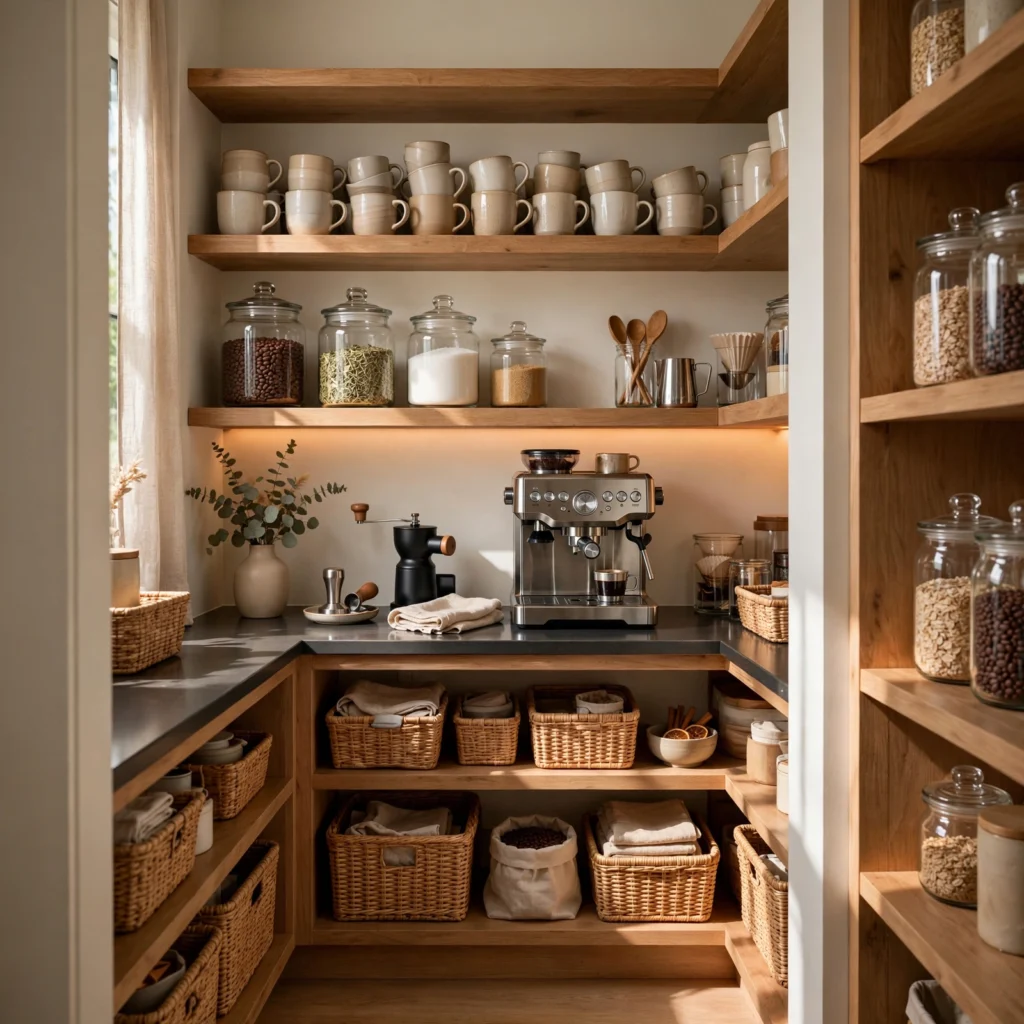
A walk-in pantry coffee zone dedicates one section of an existing walk-in pantry specifically to coffee equipment and supplies, keeping the entire setup concealed within a space already used for food storage rather than requiring separate kitchen counter space. This works particularly well in a kitchen with a generously sized pantry but limited counter area, since the pantry absorbs the coffee station’s footprint without displacing anything else. Adding a small outlet within the pantry, if one isn’t already present, allows the coffee maker to run directly from that location.
10. Primary Bedroom Coffee Corner
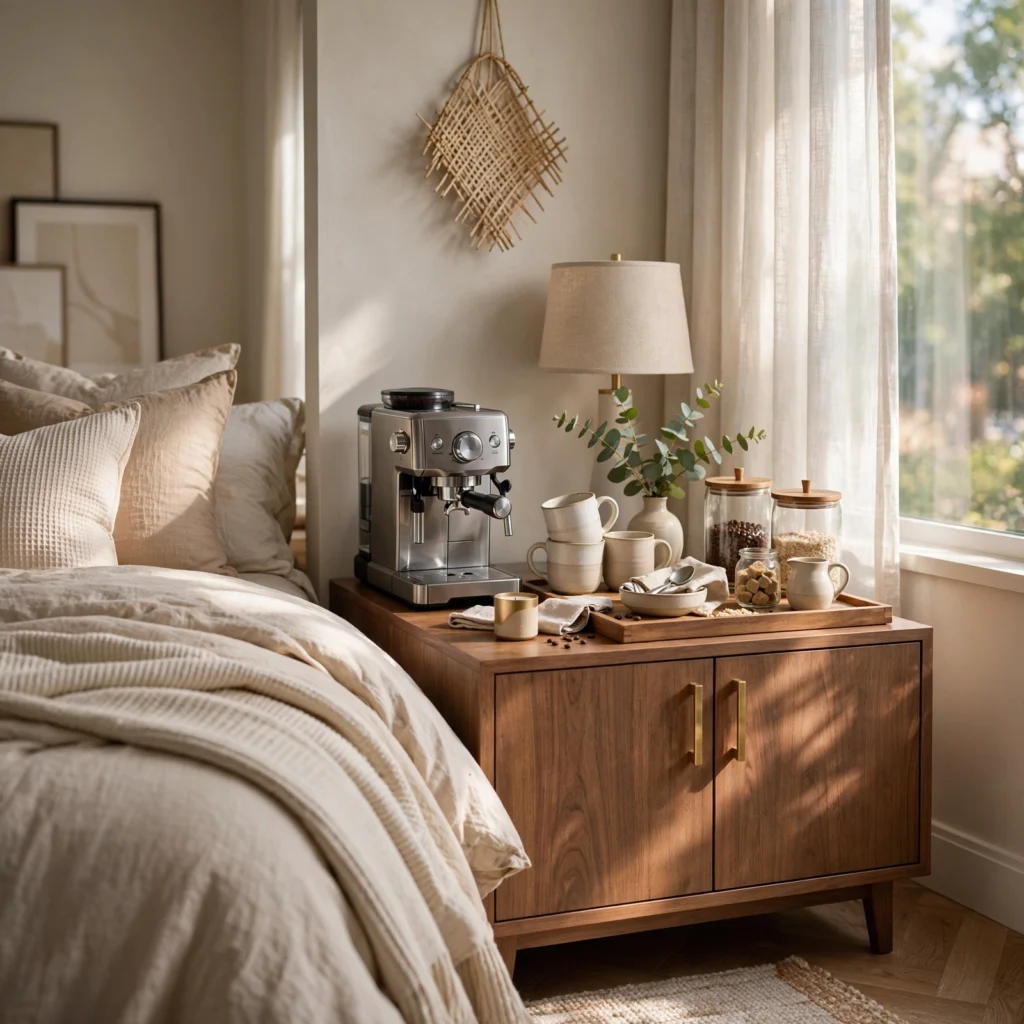
A primary bedroom coffee corner places a small coffee setup within the bedroom itself, typically on a dresser or a small dedicated table, catering to an early riser who prefers a first cup before heading to the kitchen or starting the rest of the household’s morning. A simple electric kettle and a pour-over setup, or a compact single-serve machine, suit this more intimate, personal-use location better than a larger, multi-person setup. This detail works especially well for someone with an earlier wake time than the rest of their household, avoiding the need to navigate a dark kitchen before anyone else is up.
11. Finished Attic Reading Nook Station
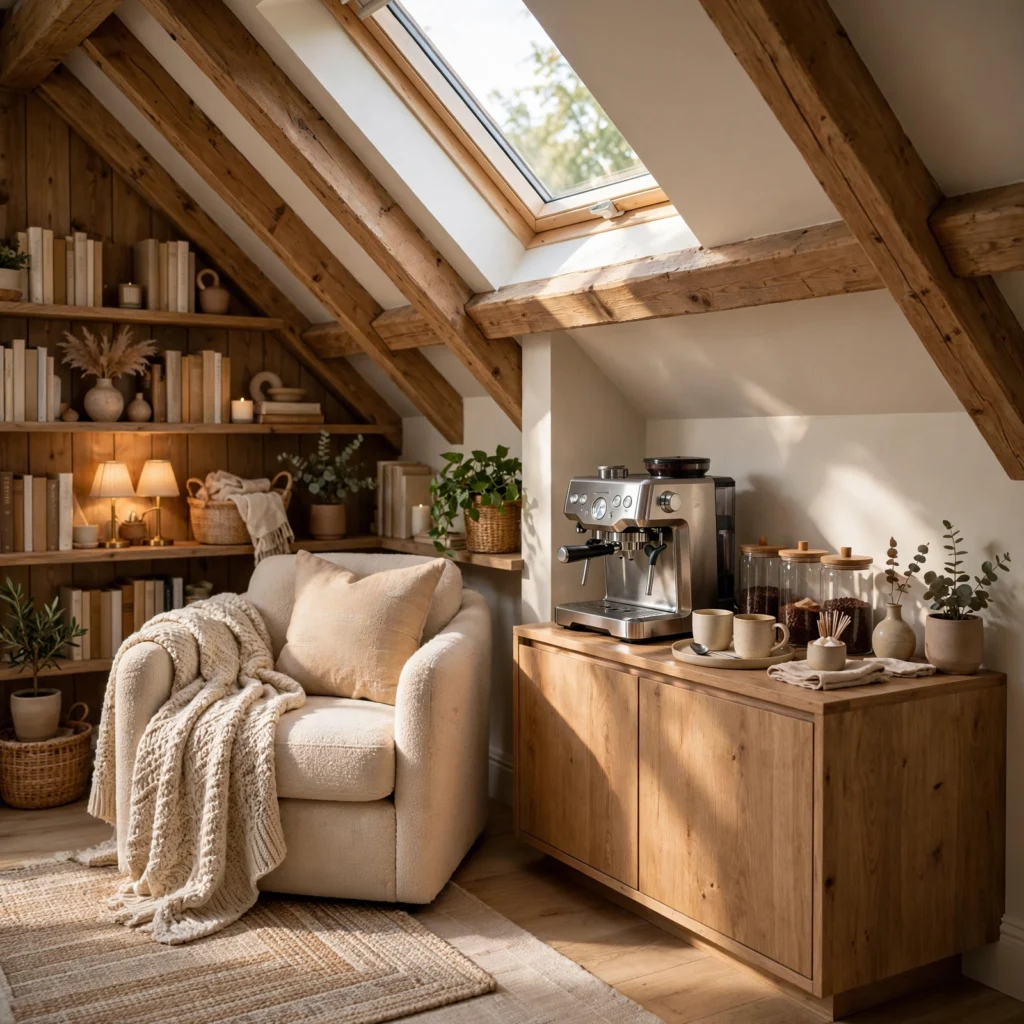
A finished attic reading nook station pairs a small coffee setup with a cozy reading chair and good lighting within a converted attic space, creating a quiet retreat that doesn’t require leaving that upper level for a refill. This works particularly well in a home where the attic has been converted into a genuine living space rather than remaining pure storage. Choosing compact, low-profile equipment suits the often more limited ceiling height and floor space typical of an attic conversion.
12. Open-Concept Living Room Bar Wall
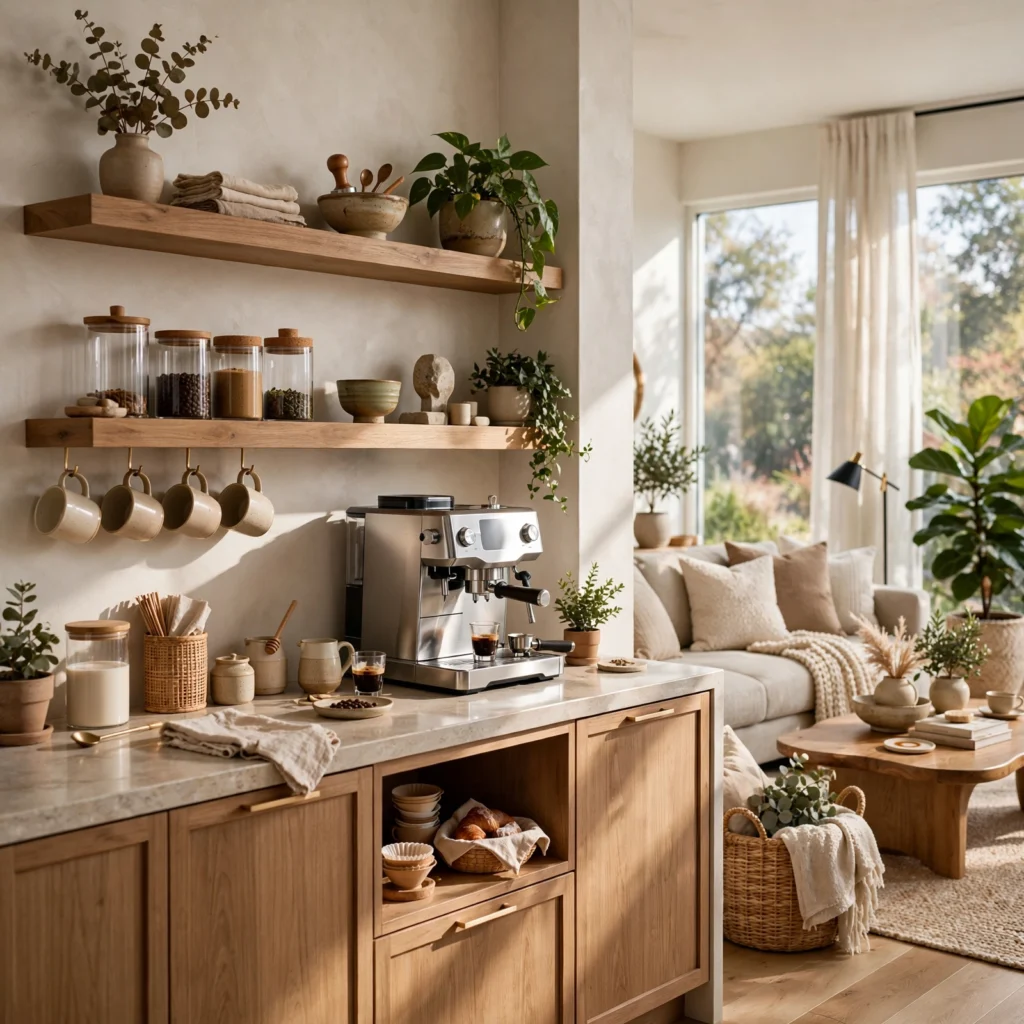
An open-concept living room bar wall incorporates a coffee station into a larger built-in wall unit that also houses a television, books, or a beverage bar, treating the coffee setup as one component of a broader living room storage and display wall. This works especially well in a home with an open floor plan where the living room and kitchen share visual sightlines, allowing the coffee station to blend into the overall built-in design rather than standing apart as a separate kitchen appliance zone. Concealing the coffee maker behind a cabinet door within this larger unit keeps the living room’s overall look uncluttered between uses.
13. Breakfast Nook Built-In Station
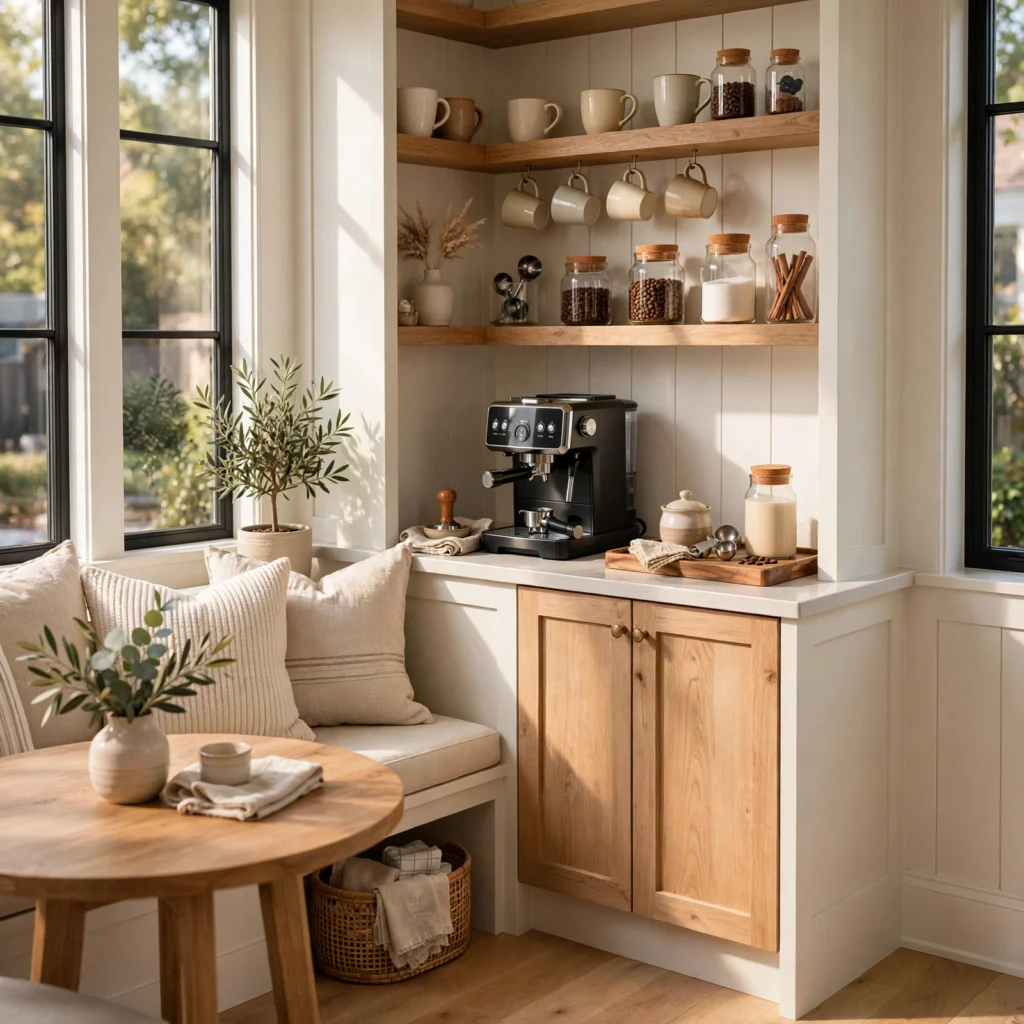
A breakfast nook built-in station incorporates a small coffee setup directly into an existing breakfast nook’s bench seating or adjacent built-in cabinetry, keeping the coffee routine within the same casual dining spot where breakfast itself typically happens. This works particularly well for a household that regularly eats breakfast in this specific nook rather than at a separate kitchen island or dining table. Positioning the station at one end of the nook, rather than centered, keeps the main seating and table area clear for actual dining.
14. Home Gym Recovery Coffee Spot
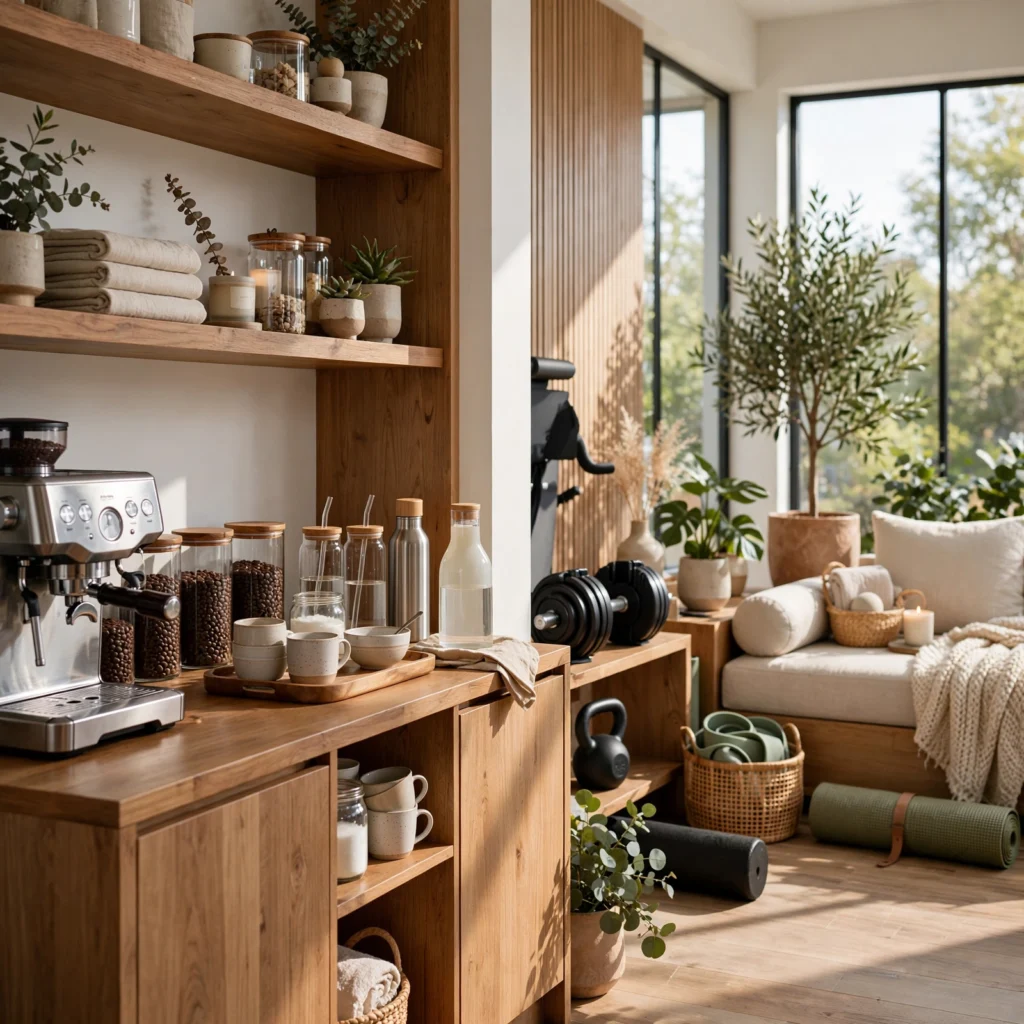
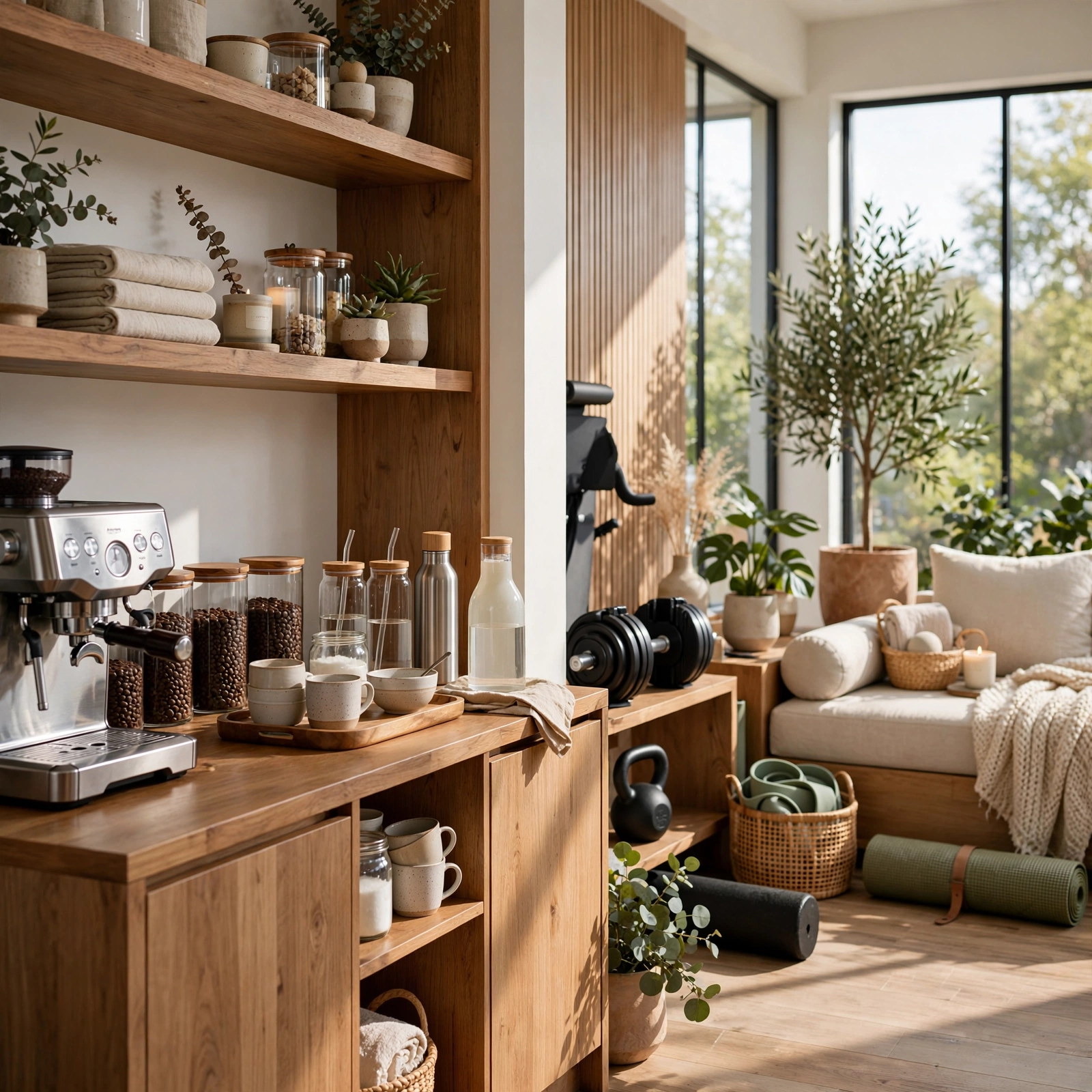
A home gym recovery coffee spot places a small coffee or espresso setup within or adjacent to a home gym space, convenient for anyone who prefers a post-workout cup before heading to shower or start the rest of their day. A compact machine focused on quick, simple drinks suits this location better than an elaborate multi-step brewing setup. This detail works especially well paired with a small mini fridge already present in the gym space for protein shakes or cold water, allowing milk storage for coffee drinks in the same convenient spot.
15. Screened Porch Coffee Setup
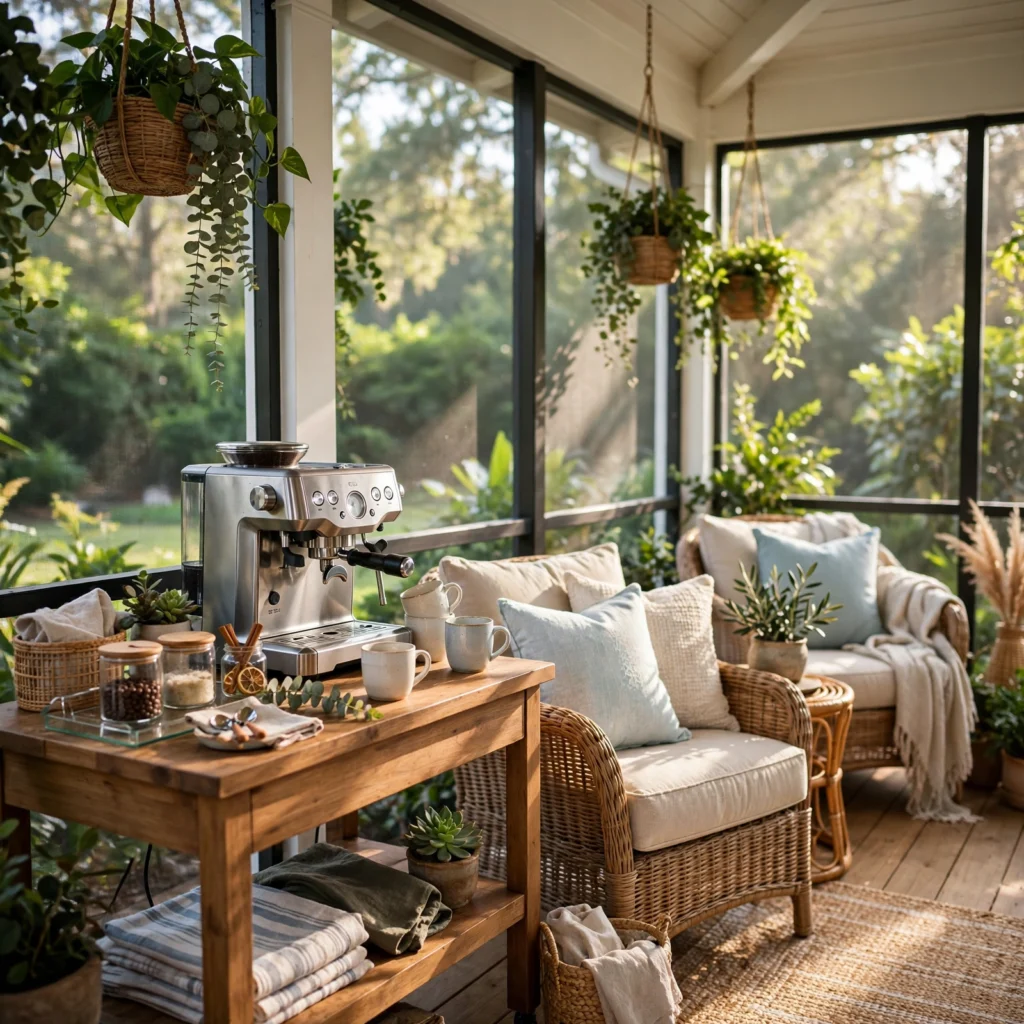
A screened porch coffee setup brings a coffee station onto a screened porch, offering some protection from direct weather exposure while still providing the open-air feel of an outdoor coffee routine. This works particularly well in a climate with a longer mild season, where a screened porch sees regular use across several months of the year. Choosing furniture and equipment rated for the more variable humidity and temperature conditions of a screened, but not fully climate-controlled, space protects the setup’s longevity.
16. Multi-Generational Household Shared Station
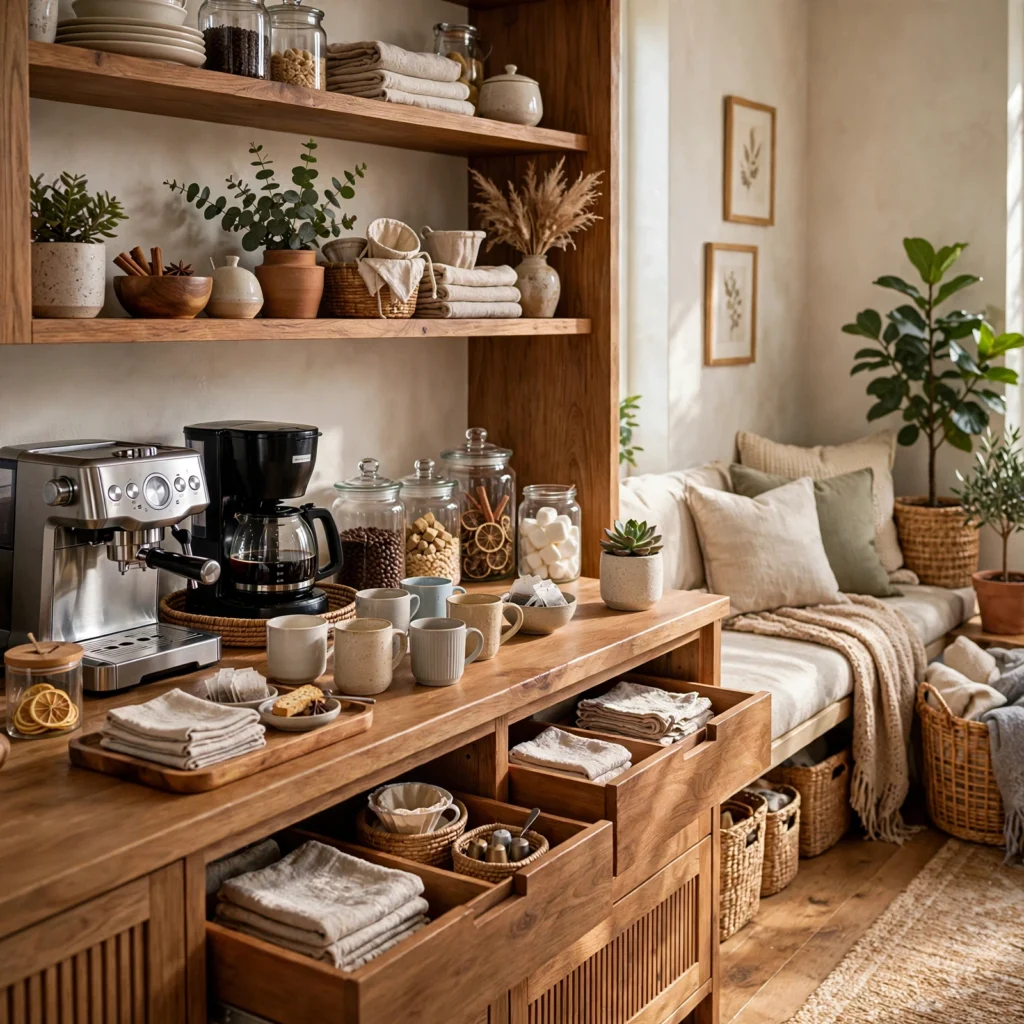
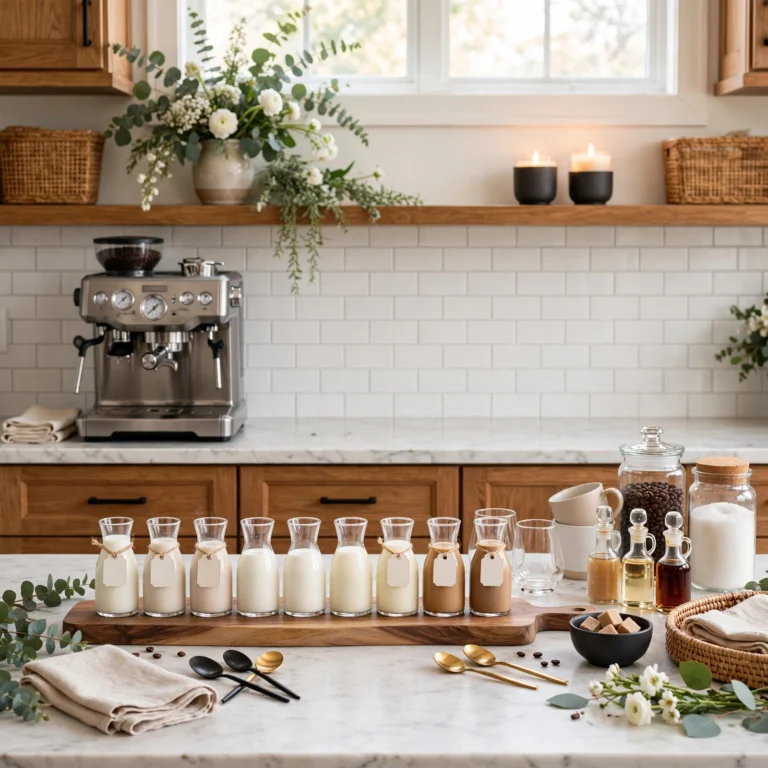
A multi-generational household shared station designs a coffee bar specifically to accommodate several different household members’ distinct preferences, whether that’s varying caffeine levels, different brewing methods, or separate storage for individual preferred products. This works particularly well in a home where multiple adults, potentially across different generations, share the same kitchen but have genuinely different coffee routines and preferences. Labeling individual storage sections or using separate canisters for each person’s preferred coffee helps prevent mix-ups in a station serving several distinct routines at once.
Shop the Look
A well-planned home coffee bar setup depends heavily on matching the station to its specific location within the house. A compact single-serve brewer and a small kettle suit a home office or bedroom corner, while a full carafe machine and a wider supply selection work better for a shared kitchen or dining room station. A weather-resistant cart handles an outdoor patio setup, and a concealed cabinet within a larger built-in unit suits an open-concept living room location.
Common Coffee Bar Ideas for Home Mistake to Avoid
The most common mistake is defaulting to the kitchen as the only possible coffee bar location without actually considering where your household’s daily routine would benefit most from a dedicated station. A remote worker who spends the entire day in a home office, or an early riser who wakes well before the rest of the household, might genuinely benefit more from a station located outside the traditional kitchen setting. Thinking through your household’s actual daily path and routine, rather than assuming the kitchen is automatically the right spot, often reveals a more genuinely convenient location for a coffee bar.
FAQs
Is it strange to have a coffee bar somewhere other than the kitchen?
A coffee bar located outside the kitchen, whether in a home office, bedroom, or outdoor space, has become an increasingly common and practical choice as home routines have diversified, particularly for remote workers or early risers whose daily patterns don’t naturally center around the kitchen each morning. There’s nothing unusual about placing this kind of station wherever it genuinely gets used most.
What equipment do I need for a bedroom or home office coffee station?
A simple electric kettle paired with either a pour-over dripper or a single-serve pod machine covers most bedroom or home office coffee needs without requiring the footprint or complexity of a full kitchen setup. Keeping the equipment list minimal, focused on just what’s needed for a quick, personal cup, suits these more compact, single-user locations better than a broader, multi-appliance setup.
Can an outdoor coffee bar handle regular weather exposure?
An outdoor coffee bar can handle regular use as long as the equipment and cart are either weather-resistant or brought back indoors between uses, since most coffee-making appliances aren’t designed for prolonged direct exposure to rain, extreme heat, or humidity. A covered patio or a cart with a weatherproof cabinet significantly extends how comfortably this setup can be used outdoors on a regular basis.
How do I accommodate different coffee preferences in a shared household station?
Using separate, clearly labeled canisters or storage sections for each household member’s preferred coffee type, along with keeping a couple of different brewing methods available if preferences vary significantly, helps a shared station accommodate a multi-generational or otherwise diverse household. This approach prevents the common frustration of one person’s preferred product getting mixed up with or depleted by another household member’s different routine.
Should every coffee bar location have the same style and equipment?
Every coffee bar location doesn’t need matching style or equipment, and in fact tailoring each station to its specific room and use case, such as a more relaxed, natural-material setup in a sunroom versus a compact, efficient one in a home office, tends to work better than forcing a single uniform approach throughout the house. Matching each station’s scale and style to its actual room produces a more cohesive, intentional result than a one-size-fits-all setup repeated in multiple locations.
Conclusion
These coffee bar ideas for home show that a dedicated station can work well in nearly any room, not just the kitchen, as long as the setup matches both the space available and how that part of the house actually gets used. Consider your household’s real daily routine before defaulting to the kitchen, and scale the equipment and style to fit whichever room makes the most practical sense. Save this post to Pinterest for your next home project, and check out our related post on small coffee bar ideas for more compact setups if space is limited in your chosen location.
This list draws on years of helping households design coffee stations around their actual daily routines, with a focus on placement decisions that make the setup genuinely convenient rather than just conventional.