13 Stunning Small Coffee Bar Ideas That Maximize Style in Tiny Spaces
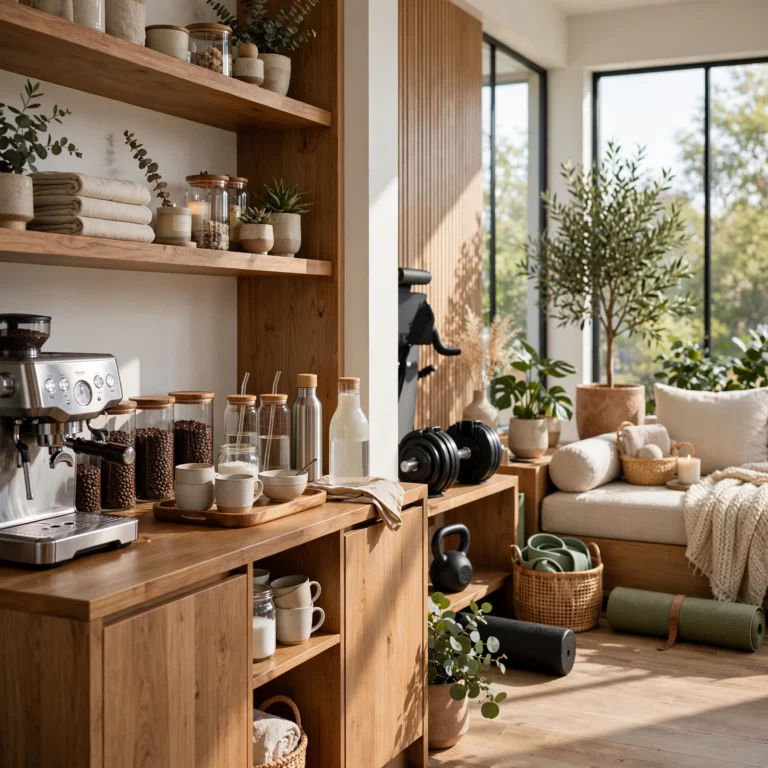
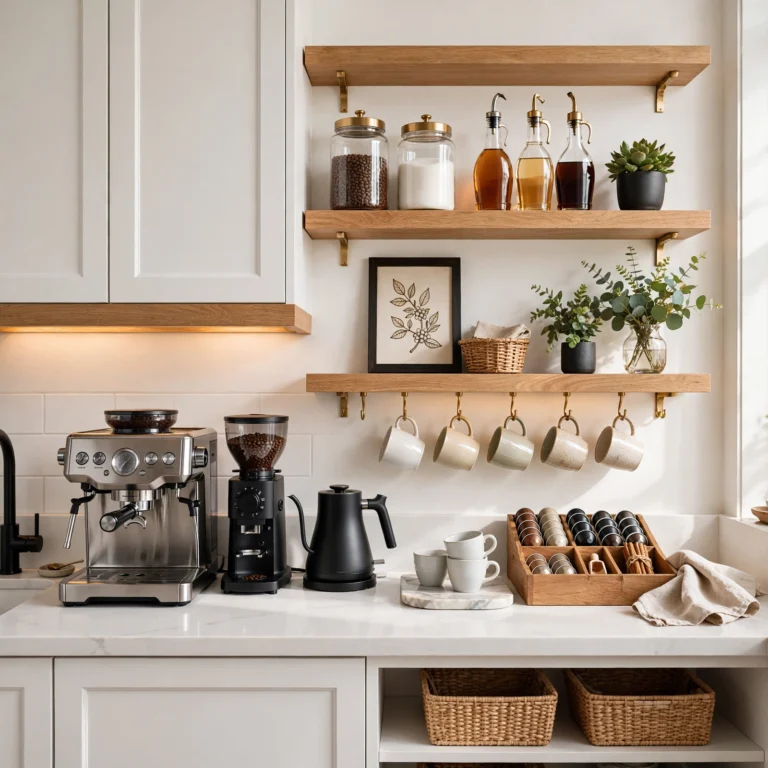
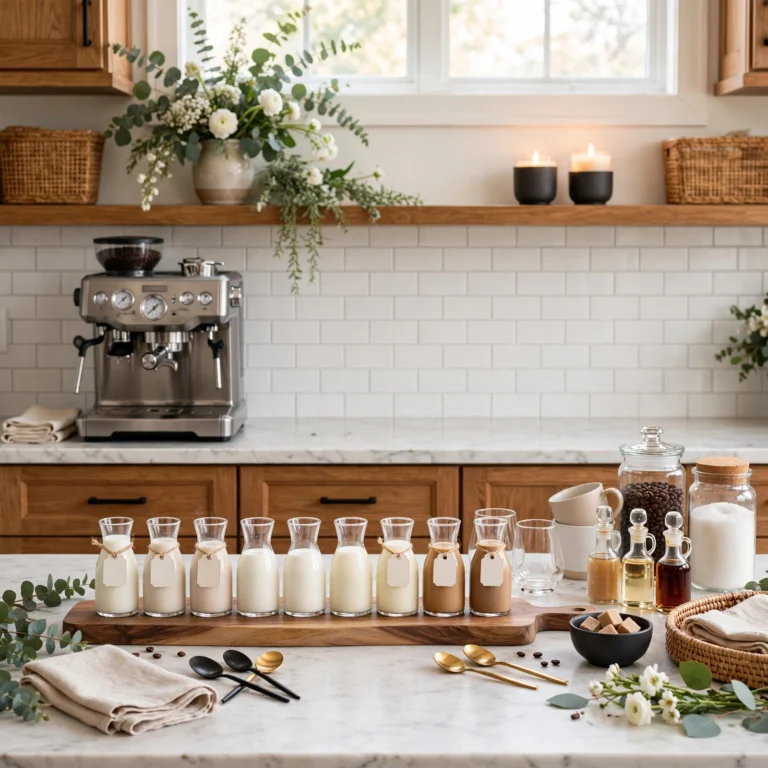
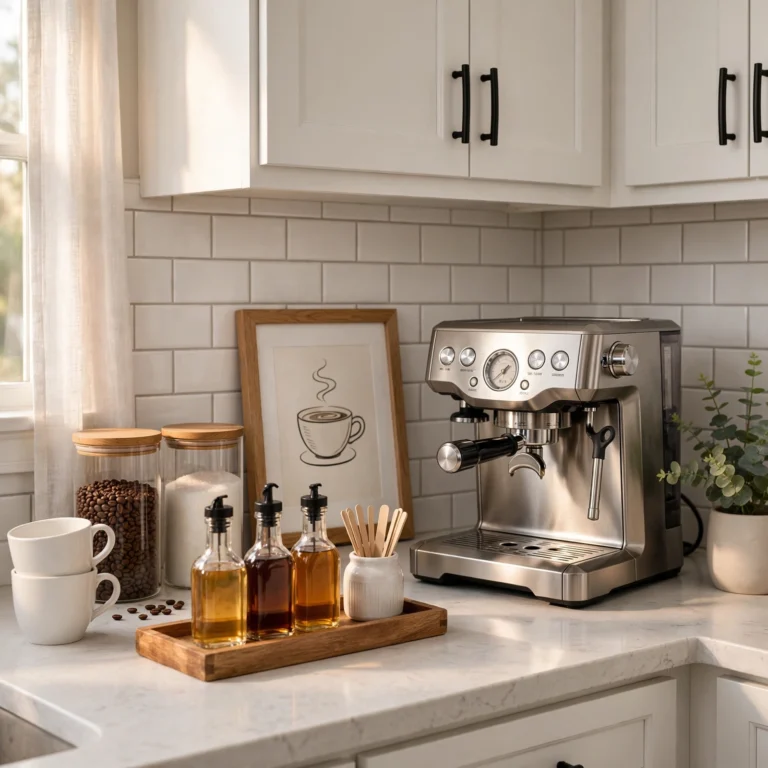
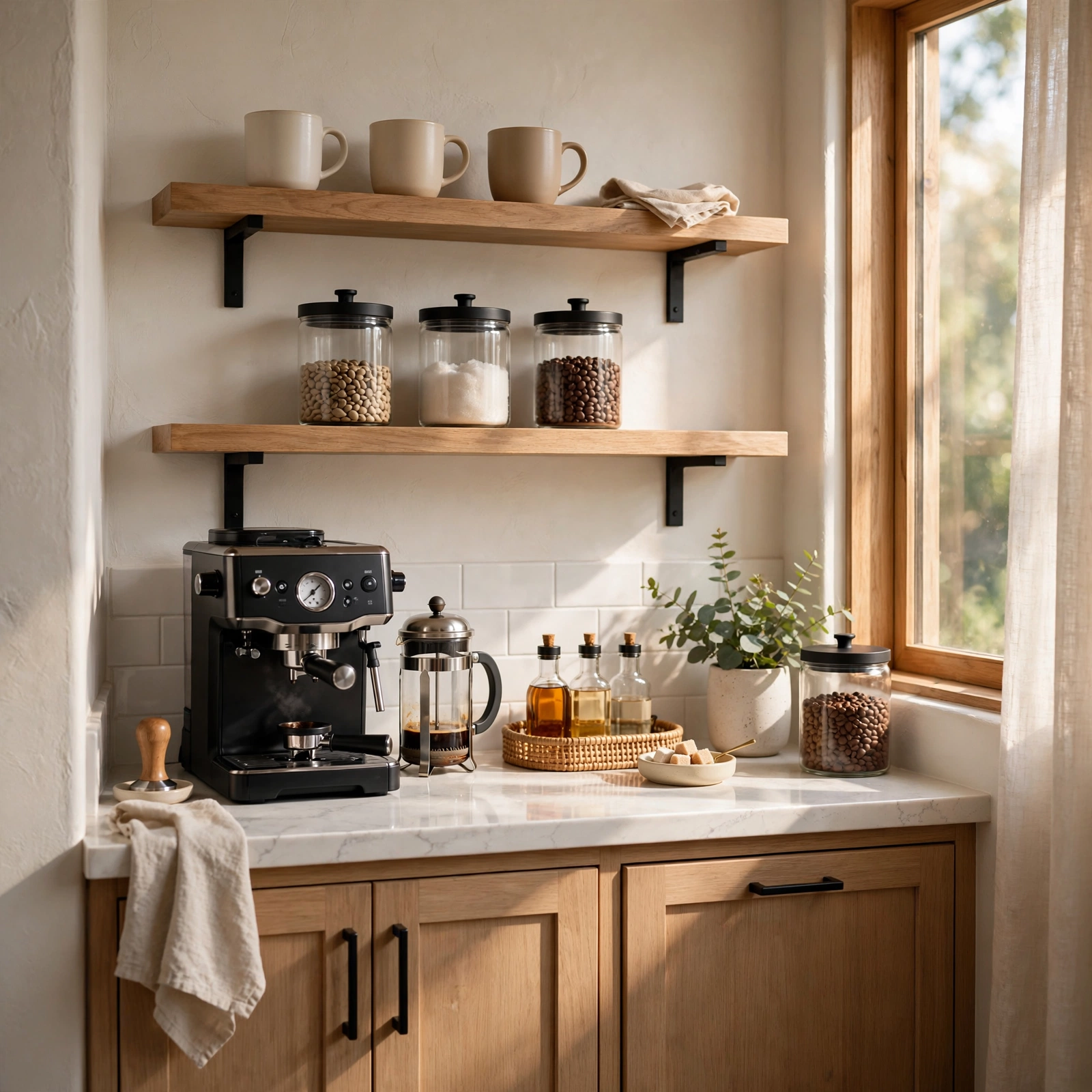
Small coffee bar ideas call for a different approach than a standard kitchen coffee station, since the whole setup needs to work within a genuinely limited footprint, whether that’s a narrow gap between appliances or a repurposed piece of furniture rather than a dedicated cart. This list focuses specifically on space-saving layouts and furniture choices suited to a tiny kitchen or an apartment without much spare square footage. Each idea includes notes on where it works best, helping you find a coffee station solution that fits your specific tight space rather than forcing a standard-sized setup into a footprint that can’t support it.
Trend & Background
As smaller kitchens have become more common in apartments and compact homes, the demand for genuinely space-efficient coffee bar solutions has grown alongside the broader trend of dedicated coffee stations overall. This has pushed more creative repurposing of existing furniture, like nightstands and narrow bookshelves, into coffee bar service, since these pieces are often more readily available and appropriately scaled than furniture specifically marketed for this purpose. At the same time, unconventional spots like closets, windowsills, and narrow gaps between appliances have become legitimate coffee bar locations as homeowners get more resourceful about finding function in overlooked corners of a small kitchen.
Key Takeaways
- Small coffee bar ideas depend on claiming vertical space and repurposed furniture rather than a wide stretch of dedicated counter or floor area.
- A narrow, tall footprint generally works better in a genuinely small kitchen than a wider, shorter layout, since most tight kitchens have more unused wall height than floor space.
- Repurposed furniture, like an old nightstand or a slim bookshelf, often solves a small coffee bar’s space problem more affordably than a purpose-built cart or cabinet.
- Even a windowsill or a section of a closet can function as a legitimate coffee station if the layout and storage are planned around that specific, unconventional footprint.
1. Narrow Ladder Shelf Unit
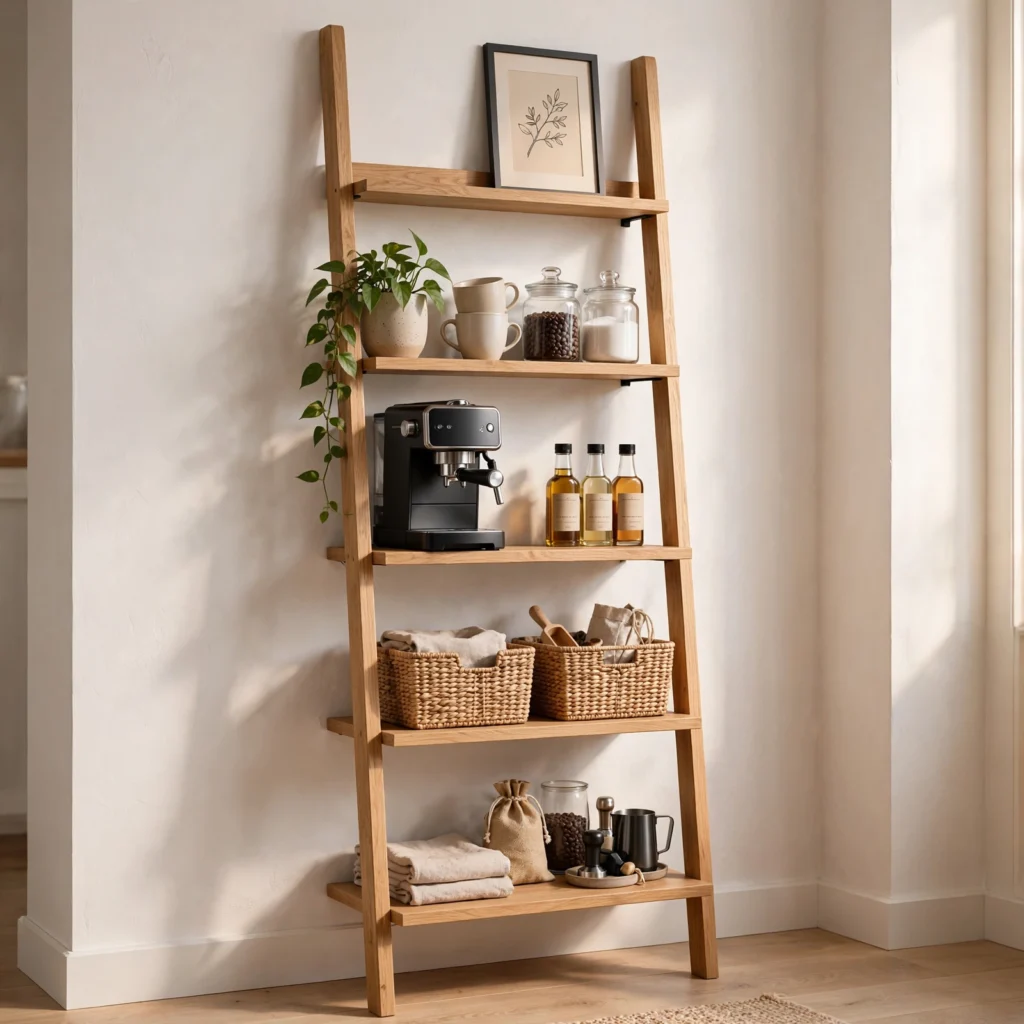
A narrow ladder shelf unit leans against the wall at an angle, offering several tiers of open shelving in a slim footprint considerably narrower than a standard bookshelf or cabinet. This works particularly well tucked into a gap between an appliance and a wall, or in an empty corner too small for a bulkier furniture piece. Because a ladder shelf simply leans rather than requiring wall mounting, it’s also one of the easier coffee station options to reposition if your kitchen layout changes later.
| Small Coffee Bar Option | Footprint | Best For |
| Narrow Ladder Shelf | Minimal, angled | Corner gaps |
| Fold-Down Wall Shelf | None when stored | Very tight kitchens |
| Repurposed Nightstand | Small, fixed | Apartment kitchens |
2. Fold-Down Wall Shelf
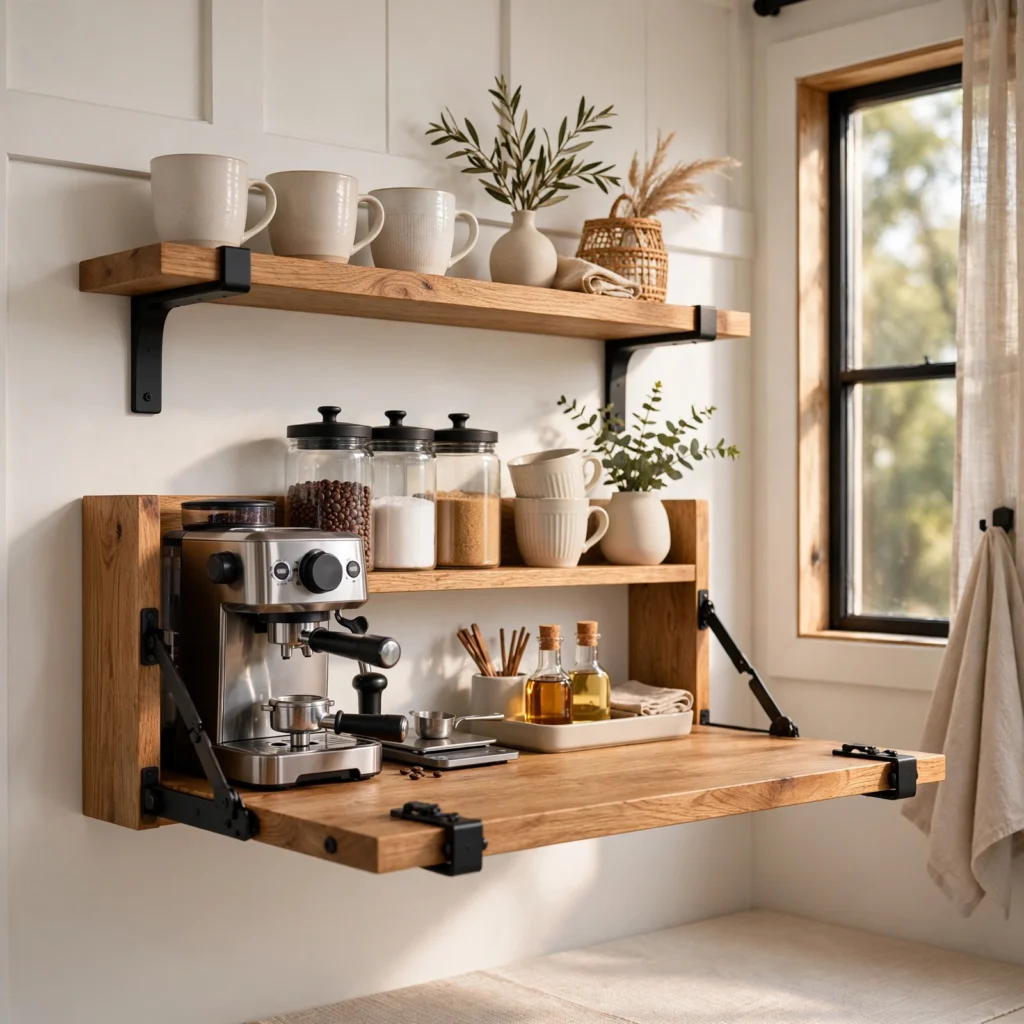
A fold-down wall shelf mounts a hinged surface directly to the wall, folding completely flat when not in use and unfolding into a small coffee-making surface only when needed. This works especially well in a kitchen too small to spare any permanent counter or floor footprint for a coffee station, since the shelf essentially disappears between uses. Securing the shelf into wall studs is necessary to support the weight of a coffee maker and mugs once it’s unfolded and in active use.
3. Repurposed Nightstand Cart
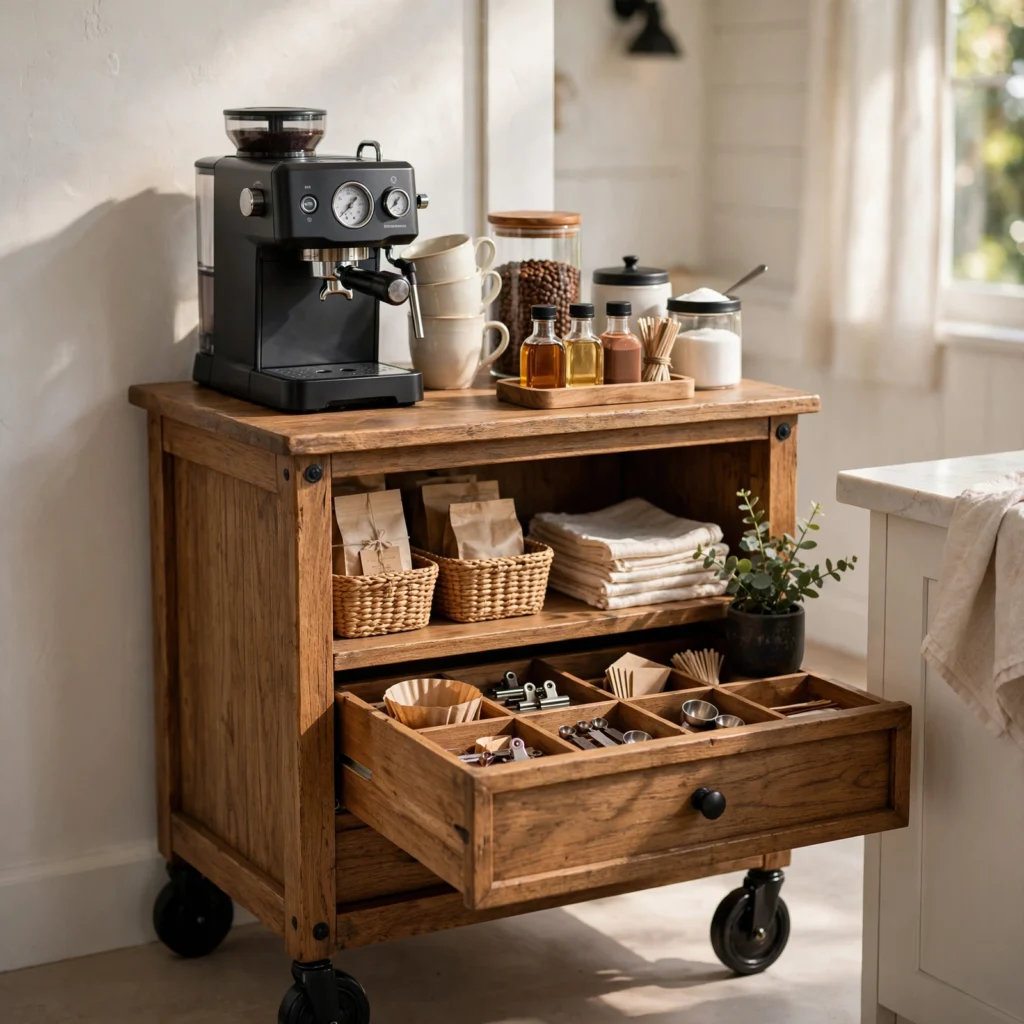
A repurposed nightstand cart uses an old bedroom nightstand, either kept on its original legs or fitted with small casters for mobility, as a compact base for a small coffee station. This option works particularly well for anyone with a spare piece of furniture already on hand, avoiding the cost of purchasing a coffee-specific cart. Choosing a nightstand with at least one drawer provides a small amount of enclosed storage for supplies in addition to the open surface on top.
4. Slim Bookshelf Conversion
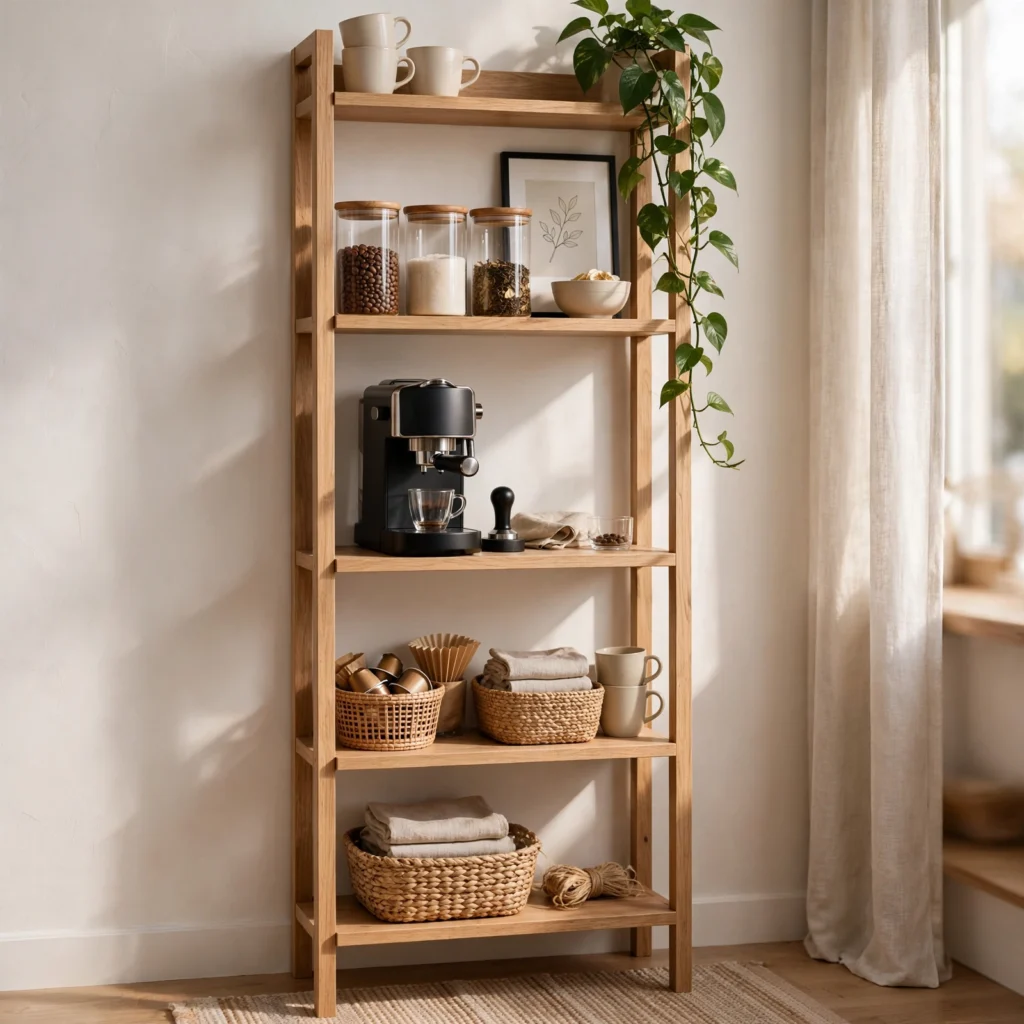
A slim bookshelf conversion repurposes a narrow, vertical bookshelf, originally intended for a living room or office, into a coffee station by using the shelves for mugs, supplies, and the coffee maker itself stacked at a comfortable working height. This option makes efficient use of vertical space in a way a standard wide cart or cabinet doesn’t, since the narrow footprint fits into gaps a bulkier piece couldn’t. Positioning the coffee maker on a lower shelf, roughly counter height, keeps the actual brewing process at a comfortable, accessible level.
In order to see more options for ideas for coffee bar kitchen counter CLICK HERE
5. Windowsill Coffee Nook
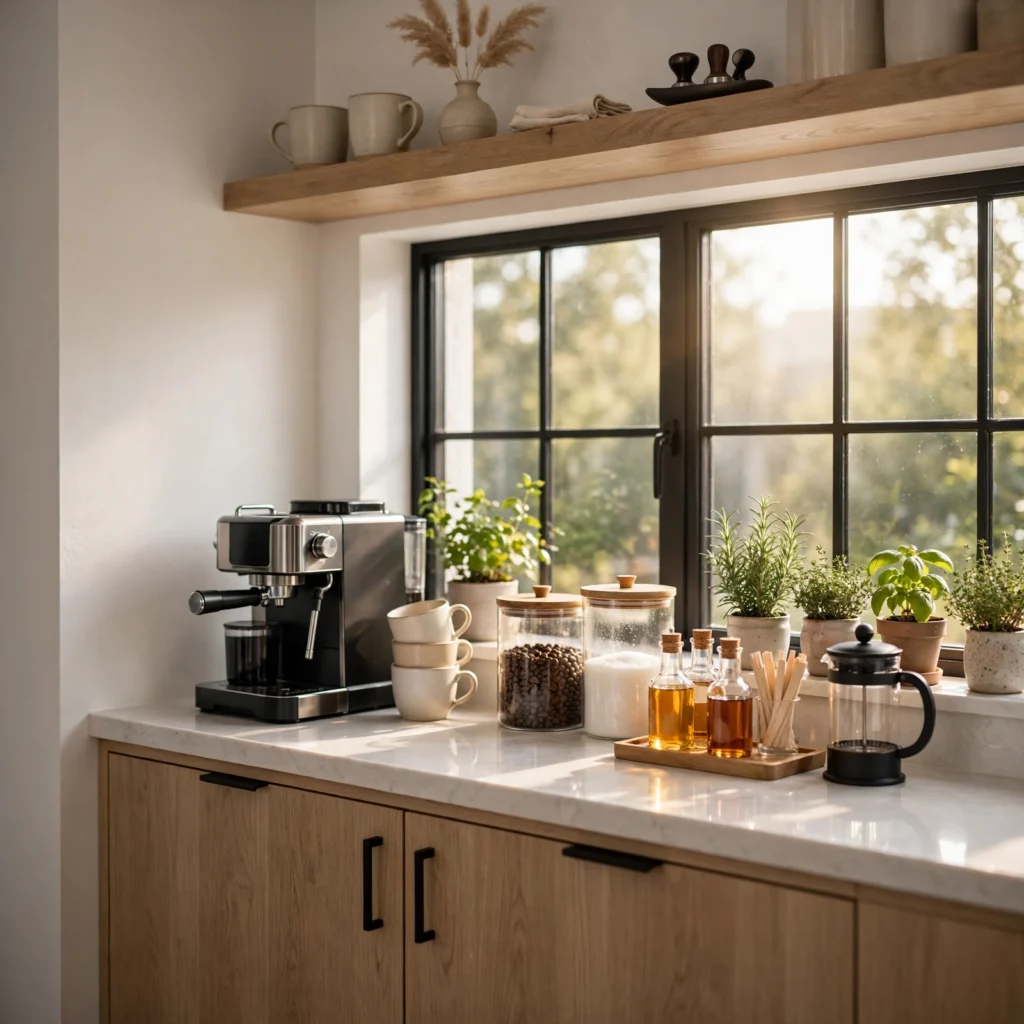
A windowsill coffee nook uses a deep windowsill ledge as a small surface for a compact coffee maker or a simple pour-over setup, taking advantage of a spot that often goes completely unused in a small kitchen. This option works best with a genuinely deep sill and a lightweight, compact brewing method, since a standard drip coffee maker may be too bulky for a typical window ledge. Adding a small floating shelf just below the sill provides a spot for mugs and supplies without requiring any additional floor space nearby.
6. Closet Coffee Station Conversion
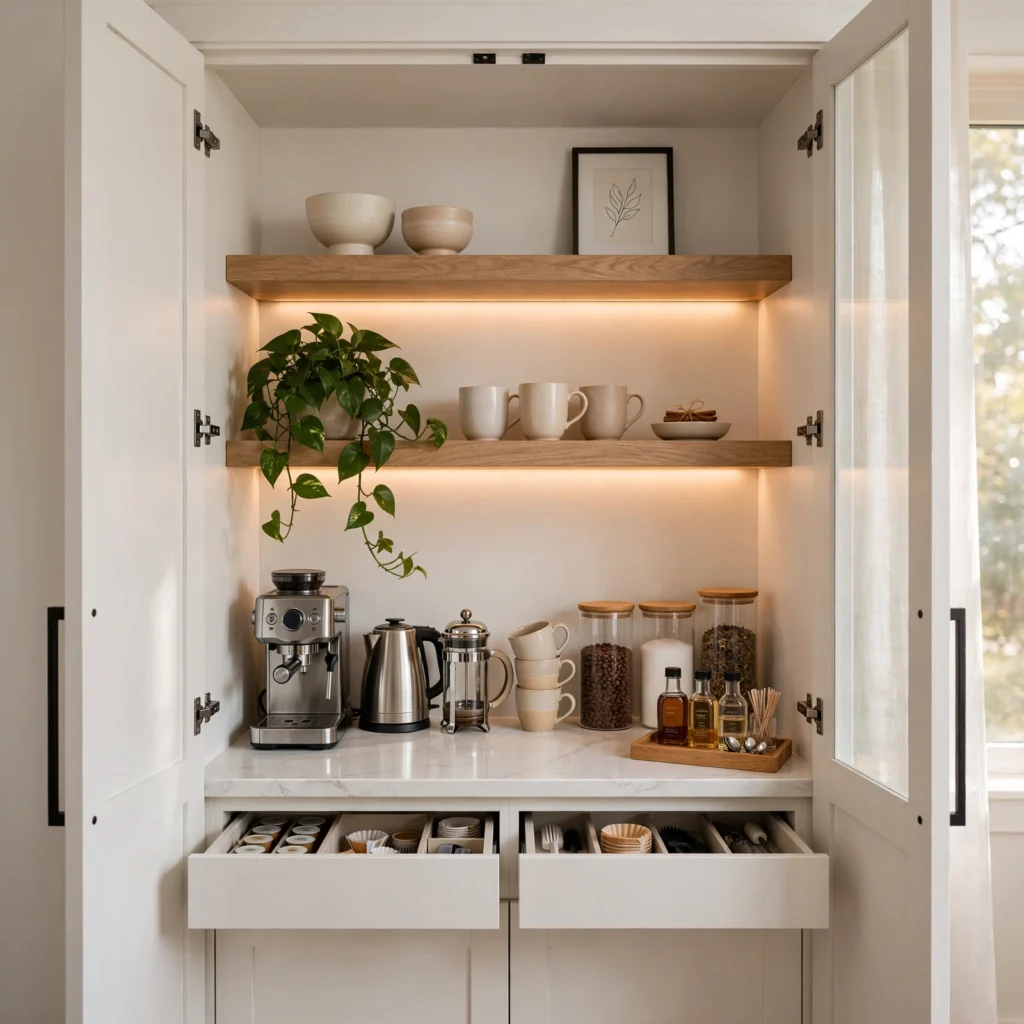
A closet coffee station conversion repurposes a small, shallow closet, whether a coat closet near the kitchen or an unused pantry space, into a fully concealed coffee bar that closes behind doors when not in use. This option works particularly well for anyone who wants the visual benefit of a completely hidden station without dedicating any visible kitchen counter or wall space to the setup. Installing a small outlet within the closet, if one isn’t already present, is worth planning for during the conversion to avoid running an extension cord from elsewhere.
7. Stacked Crate Shelving
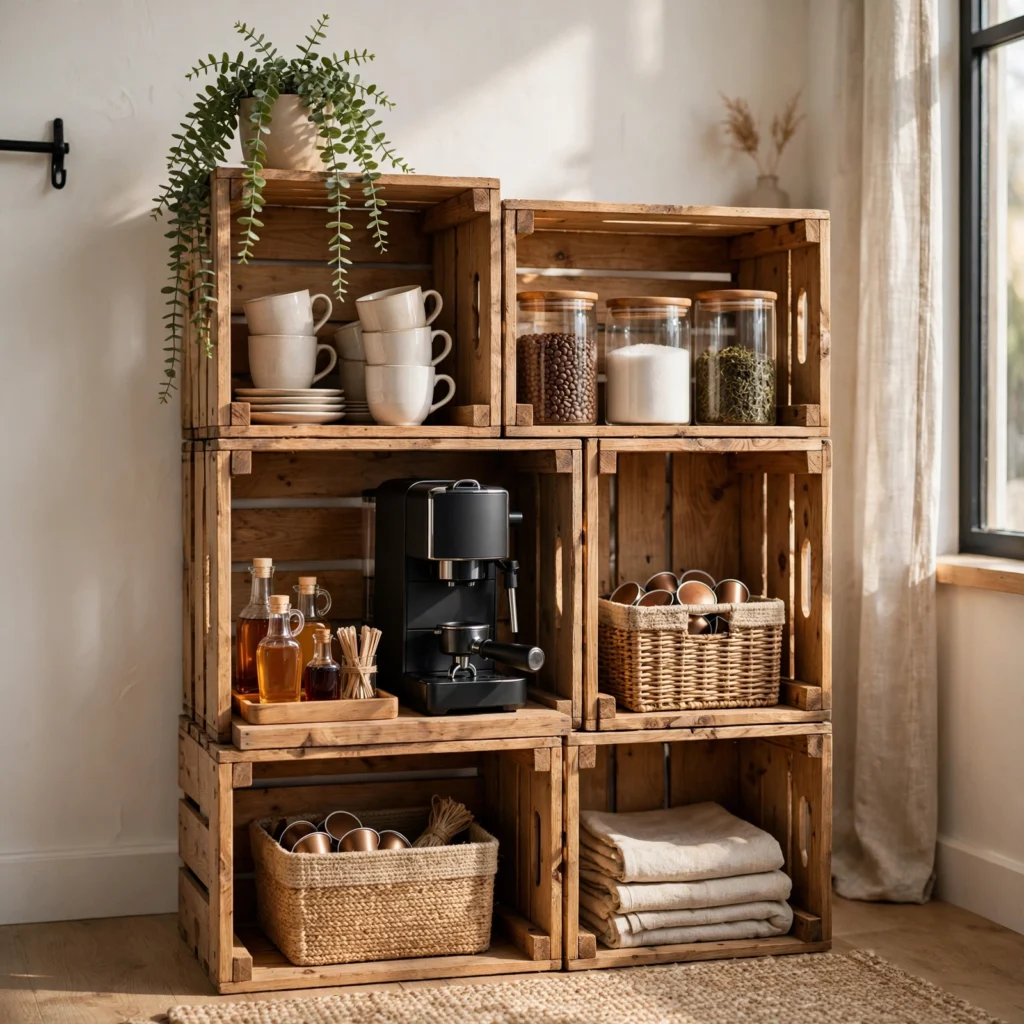
Stacked crate shelving uses two or three small wood crates, either purchased new or repurposed from shipping packaging, stacked and secured together to create a compact, modular shelving unit for a coffee station. This option is one of the more budget-friendly choices on this list, since crates are widely available and inexpensive compared to purpose-built furniture. Securing the stacked crates together with basic hardware prevents the unit from shifting or toppling under the weight of a coffee maker and supplies.
8. Hanging Wall Basket Trio
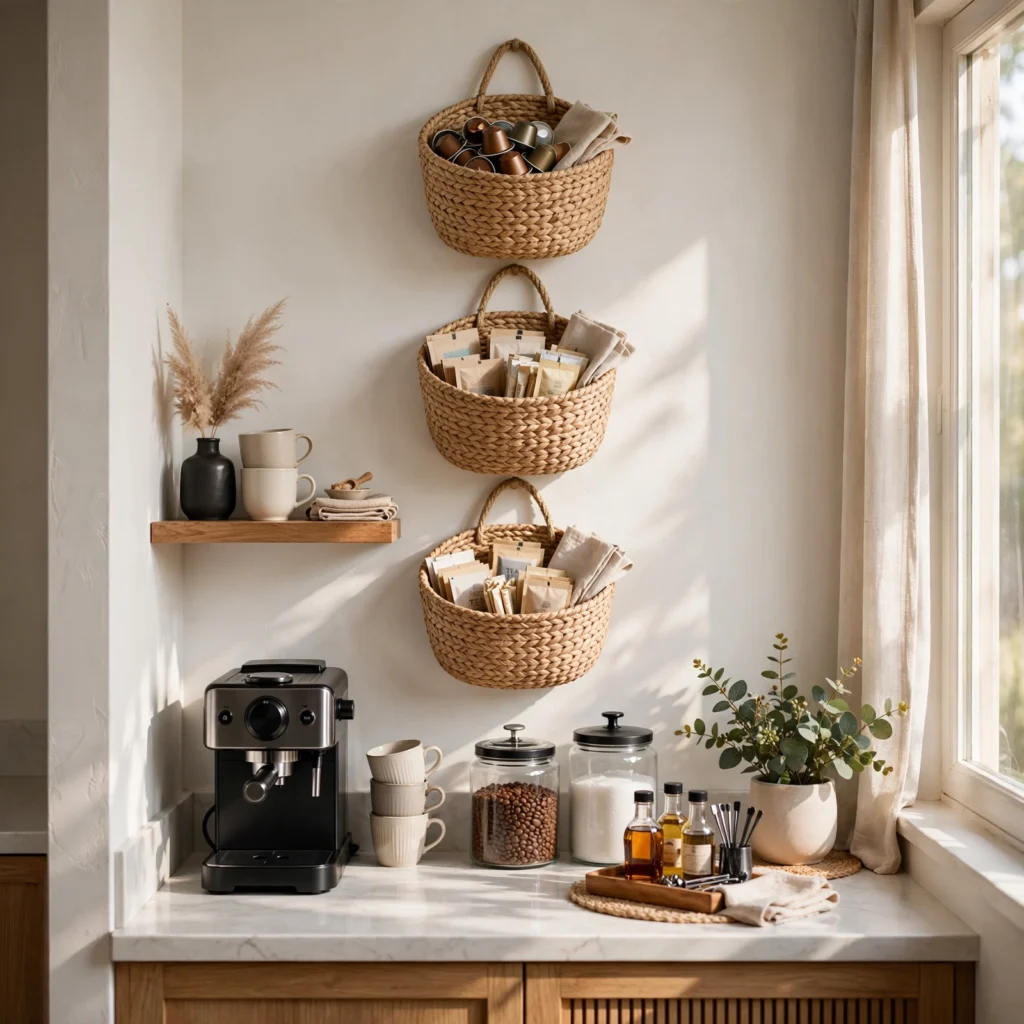
A hanging wall basket trio mounts three small woven or wire baskets to the wall in a cluster, each holding a specific category of coffee supply, like filters, pods, or sweeteners, without requiring any counter or floor space at all. This option works especially well above a narrow counter section too small for additional furniture, adding storage purely through vertical wall space. Choosing baskets with a slight depth, rather than very shallow ones, ensures they hold a meaningful quantity of supplies despite their compact footprint.
9. Mini Two-Tier Cart
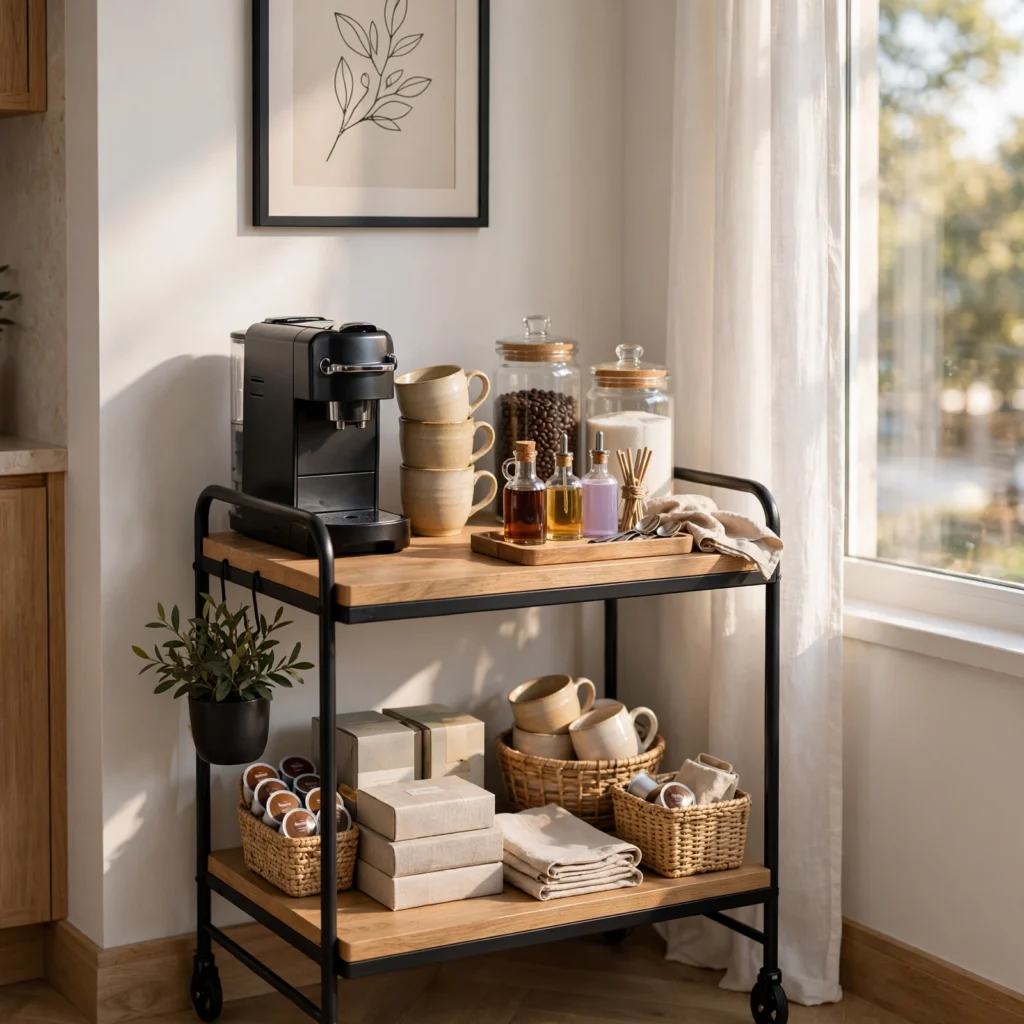
A mini two-tier cart uses a smaller, more compact version of a standard bar cart, scaled down specifically to fit a narrow gap or a tight kitchen corner rather than requiring the footprint of a full-sized cart. This option retains the mobility benefit of a larger cart while taking up considerably less floor space. Choosing a cart with a lower shelf reserved specifically for bulkier items, like a bag of beans, keeps the compact top surface clear for the actual brewing process.
10. Door-Mounted Organizer Pocket
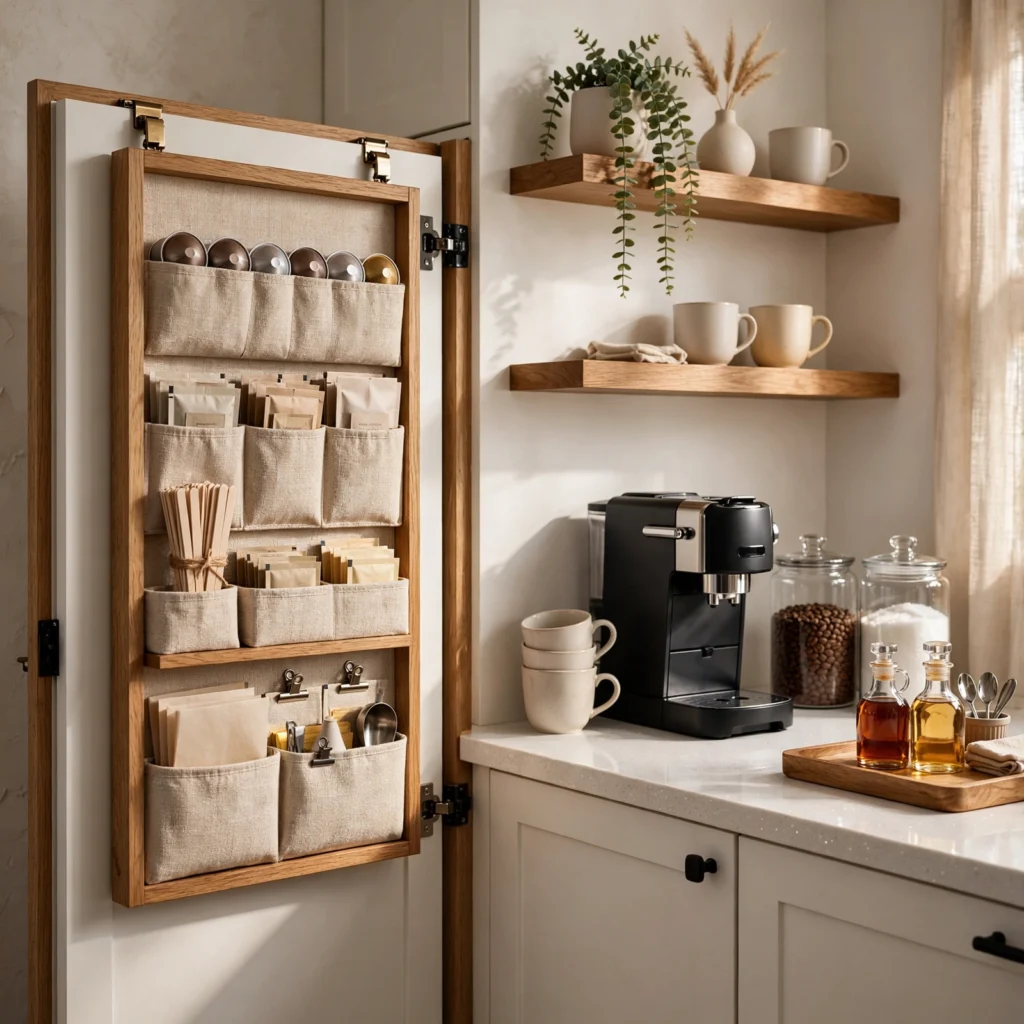
A door-mounted organizer pocket, similar to a shoe organizer but repurposed for coffee supplies, hangs on the inside of a nearby cabinet or closet door, holding smaller items like sweetener packets, filters, or stirrers in individual pockets without using any counter or shelf space. This option works particularly well when paired with another small coffee bar solution on this list, adding supplemental storage capacity without requiring any additional footprint of its own. Choosing an organizer with clear or labeled pockets makes it easier to quickly locate a specific item.
| Storage Solution | Space Used | Best Contents |
| Door-Mounted Pockets | None (uses door) | Small packets, filters |
| Hanging Wall Baskets | Minimal wall space | Pods, sweeteners |
| Stacked Crates | Small footprint | Mugs, canisters |
11. Under-Cabinet Pull-Out Shelf
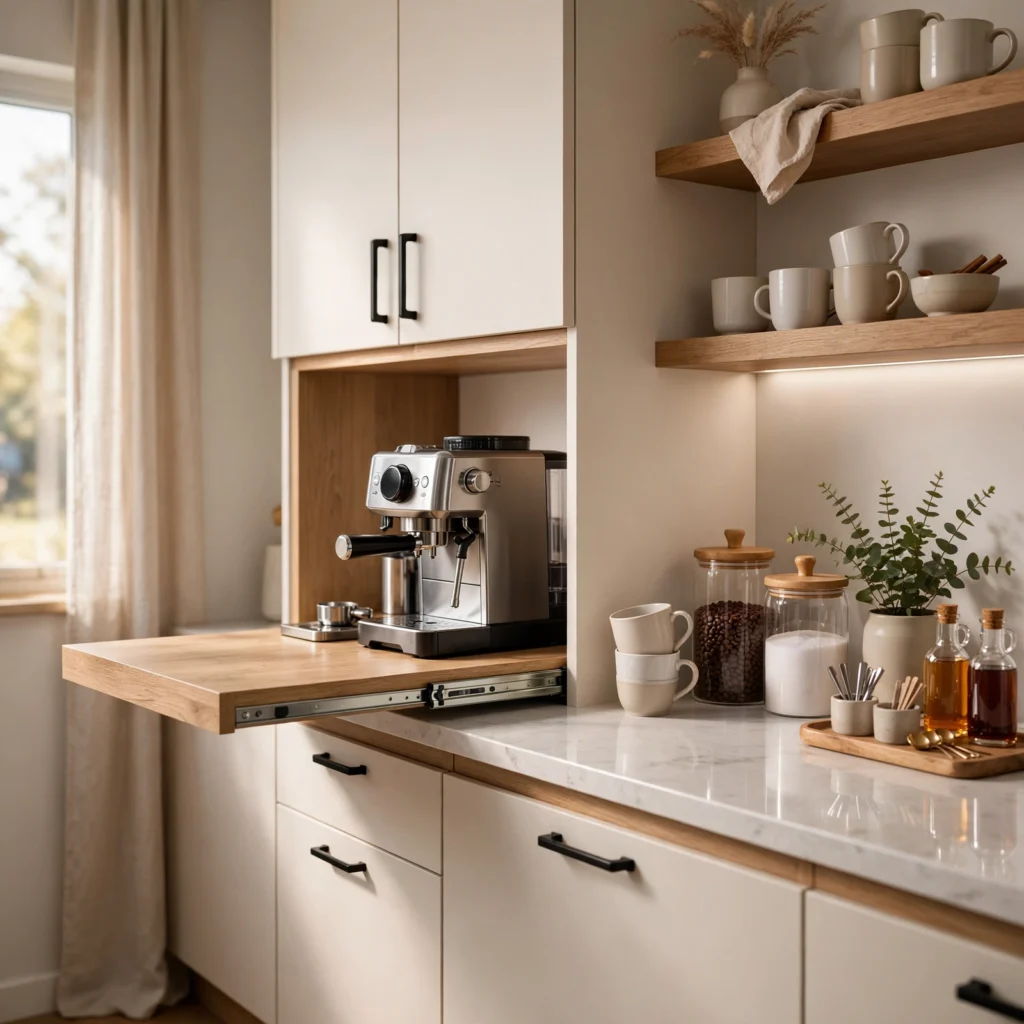
An under-cabinet pull-out shelf installs a small sliding tray beneath an existing upper cabinet, extending outward to provide a temporary coffee-making surface that tucks back in when not needed. This option works well in a kitchen with upper cabinetry but no available counter space to spare for a permanent coffee station. Choosing a pull-out shelf rated for the weight of a coffee maker ensures it remains stable and doesn’t sag under regular daily use.
12. Bookend-Style Vertical Divider
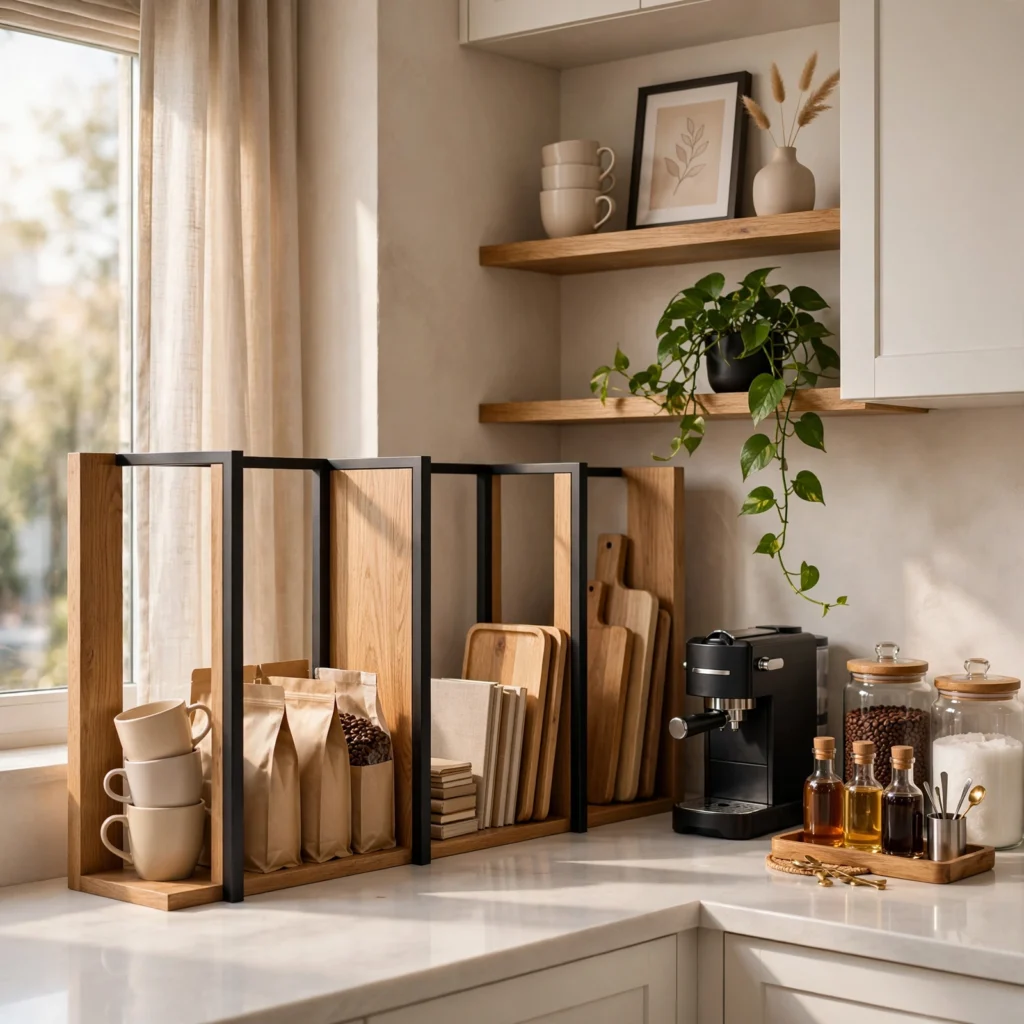
A bookend-style vertical divider uses a small, sturdy bookend or a similar object to create a narrow, defined section within an existing shelf or counter area, keeping coffee-related items contained to one specific zone without requiring any new furniture at all. This option is one of the lowest-cost solutions on this list, since it simply reorganizes existing shelf space rather than adding anything new. Choosing a divider heavy enough to stay in place under the weight of leaning canisters or boxes keeps this simple system functional over time.
13. Compact Espresso Machine Nook
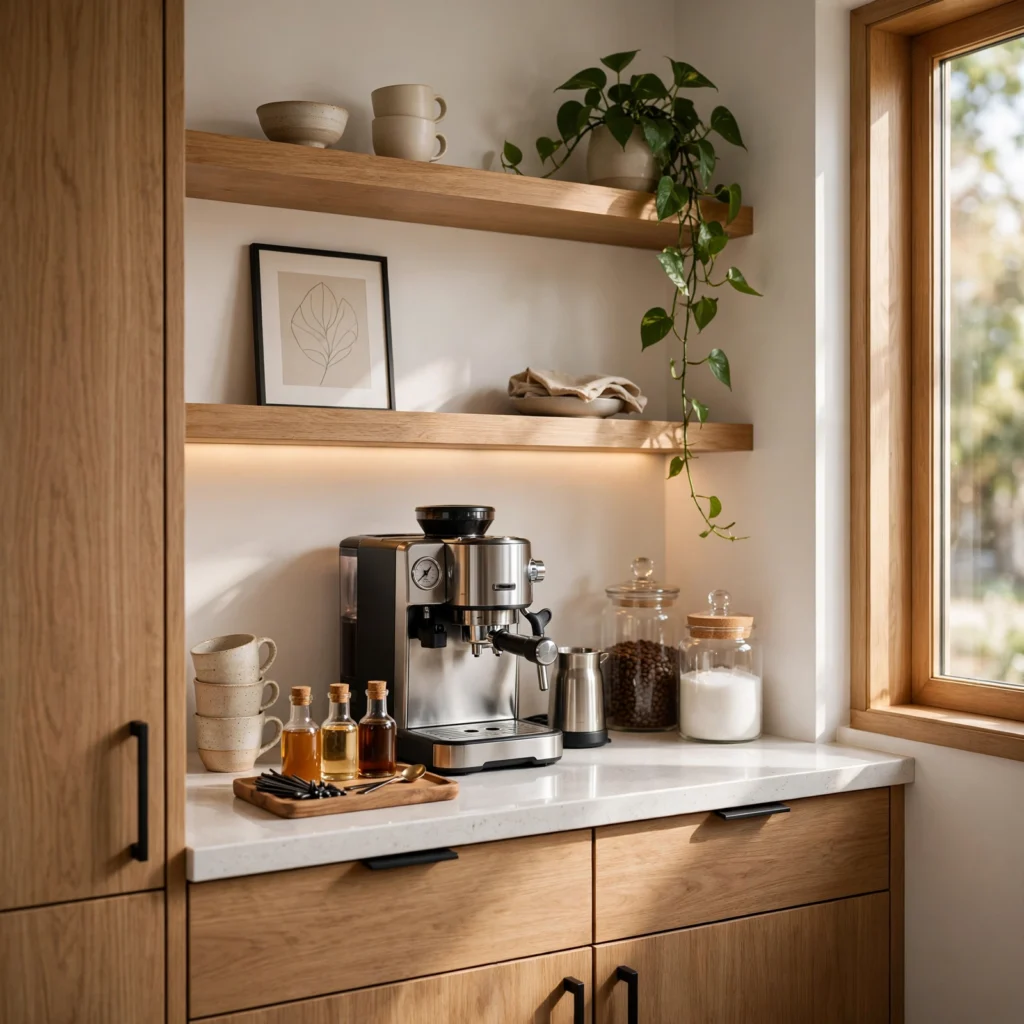
A compact espresso machine nook dedicates a very small, specifically measured section of counter or shelf space exclusively to a compact espresso machine, sized to fit that appliance’s exact footprint rather than a general-purpose coffee station layout. This option works well for anyone whose coffee routine centers around one specific appliance rather than needing to accommodate a broader range of brewing methods and supplies. Measuring the exact appliance dimensions before committing to a specific spot prevents an awkward fit once the machine is actually in place.
Shop the Look
A well-planned small coffee bar typically combines one vertical storage piece with a few smaller, space-saving accessories rather than trying to fit a full-sized station into a tight footprint. A narrow ladder shelf or a repurposed nightstand provides the main surface and storage. A hanging wall basket trio and a door-mounted organizer pocket add supplemental storage without using any additional floor or counter space. A bookend-style divider keeps everything contained within its designated small zone.
Common Small Coffee Bar Ideas Mistake to Avoid
The most common mistake is trying to fit a standard-sized coffee bar setup, designed for a wider counter or a full cart, into a footprint that genuinely can’t support it, resulting in a cramped, overcrowded station that’s harder to use than no dedicated station at all. Measuring the actual available space first, then choosing furniture and accessories scaled specifically to that footprint, rather than starting with a Pinterest-inspired layout and trying to force it to fit, produces a small coffee bar that’s genuinely functional rather than just visually aspirational. A narrower, taller solution almost always works better in a tight kitchen than a wider, shorter one that eats into limited counter space.
FAQs
What’s the smallest amount of space a coffee bar can work in?
A coffee bar can function in as little as one to two feet of width, particularly using a narrow ladder shelf, a door-mounted organizer, or a compact appliance-specific nook rather than a standard cart or cabinet. The key to making a genuinely tiny footprint work is prioritizing vertical storage and repurposed furniture over anything requiring a wider base.
Should I prioritize wall space or floor space for a small coffee bar?
Wall space is generally the better resource to prioritize in a small kitchen, since most tight kitchens have more unused vertical wall area than available floor footprint. Solutions like hanging baskets, a fold-down shelf, or door-mounted organizers all make use of this often-overlooked vertical space without requiring any additional floor clearance.
Can repurposed furniture really work as well as purpose-built coffee bar furniture?
Repurposed furniture, like an old nightstand or a slim bookshelf, can work just as well as purpose-built coffee bar furniture, provided the piece is appropriately scaled and sturdy enough to hold the weight of a coffee maker and supplies. This approach often costs considerably less than purchasing new, coffee-specific furniture while still achieving the same organizational function.
Is a closet coffee station a good option for a very small kitchen?
A closet coffee station is a strong option for a very small kitchen, particularly if there’s an underused coat closet or small pantry space nearby, since it provides a fully concealed setup without claiming any visible counter or wall space. This option does require access to an outlet within the closet, which is worth confirming or planning for before committing to the conversion.
How do I keep a small coffee bar from looking cluttered despite the limited space?
Choosing just a few key accessories and storing bulkier or less frequently used supplies out of sight, whether in a door-mounted organizer or a nearby drawer, helps a small coffee bar avoid looking cluttered despite its compact footprint. Sticking to a consistent color palette across whatever items remain visible also makes a tight, small setup read as intentional rather than simply cramped.
Conclusion
These small coffee bar ideas prioritize vertical space, repurposed furniture, and unconventional spots like windowsills and closets to solve the specific challenge of a genuinely tight kitchen footprint. Measure your available space first, then choose a solution scaled specifically to that area rather than trying to force a standard-sized setup into a space that can’t support it. Save this post to Pinterest for your next kitchen project, and check out our related post on coffee bar ideas kitchen counter for more no-construction options if you have a bit of existing counter space to work with.
This list draws on years of helping homeowners solve genuinely tight kitchen space challenges, with a focus on solutions that stay functional rather than just technically fitting into an undersized footprint.