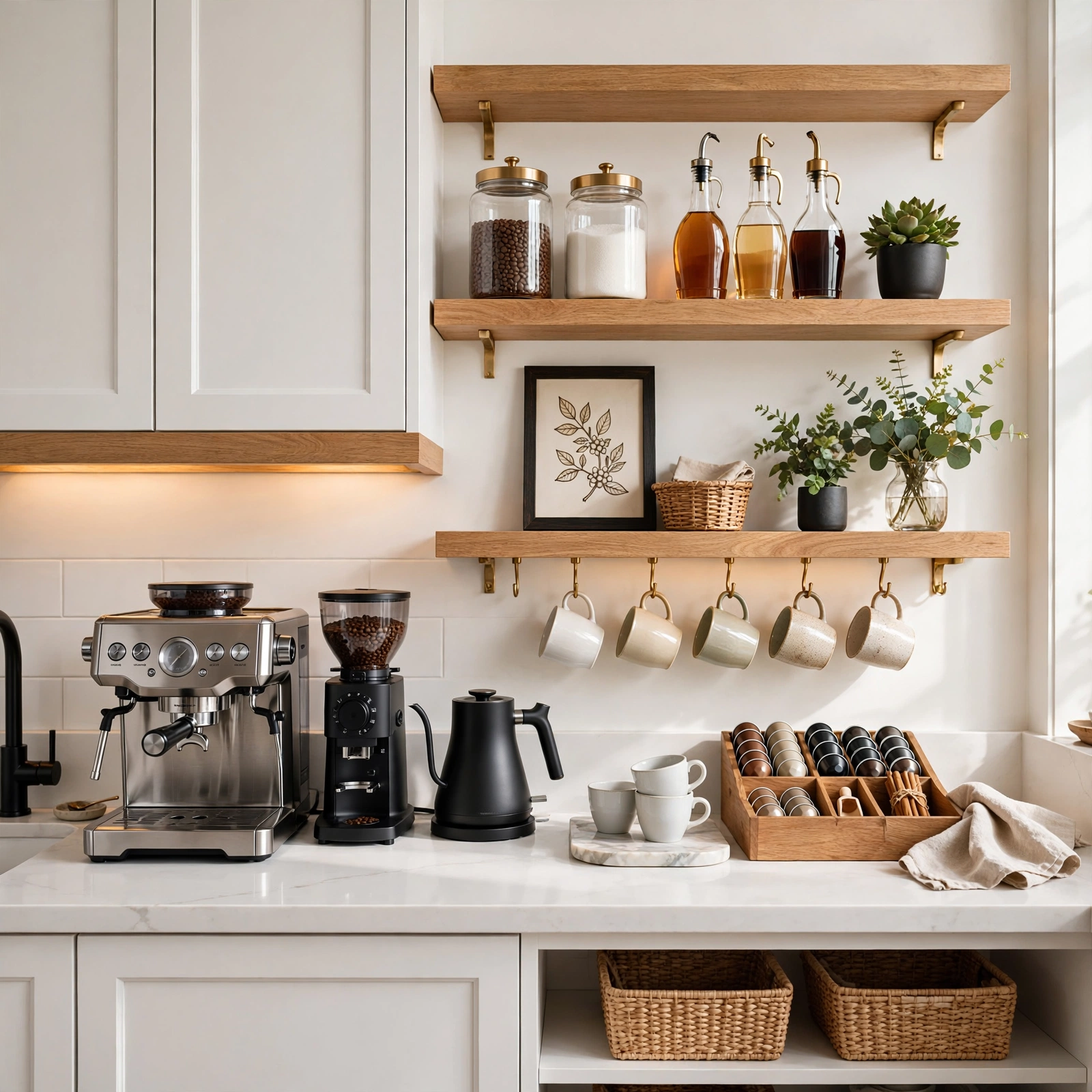
15 Gorgeous Coffee Bar Ideas to Create a Cozy and Stylish Kitchen or Nook
Coffee bar ideas range from a simple tray on a kitchen counter to a fully built-in nook with plumbing and custom cabinetry, and the right approach depends heavily on your available space and how involved your daily coffee routine actually is. This list covers a range of setups and styling choices, from a rolling bar cart to a corner cabinet conversion, along with the practical details worth planning around before the decorative choices. Whether you’re carving out a small corner or dedicating an entire wall, these ideas should help you build a coffee bar that’s genuinely used every morning rather than just a nice-looking display.
Trend & Background
Dedicated coffee bars have grown from a rare, custom feature into one of the more commonly requested additions in both kitchen renovations and general home organizing projects, reflecting how central coffee has become to many people’s daily routines. This trend has been fueled partly by the wider availability of specialty home brewing equipment, from espresso machines to pour-over setups, which benefit from having a defined, organized space rather than being scattered across regular kitchen counters. At the same time, more affordable and creative solutions, like a repurposed bar cart or a converted closet nook, have made this feature accessible even without a full kitchen renovation budget.
Key Takeaways
- Coffee bar ideas work best when built around your actual daily routine, whether that’s a quick single cup or a slower, multi-step pour-over process.
- A dedicated water source and enough outlet access matter more to a functional coffee bar than any single decorative choice.
- Open shelving and glass canisters keep frequently used items visible and within reach, while closed cabinets handle bulkier or less attractive equipment.
- Even a small corner or an underused nook can accommodate a coffee bar, since the space needed is often smaller than people expect.
1. Floating Wall Shelf Display
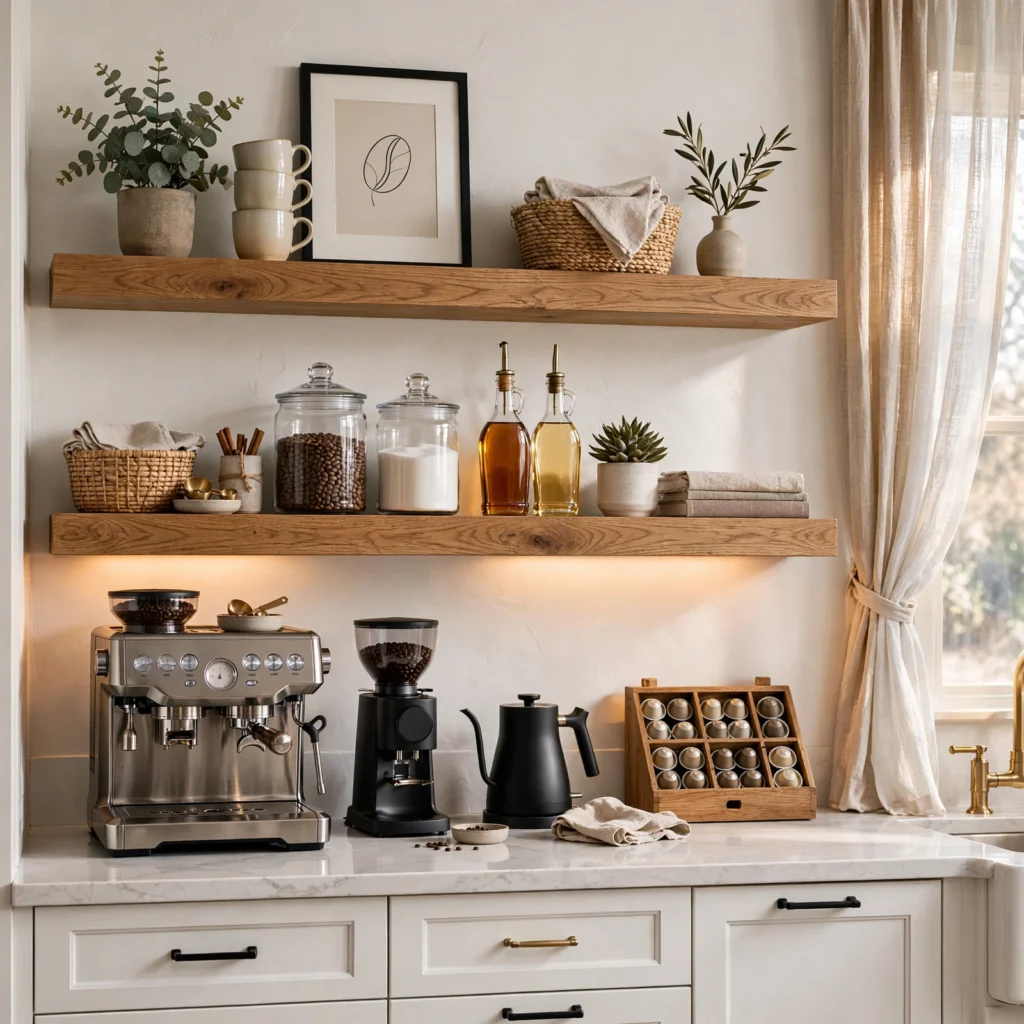
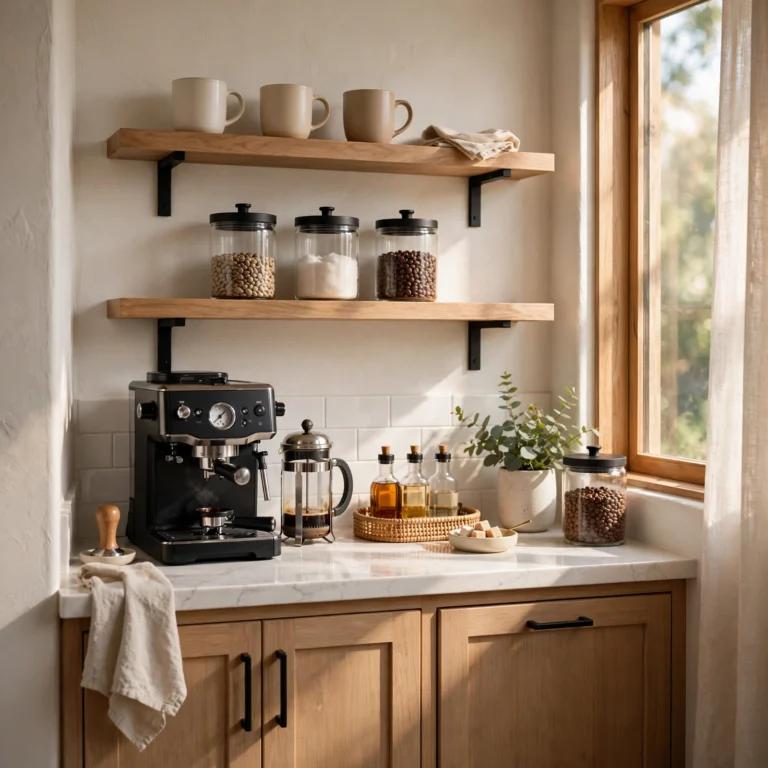
A floating wall shelf display mounts one or several slim shelves above a counter or cart, providing a spot for mugs, a coffee maker, or smaller accessories without requiring any additional cabinet installation. Staggering two or three shelves at slightly different heights, rather than lining them up evenly, creates a more natural, gallery-style look for displaying glassware and equipment. This option works particularly well in a smaller kitchen where floor space for a dedicated cabinet or cart isn’t available.
In order to see more options for ideas for college dorm room CLICK HERE
2. Open Shelving with Mug Hooks
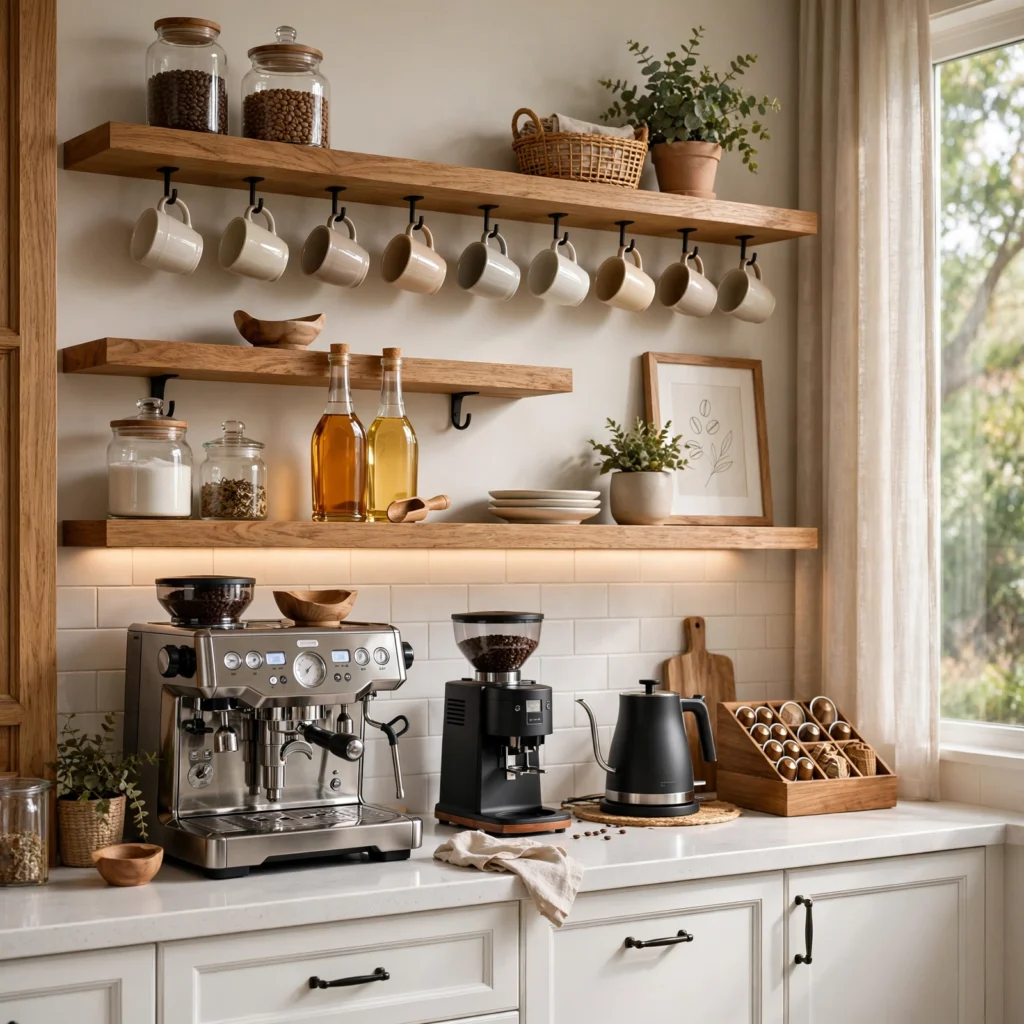
Open shelving with mug hooks combines a standard shelf with a row of small hooks mounted along the underside, hanging mugs by their handles rather than stacking them, which keeps each mug visible and easy to grab without digging through a cabinet. This detail also adds a bit of visual texture to the shelving, since hanging mugs create a more varied silhouette than a uniform stack. Choosing hooks with a slight upward curve prevents mugs from sliding off during regular use.
| Coffee Bar Style | Space Needed | Best For |
| Countertop Tray | Minimal | Renters, small kitchens |
| Bar Cart | Small, mobile | Flexible layouts |
| Built-In Nook | Dedicated wall space | Full kitchen renovations |
3. Bar Cart Coffee Station
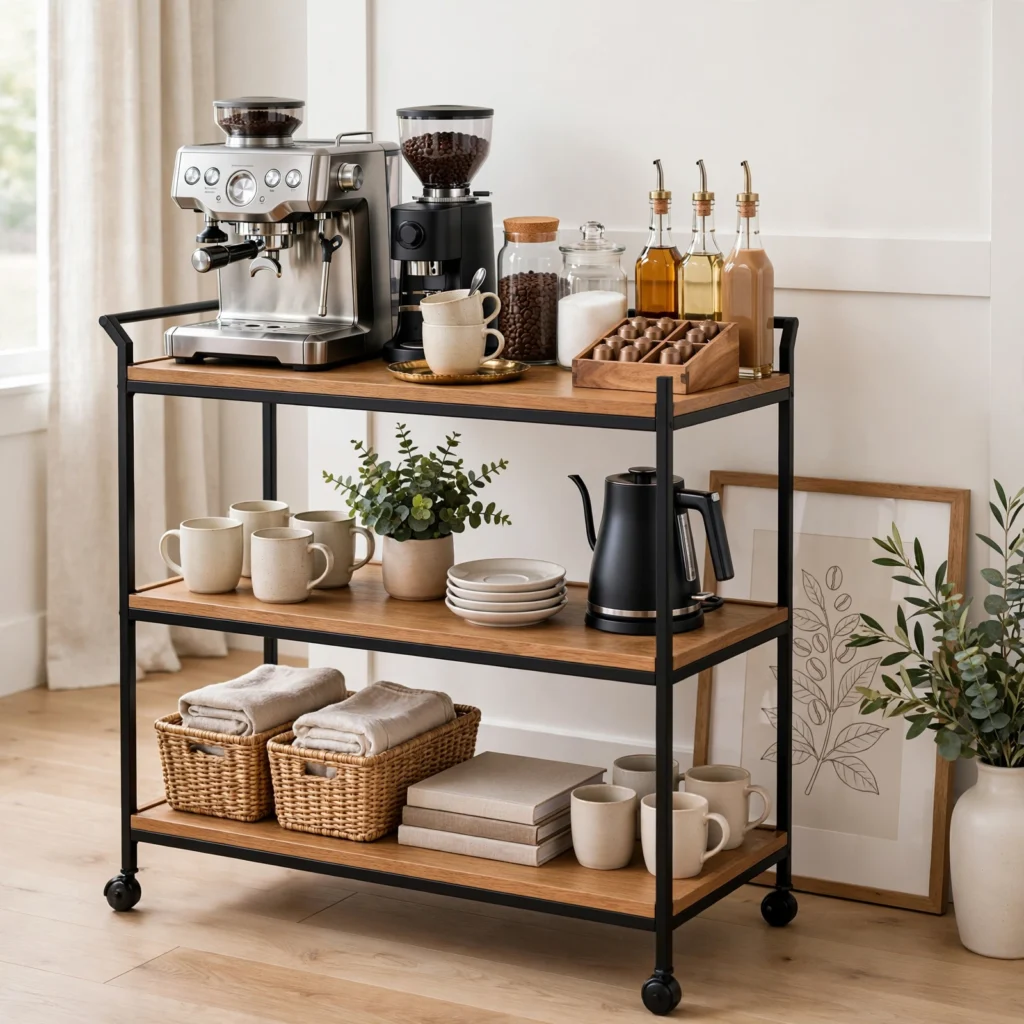
A bar cart coffee station uses a rolling, multi-tiered cart to hold the coffee maker, mugs, and supplies, offering a fully mobile setup that can be repositioned or tucked away depending on the room’s needs at any given time. This option works especially well for a renter or anyone hesitant to commit to a fixed, built-in coffee bar location. Choosing a cart with a lower shelf for bulkier items, like a bag of beans or extra filters, and a top surface reserved for the actual brewing equipment keeps the whole station organized and easy to use.
4. Built-In Nook Under Stairs
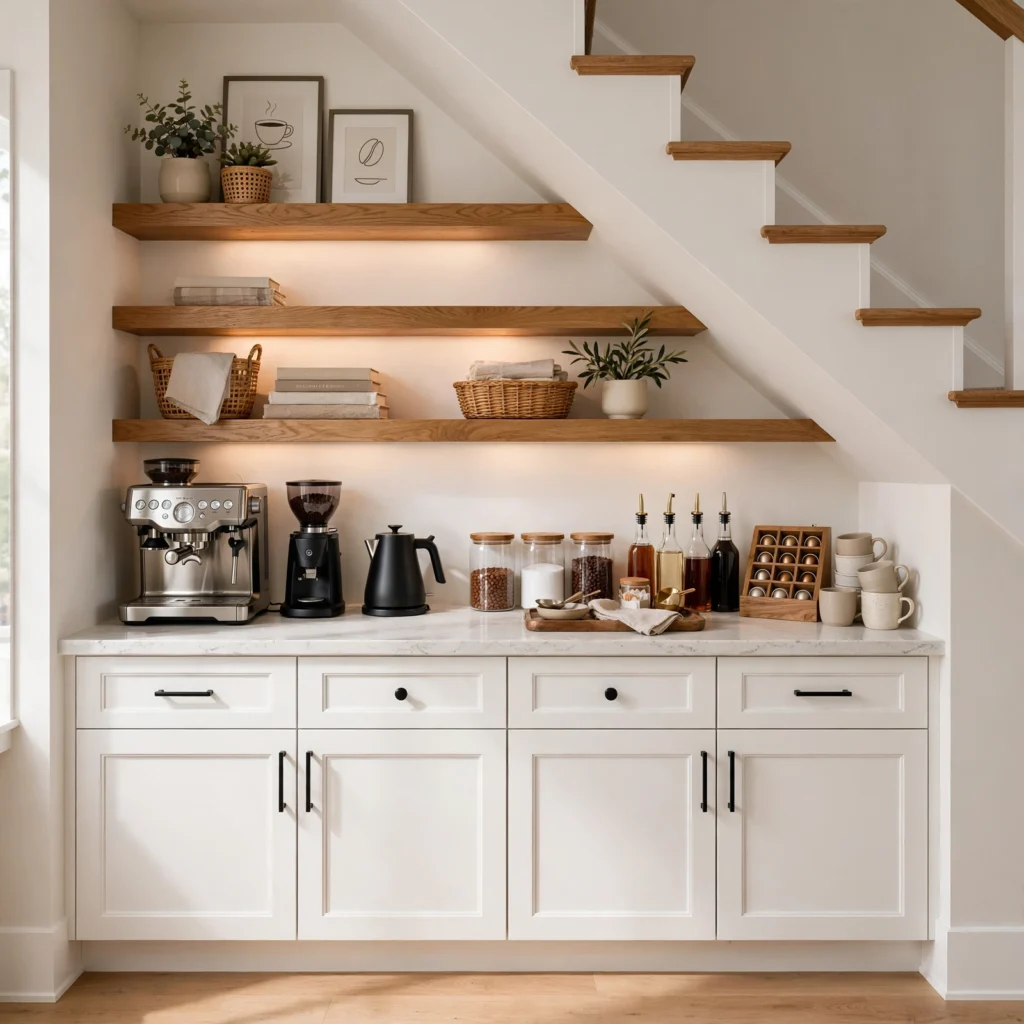
A built-in nook under stairs converts the often-underused, sloped space beneath a staircase into a dedicated coffee bar, making use of square footage that would otherwise serve no functional purpose. This option requires custom cabinetry or shelving built to accommodate the stair’s angled ceiling line, since standard rectangular furniture won’t fit flush against a sloped surface without some adjustment. A small pendant light or under-shelf lighting helps illuminate this often naturally darker, more enclosed spot.
5. Corner Cabinet Conversion
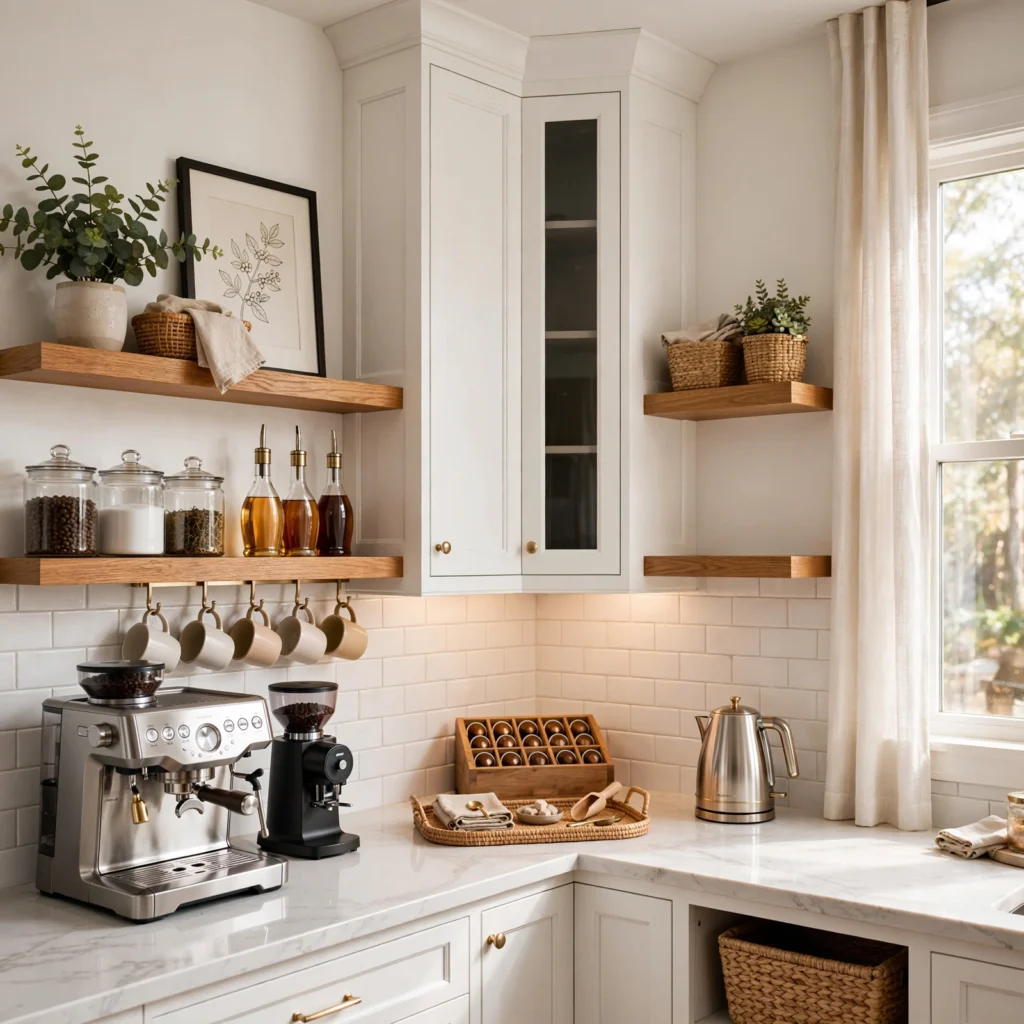
A corner cabinet conversion repurposes an existing but underused kitchen corner cabinet into a dedicated coffee station, making use of cabinetry that’s already built into the kitchen rather than requiring any new furniture or construction. This option works particularly well in a kitchen where counter space is already at a premium, since it claims storage space rather than surface space. Installing a pull-out shelf or a Lazy Susan within the corner cabinet improves access to items stored toward the back of the typically awkward corner depth.
6. Pegboard Backsplash Organizer
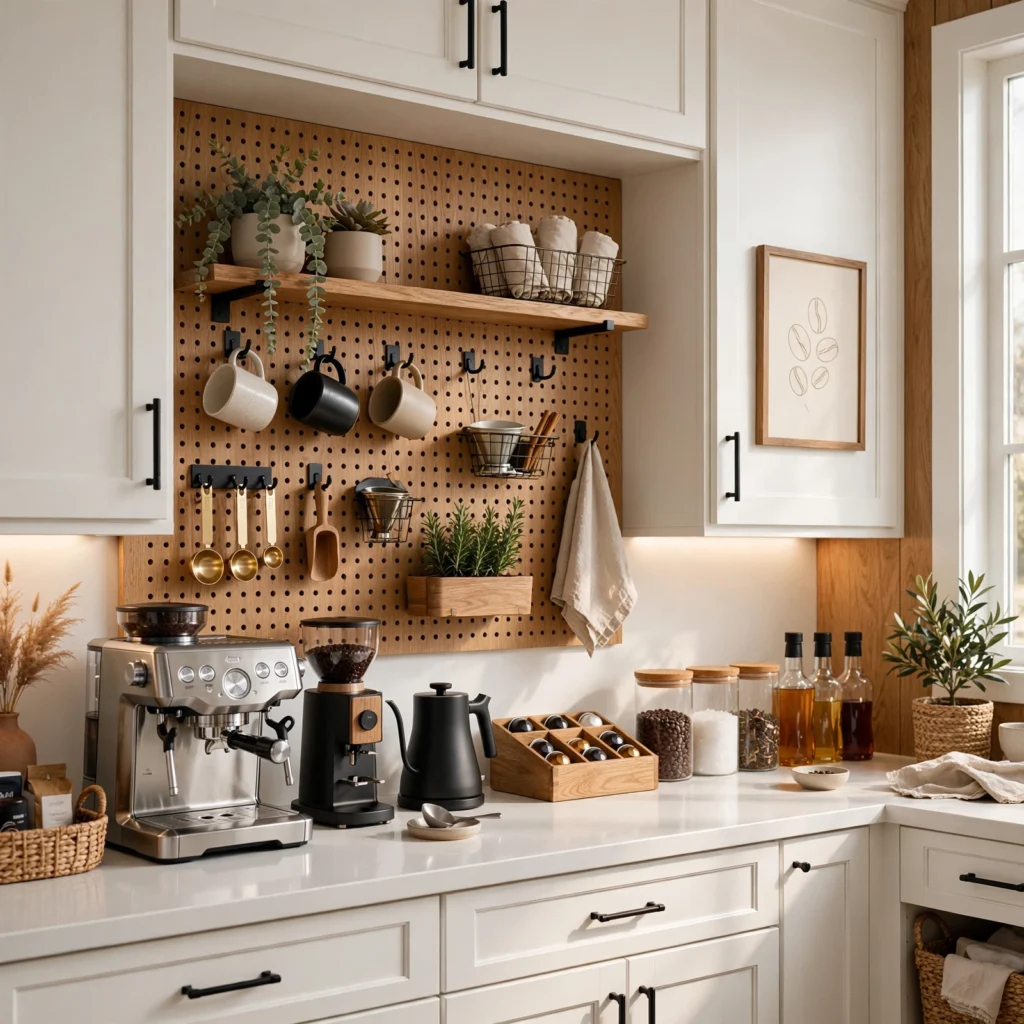
A pegboard backsplash organizer mounts a perforated board behind the coffee bar counter, allowing hooks and small shelves to hold mugs, filters, and small tools in a fully customizable, repositionable arrangement. This detail works especially well for a coffee bar with a lot of smaller accessories that would otherwise clutter a countertop, since the pegboard keeps everything visible and accessible without taking up any counter surface. Painting the pegboard a color that complements the surrounding kitchen or nook ties the functional element into the overall design.
7. Woven Basket Storage
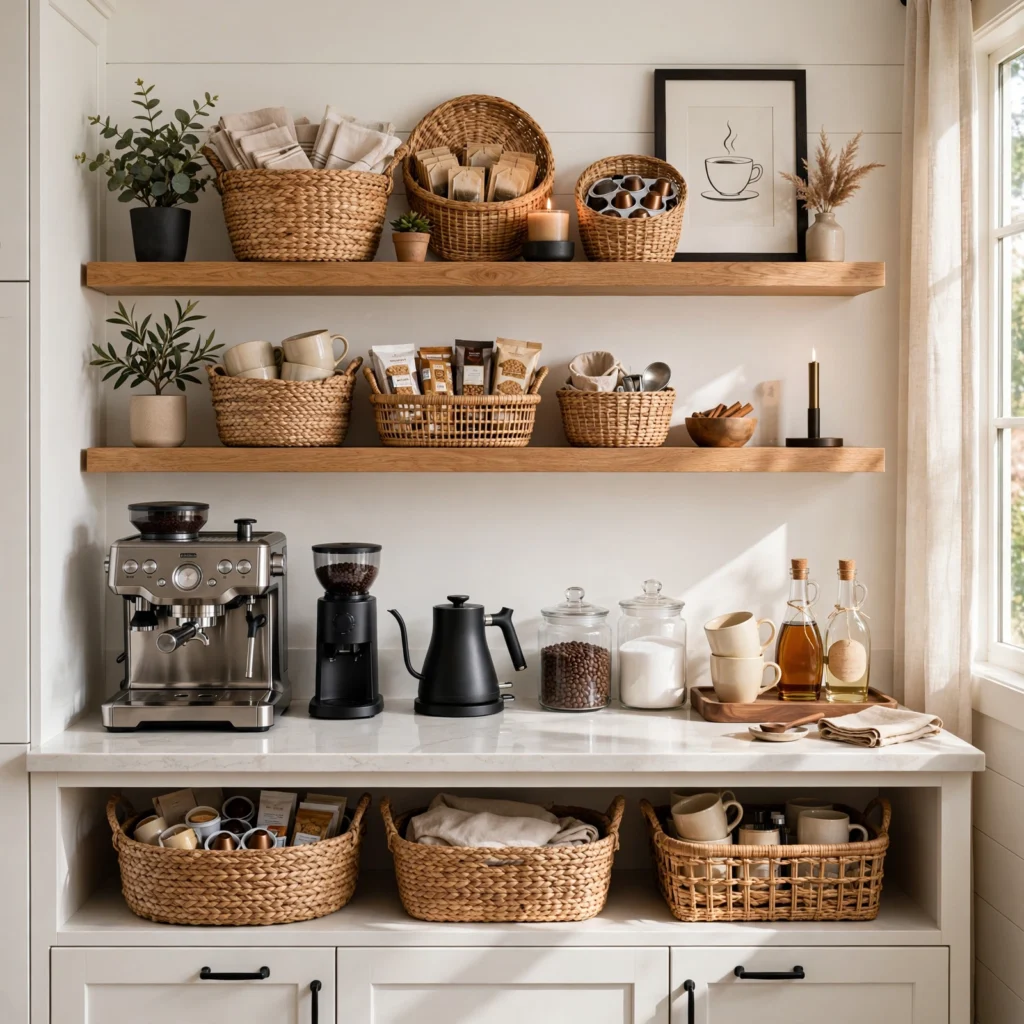
Woven basket storage corrals bulkier or less visually appealing items, like extra coffee bags, syrup bottles, or paper filters, into a textured, natural material container rather than leaving them loose on open shelving. Choosing baskets in a size that fits the specific shelf or cabinet depth prevents wasted space around an ill-fitting container. This detail also adds warmth and texture to a coffee bar that might otherwise consist entirely of smooth ceramic, glass, and metal surfaces.
8. Chalkboard Menu Sign
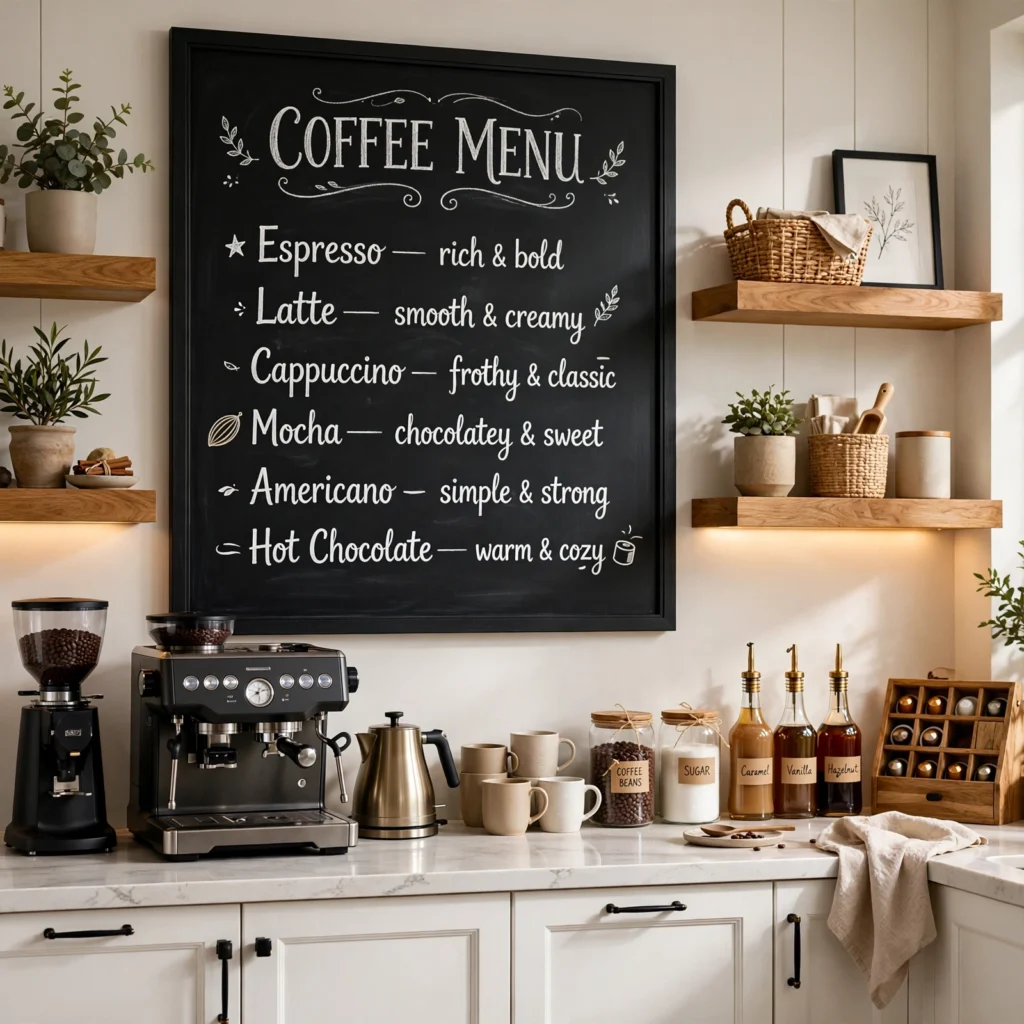
A chalkboard menu sign hangs above or beside the coffee bar, listing available drink options, syrup flavors, or a simple daily message in a casual, coffee-shop-inspired format. This detail works well as a functional guide for guests unfamiliar with the setup, in addition to its decorative appeal. Updating the chalkboard periodically, whether seasonally or just for variety, keeps this element feeling fresh rather than static.
9. Marble Countertop Surface
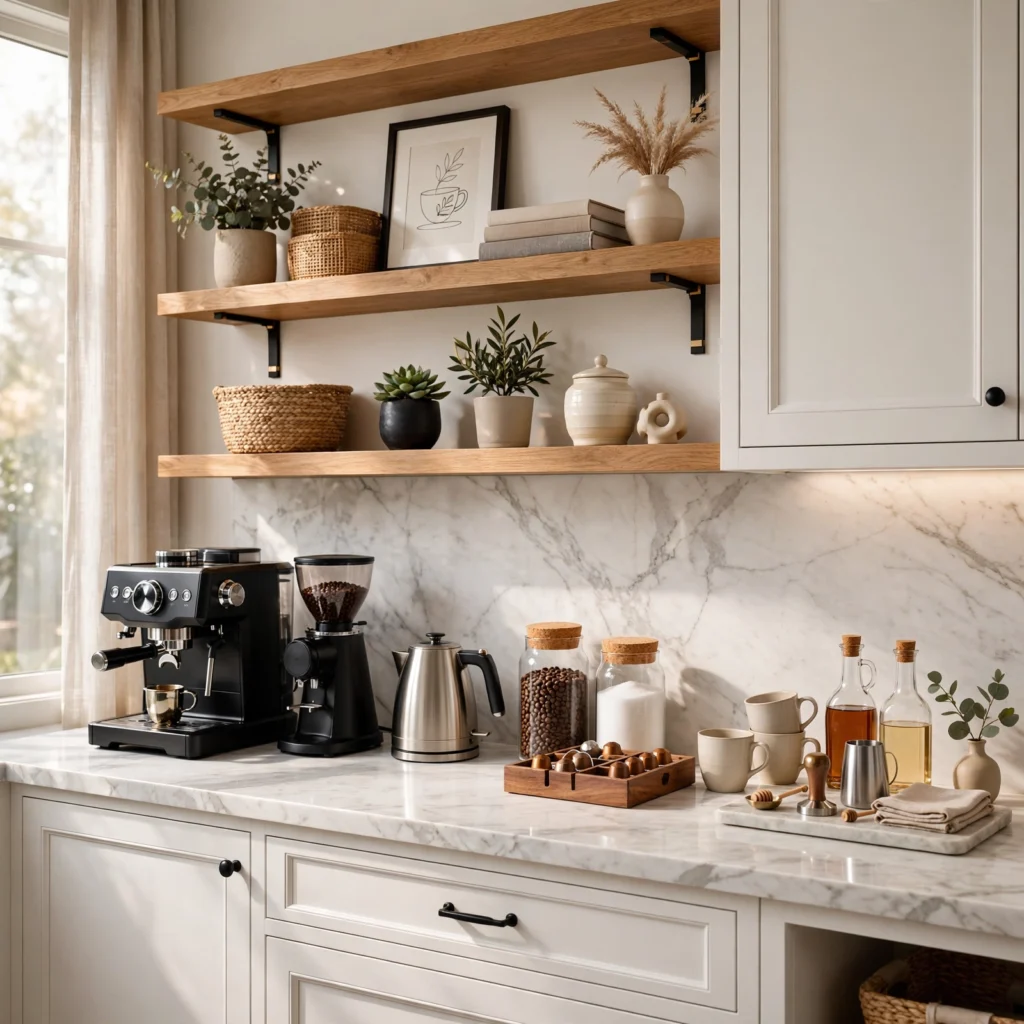
A marble countertop surface provides a durable, visually elevated work area for the coffee bar, offering a cool, smooth surface that also happens to be ideal for tasks like tempering chocolate or working with pastry if the space doubles for other kitchen tasks. Choosing a honed rather than polished finish hides water spots and coffee splashes more effectively than a glossy surface. This detail works particularly well as a smaller, contained upgrade for a coffee bar section within a larger kitchen that doesn’t use marble throughout.
| Countertop Material | Durability | Maintenance |
| Marble | Moderate | Regular sealing |
| Quartz | High | Minimal |
| Butcher Block | Moderate | Periodic oiling |
10. Rattan Pendant Light Accent
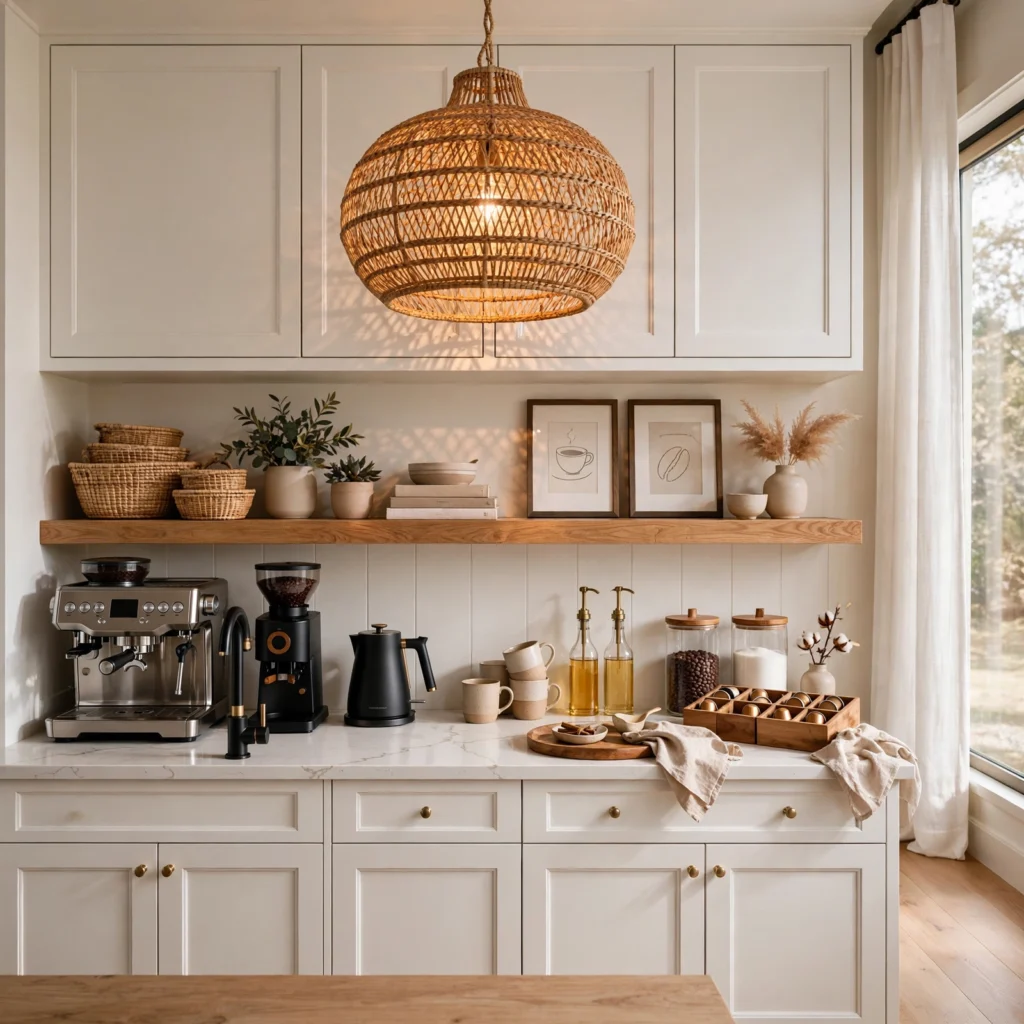
A rattan pendant light accent hangs a woven natural fiber shade above the coffee bar, adding warmth and a soft, dappled light pattern that differs from the room’s general overhead lighting. This detail works especially well as a way to visually define the coffee bar as its own distinct zone within a larger kitchen, even without any physical separation like a wall or cabinet run. Choosing a pendant sized appropriately to the counter below prevents the fixture from feeling either too small or overly dominant in the space.
11. Glass Canister Bean Storage
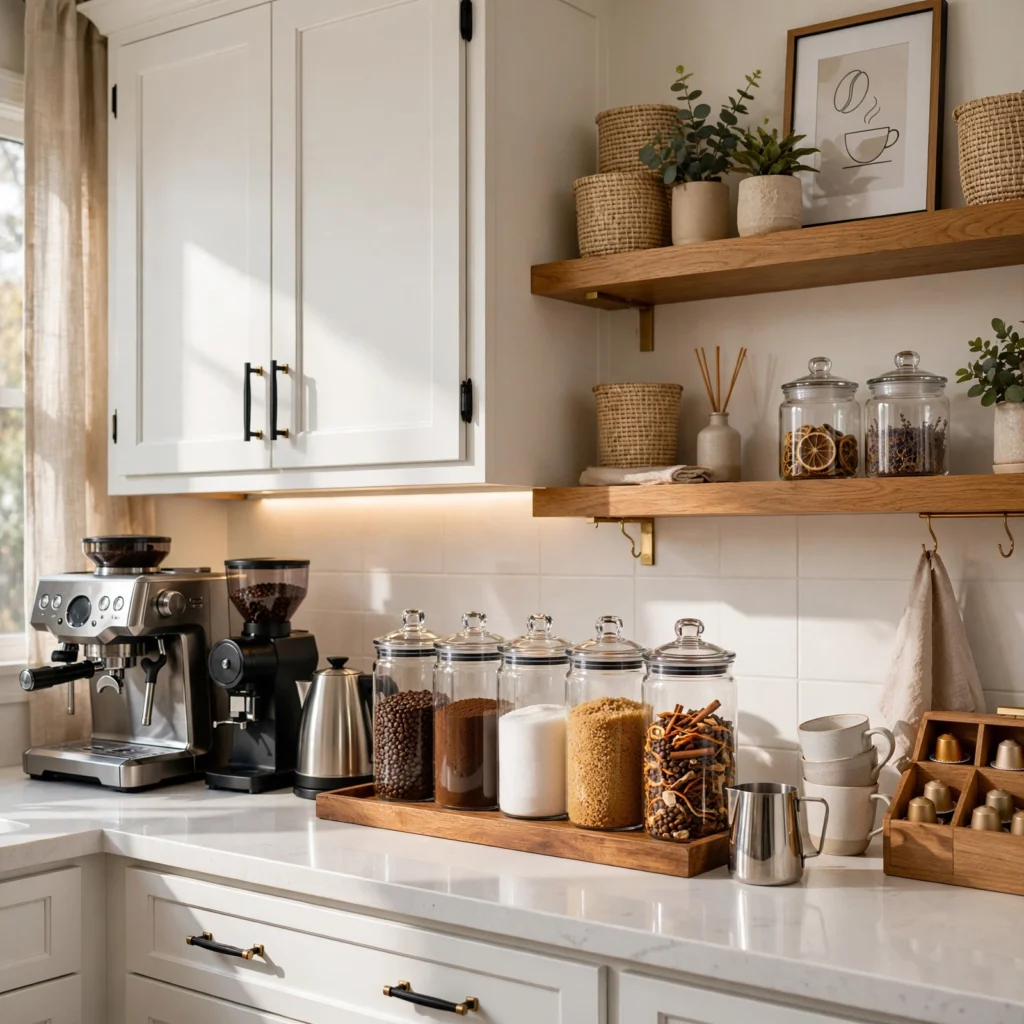
Glass canister bean storage keeps whole or ground coffee beans in clear, airtight containers rather than their original packaging, both preserving freshness better than a bag with a simple clip closure and creating a more visually appealing display on open shelving. Choosing canisters with a tight-sealing lid, ideally one with a one-way valve for whole beans, helps maintain flavor over a longer period compared to a standard glass jar. Labeling each canister with the roast type or origin adds a small functional and decorative detail simultaneously.
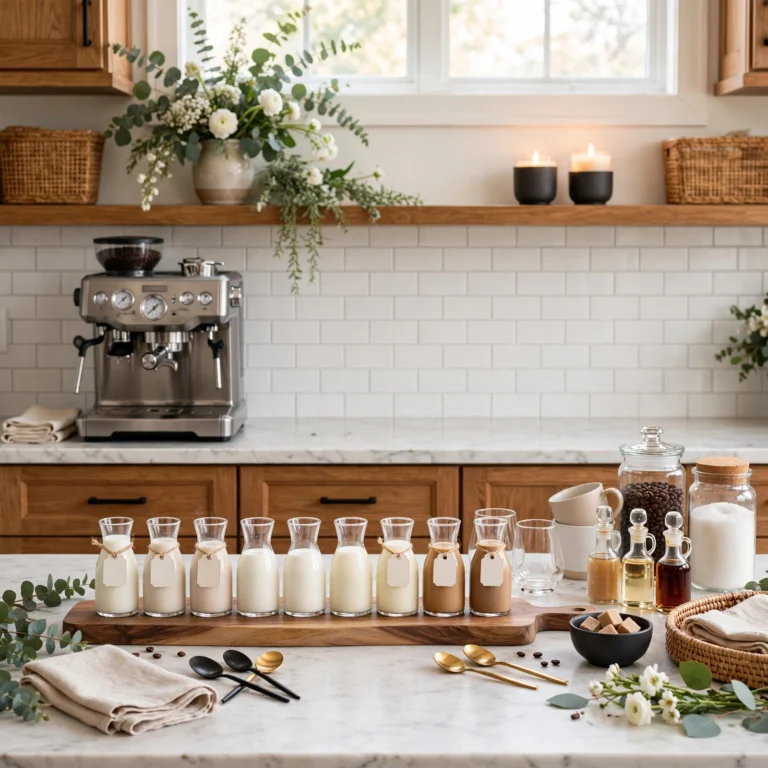
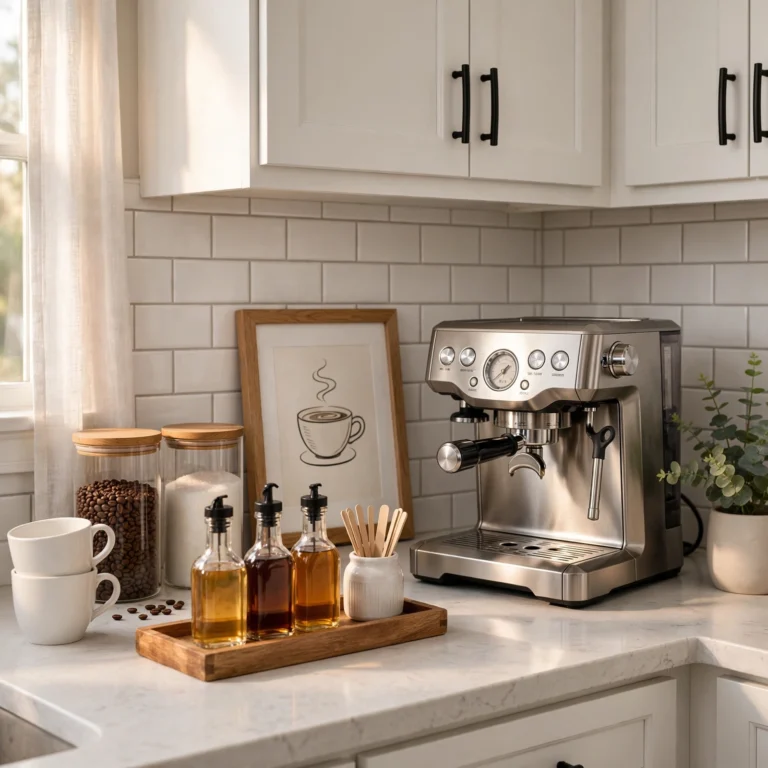
12. Tiered Tray Syrup Display
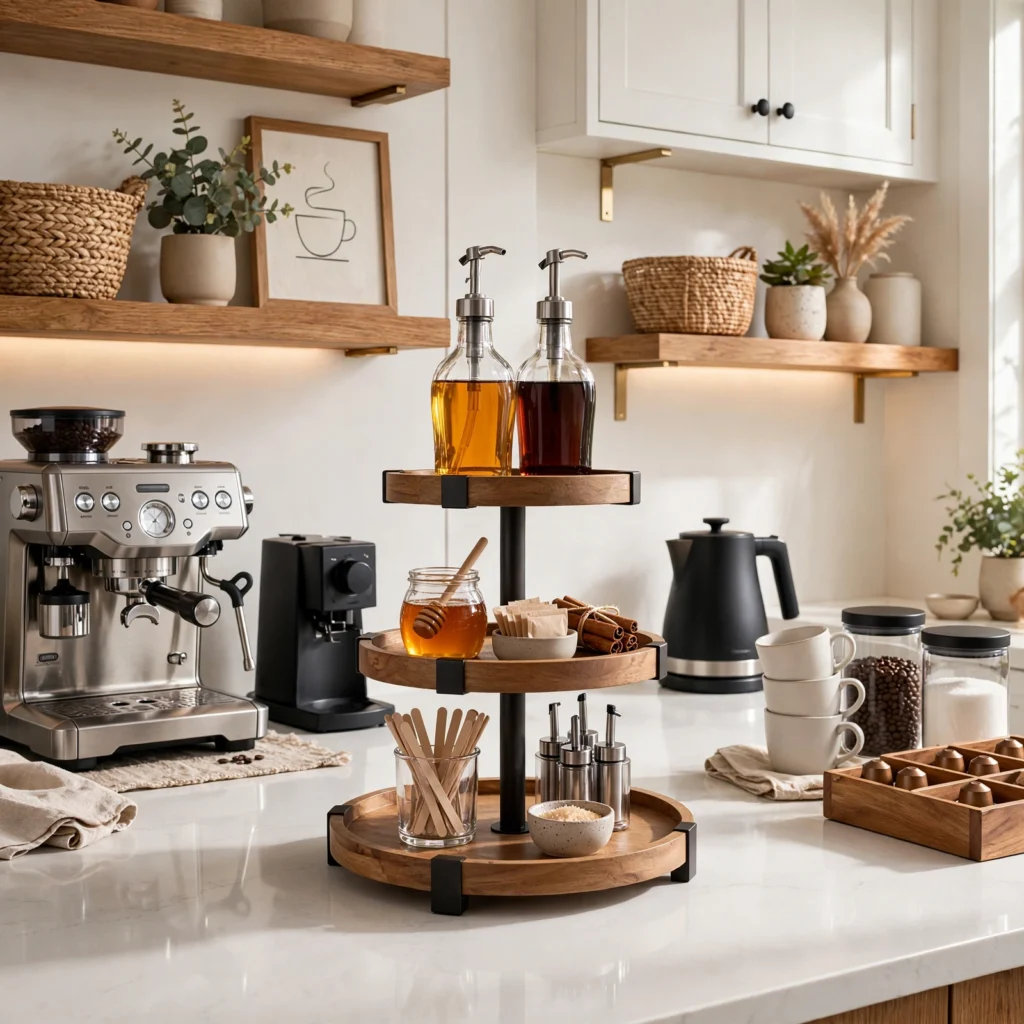
A tiered tray syrup display arranges flavored syrup bottles on a two- or three-level stand, making efficient use of vertical counter space while keeping each bottle visible and easy to reach without digging through a cluttered flat surface. This detail works particularly well for a coffee bar offering several flavor options, since the tiered display naturally organizes bottles by height rather than requiring a wider single-level footprint. Choosing a tray in a material like marble or metal that complements the rest of the coffee bar’s finishes ties the display into the overall styling.
13. Mini Fridge Integration
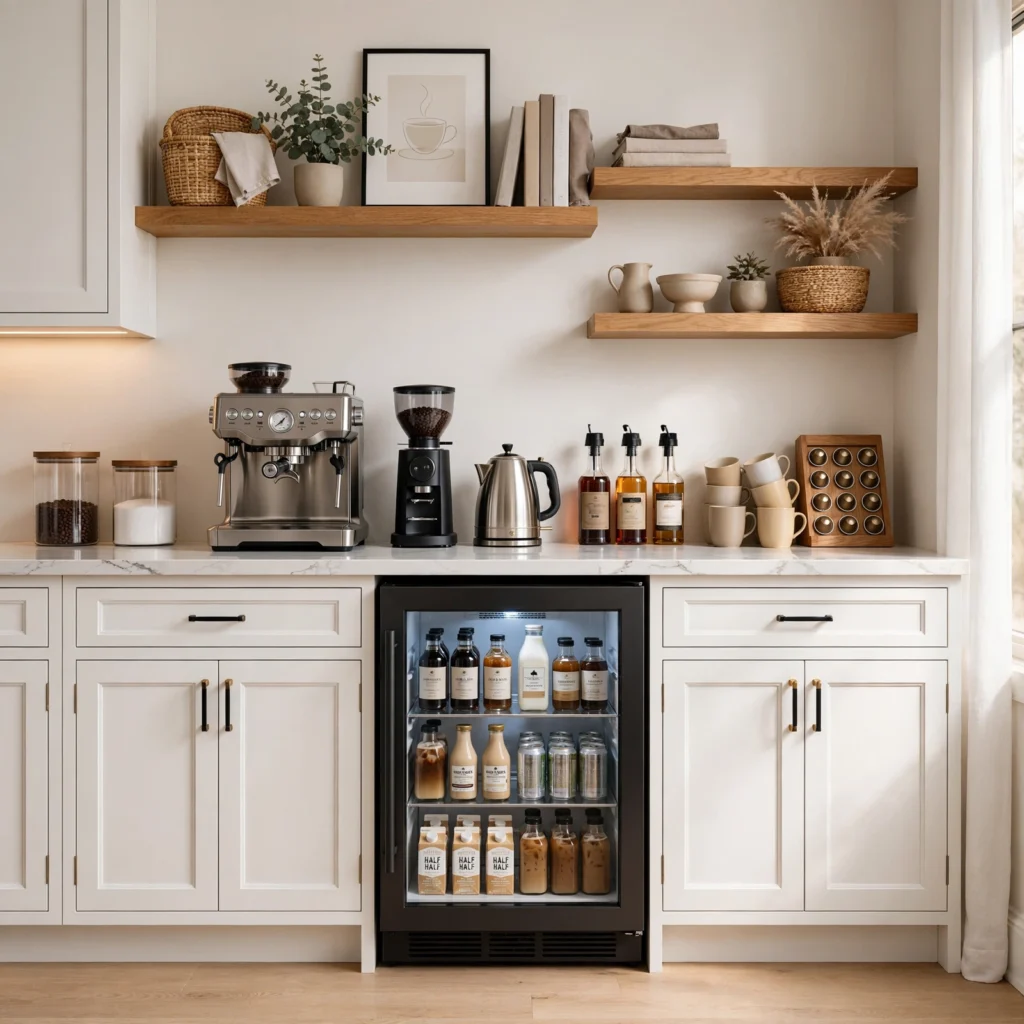
Mini fridge integration builds a small refrigerator directly into the coffee bar’s cabinetry, providing convenient access to milk, creamer, and cold brew concentrate without requiring a trip to the kitchen’s main refrigerator. This detail works especially well for a coffee bar located some distance from the kitchen, such as in a separate nook or a converted closet space. Choosing a fridge sized to fit flush within the surrounding cabinetry, rather than a bulkier standalone unit, keeps the built-in look consistent throughout the space.
14. Water Filtration Station
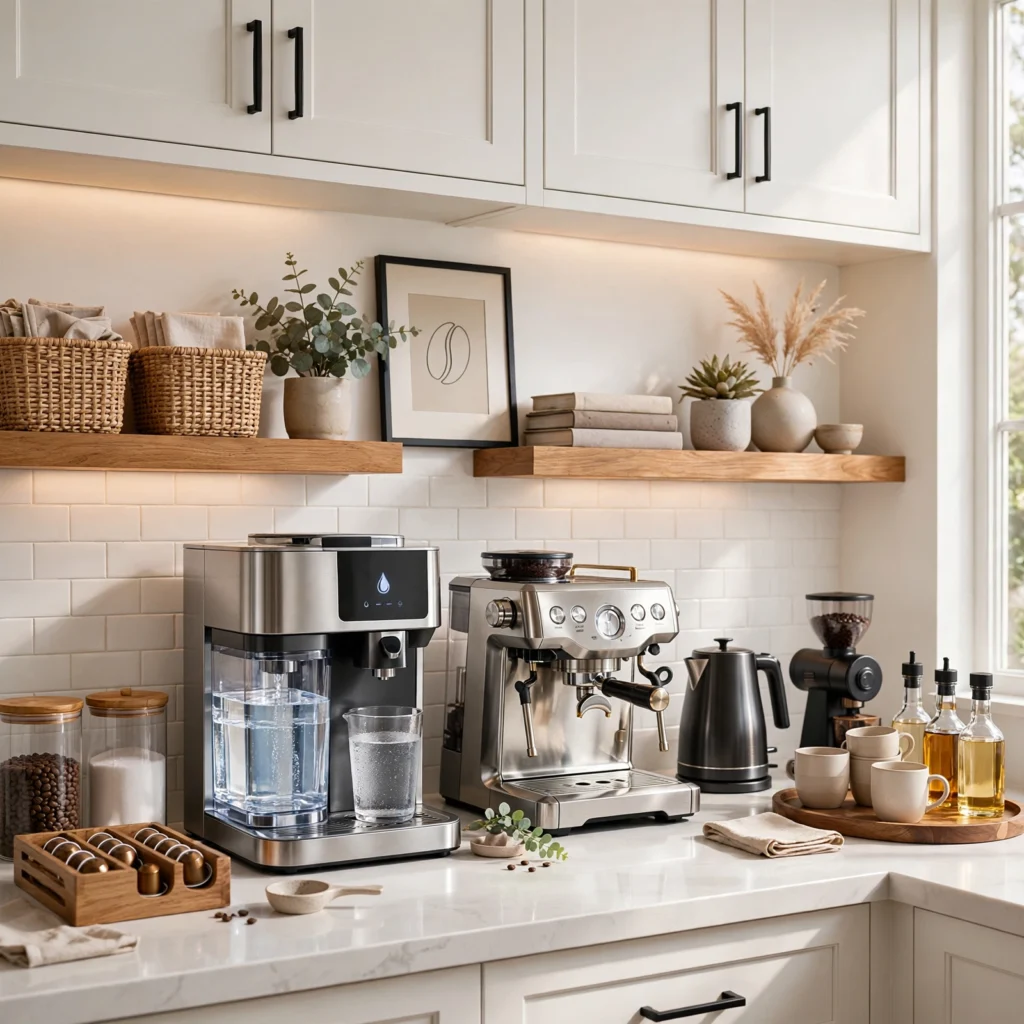
A water filtration station connects a small under-counter filter directly to the coffee bar’s water line, providing filtered water for brewing without requiring a separate pitcher or a trip to the kitchen sink. This detail matters particularly for anyone using an espresso machine or a plumbed coffee maker, since water quality directly affects the final taste of the coffee produced. Installing this feature typically requires a plumber, making it a better fit for a coffee bar planned during a larger renovation than a simple retrofit project.
15. Coffee Bar Cabinet with Hidden Outlet
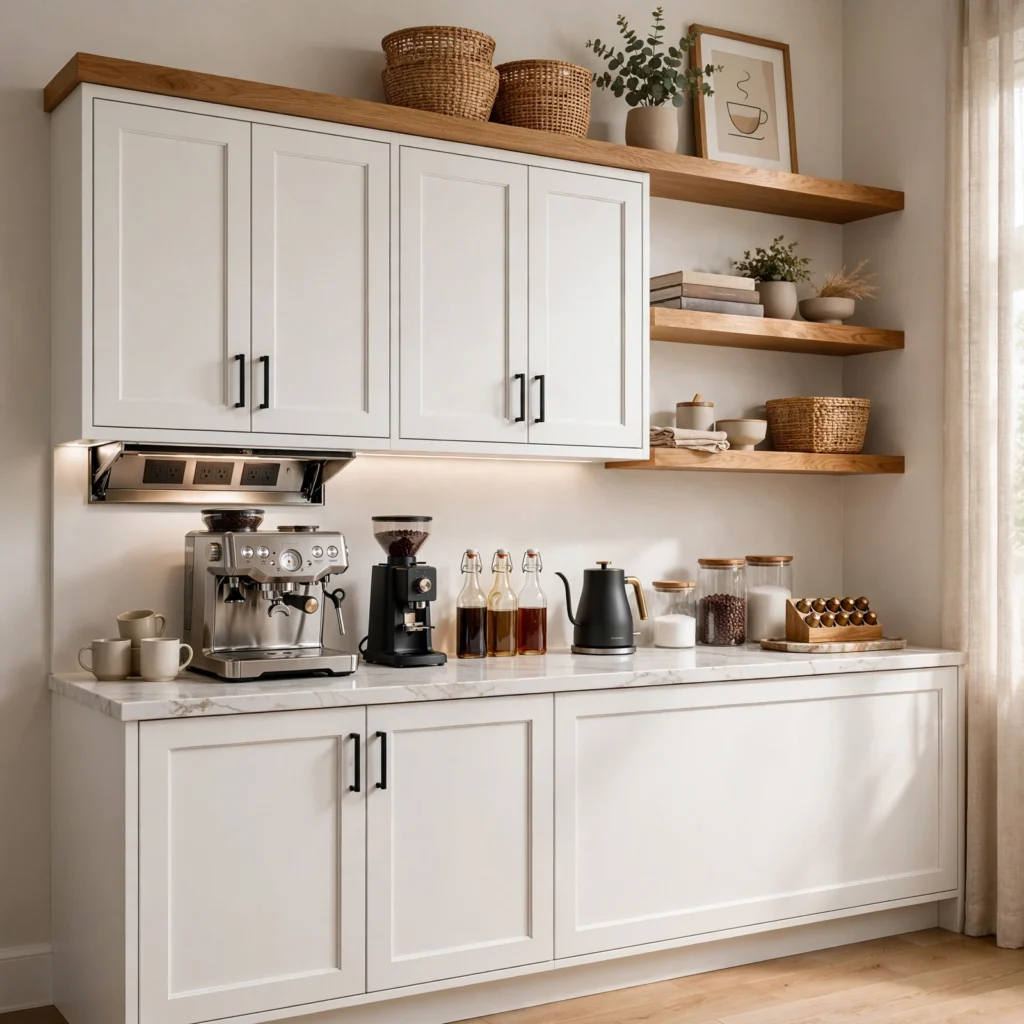
A coffee bar cabinet with a hidden outlet builds an electrical outlet directly into the back or side panel of the cabinetry, keeping appliance cords tucked out of sight rather than running visibly across the counter or down the front of a cabinet. This detail requires planning during construction or a cabinetry retrofit, since the outlet needs to be wired into that specific location rather than relying on a standard wall outlet positioned elsewhere. This addition makes a noticeable difference in how tidy and finished a coffee bar with multiple plugged-in appliances actually looks day to day.
Shop the Look
A well-planned coffee bar typically combines a functional work surface with a mix of open and closed storage. A marble or quartz countertop paired with open shelving and mug hooks keeps daily-use items visible and within reach. Glass canisters for beans and a tiered tray for syrups add both function and visual polish to the counter. A woven basket for bulkier supplies and a rattan pendant light overhead round out the space with warmth and a clearly defined presence within the kitchen.
Common Coffee Bar Ideas Mistake to Avoid
The most common mistake is prioritizing decorative styling, like open shelving and glass canisters, before confirming the coffee bar’s actual functional needs, such as adequate outlet access and proximity to a water source. A beautifully styled coffee bar that requires carrying water from across the kitchen or relies on a single overloaded extension cord often falls out of daily use fairly quickly despite its attractive appearance. Planning the practical infrastructure first, then layering in the decorative details, produces a coffee bar that actually gets used every morning rather than one that just looks good in photos.
FAQs
How much space do I need for a coffee bar?
A functional coffee bar can fit into a space as small as two to three feet of counter or shelf width, particularly if using a compact setup like a single-serve brewer or a simple pour-over station. A more elaborate setup involving an espresso machine, a grinder, and additional storage typically benefits from four to six feet of dedicated space to avoid feeling cramped.
Do I need a water line for a coffee bar?
A dedicated water line isn’t necessary for most coffee bar setups, since a standard drip coffee maker or pour-over station simply requires filling a reservoir or kettle from any nearby sink. A water line becomes more valuable for a plumbed espresso machine or a built-in water filtration station, both of which benefit from a direct connection rather than manual refilling.
What’s the best location for a coffee bar in an open kitchen?
Positioning a coffee bar away from the main cooking and food prep zone, such as along a peripheral wall or in an adjacent nook, generally works best in an open kitchen, since it keeps the coffee routine from creating a bottleneck during meal preparation. A spot near an existing outlet and reasonably close to a water source also simplifies the practical setup regardless of the specific location chosen.
How do I keep a coffee bar looking tidy with several appliances?
Grouping appliances in current use on the counter while storing less frequently used items, like a rarely used specialty brewer, inside a nearby cabinet helps keep a multi-appliance coffee bar from looking cluttered. A hidden outlet built into the cabinetry also reduces visible cord clutter, which often does more to make a busy coffee bar look tidy than rearranging the appliances themselves.
Is a coffee bar worth adding if I don’t have room for a full renovation?
A coffee bar is absolutely achievable without a full renovation, since options like a bar cart, a repurposed corner cabinet, or a simple tray on existing counter space all provide a defined coffee station without any construction. These lower-commitment approaches also make it easier to test whether a dedicated coffee bar actually fits your routine before investing in a more permanent, built-in version later.
Conclusion
These coffee bar ideas range from a simple rolling cart to a fully built-in nook with plumbing, so start by matching the setup to both your available space and how involved your actual coffee routine is. Address the practical details, like outlet access and water source, before focusing on decorative styling, so the finished space gets used daily rather than just admired. Save this post to Pinterest for your next kitchen project, and check out our related post on laundry room storage ideas for more organizational inspiration elsewhere in the home.
This list draws on years of helping homeowners design functional, well-used spaces for daily routines, with a focus on coffee bars that hold up to real morning use rather than just looking good in photos.