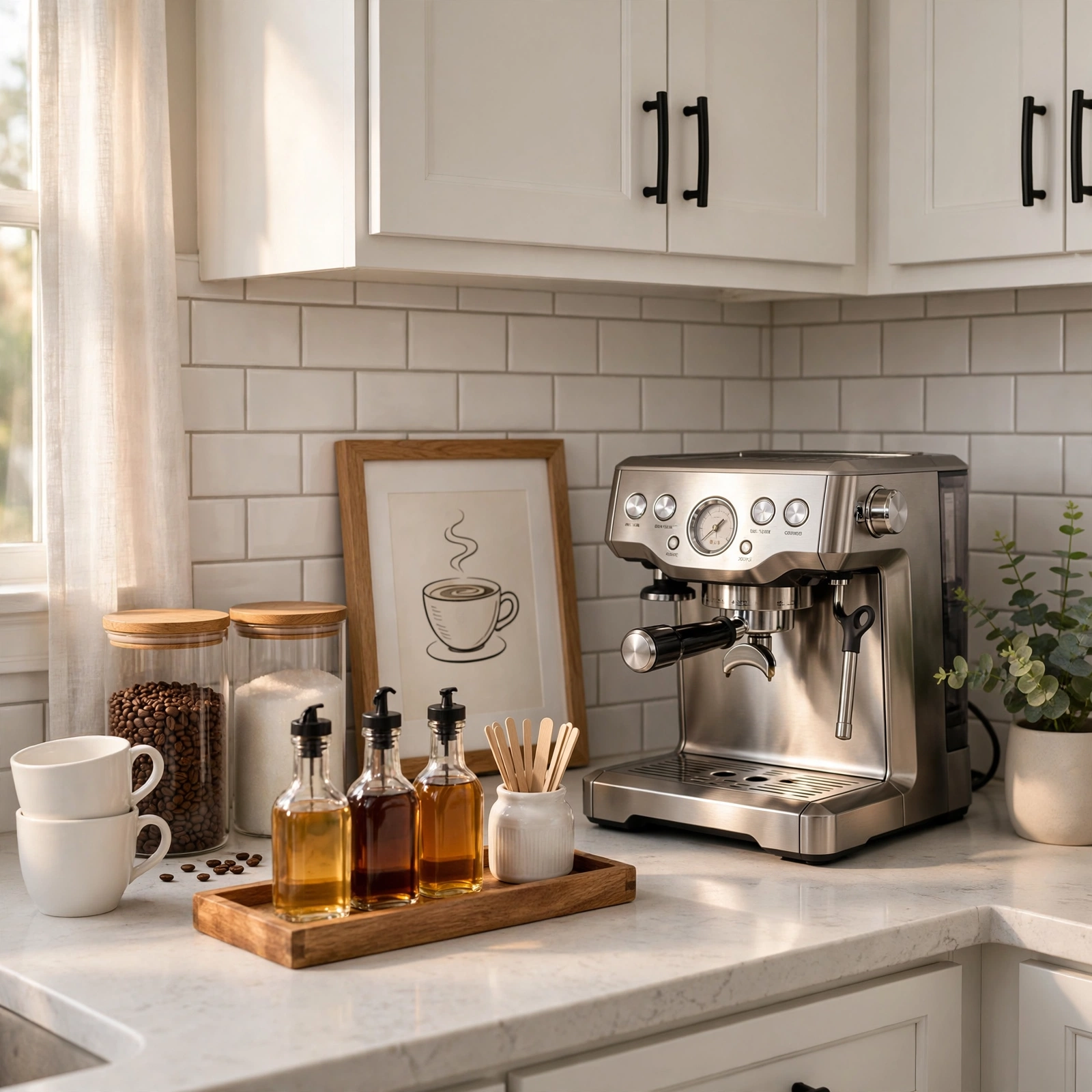
14 Beautiful Coffee Bar Ideas Kitchen Counter That Add Style and Function
Coffee bar ideas kitchen counter setups work within the counter space you already have, using smart layering and a few key accessories rather than any new cabinetry or construction. This list focuses specifically on that approach, covering ways to define, organize, and style a coffee station directly on an existing counter, whether that’s a small corner or a longer dedicated stretch. Whether you’re renting, hesitant to commit to a built-in station, or just want a quick weekend upgrade, these ideas should help you create a genuinely functional coffee spot without touching a single cabinet.
Trend & Background
Countertop coffee stations have grown in popularity as a lower-commitment alternative to a fully built-in coffee bar, appealing especially to renters and anyone who wants the organized, café-like feel of a dedicated station without a renovation budget or timeline. This approach relies heavily on styling techniques borrowed from tray-based organizing more broadly, using a defined base layer and a cohesive set of accessories to visually separate the coffee zone from the rest of the counter. As countertop appliances like espresso machines and specialty kettles have become more common in home kitchens, this kind of no-construction coffee station has become an increasingly practical way to keep that equipment organized and visually contained.
Key Takeaways
- Coffee bar ideas kitchen counter setups work entirely within your existing counter space, using a defined tray or base layer rather than any built-in cabinetry or renovation.
- A clear boundary, like a tray or a placemat, visually separates the coffee station from the rest of the counter even without any physical divider.
- Vertical risers and wall-mounted details make efficient use of a limited countertop footprint without requiring any additional floor or cabinet space.
- Because this setup requires no construction, it’s fully reversible and easy to adjust as your specific coffee routine or available counter space changes over time.
1. Serving Tray Base Station
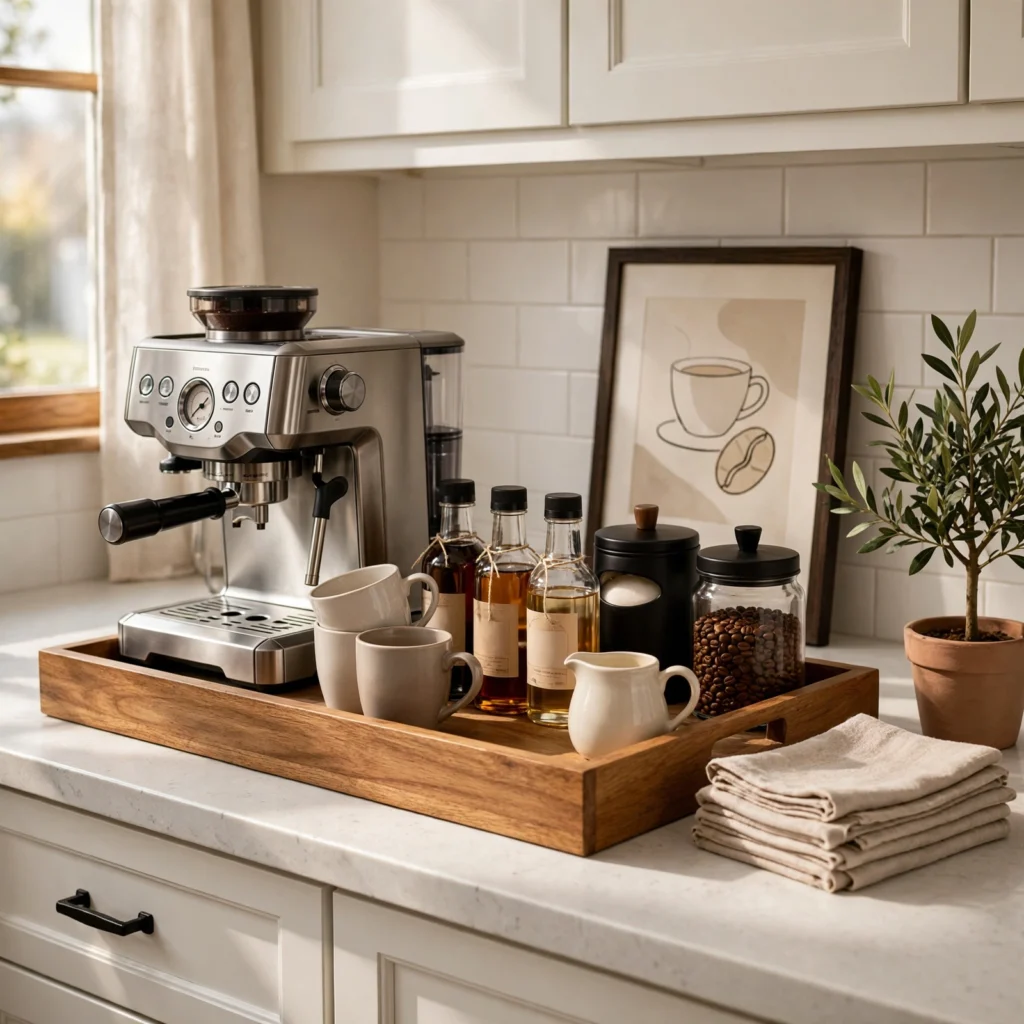
A serving tray base station places a single large tray directly on the counter, holding the coffee maker, mugs, and supplies within one defined boundary that visually separates the station from the rest of the counter without requiring any actual divider or cabinetry. Choosing a tray large enough to hold everything without items spilling over the edges keeps the boundary genuinely functional rather than just decorative. This detail is one of the simplest ways to create the appearance of a dedicated station using furniture you likely already own.
| Setup Type | Commitment Level | Reversibility |
| Serving Tray Base | Low | Fully reversible |
| Wood Board Base | Low | Fully reversible |
| Riser Shelf System | Low to moderate | Fully reversible |
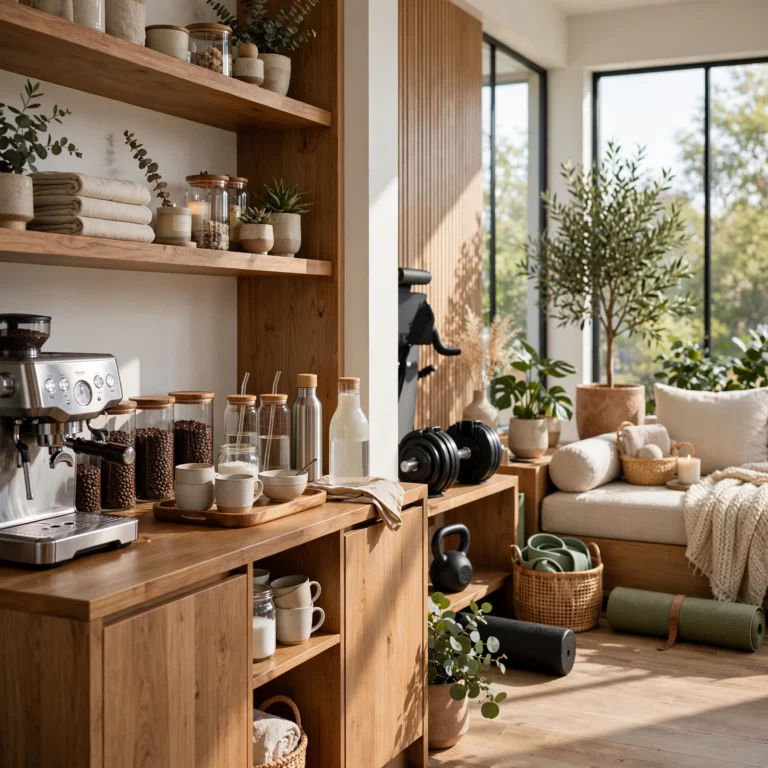
2. Vertical Riser Shelf on Counter
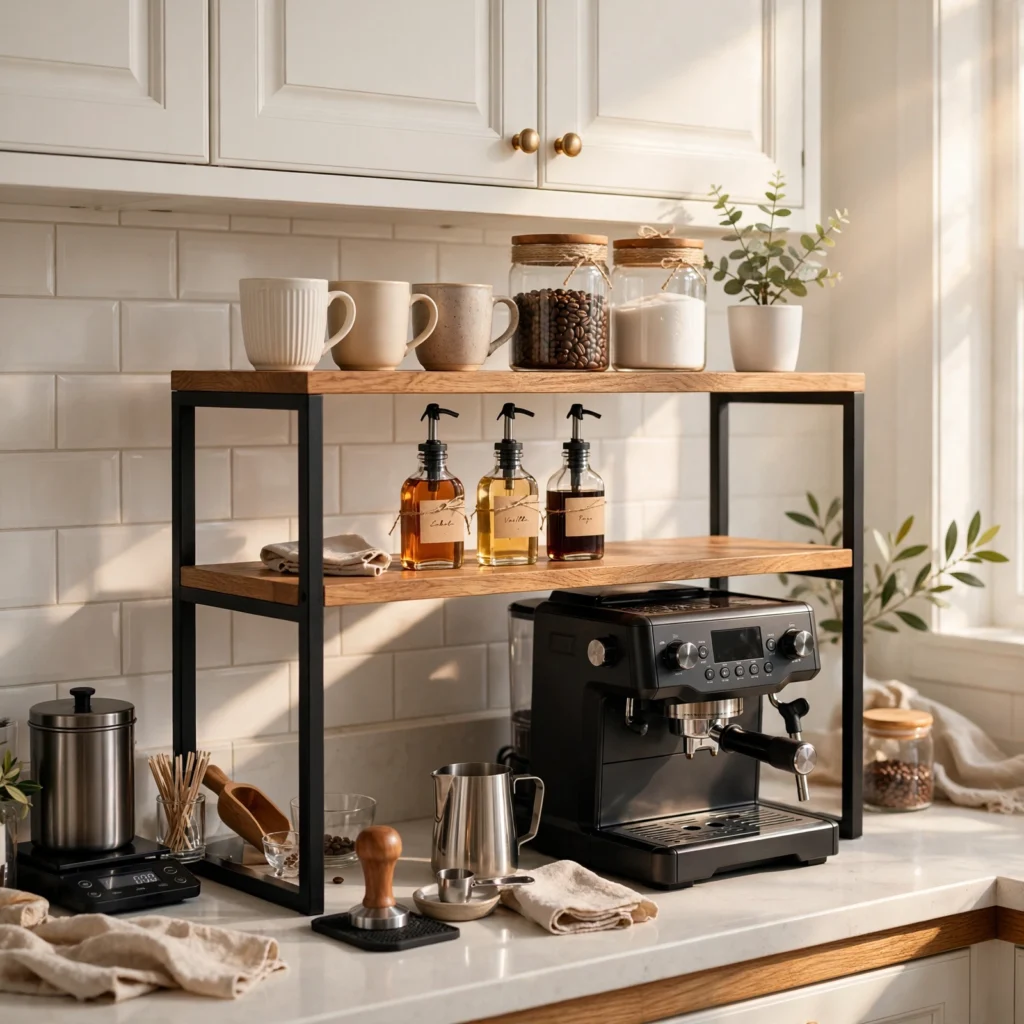
A vertical riser shelf on counter adds a small tiered stand or a slim shelf unit directly onto the existing countertop, creating additional vertical storage for mugs or supplies without requiring any wall mounting or new cabinetry. This detail makes better use of a limited counter footprint than spreading everything out across a single flat layer, since the riser adds usable space without extending the station’s overall width. Choosing a riser with a stable, wide base prevents it from tipping when mugs or bottles are placed on the upper level.
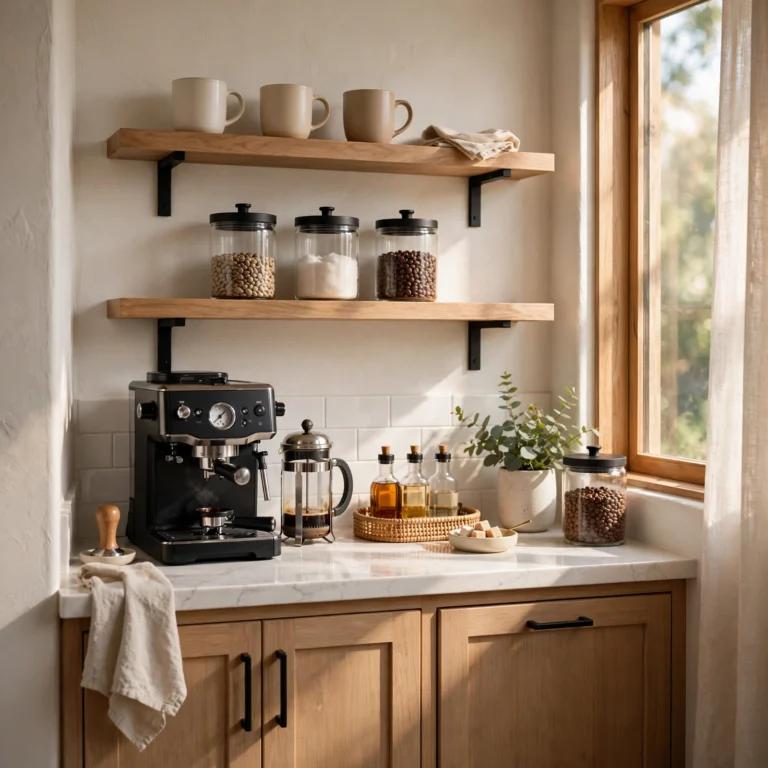
3. Canister Trio for Coffee and Sugar
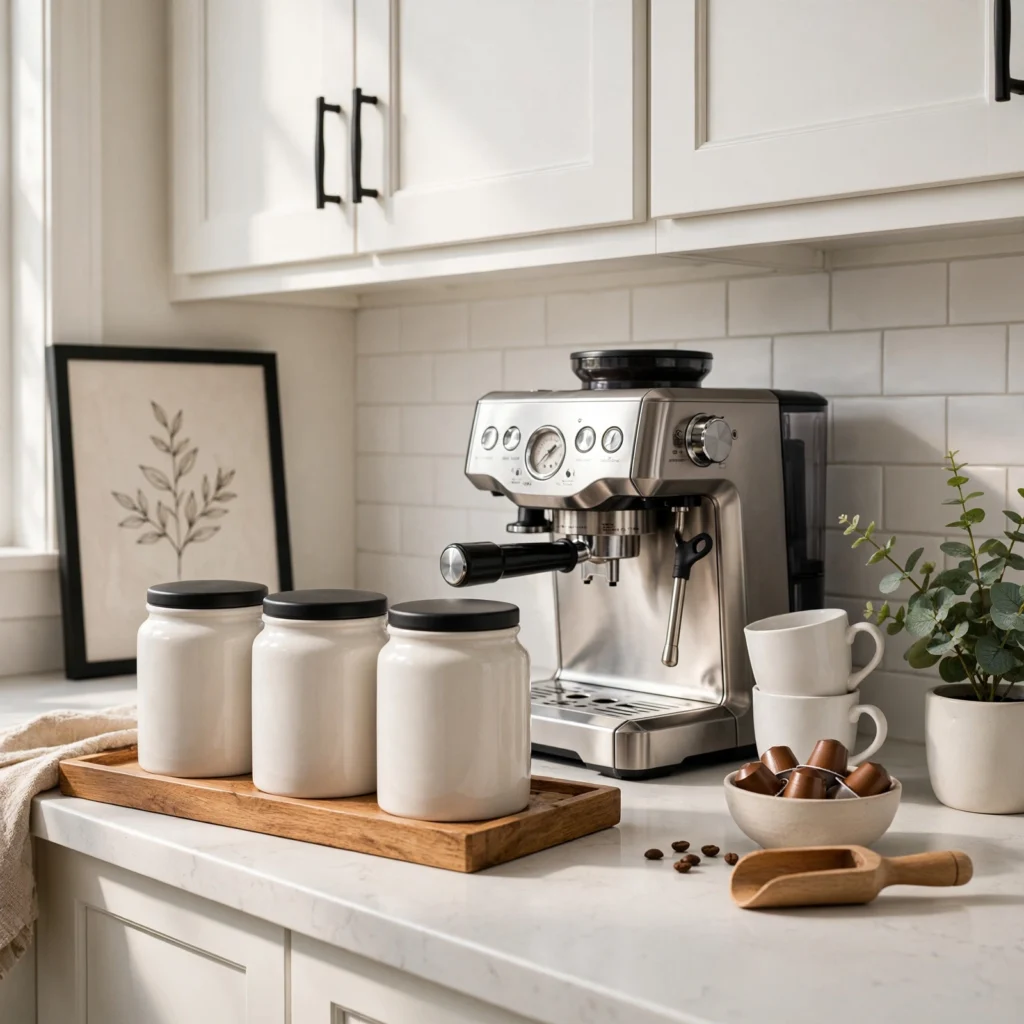
A canister trio for coffee and sugar groups three matching containers, typically holding coffee grounds, sugar, and a third supplement like cocoa powder or tea, into one coordinated set that reads as more intentional than individual product packaging left out on the counter. Choosing canisters with airtight lids also helps preserve the freshness of whatever’s stored inside better than a bag with a simple clip closure. This detail works well as the visual anchor of a countertop coffee station, since a matched set of vessels immediately signals an organized, considered setup.
4. Small Appliance Corner Zone
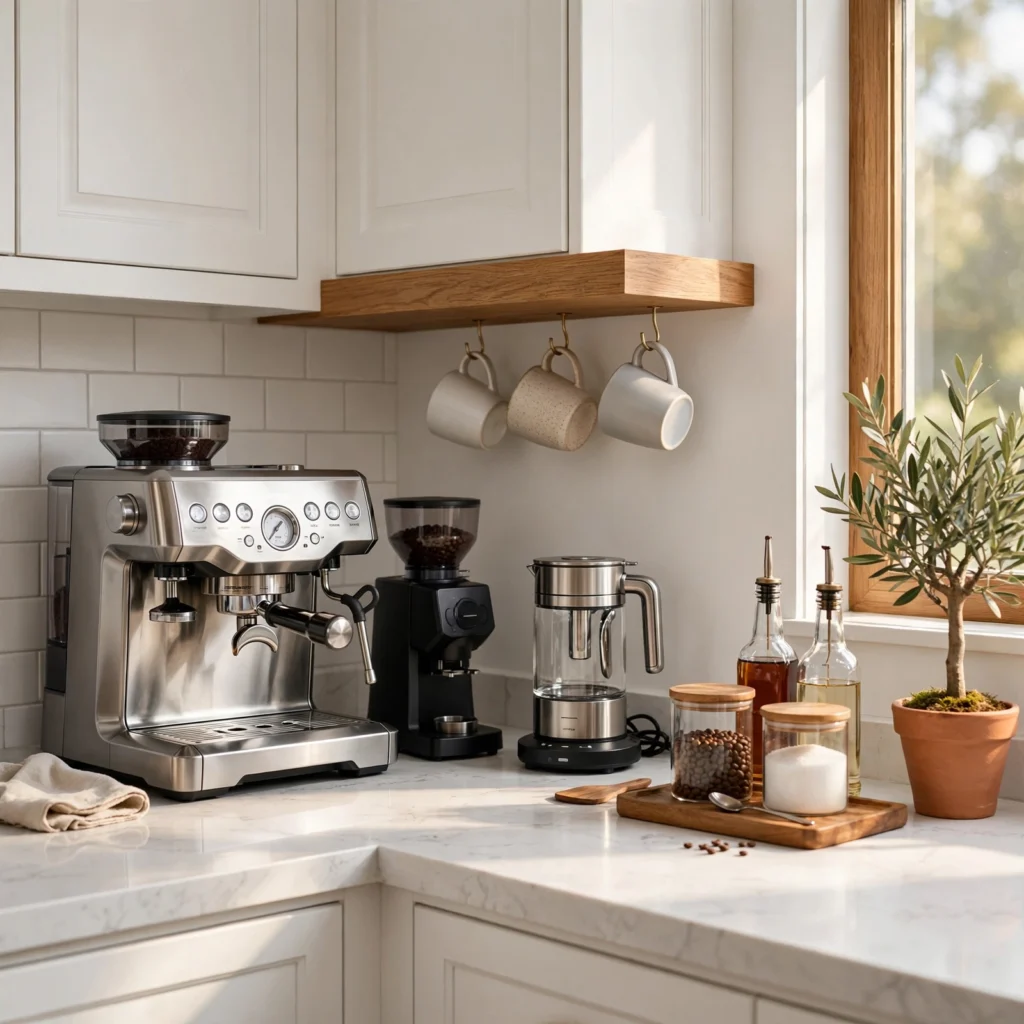
A small appliance corner zone designates one specific corner of the existing counter for the coffee maker and any other regularly used small appliances, keeping them consistently grouped in one spot rather than scattered across different parts of the kitchen. This detail requires no new furniture or accessories at all, relying purely on a consistent habit of returning appliances to the same designated spot after each use. Positioning this zone near an outlet reduces the need for a visible extension cord running across the counter.
In order to see more options for ideas for coffee bar CLICK HERE
5. Woven Placemat Base Layer
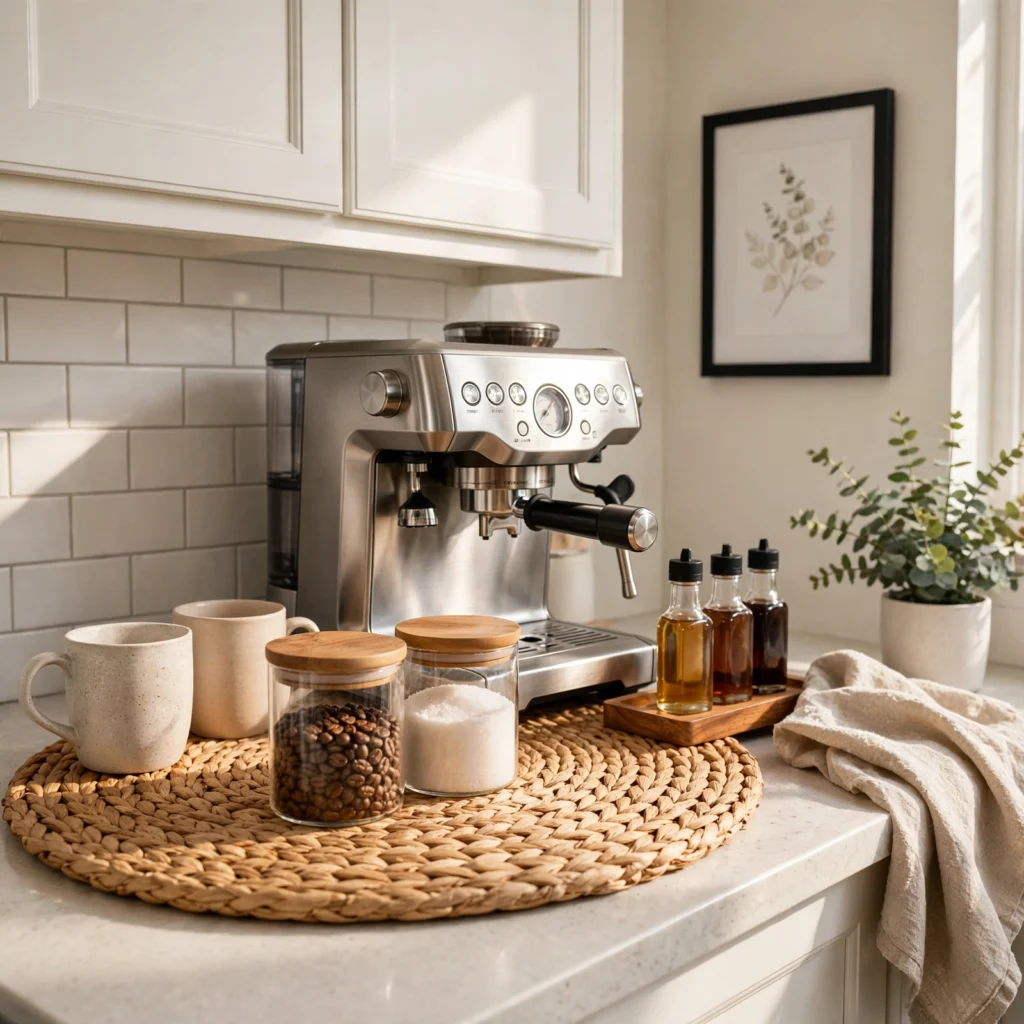
A woven placemat base layer uses a single oversized placemat or a small woven rug specifically sized for counters, placed beneath the coffee station’s items to define the space with texture rather than the harder edges a tray provides. This detail adds a bit of natural material warmth to an otherwise likely hard-surfaced counter area. Choosing a washable, wipeable material ensures the base layer holds up to the inevitable coffee drips and spills this specific zone will experience regularly.
6. Mini Herb Plant Accent
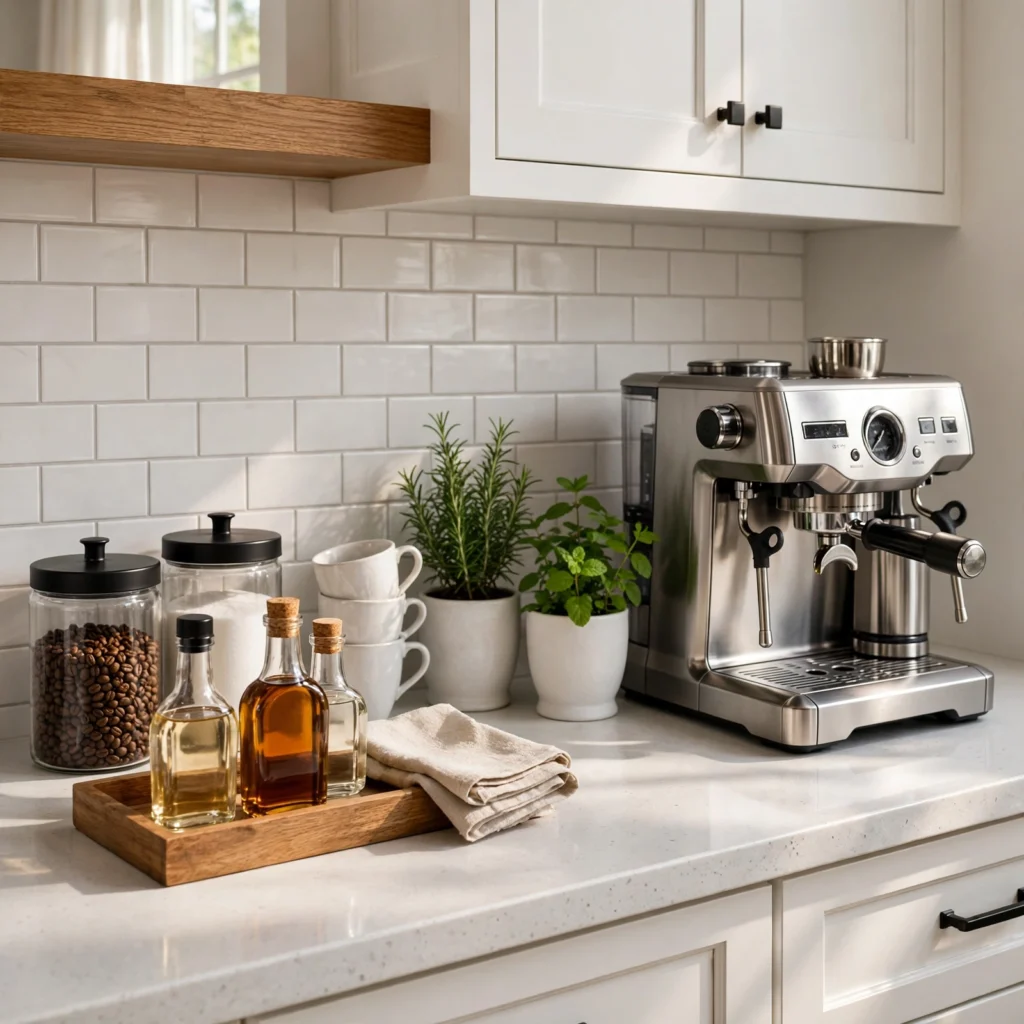
A mini herb plant accent places a small potted plant, whether an actual herb or a low-maintenance succulent, directly on the coffee station to add a touch of greenery without requiring any additional counter depth beyond what a small pot needs. This detail softens the more utilitarian appliances and canisters nearby with something living and slightly different in texture. Choosing a plant in a pot that complements the station’s overall color palette ties this small decorative touch into the rest of the setup.
7. Ceramic Caddy for Stirrers and Sweeteners
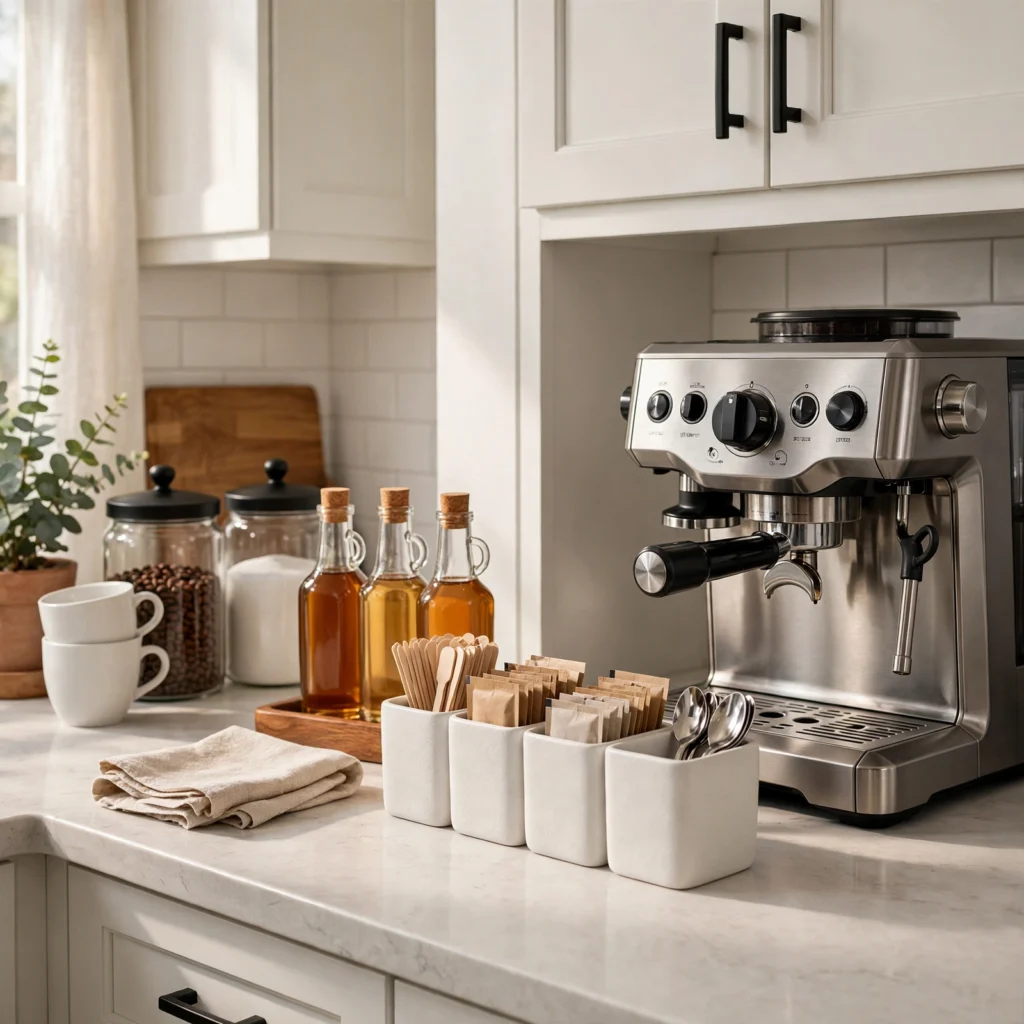
A ceramic caddy for stirrers and sweeteners corrals smaller loose items, like sugar packets, stir sticks, or individual creamer cups, into one contained vessel rather than letting them spread loosely across the counter surface. This detail addresses a common source of countertop clutter directly, since these smaller supplementary items often lack an obvious home otherwise. Choosing a caddy with a divided interior, rather than one open compartment, keeps different item types from mixing together into a single jumbled pile.
8. Countertop Cup Rack
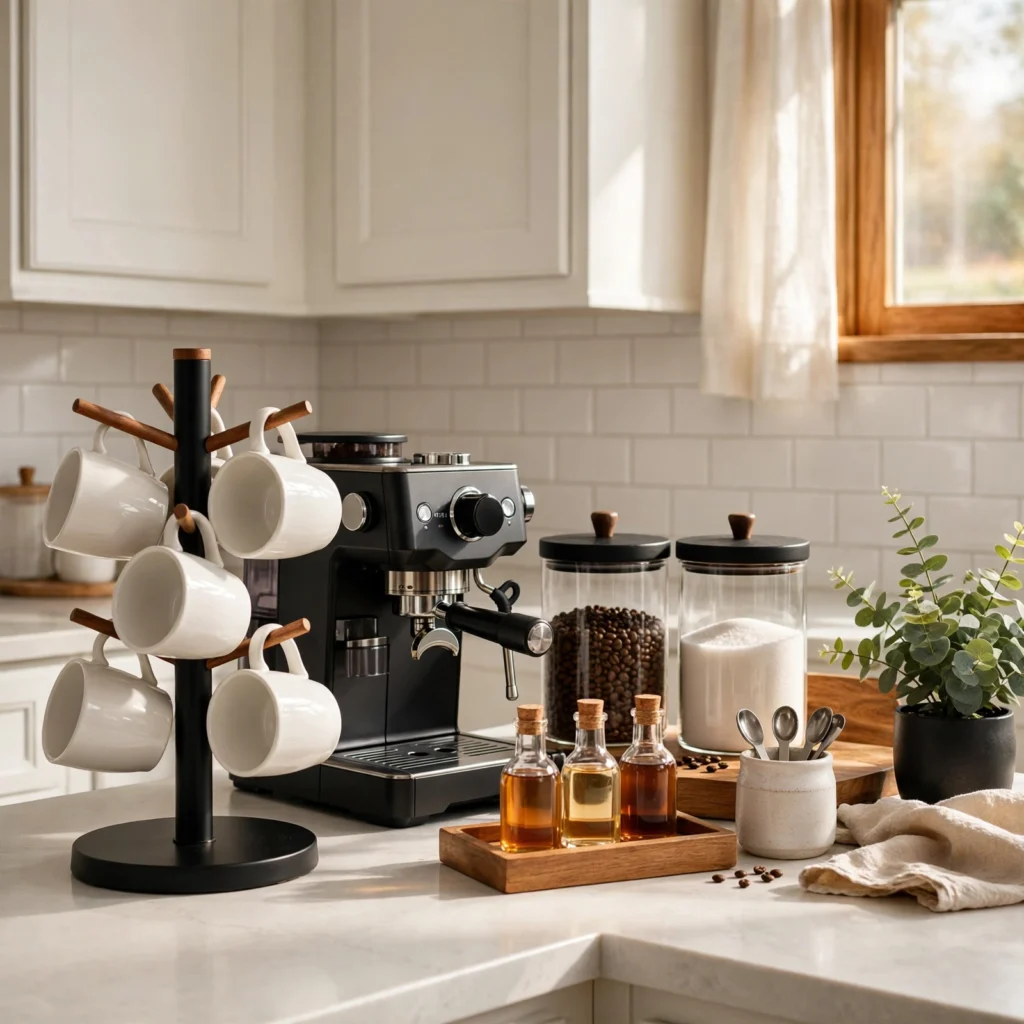
A countertop cup rack holds several mugs upside down on individual pegs or hooks, keeping them close at hand on the counter itself rather than requiring a trip to an upper cabinet each time. This detail works especially well for a household that goes through several mugs daily, since the rack keeps the most frequently used pieces immediately accessible. Choosing a rack sized to hold just your regularly used mugs, rather than your entire collection, keeps the footprint appropriately compact for counter placement.
| Countertop Accessory | Function | Space Used |
| Canister Trio | Ingredient storage | Small |
| Cup Rack | Mug display and access | Small to moderate |
| Ceramic Caddy | Small item organization | Small |
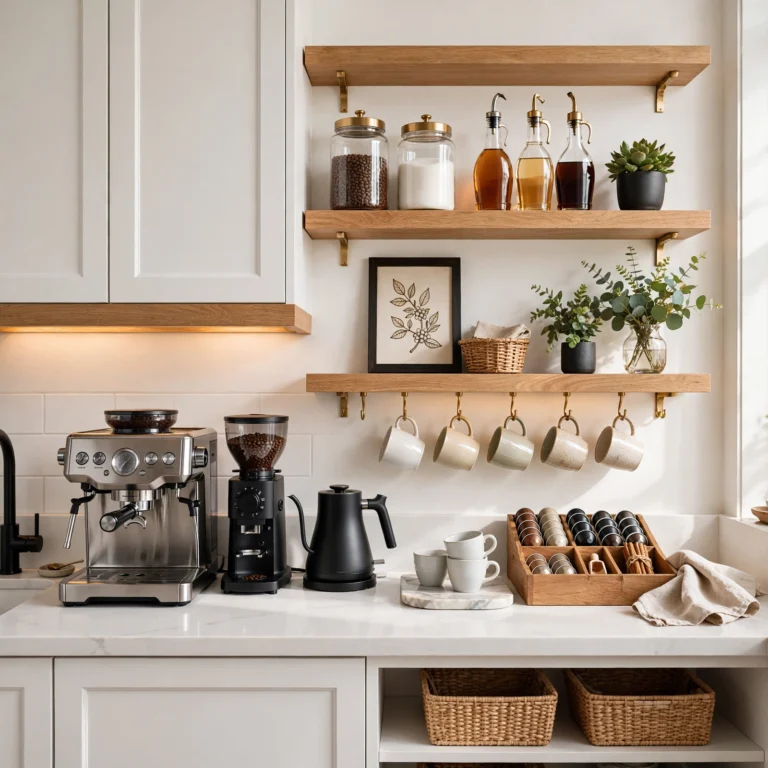
9. Backsplash-Mounted Mug Hooks
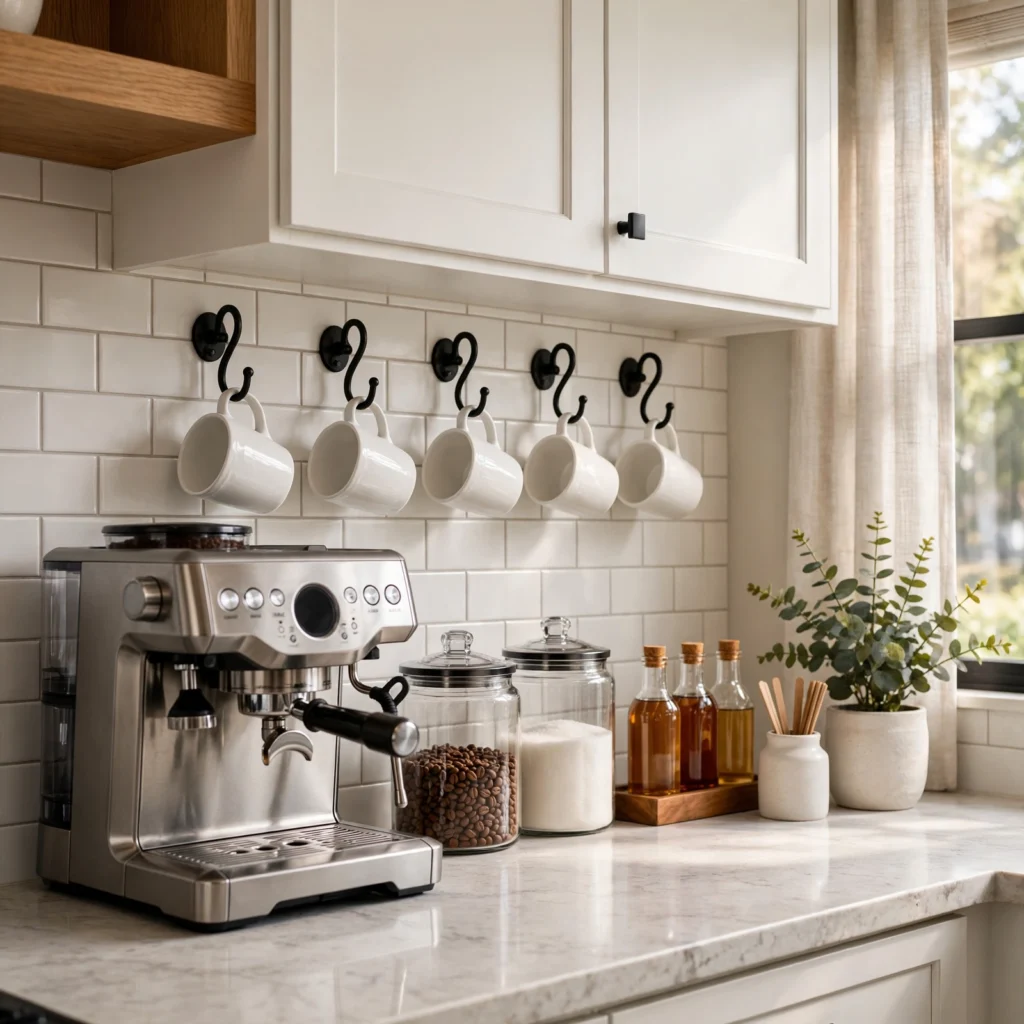
Backsplash-mounted mug hooks attach a small row of adhesive or screw-mounted hooks directly to the backsplash above the coffee station, hanging mugs vertically rather than requiring any additional counter footprint at all. This detail is one of the few options on this list involving any wall attachment, though the hooks themselves are small and minimally invasive compared to shelving or cabinetry. Choosing hooks rated for the specific weight of your mugs prevents them from pulling loose from the wall over time.
10. Compact Nespresso Pod Holder
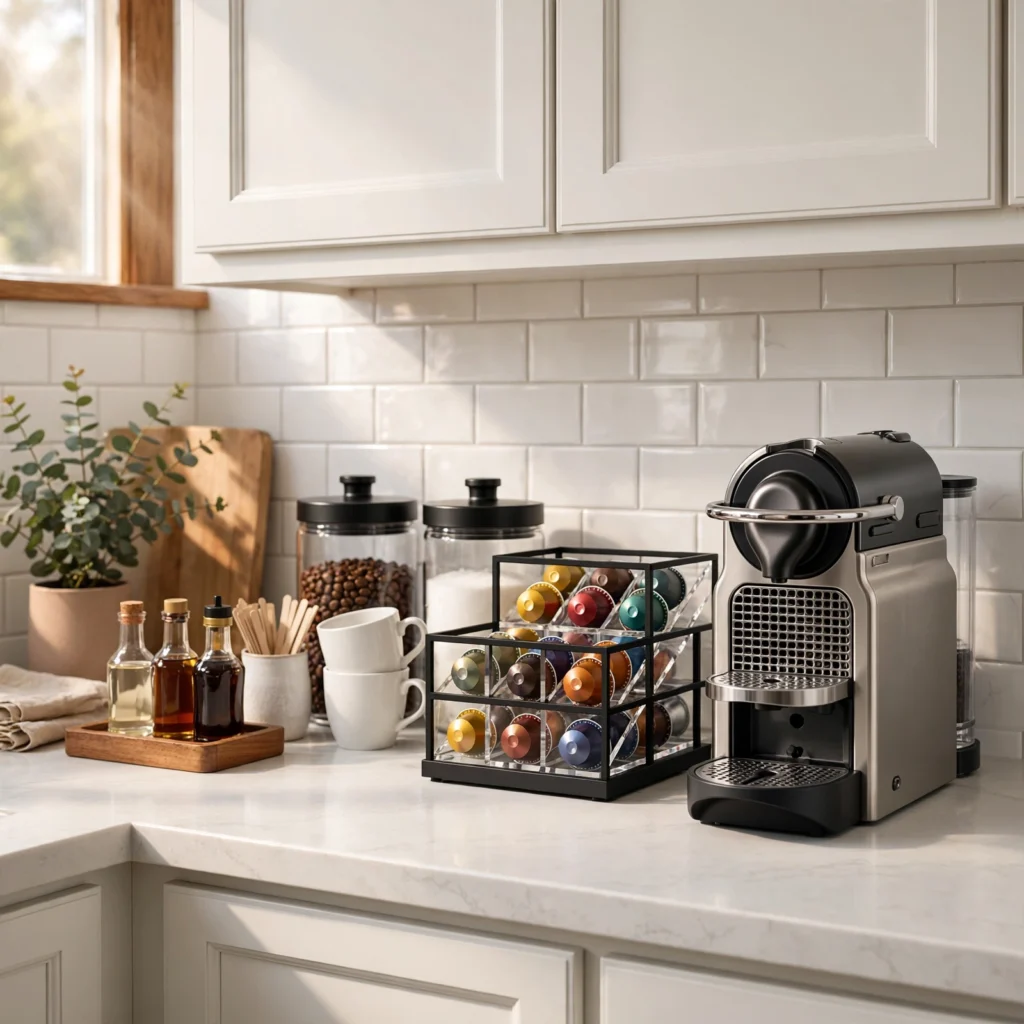
A compact Nespresso pod holder organizes single-serve coffee pods into a small drawer or a slim vertical stand designed specifically for this popular appliance format, keeping pods sorted by flavor and easy to locate. This detail works particularly well for a household with several different pod varieties in regular rotation, since a dedicated holder prevents them from getting jumbled together in a loose box or bag. Choosing a holder sized appropriately to your specific pod brand and quantity avoids either an overcrowded or a wastefully oversized accessory taking up counter space.
11. Coaster Stack for Hot Mugs
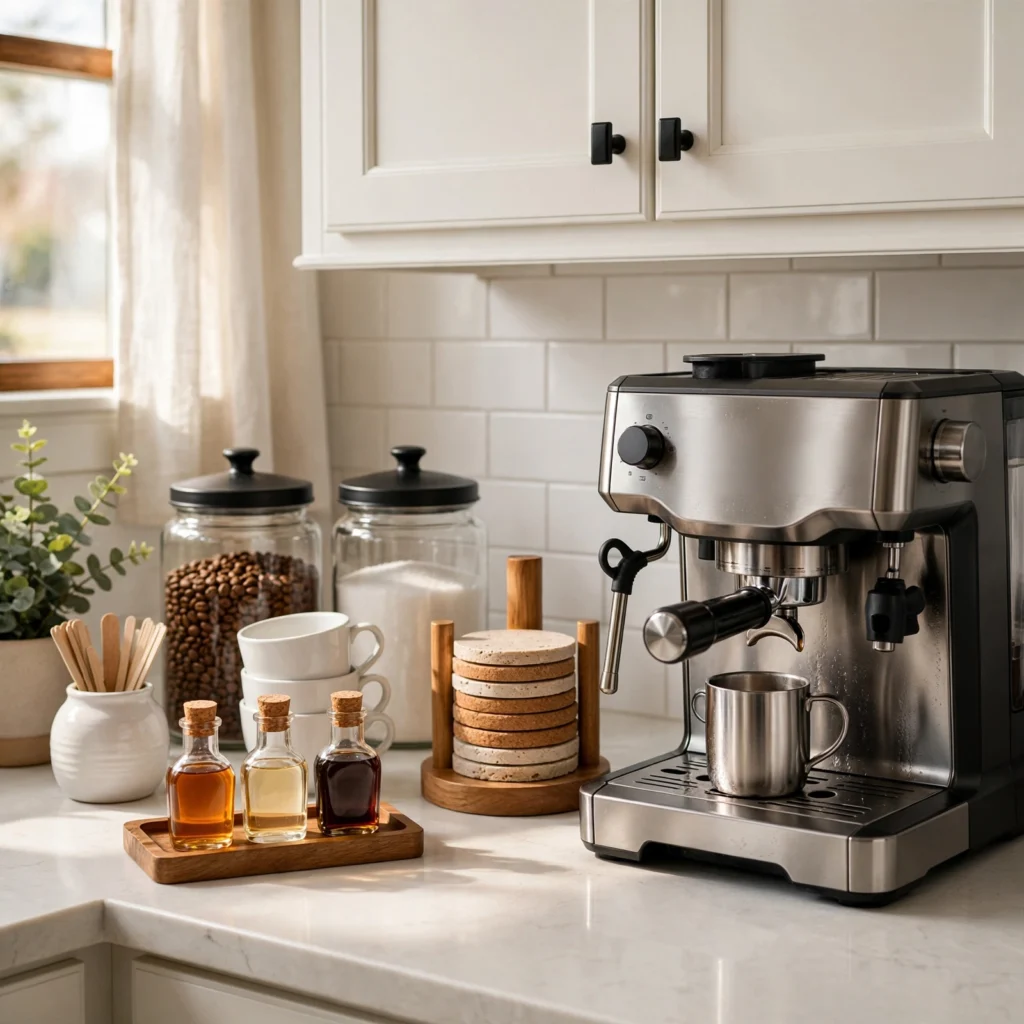
A coaster stack for hot mugs keeps a small set of coordinating coasters directly on the coffee station counter, protecting the surface from heat and moisture rings while also adding a small decorative detail to the setup. This addition is particularly useful on a marble or wood countertop more prone to staining or heat damage than a more resilient quartz surface. Choosing coasters in a material and color that complements the rest of the station’s accessories ties this small, practical detail into the overall look.
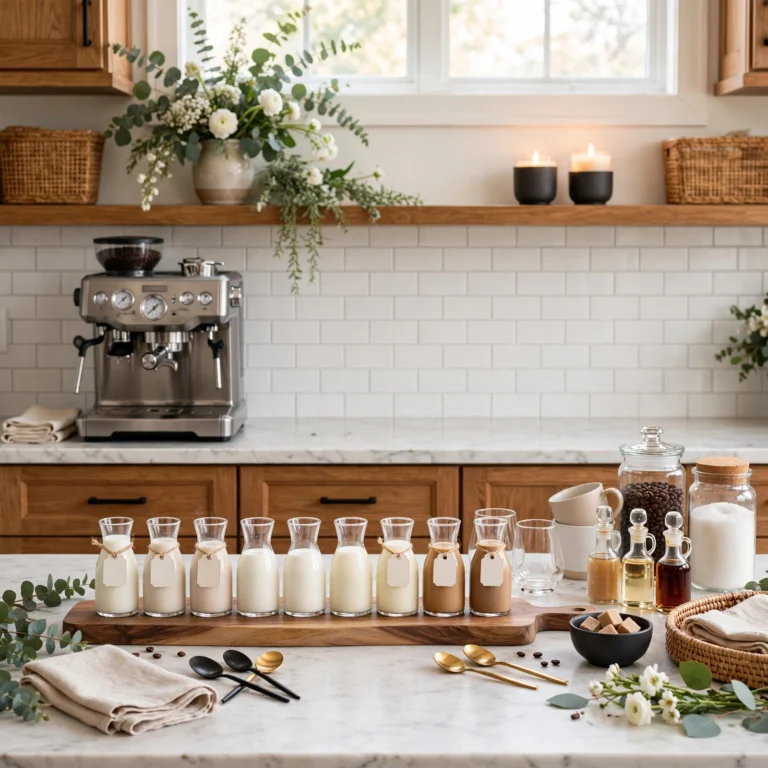
12. Wood Cutting Board as Base
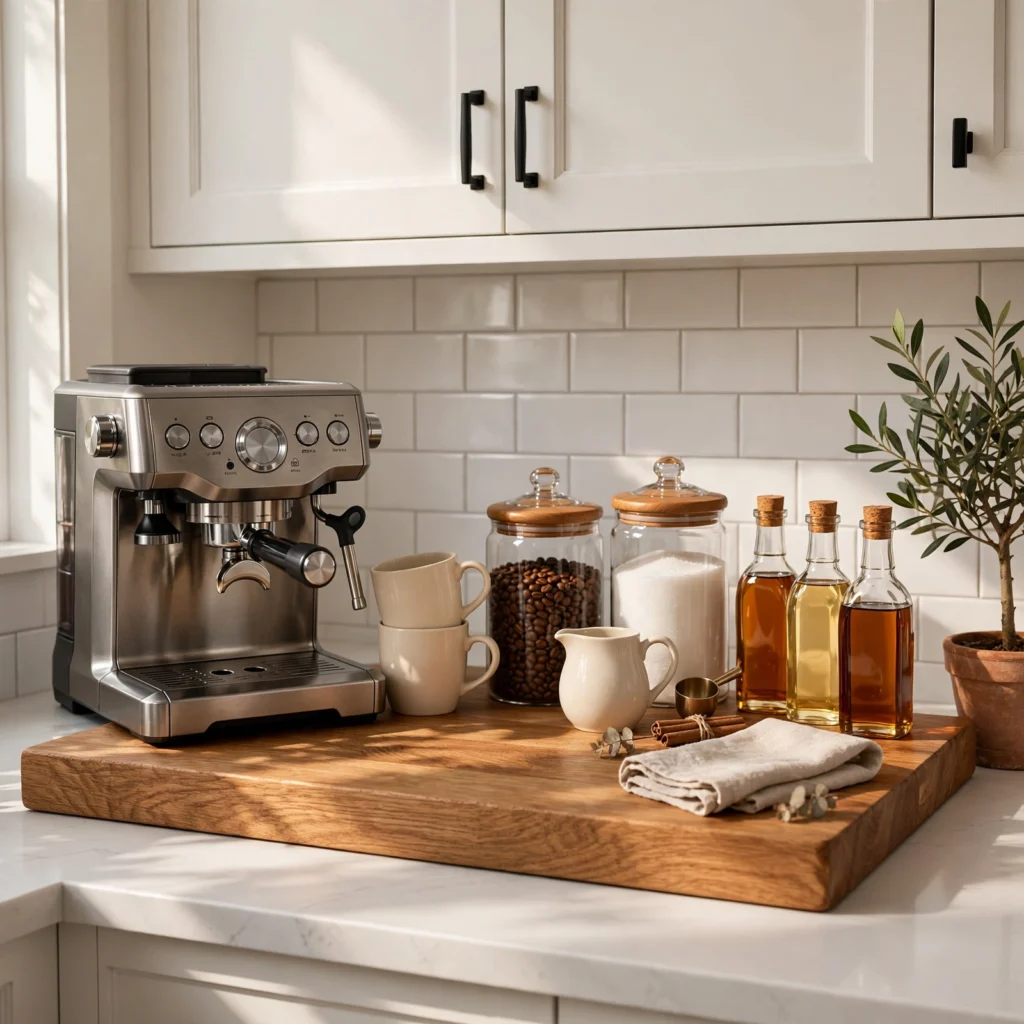
A wood cutting board as base repurposes a large, flat wood board, whether a dedicated serving board or simply an oversized cutting board, as the defining surface beneath the coffee station’s items, similar in concept to a tray but with a warmer, more organic material quality. This detail works particularly well in a kitchen already featuring wood tones through cabinetry or open shelving, tying the coffee station into that existing material palette. Choosing a board with a raised edge or lip helps contain minor spills better than a completely flat surface would.
13. Small Framed Print Backdrop
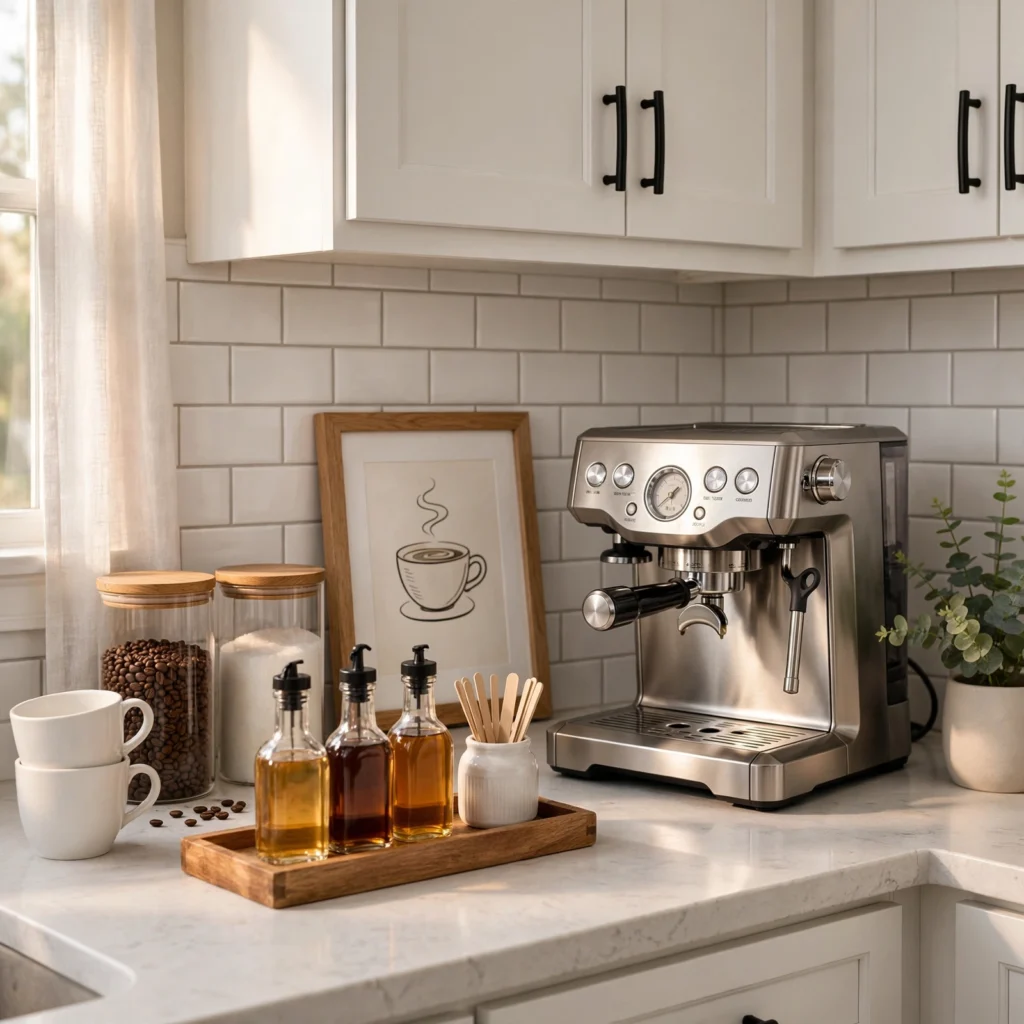
A small framed print backdrop leans a single small piece of art against the backsplash or wall directly behind the coffee station, adding a decorative focal point without requiring any actual wall mounting or hardware. This detail works especially well for a rental kitchen where drilling into the backsplash isn’t an option, since the frame simply rests in place rather than hanging. Choosing a print with a coffee-related theme or a color palette that complements the station’s other accessories reinforces the overall styled look.
14. Rolling Under-Counter Storage Bin
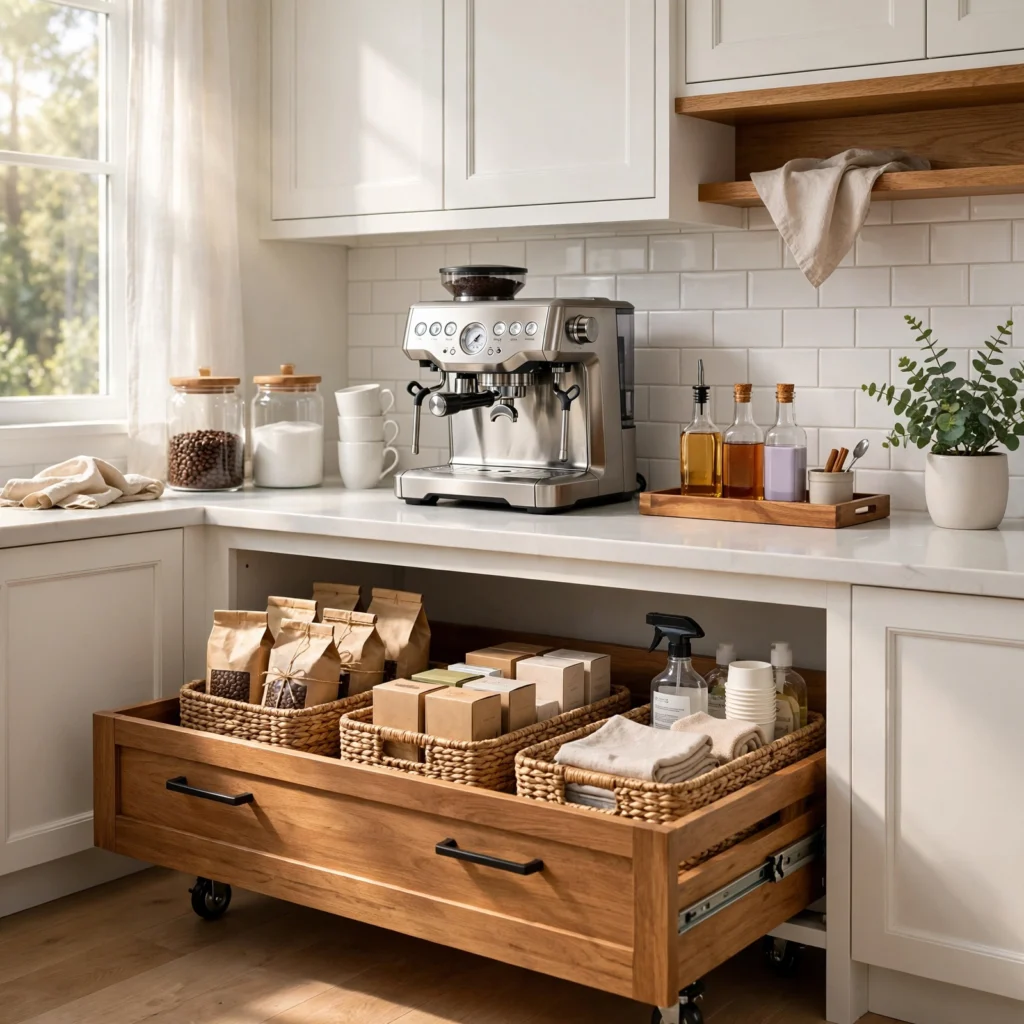
A rolling under-counter storage bin tucks a small wheeled cart or bin beneath an overhanging counter edge or into an adjacent open cabinet space, providing supplemental storage for bulkier coffee supplies without requiring any additional counter surface area. This detail works well for holding items like a bag of whole beans or extra filters that don’t need to stay on the visible counter surface itself. Choosing a bin low and narrow enough to tuck fully out of the way keeps it from becoming an obstacle in the surrounding kitchen floor space.
Shop the Look
A well-styled countertop coffee station typically layers a defined base with a few coordinated accessories rather than spreading items loosely across the counter. A wood board or serving tray as the base layer, topped with a matching canister trio and a ceramic caddy for stirrers, creates an organized, cohesive look. A small potted plant and a stack of coordinating coasters round out the styling, while backsplash-mounted mug hooks add function without using any additional counter space.
Common Coffee Bar Ideas Kitchen Counter Mistake to Avoid
The most common mistake is letting a countertop coffee station’s boundary blur into the rest of the kitchen counter, without any tray, board, or placemat clearly defining where the station starts and stops. Without that visual boundary, the coffee station’s items tend to spread and mix with unrelated kitchen clutter over time, losing the organized, intentional look a defined base layer helps maintain. Committing to one clear base layer, even something as simple as a large cutting board, and consistently keeping the station’s items within that boundary prevents this common drift back toward general counter clutter.
FAQs
Can I create a coffee bar without any new furniture?
A coffee bar can absolutely be created using items you likely already own, such as a serving tray as a base layer, a few matching jars for sugar and coffee, and a designated corner of existing counter space for the coffee maker itself. This approach requires no new furniture purchases at all, relying instead on organizing and defining a space you already have.
How do I keep a countertop coffee station from cluttering my kitchen?
Using a clearly defined base layer, like a tray or a wood board, to visually contain the station’s items is the most effective way to prevent a countertop coffee station from spreading into general kitchen clutter. Regularly returning items to their designated spot within that boundary, rather than letting them migrate elsewhere on the counter, maintains this organization over time.
What’s the minimum counter space needed for this kind of setup?
A functional countertop coffee station can fit into as little as two feet of counter width, particularly with a compact single-serve brewer and a small canister set, though a bit more space, around three to four feet, allows for a slightly more comfortable and complete setup with room for mugs and additional accessories. The specific space needed depends on how many items you want to keep within the defined station boundary.
Is a tray-based coffee station suitable for a small kitchen?
A tray-based coffee station is particularly well suited to a small kitchen, since it requires no new cabinetry or floor space and can be sized to fit whatever counter area is actually available, even if that’s just a small corner. This flexibility makes it one of the more practical coffee bar approaches for anyone working with limited overall kitchen square footage.
Can I move a countertop coffee station easily if I rearrange my kitchen?
A countertop coffee station built around a tray or board base is fully portable and can be relocated to a different counter area, or even packed away entirely, without any lasting impact on the kitchen itself. This makes it a particularly good option for anyone who anticipates rearranging their kitchen layout or moving to a new home in the near future.
Conclusion
These coffee bar ideas kitchen counter setups prove that a genuinely organized, styled coffee station doesn’t require any construction or new cabinetry, just a defined base layer and a few coordinated accessories. Start with a tray or board to establish the station’s boundary, then layer in canisters, a small plant, and any other supplies you regularly use each morning. Save this post to Pinterest for your next kitchen refresh, and check out our related post on coffee bar ideas for more setups if you’re ready to consider a more permanent, built-in station down the line.
This list draws on years of helping people organize functional daily routines within existing spaces, with a focus on setups that require no renovation but still feel genuinely intentional and complete.