16 Trending Dark Wood Kitchen Cabinets Ideas for a Rich, Grounded Kitchen
Dark wood kitchen cabinets have a reputation for making small kitchens feel smaller, but that’s usually a pairing problem rather than a color problem. This post covers sixteen dark wood kitchen cabinets ideas that address wood species, stain tone, hardware, and the surrounding materials that determine whether a dark kitchen feels rich or simply dim. Each idea explains the specific choice involved and how it changes the overall feel of the room, so the list works whether the kitchen is large and sunlit or smaller with limited natural light.
Trend & Background
Dark wood kitchen cabinets have moved back into favor after several years dominated by all-white kitchens, driven by a broader interior design shift toward warmer, more grounded color palettes across the whole home. Walnut and espresso-toned oak have become the most requested wood tones, often paired with warm metal hardware like brass or aged bronze rather than the cooler brushed nickel common in previous cabinet trends. Two-tone kitchens, combining dark lower cabinets with a lighter upper cabinet or open shelving section, have also grown in popularity as a way to introduce dark wood without fully enclosing a smaller kitchen in a single dark tone.
Key Takeaways
- Dark wood kitchen cabinets pair best with lighter countertops, backsplashes, or walls to avoid a kitchen that feels closed in.
- Hardware finish, from brass to matte black, changes the entire character of dark cabinetry more than almost any other single choice.
- Wood species and stain undertone walnut, espresso oak, mahogany each read differently depending on the room’s natural light.
- Mixing dark cabinets with a lighter island or open shelving keeps the kitchen from feeling like a single heavy block of color.
1. Walnut Shaker Cabinets
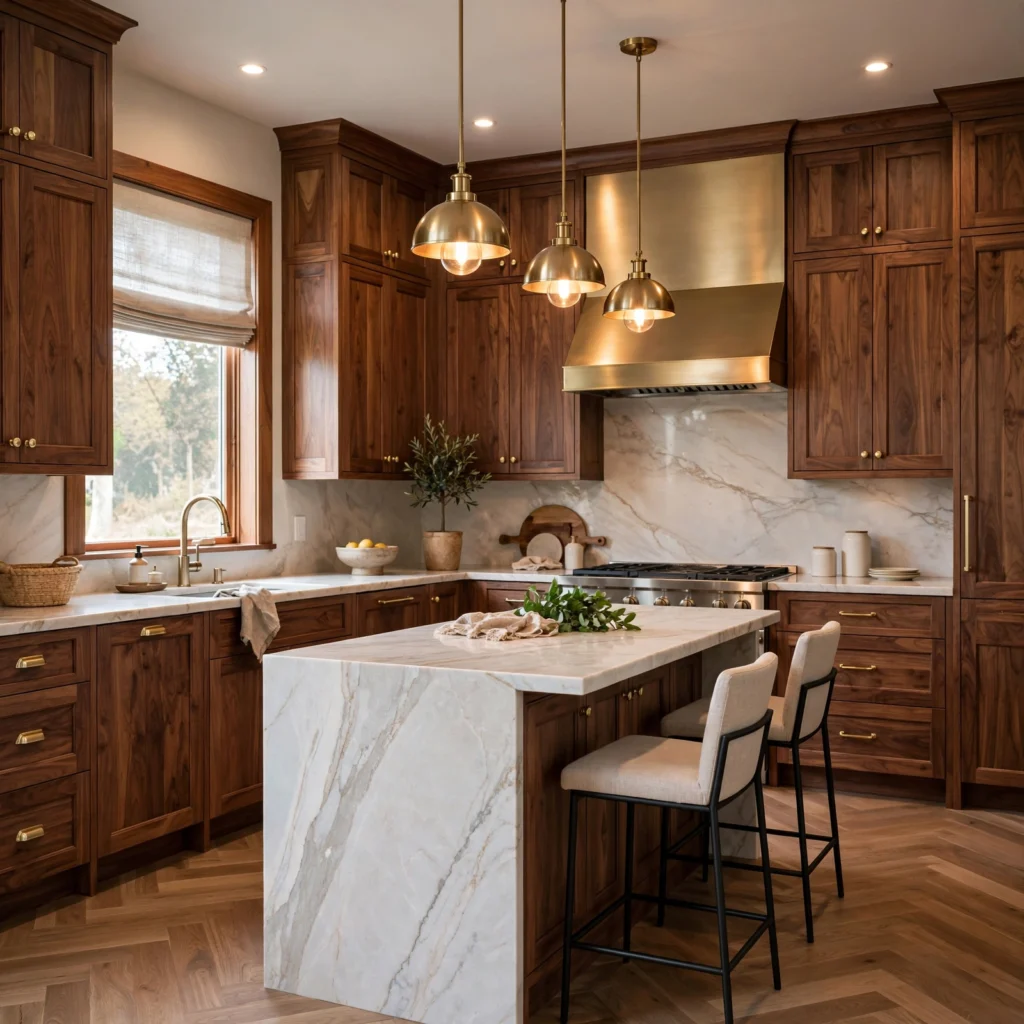
Walnut shaker cabinets combine a classic, simple panel profile with a rich, reddish-brown wood tone that reads as warm rather than heavy. The straightforward shaker lines keep the cabinetry from looking overly ornate, which helps the wood tone itself stand out as the primary visual feature. Pairing walnut cabinets with a lighter quartz countertop keeps the kitchen from feeling visually top-heavy.
2. Espresso-Stained Oak Cabinets
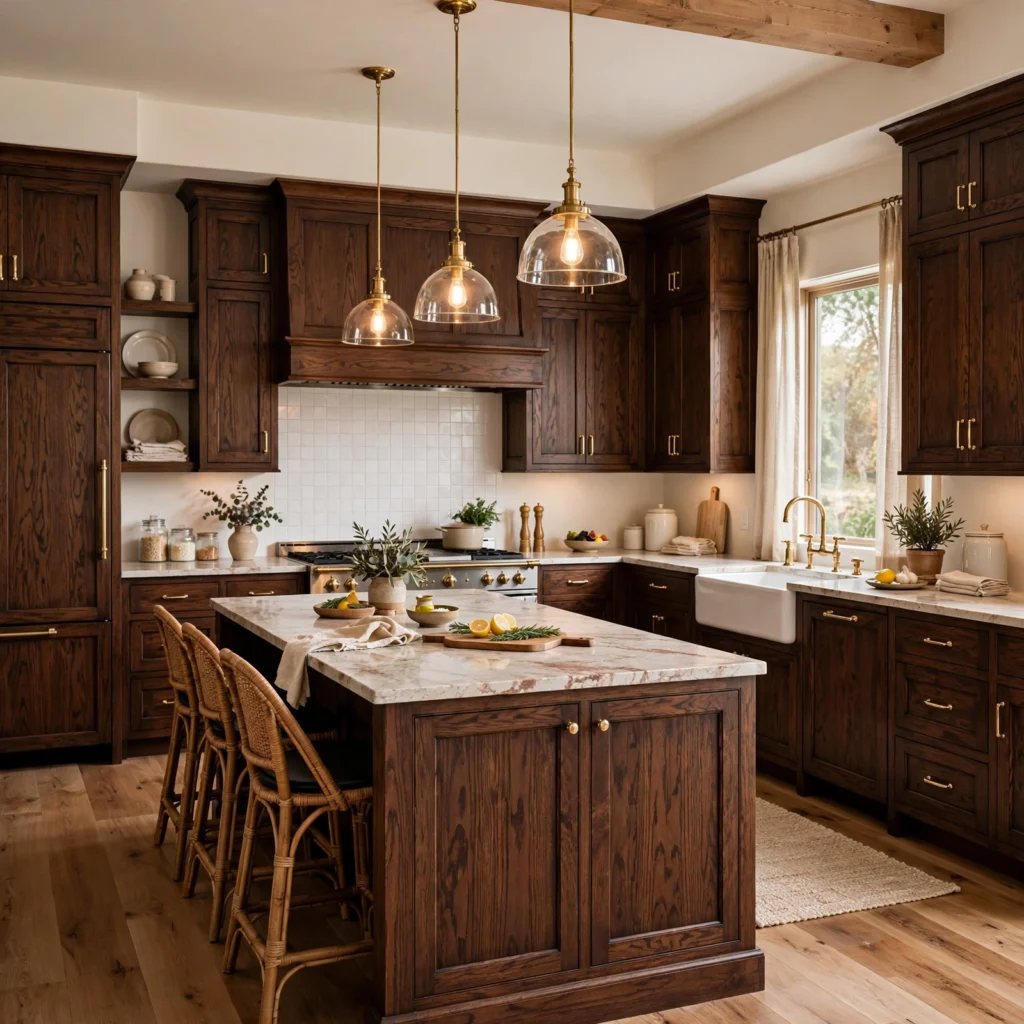
Espresso-stained oak uses a deep, near-black stain over oak’s natural wood grain, which still shows through subtly under direct light rather than looking like a flat, uniform black. This creates more visual texture than a painted black cabinet would, since the wood grain remains a visible detail. Espresso tones pair especially well with brass or warm gold hardware, which stands out clearly against the dark background.
| Wood Tone | Undertone | Best Hardware Pairing |
| Walnut | Warm red-brown | Brass, aged bronze |
| Espresso oak | Cool near-black | Brass, matte black |
| Mahogany | Deep reddish | Antique brass, copper |
3. Two-Tone Dark Lower, Light Upper Cabinets
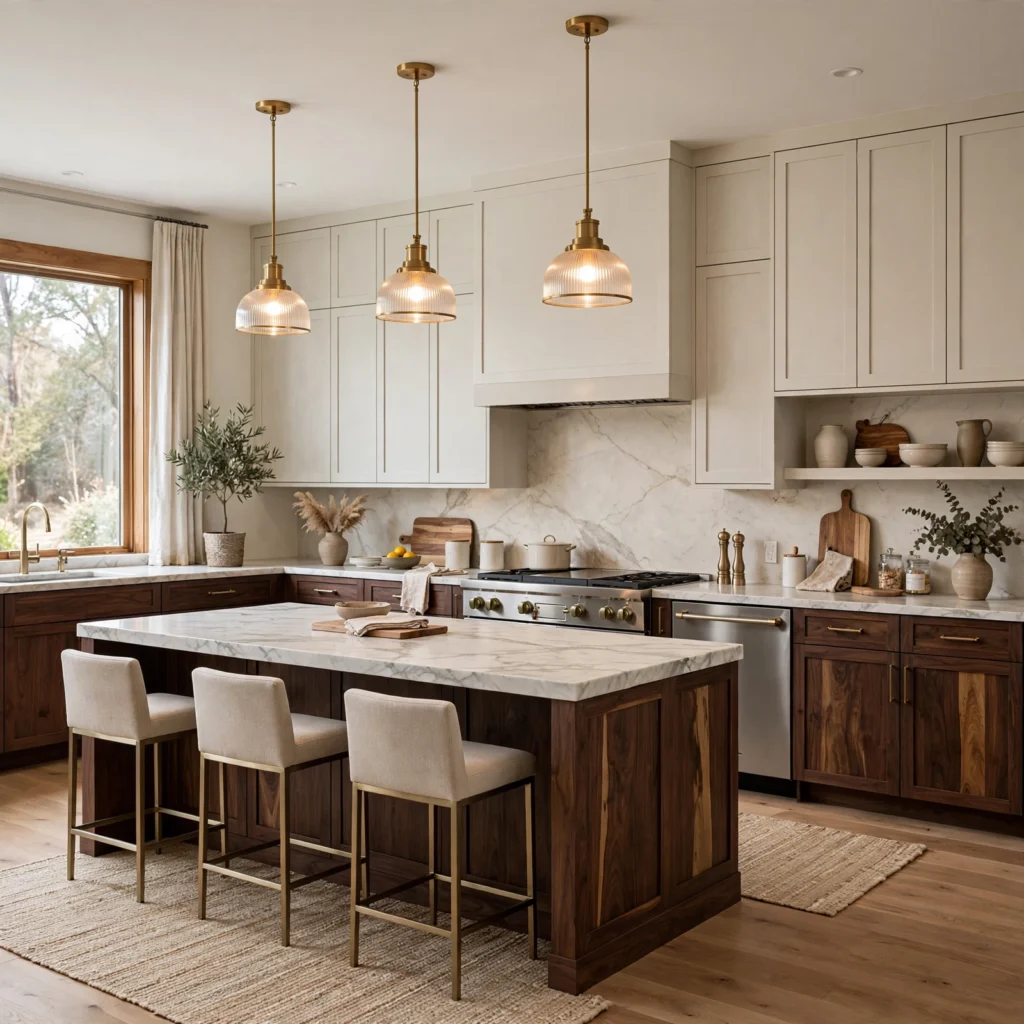
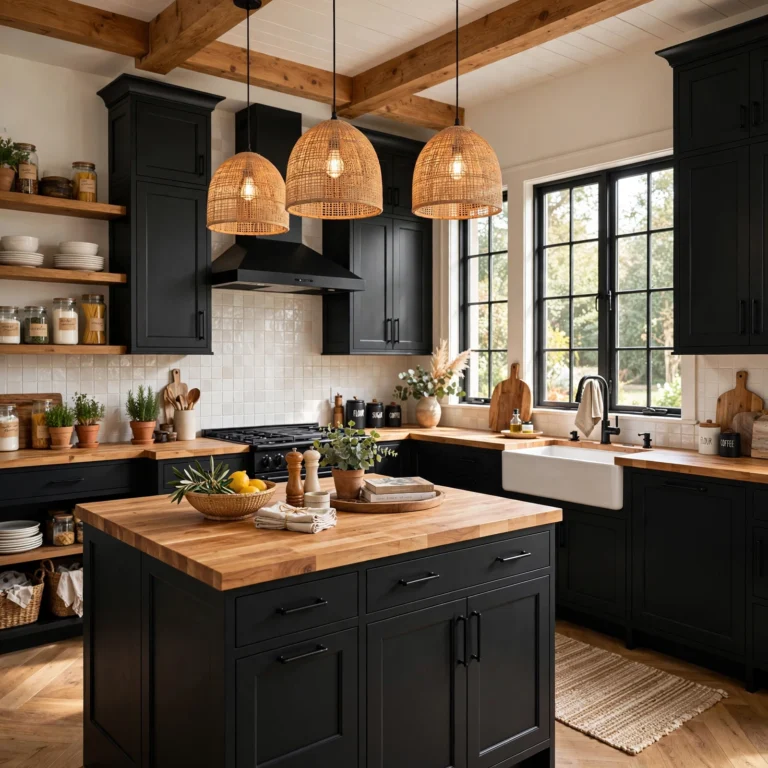
Pairing dark wood lower cabinets with lighter upper cabinets or open shelving keeps the visual weight of a dark kitchen anchored near the floor rather than surrounding the entire room. This approach works particularly well in smaller kitchens where fully dark cabinetry from floor to ceiling might feel closed in. Choosing a light cream or white for the upper section, rather than a mid-tone, creates the strongest contrast against the dark lower cabinets.
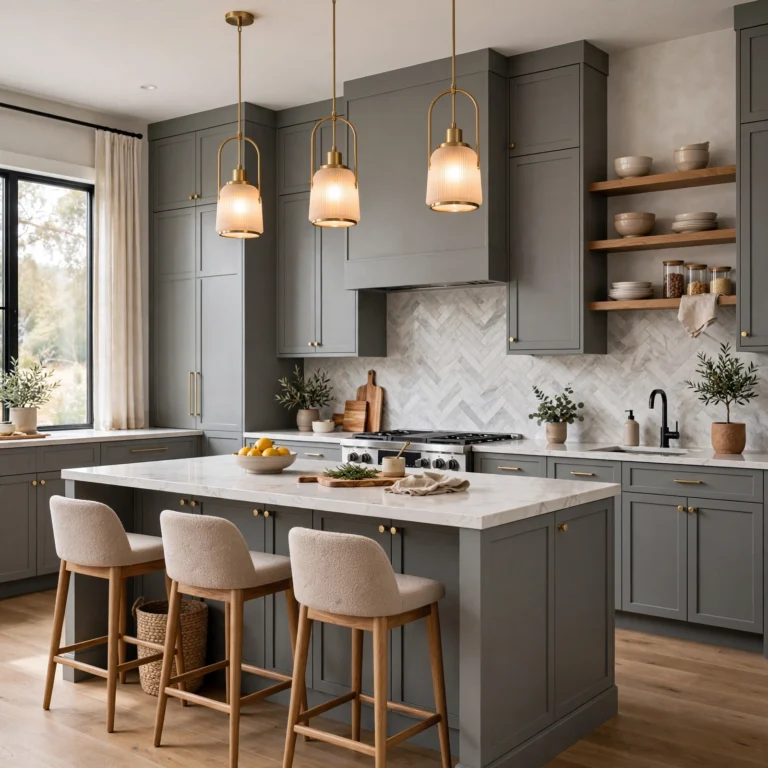
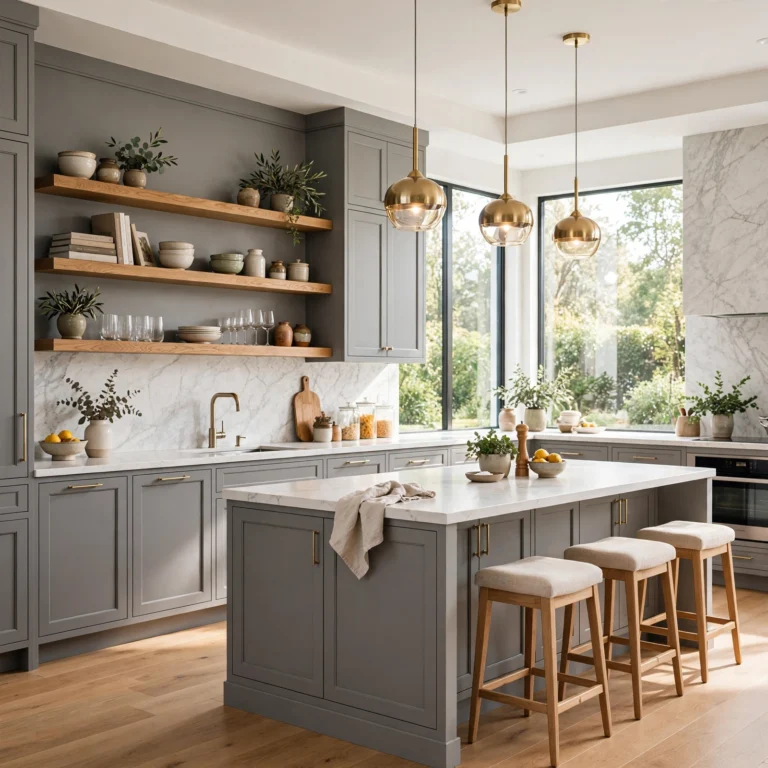
To see more gray kitchen cabinets
4. Brass Cabinet Hardware
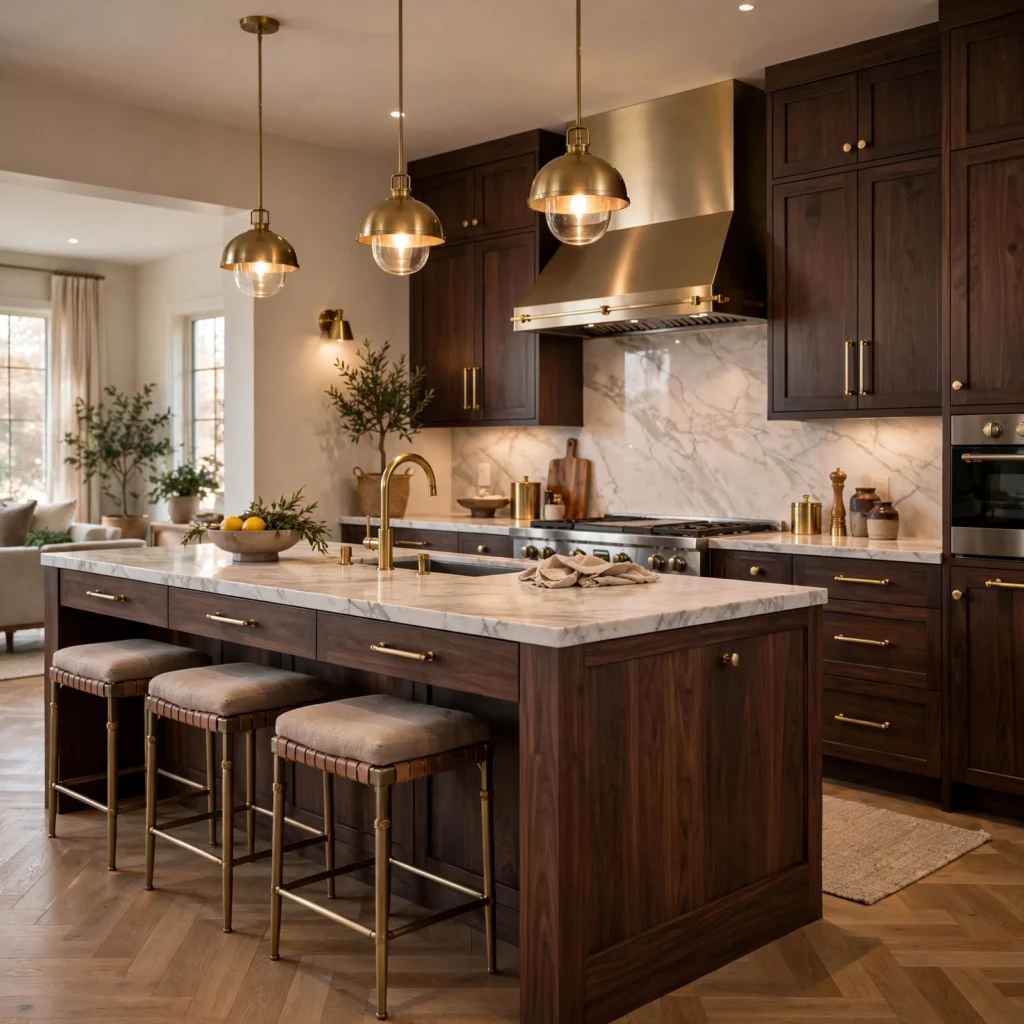
Brass hardware on dark wood cabinets creates strong visual contrast that stands out clearly against the deep background, unlike brushed nickel or chrome, which can blend in and disappear against darker wood tones. Unlacquered brass in particular develops a natural patina over time, adding a slightly aged character that many homeowners now seek out intentionally. Choosing a consistent brass finish across knobs, pulls, and faucet fixtures ties the whole kitchen’s hardware story together.
5. Matte Black Hardware Accent
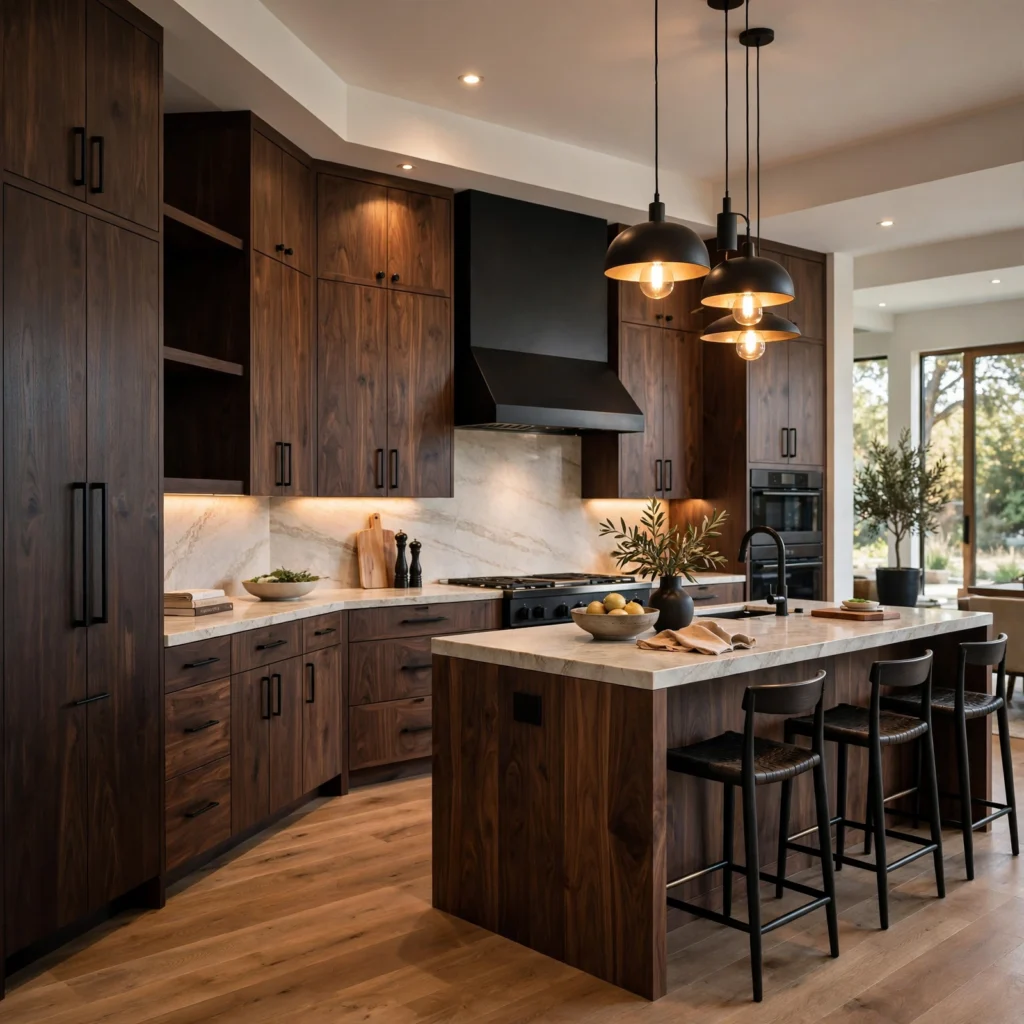
Matte black hardware on dark wood cabinets creates a more subtle, tonal contrast than brass, letting the wood grain remain the primary visual feature rather than competing with a brighter metal finish. This pairing suits a more modern or minimalist kitchen aesthetic better than a warmer brass finish would. Choosing simple bar pulls, rather than ornate knobs, keeps the hardware from adding unnecessary visual clutter against the dark cabinet fronts.
6. Light Quartz Countertop Pairing
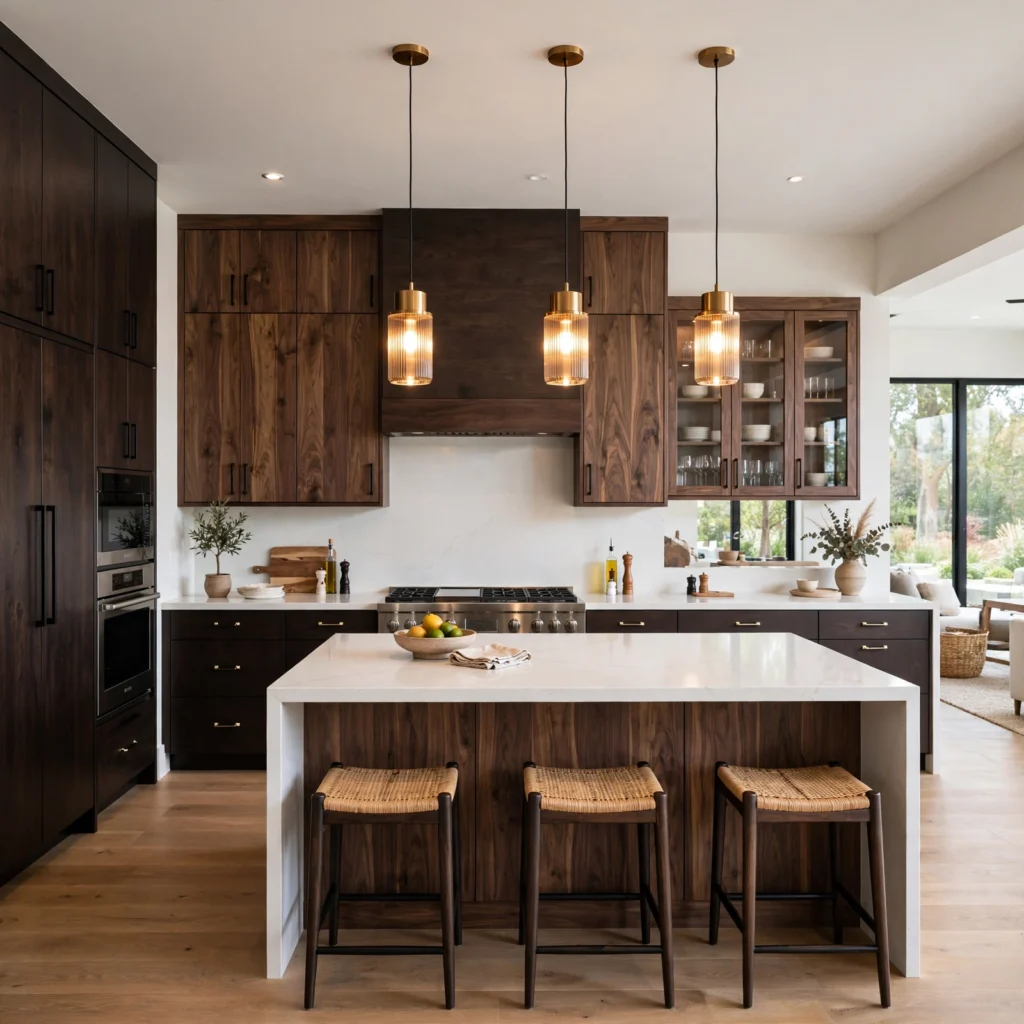
A light quartz countertop, in a white or pale gray tone with subtle veining, balances the visual weight of dark wood cabinetry and keeps the kitchen from feeling entirely enclosed in one dark tone. Quartz in particular offers a more uniform, less busy pattern than natural marble, which some homeowners prefer alongside an already visually rich dark wood cabinet. This pairing also reflects more light back into the room than a darker countertop would.
7. Mahogany Cabinet Finish
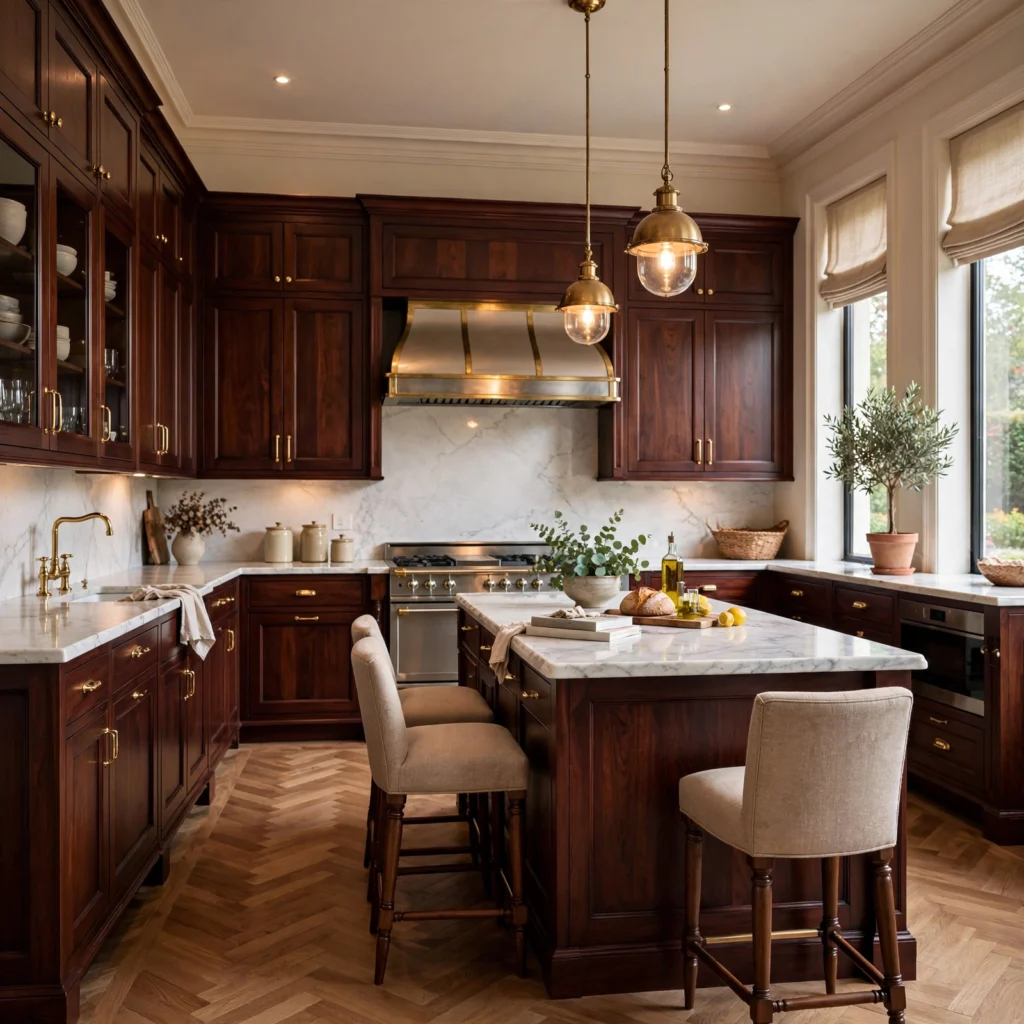
Mahogany cabinets carry a deep reddish undertone distinct from the cooler black-brown of espresso stains, giving the kitchen a warmer, more traditional character. This wood tone pairs particularly well with warm metal finishes like antique brass or copper rather than cooler silver tones. Mahogany also tends to suit kitchens with more traditional or classic architectural details, like crown molding or paneled walls, better than a starkly modern kitchen layout.
8. Dark Wood Kitchen Cabinets Glass-Front Uppers
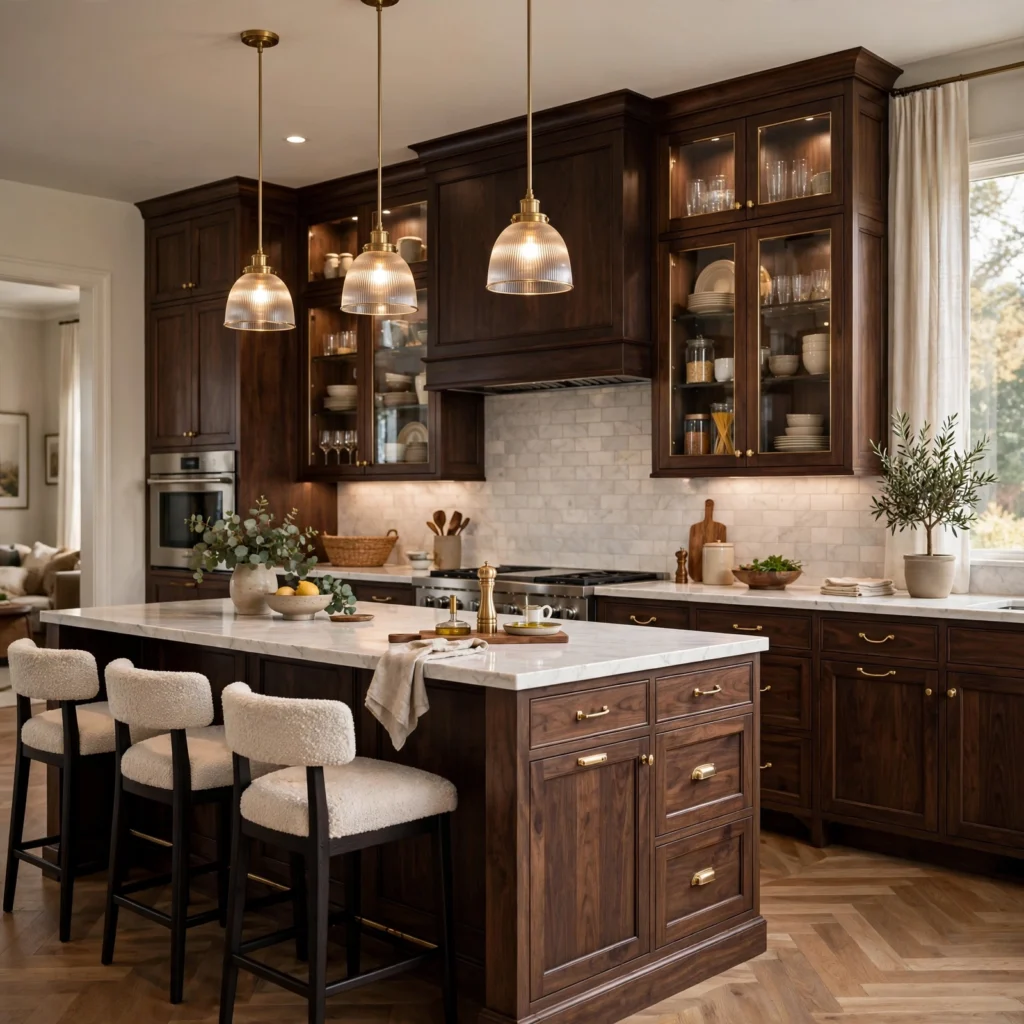
Adding glass fronts to a section of upper cabinets breaks up the visual density of a fully dark wood kitchen, letting light pass through and offering a glimpse of dishware or glassware stored inside. Among dark wood kitchen cabinets ideas that add visual variety without introducing a second wood tone, this one works especially well positioned near a window or other light source. Choosing clear rather than frosted glass keeps the cabinet interior visible as an intentional display rather than a hidden storage space.
9. Open Shelving Break in Dark Cabinetry
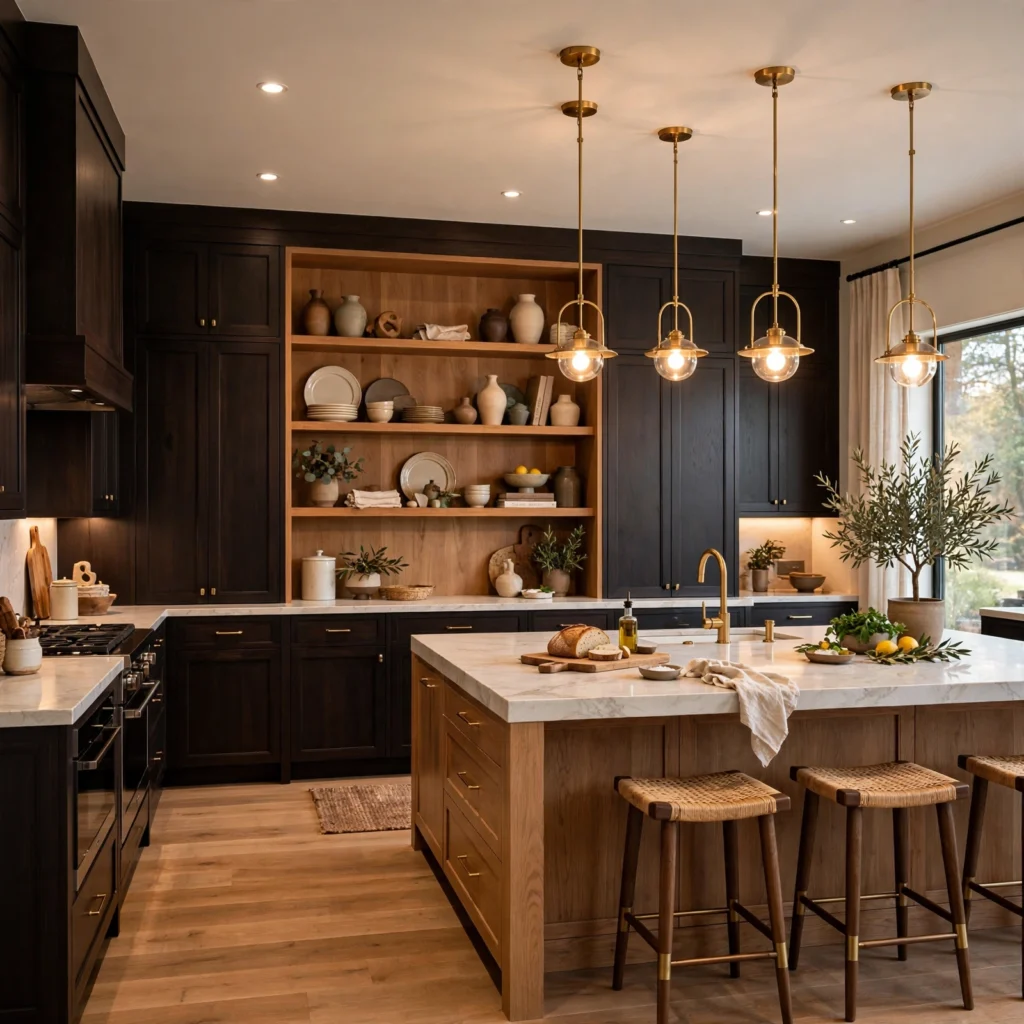
Replacing one or two sections of dark upper cabinets with open shelving introduces negative space and a lighter visual moment into an otherwise fully enclosed dark kitchen. This works particularly well centered above a stove or sink, where the open shelves can hold frequently used dishware within easy reach. Painting the wall behind the open shelving a lighter color than the surrounding cabinetry strengthens the contrast and keeps this section from disappearing into the dark backdrop.
10. White Subway Tile Backsplash
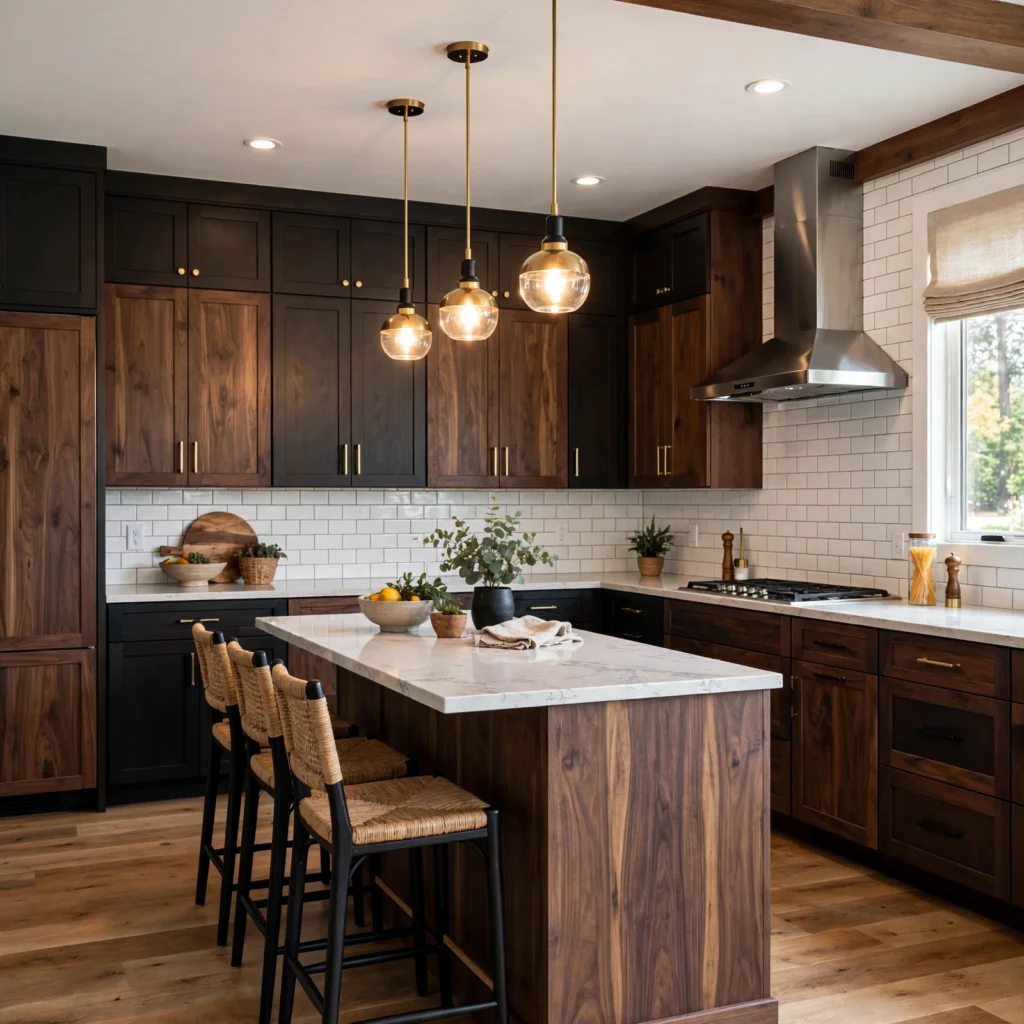
A white subway tile backsplash creates strong contrast against dark wood cabinetry, reflecting light back into the kitchen and preventing the space from reading as visually heavy from countertop to ceiling. The classic, simple tile shape also keeps the backsplash from competing with the more prominent wood grain of the cabinetry itself. Choosing a white or cream grout, rather than a dark grout, maximizes the brightness this backsplash choice adds to the room.
11. Brushed Gold Faucet and Fixtures
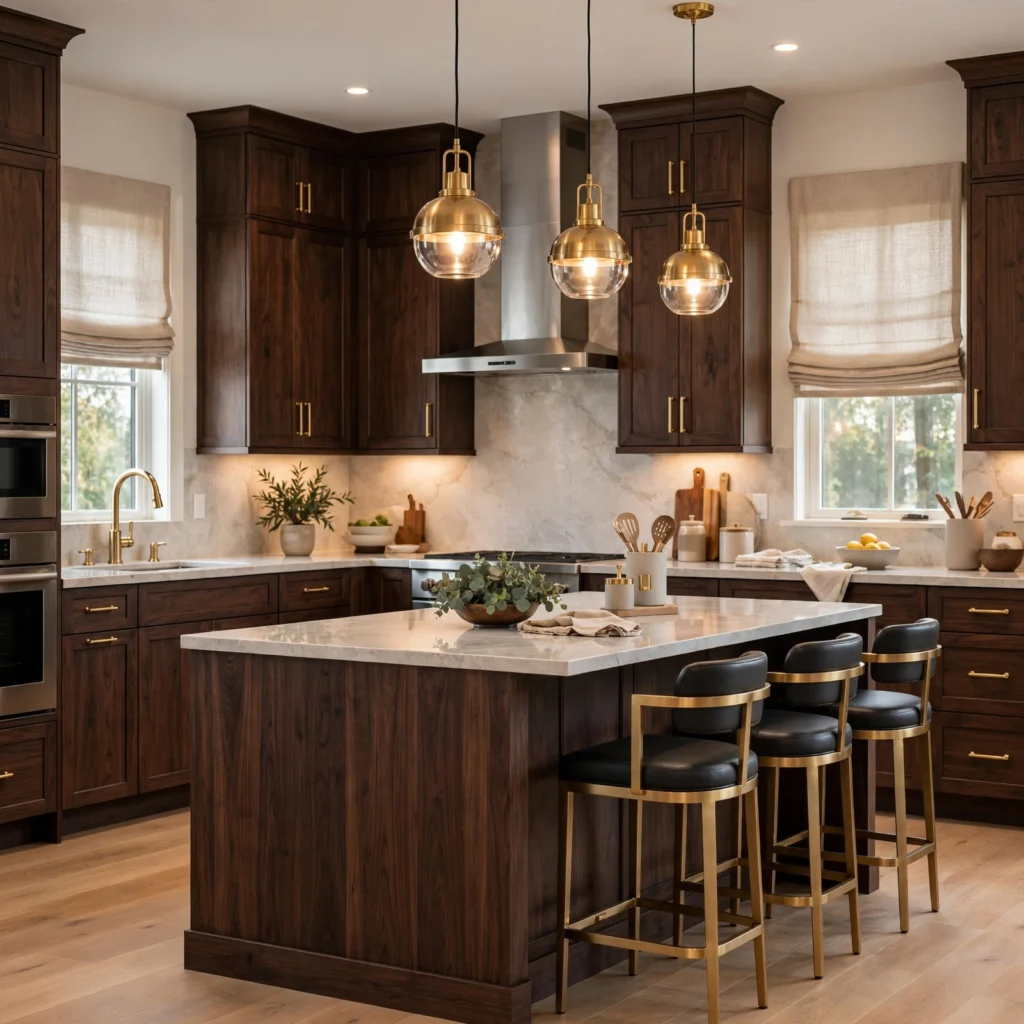
A brushed gold faucet paired with matching cabinet hardware ties the kitchen’s metal finishes together while adding warmth against dark wood cabinetry. This finish reads as slightly softer and more matte than a high-polish brass, which suits a broader range of kitchen styles from traditional to transitional. Extending the same brushed gold finish to cabinet pulls, not just the faucet, keeps the metal story consistent throughout the room.
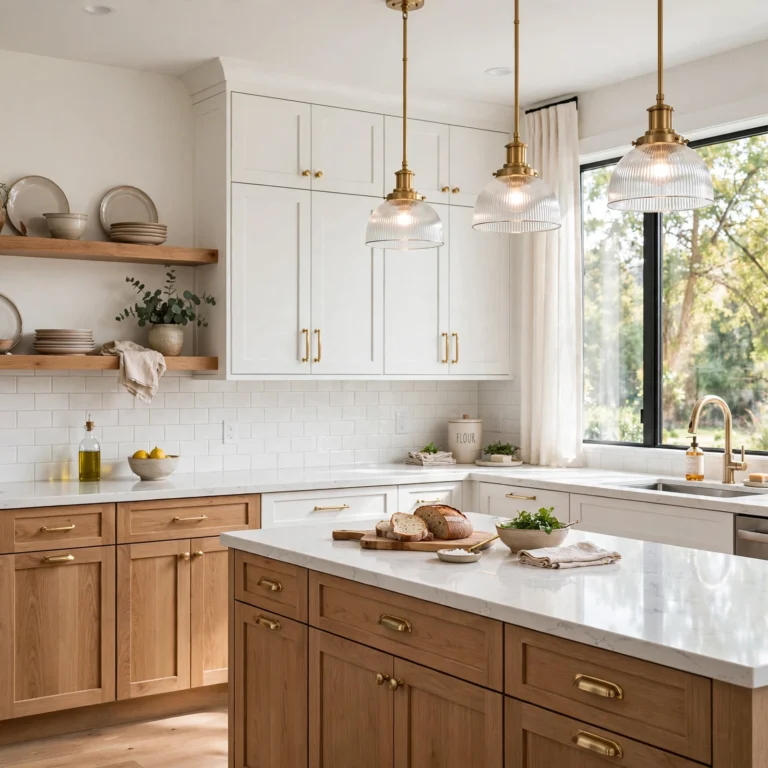
12. Dark Wood Island With Light Perimeter Cabinets
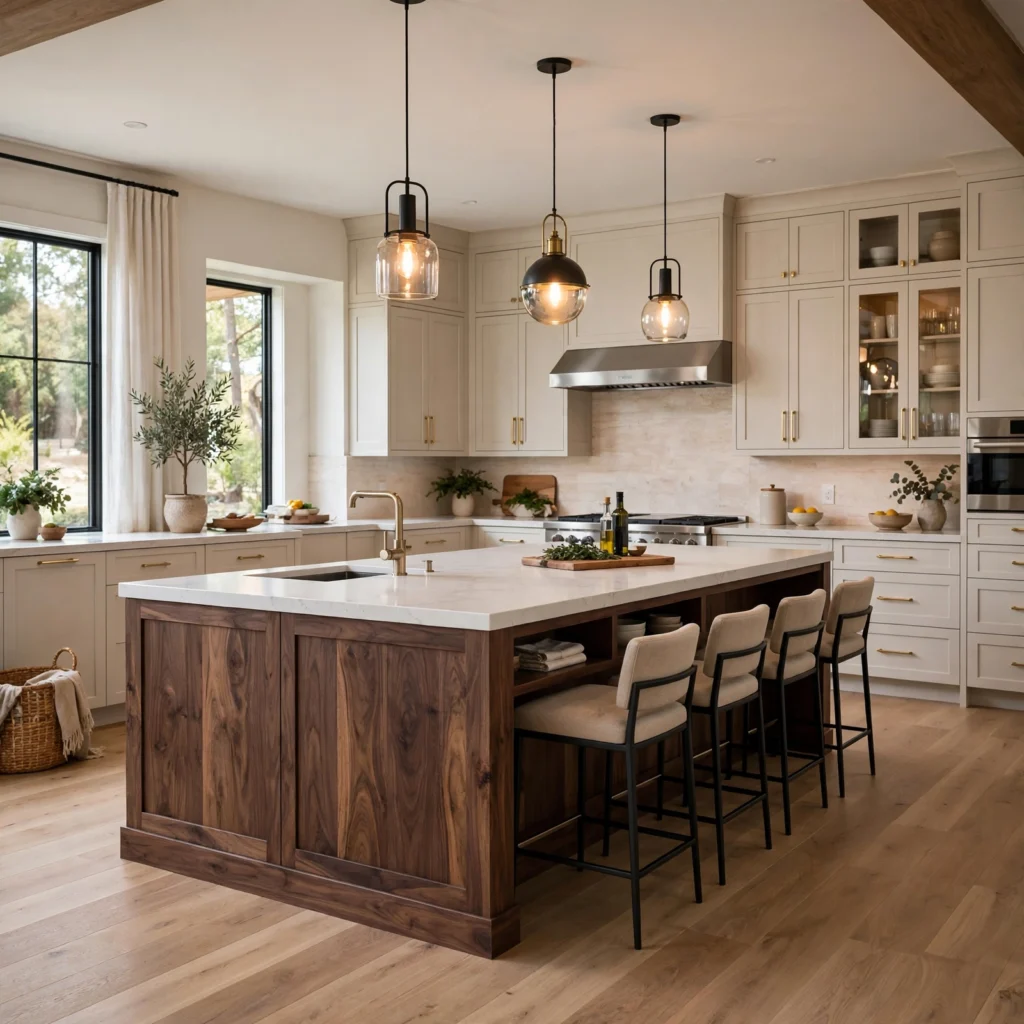
Reversing the more common two-tone approach, a dark wood island paired with lighter perimeter cabinetry makes the island the visual anchor of the kitchen rather than surrounding the whole room in dark wood. This works particularly well in open-concept layouts where the island is visible from an adjacent living or dining space. Choosing a contrasting countertop material for the island, distinct from the perimeter counters, further reinforces the island as a deliberate focal point.
13. Natural Stone Backsplash in a Light Tone
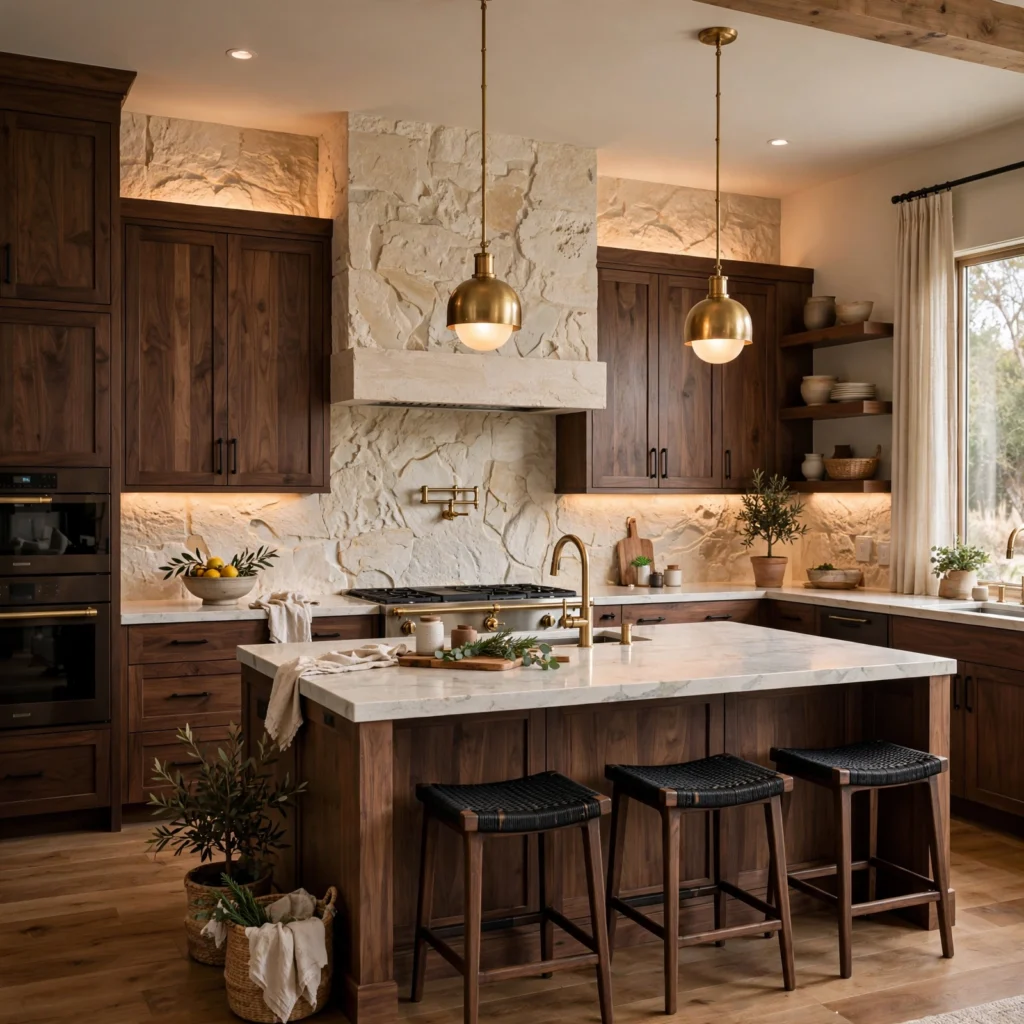
A natural stone backsplash, such as light travertine or pale marble, adds texture and organic variation that pairs well with dark wood cabinetry without introducing another dark tone into the room. The natural veining and color variation within the stone keeps the backsplash from reading as flat compared to a solid painted surface. This pairing works especially well in kitchens leaning toward a more traditional or European aesthetic.
| Backsplash Material | Light Reflection | Best Suited Style |
| White subway tile | High | Modern, transitional |
| Light travertine | Medium-high | Traditional, European |
| Pale marble | Medium-high | Classic, formal |
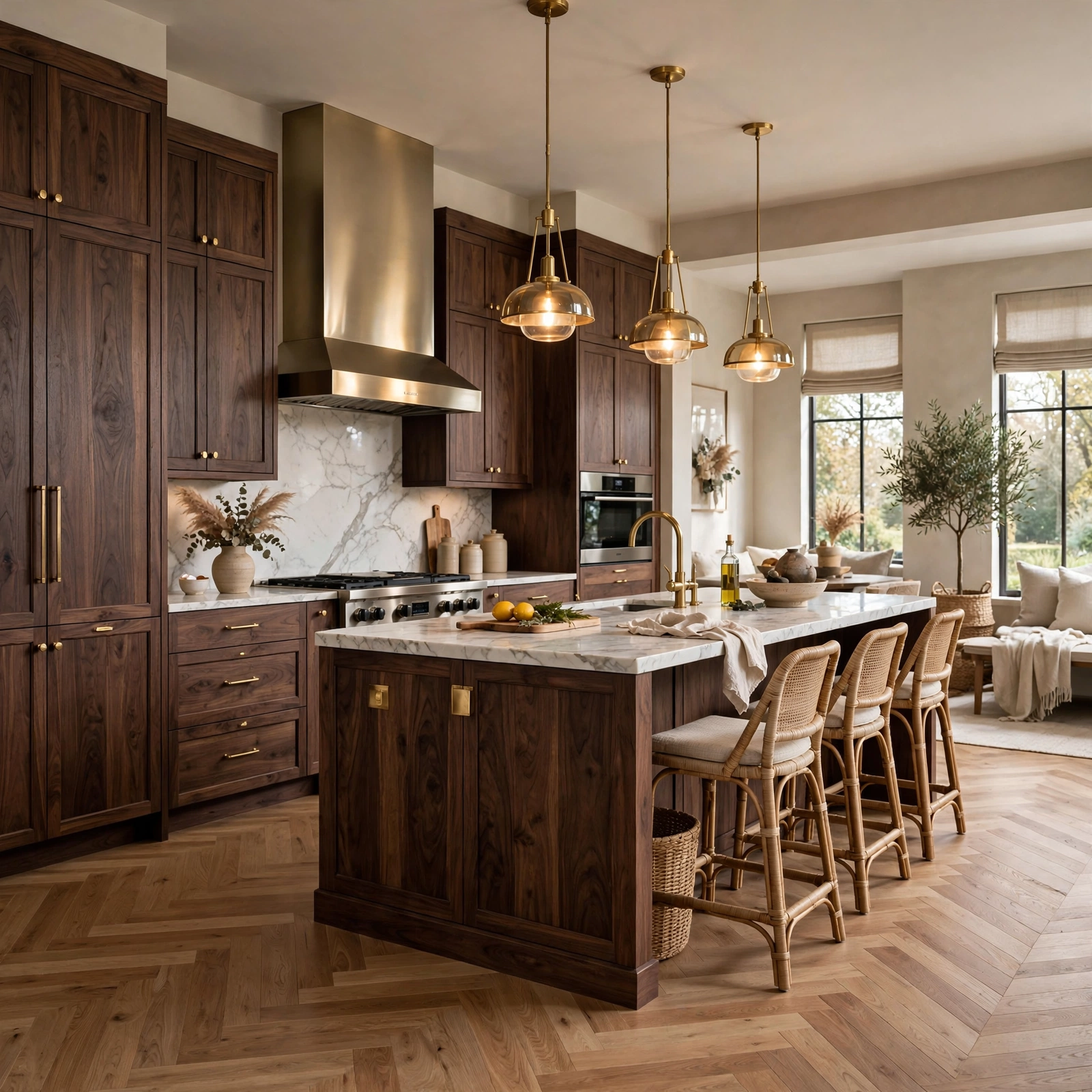
14. Warm Pendant Lighting Over the Island
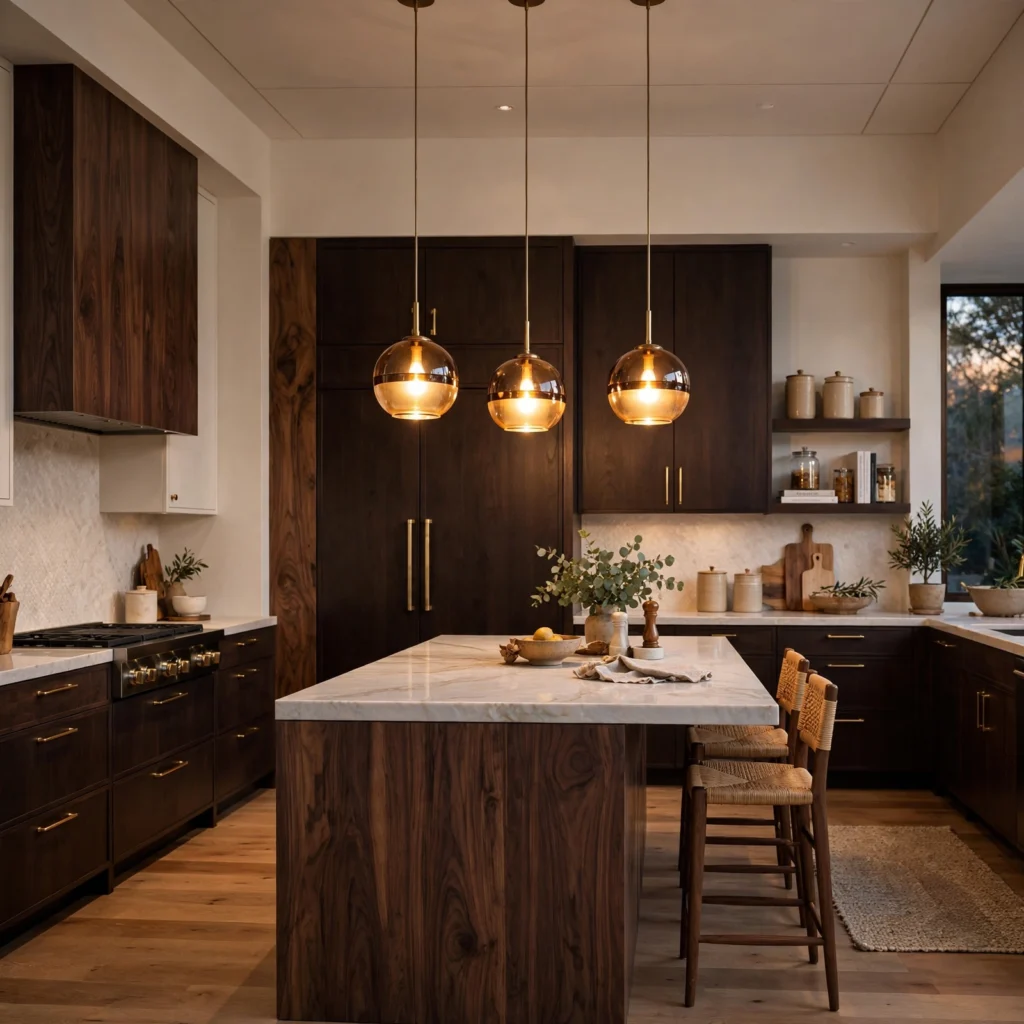
Warm-toned pendant lights, in the 2700K to 3000K range, cast an amber glow that complements the warm undertones in walnut or mahogany cabinetry better than cooler-toned fixtures would. Brass or aged bronze pendant fixtures also echo the hardware finish used elsewhere in the kitchen, tying the lighting into the overall metal story. Hanging pendants at a consistent height above the island adds visual rhythm without competing with the cabinetry below.
15. Dark Wood Kitchen Cabinets Paired With Woven Bar Stools
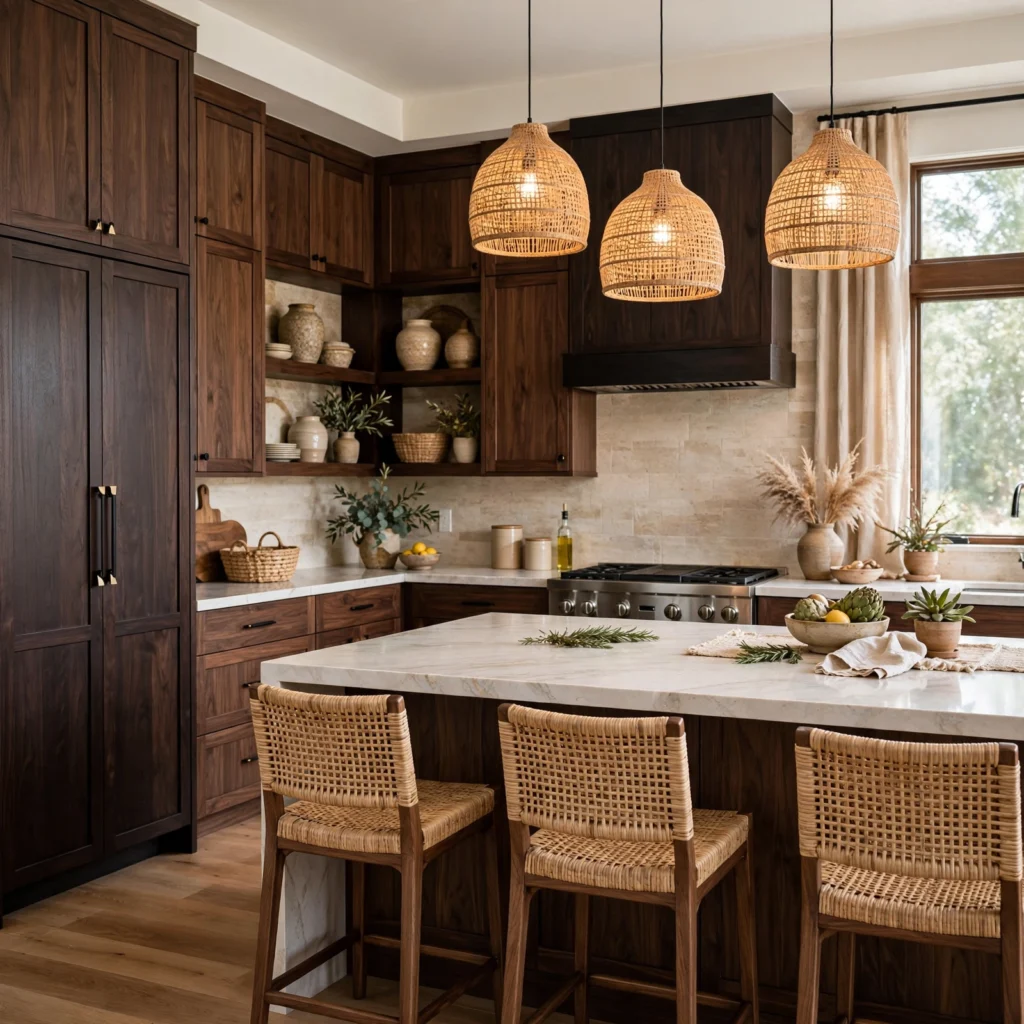
Woven rattan or cane bar stools at the island introduce a lighter, more textural material that softens the visual density of dark wood cabinetry surrounding the space. Among dark wood kitchen cabinets ideas that add contrast without touching the cabinets themselves, this one is one of the easiest to change later if the kitchen’s style evolves. Choosing stools in a natural, unstained wood or cane finish keeps the contrast from feeling jarring against the darker cabinetry.
16. Large Format Light Flooring
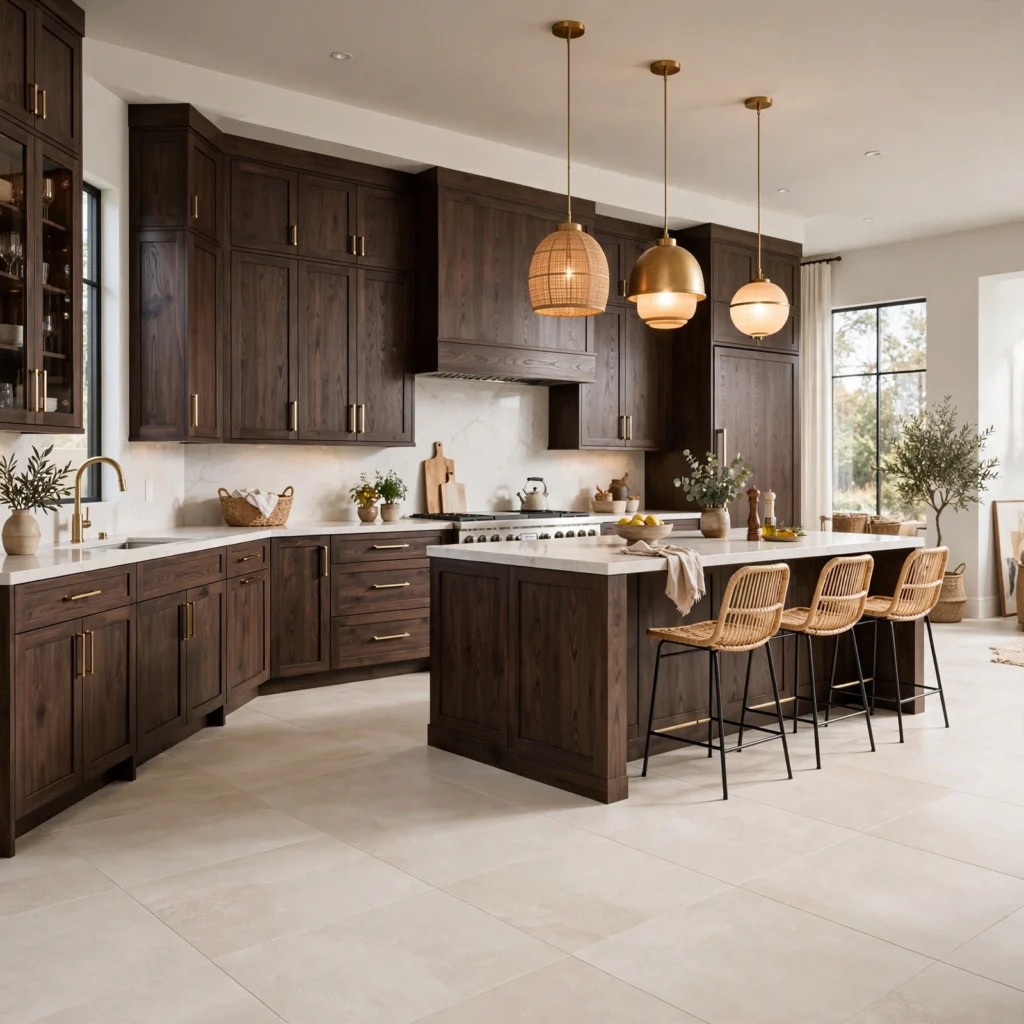
Large format flooring in a light oak or pale stone-look tile reflects more light across the room’s largest surface, balancing the visual weight of dark wood cabinets from below rather than only through countertops or backsplash choices. Wide plank flooring in particular reduces the number of grout lines or seams compared to smaller format tile, keeping the floor from adding visual busyness beneath already-rich cabinetry. This pairing works especially well in kitchens with limited natural light, since the floor becomes an additional light-reflecting surface.
Shop the Look
Walnut shaker cabinets paired with brass hardware and a brushed gold faucet create a warm, cohesive metal story throughout the kitchen. Add a white subway tile backsplash and a light quartz countertop to balance the cabinetry’s visual weight, along with warm pendant lighting over the island in the same brass finish. Finish with woven rattan bar stools and large format light oak flooring to keep the room from feeling too heavy overall.
Common Mistake to Avoid
The most common mistake with dark wood kitchen cabinets is pairing them with an equally dark countertop, backsplash, and flooring, which results in a kitchen that reads as dim and closed in regardless of how much natural light the room actually receives. Balancing the cabinetry with at least two lighter elements — typically the countertop and either the backsplash or flooring — prevents this problem in nearly every kitchen layout. Testing paint and material swatches together under the kitchen’s actual lighting, rather than relying on how they look in a showroom, also helps avoid this mistake before installation.
People Also Ask
Do dark wood kitchen cabinets make a small kitchen feel smaller?
Dark wood cabinets can make a small kitchen feel more enclosed if paired with equally dark countertops, backsplash, and flooring, but balancing them with lighter surrounding materials generally prevents this effect. A light countertop and backsplash, paired with adequate lighting, allow dark cabinetry to read as rich and warm rather than cramped. Two-tone layouts, with dark lower cabinets and lighter upper cabinets, are also a popular way to introduce dark wood into a smaller kitchen without fully enclosing the space.
What countertop color works best with dark wood kitchen cabinets?
Light quartz in white or pale gray tones is generally the most popular pairing since it reflects light back into the room and creates strong visual contrast against the cabinetry. Natural stone in lighter tones, like light travertine or pale marble, also works well for a more traditional aesthetic. Darker countertops can work in larger, well-lit kitchens, but they require more careful lighting planning to avoid an overly heavy overall look.
What hardware finish looks best with dark wood cabinets?
Brass and warm gold finishes tend to create the strongest, most flattering contrast against dark wood cabinetry, since the warm metal tone stands out clearly rather than blending into the background. Matte black hardware offers a more subtle, tonal option for a modern or minimalist kitchen aesthetic. Cooler finishes like chrome or brushed nickel are less commonly recommended since they can visually disappear against darker wood tones.
Are dark wood kitchen cabinets still in style?
Yes, dark wood kitchen cabinets have returned to popularity after several years dominated by all-white kitchen trends, driven by a broader shift toward warmer, more grounded interior color palettes. Walnut and espresso oak tones in particular are currently among the most requested cabinet finishes. Pairing dark cabinetry with warm metal hardware and lighter surrounding materials keeps the look feeling current rather than dated.
How do I keep a dark wood kitchen from feeling too dark overall?
Balancing dark cabinetry with a light countertop, a light backsplash, and adequate task and ambient lighting is the most effective way to prevent a dark kitchen from feeling dim or closed in. Adding a section of open shelving or glass-front cabinets also introduces negative space that breaks up the visual density of fully enclosed dark cabinetry. Large format light flooring and warm-toned lighting fixtures further support this balance without requiring any changes to the cabinets themselves.
Conclusion
Dark wood kitchen cabinets can feel rich and inviting rather than heavy, as long as the surrounding countertop, backsplash, hardware, and lighting choices are balanced with intention. Whether the starting point is a full walnut shaker cabinet installation or a simple hardware swap to brass, the goal is a kitchen that feels warm and grounded without closing in on itself. Save this list to Pinterest for later, and check out our related post on small kitchen organization ideas for more kitchen-specific planning guidance.