13 Trending White Kitchen Cabinets Ideas That Still Feel Current
White kitchen cabinets have remained one of the most consistently popular kitchen choices for years, but a genuinely well-executed white kitchen requires more planning than simply choosing any white and calling it done. This post covers thirteen white kitchen cabinets ideas addressing undertone, texture, hardware, and material pairing, all aimed at keeping a white kitchen from reading as flat or dated. You’ll get specific shades, materials, and placement guidance so your white kitchen reads as current and intentional.
Trend & Background
White kitchen cabinets have held a consistent place in kitchen design for well over a decade, but the specific execution has shifted noticeably, moving away from the stark, cool-toned white paired with gray countertops that dominated a few years ago toward warmer whites paired with natural wood, brass hardware, and more textured stone. This shift reflects the same broader movement away from cool, clinical palettes toward warmer, more inviting materials seen across kitchen and interior design generally. This matters now because an all-white kitchen, done with the current emphasis on warmth and texture, reads as considerably more current than the flatter, cooler white kitchens common in past renovation cycles.
Key Takeaways
- White kitchen cabinets ideas work best when paired with enough texture and material contrast to avoid reading as flat or sterile.
- Undertone matters more than most homeowners expect, since a white that reads as clean in one kitchen can read as dingy in another depending on lighting and surrounding materials.
- Hardware finish, countertop veining, and a contrasting island are the details that most reliably keep an all-white kitchen from feeling generic.
- A white shade and undertone comparison table is included so you can match a specific white to your kitchen’s lighting before ordering paint or cabinetry.
1. Warm White with Brass Hardware
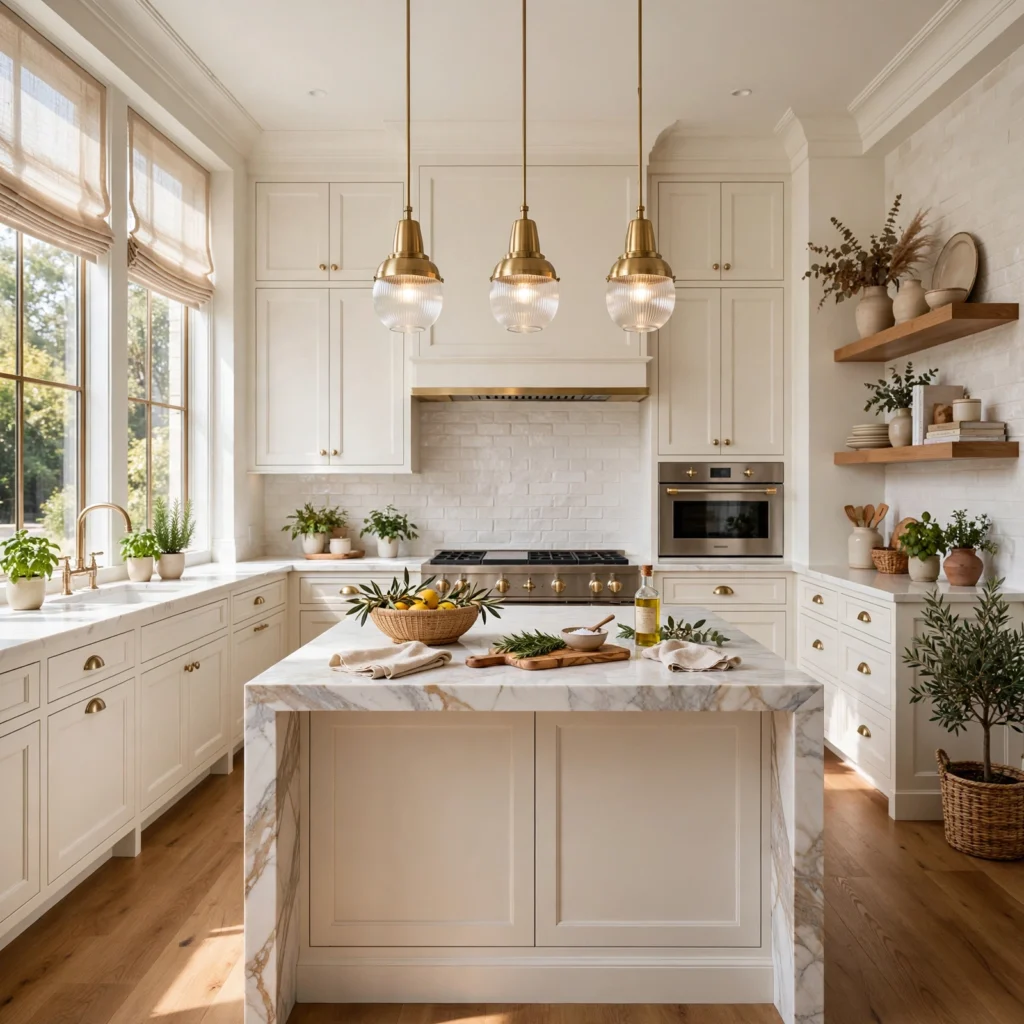
Warm white with brass hardware pairs a cream-leaning white cabinet finish with warm brass or aged gold pulls and knobs, avoiding the stark, clinical look that a cooler white paired with chrome hardware can produce. This combination has become one of the more consistently recommended white kitchen pairings, since the warm undertones in both the cabinetry and the hardware reinforce rather than compete with each other. Choose an unlacquered or aged brass finish over a bright polished brass for a slightly more current, less overtly shiny result.
2. Shaker Style Cabinet Doors
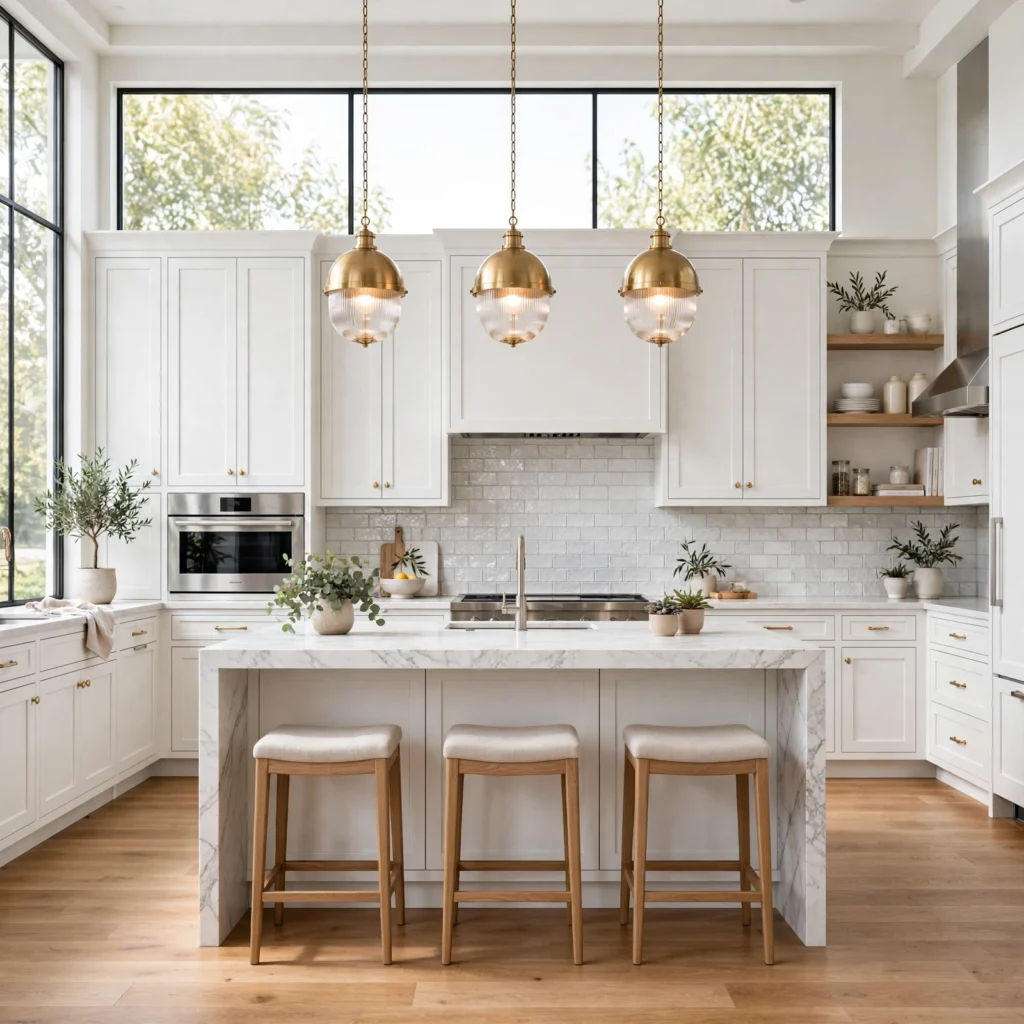
Shaker style cabinet doors, with a simple recessed center panel and clean, flat rails, remain the most versatile door style for white cabinetry, since the minimal detailing avoids reading as either overly traditional or overly modern. This style photographs and ages well precisely because it doesn’t commit strongly to any single passing trend in door profile. Pair with either a matte or satin finish, since a fully glossy shaker door can look plasticky rather than genuinely painted.
3. Two-Tone White and Wood Kitchen
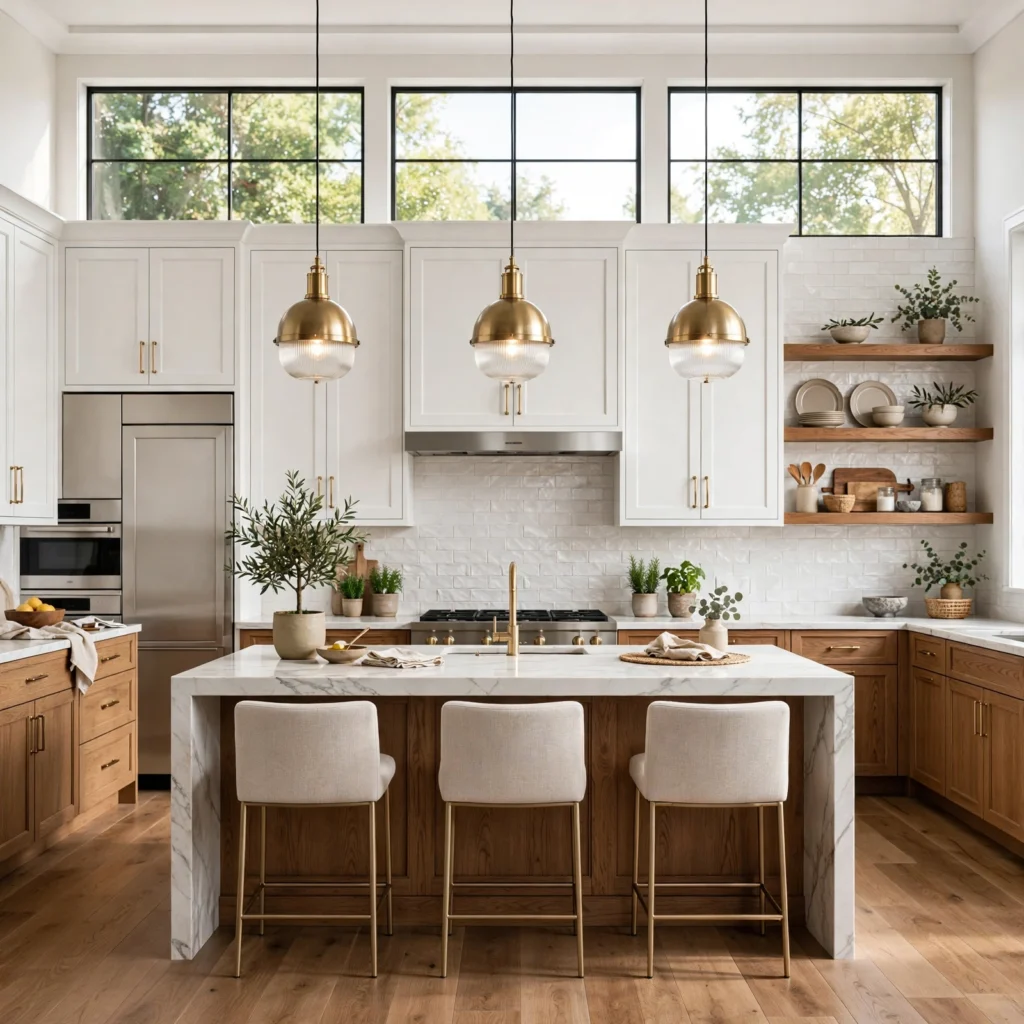
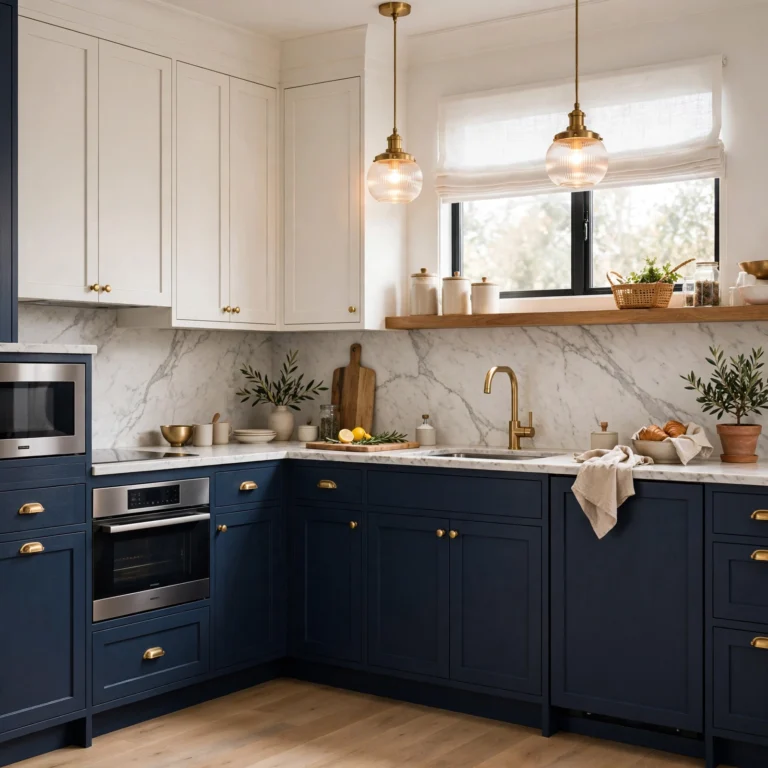
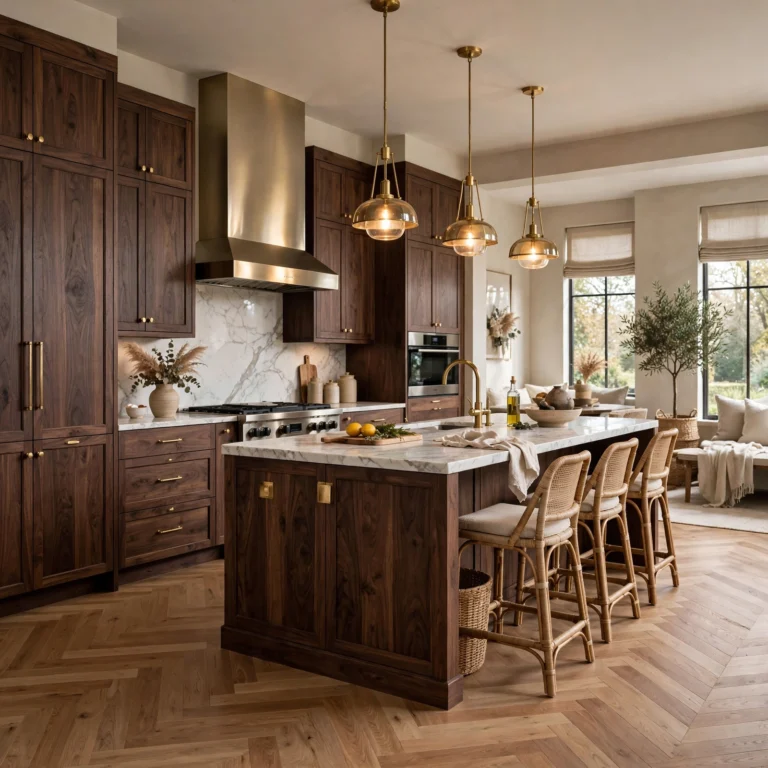
A two-tone white and wood kitchen pairs white upper cabinets with a warm wood tone, like white oak or walnut, on the lower cabinets or a kitchen island, breaking up what would otherwise be an entirely monochromatic white kitchen. This combination has grown considerably in popularity as a way to add warmth and material variety to an all-white kitchen without abandoning the overall lightness white cabinetry provides. Keep the wood tone consistent with any existing flooring or furniture visible from the kitchen for the most cohesive result.
4. White Kitchen Cabinets Textured Backsplash
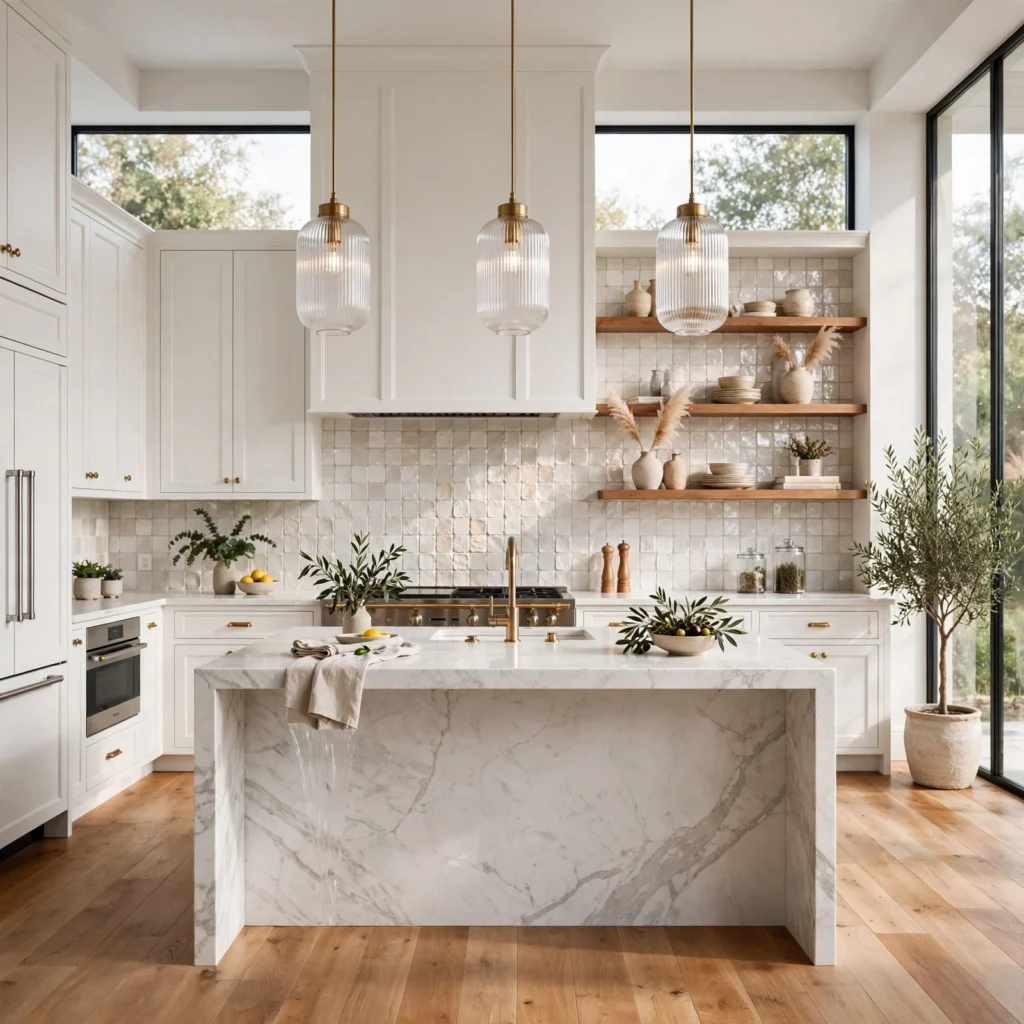
White kitchen cabinets textured backsplash pairings use a handmade-look zellige tile, a fluted ceramic, or a subtly textured natural stone rather than a flat, uniform subway tile, adding visual interest to the wall without introducing additional color into the kitchen. This detail matters significantly in an all-white kitchen, since texture becomes one of the primary ways to add depth when color variation is intentionally limited. Choose a backsplash tile in a similar or slightly warmer white than the cabinetry itself, letting the texture rather than a color contrast carry the visual interest.
| White Shade | Undertone | Best Pairing |
| Chalk White | Cool, slightly gray | Chrome or nickel hardware |
| Cream White | Warm, yellow-leaning | Brass hardware, wood accents |
| Alabaster | Warm, soft neutral | Mixed metal, natural stone |
5. Marble-Look Quartz Countertop
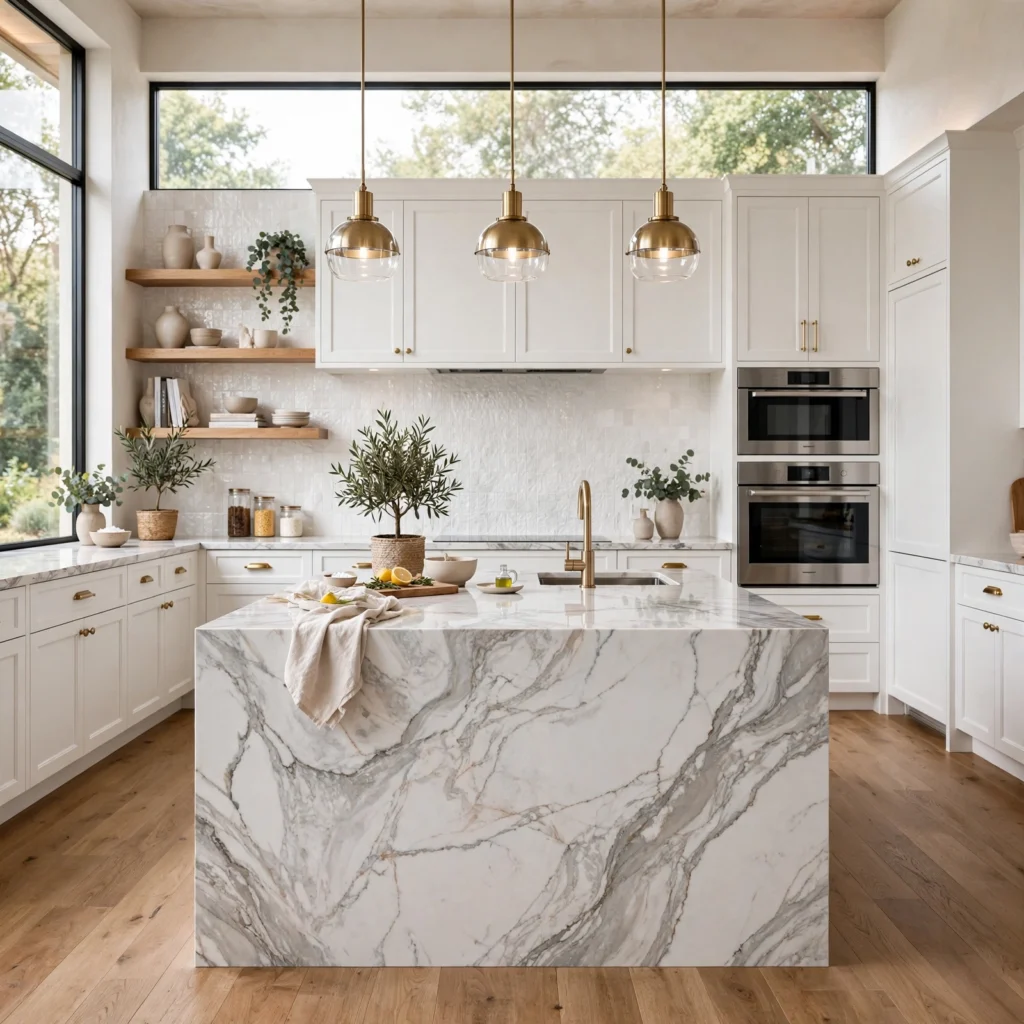
A marble-look quartz countertop pairs the classic veined appearance of natural marble with the improved durability and stain resistance of engineered quartz, a combination that’s become the standard recommendation for a white kitchen’s countertop material. This addresses one of the more common concerns with genuine marble, which stains and etches more easily than most homeowners want in a daily-use kitchen surface. Choose a quartz with visible, varied veining rather than a flat, uniform white slab, since the veining adds essential visual movement against the surrounding white cabinetry.
To see more green kitchen cabinets
6. Furniture-Style Cabinet Legs
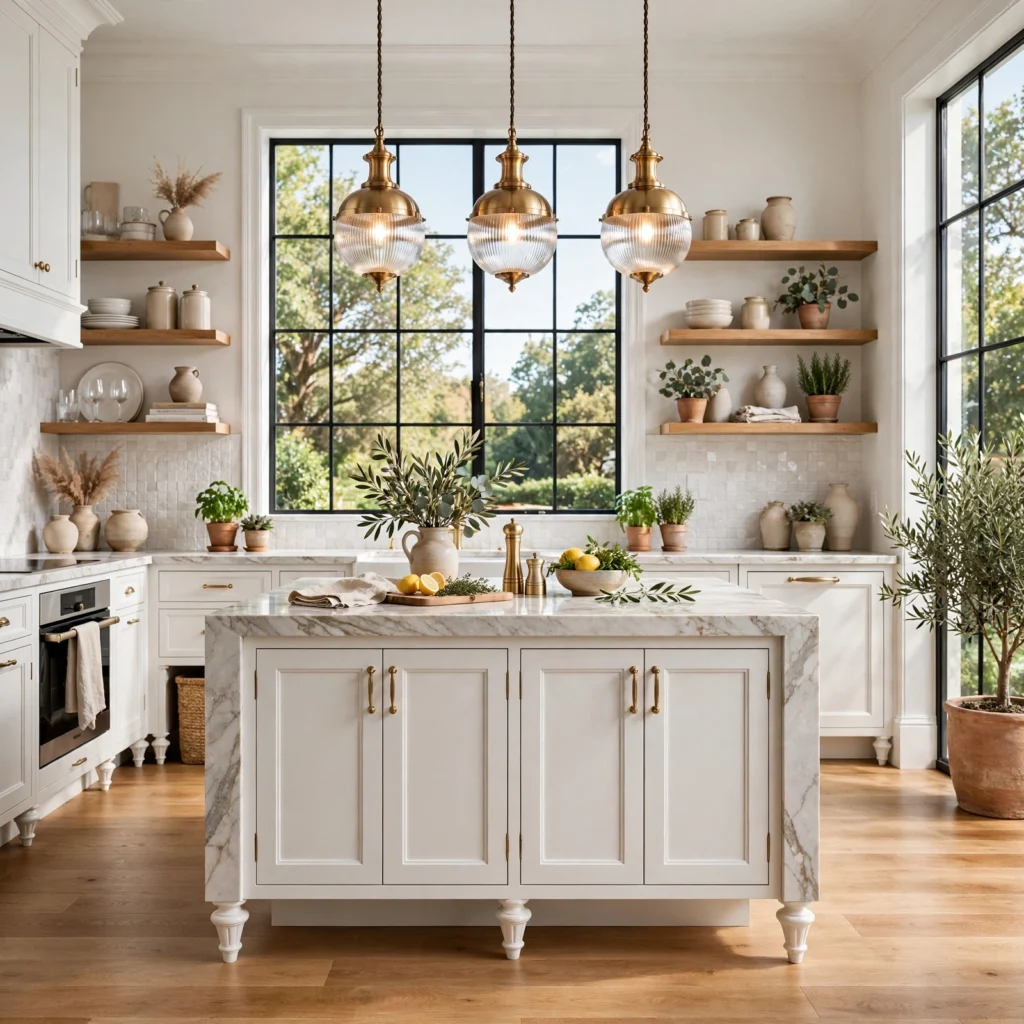
Furniture-style cabinet legs, particularly on a kitchen island, replace a standard flush cabinet base with visible turned or tapered wood or metal legs, adding a lighter, more custom-furniture quality to what’s otherwise a built-in piece. This detail works particularly well on an island specifically, since it’s viewed from all sides and benefits most from the added visual interest at the base. Choose a leg finish, whether painted white to match or a contrasting wood or metal tone, based on whether the island itself is meant to blend with or stand apart from the surrounding cabinetry.
7. White Kitchen Cabinets Open Shelving Mix
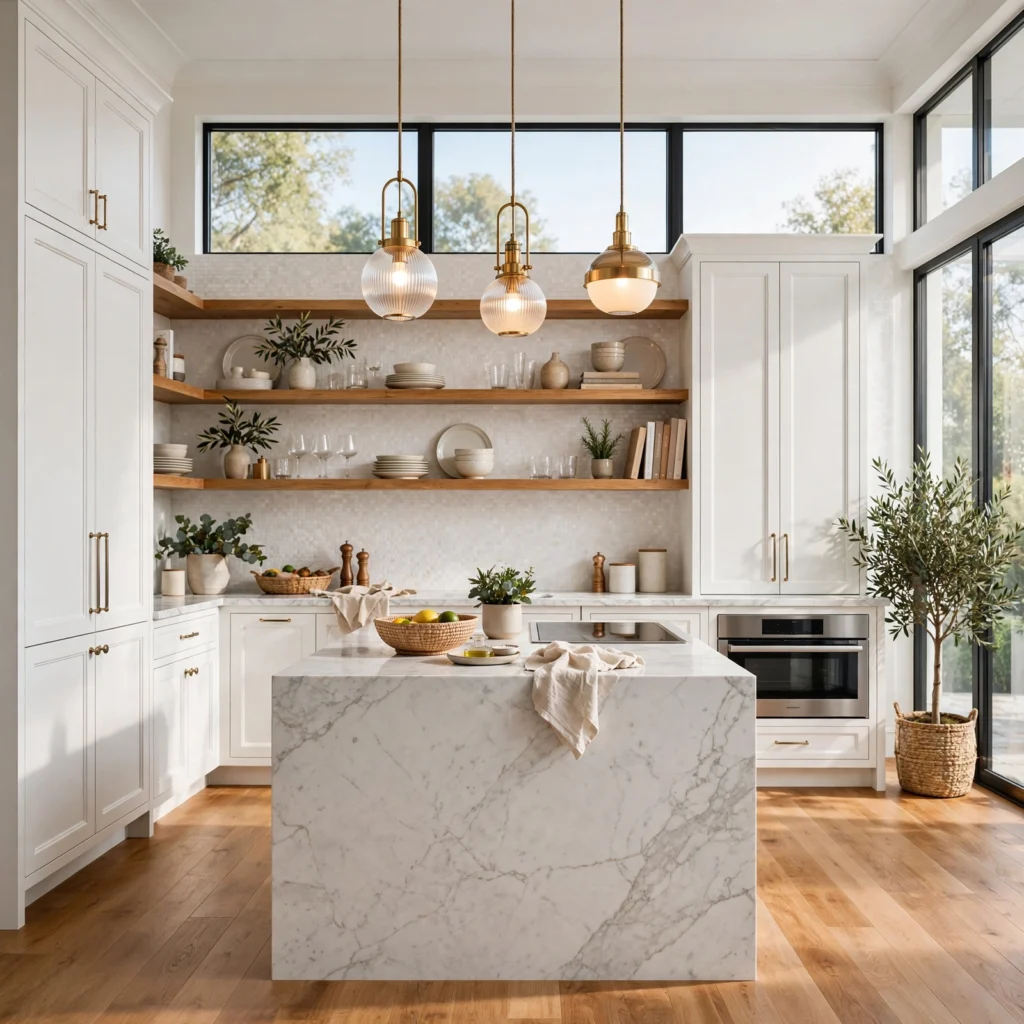
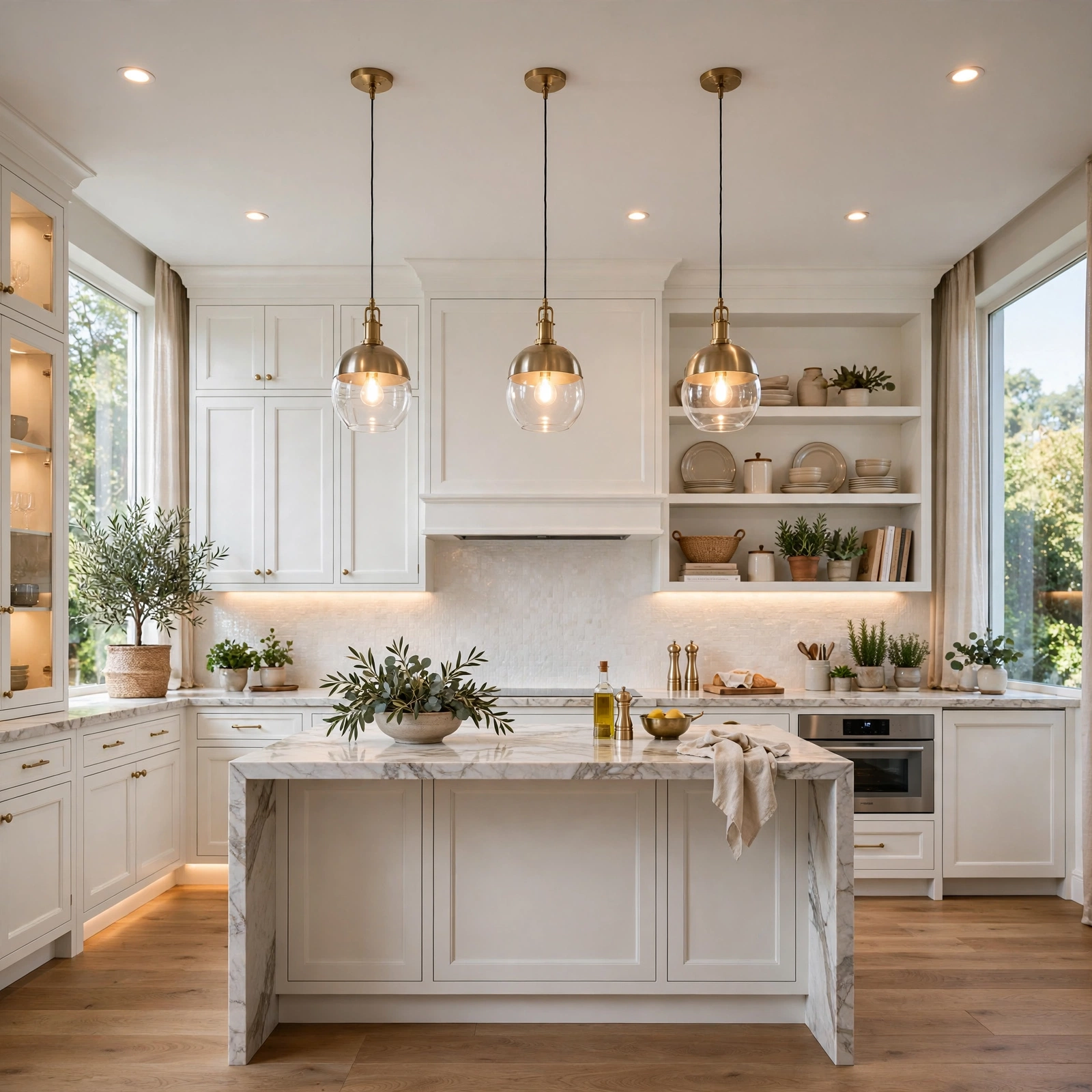
White kitchen cabinets open shelving mix approaches replace a portion of upper cabinetry, typically near the sink or a corner, with open wood shelving, breaking up a solid run of white doors while adding a warm material and a display opportunity for dishware. This works best when at least half the kitchen’s upper storage remains closed cabinetry, since fully open shelving throughout requires consistently tidy dish storage to avoid looking cluttered. Choose a wood shelf tone that complements any other wood elements already established in the kitchen.
8. Matte Black Faucet Contrast
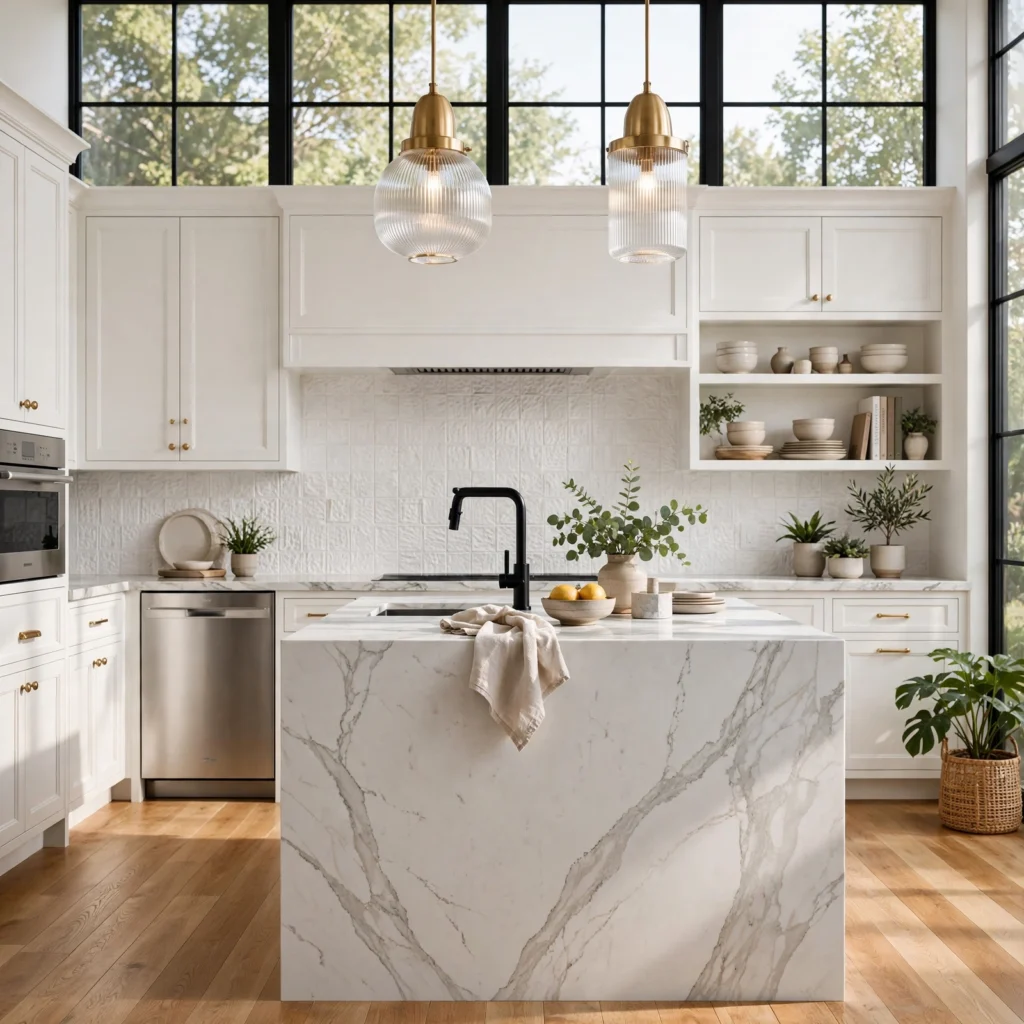
A matte black faucet contrast introduces a single, clearly defined dark element against the surrounding white cabinetry and countertop, providing a focal point at the sink without disrupting the kitchen’s overall light, airy feel. This detail works particularly well paired with matte black or dark bronze cabinet hardware for a coordinated, intentional contrast rather than an isolated dark accent. Choose a matte rather than glossy black finish, since matte reads as more current and shows water spotting less visibly than a polished finish.
9. White Kitchen Cabinets Statement Range Hood
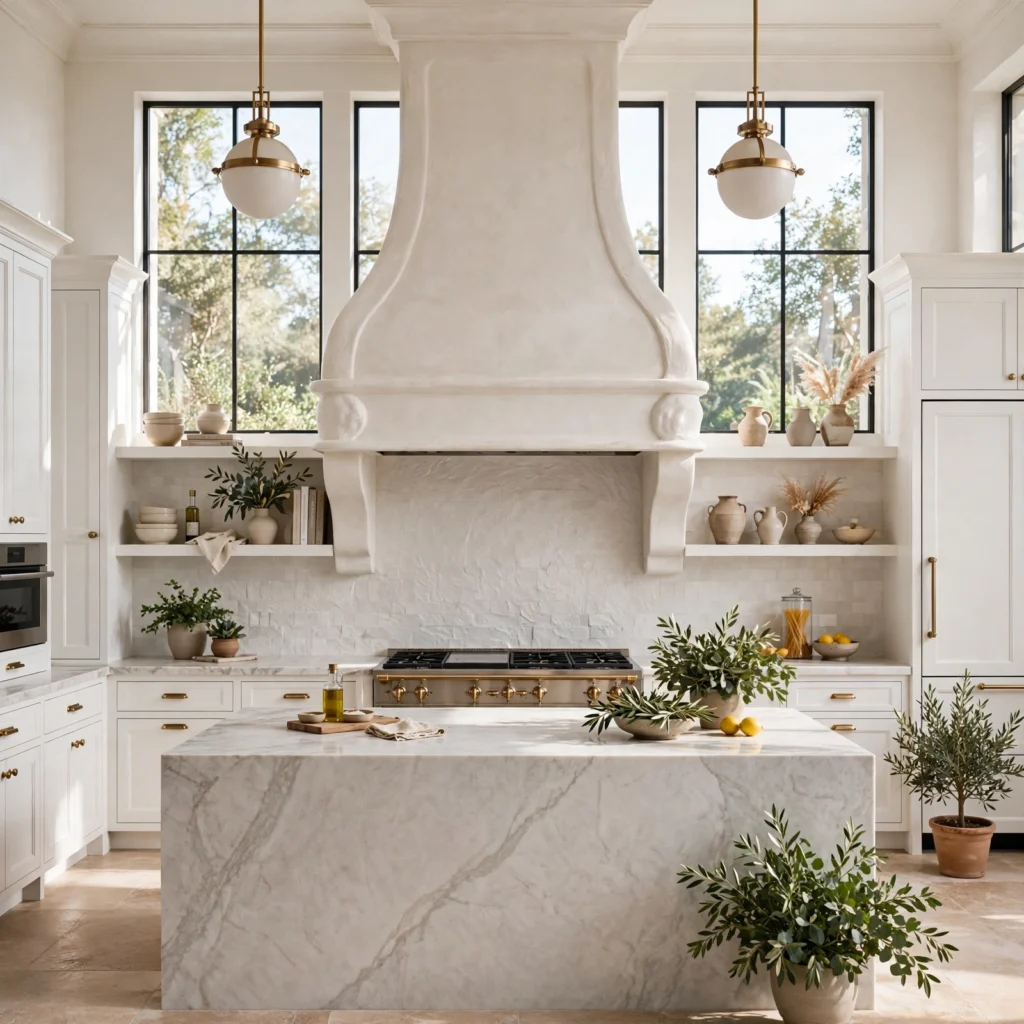
White kitchen cabinets statement range hood ideas use a shaped plaster or wood-clad hood finished to match the surrounding cabinetry, turning the range wall into a cohesive, sculptural feature rather than a break in the white cabinetry with a stainless steel appliance interrupting it. A hood finished in the same white as the cabinetry, with just enough shaping or trim detail to read as intentional, keeps the kitchen’s overall palette unified while still creating a clear focal point above the range. Size the hood to extend slightly beyond the cooktop’s width on both sides for both proportion and proper ventilation coverage.
10. Glass Front Upper Cabinets
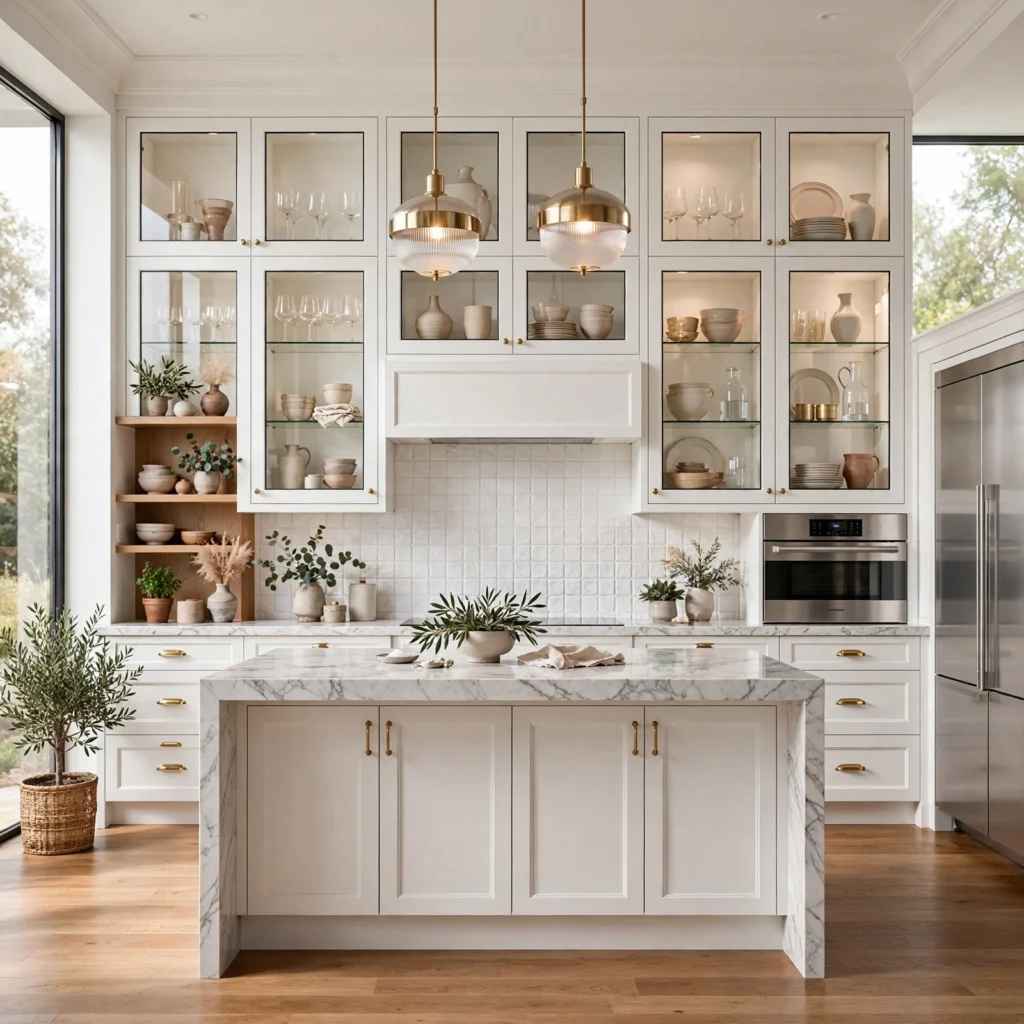
Glass front upper cabinets, used on one or two cabinets near eye level rather than throughout the kitchen, break up a solid wall of white doors while adding depth and a display opportunity without the full commitment of open shelving. A small interior puck light inside each glass-front cabinet adds a warm glow that further distinguishes these cabinets from the surrounding solid doors. Choose reeded or lightly frosted glass if consistently tidy interior styling isn’t a realistic goal, since the texture obscures full visibility while still reading as considerably lighter than a solid door.
11. White Kitchen Cabinets Layered Lighting
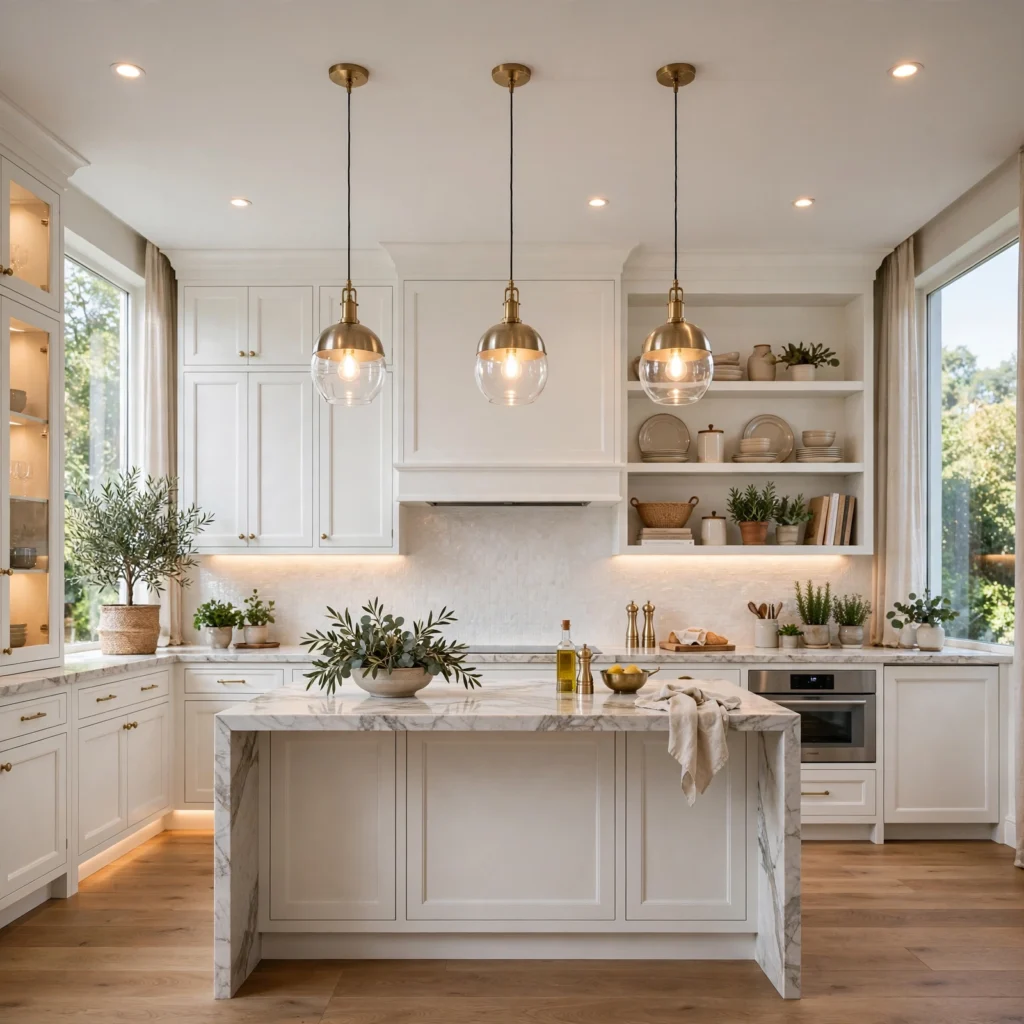
White kitchen cabinets layered lighting plans combine an overhead fixture, under-cabinet task lighting, and at least one pendant over an island or sink, addressing a specific challenge white kitchens face: flat, single-source lighting can make an all-white room feel sterile rather than warm. Warm-white bulbs in the 2700K to 3000K range are particularly important in a white kitchen, since a cooler bulb temperature can push an already-white room toward feeling clinical. Under-cabinet lighting in particular adds a warm glow along the counter that softens the overall brightness of the white surfaces.
12. Reeded Glass Cabinet Fronts
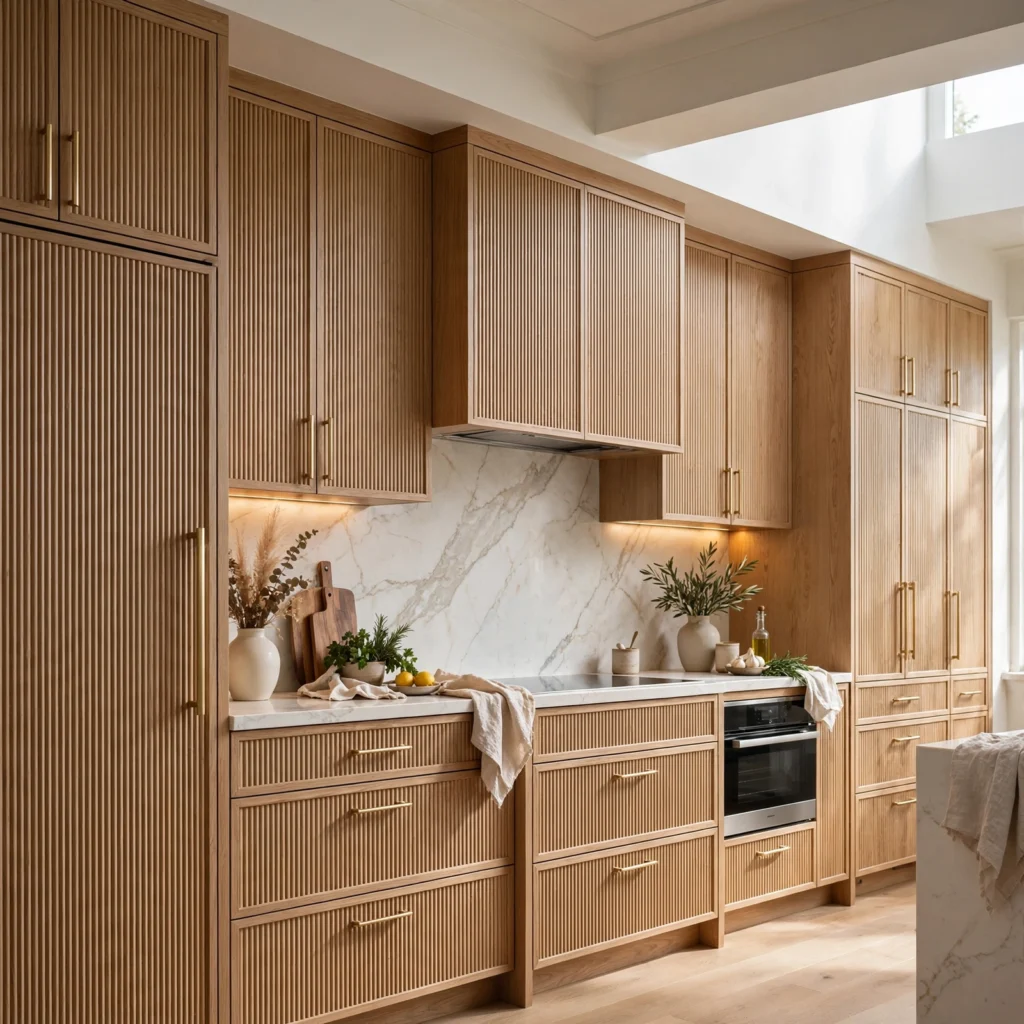
Reeded glass cabinet fronts, with a vertical ribbed texture rather than flat clear or frosted glass, add a distinctly current textural detail to white cabinetry that’s grown significantly in popularity in recent kitchen renovations. This detail works particularly well on a small bar or beverage cabinet section, where the texture adds visual interest without requiring the interior to stay perfectly styled at all times. Pair reeded glass with brass or matte black cabinet frame trim for the strongest current styling.
13. Neutral Stone Flooring
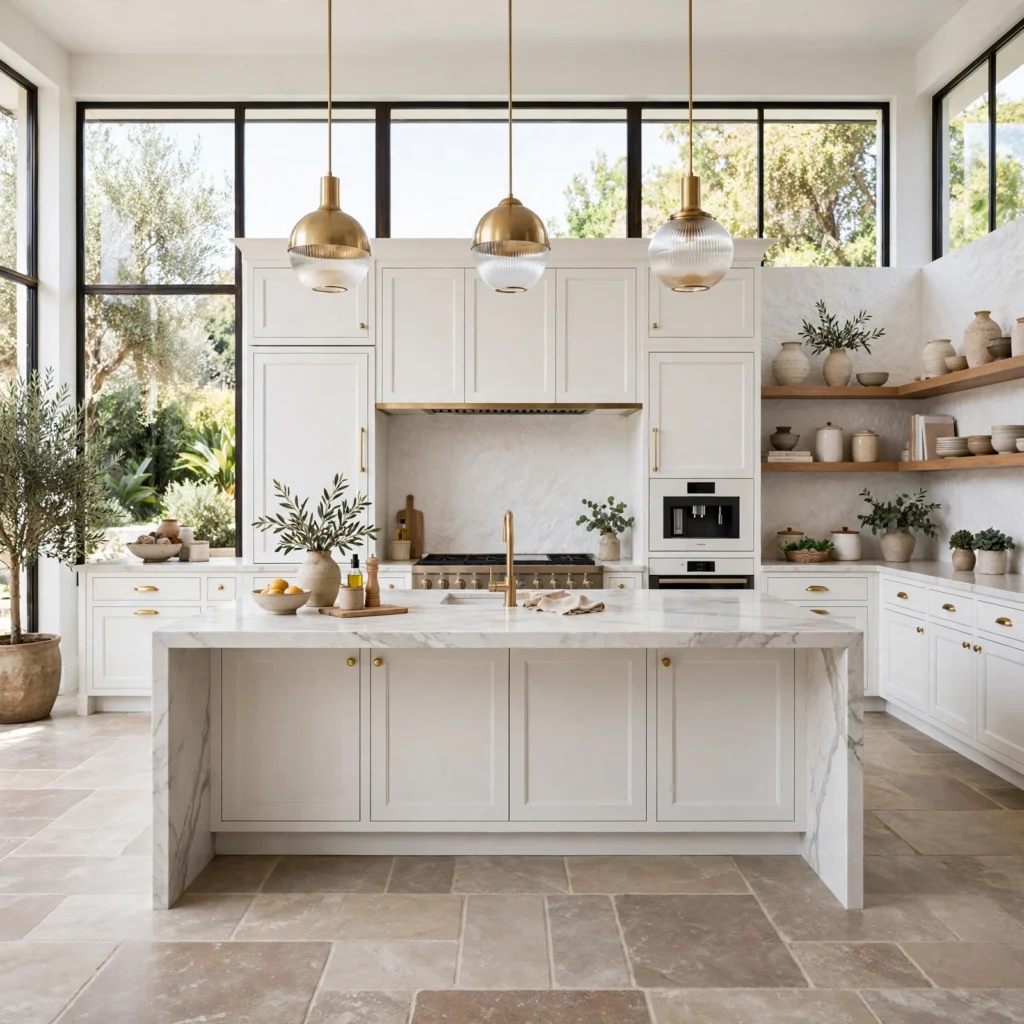
Neutral stone flooring, in a warm limestone, travertine, or a stone-look large-format tile, grounds an all-white kitchen with a material that adds subtle color variation and texture underfoot without introducing a strong contrasting color. This works particularly well in a kitchen with significant natural light, since the stone’s natural variation catches and reflects light differently than a flat, uniform tile would. Choose a honed rather than polished finish for better slip resistance in a kitchen environment prone to spills.
Shop the Look
A set of unlacquered brass cabinet pulls pairs well with a marble-look quartz countertop for a warm, classic white kitchen combination. A reeded glass beverage cabinet and a matte black faucet add texture and contrast without introducing additional color. Round out the kitchen with a shaped plaster range hood finished to match the cabinetry and a warm-toned wood open shelf near the sink.
Common Mistake to Avoid
The most common mistake with white kitchen cabinets is choosing a white based on a small paint chip without testing it under the kitchen’s actual lighting, since white shifts noticeably in appearance between warm incandescent, cool LED, and natural daylight, and a white that reads clean in one lighting condition can read yellow, pink, or gray in another. Always test a full sample on the actual cabinet or a large board in the kitchen, viewed at different times of day, before committing to a full cabinetry order, since white is considerably less forgiving of an undertone mismatch than most other cabinet colors.
People Also Ask
Are white kitchen cabinets still in style?
Yes, white kitchen cabinets have remained consistently popular for well over a decade and show no strong signs of falling out of favor, though the specific execution has shifted toward warmer whites paired with natural wood and brass rather than the cooler, starker white-and-gray kitchens common in past years. Choosing the right undertone and pairing white cabinetry with enough texture and material contrast is what keeps a white kitchen feeling current rather than dated.
What’s the best white paint color for kitchen cabinets?
There’s no single best white for every kitchen, since the right choice depends heavily on the room’s natural light exposure and the undertones of surrounding materials like flooring and countertops. Warmer, cream-leaning whites generally pair better with brass hardware and wood accents, while cooler, more neutral whites suit a kitchen with chrome or nickel hardware and cooler-toned stone. Testing a physical sample under the kitchen’s actual lighting remains the most reliable method regardless of the specific shade being considered.
How do I keep white cabinets from looking boring?
Adding texture through a handmade-look backsplash tile, natural stone countertops with visible veining, and a mix of open and closed storage are the most effective ways to keep white cabinetry from reading as flat or boring. Introducing a single contrasting element, like a wood island, matte black hardware, or a statement range hood, also adds enough visual interest to break up an otherwise fully monochromatic kitchen without abandoning the white cabinetry itself.
Do white cabinets show dirt and stains more than other colors?
White cabinets can show certain types of dirt, like grease splatter or dark liquid stains, more visibly than a darker cabinet color, though a quality painted or factory finish with a durable topcoat holds up reasonably well against normal daily use. Matte and satin finishes tend to show fingerprints and smudges less visibly than a high-gloss finish, making them a more practical choice for cabinetry that sees frequent handling, like near a stove or sink.
What hardware finish works best with white kitchen cabinets?
Brass and matte black are currently the two most popular hardware finishes for white kitchen cabinets, with brass suiting a warmer, more traditional white kitchen and matte black suiting a slightly more modern, higher-contrast look. Chrome and brushed nickel remain reasonable choices as well, particularly in a kitchen with a cooler overall palette, though they’ve become somewhat less dominant in current kitchen design relative to warmer brass tones.
Conclusion
White kitchen cabinets ideas hold up best when undertone, texture, and material contrast are planned together, keeping a genuinely popular, timeless choice from reading as flat or dated. Save this list to Pinterest for your next kitchen refresh, and check out our related posts on small kitchen ideas and home decor ideas kitchen for more ways to plan the rest of the room.
Author Expertise Note
I’ve specified cabinetry finishes and hardware pairings for several kitchen renovation projects over the past few years, and every idea on this list is one I’ve tested under actual kitchen lighting rather than judged from a screen or a small paint chip alone.