16 Trending Gray Kitchen Cabinets Ideas for a Timeless, Versatile Look
Gray kitchen cabinets have held their place as one of the most requested neutral cabinet colors for years, largely because the color adapts to nearly any style direction depending on its undertone and pairing choices. This post covers sixteen gray kitchen cabinets ideas addressing shade selection, countertop pairing, hardware, and layout choices that keep a gray kitchen from feeling flat or overly cool. Each idea explains the specific decision involved and why it matters, so the list works whether the kitchen is aiming for a warm, traditional feel or a cooler, modern one.
Trend & Background
Gray kitchen cabinets have remained a dominant neutral choice even as broader kitchen trends have shifted toward warmer tones, largely because gray’s undertone can be adjusted to lean warm or cool depending on the rest of the room’s palette. Warmer, greige-leaning grays have grown more popular relative to the cooler, blue-toned grays that were common several years ago, reflecting the same broader shift toward warmth seen across other areas of home design. Two-tone kitchens pairing gray with a contrasting color, most often white or navy, have also continued to grow, giving gray cabinetry a role as a grounding neutral rather than the kitchen’s sole color statement.
Key Takeaways
- Gray kitchen cabinets work across a wider range of styles than most colors because the undertone can be shifted warmer or cooler to match the rest of the room.
- Pairing gray cabinetry with the right countertop and backsplash prevents the kitchen from reading as flat or cold.
- Two-tone layouts, mixing gray with white or navy, add visual interest without abandoning the neutral base gray provides.
- Hardware and lighting choices shift gray cabinets from feeling clinical to feeling warm, depending on undertone and finish.
1. Warm Greige Cabinet Tone
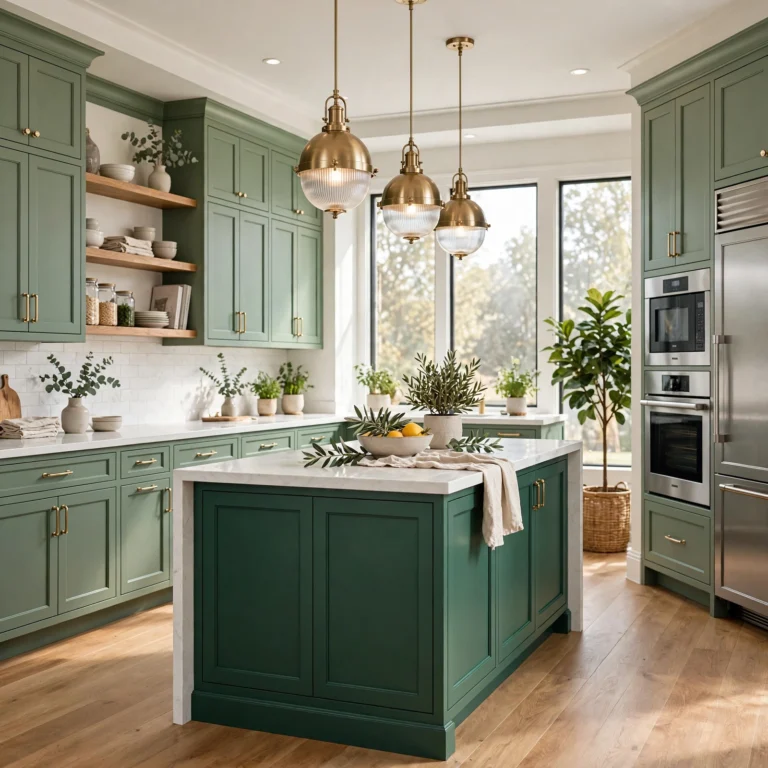
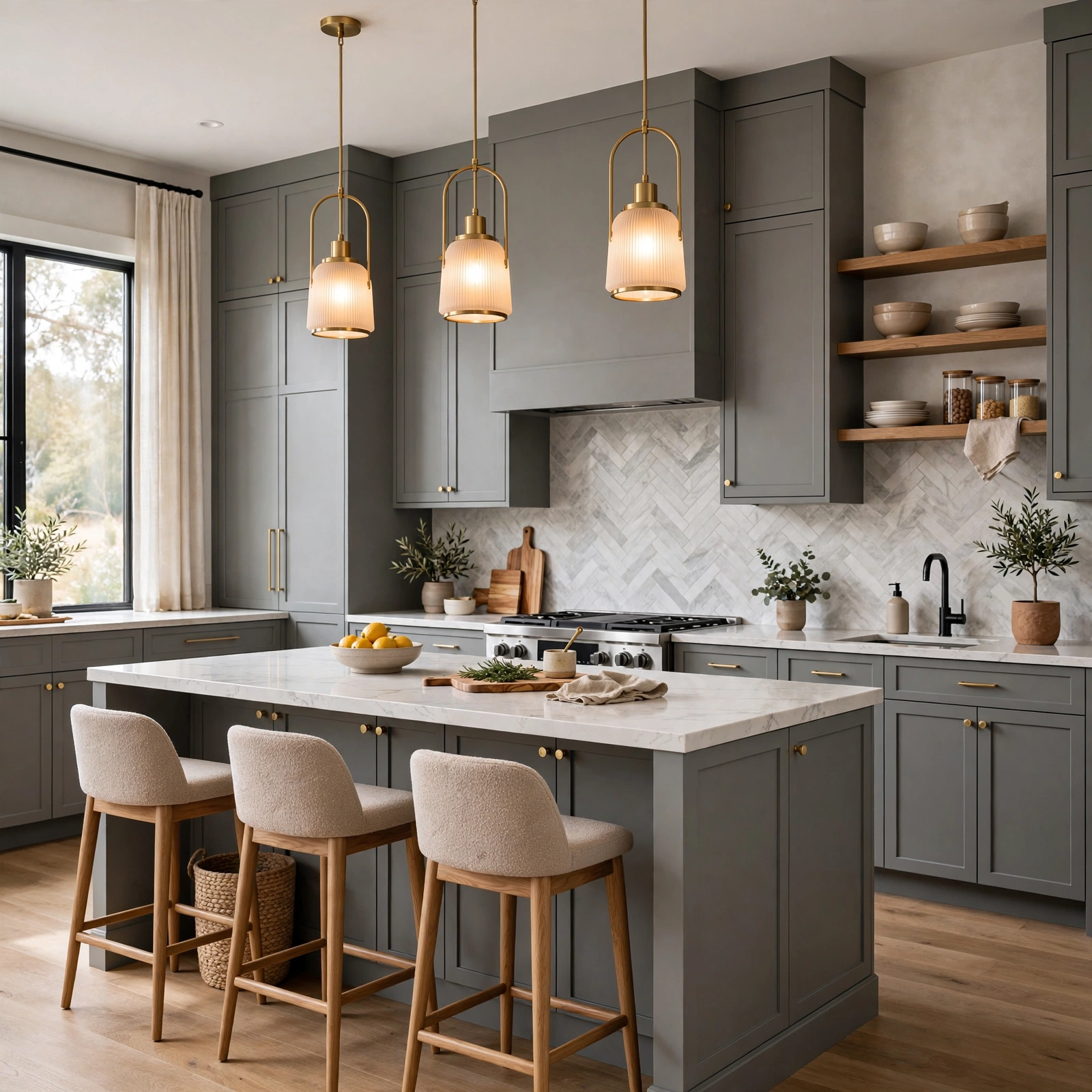
Warm greige, a gray with a noticeable beige or brown undertone, avoids the cooler, sometimes clinical feel of a blue-based gray while still functioning as a true neutral. This tone pairs well with warm wood flooring and brass hardware in a way that a cooler gray typically doesn’t. Greige also tends to photograph and read more consistently across different lighting conditions than a more saturated gray shade.
To see more dark kitchen cabinets
2. Cool Blue-Gray Cabinet Tone
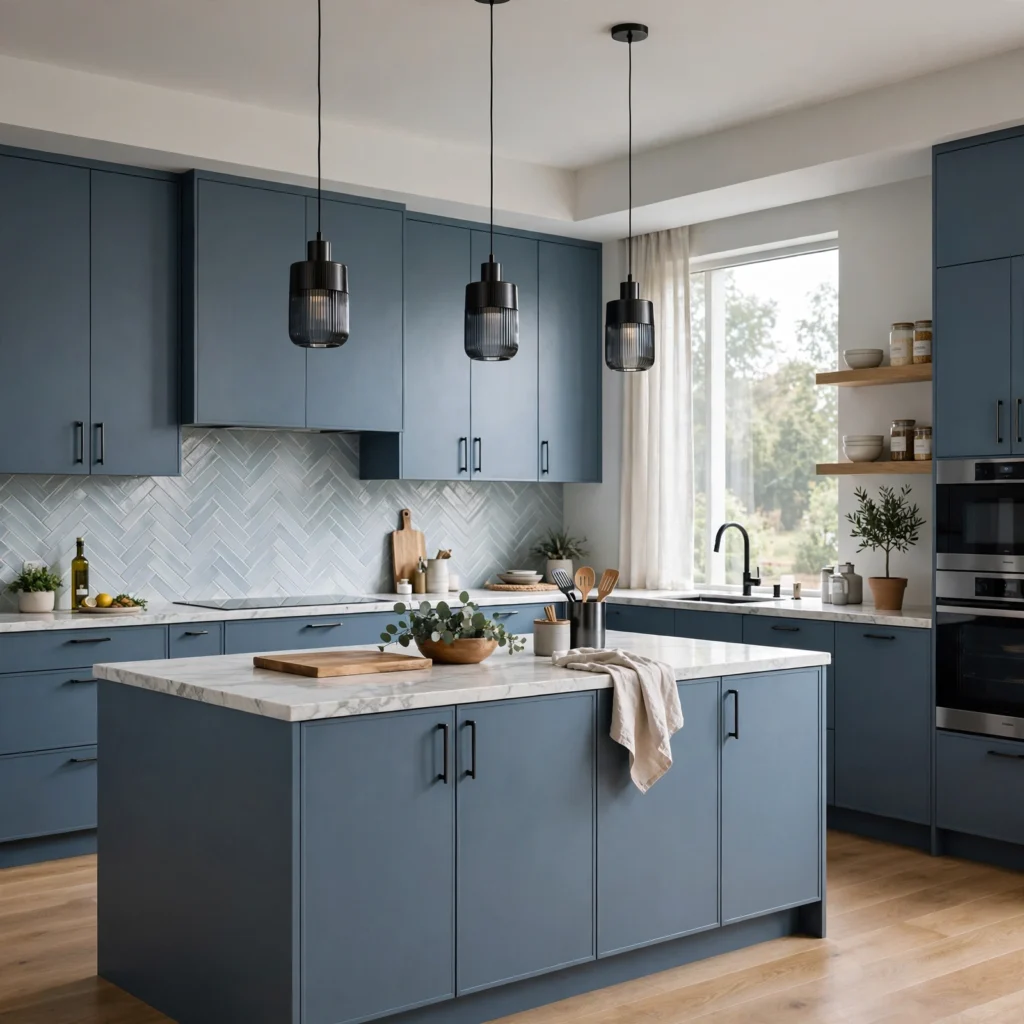
A cool, blue-leaning gray creates a crisper, more modern feel than a warmer greige, particularly in kitchens with ample natural light where the cooler undertone doesn’t read as flat or dim. This tone pairs especially well with white marble or quartz countertops and chrome or brushed nickel hardware. Cool gray tends to suit contemporary or Scandinavian-inspired kitchens better than more traditional layouts.
| Gray Undertone | Best Lighting Condition | Best Hardware Pairing |
| Warm greige | Any, especially low natural light | Brass, brushed gold |
| Cool blue-gray | Bright, ample natural light | Chrome, brushed nickel |
| Charcoal (deep gray) | Bright or moderate light | Matte black, brass |
3. Charcoal Lower Cabinets With White Upper Cabinets
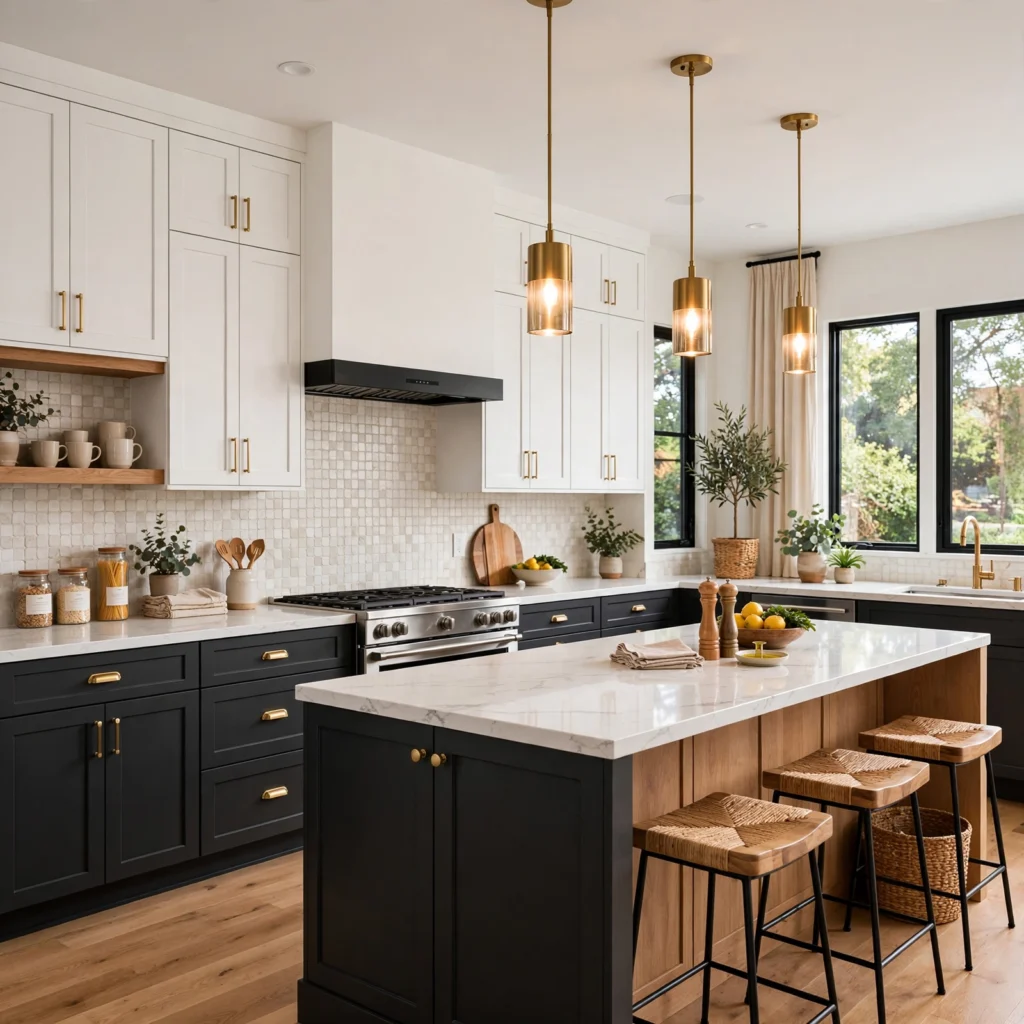
Pairing a deep charcoal gray on the lower cabinets with crisp white upper cabinets creates strong contrast while keeping the overall palette firmly neutral. This layout grounds the kitchen visually near the floor, similar to how dark wood lower cabinets work, without introducing an actual wood tone into the mix. Choosing the same white for the ceiling or upper walls extends the contrast and keeps the room feeling open despite the darker lower half.
4. Gray Shaker Cabinet Profile
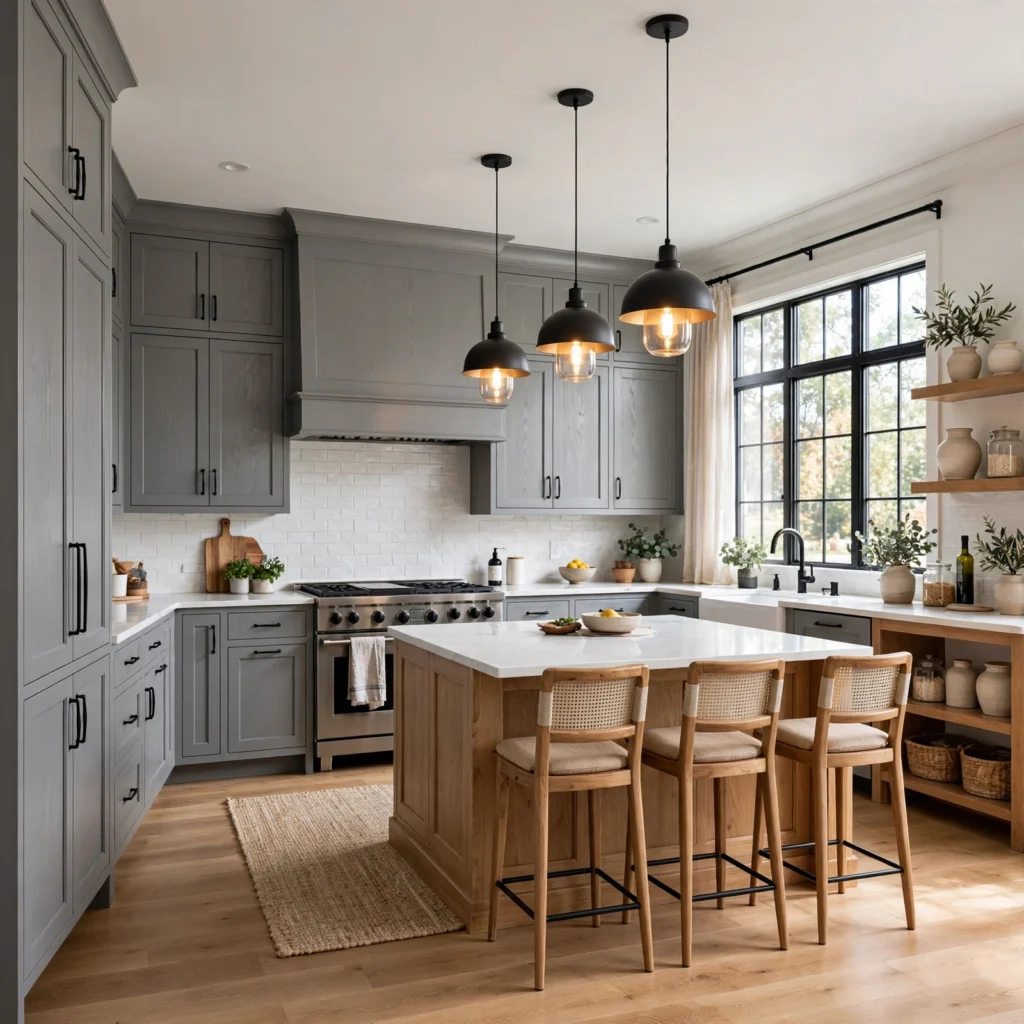
The shaker cabinet profile, with its simple recessed panel, is one of the most common pairings with gray cabinetry since the clean lines let the color itself remain the focal point rather than competing with an ornate door style. This combination suits nearly any kitchen style, from farmhouse to modern, since the shaker profile itself is fairly neutral in character. Choosing a slightly different sheen, like satin over matte, can add subtle dimension to an otherwise simple cabinet front.
5. Brass Hardware on Warm Gray Cabinets
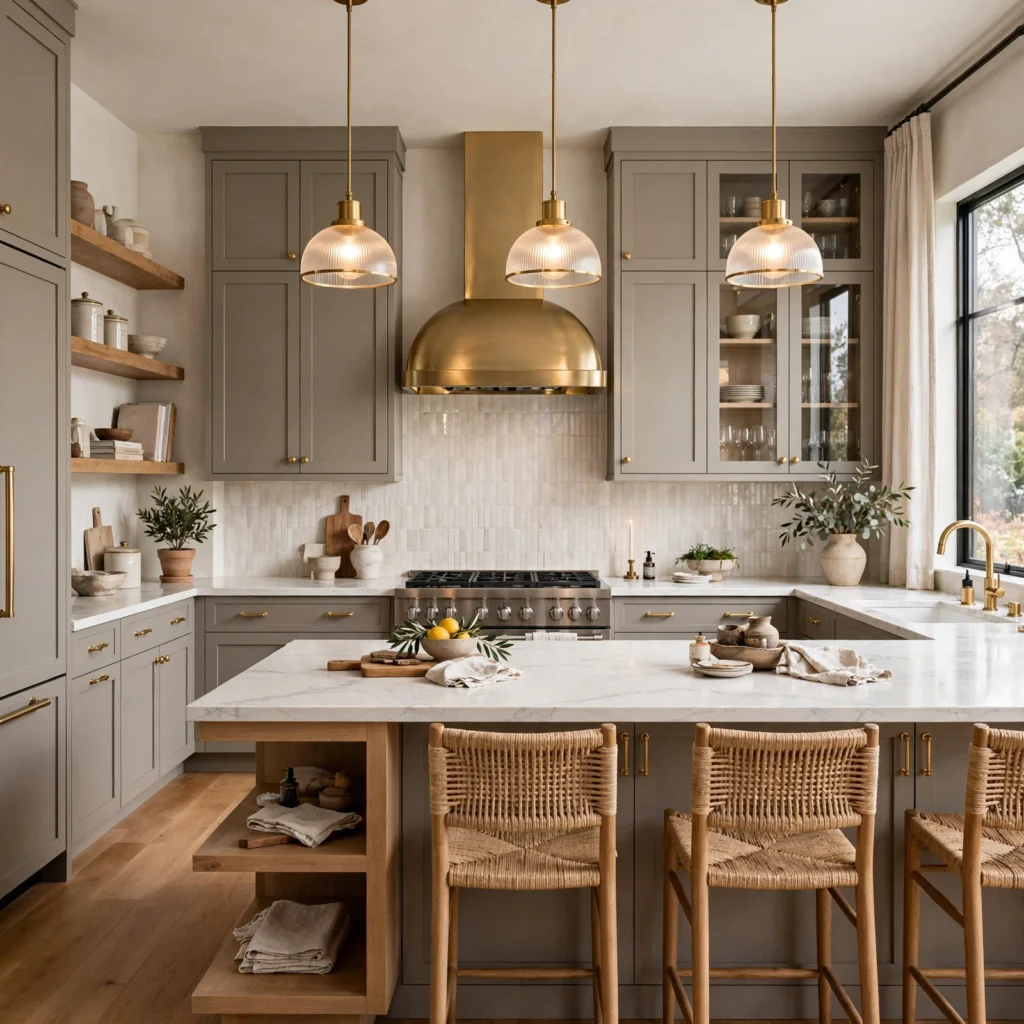
Brass hardware paired with a warm greige cabinet tone adds a metallic contrast that keeps the neutral cabinetry from feeling flat or under-designed. The warmth of the brass echoes the warm undertone already present in the cabinet color, creating a more cohesive look than a cooler metal finish would against the same greige tone. Choosing an aged or brushed brass, rather than high polish, keeps the hardware from looking overly formal against a more casual gray kitchen.
6. White Quartz Countertop Pairing
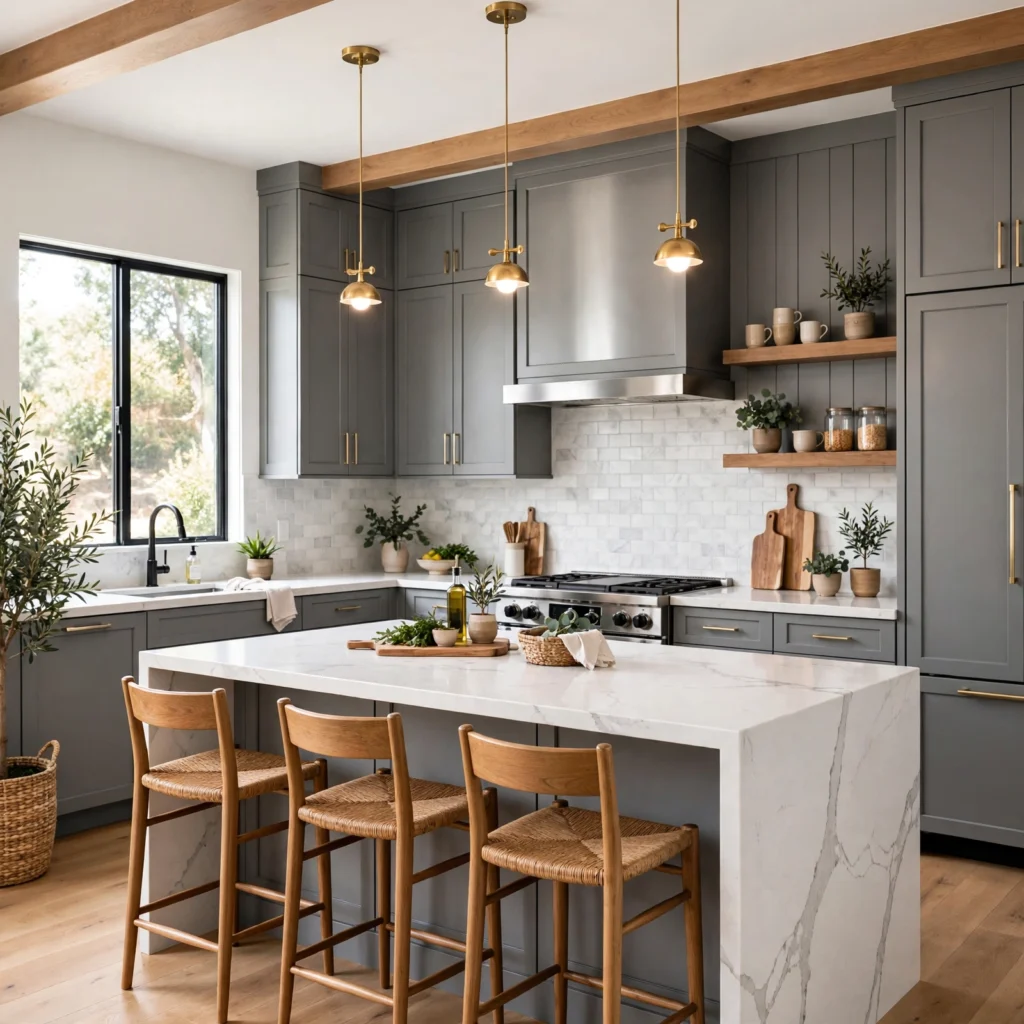
A white quartz countertop, whether pure white or with subtle gray veining, is one of the most common pairings for gray cabinetry since the two tones share a clear, harmonious relationship without competing for visual attention. Quartz with veining that echoes the cabinet’s undertone, whether warm or cool, ties the two surfaces together more intentionally than a stark white with no variation. This pairing also reflects ample light back into the kitchen regardless of the gray cabinet’s specific shade.
7. Navy and Gray Two-Tone Kitchen
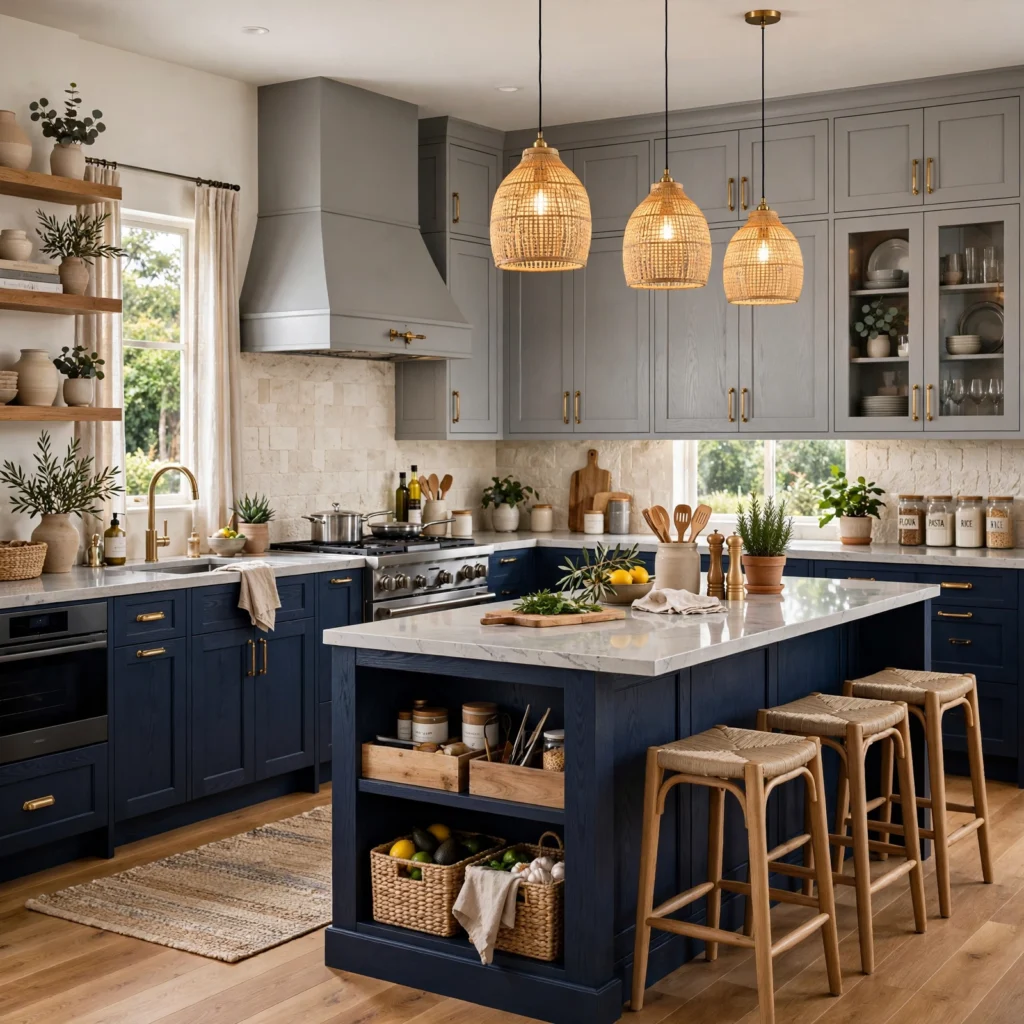
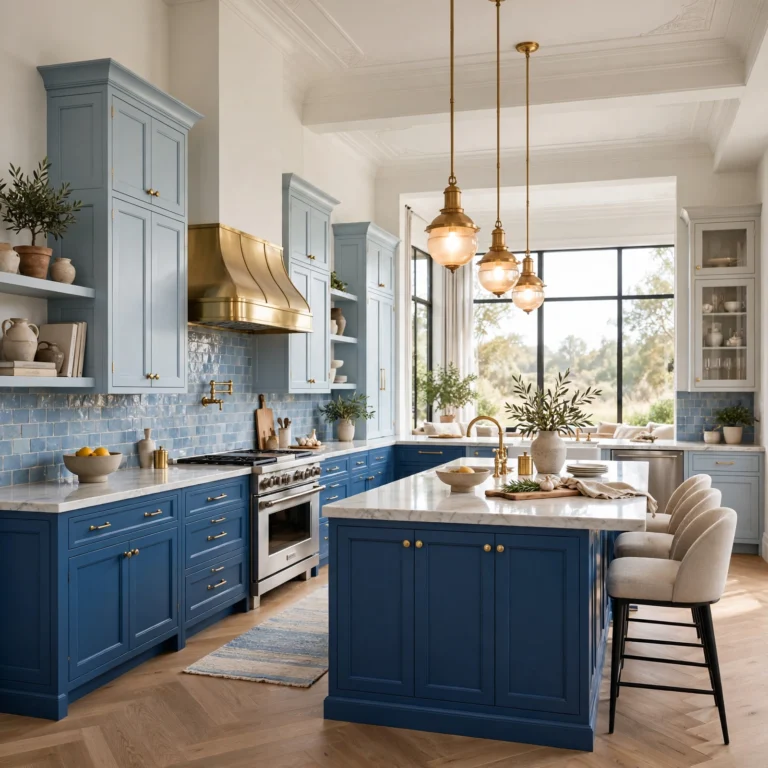
Pairing gray cabinetry with a navy accent, often on an island or a section of lower cabinets, introduces a deeper, more dramatic color while keeping the majority of the kitchen in a versatile neutral. This combination works particularly well in kitchens with strong natural light, where the navy accent won’t make the room feel overly dark. Choosing a warm brass or gold hardware finish across both the gray and navy sections ties the two-tone palette together.
8. Gray Kitchen Cabinets With Wood Open Shelving
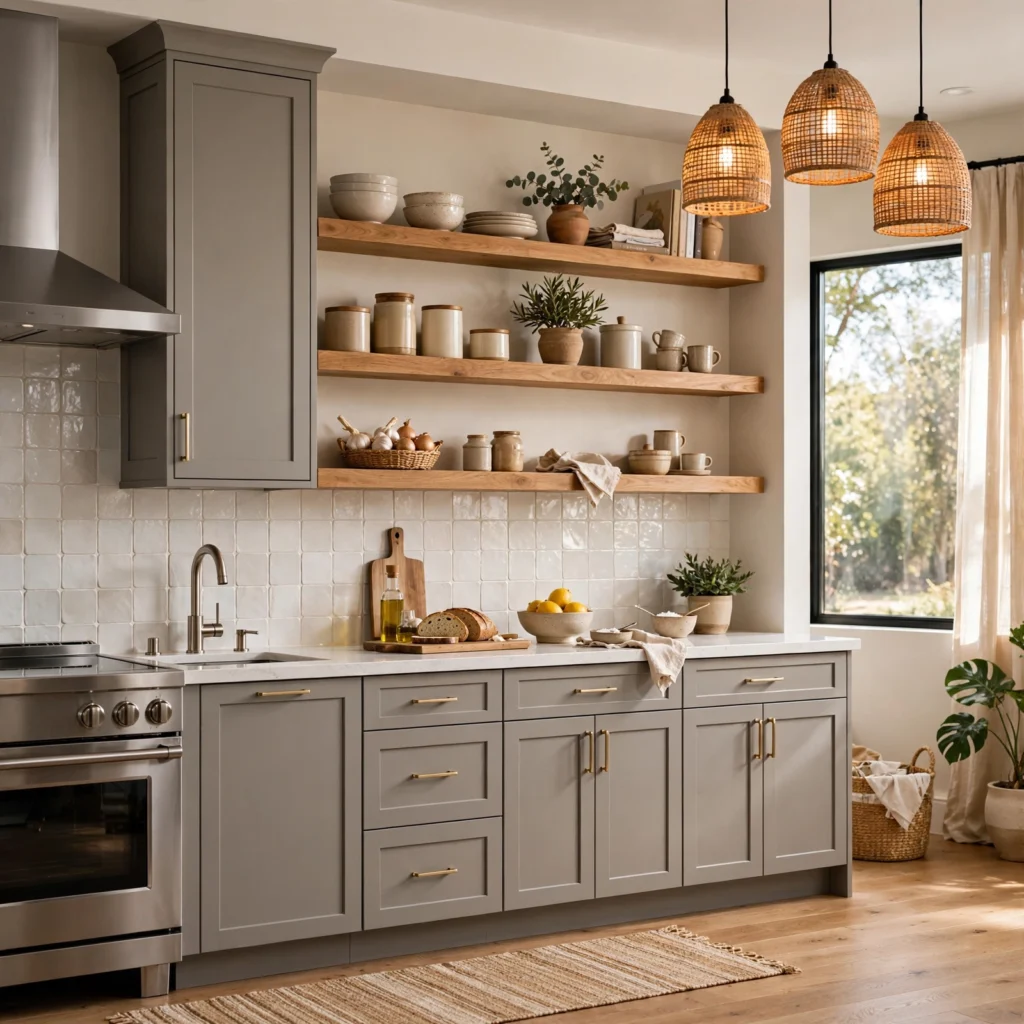
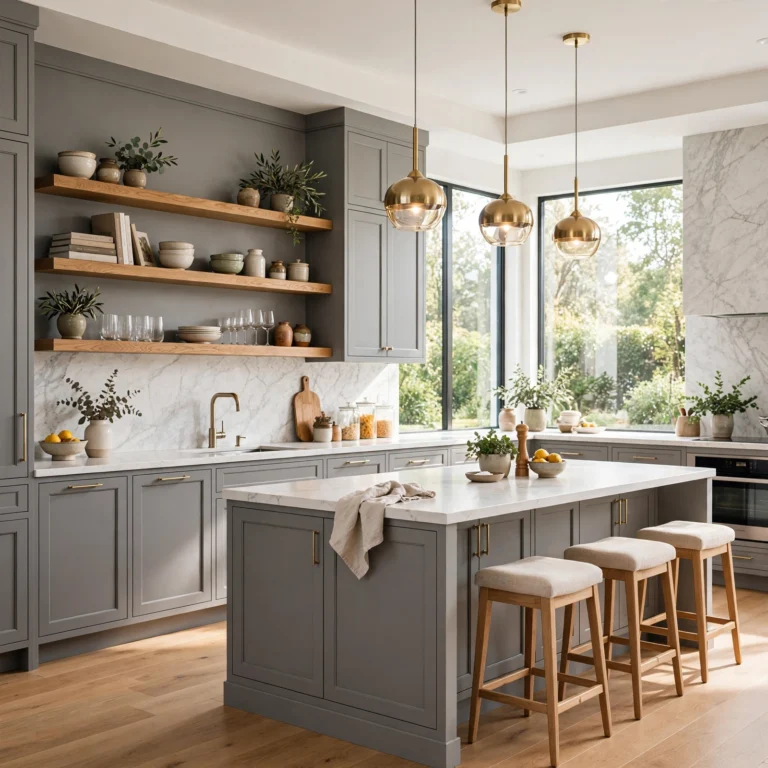
Adding a section of natural wood open shelving into an otherwise fully gray kitchen introduces warmth and texture without abandoning the neutral cabinet color. This works particularly well centered above a stove or sink, where the wood shelving can hold frequently used dishware within easy reach. Choosing a warm wood tone, like oak or walnut, creates the strongest contrast against a cooler gray cabinet color specifically.
9. Herringbone Tile Backsplash
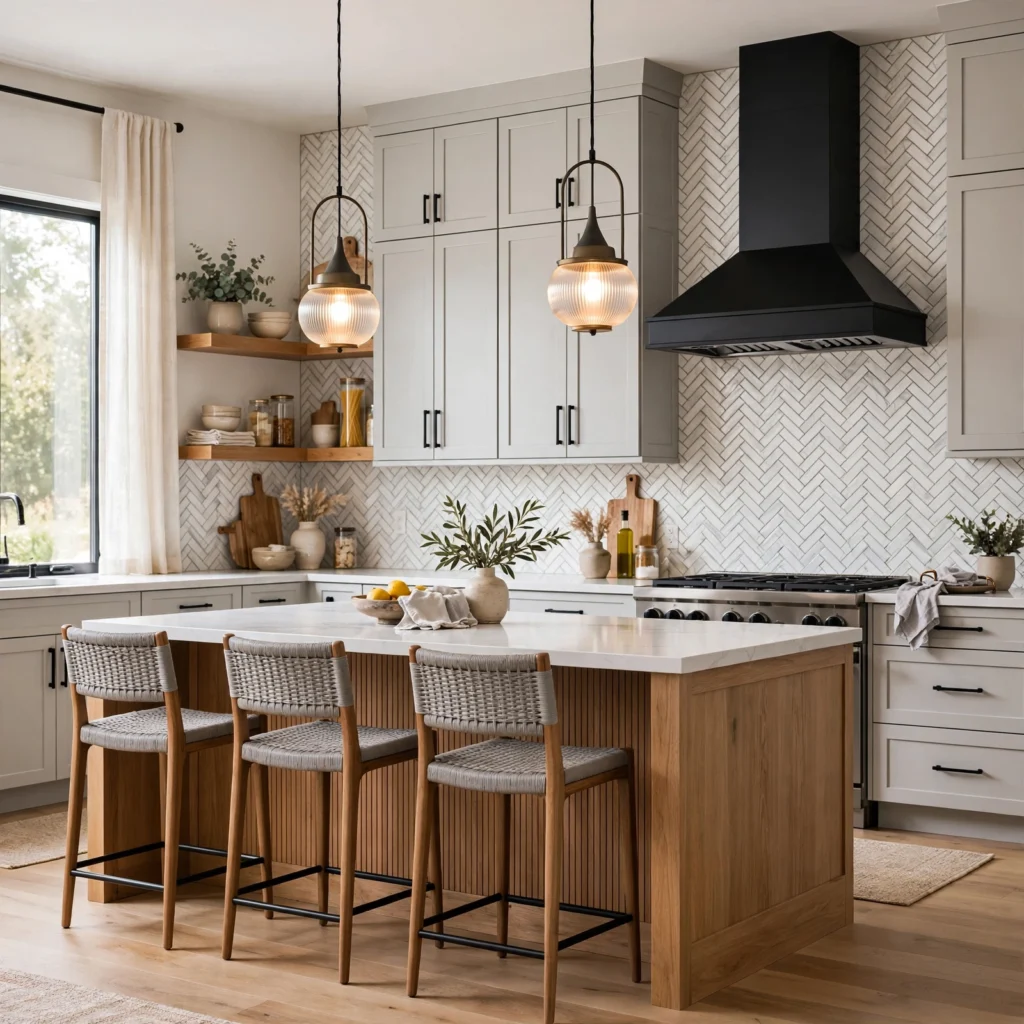
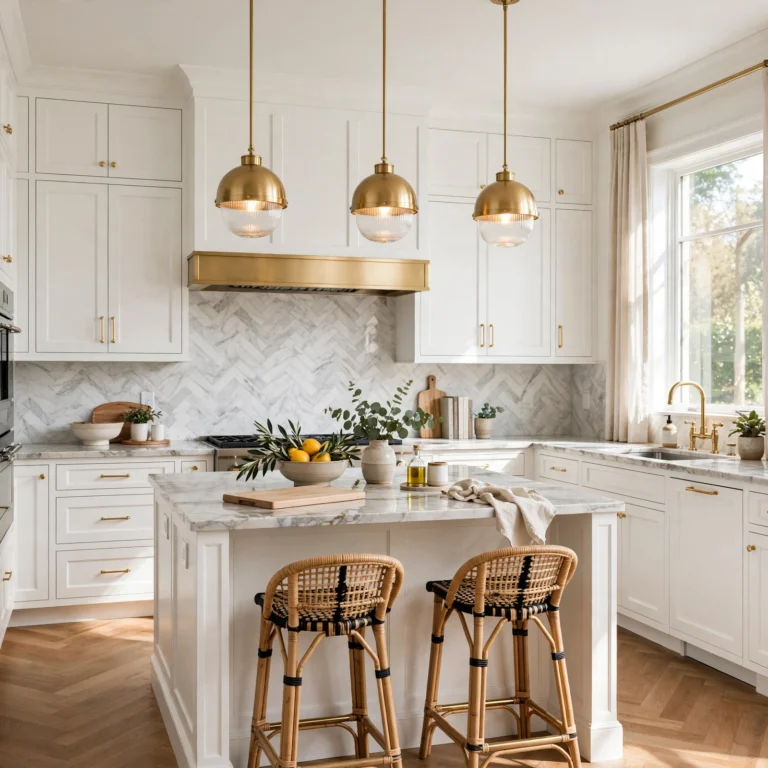
A herringbone-patterned tile backsplash, in either a matching gray tone or a contrasting white, adds textural and visual interest to a gray kitchen without introducing an additional color. The diagonal, repeating pattern reads as more dynamic than a straight subway tile layout, which matters most in a kitchen where the cabinetry itself is a fairly simple, understated neutral. Choosing a glossy tile finish also helps bounce additional light around the room.
10. Gray Kitchen Cabinets Matte Black Fixtures
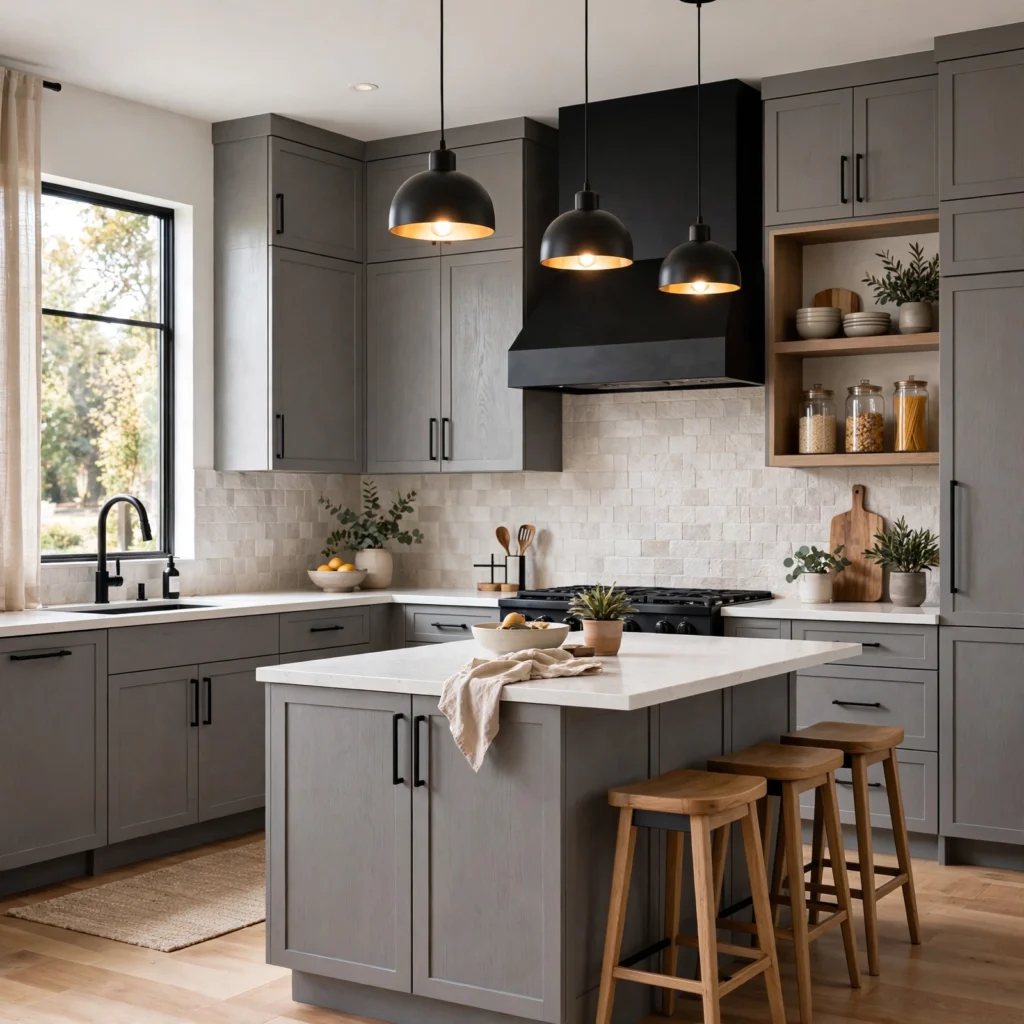
Matte black faucet and hardware fixtures against gray cabinetry create a more modern, tonal contrast than brass, letting the cabinet color remain the dominant visual element in the room. Among gray kitchen cabinets ideas suited to a more contemporary aesthetic, this pairing works especially well with a cool-toned gray rather than a warmer greige. Extending the matte black finish to light fixtures and cabinet pulls keeps the metal story consistent throughout the space.
11. Textured Gray Cabinet Finish
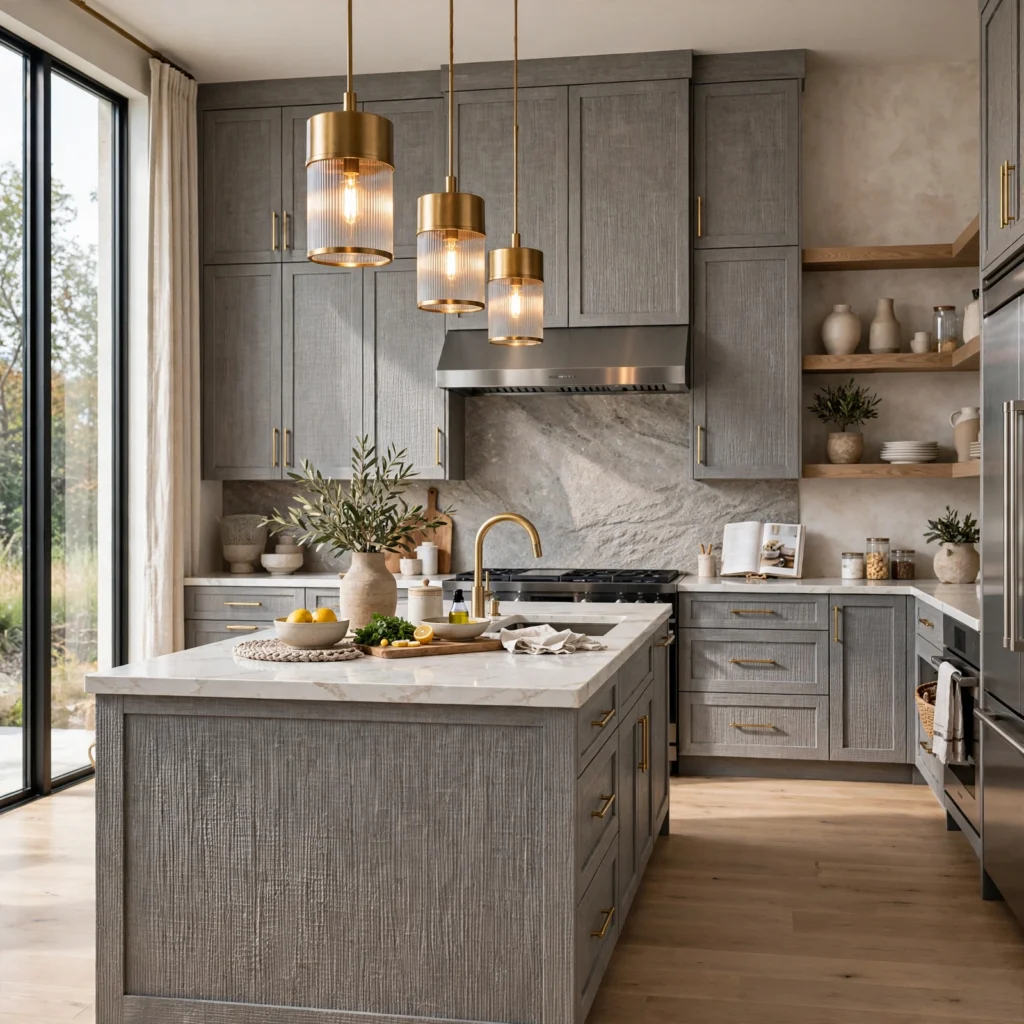
A slightly textured or matte cabinet finish, rather than a high-gloss lacquer, gives gray cabinetry a softer, more tactile quality that reads as less clinical than a shiny surface. This finish choice matters particularly for cooler gray tones, which can otherwise feel sterile without added texture elsewhere in the kitchen. Pairing a matte cabinet finish with a glossy backsplash tile creates contrast between the two surfaces without needing to change either color.
12. Two-Tone Gray Island Contrast
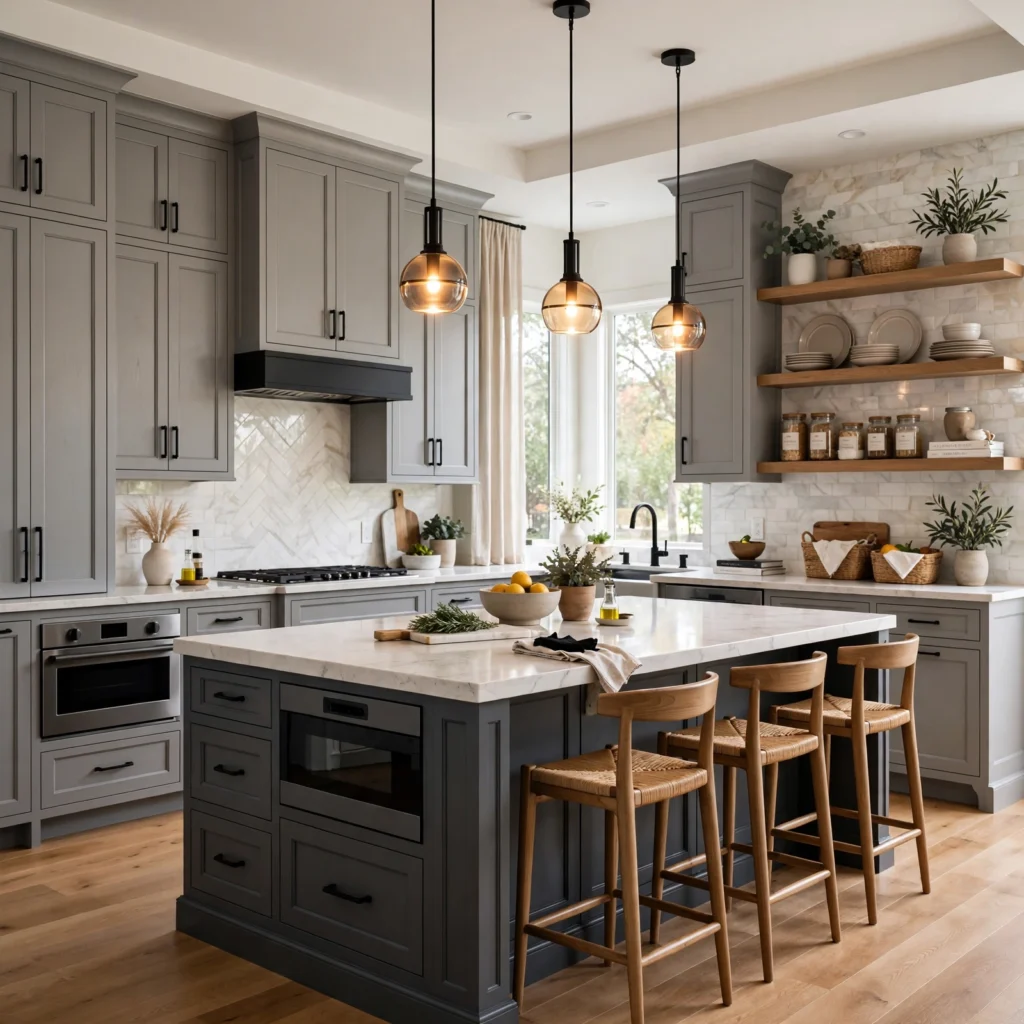
Painting the kitchen island a slightly different shade of gray than the surrounding perimeter cabinets, rather than matching them exactly, creates subtle depth and defines the island as its own distinct element within the room. This is a more understated approach than a fully contrasting island color, keeping the whole kitchen within the same gray family while still adding visual separation. Choosing a darker gray for the island specifically tends to ground the room more effectively than a lighter shade would.
13. Warm Wood Flooring With Gray Cabinets
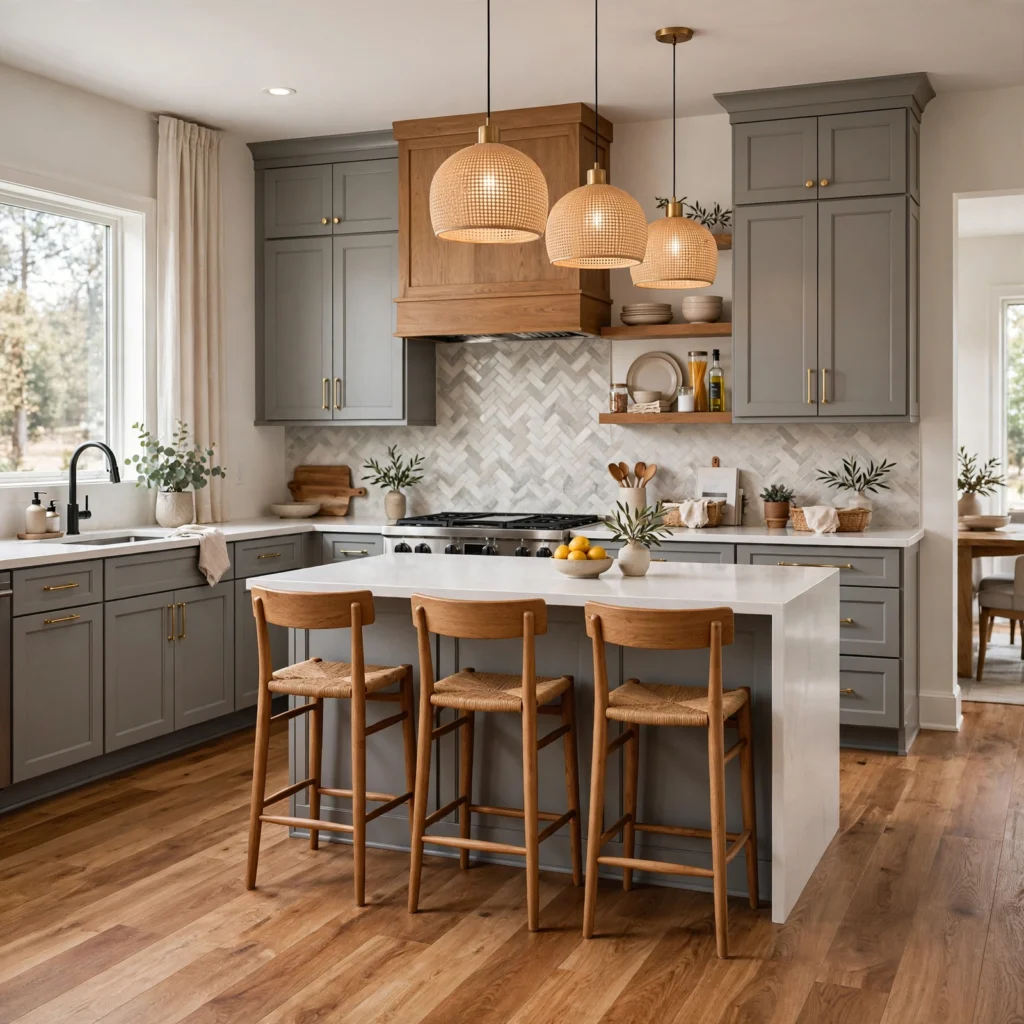
Warm wood flooring, in a medium oak or walnut tone, balances the coolness of gray cabinetry, particularly a blue-leaning gray, by introducing warmth from below rather than through the cabinets or countertop. This pairing prevents an all-gray-and-white kitchen from feeling too monochromatic or cold overall. Wide plank flooring in particular reduces visual busyness on the floor, keeping the focus on the cabinetry and countertop above.
| Cabinet Tone | Flooring Pairing | Overall Effect |
| Cool blue-gray | Medium oak | Balances cool tone with warmth |
| Warm greige | Light oak or white oak | Keeps overall palette light |
| Charcoal | Dark walnut or light oak | Either grounds or brightens, depending on choice |
14. Glass-Front Gray Cabinet Sections
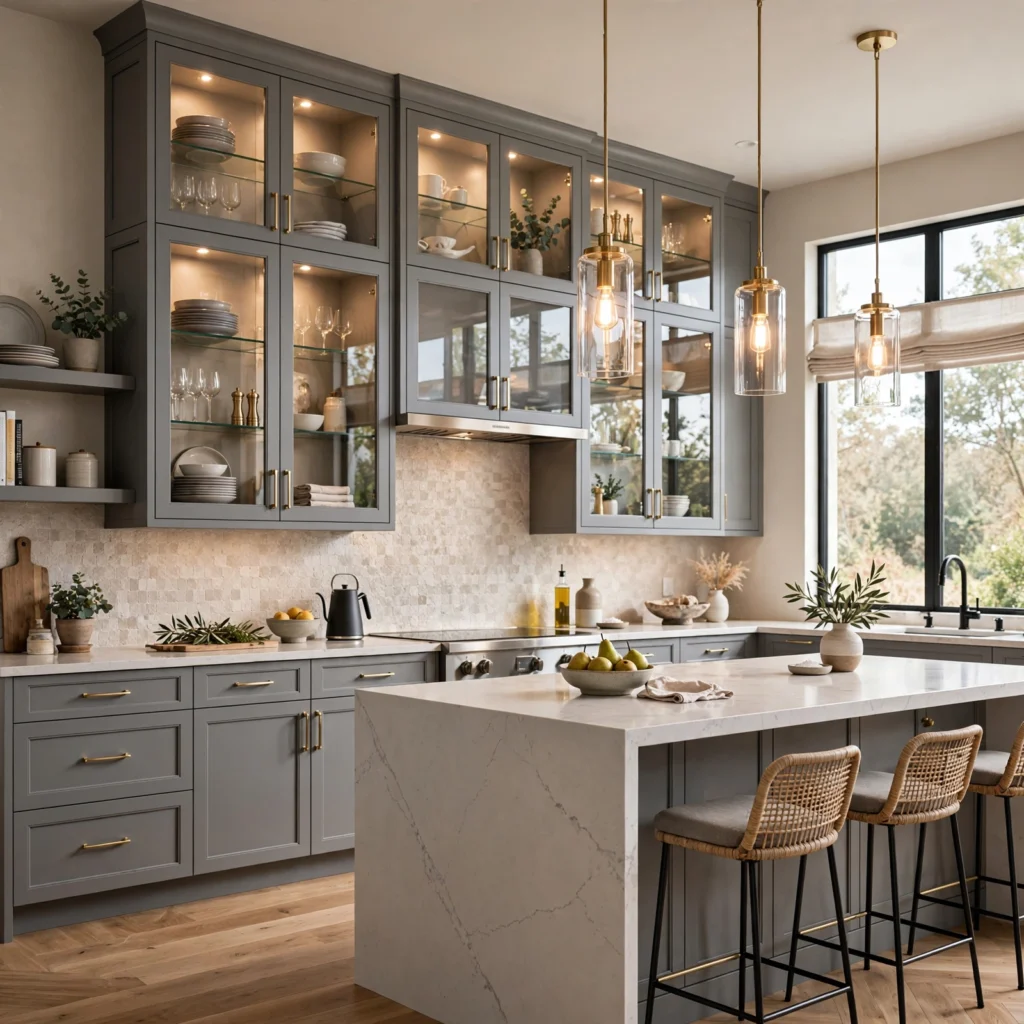
Adding glass fronts to a section of gray upper cabinets introduces visual variety and lets light pass through, which helps prevent an all-gray kitchen from feeling like a single flat block of color. This works particularly well positioned near a window or another natural light source. Choosing clear glass over frosted keeps the cabinet interior visible as an intentional display feature rather than hidden storage.
15. Gray Kitchen Cabinets Paired With Rattan Accents
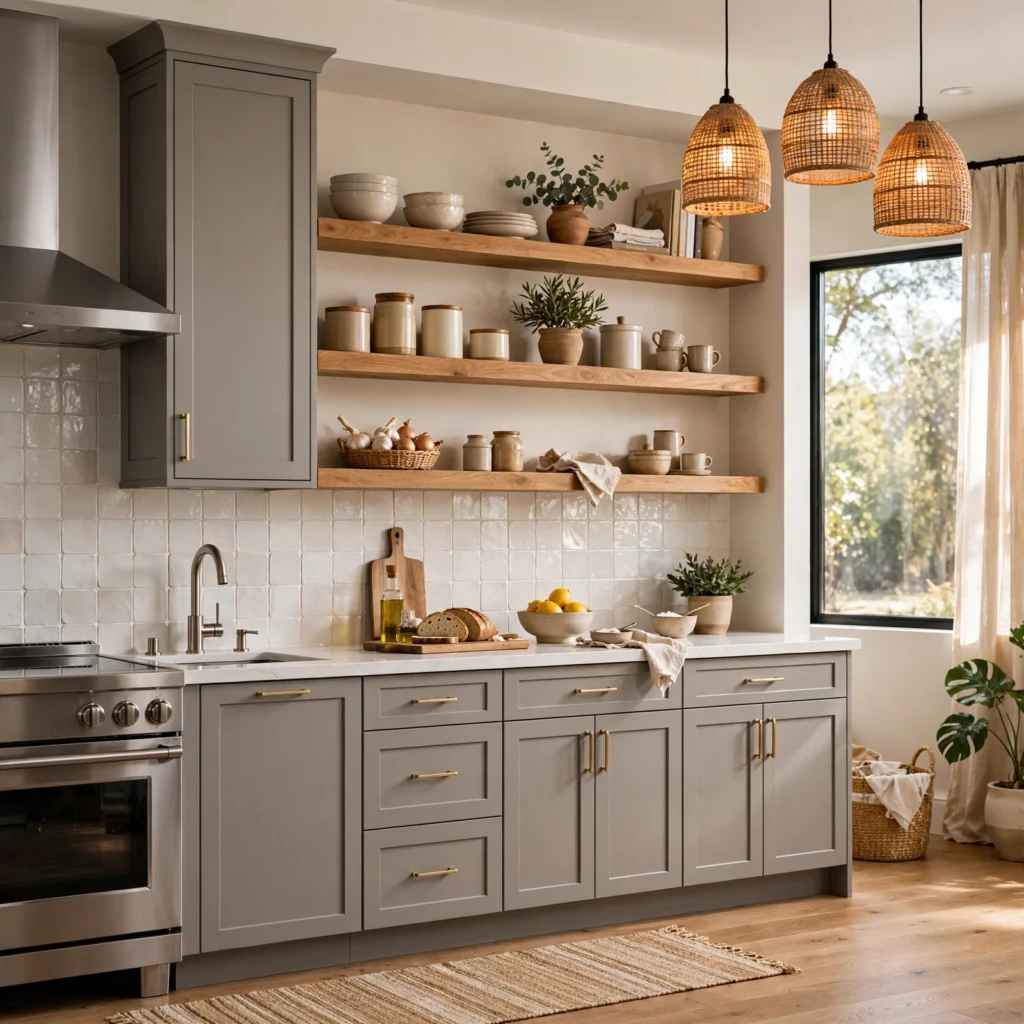
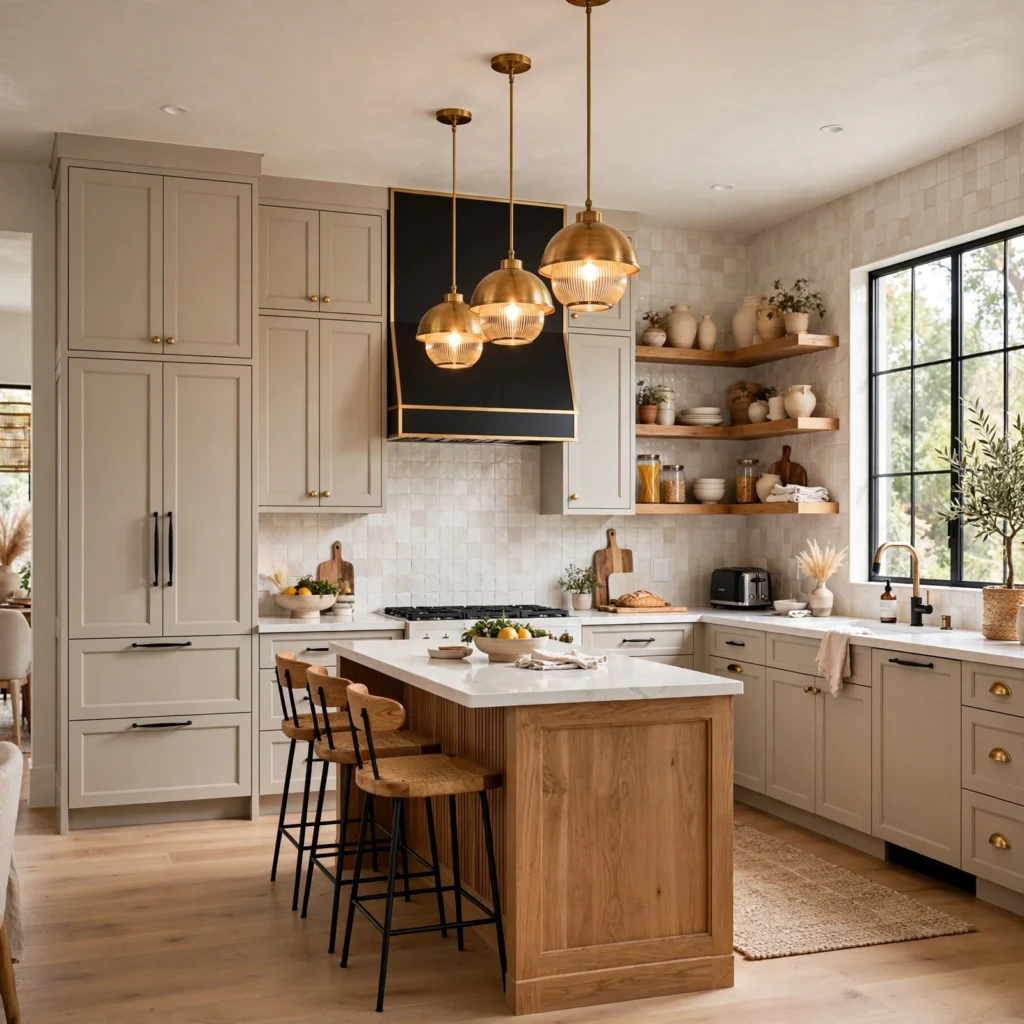
Woven rattan bar stools, pendant light shades, or a rattan-fronted cabinet section introduce a natural, textural material that softens the more structured, uniform look of painted gray cabinetry. Among gray kitchen cabinets ideas that add warmth without repainting anything, this one is easy to change later if the kitchen’s style direction shifts. Choosing rattan in its natural, unstained finish keeps the material reading as an intentional accent rather than a mismatched addition.
16. Statement Gray Kitchen Island Waterfall Edge
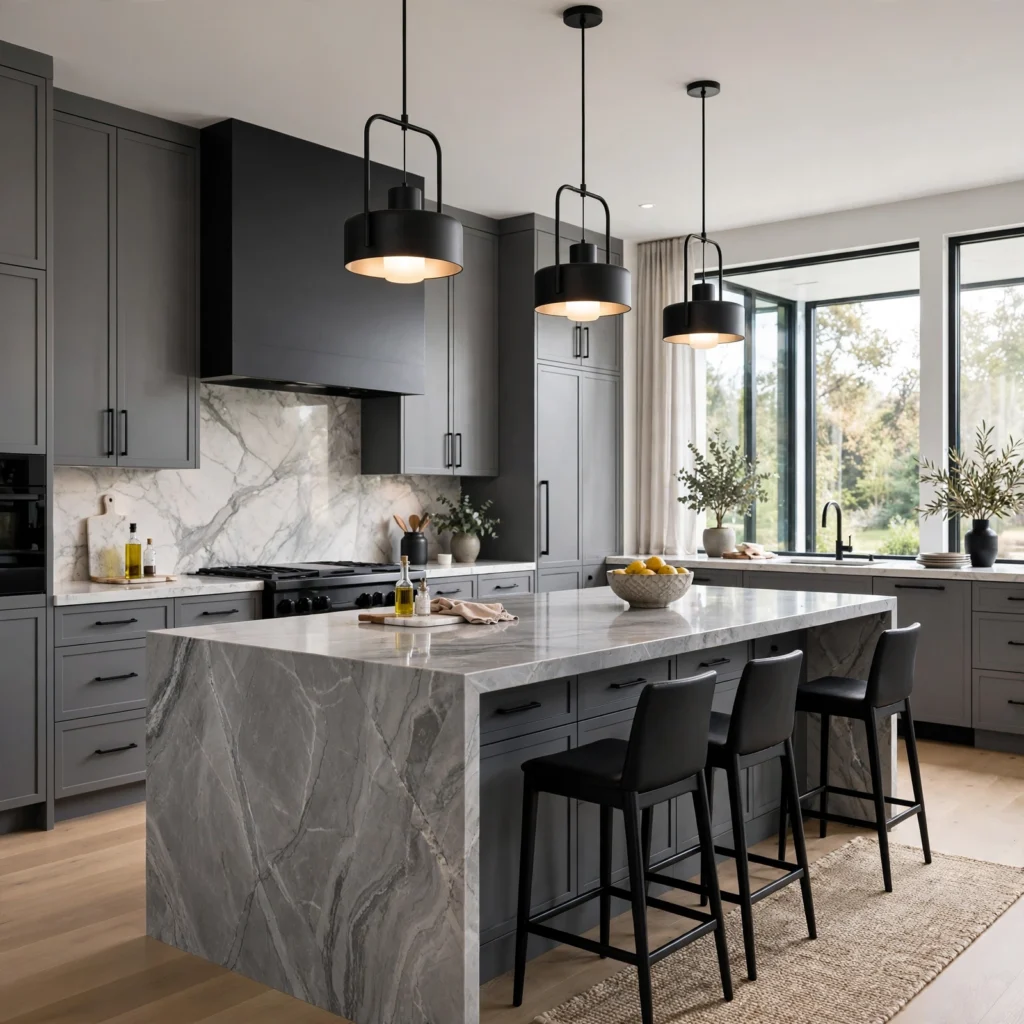
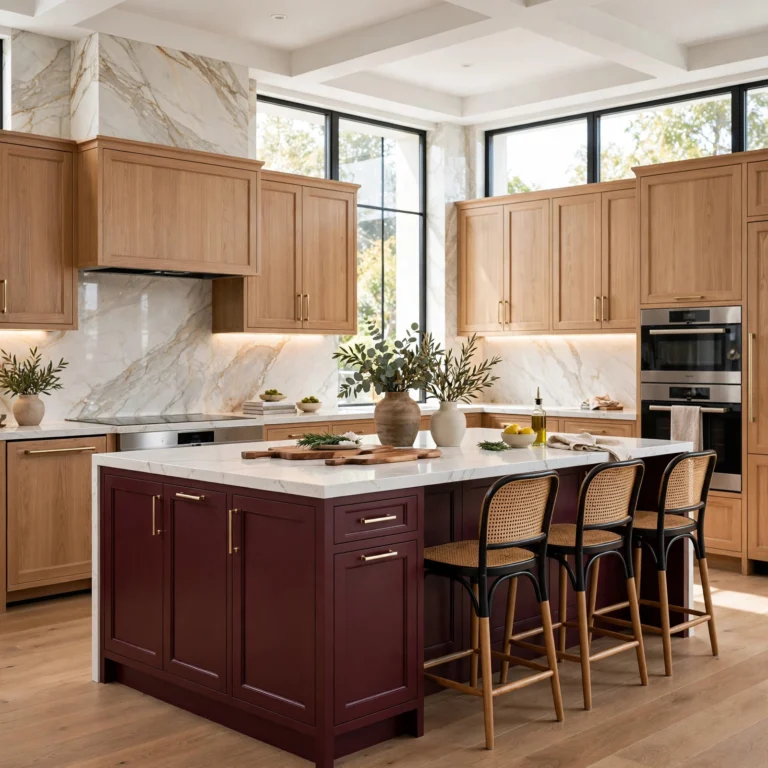
A waterfall-edge countertop, where the counter material wraps down the sides of the island rather than stopping at the edge, turns a gray kitchen island into a stronger design statement on its own. This detail works particularly well with a quartz or marble countertop in a light tone, since the continuous surface reads as more substantial and intentional than a standard counter edge. Pairing the waterfall island with a slightly different gray tone than the perimeter cabinets, per the two-tone island idea above, further reinforces the island as the room’s focal point.
Shop the Look
Warm greige shaker cabinets paired with brass hardware and a white quartz countertop with subtle veining create a cohesive, warm-neutral kitchen base. Add a herringbone tile backsplash in a matching gray tone, warm oak open shelving above the stove, and woven rattan bar stools at the island. Finish with a slightly darker gray on the island itself and a brushed gold pendant light fixture overhead to tie the metal finishes together.
Common Mistake to Avoid
The most common mistake with gray kitchen cabinets is choosing a shade without testing it against the room’s actual natural and artificial lighting, which often results in a gray that reads far cooler or warmer in person than it did on a paint chip or online listing. Painting a large sample swatch directly on or near the cabinets and observing it at different times of day prevents most of these mismatches. Skipping this step is the single most common reason homeowners end up repainting a gray kitchen shortly after installation.
People Also Ask
Are gray kitchen cabinets going out of style?
Gray kitchen cabinets remain one of the most popular neutral cabinet colors, though warmer, greige-leaning grays have grown more popular relative to the cooler, blue-toned grays common several years ago. Because gray functions as a true neutral, it tends to have more staying power than more trend-driven colors, especially when paired with warm wood tones or brass hardware. Choosing a versatile, warm-leaning gray shade is a practical way to keep the look feeling current for longer.
What color countertop goes best with gray kitchen cabinets?
White quartz, particularly with subtle gray veining, is one of the most common and reliably successful pairings for gray cabinetry since the two tones share a clear, harmonious relationship. Warmer grays can also pair well with a cream or warm white countertop, while cooler grays tend to look best against a crisper, brighter white. Avoiding a countertop that’s noticeably darker than the cabinetry helps keep the kitchen from feeling visually heavy overall.
Should gray kitchen cabinets be warm or cool toned?
The right undertone depends largely on the room’s natural light and the other materials already in the kitchen, such as flooring and countertop color. Warmer greige tones tend to work well in kitchens with limited natural light or warm wood flooring, while cooler blue-grays suit bright kitchens with white or light gray flooring. Testing a sample swatch in the actual kitchen at different times of day is the most reliable way to determine which undertone works best in a specific space.
What hardware finish works best with gray kitchen cabinets?
Brass and brushed gold hardware pair particularly well with warmer greige cabinet tones, adding contrast and warmth that a cooler metal finish wouldn’t provide. Matte black or chrome hardware tends to suit cooler, blue-leaning gray cabinets better, reinforcing the more modern, tonal character of that undertone. Choosing hardware that echoes the room’s other metal finishes, like faucets and light fixtures, keeps the overall look cohesive regardless of which finish is chosen.
How do I keep an all-gray kitchen from looking flat?
Introducing texture through a patterned tile backsplash, natural wood open shelving, or woven accents like rattan bar stools all help break up the visual uniformity of a fully gray kitchen. Choosing a slightly different gray tone for the island than the surrounding cabinetry, rather than matching everything exactly, also adds subtle depth. Varying the finish, such as pairing a matte cabinet with a glossy backsplash tile, adds contrast without requiring any additional color.
Conclusion
Gray kitchen cabinets remain a dependable, versatile choice precisely because the undertone, pairing materials, and hardware finish can be adjusted to suit almost any style direction. Whether the starting point is a warm greige shaker cabinet or a cooler charcoal-and-white two-tone layout, the goal is a kitchen that feels considered rather than simply neutral by default. Save this list to Pinterest for later, and check out our related post on dark wood kitchen cabinets for another grounded, versatile cabinet color direction.