12 Trending Green Bedroom Ideas for a Calming Retreat
Green carries more range than almost any other color used in bedroom design, stretching from a near-gray sage to a saturated hunter green, and each version changes the room’s mood entirely. These twelve green bedroom ideas cover full-wall commitments, smaller accent choices, and the materials and lighting that make green actually work in a space you sleep in. By the end, you’ll have specific shades, pairings, and placement ideas to match your own room’s light and layout.
Trend & Background
Green has moved from an occasional accent color to one of the most requested bedroom palettes in recent years, driven partly by a broader shift toward nature-inspired interiors and biophilic design. Homeowners are increasingly choosing green over neutral grays and beiges because it reads as calming without feeling cold, and it pairs easily with both warm wood tones and cooler metals. This matters now because paint brands have responded with far more nuanced green offerings than in past years, making it easier to find a shade that fits a specific room’s light rather than settling for whatever green happened to be available.
Key Takeaways
- Green bedroom ideas range from deep forest tones to soft sage, each pulling a different mood into the room.
- Pairing green walls with natural materials like wood, rattan, and linen keeps the palette from feeling flat or overly saturated.
- Accent options like a single green wall or textiles let you test the color before committing to a full repaint.
- Lighting and metal finishes play a bigger role than most people expect in how a green bedroom actually reads day to day.
1. Sage Green Walls
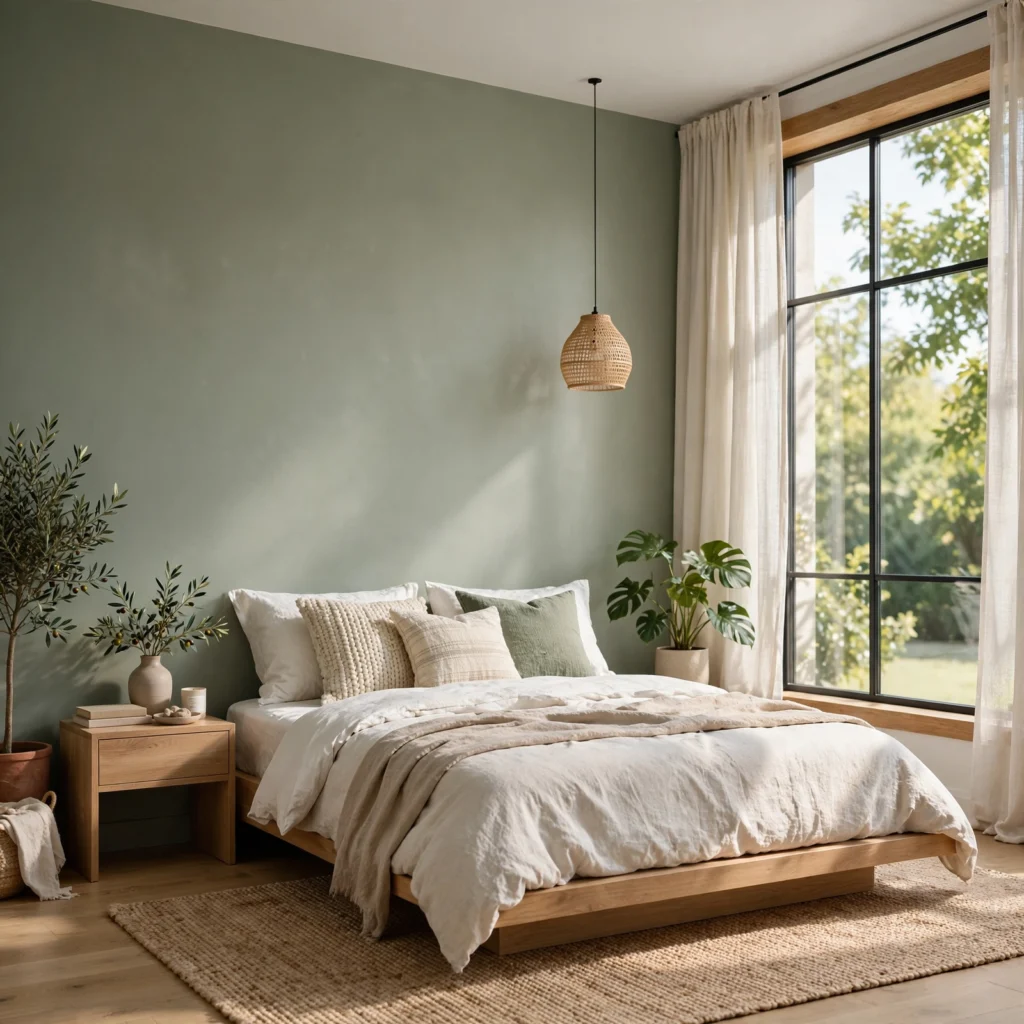
Sage sits between green and gray, which makes it one of the more forgiving shades to use across an entire bedroom without the color feeling overwhelming. It reads differently depending on the light in the room, leaning slightly cooler in north-facing rooms and warmer under afternoon sun. Because sage is muted rather than saturated, it pairs easily with both white trim and natural wood furniture, making it a practical starting point for anyone hesitant about committing to a bolder green.
| Green Shade | Undertone | Best Light Exposure |
| Sage | Gray-green | North or east-facing |
| Hunter Green | Deep blue-green | South-facing |
| Olive | Yellow-green | West-facing |
| Mint | Cool, light green | Any exposure |
2. Hunter Green Accent Wall
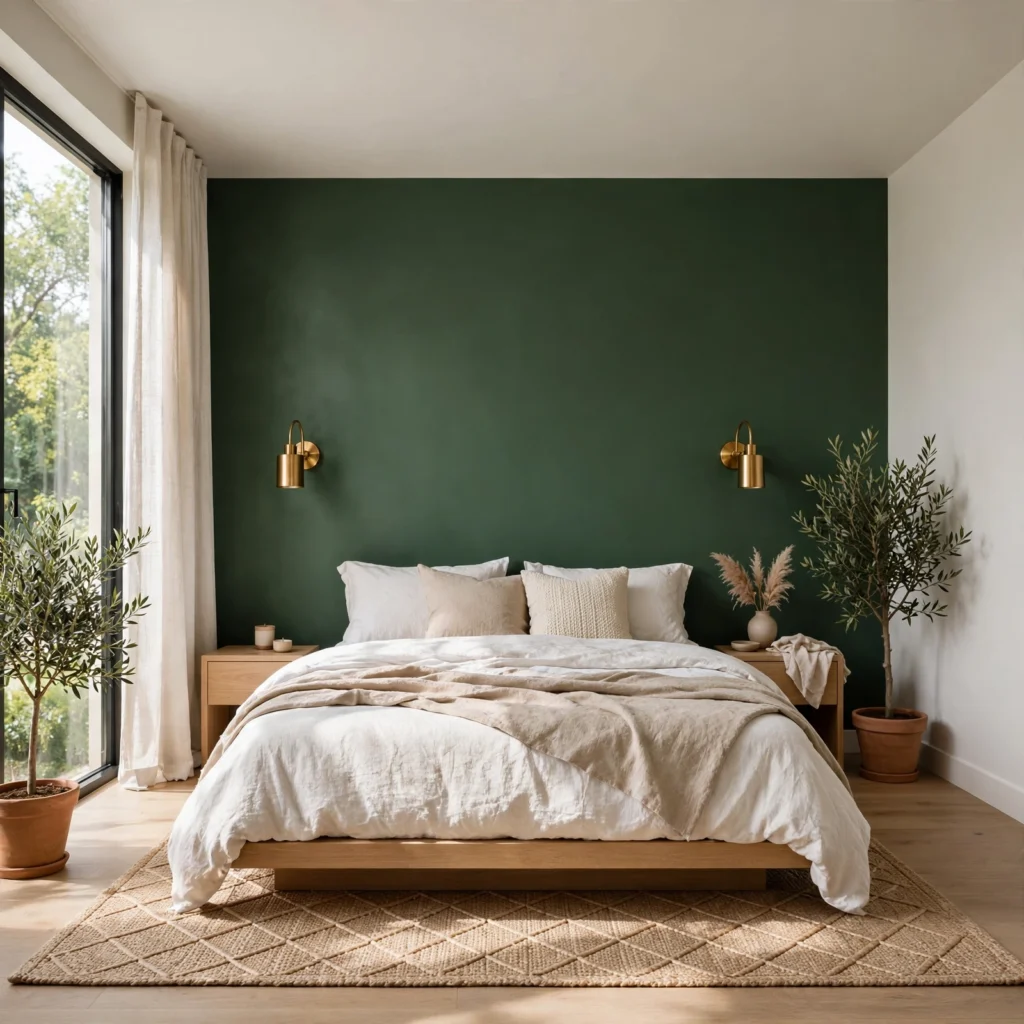
A single wall painted in a deep hunter green adds drama without requiring a full-room repaint, which makes it a practical option for renters or anyone testing a bolder shade. Placed behind the headboard, a hunter green accent wall anchors the bed as the visual focus of the room while keeping the surrounding walls neutral. This pairing works especially well with brass or gold hardware, since the warmth of the metal keeps the deep green from reading too heavy or cave-like.
Transform your sleeping space with these elegant attic bedroom ideas that blend comfort, functionality, and timeless style.
3. Botanical Wallpaper
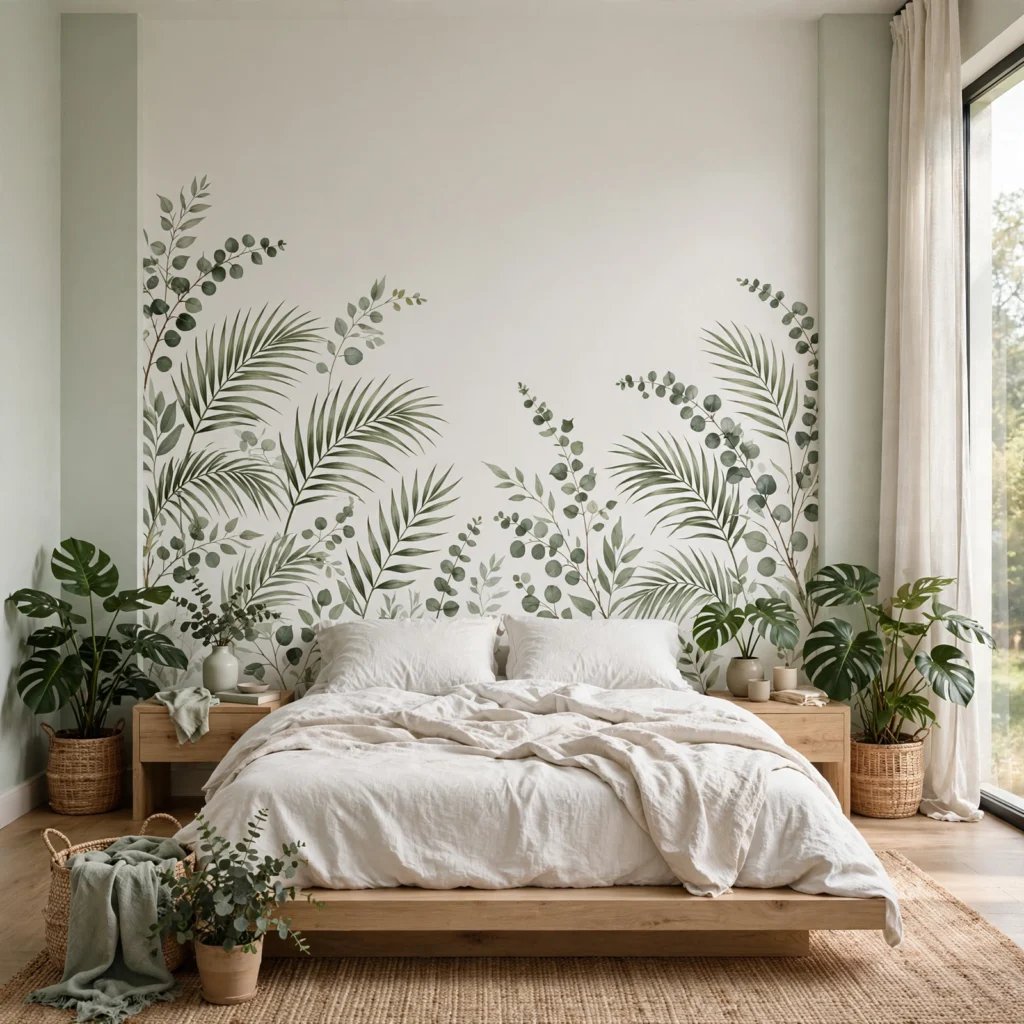
Wallpaper printed with leaf or fern patterns brings green into a room through pattern rather than a flat wall color, which adds texture without requiring furniture changes to balance it out. A large-scale botanical print works well on a single accent wall, while a smaller, more subtle pattern can cover an entire room without becoming visually busy. This approach suits bedrooms that already have several plain surfaces, since the pattern itself becomes the room’s main visual interest.
4. Rattan Headboard
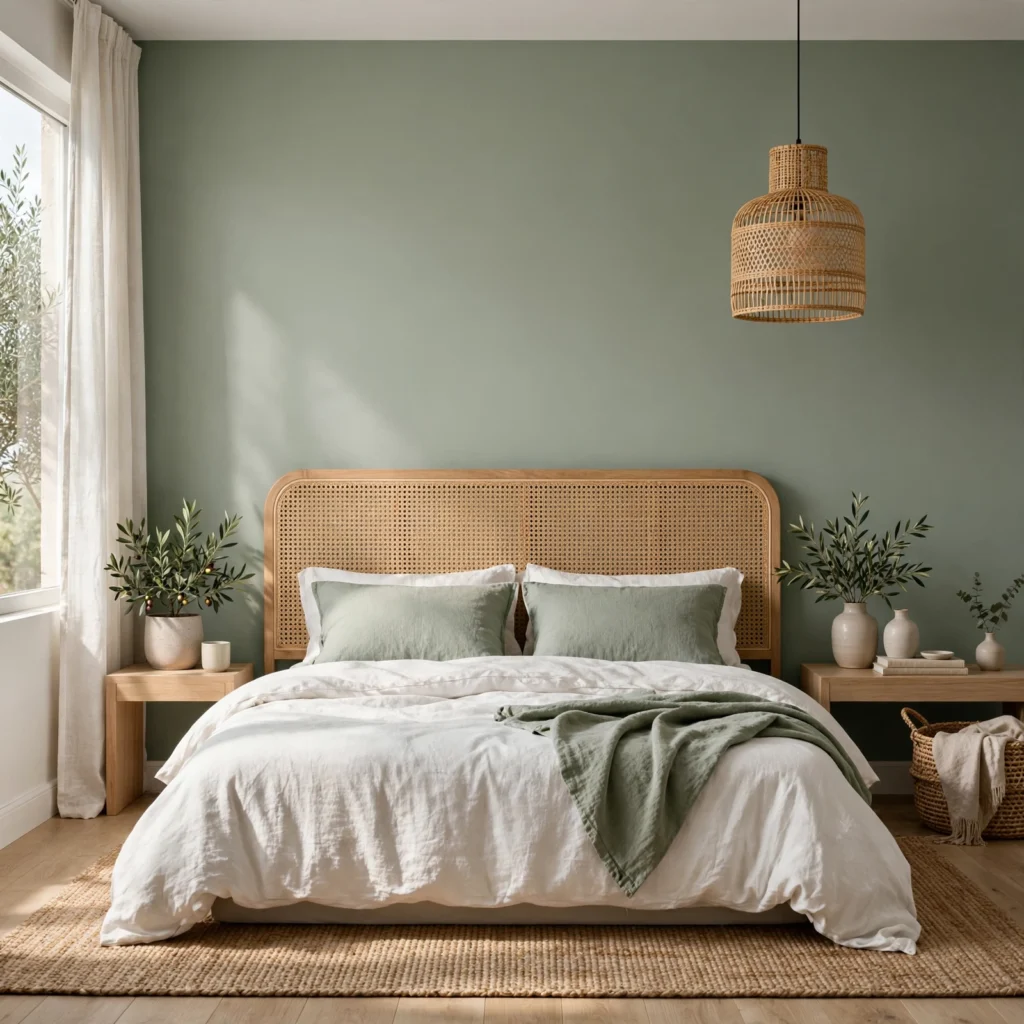
A woven rattan headboard pairs naturally with green walls or bedding, since both draw from the same organic, plant-inspired material palette. The open weave adds texture without adding visual weight, which keeps a green room from feeling too dense, especially in smaller bedrooms where a solid upholstered headboard might feel heavier. Rattan also tends to work across both warmer olive greens and cooler sage tones, making it a flexible pairing regardless of which shade you choose for the walls.
5. Brass Hardware Accents
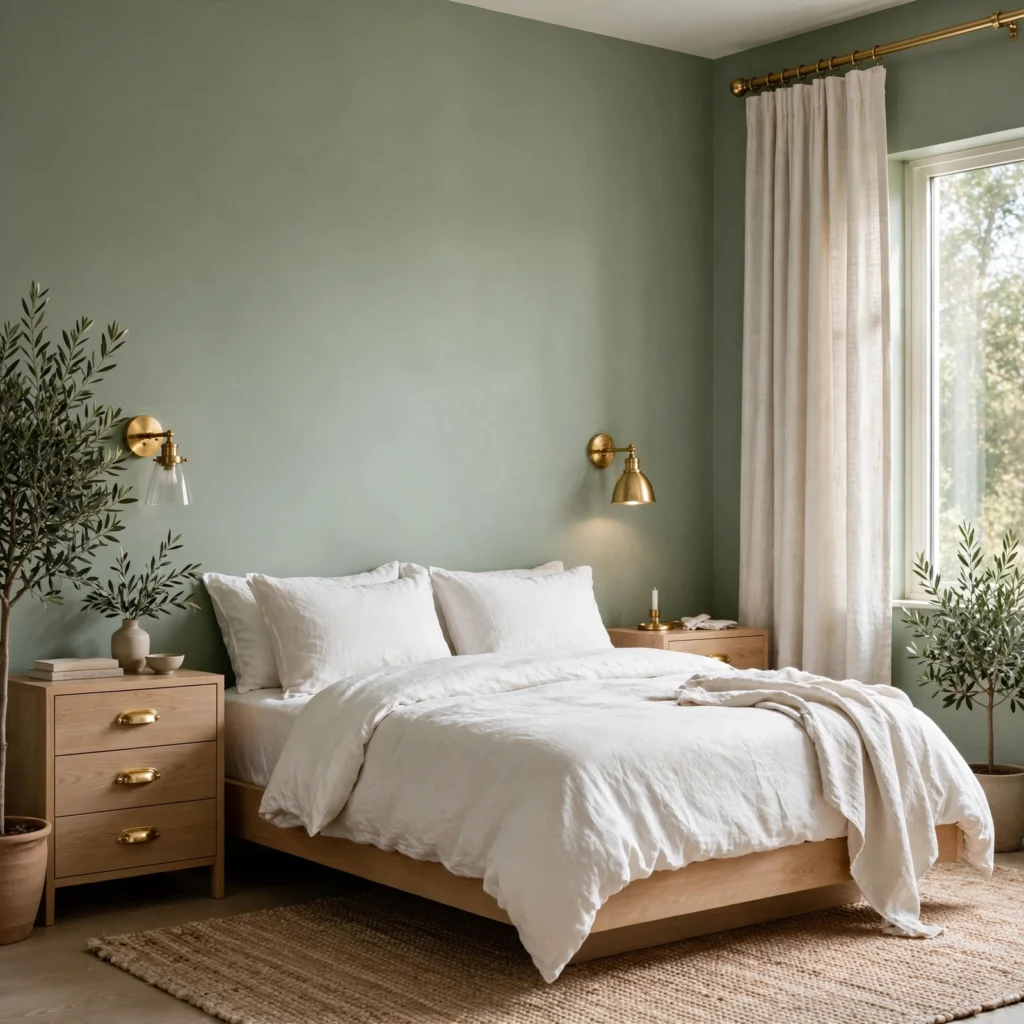
Brass fixtures, from drawer pulls to lamp bases, add warmth to a green bedroom that cooler metals like chrome or brushed nickel don’t provide in the same way. The warm gold tone plays particularly well against deeper greens like hunter or forest, softening what could otherwise read as a cold, saturated color. Even small touches, like brass switch plates or a single brass picture frame, are enough to shift the overall feel of the room without requiring a full hardware overhaul.
6. Olive Linen Bedding
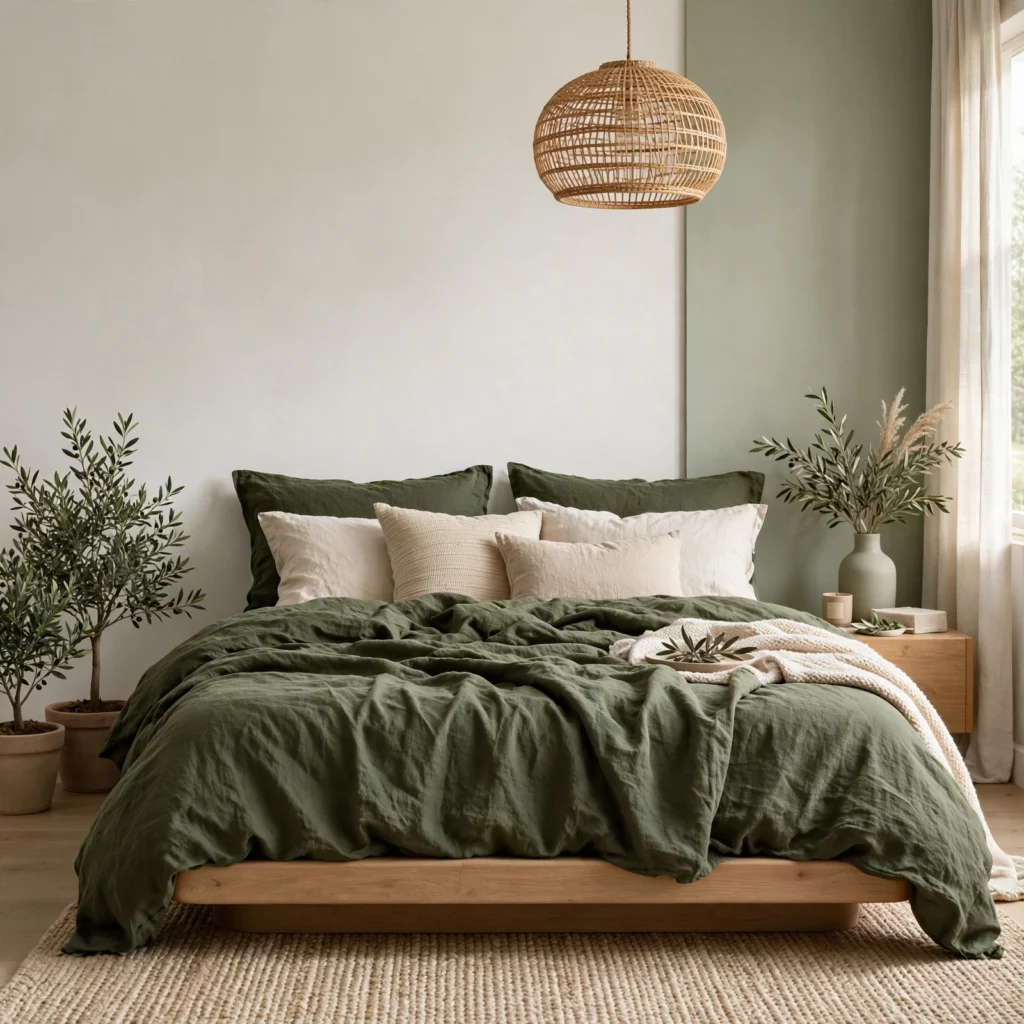
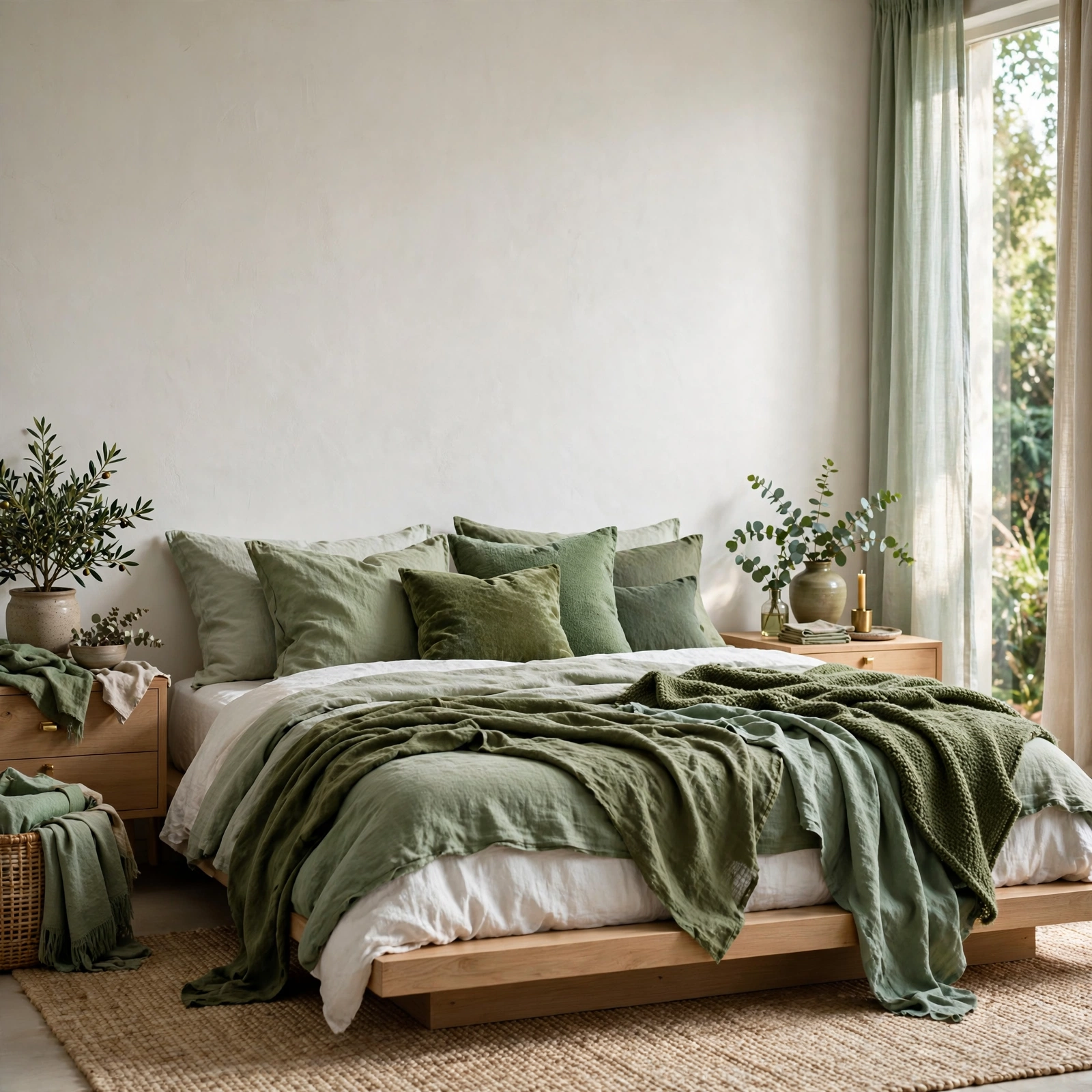
Olive-toned linen bedding introduces green through texture and softness rather than a painted surface, which makes it one of the lowest-commitment ways to bring the color into a bedroom. Linen’s slightly rumpled, matte texture also keeps olive from reading too formal, giving the room a lived-in feel rather than a showroom look. This works particularly well in a bedroom with white or cream walls, where the bedding becomes the primary source of color in the room.
7. Green and Terracotta Palette
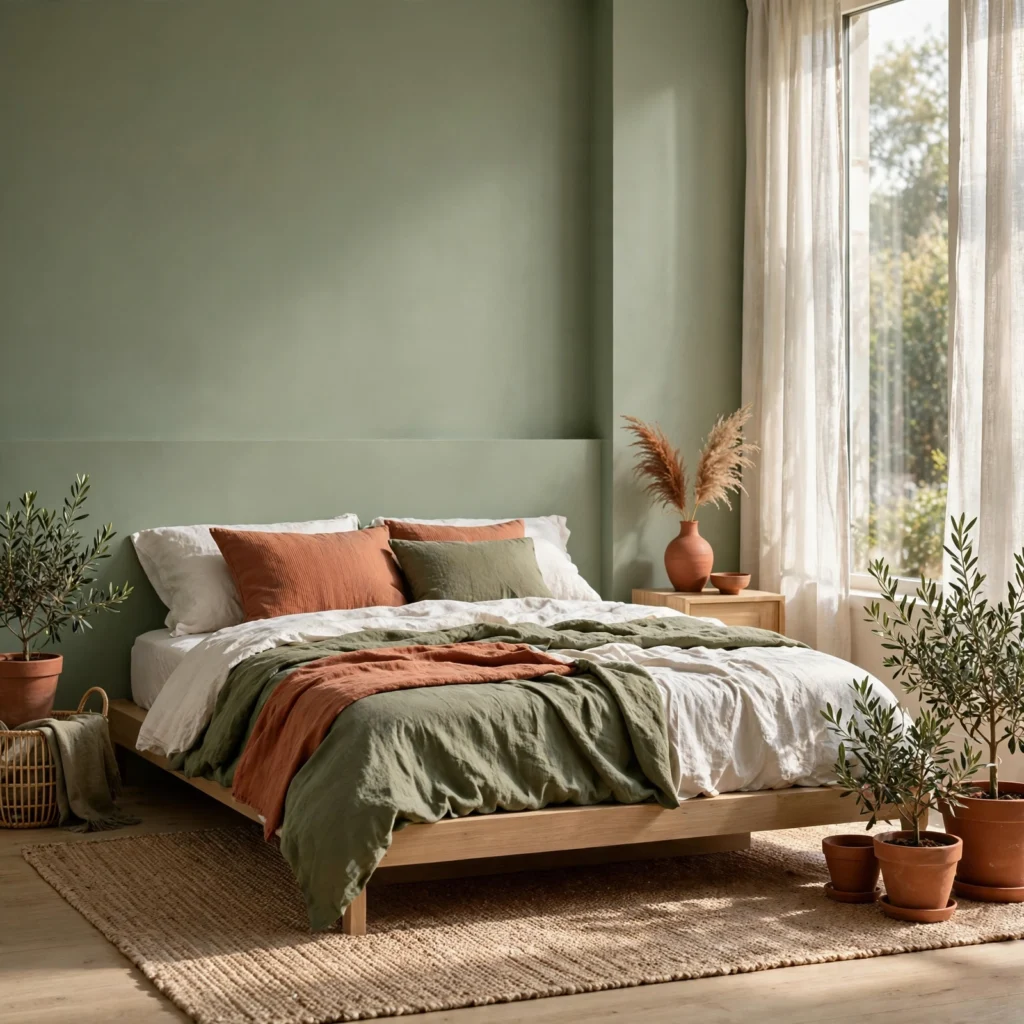
Pairing green with warm terracotta tones creates a palette that leans earthy rather than cool, drawing on natural clay and plant colors that read well together in both modern and traditional bedrooms. A terracotta throw blanket or a set of clay-toned ceramic lamps against sage or olive walls keeps the room from feeling one-note. This combination also tends to photograph and read well in rooms with warmer, incandescent lighting, since the orange undertones in terracotta soften under warm light.
8. Forest Green Curtains
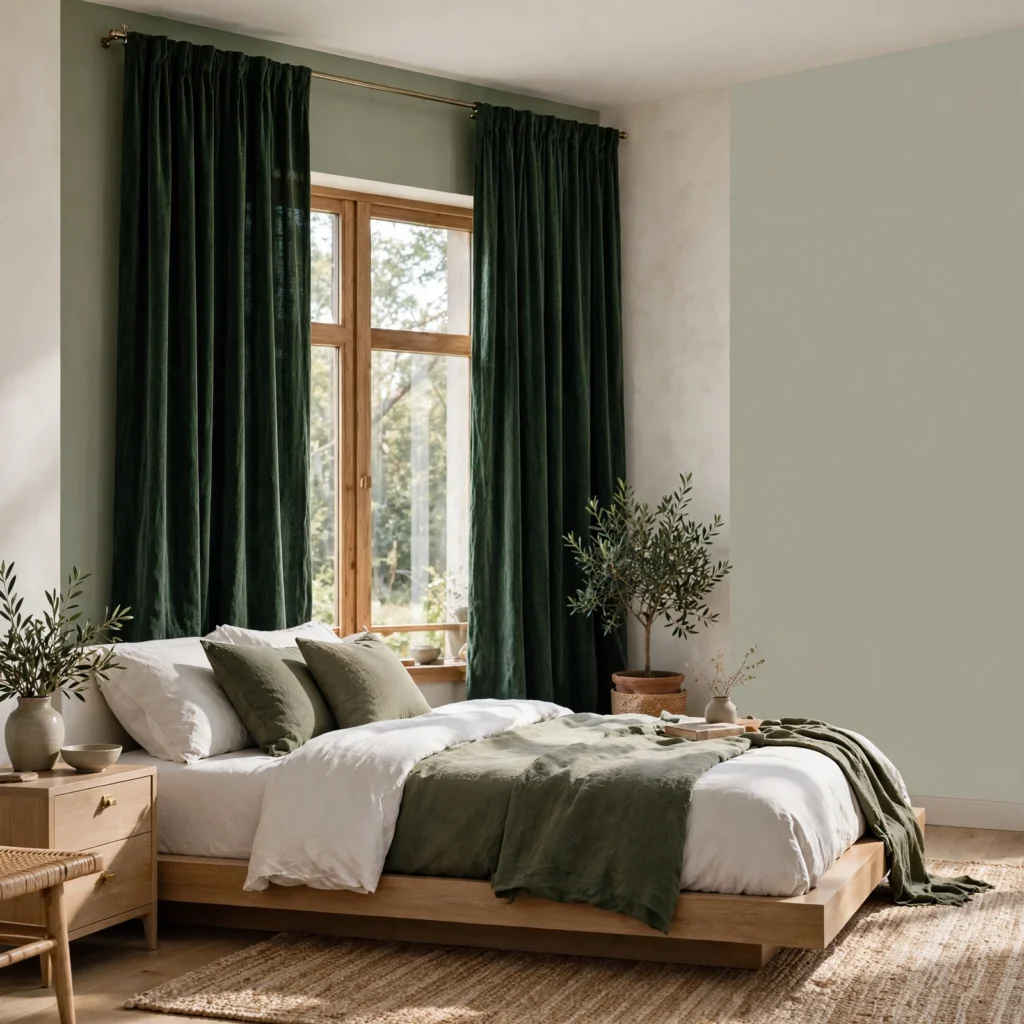
Floor-length curtains in a deep forest green add color at the window without committing to a full green wall, and they also help frame the room’s natural light source. Because curtains are one of the easier elements to swap out later, forest green drapery is a lower-risk way to test a saturated green before deciding whether to extend the color elsewhere in the room. Pairing them with a simple wood curtain rod, rather than a metal one, keeps the look aligned with the material choices elsewhere in a nature-inspired bedroom.
9. Wood Paneling with Green Paint
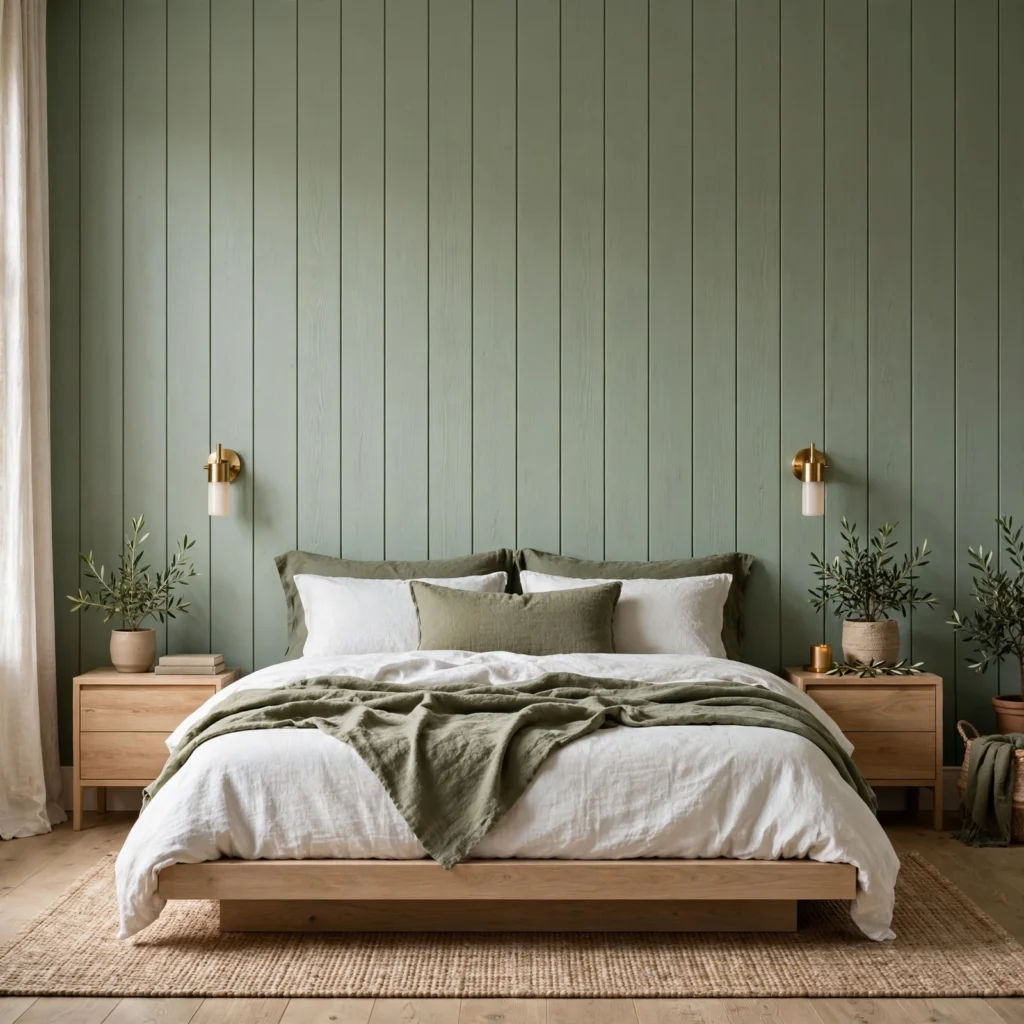
Vertical or horizontal wood paneling painted in a muted green adds texture and dimension to a wall in a way flat paint alone can’t achieve. The grooves and shadow lines in the paneling catch light differently throughout the day, which keeps a single-color wall from feeling static. This approach works particularly well as a headboard-height treatment, stopping partway up the wall rather than covering it fully, which also keeps the cost lower than paneling an entire room.
10. Layered Green Textiles
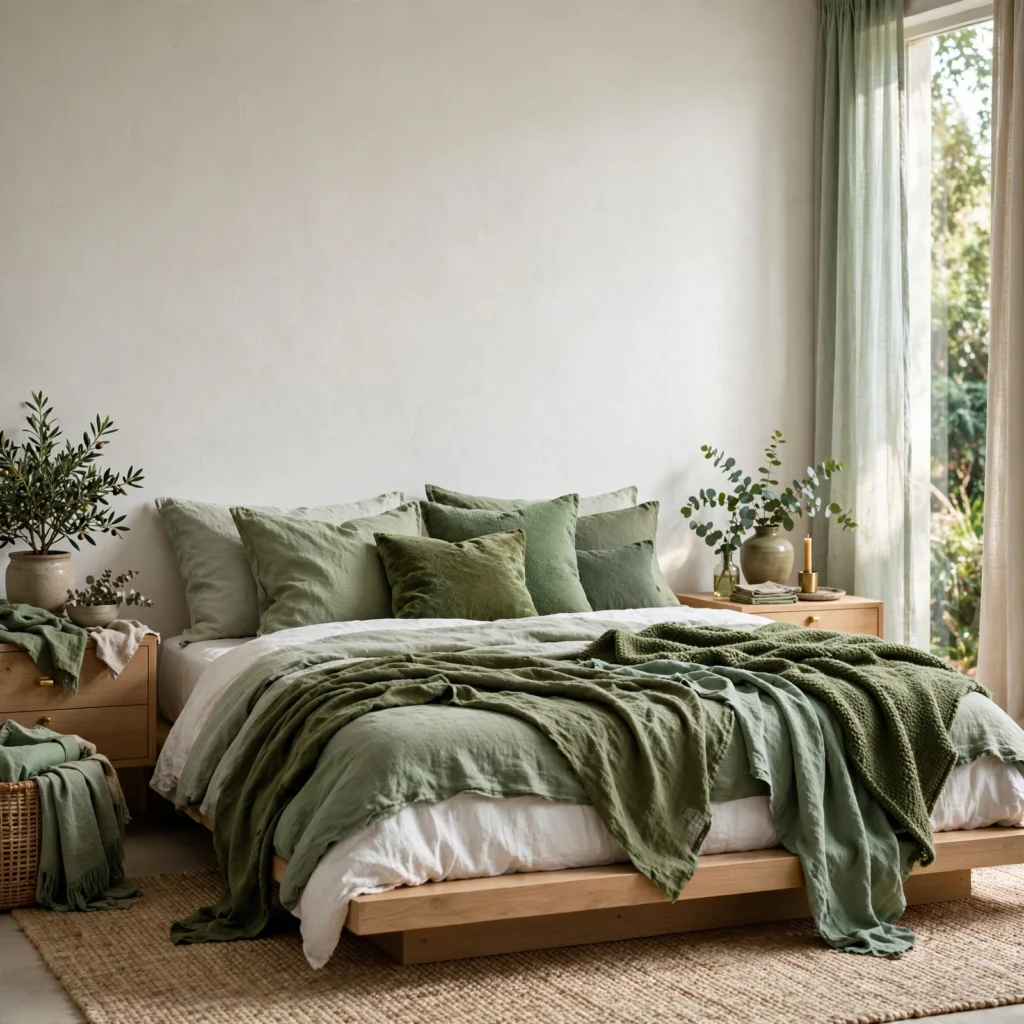
Combining several shades of green across a throw blanket, accent pillows, and a window seat cushion creates depth without requiring any of the room’s larger surfaces, like walls or floor, to carry the color. Mixing a deeper green pillow with a lighter sage throw, for example, avoids the flat look that comes from using a single shade across every textile in the room. This approach is especially useful in a rented space where painting isn’t an option but color variation is still desired.
11. Green Ceiling Treatment
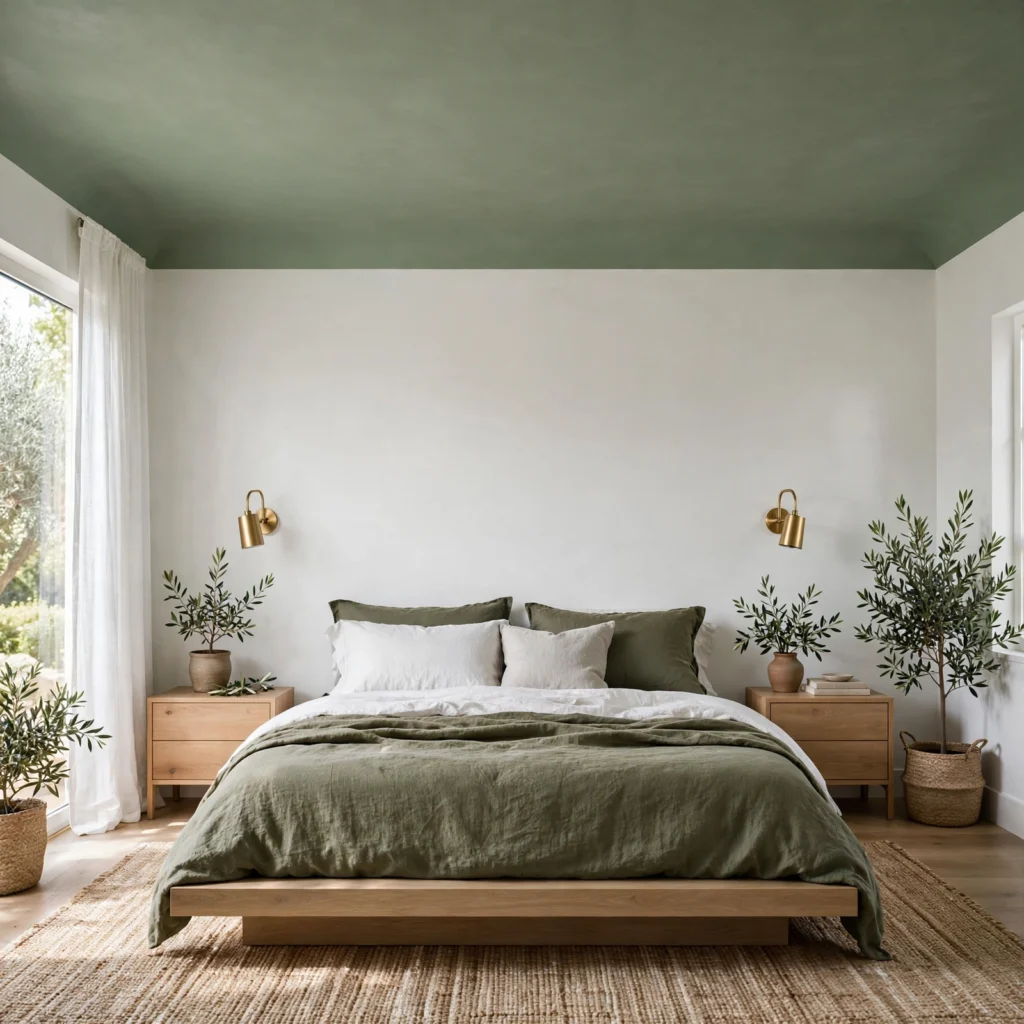
Extending a green wall color up onto the ceiling, sometimes called “color drenching,” wraps the entire room in one continuous tone rather than stopping at the crown molding. This treatment works particularly well in bedrooms with lower ceilings, since it removes the visual break between wall and ceiling that can make a room feel shorter than it is. A slightly lighter shade of the same green on the ceiling keeps the room from feeling like a solid box while still reading as one cohesive palette.
12. Indoor Plants as Color Anchors
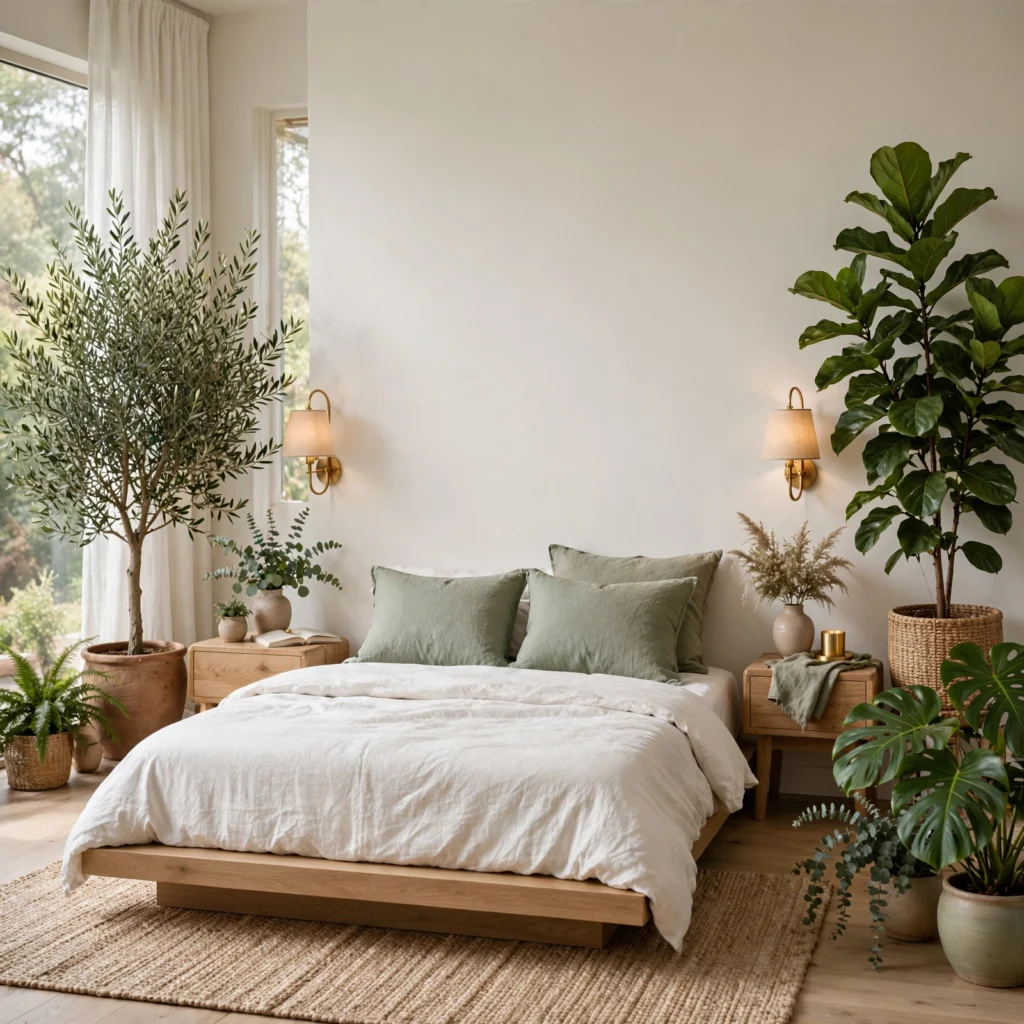
Live plants, from a tall fiddle leaf fig to a trailing pothos on a shelf, reinforce a green color scheme with actual living texture rather than relying entirely on paint or textiles. Placed near a window or on a floating shelf, plants also soften the hard edges of furniture and add movement to a room that might otherwise feel static. For bedrooms with limited natural light, low-maintenance options like snake plants or ZZ plants hold up better than higher-light varieties.
Shop the Look
A few specific pieces make these ideas easier to pull together. Look for a sage green matte wall paint in a washable formula suited to bedrooms, a natural rattan headboard in a queen or king size, olive-toned French linen bedding, a set of brass drawer pulls sized for a standard dresser, and a pair of forest green cotton-linen blend curtain panels in a floor-length size.
Common Mistake to Avoid
The most common mistake with green bedroom ideas is choosing a paint swatch under store lighting and skipping a test patch at home, since green shifts more dramatically under natural and artificial light than most other colors. A sage that looks soft and neutral in a paint store can read distinctly blue-gray in a north-facing bedroom or noticeably yellow under warm bulbs. Always paint a large test swatch on the actual wall and check it at different times of day before committing to a full room.
FAQs
What color goes best with a green bedroom?
Warm neutrals like cream, terracotta, and natural wood tones pair especially well with green, since they soften the color rather than competing with it. Brass and gold metal finishes also work particularly well against green, adding warmth to shades like hunter or forest green that can otherwise feel cool or heavy. White trim remains a safe, classic pairing that keeps any green shade looking crisp rather than muddy.
Is green a good color for a bedroom?
Yes, green is widely considered one of the more calming color choices for a bedroom, since it’s associated with nature and tends to feel restful rather than stimulating compared to brighter colors like red or orange. Muted shades like sage or olive work particularly well for this purpose, while deeper tones like hunter green add more drama without sacrificing the color’s overall calming effect.
What shade of green is best for a small bedroom?
Lighter, cooler shades like sage or mint tend to work better in small bedrooms, since they reflect more light and avoid making the walls feel like they’re closing in. Deeper greens like hunter or forest can still work in a small space if used as a single accent wall rather than across the entire room, which keeps the color from overwhelming the limited square footage.
Does green bedroom paint need a lot of natural light?
Not necessarily, but the amount and direction of natural light significantly affects how a green reads on the wall. Rooms with limited natural light generally do better with lighter, warmer greens like olive or moss, since deep, cool greens can read almost black in low light. Testing a swatch at different times of day is the most reliable way to confirm a shade works with your room’s specific light.
How do you make a green bedroom feel cozy instead of cold?
Warm materials and finishes make the biggest difference, including wood furniture, brass hardware, linen textiles, and warm-toned lighting rather than cool white bulbs. Layering in textures like a woven rattan headboard or a wool throw blanket also helps offset the flatness that can come from a single painted wall. Avoiding an all-cool-toned green, like a blue-heavy teal, in favor of a more balanced or warm-leaning green also helps.
Conclusion
These green bedroom ideas work best when the shade is matched to your room’s actual light and paired with warm, natural materials rather than treated as a single flat wall color. Whether you start with a full sage repaint or a smaller olive linen bedding swap, each idea here scales to fit your space and commitment level. Save this post to Pinterest for later, and check out our related guide on small bedroom storage solutions for more design inspiration.