15 Trending Green Kitchen Cabinets Ideas to Create a Timeless, Stylish, and Beautiful Kitchen
Green has quietly become the most requested kitchen cabinet color among designers, replacing all-white and all-gray schemes that dominated the last decade. This post walks through fifteen specific, real ways to bring green kitchen cabinets into a kitchen, covering exact shades, hardware pairings, countertop combinations, and layout tricks. Whether you’re repainting existing cabinets or planning a full remodel, you’ll come away with concrete direction instead of a vague color-swatch board.
Trend & Background
Green has overtaken navy and black as the go-to alternative to white kitchen cabinetry, driven partly by a broader shift toward nature-inspired, biophilic interiors and partly by paint brands releasing dedicated sage and olive lines each year. Unlike stark white, green cabinetry hides everyday wear better and photographs warmer under both natural and artificial light. This matters now because kitchens are being treated as design-forward rooms rather than purely functional ones, and homeowners want a color that feels current without needing to be repainted again in five years.
Key Takeaways
- Green kitchen cabinets range from soft sage to deep forest, and the shade you pick changes the whole mood of the room, from calm and airy to moody and formal.
- Pairing green cabinetry with the right metal hardware, countertop, and backsplash matters more than the paint color itself for a cohesive look.
- Two-tone kitchens, where green is used only on the island or lower cabinets, are one of the easiest ways to try the trend without overcommitting.
- Matte and low-sheen finishes are currently favored over high-gloss for a more natural, custom-cabinetry look.
1. Sage Green Shaker Cabinets
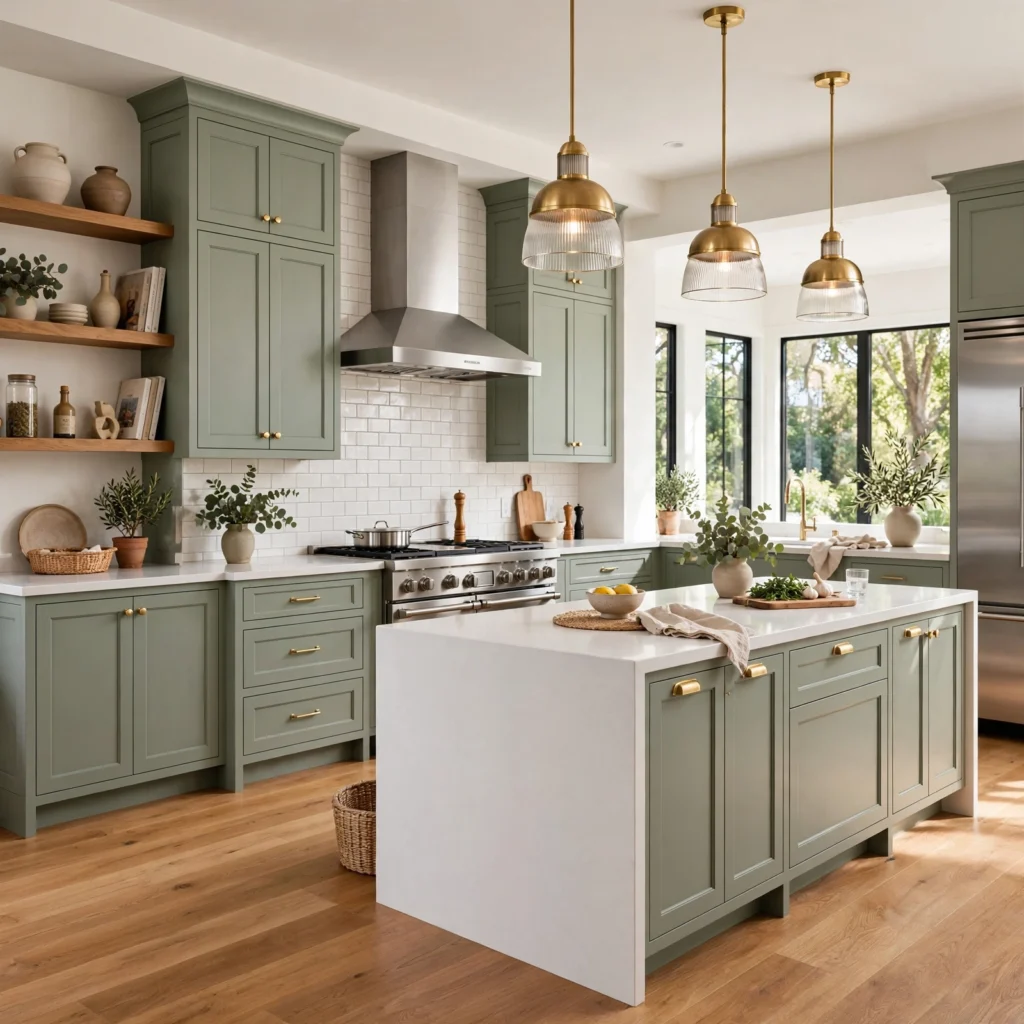
Sage green shaker cabinets pair a muted, grayed-down green with the clean, recessed-panel shaker door style, giving the kitchen a soft, farmhouse-adjacent look that works in both older and newly built homes. The grayish undertone keeps the color from reading too bright or seasonal, which is why it remains one of the most requested shades among cabinet painters. Sage tends to look best with brushed nickel or unlacquered brass hardware rather than sharp chrome, which can feel too cold against the muted tone.
2. Forest Green Island
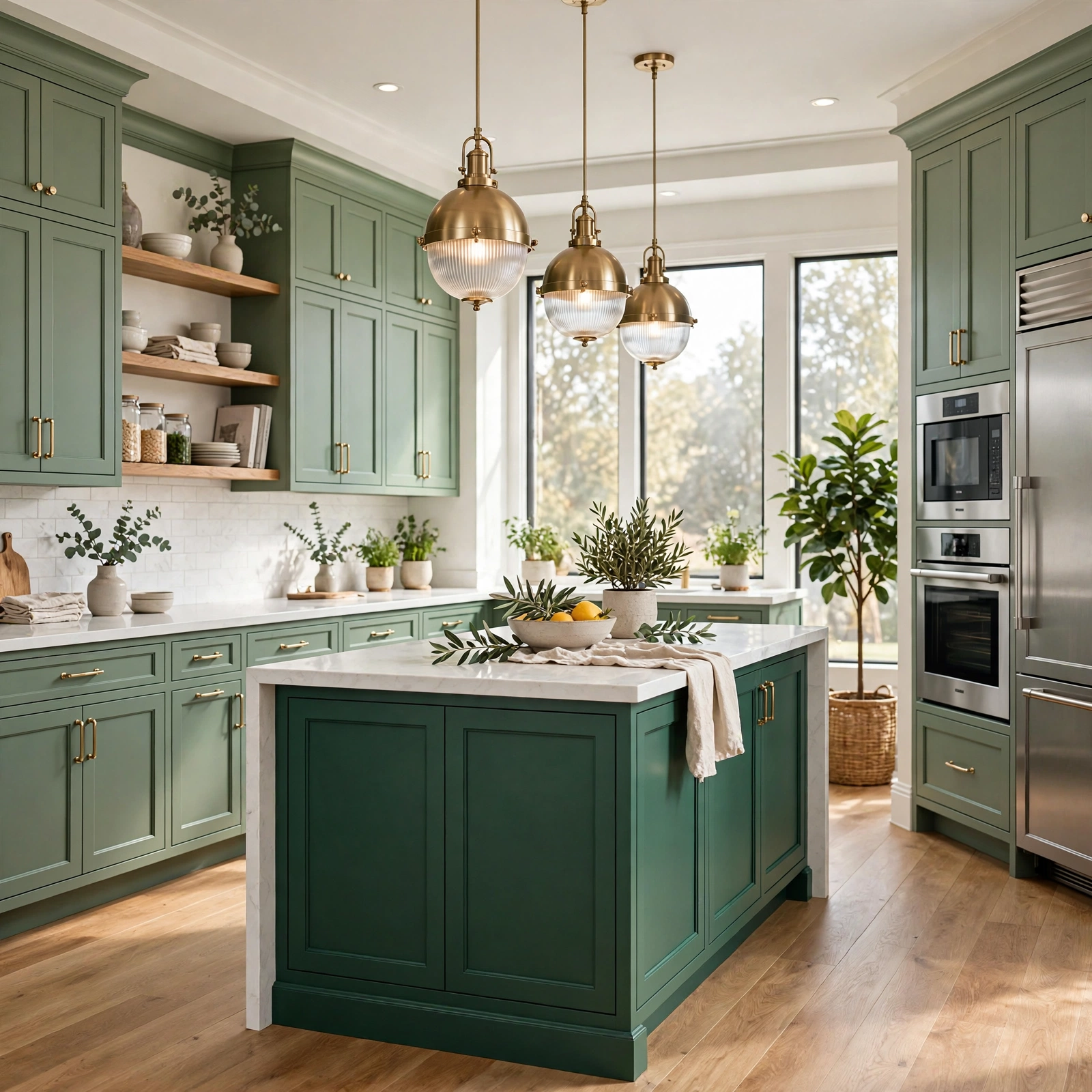
A forest green island, left as the single bold element against white or light wood perimeter cabinets, anchors the room without requiring the commitment of painting every cabinet the same dark shade. This two-tone approach is one of the most popular ways to test a deep green before going all-in, and it also visually separates the cooking zone from the rest of an open-concept layout. Pair it with a warm wood or butcher-block countertop on the island to soften the contrast against the darker cabinet color.
| Kitchen Size | Island Length | Recommended Countertop |
| Under 150 sq ft | 4–5 ft | Butcher block or quartz |
| 150–250 sq ft | 6–7 ft | Quartz or soapstone |
| 250+ sq ft | 8 ft+ | Marble or granite |
3. Olive Matte Cabinetry
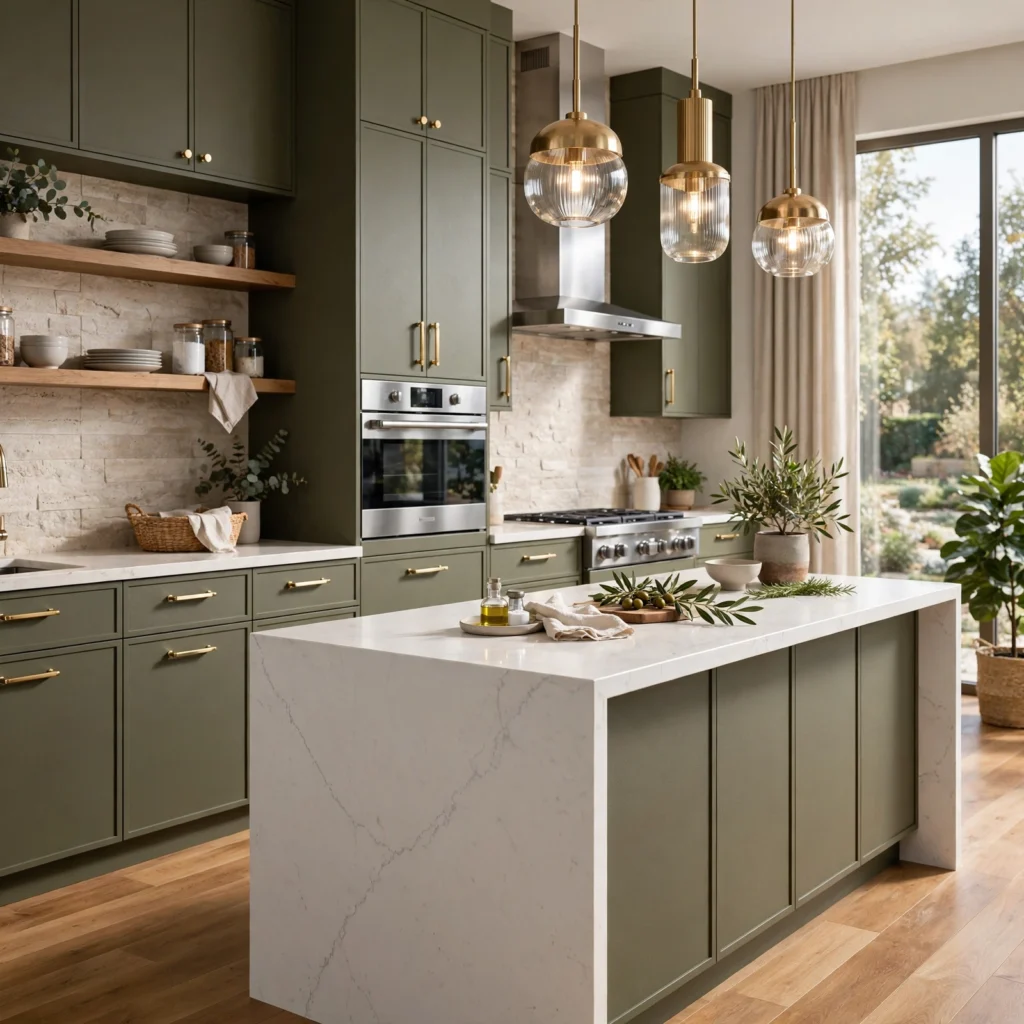
Olive matte cabinetry uses a muted, brownish-green that reads more earthy than fresh, making it a strong choice for kitchens with a lot of natural wood, terracotta tile, or rattan accents. The matte finish specifically matters here, since a glossy olive can look dated fast, while a chalky matte reads current and closer to custom millwork. This shade pairs particularly well with brass hardware and warm white walls, which keep the overall palette from feeling too heavy or dark.
In order to see more options for kitchen cabinets CLICK HERE
4. Hunter Green Upper Cabinets
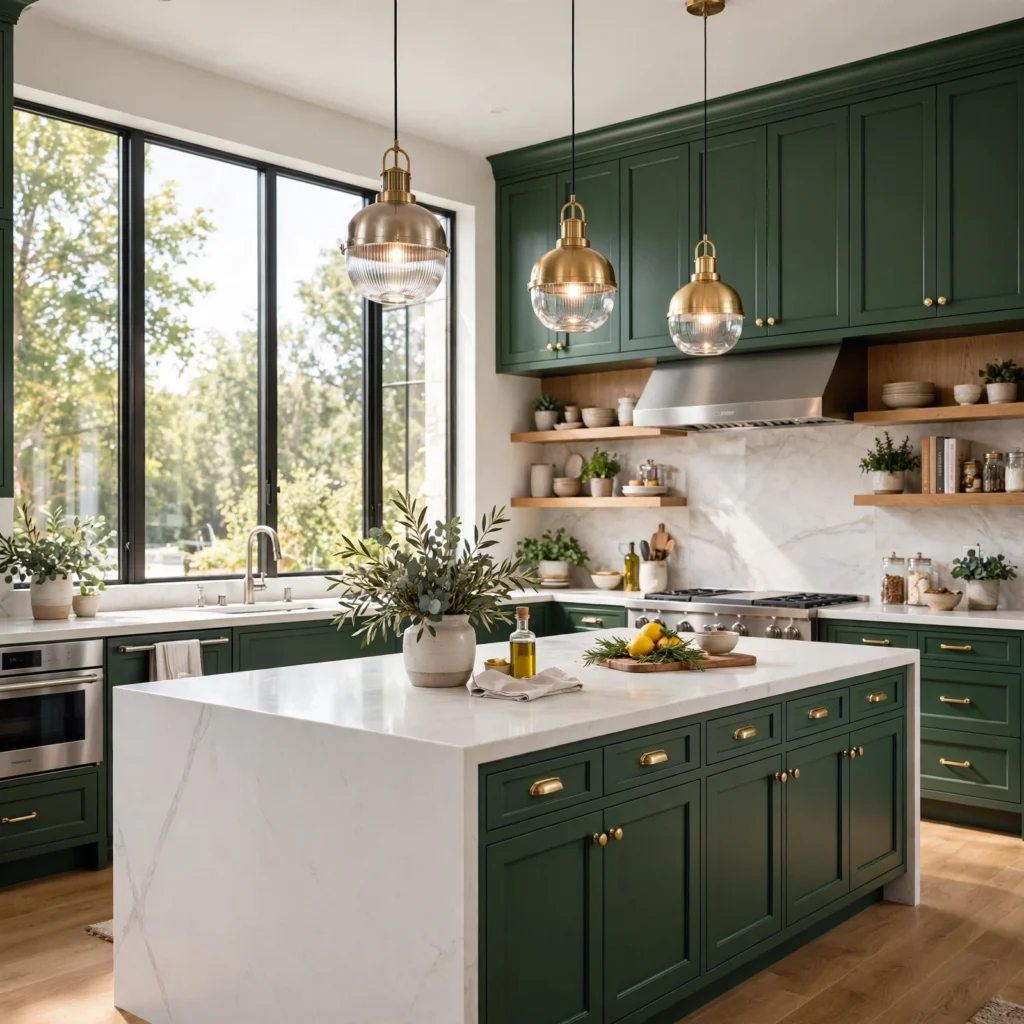
Hunter green upper cabinets, paired with white or natural wood lower cabinets, draw the eye upward and add drama without darkening the whole room the way full hunter-green cabinetry would. This combination works especially well in kitchens with high ceilings or exposed beams, since the deep green gives the upper portion of the room visual weight it might otherwise lack. Open shelving in the same hunter green, styled with white dishware, extends the look without needing full cabinet doors.
5. Two-Tone Green and White Kitchen
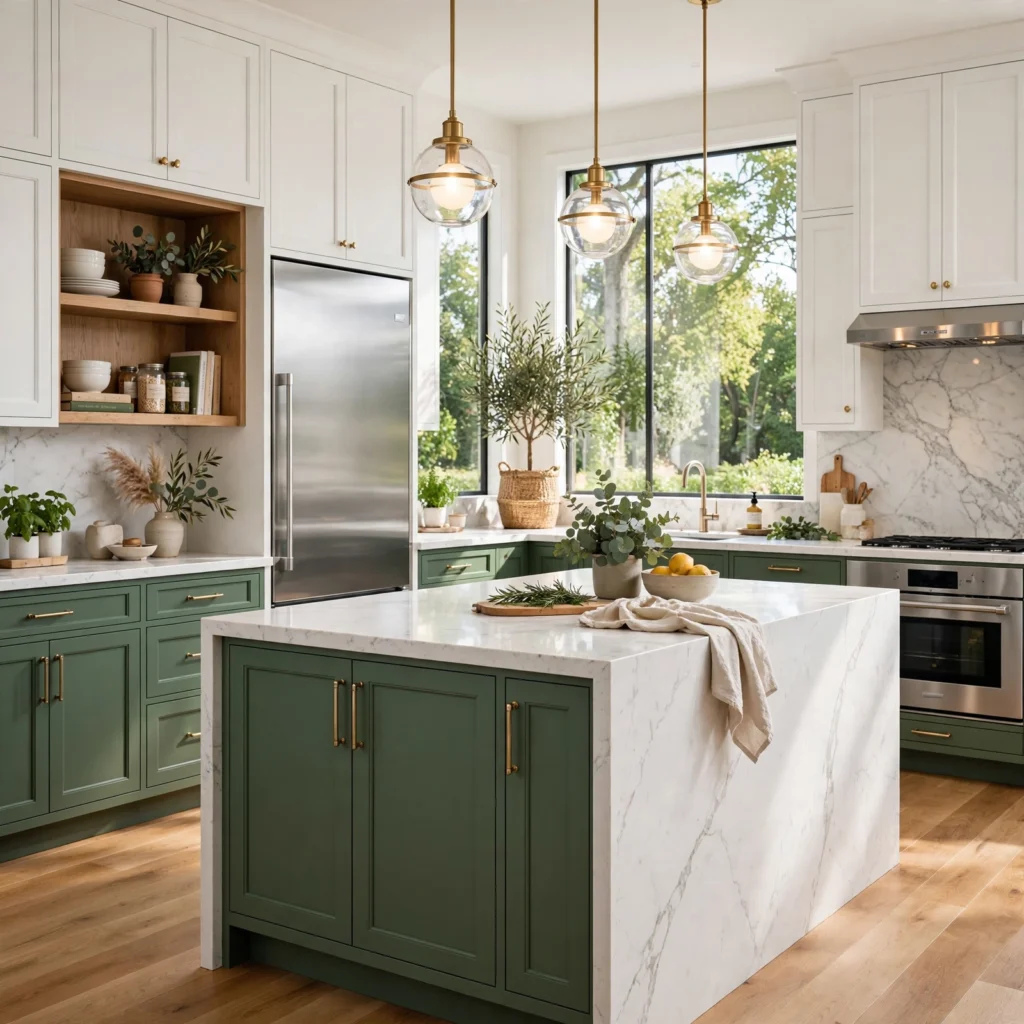
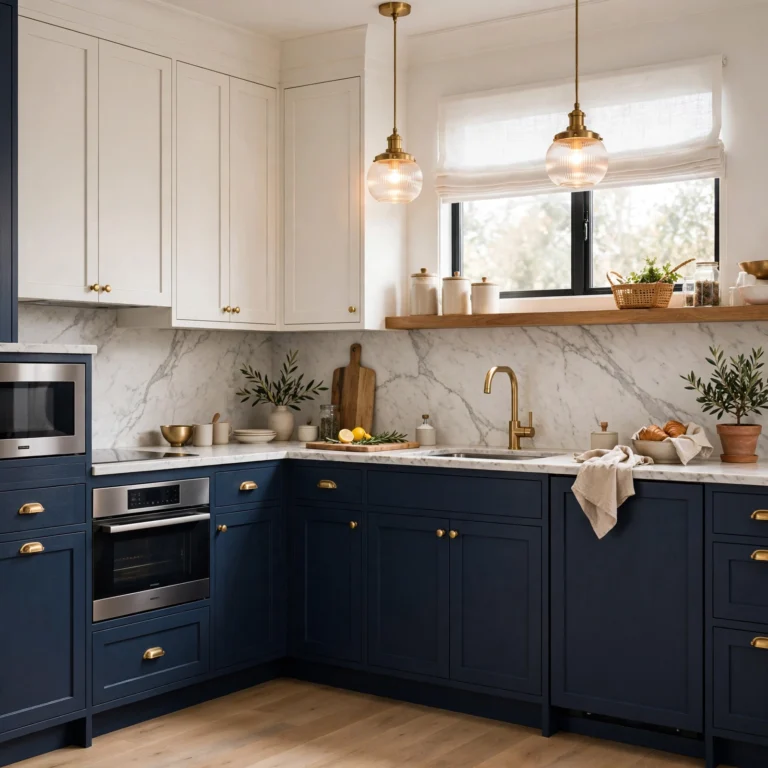
A two-tone green and white kitchen, with green on the lower cabinets and crisp white on the uppers, is one of the most forgiving ways to introduce color into a kitchen without it feeling like a bold, permanent statement. The white upper cabinets keep the ceiling area bright and the room feeling open, while the green lower cabinets ground the space and hide scuffs near handles and toe kicks better than pure white would.
| Style Combo | Best For | Maintenance Level |
| Green lower / white upper | Small to mid kitchens | Low |
| Green upper / white lower | Rooms with high ceilings | Medium |
| All green | Formal, larger kitchens | Medium-high |
6. Brass Cabinet Hardware
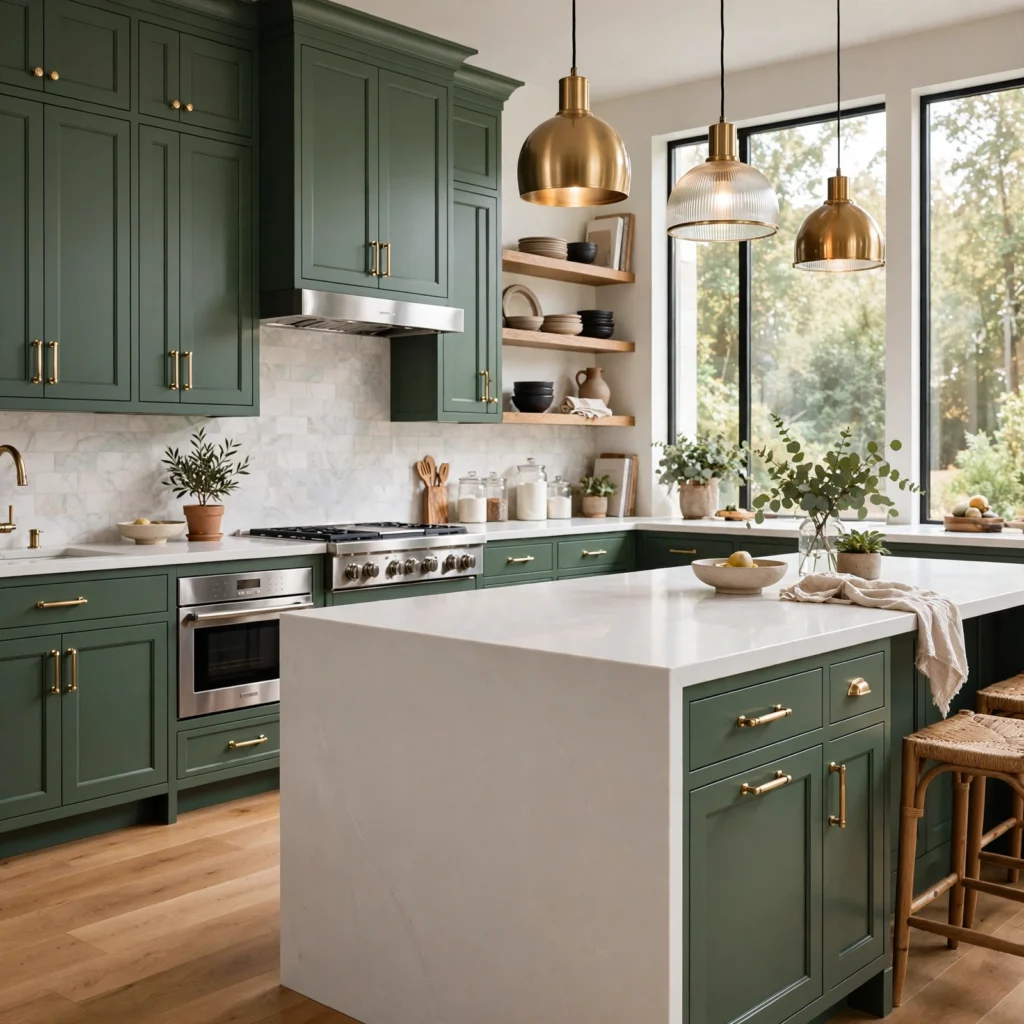
Brass cabinet hardware, whether unlacquered knobs or bin pulls, is the single most effective pairing for green cabinetry because the warm gold tone plays off both cool sage and deep forest shades without clashing. Unlacquered brass develops a natural patina over time, which many designers actually prefer over the uniform shine of polished brass. Matte black hardware is the second most common pairing, offering more contrast for darker green shades like hunter or forest.
7. Marble Countertop Pairing
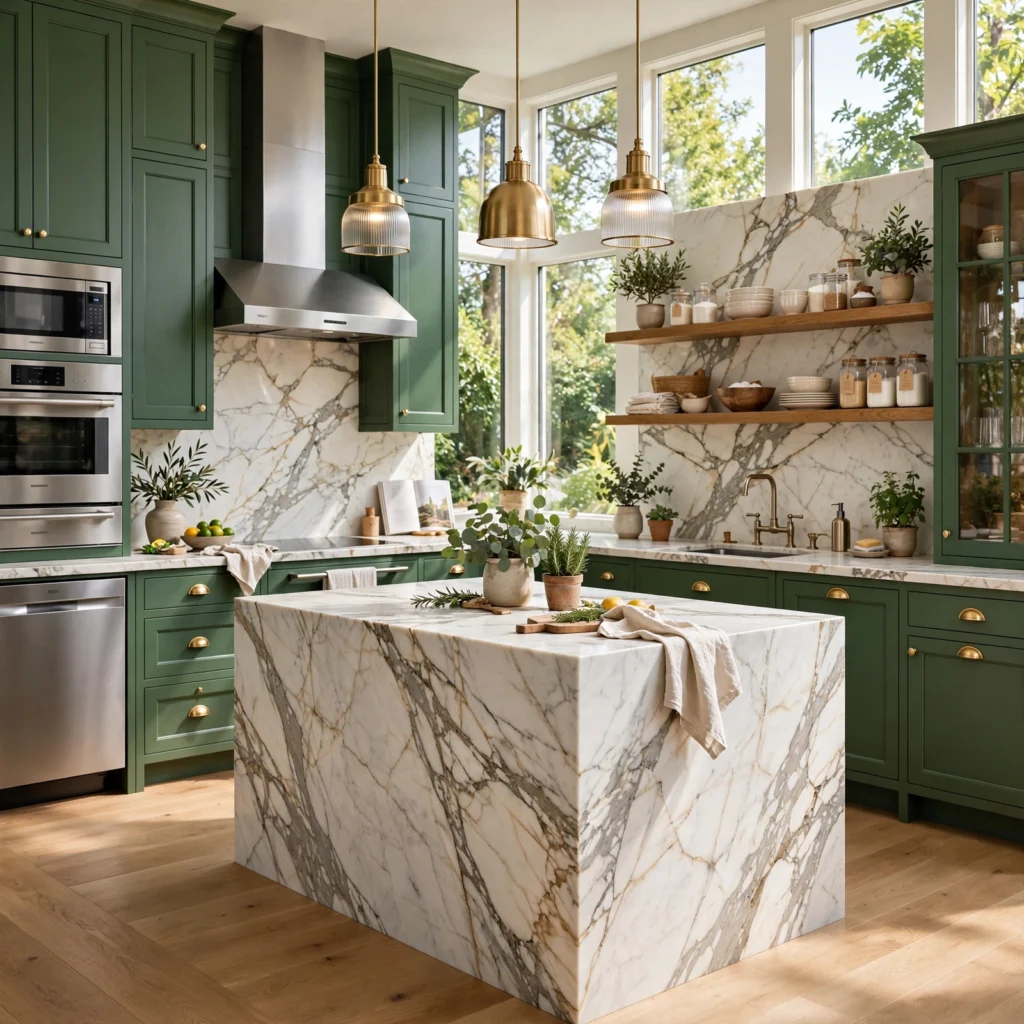
A marble countertop, particularly Calacatta or Carrara with soft gray veining, balances the saturation of green cabinetry by introducing a cool, neutral surface that keeps the kitchen from feeling monochromatic. The veining also echoes any brass or gold hardware used elsewhere in the room, tying the metal and stone together visually. For kitchens with heavy daily use, a quartz slab that mimics marble veining offers a similar look with less required maintenance.
8. Brushed Gold Faucet
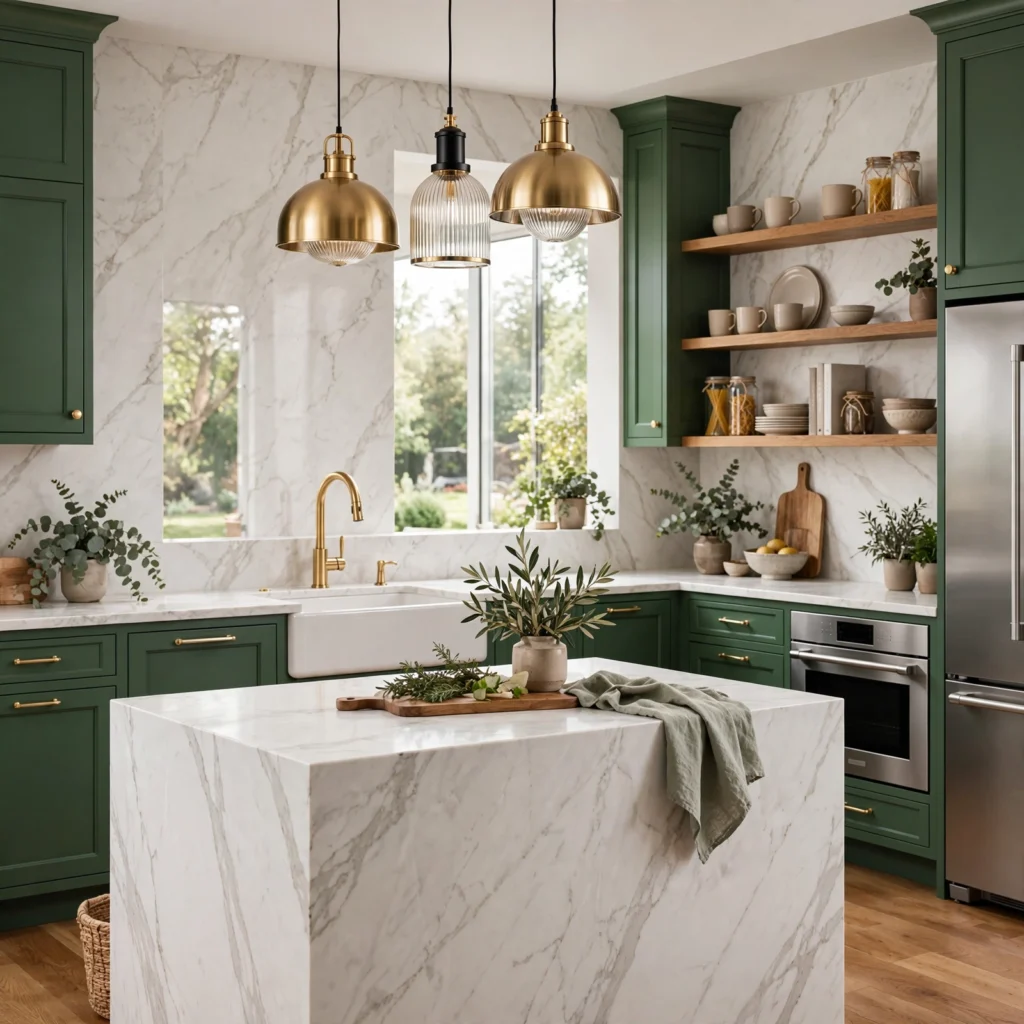
A brushed gold faucet at the sink continues the warm-metal theme established by the cabinet hardware, keeping the kitchen’s finishes from feeling mismatched or accidental. Brushed, rather than polished, gold hides water spots better around a busy sink area, which matters more in a kitchen than almost anywhere else in the home. This finish pairs especially well with sage and olive cabinetry, where the warmth of the gold offsets the cooler, grayed-down green tones.
9. Green Butler’s Pantry
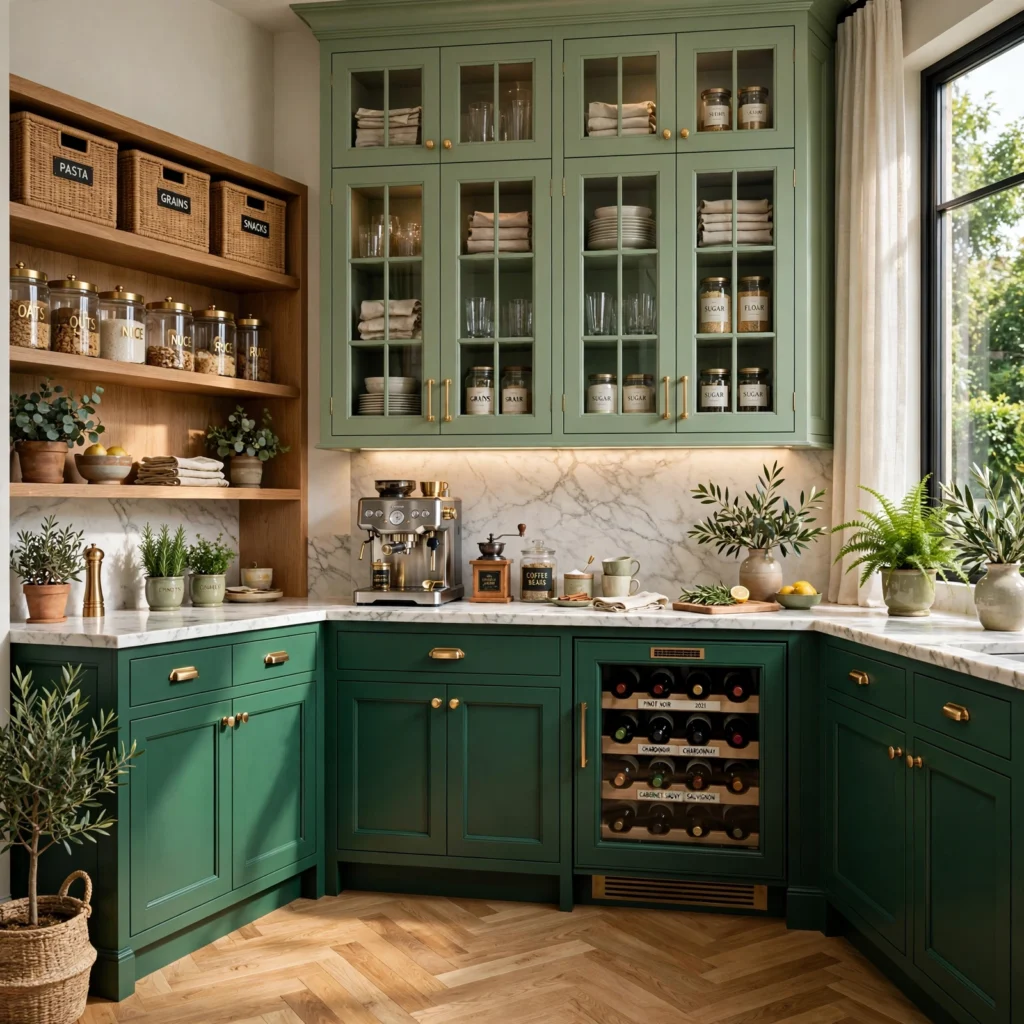
A green butler’s pantry, tucked just off the main kitchen and painted a deeper, moodier green than the main cabinetry, gives homeowners a place to be bolder with color without affecting the resale-friendly main kitchen. Glass-front upper cabinets in this space let the green show through without hiding dishware entirely. This approach has become especially popular in kitchens that open into dining rooms, since the pantry doubles as a serving and display area during entertaining.
10. Textured Tile Backsplash
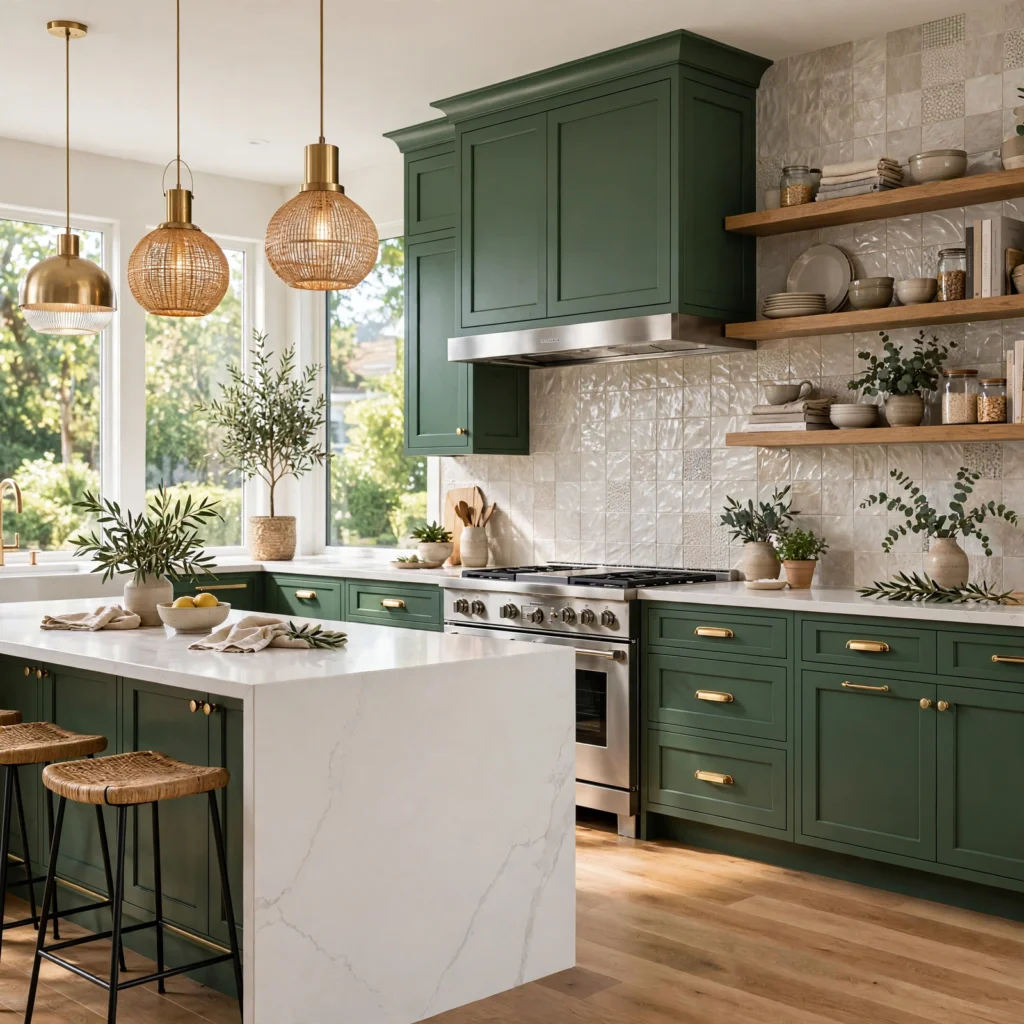
A textured tile backsplash in handmade zellige or fluted ceramic tile adds subtle light-catching texture that keeps a green kitchen from feeling flat, especially when the tile is chosen in a cream, white, or soft green tone close to the cabinetry. The slight variation in each individual tile mimics the handcrafted look found in higher-end custom kitchens. Avoiding perfectly uniform, glossy subway tile in favor of a textured option is what elevates the backsplash from builder-grade to designed.
11. Open Shelving in Green
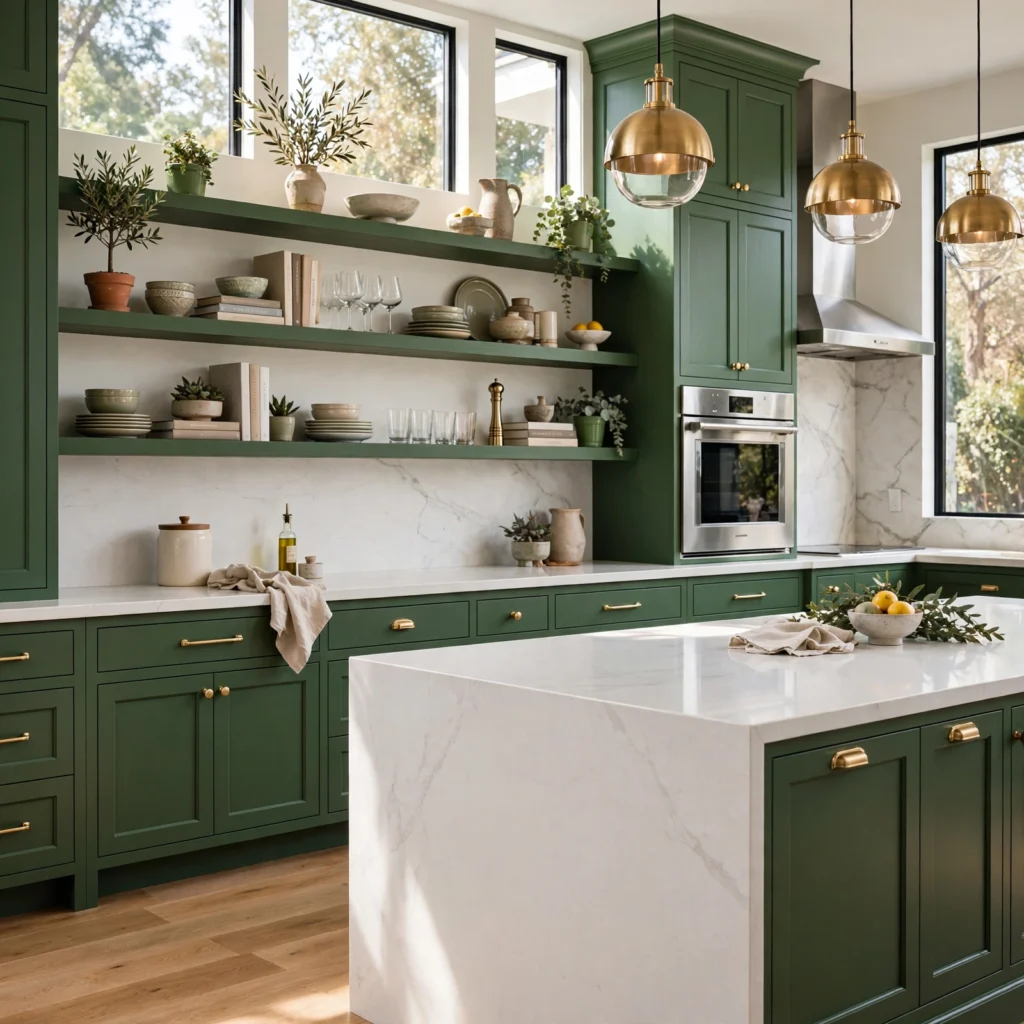
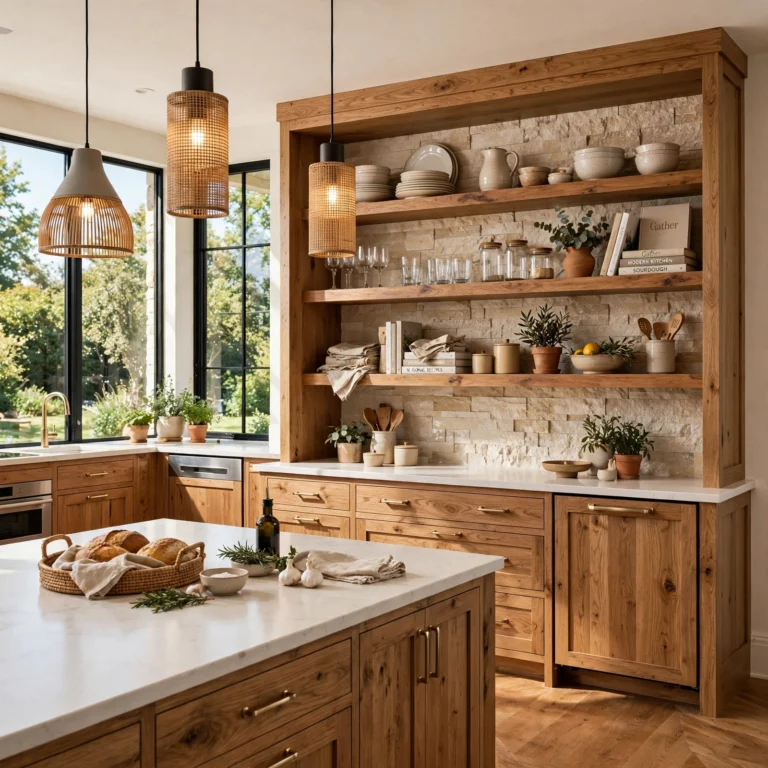
Open shelving, either left as natural wood or painted to match the surrounding green cabinetry, breaks up a wall of closed doors and gives homeowners a spot to display ceramics, glassware, or cookbooks. This works particularly well flanking a range hood, where two shelves on either side balance the visual weight of the hood without requiring full upper cabinets. Keeping the styling on these shelves sparse, rather than fully loaded, is what keeps the look intentional rather than cluttered.
12. Green Kitchen Cabinets With Black Accents
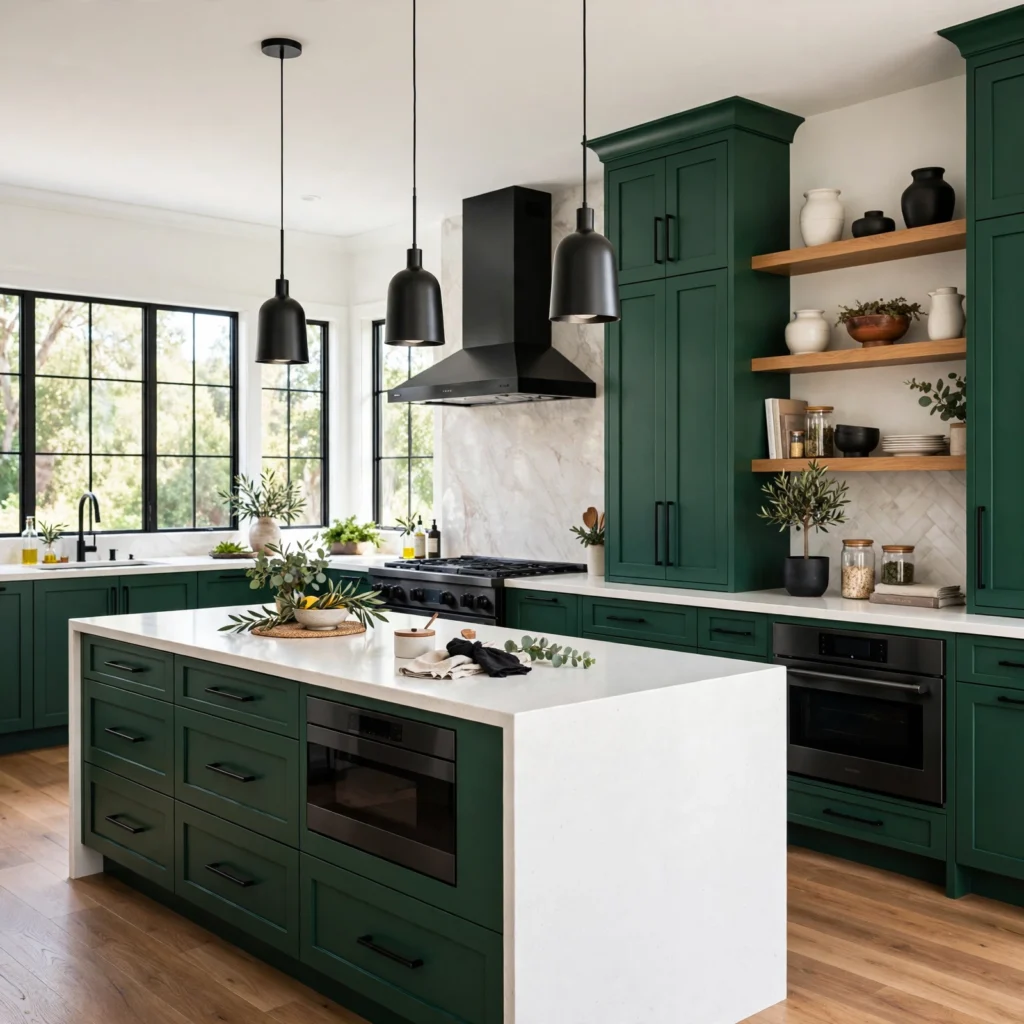
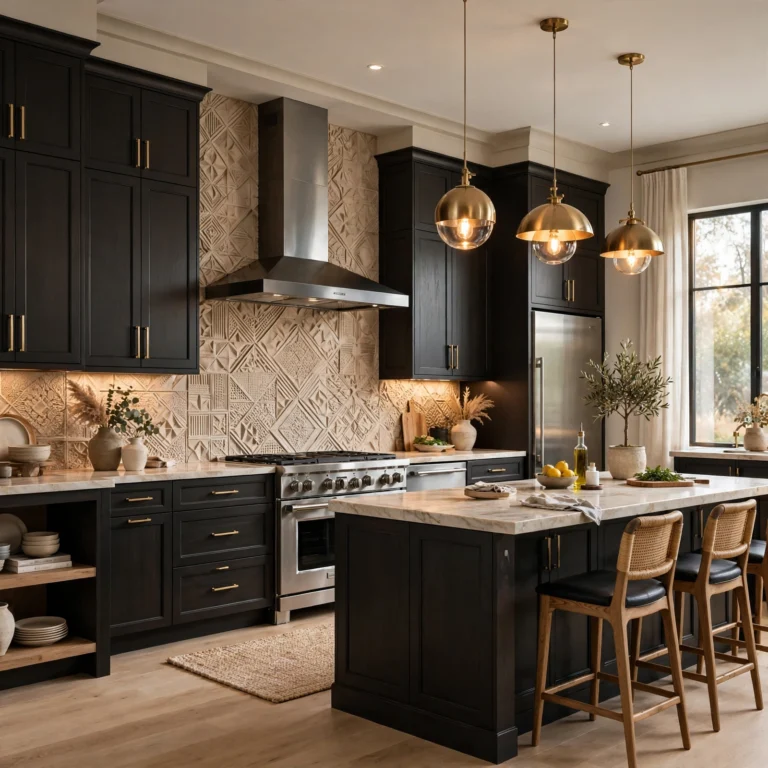
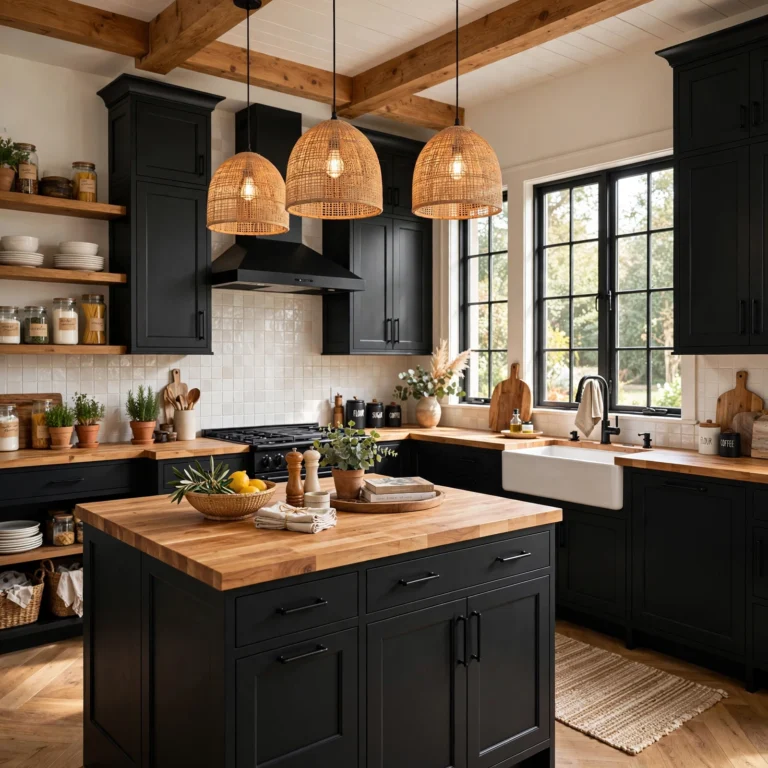
Green kitchen cabinets paired with black accents, such as matte black faucets, black window frames, or a black range, create a higher-contrast look that reads more modern and less traditional than brass or gold pairings. This combination works particularly well with deeper shades like forest or hunter green, since the black accents don’t compete for attention against the already-saturated cabinet color. Keeping the black elements limited to fixtures and hardware, rather than large surfaces, prevents the kitchen from feeling too dark overall.
13. Wood Floating Shelves
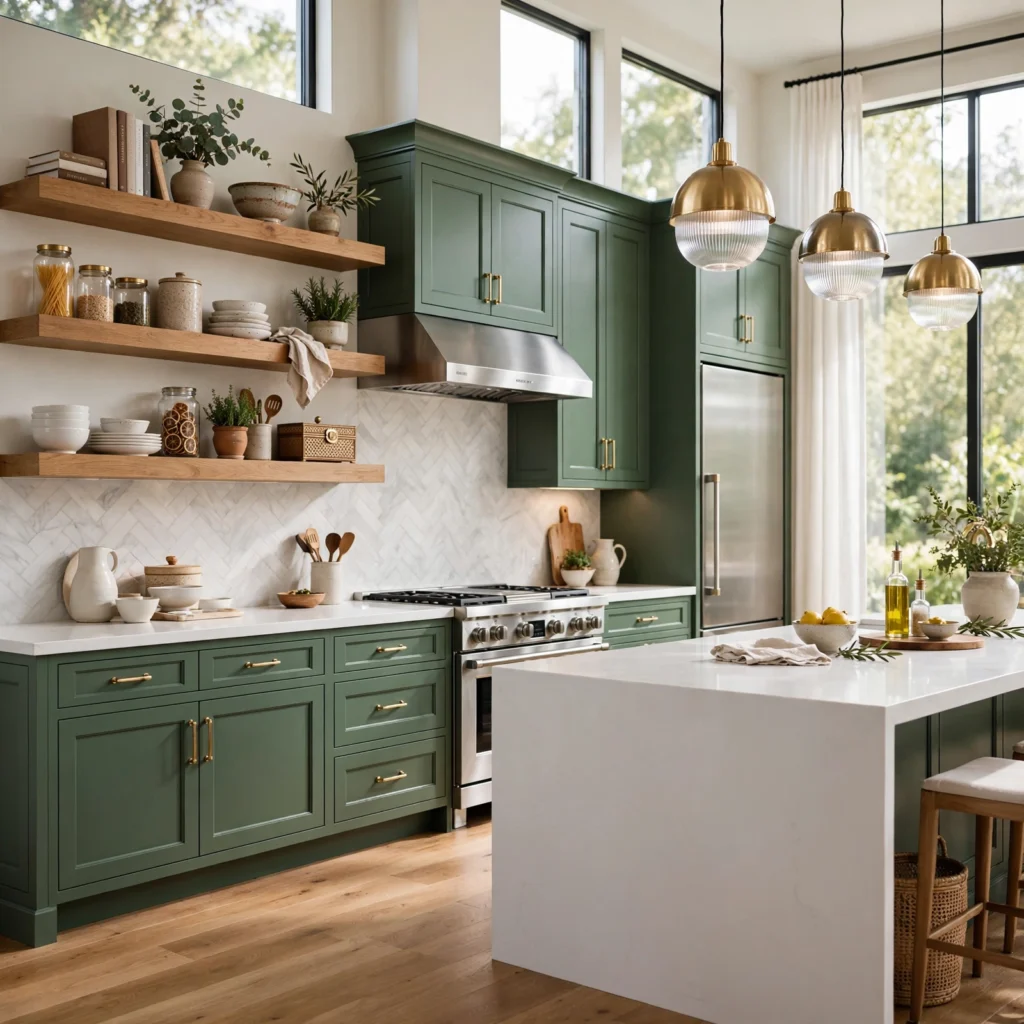
Wood floating shelves in a warm tone like white oak or walnut soften the coolness of gray-toned green cabinetry and introduce a natural material that pairs well with both brass and black hardware. Mounted at standard reach height, roughly 15 to 18 inches above the counter, they’re functional as well as decorative, holding everyday items like oils, spices, or small plants. This pairing is especially common in Scandinavian-influenced or modern-farmhouse kitchens.
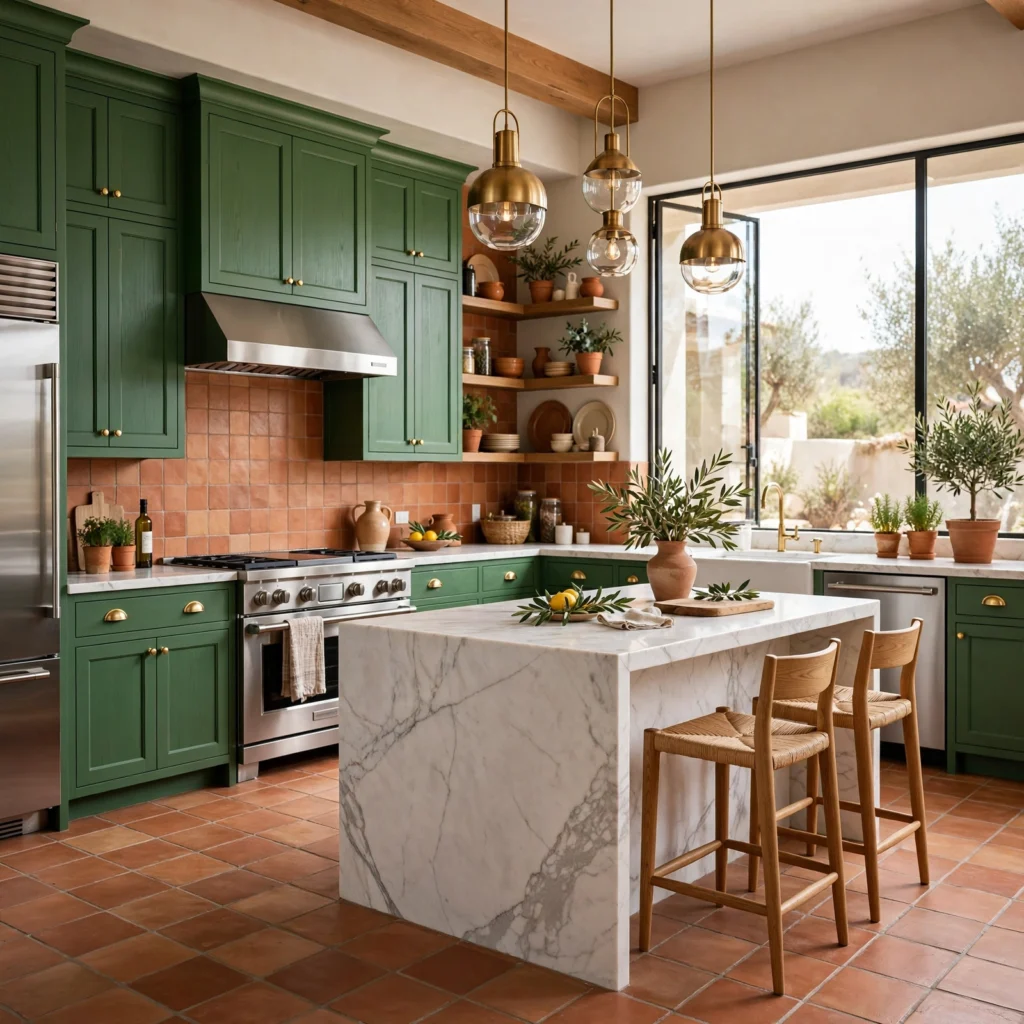
14. Green Cabinets With Terracotta Tile
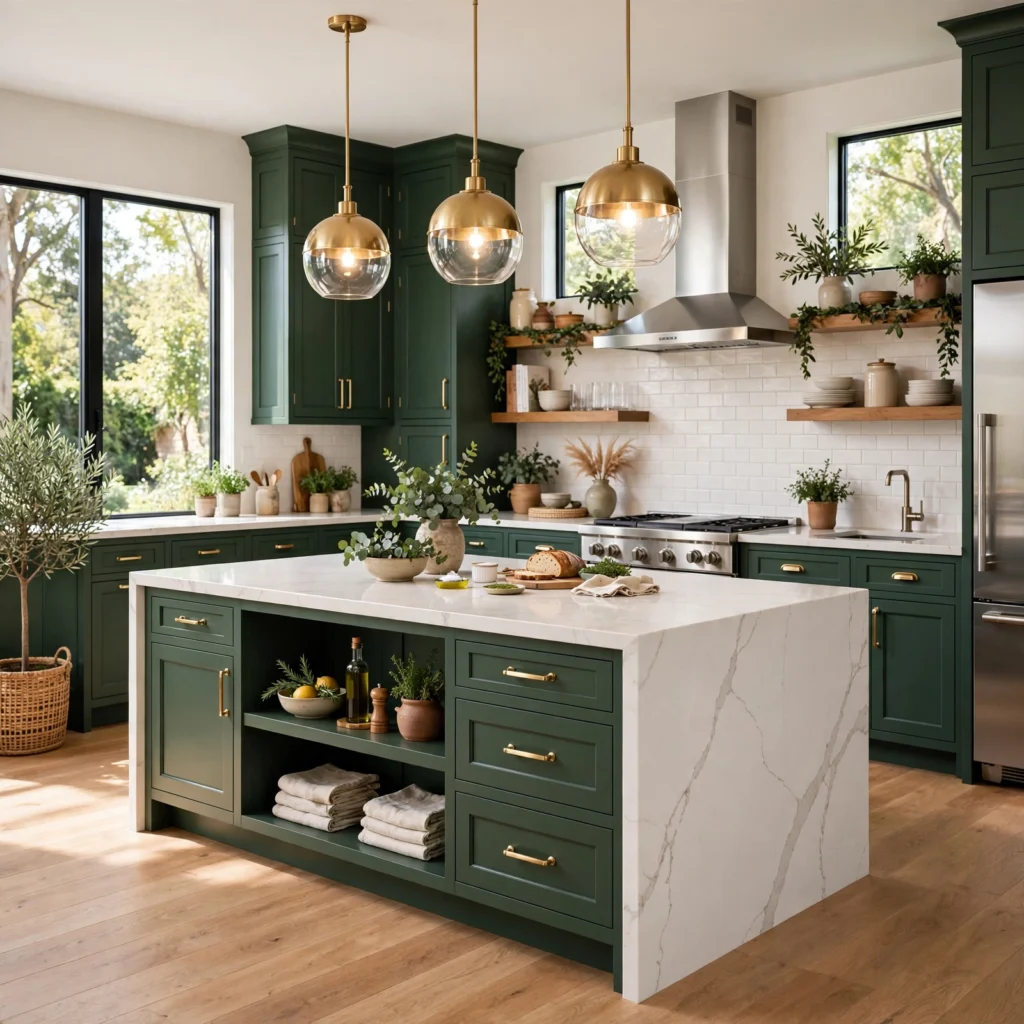
Green cabinets paired with terracotta or clay-toned floor tile lean into an earthy, Mediterranean-inspired palette that feels warm rather than cold, unlike the more common green-and-white combination. Olive and sage tones work particularly well here, since their brownish undertones echo the warmth of the terracotta rather than fighting against it. This pairing suits kitchens that open onto a patio or outdoor dining space, where the palette can extend naturally from indoors to out.
15. Painted Kitchen Island Only
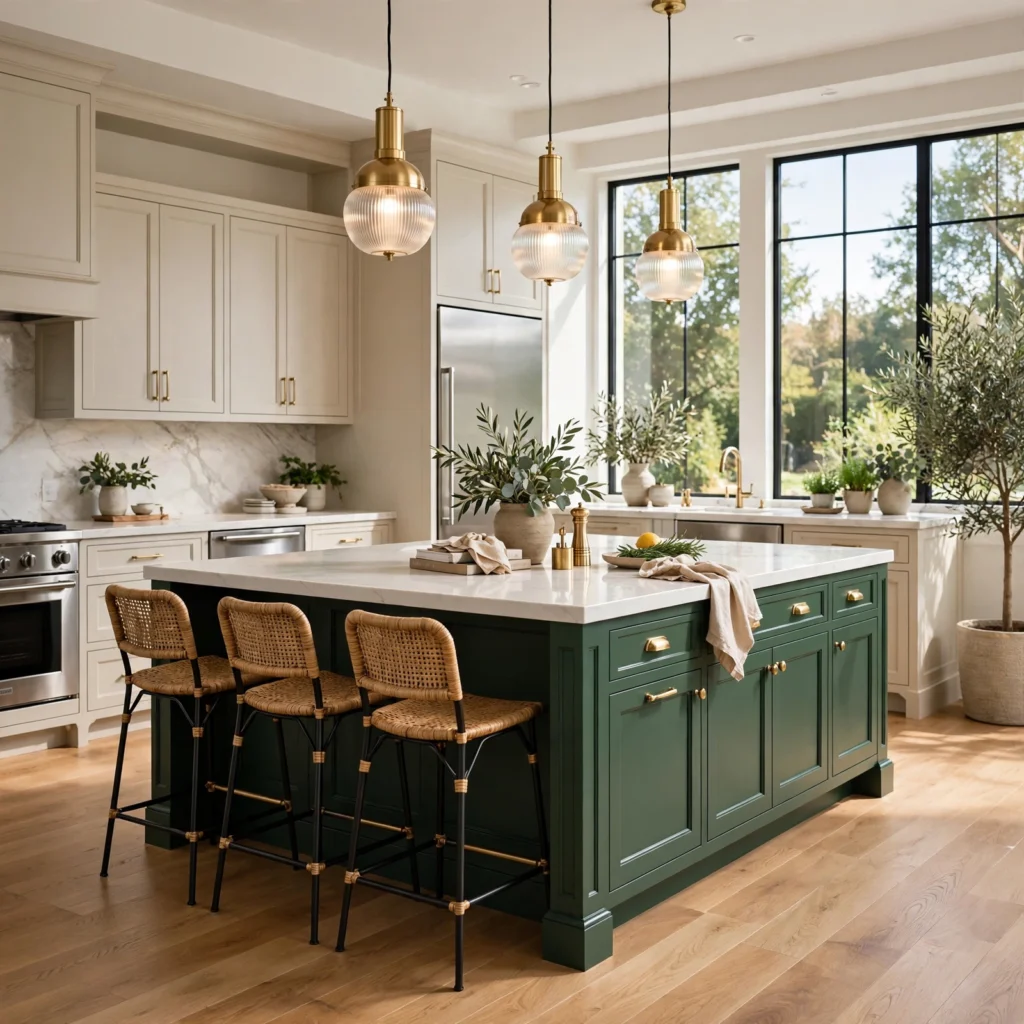
Painting only the kitchen island a saturated green, while leaving perimeter cabinets in their existing wood or white finish, is the lowest-cost, lowest-commitment way to test the trend, since it typically requires far less paint and labor than a full cabinet repaint. This approach also works well as a rental-friendly or budget-conscious update, since the island can be repainted again later without touching the rest of the kitchen’s cabinetry.
Shop the Look
Start with a quart of sage or hunter green cabinet-grade paint in a matte or eggshell finish, a set of unlacquered brass bin pulls and knobs, a Calacatta-style quartz countertop slab, a handmade zellige tile in cream or soft green for the backsplash, and a brushed gold single-handle kitchen faucet. These five elements cover paint, hardware, surfaces, and fixtures without requiring a full kitchen renovation.
Common Mistake to Avoid
The most common mistake is choosing a green shade under warm kitchen lighting at the paint store and then discovering it looks entirely different, often more yellow or gray, once it’s on the cabinets under the kitchen’s actual lighting. Always test a large sample swatch directly on the cabinets and view it at different times of day before committing. A related mistake is pairing a cool, blue-toned green with warm wood flooring, which can make both finishes look slightly off rather than intentionally layered.
People Also Ask
What is the most popular shade of green for kitchen cabinets?
Sage green is currently the most requested shade, largely because its muted, grayed-down undertone works with a wide range of countertop and flooring colors without dominating the room. It reads as calm and current rather than trendy in a way that will date quickly. Hunter and forest green follow closely behind for homeowners wanting a bolder, more formal look, particularly on kitchen islands or in combination with white perimeter cabinetry.
Do green kitchen cabinets go out of style?
Muted, grayed-down greens like sage and olive tend to age well because they function similarly to a neutral, pairing easily with changing hardware and decor trends over time. Bright, saturated greens are more trend-sensitive and may feel dated sooner. Choosing a two-tone layout, where green is limited to the island or lower cabinets, also helps future-proof the kitchen, since only a portion of the cabinetry would need repainting if trends shift.
What color countertop goes best with green cabinets?
White or light gray marble and quartz, particularly with visible veining, are the most popular countertop pairings because the cool, neutral stone balances the saturation of green cabinetry. Butcher block and other warm wood countertops work especially well with olive or sage tones for a more organic, farmhouse look. Darker countertops like black granite tend to work best only with lighter green shades, since pairing dark stone with dark cabinetry can make a kitchen feel closed in.
Should green kitchen cabinets be matte or glossy?
Matte and low-sheen eggshell finishes are currently favored over high-gloss, since they read as more custom and closer to traditional painted millwork. High-gloss green can look plastic-like and dated faster, particularly in brighter or more saturated shades. Matte finishes do show fingerprints and smudges more easily near handles, so a slightly higher sheen, such as satin, is sometimes used specifically on high-touch areas for easier cleaning.
What hardware color works best with green cabinets?
Unlacquered or brushed brass is the most common pairing, since its warm gold tone complements both cool sage and deep forest greens without competing with the color. Matte black is the second most popular choice, offering more contrast, particularly on darker green shades like hunter or forest. Polished chrome and nickel are used less often, since their cooler, brighter finish can make green cabinetry feel colder than intended.
Conclusion
These fifteen approaches to green kitchen cabinets show just how much range the color has, from a single painted island to a full sage-toned remodel with brass hardware throughout. Start small if you’re unsure, a painted island or a butler’s pantry is a low-risk way to test the shade before committing further. Save this guide to Pinterest for your next kitchen update, and check out our related post on the best cabinet hardware finishes for 2026.
Author Expertise Note
Written by a design writer who has covered kitchen and cabinetry trends for home publications for several years, working closely with cabinet painters and kitchen designers to track which finishes actually hold up over time.