16 Trending Dark Kitchen Cabinets Ideas for a Dramatic, Modern Kitchen
Dark kitchen cabinets have moved from a bold, niche choice to one of the most requested looks in kitchen design, replacing the all-white kitchens that dominated for over a decade. This post walks through sixteen specific, real ways to bring dark kitchen cabinets into a kitchen, covering exact shades, lighting strategies, hardware pairings, and layout tricks. Whether you’re repainting existing cabinets or planning a full remodel, you’ll come away with concrete direction instead of a vague color-swatch board.
Why Dark Kitchen Cabinets Are Trending Now
Dark cabinetry has gained ground as homeowners move away from all-white, resale-driven kitchens toward layouts that feel more dramatic, personal, and closer to a designed space than a builder-grade one. Paint and cabinet manufacturers have responded with expanded charcoal, navy, and true-black lines, alongside more lighting products designed specifically to keep dark kitchens from feeling dim. This matters now because kitchens are increasingly treated as design-forward, entertaining-ready rooms, and dark cabinetry, done with the right lighting and finishes, delivers a richer, more custom feel than a light, all-neutral kitchen typically can.
Key Takeaways
- Dark kitchen cabinets range from deep charcoal and navy to true black and espresso brown, and the undertone you pick determines whether the kitchen feels moody or clean and modern.
- Balancing dark cabinetry with the right lighting, countertop, and wall color matters more than the shade itself for keeping the room from feeling closed in.
- Two-tone layouts, where dark cabinets are used only on the island or lower cabinets, are one of the easiest ways to introduce depth without a full repaint.
- Warm metal hardware and layered lighting currently outperform cool finishes and single overhead fixtures for keeping a dark kitchen from feeling flat or dim.
1. Matte Black Slab Cabinets
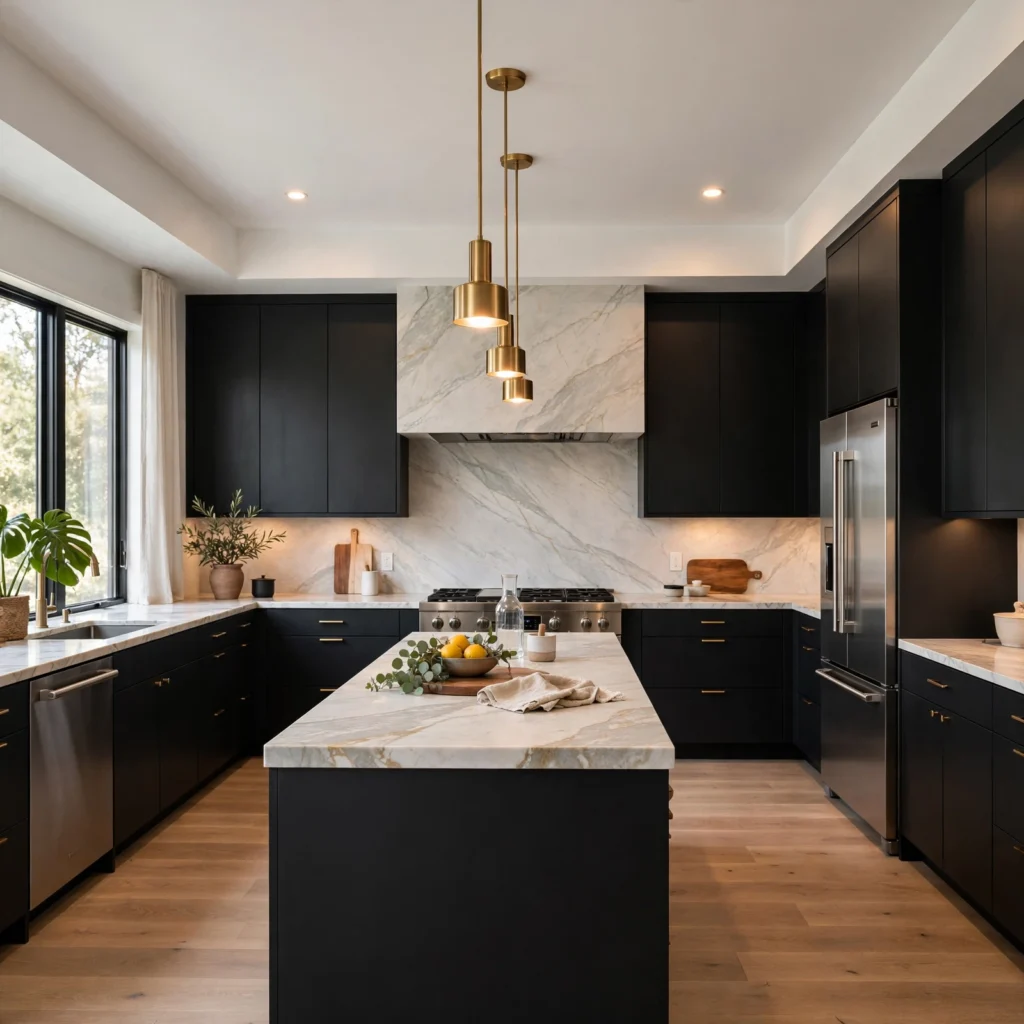
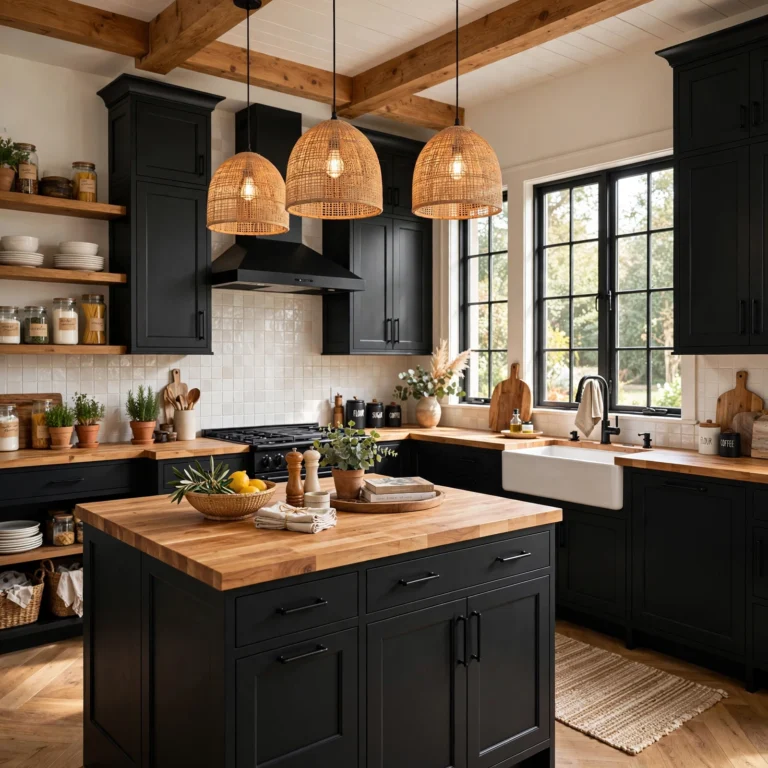
Matte black slab cabinets, with flat, unadorned door fronts, give a kitchen a sleek, architectural look that reads as distinctly modern rather than traditional. The matte finish specifically matters here, since a glossy black can look severe and show fingerprints far more visibly than a chalky, low-sheen surface. This style pairs particularly well with brass or unlacquered gold hardware, which softens the starkness of the black with a warm metal accent.
2. Charcoal Grey Island
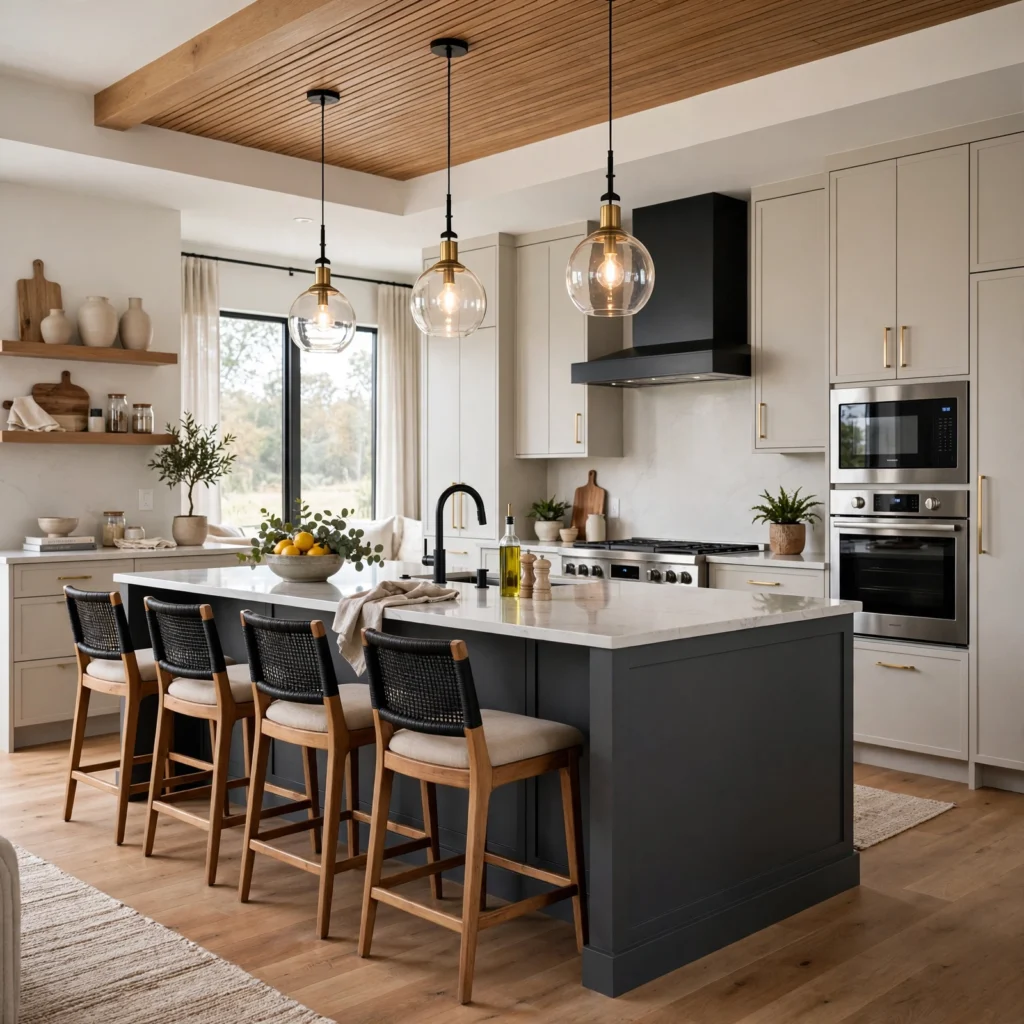
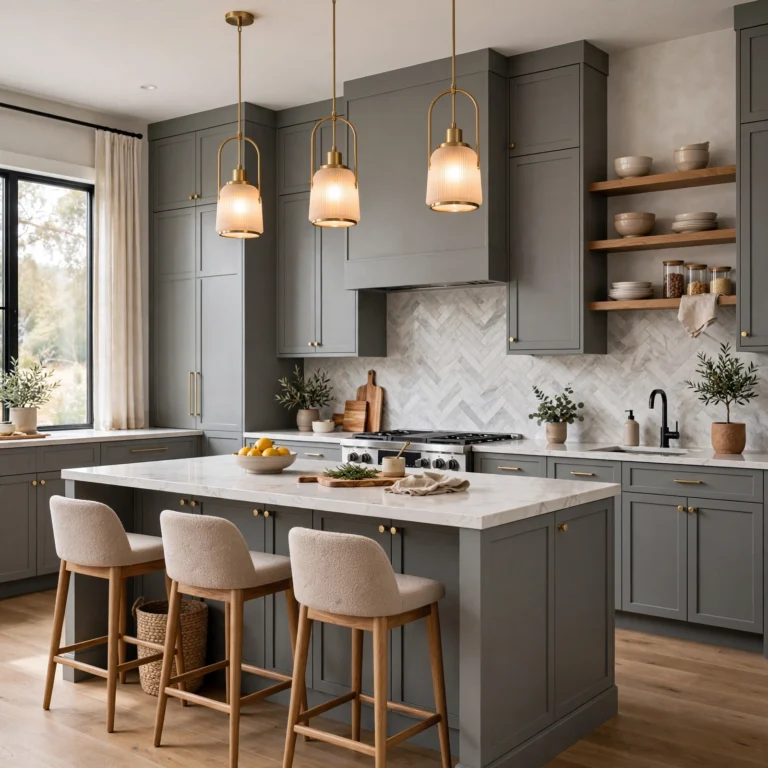
A charcoal grey island, left as the single darker element against white or light wood perimeter cabinets, anchors the room without requiring the commitment of painting every cabinet the same deep shade. This two-tone approach is one of the most popular ways to test dark cabinetry before going all-in, and it also visually separates the cooking zone from the rest of an open-concept layout. Pair it with a warm wood or white stone countertop to balance the depth of the charcoal.
| Kitchen Size | Island Length | Recommended Countertop |
| Under 150 sq ft | 4–5 ft | Butcher block or quartz |
| 150–250 sq ft | 6–7 ft | Quartz or soapstone |
| 250+ sq ft | 8 ft+ | Marble or granite |
3. Navy Blue Lower Cabinets
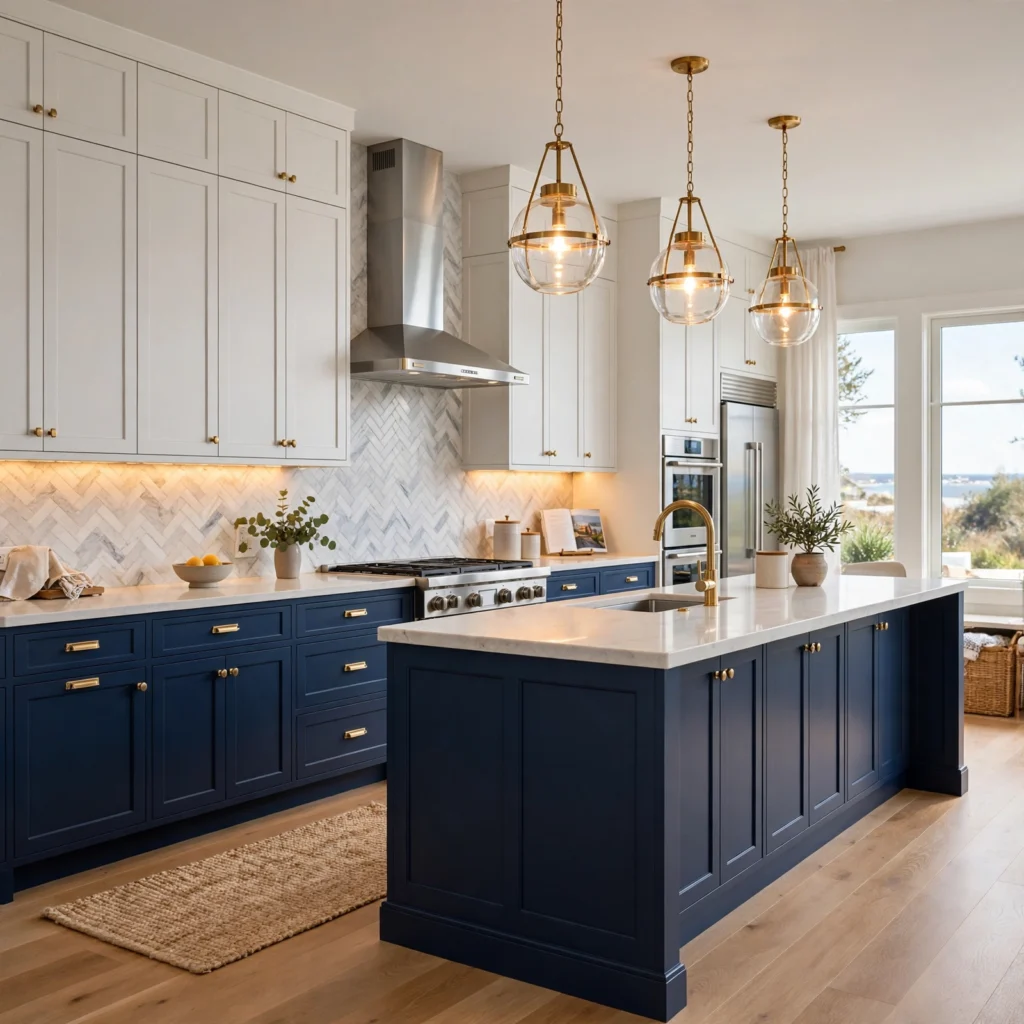
Navy blue lower cabinets paired with white upper cabinets ground a kitchen with a deep, classic color while keeping the upper half of the room bright and open. The navy hides scuffs and fingerprints near handles better than white would, which matters most on lower cabinets that see the most daily contact. This pairing works in both traditional and modern kitchens depending on whether the doors are shaker-style or flat-panel.
4. Espresso Brown Cabinetry
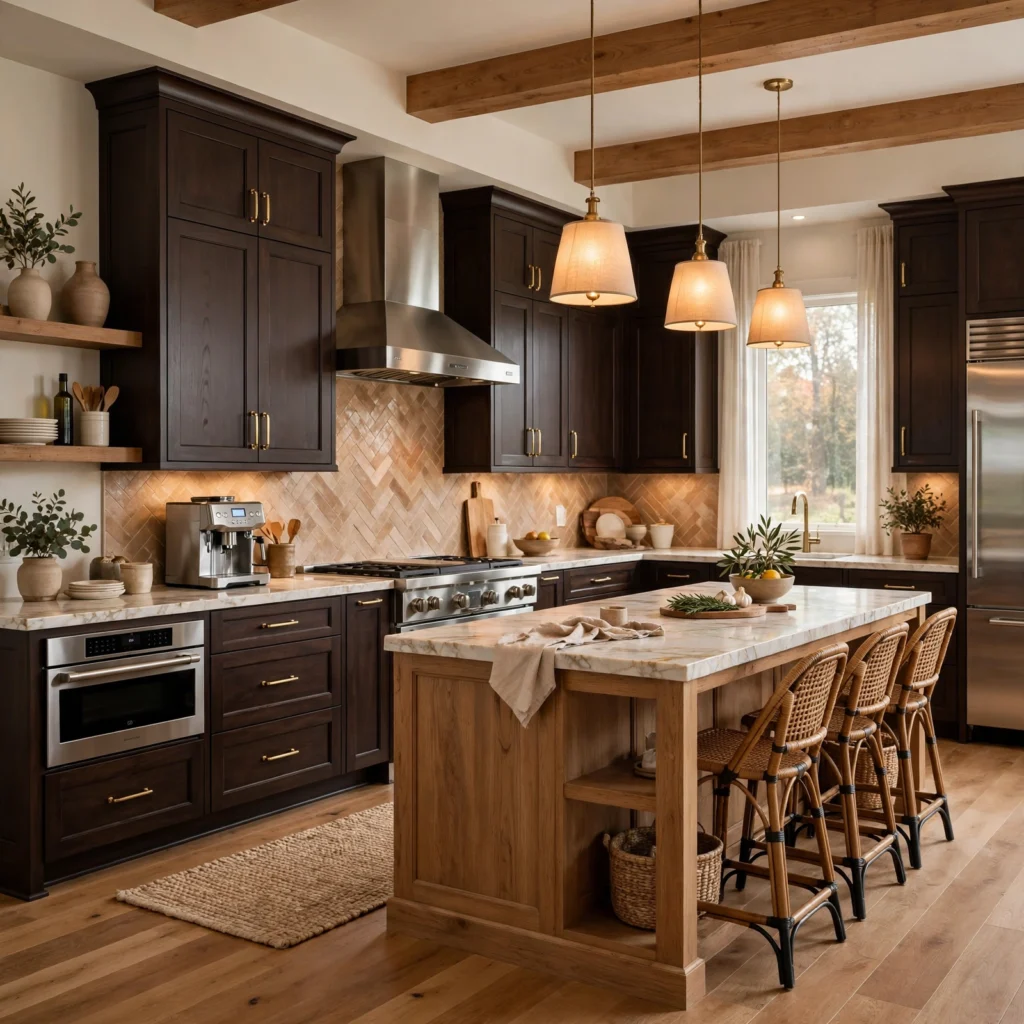
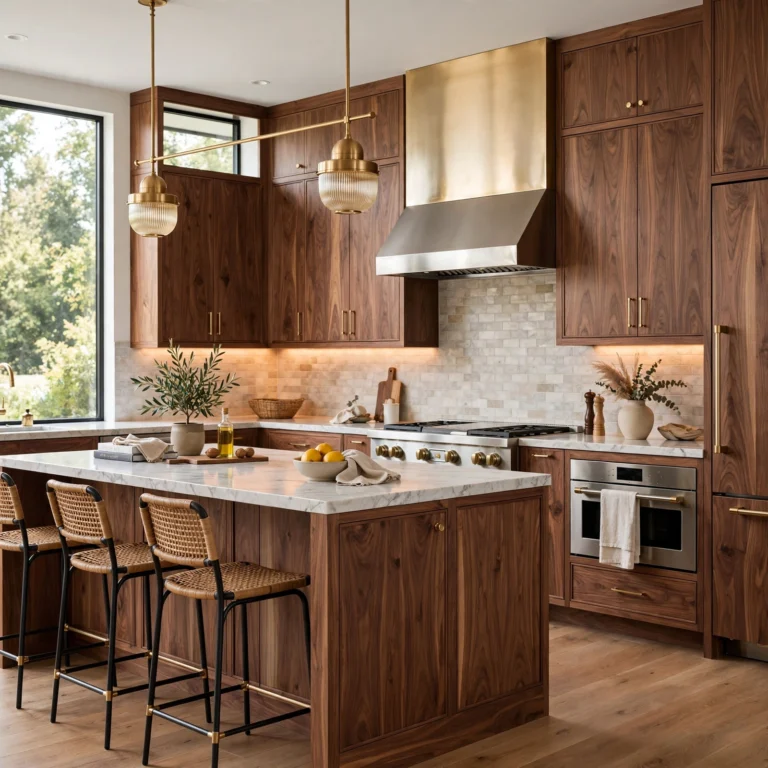
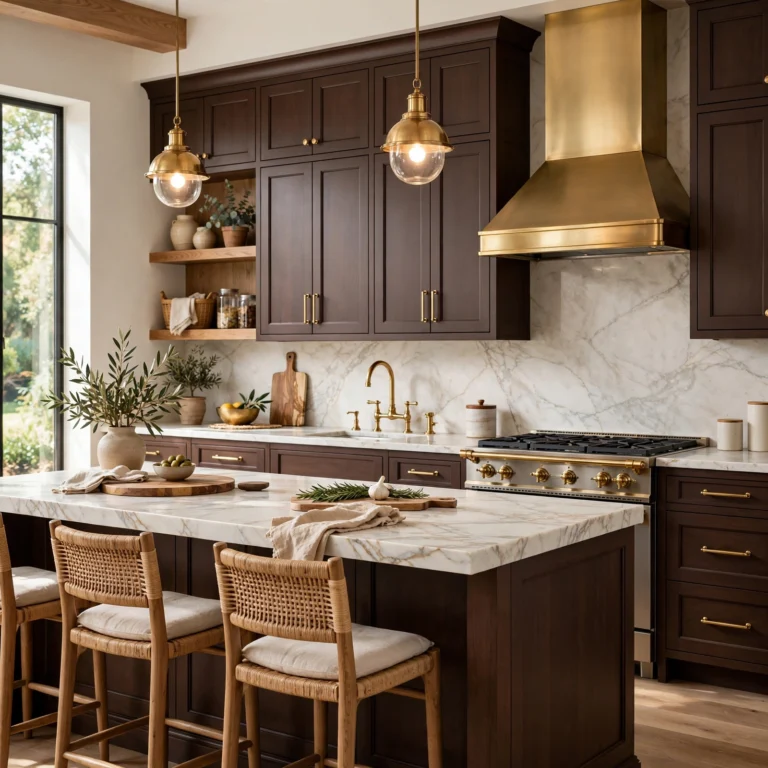
Espresso brown cabinetry, a deep, near-black stain with warm undertones, offers a softer alternative to true black while still delivering the same sense of depth and drama. This shade pairs particularly well with warm wood flooring and brass hardware, since the brown undertone bridges the two naturally rather than creating stark contrast. Espresso tends to suit more traditional or transitional kitchens better than the starker, more architectural look of matte black.
To see more brown kitchen cabinets
5. Dark Cabinets With a Marble Countertop
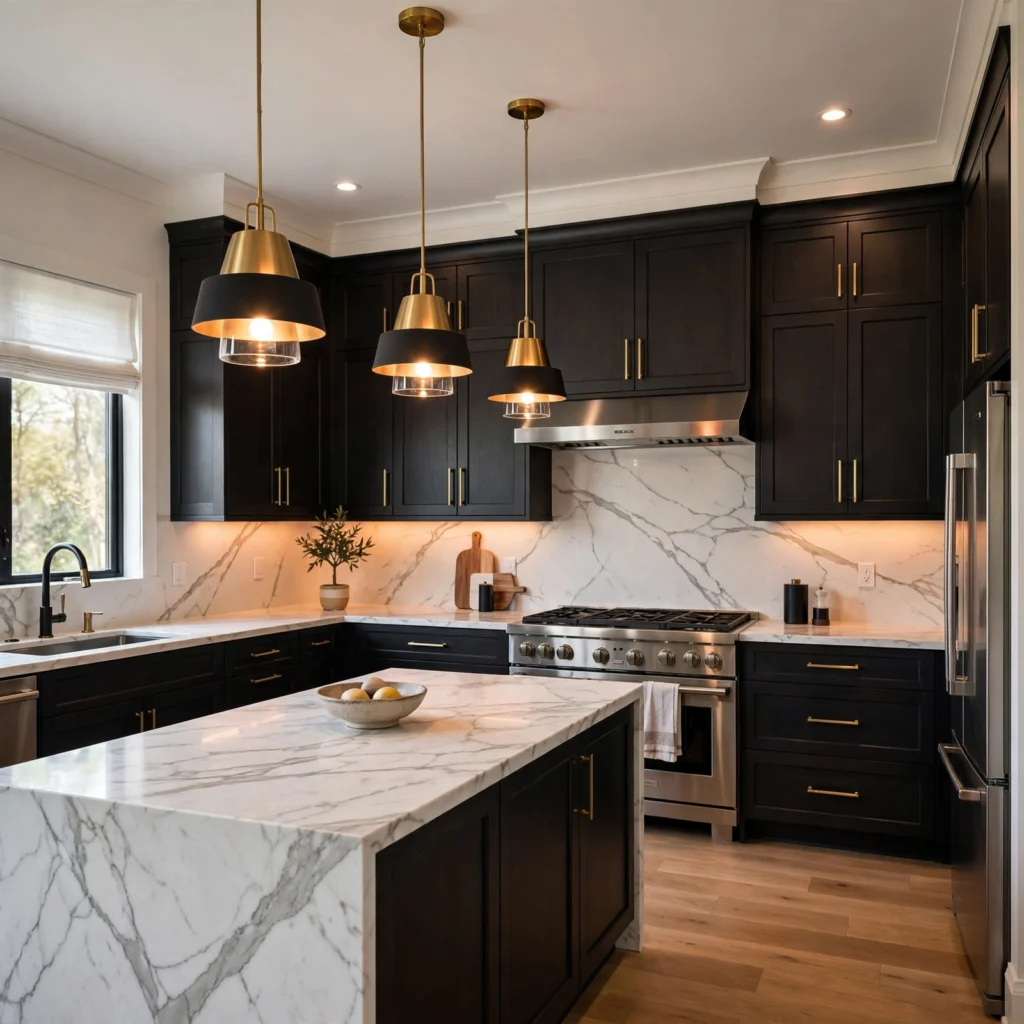
A marble countertop, particularly Calacatta or Carrara with soft grey veining, balances the saturation of dark cabinetry by introducing a cool, reflective surface that keeps the kitchen from feeling heavy or closed in. The veining also echoes any brass or gold hardware used elsewhere in the room, tying the metal and stone together visually. For kitchens with heavy daily use, a quartz slab that mimics marble veining offers a similar look with less required maintenance.
6. Layered Under-Cabinet Lighting
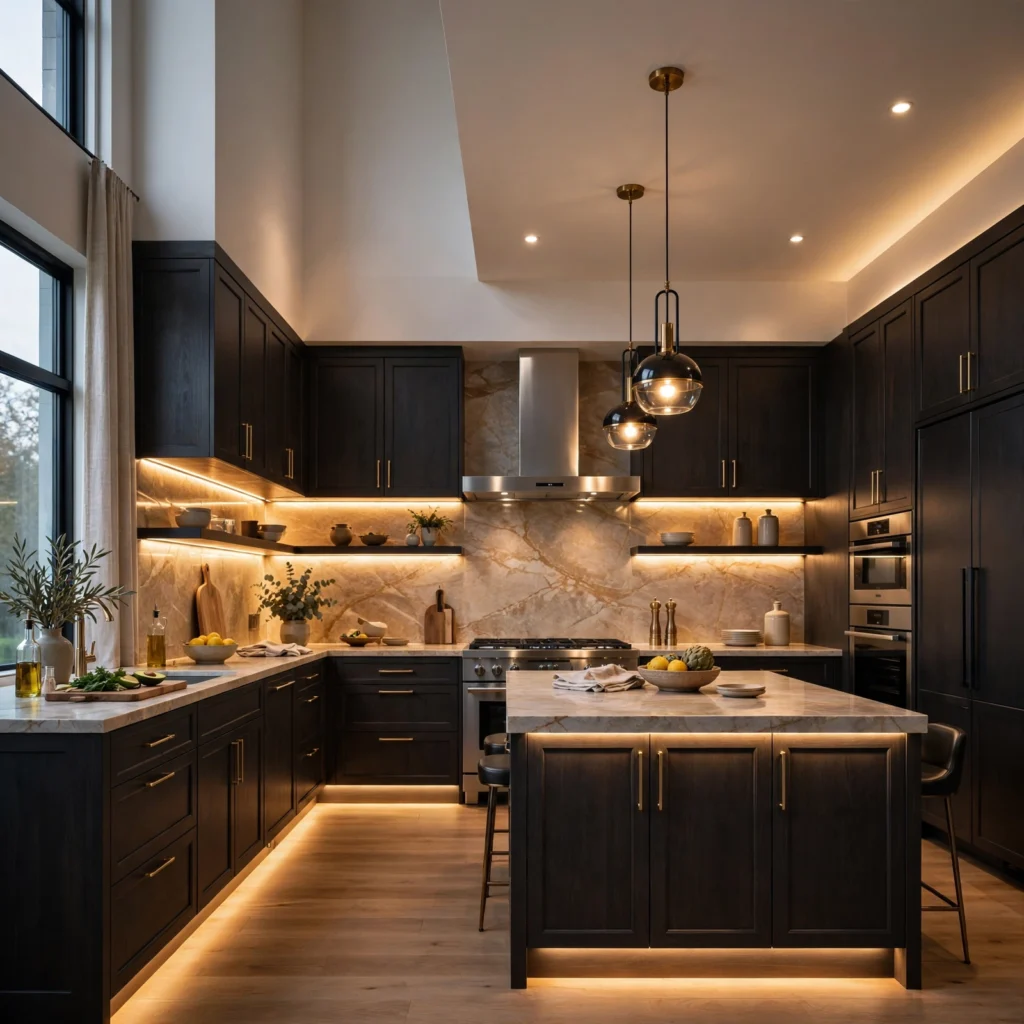
Layered under-cabinet lighting, installed beneath upper cabinets or open shelving, is essential in a dark kitchen since a single overhead fixture alone tends to leave the room feeling dim regardless of how bright the bulb is. This lighting also highlights the countertop and backsplash, drawing attention to texture and material rather than letting the dark cabinetry dominate the eye entirely. Warm-white bulbs, rather than cool daylight ones, keep the light flattering against dark wood or paint tones.
| Fixture Type | Placement | Purpose |
| Under-cabinet LED strip | Beneath upper cabinets | Task lighting, counter glow |
| Picture lights | Above open shelving | Accent, depth |
| Pendant lights | Over island | Focal point, ambient light |
7. Dark Cabinets With Brass Hardware
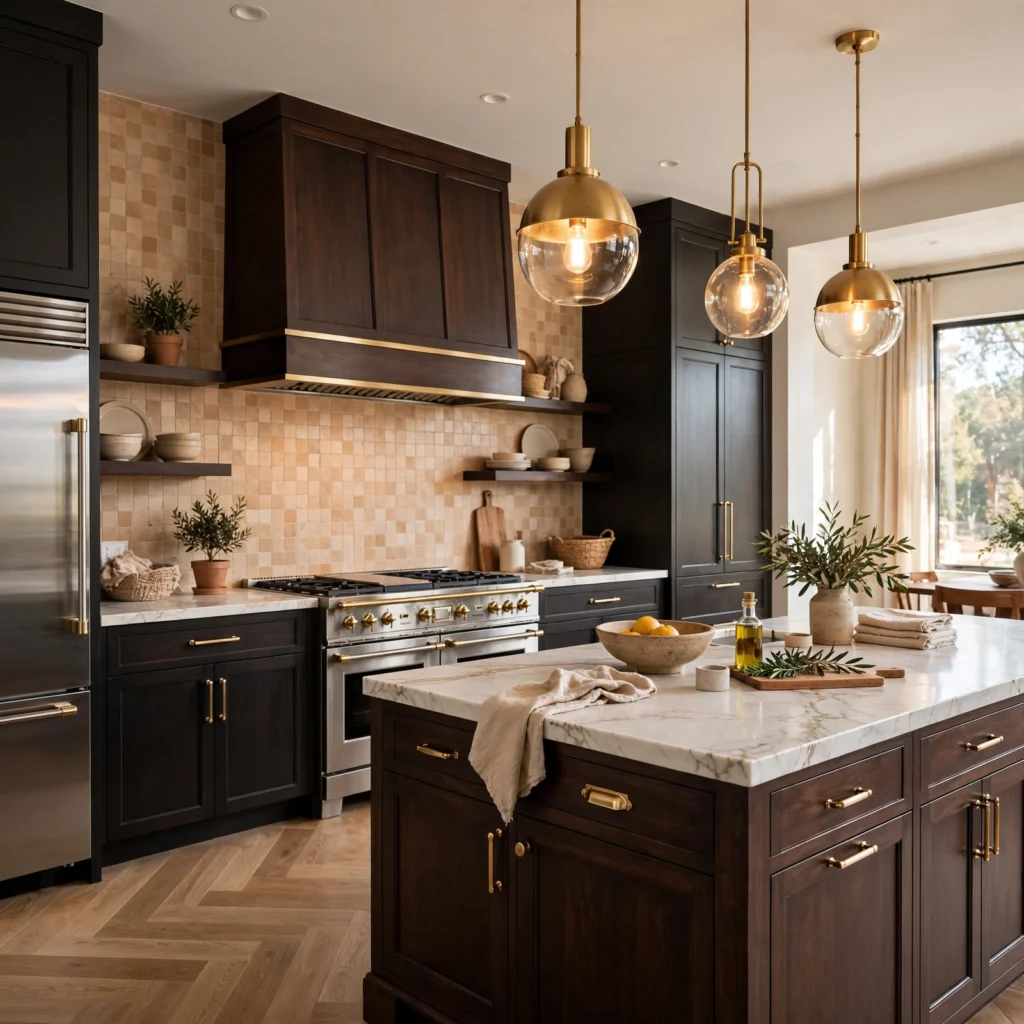
Unlacquered or brushed brass hardware is one of the most common pairings for dark cabinetry, since the warm gold tone breaks up the depth of black, navy, or espresso cabinets without introducing a cooler, competing metal finish. Brass knobs and bin pulls in particular develop a soft patina over time that many designers prefer over the uniform shine of polished brass. This pairing suits both traditional shaker-style dark cabinets and more modern slab-front versions equally well.
8. Two-Tone Dark and White Kitchen
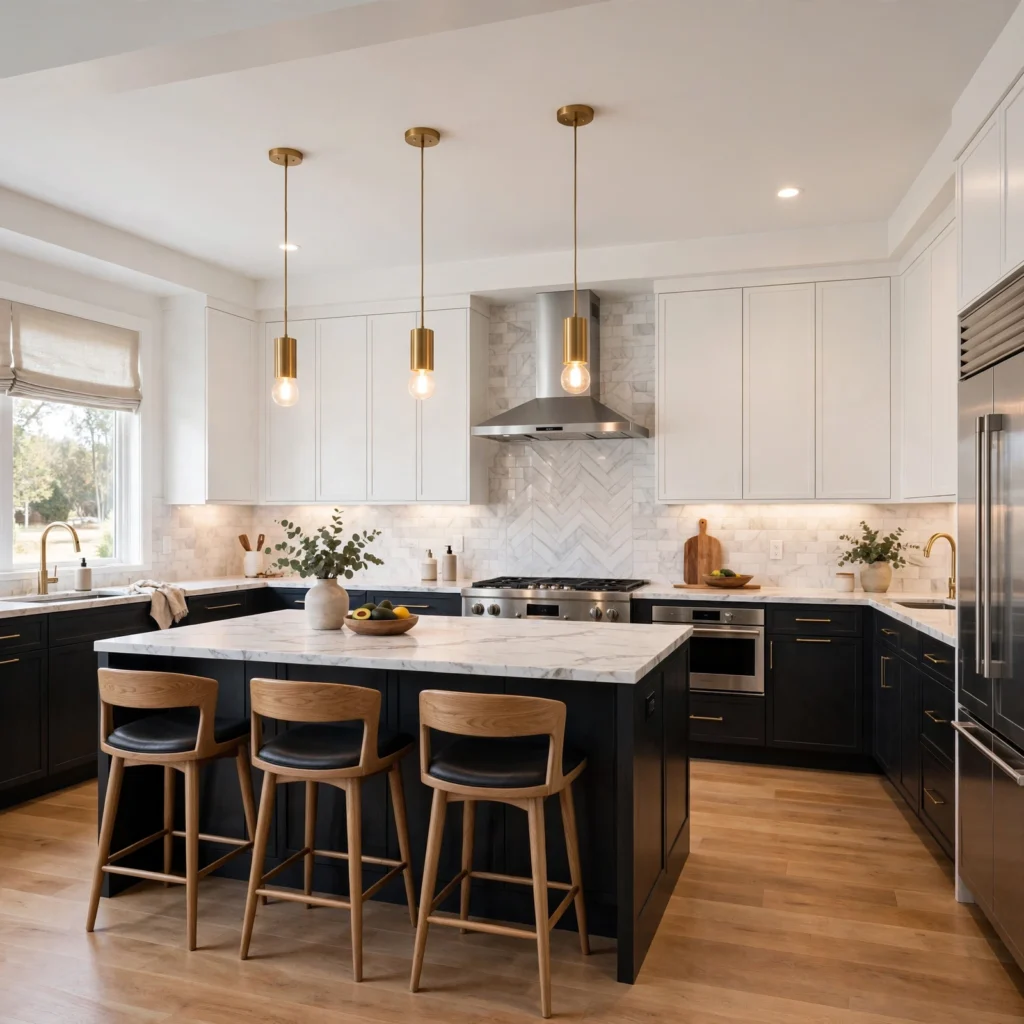
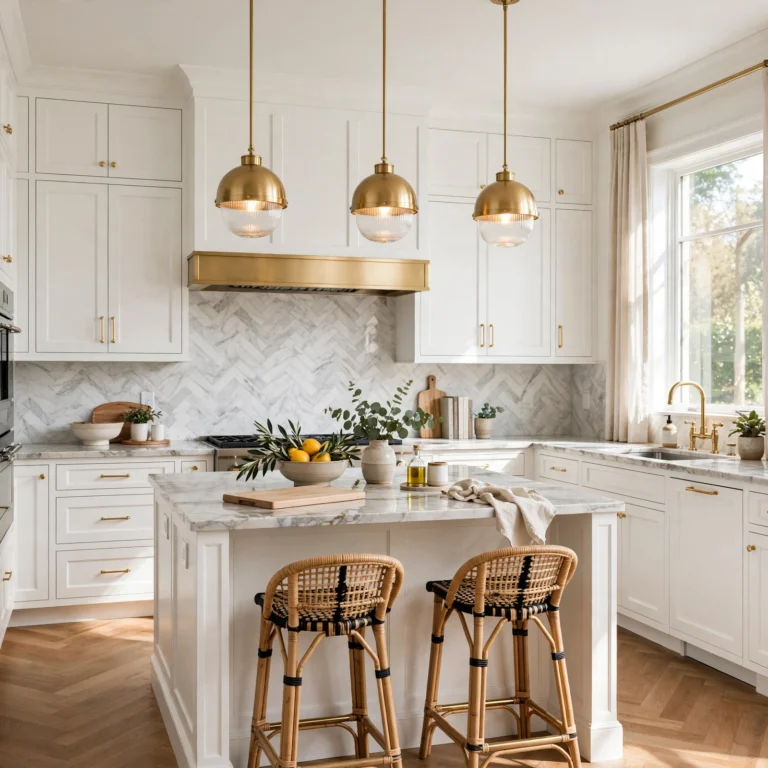
A two-tone dark and white kitchen, with dark cabinets on the lower run and crisp white on the uppers, is one of the most forgiving ways to introduce depth into a kitchen without the room feeling entirely closed in. The white upper cabinets keep the ceiling area bright, while the dark lower cabinets ground the space and hide daily wear near handles and toe kicks better than a lighter color would.
9. Dark Cabinets With Open Wood Shelving
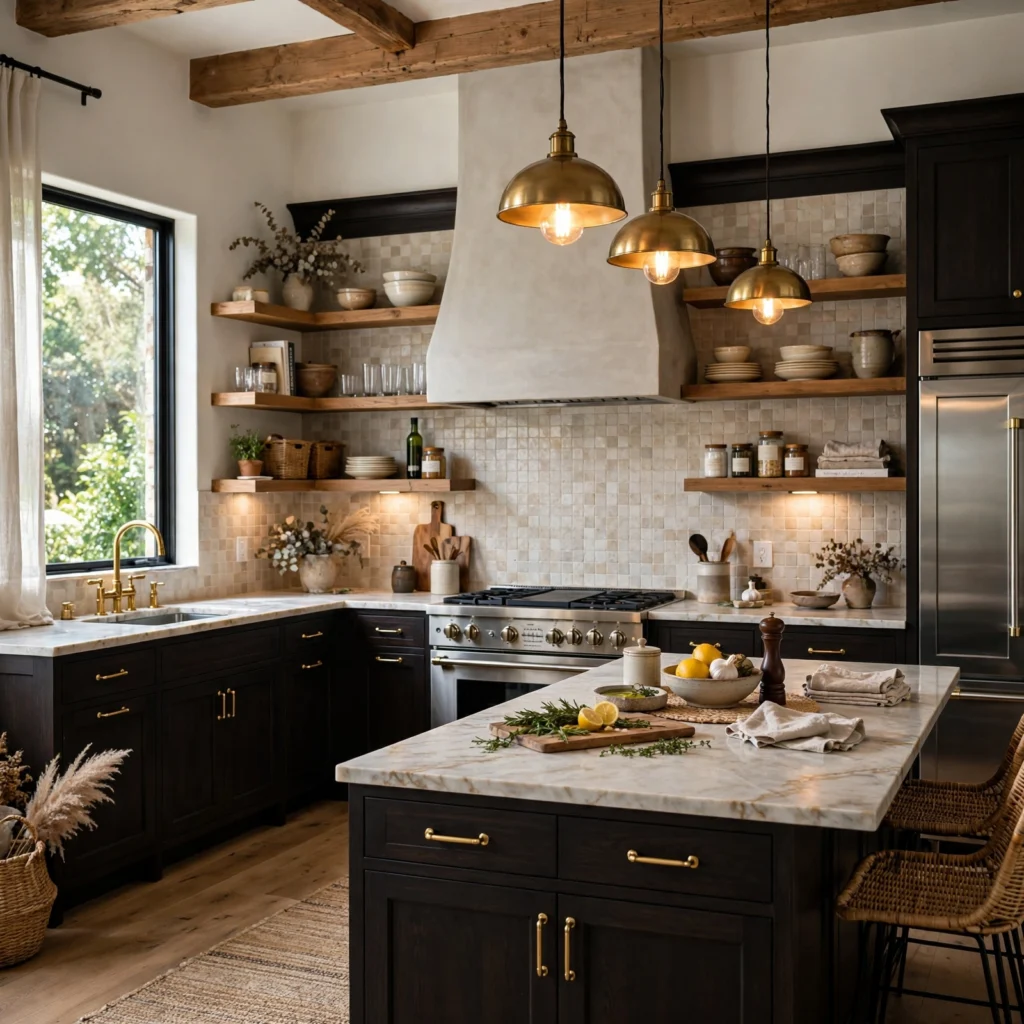
Open wood shelving, mounted in place of upper cabinets, breaks up a wall of dark, closed doors and introduces a lighter, natural material that keeps the kitchen from feeling too heavy overall. This works particularly well flanking a range hood, where two shelves balance the visual weight of the surrounding dark cabinetry without requiring a lighter paint color anywhere else in the room.
10. Statement Pendant Lighting
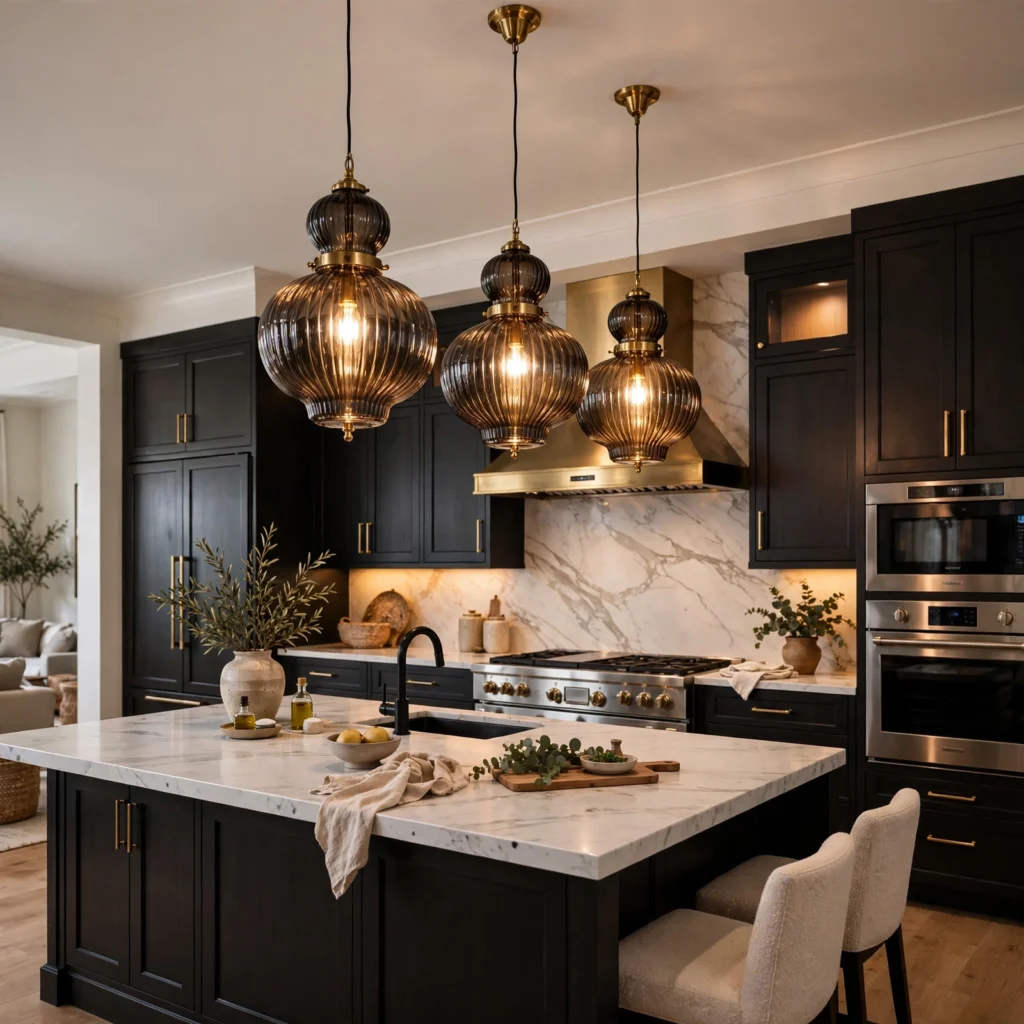
A pair of statement pendant lights over the island, in hand-blown glass or aged brass, becomes a clear focal point against dark cabinetry and adds visual interest above eye level, where a dark kitchen otherwise risks feeling flat. Dimmable warm-white bulbs keep the fixtures flattering for both daily use and evening entertaining, and a slightly oversized scale reads as more intentional than a small, understated pendant would against deep-colored cabinetry.
11. Dark Cabinets With a Light Ceiling
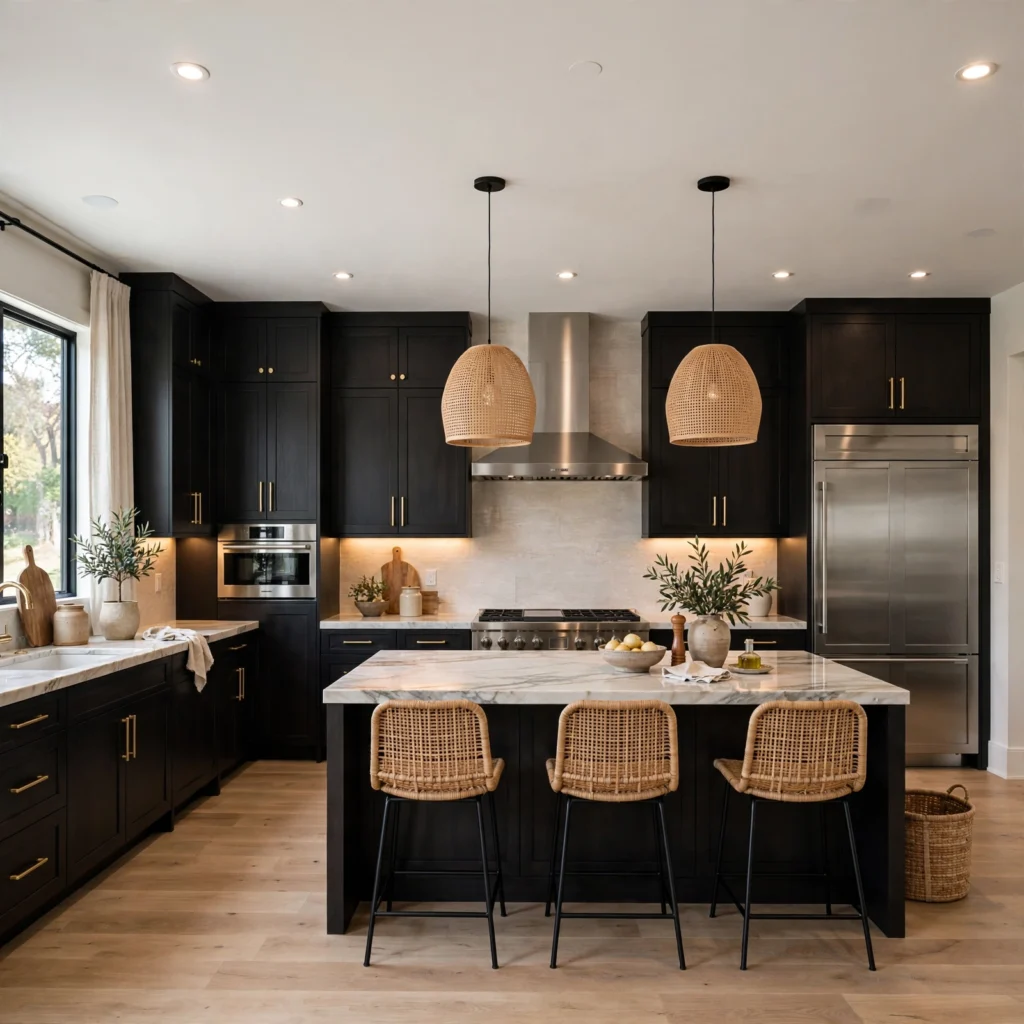
Keeping the ceiling a crisp white or very light neutral, even when walls and cabinetry are dark, is one of the simplest ways to prevent a room from feeling like it’s closing in overhead. This contrast draws the eye upward and gives the room a sense of height that an all-dark scheme, ceiling included, tends to lose. A light ceiling also reflects more of whatever ambient lighting is used, brightening the room without changing the cabinet color.
12. Dark Cabinets With Terracotta Floor Tile
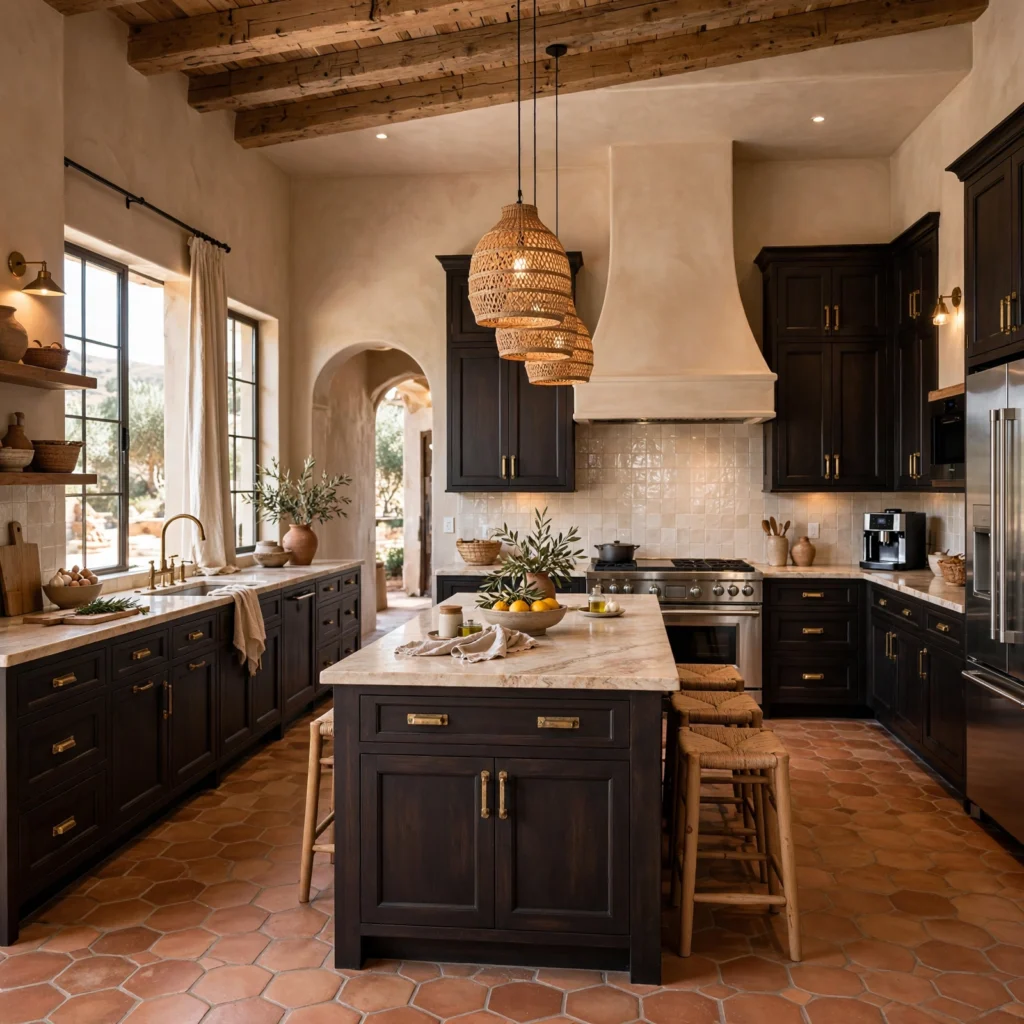
Dark cabinetry paired with terracotta or clay-toned floor tile creates a warm, earthy contrast that keeps deep cabinet colors from feeling cold or overly severe. Espresso and warm-toned charcoal work particularly well here, since their brownish undertones echo the warmth of the terracotta rather than fighting against it. This pairing suits kitchens that open onto a patio or outdoor dining space, extending the palette naturally from indoors to out.
13. Dark Cabinets With Skylights or Large Windows
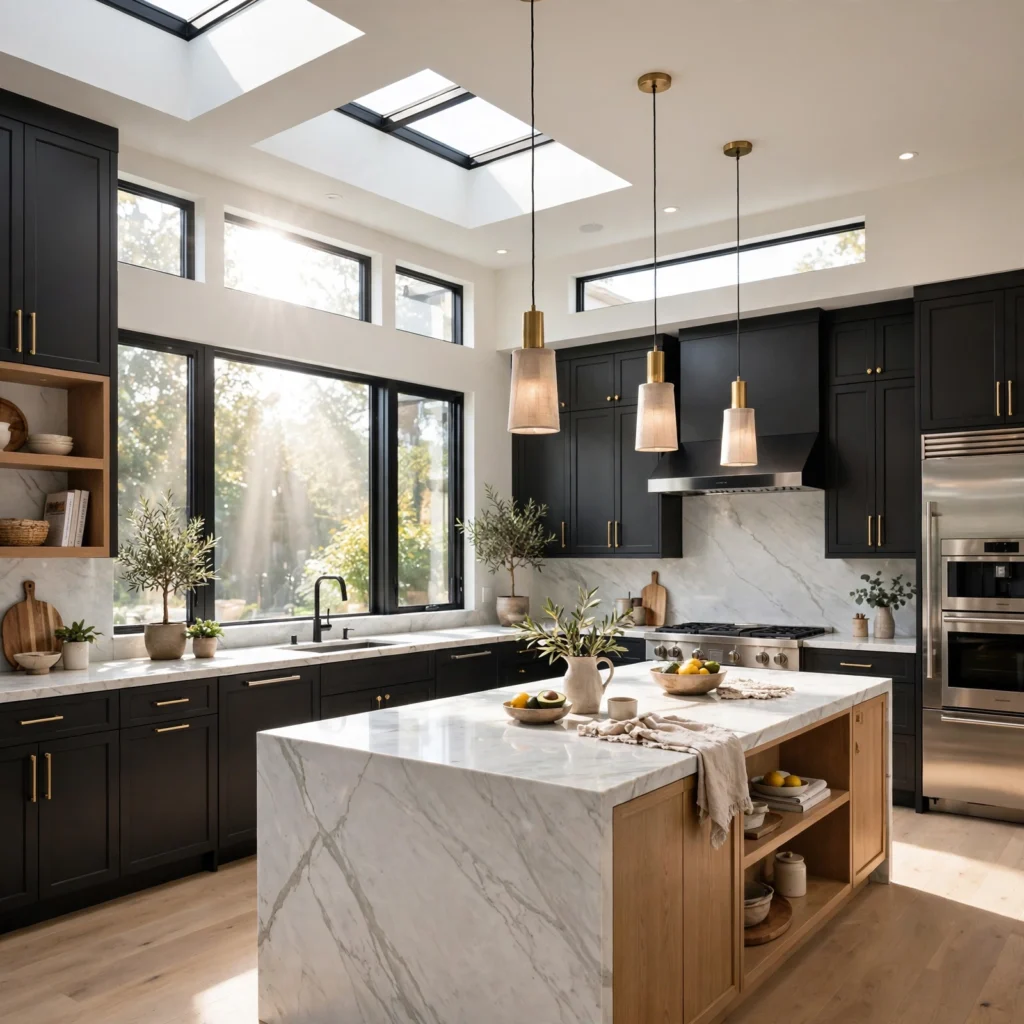
Maximizing natural light through skylights, larger windows, or glass doors is one of the most effective ways to offset the visual weight of dark cabinetry, since daylight counteracts the way deep colors absorb light rather than reflect it. Kitchens considering a dark cabinet color benefit from evaluating existing window placement first, since a north-facing room with limited natural light will need more artificial lighting layers to compensate.
14. Dark Cabinets With a Textured Backsplash
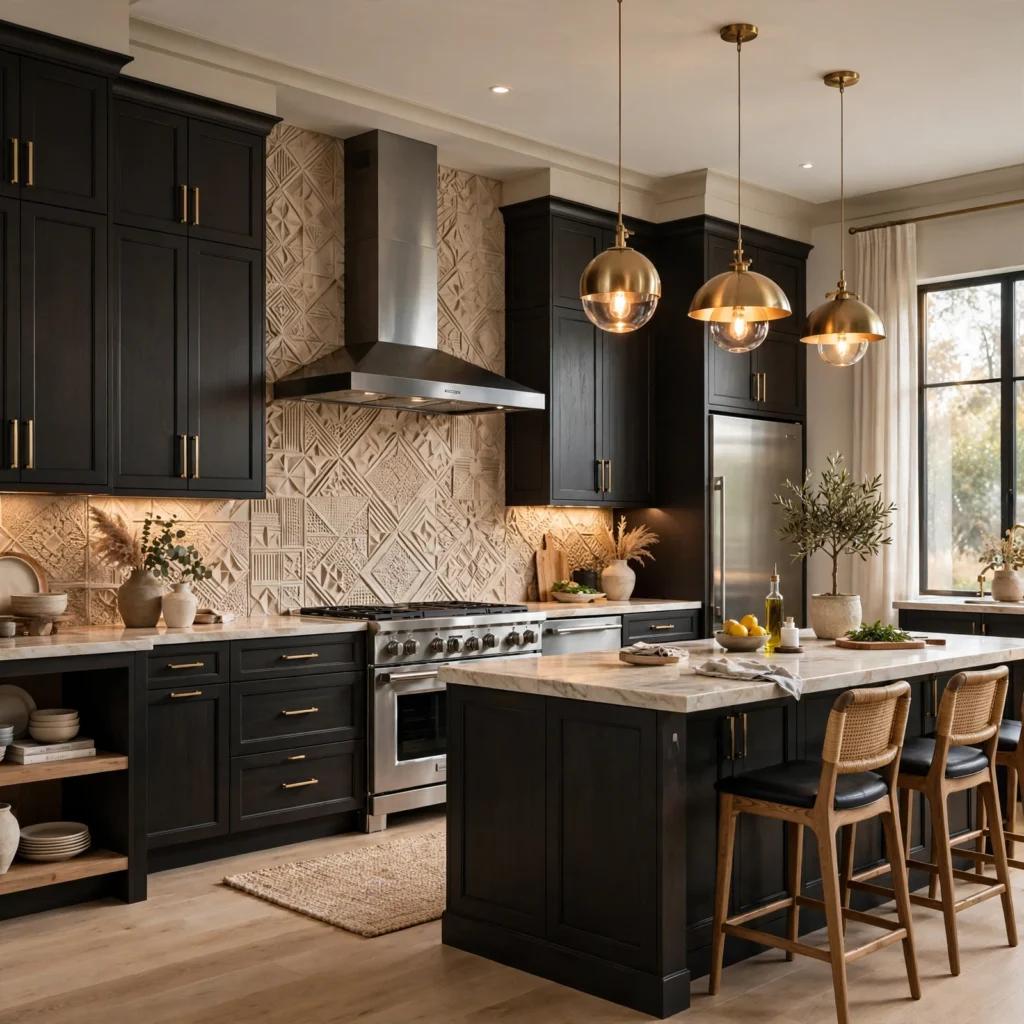
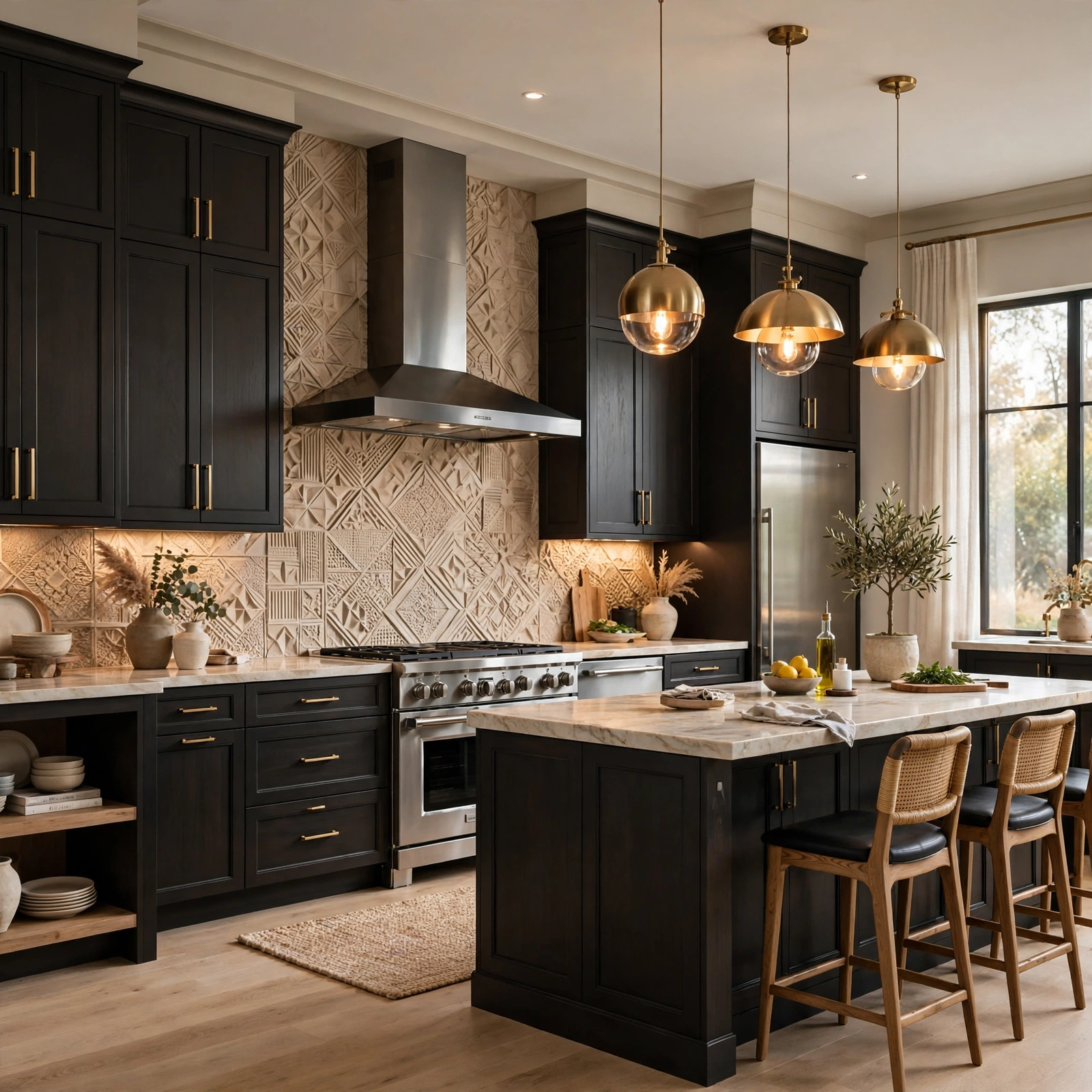
A textured tile backsplash in handmade zellige or fluted ceramic tile adds subtle light-catching texture that keeps a dark kitchen from feeling flat, especially when the tile is chosen in a cream, white, or soft grey tone that contrasts against the cabinetry. The slight variation in each individual tile catches ambient light differently throughout the day, which helps prevent a dark kitchen from reading as one flat, uniform block of color.
15. Dark Cabinets With a Waterfall Island Edge
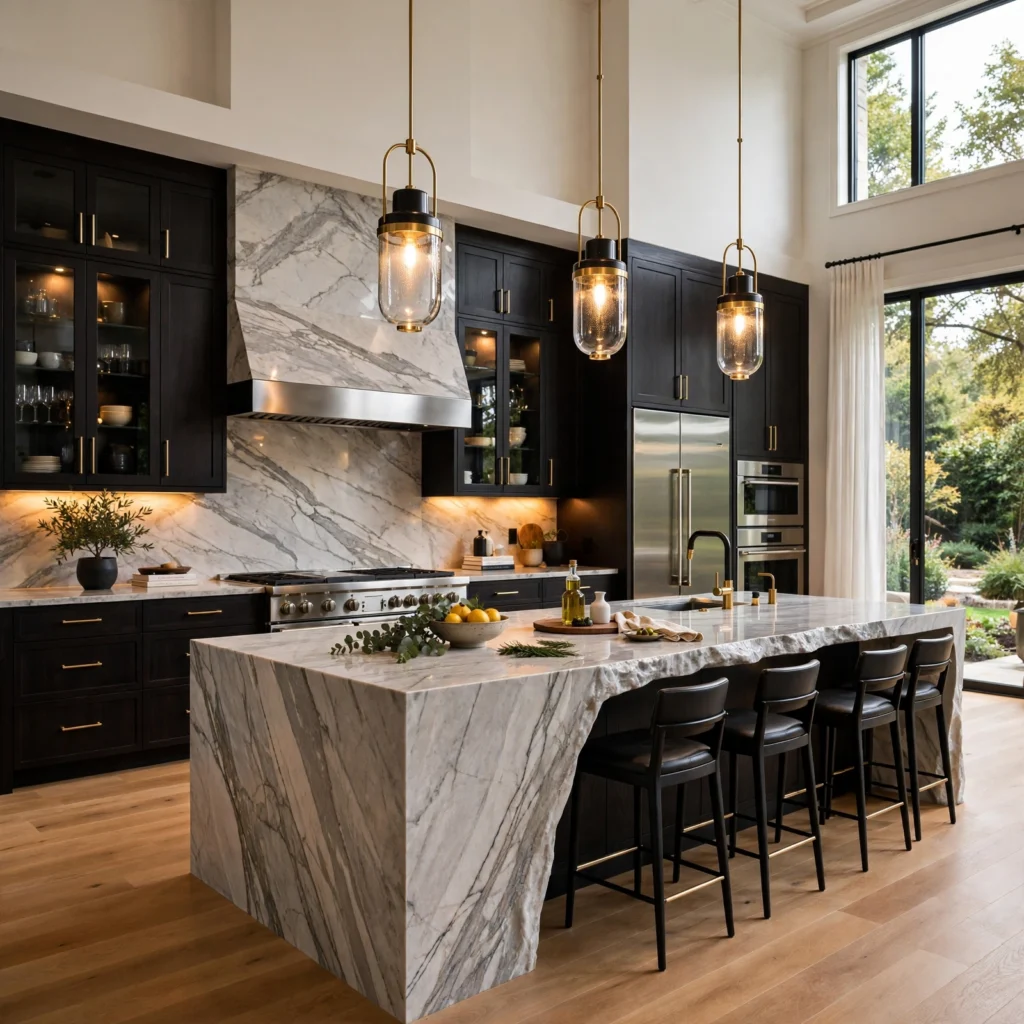
A waterfall edge, where the countertop material wraps continuously down the side of a dark-cabinet island rather than stopping at a standard overhang, creates a single unbroken plane that reads as high-end, custom furniture rather than standard cabinetry. This detail works particularly well with light stone like white marble or quartz, since the contrast against the dark cabinet color beneath it makes the waterfall edge a clear visual feature.
16. Dark Cabinets With Mirrored or Glass Accents
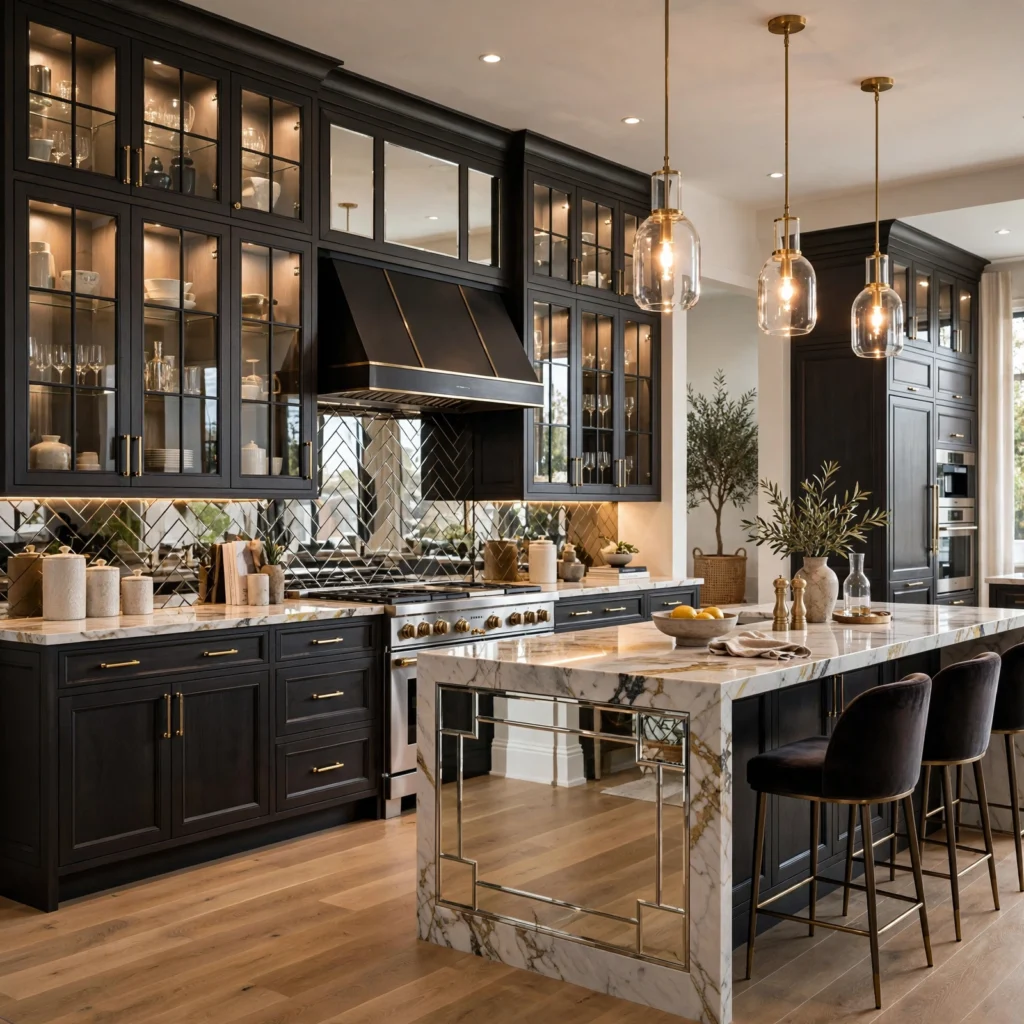
Mirrored cabinet inserts, glass-front upper cabinets, or a mirrored backsplash panel bounce available light around a dark kitchen, helping offset the way deep cabinet colors absorb rather than reflect light. This works especially well on a single feature wall or a butler’s pantry, rather than throughout the entire kitchen, keeping the reflective surfaces from competing with the depth and richness of the surrounding dark cabinetry.
Shop the Look
Start with a quart of matte black or navy cabinet-grade paint, a set of unlacquered brass bin pulls and knobs, a white Calacatta-style quartz countertop slab for contrast, a pair of brass or glass pendant lights for the island, and an LED under-cabinet lighting kit in warm white. These five elements cover paint, hardware, surfaces, and lighting without requiring a full kitchen renovation.
Common Mistake to Avoid
The most common mistake is committing to dark cabinetry without addressing lighting first, leaving the kitchen feeling dim and cave-like rather than moody and intentional. Layering under-cabinet lighting, pendant fixtures, and a light ceiling color is not optional in a dark kitchen the way it might be in a lighter one. Another frequent error is pairing dark cabinets with an equally dark countertop and backsplash, which removes all contrast and makes the room feel flat rather than richly layered.
People Also Ask
Do dark kitchen cabinets make a small kitchen look smaller?
Dark cabinetry can make a small kitchen feel more enclosed if lighting and contrast aren’t addressed, but a well-lit dark kitchen with a light ceiling, ample under-cabinet lighting, and a contrasting light countertop can still feel open and considered even in a modest footprint. Limiting dark cabinets to just the lower run or the island, rather than the full kitchen, is often the safer choice in smaller rooms with limited natural light.
What is the best color to pair with dark kitchen cabinets?
White and light gray are the most common pairings, whether on the ceiling, upper cabinets, or countertop, since the contrast keeps the room from feeling uniformly heavy. Warm wood tones also pair well, particularly with espresso or charcoal cabinetry, softening the depth of the color with a natural material. Cream and soft greige walls work especially well when the cabinets themselves lean cooler, such as navy or true black.
Are dark kitchen cabinets hard to keep clean?
Dark cabinets show dust and water spots less than white cabinetry does in most lighting, but they can show fingerprints and smudges more visibly around handles, particularly in a matte finish under direct light. A satin rather than fully matte sheen on high-touch areas like handles and drawer fronts can make daily cleaning easier without changing the overall look of the cabinetry.
What lighting works best with dark kitchen cabinets?
Layered lighting, including under-cabinet task lighting, pendant fixtures over the island, and accent lighting such as picture lights over open shelving, is essential in a dark kitchen, since a single overhead fixture alone tends to leave the room feeling dim. Warm-white bulbs rather than cool daylight tones are generally more flattering against dark paint or wood finishes and help the kitchen feel warm rather than stark.
Should dark kitchen cabinets be used on the whole kitchen or just the island?
Using dark cabinetry only on the island or lower cabinets is a lower-commitment way to introduce the look, and it also keeps the kitchen from feeling visually heavy in smaller spaces or rooms with limited natural light. A full dark kitchen tends to work best in larger rooms with ample windows or skylights, where natural light offsets the depth of the color throughout the day.
Conclusion
These sixteen approaches to dark kitchen cabinets show how much range the look offers, from a single dark island to a full matte-black kitchen layered with brass hardware and statement lighting. Start small if you’re unsure, a dark island or a butler’s pantry is a low-risk way to test the look before committing to a full cabinet run. Save this guide to Pinterest for your next kitchen update, and check out our related post on two tone kitchen cabinet ideas for more layout inspiration.
Author Expertise Note
Written by a design writer who has covered kitchen and cabinetry trends for home publications for several years, working closely with cabinet painters and lighting designers to track which dark finishes and lighting strategies actually hold up over time.