12 Trending Kitchen Flooring Ideas That Blend Style and Durability
Choosing among kitchen flooring ideas means weighing durability and water resistance just as heavily as appearance, since kitchen floors deal with more daily wear than almost any other room in the house. This post covers twelve specific flooring options, each with real material names and practical guidance, so you can compare choices directly rather than relying on how a floor looks in a single showroom photo. Whether you’re renovating a small kitchen or a large open-concept space, you’ll find durability and cost comparisons to help you choose flooring that holds up for years rather than needing an early replacement.
Trend & Background
Kitchen flooring has shifted toward larger-format materials, both in tile and wood plank width, moving away from the smaller, busier patterns that were common in earlier kitchen designs. Water-resistant engineered materials have also improved significantly, giving homeowners wood-look options that hold up better in a kitchen environment than solid hardwood traditionally could. This matters now because kitchen flooring is expensive and disruptive to replace, so choosing a durable material suited to actual daily use, rather than one chosen for looks alone, helps avoid an early and costly redo.
Key Takeaways
- These kitchen flooring ideas balance durability, water resistance, and style for a room that sees heavy daily use.
- Large-format tile and wide-plank wood are replacing smaller, busier flooring patterns in current kitchen design.
- Several ideas include material, cost, and maintenance comparisons to help you choose flooring suited to your household.
- Small details like grout width and plank orientation can change how a floor reads even with the same base material.
1. Large-Format Porcelain Tile
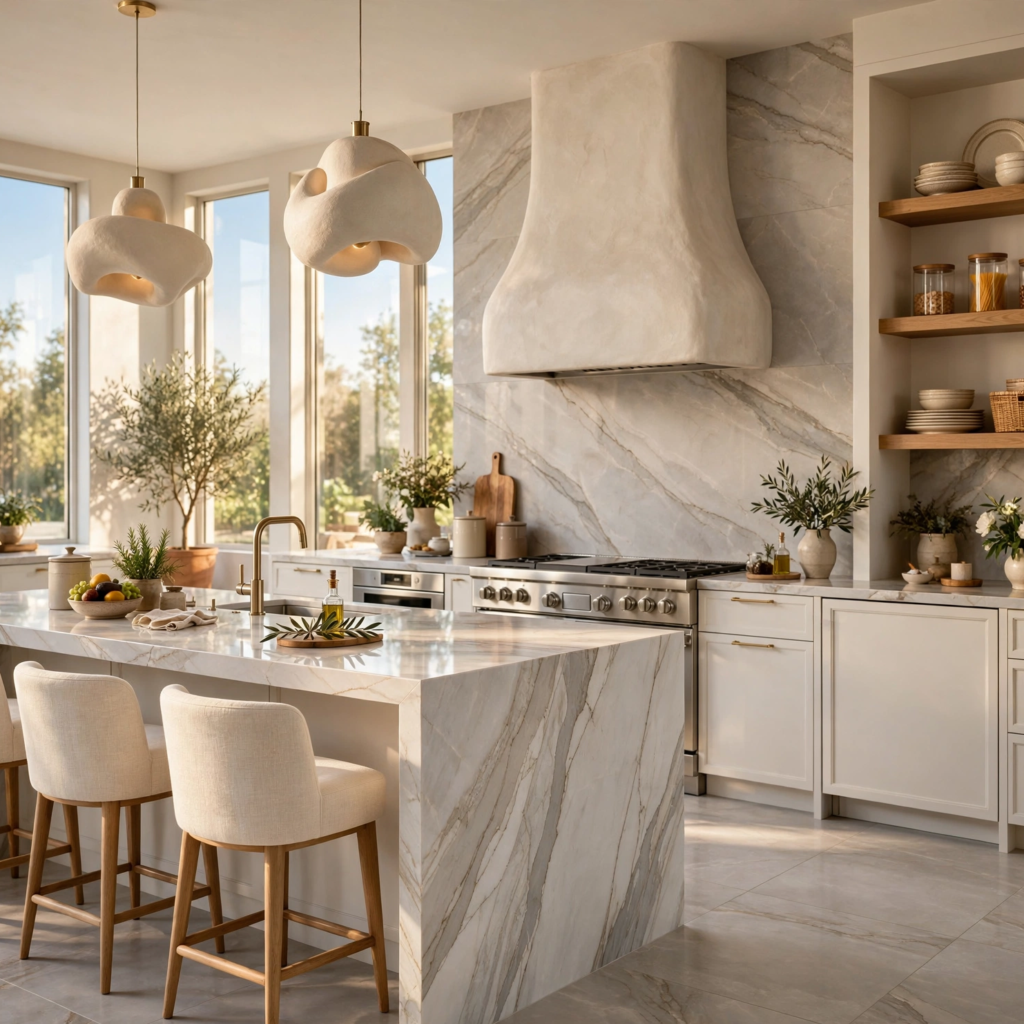
Large-format porcelain tile, typically in sizes of 24 by 24 inches or larger, reduces the number of grout lines across a kitchen floor compared to smaller traditional tile, creating a cleaner, more continuous look. Porcelain is highly resistant to water, staining, and scratching, making it one of the most durable options for a kitchen that sees heavy daily use. Because grout lines are fewer, cleaning also becomes easier over time, since there’s less grout surface prone to collecting dirt. This idea suits kitchens of nearly any style, from minimalist to traditional, depending on the tile’s finish and color.
2. Engineered Wide-Plank Wood
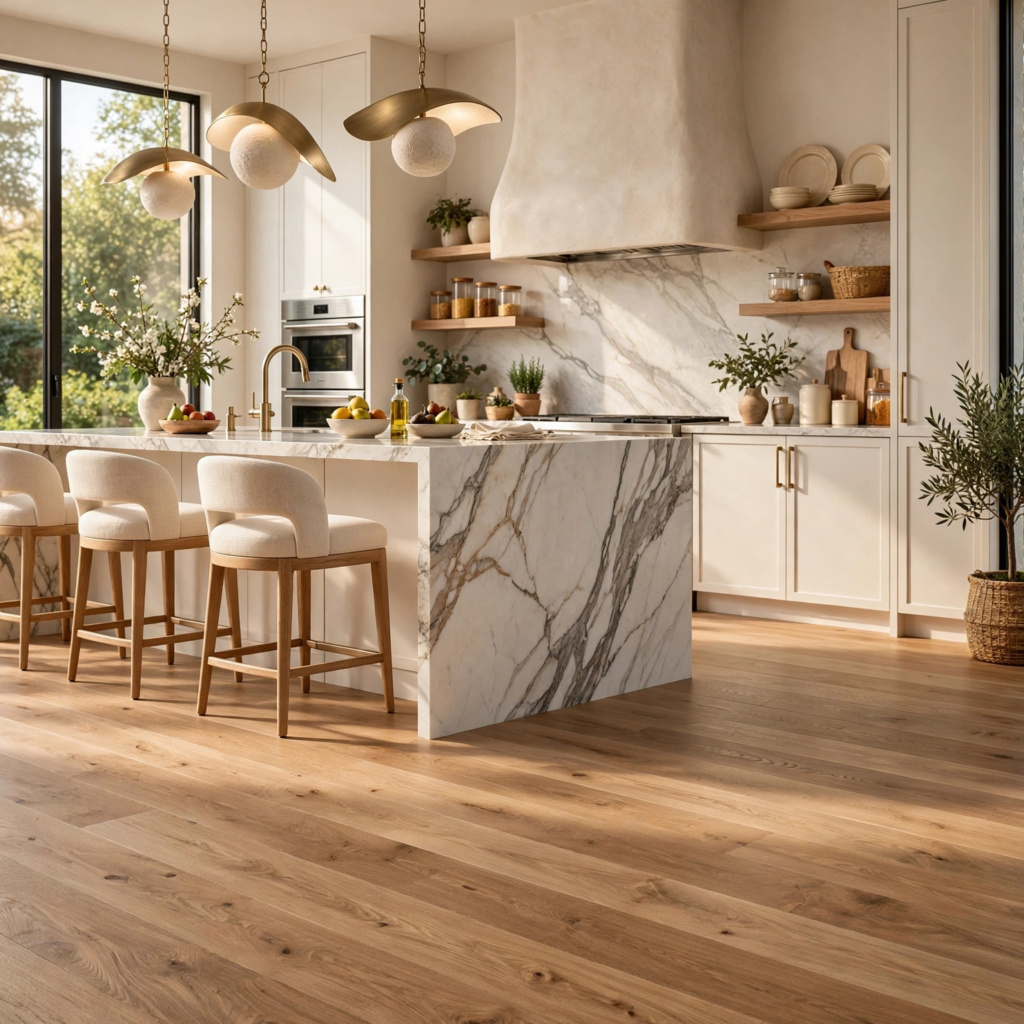
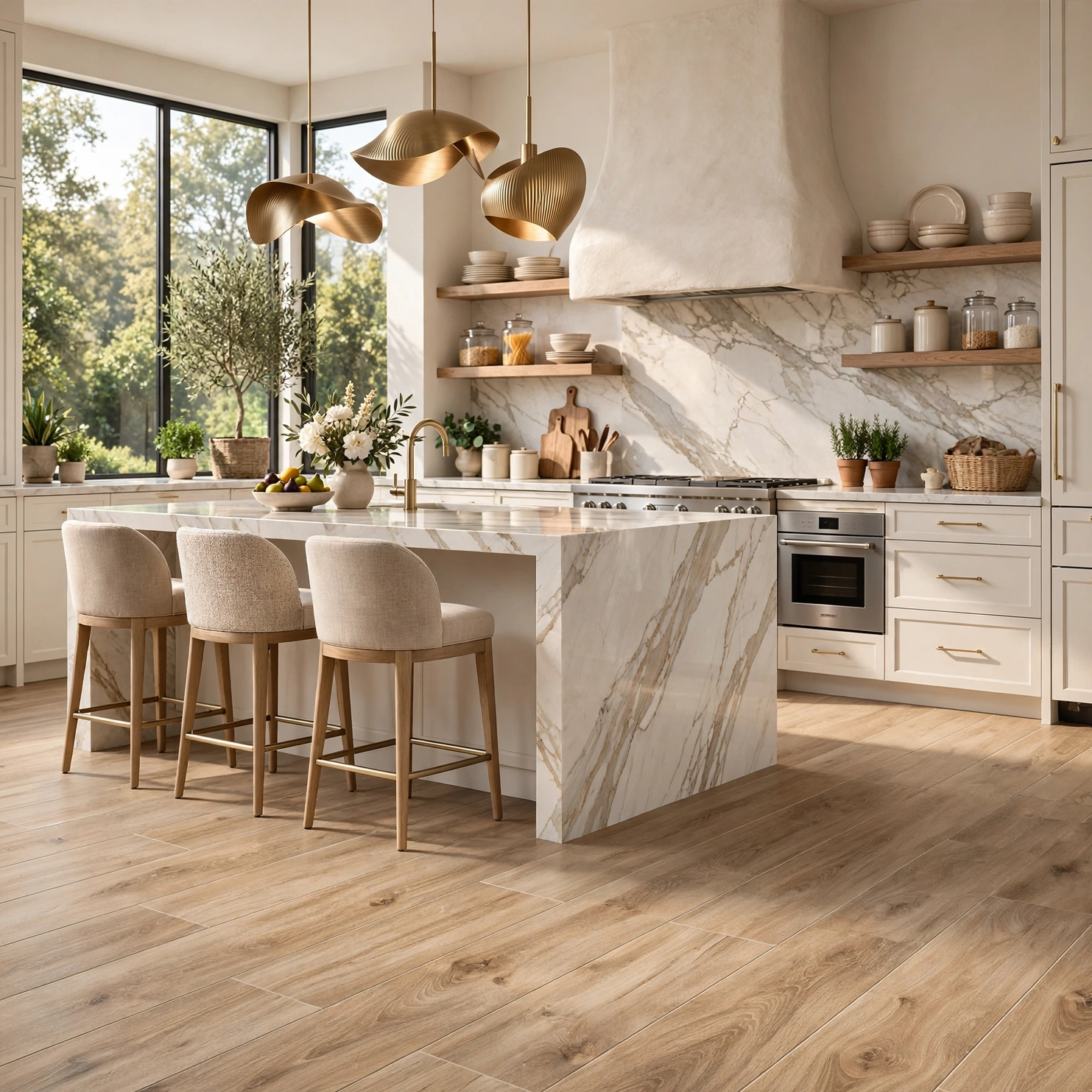
Engineered wood flooring uses a real wood veneer layer over a stable plywood core, offering the look of solid hardwood with better resistance to humidity and temperature changes common in a kitchen. Wide planks, typically 6 to 8 inches, read as more contemporary than narrower traditional strip flooring and show fewer visible seams across a large kitchen floor. White oak remains a popular species choice for its light, neutral tone and consistent grain pattern. This idea suits kitchens aiming for warmth underfoot without the higher moisture risk of solid hardwood.
| Flooring Type | Water Resistance | Look |
| Solid Hardwood | Low | Natural wood grain |
| Engineered Wood | Medium-High | Natural wood grain |
| Luxury Vinyl Plank | High | Wood-look or stone-look |
3. Luxury Vinyl Plank
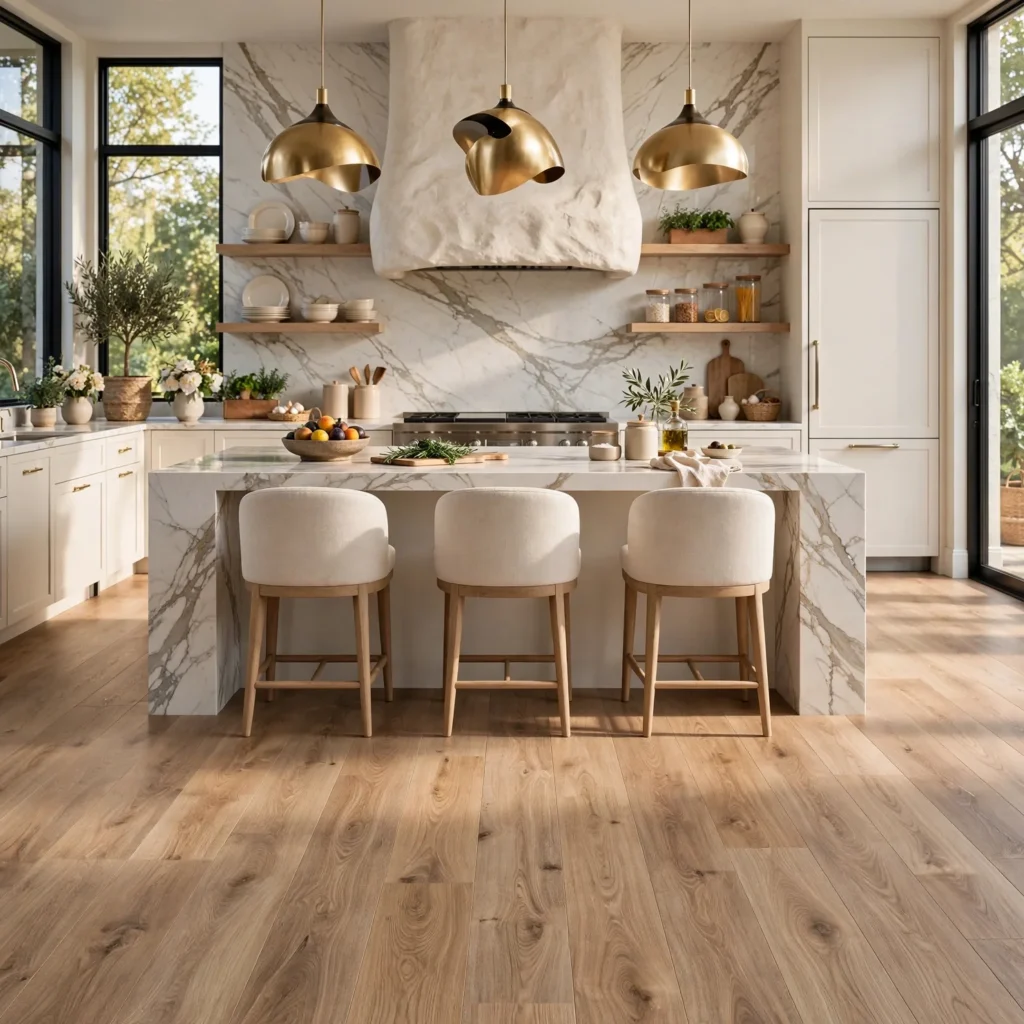
Luxury vinyl plank, often shortened to LVP, offers a wood-look or stone-look surface with excellent water resistance, making it one of the more practical choices for kitchens prone to spills. It’s typically more affordable than engineered wood or natural stone, while still offering a realistic textured surface that mimics grain or veining closely. LVP also tends to feel slightly softer and warmer underfoot than tile, which matters for anyone who spends long stretches standing while cooking. This idea suits budget-conscious renovations without sacrificing much on visual quality.
Looking for even more inspiration? Explore our kitchen decor ideas collection to discover beautiful layouts, smart storage solutions, and stylish decorating tips for every home.
4. Natural Stone Tile
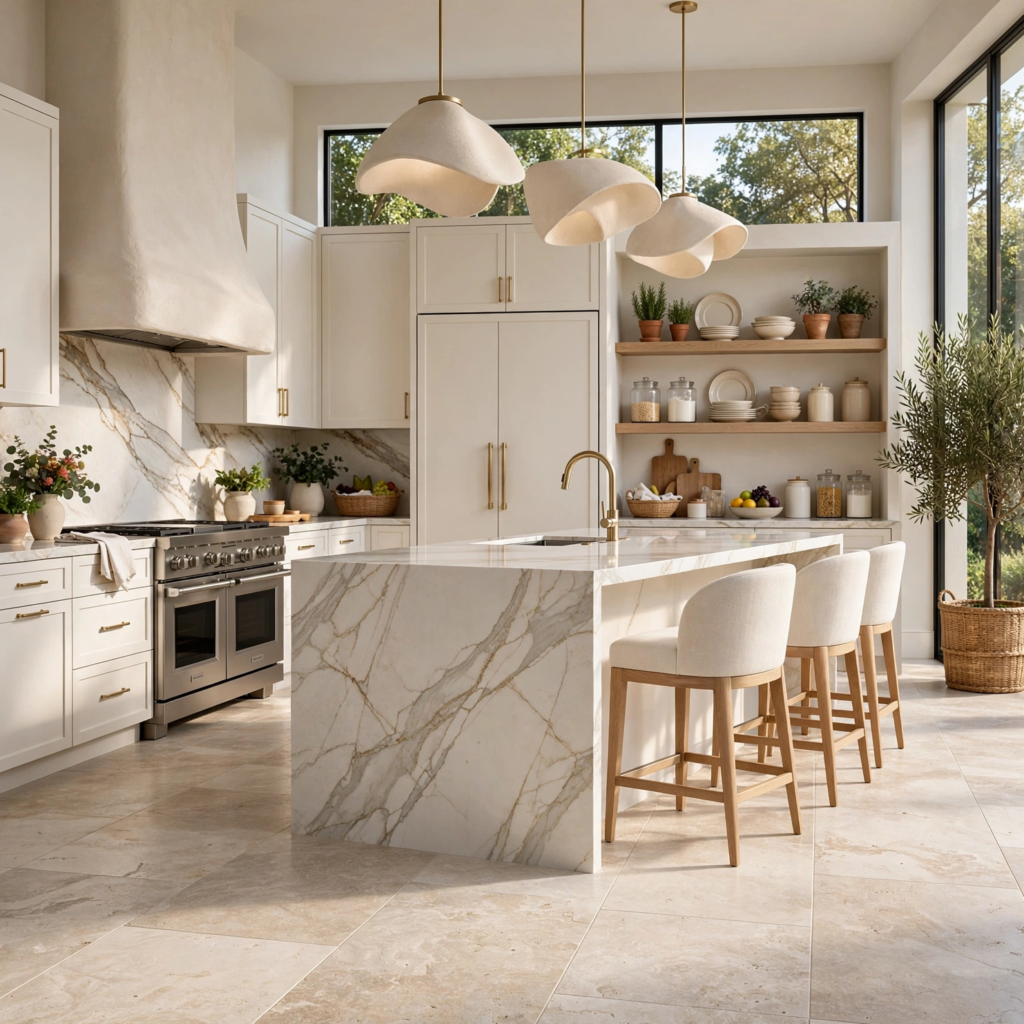
Natural stone tile, including materials like travertine, slate, or limestone, brings texture and variation that manufactured tile can’t fully replicate, since each piece carries its own natural pattern. Stone does require periodic sealing to resist staining, unlike porcelain, and it can feel cooler underfoot without radiant heating installed beneath it. Honed or matte finishes are generally preferred over polished stone in a kitchen, since polished surfaces can become slippery when wet. This idea suits kitchens aiming for a more organic, high-end material choice despite the added maintenance.
5. Patterned Cement Tile
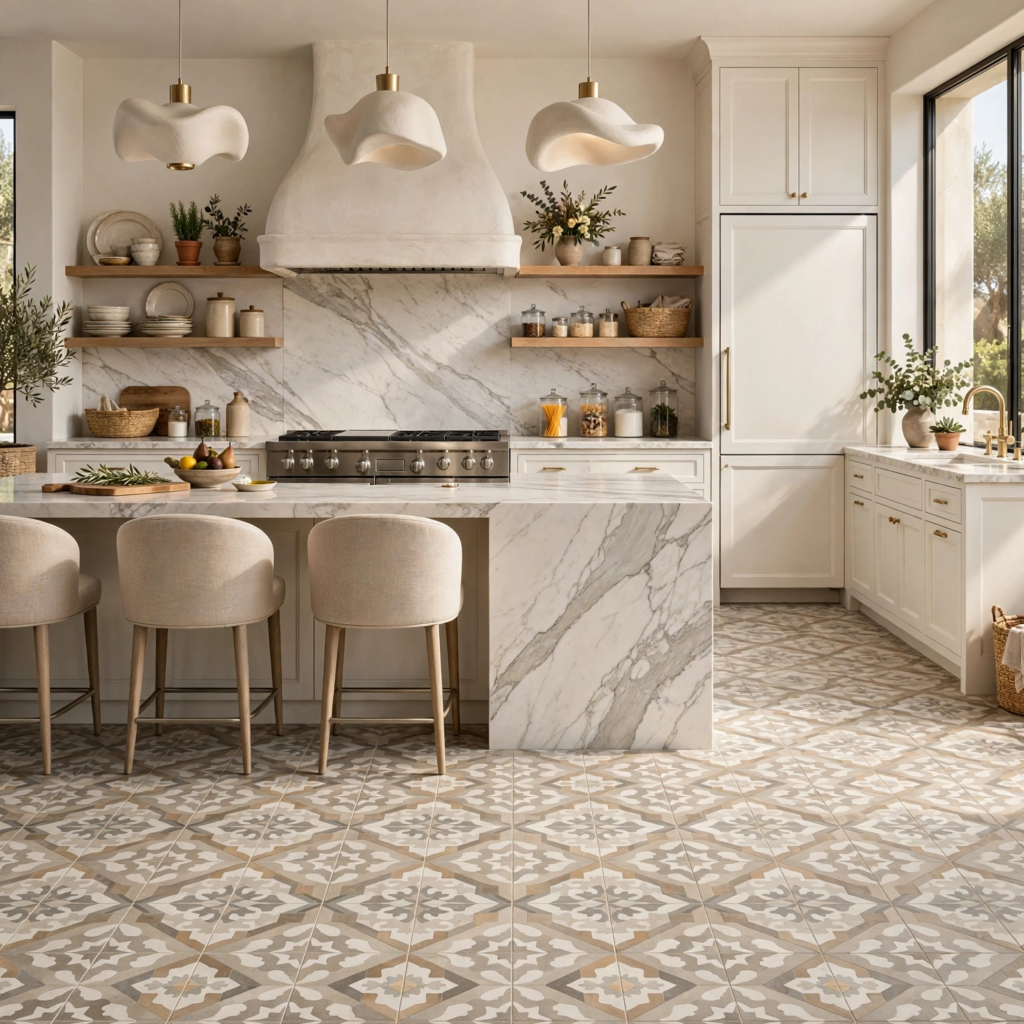
Cement tile, often featuring bold geometric or floral patterns, adds significant visual interest to a kitchen floor, typically used either throughout the space or as a contained accent in an entryway or under an island. Because the pattern is baked into the tile itself rather than applied as a glaze, cement tile tends to hold its look well over time, though it does require sealing to resist staining. This idea works best as a focal element in a kitchen with otherwise simple cabinetry and counters, since the floor pattern does much of the visual work on its own.
6. Herringbone Wood Layout
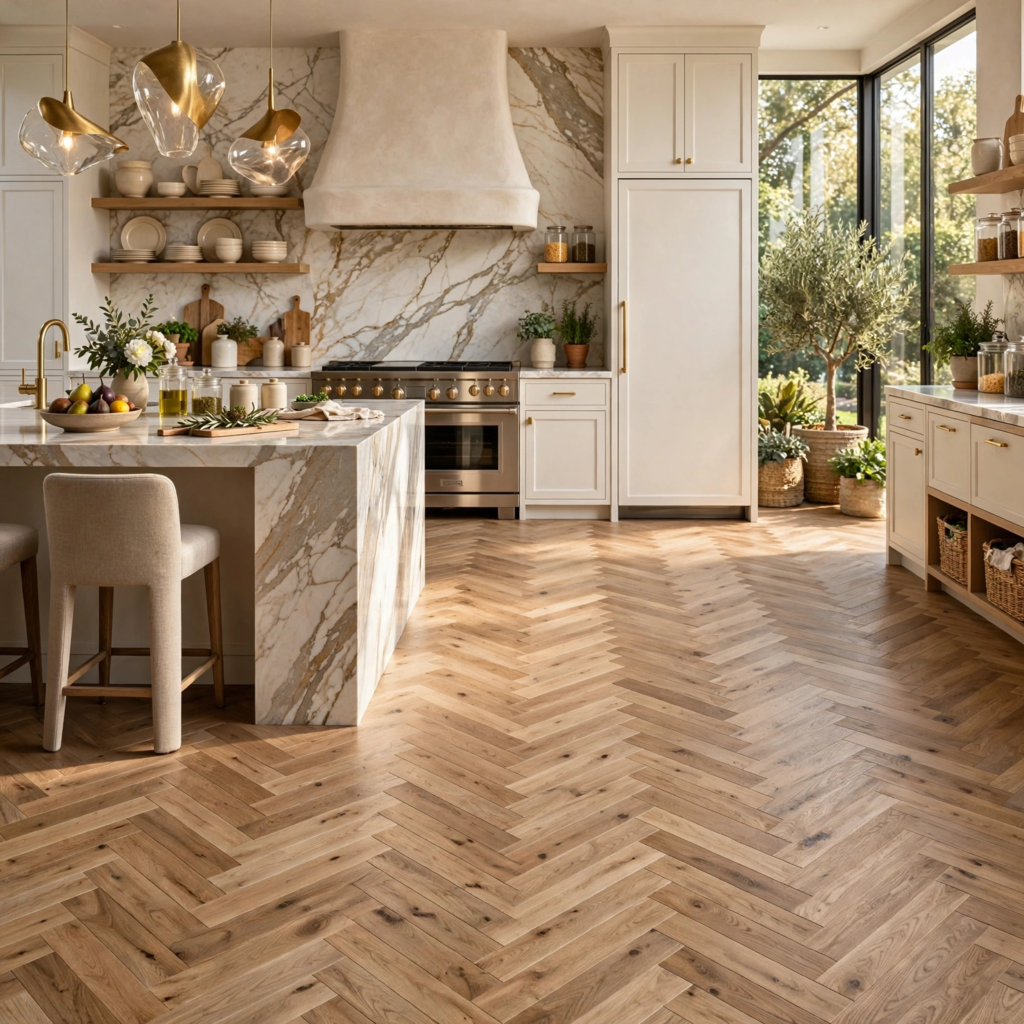
Rather than a standard straight-plank layout, herringbone arranges wood or wood-look planks in a diagonal zigzag pattern, adding movement and a more elevated look to the same base material. This layout requires more precise cutting and installation than a straight-plank layout, which adds modestly to labor cost. It works particularly well with narrower plank widths, since a herringbone pattern in very wide planks can look busier than the more classic, refined look this layout is meant to achieve. This idea suits kitchens wanting texture without switching to a different flooring material entirely.
7. Matte Porcelain Wood-Look Tile
Wood-look porcelain tile replicates the appearance of natural wood grain while offering the water resistance and durability of porcelain, making it a strong compromise for kitchens that want a wood aesthetic without the moisture concerns of real wood. Matte finishes tend to look more convincingly like real wood than a glossy tile finish, which can appear artificial under close inspection. This idea suits kitchens near high-moisture areas, like next to a sink or dishwasher, where real wood flooring would otherwise require more careful maintenance.
| Wood-Look Material | Water Resistance | Relative Cost |
| Solid Hardwood | Low | Medium-High |
| Wood-Look Porcelain | High | Medium |
| Luxury Vinyl Plank | High | Low-Medium |
8. Terrazzo Flooring
Terrazzo, made from chips of marble, quartz, or granite set into a cement or resin base and polished smooth, offers a durable, speckled surface that reads as both retro and contemporary depending on the color and chip size chosen. It resists staining and scratching well, making it suitable for high-traffic kitchens, though the initial installation cost tends to run higher than standard tile due to the specialized polishing process. Terrazzo tile, a more affordable prefabricated alternative to poured terrazzo, has also become more widely available for kitchens wanting the look without the full custom installation cost.
9. Reclaimed Wood Flooring
Reclaimed wood flooring, sourced from old barns, factories, or other salvaged structures, brings visible age, patina, and character that new wood simply can’t replicate, even with a distressed finish applied. This option typically costs more than new wood due to the sourcing and preparation process involved in making salvaged wood usable for flooring. It suits kitchens aiming for a rustic or farmhouse aesthetic, particularly paired with other natural materials like a butcher block island or open wood shelving. This idea does require careful sealing to manage the wood’s moisture sensitivity in a kitchen environment.
10. Polished Concrete
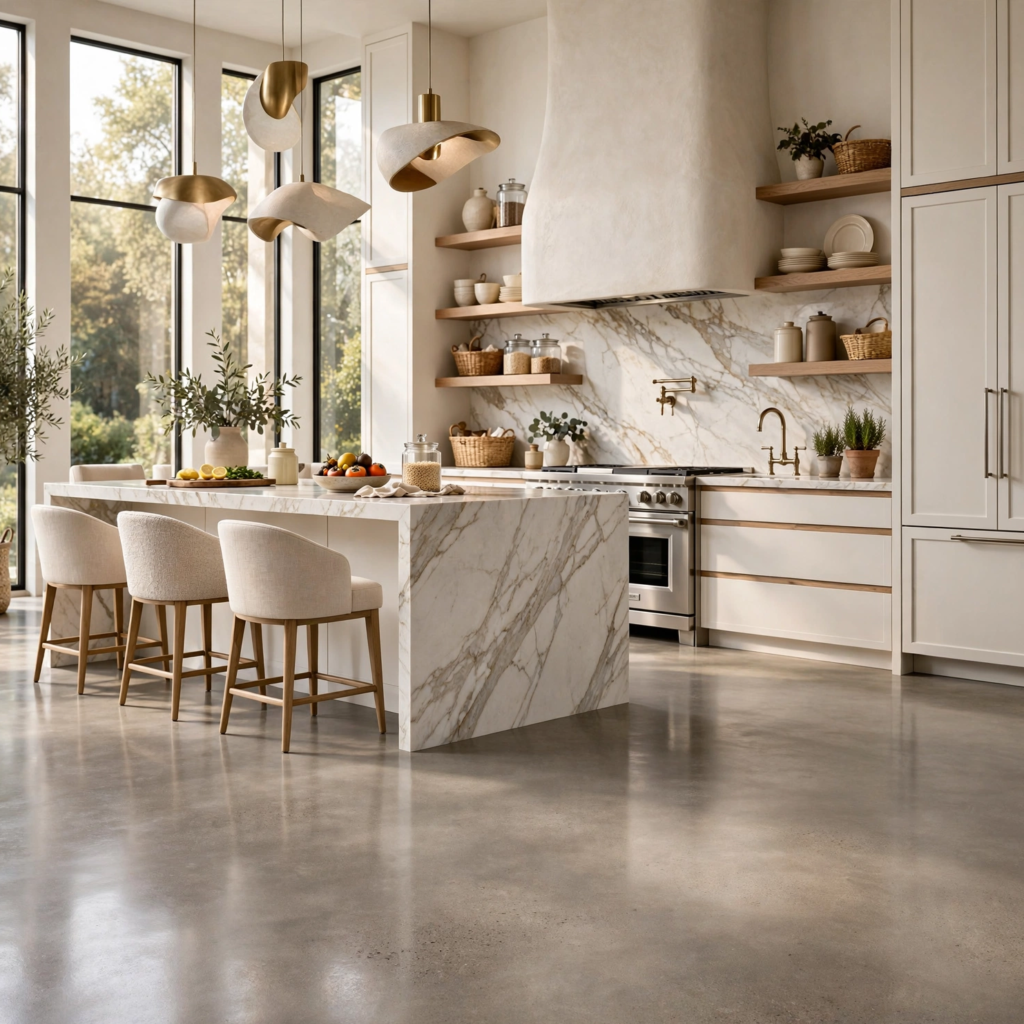
Polished concrete offers an industrial, minimalist flooring option, often used in contemporary kitchens seeking a seamless, low-maintenance surface without visible seams or grout lines. It resists moisture and scratching well once properly sealed, though it can feel hard and cold underfoot compared to wood or vinyl options. This idea works particularly well in open-concept homes where the kitchen flooring extends into an adjoining living space, since polished concrete reads as more architectural than a traditional kitchen-specific material. Radiant heating underneath can help offset the surface’s naturally cool feel.
11. Mosaic Tile Border
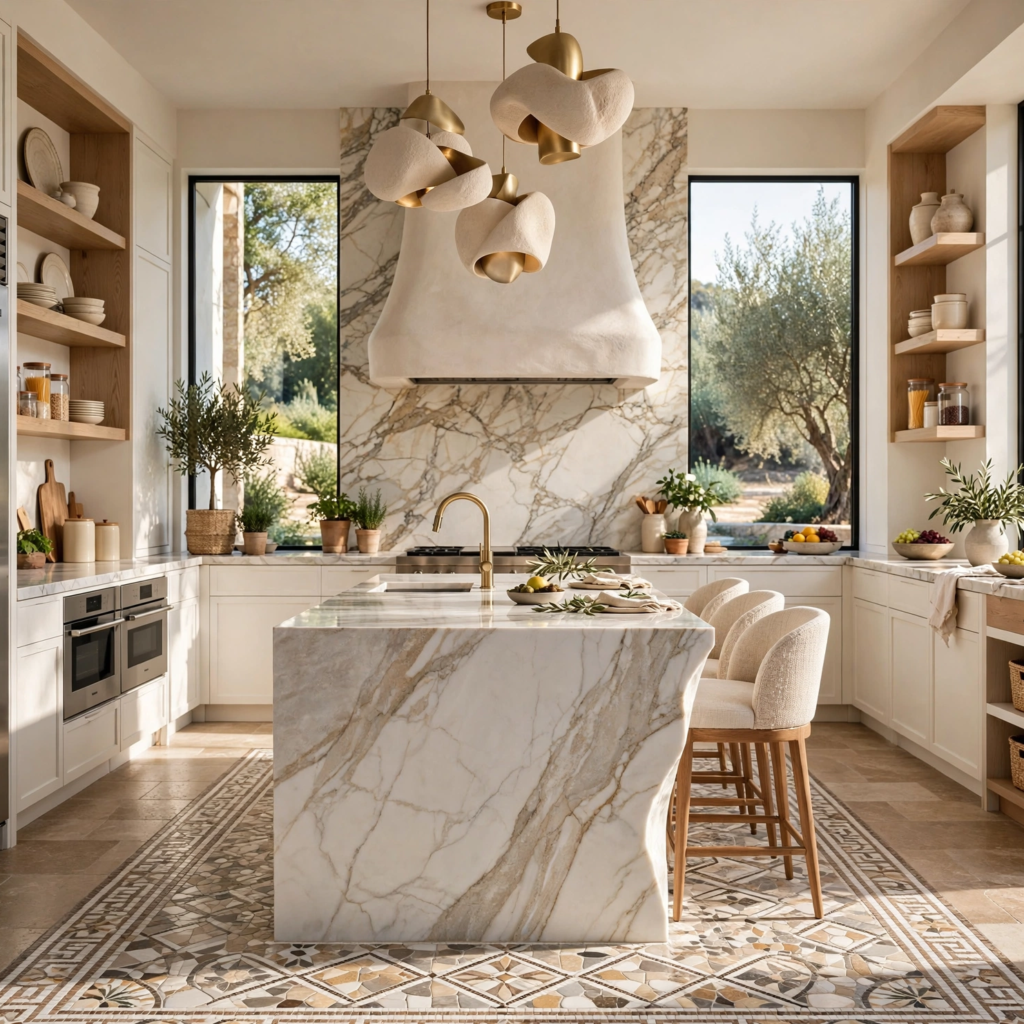
Rather than covering the full kitchen floor, a mosaic tile border or inlay defines a specific zone, such as the area beneath a farmhouse sink or in front of the range, adding detail without a full material change. This works well combined with a simpler primary flooring material elsewhere in the kitchen, letting the mosaic serve as a contained accent rather than an overwhelming pattern across the entire floor. Small hexagon or penny-round tiles are common choices for this type of border detail. This idea suits kitchens wanting a decorative touch without a full flooring commitment.
12. Kitchen Flooring Ideas for High-Moisture Areas
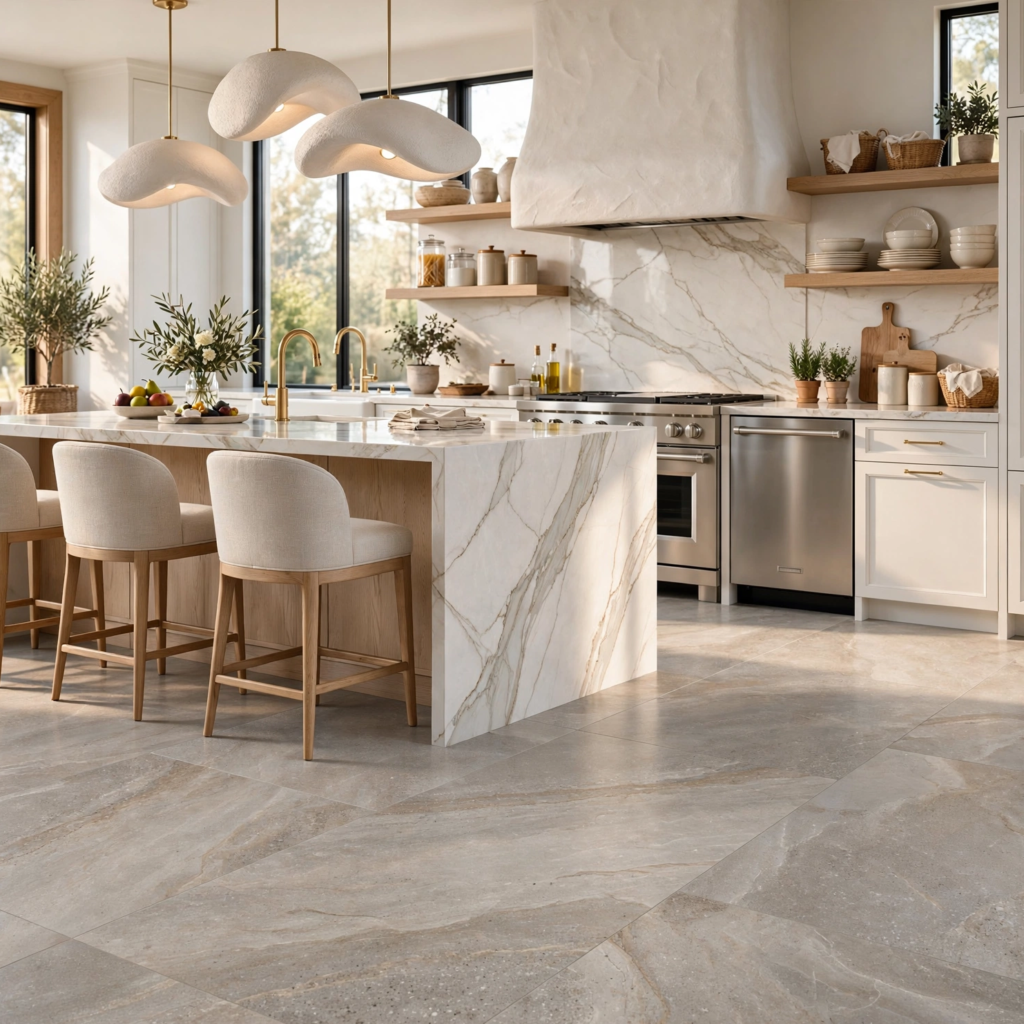
Among kitchen flooring ideas, the areas directly around the sink, dishwasher, and refrigerator see the most consistent moisture exposure, making water resistance the top priority for material choice in those specific zones. Porcelain tile, luxury vinyl plank, and sealed natural stone all perform well in these high-moisture areas, while solid hardwood and reclaimed wood require more diligent sealing and maintenance to avoid warping over time. Choosing a single durable, water-resistant material throughout the kitchen, rather than mixing materials by zone, tends to simplify both installation and long-term maintenance.
Shop the Look
For a kitchen built around these ideas, look at large-format porcelain tile from a supplier like Daltile or Marazzi, available in both matte stone-look and wood-look finishes. Engineered white oak flooring in a wide plank format works well for kitchens wanting real wood warmth with better moisture resistance than solid hardwood. Luxury vinyl plank from brands like COREtec offers a budget-conscious, highly water-resistant alternative, and prefabricated terrazzo tile provides a lower-cost way to bring in that speckled, retro-modern look without a full poured installation.
Common Mistake to Avoid
The most common mistake is choosing kitchen flooring based on appearance alone without confirming its water resistance rating, particularly for materials like solid hardwood or natural stone that require more diligent sealing and maintenance in a kitchen environment. A beautiful floor that warps, stains, or shows water damage within a few years ends up costing more than choosing a slightly less dramatic but more durable material upfront. Always check a flooring material’s water resistance rating and maintenance requirements specifically for kitchen use, not just its general suitability for the home.
FAQs
What is the most durable kitchen flooring material?
Porcelain tile and luxury vinyl plank are both considered among the most durable kitchen flooring options, offering strong resistance to water, staining, and scratching with minimal maintenance required. Natural stone and solid hardwood can also perform well but require more regular sealing and careful moisture management to avoid long-term wear. For households prioritizing low maintenance alongside durability, porcelain tile or LVP tend to be the more practical choices.
Is hardwood flooring a good idea for kitchens?
Solid hardwood can work in a kitchen, but it requires more careful moisture management than tile or vinyl, since spills and humidity can cause warping over time if not addressed quickly. Engineered wood offers a more moisture-resistant alternative that still provides a real wood look and feel, making it a common middle-ground choice for homeowners wanting warmth underfoot without the higher risk associated with solid hardwood in a kitchen setting.
How much does kitchen flooring typically cost per square foot?
Costs vary significantly by material, with luxury vinyl plank and standard ceramic tile generally falling on the more affordable end, while natural stone, terrazzo, and reclaimed wood tend to cost considerably more per square foot due to material and installation complexity. Getting quotes from a local flooring contractor based on your specific material choice and kitchen square footage is the most reliable way to budget accurately before committing to a final decision.
What flooring works best for a kitchen with pets?
Porcelain tile and luxury vinyl plank both hold up well against pet claws and accidents, resisting scratches and moisture better than solid hardwood or natural stone. A matte or textured finish also helps provide better traction for pets compared to a glossy, polished surface, which can become slippery. For households with pets, prioritizing scratch resistance alongside water resistance tends to produce a floor that holds up better over several years of daily use.
Can you install radiant heating under kitchen flooring?
Radiant heating can be installed under most kitchen flooring materials, including tile, engineered wood, and luxury vinyl plank, though tile tends to transfer heat most efficiently among common options. This addition works particularly well with materials that otherwise feel cold underfoot, like natural stone or polished concrete, offsetting their typical drawback with added warmth. Installation does require planning during the flooring project itself, since radiant heating systems are installed beneath the finished floor surface.
Conclusion
These kitchen flooring ideas range from budget-friendly luxury vinyl plank to higher-end options like terrazzo or reclaimed wood, giving you a starting point no matter your kitchen’s style or your renovation budget. If one of these stood out, save this post to Pinterest for later, or check out our related guide on kitchen design ideas for more pairing inspiration.