12 Trending Kitchen Organization Ideas That Hold Up Long-Term
Most kitchen organization ideas look great for the first few weeks and then slowly fall apart without a system built to last. This post covers twelve specific approaches, each with real product types and setup guidance, so you can build organization that survives daily use rather than requiring a full reset every few months. Whether you’re working with a small apartment kitchen or a larger pantry, you’ll find sizing notes and comparisons to help you choose storage that actually fits how you cook and shop.
Key Takeaways
- These kitchen organization ideas focus on systems that stay tidy over time, not just a one-time reset.
- Clear containers and labeled zones are two of the most effective ways to keep organization consistent day to day.
- Several ideas include size, spacing, or budget comparisons to help you choose the right storage system for your space.
- Small habits like a dedicated donation bin or a weekly reset routine matter as much as the physical storage itself.
Trend & Background
Kitchen organization has shifted from a purely aesthetic pursuit, driven by matching labeled jars, toward more functional systems that prioritize actual daily use over visual perfection. Clear, stackable containers and modular drawer inserts have become more common as people look for storage that adapts to changing grocery habits rather than fixed, decorative setups. This matters now because a kitchen that looks organized but isn’t functional tends to fall apart quickly, while systems built around actual cooking habits tend to hold up regardless of passing organizing trends.
1. Clear Pantry Containers
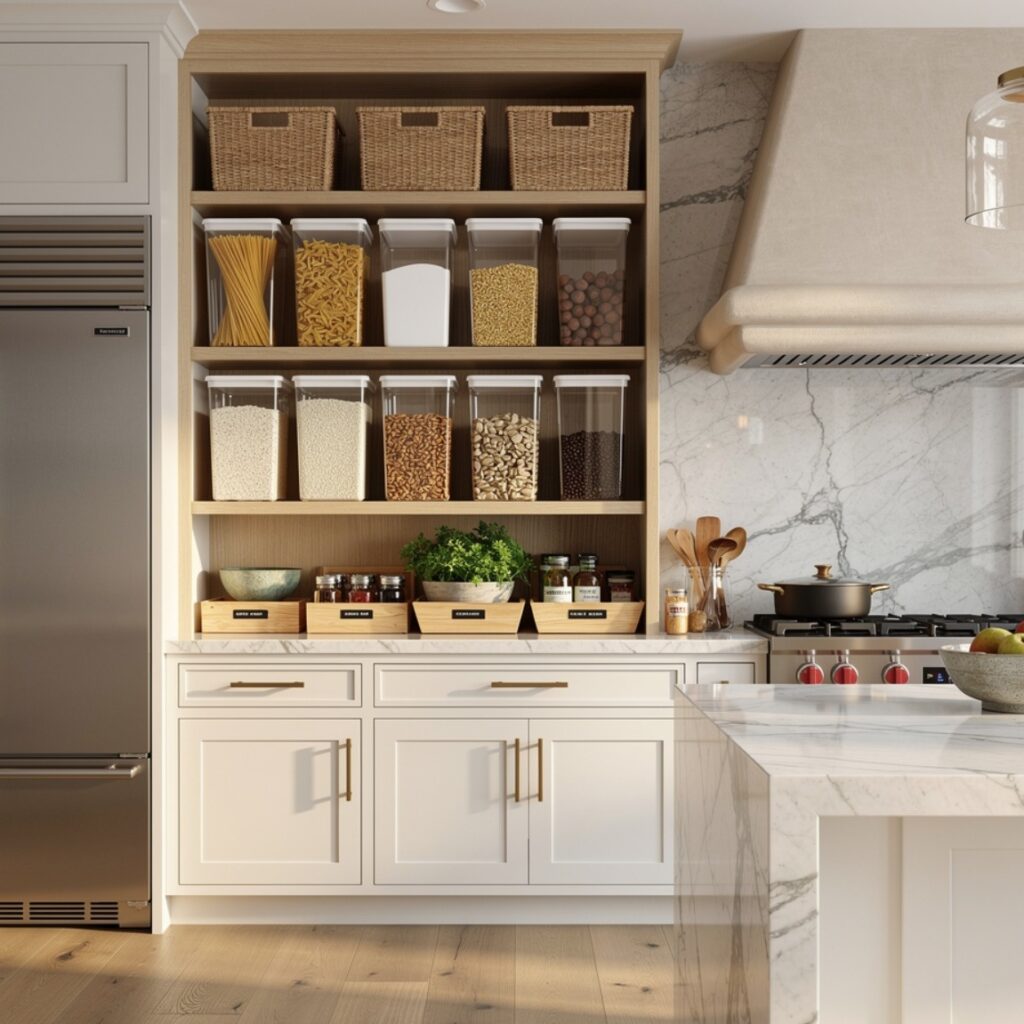
Clear, airtight containers let you see exactly what’s left of a pantry item without opening every lid, which reduces both waste and duplicate purchases. Square or rectangular containers use shelf space more efficiently than round ones, since they eliminate gaps between containers on a shelf. This system works best when paired with a consistent size range, typically two to three container sizes, rather than a mismatched collection that wastes vertical space. This idea suits pantries of any size, though it requires an upfront investment in containers before the system pays off in reduced clutter.
2. Labeled Zone System
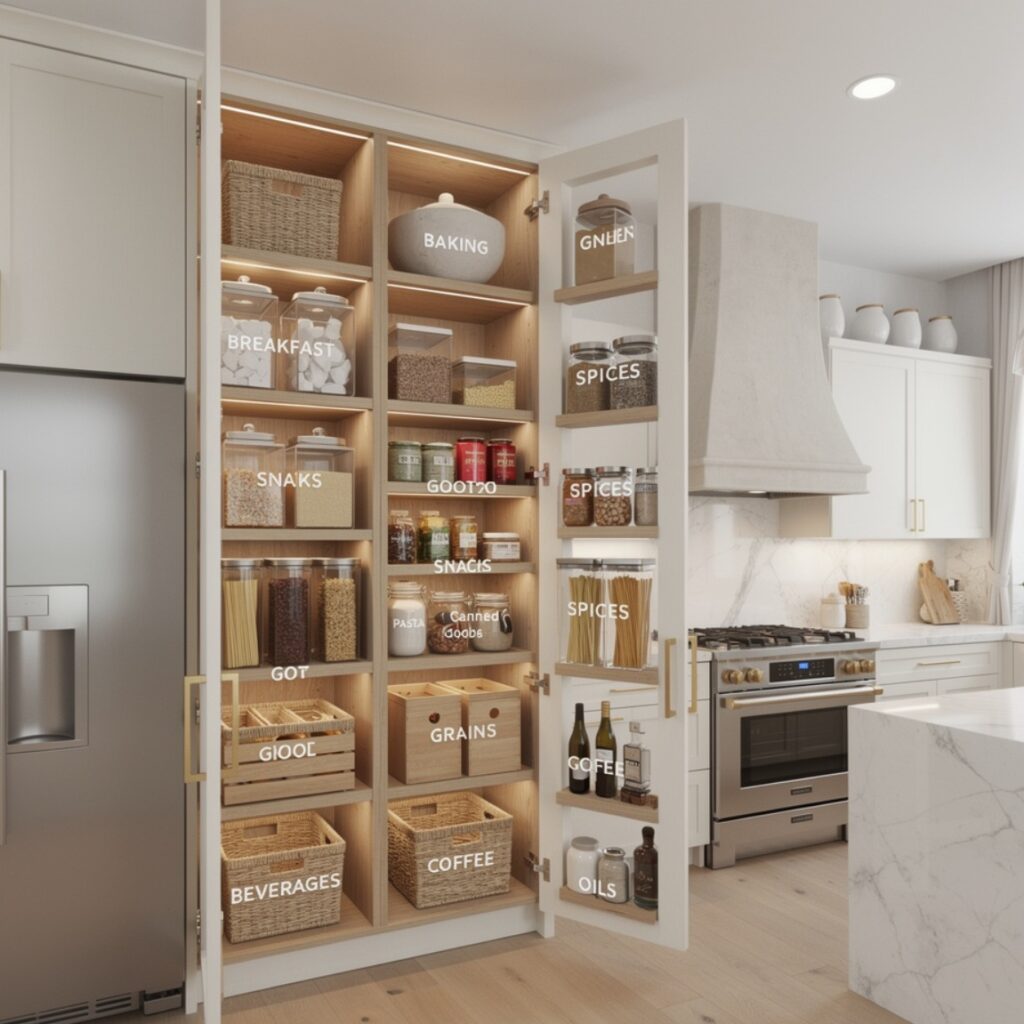
Rather than organizing by container type alone, a labeled zone system assigns specific areas of cabinets, drawers, or the pantry to categories like baking, snacks, or canned goods, with clear labels marking each zone. This makes it easier for multiple household members to put things back in the right place, which is often where organization systems break down over time. Removable label tape or a label maker with a matte finish tends to hold up better than paper labels in a kitchen environment. This idea works especially well in shared or family kitchens with more than one person restocking groceries.
| Label Type | Durability | Best For |
| Paper Label | Low | Temporary organization |
| Vinyl Label Tape | Medium | Pantry shelves, bins |
| Engraved or Etched Label | High | Permanent drawer systems |
3. Drawer Divider Inserts
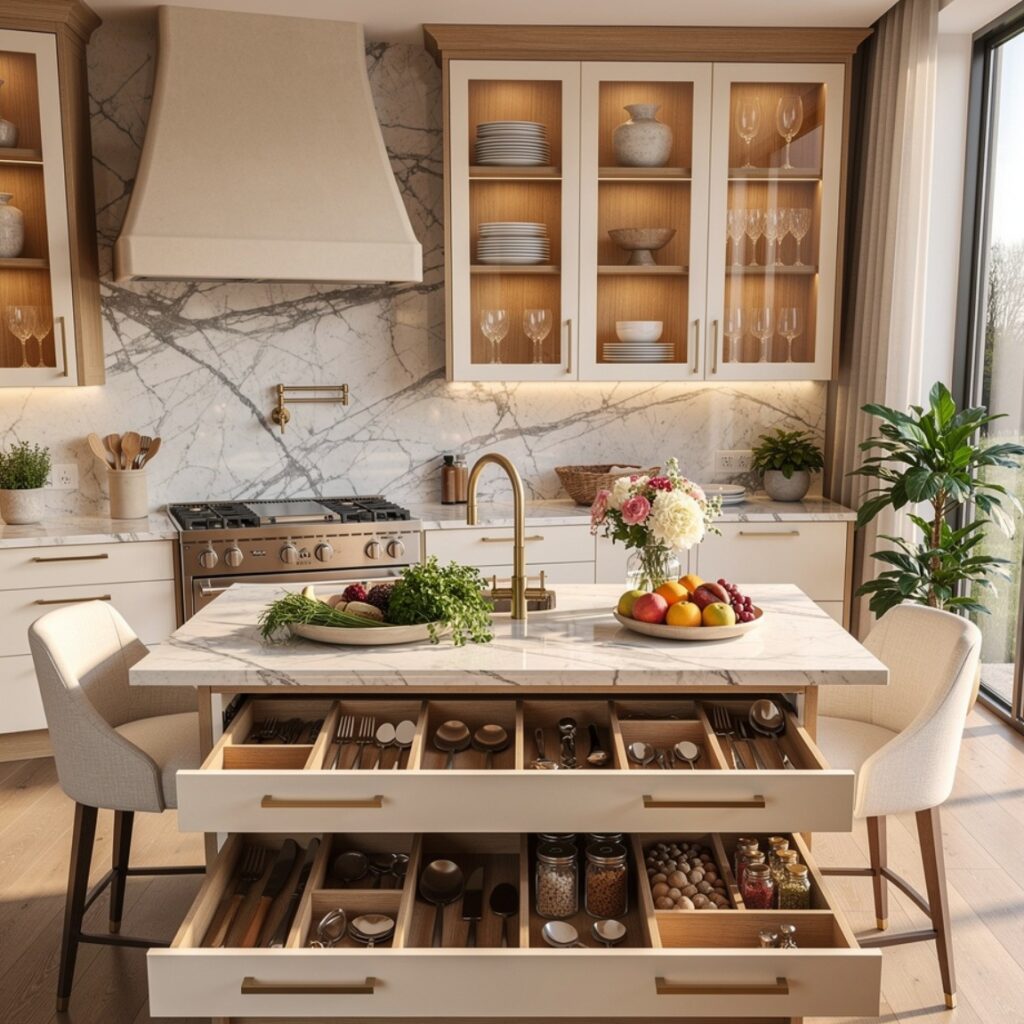
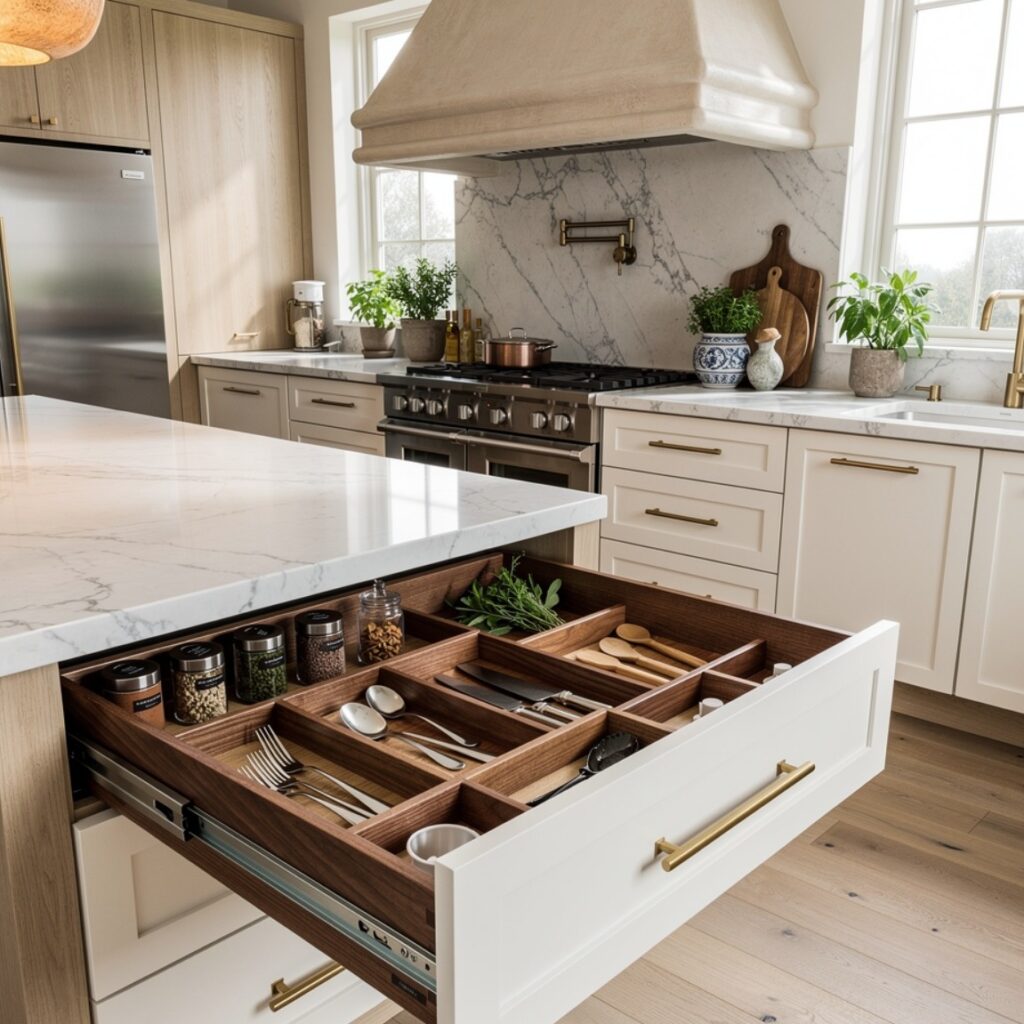
Drawer divider inserts break up a single deep drawer into smaller, defined sections for utensils, gadgets, or small tools, preventing items from sliding into a single disorganized pile. Adjustable bamboo or acrylic dividers allow the layout to change as your tool collection grows or shifts, unlike fixed plastic trays that lock you into one configuration. This works particularly well in a dedicated utensil drawer near the range, where quick access matters most during cooking. This idea is one of the lower-cost organization updates, typically requiring only the dividers themselves rather than new cabinetry.
4. Lazy Susan Turntables
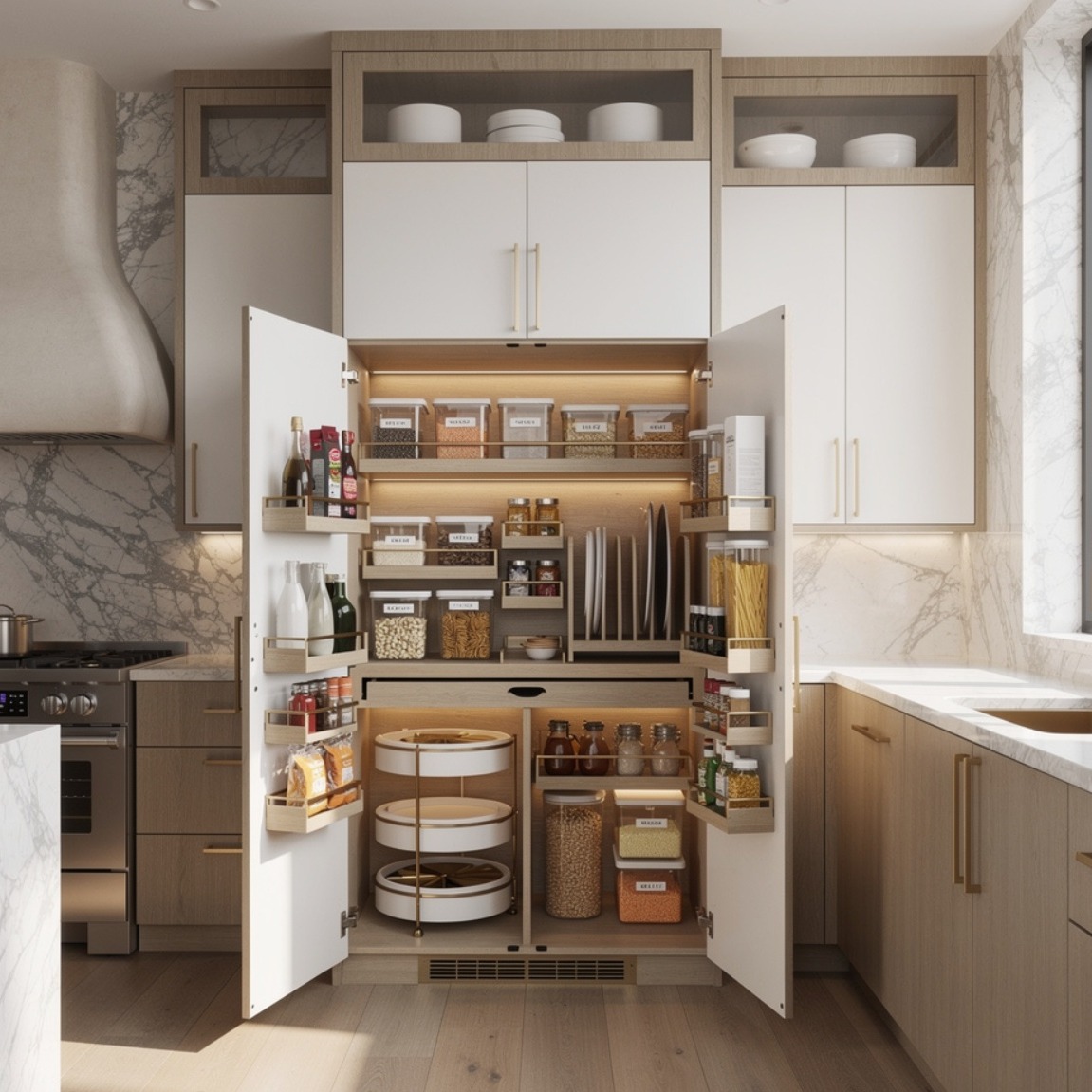
A lazy Susan turntable, placed inside a cabinet or on a pantry shelf, allows items stored toward the back to rotate forward instead of getting pushed out of reach and forgotten. This works particularly well for oils, spices, or condiments that come in similarly sized bottles, since the turntable keeps them all accessible with a simple spin. Two-tiered turntables maximize vertical space within a single cabinet shelf, effectively doubling storage without needing additional shelving. This idea suits both pantry and refrigerator organization equally well.
Looking for affordable inspiration? Browse our kitchen cabinets ideas to refresh your space without overspending.
5. Under-Sink Storage System
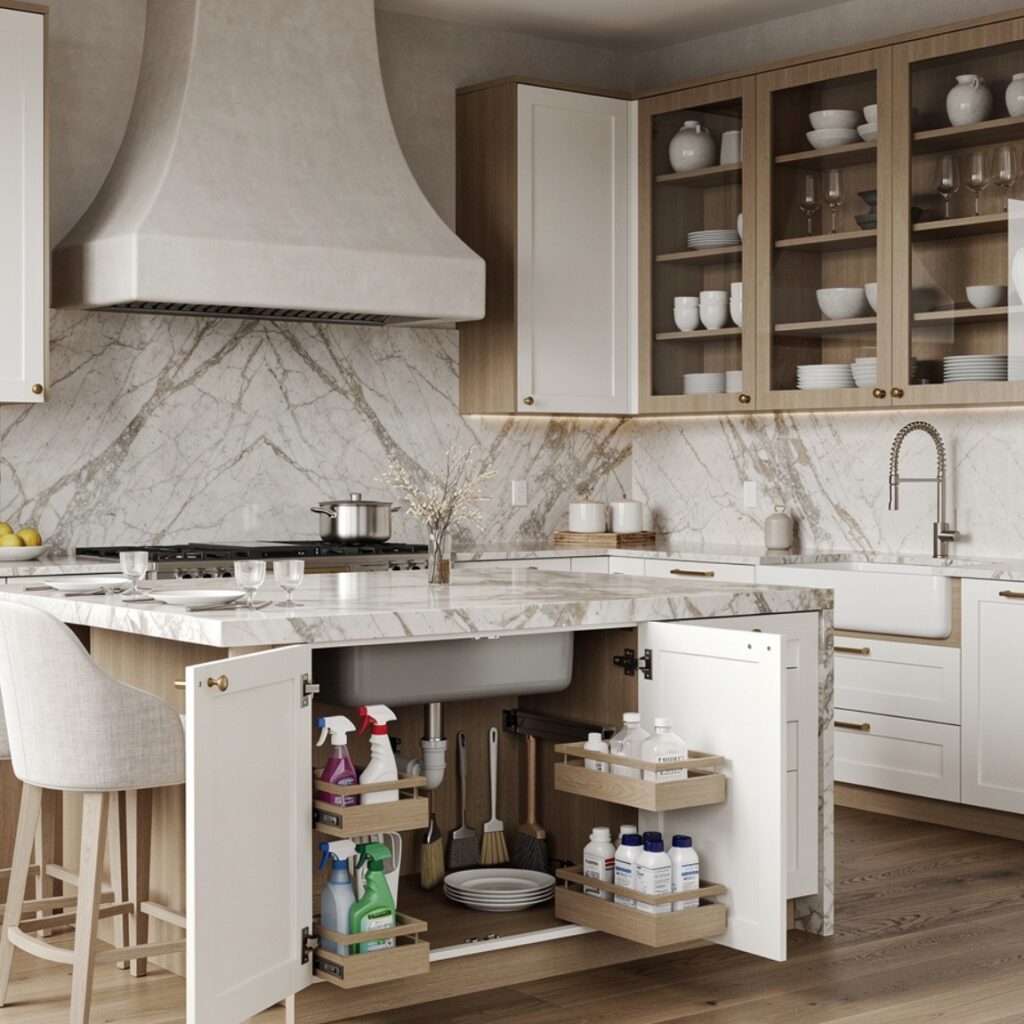
The area under the kitchen sink is often one of the most disorganized spaces in the kitchen, since pipes and uneven shelving make standard storage bins difficult to fit. A modular under-sink organizer, typically adjustable in width and height, works around plumbing obstructions better than a single fixed bin. Pull-out drawers designed specifically for under-sink use also improve access, since reaching to the back of a deep, low cabinet is otherwise awkward. This idea works well for storing cleaning supplies, trash bags, and dish soap refills in a contained, accessible system.
6. Vertical Baking Sheet Rack
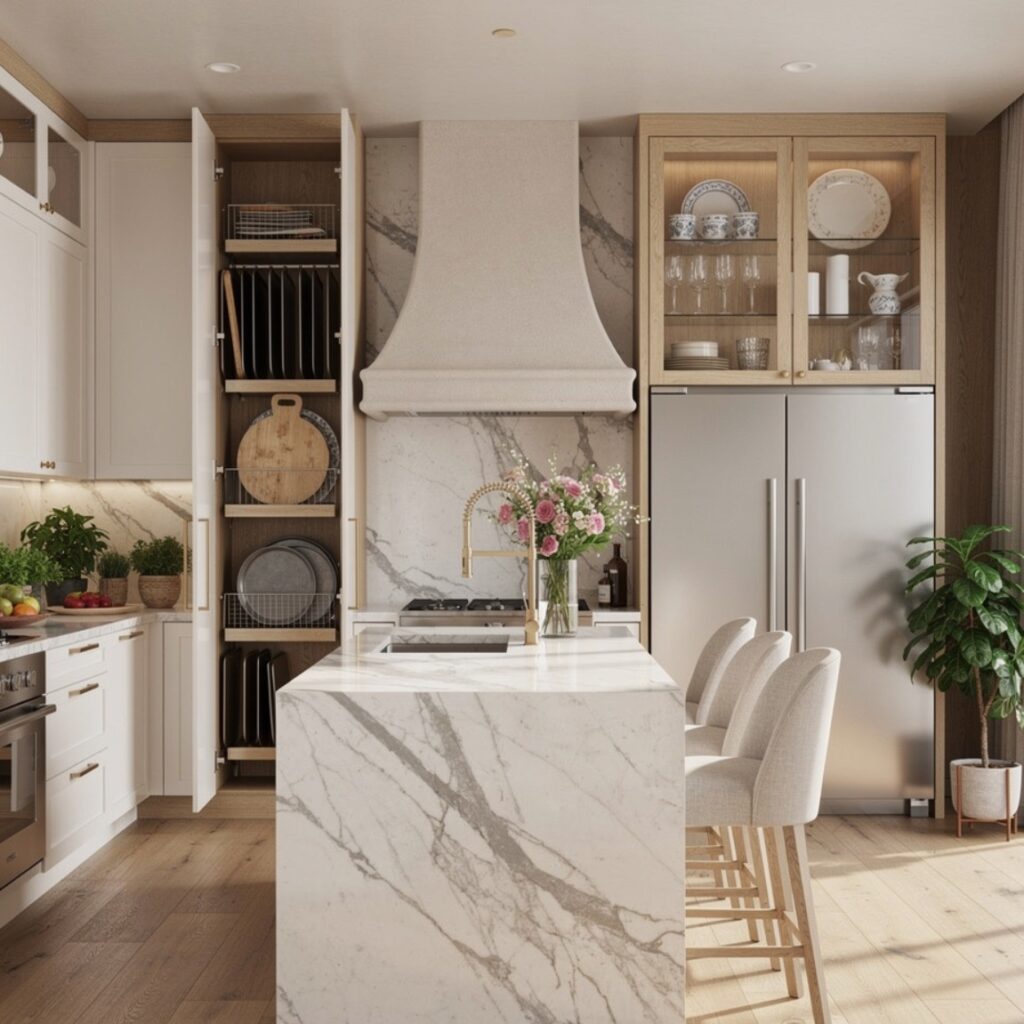
A vertical rack, either freestanding or mounted inside a cabinet, stores baking sheets, cutting boards, and trays upright rather than stacked flat, which prevents the common problem of needing to remove several items just to access one at the bottom. This works particularly well in a narrow cabinet space that would otherwise be underused for flat item storage. Adjustable dividers within the rack accommodate trays of different sizes without leaving excess gaps. This idea suits kitchens with a dedicated baking cabinet or a narrow gap near the oven.
7. Over-the-Door Storage
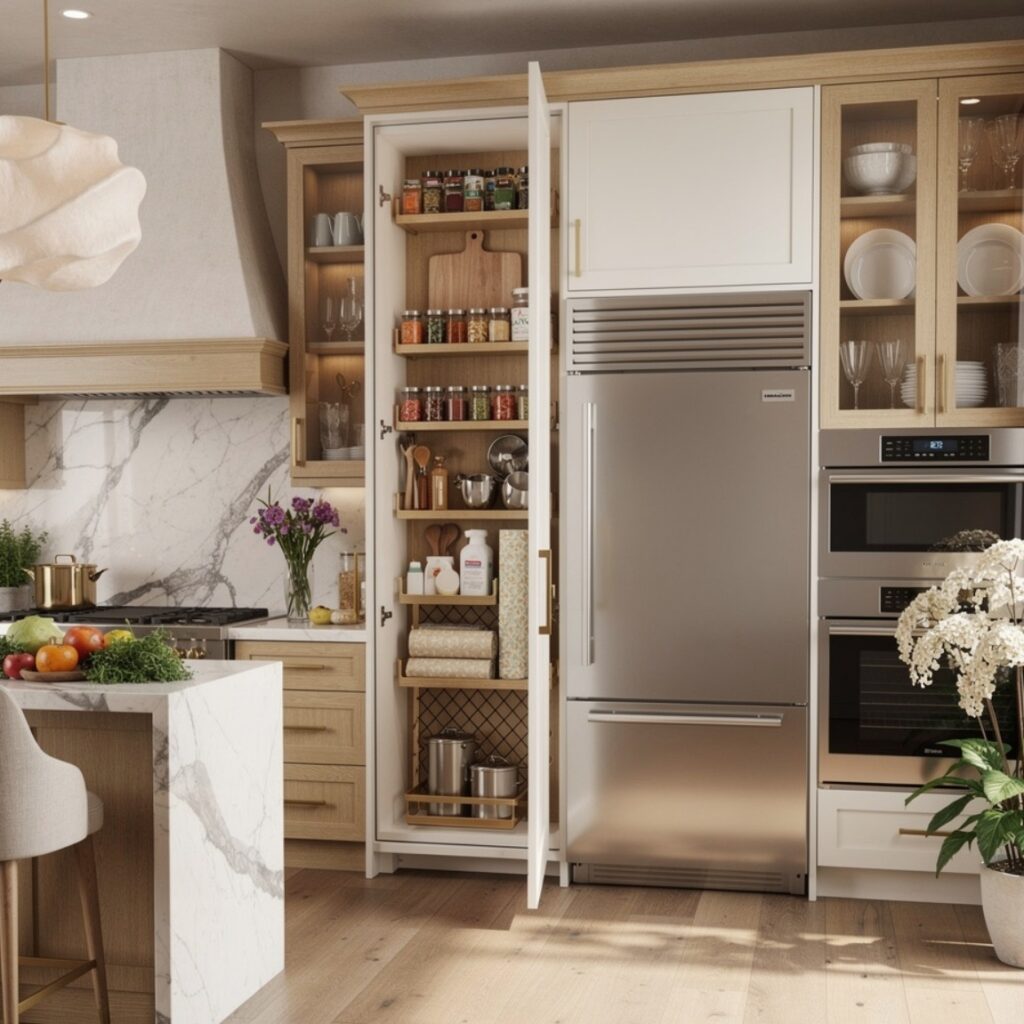
Over-the-door organizers, typically mounted on a pantry or cabinet door, use vertical door space that would otherwise go entirely unused for storage. These work well for smaller items like spice jars, snack bags, or cleaning supplies that don’t need deep shelving. Wire or clear pocket-style organizers both work, though clear pocket organizers make contents easier to identify at a glance. This idea is one of the most space-efficient options on this list, since it adds storage without requiring any existing shelf space at all.
8. Refrigerator Bin System
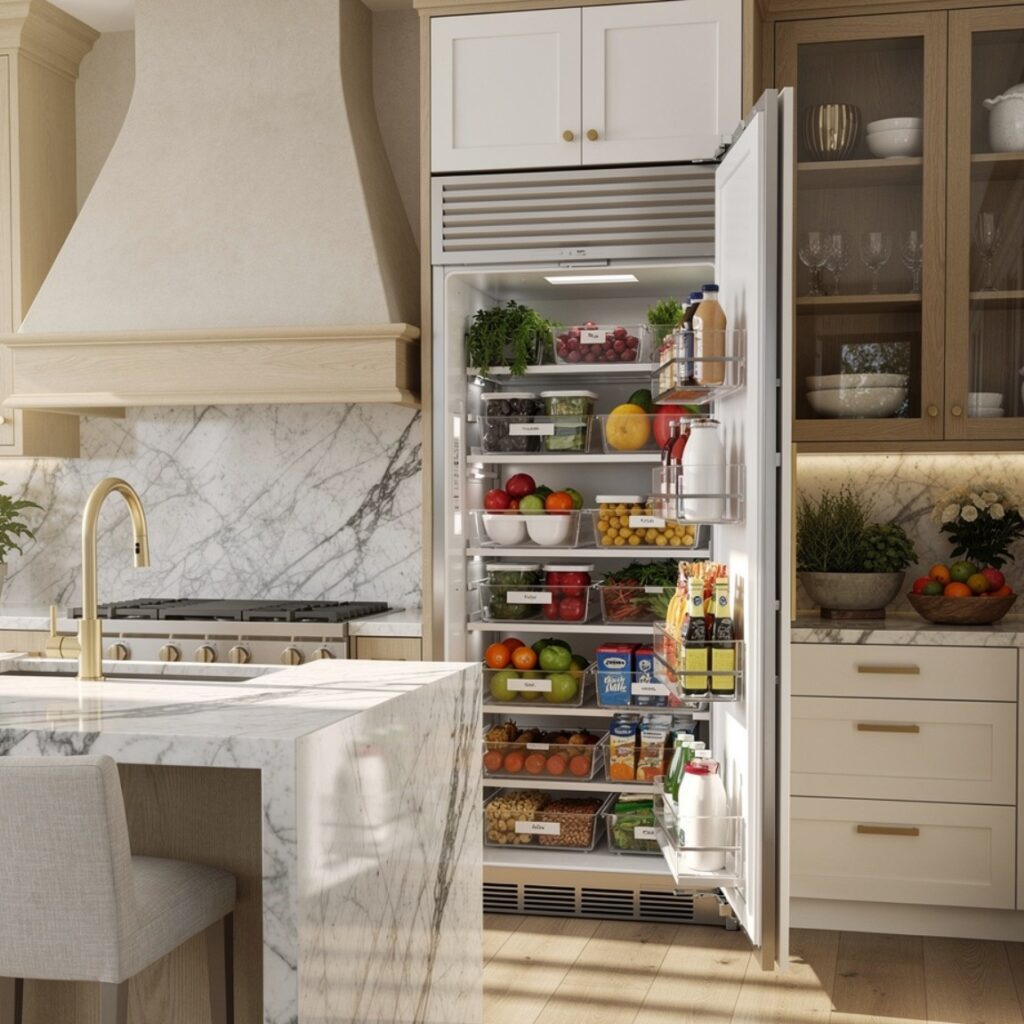
Clear, stackable bins inside the refrigerator group similar items together, such as all condiments in one bin or all snack-sized items in another, making it easier to pull out an entire category at once rather than searching shelf by shelf. This also makes cleaning the refrigerator considerably faster, since bins can be removed and wiped down as a unit rather than cleaning around individual jars and containers. Labeled bins for produce, dairy, and leftovers help maintain the system as groceries rotate weekly. This idea works well in refrigerators of any size, though larger models benefit most from a fully bin-based system.
9. Coffee and Tea Station
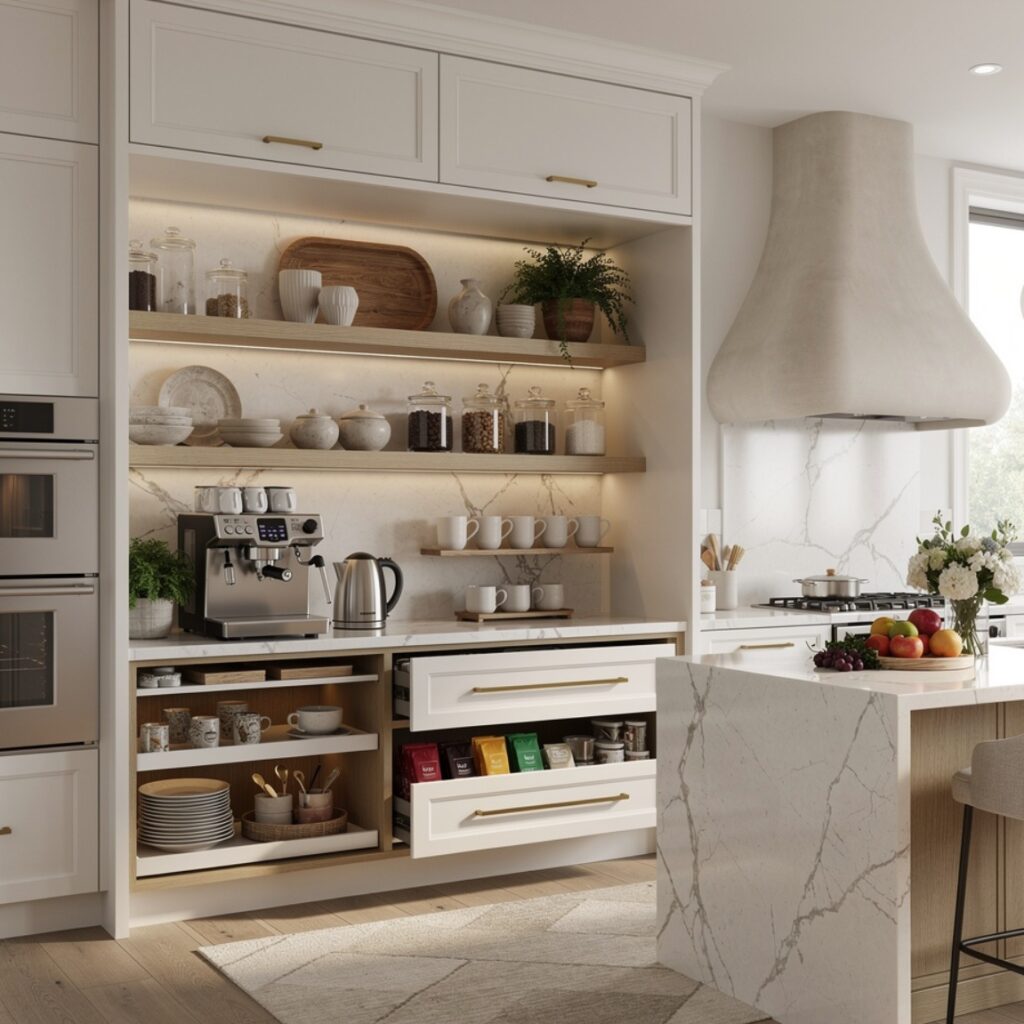
A dedicated coffee and tea station, typically set up on a section of counter or inside a cabinet near an outlet, groups mugs, filters, and beverage supplies into one contained area rather than spreading them across multiple cabinets. This reduces morning search time and keeps beverage clutter from spilling into unrelated storage areas. A small tiered shelf or turntable within the station keeps syrups, tea bags, and sweeteners organized without requiring a large footprint. This idea suits households that go through coffee or tea daily and want a single, consistent spot for setup.
| Station Element | Storage Solution | Space Needed |
| Mugs | Open shelf or hooks | Minimal |
| Coffee/Tea | Small bin or canister | Minimal |
| Syrups/Sweeteners | Tiered shelf or turntable | Moderate |
10. Pull-Out Trash and Recycling
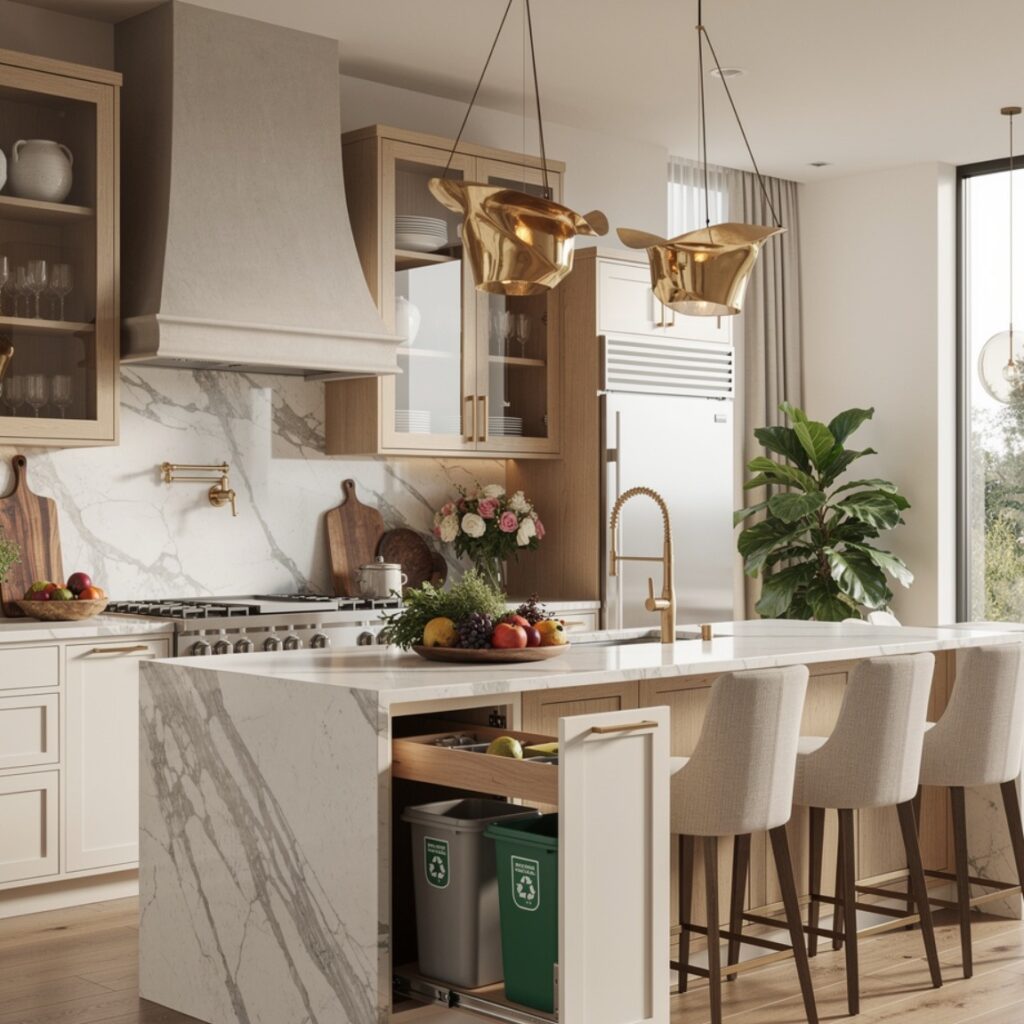
A pull-out trash and recycling system, built into a base cabinet, keeps bins hidden behind a door while still allowing full access via a sliding mechanism. This is more space-efficient than a freestanding bin taking up floor space, and it keeps odors contained behind a closed door rather than exposed in the room. Dual-bin systems, separating trash from recycling, are common and fit within a standard 15 to 18-inch cabinet width. This idea works particularly well near the sink or prep area, where food waste is generated most frequently during cooking.
11. Weekly Reset Routine
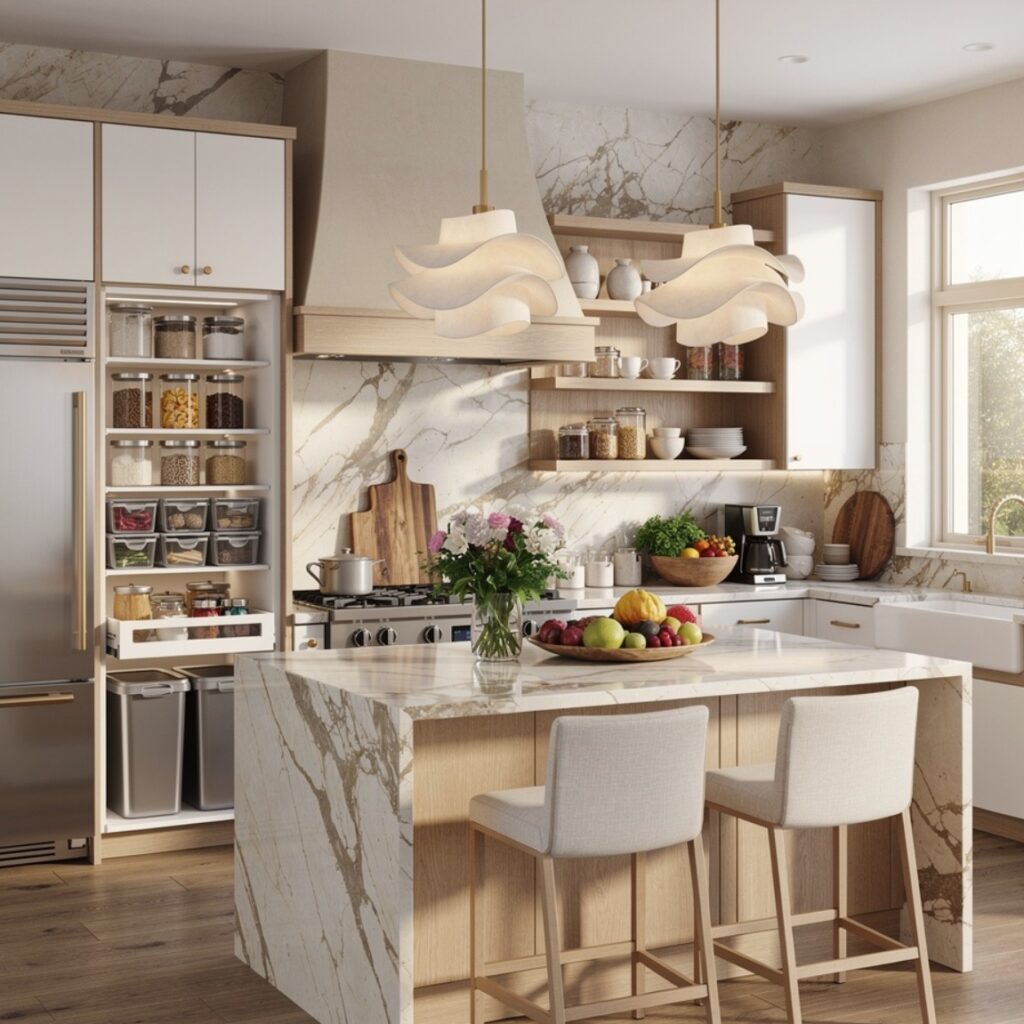
Beyond physical storage, a consistent weekly reset routine, checking expiration dates, wiping down bins, and returning misplaced items to their zones, keeps an organizational system functional rather than letting it slowly degrade. This doesn’t need to take more than fifteen to twenty minutes if the underlying system, like labeled zones and clear bins, is already in place. Pairing this routine with grocery shopping day helps ensure the pantry and refrigerator are reset right before new items are added. This idea matters as much as the physical storage itself, since even a well-designed system fails without light, regular maintenance.
12. Kitchen Organization Ideas for Small Pantries
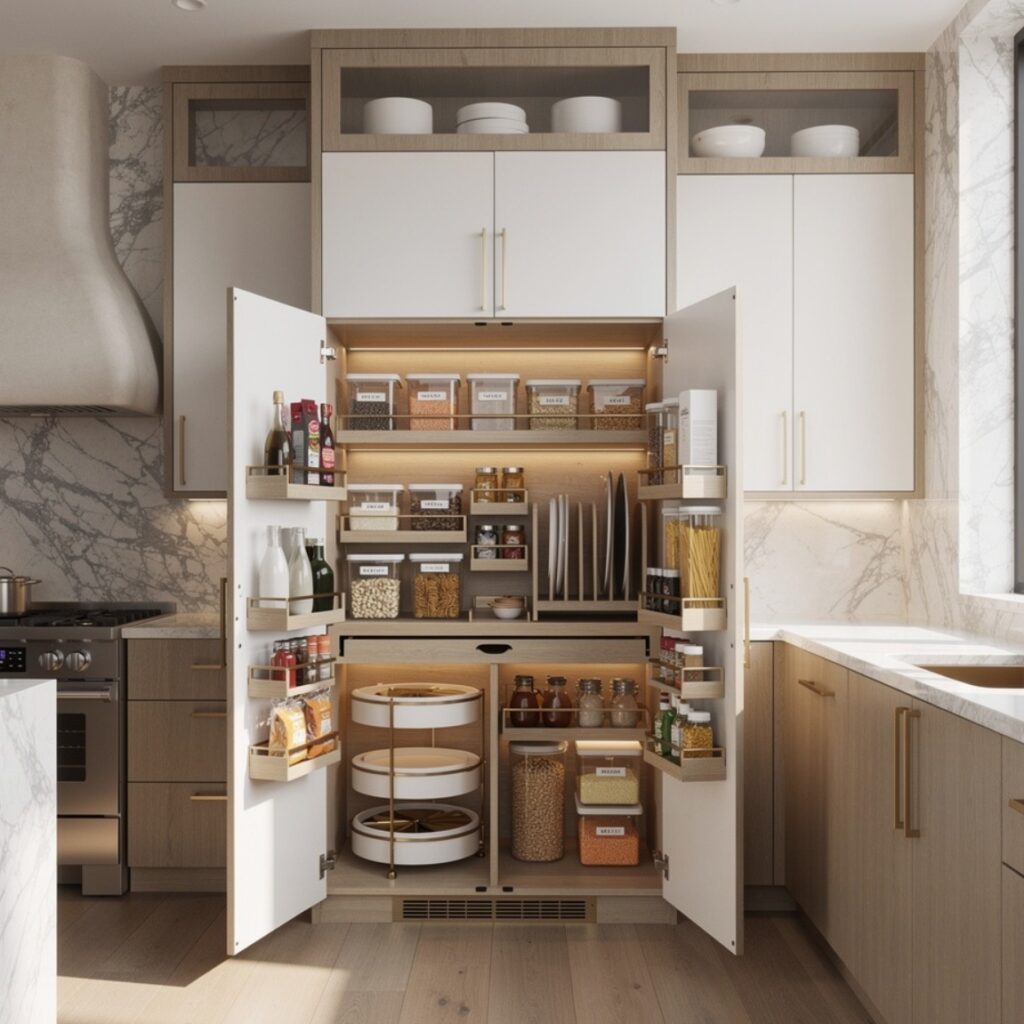
Among kitchen organization ideas, small pantries benefit most from vertical storage and over-the-door systems, since floor and shelf space are often limited. Stackable clear bins maximize shelf height, while an over-the-door organizer captures otherwise unused vertical space on the pantry door itself. Keeping frequently used items at eye level and less common items higher or lower reduces daily friction in a small space. This approach makes a compact pantry function closer to a larger one by using every available surface rather than relying on shelf depth alone.
Shop the Look
For a kitchen built around these ideas, look at square clear containers from OXO or a similar brand, sized in a consistent range to maximize shelf space. Bamboo drawer dividers work well for utensil organization, while a two-tiered lazy Susan fits easily into most standard cabinet depths. An over-the-door pantry organizer with clear pockets helps make the most of unused door space, and a pull-out dual-bin trash system can typically be added to an existing base cabinet without a full cabinet replacement.
Common Mistake to Avoid
The most common mistake is buying organization products before assessing how the kitchen is actually used day to day, which often results in bins and containers that don’t match real habits and get abandoned within a few weeks. Before purchasing containers or dividers, it helps to track which items get pulled out most often and which stay untouched for weeks, since frequently used items need the most accessible storage. Building the system around actual use, rather than a generic organizing template, is what makes it hold up over time rather than requiring a full redo.
FAQs
What is the best way to organize a small kitchen pantry?
Vertical storage, stackable clear containers, and an over-the-door organizer tend to work best in a small pantry, since they maximize both shelf height and otherwise unused door space. Keeping the container sizes consistent, typically two to three sizes total, also helps avoid wasted gaps between differently shaped containers. Labeling shelves by category further helps maintain the system once the initial organization is complete.
How often should kitchen organization systems be reset?
A light weekly reset, checking expiration dates and returning misplaced items to their zones, helps maintain most kitchen organization systems without requiring a full overhaul. A deeper reset, wiping down bins and reassessing what’s being used versus what’s been sitting untouched, is generally useful every one to two months. Pairing the weekly reset with a regular grocery shopping day tends to keep the system consistent with the least added effort.
Are clear containers worth the investment for pantry organization?
Clear containers do add upfront cost compared to keeping items in their original packaging, but they typically pay off through reduced food waste and fewer duplicate purchases, since it’s easier to see exactly what’s left of an item. They also extend the shelf life of some dry goods by providing a better seal than the original packaging. For pantries with frequent grocery rotation, the investment tends to be worthwhile over time.
What is the most space-efficient kitchen organization idea?
Over-the-door organizers tend to be among the most space-efficient options, since they use vertical door space that would otherwise go completely unused rather than requiring any existing shelf or floor space. Drawer dividers are a close second, since they work within existing drawers rather than adding new storage furniture. Both options suit smaller kitchens particularly well, where floor and counter space are already limited.
Do I need matching containers for a kitchen to look organized?
Matching containers aren’t strictly necessary for a kitchen to function well, though a consistent size range does help maximize shelf space more efficiently than a mismatched collection. Function matters more than uniform appearance, so a system built around actual use, even with some variation in container brands or shapes, tends to hold up better long-term than one prioritizing a perfectly matched look that’s harder to maintain.
Conclusion
These kitchen organization ideas range from low-cost updates like drawer dividers to bigger systems like a full pull-out trash and recycling setup, giving you a starting point no matter your kitchen’s size or your current storage habits. If one of these stood out, save this post to Pinterest for later, or check out our related guide on kitchen cabinets ideas for more storage-focused inspiration.