12 Trending Kitchen Window Ideas for Light and Function
Kitchen window ideas often get overlooked in favor of cabinets and countertops, but window placement, style, and treatment affect both natural light and daily workflow more than most people expect. This post covers twelve specific window concepts, each with real materials and placement guidance, so you can plan an update with clear expectations rather than guessing what will fit your kitchen’s layout. Whether you’re replacing an existing window or planning one into a renovation, you’ll find sizing notes and comparisons to help you choose a window that works as well as it looks.
Trend & Background
Kitchen windows have trended toward larger, less obstructed glass with minimal or no window treatments, prioritizing natural light and outdoor views over the heavier curtains and smaller panes common in earlier kitchen designs. This shift has been driven partly by open-concept layouts, where kitchens increasingly serve as a visual centerpiece rather than a closed-off utility room. This matters now because window changes are a significant and semi-permanent investment, so understanding which styles and placements genuinely improve daily function helps avoid choosing an option based on appearance alone.
Key Takeaways
- These kitchen window ideas cover placement, style, and treatment choices that balance natural light with daily function.
- Larger, unobstructed windows and simple, minimal treatments are replacing heavier curtains and smaller window styles.
- Several ideas include size, spacing, or material comparisons to help you plan a window update before installation.
- Small details like sill depth or hardware finish can change how a window functions as much as its overall size.
1. Sink Window Placement
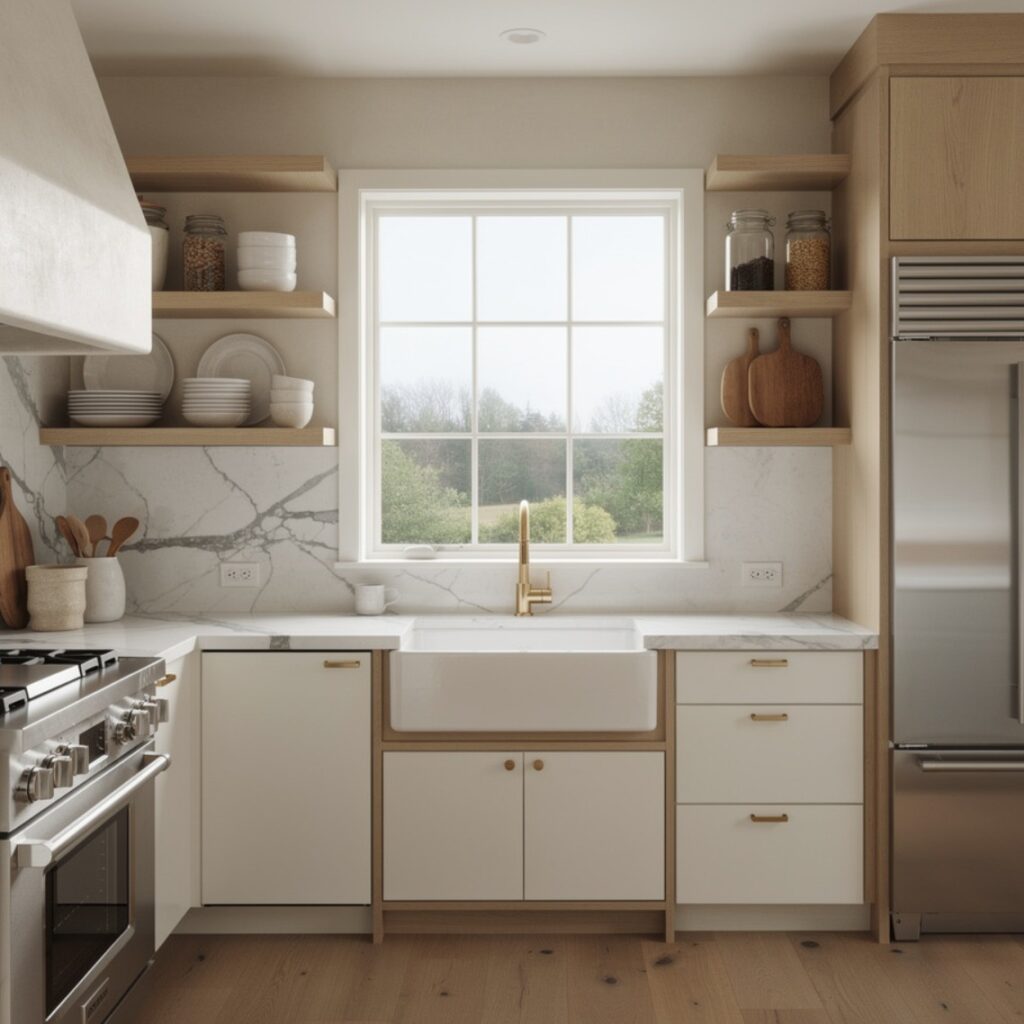
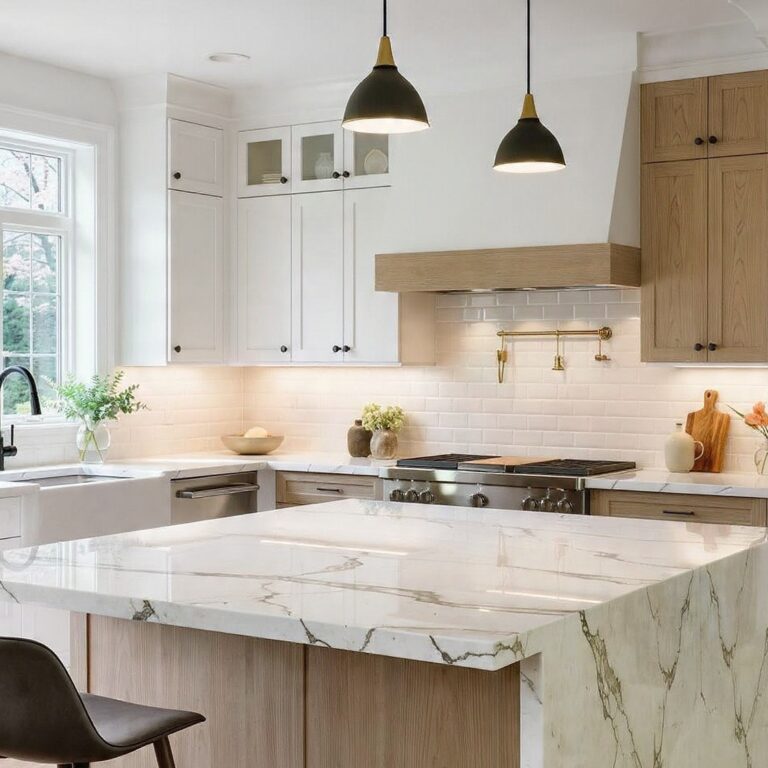
Positioning a window directly above the kitchen sink remains one of the most requested placements, since it gives the person washing dishes a view outward rather than facing a blank wall. This works best with a window sill deep enough, typically at least 4 to 6 inches, to hold a small plant or a few everyday items without crowding the faucet. Casement or fixed windows are common choices here, since double-hung windows can be harder to open and close comfortably when reaching over a full sink basin.
2. Casement Windows
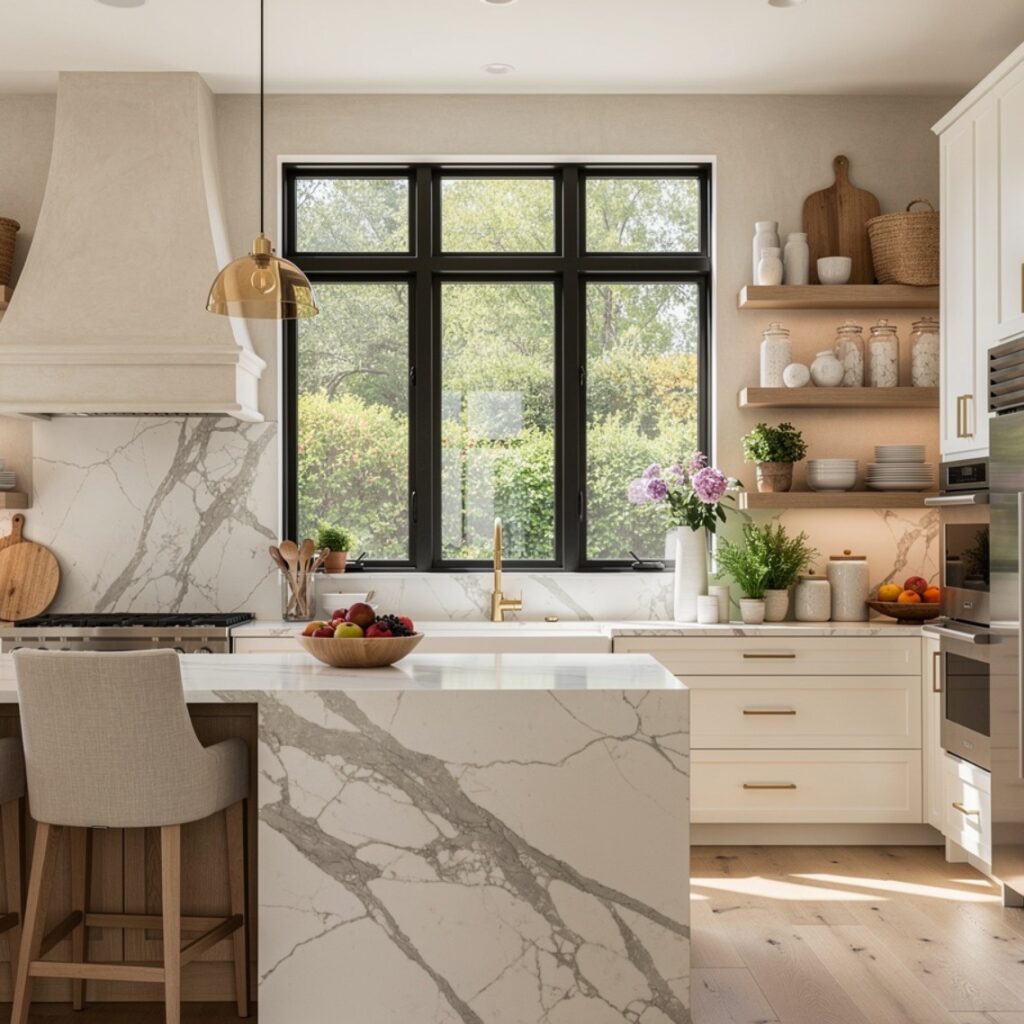
Casement windows open outward on a hinge, operated by a crank rather than a sash that slides vertically, offering a fuller, unobstructed opening for airflow compared to some other window styles. This works particularly well over a sink or counter, where reaching up to unlock and slide open a traditional double-hung window can be awkward. Casement windows also tend to seal more tightly when closed, which can improve energy efficiency compared to older sliding sash designs. This idea suits kitchens prioritizing ventilation alongside natural light.
| Window Style | Operation | Best Kitchen Use |
| Casement | Crank, opens outward | Over sink, counters |
| Double-Hung | Vertical slide | Traditional kitchens |
| Fixed | Doesn’t open | Light only, no ventilation needed |
3. Garden Window
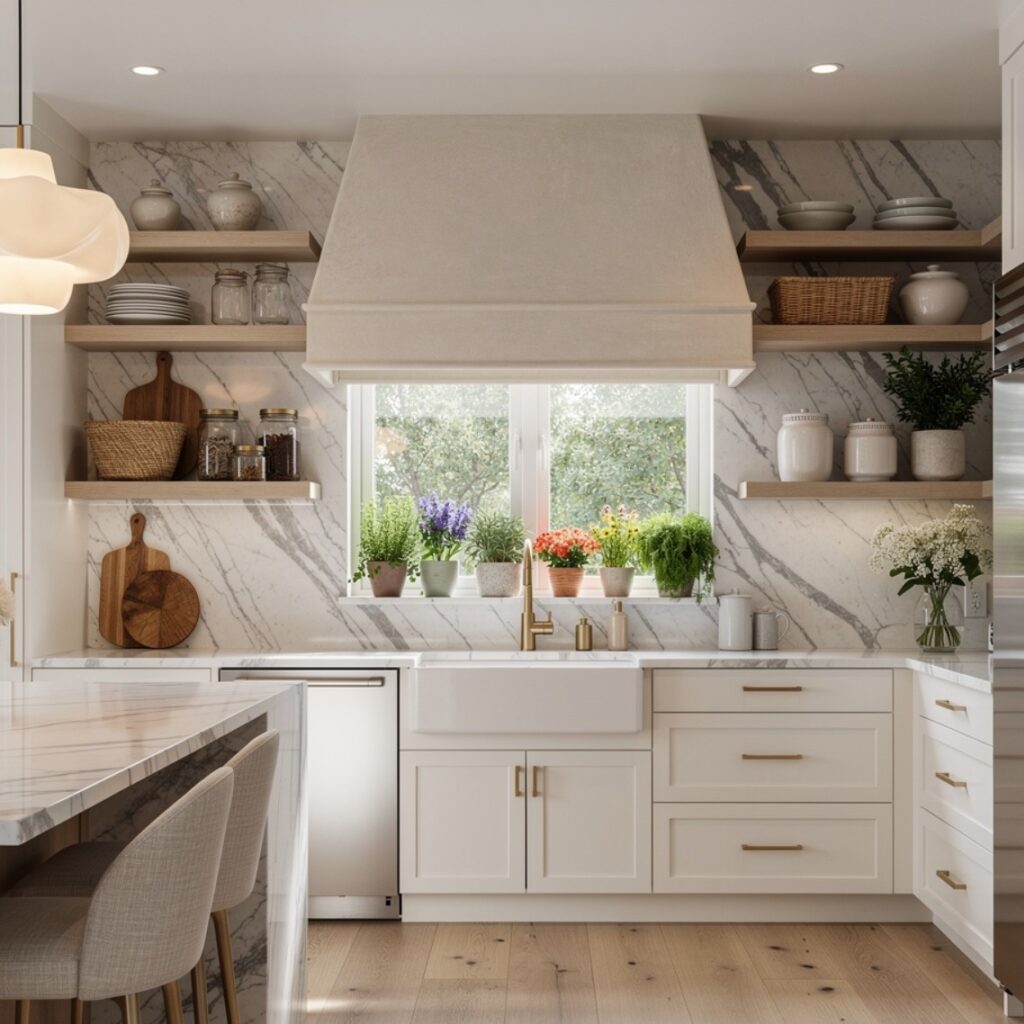
A garden window extends outward from the wall in a small box shape, typically with glass on three sides and a shelf at the base, creating a mini greenhouse effect for herbs or small plants. This works well positioned above a sink or a section of counter with consistent light exposure throughout the day. Because it protrudes from the exterior wall, installation is more involved than a standard window replacement, and it does add a small amount of usable interior shelf space rather than just glass. This idea suits kitchens with active indoor plant or herb care.
Pair your new floors with these stunning kitchen flooring ideas for a cohesive and modern look.
4. Full-Height Window Wall
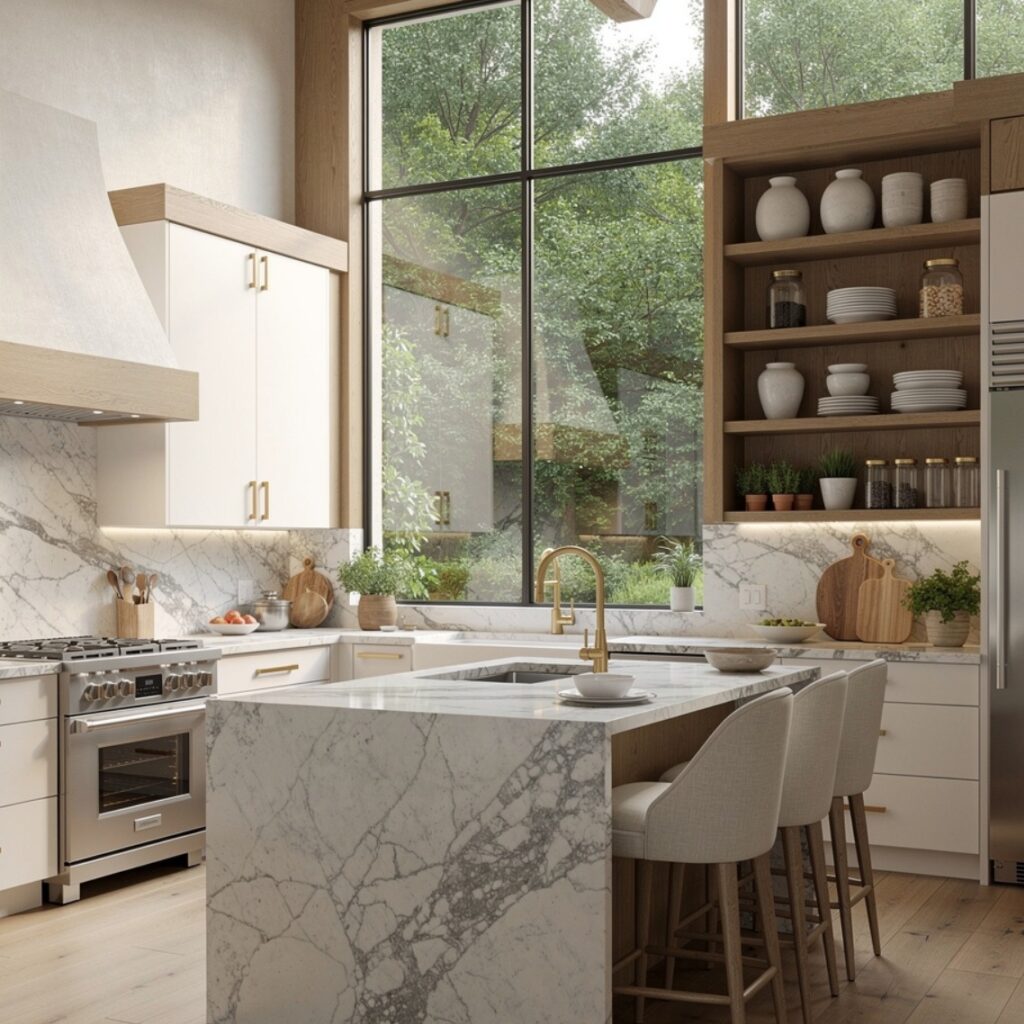
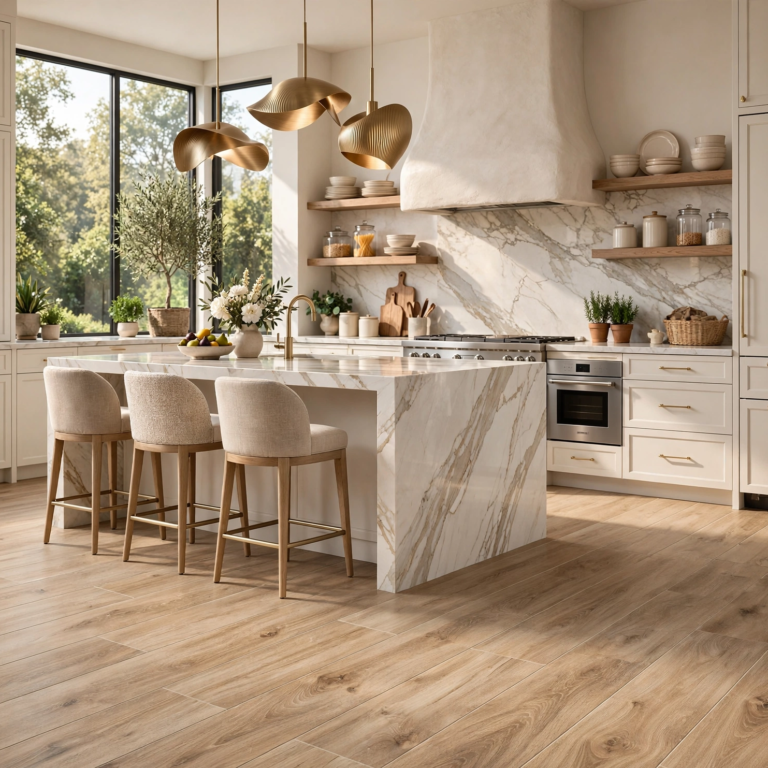
A full-height window wall, running from countertop level to the ceiling, maximizes natural light and outdoor connection, particularly in kitchens that open onto a garden, patio, or scenic view. This works best in kitchens without extensive upper cabinetry along that wall, since the window itself replaces what would otherwise be cabinet space. Large-format glass panels, sometimes with minimal visible framing, create a more seamless look than multiple smaller windows pieced together. This idea suits larger, open-concept kitchens where the window can serve as a clear visual anchor.
5. Café-Style Curtains
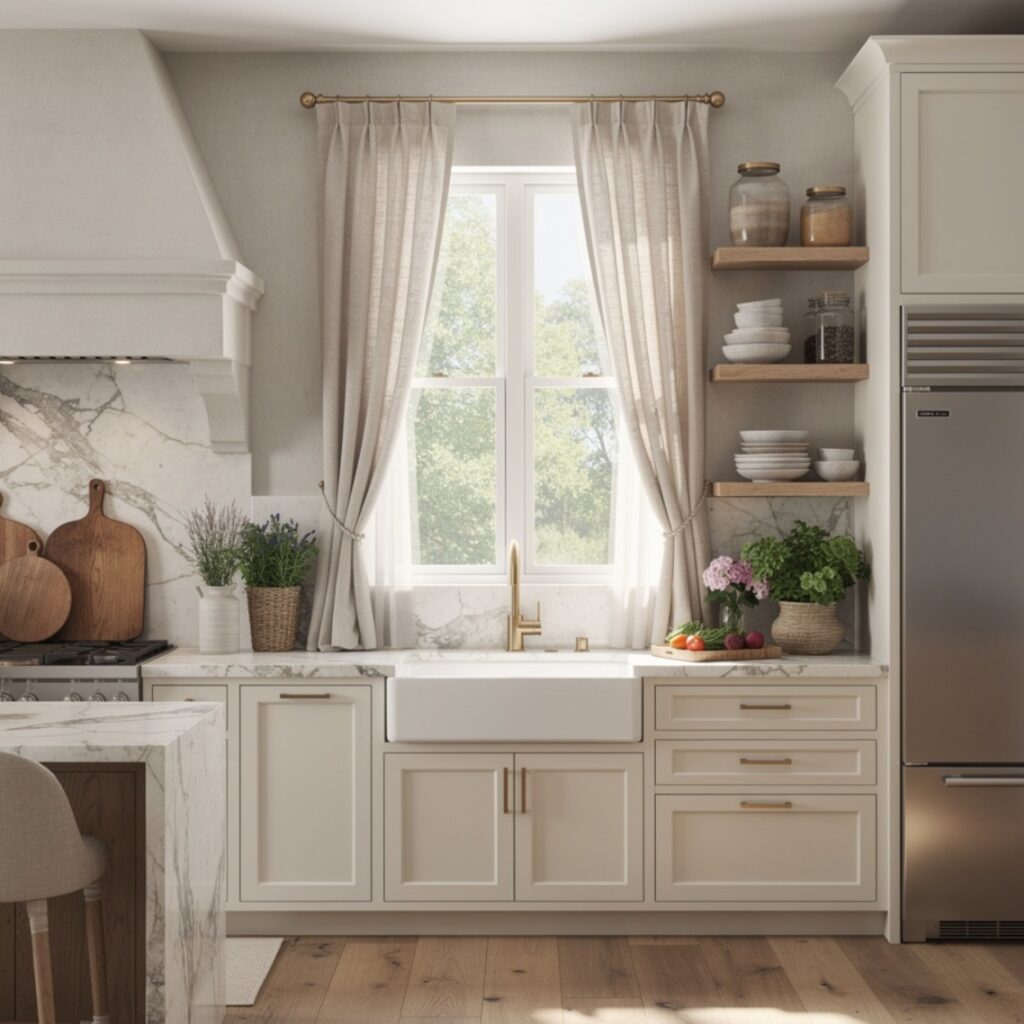
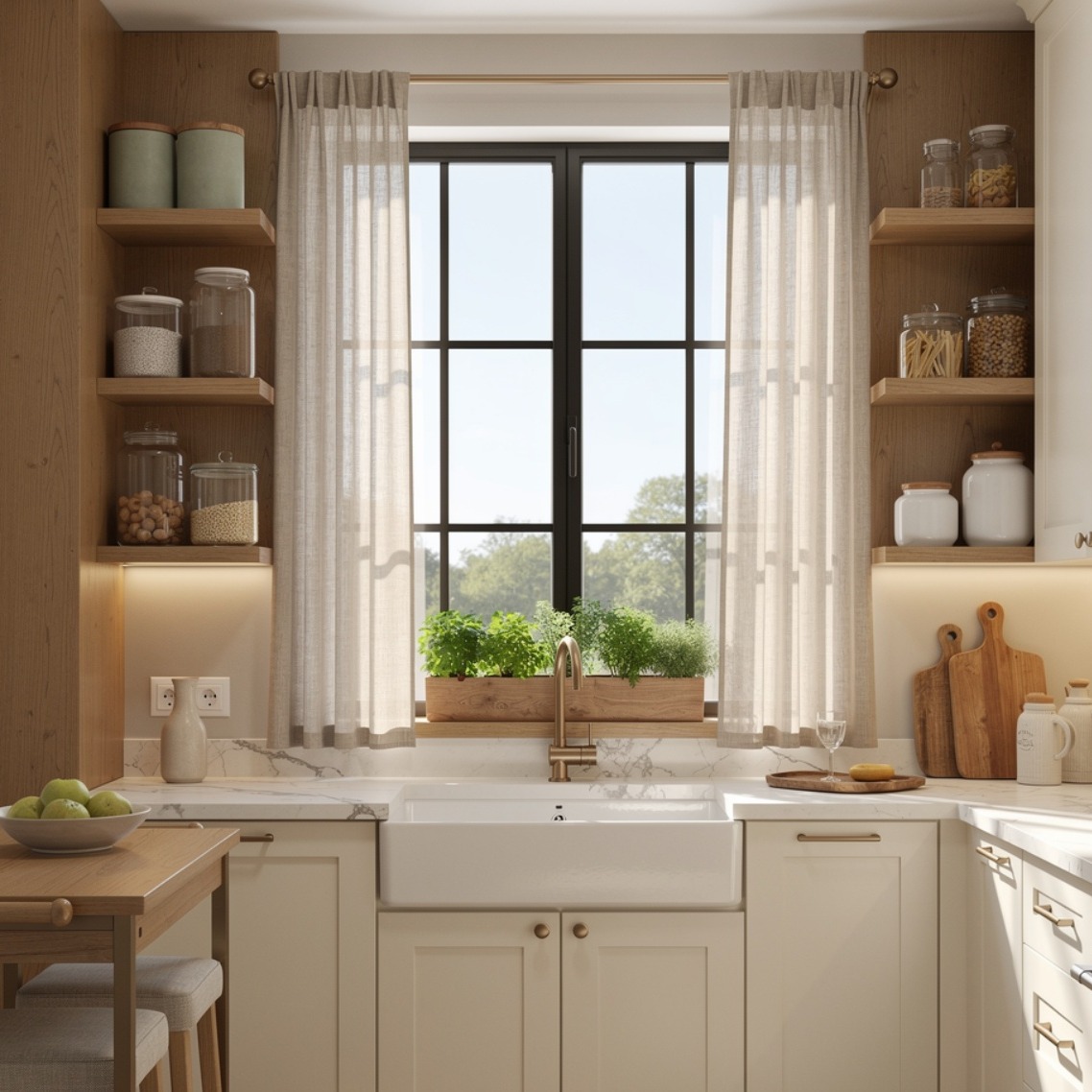
Rather than full-length curtains, café-style curtains cover only the lower half of a window, mounted on a rod at the window’s midpoint, providing privacy at counter height while still allowing light through the upper portion of the glass. Lightweight linen or cotton fabrics in a solid, neutral tone work well for this treatment, since they don’t compete visually with the rest of the kitchen. This idea suits windows facing a street or a close neighboring structure, where full privacy isn’t needed but some screening at eye level is preferred.
6. No Window Treatment
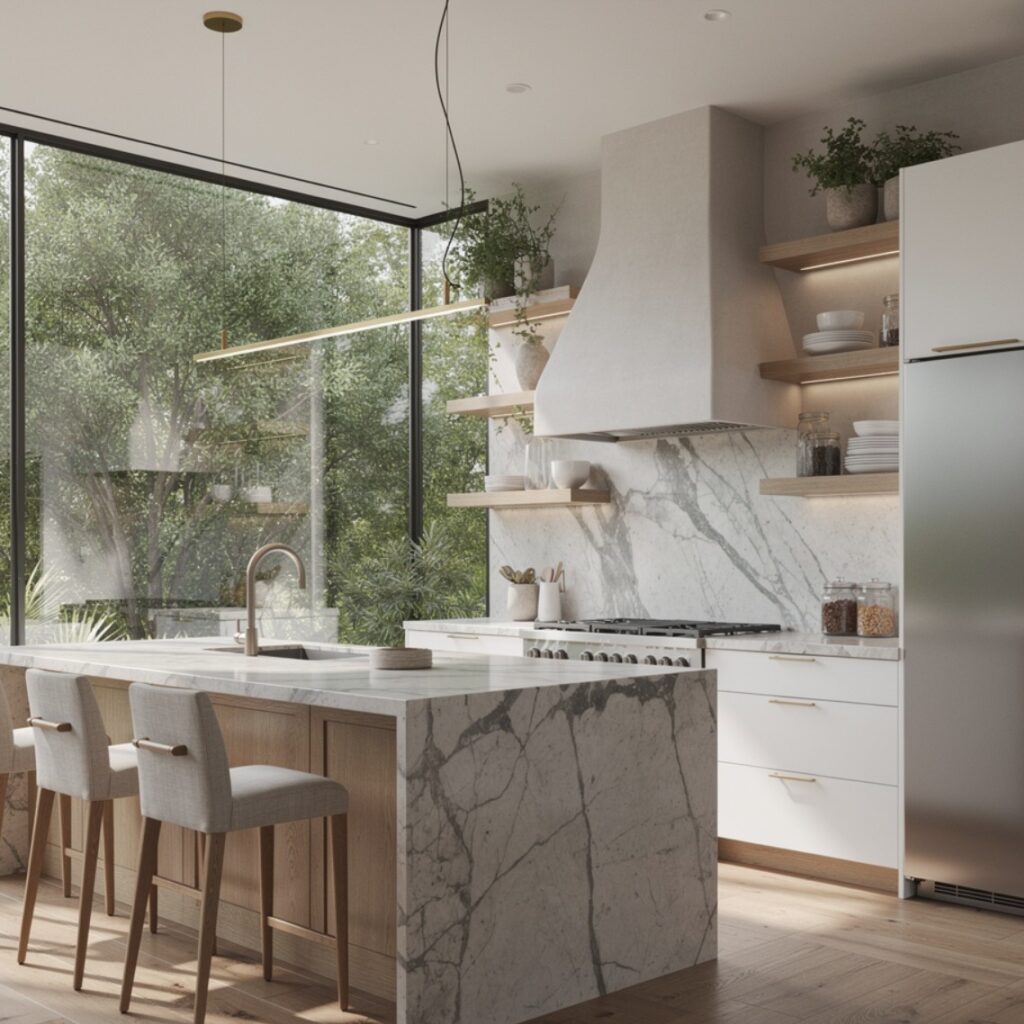
Leaving a kitchen window entirely bare, particularly one facing a private yard or upper-floor view without close neighbors, has become an increasingly common choice for maximizing natural light and keeping the window itself as the visual feature. This works best when the surrounding wall and sill are finished cleanly, since a bare window draws more attention to the window’s frame and surrounding trim than a covered one would. This idea suits kitchens prioritizing an unobstructed connection to the outdoors over privacy concerns.
7. Roman Shades
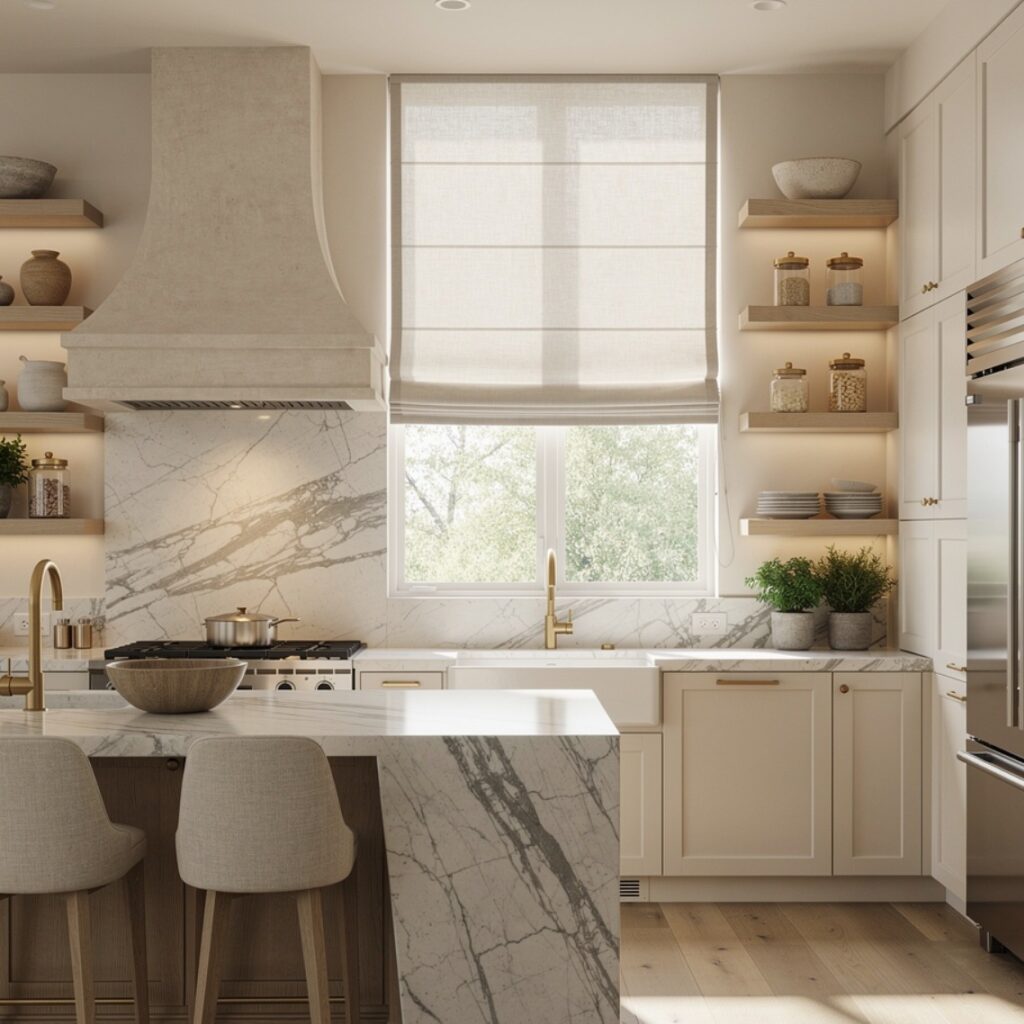
Roman shades fold into neat horizontal pleats when raised, offering a cleaner, more tailored look than traditional curtains while still providing full coverage when lowered for privacy. Cordless or top-down-bottom-up mechanisms work particularly well in a kitchen, since they avoid dangling cords near a sink or stove and allow partial coverage from the top down for privacy without blocking all light. Natural woven materials like bamboo or a simple linen blend suit a kitchen better than heavier drapery fabrics. This idea suits windows needing more consistent privacy control than a café curtain provides.
8. Awning Window Above Cabinets
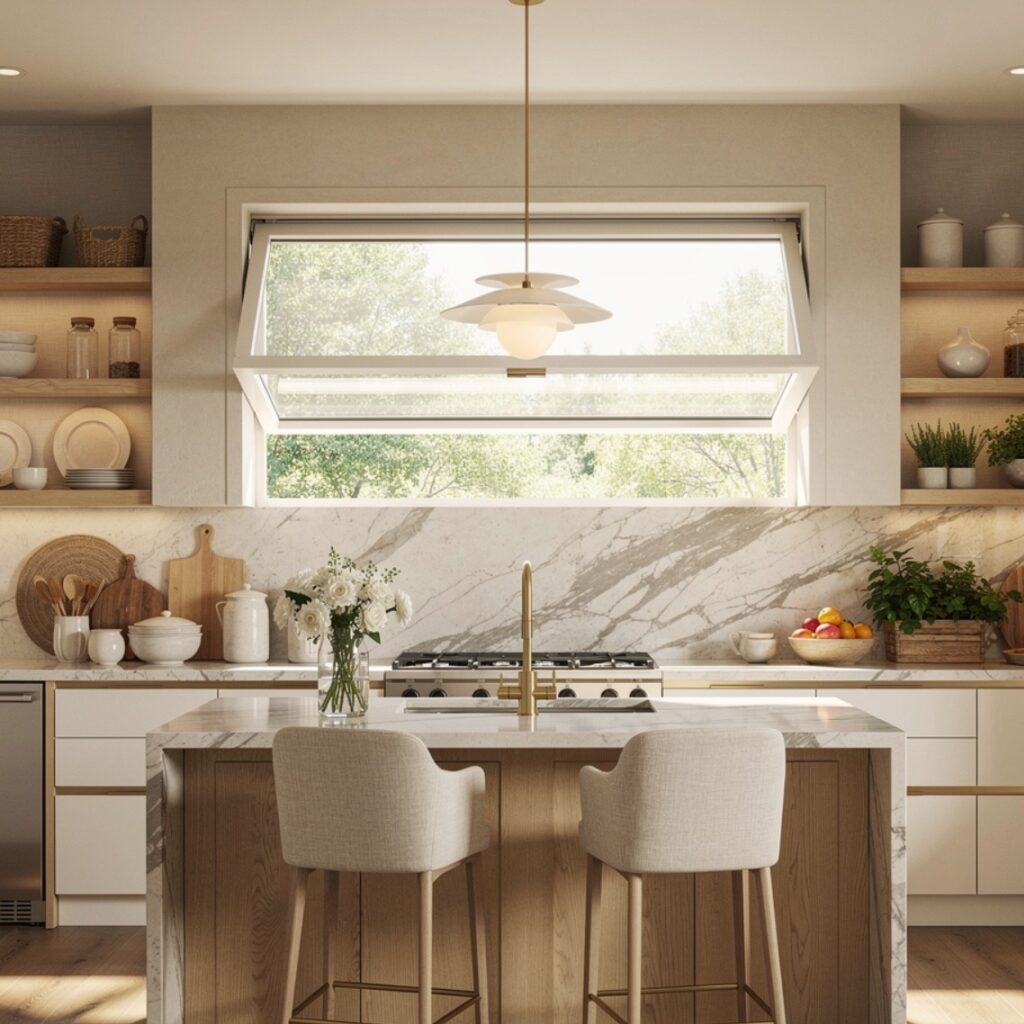
An awning window, hinged at the top and opening outward from the bottom, works well placed higher on a wall, above cabinet height, to bring in additional light and ventilation without taking up wall space needed for upper cabinetry. This is a useful kitchen window idea for interior or partially enclosed kitchens lacking a full exterior wall for a standard window placement. Because it’s positioned higher, it also allows for airflow without sacrificing privacy, since the opening sits above typical eye level from outside.
| Window Placement | Height | Primary Benefit |
| Sink Window | Standard counter height | View while washing dishes |
| Awning Above Cabinets | Above upper cabinets | Light and airflow without wall space loss |
| Full-Height Wall | Counter to ceiling | Maximum light and outdoor connection |
9. Bay Window Breakfast Nook
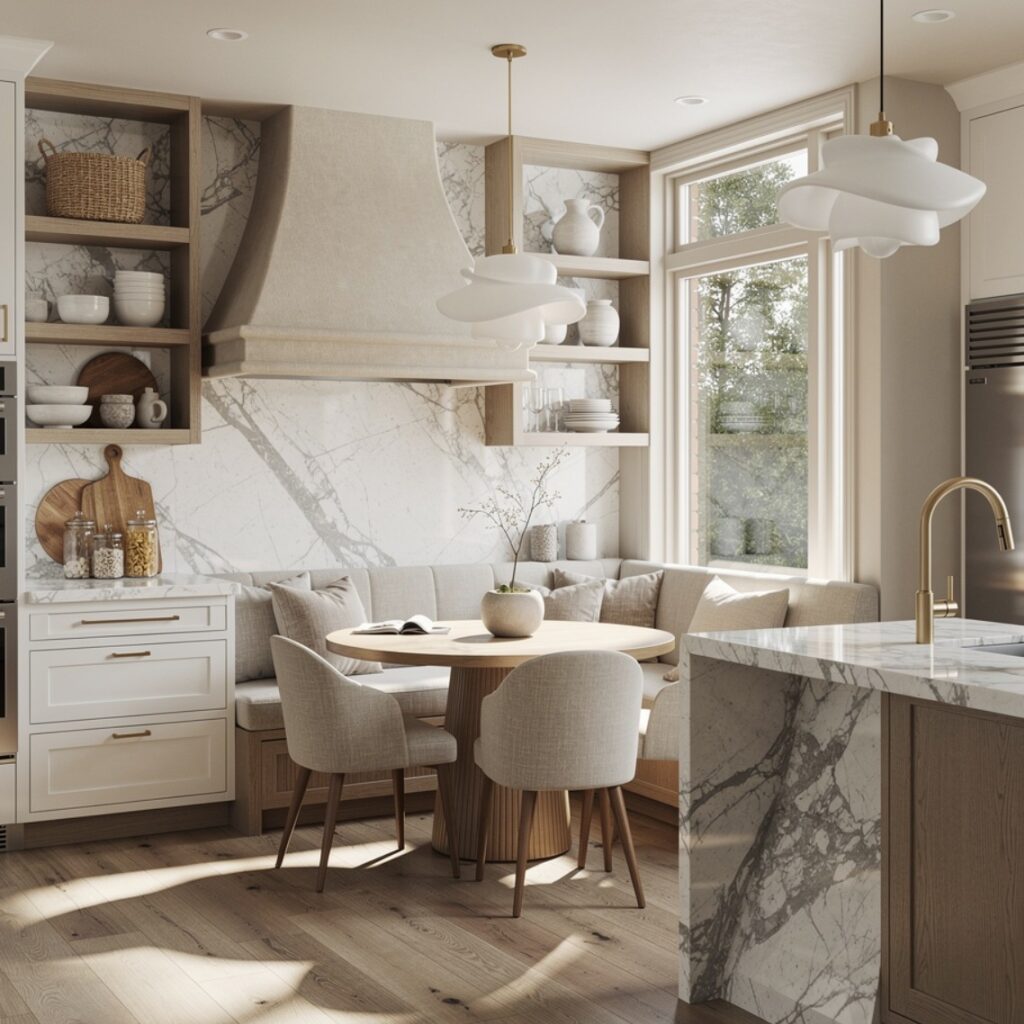
A bay window, projecting outward from the wall in a three-sided configuration, creates natural space for a small breakfast nook or bench seating built into the window’s base. This works particularly well in kitchens with an adjoining wall that can accommodate the window’s outward projection without disrupting the rest of the layout. Built-in bench seating with storage underneath makes efficient use of the extra floor space the bay window creates. This idea suits kitchens looking to add a casual dining spot without dedicating a full separate room to the function.
10. Frosted or Textured Glass
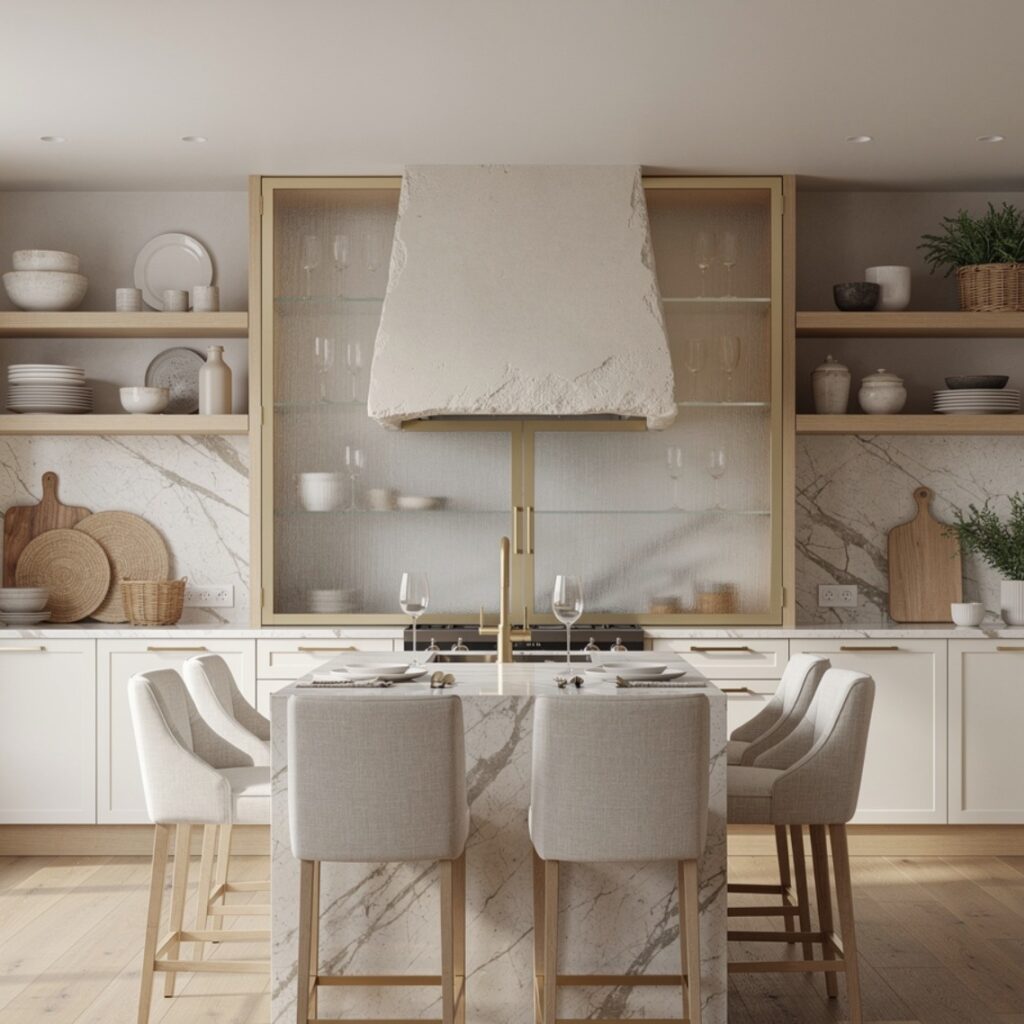
Frosted or textured glass allows light through while obscuring a direct view, making it a useful option for kitchen windows facing a close neighboring structure, a driveway, or another area where privacy matters more than an outdoor view. Reeded or fluted glass patterns have become a popular textured option, adding a subtle design detail beyond plain frosted glass. This idea works well as a full window treatment or as an accent in a portion of a larger window, balancing privacy with natural light in situations where curtains might otherwise be necessary.
11. Skylights Above the Kitchen
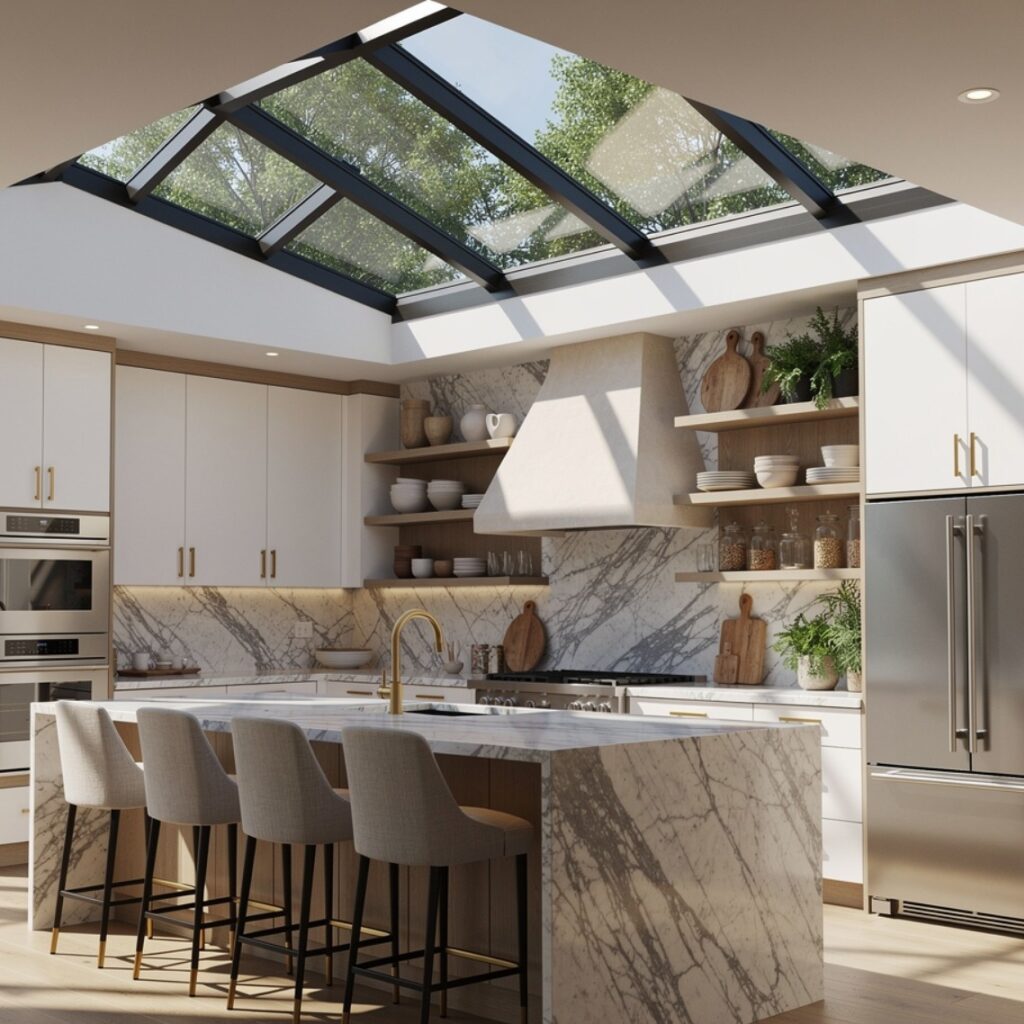
A skylight, installed into the roof above a kitchen without sufficient wall space for a standard window, brings in overhead natural light that a side window can’t replicate in the same way. This works particularly well in interior kitchens or kitchens with limited exterior wall access due to layout constraints. Venting skylights, which can open for airflow, offer additional function beyond fixed skylights that provide light only. This idea requires more involved installation than a standard wall window, since it involves cutting into the roof structure itself.
12. Kitchen Window Ideas for Small Kitchens
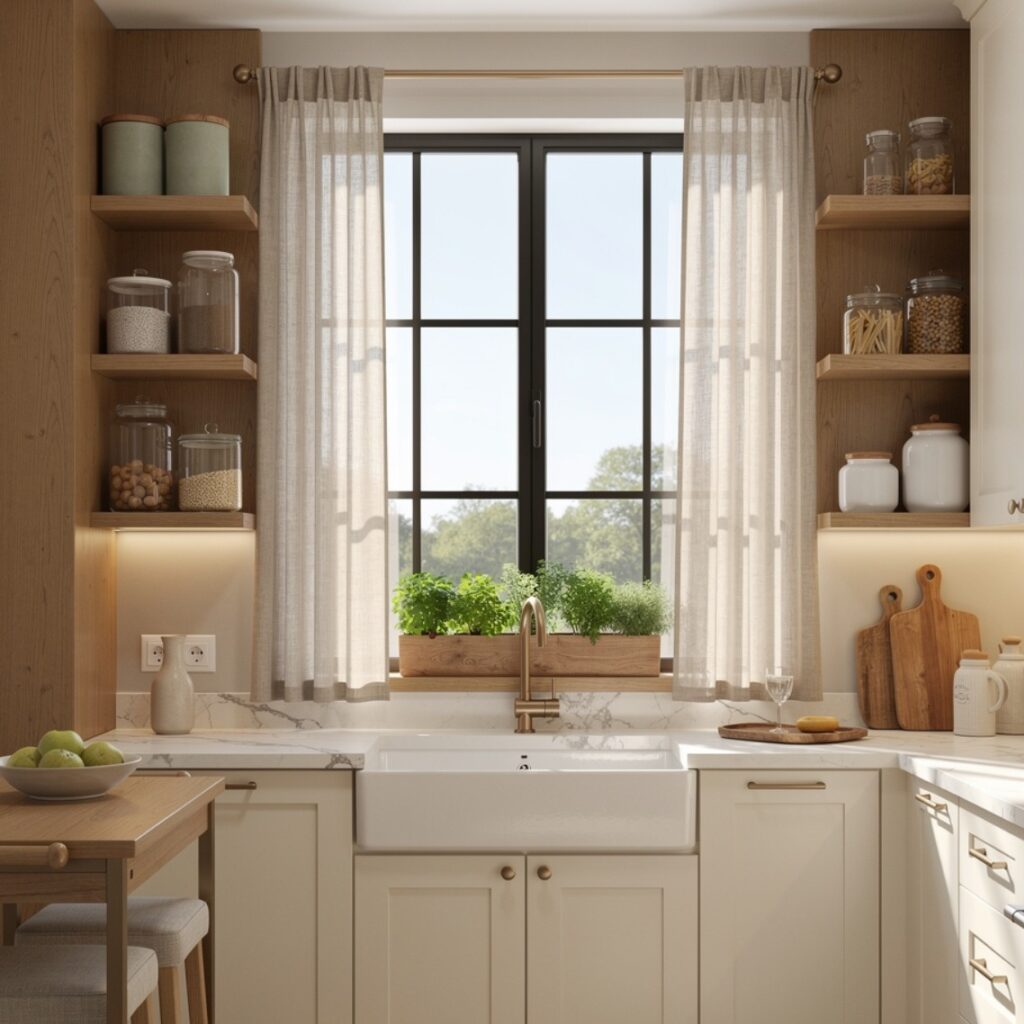
Among kitchen window ideas, small kitchens benefit most from maximizing existing window size and minimizing heavy treatments that block light, since natural light plays a significant role in making a compact space feel larger. A bare or lightly treated window, paired with a mirror or reflective backsplash positioned to bounce light further into the room, helps stretch the impact of a single window. This approach prioritizes light over added window treatments or coverage, which can visually shrink an already small kitchen if applied too heavily.
Shop the Look
For a kitchen built around these ideas, look at casement windows from a manufacturer like Andersen or Marvin for a sink placement, paired with cordless Roman shades in a natural woven material for windows needing more privacy control. Café curtain rods in a matte black or brass finish work well for a lower-half treatment, and reeded glass inserts can often be added to an existing window frame for a textured privacy option. A garden window kit is available through most major window manufacturers for kitchens wanting a dedicated herb or plant display.
Common Mistake to Avoid
The most common mistake is choosing a window treatment before considering how the window itself functions, particularly around a sink or stove where cords, heavy fabric, or awkward hardware can interfere with daily use. A beautiful curtain that constantly brushes against a faucet or blocks reach to a window crank ends up being more frustrating than functional. Always consider the window’s daily operation, whether it needs to open regularly for ventilation, alongside any treatment choice, rather than treating the two decisions separately.
FAQs
What is the best window style for above a kitchen sink?
Casement windows tend to work best above a kitchen sink, since their crank mechanism allows for opening and closing without needing to reach up and over the sink basin the way a traditional double-hung window would require. Fixed windows are also a common choice when ventilation isn’t a priority for that particular window, prioritizing an unobstructed view and simpler installation instead.
Do kitchen windows need window treatments?
Kitchen windows don’t strictly need treatments, particularly those facing a private yard or upper floor without close neighboring views, where privacy isn’t a significant concern. For windows facing a street or a close neighboring structure, a lighter treatment like a café curtain, frosted glass, or a cordless Roman shade tends to balance privacy with maintaining as much natural light as possible.
Can a garden window really grow herbs successfully?
A garden window can support herb growth reasonably well, provided it receives adequate direct sunlight for at least several hours a day, since the three-sided glass design does increase light exposure compared to a standard flat window. Herbs like basil, thyme, and chives tend to do well in this setup, though results depend significantly on the specific window’s orientation and the amount of direct sun it receives throughout the day.
Are skylights a good idea for kitchens without exterior walls?
Skylights can be a strong solution for interior kitchens lacking sufficient exterior wall space for a standard window, bringing in overhead natural light that would otherwise be unavailable in that portion of the room. Installation is more involved than a standard window, requiring work on the roof structure itself, so it’s generally best planned during a larger renovation rather than added as a standalone update.
How much natural light does a kitchen actually need?
There’s no single fixed requirement, but kitchens generally benefit from enough natural light to comfortably read labels and perform prep work without relying entirely on artificial lighting during daytime hours. A single well-placed window, particularly above a sink or along a full wall, is often sufficient in smaller kitchens, while larger kitchens may benefit from multiple light sources, including a skylight or a full-height window wall, to maintain consistent brightness throughout the space.
Conclusion
These kitchen window ideas range from simple treatment changes like café curtains to bigger investments like a full-height window wall, giving you a starting point no matter your kitchen’s layout or renovation budget. If one of these stood out, save this post to Pinterest for later, or check out our related guide on kitchen design ideas for more layout-specific inspiration.