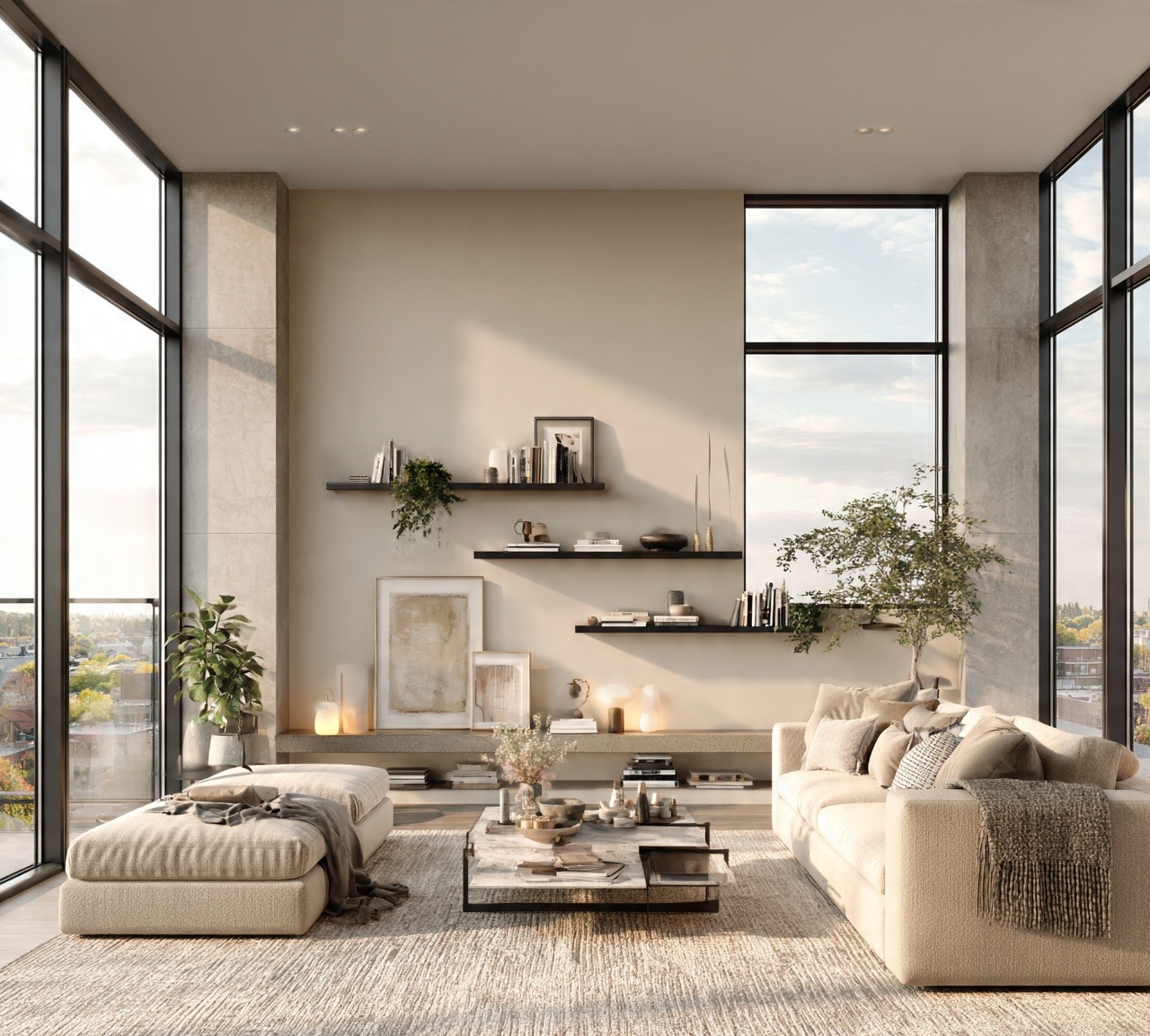
15 Good Looking Living Room Decor Ideas for a Warmer, Livable Space
A living room carries more daily use than almost any other room in the house, yet it often gets decorated once and left alone for years. This guide walks through fifteen living room decor ideas covering seating, lighting, storage, and texture that work whether you’re furnishing a first apartment or refreshing a long-settled space. By the end, you’ll have specific materials, sizing guidance, and layout suggestions to make the room feel more considered and function better for how you actually use it day to day.
Trend & Background
Living room design has moved away from matched furniture sets and oversized sectionals toward mixed materials, smaller-scale seating, and warmer neutral palettes built around wood tones, boucle, and linen. This shift reflects a broader move toward rooms that feel collected over time rather than purchased as a single set, along with a growing preference for furniture that can adapt to smaller or multipurpose spaces as apartment sizes shrink. It matters now because more people are working, relaxing, and entertaining in the same room, putting pressure on living rooms to function well for several different activities without feeling overcrowded.
Key Takeaways
- Layering lighting sources, rather than relying on one overhead fixture, changes a living room’s feel more than most furniture purchases.
- Natural materials like wood, jute, and rattan soften hard-edged furniture and add texture without a full redesign.
- Storage-focused pieces, like a media console or a set of nesting tables, matter most in smaller or multipurpose living rooms.
- Scale and spacing around seating affect comfort and flow more than any single decor choice on its own.
1. Modular Sectional Sofa
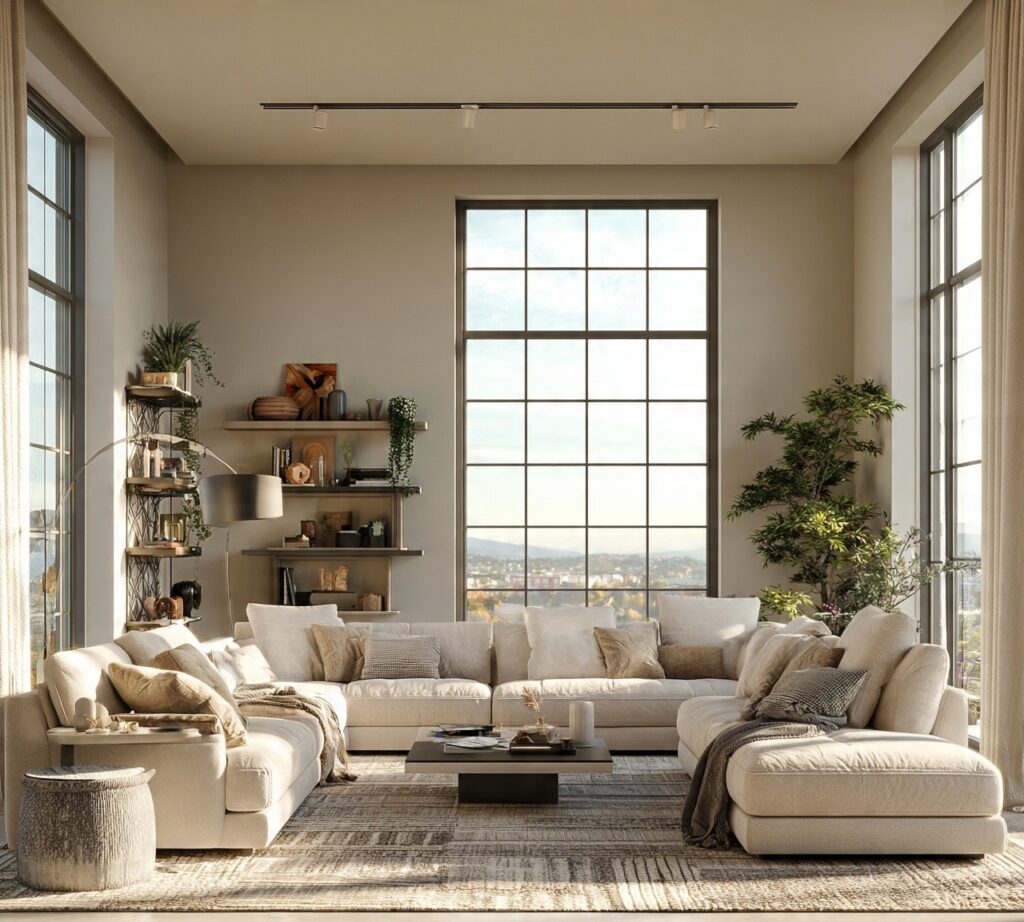
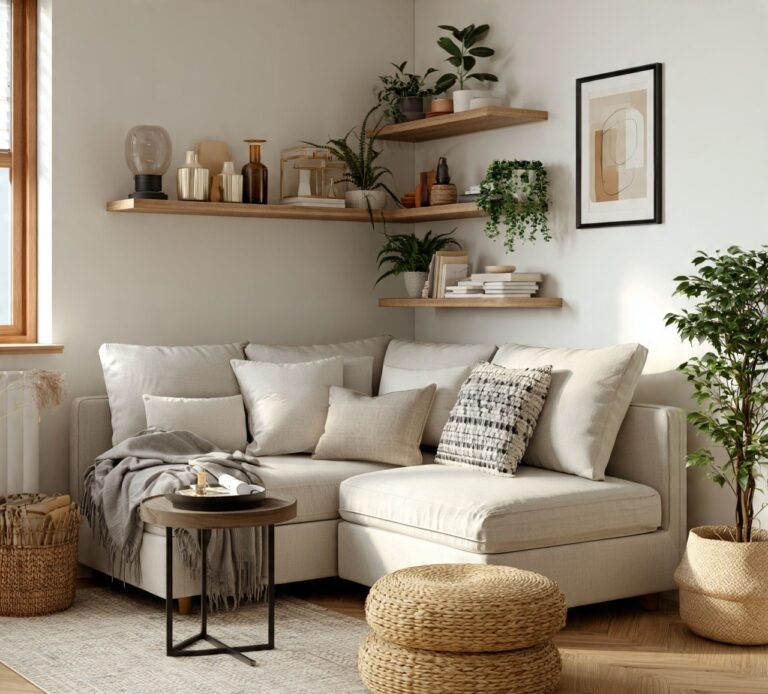
A modular sectional sofa uses individual seating pieces, like corner units, armless chairs, and ottomans, that can be rearranged into different configurations rather than staying fixed in one L-shape or U-shape. This works particularly well in living rooms that double as guest space or need to adapt for larger gatherings, since sections can separate into individual chairs when needed. Choosing a performance fabric like boucle or a tightly woven linen blend keeps the pieces looking fresh longer under daily use than more delicate upholstery options.
2. Living Room Decor With Layered Lighting
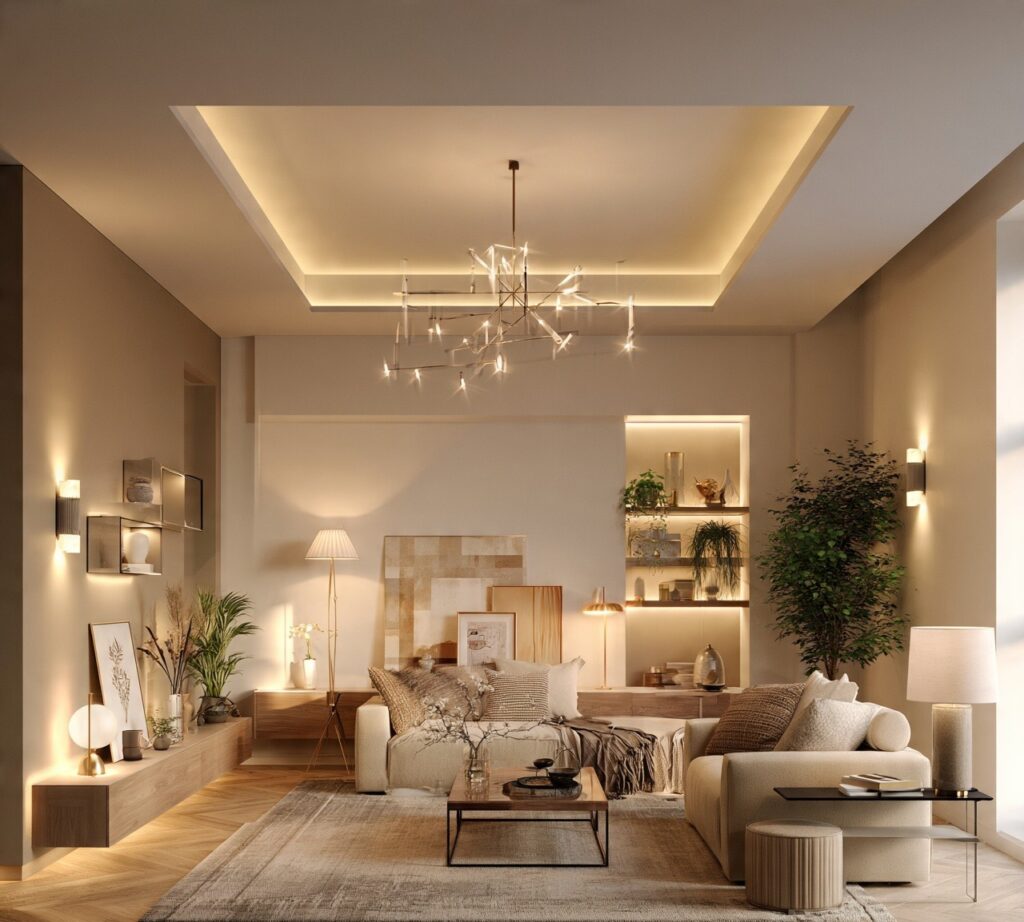
Layered lighting in a living room decor scheme combines a floor lamp, a table lamp, and a smaller accent light, like a picture light or a plug-in sconce, instead of relying solely on an overhead fixture. Placing lamps at varying heights around the seating area creates pools of warm light that make the room feel larger and more inviting in the evening than a single bright ceiling light. Dimmable, warm-toned bulbs around 2700K suit most living spaces and allow the lighting to shift between bright daytime use and a softer evening mood.
| Lamp Type | Recommended Wattage Equivalent | Placement |
| Floor lamp | 60–75W | Beside a reading chair |
| Table lamp | 40–60W | On a console or side table |
| Accent light | 25–40W | Above art or a bookshelf |
3. Reclaimed Wood Media Console
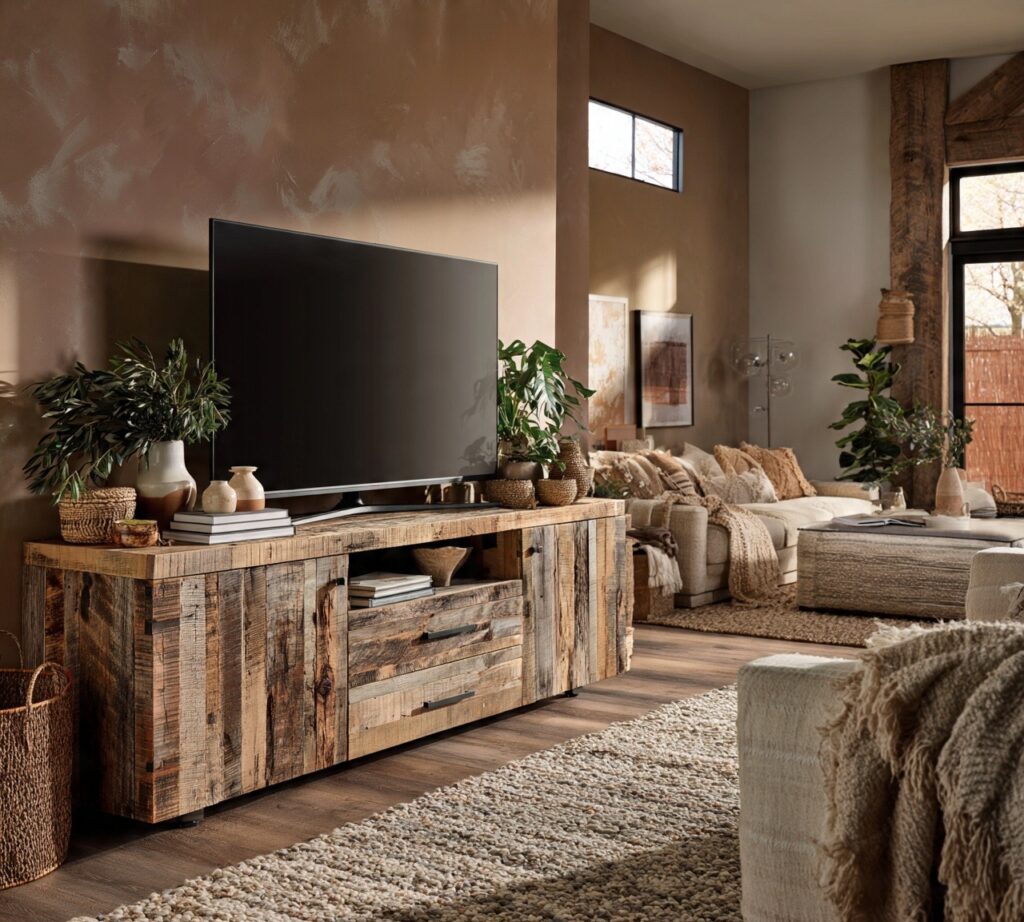
A reclaimed wood media console uses salvaged barn wood, pallet boards, or a solid wood veneer to store electronics, media, and remotes below a mounted television or freestanding display shelf. This adds warmth to a wall otherwise dominated by a flat screen, and the natural variation in reclaimed wood grain gives the piece more character than a uniform manufactured finish. Choosing a console with open cubbies on one side and closed doors on the other balances visible storage for books or decor against hidden storage for cords and equipment.
4. Jute and Wool Layered Rug
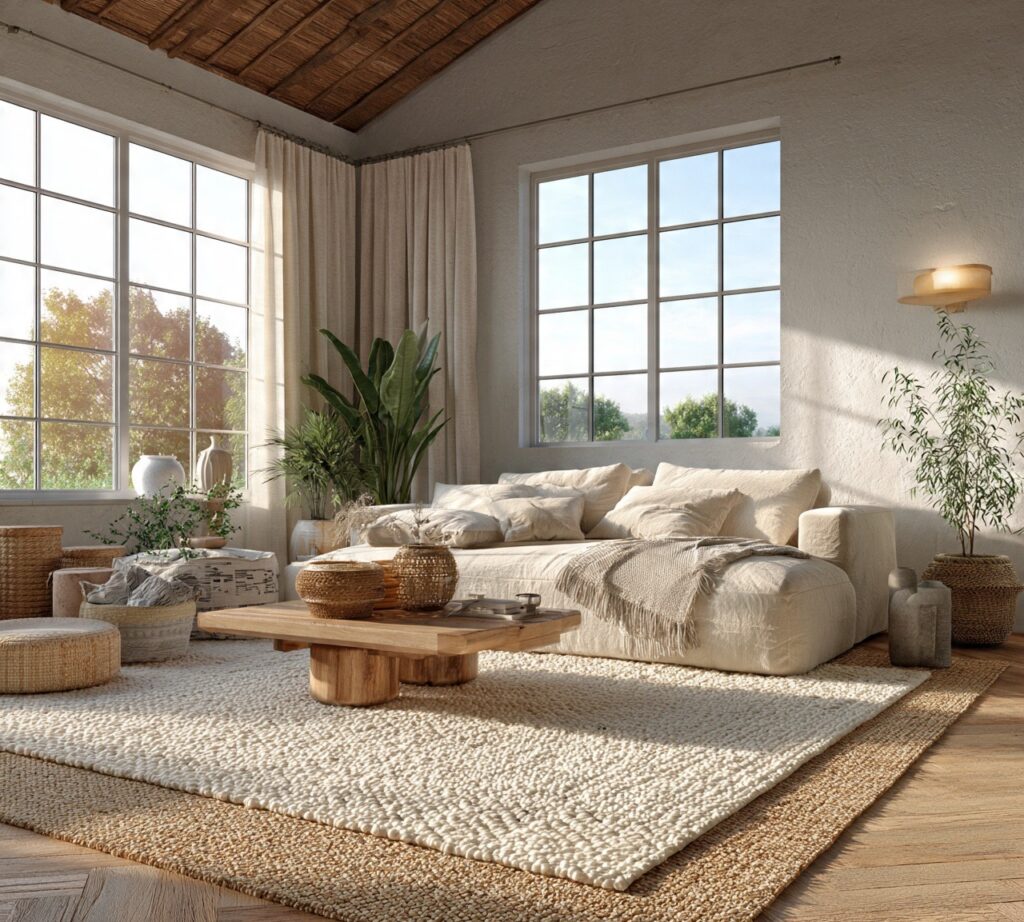
A jute and wool layered rug places a smaller patterned or textured wool rug on top of a larger neutral jute base rug, adding depth and warmth underfoot in a living room with hard flooring like hardwood or tile. The base rug should extend a few inches beyond the front legs of the sofa and chairs, while the top layer typically sits centered under a coffee table. This layering technique also helps define the seating area within an open floor plan without requiring any permanent flooring changes.
5. Gallery Wall Above Sofa
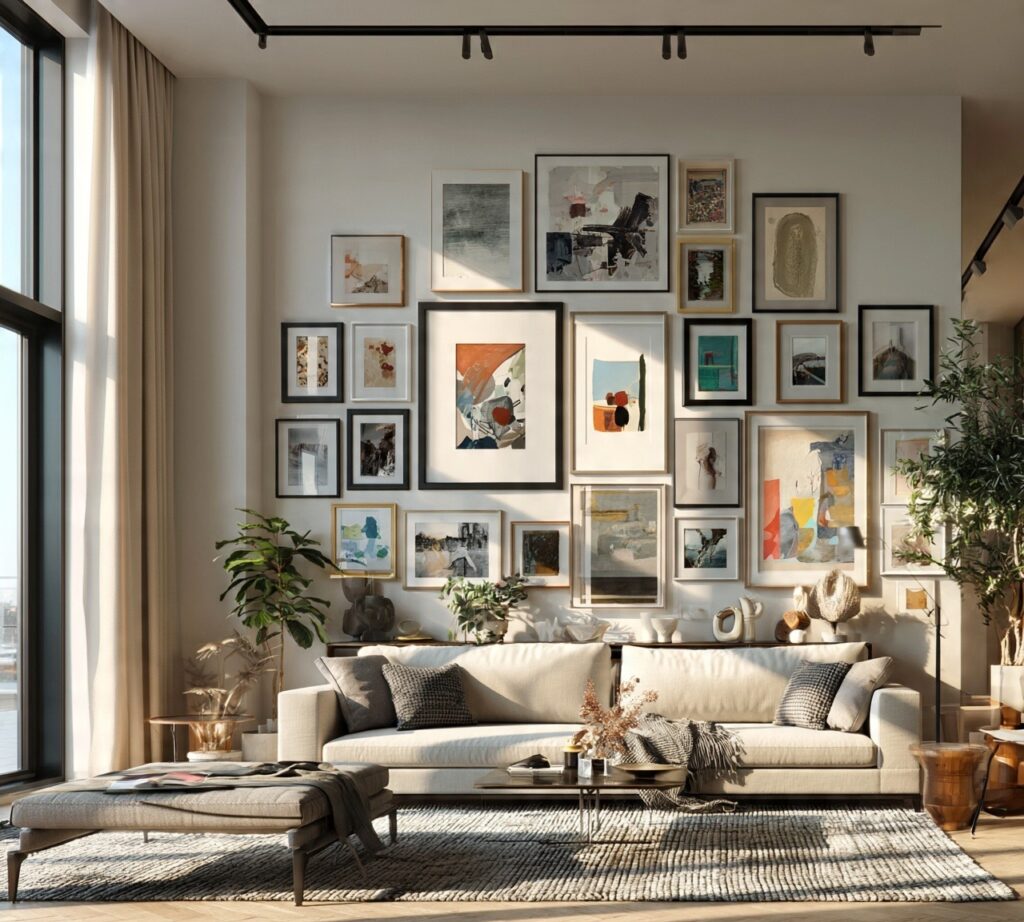
A gallery wall above the sofa groups multiple framed prints, photos, or mirrors into a single composition rather than relying on one large piece of art to fill the space. Mixing frame finishes, like black metal alongside natural wood and thin brass, keeps the grouping from looking too matched, while consistent mat sizing ties the arrangement together visually. Keeping the total width of the gallery roughly two-thirds the width of the sofa below it prevents the composition from floating awkwardly above the furniture.
To see more options for small bathroom decor CLICK HERE
6. Rattan Accent Chair
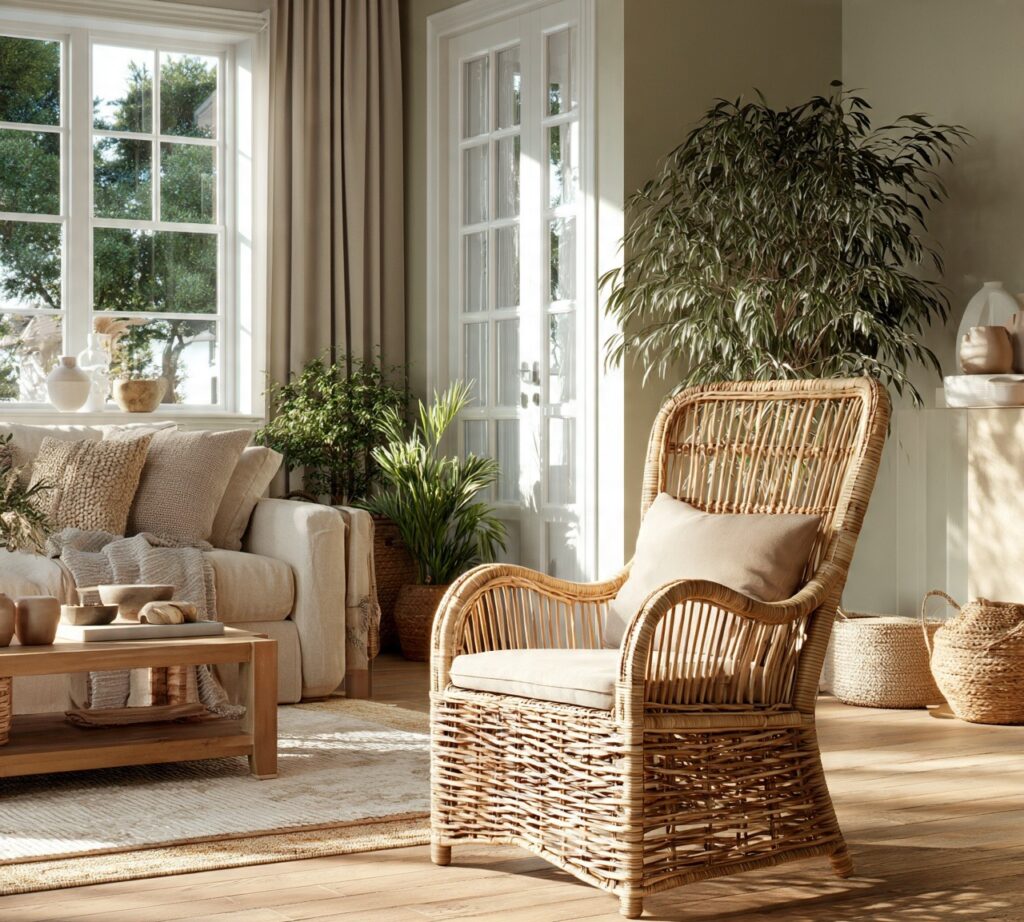
A rattan accent chair introduces natural texture and a lighter visual weight than a fully upholstered piece, making it a strong option for a reading corner or as a secondary seat facing a larger sofa. Peacock-style rattan chairs read as more of a statement piece, while simpler woven frames with a cushion pad blend more easily into a wider range of existing furniture styles. Because rattan is lightweight, the chair can be moved easily for extra seating during gatherings, and a chunky knit throw softens its structured, open-weave appearance.
7. Built-In Bookshelf Styling
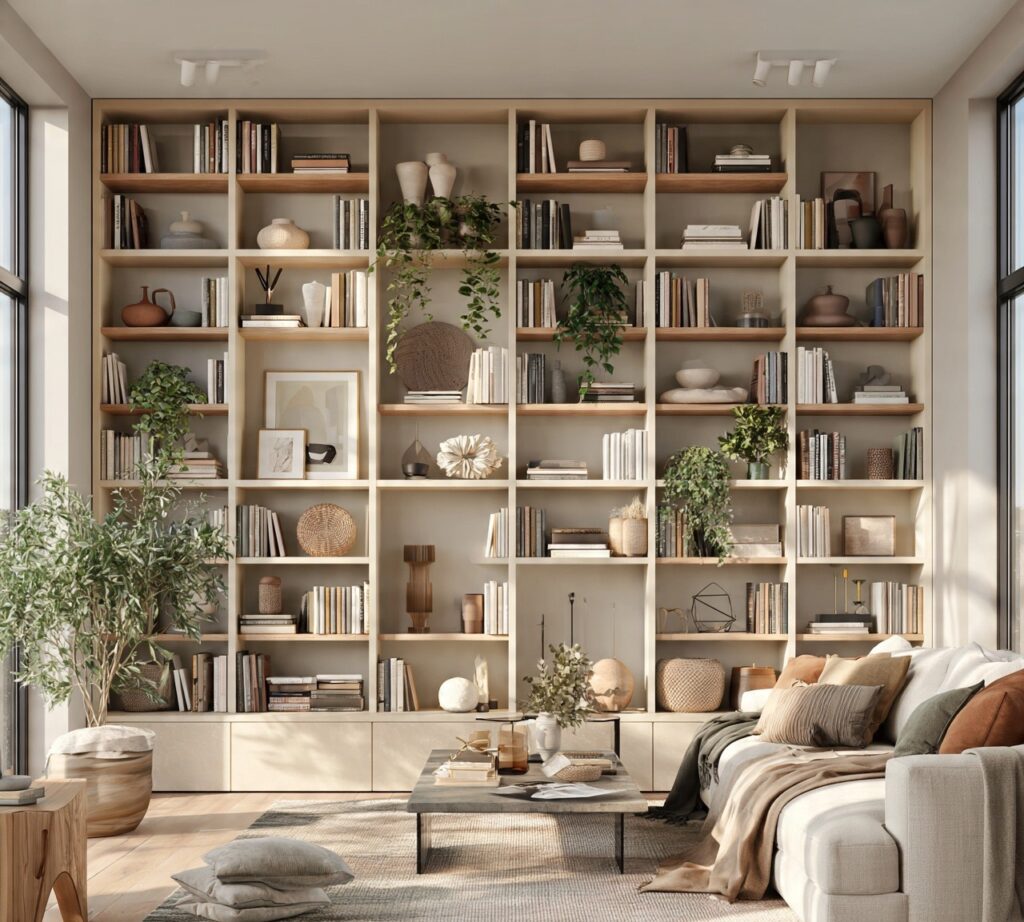
Built-in bookshelf styling arranges books, small plants, and framed photos across open shelving using a mix of vertical stacks and horizontal stacks rather than lining every shelf with spines facing out in a single row. Leaving roughly a third of the shelf space empty, or filled with a single decorative object, keeps the arrangement from looking overcrowded. Grouping items by color or material on adjacent shelves, rather than scattering them randomly, gives the whole unit a more cohesive, intentional appearance.
8. Textured Throw Pillow Mix
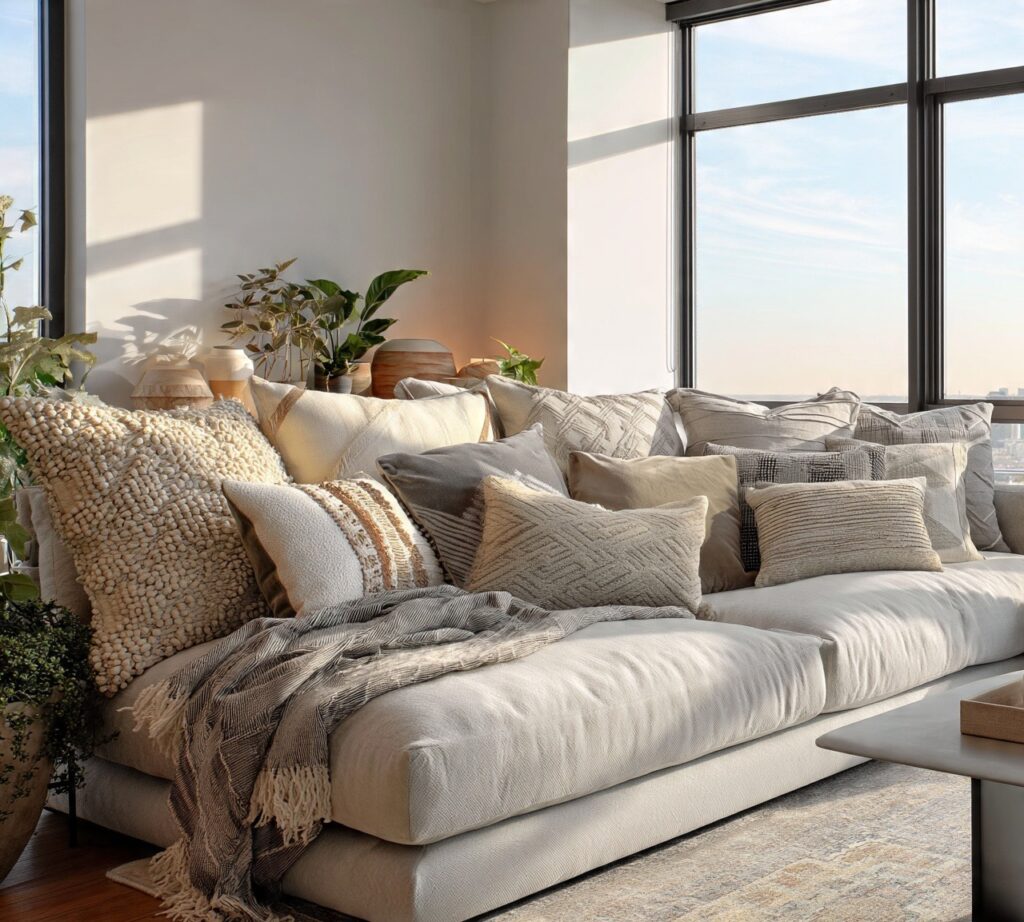
A textured throw pillow mix combines at least three fabric types, like boucle, linen, and velvet, in a coordinated but not matching color palette across a sofa or sectional. Varying pillow sizes, typically 18-, 20-, and 22-inch squares plus one lumbar pillow, keeps the arrangement from looking flat or too symmetrical. This is one of the lowest-cost ways to refresh a living room’s color story seasonally, since pillow covers can be swapped without replacing any actual furniture.
9. Nesting Coffee Tables
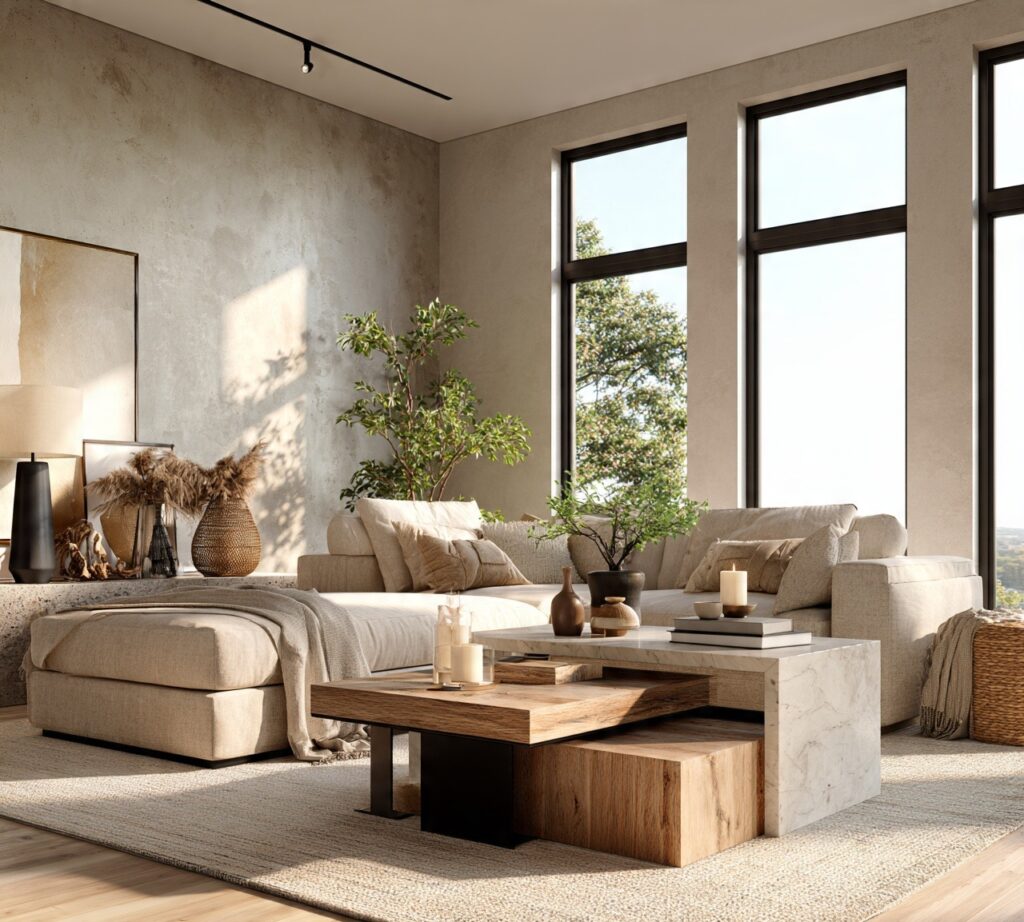
Nesting coffee tables use two or three tables of graduated sizes that slide together as one unit or separate to provide additional surface space during gatherings. Available in wood, marble-topped, or mixed-material versions, these work particularly well in smaller living rooms where a single large coffee table would otherwise dominate the floor space. Pulling the smaller tables out to use as individual side tables near additional seating adds flexibility that a fixed single table can’t match.
10. Wall-Mounted Picture Ledges
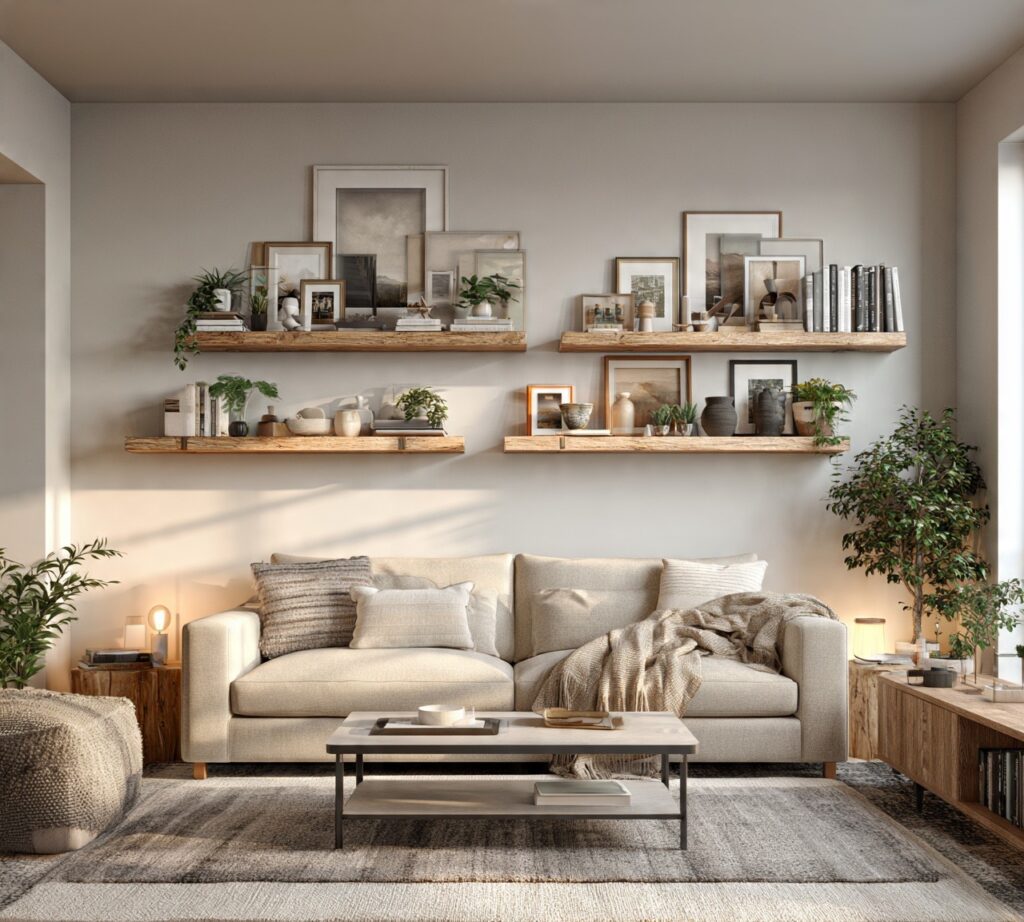
Wall-mounted picture ledges hold framed art or photos that lean against the wall rather than hanging fixed in place, making it easy to rearrange or swap pieces without new nail holes. Installed in a horizontal row or staggered at different heights, these ledges work well above a console table or sofa where a rotating display feels more natural than a permanent gallery wall. Leaning larger pieces toward the back and layering smaller frames in front adds depth to the arrangement.
11. Woven Window Treatments
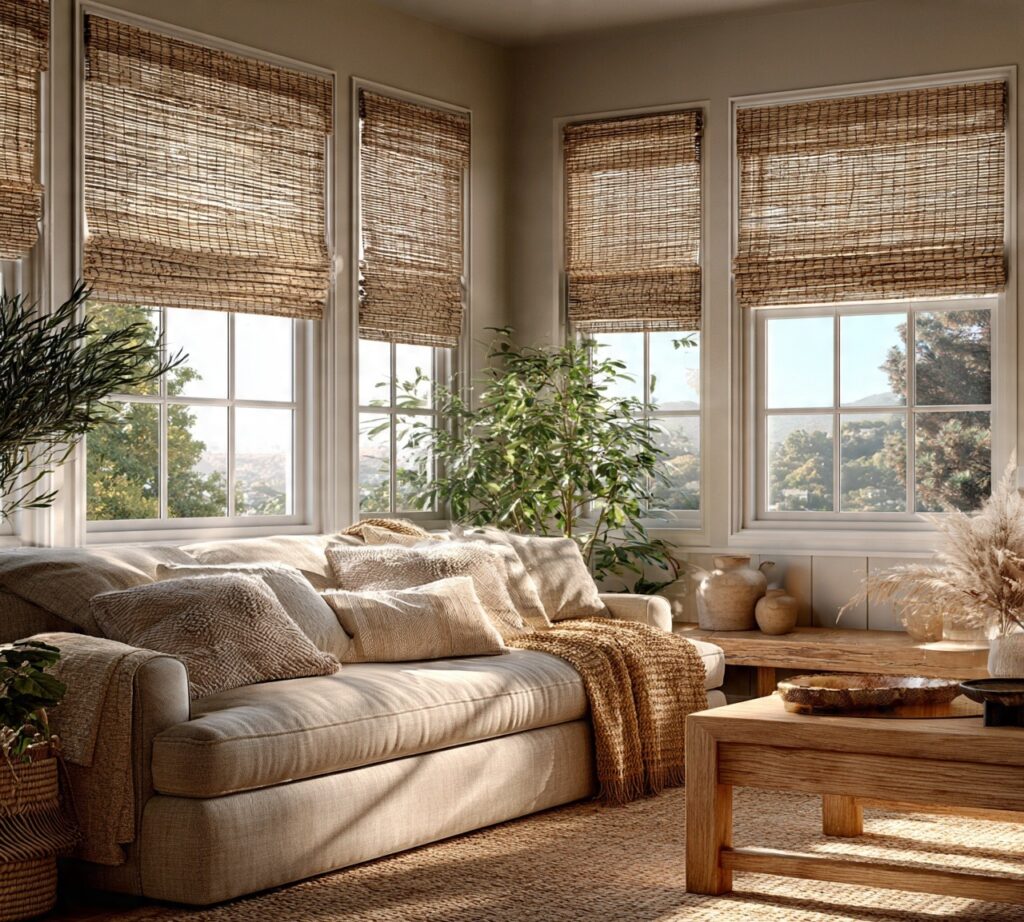
Woven window treatments, including bamboo roman shades or a heavier linen-blend curtain, filter light softly while adding texture that standard mini blinds typically lack in a living room. Bamboo shades suit a more casual or coastal-leaning space, while linen panels on a brass or matte black rod work better in a more traditional or transitional room. Mounting curtain rods a few inches above the actual window frame, and extending them slightly past the sides, makes windows appear larger and allows more natural light in when fully open.
12. Sculptural Floor Vase
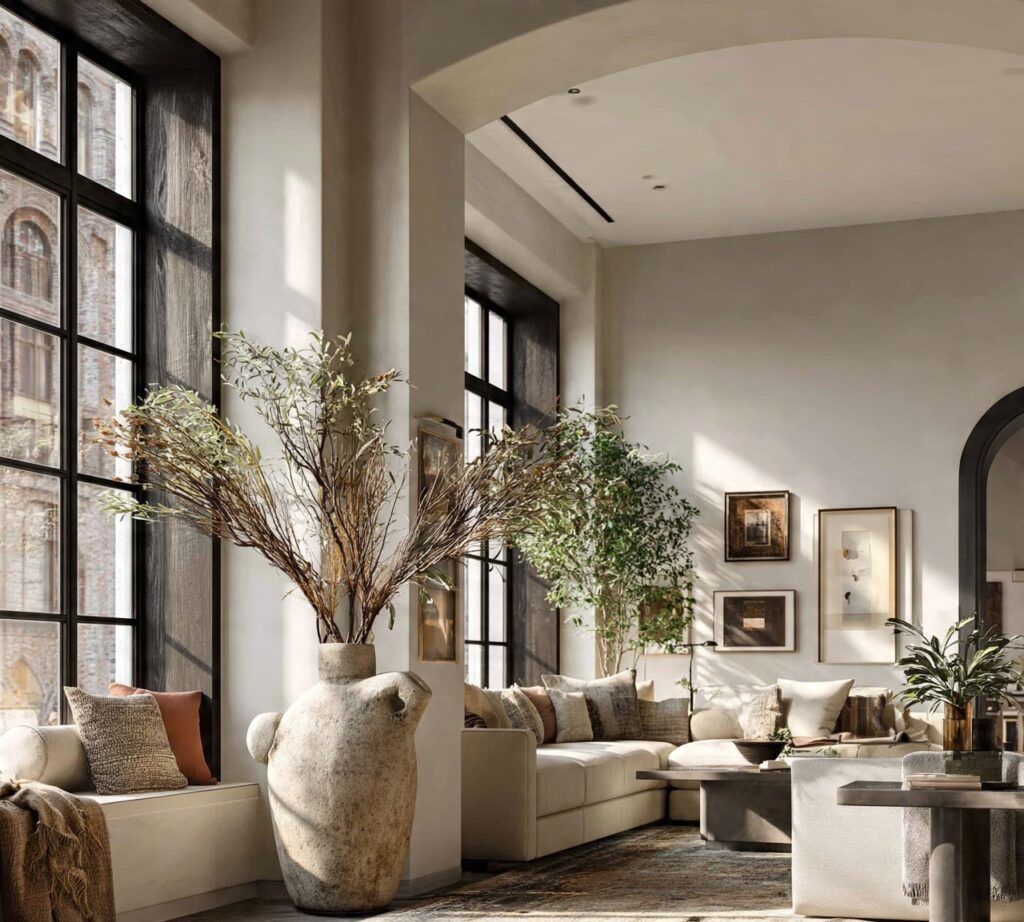
A sculptural floor vase, in ceramic, glass, or a woven material, fills an empty corner or flanks a sofa with a tall, simple silhouette rather than requiring additional furniture to fill the space. Adding dried branches, pampas grass, or a single oversized stem keeps the arrangement low-maintenance compared to fresh floral displays that need frequent replacing. Placing the vase at a height roughly level with the back of a nearby sofa or chair keeps the proportions balanced within the room.
13. Boucle Ottoman Bench
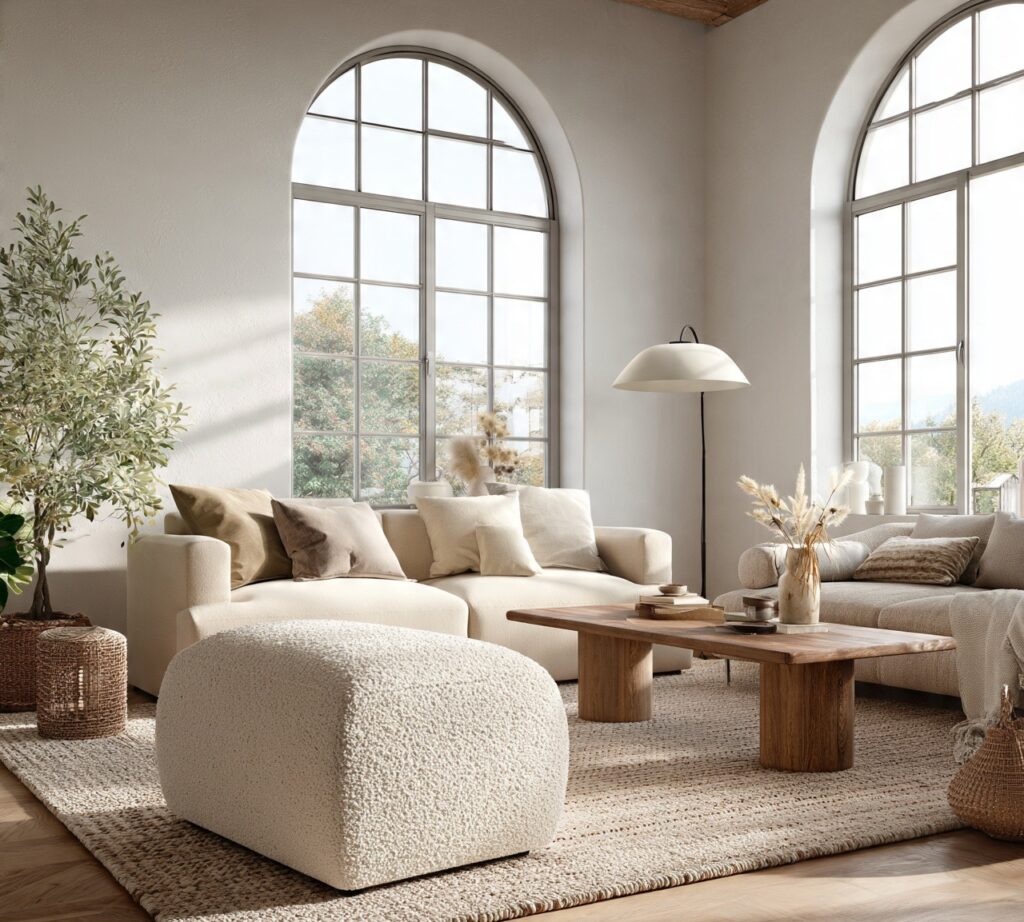
A boucle ottoman bench functions as extra seating, a footrest, or a spot to set down drinks and snacks, typically upholstered in a nubby boucle or performance velvet fabric that reads as soft without being delicate. Rectangular shapes work well at the foot of a sectional, while round ottomans fit more naturally in front of a single chair or in an open corner. This piece suits living rooms where a separate coffee table and additional seating would otherwise compete for the same limited floor space.
| Ottoman Size | Best Placement | Seats Comfortably |
| Small (20″) | Beside a chair | 1 person |
| Medium (30″) | Foot of a sofa | 1–2 people |
| Large (40″+) | Center of seating area | 2–3 people |
14. Vintage Area Rug Anchor
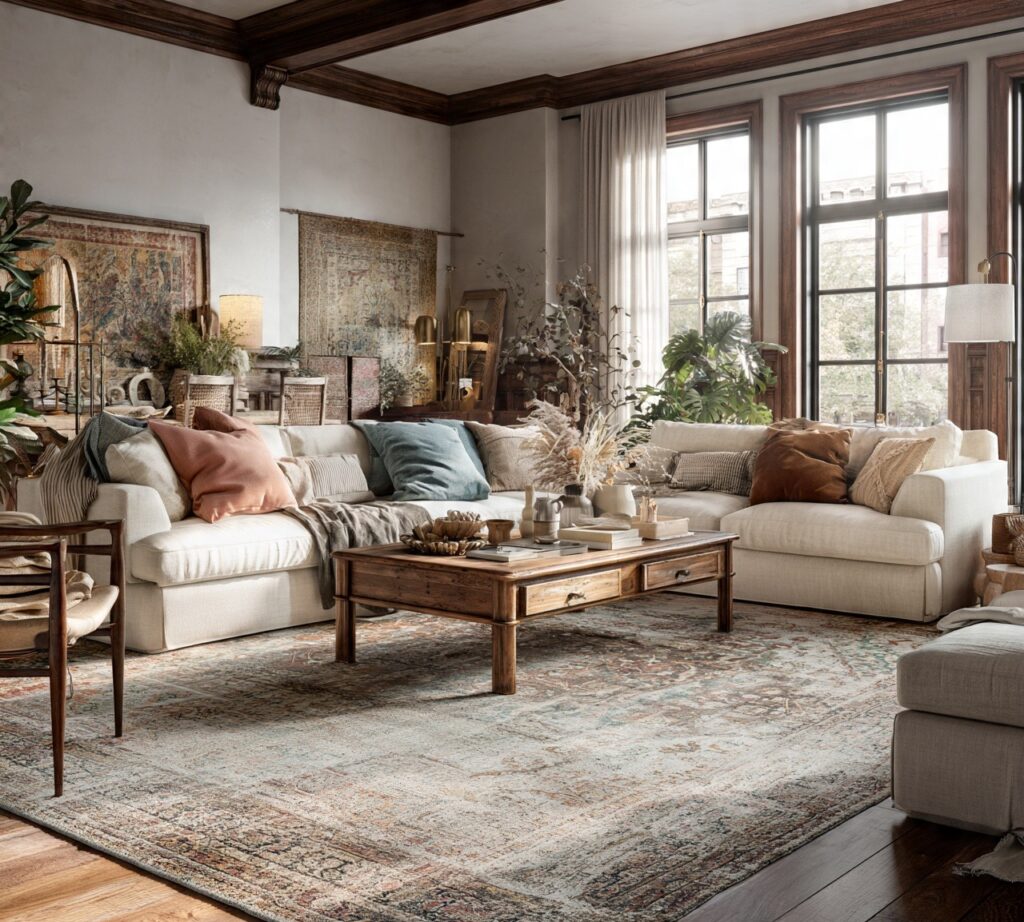
A vintage area rug, whether an authentic hand-knotted piece or a machine-made version with a distressed or overdyed finish, gives the living room a sense of history and pattern that a new, uniformly colored rug typically lacks. Sizing the rug so all front furniture legs stay on the rug, rather than only the back legs, keeps the seating area feeling grounded instead of floating on bare floor. Because vintage-style rugs often carry more color variation, they also hide everyday wear and minor stains better than a solid-color new rug.
15. Curated Coffee Table Styling
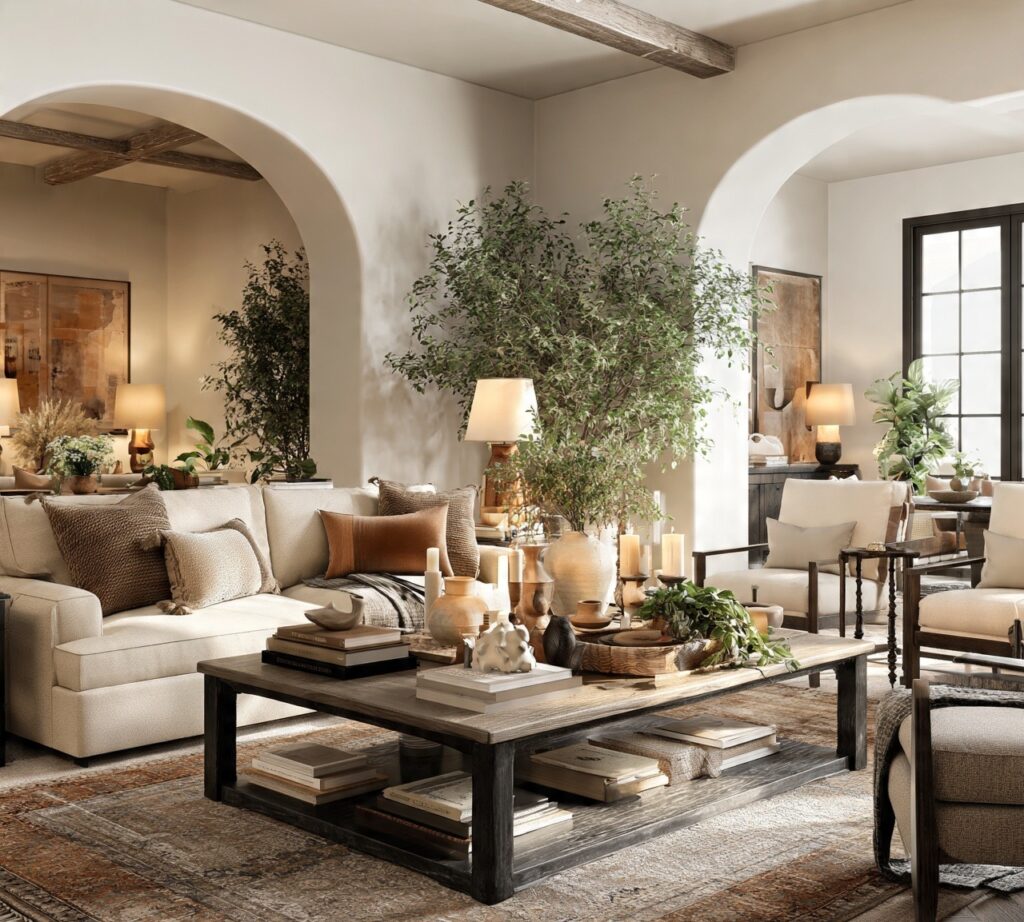
Curated coffee table styling arranges a stack of hardcover books, a small tray with a candle or small object, and a single low bowl or vase into a balanced, asymmetrical grouping rather than a single centered item. Keeping the total height of any stacked grouping lower than the arm height of the surrounding sofa or chairs maintains clear sightlines across the room. Rotating the specific books and objects seasonally is one of the simplest ways to refresh the room’s look without any furniture changes at all.
Shop the Look
For this palette, look for a modular sectional sofa in a warm boucle fabric, a reclaimed wood media console, a jute rug layered under a smaller patterned wool rug, a set of nesting coffee tables in mixed wood and marble finishes, and a rattan accent chair paired with a chunky knit throw. These pieces work together across several of the ideas above without requiring a single unified furniture purchase.
Common Mistake to Avoid
The most common mistake is undersizing the rug or seating arrangement relative to the room, typically to save on cost, which leaves the space feeling disconnected rather than pulled together. A rug that only fits under the coffee table, without extending under the front legs of the sofa and chairs, or a sectional too small for the room’s actual footprint, both read as afterthoughts rather than intentional choices. Measuring the room’s dimensions before purchasing either element solves this more reliably than adding extra decor around it.
FAQs
What living room decor ideas work best for small spaces?
Nesting coffee tables, wall-mounted picture ledges, and a rattan accent chair all work well in small living rooms since they add function or visual interest without consuming much floor space. Avoiding an oversized modular sectional or a floor vase sized for a much larger room keeps the space from feeling cramped, so choosing pieces proportional to the actual room matters more than the total number of decor elements added.
How much does it cost to update living room decor on a budget?
A budget refresh using a textured throw pillow mix, curated coffee table styling, and a sculptural floor vase can run under $200 total, while adding furniture like a rattan accent chair or an ottoman bench typically pushes the range to $400–$900. Larger investments like a modular sectional sofa or a reclaimed wood media console cost significantly more, often landing between $1,500 and $4,000 depending on size and materials.
What colors are trending in living room decor right now?
Warm neutrals like putty, warm white, and terracotta are currently favored over the cooler grays that dominated the last decade, often paired with deep green or chocolate brown accents through pillows and small decor objects. These tones pair naturally with the natural materials, like rattan, jute, and reclaimed wood, featured throughout current living room trends. Bolder, saturated colors still appear, but usually in smaller doses rather than as a dominant wall or sofa color.
How do I layer lighting in a living room without rewiring?
Layering lighting without rewiring typically means adding floor lamps and table lamps at varying heights around the existing seating area, plugged into standard outlets rather than requiring new electrical work. A plug-in wall sconce is another option for adding an accent light source to a wall without hardwiring. Using dimmable bulbs across all these fixtures allows the room to shift between bright daytime use and a softer evening mood using only lamps already on hand.
How do I arrange furniture in an open-concept living room?
Arranging furniture in an open-concept living room generally works best by using a rug to visually define the seating area, keeping the sofa and chairs oriented toward each other rather than facing outward into the rest of the open space. Adding a console table or bookshelf behind the sofa can also help create a soft boundary without a full wall. Floating furniture away from the surrounding walls, rather than pushing everything to the perimeter, usually makes an open floor plan feel more intentional and less scattered.
Conclusion
These living room decor ideas cover everything from low-cost styling swaps to larger furniture investments, giving you options regardless of your room’s size or how it’s used day to day. Start with one or two updates that address the room’s biggest gap, whether that’s lighting, seating, or storage, and build from there. Save this guide to Pinterest for later, and check out our related post on small-space furniture layouts for more room-specific guidance.