16 Trending Dining Room Decor Ideas for Everyday and Entertaining
A dining room often sits underused between holiday meals, even though it has the potential to be one of the most visually striking rooms in the house. This guide walks through sixteen dining room decor ideas covering lighting, seating, storage, and finish choices that work for both everyday dinners and larger gatherings. By the end, you’ll have specific materials, sizing guidance, and layout suggestions to make the space feel intentional and get more regular use, without requiring a full renovation.
Trend & Background
Dining room design has shifted away from matched furniture sets toward mixed materials and eras, with a solid wood table now more likely to be paired with rattan, boucle, or mismatched vintage chairs than a matching set from the same collection. This reflects a broader move toward rooms that feel collected over time rather than purchased in one trip, alongside a renewed interest in hosting at home after years of more casual, informal eating habits. It matters now because open floor plans have blurred the line between dining and living spaces, making a strong, deliberate focal point more important than ever to keep the dining area from disappearing into the rest of the room.
Key Takeaways
- Layering lighting, texture, and a strong focal point matters more in a dining room than in almost any other shared space.
- Storage pieces like sideboards and plate racks free up table surface while still keeping serveware within reach.
- Material choices, from a live-edge table to rattan seating, set the tone for whether the room feels formal or casual.
- Scale and spacing around the table affect comfort more than any single decor choice on its own.
1. Live-Edge Dining Table
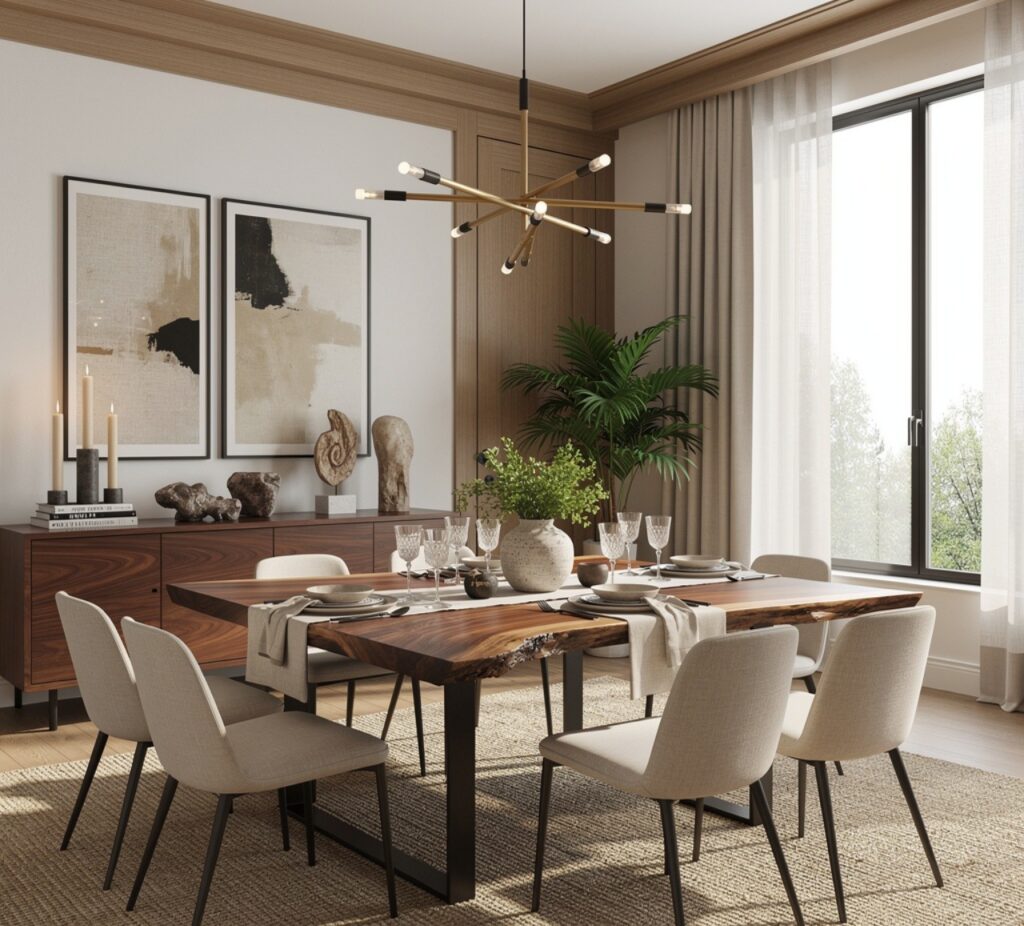
A live-edge dining table keeps the natural, unshaped contour of the wood along one or both long sides, typically in walnut, oak, or acacia, rather than cutting the slab into a perfect rectangle. This gives the table a strong organic focal point that anchors the whole room without requiring additional decor around it. Because each slab is unique, sizing and seating capacity vary more than with standard tables, so measuring the room and confirming seat clearance before ordering matters more here than with mass-produced furniture.
2. Dining Room Decor With Statement Chandelier
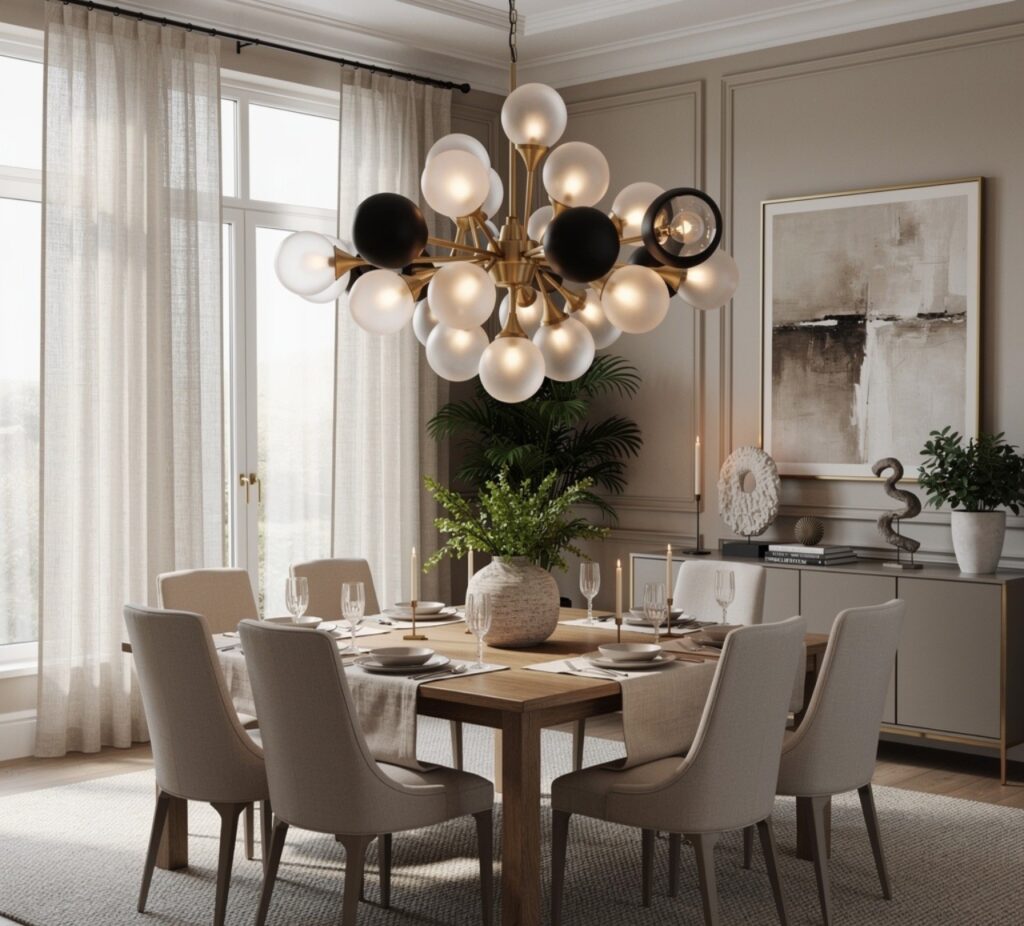
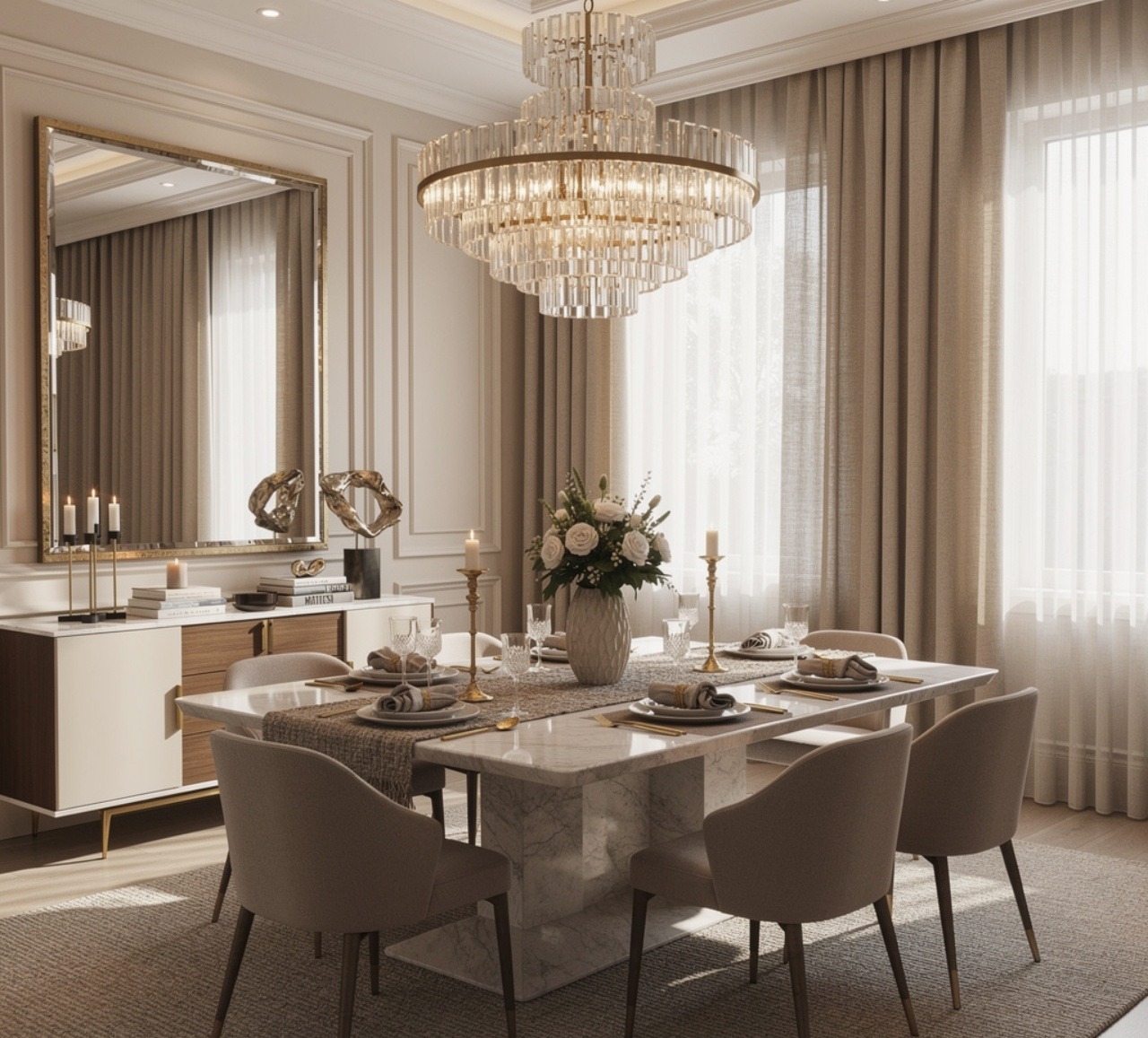
A statement chandelier, whether a sculptural linear fixture or a cluster of glass globes, gives a dining room decor scheme a clear anchor point the way overhead recessed lighting alone rarely achieves. Hanging the fixture 30 to 36 inches above the table surface keeps it low enough to feel intentional without blocking sightlines across the table. Dimmable warm-toned bulbs around 2700K suit most dining spaces, and choosing a fixture width roughly two-thirds the length of the table keeps the proportions balanced.
| Table Length | Recommended Fixture Width | Hanging Height Above Table |
| 60 inches | 24–30 inches | 30–34 inches |
| 72 inches | 30–36 inches | 32–36 inches |
| 84+ inches | 36–48 inches | 34–38 inches |
3. Mismatched Dining Chairs
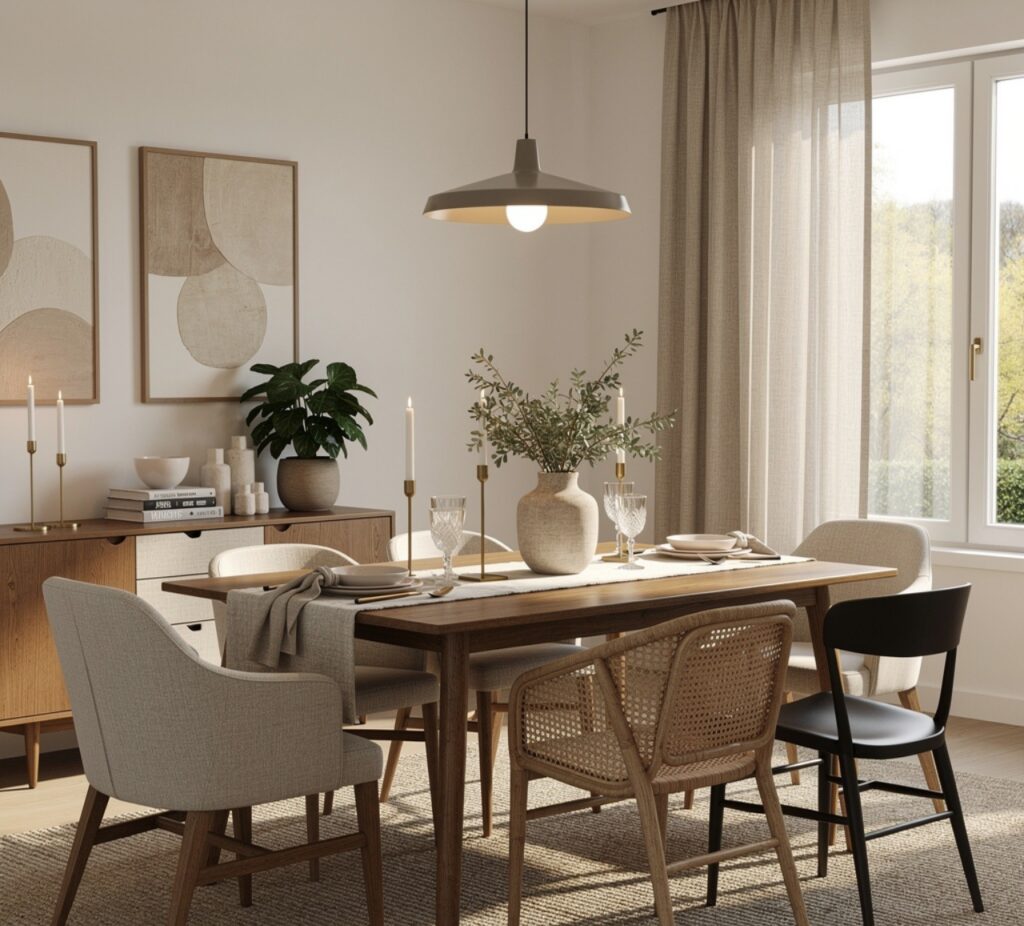
Mismatched dining chairs pair a bench or a set of upholstered chairs on one side of the table with a different chair style, like woven rattan or turned wood spindle chairs, on the other. This approach adds visual interest and makes the room feel less like a matched showroom display, while also giving flexibility if chairs need replacing individually over time. Keeping a consistent wood tone or fabric color family across the mismatched pieces prevents the look from reading as accidental rather than intentional.
4. Built-In Banquette Seating
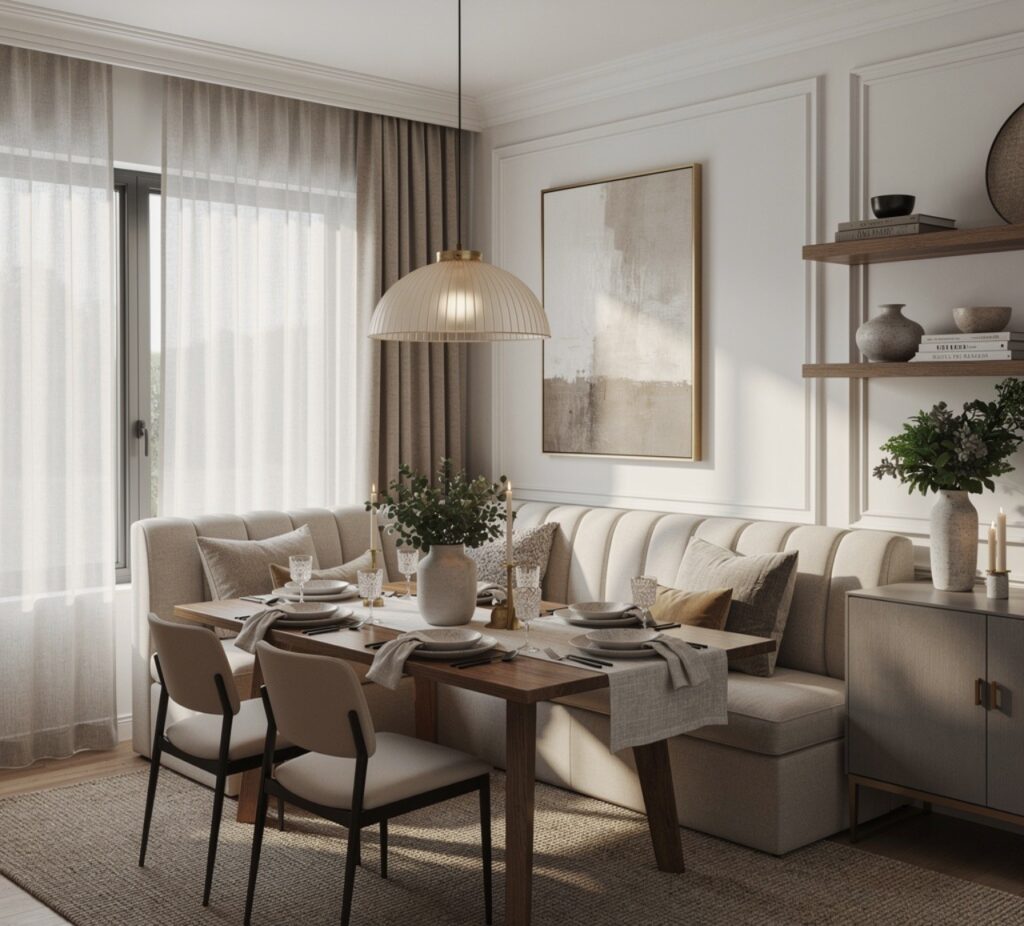
Built-in banquette seating uses a fixed, upholstered bench along one or two walls of the dining area, often incorporating hidden storage beneath the seat cushion. This works particularly well in smaller dining rooms or nooks where a full chair set on all sides would block traffic flow, and it allows more people to be seated in the same footprint than individual chairs would. Cushions in performance velvet or boucle hold up better to daily use than delicate upholstery fabrics in this high-contact seating application.
5. Wallpapered Accent Wall
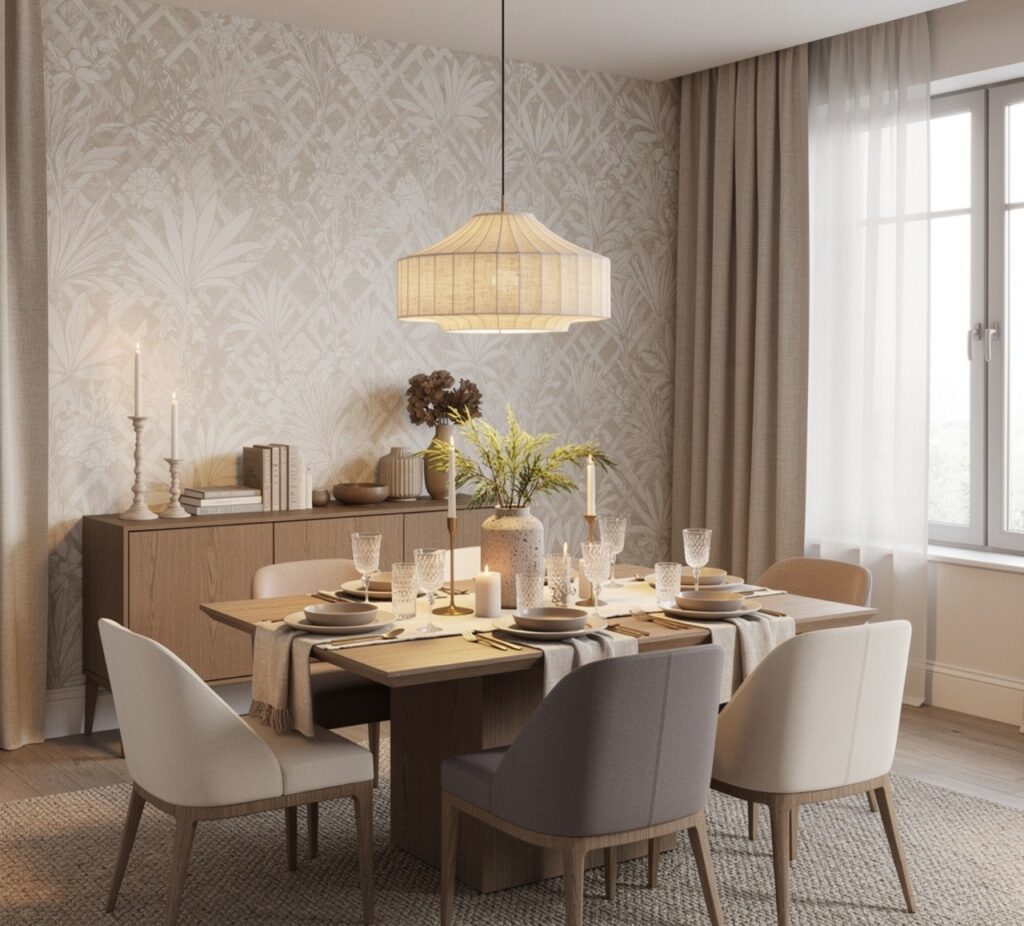
A wallpapered accent wall introduces pattern and color to a single wall of the dining room, typically the one behind a sideboard or the shortest wall in the room, without overwhelming the whole space. Botanical prints, grasscloth textures, and large-scale geometric patterns all work depending on the room’s existing furniture tones. Because dining rooms see less direct sun exposure and moisture than kitchens or bathrooms, wallpaper here tends to hold its color and adhesive longer than in more exposed rooms of the house.
6. Rattan Pendant Cluster
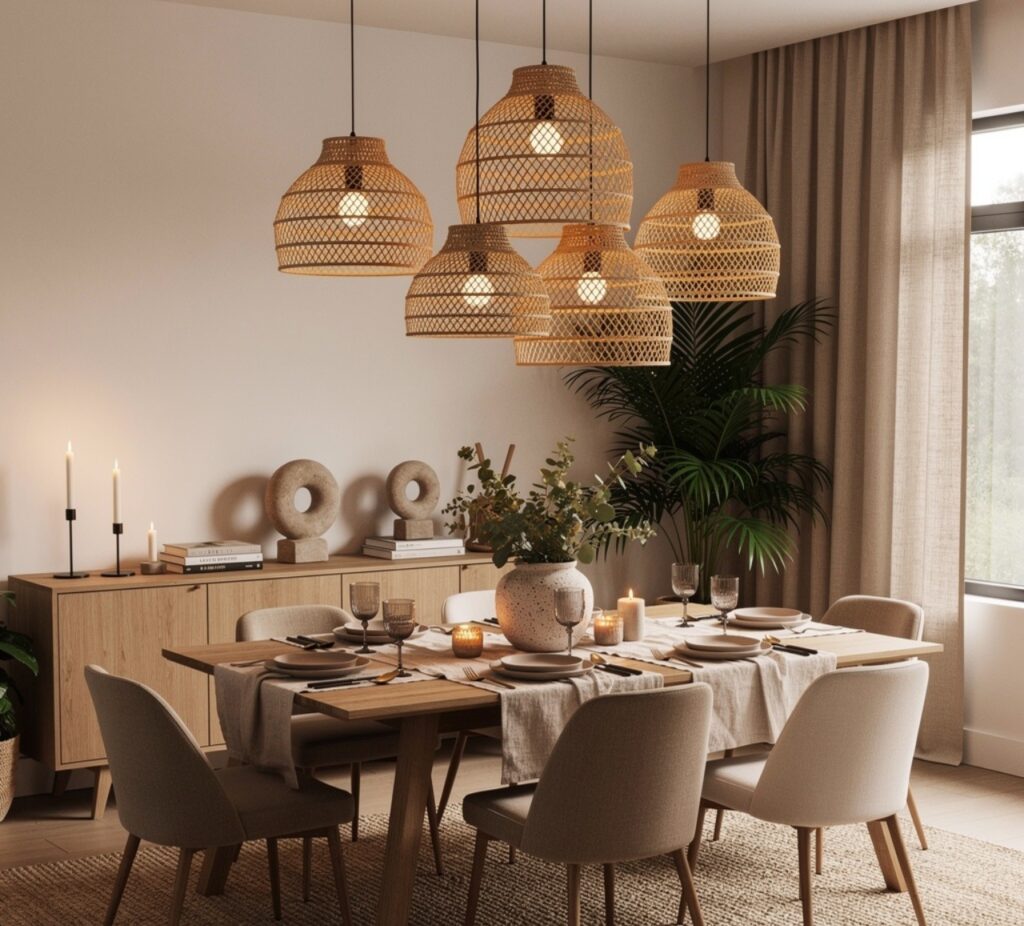
A rattan pendant cluster groups two or three woven light fixtures of varying sizes above the dining table instead of relying on a single centered pendant. This adds texture and a lighter, more casual visual weight compared to a heavier chandelier, making it well suited to dining rooms with a natural or coastal-leaning material palette. Staggering the pendants at slightly different heights, rather than hanging them level, gives the cluster more visual movement across the length of the table.
7. Sideboard With Brass Hardware
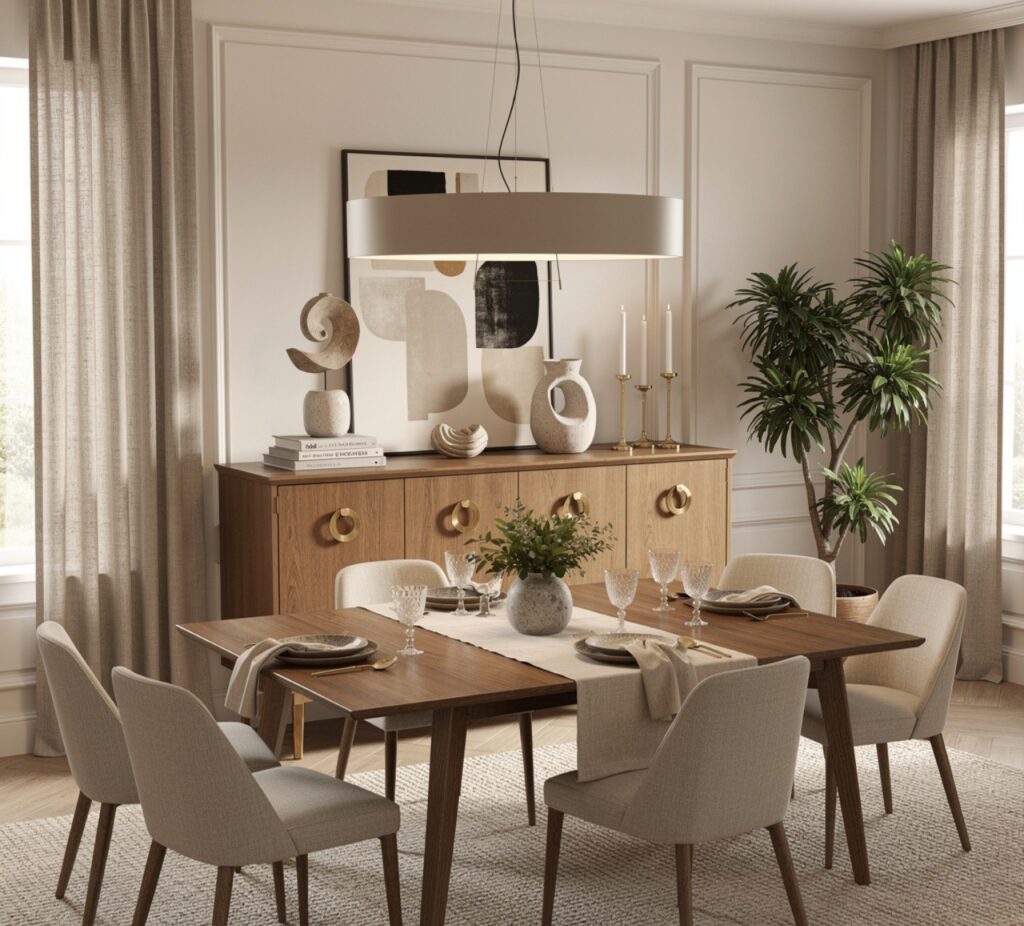
A sideboard with brass hardware provides closed storage for linens, serveware, and extra place settings while doubling as a display surface for a lamp, art, or a stack of serving bowls. Oak, walnut, or painted finishes all pair well with unlacquered or polished brass pulls, depending on whether the room leans warm and traditional or more contemporary. Placing the sideboard against the room’s longest open wall, rather than squeezed into a corner, gives it the visual weight to balance a larger dining table across from it.
8. Layered Table Runner and Placemats
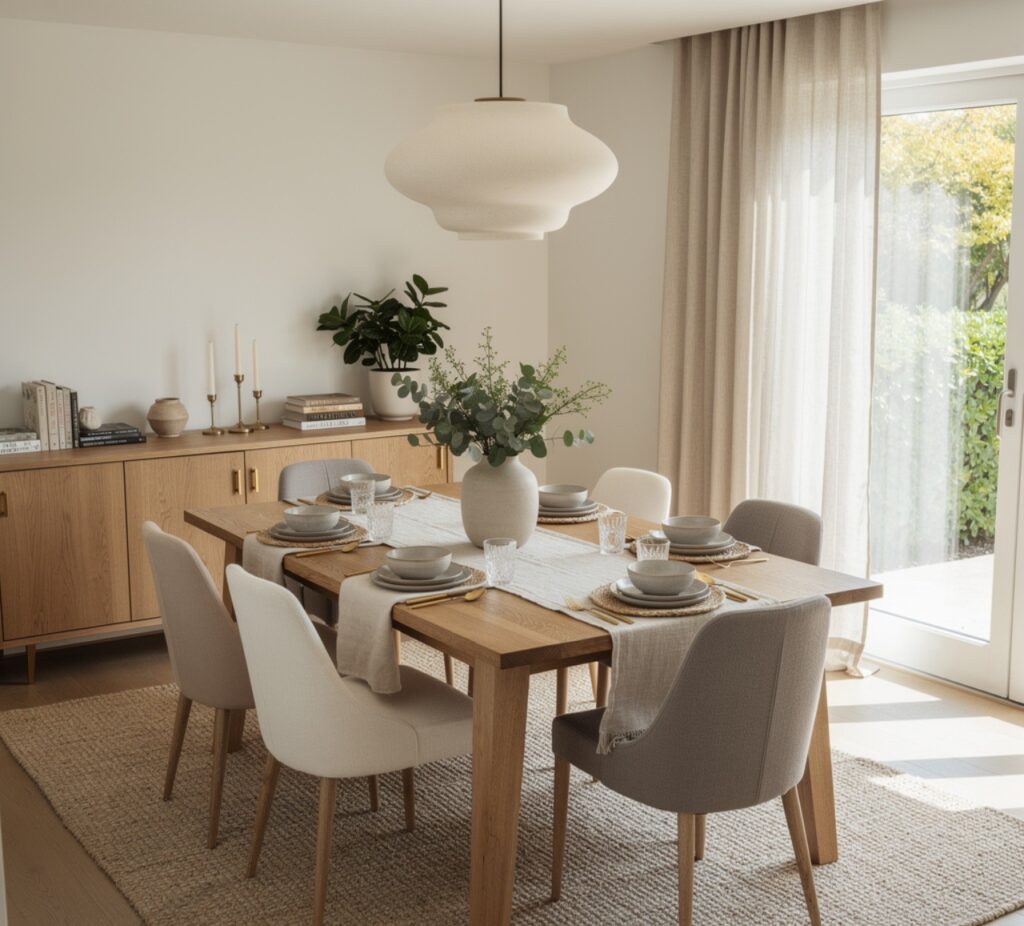
A layered table runner and placemats combine a textured linen runner down the center of the table with individual woven or rattan placemats at each seat, rather than relying on a single tablecloth. This layering adds texture without fully covering the wood grain of the table, which matters especially for a live-edge or solid wood surface worth showing off. Rotating runner colors seasonally is one of the lowest-cost ways to refresh the room’s palette without touching any furniture.
9. Gallery Wall Behind Sideboard
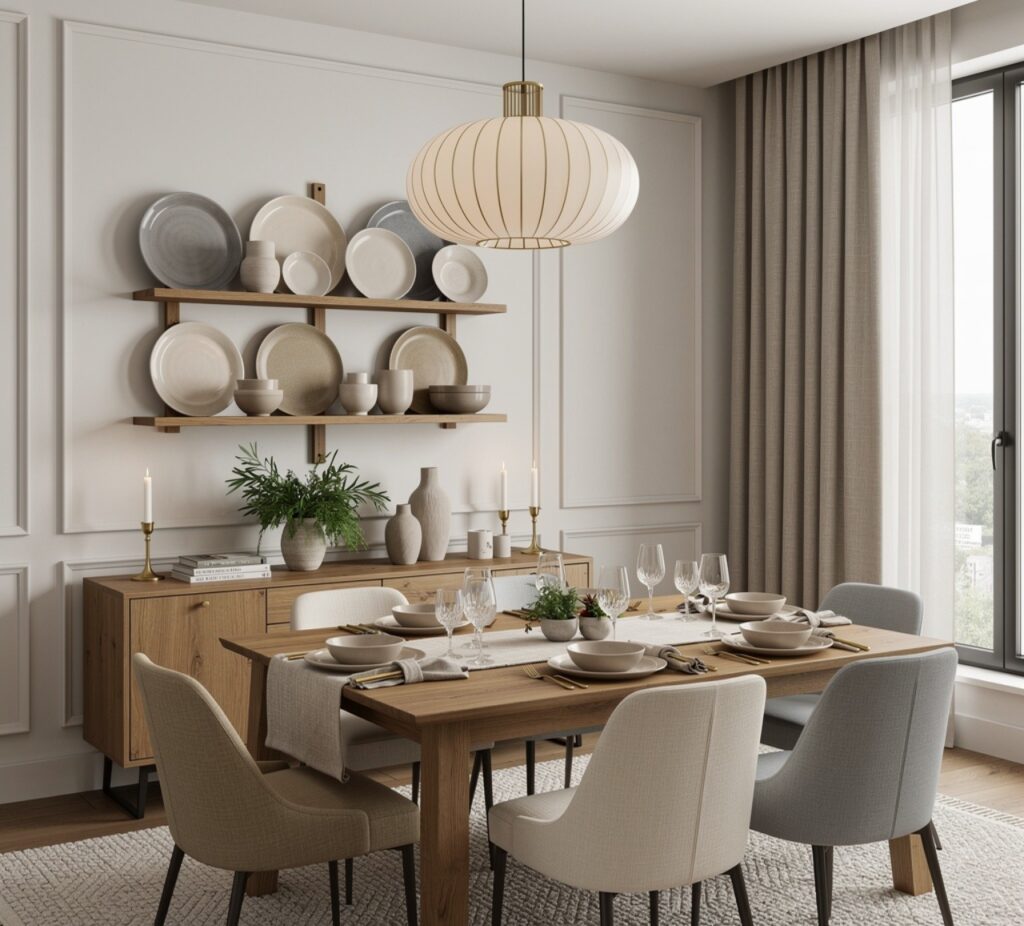
A gallery wall behind the sideboard groups framed art, mirrors, or plates into a single composition above the storage piece, rather than leaving that wall space bare or reserved for a single large piece. Mixing frame finishes and a few dimensional elements, like a woven wall hanging alongside flat frames, adds depth to the arrangement. Keeping the total width of the gallery roughly equal to or slightly narrower than the sideboard below it keeps the composition visually grounded rather than floating awkwardly above the furniture.
10. Decorative Plate Rack
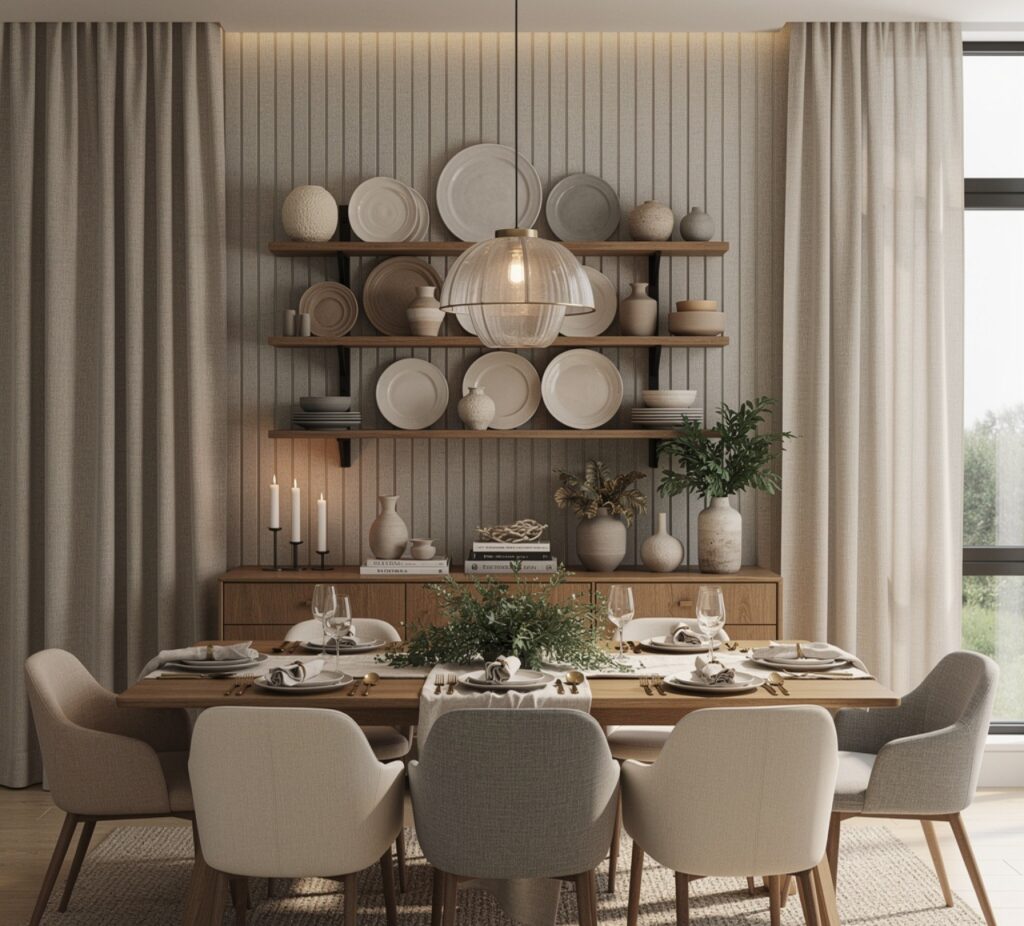
A decorative plate rack mounts to the wall or sits on a sideboard, displaying patterned dinnerware, platters, or vintage china as art rather than storing it out of sight in a cabinet. This works particularly well with collected or inherited china that deserves more visibility than a closed cupboard provides, and it doubles as functional storage for pieces used during larger gatherings. Spacing plates with at least an inch of clearance between them prevents the display from looking overcrowded on the rack.
11. Upholstered Bench Seating
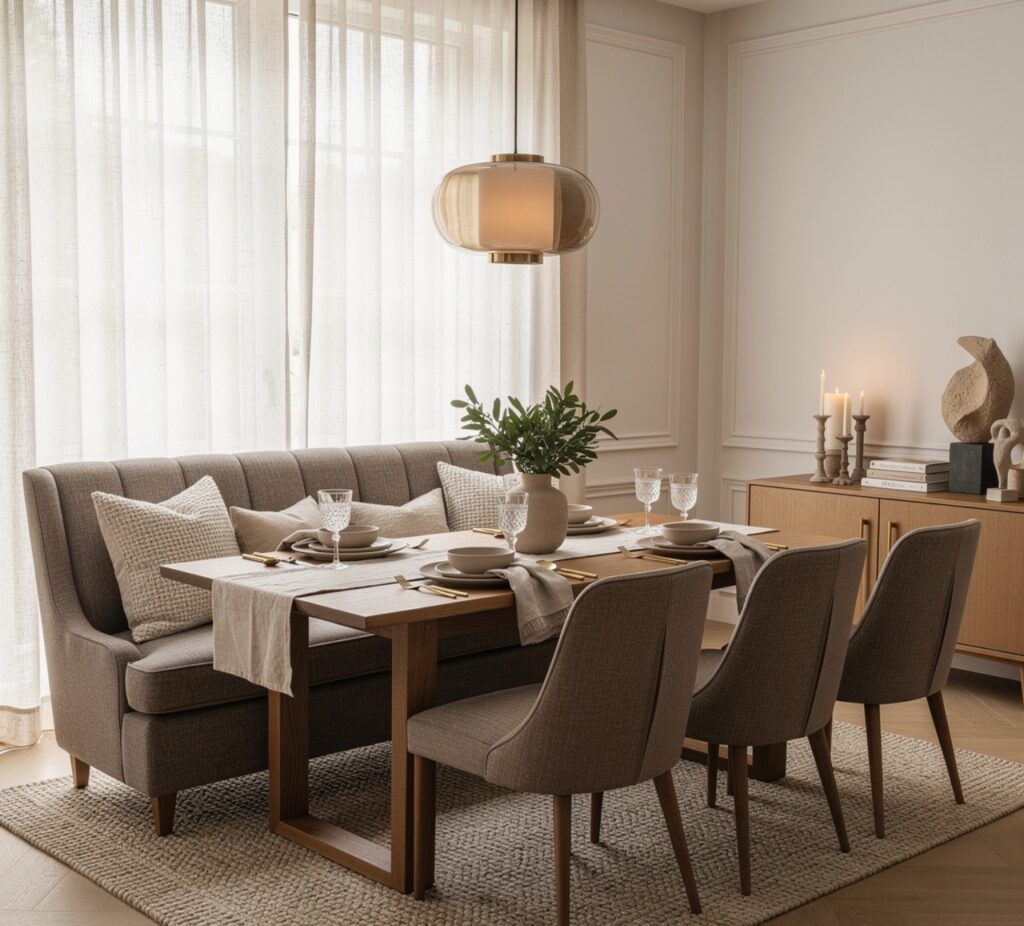
Upholstered bench seating replaces one or two chairs at the table with a long bench in linen, velvet, or performance fabric, offering flexible seating that can fit more people than fixed chairs during larger meals. Benches also tuck fully under the table when not in use, keeping walkways clearer in smaller dining rooms. Pairing a bench with chairs on the opposite side, rather than benches on all sides, keeps the room feeling balanced rather than overly casual.
| Bench Length | Seats Comfortably | Best Paired With |
| 48 inches | 2 people | 60-inch table |
| 60 inches | 3 people | 72-inch table |
| 72 inches | 3–4 people | 84+ inch table |
12. Woven Jute Area Rug
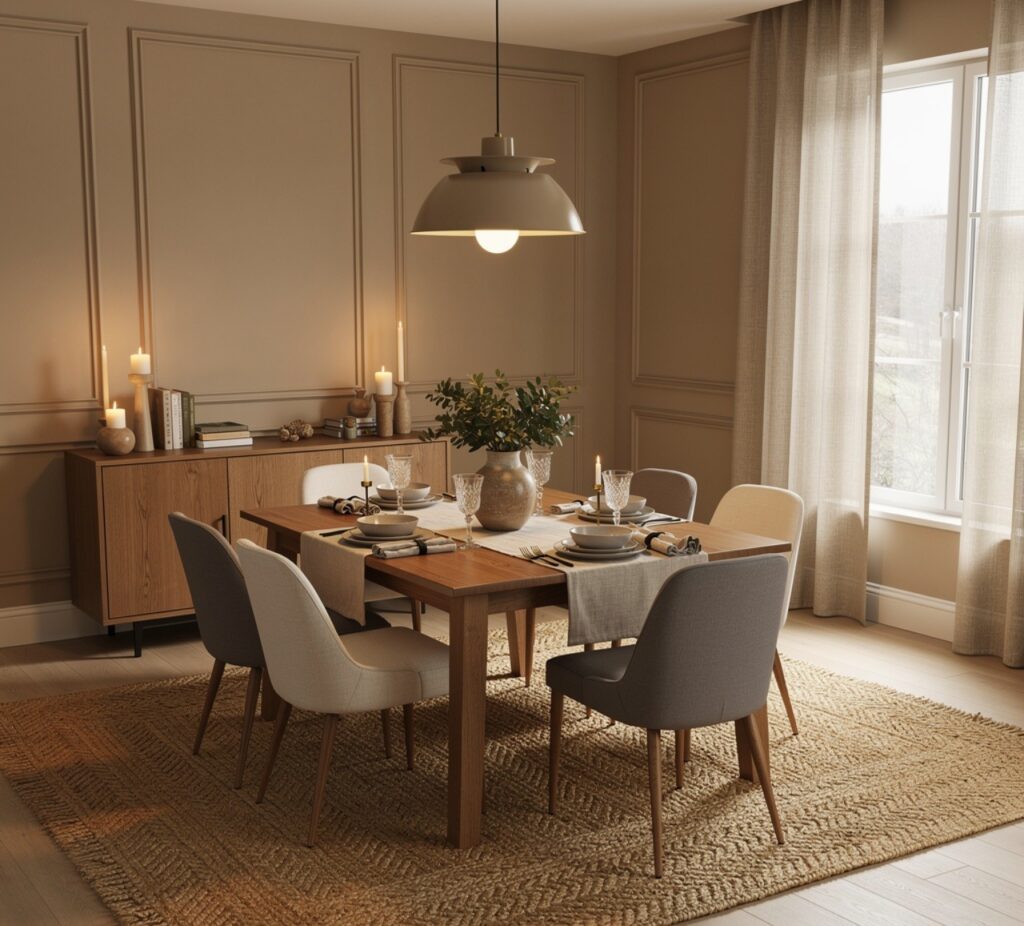
A woven jute area rug anchors the dining table and chairs on hard flooring like hardwood or tile, adding texture underfoot while remaining durable enough to handle dropped food and chair movement. Sizing the rug so all chair legs stay on the rug even when pulled out for seating prevents the front chair legs from catching the rug edge. Jute holds up better than delicate wool rugs in a room with frequent spills, though it does require more careful spot-cleaning than synthetic alternatives.
13. Bar Cart Styling
A bar cart, whether brass, wood, or a mix of both, brings a functional and decorative element to the dining room for serving drinks during meals or gatherings without requiring built-in cabinetry. Styling the top tier with a few bottles, a set of glassware, and a small tray keeps it looking curated rather than cluttered, while the lower tier holds bulkier items like an ice bucket or extra bottles. Placing the cart near the sideboard or in an underused corner makes it accessible without competing with the table as the room’s main focal point.
14. Layered Candle Display
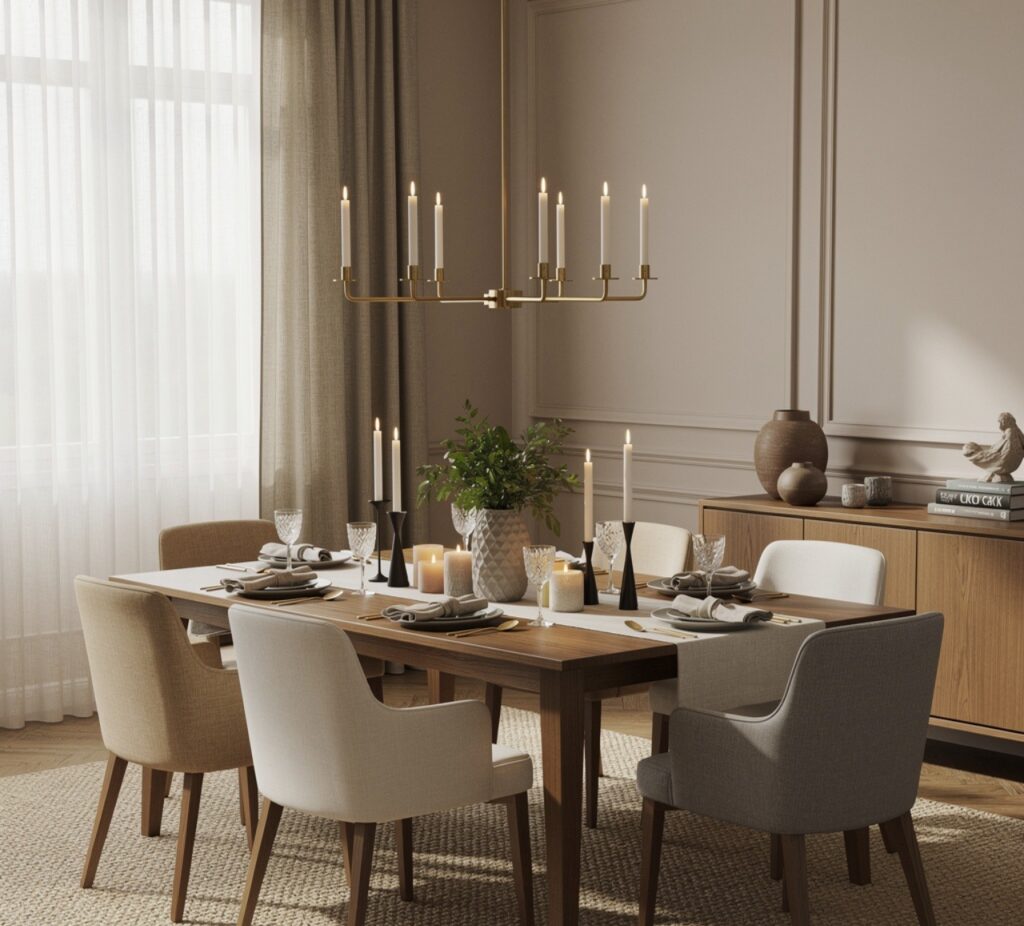
A layered candle display uses candlesticks of varying heights, typically in brass, ceramic, or turned wood, grouped down the center of the table or along a sideboard rather than a single matched pair. Mixing taper candles with pillar candles in a coordinated but not identical color palette adds visual interest for everyday use, not just special occasions. This is one of the lowest-cost ways to add warmth and a soft evening glow to the room without any changes to the existing lighting fixtures.
15. Woven Wall Hanging
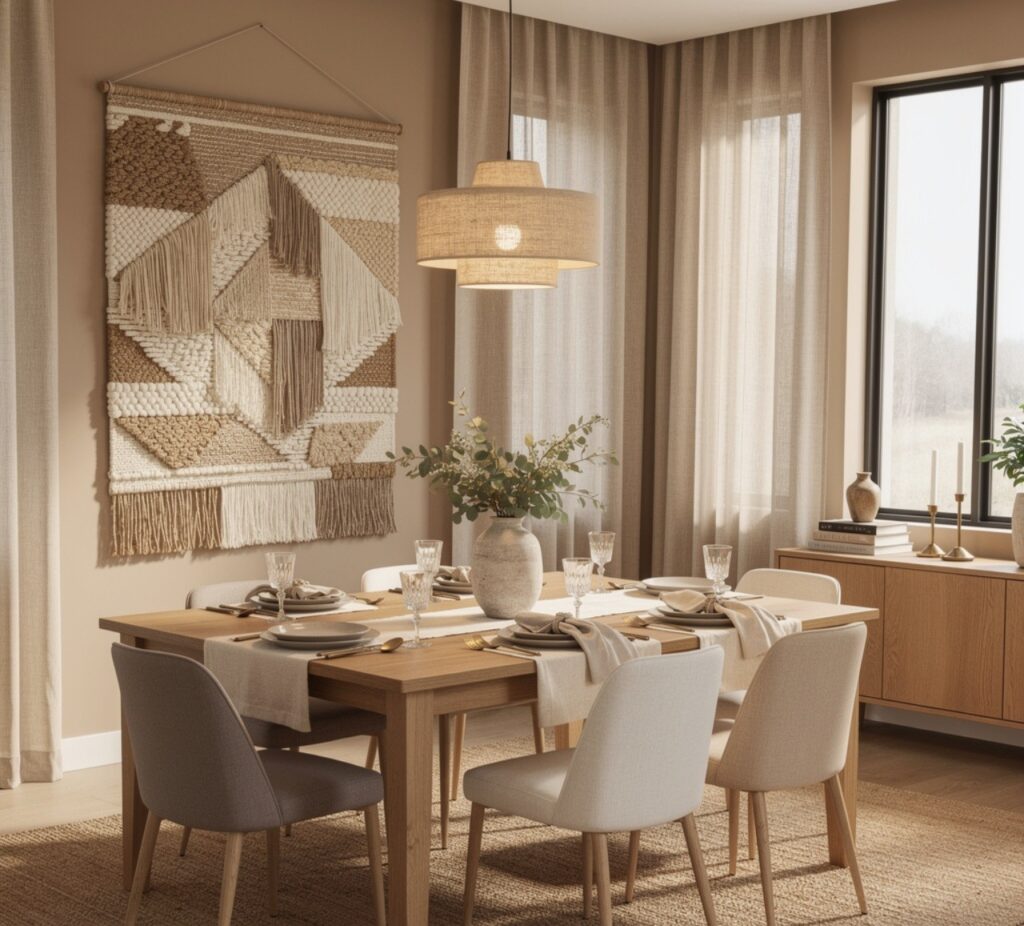
A woven wall hanging, whether a macrame piece or a more structured tapestry, adds soft texture to a dining room wall that would otherwise rely entirely on framed art or paint for visual interest. These work particularly well on the wall behind the head of the table, where a large piece of art might feel too formal for a casual dining space. Because textiles absorb some sound, a wall hanging also softens the acoustics in a room full of hard surfaces like a wood table and tile or hardwood flooring.
To see more options for aesthetic room decor CLICK HERE
16. Curated Centerpiece Bowl
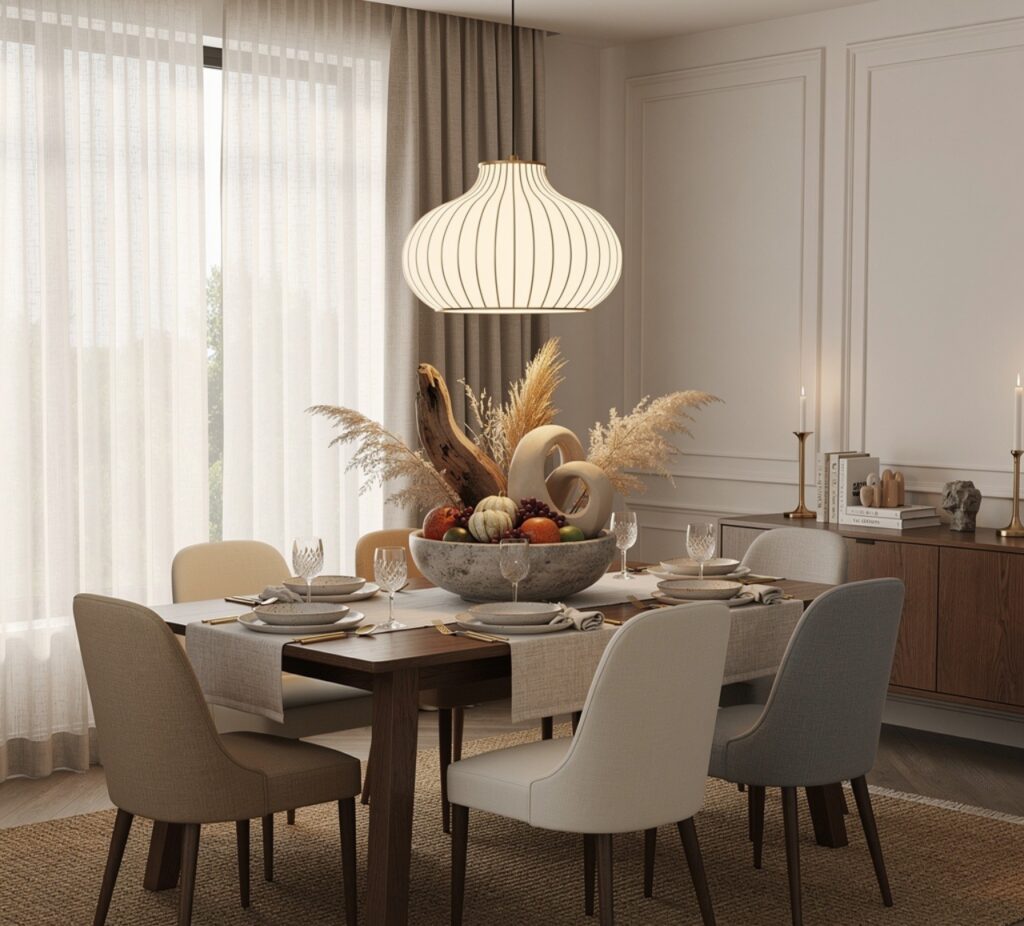
A curated centerpiece bowl, in ceramic, wood, or woven material, holds seasonal fruit, dried florals, or simple greenery at the center of the table without requiring a full floral arrangement for everyday use. Choosing a low, wide bowl rather than a tall vase keeps sightlines clear across the table during meals, which matters more in dining rooms used daily than in ones reserved only for formal entertaining. Swapping the bowl’s contents seasonally keeps the table feeling current without any additional furniture or decor changes.
Shop the Look
For this palette, look for a walnut live-edge dining table paired with a mix of rattan and upholstered boucle chairs, a linear brass-finished chandelier sized to two-thirds the table length, a walnut sideboard with brass pulls, and a jute area rug sized to keep all chair legs on the rug when pulled out. These pieces work together across several of the ideas above without requiring a single unified furniture set.
Common Mistake to Avoid
The most common mistake is undersizing the rug or lighting fixture relative to the table, typically to save on cost, which leaves the table looking disconnected from the rest of the room. A rug that only fits under the table itself, without room for chairs to stay on it when pulled out, or a pendant sized for a much smaller table, both read as afterthoughts. Measuring the actual table dimensions before purchasing either element solves this more reliably than adjusting other decor around it.
FAQs
What dining room decor ideas work best for small spaces?
Built-in banquette seating, a bar cart tucked into a corner, and a decorative plate rack all work well in small dining rooms since they add function or visual interest without consuming additional floor space. Avoiding an oversized sideboard or a live-edge table sized for a much larger room keeps the space from feeling cramped, so choosing pieces proportional to the actual room matters more than the number of decor elements added.
How much does it cost to update dining room decor on a budget?
A budget refresh using a layered table runner, a curated centerpiece bowl, and a few candlesticks can run under $150 total, while adding furniture like a bar cart or a set of mismatched chairs typically pushes the range to $400–$900. Larger investments like a live-edge dining table or a built-in banquette cost significantly more due to materials and labor, often landing between $1,200 and $3,500 depending on size and whether it’s custom built.
What is trending in dining room decor right now?
Mixed material seating, unlacquered brass fixtures, and wallpapered accent walls are currently favored over the matched furniture sets that dominated the last decade, often paired with a live-edge or solid wood table. These choices pair naturally with the warmer, texture-driven palette featured throughout current dining room trends. Fully matched dining sets still appear, but usually in more traditional or transitional-style homes rather than as the default choice.
How high should a chandelier hang above a dining table?
A chandelier should generally hang 30 to 36 inches above the table surface, which keeps the fixture low enough to feel intentional and provide good task lighting without blocking sightlines across the table during meals. Ceiling height affects this slightly, since rooms with standard 8-foot ceilings need the fixture closer to the lower end of that range, while taller ceilings allow more flexibility without the pendant feeling disconnected from the table below it.
How do I make a dining room feel less formal?
A dining room feels less formal with the addition of mismatched chairs, a layered table runner instead of a full tablecloth, and warmer lighting from a rattan pendant cluster rather than a traditional crystal chandelier. Swapping in natural materials like jute rugs and woven wall hangings also softens the room’s overall tone. Keeping some flexible or casual seating, like a bench on one side of the table, reinforces that the space is meant for everyday use, not just special occasions.
Conclusion
These dining room decor ideas cover everything from low-cost styling swaps to larger furniture investments, giving you options regardless of your room’s size or how often it gets used. Start with one or two updates that address the room’s biggest gap, whether that’s lighting, seating, or storage, and build from there. Save this guide to Pinterest for later, and check out our related post on small-space furniture layouts for more room-specific guidance.