16 Beautiful Small Living Room Decor Ideas to Create a Cozy and Stylish Home
A small living room doesn’t need less personality it needs smarter decisions about scale, layout, and storage. This post walks through sixteen small living room decor ideas covering furniture choices, color, lighting, and layout tricks that make a compact space feel intentional rather than cramped. Whether the room is a studio apartment corner or a full but modest-sized living room, these ideas focus on real, practical changes rather than generic advice about “keeping things simple.”
Trend & Background
As apartment and starter-home square footage has shrunk in many markets, small living room decor has become one of the most searched home design topics, with multi-functional furniture and vertical storage leading the trend. Light, warm neutral palettes have largely replaced the all-white minimalist look of a few years ago, since fully white rooms can feel cold and impersonal in a small footprint. Modular sofas, nesting furniture, and wall-mounted storage have also grown in popularity as more people rent rather than own, since these solutions add function without requiring permanent changes to the space.
Key Takeaways
- Small living room decor succeeds by prioritizing furniture scale and sightlines over adding more pieces to fill the space.
- Multi-functional furniture nesting tables, storage ottomans, wall-mounted media units reclaims floor space without sacrificing function.
- Mirrors, light color palettes, and vertical storage all work together to make a compact room read larger than its actual square footage.
- Layout choices, like floating furniture off the walls or using a single large rug, often matter more than the decor items themselves.
1. Floating Furniture Arrangement
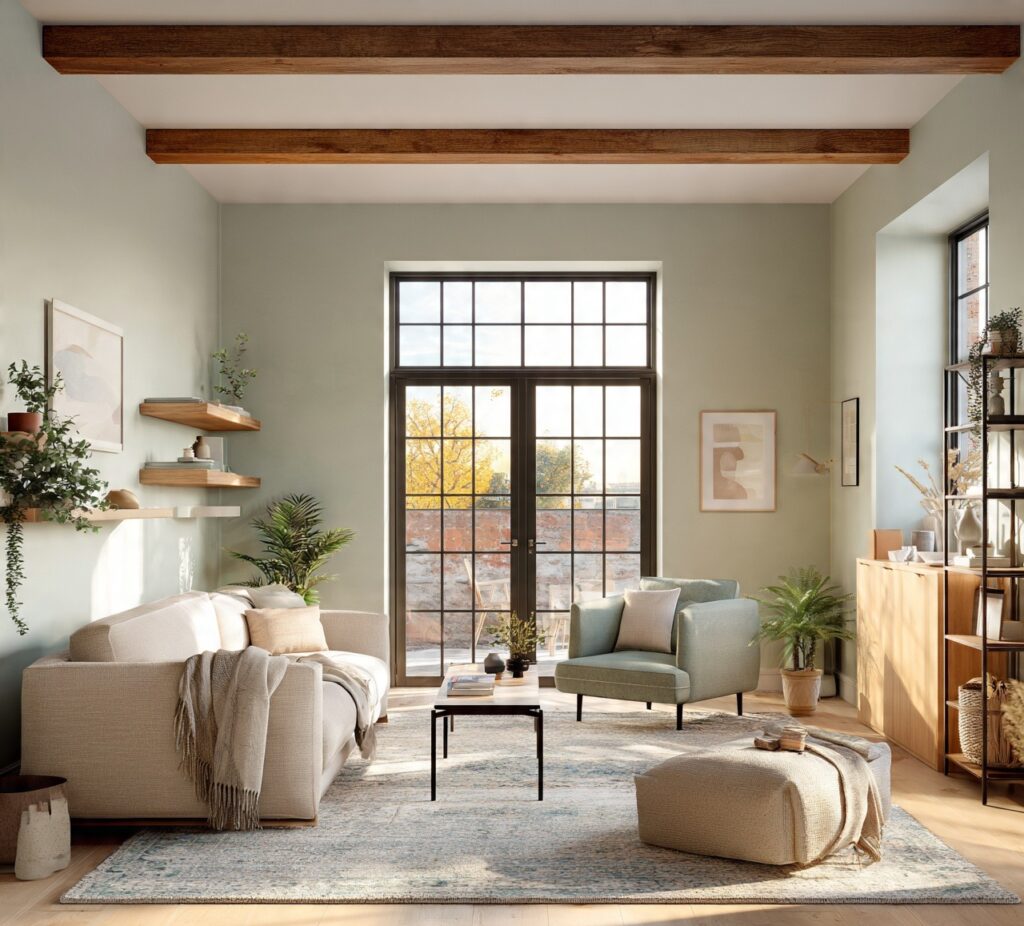
A floating furniture arrangement pulls the sofa and chairs a few inches away from the walls rather than pushing every piece flush against them, creating a defined seating area in the middle of the room. Counterintuitively, this makes a small living room feel larger because it establishes a clear function for the center of the space instead of leaving it as empty, undefined floor area. This works best paired with a rug sized to fit under at least the front legs of all seating pieces.
2. Multi-Functional Storage Ottoman
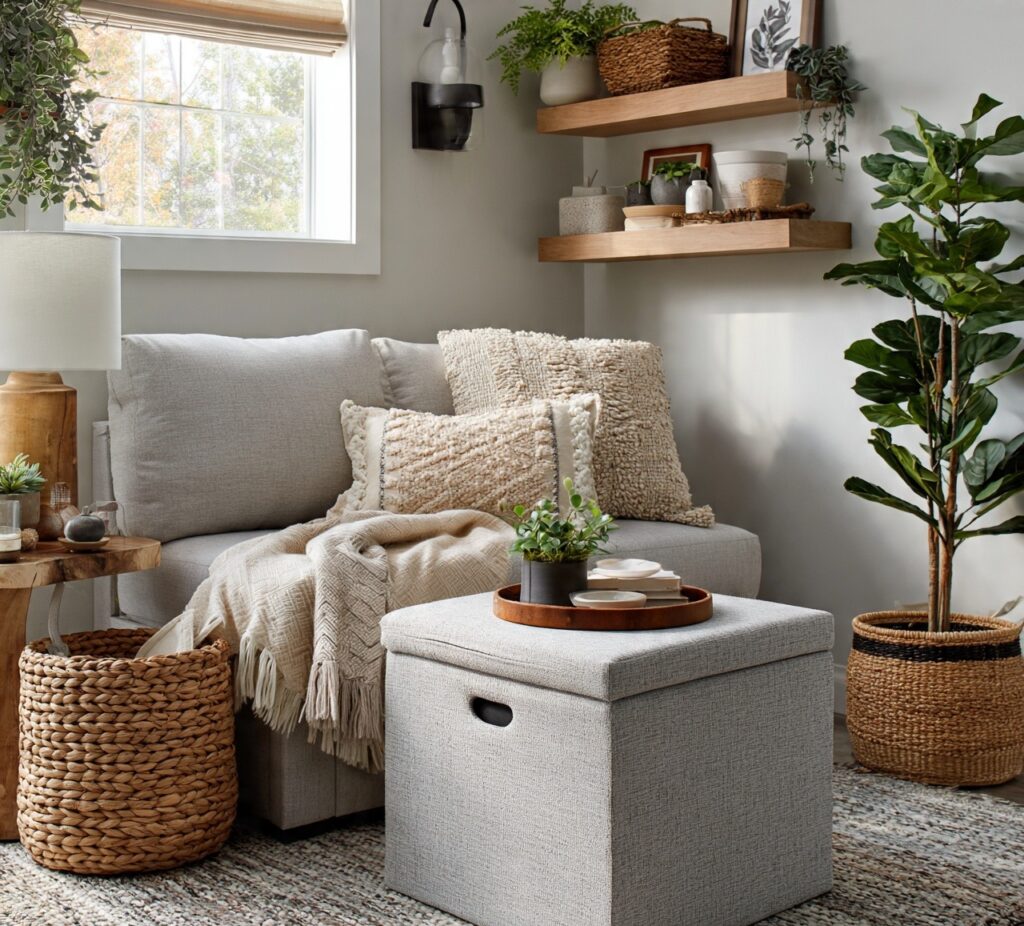
A storage ottoman serves as a coffee table, extra seating, and hidden storage all in one piece, which matters most in rooms too small for a separate coffee table and storage unit. Lifting the lid reveals space for blankets, remotes, or magazines that would otherwise clutter open surfaces. Choosing one with a tray-top lid keeps the coffee-table function intact while still offering the storage benefit underneath.
| Room Size | Recommended Ottoman Size | Best Placement |
| Under 150 sq ft | 24×24 inches | Centered in front of sofa |
| 150–250 sq ft | 30×30 inches | Centered, 14–18 in. from sofa |
| 250+ sq ft | 36×36 inches or two smaller ottomans | Centered or paired |
3. Wall-Mounted Media Console
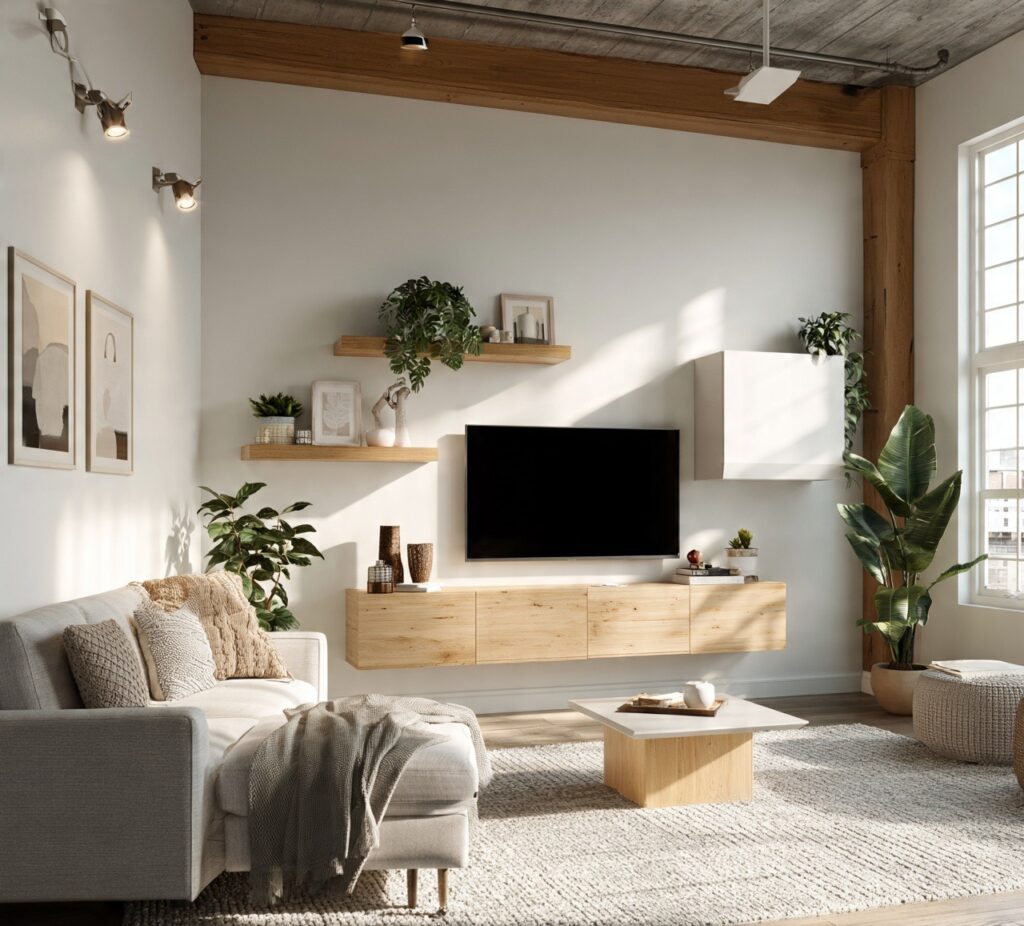
A wall-mounted media console holds a television and media components on a floating shelf attached directly to the wall, eliminating the footprint of a traditional TV stand. This frees up floor space along the main wall of the room, which matters most in narrow living rooms where a standalone console would eat into walking room. Running cables through a wall channel or cord cover keeps the finished look clean rather than exposing wires beneath the mounted unit.
To see more options for living room decor ideas CLICK HERE
4. Large Statement Mirror
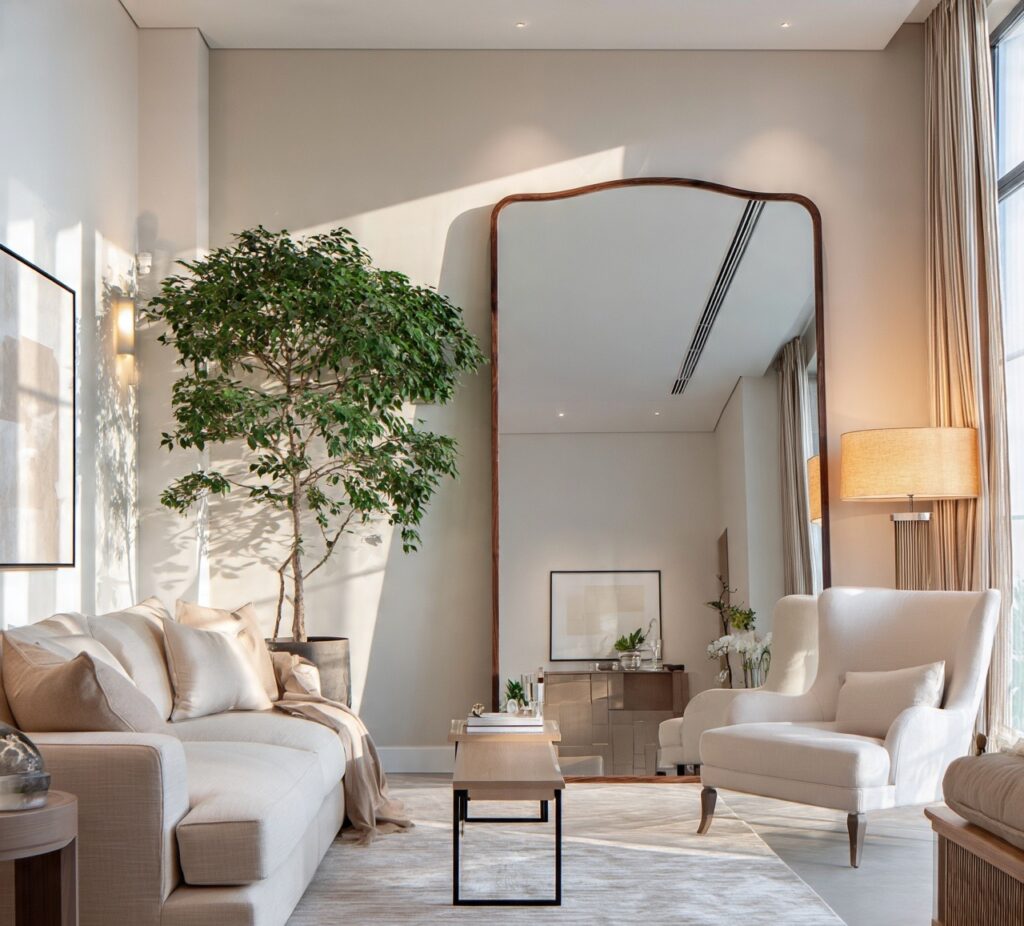
A large statement mirror placed opposite a window reflects natural light back into the room, making a small living room feel brighter and visually deeper than its actual dimensions. Beyond the light-bouncing effect, an oversized mirror also draws the eye upward and outward, which counters the boxed-in feeling that smaller rooms often have. Leaning a floor mirror against the wall rather than mounting it gives a more relaxed, collected look than a formally hung piece.
5. Vertical Bookshelf Unit
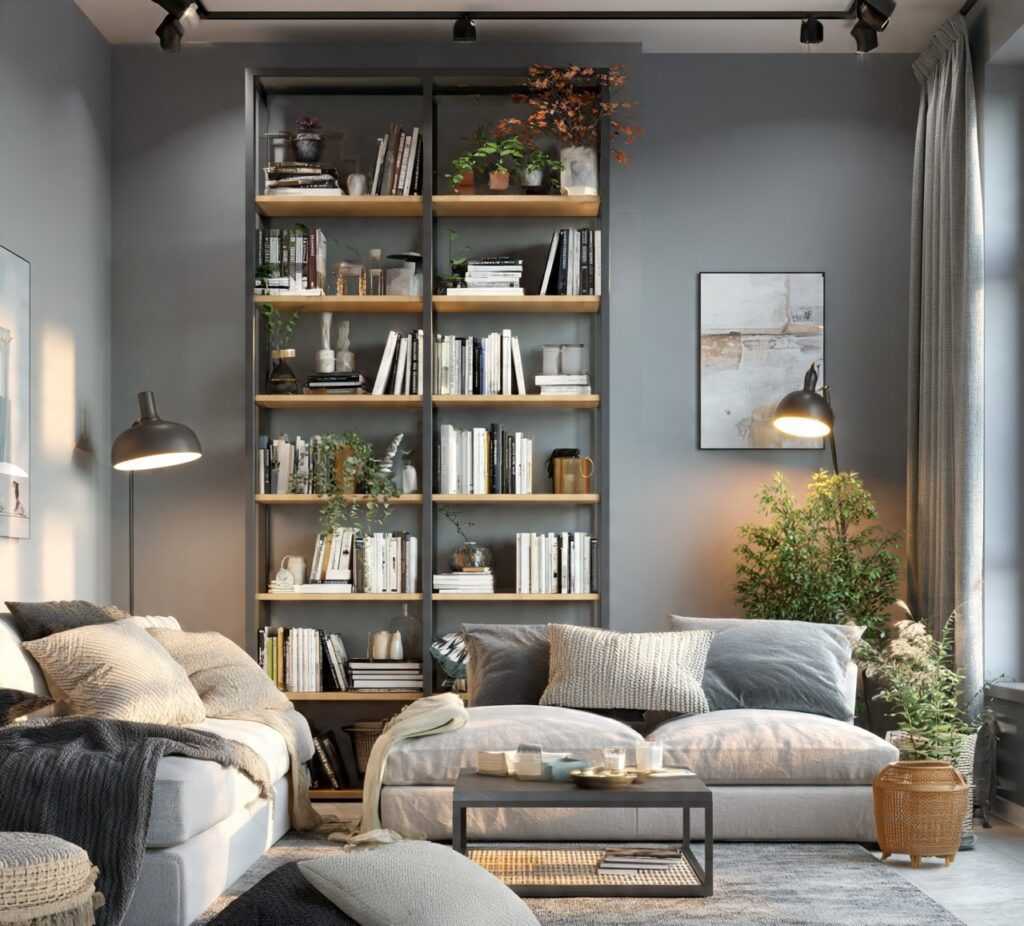
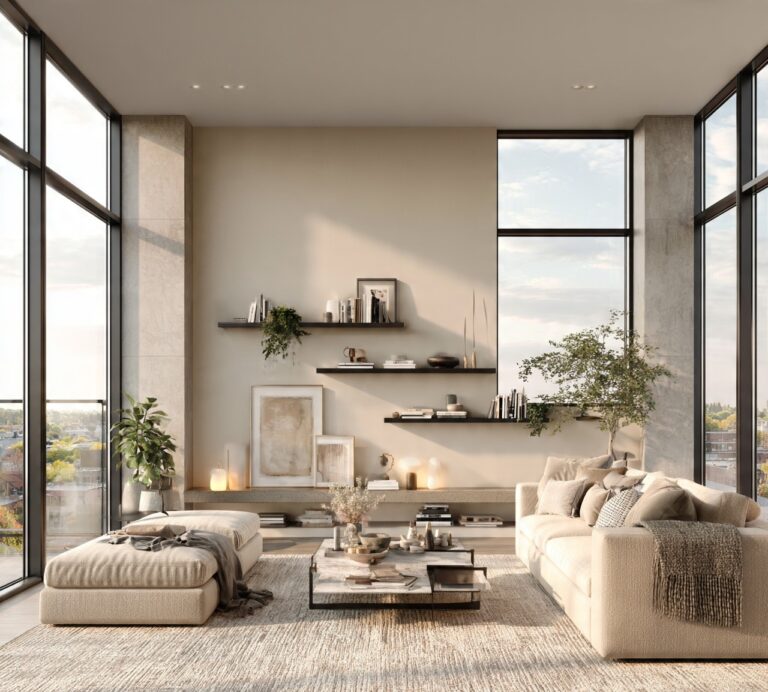
A vertical bookshelf unit uses height rather than width to store books and display items, making it a better fit for narrow living rooms than a wide, low bookshelf. Tall, slim units draw the eye upward, which visually increases the sense of ceiling height in a room that might otherwise feel squat. Leaving the top shelf partially empty or styled with a single object avoids a cluttered, top-heavy appearance.
6. Nesting Coffee Tables
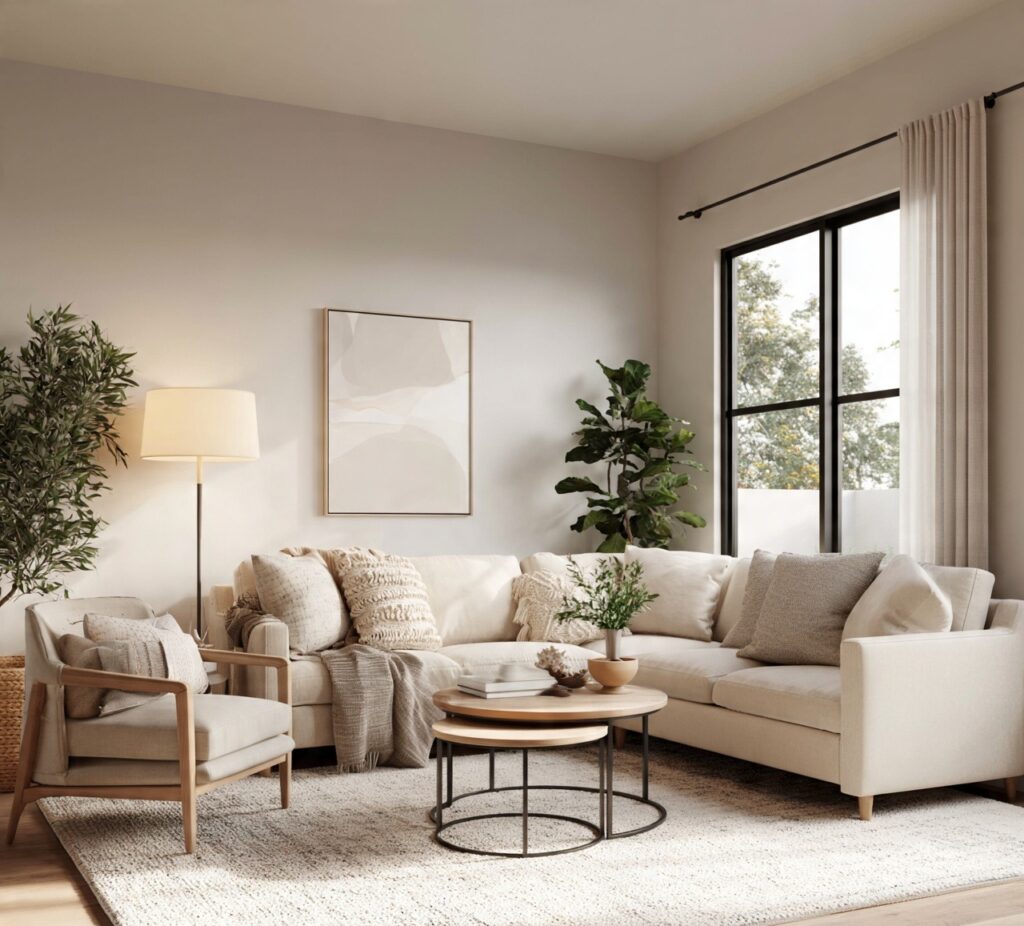
Nesting coffee tables consist of two or three tables of decreasing size that slide underneath one another, allowing the extra tables to be pulled out only when needed for guests or additional surface space. In a small living room, this means the room defaults to a smaller footprint most of the time while still accommodating occasional extra seating or serving surfaces. Wood and metal combination sets are the most common material pairing currently available.
7. Light Neutral Color Palette
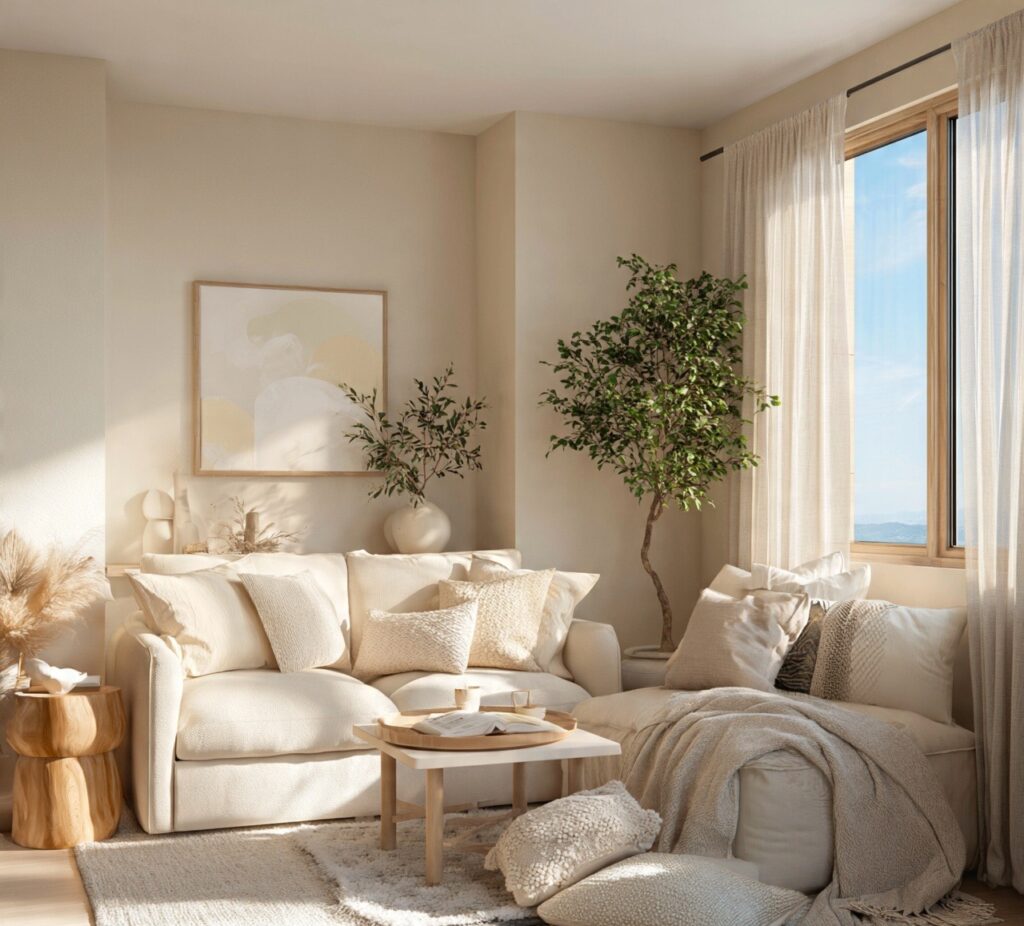
A light neutral color palette warm whites, soft greiges, and pale sand tones reflects more light than darker colors, which helps a small living room avoid feeling boxed in. Unlike a stark, cool white, warm neutrals keep the room from feeling clinical while still maximizing brightness. Introducing texture through boucle, linen, or nubby wool textiles keeps an all-neutral room from feeling flat or under-designed.
8. Curtains Hung Above the Window Frame
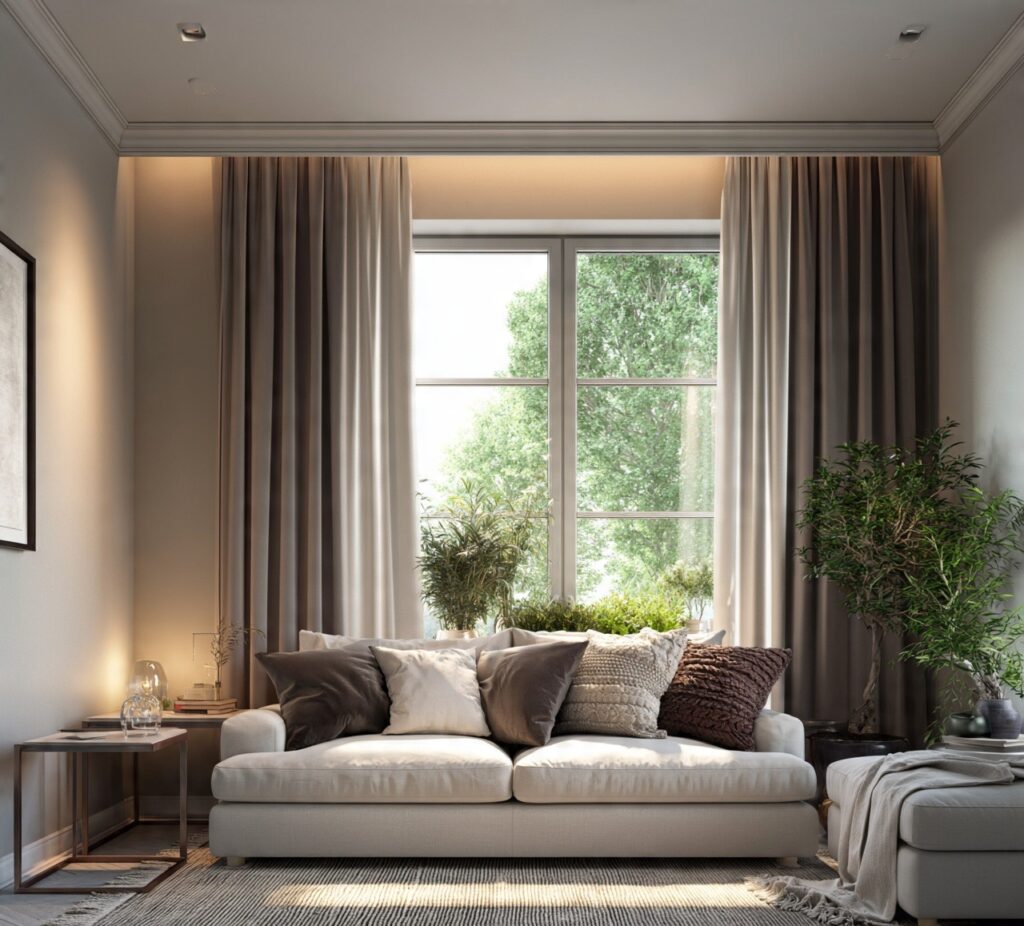
Hanging curtains several inches above the actual window frame, rather than directly on top of it, draws the eye upward and creates the illusion of taller windows and higher ceilings. This is one of the lowest-cost small living room decor ideas since it only requires repositioning the curtain rod brackets rather than buying new curtains or hardware. Floor-length curtains that just skim the floor extend this vertical effect all the way down the wall.
9. Slipper Chairs Instead of Armchairs
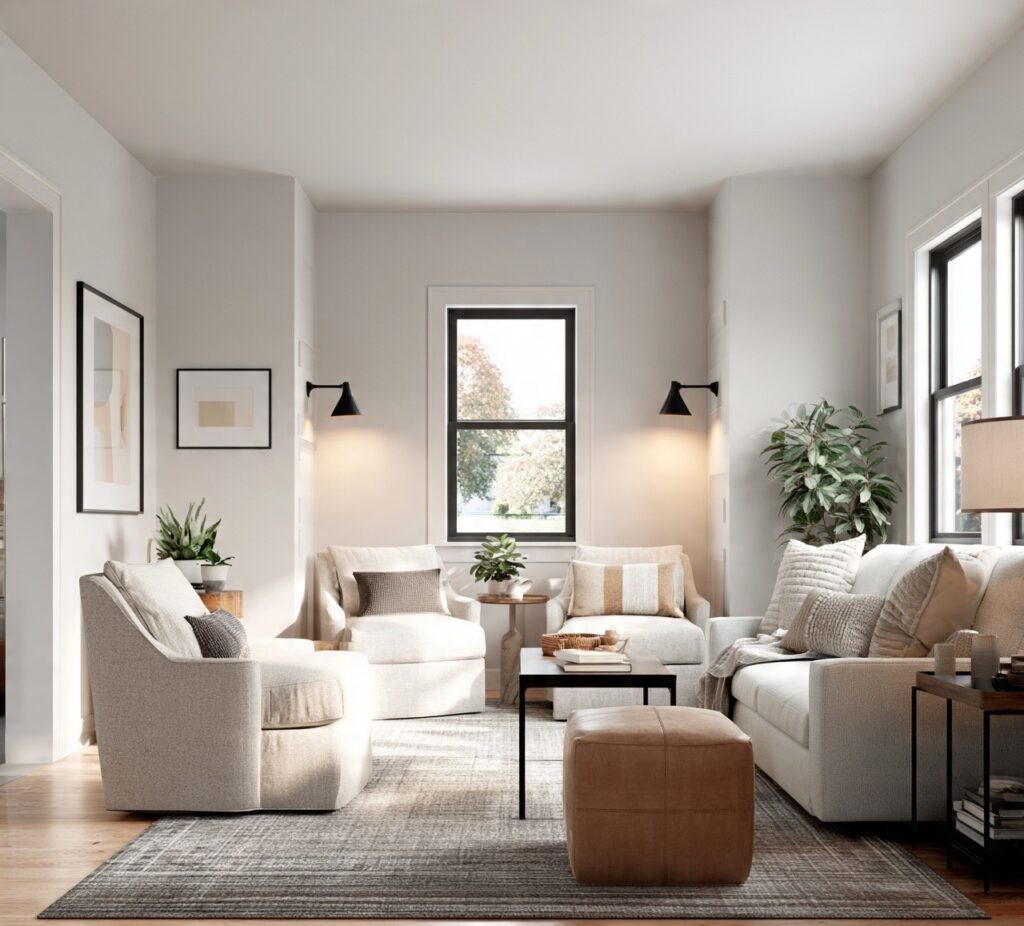
Slipper chairs have no arms and a lower profile than traditional armchairs, taking up noticeably less visual and physical space while still providing a full extra seat. In a small living room, replacing one bulky armchair with a pair of slipper chairs can actually add seating capacity while keeping sightlines open across the room. Upholstering both chairs in the same fabric as other pieces in the room keeps the look cohesive rather than mismatched.
10. Round Dining or Accent Table
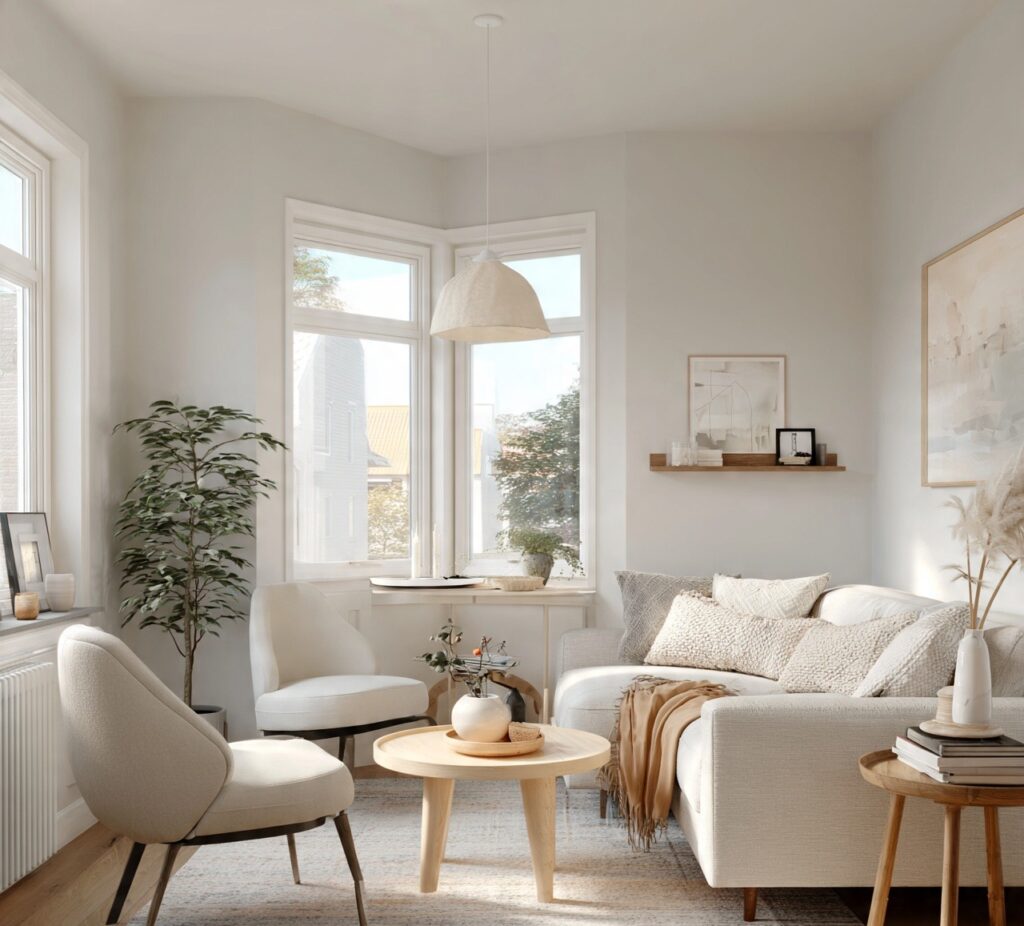
A round table eliminates hard corners, which matters in tight walkways where square or rectangular tables force people to navigate sharp edges. Rounded silhouettes also read as visually lighter than boxy furniture, even at a similar footprint, which helps a small living room feel less congested. Pairing a round accent table with the room’s existing color palette avoids introducing a jarring new material or finish.
11. Gallery Wall in a Single Frame Color
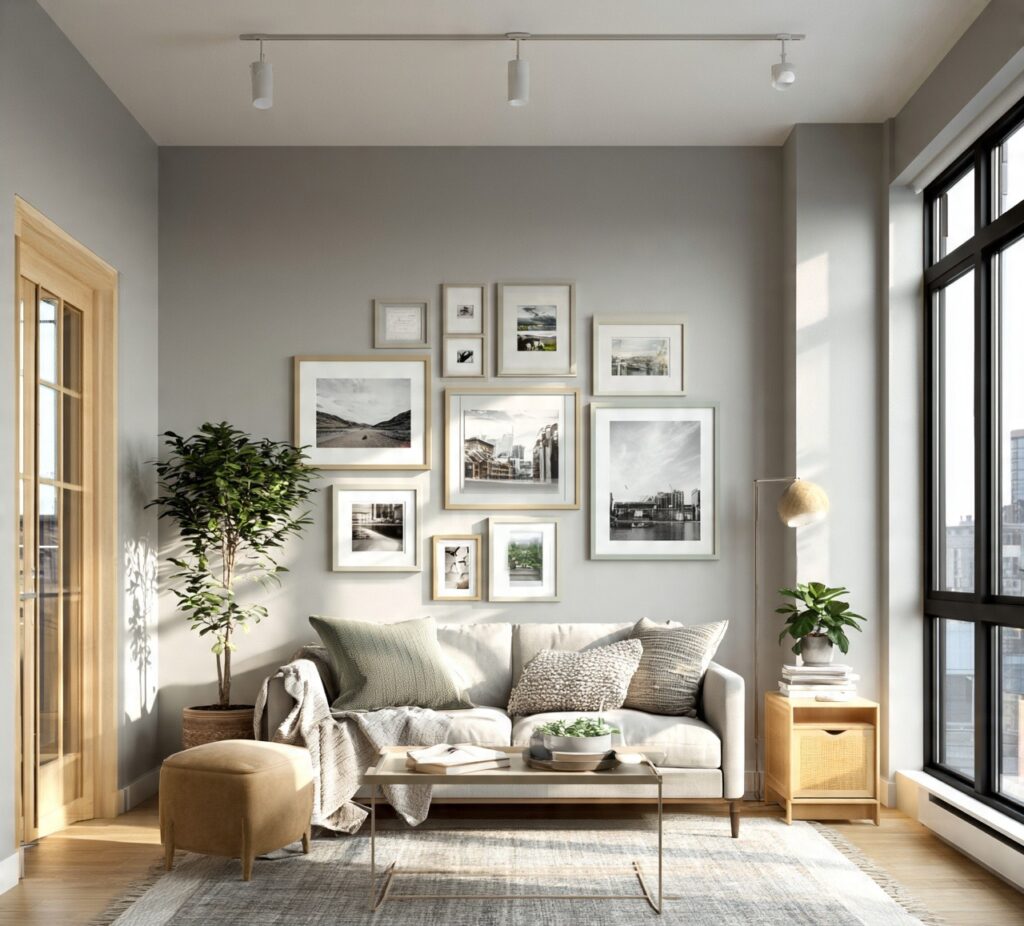
A gallery wall grouped in a single frame color all black, all natural wood, or all brass reads as one cohesive design statement rather than a scattered collection of mismatched pieces. This works particularly well on a narrow wall in a small living room, since a unified color scheme keeps the arrangement from visually competing with the room’s other design choices. Measuring and dry-arranging the layout on the floor before hanging anything prevents uneven spacing on the wall.
| Wall Width | Recommended Frame Count | Layout Style |
| Under 4 feet | 3–5 frames | Vertical column |
| 4–6 feet | 6–9 frames | Grid or salon-style cluster |
| 6+ feet | 9–12 frames | Salon-style with varied sizes |
12. Sheer Curtain Layering
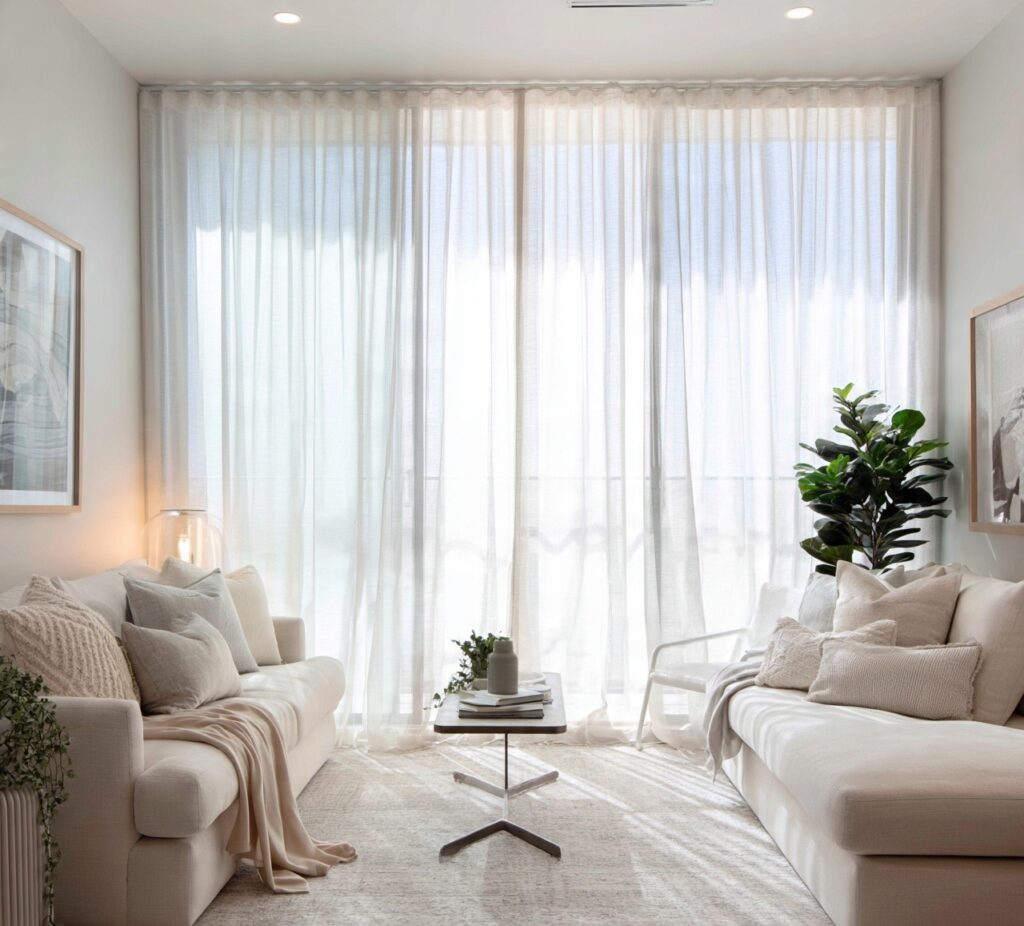
Layering a sheer curtain panel underneath a heavier drape allows natural light to filter through during the day while still offering a fuller, more finished window treatment than sheers alone. This softens a small living room without blocking out the light that helps the space feel open, and the heavier layer can be pulled closed at night for privacy. Choosing sheers in a similar tone to the wall color keeps the window from becoming a visually heavy focal point.
13. Corner Shelving Unit
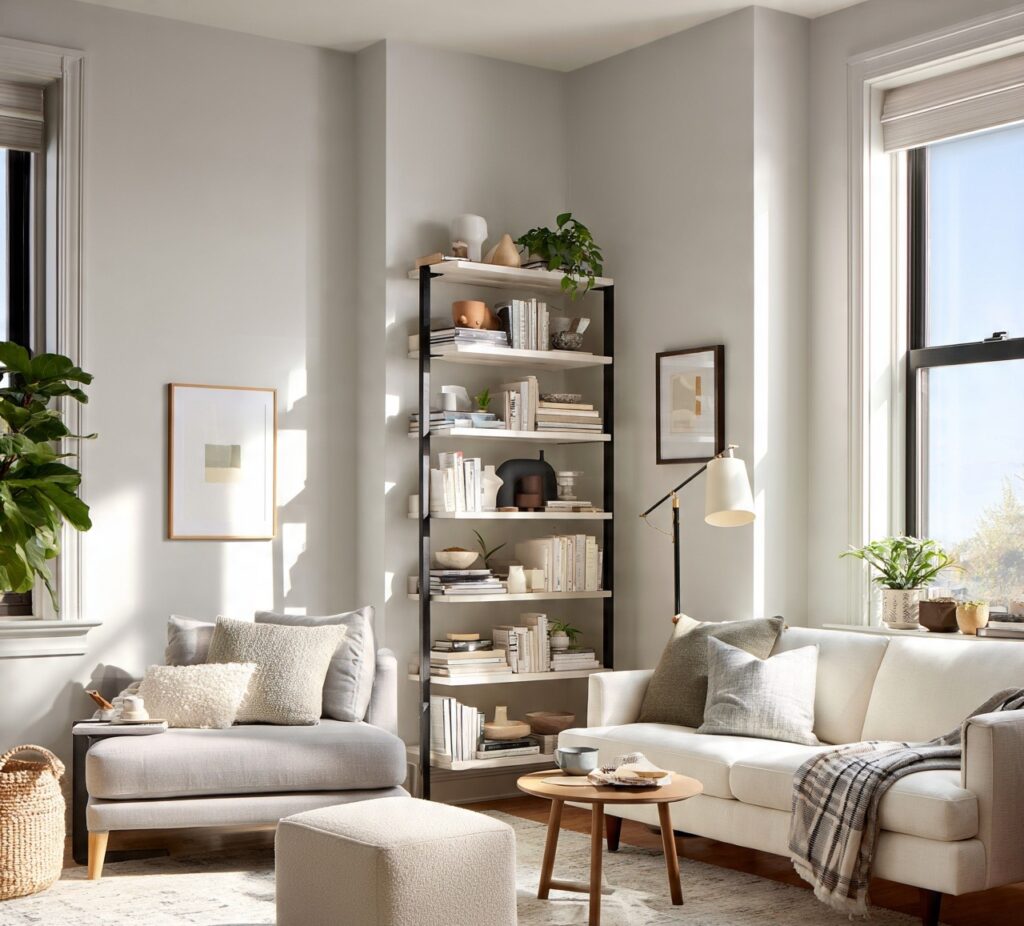
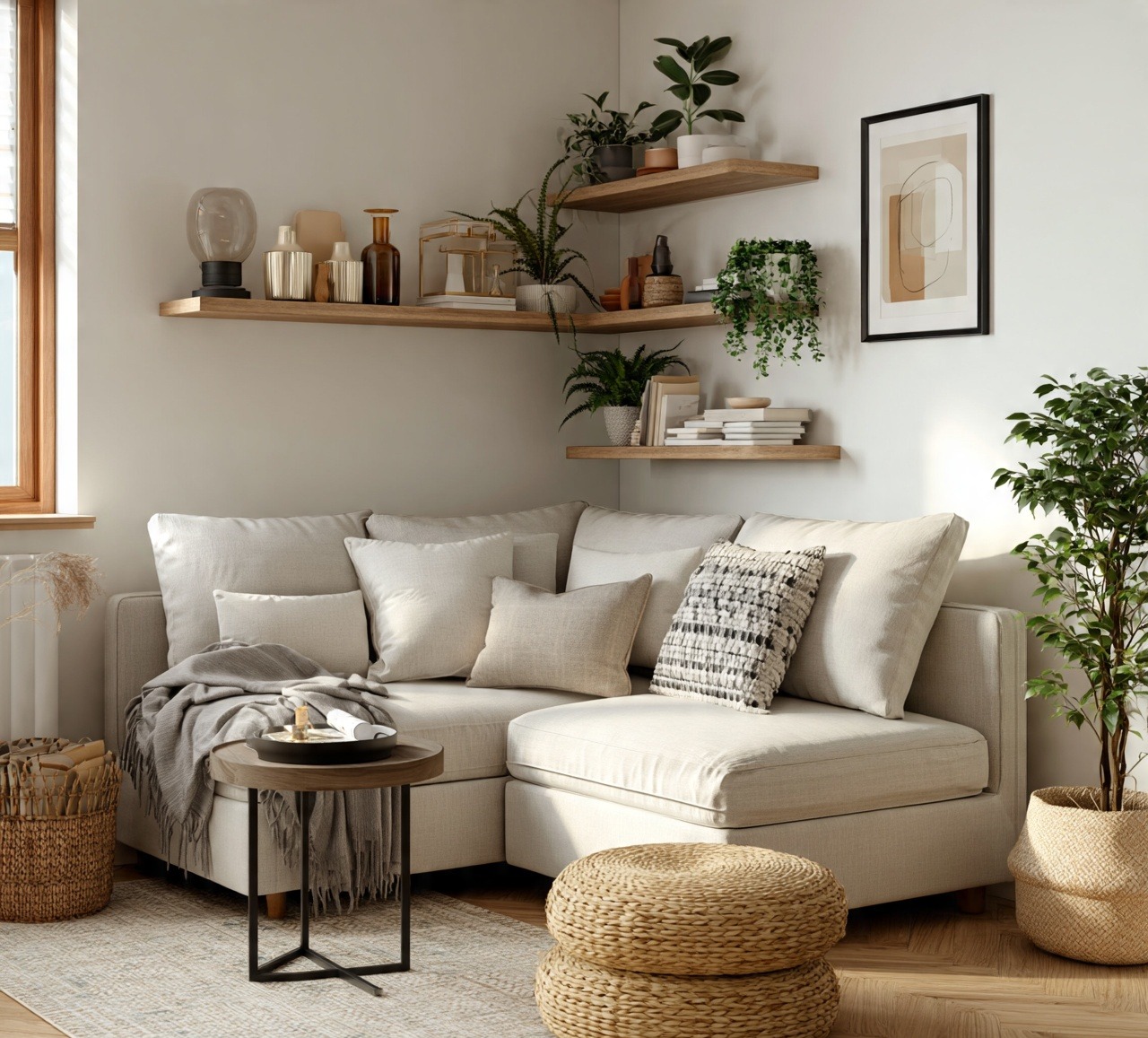
A corner shelving unit fits into an otherwise unused triangular space, providing storage or display area without eating into usable floor space elsewhere in the room. This is one of the more overlooked small living room decor ideas, since corners are frequently left empty by default in furniture planning. Floating corner shelves in particular avoid the bulkier footprint of a standing corner cabinet while still offering display space for books or plants.
14. Low-Profile Sectional Sofa
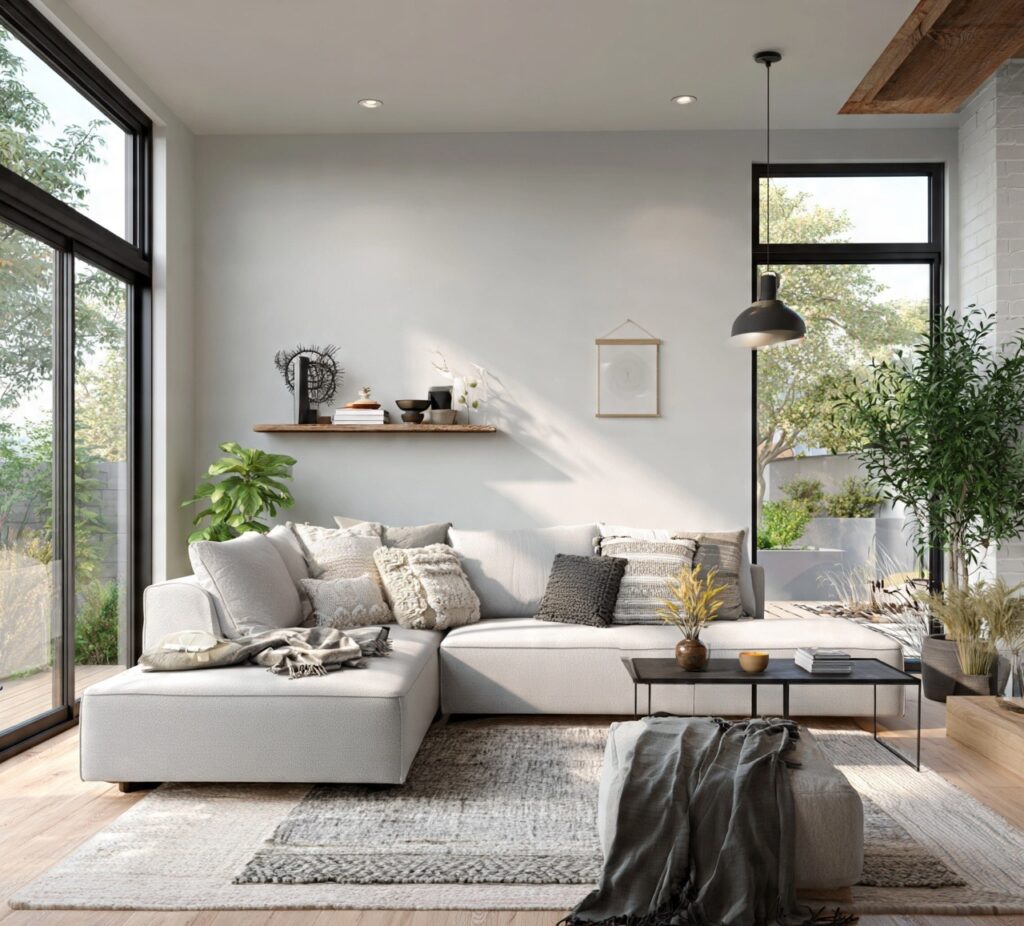
A low-profile sectional sofa sits closer to the ground and has a shorter back height than a traditional sofa, which reduces its visual bulk even at a similar overall footprint. This matters in small living rooms where a tall-backed sofa can block sightlines to windows or other parts of the room. Choosing a sectional with removable chaise pieces also adds flexibility, since the configuration can be adjusted if the room’s layout changes later.
15. Small Living Room Decor With Vertical Plant Ladder
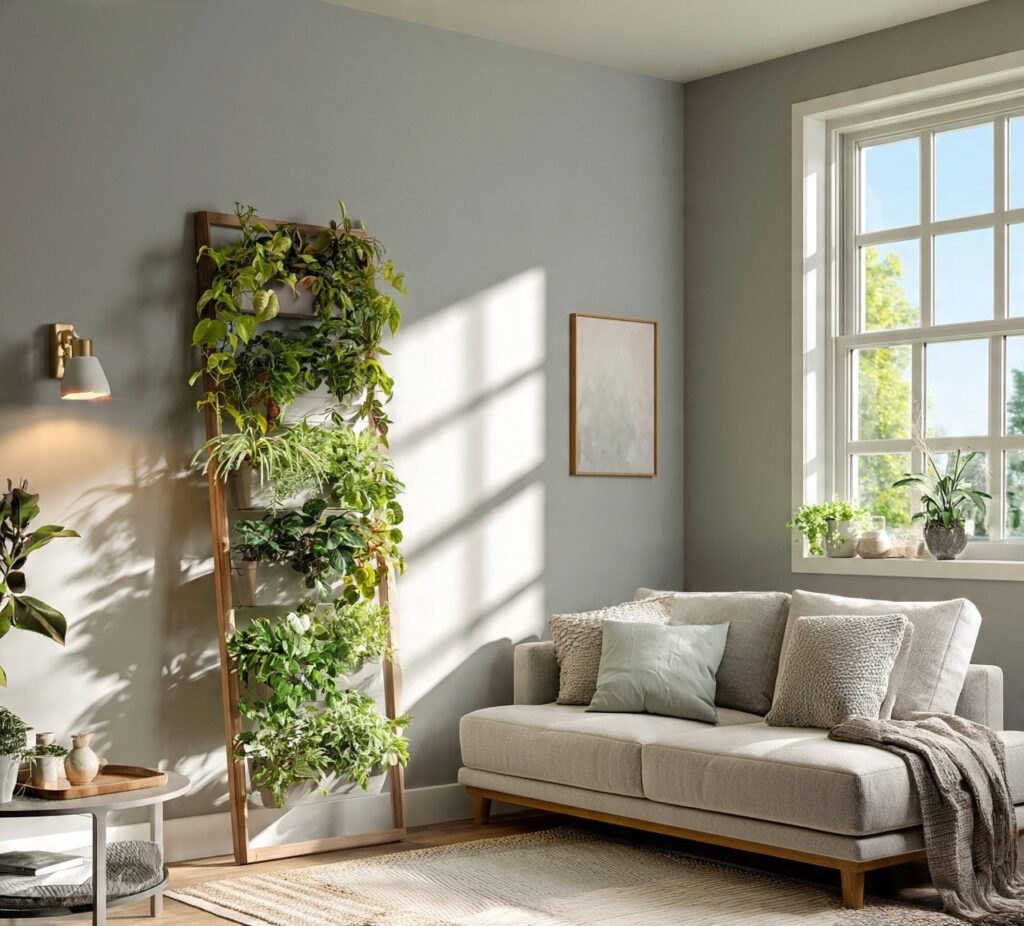
A plant ladder stands multiple potted plants at different heights along a single narrow footprint, rather than spreading pots across the floor individually. Among small living room decor ideas, this one adds greenery and texture without consuming much floor space, since the ladder’s base typically requires less than two square feet of clearance. Mixing plant sizes and pot materials along the ladder’s rungs keeps the display visually layered rather than uniform.
16. Woven Basket Storage Baskets
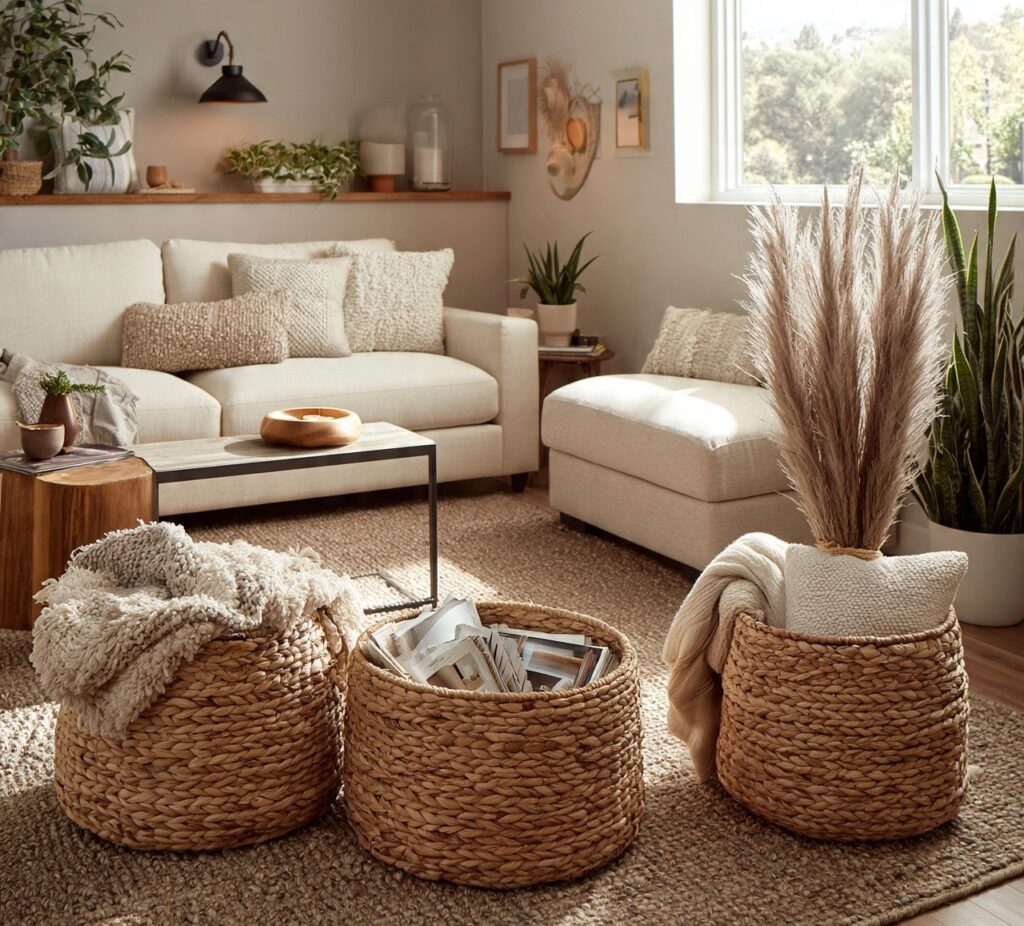
Woven storage baskets tucked beside a sofa or under a console table hold blankets, magazines, or toys without the visual weight of closed plastic bins. Seagrass and water hyacinth weaves are common choices for their durability, and their natural texture keeps the storage from reading as purely functional clutter. Stacking two or three baskets of graduated sizes in a single corner also doubles as a decor moment rather than an obvious storage solution.
Shop the Look
A low-profile sectional sofa in a light boucle fabric pairs well with a round wood accent table and a set of nesting coffee tables in matching finishes. Add a large leaning floor mirror opposite the main window, a vertical bookshelf unit in natural oak, and a storage ottoman with a tray-top lid for the center of the room. Finish with seagrass storage baskets and a plant ladder in a corner for texture and greenery.
Common Mistake to Avoid
The most common mistake in small living room decor is buying furniture sized for a showroom rather than the actual room, resulting in an oversized sofa or sectional that blocks walkways and leaves no room for a coffee table. This forces awkward workarounds, like squeezing past furniture or skipping a coffee table entirely. Measuring the room’s actual walking paths and leaving at least 30 inches of clearance before purchasing any large furniture piece prevents this problem before it starts.
FAQs
What furniture works best in a small living room?
Low-profile sofas, nesting tables, and multi-functional pieces like storage ottomans tend to work best because they reduce visual bulk while still providing full function. Furniture with visible legs, rather than pieces that sit flush to the floor, also helps a small living room feel more open since light can pass underneath. Choosing fewer, well-scaled pieces over many small accent pieces keeps the room from feeling cluttered.
What colors make a small living room look bigger?
Light neutral tones like warm white, soft greige, and pale sand reflect more light than dark colors, which helps a small living room feel more open and airy. Painting trim and walls a similar tone, rather than creating high contrast between them, also removes visual breaks that can make a room feel more chopped up. Adding texture through textiles keeps an all-light palette from feeling flat or sterile.
How do I add storage to a small living room without clutter?
Multi-functional furniture like storage ottomans, wall-mounted shelving, and woven baskets add storage capacity without introducing bulky, single-purpose furniture. Vertical storage, such as tall bookshelves or corner units, also takes advantage of unused wall space rather than competing for floor area. Grouping smaller items into baskets or bins, rather than leaving them out individually, keeps the room feeling organized even with a full storage load.
Should I use one large rug or multiple small rugs in a small living room?
One larger rug generally works better in a small living room because it visually unifies the seating area and makes the room feel more spacious than several smaller, disconnected rugs would. The rug should be large enough that at least the front legs of the sofa and chairs sit on it, rather than floating in the middle of the floor. A single well-sized rug also simplifies the room’s overall visual pattern, which matters more in a compact space.
How can I make a small living room feel less cramped?
Floating furniture slightly away from the walls, using a large mirror to bounce light, and choosing furniture with visible legs all contribute to a less cramped feeling in a small living room. Keeping the color palette light and consistent throughout the space, rather than introducing multiple contrasting tones, also reduces visual clutter. Finally, prioritizing fewer, well-chosen pieces over filling every corner with furniture or decor keeps the room feeling intentional rather than crowded.
Conclusion
Small living room decor comes down to scale, sightlines, and smart storage more than the number of decor pieces in the room. A few well-chosen changes floating the furniture, adding a large mirror, or swapping in a low-profile sofa can make more difference than a full furniture overhaul. Save this list to Pinterest for later, and check out our related post on small bedroom decor ideas for more space-conscious design tips.