12 Trending Minimalist Living Room Ideas Anyone Can Actually Live With
Plenty of minimalist living room ideas online look great in photos but fall apart the moment real life moves in mail piles up, remotes go missing, blankets end up on the floor. This guide walks through twelve ideas built for actual daily use, covering furniture, lighting, storage, and finishing details, so the room stays functional as well as visually calm once the styling photos are done.
Trend & Background
The renewed interest in minimalist living room ideas has tracked closely with smaller urban housing, rising furniture costs, and a general shift toward buying fewer, better-made pieces instead of frequently replacing cheaper ones. Influences like Japandi and Scandinavian design have also pushed minimalism away from stark white rooms and toward warmer, more textured interpretations. This matters now because more people are furnishing smaller spaces long-term, which makes multi-functional furniture and smart storage less of a trend and more of a practical necessity.
Key Takeaways
- Practical minimalist living room ideas focus on multi-purpose furniture, hidden storage, and a tight material palette rather than simply owning fewer things.
- Texture and lighting layers are what keep a pared-back room from feeling stark or unfinished.
- Natural materials like wood, wool, and linen add warmth without breaking the room’s restrained look.
- Small, deliberate choices cord management, one statement piece, a single plant often matter more than large furniture purchases.
1. Slipcovered Sofa
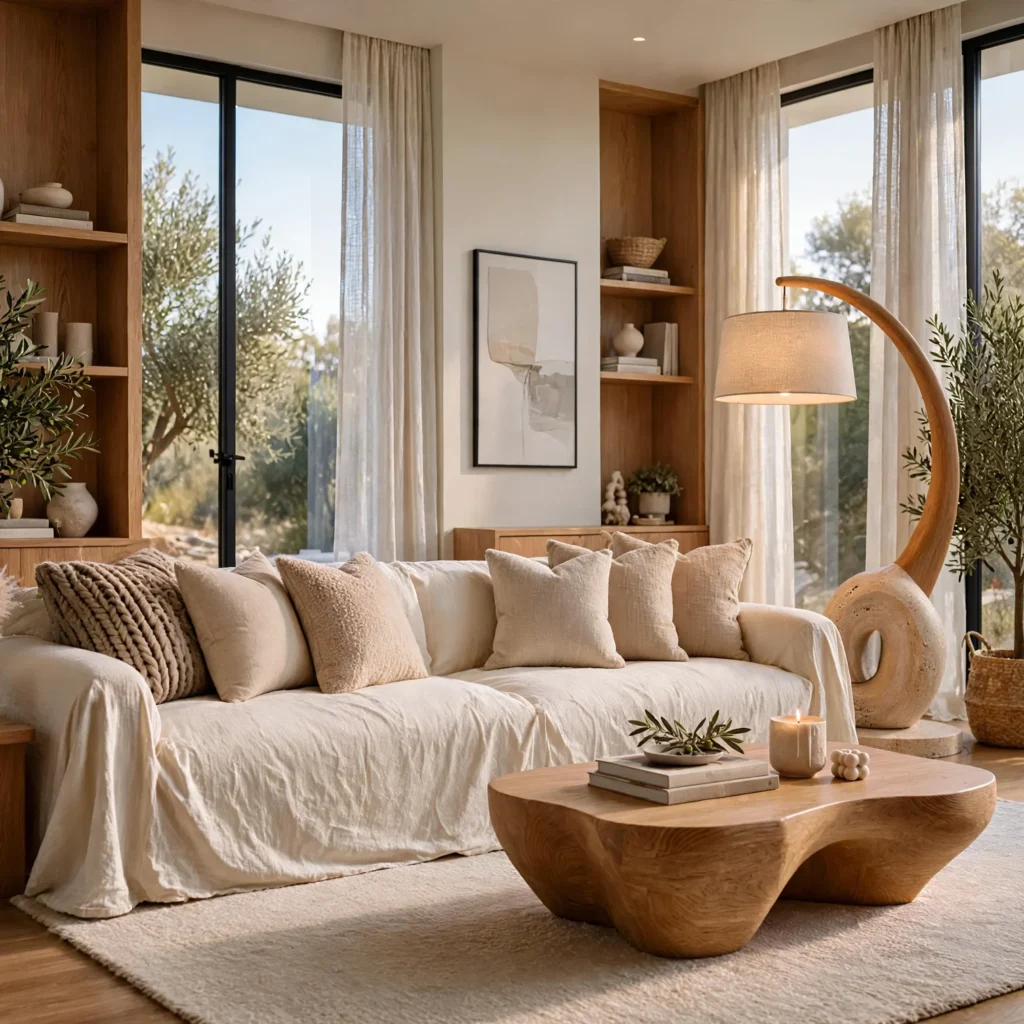
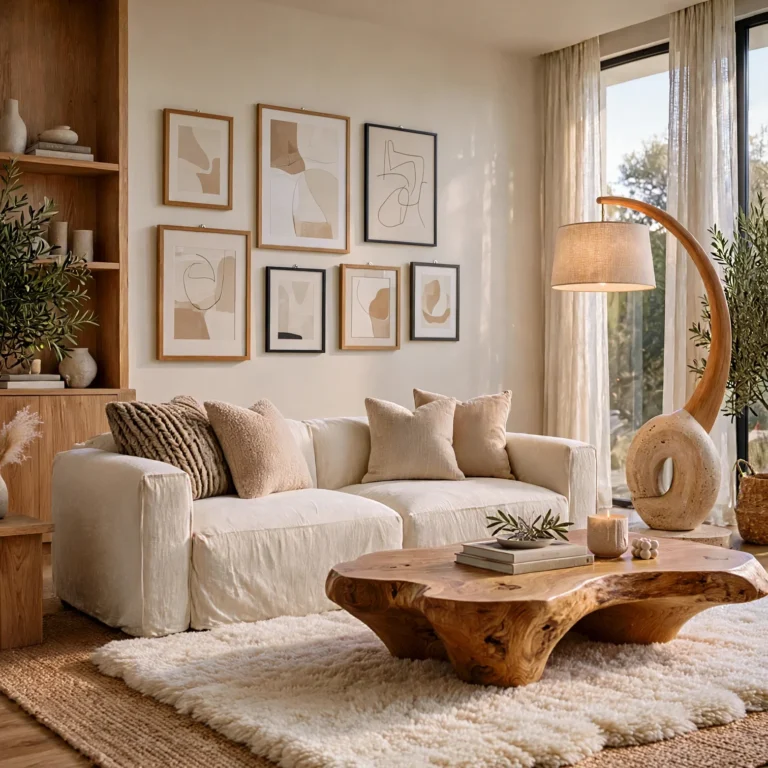
A slipcovered sofa in a washable linen or cotton blend keeps the clean lines of a minimalist living room intact while staying practical for households with kids or pets. Choose a neutral tone like oatmeal or light gray so the slipcover reads as part of the design rather than a protective afterthought. This idea solves one of the biggest real-world complaints about minimalist furniture, which is that light, unstructured fabrics show stains and wear quickly.
2. Nesting Side Tables
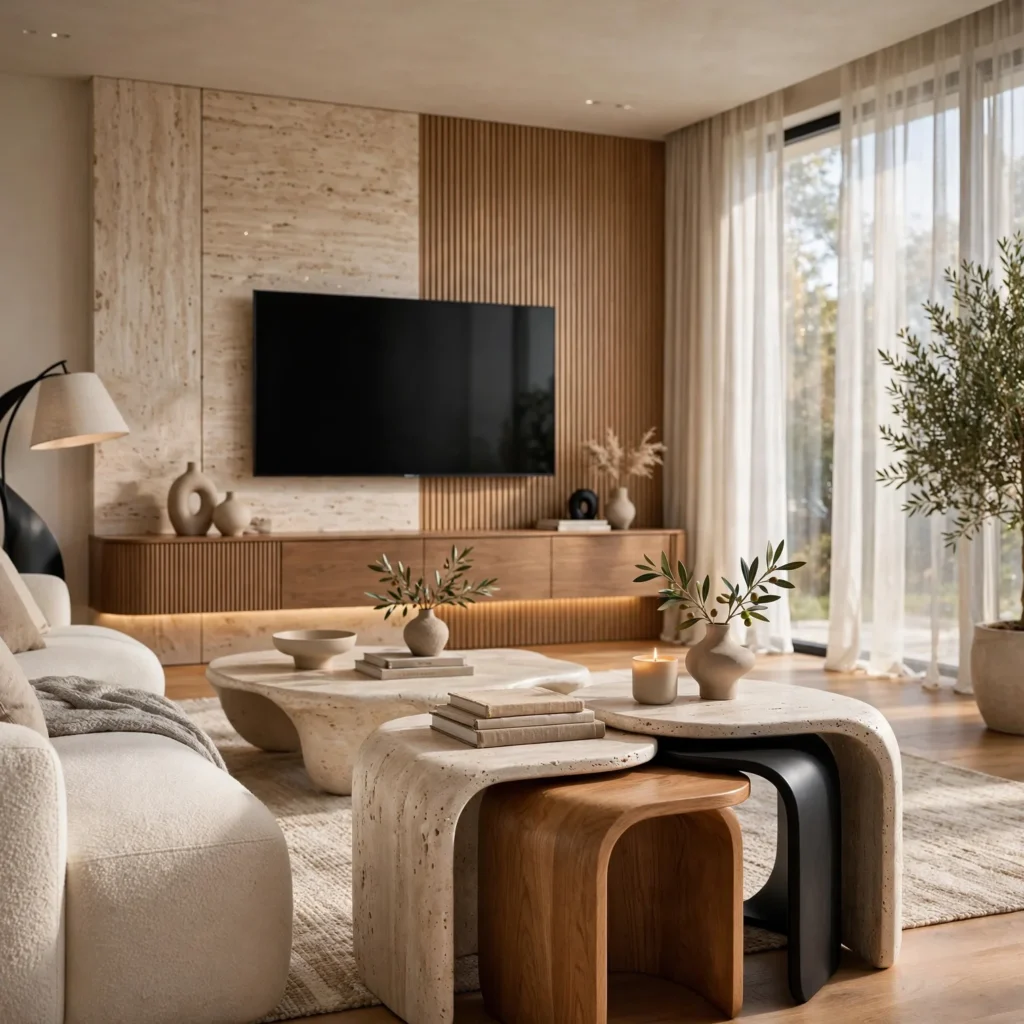
A set of two or three nesting tables in a single material, such as solid oak or blackened steel, gives you flexible surface space without permanently occupying floor area. Pull them out for extra tables during gatherings, then tuck them away when not needed. This idea works particularly well in smaller minimalist living room layouts, where a single fixed side table often isn’t enough surface space for everyday use.
3. Wall-Mounted Reading Nook
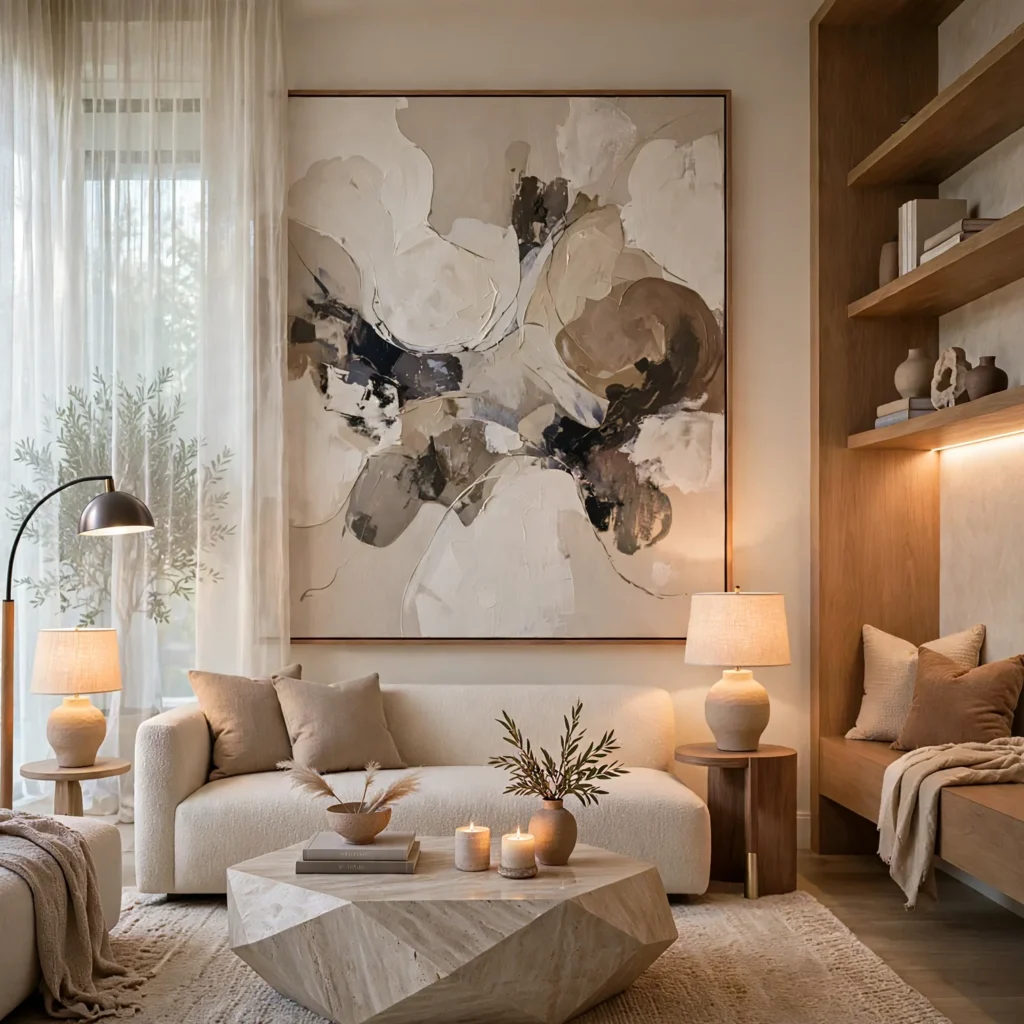
A single wall-mounted sconce paired with a compact accent chair creates a reading nook without requiring a floor lamp or side table. Choose a sconce with an adjustable arm so light can be directed exactly where needed, and position the chair near a window if possible. This setup adds a clear functional zone to the room while keeping the overall furniture count low, which matters for the open, uncluttered feel central to minimalist living room ideas.
Discover smart storage, neutral color palettes, and modern furniture in our modern minimalist living room guides.
4. Multi-Purpose Storage Bench
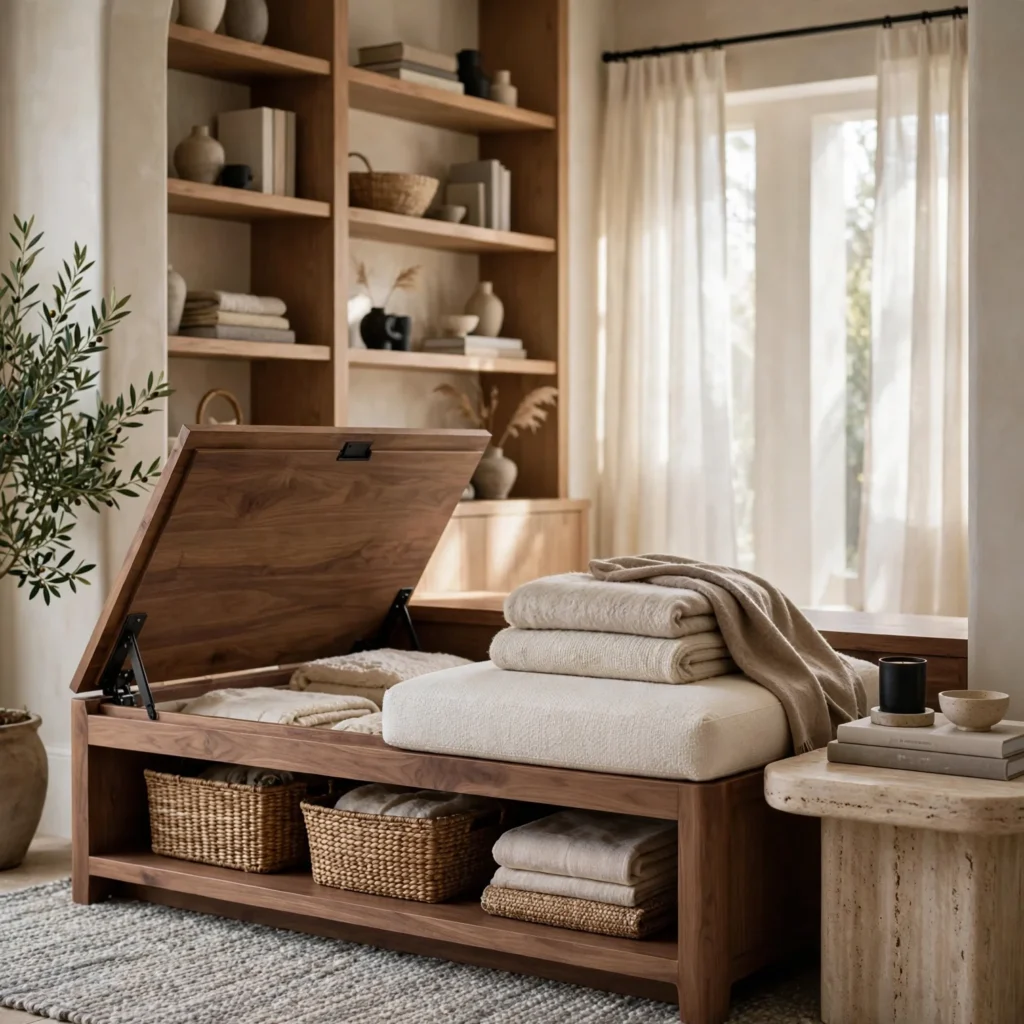
A storage bench with a hinged or lift-top lid placed along a wall or under a window doubles as extra seating and a place to stash blankets, board games, or seasonal items. Choose a bench upholstered in a durable performance fabric to match the sofa’s material family. This is one of the most practical minimalist living room ideas for renters or smaller households, since it solves storage needs without adding a separate cabinet or shelving unit.
| Room Size | Suggested Bench Length |
| Small (under 150 sq ft) | 36″–42″ |
| Medium (150–250 sq ft) | 48″–54″ |
| Large (250+ sq ft) | 60″+ |
5. Neutral Textured Rug
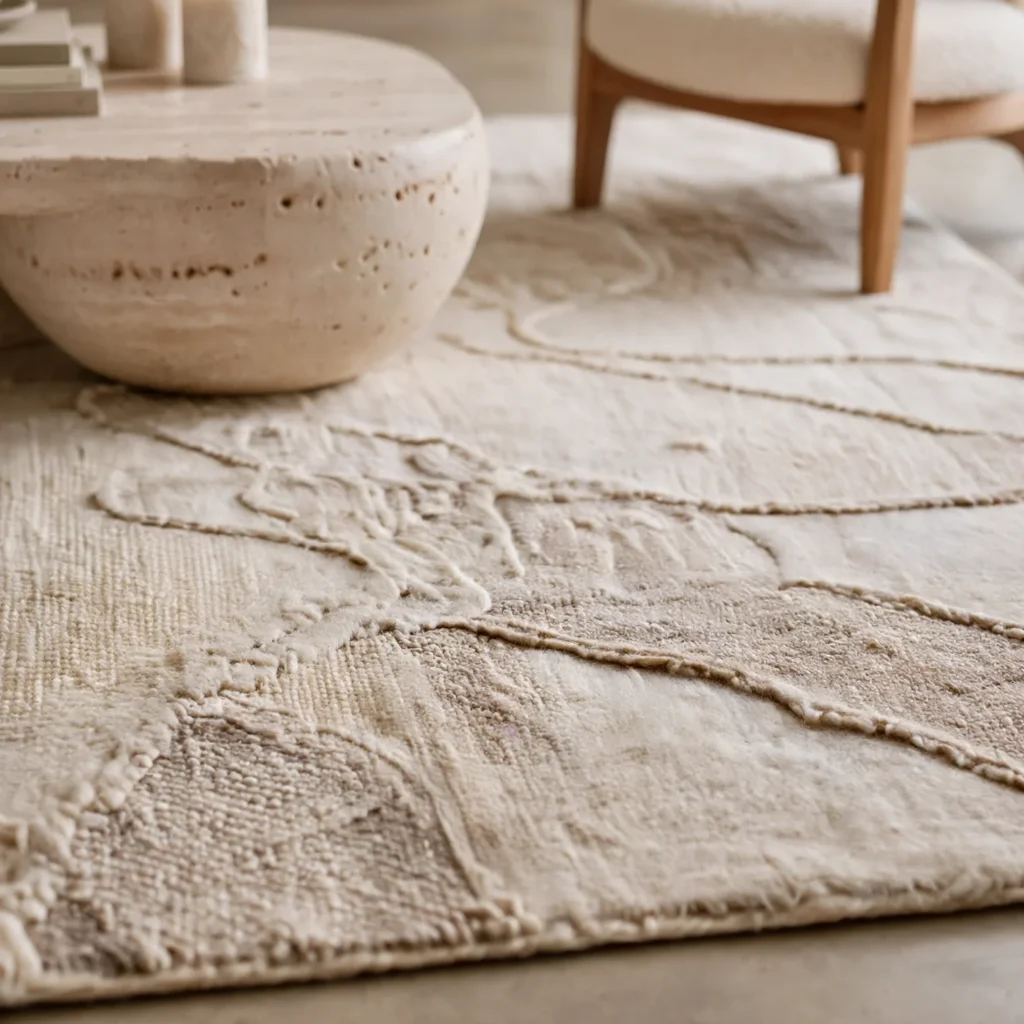
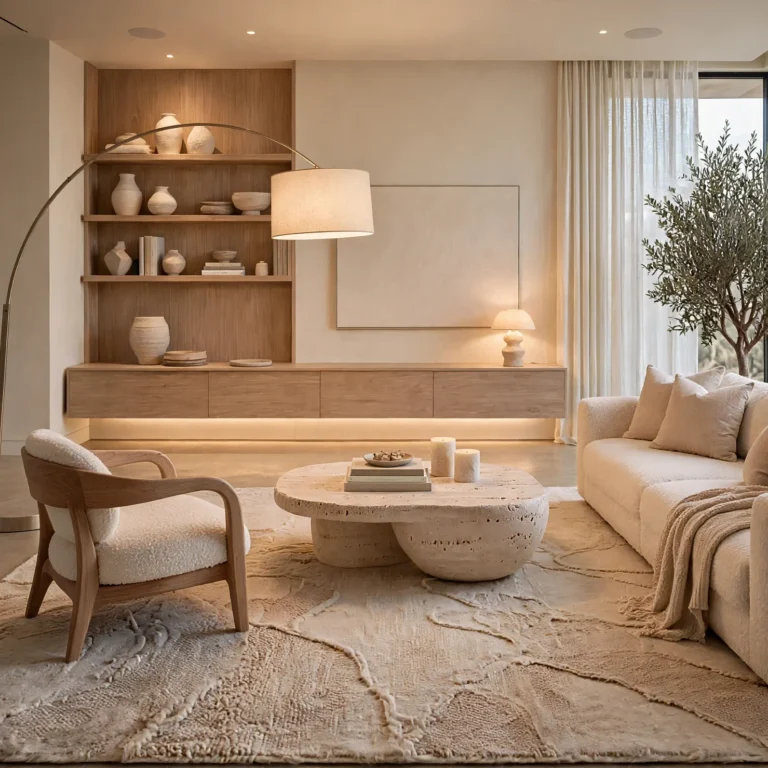
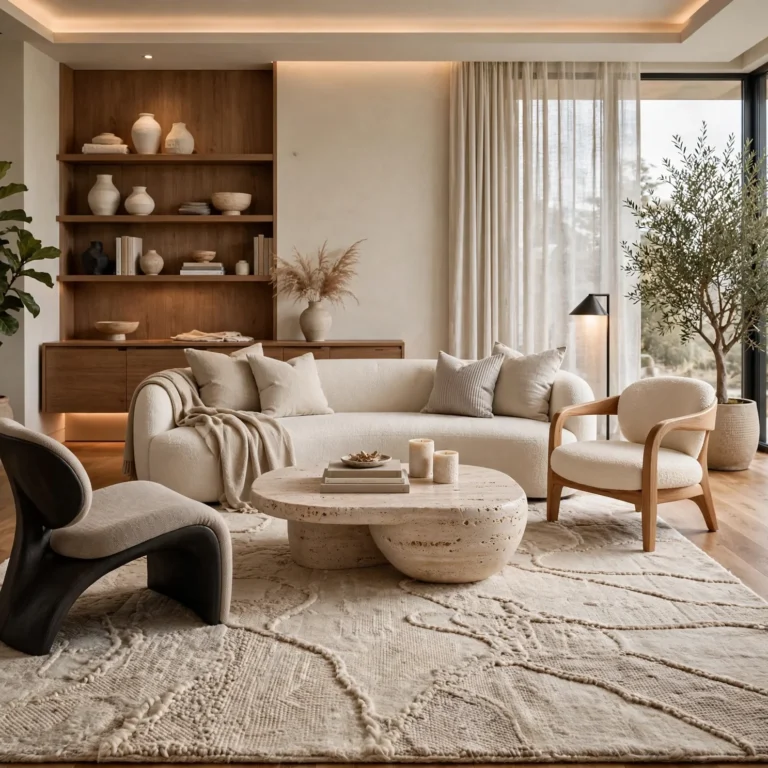
A rug in a subtle textured weave, like a chunky wool boucle or a jute-cotton blend, in ivory, sand, or warm gray adds visual depth without introducing pattern or color contrast. Size it so the front legs of major seating pieces rest on it, which reads as an intentional design choice rather than an afterthought. This is one of the simplest minimalist living room ideas to execute, since a rug swap alone can noticeably warm up a room.
6. Floating Wall Shelves
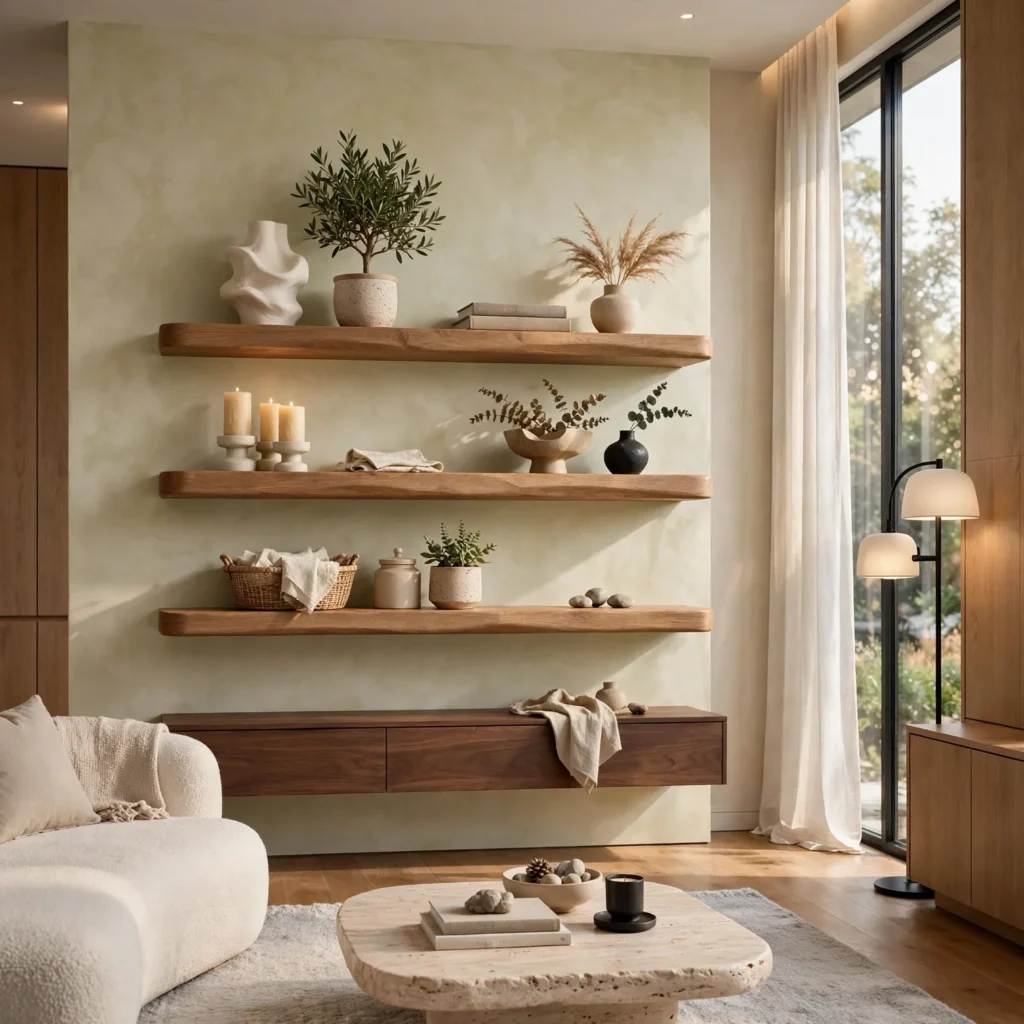
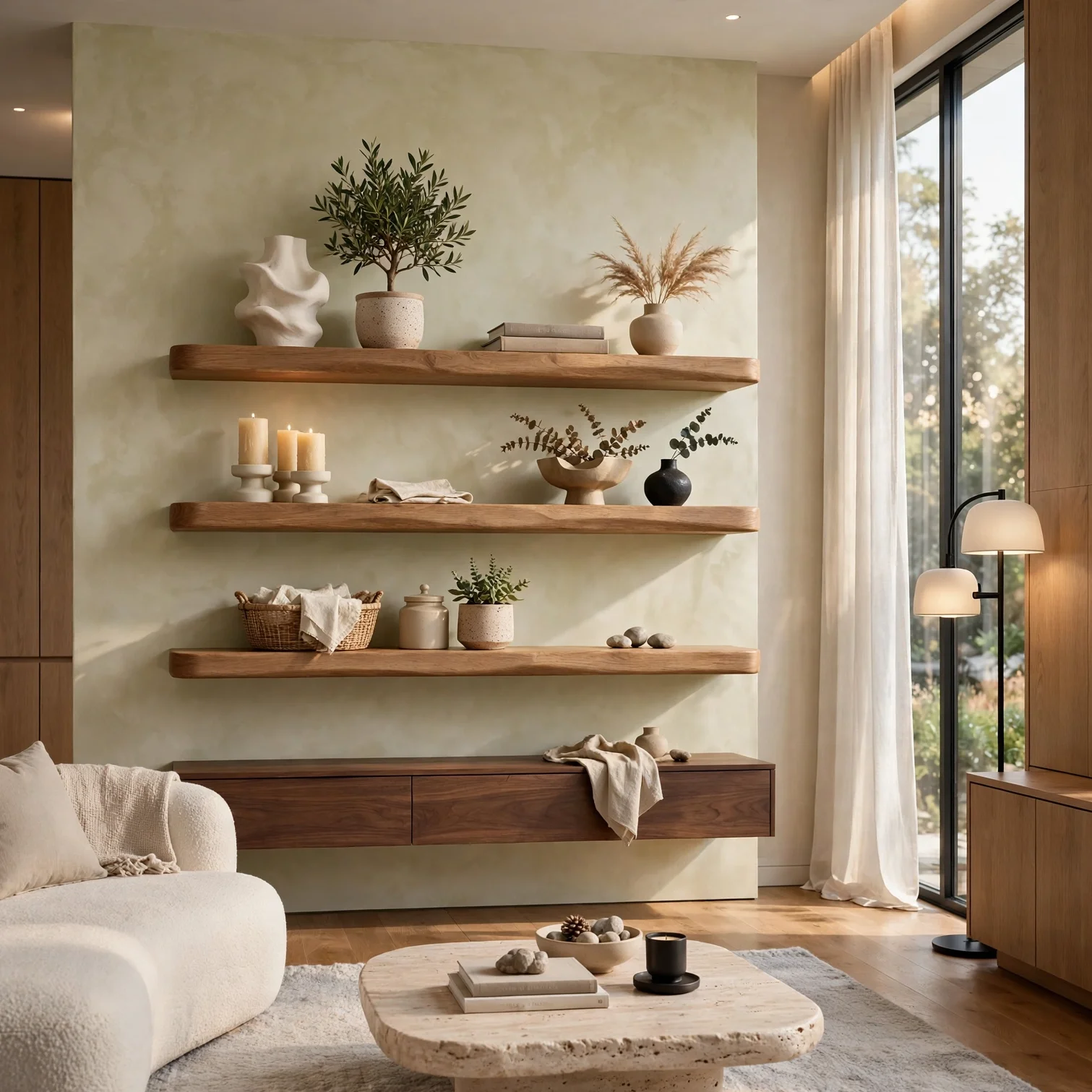
A set of two or three floating shelves in a single finish gives you display space for books and a few curated objects without the visual bulk of a full bookcase. Keep each shelf to three to five items maximum, mixing in one ceramic piece and a small plant for texture. This is a space-efficient solution for smaller rooms where a traditional bookshelf would otherwise eat into limited floor space.
7. Warm Wood Coffee Table
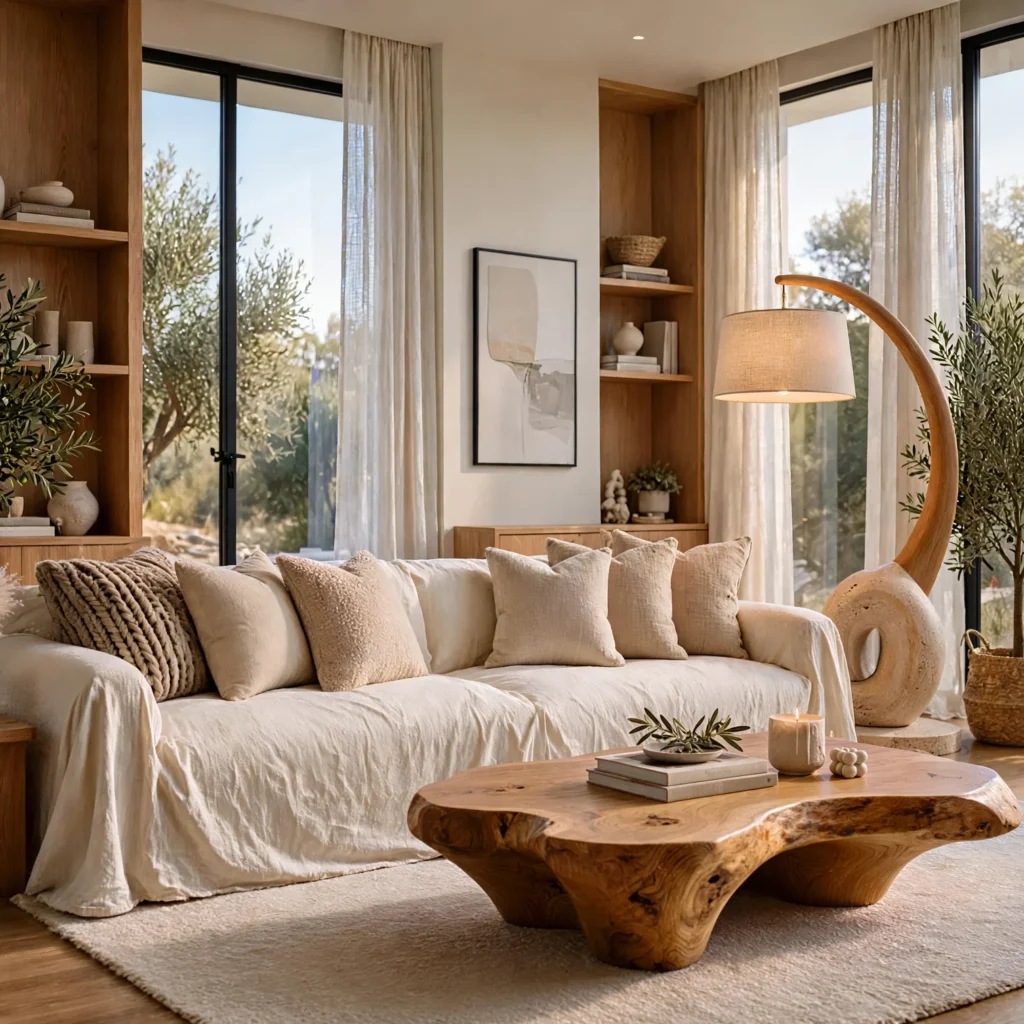
A coffee table in solid oak, ash, or walnut with simple, rounded legs brings warmth into a room that might otherwise lean too cool or clinical. Avoid glass or heavily lacquered surfaces, which tend to read as colder and show fingerprints and dust more visibly. This idea pairs particularly well with a textured rug and linen curtains, since the combination of natural materials is central to most successful minimalist living room ideas.
8. Dimmable Layered Lighting
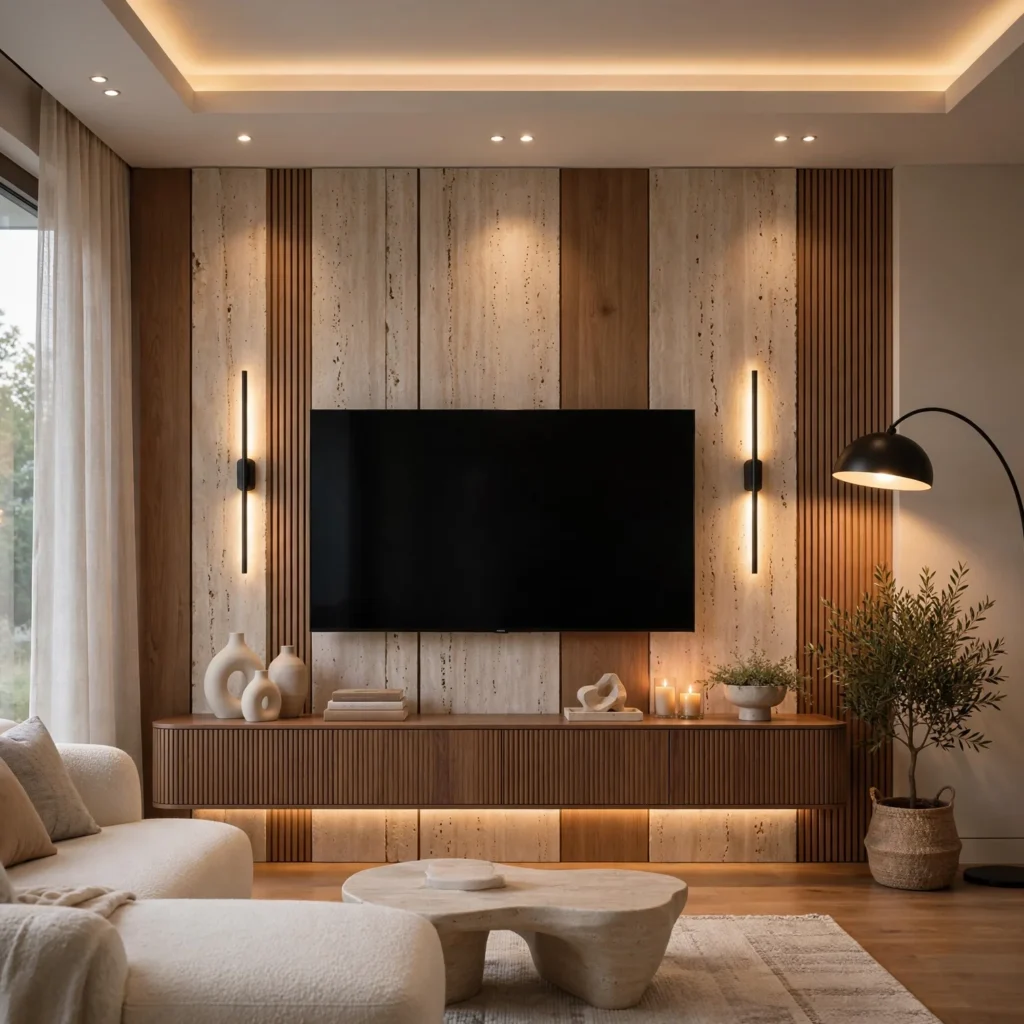
Combine a floor lamp, a table lamp, and dimmable overhead lighting so the room can shift from bright and functional during the day to warm and relaxed in the evening. Stick to two lighting finishes maximum, such as brushed brass and matte black, to keep the look cohesive. This layered approach is consistently one of the highest-impact minimalist living room ideas, since lighting does more to set mood than any single furniture piece.
9. Linen Curtain Panels
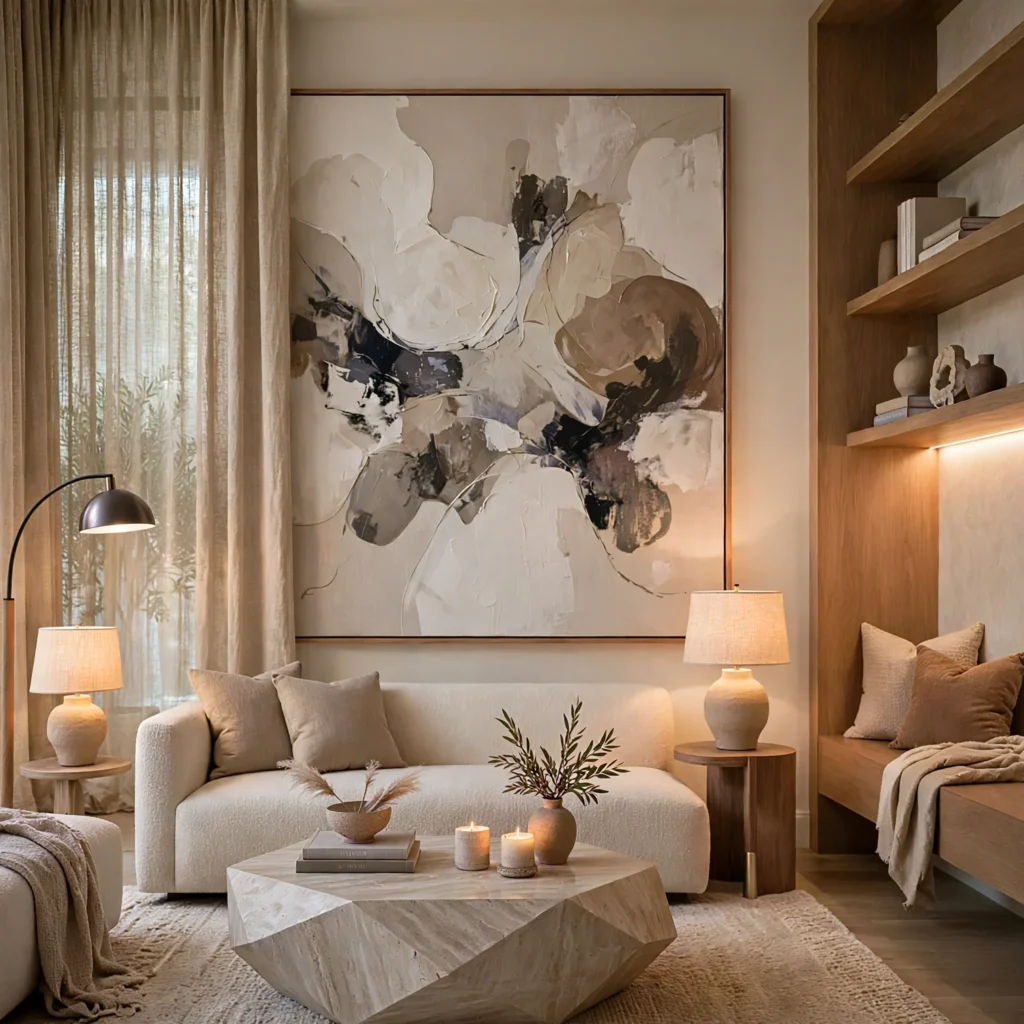
Floor-to-ceiling linen curtain panels in an off-white or oatmeal tone soften hard architectural lines and diffuse natural light without blocking it. Mount the curtain rod as close to the ceiling as possible, even if the window itself is shorter, to visually elongate the walls. This small, low-cost adjustment consistently ranks among the more effective minimalist living room ideas for making a room feel taller and more finished.
10. Single Statement Plant
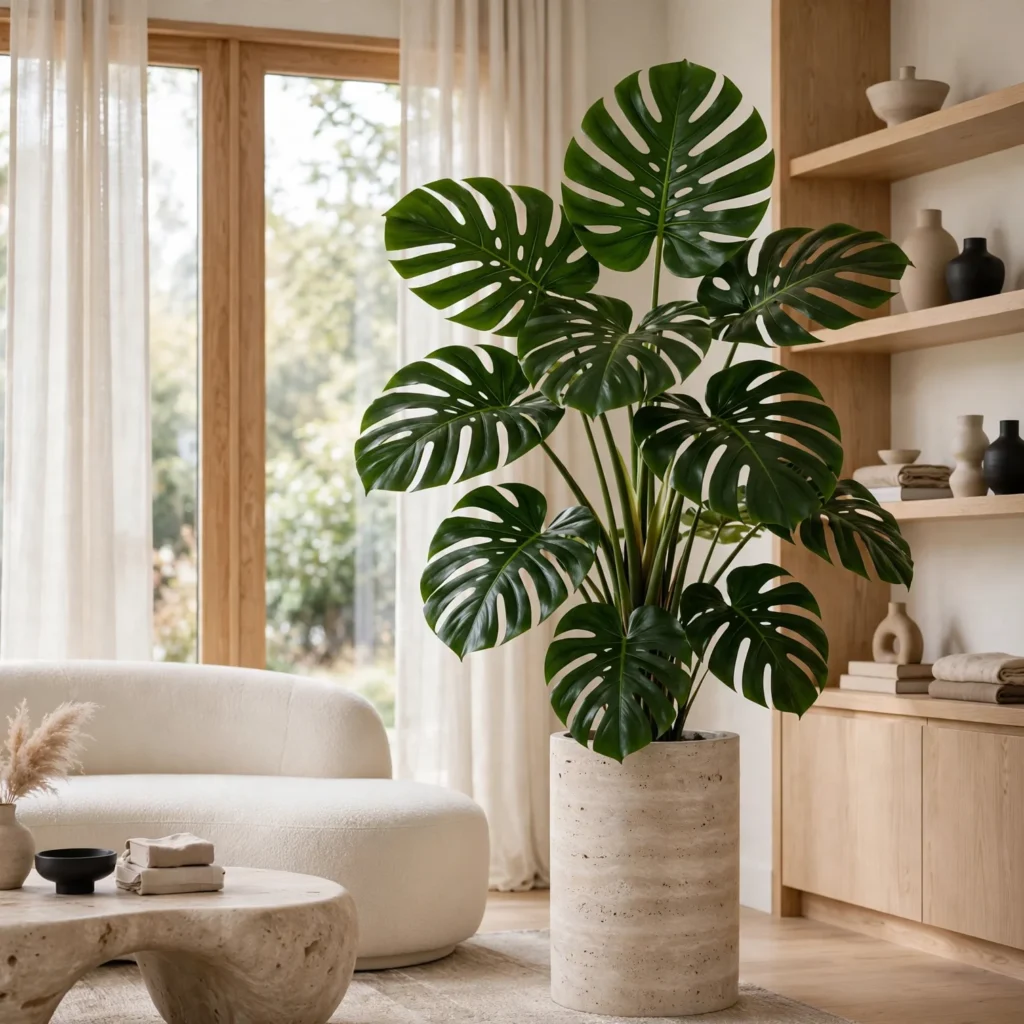
One large plant, such as a fiddle leaf fig or olive tree, in a simple terracotta or concrete planter introduces life and organic texture into the room. Avoid clustering several smaller plants across surfaces, which can undercut the pared-back look this style relies on. Placed near a window or in an empty corner, a single well-chosen plant does more visual work than a scattered collection of smaller greenery.
11. Concealed Media Storage
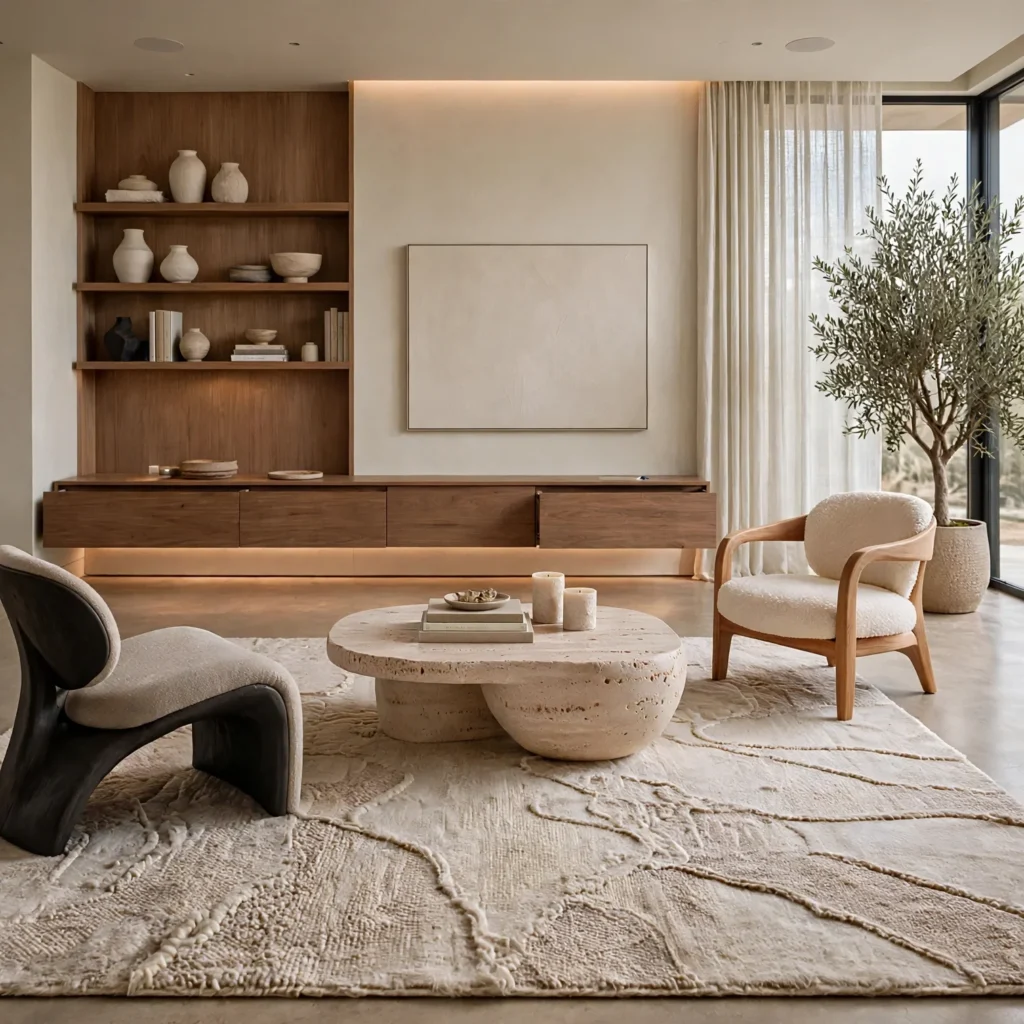
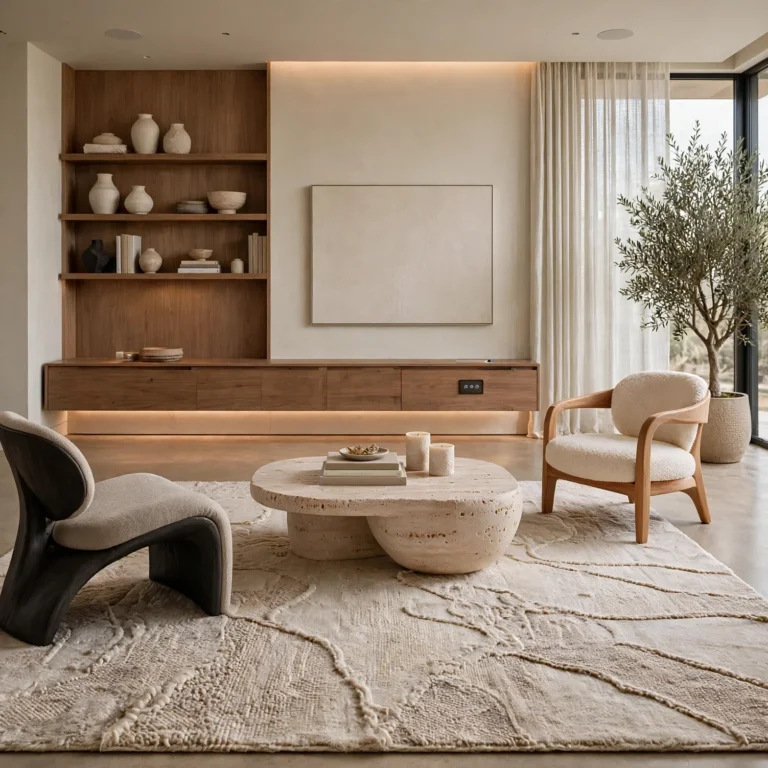
A media console with closed cabinets or push-to-open drawers keeps remotes, game consoles, and cables out of sight, preserving the room’s clean lines. Choose a console in matte wood or lacquer with no visible hardware for a more seamless look. This is one of the more overlooked minimalist living room ideas, since visible electronics and cords are often the biggest giveaway that a room isn’t as tidy as it appears.
12. Hidden Cable Management
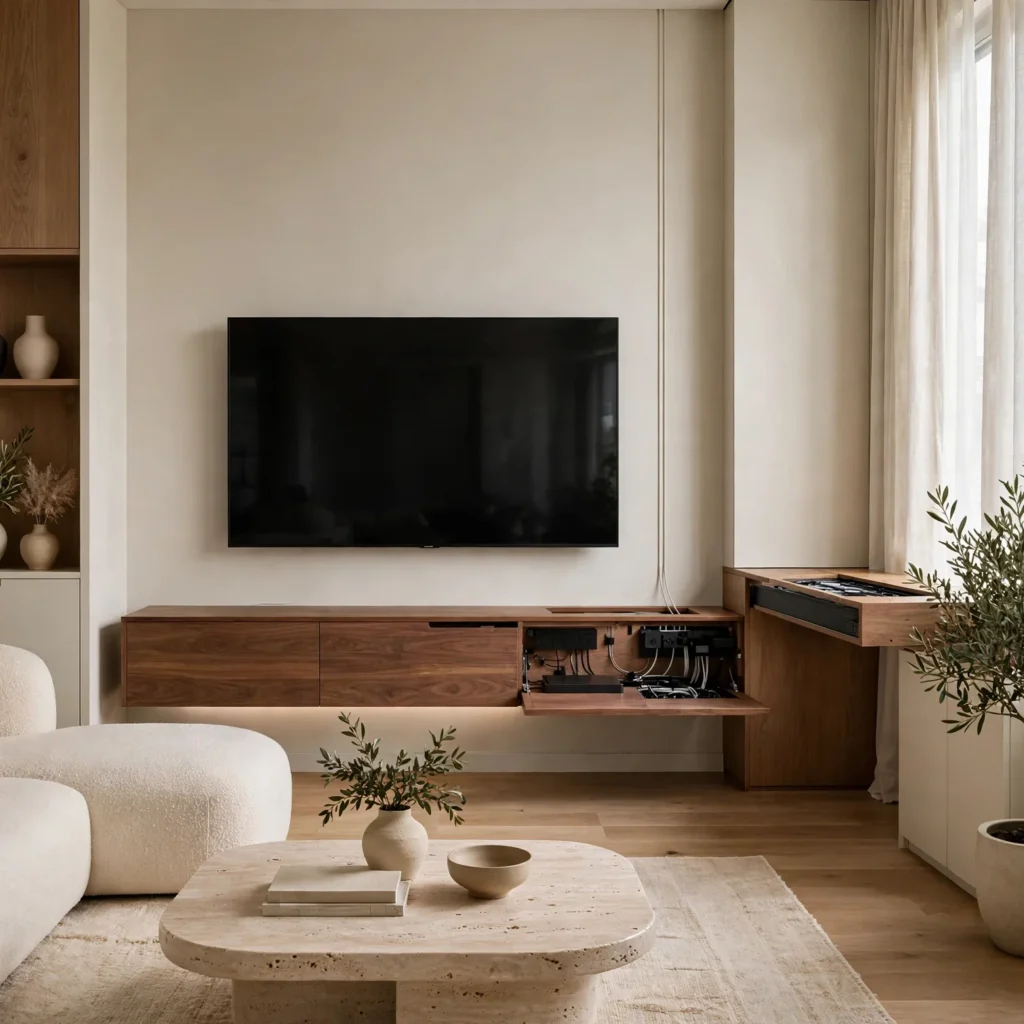
Route all visible cords behind the console, through in-wall channels, or inside a cord cover painted to match the wall so no stray wires interrupt the room’s visual lines. Even an inexpensive cord channel kit can make a noticeable difference in how finished a room looks. Of all the minimalist living room ideas on this list, this is the lowest-cost and most frequently skipped, despite having an outsized impact on the finished result.
Shop the Look
Consider a slipcovered linen sofa from Pottery Barn or Article, a set of nesting oak side tables from West Elm, a jute-wool blend rug from Rugs USA, a matte black adjustable wall sconce from CB2, and closed-cabinet media console in white oak from Crate & Barrel.
Common Mistake to Avoid
The most common mistake with minimalist living room ideas is removing storage entirely in pursuit of an empty look, which then forces clutter into visible piles once daily life resumes. A room with no storage bench, no closed cabinet, and no designated spot for remotes or mail will rarely stay tidy past the first week. The most successful minimalist rooms build storage into the design from the start rather than treating it as an afterthought to add later.
FAQs
What are the easiest minimalist living room ideas to start with?
The lowest-effort, highest-impact changes are usually swapping in a textured neutral rug, adding layered lighting with a floor and table lamp, and clearing visible cords with a simple cable management kit. These changes require no new furniture purchases and can be done in a weekend. Starting here before investing in a new sofa or coffee table lets you test how the overall look feels in your space.
How do you keep a minimalist living room from feeling empty?
Focus on texture and warmth rather than object count by incorporating a wool rug, linen curtains, warm wood tones, and at least one plant. Avoid an all-white, all-hard-surface room with a single overhead light, which is the combination most likely to read as unfinished rather than intentional. Layered, dimmable lighting in particular does a lot to make a sparse room feel considered instead of empty.
What furniture works best for small minimalist living rooms?
Multi-purpose pieces like a storage bench, nesting side tables, and a slipcovered sofa work particularly well, since they solve storage and seating needs without adding extra furniture count. Wall-mounted shelving and sconces also help by keeping the floor plan open. The goal is choosing furniture that serves more than one function, which matters more in smaller rooms where every piece takes up proportionally more visual and physical space.
Do minimalist living rooms need to be all white or gray?
No. While a neutral base palette is common, warm tones like oatmeal, sand, and greige paired with natural wood accents tend to feel more livable than a strictly white or gray scheme. Many of the most successful minimalist living room ideas lean into warmth through material choice rather than avoiding color altogether. A tonal palette with layered neutrals usually reads as more intentional than a stark black-and-white scheme.
How much does it cost to redo a living room in a minimalist style?
Cost varies widely depending on whether you’re starting from scratch or adjusting an existing room, but budget-friendly minimalist living room ideas like a rug swap, cord management, and decluttering surfaces can be done for under a few hundred dollars. Larger investments like a new sofa or coffee table typically account for the bulk of any budget, since minimalist rooms rely on fewer, better pieces rather than many inexpensive ones.
Conclusion
The best minimalist living room ideas balance restraint with real-world function, using multi-purpose furniture, layered lighting, and a few well-chosen natural materials to keep the space both calm and livable. Start small with a rug, lighting, or cord management before committing to bigger furniture changes. Save this guide to Pinterest for your next redesign, or check out our related post on modern minimalist living room ideas for a sharper, more architectural take on the same style.