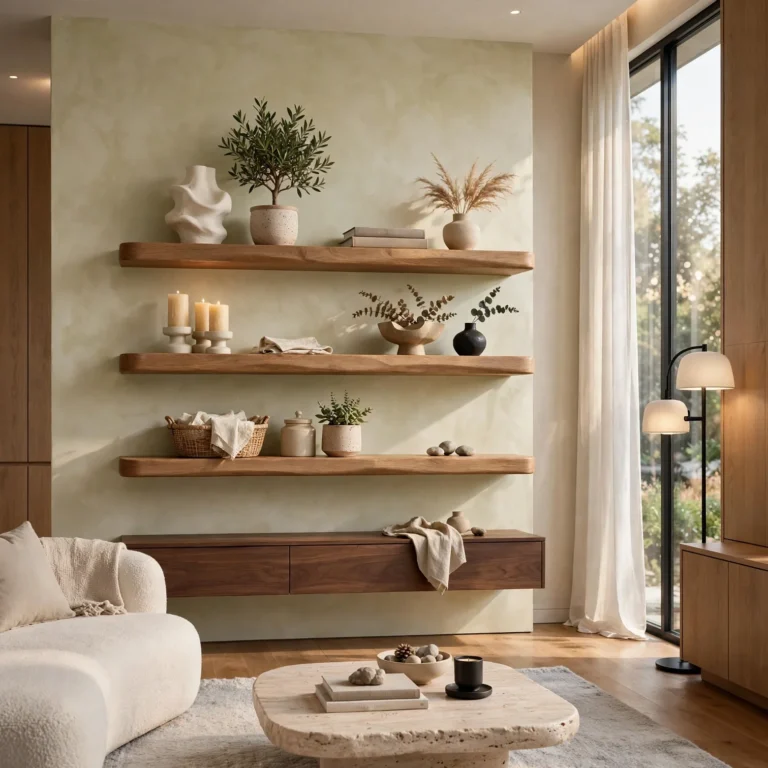
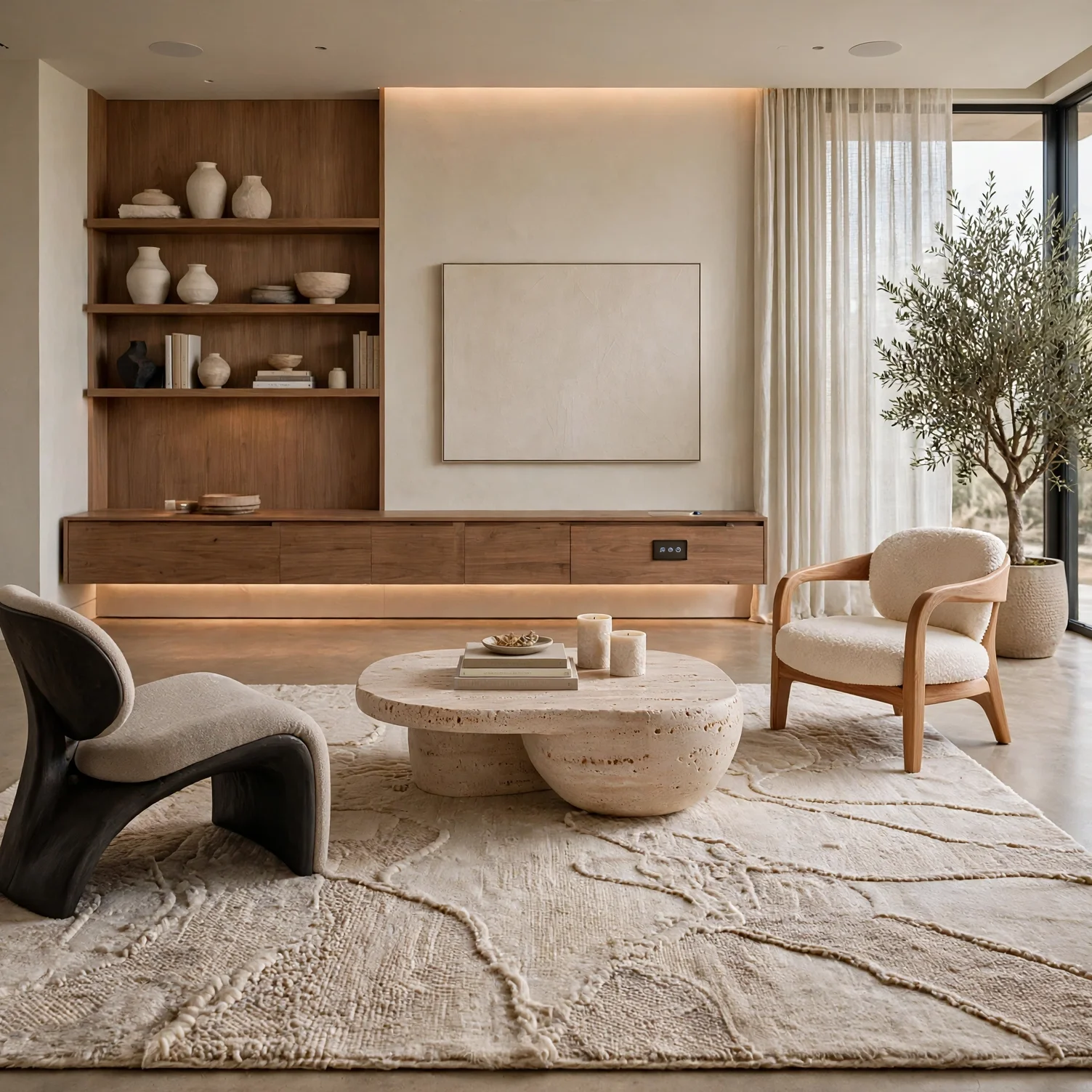
12 Trending Modern Minimalist Living Room Ideas for Small Spaces
A modern minimalist living room takes the restraint of traditional minimalism and pairs it with sharper, more architectural lines — matte black steel, poured concrete, large-format tile — instead of only soft, organic textures. This guide covers twelve practical ideas for building that look, from furniture selection to lighting and finishes, so the space reads as deliberately contemporary rather than simply empty or unfinished.
Trend & Background
Modern minimalism has gained traction as more homeowners move into smaller urban units where every piece of furniture needs to justify its footprint. Unlike the softer, wood-heavy Japandi aesthetic, the modern minimalist living room leans into sharper geometry, monochrome palettes, and industrial materials like blackened steel and polished concrete. This matters now because open-plan apartments and condos increasingly demand furniture that multitasks, making the modern minimalist approach both a style choice and a practical response to shrinking living spaces.
Key Takeaways
- A modern minimalist living room combines clean architectural lines with warm materials, avoiding the sterile look often associated with minimalism.
- Multi-functional furniture and hidden storage keep the aesthetic intact even in smaller square footage.
- Matte black, brushed metal, and natural stone accents give the room a contemporary edge without adding clutter.
- Lighting design and a tight, cohesive color palette do more to define the style than the number of objects in the room.
1. Modular Sectional Sofa
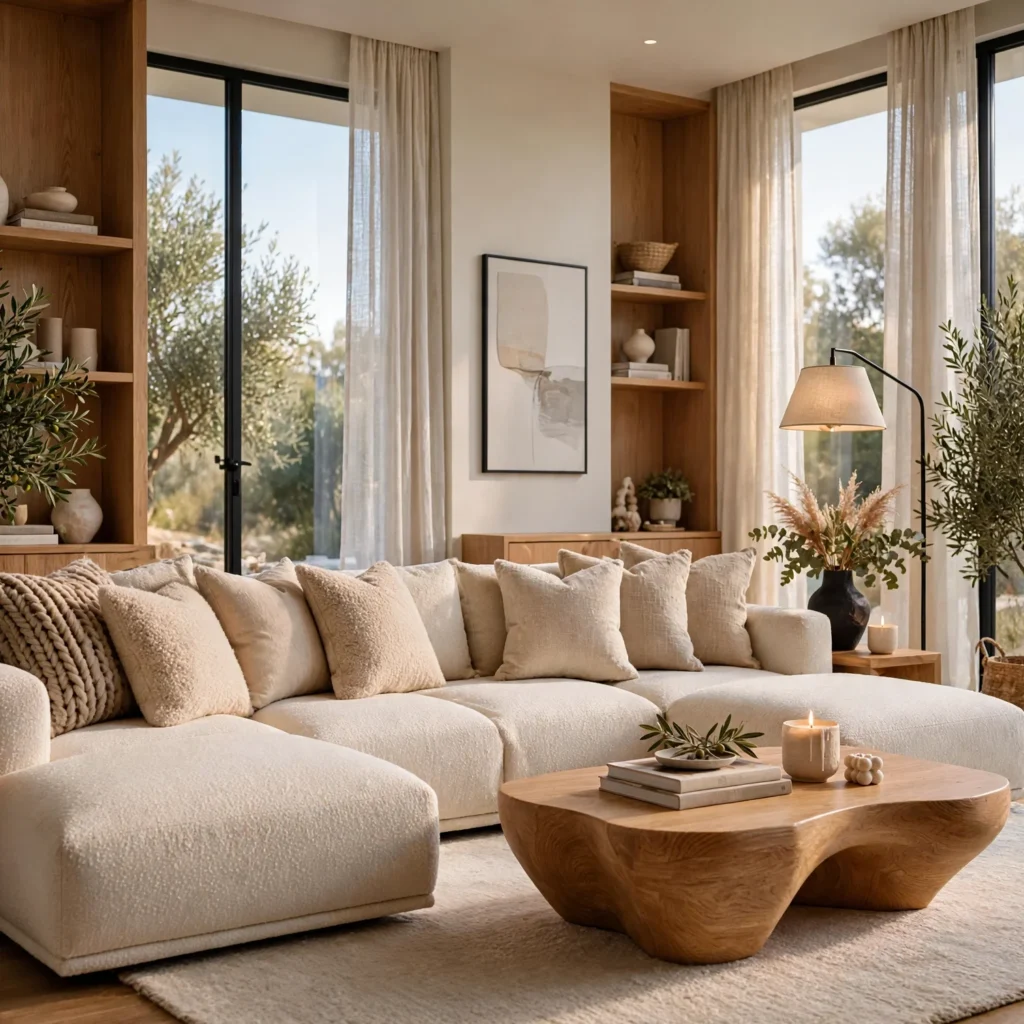
A modular sectional in a single neutral tone — charcoal, ivory, or graphite — lets you reconfigure the seating layout as needs change without adding extra furniture pieces. Choose a design with clean, boxy cushions and thin metal or matte black legs rather than skirted bases. This flexibility matters most in smaller modern minimalist living rooms, where one piece of furniture often needs to serve multiple layouts, from movie nights to hosting guests.
2. Matte Black Media Wall
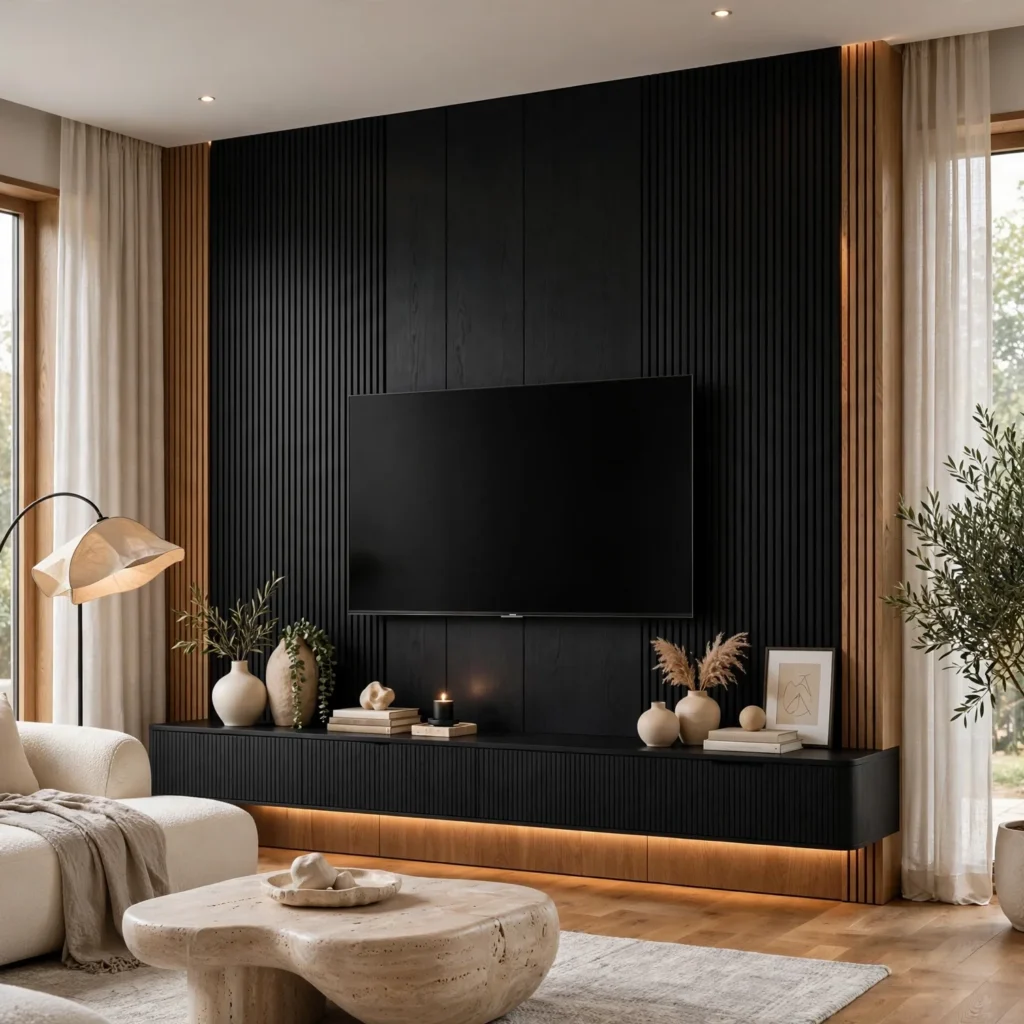
A media wall finished in matte black paint or black-stained wood paneling creates a strong focal point while keeping the television visually absorbed into the background rather than standing out as a bulky object. Pair it with integrated floating shelves in the same finish for a seamless look. This works particularly well in open-plan spaces where the media wall needs to anchor the room without competing with the kitchen or dining area nearby.
3. Geometric Coffee Table
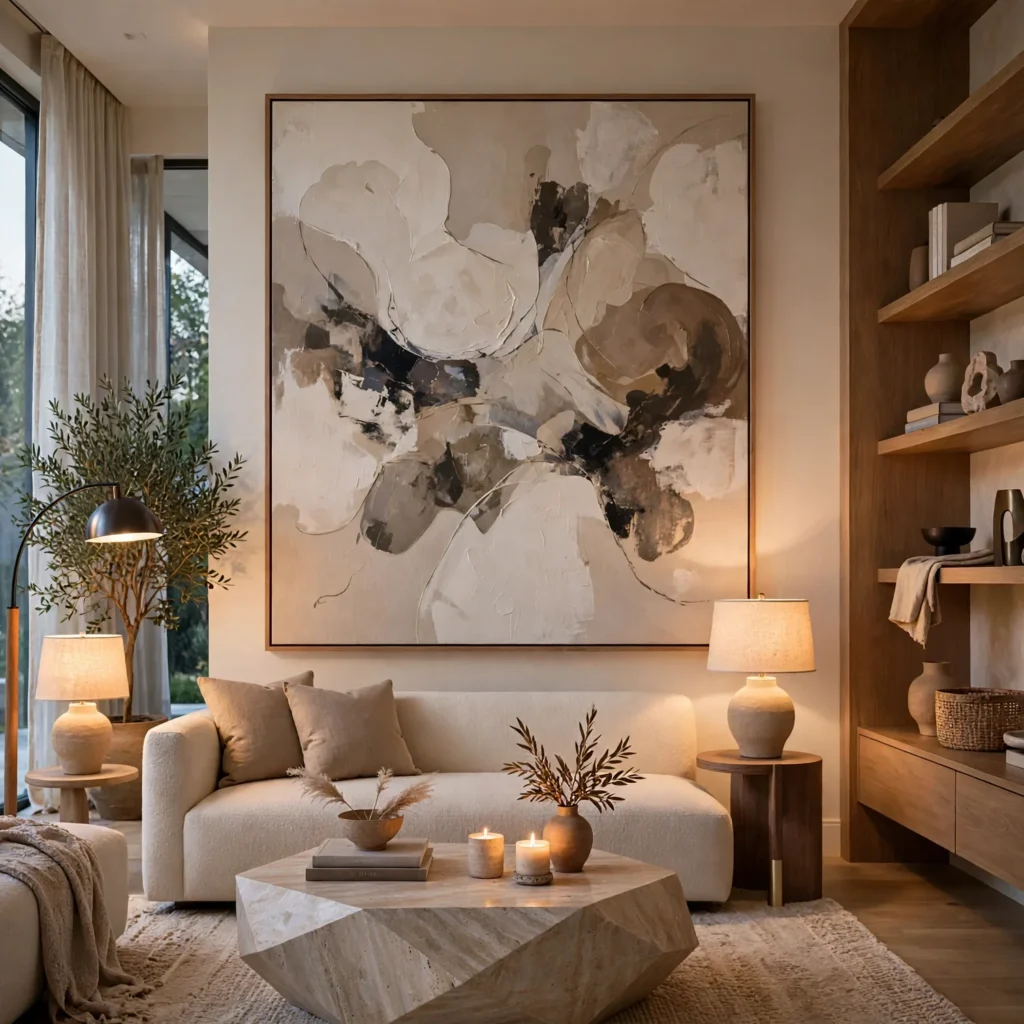
Skip rounded, traditional coffee tables in favor of one with a sharp geometric silhouette — a rectangular slab top on angular steel legs, or a cantilevered concrete design. Choose a single material story, such as blackened steel with a smoked glass top, to keep the piece feeling intentional rather than busy. This idea reinforces the architectural, contemporary edge that separates a modern minimalist living room from a softer, more traditional minimalist space.
Looking for more inspiration? Explore our latest minimalist living room to create a clean, stylish, and clutter-free space.
4. Monochrome Accent Wall
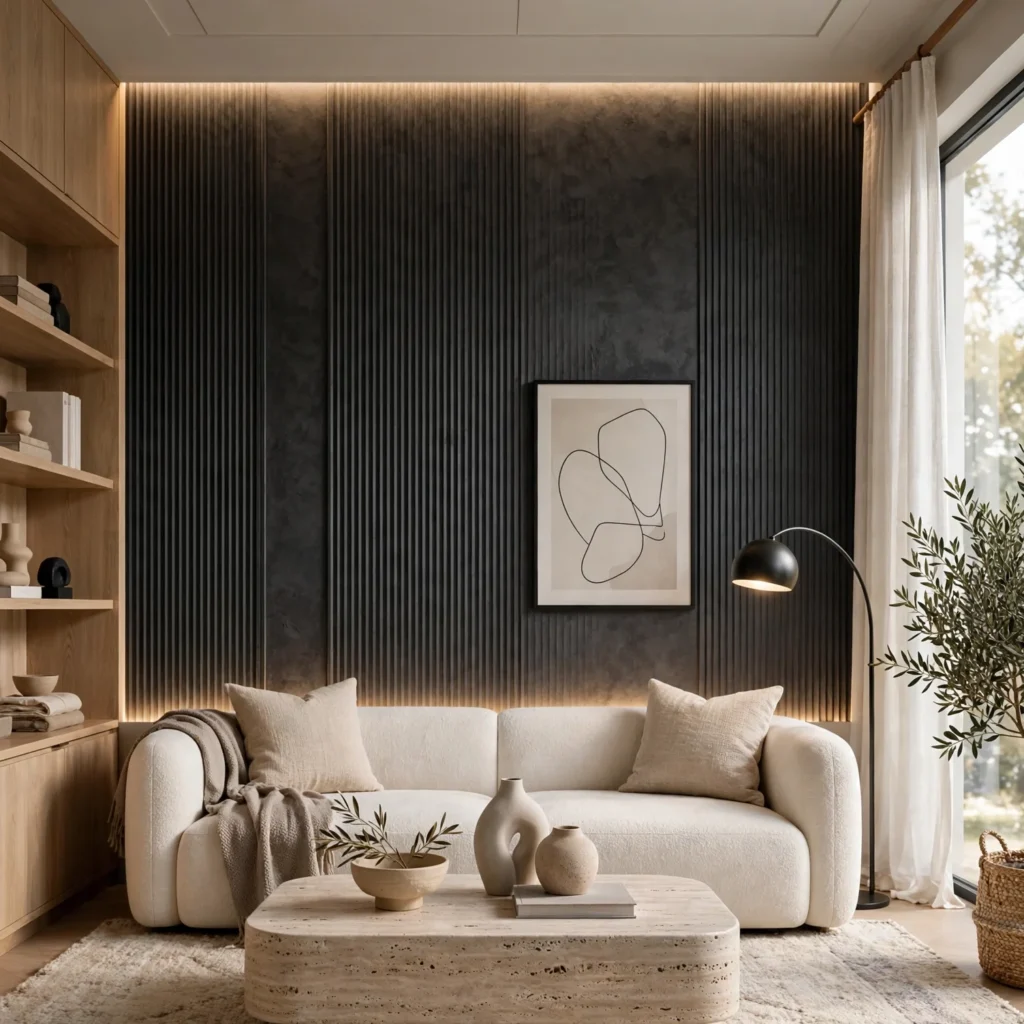
A single wall painted in a deep charcoal, graphite, or matte black creates depth and contrast against lighter furniture and flooring. Keep the remaining walls in a soft white or warm greige so the accent wall reads as intentional rather than overwhelming. This technique works especially well behind the sofa or media console, giving the eye a clear anchor point without requiring additional artwork or decor.
| Room Size | Recommended Accent Wall Placement |
| Small (under 150 sq ft) | Behind sofa only |
| Medium (150–250 sq ft) | Behind sofa or media wall |
| Large (250+ sq ft) | Full wall plus adjacent half-wall |
5. Polished Concrete Flooring
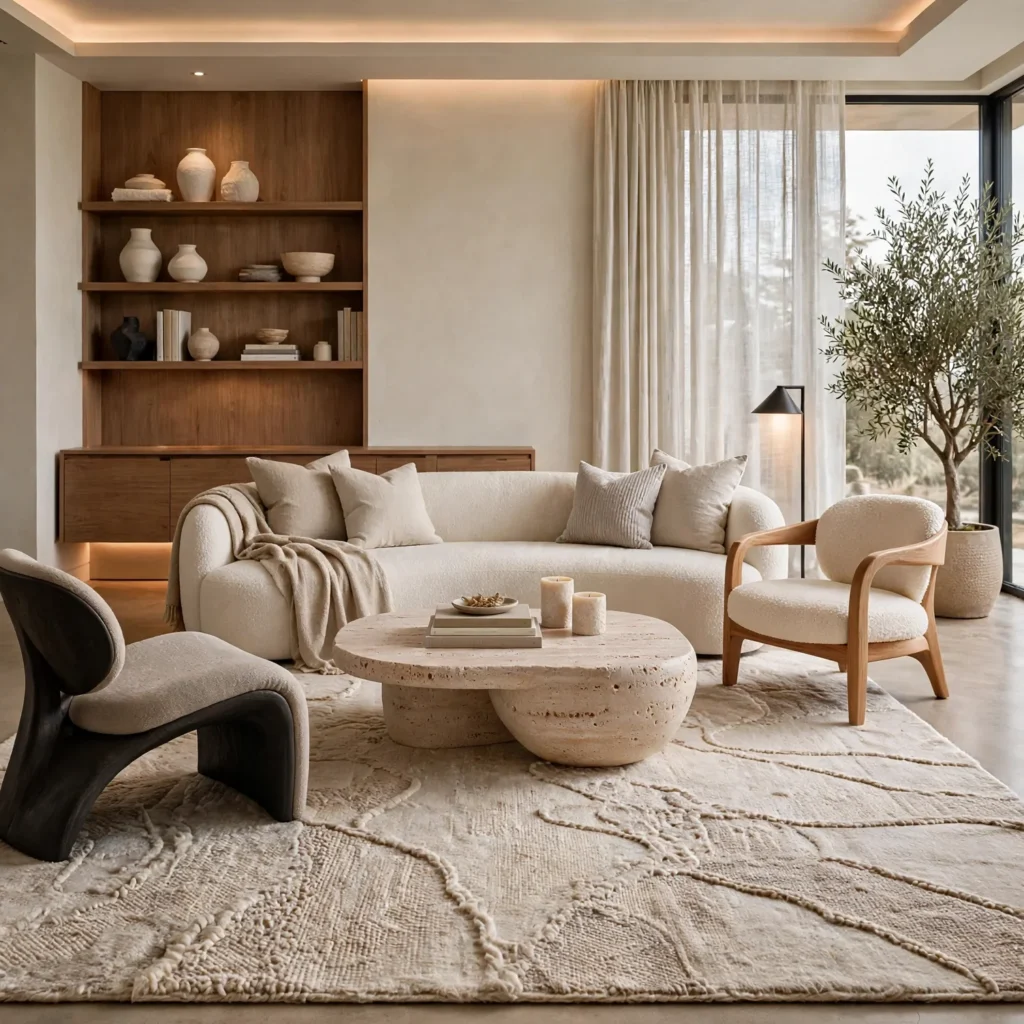
Polished concrete or a large-format porcelain tile that mimics it gives a modern minimalist living room a cool, architectural base layer that pairs well with warm wood furniture accents. It also handles heavy foot traffic well, making it practical for open-plan homes. Balance the coolness of the floor with a wool or flatweave rug in a muted tone so the room doesn’t feel unwelcoming underfoot, especially in colder climates.
6. Built-In Storage Bench
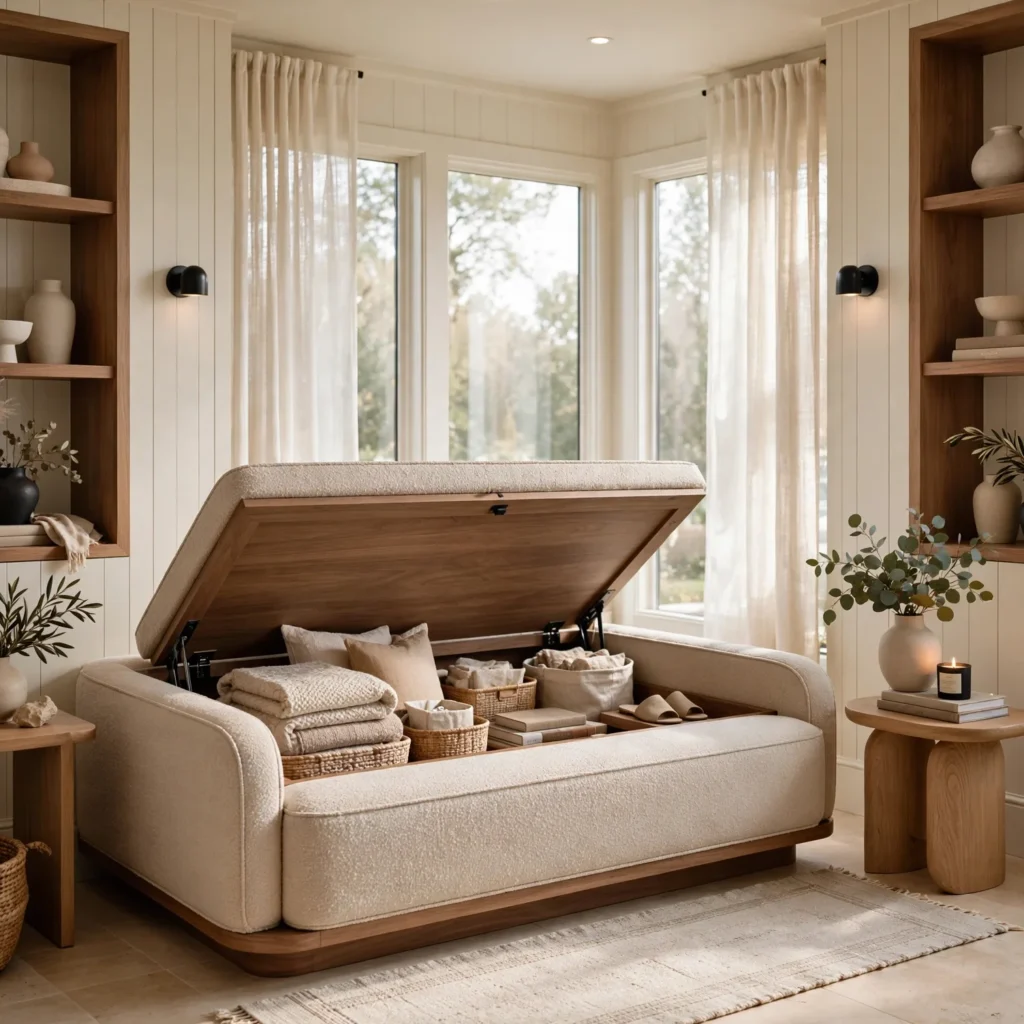
A built-in bench along a window or wall, with a lift-top or drawer storage underneath, gives you extra seating and hidden storage without adding a bulky freestanding cabinet. Upholster the top in a durable performance fabric like a tight-weave boucle or leather to match the rest of the seating. This idea is especially useful in smaller modern minimalist living rooms where floor space is at a premium and every surface needs a dual purpose.
7. Sculptural Floor Lamp
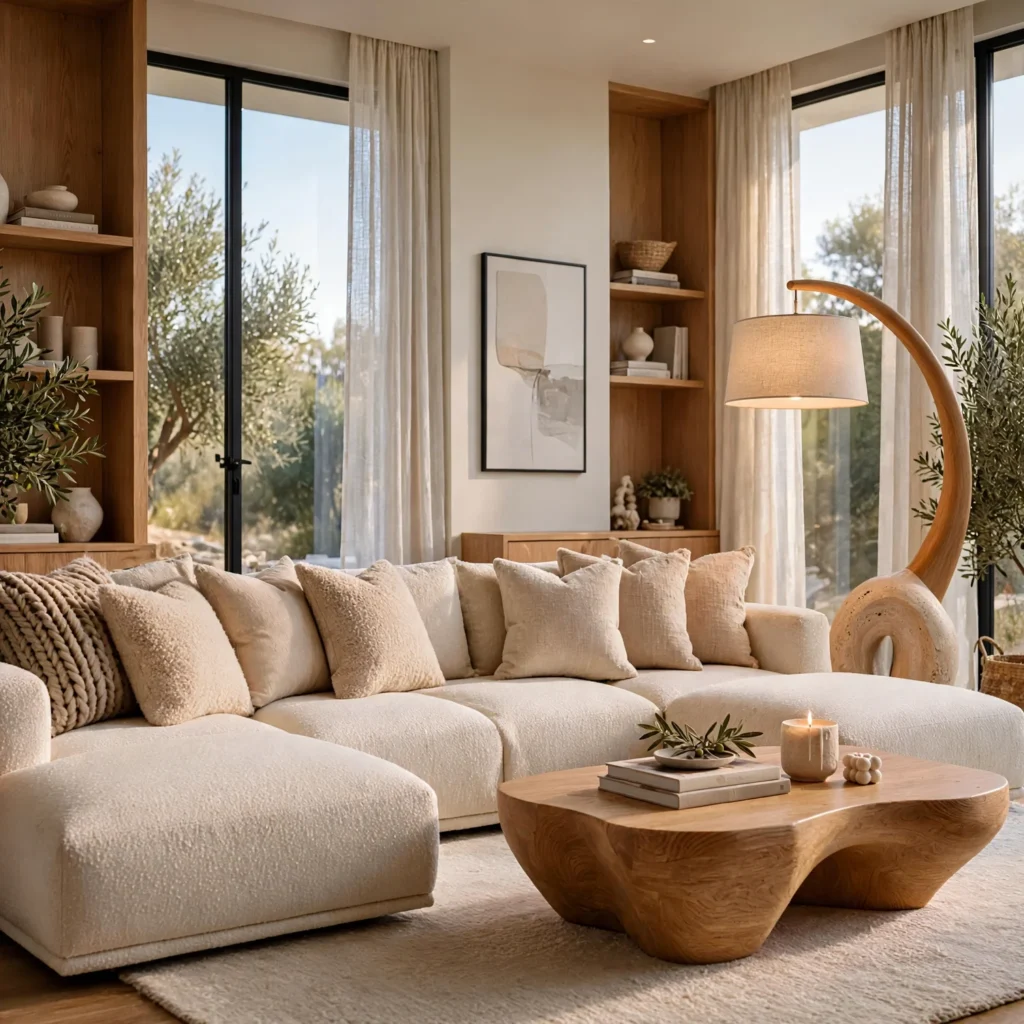
A floor lamp with a strong geometric form — an arc lamp in matte black, or a tripod design in blackened steel — acts as a piece of functional sculpture rather than just a light source. Position it near the reading chair or in an empty corner to fill visual space without adding furniture. This single piece often does more to establish a modern, considered feel than several smaller decor items scattered around the room.
8. Recessed Linear Lighting
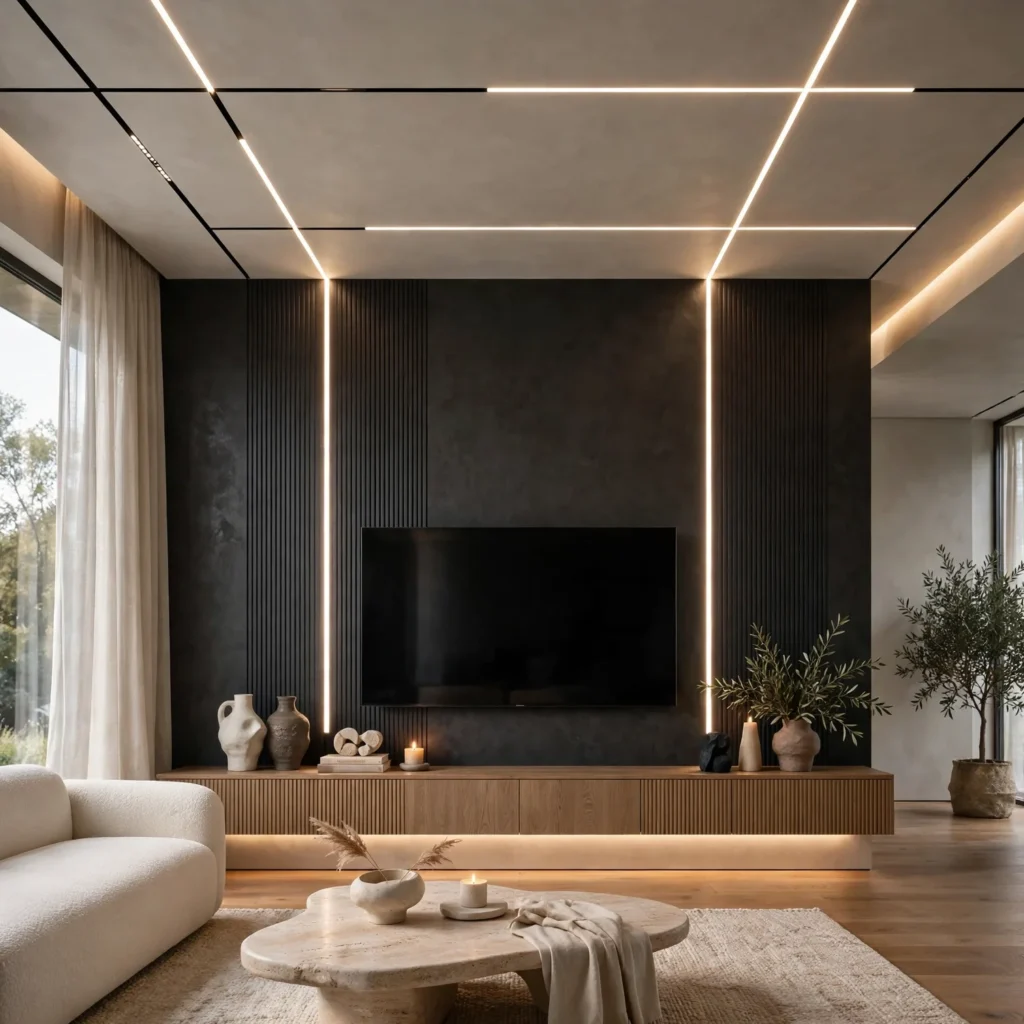
Instead of a single ceiling fixture, use recessed linear LED channels along the ceiling perimeter or above the media wall to create an even, shadow-free wash of light. Set these on a dimmer and pair with warm 2700K to 3000K bulbs to avoid a cold, office-like feel. This lighting approach reinforces clean architectural lines while giving you the flexibility to shift the room’s mood from bright and functional to dim and relaxed.
9. Floor-to-Ceiling Sheer Panels
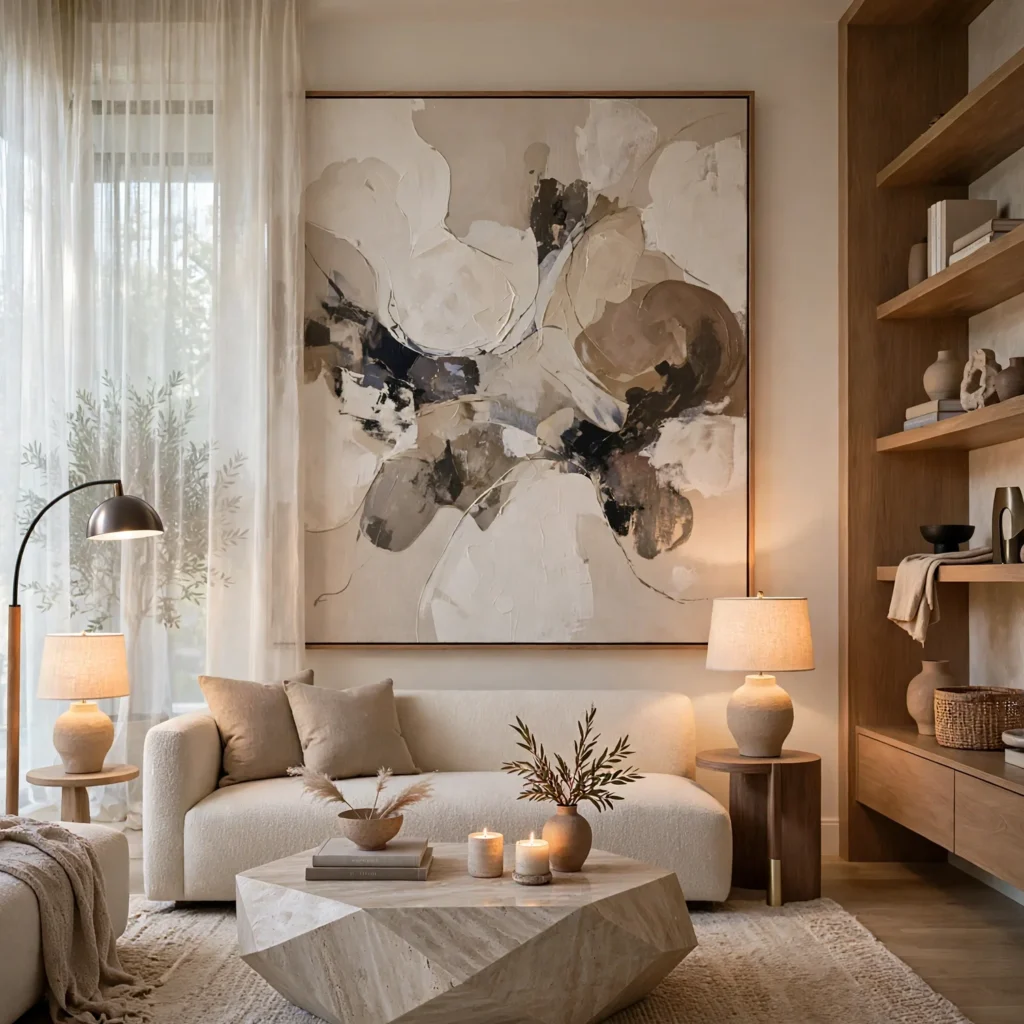
Sheer or semi-sheer curtain panels hung floor-to-ceiling diffuse natural light while maintaining clean, uninterrupted lines along the window wall. Choose a neutral tone like white or light gray rather than a heavier blackout fabric, which can feel visually dense in a room built around openness. Mounting the rod near the ceiling, regardless of actual window height, reinforces the tall, architectural feel central to this style.
10. Single Sculptural Plant
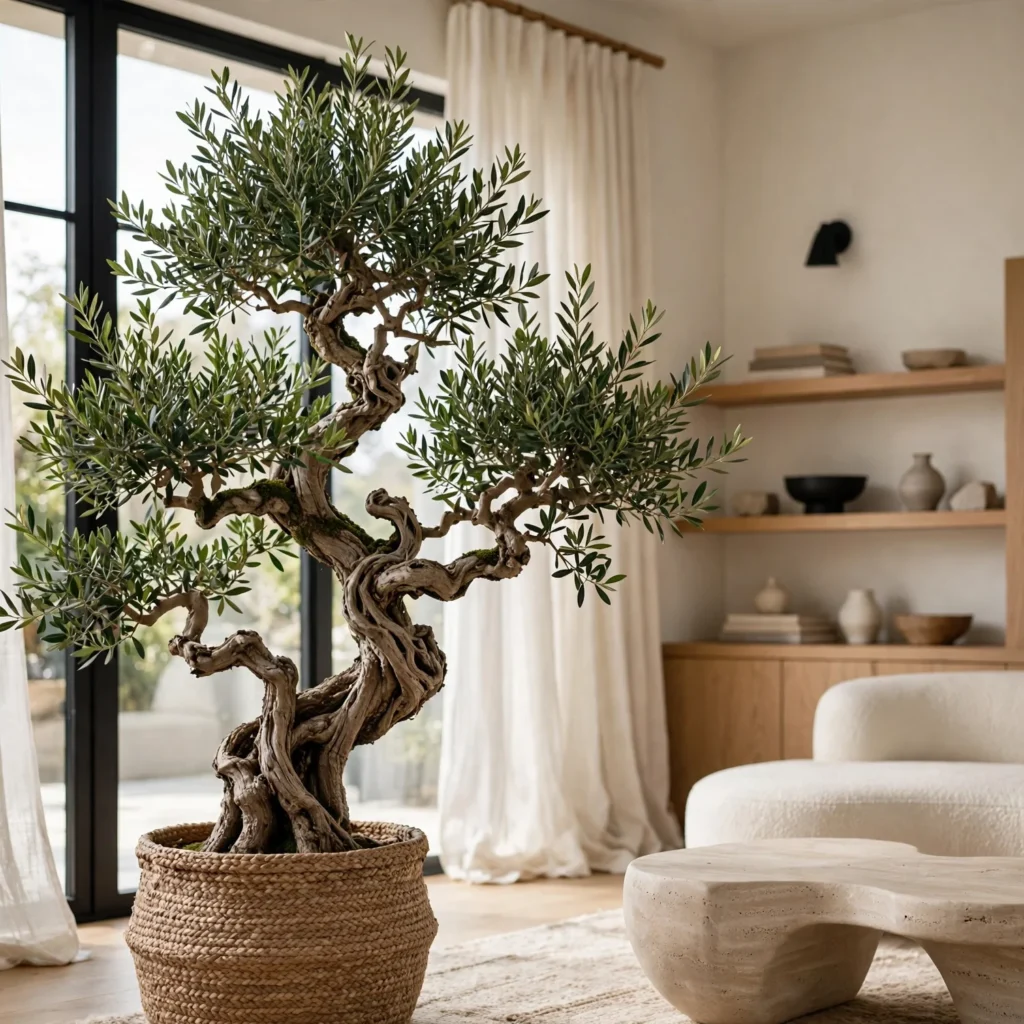
One large architectural plant — a snake plant, sculptural cactus, or olive tree — in a matte black or concrete planter introduces organic contrast against the room’s harder surfaces. Skip clusters of smaller plants, which can undercut the pared-back look. Place it near a window or in an unused corner where it can stand alone as a visual break from the room’s geometric furniture and lighting.
11. Hidden Tech Integration
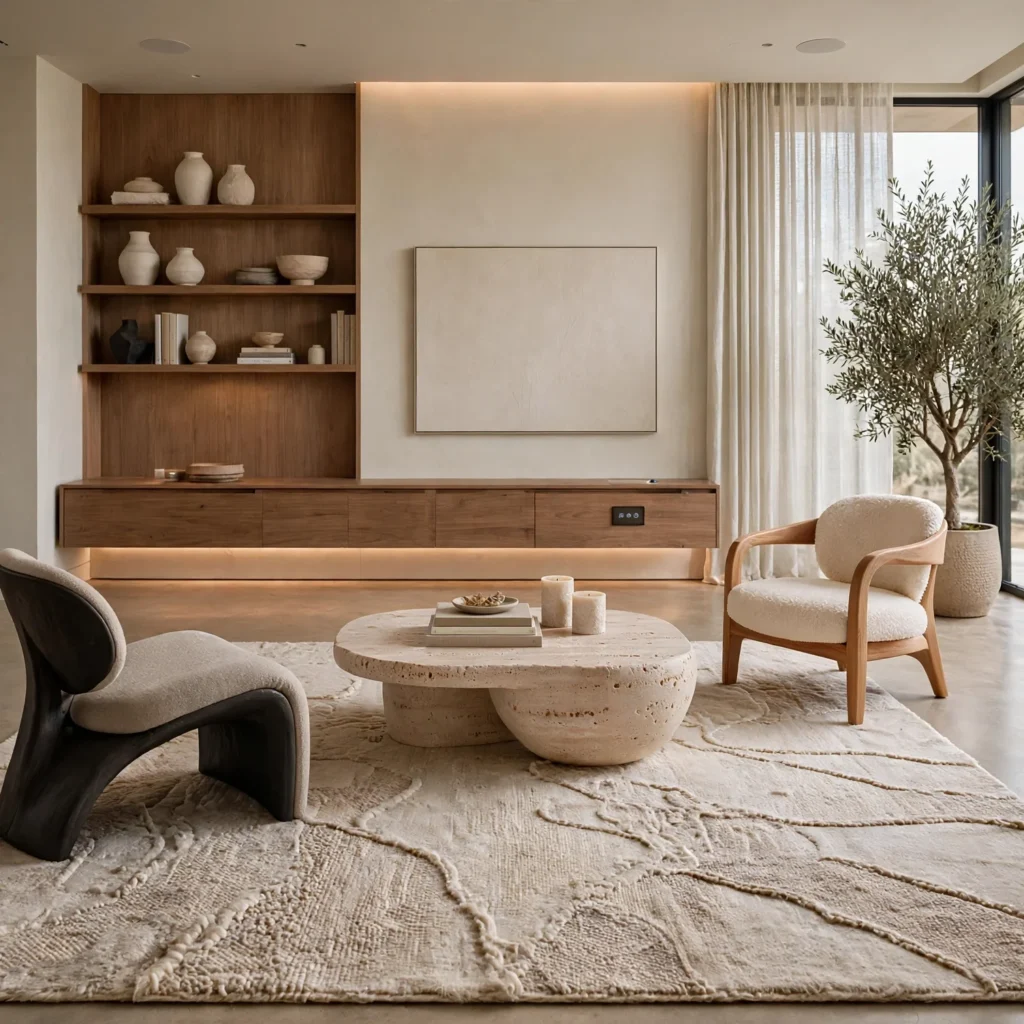
Route all cords, routers, and speaker wiring through in-wall channels or a concealed AV cabinet so no visible technology disrupts the room’s clean lines. Consider a media console with a cord-management panel built into the back, or an in-wall recessed outlet directly behind the television. This detail is easy to overlook but is often the deciding factor in whether a modern minimalist living room reads as fully resolved or only partially finished.
12. Statement Mirror
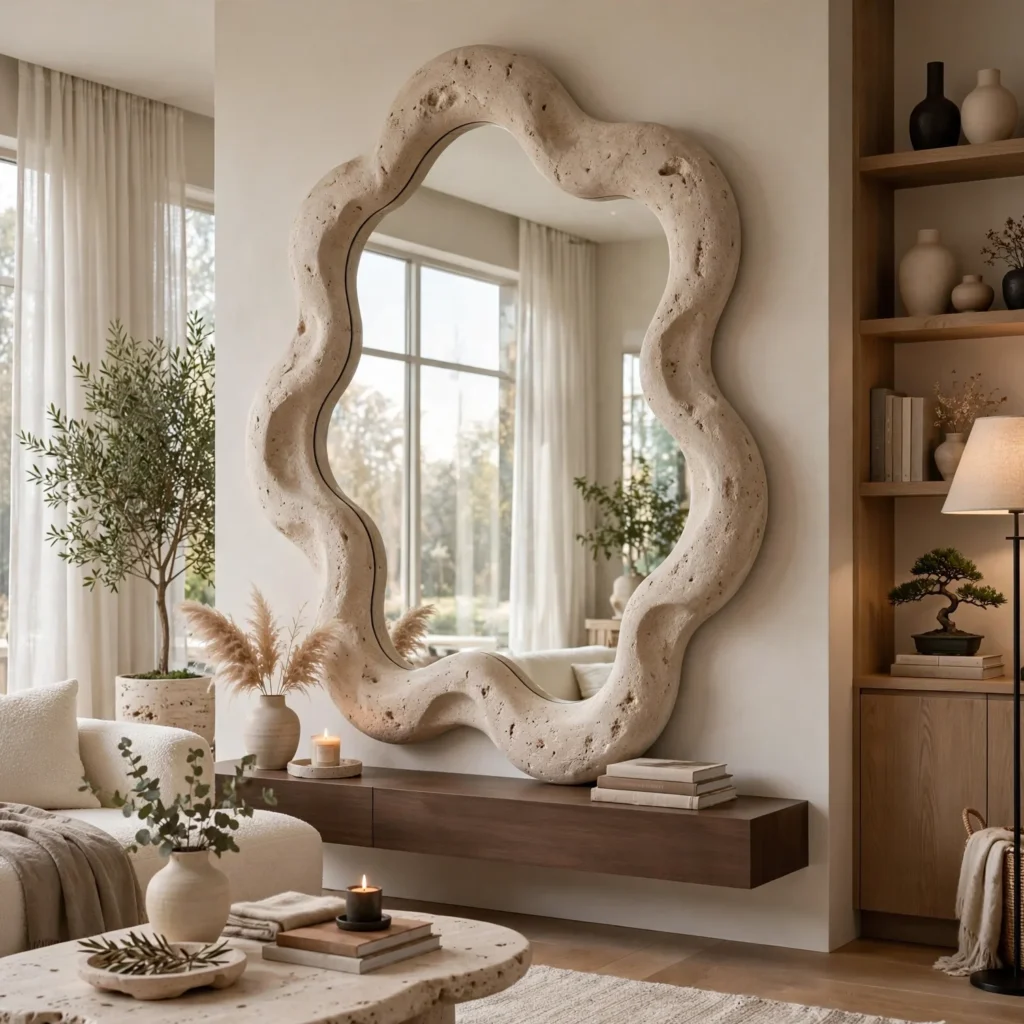
A large, simply framed mirror — round, arched, or a clean rectangle in a thin matte black frame — bounces natural light around the room while adding a single strong visual element. Position it opposite a window to maximize the light-reflecting effect, especially in smaller or darker rooms. This idea works well as a lower-cost alternative to large-format artwork while still giving the room a clear focal point.
Shop the Look
Consider a modular sectional from a brand like BoConcept or Burrow in a charcoal boucle, a blackened-steel and smoked-glass coffee table from CB2, a matte black arc floor lamp similar to Arco-style designs, sheer linen-blend curtain panels from West Elm in light gray, and a large arched mirror with a thin black metal frame from Article.
Common Mistake to Avoid
The most common mistake is treating “modern” and “cold” as the same thing, resulting in a room with only hard surfaces, cool lighting, and no organic texture. Concrete floors, black steel, and sharp geometry need to be balanced with warm lighting, a soft rug, and at least one natural material like wood or a live plant. Without that balance, a modern minimalist living room can end up feeling more like a showroom than a livable space.
FAQs
What makes a living room modern minimalist versus just minimalist?
Modern minimalist design leans into sharper geometry, industrial materials like blackened steel and polished concrete, and a more monochrome palette compared to traditional minimalism, which often favors softer, organic textures and warm wood tones. Both styles share a restrained object count and a focus on function over decoration, but the modern version pulls its material and color cues from architecture and contemporary design rather than natural, rustic sources.
What colors work best in a modern minimalist living room?
Charcoal, graphite, matte black, and soft white form the core palette, often paired with one warm neutral like greige or oatmeal to prevent the room from feeling cold. Avoid introducing more than one or two accent colors beyond this base palette, since additional hues tend to undercut the architectural, monochrome feel that defines this style. Metallic accents in matte black or brushed steel typically read better here than warm brass or gold tones.
How do you keep a modern minimalist living room from feeling cold?
Balance hard, cool materials like concrete and steel with warm lighting around 2700K, a textured rug in wool or a flatweave, and at least one live plant or natural wood element. Layered lighting across two or three sources, rather than a single overhead fixture, also does significant work here. Skipping these warming elements is the most common reason this style reads as sterile rather than intentionally sleek.
Is a modern minimalist living room expensive to achieve?
Not necessarily. The style relies more on restraint and a cohesive palette than on expensive materials, though a modular sectional and a well-made coffee table are typically the largest expenses. Budget-friendly wins include a matte black paint accent wall, cord-management solutions, and a single well-placed mirror or plant, all of which reinforce the aesthetic without requiring a full furniture overhaul.
How many furniture pieces should a modern minimalist living room have?
Most successful versions of this room include a modular sofa, a geometric coffee table, one sculptural lighting piece, a media console or wall unit, and a single storage piece like a bench or cabinet, totaling around five to seven pieces. The exact count matters less than ensuring each piece serves a clear function, since extra furniture without purpose is what most often breaks the pared-back look.
Conclusion
A modern minimalist living room works best when architectural materials like steel and concrete are balanced against warm lighting and at least one organic texture. Focus on multi-functional furniture, a tight color palette, and hidden storage to keep the look intact even in smaller spaces. Save this guide to Pinterest for your next redesign, or check out our related post on minimalist living room ideas for a softer take on the same style.