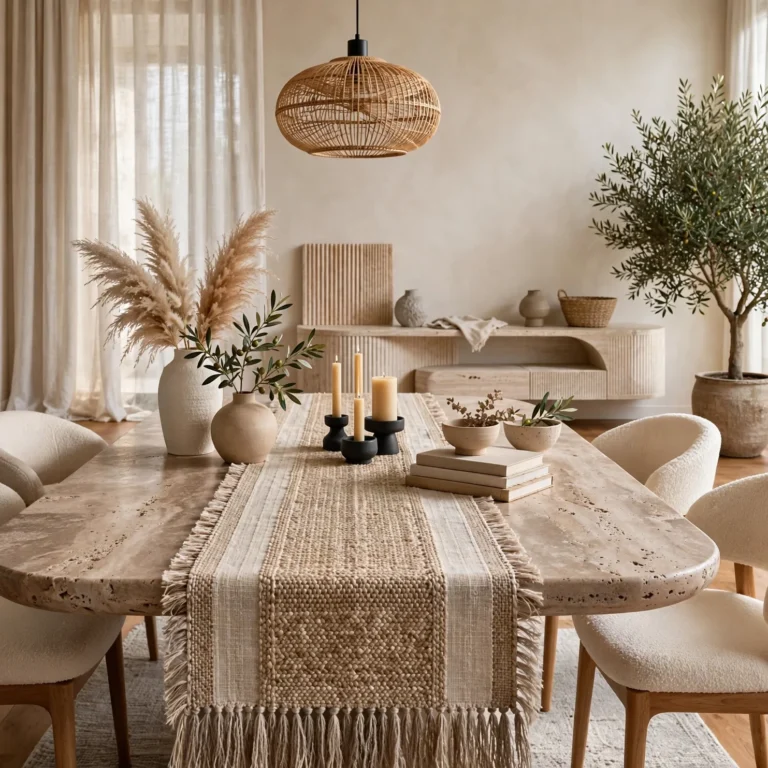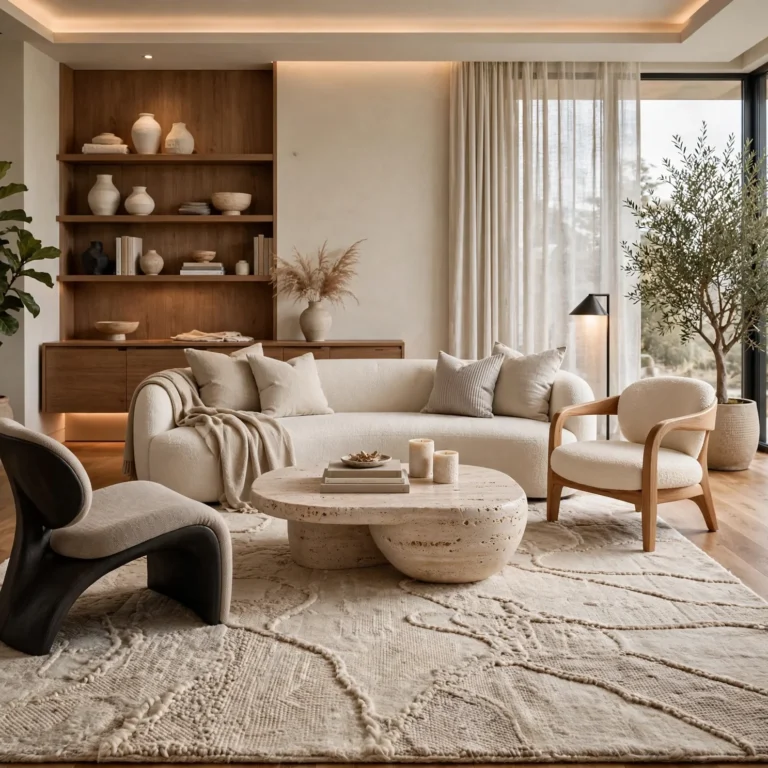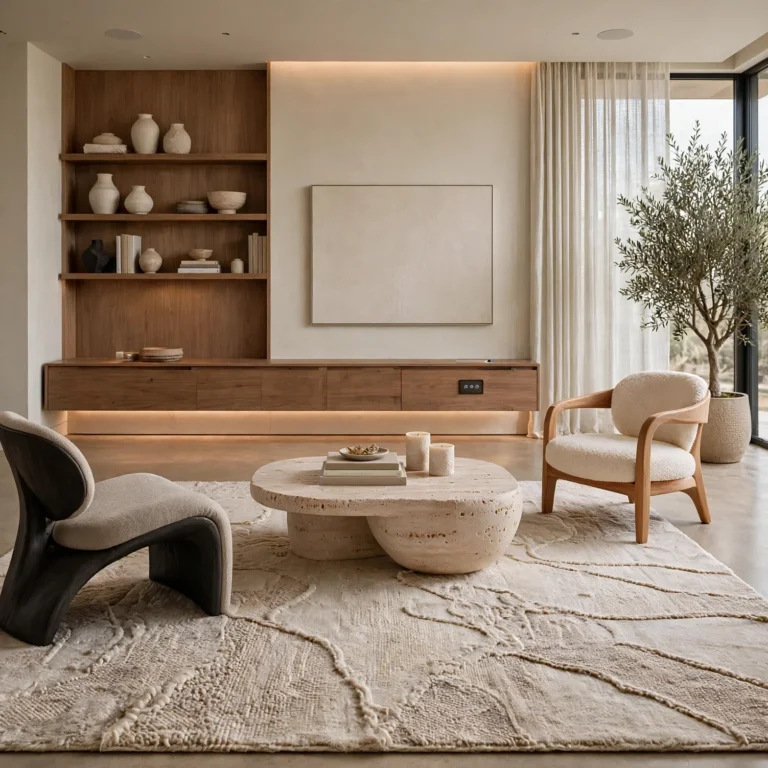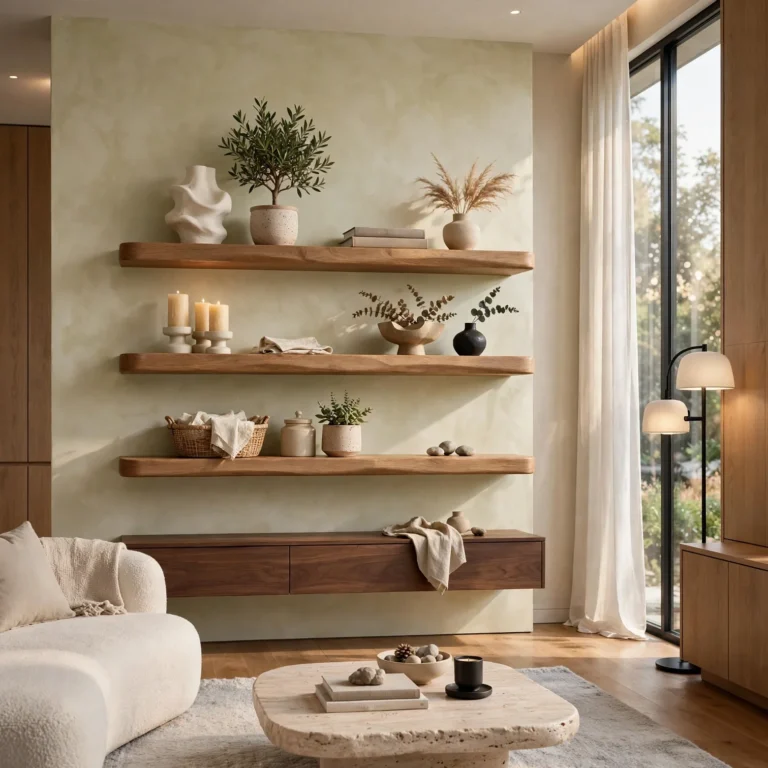
12 Trending Minimalist Living Room Apartment Ideas for Renters
Designing a minimalist living room apartment comes with constraints a house doesn’t have smaller square footage, rental restrictions, and often shared walls or limited natural light. This guide covers twelve ideas specifically suited to apartment living, from modular furniture to renter-friendly finishes, so the space stays functional, calm, and reversible when the lease ends.
Trend & Background
As more people rent long-term rather than treating apartments as a temporary stop before homeownership, demand has grown for design solutions that feel permanent and considered despite renter restrictions on painting, drilling, or structural changes. A minimalist living room apartment has become a popular solution because the style’s smaller furniture count and emphasis on multi-functional pieces naturally suit limited square footage. This matters now because apartment sizes in many major cities have shrunk even as design expectations have risen, making efficient, renter-friendly minimalism more relevant than ever.
Key Takeaways
- A minimalist living room apartment relies heavily on multi-functional and modular furniture to make the most of limited square footage.
- Renter-friendly solutions, like tension rods and peel-and-stick finishes, allow for a pared-back look without permanent changes.
- Vertical storage and furniture with a small footprint matter more in an apartment setting than in a standalone house.
- Sound, light, and shared-wall considerations shape several design choices that wouldn’t otherwise apply in a larger home.
1. Modular Loveseat
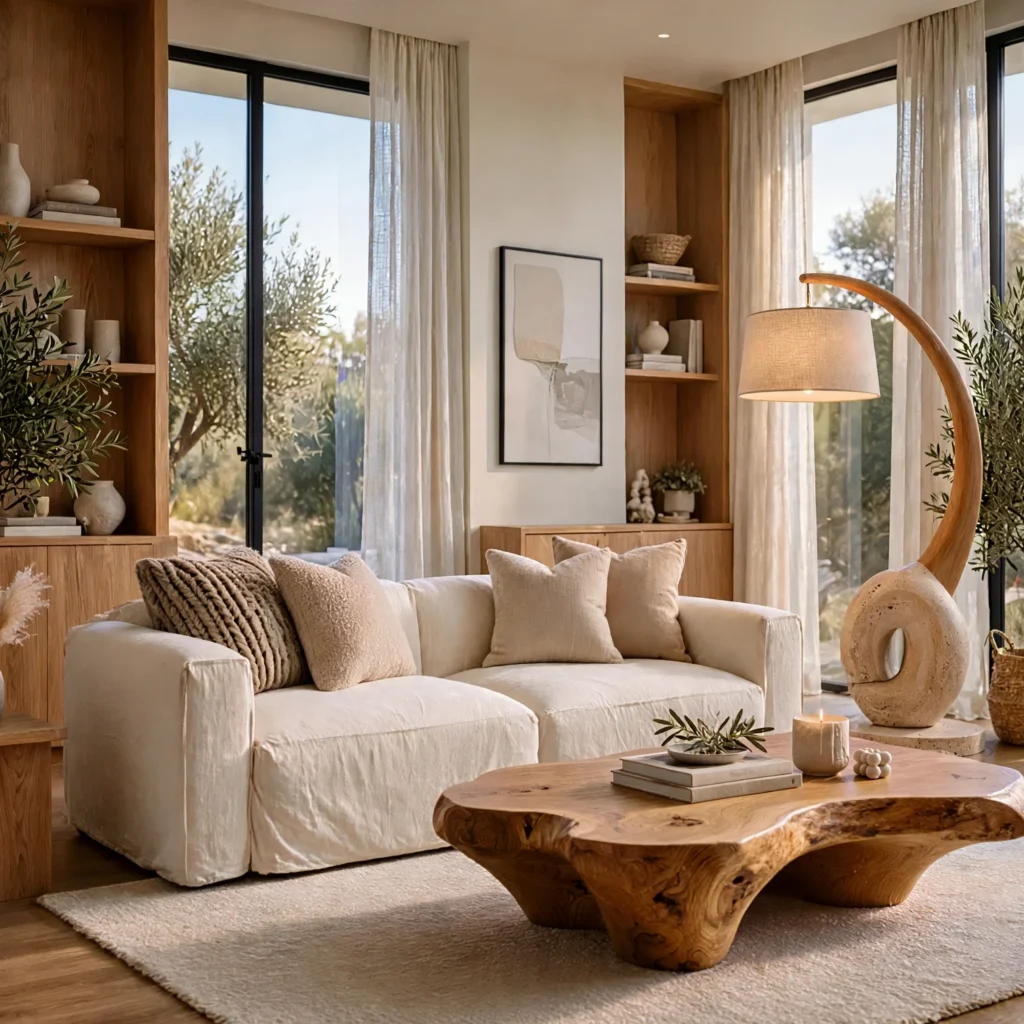
A modular loveseat or small sectional that can be reconfigured or split into two pieces adapts more easily to an apartment’s often irregular layout than a large, fixed sofa. Choose a design with legs rather than a skirted base to keep the floor visually open underneath. This flexibility matters in a minimalist living room apartment, where furniture may need to be rearranged for different uses throughout the week, from lounging to occasional guests.
2. Tension Rod Curtains
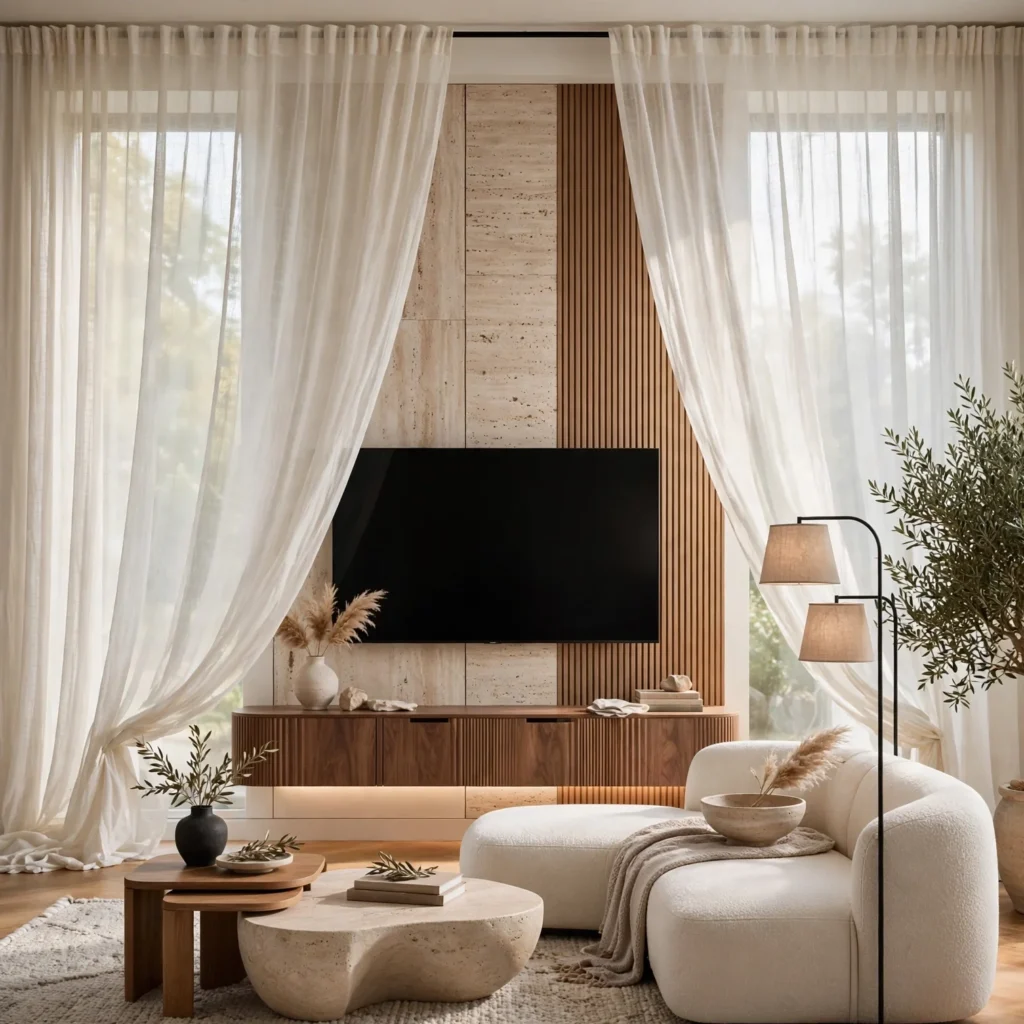
Since many apartment leases restrict drilling into walls, use spring-tension curtain rods that wedge into the window frame rather than requiring mounting hardware. Choose linen or cotton panels in a neutral tone to maintain the same softening effect as drilled installations. This is one of the most practical renter-friendly solutions for a minimalist living room apartment, since it delivers the visual softness of floor-to-ceiling curtains without violating a typical lease agreement.
3. Vertical Wall Storage
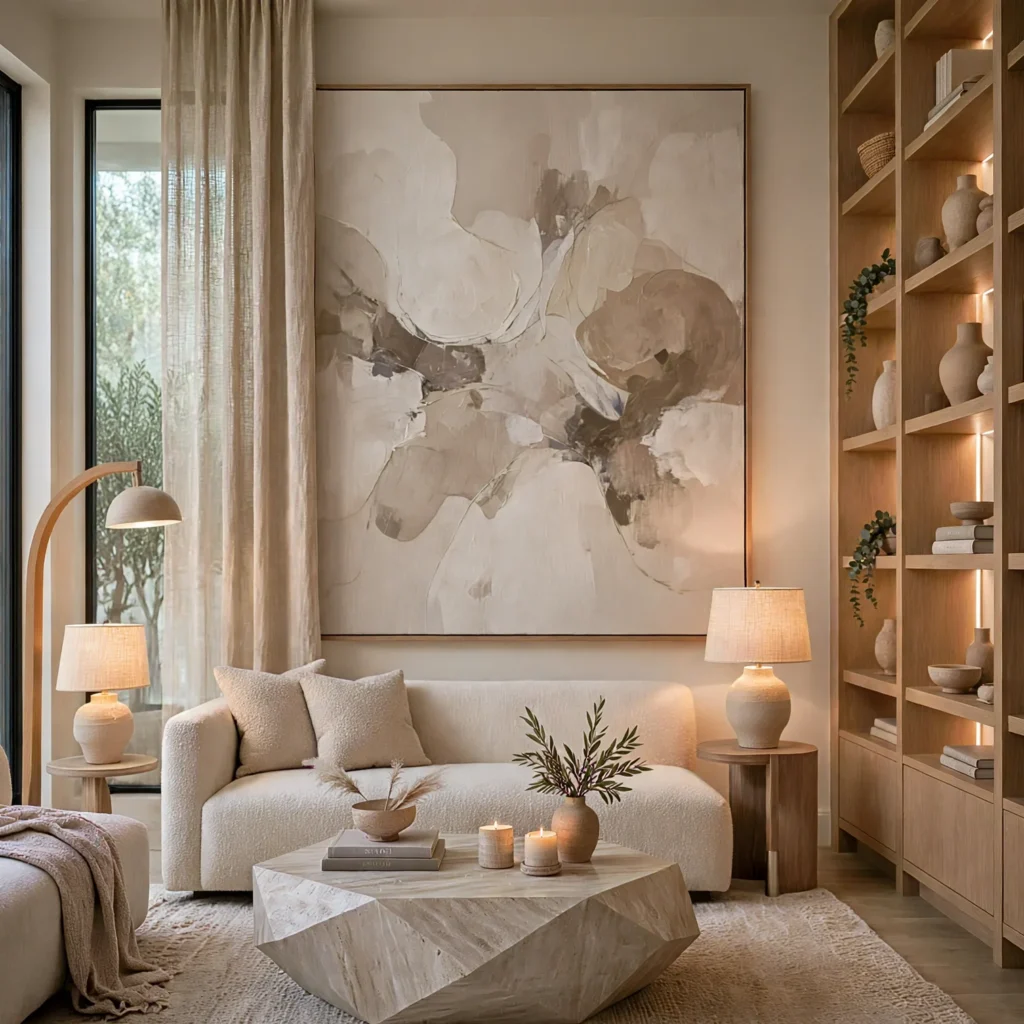
Freestanding vertical shelving units, rather than wall-mounted shelves, provide storage and display space without requiring permanent installation. Choose a unit in a single wood tone or matte black finish with an open-back design to keep the piece from feeling visually heavy. Vertical storage is particularly valuable in a minimalist living room apartment, where floor space is limited but ceiling height often isn’t, allowing storage capacity without sacrificing square footage.
| Apartment Size | Suggested Shelving Height |
| Studio | 48″–60″ |
| One-bedroom | 60″–72″ |
| Two-bedroom+ | 72″+ |
4. Fold-Flat Dining Nook
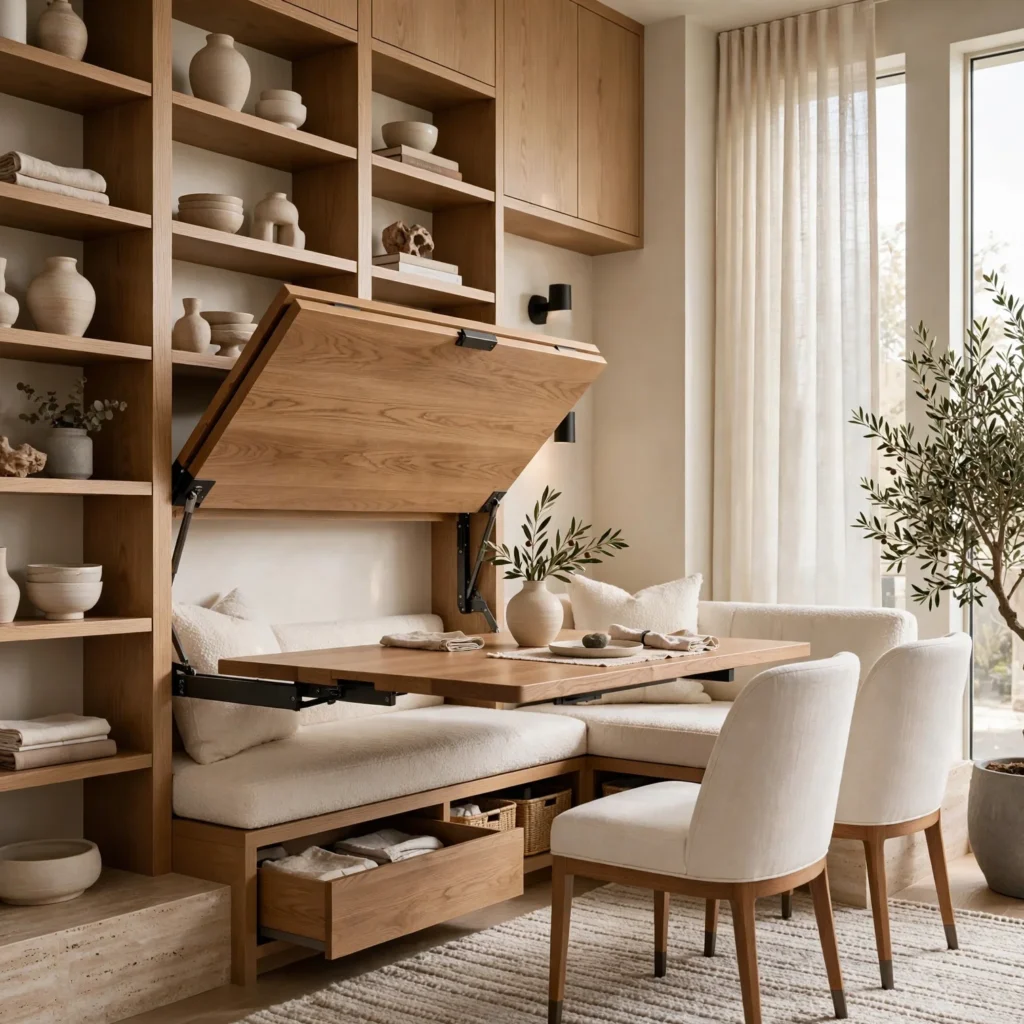
If the living room doubles as a dining space, a fold-flat or drop-leaf table against a wall provides seating when needed without permanently occupying floor space. Pair it with stackable or nesting chairs in a matching wood or metal finish. This dual-purpose setup is especially relevant in a minimalist living room apartment where a separate dedicated dining room isn’t available, allowing one zone to serve two functions without feeling cramped.
5. Peel-and-Stick Wall Finish
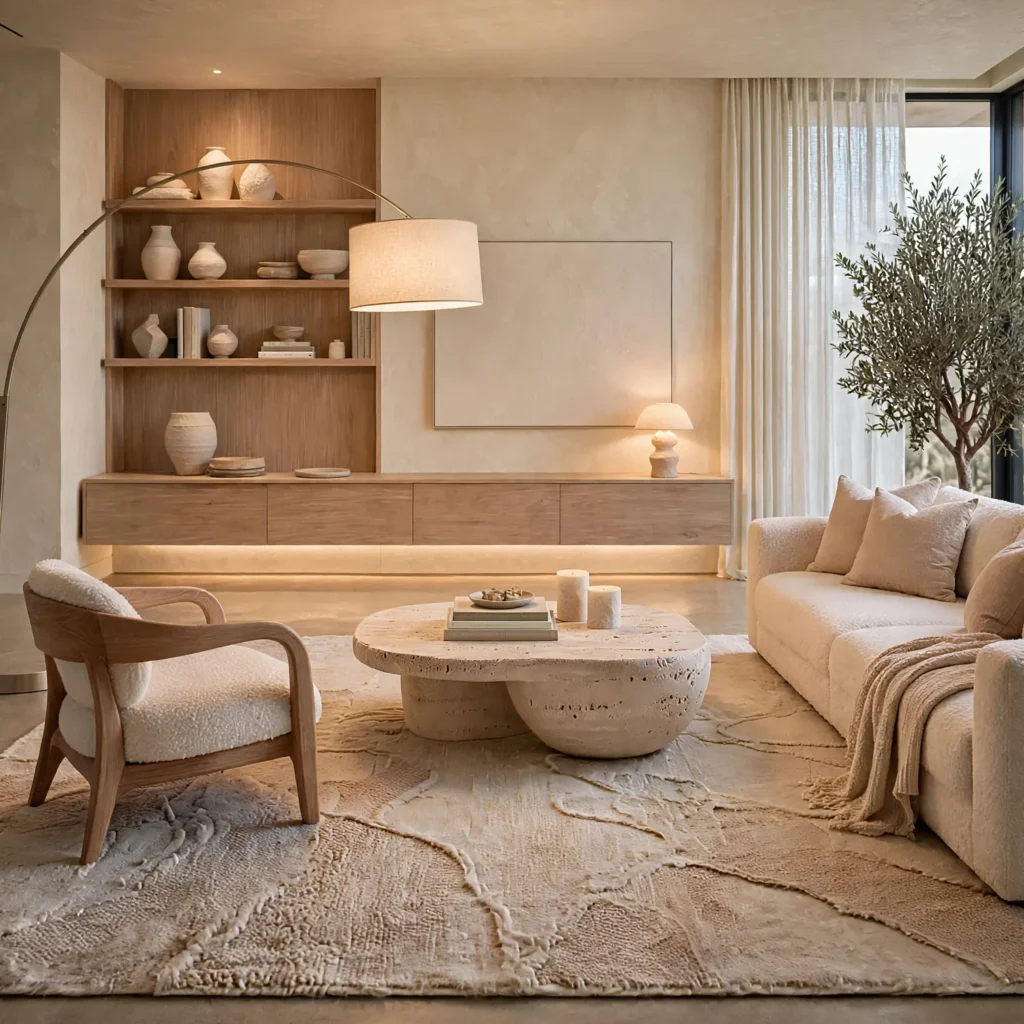
For renters unable to paint, a peel-and-stick wallpaper in a subtle textured or lightly veined stone pattern can create the look of an accent wall without violating lease terms. Choose a muted, low-contrast pattern rather than a bold graphic print to keep the finish aligned with the room’s restrained palette. This solution allows for visual depth on one wall while remaining fully reversible at move-out.
Planning a home makeover? Start with our minimalist living room decor to achieve a sophisticated and organized look.
6. Corner Reading Chair
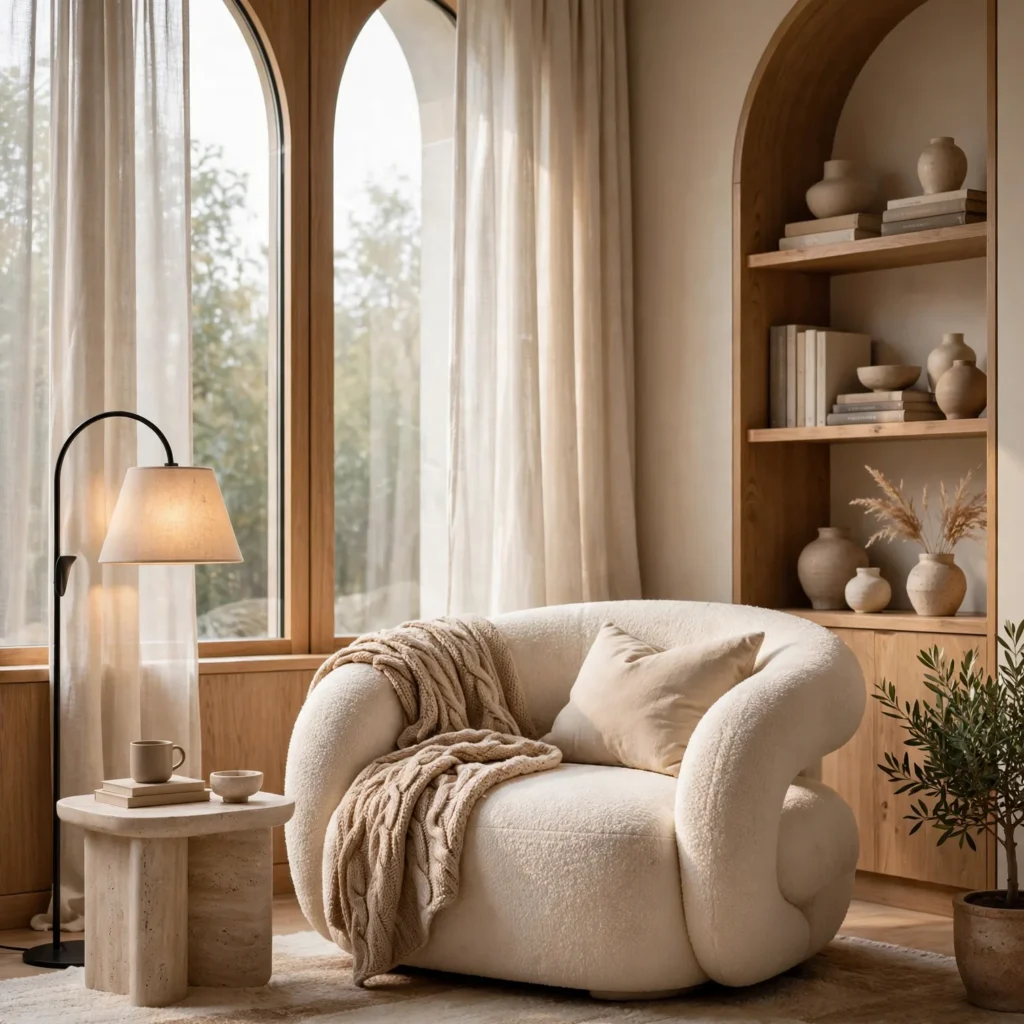
A single, compact accent chair placed in an underused corner adds a secondary seating zone without requiring a full second sofa or loveseat. Choose a chair with exposed legs and a slim profile to keep the corner from feeling boxed in. This idea makes efficient use of awkward, hard-to-furnish corners that are common in smaller apartment layouts, turning otherwise wasted space into a functional reading nook.
7. Command Strip Gallery Wall
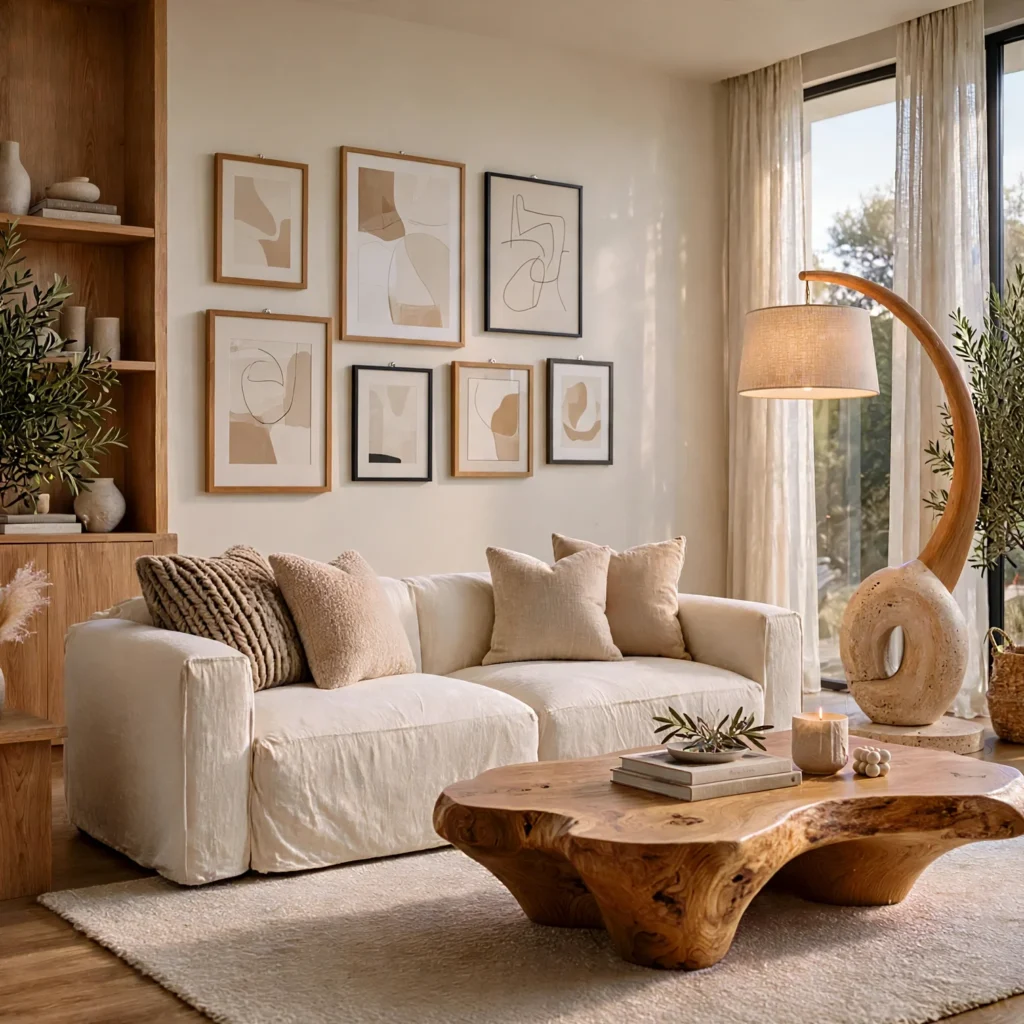
For renters who can’t drill into walls, adhesive picture-hanging strips allow for a curated, minimal photo or art display without damaging the wall surface. Keep the arrangement to three to five pieces in matching matte black frames, arranged in a simple grid rather than a sprawling layout. This solution lets a minimalist living room apartment include personal touches and artwork while remaining fully compliant with most standard lease agreements.
8. Rug Layering for Sound
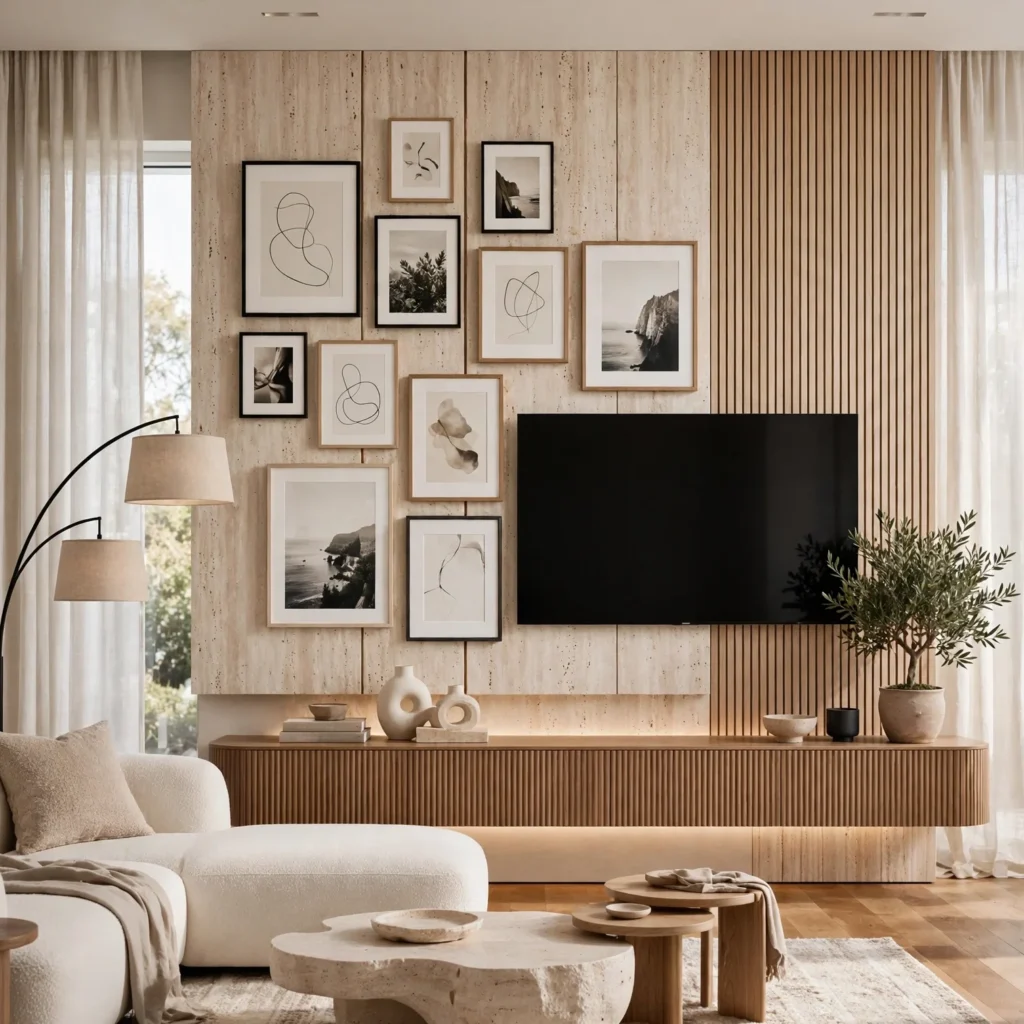
In apartments with shared walls or floors below, a thicker wool or jute rug with a rug pad underneath helps dampen sound transfer while still contributing to the room’s material palette. Choose a rug that covers most of the seating area’s footprint rather than a small accent rug, which offers limited acoustic benefit. This practical consideration is often overlooked in general minimalist living room content but matters significantly in multi-unit apartment buildings.
9. Under-Window Bench Seating
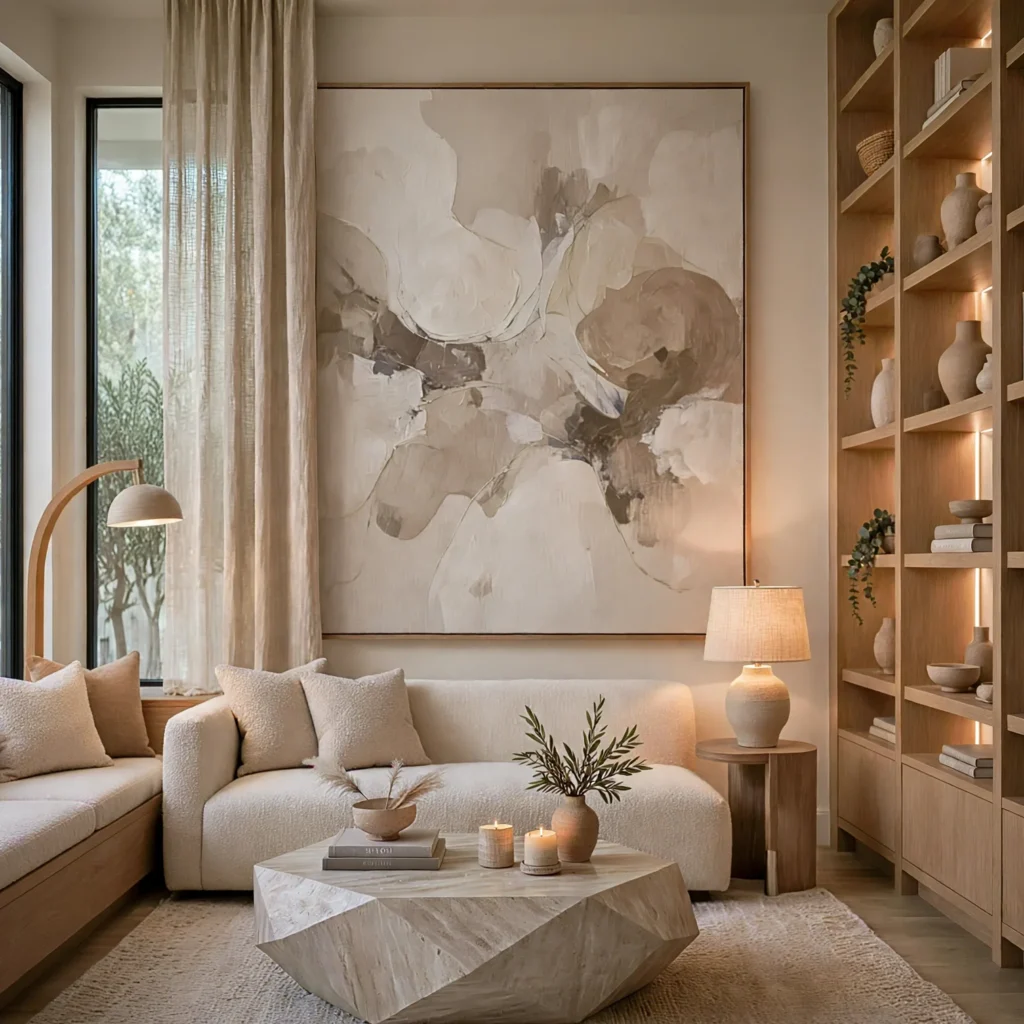
A slim storage bench positioned under a window provides both extra seating and hidden storage in a footprint that would otherwise sit unused. Choose a design narrow enough to leave walking space in front of it, especially in smaller studio or one-bedroom layouts. This idea works particularly well in a minimalist living room apartment where windows often interrupt an otherwise usable wall, turning that dead zone into functional square footage.
10. Battery-Operated Sconces
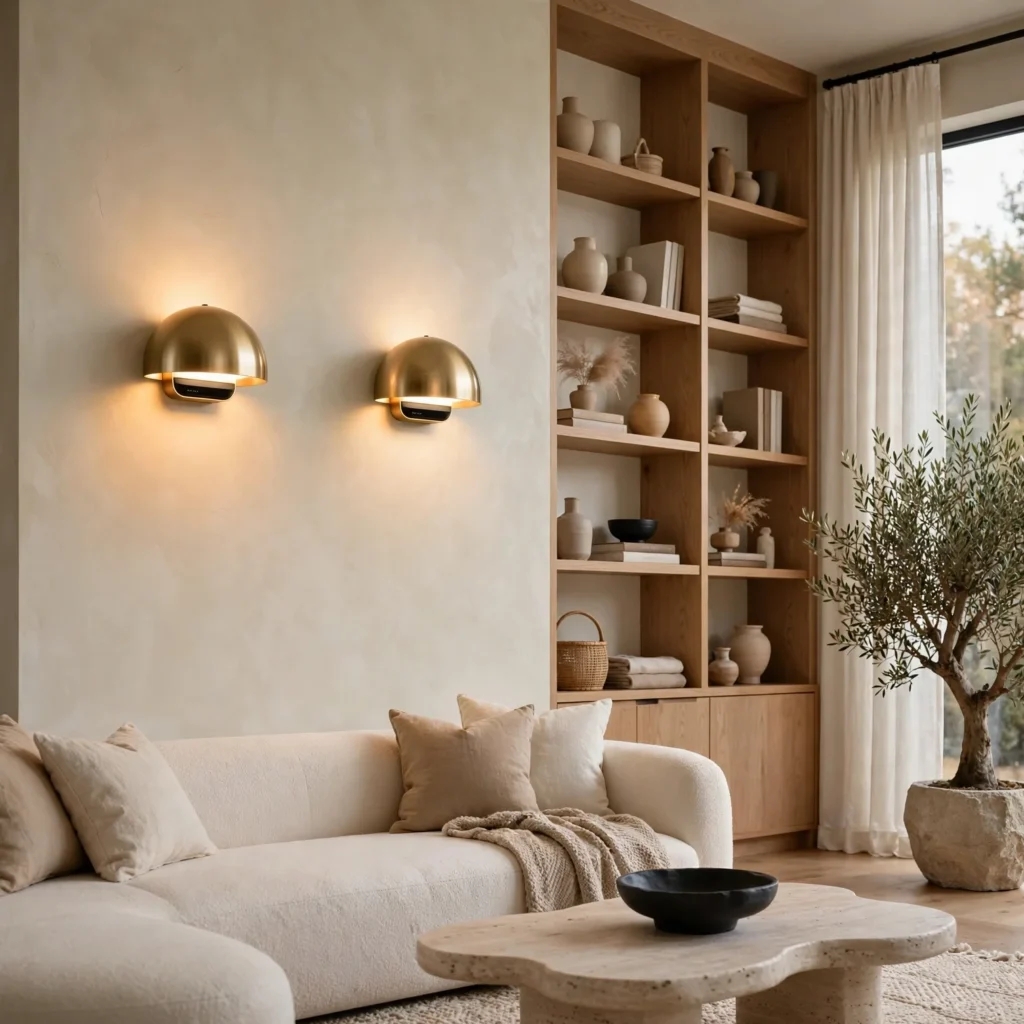
Wireless, battery-operated wall sconces provide layered lighting in spots where hardwiring isn’t possible or permitted, such as beside a reading chair or above a console. Choose a design with a warm 2700K bulb and a simple matte black or brass finish to match the rest of the room’s fixtures. This solution solves one of the more common lighting challenges in a rental apartment, where adding hardwired fixtures typically isn’t an option.
11. Room Divider Screen
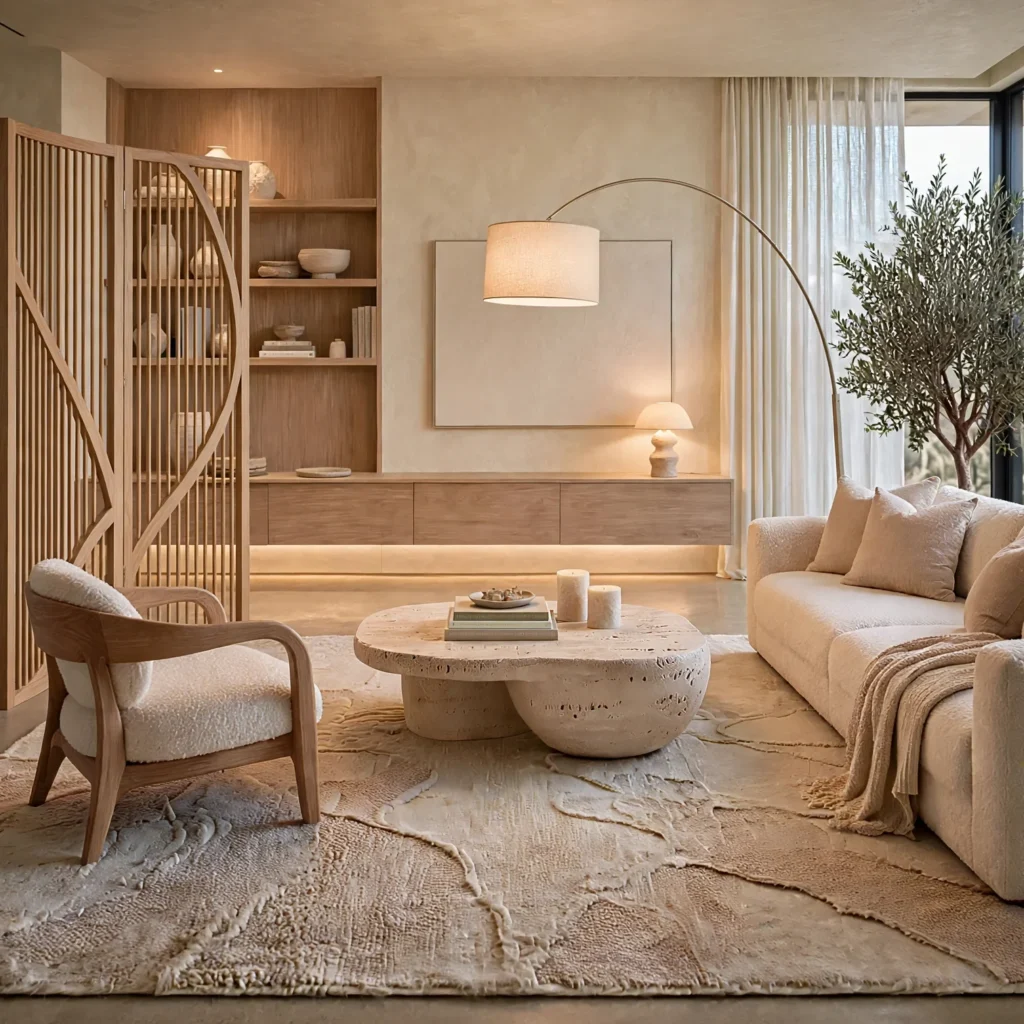
In studio or open-plan apartments, a slim folding screen in wood slats or woven rattan can visually separate the living area from a sleeping or work zone without a permanent wall. Choose a design with simple, repeating vertical lines rather than an ornately carved pattern. This is a practical, fully reversible solution for defining zones within a single room, which is a common challenge specific to studio-style minimalist living room apartment layouts.
12. Compact Cord Management
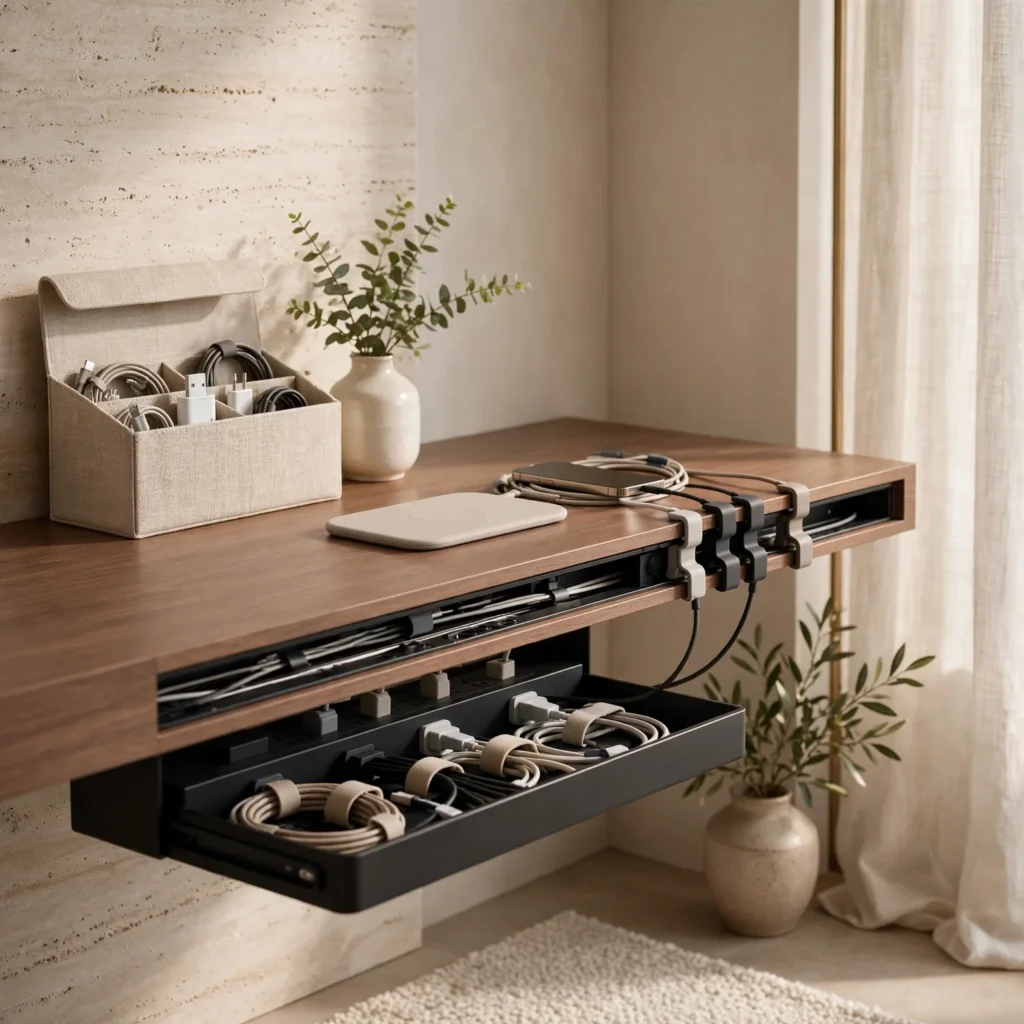
Route visible cords behind furniture using adhesive cord clips or a slim cord cover, since apartment walls typically can’t be modified with in-wall channels the way an owned home might allow. A simple cord box near the media console can also hide power strips and chargers from view. This detail is especially important in smaller apartments, where a compact living room means cords and cables are often more visible simply due to reduced distance between furniture and walls.
Shop the Look
Consider a modular loveseat from Burrow or Floyd, a tension curtain rod set from Command or Kenney, a freestanding vertical ladder shelf from Article, battery-operated LED wall sconces from Wayfair, and a folding rattan room divider screen from World Market.
Common Mistake to Avoid
The most common mistake in a minimalist living room apartment is choosing furniture sized for a larger home, resulting in a cramped space that fights against the open, calm feeling the style aims for. Always measure the room and account for walking paths before purchasing a sofa, table, or shelving unit, since even one oversized piece can make an otherwise well-planned apartment feel tight. Scaling furniture to the actual footprint matters more in apartments than almost any other single design decision.
FAQs
How is a minimalist living room apartment different from a minimalist living room in a house?
The core design principles are the same, but an apartment setting typically requires renter-friendly solutions, like tension rods and adhesive hanging strips, along with more emphasis on multi-functional and modular furniture due to limited square footage. Apartments also often involve shared walls, which adds sound consideration into material and rug choices that wouldn’t be as relevant in a standalone house.
What furniture is best for a small minimalist living room apartment?
Modular sofas, nesting tables, and storage benches tend to work best because they adapt to irregular layouts and solve storage needs without requiring additional furniture pieces. Vertical shelving units also help maximize storage in apartments with limited floor space but standard or above-average ceiling height, making better use of the available square footage.
Can you achieve a minimalist look in a rental without painting or drilling?
Yes, through solutions like tension curtain rods, peel-and-stick wall finishes, adhesive picture-hanging strips, and battery-operated sconces, all of which avoid permanent changes while still delivering much of the visual effect of hardwired or drilled installations. These renter-friendly options are central to making a minimalist living room apartment work within typical lease restrictions.
How do you deal with sound in a minimalist apartment living room?
Thicker wool or jute rugs with a rug pad underneath help dampen sound transfer to neighbors below, while upholstered furniture in linen or boucle also absorbs some ambient noise better than harder surfaces like leather or wood. Choosing rugs sized to cover most of the seating area’s footprint, rather than a small accent rug, provides more meaningful acoustic benefit in a shared-wall apartment setting.
What’s the biggest space-saving idea for a minimalist living room apartment?
Multi-functional furniture, particularly a storage bench or ottoman that combines seating and hidden storage, tends to offer the biggest space-saving benefit relative to its footprint. Vertical shelving is a close second, since it adds storage capacity without consuming additional floor area, which is typically the more limited resource in an apartment compared to ceiling height.
Conclusion
A successful minimalist living room apartment comes down to choosing modular, multi-functional furniture and renter-friendly solutions that respect lease restrictions while still delivering a calm, considered look. Focus on scale, vertical storage, and reversible finishes before committing to any single piece. Save this guide to Pinterest for your next redesign, or check out our related post on minimalist living room ideas for additional furniture and styling suggestions that apply beyond apartment settings.