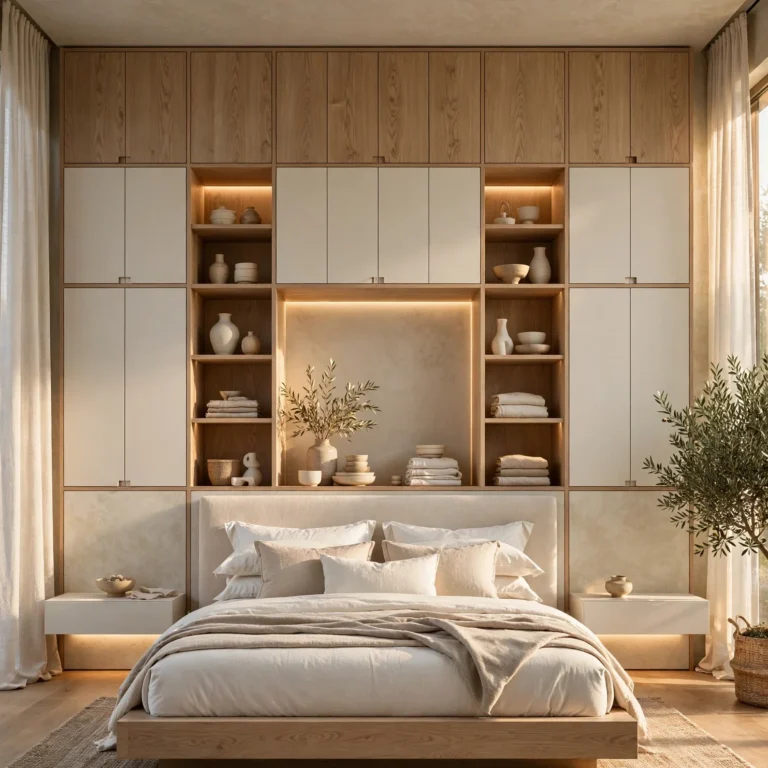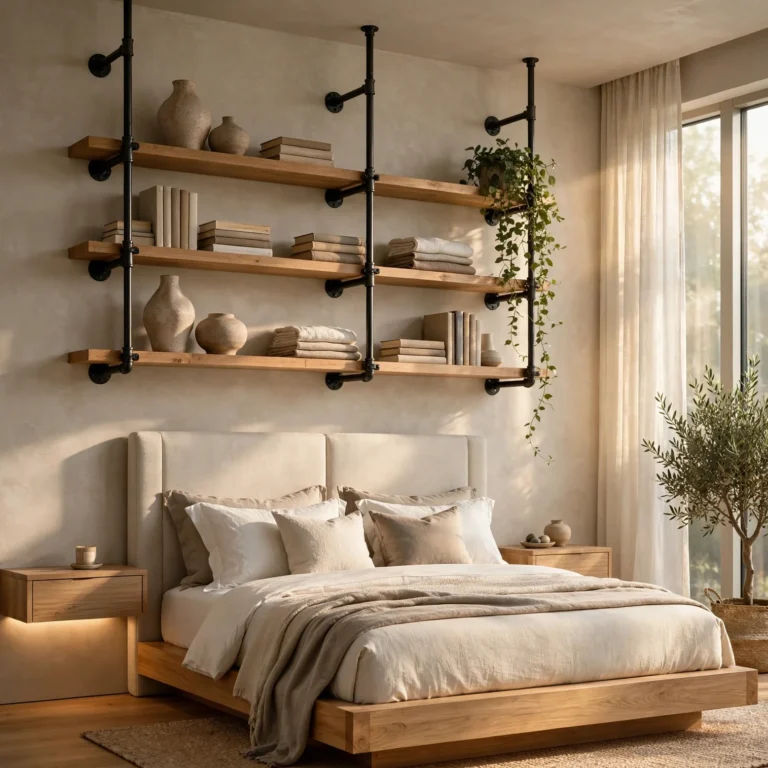

Tight Space Sharing 12 Small Bedroom Ideas for Couples
Small bedroom ideas for couples solve a problem single-occupant design guides rarely address: two people, two wardrobes, and often two schedules sharing one limited footprint. A shared bedroom needs more than a nice color palette; it needs a layout that prevents nightly friction over closet space, nightstand real estate, and where a partner’s shoes end up. This guide covers twelve practical strategies for furnishing a shared small bedroom, from storage division to lighting that respects two different bedtimes. By the end, you will have a clear plan for making a compact room work for both people, not just one.
Trend & Background
More couples are sharing smaller bedrooms than a decade ago, driven by rising rents in major cities and a growing number of partners moving in together earlier to split housing costs. This has created demand for design solutions built specifically for two people in one space, rather than generic small bedroom advice written for a single occupant. Furniture brands have responded with symmetrical nightstand sets, dual-zone storage systems, and bed frames designed with built-in his-and-hers compartments, making this an especially relevant moment to rethink a shared room that currently feels like a compromise.
Key Takeaways
- Shared storage systems prevent closet and drawer conflicts in a small bedroom
- His-and-hers zoning creates personal space even in a single shared room
- Larger bed frames require compensating with slimmer surrounding furniture
- Lighting and layout choices support two different sleep and wake schedules
1. Symmetrical Nightstand Pair

A symmetrical nightstand pair places matching tables on either side of the bed, giving each partner an identical personal surface for a lamp, water glass, or phone charger. This avoids the common shared-bedroom problem where one partner’s side becomes cluttered while the other stays bare, since matching furniture creates equal territory by design. Choosing a slim eighteen-inch-wide table on each side keeps walking paths clear even in a room too narrow for full-size furniture on both sides of the bed.
2. Split Closet Storage System
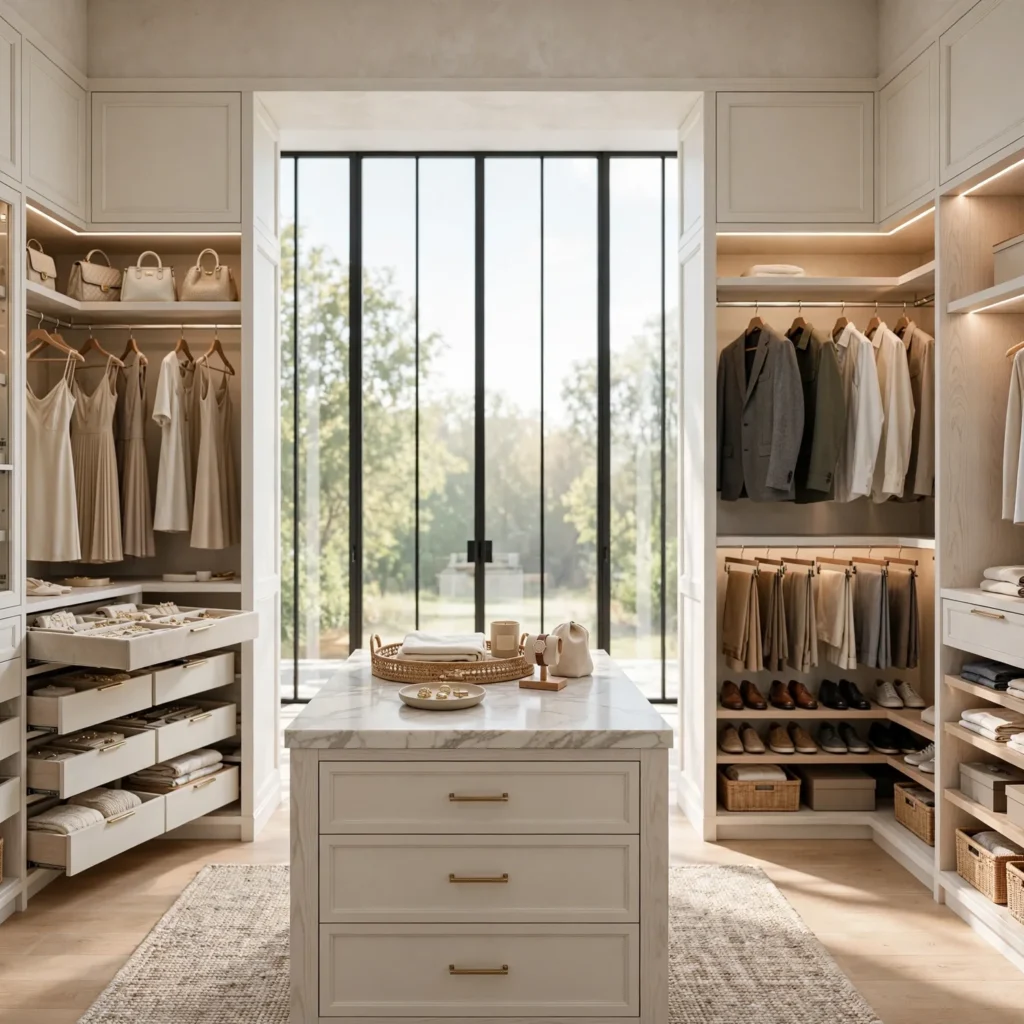
A split closet storage system divides an existing closet down the middle using shelf dividers, hanging rod extenders, or a simple painter’s tape line, giving each partner a clearly defined portion of shared storage. This prevents the ongoing negotiation over hanging space that often happens when two wardrobes compete for one closet built for a single person. Adding a second hanging rod at a lower height on one side effectively doubles vertical storage without requiring any construction.
| Closet Width | Recommended Split | Storage Method |
| Under 4 ft | 50/50 with divider shelf | Double hang rod |
| 4–6 ft | 50/50 with rod extender | Shelf + rod combo |
| 6+ ft | Zone by garment type | Full dual rod system |
3. Platform Bed Frame

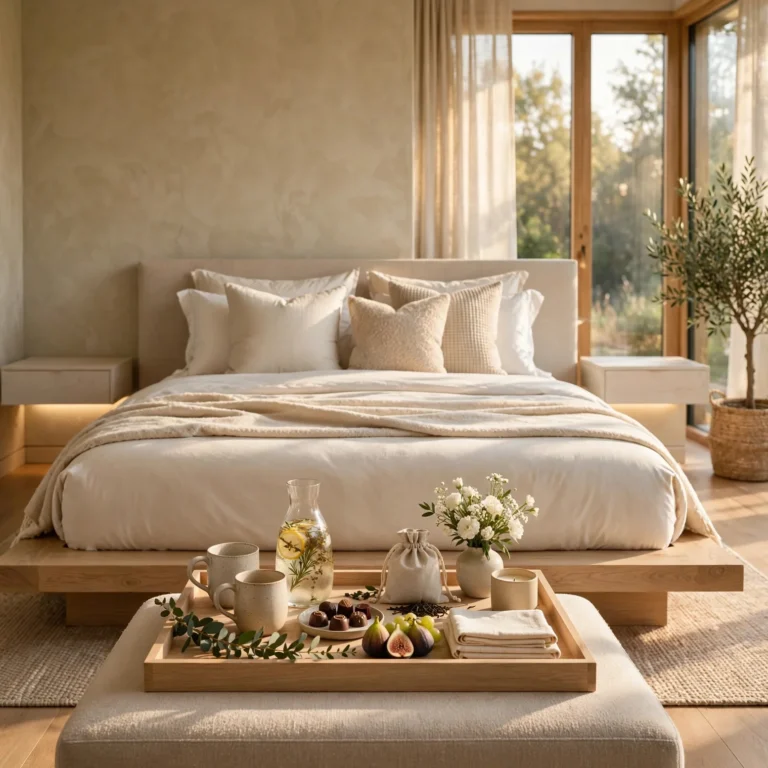
A platform bed frame supports the larger mattress size most couples need while keeping the visual footprint low through its skipped box spring and slim profile. Built-in drawers underneath the frame provide extra storage that a shared bedroom often lacks once two wardrobes are factored in. Choosing a queen or full frame in a light wood tone like white oak keeps the piece from overwhelming a small room the way a heavier upholstered frame would.
4. His-and-Hers Wall Shelving
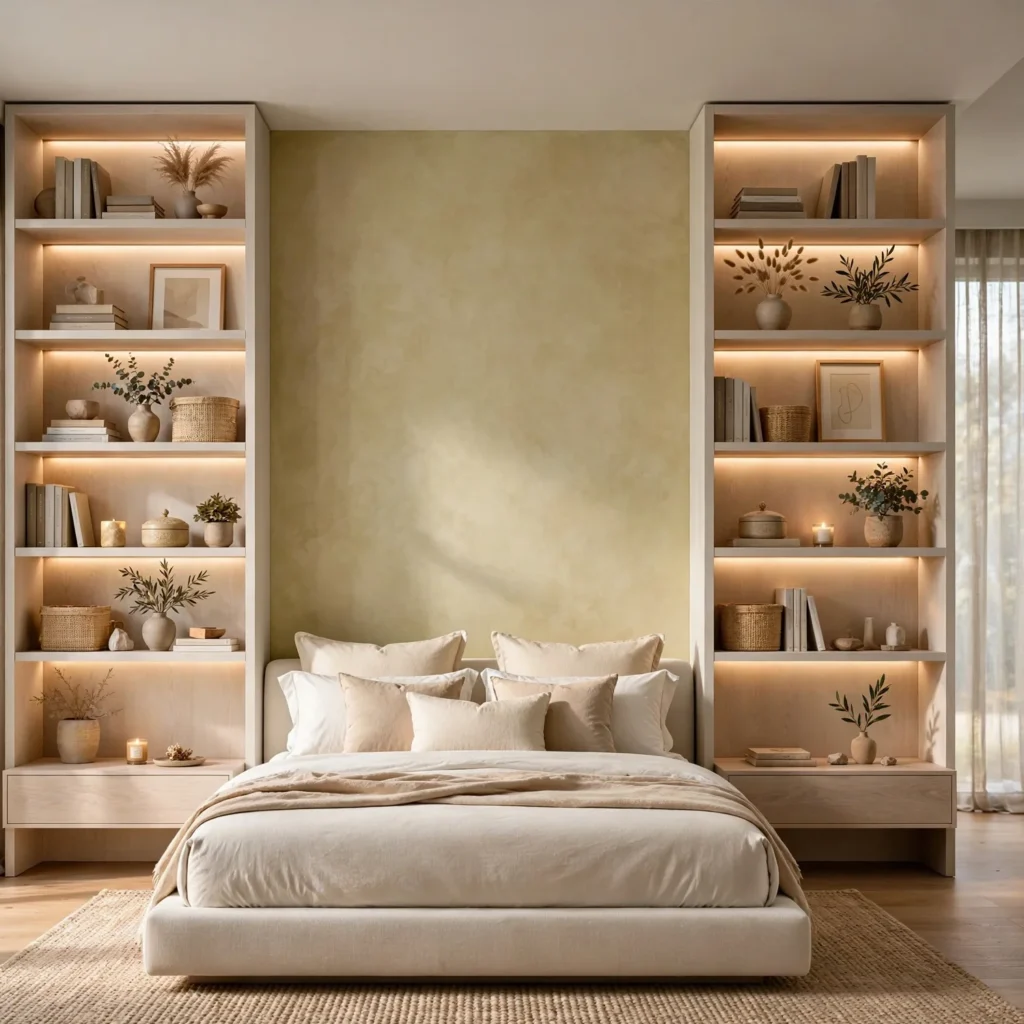
His-and-hers wall shelving mounts two matching floating shelf sets on opposite walls or opposite sides of a shared headboard, giving each partner a defined spot for personal items like books, glasses, or skincare. This avoids one partner’s belongings gradually spreading across shared surfaces, which is a common source of friction in small shared bedrooms. Painting or staining both shelf sets identically keeps the room visually balanced rather than looking divided.
Stay organized with our bedroom ideas for small rooms diy, where you’ll find creative ways to reduce clutter and make small bedrooms feel larger.
5. Dual-Zone Reading Lights

Dual-zone reading lights use two independently switched wall sconces or clip lights, one on each side of the bed, so one partner can read while the other sleeps without a shared lamp disturbing both people. Swing-arm sconces mounted at each side let each partner adjust their own light angle and brightness independently. This setup matters more in small shared bedrooms than larger ones, since there is rarely a separate reading nook to retreat to.
6. Corner Wardrobe Unit
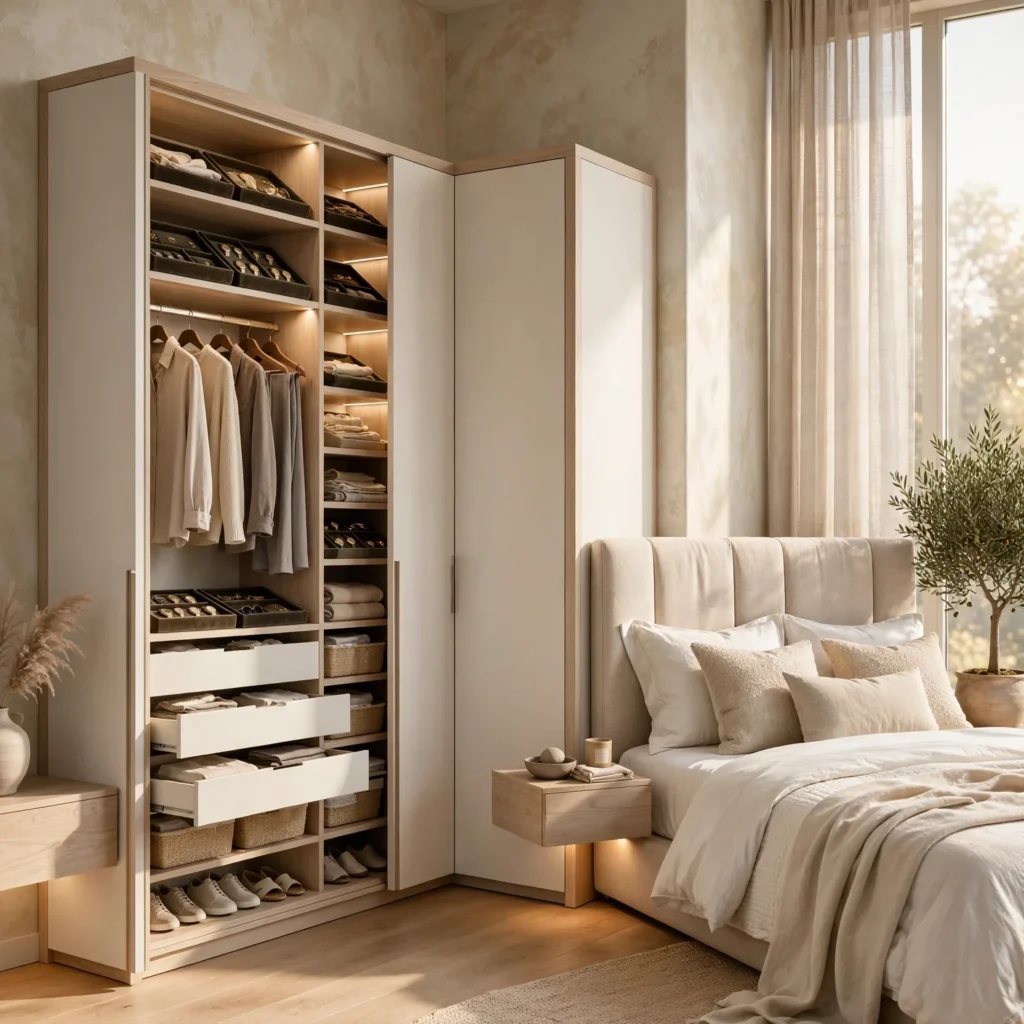
A corner wardrobe unit uses an otherwise wasted diagonal corner to add a second hanging and shelving zone beyond the primary closet, which is often necessary once two people’s clothing is combined into one room. Slim triangular or L-shaped wardrobe units fit into corners that a rectangular dresser cannot use efficiently, adding storage without extending further into the room’s walking space. This works particularly well paired with a corner bed placement layout in an oddly shaped room.
7. Shared Charging Station
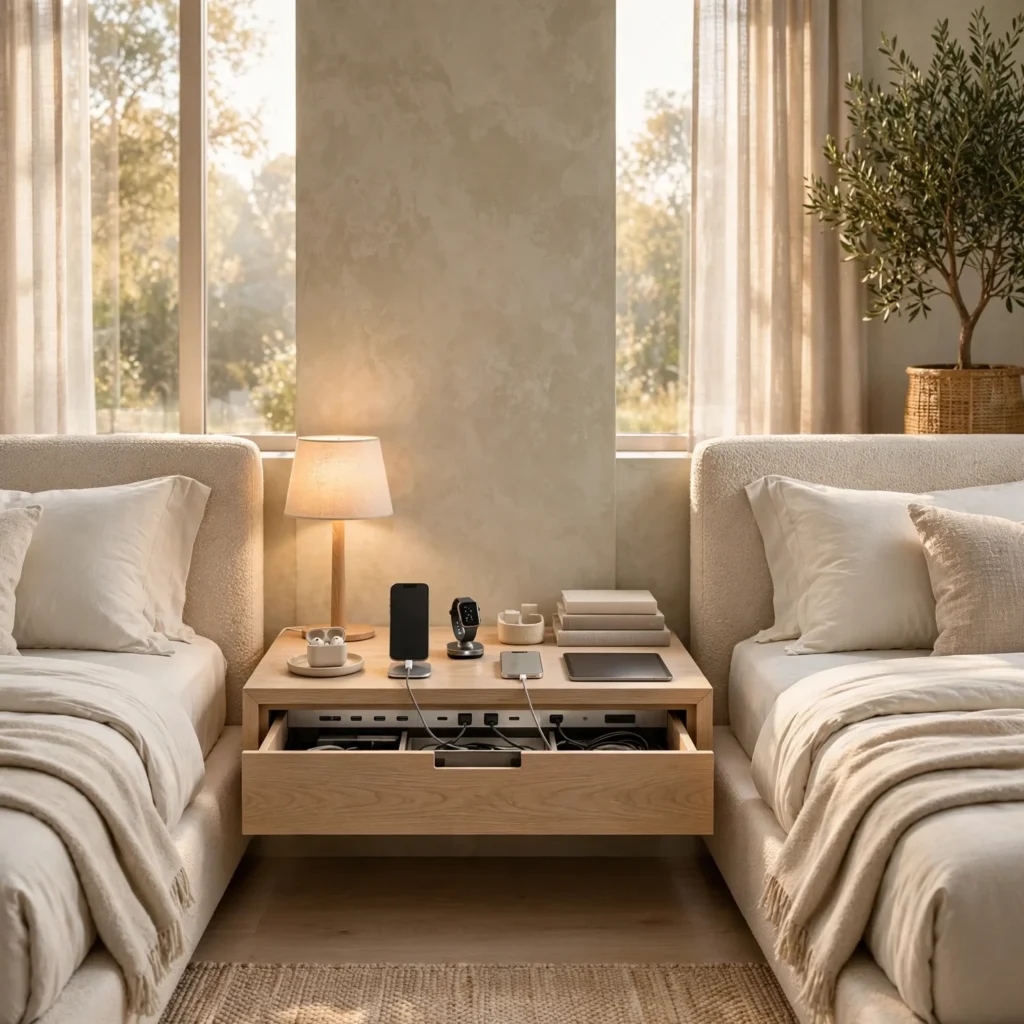
A shared charging station consolidates both partners’ phone chargers, e-readers, and watch chargers into one wall-mounted or nightstand-integrated hub, reducing the cord clutter that tends to accumulate on both sides of a shared bed. A multi-port charging block mounted to the wall behind each nightstand, paired with a small cable management box, keeps both sides tidy without requiring a large surface area. This is a small but frequently overlooked upgrade in small bedroom ideas for couples guides.
8. Light Color Palette

A light color palette in soft whites, warm greiges, or pale sage helps a shared small bedroom feel less crowded once two people’s furniture and belongings occupy the same footprint. Two people generally means more visual clutter than a single-occupant room, so keeping walls and large furniture pieces light in tone prevents the room from feeling visually heavier than it already is. Choosing one shared accent color for bedding and textiles, rather than each partner picking separately, keeps the palette cohesive.
9. Under-Bed Storage Bins
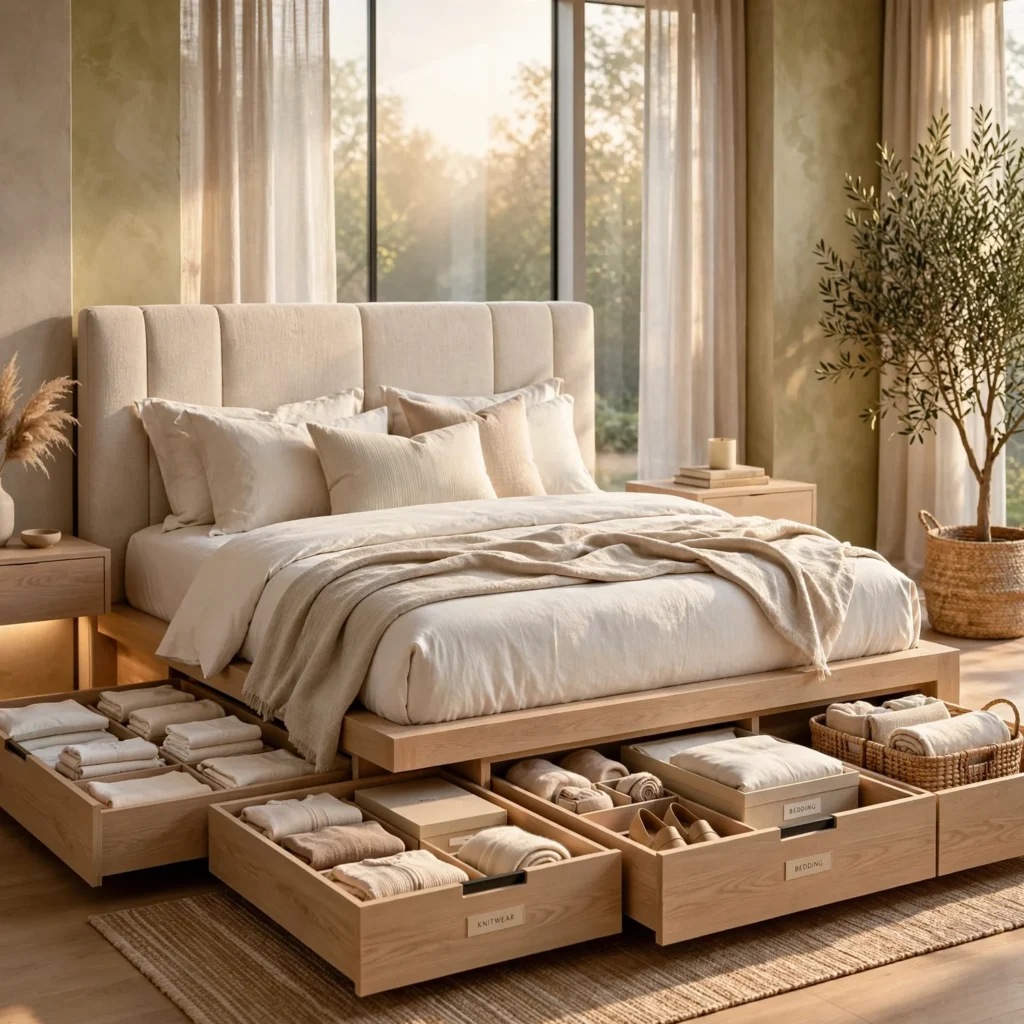
Under-bed storage bins split into two labeled or color-coded sets give each partner a dedicated storage zone beneath a raised or platform bed frame without adding any visible furniture. This is particularly useful in a shared bedroom where seasonal clothing and shoes for two people can no longer fit in a single closet. Clear acrylic bins on rolling casters make it easy for each partner to access their own items without disturbing the other’s storage.
10. Room Divider Curtain

A room divider curtain hung from a ceiling-mounted track creates a temporary visual separation within a shared bedroom, useful for couples with mismatched schedules who need one partner to dress or work while the other sleeps. Lightweight linen or cotton panels slide open during the day and close at night, offering flexible privacy without a permanent wall. This works especially well in a small bedroom that also doubles as a joint workspace during the day.
11. Matching Storage Ottomans

Matching storage ottomans placed at the foot of the bed give each partner a personal spot for shoes, blankets, or workout gear while doubling as extra seating in a room too small for a bench or chair. Choosing two identical ottomans rather than one large bench maintains the symmetry that works well throughout small bedroom ideas for couples, while splitting storage capacity evenly between both people. Upholstered lids in a durable performance fabric hold up to daily use from both partners.
12. Wall-Mounted Mirror Duo

A wall-mounted mirror duo places two smaller mirrors side by side rather than one large shared mirror, giving each partner a personal spot to get ready without waiting or crowding. This is especially useful during overlapping morning routines, a common friction point in shared small bedrooms with only one mirror. Mounting both mirrors at slightly different heights to suit each partner’s stature adds a practical, custom-fit detail to the shared space.
Shop the Look
A queen platform bed frame in white oak anchors the shared layout, paired with a matching set of slim eighteen-inch nightstands and independently switched brass swing-arm sconces for dual-zone reading light. Add two matching storage ottomans at the foot of the bed, a wall-mounted charging hub for shared cords, and a pair of same-size mirrors mounted side by side for simultaneous morning routines.
Common Mistake to Avoid
The most common mistake in shared small bedroom design is letting one partner’s belongings gradually take over shared surfaces and storage, rather than dividing space explicitly from the start. Without a clear system, one nightstand becomes cluttered, one side of the closet overflows, and resentment builds over unequal space even in a room technically shared fifty-fifty. Setting up matched furniture and a defined closet split before moving in together prevents this imbalance from becoming a recurring source of tension.
FAQs
What is the best bed size for a couple in a small bedroom?
A queen bed is typically the best balance for a couple in a small bedroom, offering enough shared sleeping space without consuming the floor the way a king would in a room under twelve feet wide. A full-size bed can work for couples prioritizing floor space over sleeping room, but most couples find queen sizing necessary for comfortable long-term shared sleep.
How do you divide closet space fairly between two people?
Dividing closet space fairly usually means splitting the hanging rod and shelving in half by physical measurement rather than by item count, since one partner’s wardrobe may include more hanging pieces than the other’s. Adding a second lower rod or over-the-door organizer for the partner with less standard hanging space helps balance the split without requiring a full closet renovation.
How can two people share one small bedroom without feeling cramped?
Two people can share one small bedroom without feeling cramped by using symmetrical furniture, defined personal zones for storage and lighting, and a light color palette that keeps the room from feeling visually heavier than it already is with double the belongings. Vertical storage solutions like wall shelving and under-bed bins also help since they add capacity without consuming additional floor space.
Should couples in a small bedroom use one nightstand or two?
Most couples benefit from two nightstands, even in a small bedroom, since a shared single nightstand tends to become cluttered and creates a nightly negotiation over surface space. Choosing two slim eighteen-inch-wide tables instead of one larger nightstand maintains individual space on both sides while still fitting into a narrower room than two full-size tables would allow.
How do you handle different sleep schedules in a shared small bedroom?
Handling different sleep schedules in a shared small bedroom typically involves independently switched reading lights on each side of the bed and, in some cases, a room divider curtain that lets one partner dress or work quietly while the other sleeps. Blackout curtains paired with a white noise machine on the earlier sleeper’s side also help minimize disruption from a partner coming to bed later.
Conclusion
These small bedroom ideas for couples show that sharing a tight space does not have to mean sharing every surface without a plan, as long as storage, lighting, and furniture are divided with intention. Save this guide to Pinterest for your next shared room refresh, and check out our related post on small bedroom storage solutions for more space-saving strategies.