Small Bedroom Decor Ideas 12 That Feel Intentional
Pulling together small bedroom decor ideas that actually work means choosing pieces that add personality without adding visual clutter to a room that already has limited breathing room. The instinct in a tight space is often to go minimal and stop there, but a compact bedroom can still feel layered and finished with the right approach to color, texture, and placement. This guide covers twelve decor moves that bring warmth and character to a small bedroom without making it feel smaller than it already is.
Why Small Bedroom Decor Is Having a Moment
Smaller floor plans in new apartment builds, along with a wave of renters decorating temporary spaces, have pushed decor trends toward pieces that add style without permanence. Removable wallpaper, lightweight textiles, and gallery-style wall art have all grown in popularity because they deliver a finished look without construction or a big investment. At the same time, there’s been a shift away from matching furniture sets toward mixed, curated pieces, which happens to suit small rooms particularly well since it avoids the heavy, boxed-in feeling a matching set can create.
Key Takeaways
- A tight color palette does more to make a small bedroom feel put-together than any single statement piece.
- Texture and pattern in small doses add warmth without making a compact room feel busy.
- Wall decor placed above furniture lines, not scattered randomly, keeps a small room looking cohesive.
- Decor choices that skip visual weight, like light frames and sheer textiles, matter more here than in larger rooms.
1. Tonal Color Palette
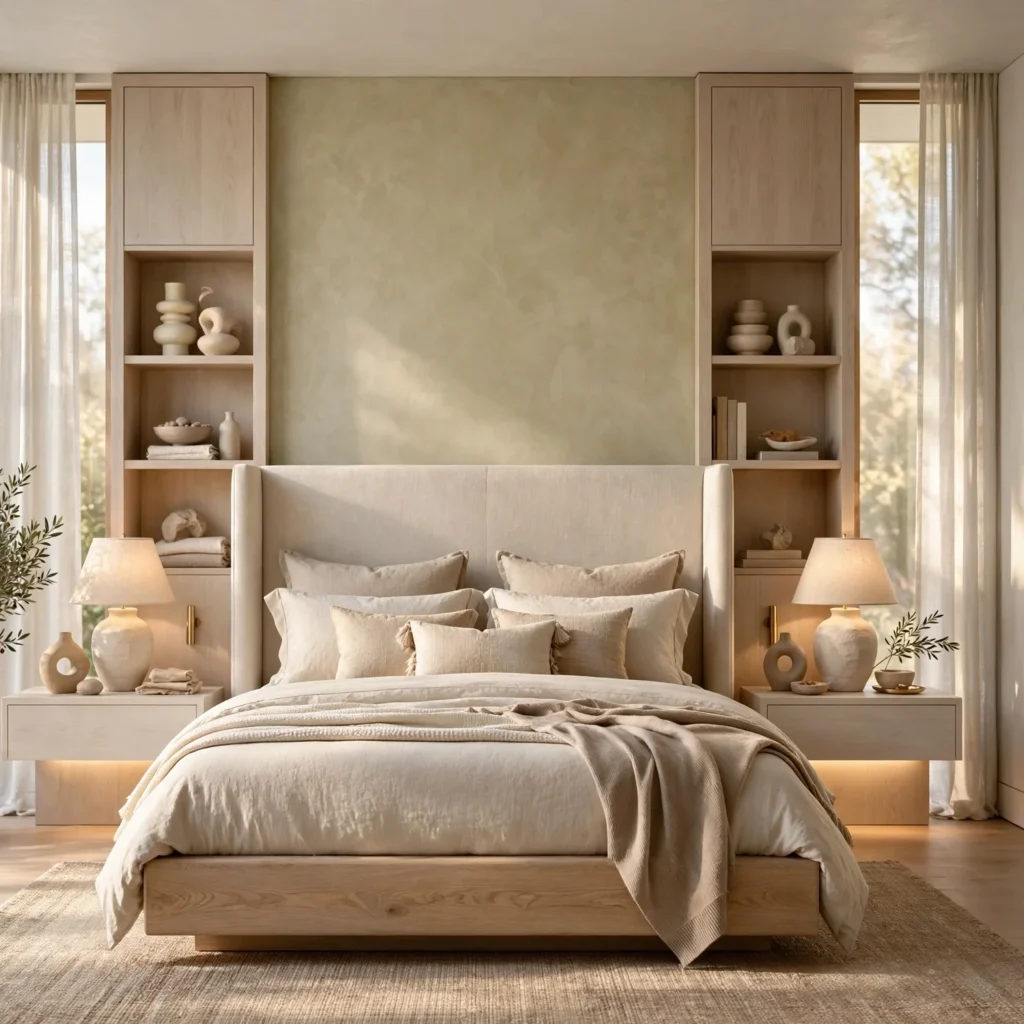
Sticking to two or three shades within the same color family, like warm ivory, oatmeal, and soft terracotta, keeps a small bedroom from feeling visually chopped up. This approach lets furniture, bedding, and walls blend into each other rather than competing for attention, which makes the whole room read as larger and calmer. Choose one dominant tone for the walls and bedding, then use the remaining shades sparingly in a throw pillow or a piece of art.
2. Gallery Wall Above Bed
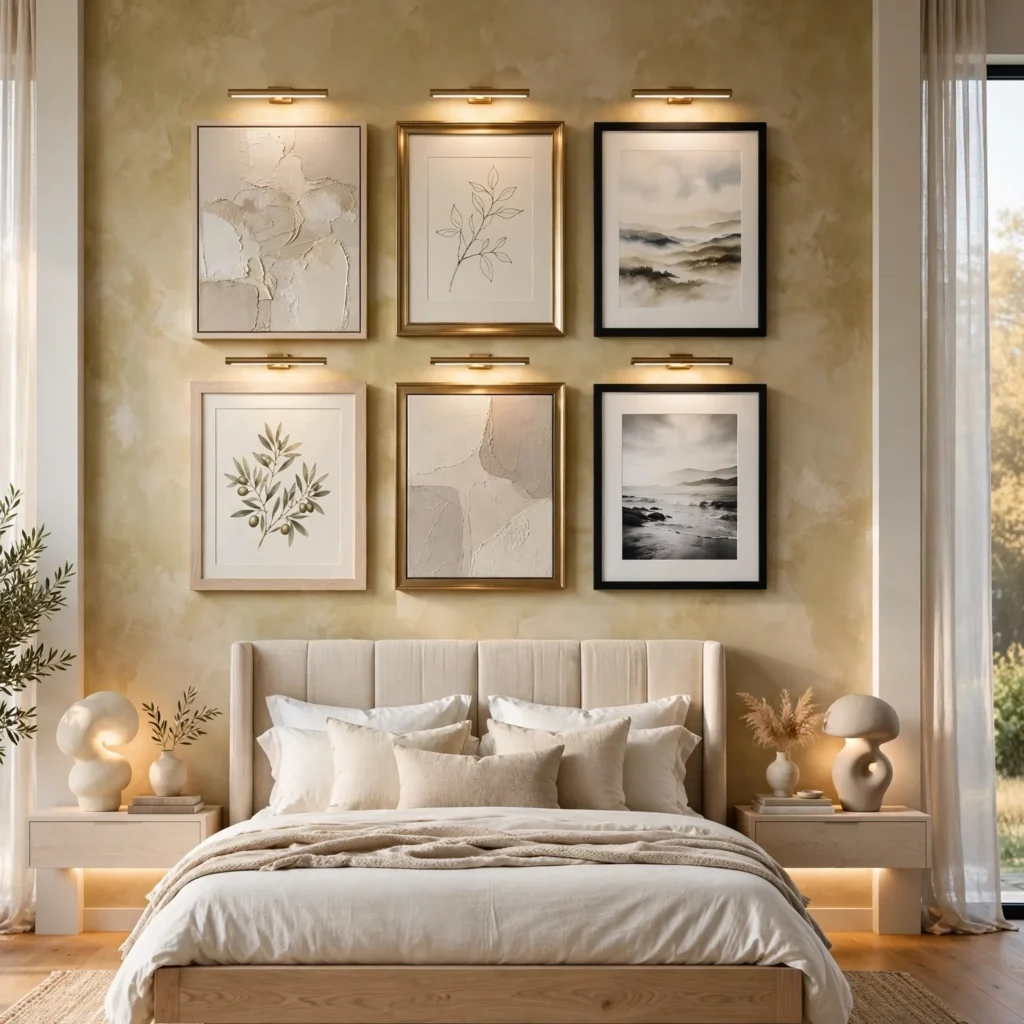
A cluster of small framed prints above the headboard fills vertical wall space that would otherwise sit empty, and it does so without requiring any floor footprint. This works especially well in a small bedroom because it draws the eye upward rather than around a cluttered floor. Keep frames in a single finish, like matte black or natural wood, and leave two to three inches of breathing room between each piece so the arrangement doesn’t feel cramped.
| Frame Count | Wall Width Needed | Best For |
| 3-4 frames | 30-36″ | Twin or full beds |
| 5-6 frames | 40-48″ | Queen beds |
| 7+ frames | 50″+ | Larger accent walls |
3. Textured Throw Blanket
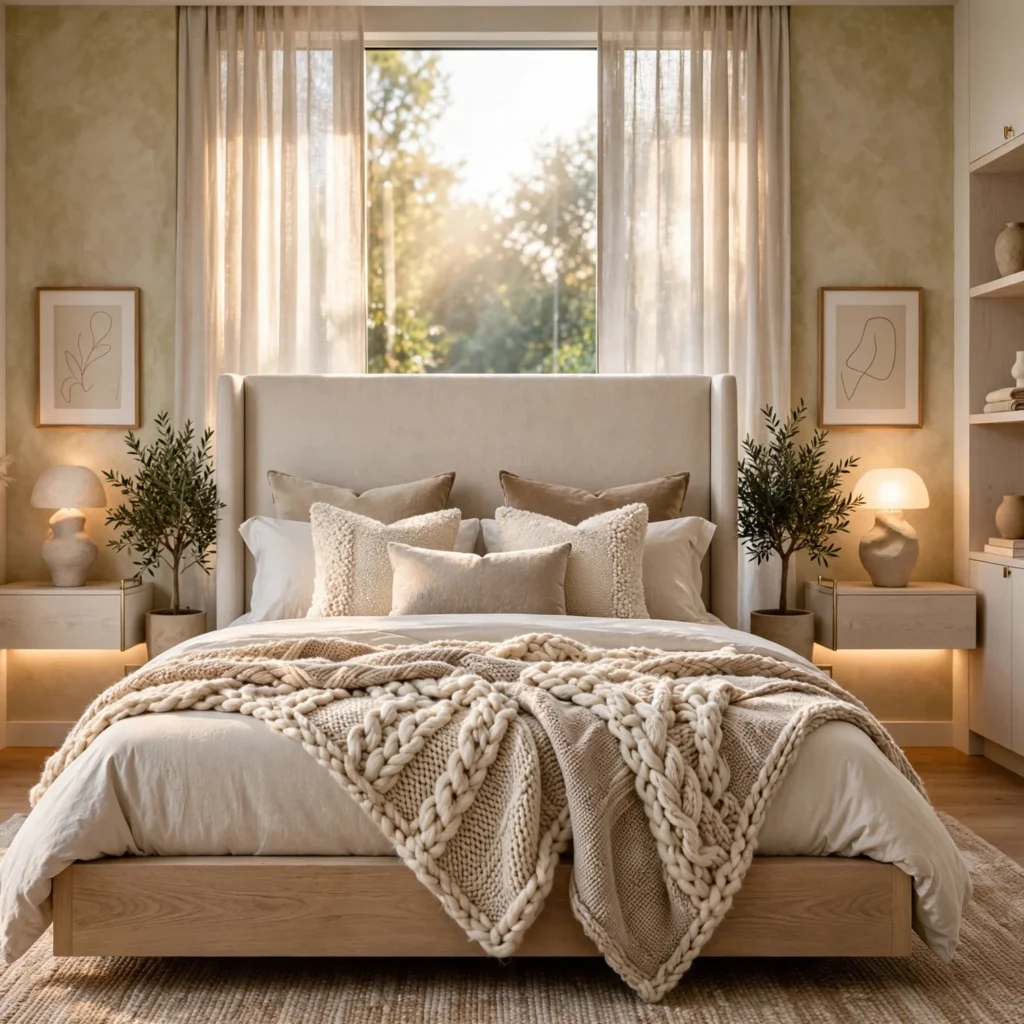
A chunky knit or bouclé throw folded at the foot of the bed adds tactile warmth to a small room without introducing a new color or shape to account for. It’s one of the easiest ways to layer texture into a compact bedroom, since it works with almost any existing bedding rather than requiring a full redesign. Choose a neutral tone close to the bedding color so the throw reads as an extension of the bed rather than a separate element.
4. Sheer Curtain Panels
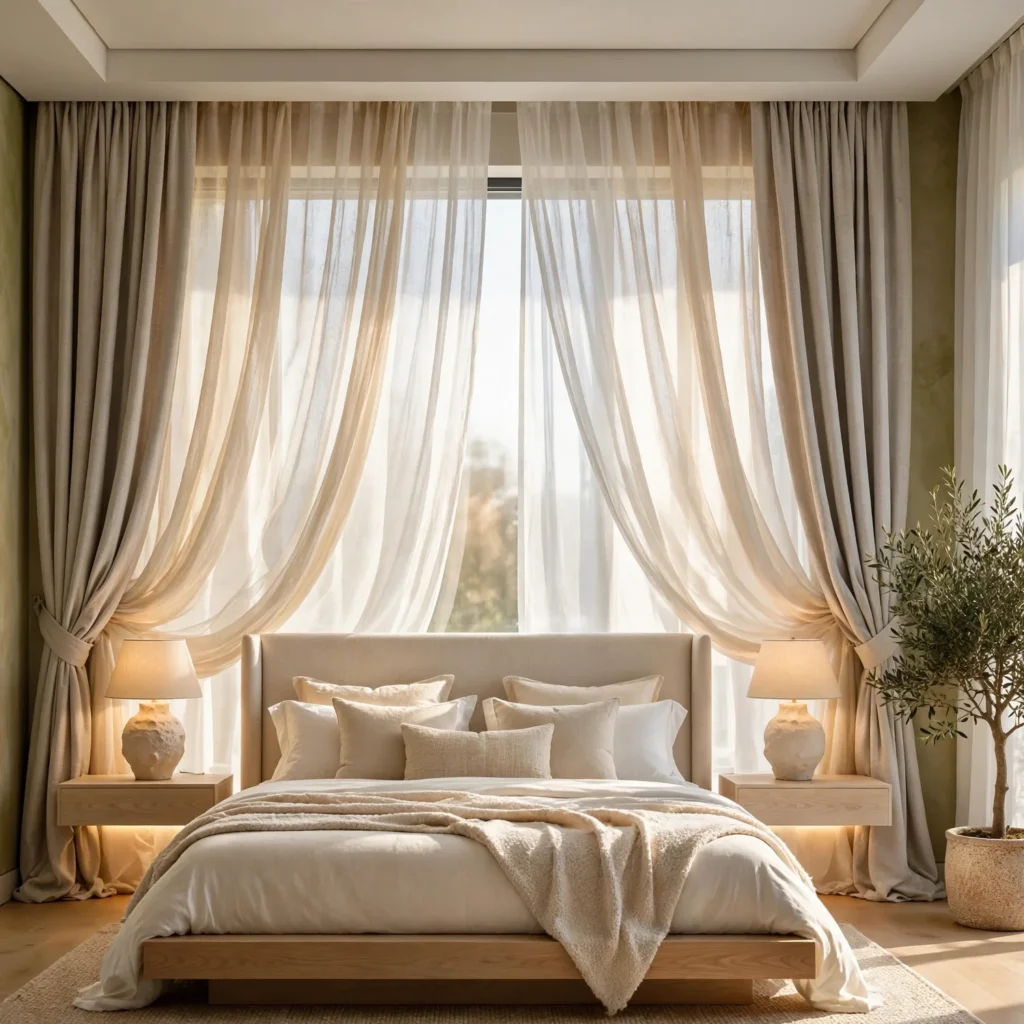
Lightweight, sheer curtain panels let natural light filter through while still softening the hard edges of a window frame, which matters in a small bedroom where every light source counts. Unlike heavier drapes, sheers add texture without visually shrinking the window or darkening the room. Pair them with a slim curtain rod mounted close to the ceiling for a taller, airier look that suits compact spaces particularly well.
Refresh your walls with our small room ideas bedroom, including gallery walls, wallpaper, shelves, and creative design accents.
5. Woven Wall Basket Display
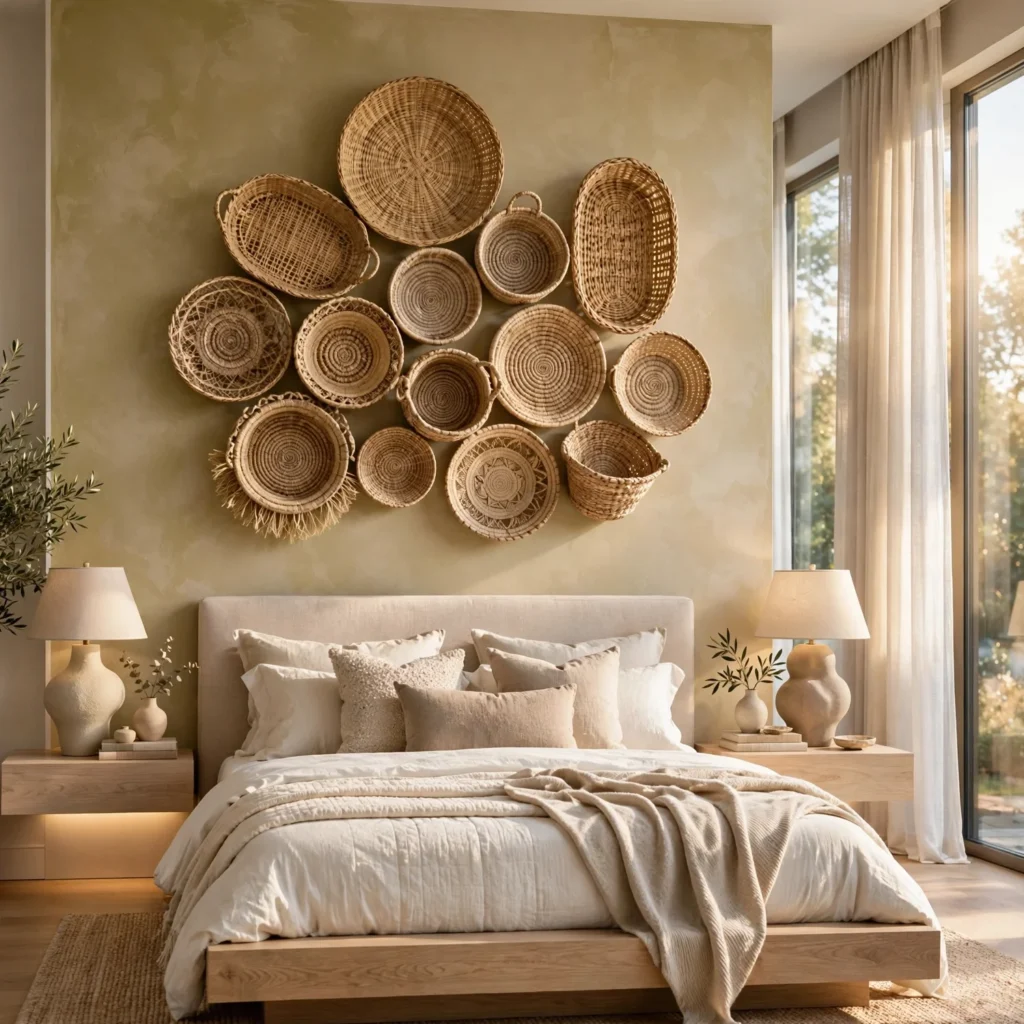
A cluster of flat woven baskets mounted on the wall above a dresser or desk adds natural texture and a handmade feel without taking up any surface space. This decor choice works well in a small bedroom because it fills a wall that might otherwise stay bare, while keeping the room’s actual footprint completely untouched. Arrange baskets in odd numbers and varying sizes for a more natural, less staged look.
6. Accent Pillow Trio
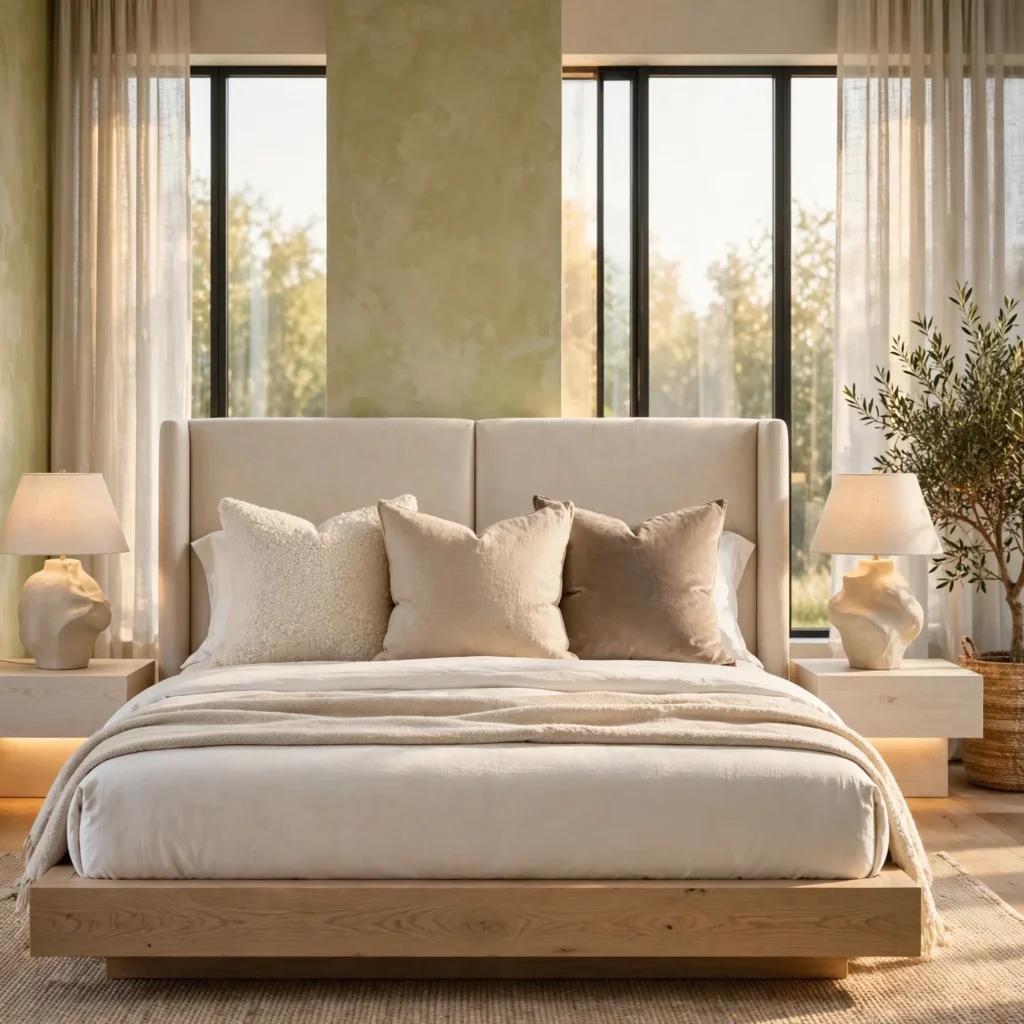
Three coordinating pillows in varied textures, like a linen, a knit, and a printed cotton, add layered interest to the bed without overwhelming a small room the way five or six pillows might. This is a low-commitment way to introduce pattern or a seasonal color, since pillow covers can be swapped without touching the rest of the room’s palette. Keep the pillow sizes graduated, largest in back, smallest in front, for a tidy, intentional stack.
7. Statement Headboard
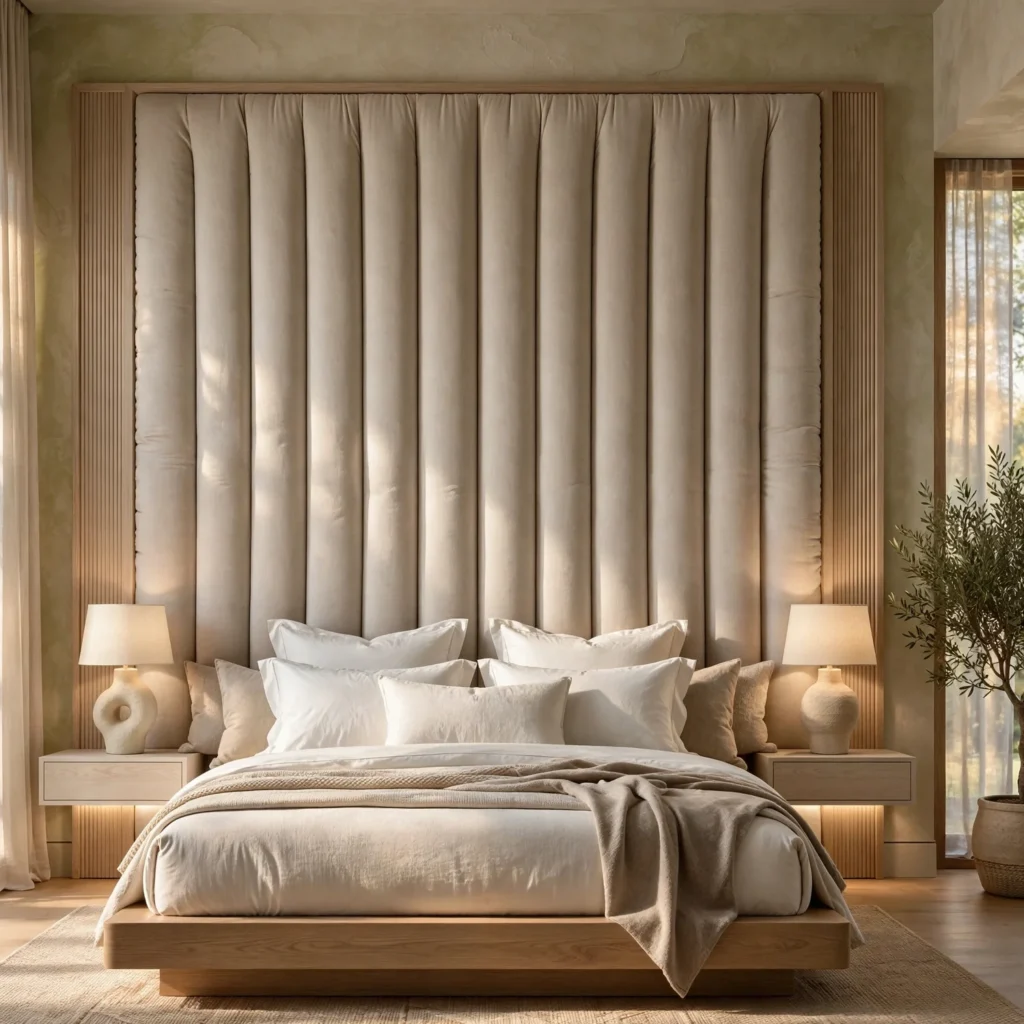
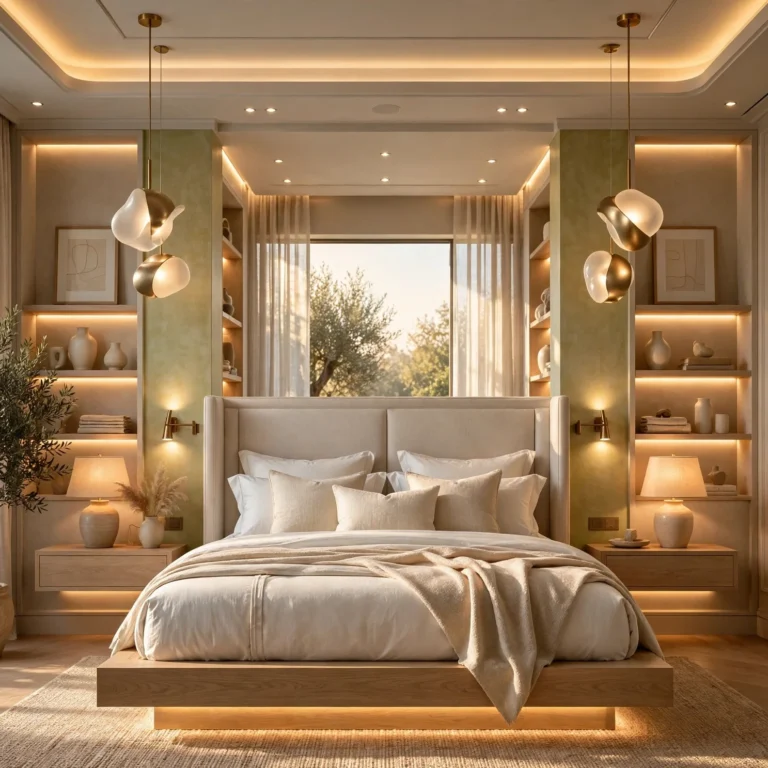
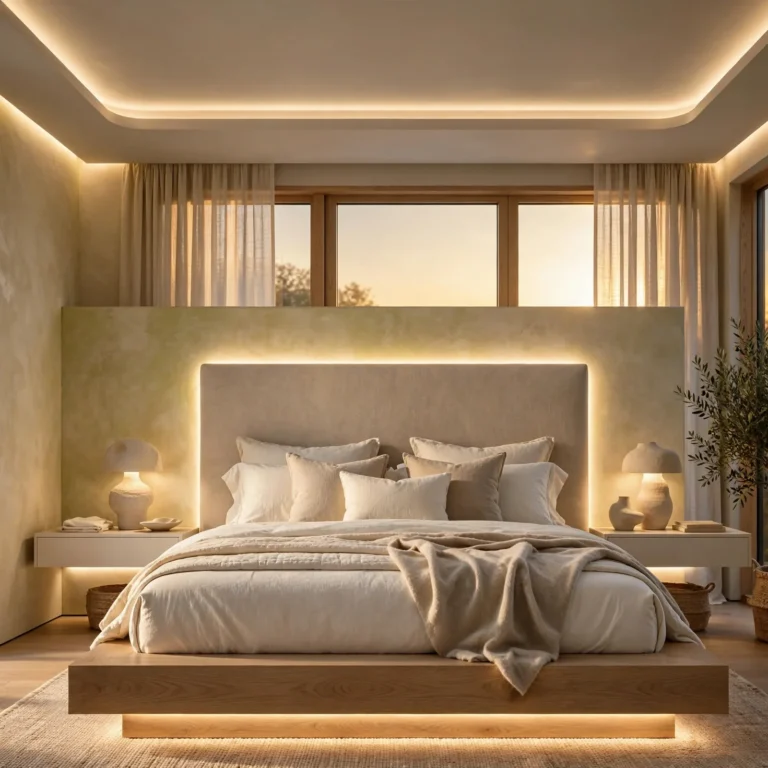
An upholstered or wood-paneled headboard becomes the room’s main visual anchor, which is useful in a small bedroom where there often isn’t space for a separate piece of art or furniture to serve that role. A textured or channel-tufted headboard in particular adds dimension to a wall without requiring any additional decor above it. Choose a headboard that reaches close to the width of the bed frame so it doesn’t look undersized against the wall.
8. Removable Wallpaper Accent
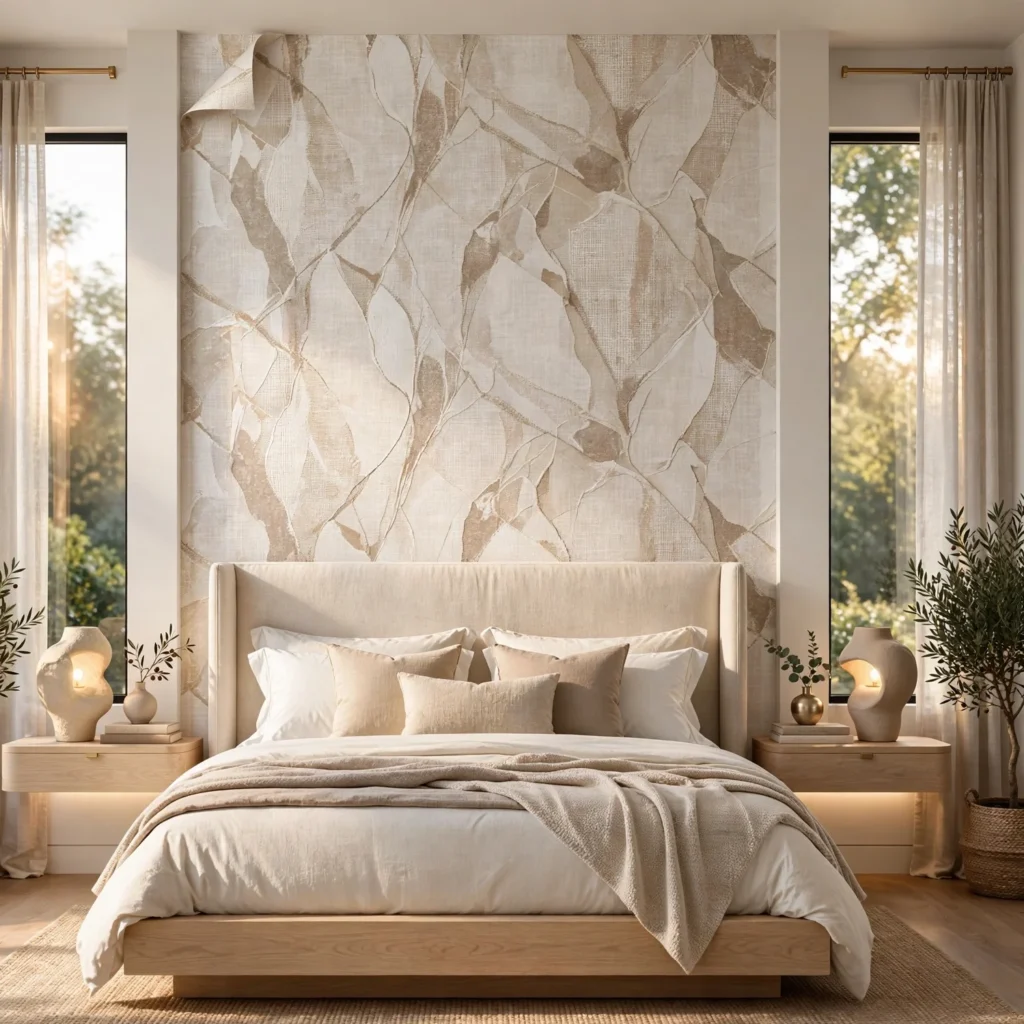
Applying peel-and-stick wallpaper to a single wall, usually the one behind the headboard, adds pattern and personality without the commitment or expense of wallpapering the entire room. This works particularly well in a small bedroom because it creates a focal point rather than surrounding the room in pattern, which could otherwise feel overwhelming in a tight space. A small-scale print, like a fine stripe or a subtle botanical, tends to suit compact rooms better than an oversized motif.
9. Dried Botanical Arrangement
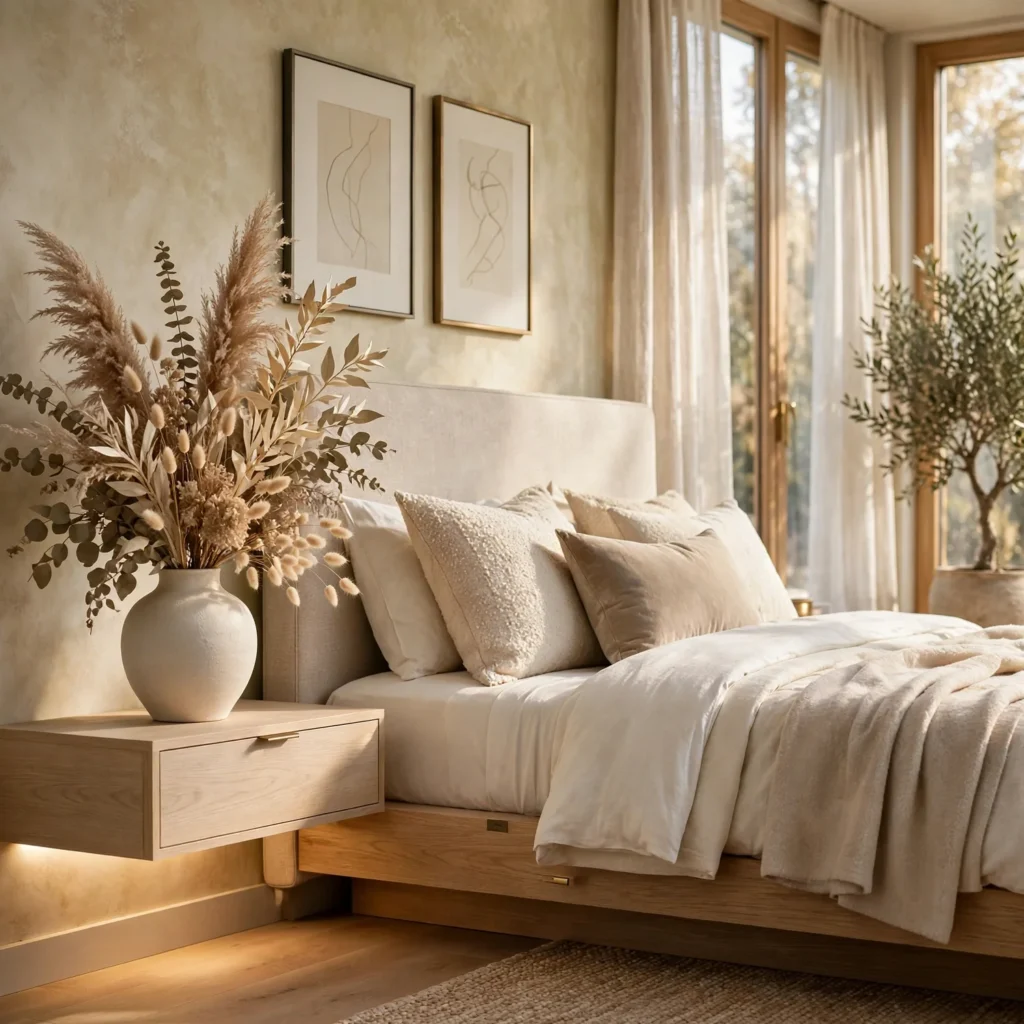
A single vase of dried pampas grass, eucalyptus, or wheat stems adds organic texture to a nightstand or dresser top without the upkeep of fresh flowers or the visual weight of a large plant. In a small bedroom, one well-placed arrangement tends to read as more intentional than several scattered decorative objects. Choose a vase in a matte ceramic or glass finish that complements the room’s existing metal or wood tones.
10. Layered Area Rug
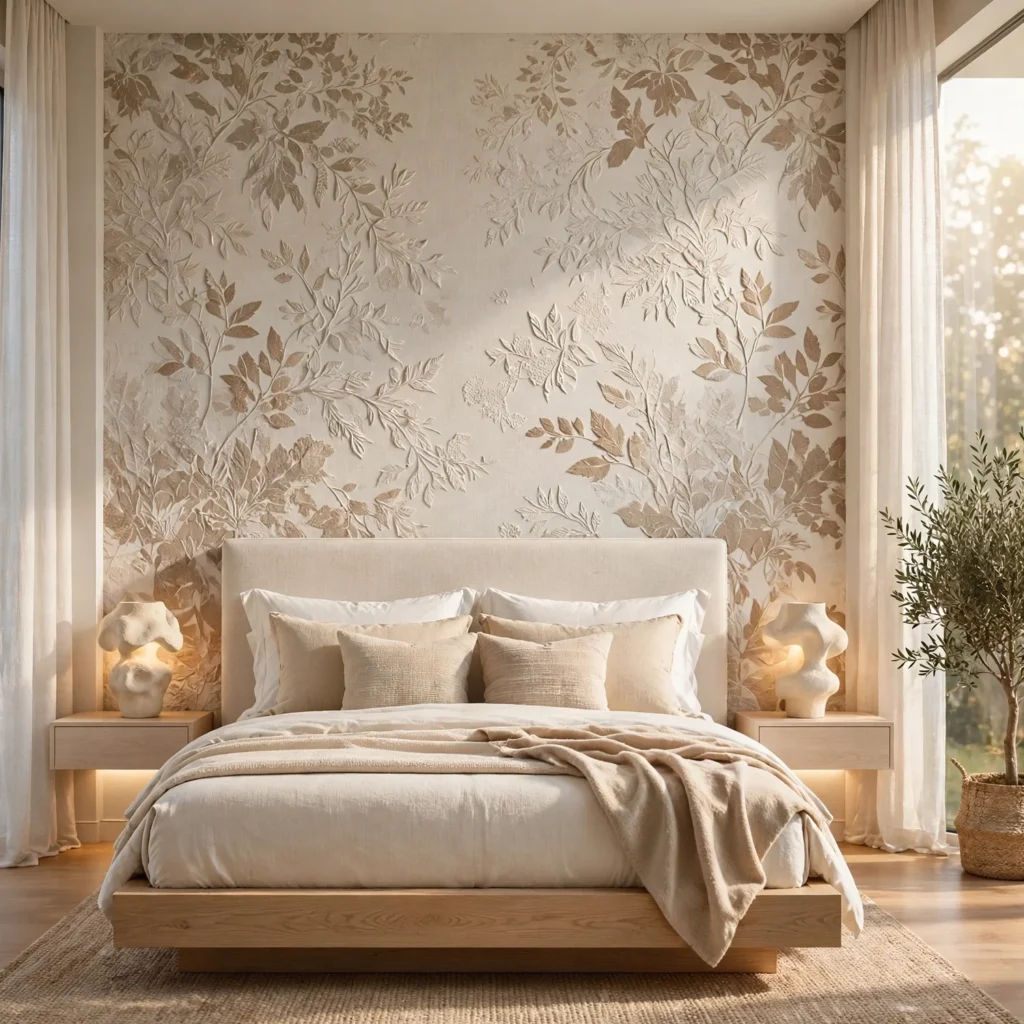
Placing a smaller patterned rug on top of a larger neutral one adds visual depth and warmth underfoot without requiring wall-to-wall carpet in a room where floor space is already limited. This layering technique also lets you introduce pattern through the rug rather than through wallpaper or bedding, which keeps the rest of the room easier to update later. Size the top rug to sit mostly under the bed and nightstands so the layered edge stays visible.
11. Task Lamp With Sculptural Base
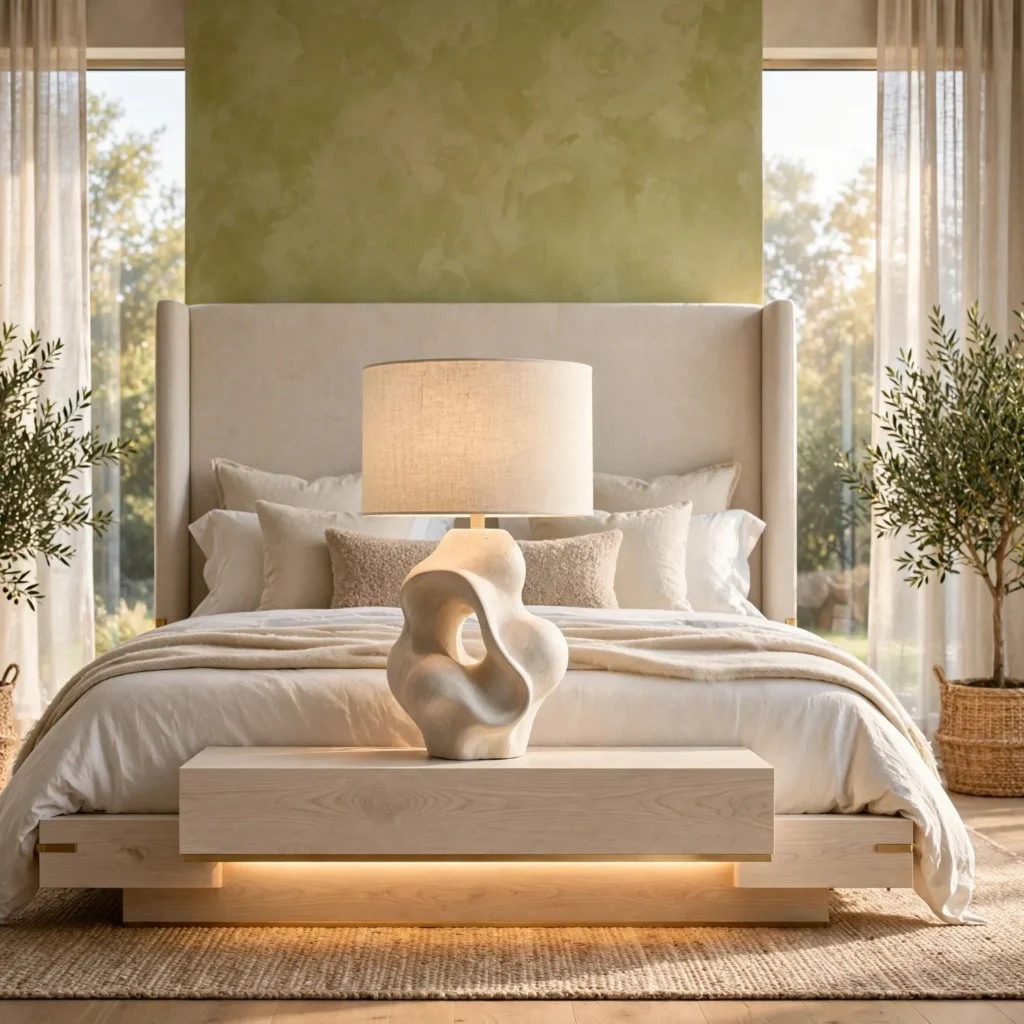
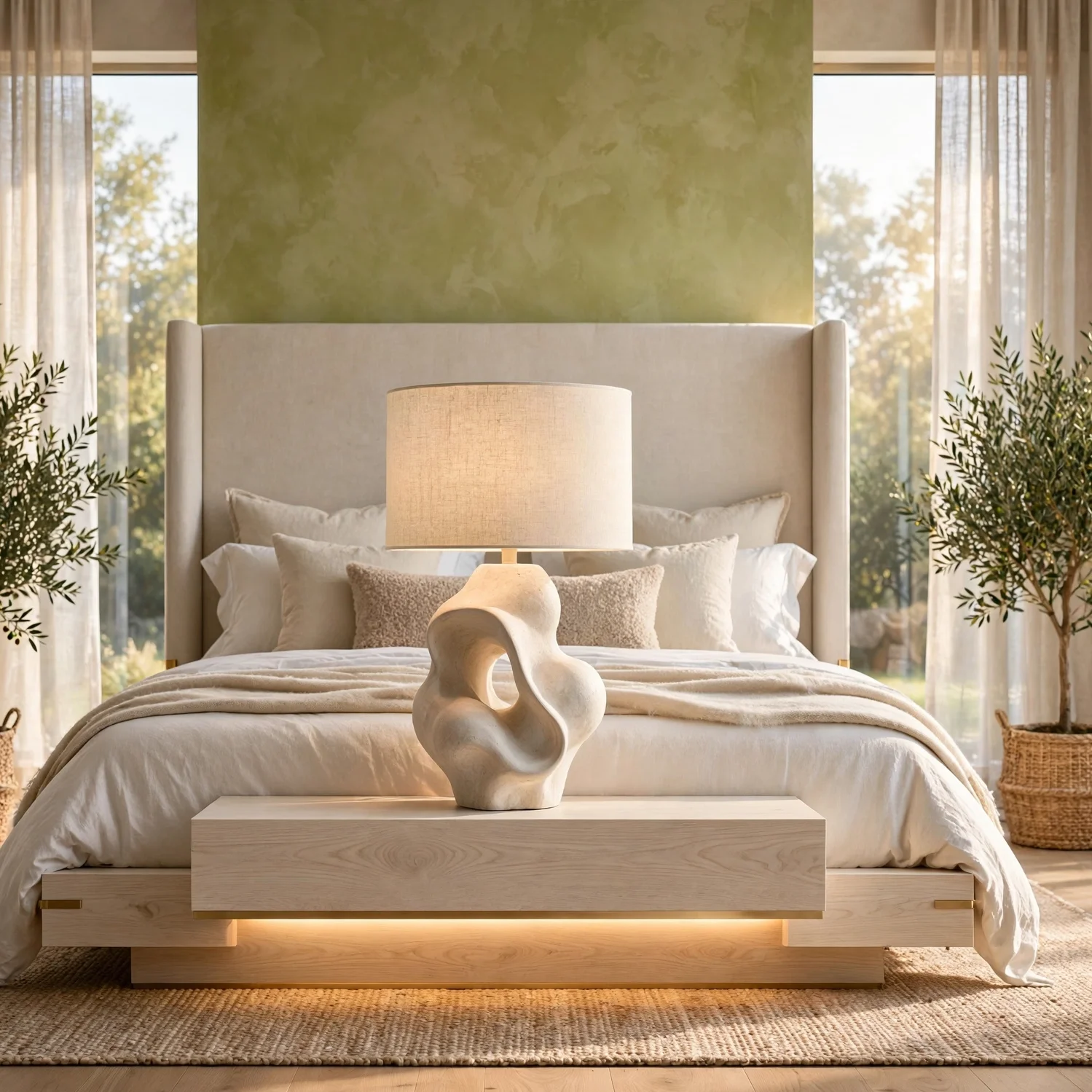
A lamp with a distinctive base, in a curved ceramic or fluted glass shape, doubles as both function and decor, which matters in a small bedroom where there isn’t room for purely decorative objects alongside practical ones. Placing it on a nightstand or floating shelf adds visual interest at eye level without needing extra art or accessories nearby. Choose a warm-toned bulb to keep the light soft rather than stark.
12. Framed Mirror as Wall Art
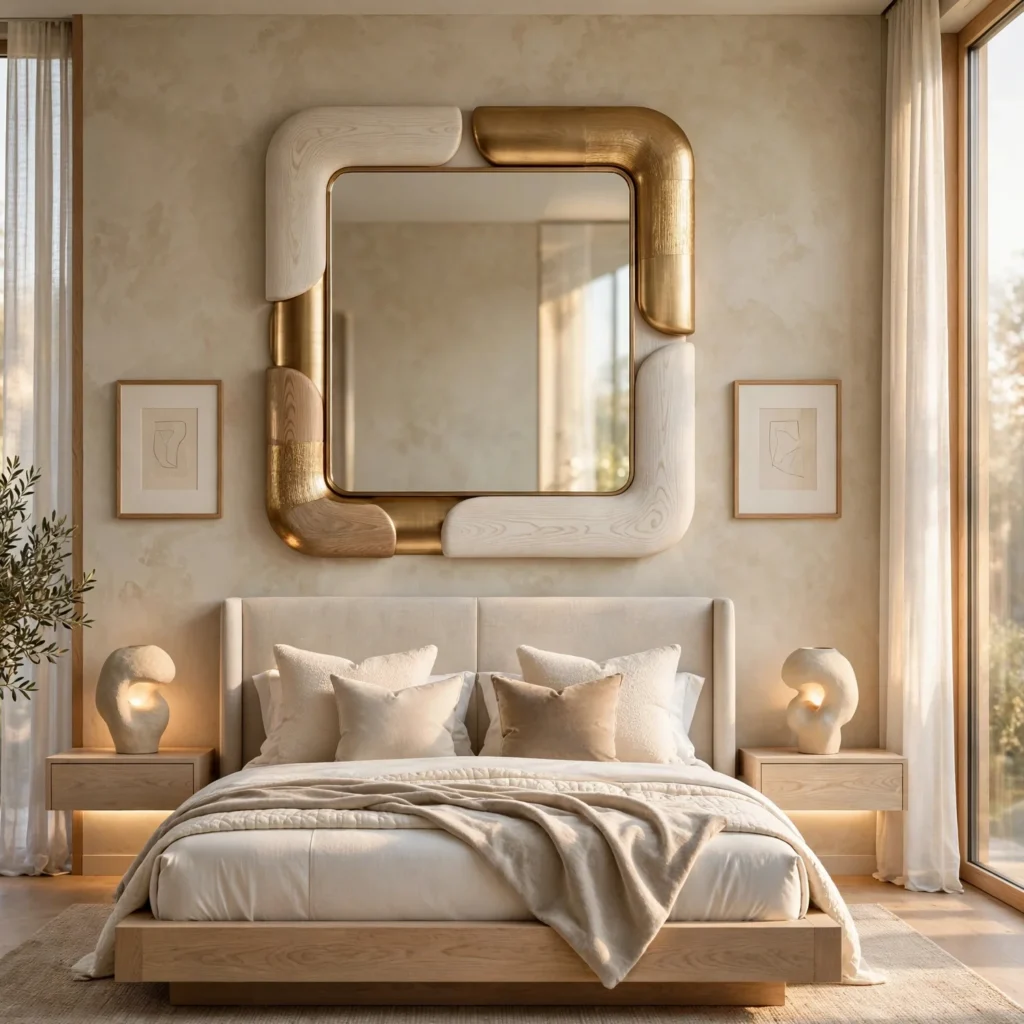
An arched or scalloped mirror hung on its own, rather than paired with other wall decor, functions as both a statement piece and a practical light-reflecting tool in a small bedroom. This dual purpose makes it more efficient than a piece of framed art, which only serves a decorative role. Hang it at a height where it’s actually useful for getting dressed, rather than purely for its visual effect, so it earns its spot on the wall.
Shop the Look
A tufted linen headboard in oatmeal sets a warm, neutral base for the room. Add a chunky knit throw in the same tone family, a trio of textured pillow covers mixing linen and bouclé, an arched rattan-framed mirror hung across from the window, and a layered jute-and-pattern rug combo underfoot to tie the palette together without introducing competing colors.
Common Mistake to Avoid
The most common mistake in small bedroom decor is treating every bare wall or surface as a spot that needs to be filled. Overdecorating a compact room, even with small, tasteful pieces, adds up to visual noise that makes the space feel more cramped rather than more finished. Leaving some negative space, whether it’s a bare stretch of wall or an empty corner of a dresser, actually helps the decor that is there stand out and gives the room room to breathe.
Frequently Asked Questions
How do I decorate a small bedroom without making it feel cluttered?
Sticking to a tight color palette and choosing a few intentional decor pieces rather than many small ones is the most reliable way to avoid clutter in a small bedroom. Wall-mounted decor, like a gallery wall or floating shelf, also helps since it doesn’t compete with floor or surface space. Editing down to pieces that serve a purpose, whether decorative or functional, tends to work better than adding items purely to fill empty space.
What colors make a small bedroom look bigger?
Soft, light neutrals like warm white, pale greige, or light oatmeal tend to make a small bedroom feel more open, since they reflect rather than absorb light. Cool-toned whites can sometimes feel sterile in a small space, so a warmer neutral often reads as cozier while still keeping the room feeling airy. Darker accent colors can still work in small doses, like on a single wall or in bedding, without shrinking the room visually.
Should I use a lot of pattern in a small bedroom?
A small bedroom can handle pattern, but it works best in one or two places rather than throughout the room, such as on a single accent wall or in the bedding alone. Mixing several bold patterns across curtains, bedding, and rugs at once tends to make a small room feel busier and smaller than it is. Choosing one pattern as a focal point and keeping everything else solid or textured usually reads as more polished.
Is wall art necessary in a small bedroom?
Wall art isn’t strictly necessary, but it fills vertical space that a small bedroom often has in abundance even when floor space is limited. A gallery wall, a single large print, or an oversized mirror all serve this purpose while keeping the floor plan untouched. Skipping wall art entirely can sometimes make a small room feel unfinished, since there’s often little else drawing the eye upward.
How many decor pieces are too many for a small bedroom?
There’s no fixed number, but a good rule of thumb is that a small bedroom rarely needs more than one or two decorative accents per surface, whether that’s a nightstand, dresser top, or shelf. Once a surface starts to feel crowded or the eye can’t settle on any one piece, it’s usually a sign to remove something rather than add more. Fewer, more considered pieces almost always read as more decorated than many small ones.
Conclusion
The best small bedroom decor ideas focus on adding warmth and personality without competing for the limited space you’re already working with. Start with a tight color palette and one or two focal pieces, like a statement headboard or a gallery wall, and build outward from there. If this was helpful, save it to Pinterest for later or check out our related guide on small bedroom furniture layouts for more ways to make a compact room work harder.