
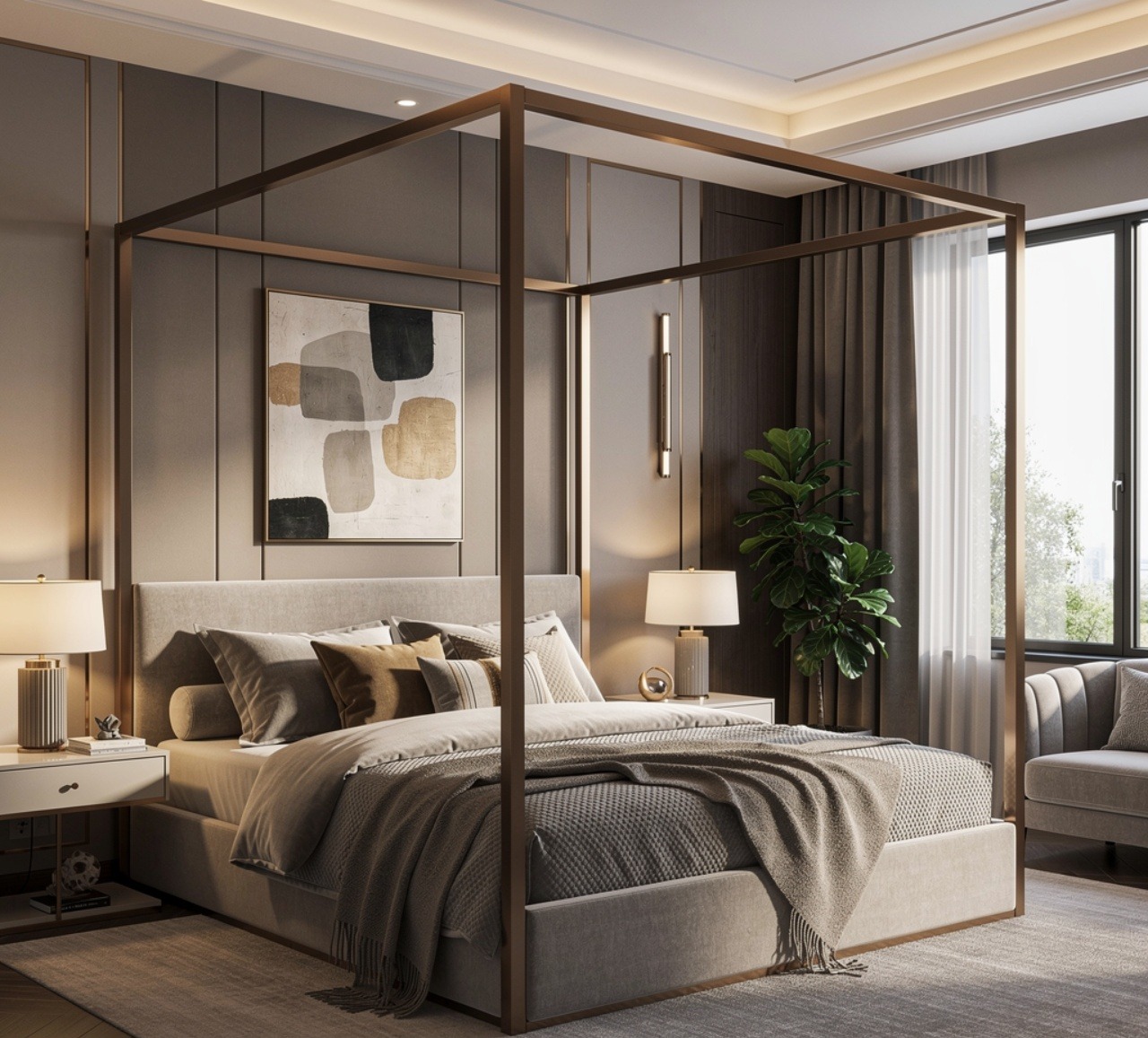
Room Decor 13 Cool Ideas That Turn a Plain Space Into a Retreat
Every bedroom or living space eventually starts to feel flat, and that’s usually a sign it needs a few intentional updates rather than a full overhaul. This guide walks through fifteen room decor ideas that range from quick weekend projects to weekend-length furniture builds, covering storage, lighting, texture, and layout. By the end, you’ll have a shortlist of options suited to different budgets, room sizes, and personal styles, along with the sizing details and spacing guidance needed to execute each one correctly the first time.
Trend & Background
Interior design has shifted noticeably toward multifunctional, texture-rich spaces that photograph well but also hold up to daily life- a reaction to years of stark minimalism that left rooms feeling sterile. Natural materials like rattan, oak, and linen are replacing high-gloss finishes, while modular furniture is gaining ground as apartment sizes shrink and renters look for decor that travels with them. This matters now because people are spending more time at home working, relaxing, and entertaining, which puts real pressure on rooms to function well and feel good simultaneously, not just look good in photos.
Key Takeaways
- Small structural swaps like floating shelves and canopy frames change a room’s feel more than new paint alone.
- Layering texture through textiles, lighting, and wood tones creates warmth without a full renovation budget.
- Budget ranges vary widely by idea, from under $50 accent pieces to $500+ furniture investments.
- Matching scale and spacing to your actual room dimensions prevents the most common decorating mistake: overcrowding.
1. Built-In Nightstands
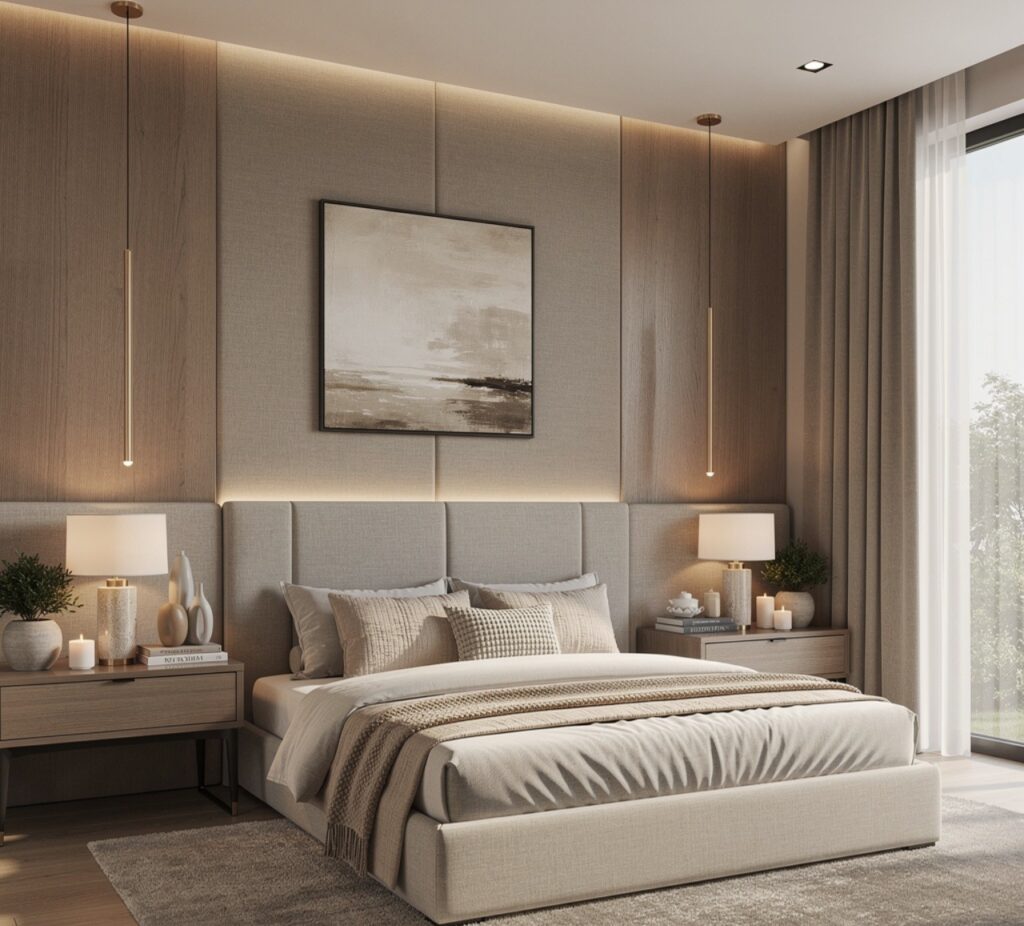
Built-in nightstands replace freestanding furniture with a continuous surface that extends from the headboard wall, often incorporating the bed frame itself. Carpenters typically use plywood with a veneer finish or MDF painted to match the wall, creating a seamless look that eliminates the gap where dust and clutter collect. This works particularly well in narrow bedrooms where a traditional nightstand would block a doorway or closet swing, and it can include hidden drawers or open cubbies depending on how much concealed storage the room requires.
2. Floating Wall Shelves
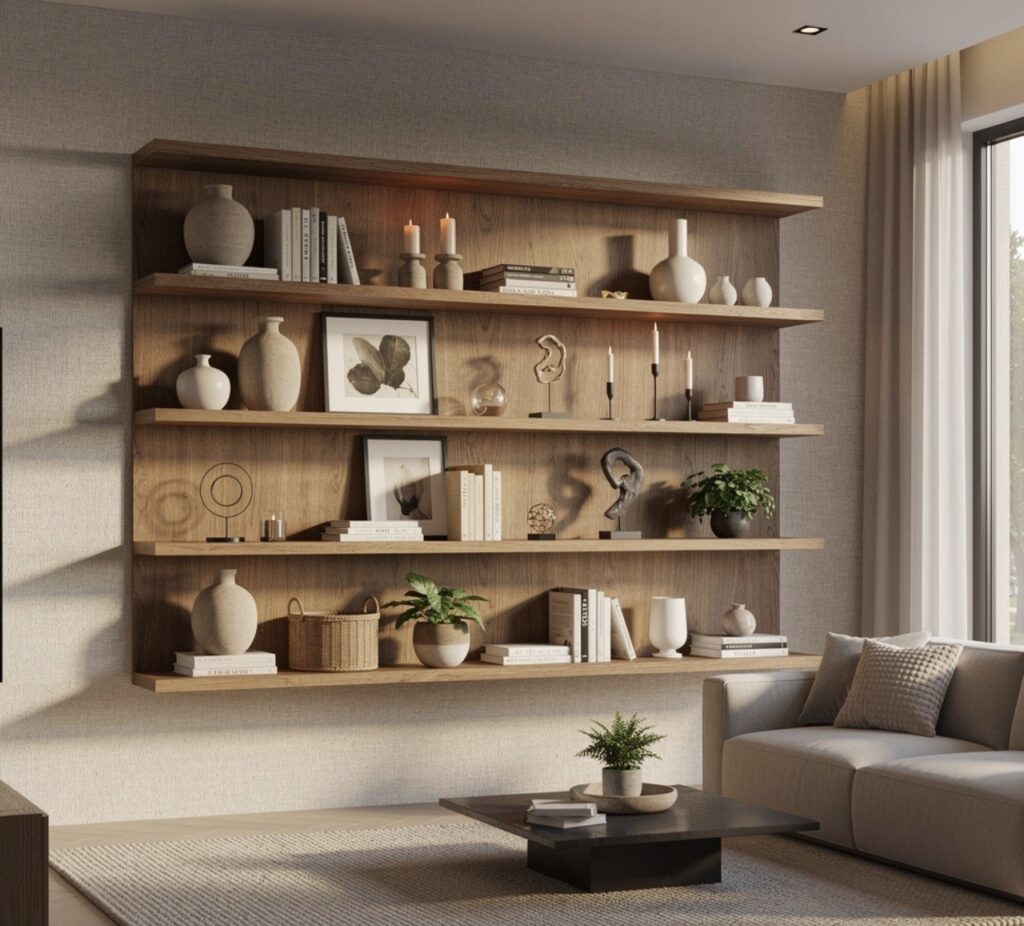
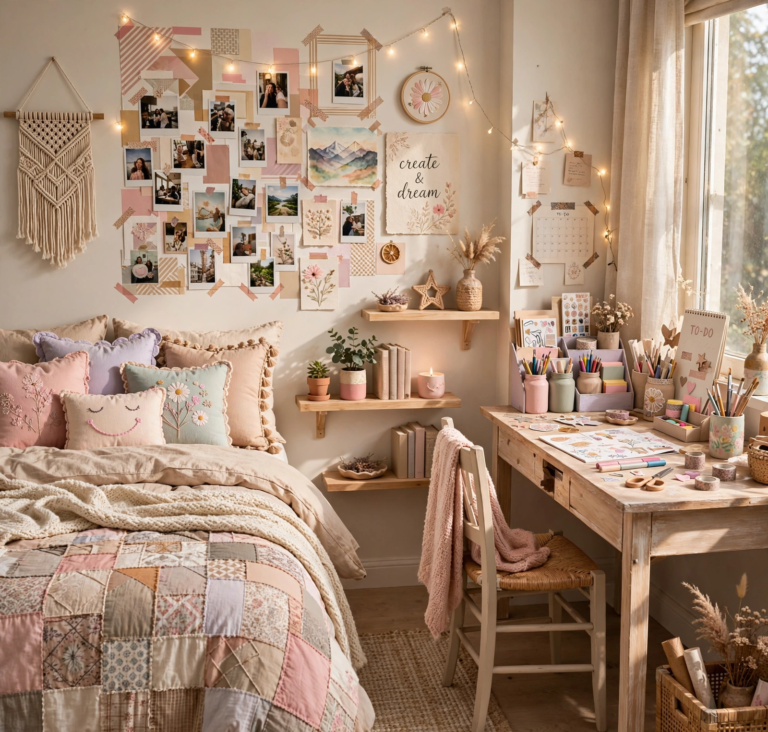
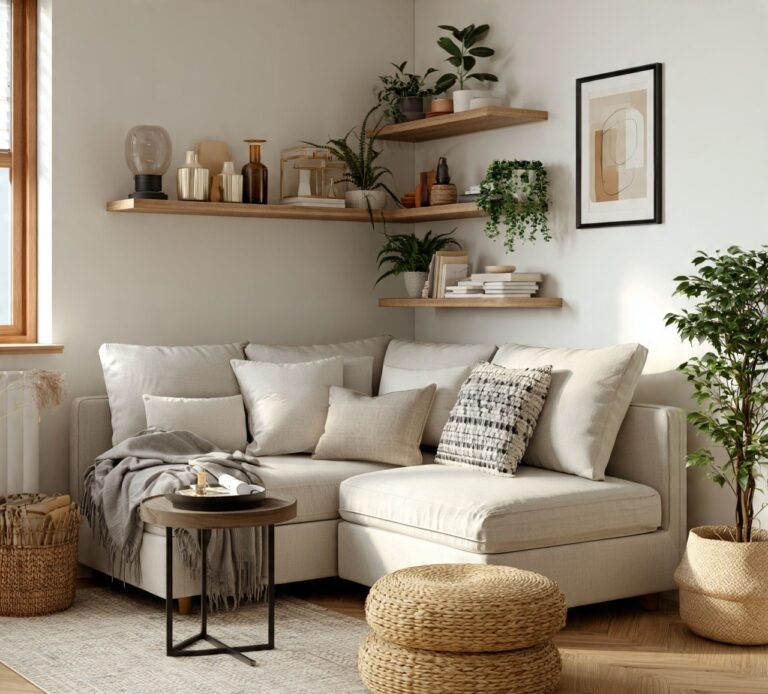
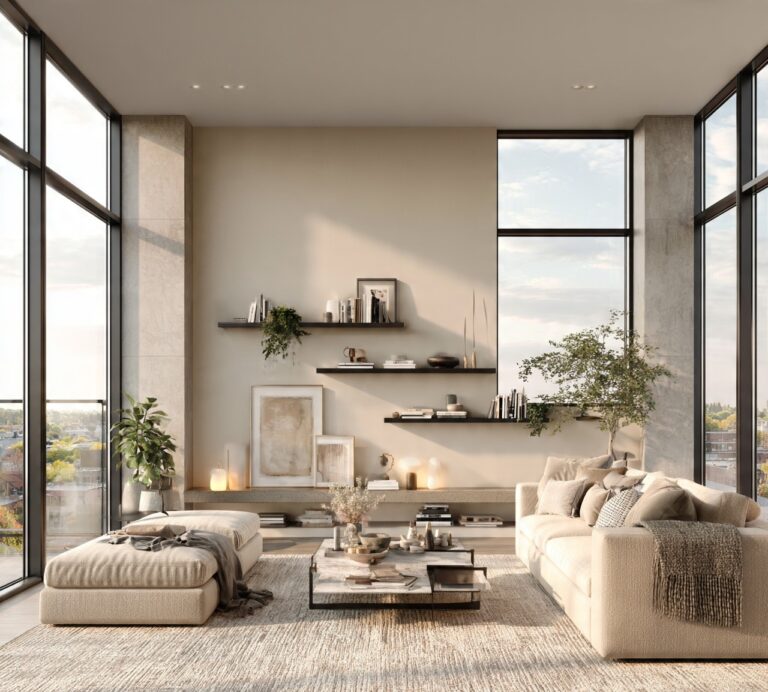
Floating wall shelves mount directly into studs with a hidden bracket system, giving the appearance that the shelf has no visible support. They work in oak, walnut, or painted MDF, and are typically installed in sets of two or three at staggered heights above a desk, sofa, or bed. Unlike bulky bookcases, they keep floor space open while still providing display room for books, plants, or framed art, and the staggered arrangement adds visual rhythm to an otherwise flat wall without requiring any furniture purchase.
| Shelf Length | Recommended Wall Width | Typical Load Capacity |
| 18 inches | 3–4 feet | 15–20 lbs |
| 24 inches | 4–6 feet | 25–35 lbs |
| 36 inches | 6+ feet | 40–50 lbs |
3. Canopy Bed Frame
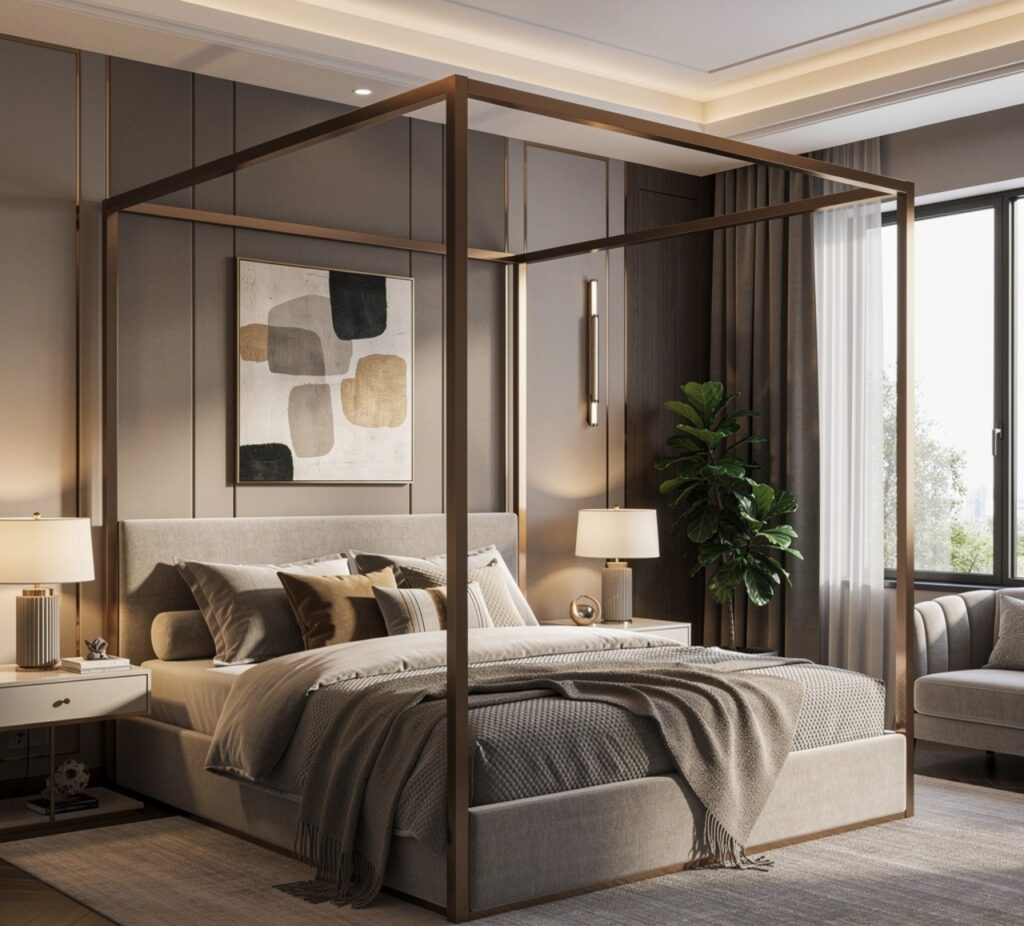
A canopy bed frame uses four vertical posts, sometimes connected by a top rail, to create an architectural focal point around the mattress. Metal frames in matte black or brass read as more modern, while turned wood posts in oak or pine lean traditional. Some versions add sheer curtain panels between the posts for softness and a sense of enclosure, which works well in larger bedrooms where the bed would otherwise feel lost in the middle of the room without a strong anchor point.
4. Layered Area Rugs
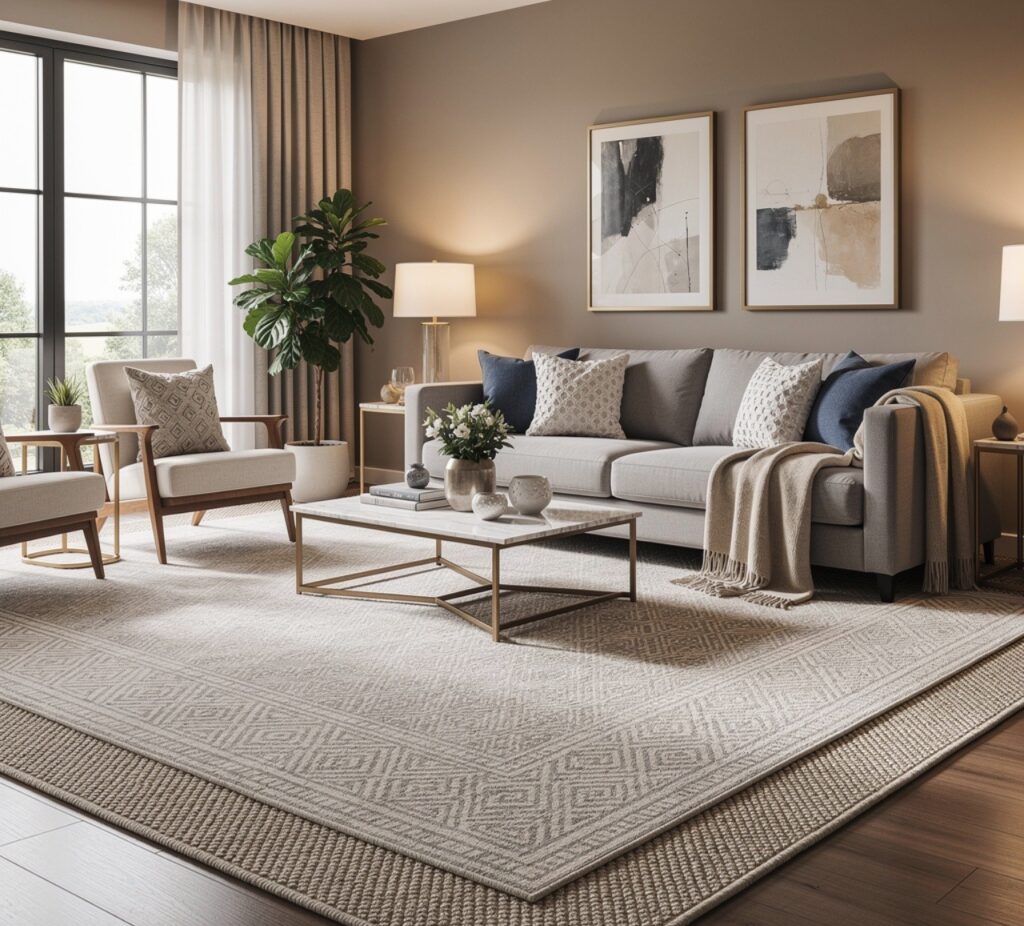
Layered area rugs place a smaller patterned or textured rug like a Moroccan Beni Ourain style on top of a larger neutral jute or sisal base rug. This technique adds visual depth and warmth underfoot, especially in rooms with hard flooring like concrete or engineered hardwood. The base rug should extend a few inches beyond furniture legs, while the top layer is typically sized to sit centered under a coffee table or at the foot of a bed, creating a clear boundary between zones in an open floor plan.
5. Gallery Wall Arrangement
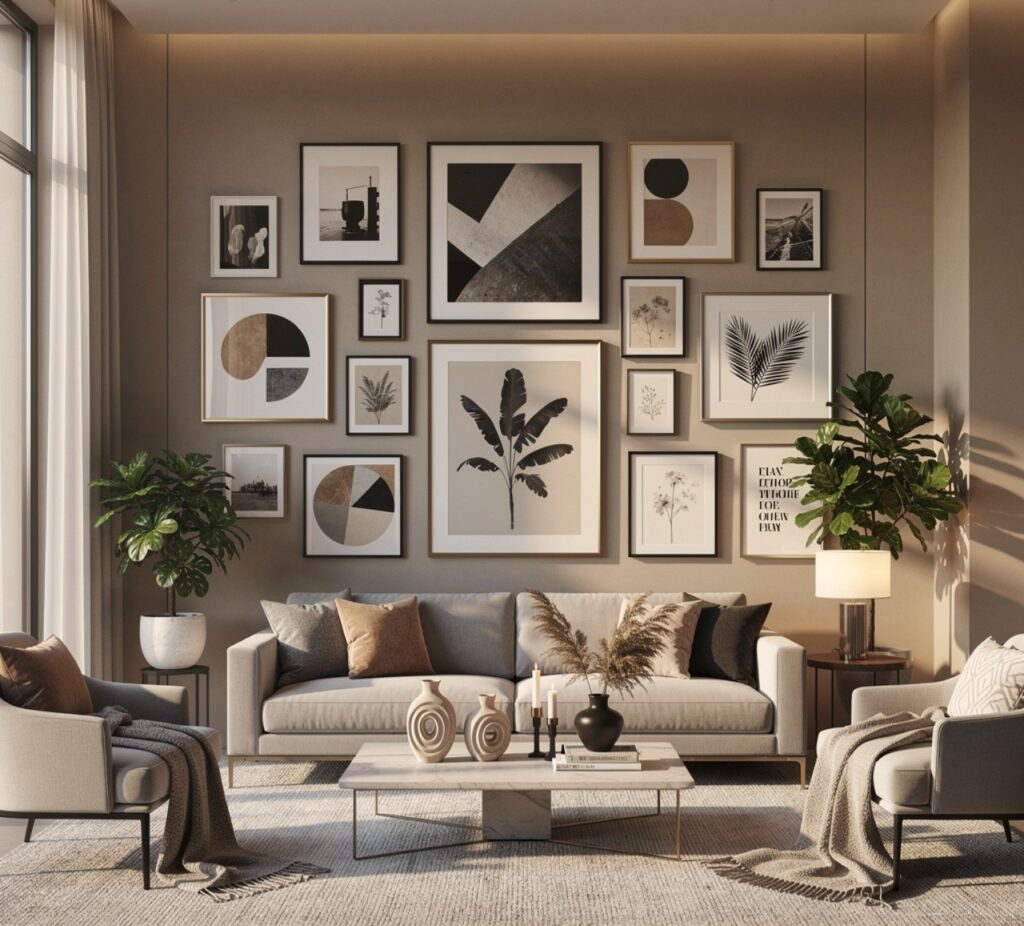
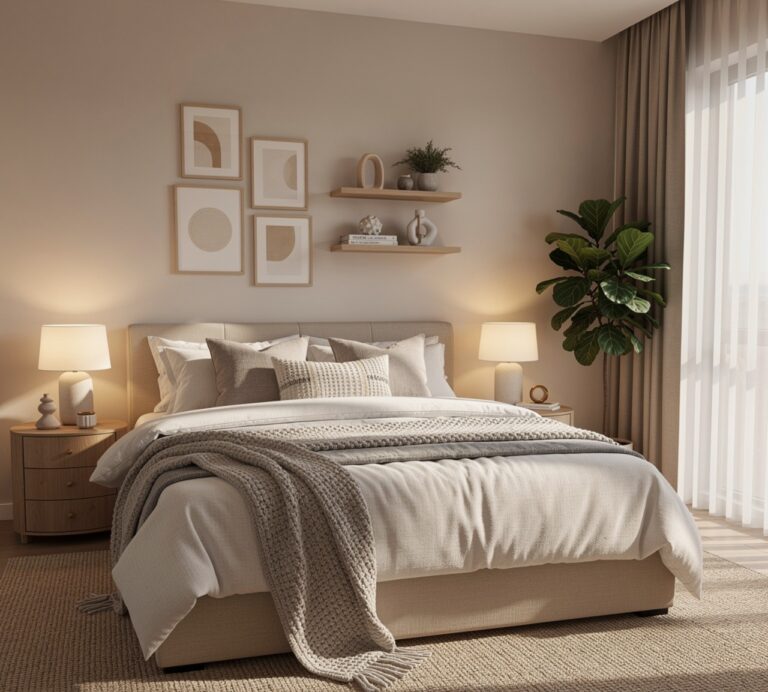
A gallery wall arrangement groups multiple framed prints, photos, or mirrors into a single composition rather than scattering single pieces around a room. Mixing frame finishes black metal, natural wood, and thin brass keeps the grouping from looking too matched, while consistent mat sizing ties it together. Planning the layout on the floor first, or tracing paper templates taped to the wall, prevents uneven nail holes and helps balance larger anchor pieces against smaller supporting frames before anything goes up permanently.
6. Rattan Accent Chair
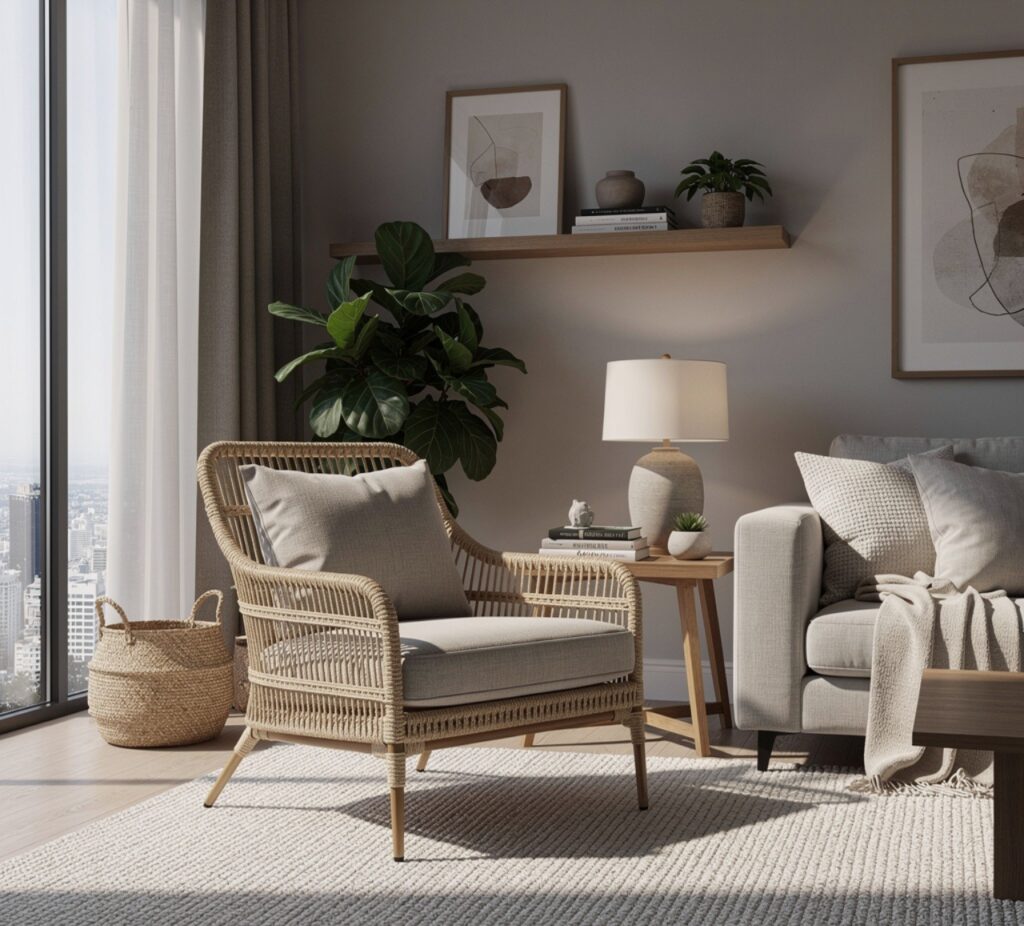
A rattan accent chair introduces natural texture and a lighter visual weight than upholstered seating, making it a strong choice for reading corners or small bedroom nooks. Peacock-style rattan chairs read more statement-making, while simpler woven frames with a cushion pad blend into a wider range of styles. Because rattan is lightweight, the chair can be moved easily between rooms for extra seating during gatherings, and pairing it with a chunky knit throw softens its structured, open-weave appearance.
7. Room Decor With Statement Lighting
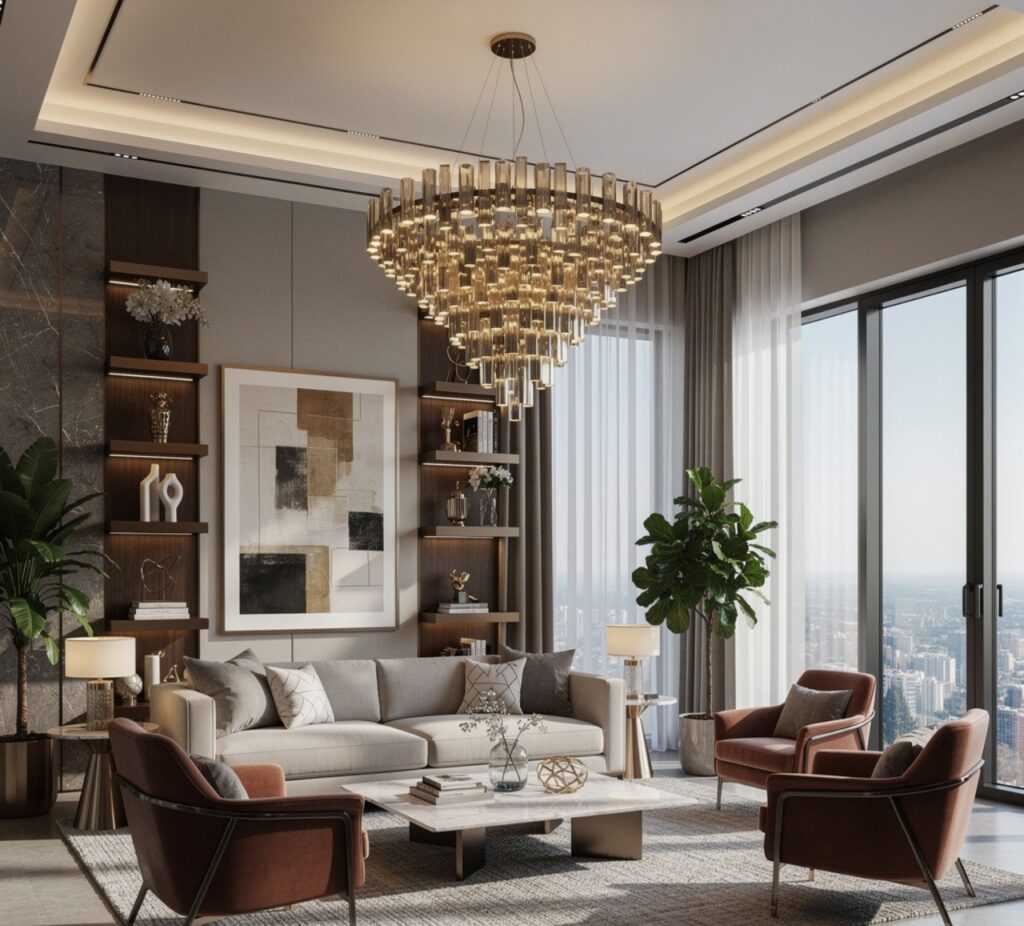
Statement lighting think a sculptural pendant, an oversized paper lantern, or a multi-arm floor lamp gives a room decor scheme a clear focal point that ceiling fixtures alone rarely provide. Placing a pendant off-center above a reading chair or dining nook, rather than dead-center in the room, creates a more intentional layout. Dimmable warm-toned bulbs (2700K) suit most living spaces, and mixing a floor lamp with a table lamp at different heights avoids the flat lighting that comes from a single overhead source.
8. Wall Paneling With Trim
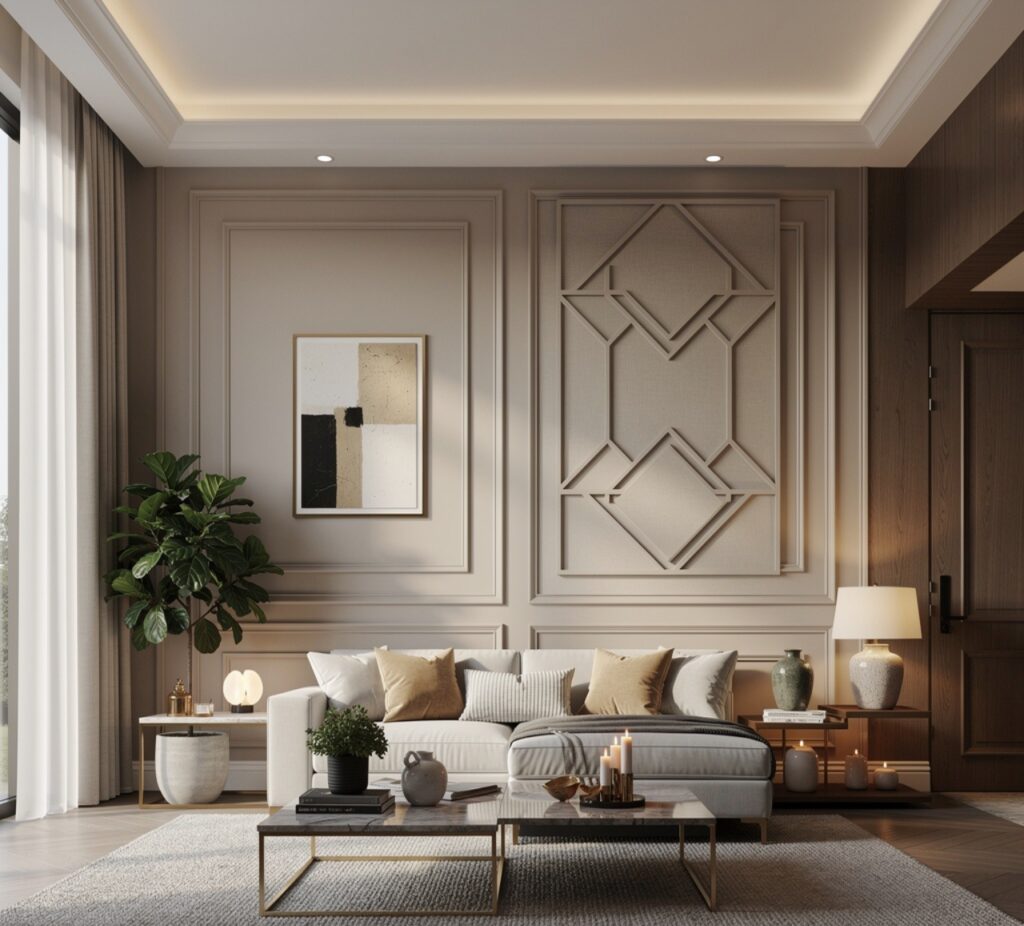
Wall paneling with trim, such as board-and-batten or shaker-style grids, adds architectural texture to an otherwise flat wall using MDF strips and a paint finish. This is typically installed on a single accent wall or the lower two-thirds of a room to keep costs manageable, with vertical battens spaced 12–16 inches apart for a balanced rhythm. Painting the trim and wall the same color in a matte or eggshell finish creates subtle shadow lines that read as custom millwork without the cost of true carpentry.
9. Woven Window Treatments
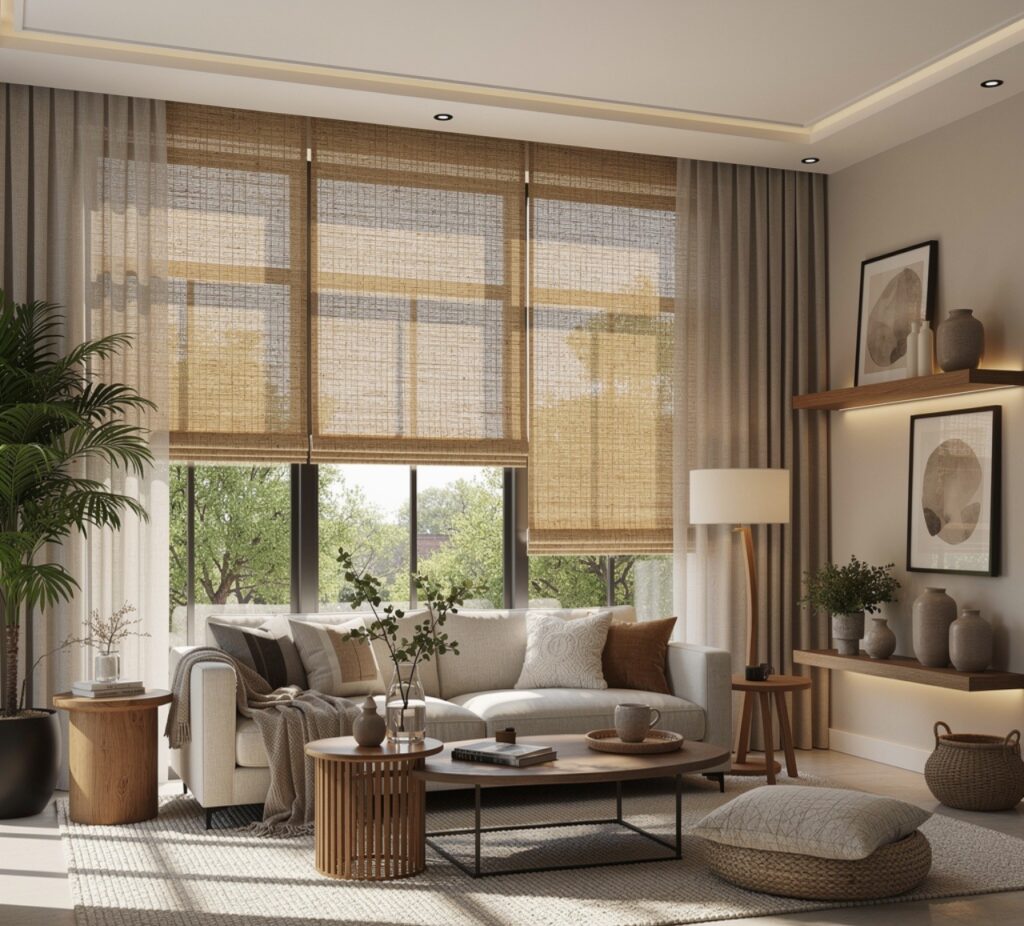
Woven window treatments, including bamboo roman shades or linen-blend curtains, filter light softly while adding texture that mini blinds typically lack. Bamboo shades suit casual or coastal-leaning rooms, while heavier linen panels on a brass rod work better in more traditional spaces. Mounting curtain rods a few inches above the actual window frame and extending them slightly past the sides makes windows appear larger and lets more natural light in when the panels are fully open.
10. Vintage Mirror Cluster
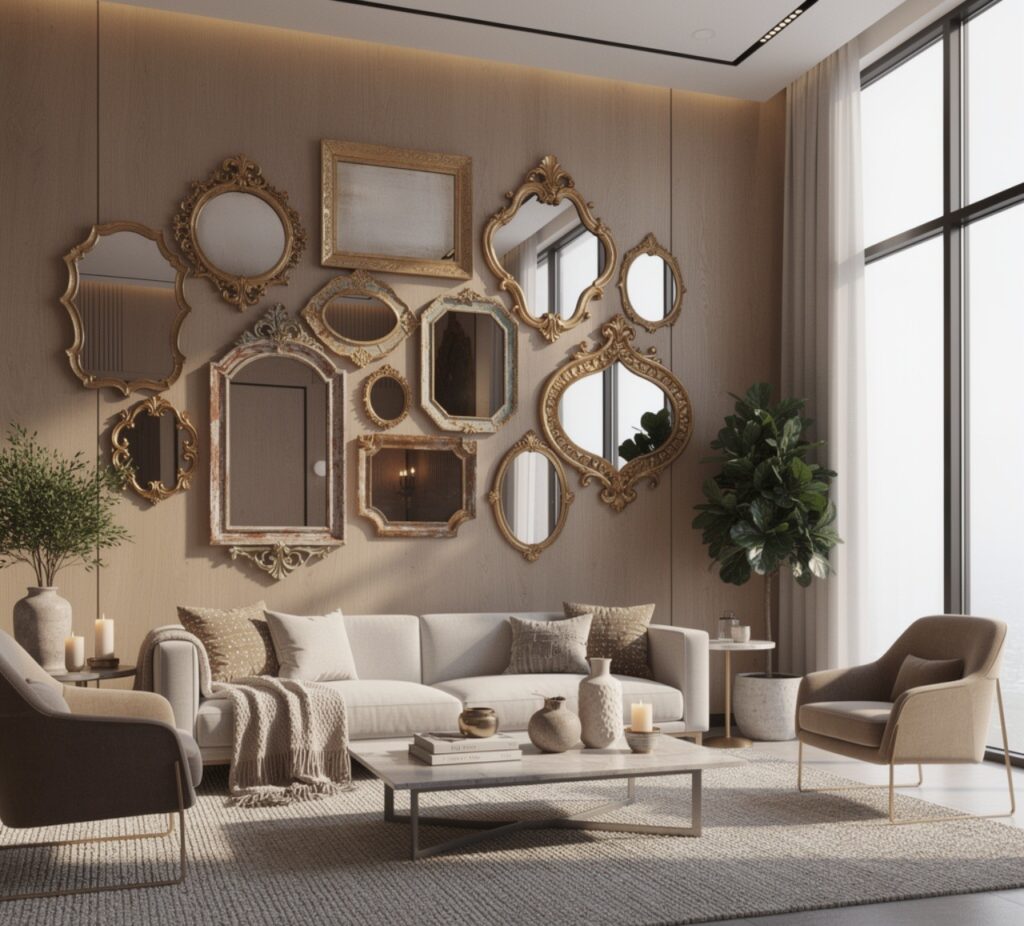
A vintage mirror cluster groups two or three mirrors of varying shapes and eras an arched wood-framed piece, a scalloped brass mirror, a plain round mirror onto one wall instead of a single large mirror. This adds reflected light and a sense of collected-over-time character to a room, particularly in entryways or above a console table. Sourcing mismatched frames from secondhand shops keeps the cost low while giving the arrangement a lived-in quality that a single new mirror can’t replicate.
11. Reclaimed Wood Accent Wall
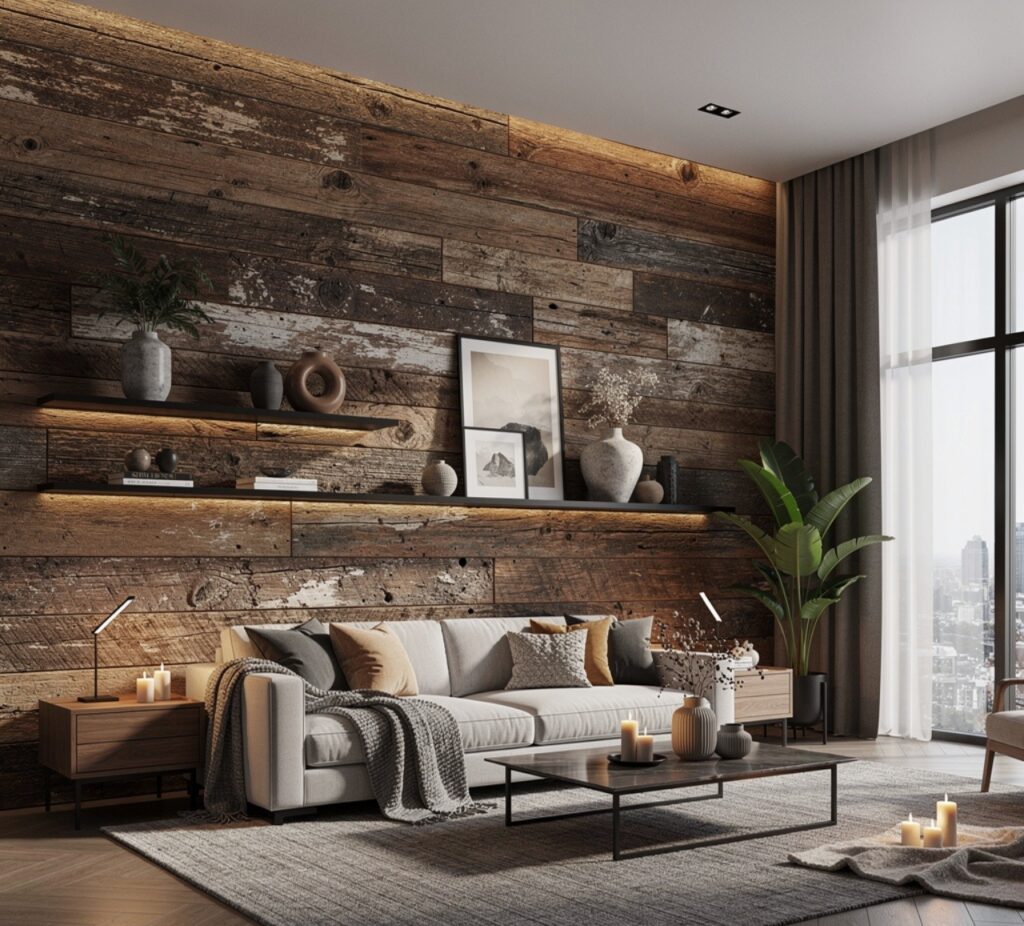
A reclaimed wood accent wall uses salvaged barn wood, pallet boards, or shou sugi ban charred planks installed horizontally or vertically on one wall. This adds warmth and texture to rooms that lean heavily on drywall and paint, and works especially well behind a bed headboard or television console. Because reclaimed wood varies in tone and grain, mixing boards from different sources actually strengthens the aged, collected look rather than detracting from it, so perfect uniformity isn’t the goal here.
12. Modular Storage Ottoman
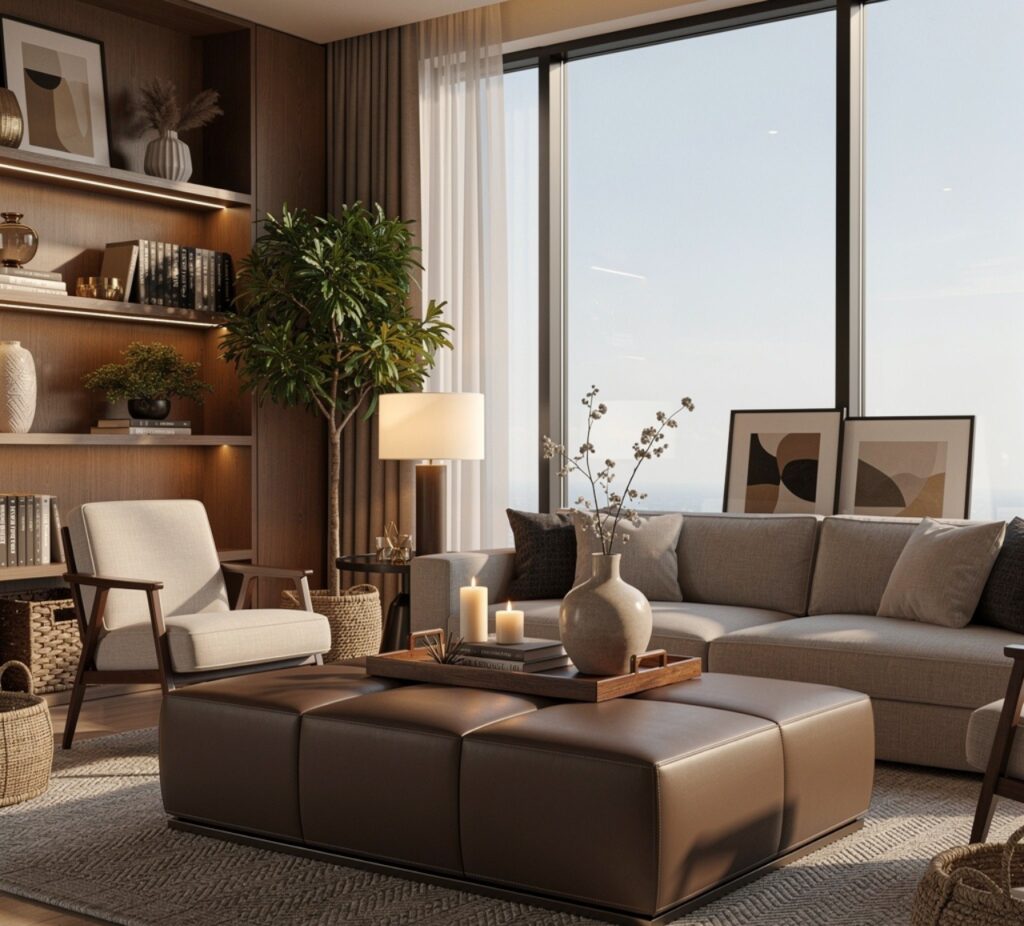
A modular storage ottoman functions as a coffee table, extra seating, and hidden storage in one piece, typically upholstered in boucle, velvet, or performance linen. Square or round shapes both work depending on the room’s existing furniture lines, and a hinged lid or removable tray top determines how accessible the interior storage is for blankets, remotes, or games. This idea suits smaller living rooms where a separate coffee table and storage bench would otherwise compete for the same floor space.
| Ottoman Size | Best Room Size | Storage Capacity |
| Small (24″) | Under 150 sq ft | 1–2 blankets |
| Medium (36″) | 150–250 sq ft | 3–4 blankets or games |
| Large (48″+) | 250+ sq ft | Full bedding sets |
13. Textured Throw Pillow Mix
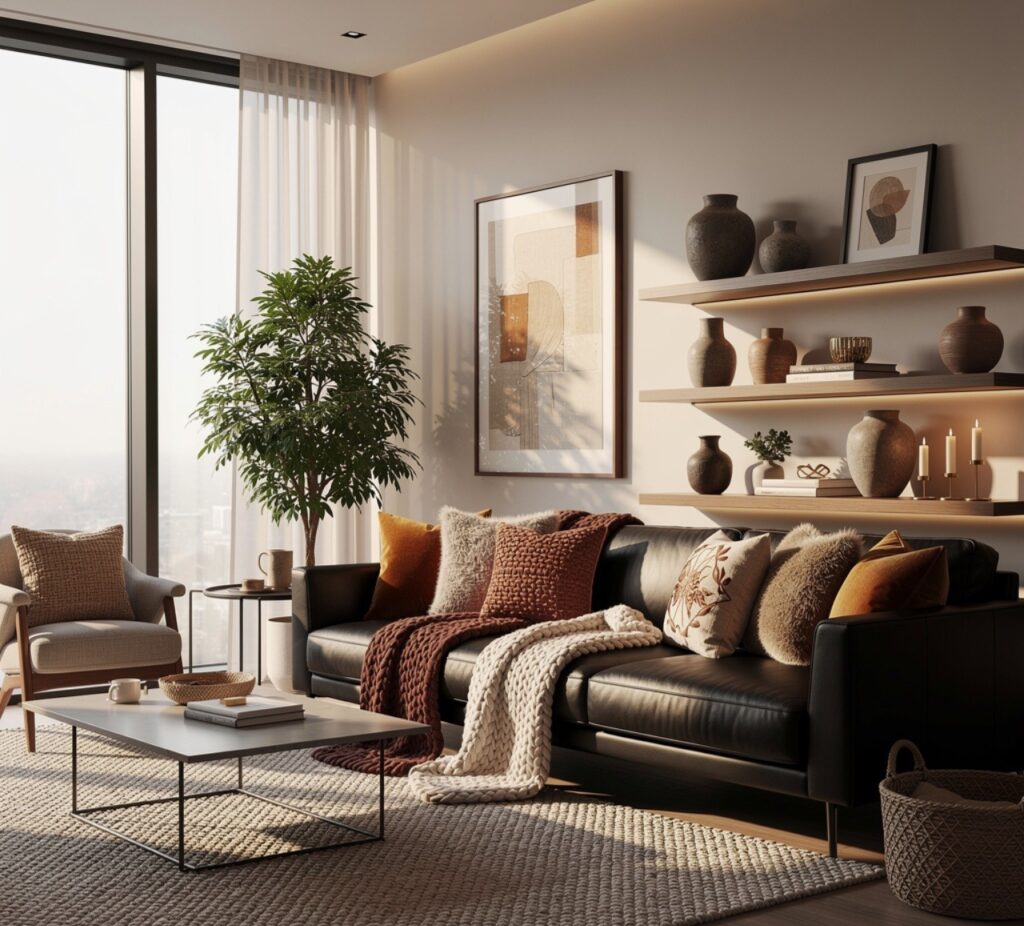
A textured throw pillow mix combines at least three fabric types boucle, linen, velvet in a coordinated but not matching color palette across a sofa or bed. Varying pillow sizes, typically 18-, 20-, and 22-inch squares plus one lumbar pillow, keeps the arrangement from looking flat or too symmetrical. This is one of the lowest-cost ways to refresh a room’s color story seasonally, since pillow covers can be swapped without replacing any actual furniture.
In order to see more options for bedroom ideas CLICK HERE
14. Plant Ledge Display
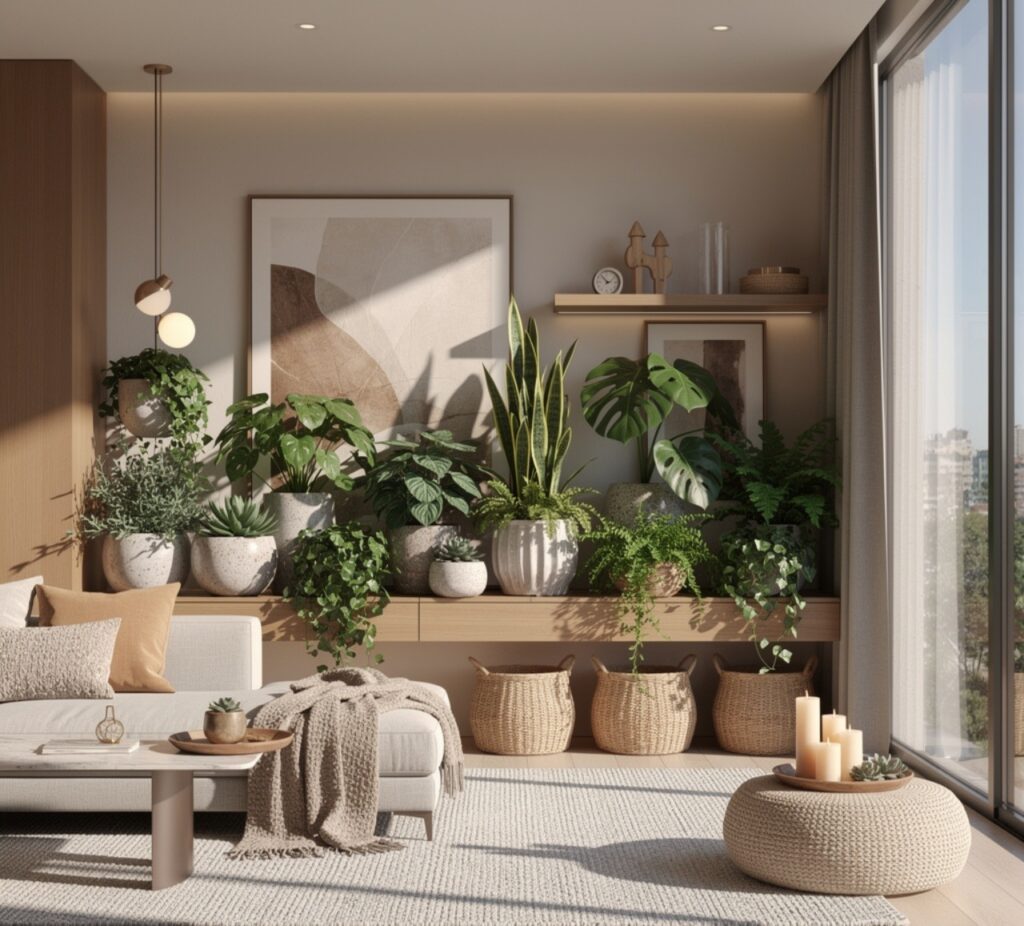
A plant ledge display uses a narrow shelf, windowsill extension, or tiered plant stand to group several potted plants of varying heights near a light source. Trailing plants like pothos or string of pearls work well on upper shelves, while structural plants like snake plants or ZZ plants anchor the lower tiers. Grouping in odd numbers, and varying pot materials between terracotta, ceramic, and woven baskets, gives the display more visual interest than a single large plant would on its own.
15. Ceiling Medallion Accent
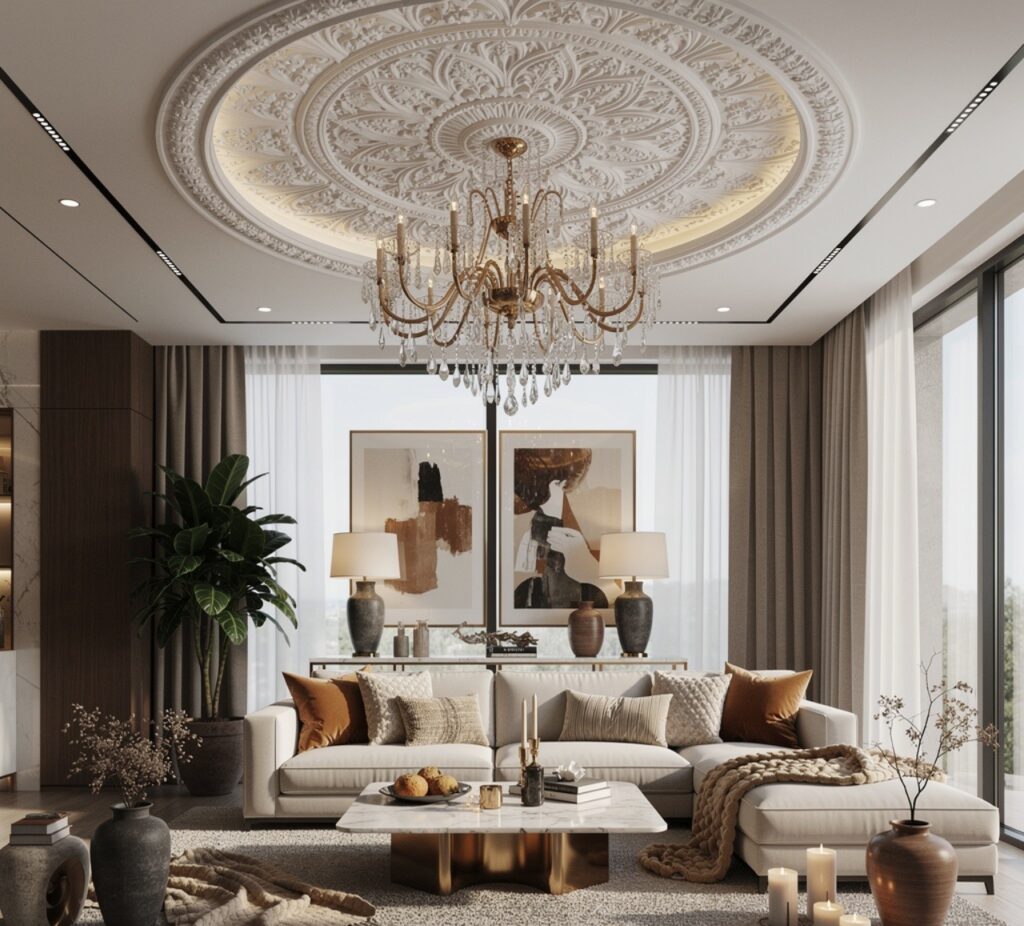
A ceiling medallion accent is a decorative plaster or polyurethane ring installed around a light fixture or ceiling fan, adding architectural detail to a surface that’s usually ignored entirely. Sized proportionally to the room smaller medallions for bedrooms, larger ones for dining or living rooms and painted to either match or subtly contrast the ceiling color, this detail reads as custom trim work. It’s a low-cost way to draw the eye upward and make standard ceiling heights feel more finished.
Shop the Look
For this palette, look for a woven rattan lounge chair with a boucle seat cushion, a set of staggered oak floating shelves in a 24-inch and 36-inch pairing, a brass-framed arched mirror around 30 inches tall, a jute base rug layered under a Beni Ourain-style wool rug, and a set of linen throw pillow covers in warm neutral tones. These pieces work together across several of the ideas above without requiring a single unified purchase.
Common Mistake to Avoid
The most common mistake is choosing furniture and decor at the wrong scale for the room, typically going too small out of budget caution rather than too large. A rug that doesn’t reach under any furniture legs, shelves spaced too close to the ceiling, or a single small mirror on a large wall all read as afterthoughts rather than intentional design choices. Measuring the actual wall or floor space before buying, and sizing up when in doubt, solves this more reliably than adding more individual pieces.
FAQs
What room decor ideas work best for small bedrooms?
Floating wall shelves, built-in nightstands, and a plant ledge display work particularly well in small bedrooms because they add storage or visual interest without consuming floor space. Layered rugs also help define a sleeping area within a studio or combined living space. Avoiding oversized furniture like a full canopy bed frame in a room under 100 square feet keeps the space from feeling cramped, so scale-appropriate choices matter more than the number of decor elements added.
How much does it cost to redecorate a room on a budget?
A budget refresh using throw pillows, a plant ledge, and a gallery wall can run under $200 total, while adding furniture pieces like a rattan accent chair or storage ottoman typically pushes the range to $400–$800. Structural changes like wall paneling or a reclaimed wood accent wall cost more due to materials and labor, often landing between $500 and $1,500 depending on wall size and whether it’s a DIY or professionally installed project.
What colors are trending in room decor right now?
Warm neutrals like putty, terracotta, and warm white are currently favored over the cool grays that dominated the last decade, often paired with deep green or chocolate brown accents. These tones pair naturally with the natural materials rattan, oak, jute featured throughout current decor trends. Bright, saturated accent colors still appear, but usually in smaller doses through pillows or art rather than as a dominant wall color.
Do floating shelves damage walls?
Floating shelves installed correctly into wall studs cause minimal damage, leaving only small screw holes that patch easily if removed later. Problems arise when shelves are mounted using only drywall anchors without hitting a stud, which can lead to sagging or the shelf pulling away from the wall under weight. Using a stud finder before installation and matching the bracket length to the shelf’s load capacity prevents both damage and safety issues down the line.
How do I mix vintage and modern decor in one room?
Mixing vintage and modern decor works best when one category dominates and the other appears in smaller accents, rather than splitting the room evenly. A modern rattan chair alongside a vintage mirror cluster, for example, lets each piece stand out instead of competing. Keeping a consistent color palette across both eras also helps unify the look, since clashing colors read as disorganized while clashing eras, with matched tones, often read as intentionally curated.
Conclusion
These room decor ideas cover everything from small, low-cost swaps to weekend-length furniture projects, giving you options regardless of budget or room size. Start with one or two ideas that fit your current layout, then build outward as you see what actually changes the feel of the space. Save this guide to Pinterest for later, and check out our related post on small-space furniture layouts for more room-specific guidance.
2 Comments
Comments are closed.