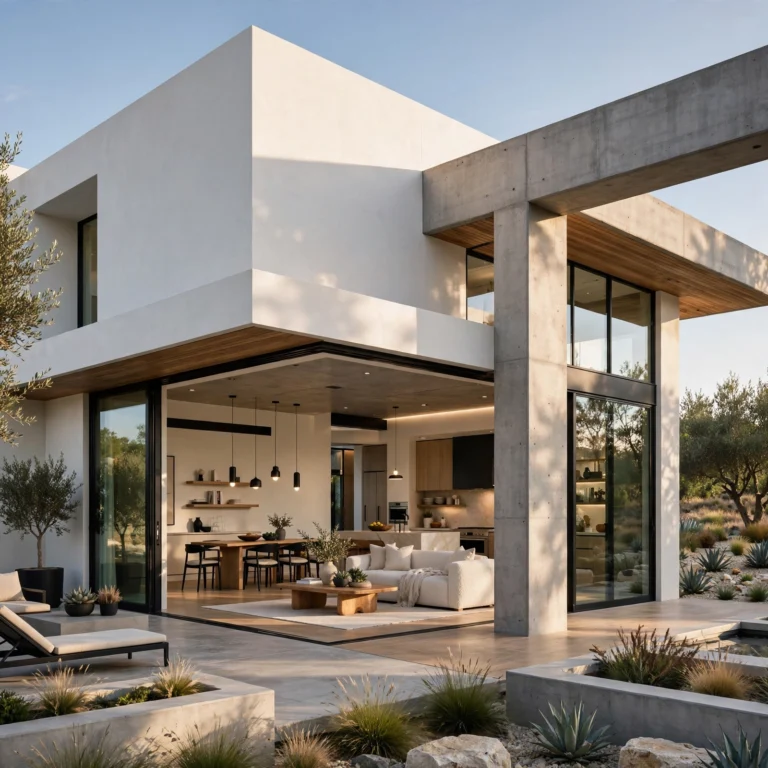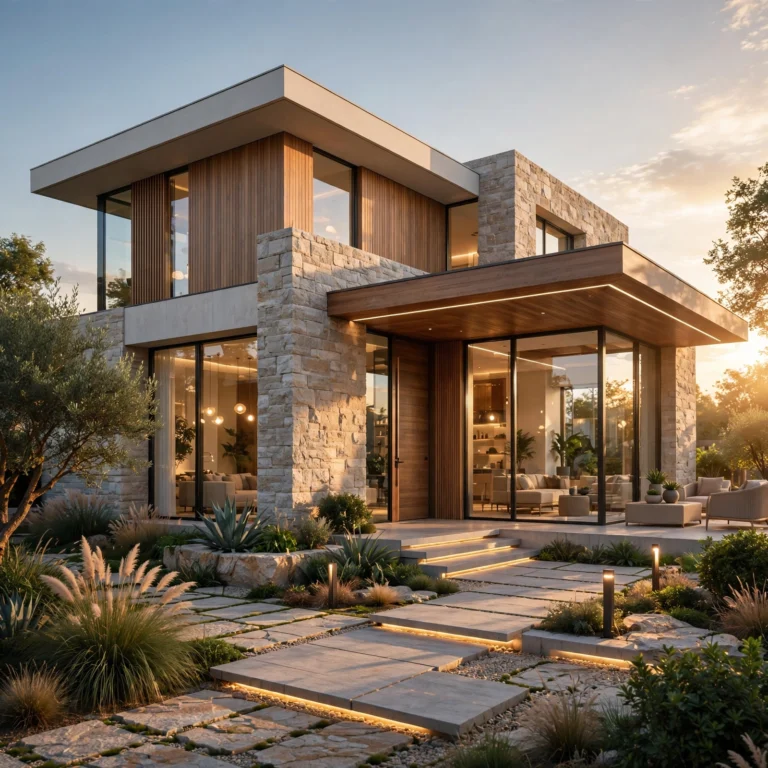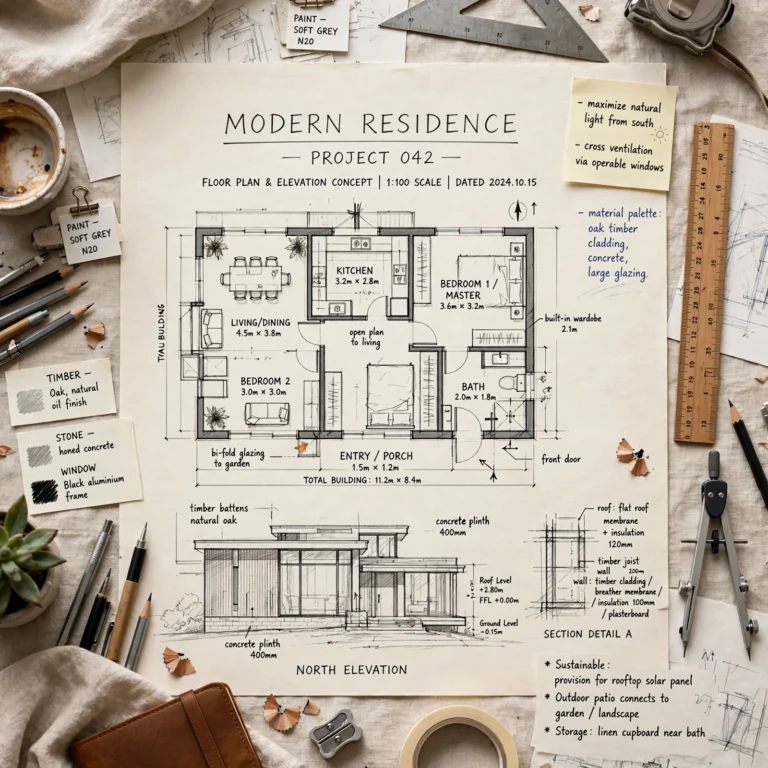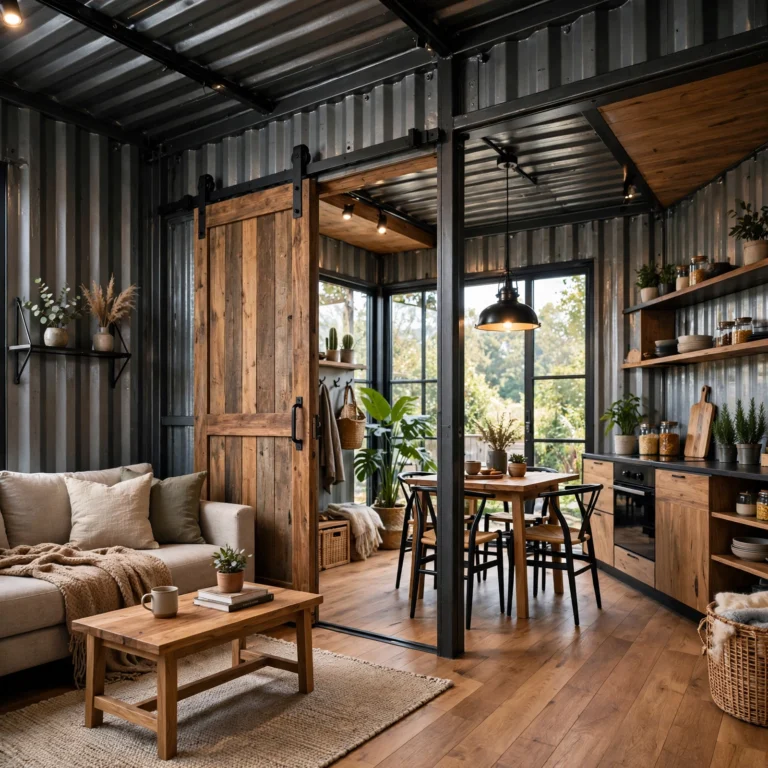
15 Elegant Farmhouse Design Ideas for a Cozy, Modern, and Naturally Beautiful Space
Farmhouse design became so widely replicated over the past decade that the style risks reading as a decorating formula rather than an actual architectural tradition. This post covers fifteen farmhouse design ideas grounded in the material and structural choices that defined the style originally, rather than the surface-level shorthand that’s become oversaturated. You’ll get specific materials, finishes, and placement guidance to build a farmhouse look that feels considered rather than assembled from a single retailer’s catalog.
Trend & Background
Farmhouse design surged in popularity over the past decade, driven largely by home renovation media and a broader cultural interest in rustic, handcrafted aesthetics, but the style’s rapid mass-market adoption led to a somewhat formulaic version built around a narrow set of repeated elements like shiplap and barn doors. Designers have since pushed the style back toward its architectural roots, incorporating genuine period-appropriate materials and mixing in more contemporary or industrial elements to avoid the theme-park effect the earlier trend produced. This matters now because a more restrained, materially honest approach to farmhouse design tends to age better and feel more livable than the heavily decorated version that dominated the last several years.
Key Takeaways
- Farmhouse design ideas work best when they draw from genuine agricultural and rural architecture rather than mass-produced decorative shorthand like barn doors and mason jars.
- Material honesty, including real wood, iron, and stone, distinguishes a well-executed farmhouse look from a purely decorative version of the style.
- Mixing in a few contemporary or industrial elements keeps a farmhouse interior from reading as a themed room rather than a livable home.
- A size and material comparison table is included for the structural ideas so you can plan against your actual room dimensions and budget.
1. Board-and-Batten Wall Paneling
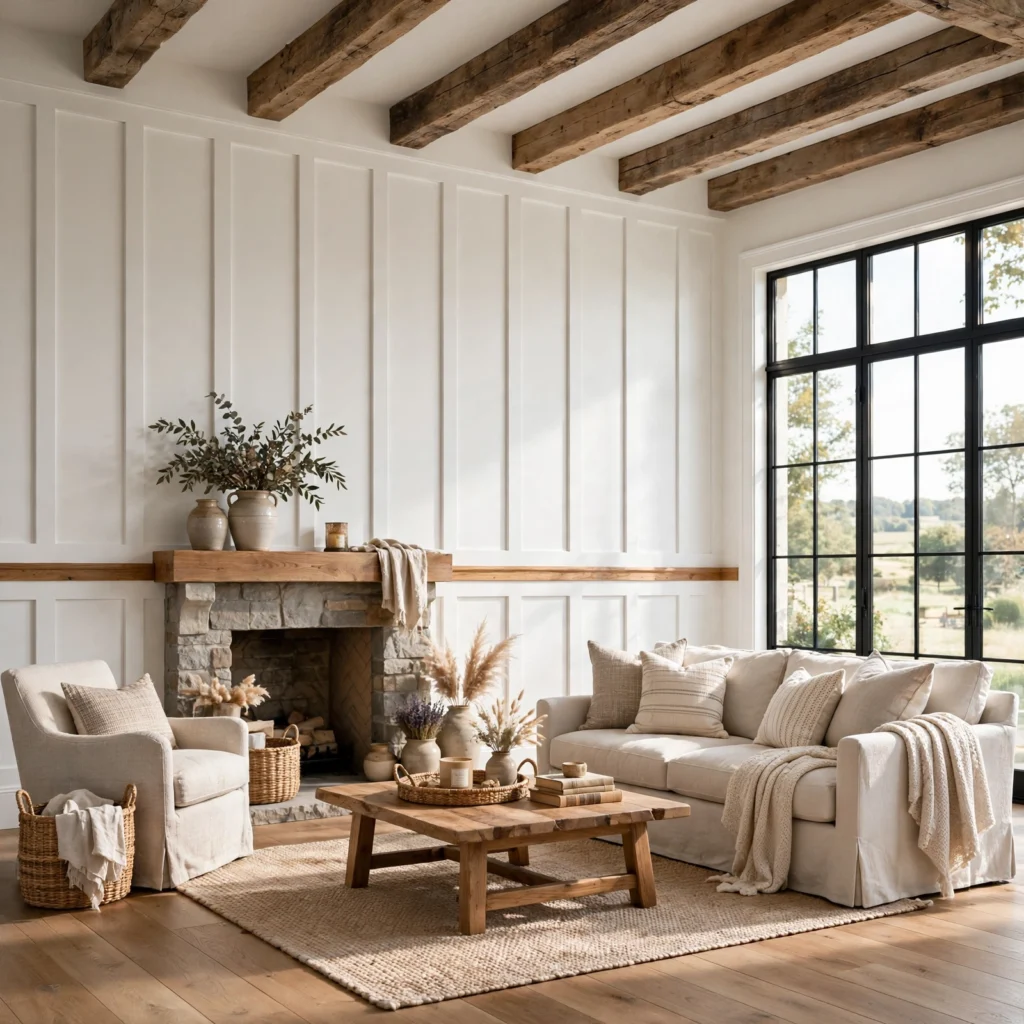
Board-and-batten wall paneling, using vertical wood boards with raised battens covering the seams, adds genuine architectural texture to a wall in a way that references farmhouse construction more accurately than decorative shiplap alone. This treatment works particularly well on a lower third of a wall, paired with painted drywall above, rather than covering an entire room. Choose a primed pine or poplar board rather than a thin decorative panel product, since the added depth reads as more substantial and durable.
2. Exposed Ceiling Beams
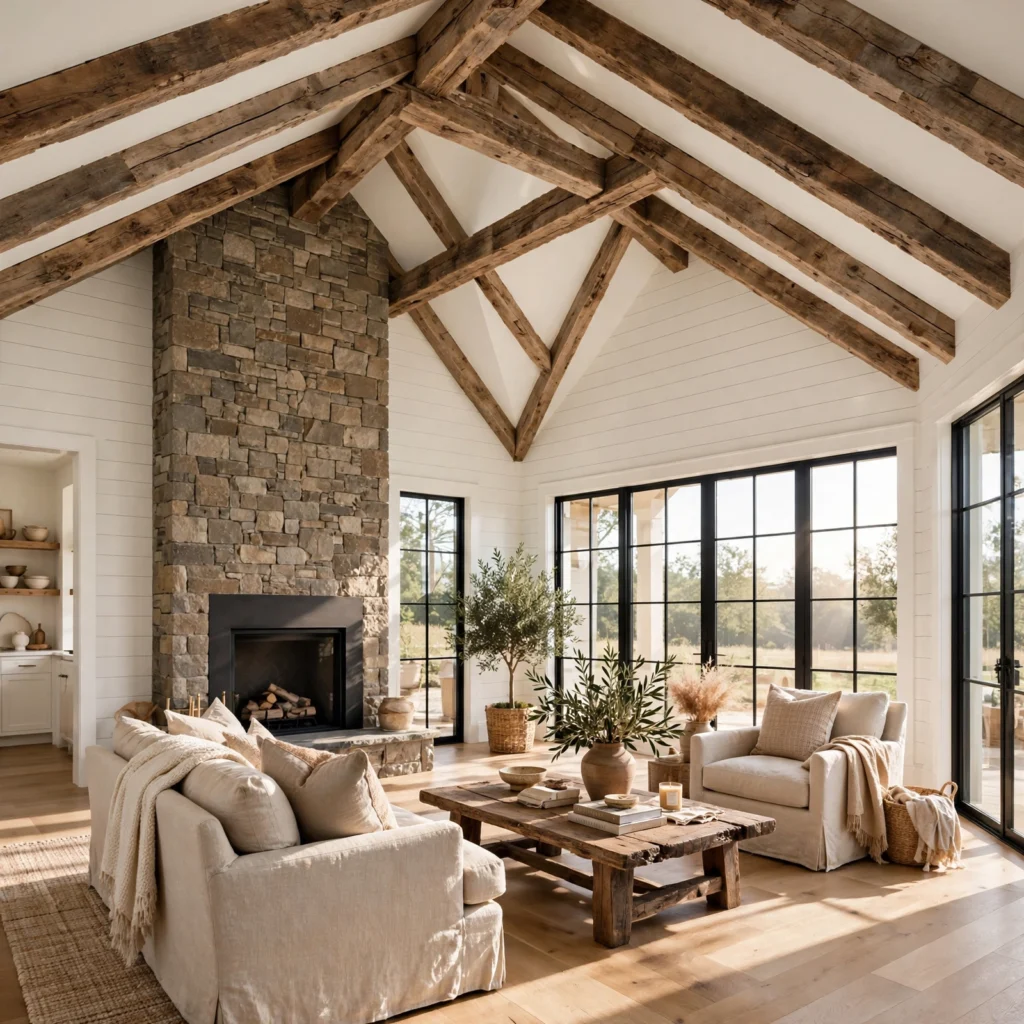
Exposed ceiling beams, either structural or decorative wood beams installed against an existing ceiling, bring a defining architectural feature of traditional farmhouse construction into a room without requiring a full structural renovation. Reclaimed or new wood with a hand-hewn texture reads as more authentic than a smooth, uniformly milled beam. Space beams evenly across the ceiling, typically 24 to 36 inches apart, depending on room size and beam width, for a proportional, intentional look.
3. Farmhouse Design Kitchen Sink
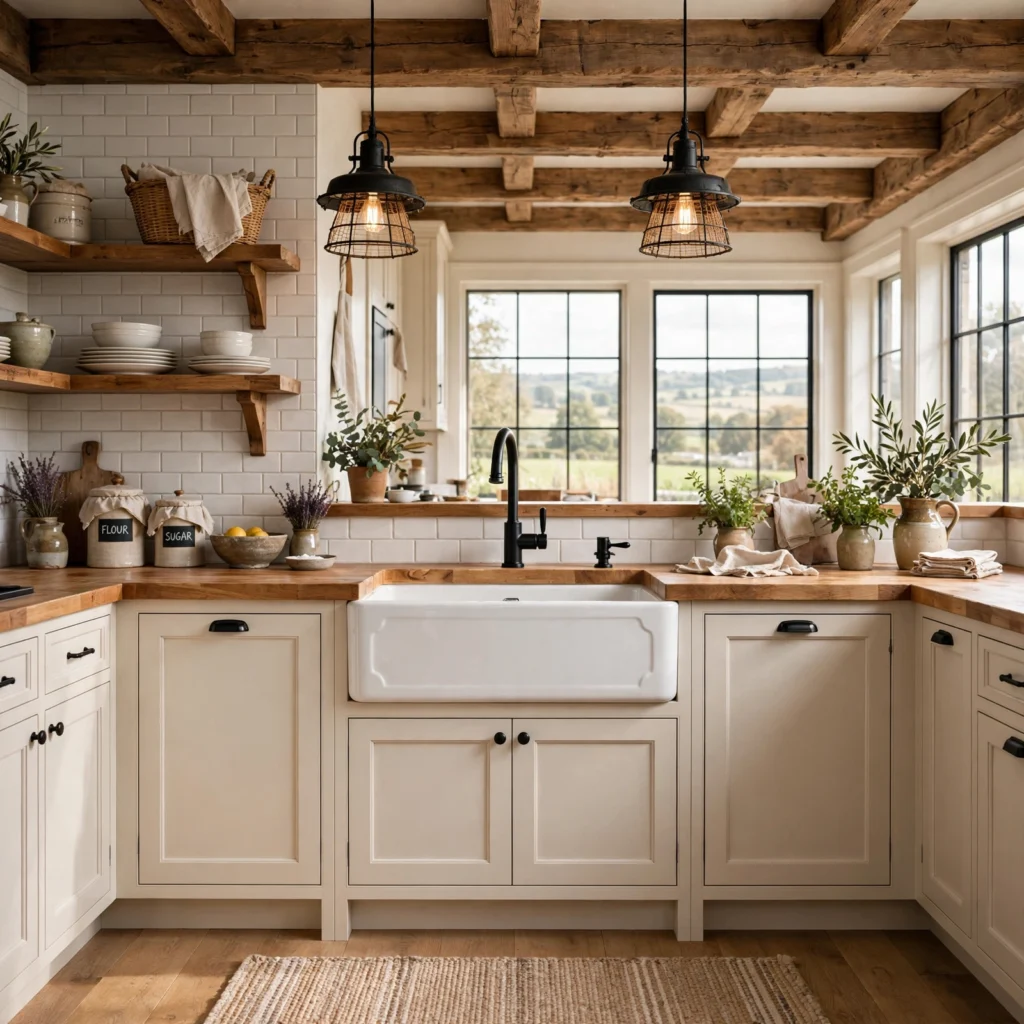
A farmhouse design kitchen sink, with a deep, exposed apron front rather than a standard undermount basin, is one of the most functionally and visually defining fixtures of the style, offering genuinely more usable basin depth than most standard sink options. Fireclay or cast iron are the most durable material choices for this style of sink, holding up better against daily use than a thinner stainless steel apron front. Pair it with a bridge-style or gooseneck faucet in an aged brass or matte black finish to complete the look.
In order to see more options for house design ideas CLICK HERE
4. Reclaimed Wood Flooring
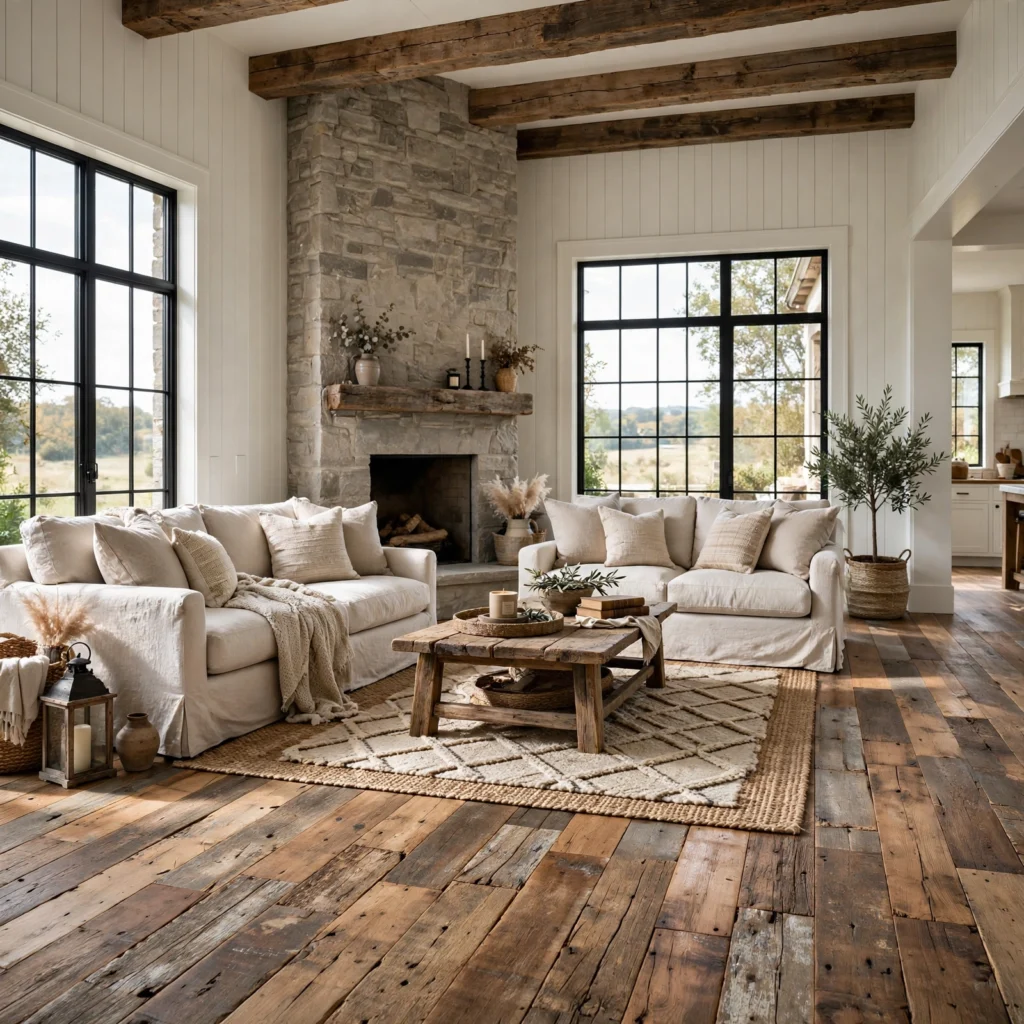
Reclaimed wood flooring, sourced from old barns, factories, or demolished structures, brings genuine age and texture into a home that new distressed flooring products can only approximate. Wide plank widths, typically 6 to 8 inches, are more historically consistent with farmhouse-era flooring than narrower strip flooring common in later construction periods. Have any reclaimed material properly kiln-dried and treated before installation, since untreated reclaimed wood can carry pests or excess moisture that cause problems after installation.
| Plank Width | Historical Accuracy | Best Room Application |
| 3–4 inches | Lower | Smaller rooms, hallways |
| 5–6 inches | Moderate | Main living areas |
| 7–8+ inches | Higher | Larger open rooms |
5. Wraparound Porch
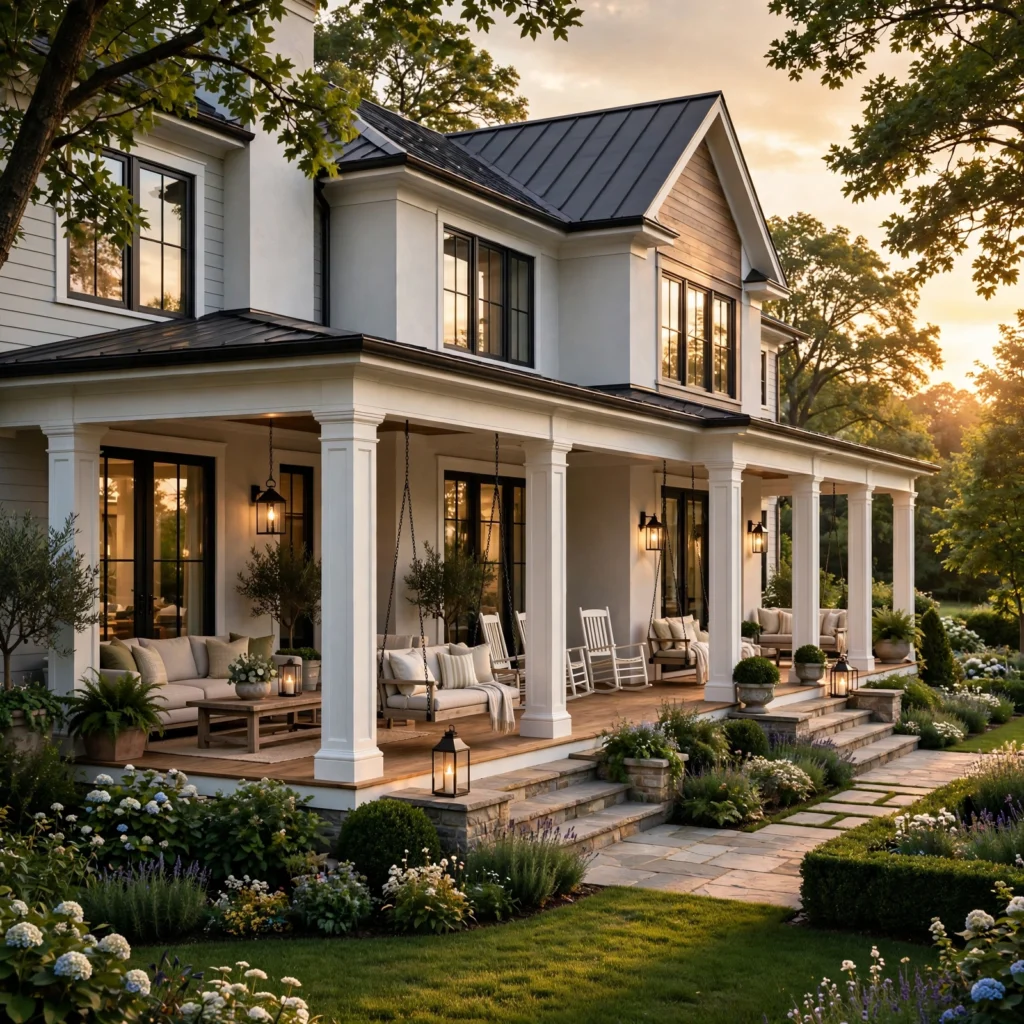
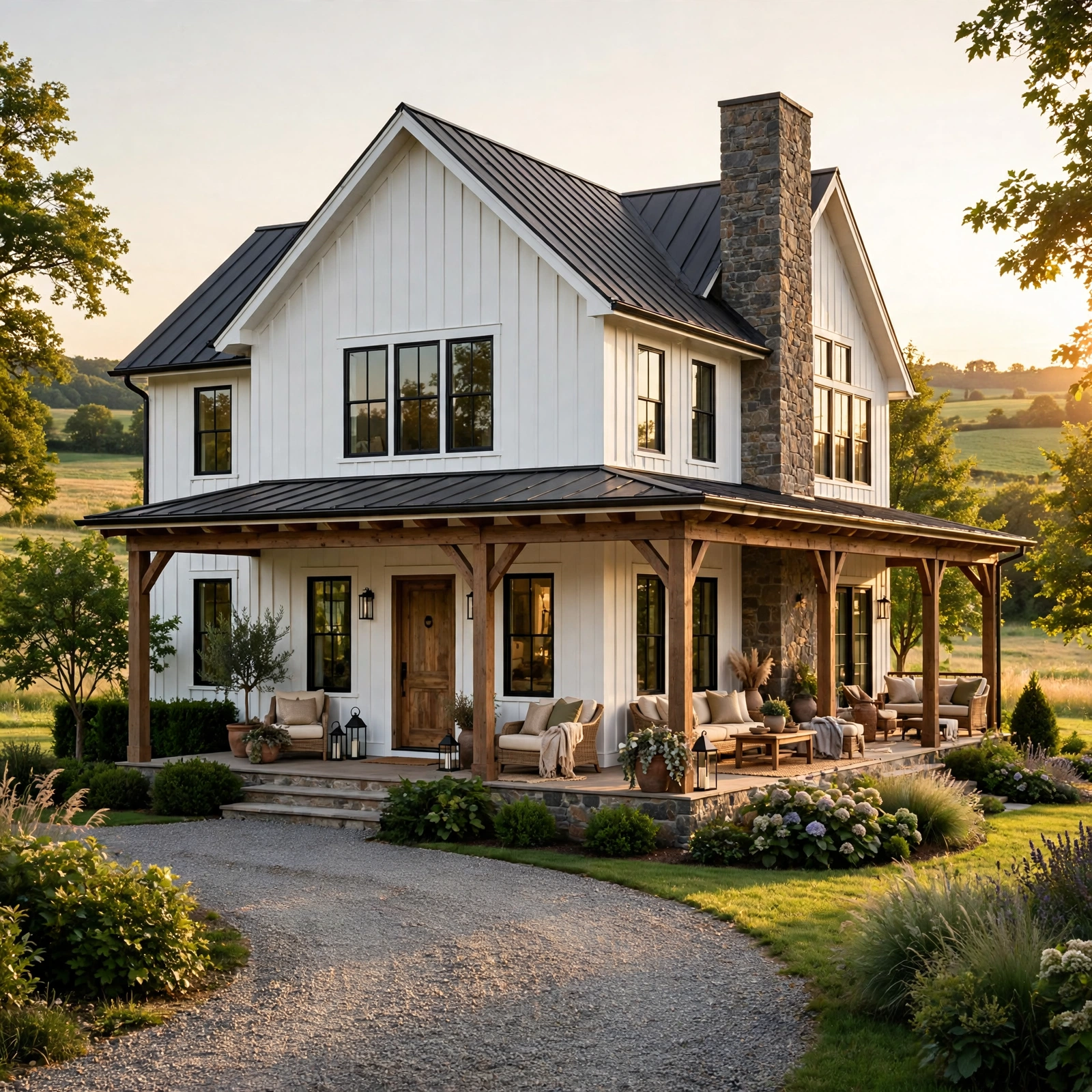
A wraparound porch, extending covered outdoor space around two or more sides of the home, is one of the most historically consistent architectural features of traditional farmhouse construction, originally serving both a shaded outdoor living function and a practical entry point from multiple directions on a working farm. Match porch column style and railing detail to the era and material palette of the rest of the home, using simple turned or square wood columns rather than ornate ironwork more associated with Victorian styles.
6. Black Metal Window Frames
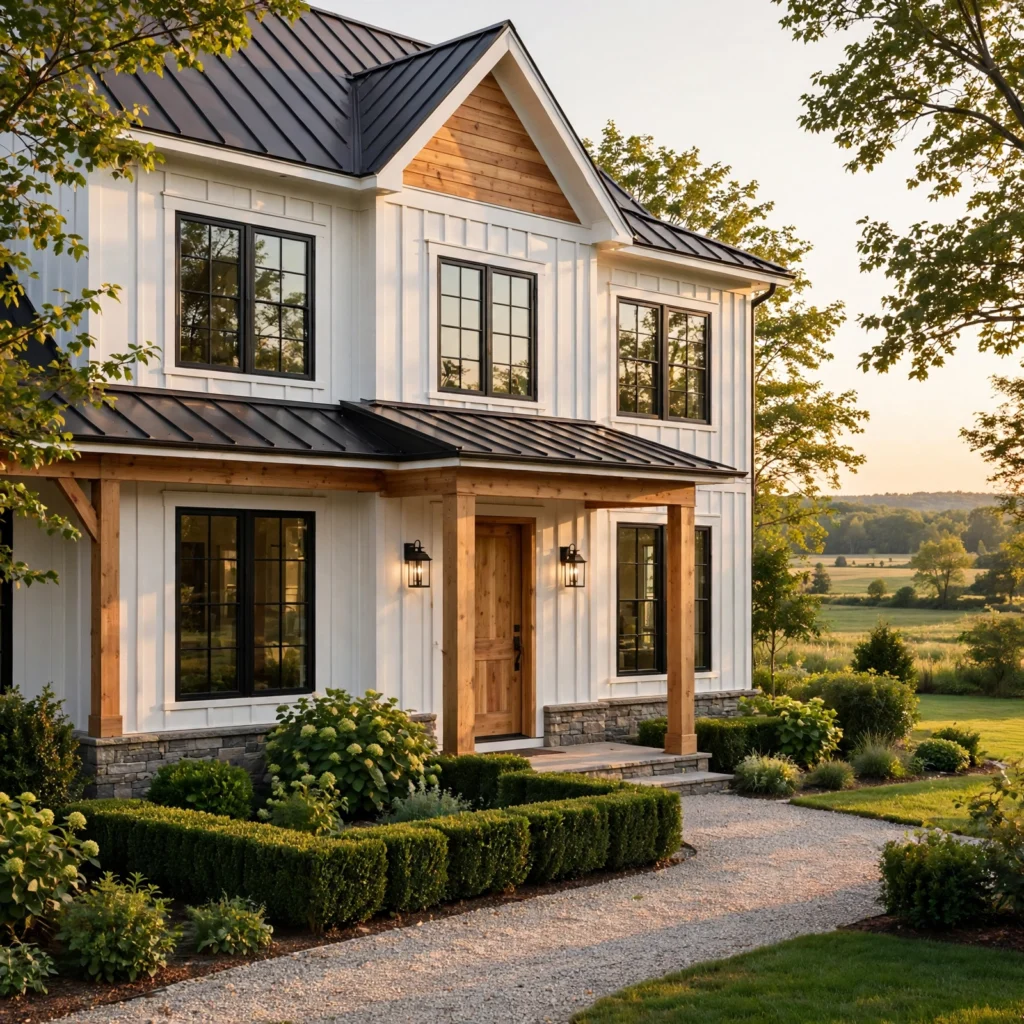
Black metal window frames, whether true steel-frame windows or a black-finished vinyl or aluminum alternative, add a defining industrial-agricultural contrast against white or light-colored siding and interior walls. This detail bridges the gap between the softer, more rustic farmhouse elements and a cleaner, more current architectural line. Choose true divided-lite panels over a single pane with applied grille bars for the most authentic result, particularly on street-facing windows.
7. Vintage Enamel Light Fixtures
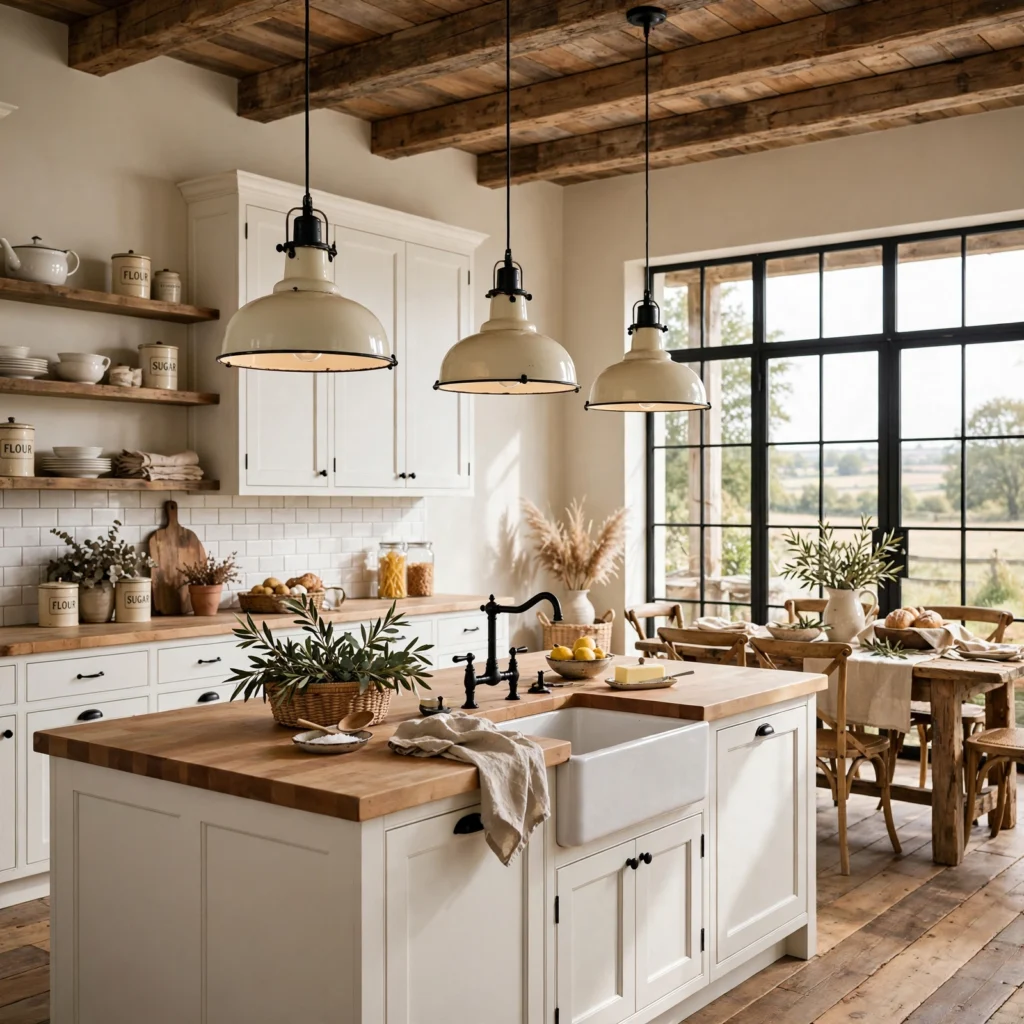
Vintage enamel light fixtures, in white or cream porcelain enamel over a metal shade, bring an authentic period lighting style into kitchens, mudrooms, and porches without relying on the more decorative farmhouse chandelier styles that have become heavily mass-produced. Genuine vintage fixtures, sourced from salvage shops or estate sales, carry more character than new reproductions, though well-made new versions in the same style still read as appropriate. Hang over a sink, island, or entry table at a height that clears head level, typically 30 to 36 inches above a counter surface.
8. Open Shelving with Iron Brackets
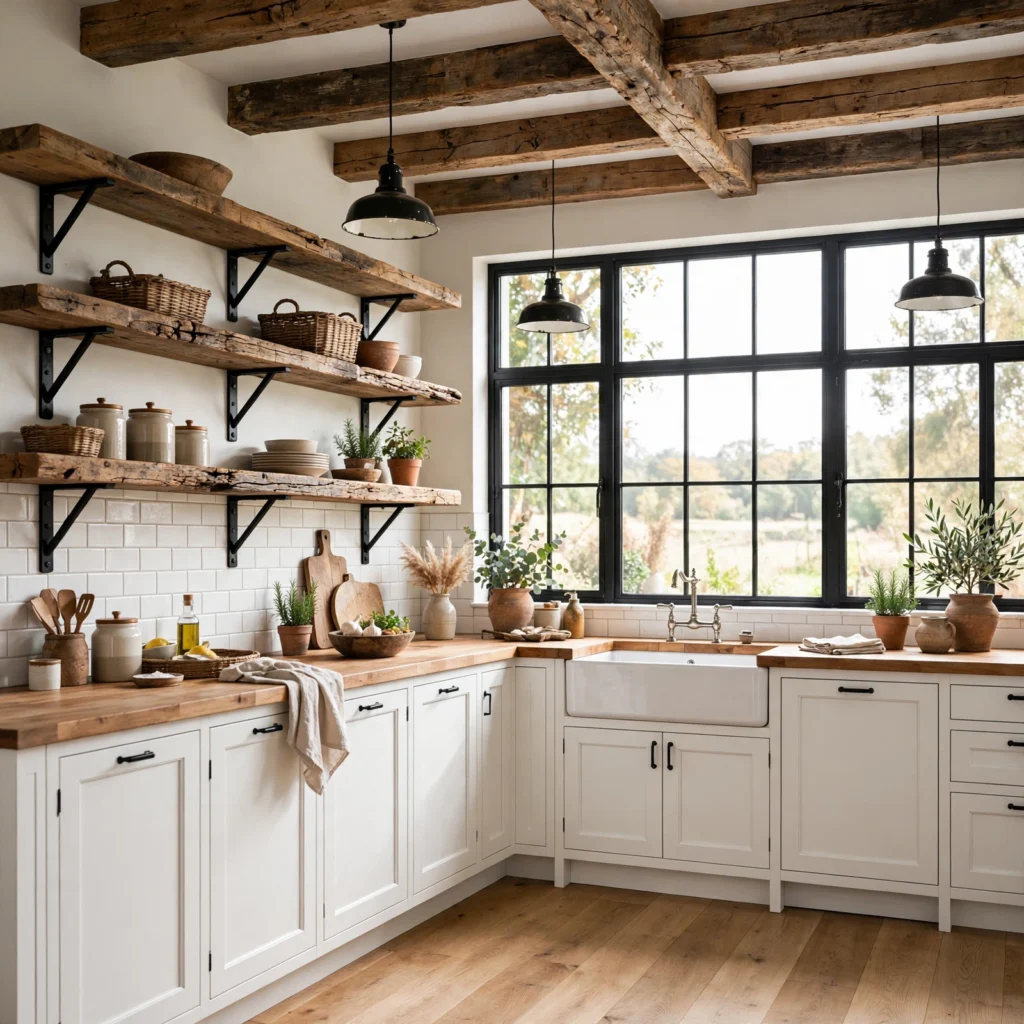
Open shelving with iron brackets, using solid wood shelves supported by visible black iron or steel brackets, replaces closed upper cabinetry in a kitchen or pantry with a display-forward storage solution that references farmhouse-era open pantry storage. This works best in a kitchen with at least some closed storage elsewhere, since fully open shelving throughout requires consistently tidy dish and cookware storage to look intentional rather than cluttered. Mount brackets into wall studs given the combined weight of the shelf and any stored items.
9. Galvanized Metal Accents
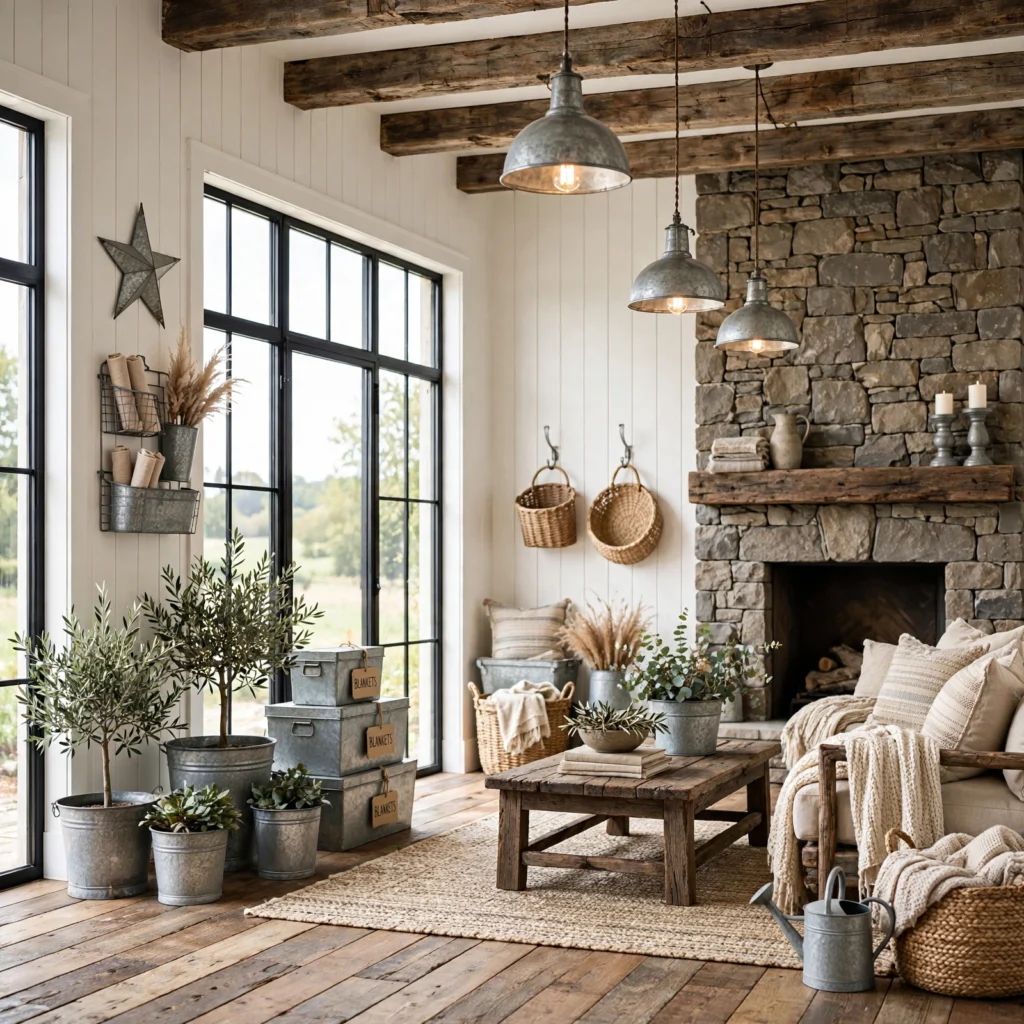
Galvanized metal accents, in light fixtures, planters, or small hardware details, bring an authentic agricultural material into the home that references actual farm equipment and storage rather than a purely decorative farmhouse motif. This material holds up particularly well in kitchens, mudrooms, and outdoor-adjacent spaces where a more delicate finish might show wear more quickly. Use galvanized elements as accents rather than the dominant material in a room, since too much of the cool gray tone throughout can read as more industrial than farmhouse.
10. Dutch Door Entry
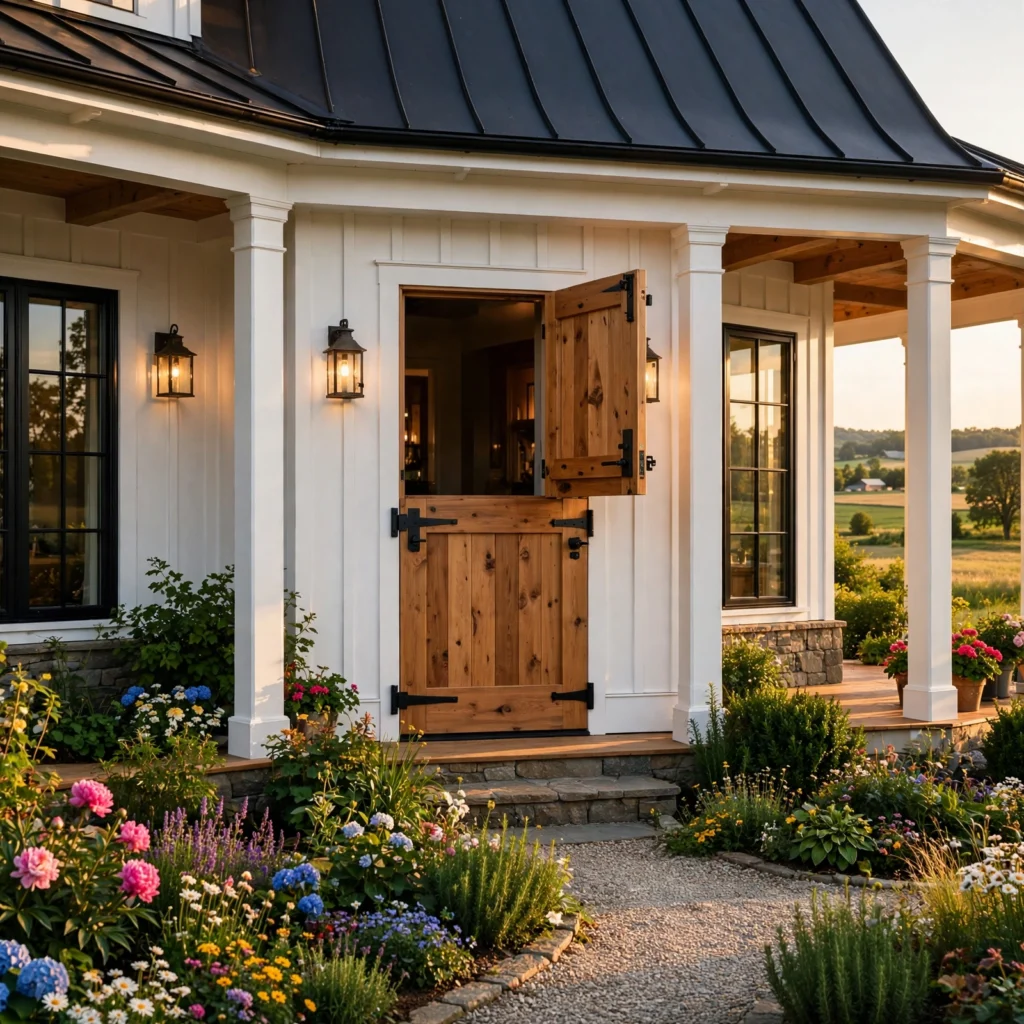
A Dutch door entry, split horizontally so the top and bottom halves open independently, is a genuine period detail from working farmhouses, originally used to let in light and air while keeping animals out. This works well at a mudroom, kitchen, or side entry rather than necessarily the main front door, and it adds functional value beyond its visual interest, particularly in homes with young children or pets. Choose a solid wood door with simple iron hardware rather than an overly ornate style to keep the detail consistent with the rest of a restrained farmhouse palette.
11. Neutral Whitewashed Walls
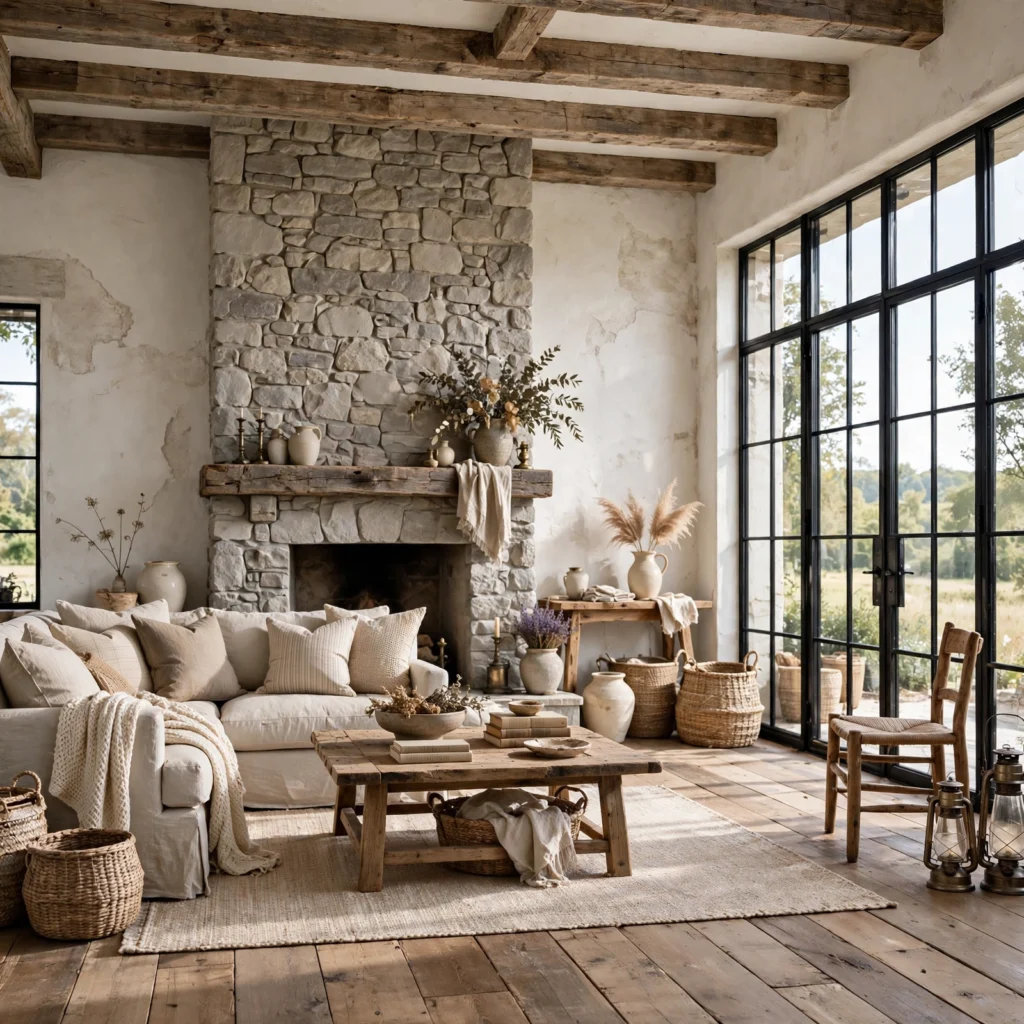
Neutral whitewashed walls, using a thin, translucent white wash rather than solid opaque paint, allow the underlying wood grain or brick texture to remain visible while still lightening the overall surface. This technique works particularly well on exposed brick, wood paneling, or older plaster walls where the original material has enough character to be worth preserving rather than fully covering. Test the whitewash ratio on a small section first, since the effect varies significantly depending on the porosity and existing tone of the underlying material.
12. Farmhouse Design Dining Table
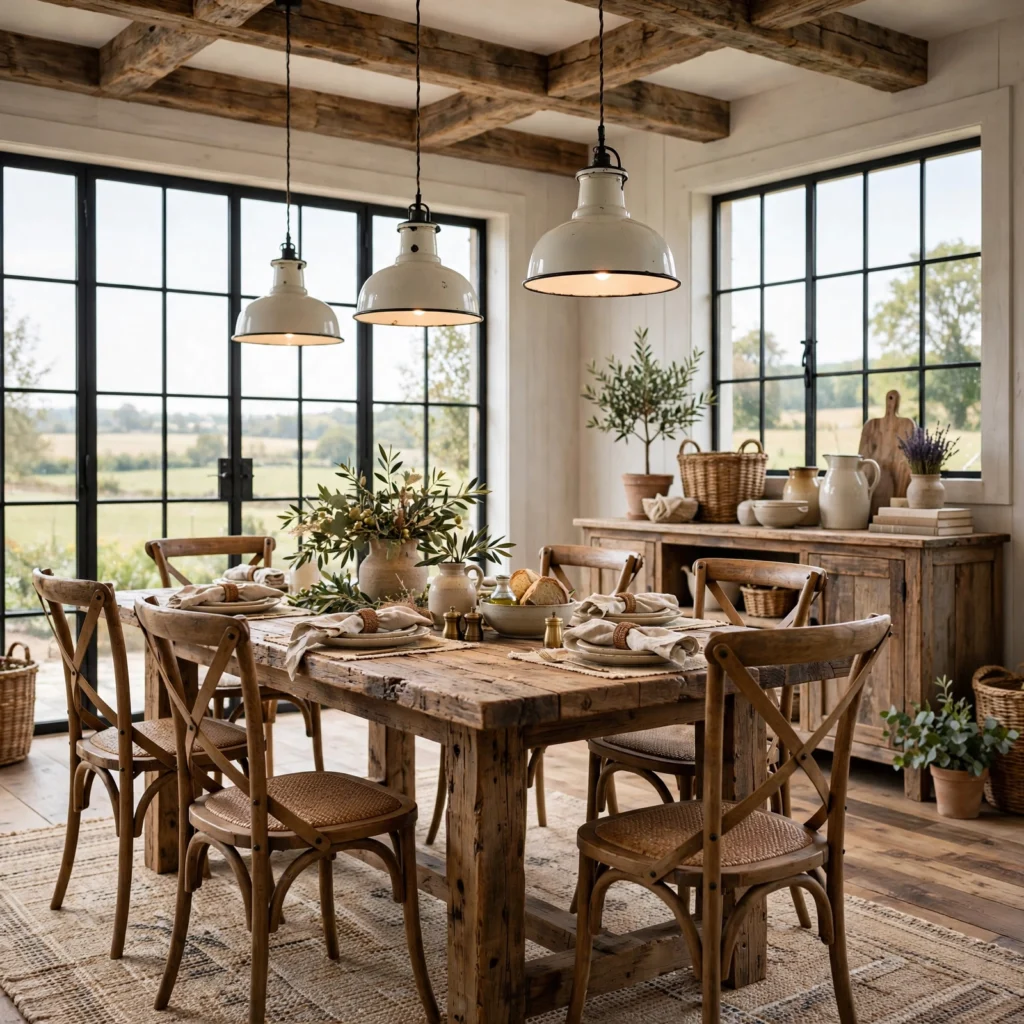
A farmhouse design dining table, built from a solid, thick wood slab with visible joinery like turned or trestle legs, functions as one of the most defining furniture pieces in the style, referencing the large, communal tables historically used in working farmhouse kitchens. Choose a reclaimed or distressed finish over a glossy, uniform lacquer, since the visible grain and minor imperfections are part of what makes the piece read as authentic rather than a mass-produced reproduction. Size the table to allow at least 24 inches of seating width per person around the perimeter.
13. Woven Natural Fiber Rugs
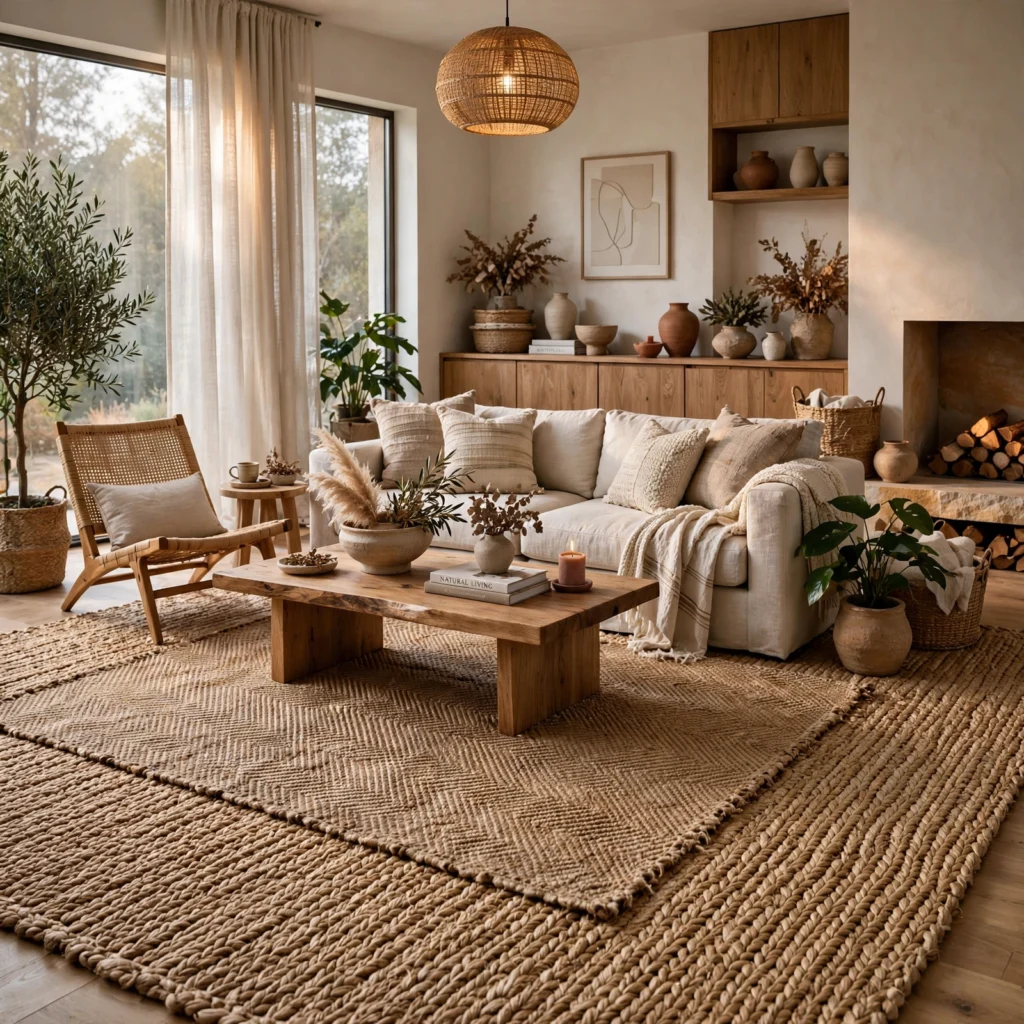
Woven natural fiber rugs, in jute, sisal, or a simple flatweave cotton, bring texture underfoot that references practical, durable farmhouse-era textiles rather than the more delicate rugs common in formal interior styles. These materials also hold up well in high-traffic areas like a kitchen or mudroom, where a plush or more delicate rug would show wear quickly. Layer a smaller patterned rug over a larger jute or sisal base in a living or dining area for added visual interest without sacrificing the material’s practical durability.
14. Iron and Wood Stair Railing
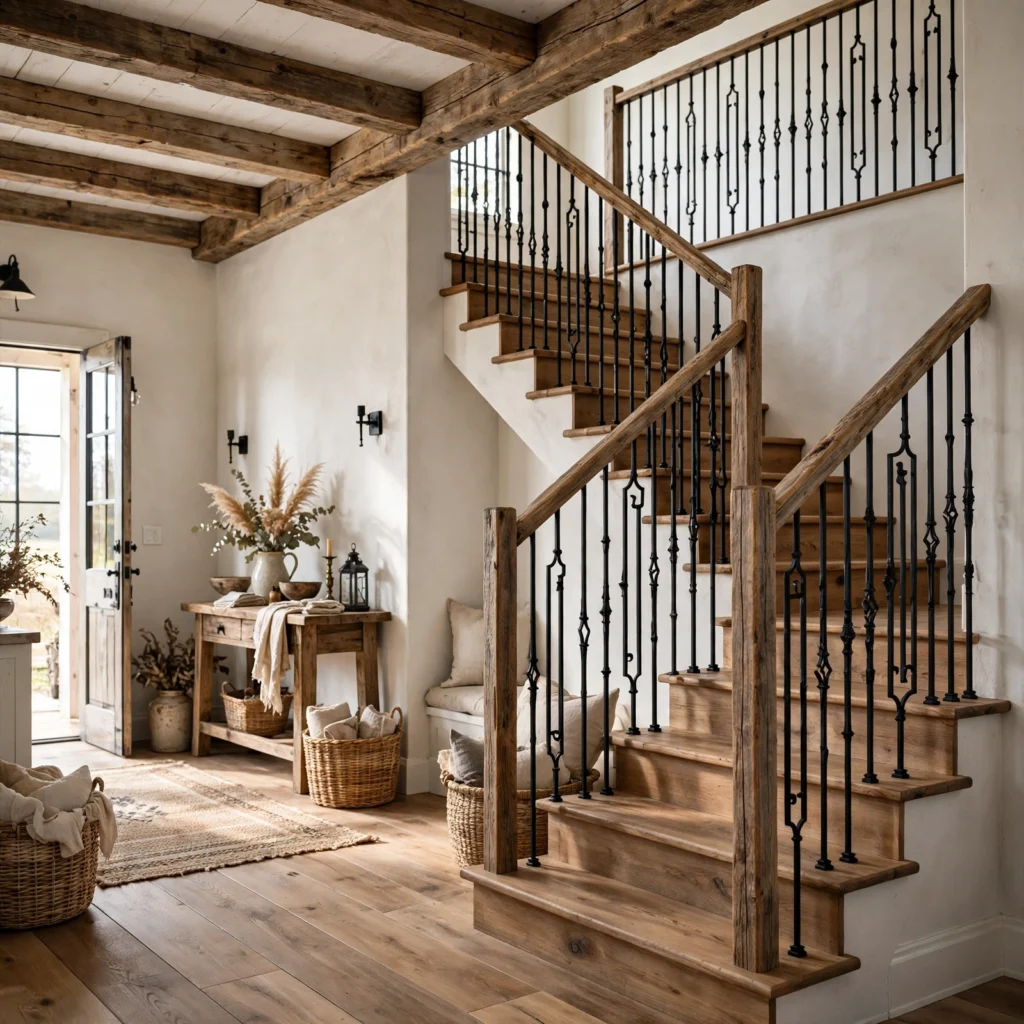
An iron and wood stair railing, combining simple black iron balusters with a wood handrail and treads, brings the same material contrast found throughout farmhouse interiors into the staircase, one of the most visually prominent structural elements in a multi-story home. This combination reads as more current than an all-wood traditional railing while still referencing the agricultural material palette central to the style. Choose simple straight iron balusters rather than an ornate scrollwork pattern, which tends to read as more formal Victorian than farmhouse.
15. Board-and-Batten Exterior Siding
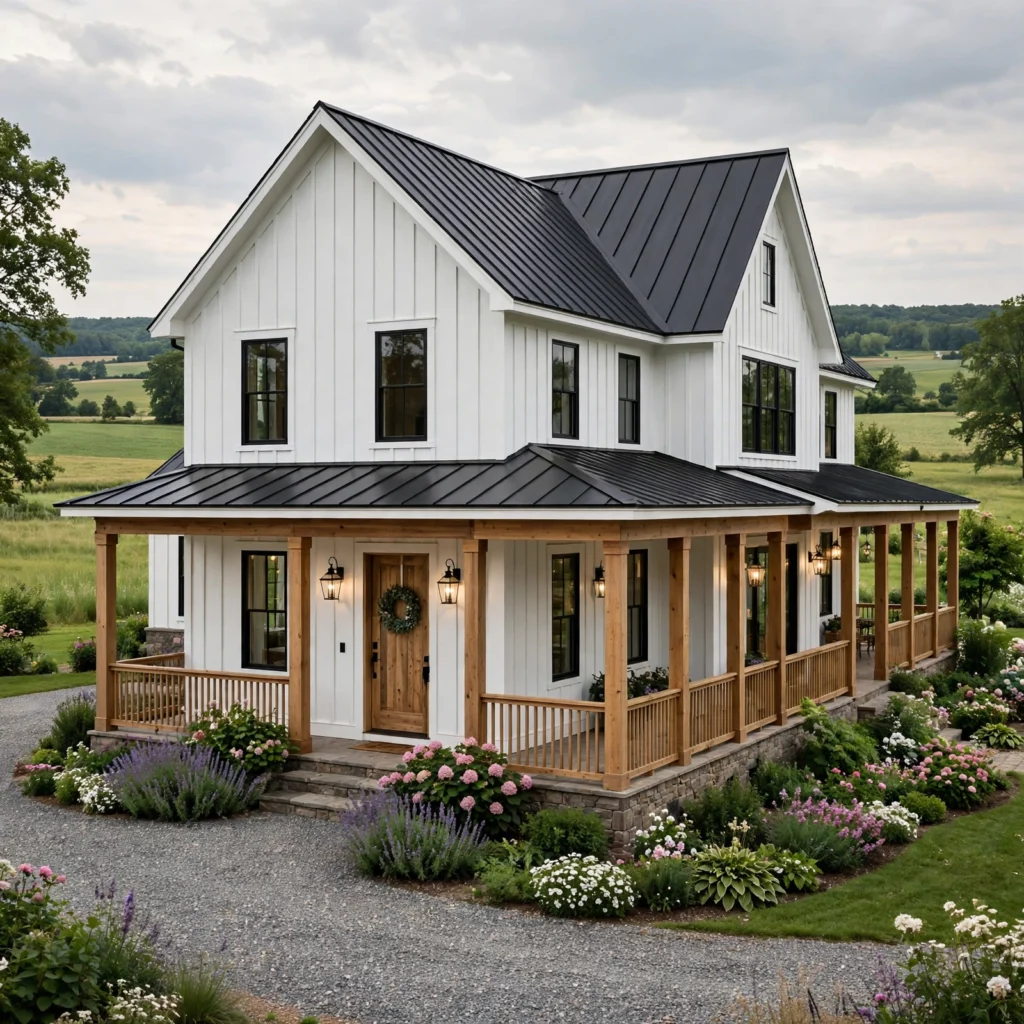
Board-and-batten exterior siding, applied across a home’s full facade rather than as an interior accent, is one of the most historically accurate exterior treatments for farmhouse-style architecture, originally used on actual barns and farm outbuildings for its practical weather resistance. Fiber cement versions offer significantly better long-term durability than natural wood while maintaining the same visual profile. Pair with a simple gable or single-pitch roofline and a restrained white or warm neutral exterior color for the most historically consistent overall result.
Shop the Look
A fireclay apron-front farmhouse sink pairs well with a bridge-style faucet in an aged brass finish. Reclaimed wide-plank wood flooring and exposed hand-hewn ceiling beams work together to anchor a main living space. Round out the home with vintage enamel pendant lighting over an island and a solid wood trestle dining table with turned legs.
Common Mistake to Avoid
The most common mistake in farmhouse design is relying entirely on a narrow set of decorative shorthand, like shiplap, barn doors, and mason jar decor, without incorporating any of the genuine structural or material elements, like exposed beams, real wood flooring, or an apron-front sink, that define the style’s actual architectural roots. This produces a room that reads as themed rather than authentically designed, and it tends to date quickly as that specific decorative combination falls out of favor. A better approach is prioritizing material quality and structural detail first, then adding decorative elements sparingly.
5 FAQs
Is farmhouse design still popular?
Farmhouse design remains popular, though the style has shifted away from the heavily decorated, shiplap-and-barn-door version that dominated the last decade toward a more restrained approach grounded in genuine materials like reclaimed wood, iron, and stone. Modern farmhouse design, which blends traditional farmhouse elements with cleaner contemporary lines, has become a particularly common variation. The core appeal of natural materials and functional, durable design has kept the underlying style relevant even as specific decorative trends within it have shifted.
What’s the difference between farmhouse and modern farmhouse design?
Traditional farmhouse design draws more directly from actual period agricultural architecture, favoring visible wood grain, wrought iron, and rustic, hand-finished materials throughout. Modern farmhouse design blends those same material references with cleaner, more contemporary lines, a more restrained color palette, and fewer overtly rustic or distressed finishes. The modern version tends to feel less themed and more broadly livable, which is part of why it’s become the more common approach in recent renovations.
What materials are essential to farmhouse design?
Reclaimed or solid wood, wrought iron or black metal hardware, and natural stone or fireclay fixtures are generally considered the essential material categories in authentic farmhouse design, since each references genuine agricultural-era construction rather than purely decorative trends. Natural fiber textiles like jute, sisal, and linen also play a significant supporting role. Avoiding overly polished or synthetic materials, like high-gloss laminate, throughout the space helps maintain the material honesty central to the style.
How do I avoid an overdone farmhouse look?
Limiting a room to a small number of genuinely structural or material-based farmhouse elements, like an apron-front sink or exposed beams, rather than layering in every available decorative motif at once, is the most reliable way to avoid an overdone result. Mixing in a few contemporary or industrial pieces, like a simple black metal light fixture or clean-lined furniture, also helps prevent a room from reading as a single-theme showroom rather than a lived-in home. Restraint in the decorative accessory layer matters as much as the material choices themselves.
Does farmhouse design work in a small space?
Yes, farmhouse design principles adapt well to a small space, particularly through material choices like board-and-batten paneling, open shelving, and natural fiber rugs, none of which require significant square footage to implement. Larger structural elements, like a full wraparound porch or an oversized dining table, may need to be scaled down or adapted, but the core material and color palette translates readily to a smaller footprint. Keeping the overall palette restrained, as recommended throughout this list, also tends to help a small space feel less cluttered.
Conclusion
Farmhouse design holds up best when it’s built on genuine materials and structural detail, with decorative elements layered in sparingly rather than relying on a narrow, overused set of decorative shorthand. Save this list to Pinterest for your next home project, and check out our related posts on simple house design and house exterior design for more ways to plan the rest of the home.
Author Expertise Note
I’ve worked on several farmhouse and modern farmhouse renovation projects over the past few years, and every idea on this list is one I’ve seen hold up well past the initial installation rather than fall out of favor within a season.