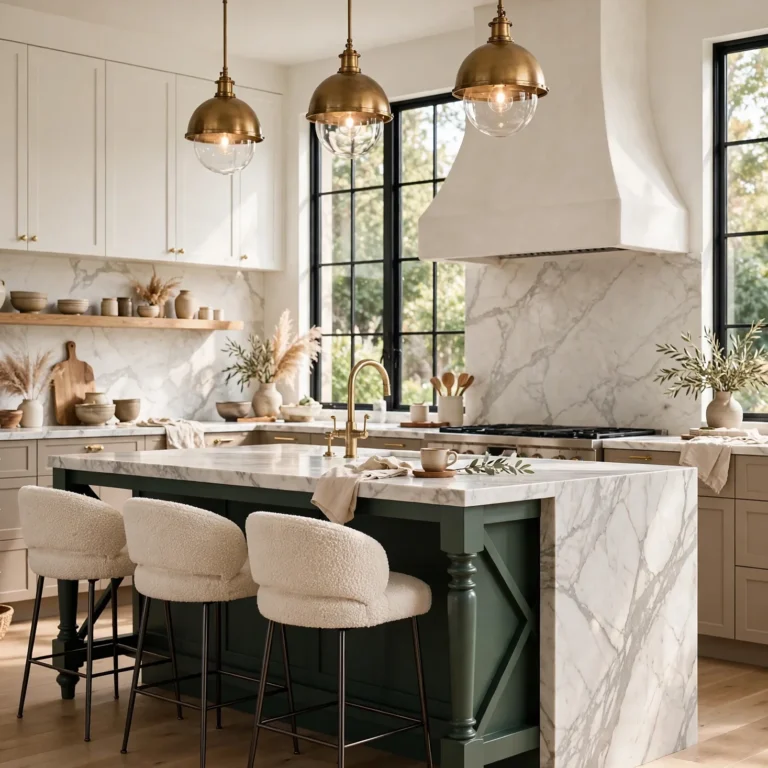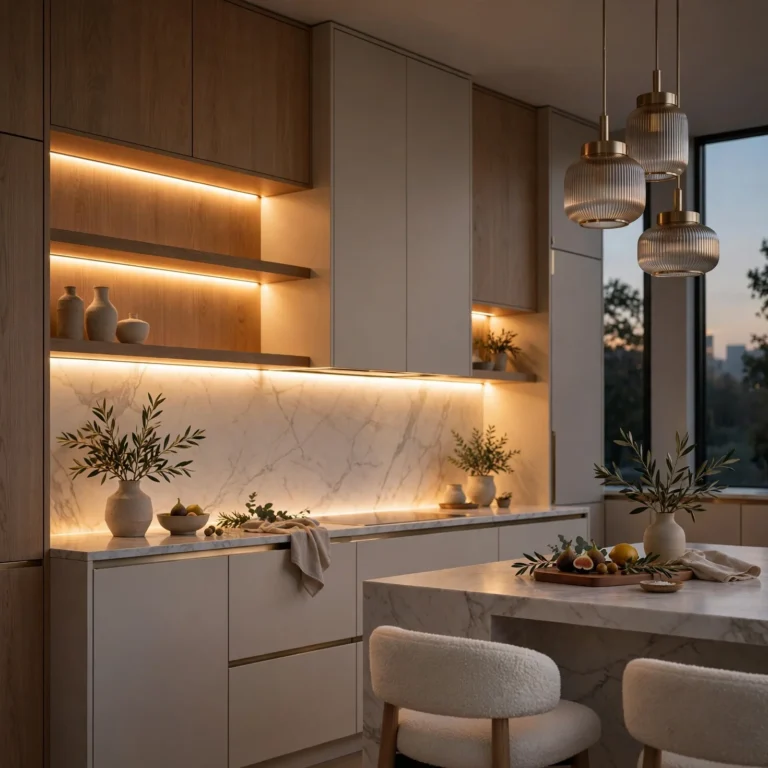
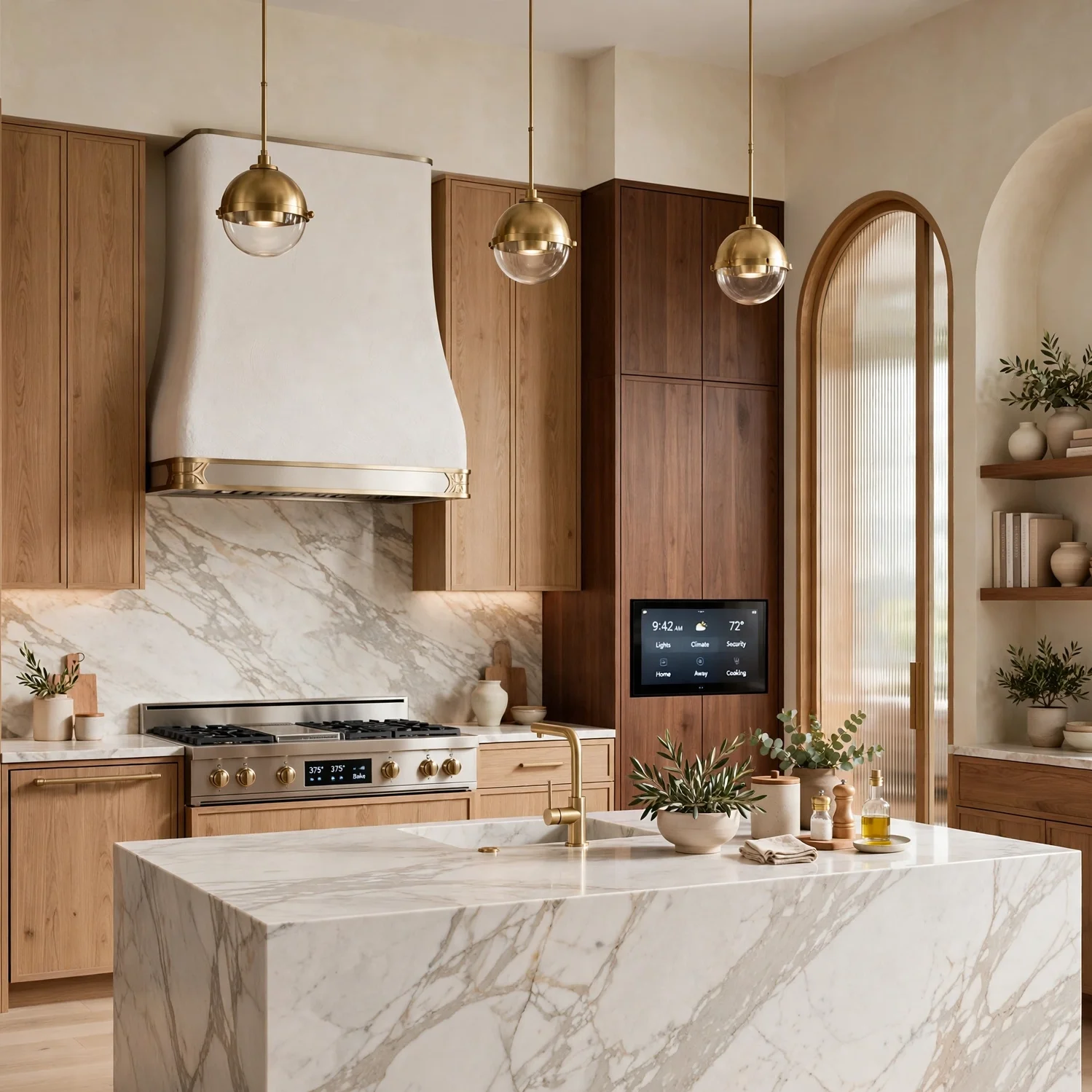
12 Trending Modern Kitchen Design Ideas for a Sleek, Functional Space
Modern kitchen design has moved well past the stark, all-white, high-gloss look many people still picture when they hear the term, settling instead into something warmer but still fundamentally clean-lined and uncluttered. The goal isn’t minimalism for its own sake but a kitchen where every visible surface earns its place, from handleless cabinetry to integrated appliances. This post covers twelve practical modern kitchen design ideas, from waterfall islands to matte black fixtures, with real material names and layout guidance for a space that reads as current rather than dated in five years.
Trend & Background
Modern kitchen design has shifted noticeably toward warmth over the past few years, moving away from the cold, all-white palettes of the previous decade toward matte finishes, warm wood tones, and softer neutral colors that still keep clean geometric lines intact. Integrated smart technology, from touchless faucets to app-controlled ovens, has become expected rather than a luxury upgrade, which has pushed kitchen layouts to plan for hidden charging and wiring from the design stage rather than retrofitting it later. At the same time, sustainability concerns have pushed more homeowners toward durable, long-lasting materials like quartz and engineered wood instead of trend-driven finishes that date quickly.
Key Takeaways
- These modern kitchen design ideas favor clean lines, handleless cabinetry, and integrated technology over ornate detailing.
- Matte finishes and monochromatic palettes dominate current modern kitchen direction over high-gloss surfaces.
- Several ideas focus on hiding clutter and appliances to keep sightlines uninterrupted.
- Material choices lean toward engineered stone, matte black metal, and warm wood accents for contrast.
1. Handleless Cabinetry
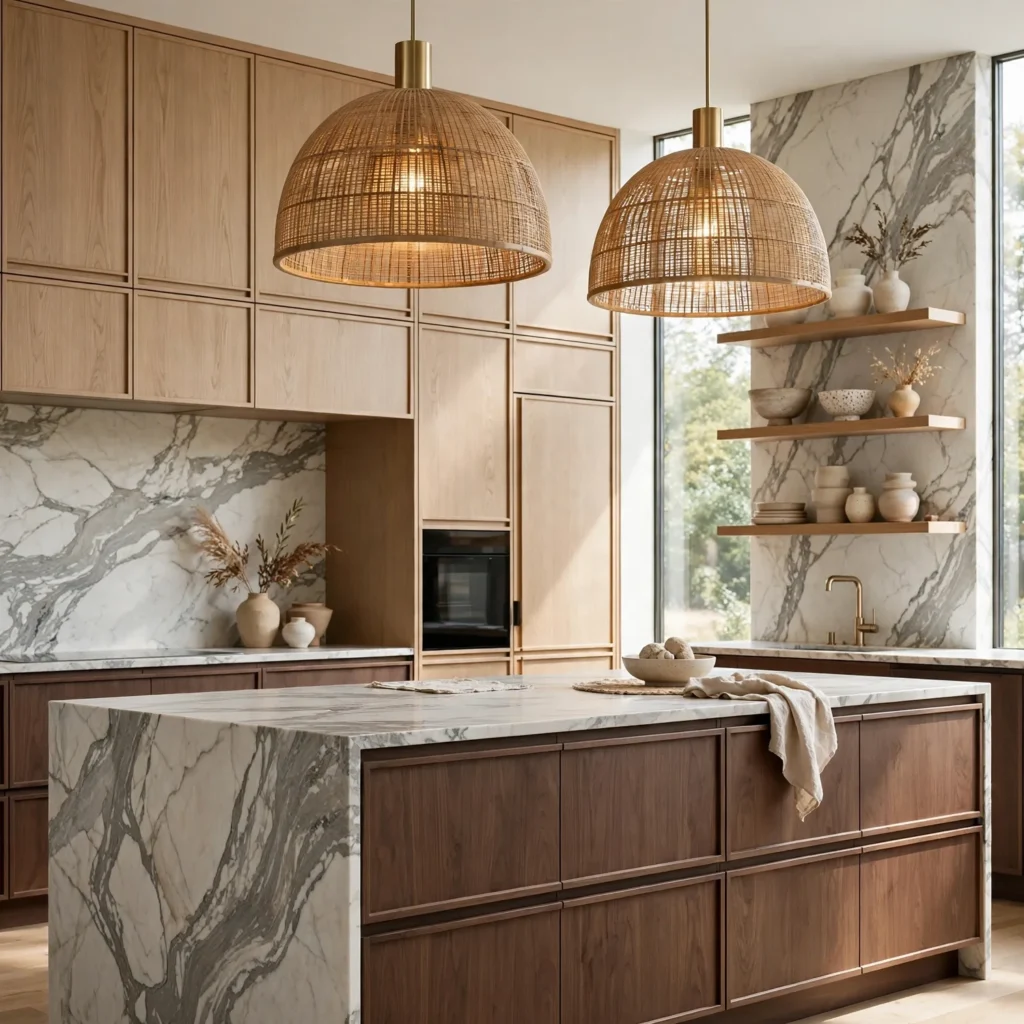
Handleless cabinetry uses a push-to-open mechanism or a recessed grip channel instead of visible knobs and pulls, keeping cabinet fronts completely flat and uninterrupted from floor to ceiling. This detail is central to achieving the clean-lined look most associated with modern kitchen design, since even minimal hardware breaks up the visual continuity of a flat cabinet run. Lacquer and matte laminate finishes both handle the push-mechanism hardware well, though the mechanism itself does require slightly more precise installation than standard hinges.
2. Matte Black Fixtures
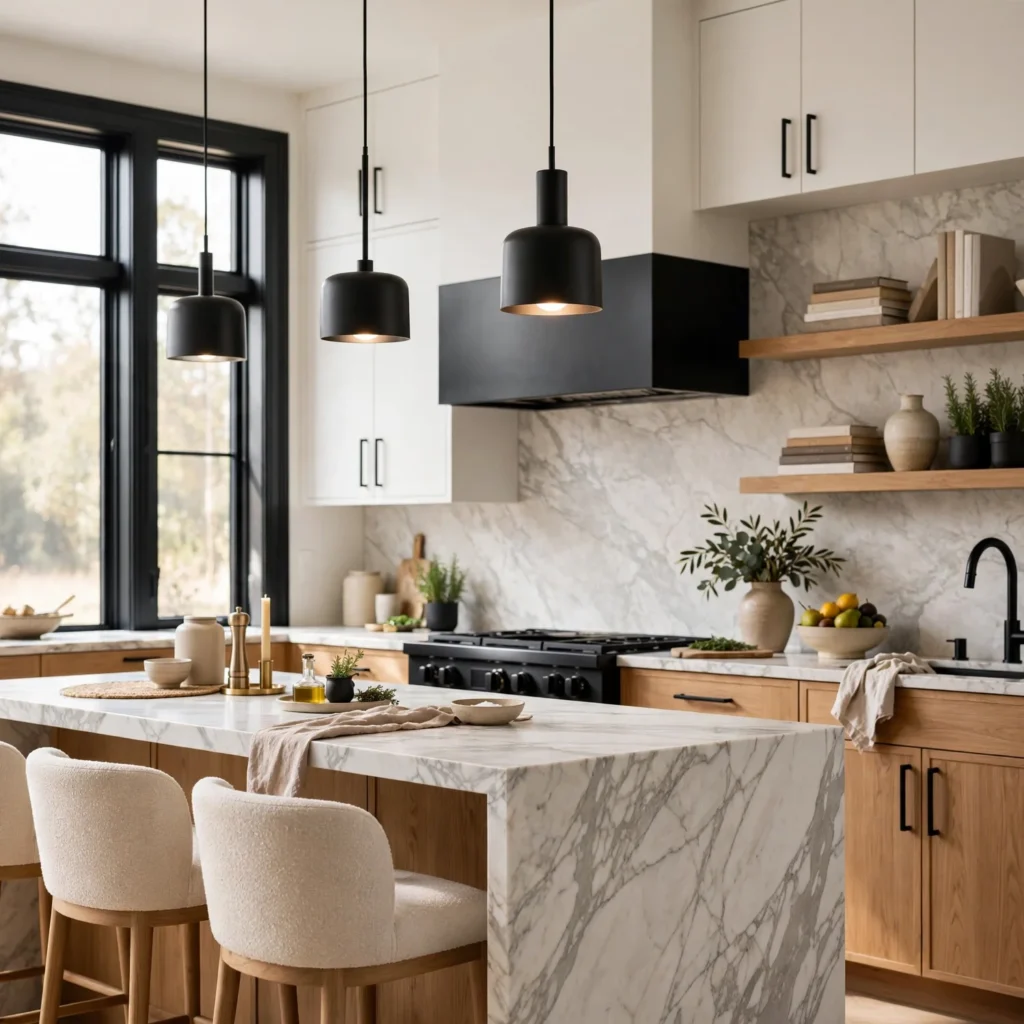
Matte black faucets, cabinet hardware, and light fixtures introduce a strong contrast point against lighter cabinetry and countertops, anchoring a modern kitchen without relying on color. This finish shows fingerprints and water spots more visibly than chrome or brushed nickel, which matters most on faucets near the sink where hands make constant contact. Using matte black consistently across two or three fixture types, rather than mixing it with brushed brass in the same sightline, keeps the palette from feeling scattered.
| Fixture Finish | Style Feel | Maintenance Level |
| Matte black | Bold, contemporary | Medium-high (shows water spots) |
| Brushed nickel | Warm, transitional | Low |
| Polished chrome | Cool, classic modern | Medium (shows fingerprints) |
3. Waterfall Island Edge
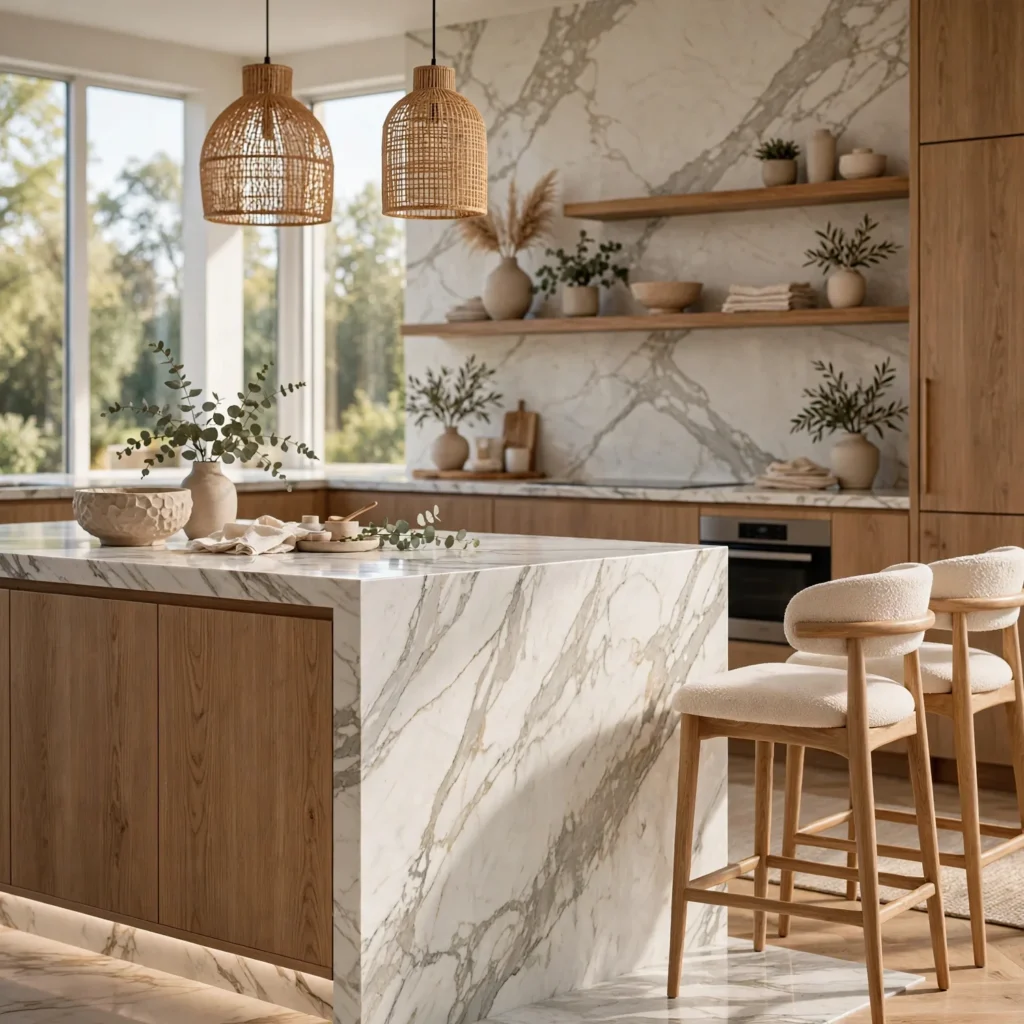
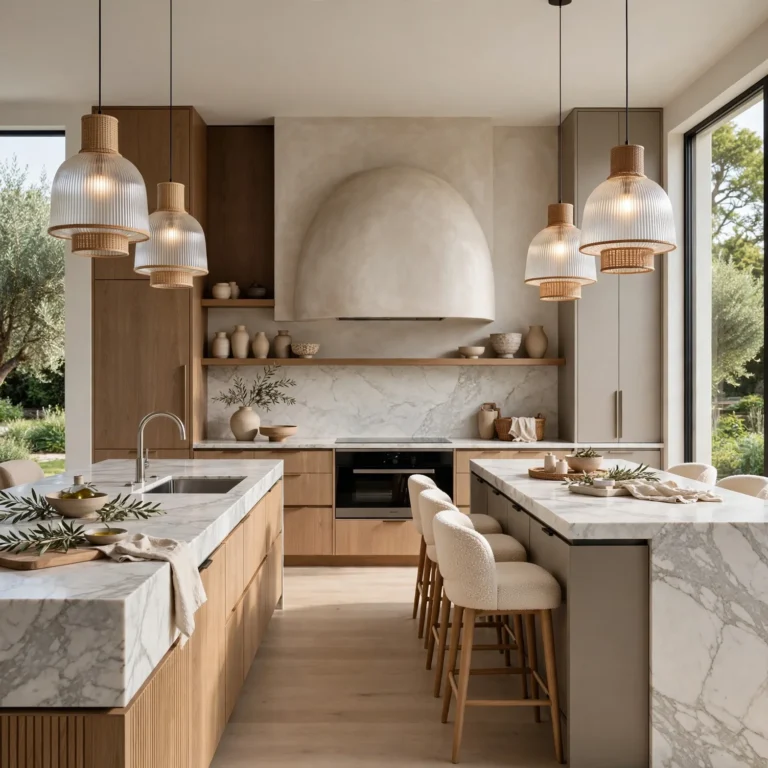
A waterfall island edge extends the countertop material down both sides of the island to the floor, creating a seamless monolithic block that reads as considerably more expensive than a standard overhanging counter edge. Large-format quartz or porcelain slab minimizes the visible seam at the corner, which matters for maintaining the unbroken line this detail is meant to create. This feature works best in kitchens with at least 42 inches of walking clearance around the island, since the solid vertical panels add visual bulk.
4. Integrated Panel-Ready Appliances
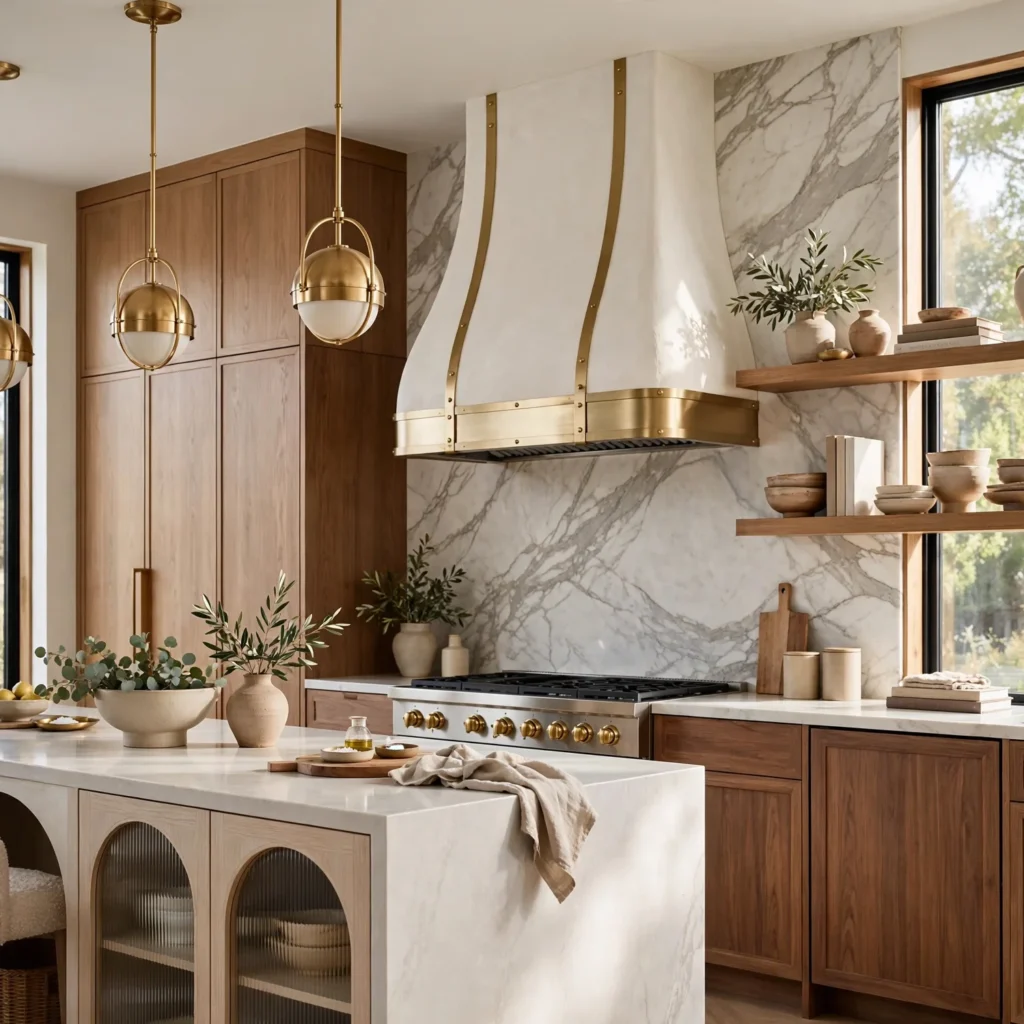
Panel-ready appliances fit the refrigerator and dishwasher with custom door panels matching the surrounding cabinetry instead of a standard stainless steel front, letting large appliances disappear into the cabinet run entirely. This approach is central to the uninterrupted look modern kitchen design prioritizes, since exposed stainless steel appliances break up flat cabinetry lines considerably more than a matched panel would. The tradeoff is cost, since this requires both a panel-ready appliance model and custom cabinetry sized to match.
5. Monochromatic Color Palette
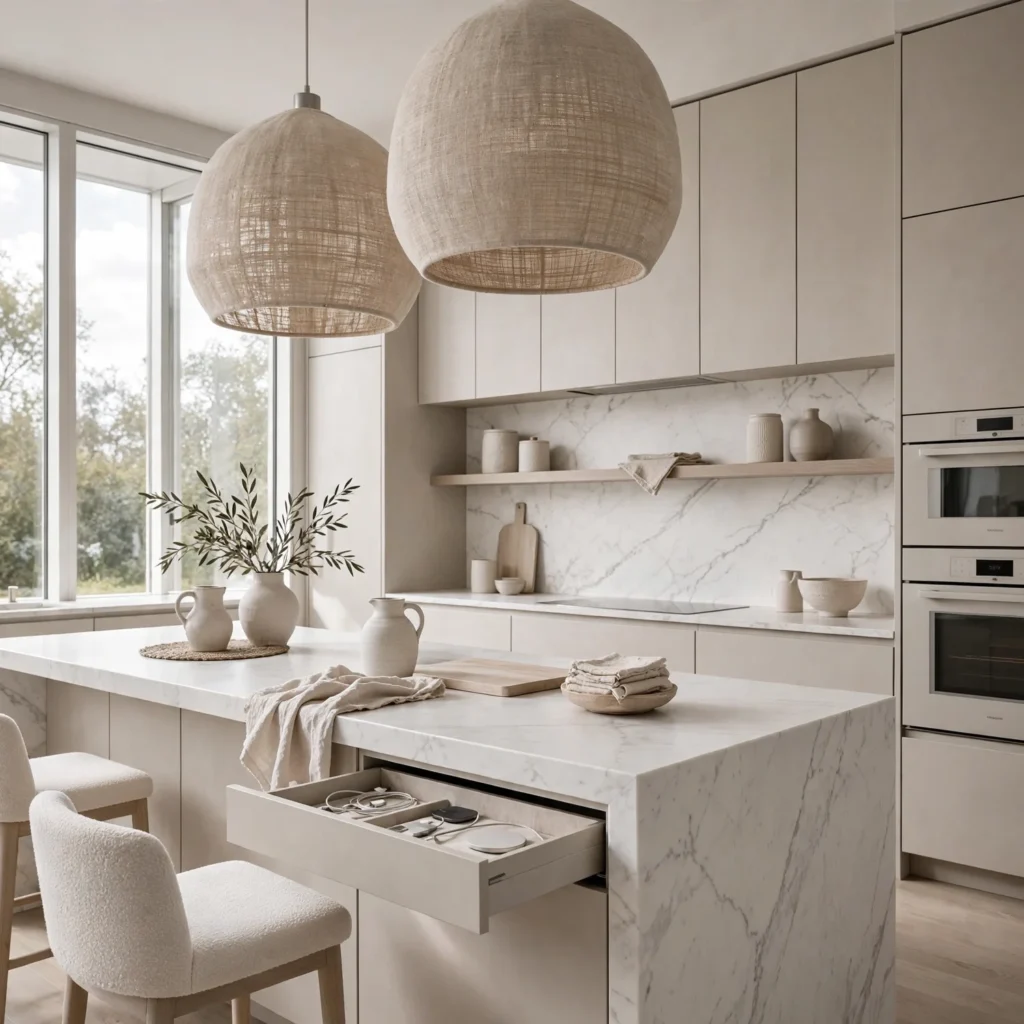
A monochromatic color palette keeps cabinetry, walls, and countertops within a tight tonal range, often all white, all warm gray, or all deep charcoal, relying on texture and material contrast rather than color variation for visual interest. Mixing matte and glossy finishes of the same base color, or pairing a stone countertop with a slightly warmer cabinet tone, keeps a monochromatic kitchen from reading as flat or sterile. This approach works especially well in smaller kitchens, where a single cohesive palette makes the space feel larger.
Looking for more inspiration? Browse our collection of kitchen designs to discover stylish layouts, smart storage solutions, and timeless designs.
6. Floating Cabinetry
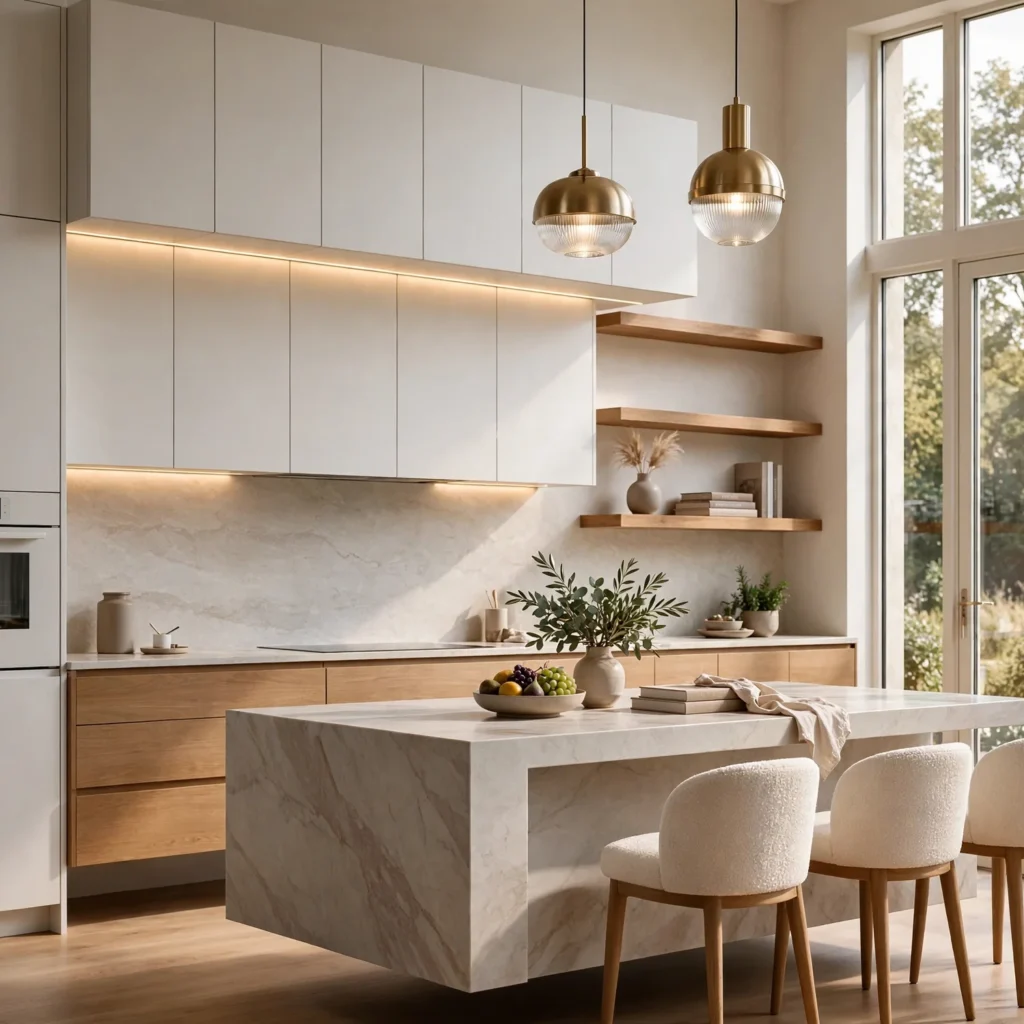
Floating cabinetry mounts upper cabinets or a full run of lower cabinets slightly above the floor, leaving a visible gap that creates a lighter, almost weightless look compared to cabinetry running flush to the ground. Under-cabinet LED lighting installed in this gap adds a soft glow that reinforces the floating effect after dark. This detail works particularly well paired with a contrasting floor material, since the visible gap draws attention to both surfaces at once.
7. Statement Pendant Lighting
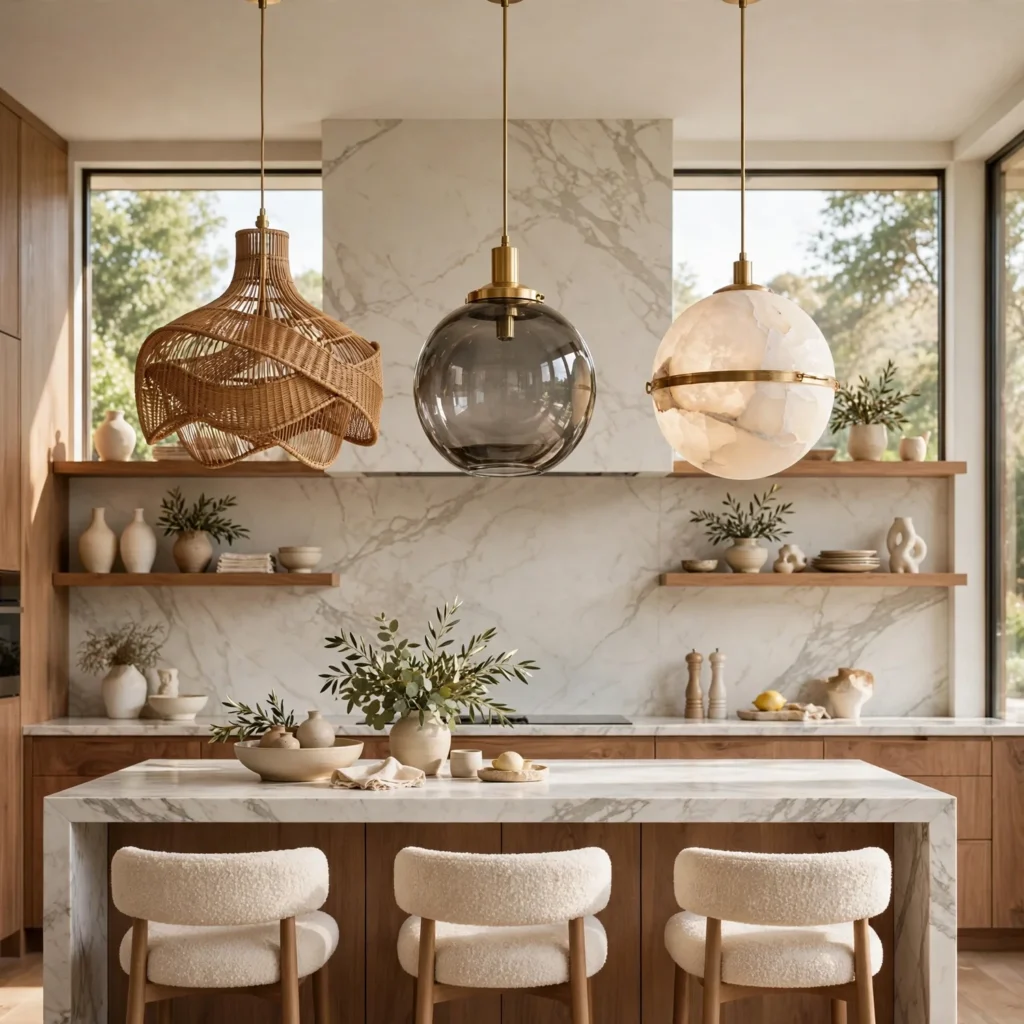
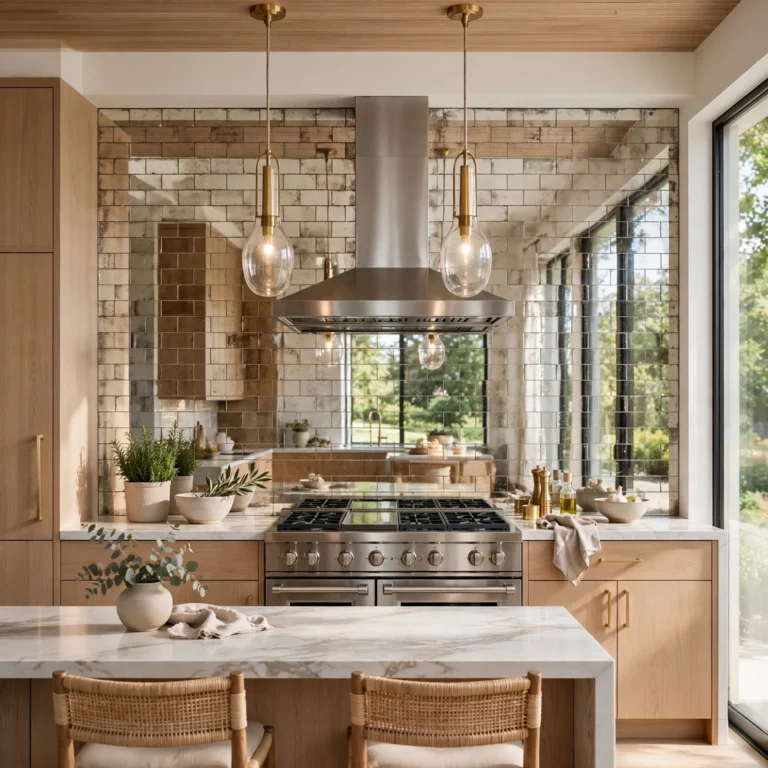
A cluster of matching pendant lights positioned above an island introduces a sculptural element into an otherwise flat-surfaced modern kitchen, functioning as both task lighting and a visual focal point. Glass globe or matte black cylinder pendants both suit the clean-lined aesthetic without introducing ornate detailing that would clash with the rest of the space. Hanging pendants at a consistent height, typically 30 to 36 inches above the counter surface, keeps the cluster looking intentional rather than mismatched.
8. Slab Backsplash
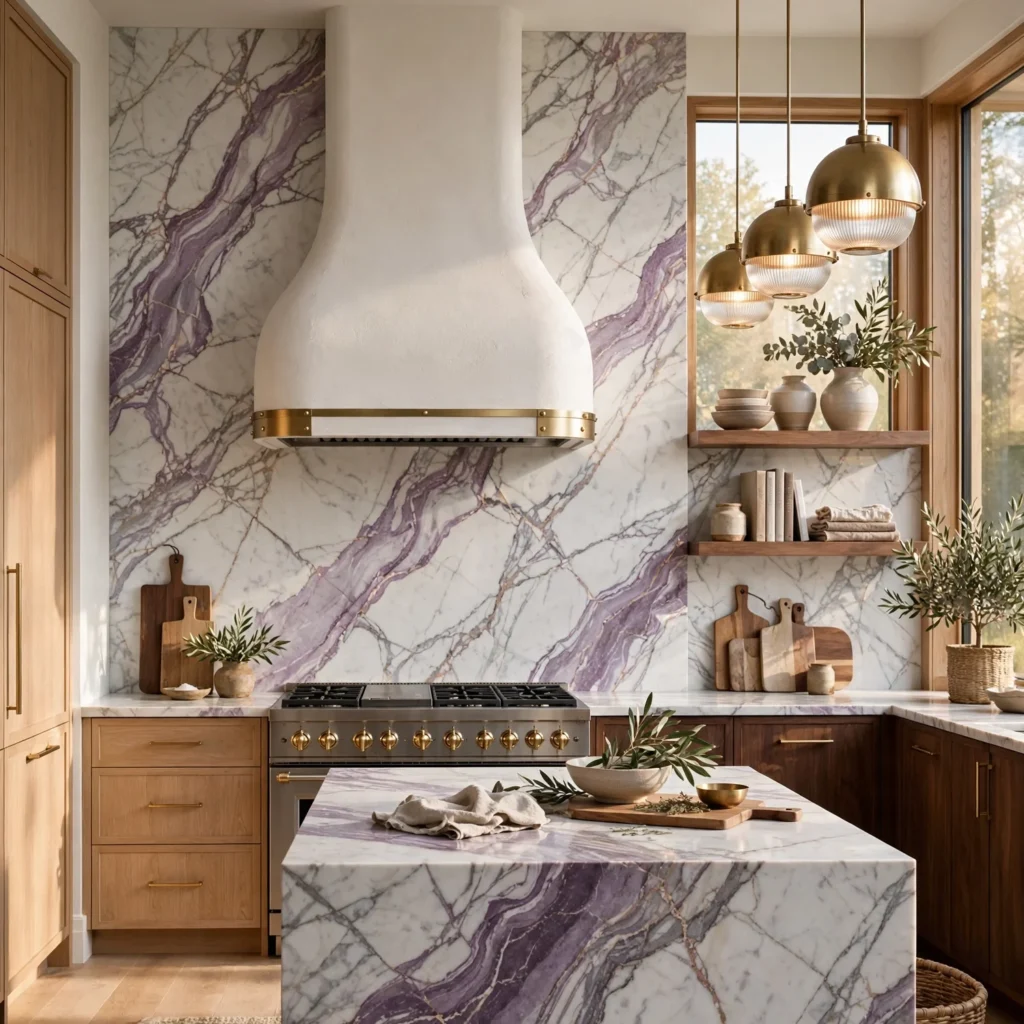
A slab backsplash extends the same stone or quartz material used on the countertop up the wall in one continuous, seamless piece, eliminating grout lines entirely and reinforcing the clean, uninterrupted surfaces central to modern kitchen design. This detail costs considerably more than standard tile, since it requires a large enough slab cut and precise fabrication around outlets and the range. The payoff is a backsplash that’s also easier to clean than a grouted tile surface, since there are no seams for grease or moisture to collect in.
9. Concealed Range Hood
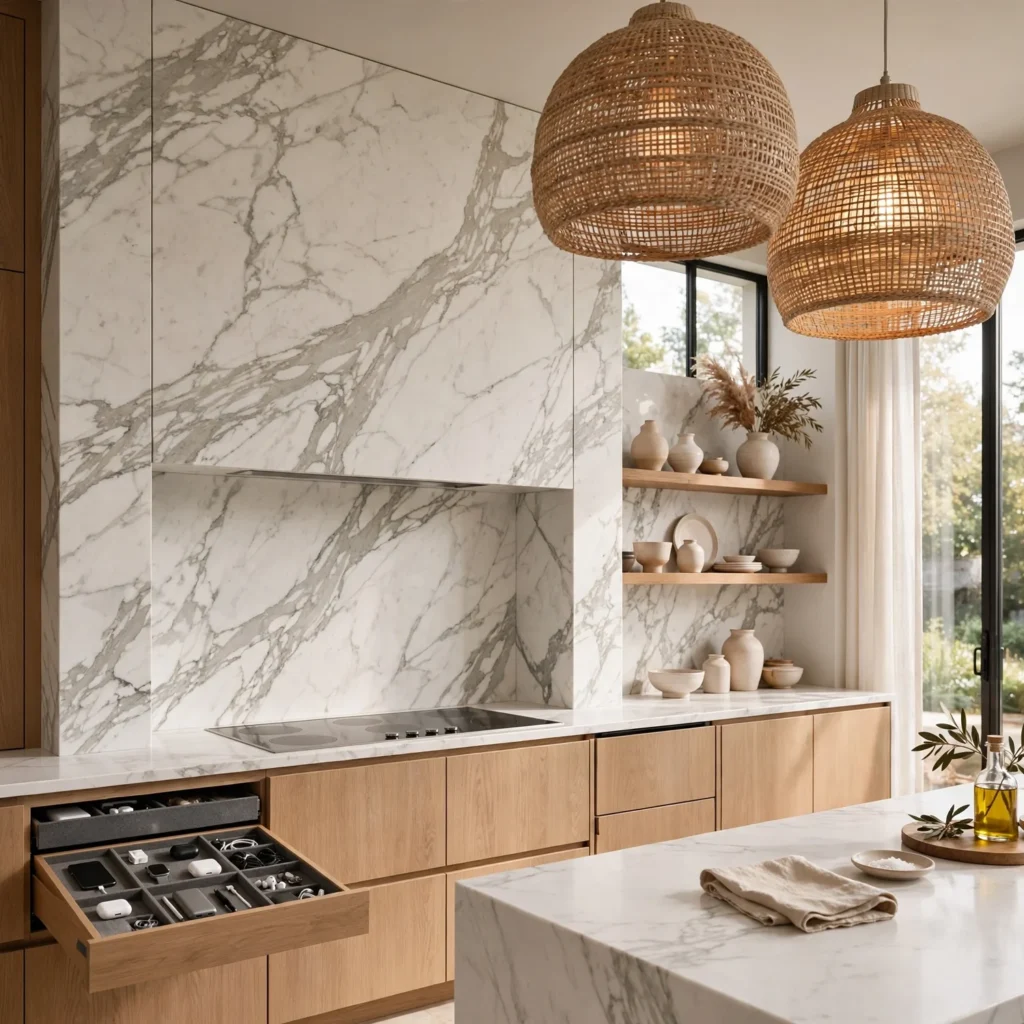
A concealed range hood integrates ventilation directly into the cabinetry or ceiling design, rather than exposing the ductwork or hood body as a visible design feature, keeping sightlines uninterrupted above the cooktop. This approach suits kitchens leaning toward a minimal, understated look rather than those wanting a statement hood as a focal point. A properly sized internal blower matters more with this style, since a hidden hood still needs adequate ventilation power even though it’s no longer visible.
10. Warm Wood Accent Island
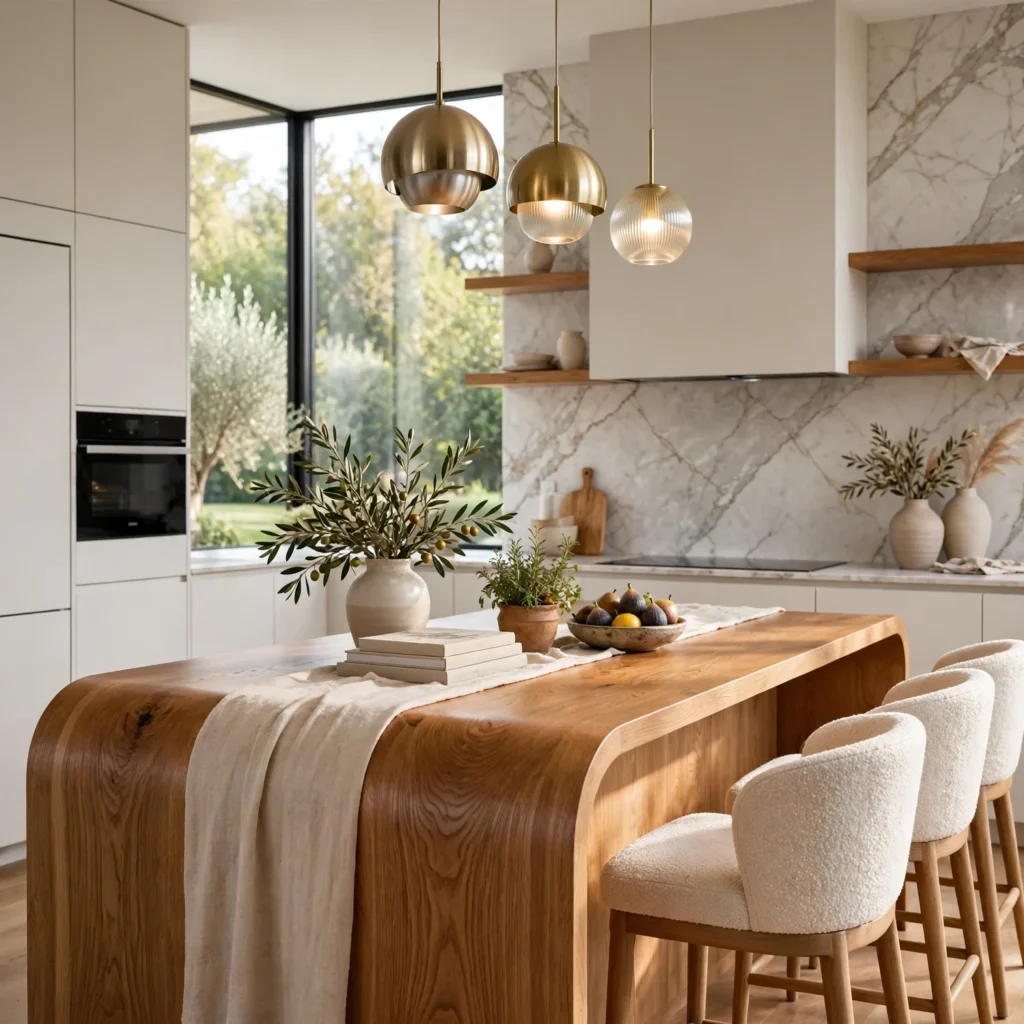
A warm wood accent island introduces natural material contrast into an otherwise cool, matte-finished modern kitchen, preventing the space from reading as sterile or overly clinical. Walnut or white oak veneer on the island base, paired with a contrasting quartz or stone countertop, is a common combination that softens the surrounding cabinetry without abandoning the clean-lined aesthetic. This detail works especially well as the single warm element in a kitchen otherwise built from cooler tones and matte black fixtures.
11. Hidden Appliance Garage
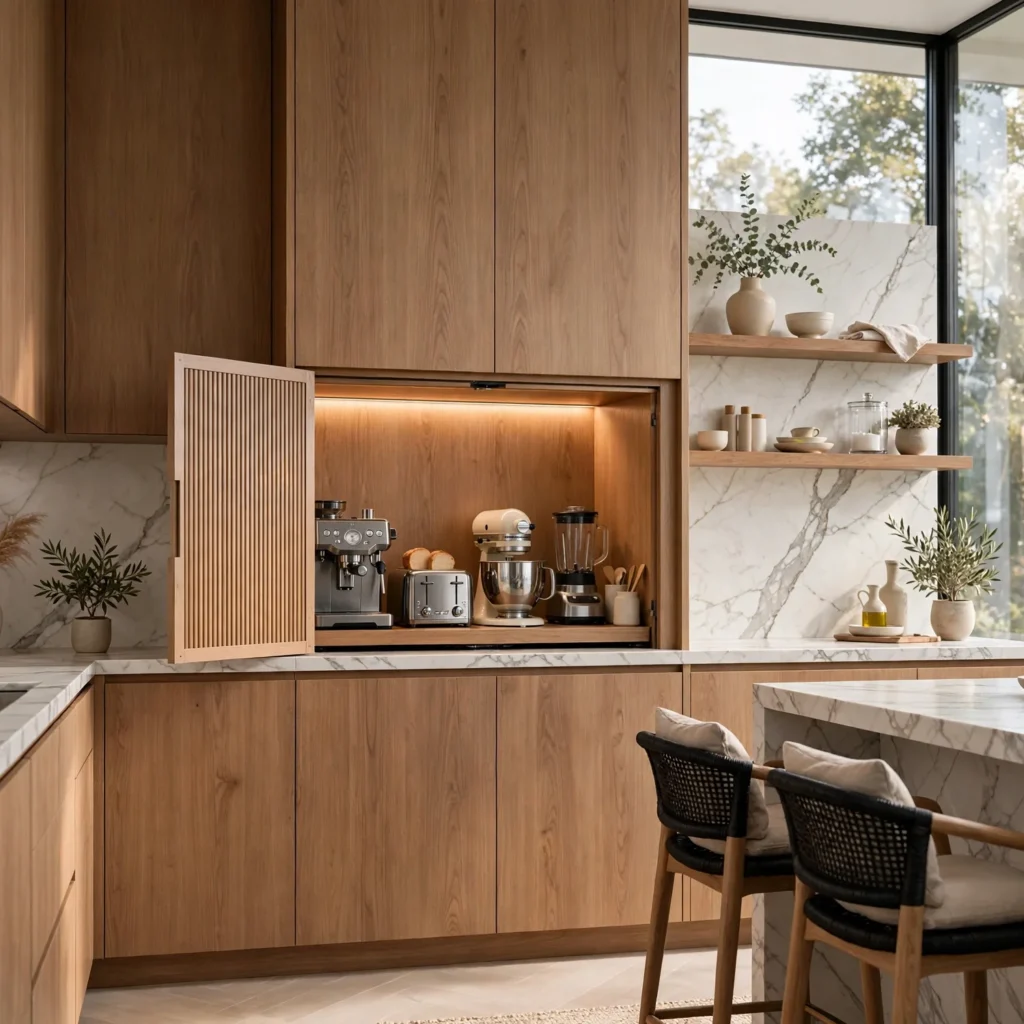
A hidden appliance garage built into a corner cabinet with a lift-up or roll-up door keeps small daily-use appliances like the toaster and coffee maker out of sight while still leaving them plugged in and ready to use. This detail directly supports the uncluttered counter surfaces central to modern kitchen design, since even a well-organized countertop with visible small appliances undercuts the clean look the rest of the kitchen establishes. Positioning it near an existing outlet avoids the need for additional electrical work during installation.
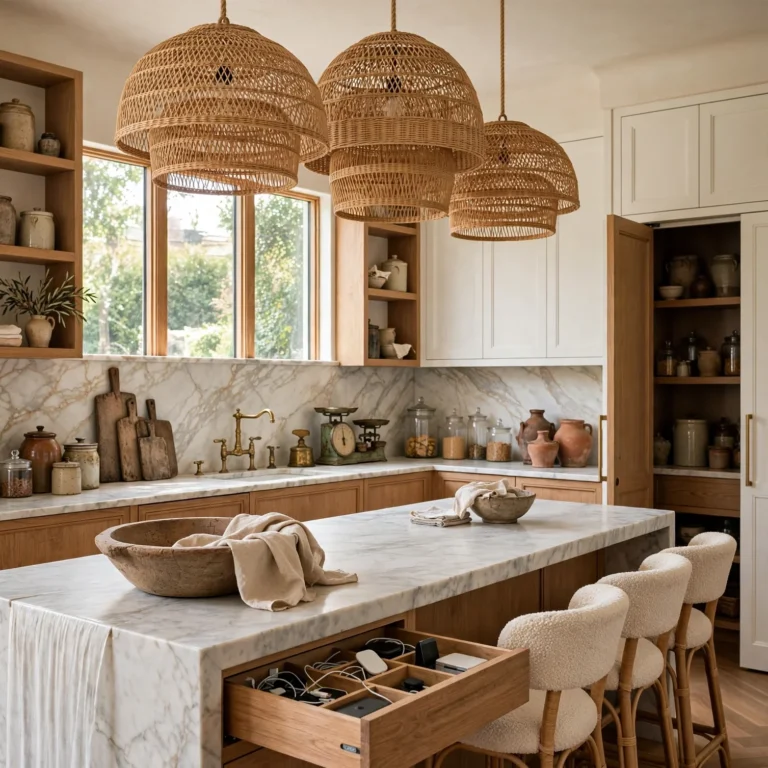
12. Modern Kitchen Design With Integrated Smart Technology
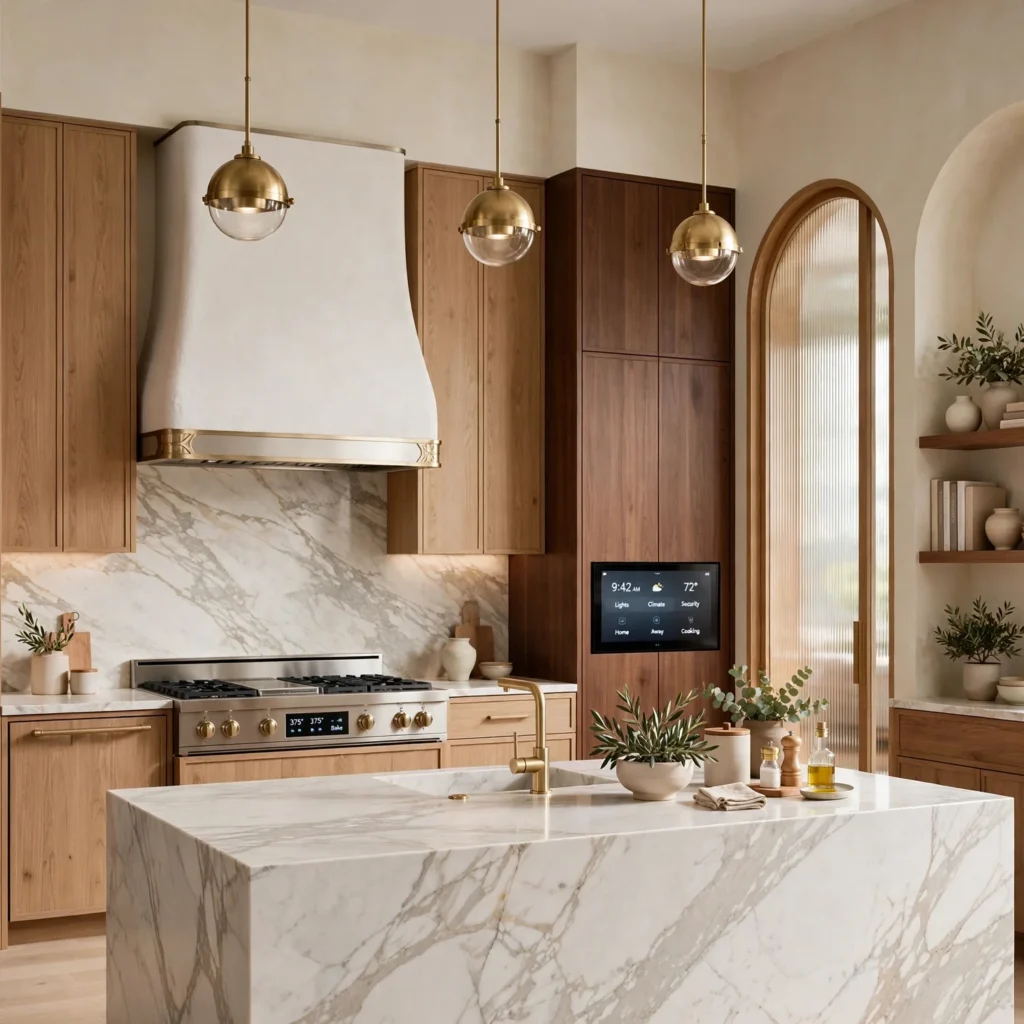
Among the more forward-looking modern kitchen design ideas is building in smart technology from the start, including touchless faucets, app-controlled ovens, and a hidden charging drawer, rather than treating these as separate add-ons layered onto a finished kitchen. Planning outlet and wiring placement during the design phase avoids the visible cords and awkward retrofits common when smart features get added after cabinetry is already installed. This approach keeps the kitchen’s clean lines intact while still delivering the convenience features modern households increasingly expect.
Shop the Look
A matte black pull-down faucet anchors a modern kitchen sink area without competing with lighter cabinetry. A cluster of three matte black glass pendant lights gives an island a sculptural focal point. A honed quartz slab in a soft gray veining works well for both a waterfall island and a matching slab backsplash. A walnut veneer island base adds warmth to an otherwise monochromatic, matte-finished kitchen.
Common Mistake to Avoid
The most common mistake in modern kitchen design is choosing an all-white, high-gloss palette without adding any warm material contrast, which can leave the finished kitchen feeling cold and clinical rather than clean and current. This happens because homeowners often reference outdated modern kitchen photos from a decade ago rather than the warmer, texture-driven direction the style has since moved toward. Adding at least one warm wood element, whether an island base, open shelving, or flooring, prevents this sterile outcome while keeping the rest of the palette intact.
FAQs
What defines a modern kitchen design?
A modern kitchen design is defined by clean horizontal lines, handleless or minimal-hardware cabinetry, and a restrained material palette that relies on texture and finish contrast rather than ornate detailing or heavy trim work. Integrated appliances and concealed storage solutions also matter significantly, since visible clutter undercuts the streamlined look the style is built around. Unlike traditional design, which often layers multiple decorative elements, modern kitchen design generally limits itself to one or two focal details within an otherwise simplified space.
What colors are popular in modern kitchen design right now?
Warm neutrals like greige, soft charcoal, and warm white are currently more popular in modern kitchen design than the stark, cool-toned white that dominated the style a decade ago. Deep, moody colors like forest green or navy also appear frequently on island cabinetry paired with lighter perimeter cabinets. Matte black remains a consistent accent color across fixtures and hardware regardless of the broader palette chosen, since it provides contrast without introducing an additional competing hue.
Is a modern kitchen design more expensive than a traditional one?
A modern kitchen design isn’t inherently more expensive than a traditional one, though certain signature details like panel-ready appliances, slab backsplashes, and handleless cabinetry mechanisms do carry a real cost premium over standard equivalents. Simpler cabinetry profiles used in modern design can actually cost less to manufacture than heavily detailed traditional cabinetry with raised panels and applied molding. The final cost comes down more to material choices, quartz versus laminate, custom versus stock cabinetry, than to the style direction itself.
How do I make a small kitchen look modern?
Making a small kitchen look modern works best through a monochromatic color palette, handleless cabinetry, and a slab backsplash that eliminates visual breaks from grout lines or contrasting trim. Floating cabinetry with under-cabinet lighting also helps a small modern kitchen feel less boxed in, since the visible gap beneath cabinets adds a sense of openness. Avoiding an oversized island in favor of a slim peninsula or rolling cart keeps the clean-lined look intact without overwhelming the available floor space.
What countertop material works best for modern kitchen design?
Quartz remains one of the most practical countertop choices for modern kitchen design, offering a consistent, low-maintenance surface in the solid colors and subtle veining patterns the style favors over heavily patterned natural stone. Large-format porcelain slab is also gaining ground for its ability to run seamlessly from countertop to backsplash to waterfall edge in a single continuous material. Both options outperform natural marble for households wanting the clean look without the staining and etching concerns marble introduces in daily use.
Conclusion
These modern kitchen design ideas range from a simple matte black faucet swap to a full waterfall island with a matching slab backsplash, giving homeowners entry points at nearly any renovation budget. Prioritizing the structural choices, handleless cabinetry, panel-ready appliances, and concealed storage, before layering in finish details like lighting and hardware keeps a modern kitchen looking intentional rather than assembled piece by piece. Save this post to Pinterest for reference, and check the related post on kitchen design ideas for additional layout inspiration.