12 Unique Modern Bathroom Design Ideas for a Clean Look
Modern bathroom design strips away decorative trim and ornate fixtures in favor of flat surfaces, clean geometry, and a limited color palette, but the best versions of this style avoid feeling cold or clinical. Getting it right means balancing sleek cabinetry and minimal hardware with at least one warm or textured material that keeps the room livable. This guide covers twelve ideas that define current modern bathroom design, from vanity construction to fixture finishes that reinforce the style’s uncluttered character.
Trend & Background
Modern bathroom design has remained a dominant style in both new construction and high-end renovations, though the aesthetic has softened from the stark all-white bathrooms popular several years ago toward warmer wood tones and matte finishes. Designers report growing demand for modern bathrooms that incorporate at least one natural material, like wood or stone, to offset the flatness that comes from an all-lacquer vanity and glossy tile combination. This has pushed the style toward a warmer, softer version of modern that keeps clean lines without the coldness earlier iterations were often criticized for.
Key Takeaways
- Modern bathroom design in 2026 relies on flat-panel vanities, minimal hardware, and a restrained material palette rather than added ornamentation.
- Large-format tile and frameless glass remain the clearest visual markers of the style’s clean-line approach.
- Integrated storage and concealed plumbing fixtures keep modern bathrooms looking uncluttered without sacrificing function.
- Warm wood accents and textured stone prevent an all-white, all-flat modern bathroom from feeling sterile.
1. Floating Flat-Panel Vanity
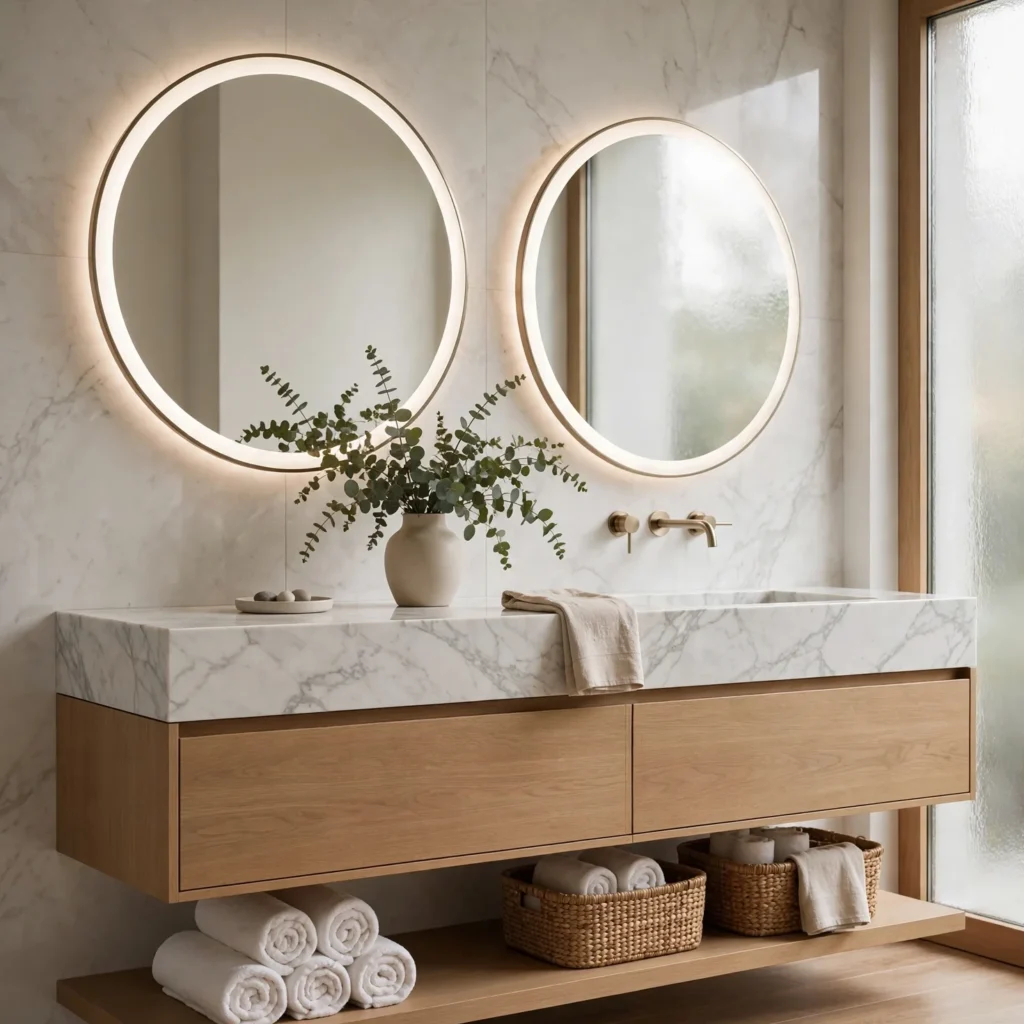
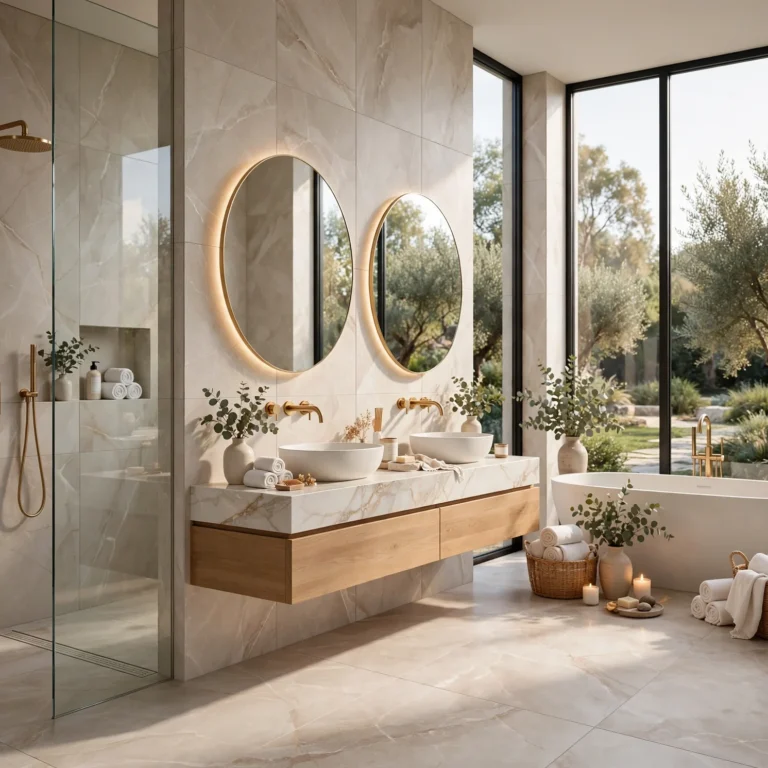
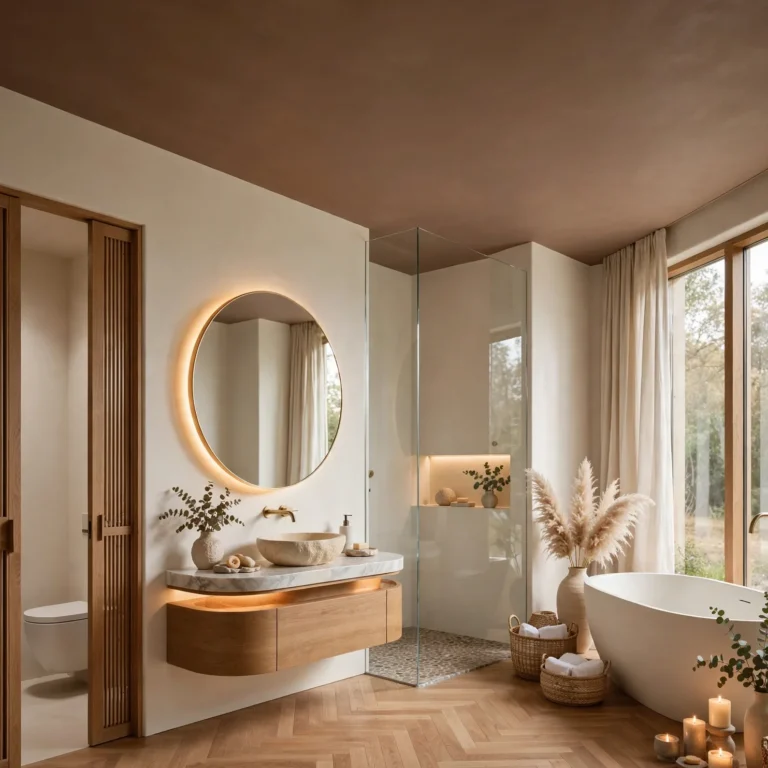
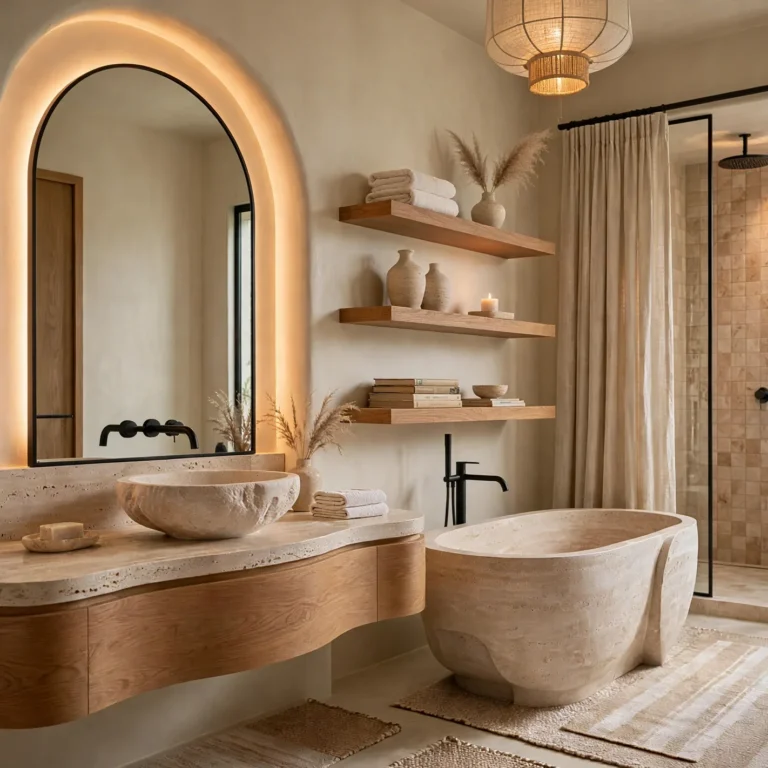
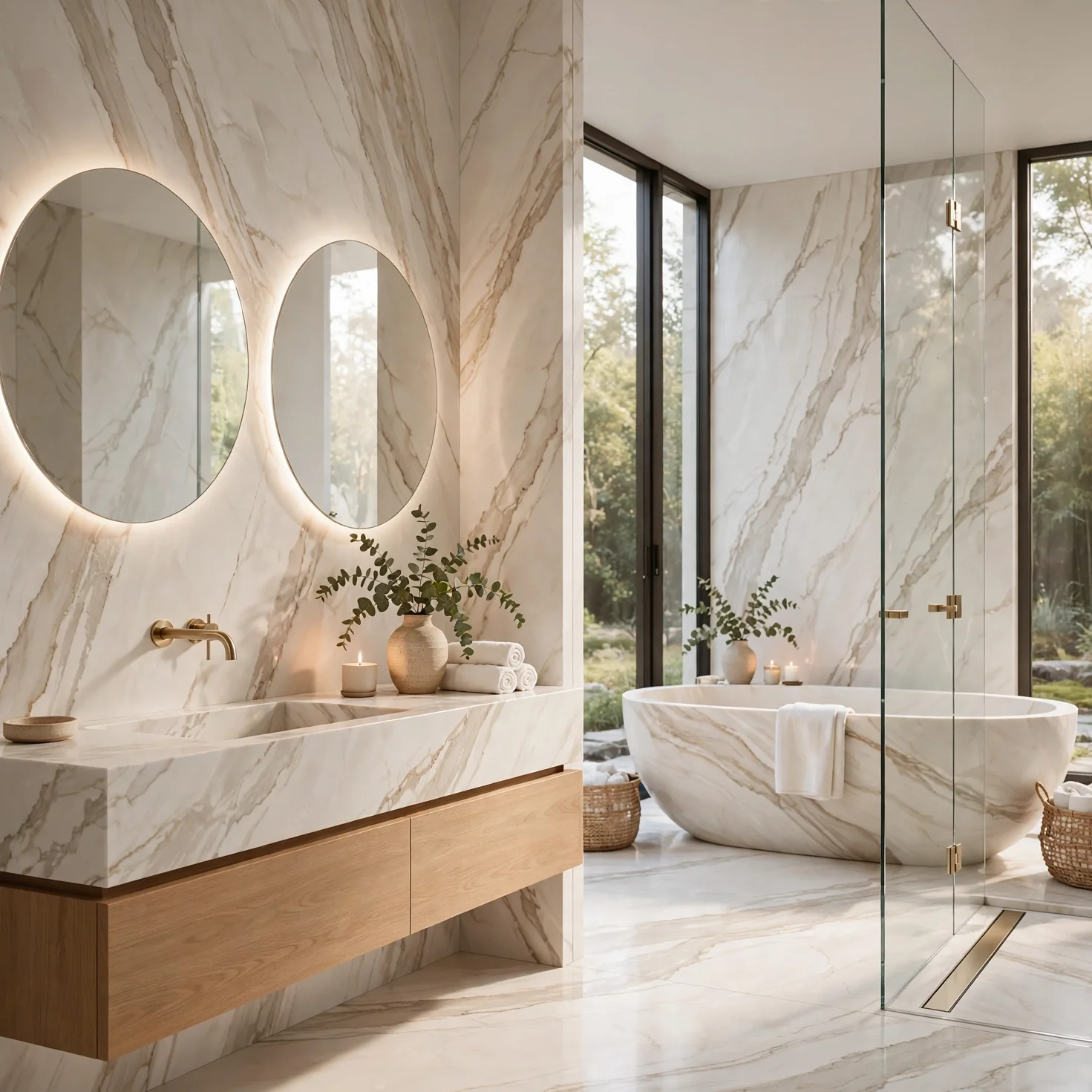
A wall-mounted vanity with a completely smooth, flat-panel front is the clearest signature of modern bathroom design, offering an uninterrupted surface without the recessed frame found in traditional cabinetry. Suspending it above the floor reinforces the style’s minimalist intent while also making floor cleaning easier underneath. Matte lacquer or a wood veneer in walnut or oak are the most common finishes, chosen for how cleanly they read against a flat, geometric bathroom layout.
2. Handleless Cabinet Hardware
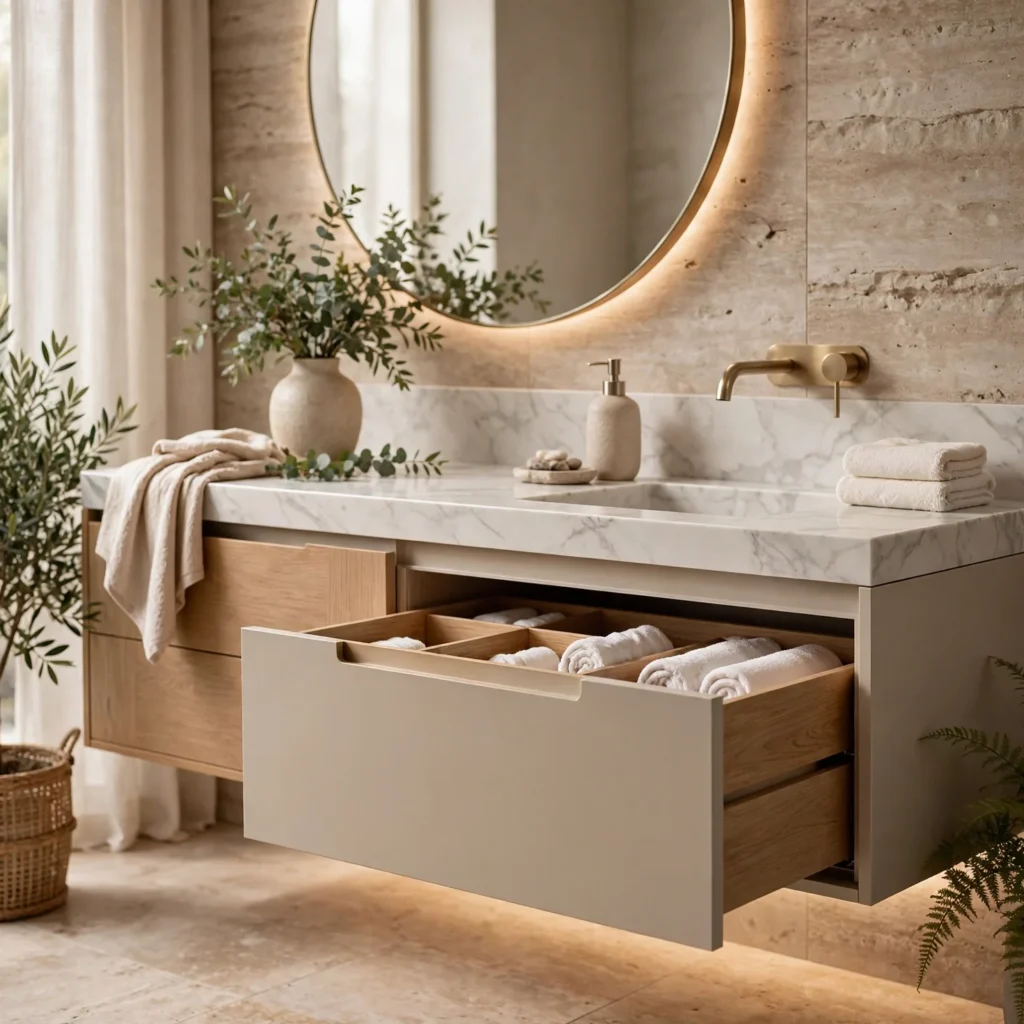
A handleless system, using a routed finger-pull groove or a push-to-open mechanism, keeps the vanity’s flat surface free of visible knobs or pulls that would otherwise interrupt the room’s clean lines. This detail is central to the modern aesthetic across kitchens and bathrooms alike, since visible hardware breaks the flat, uninterrupted look the style depends on. Push-to-open mechanisms cost more per cabinet than a standard pull, which is worth factoring into a full vanity budget.
| Hardware Style | Relative Cost | Visual Effect |
| Finger-Pull Groove | +10–15% | Subtle shadow line |
| Push-to-Open | +20–30% | Fully seamless |
| Integrated Bar Pull | Baseline | Minimal but visible |
3. Large-Format Porcelain Slab
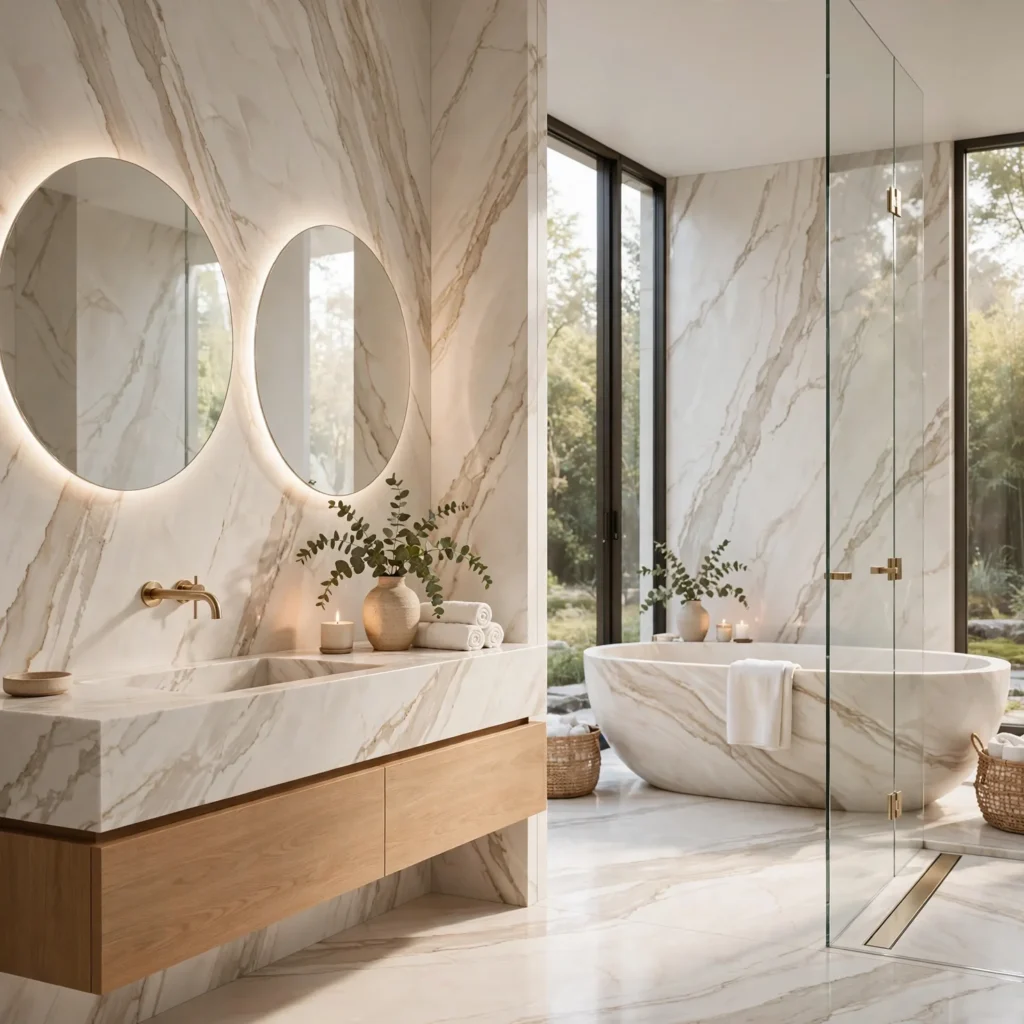
Large-format porcelain slabs, extending across the shower wall or vanity backsplash without grout lines, create a seamless surface that reinforces the uninterrupted look central to modern bathroom design. These slabs are available in solid matte colors or subtle stone-look patterns, both avoiding the visual break that standard tile grout introduces. Porcelain also resists staining and water damage better than natural stone, making it a practical choice in a room with constant moisture exposure.
4. Frameless Glass Shower Enclosure
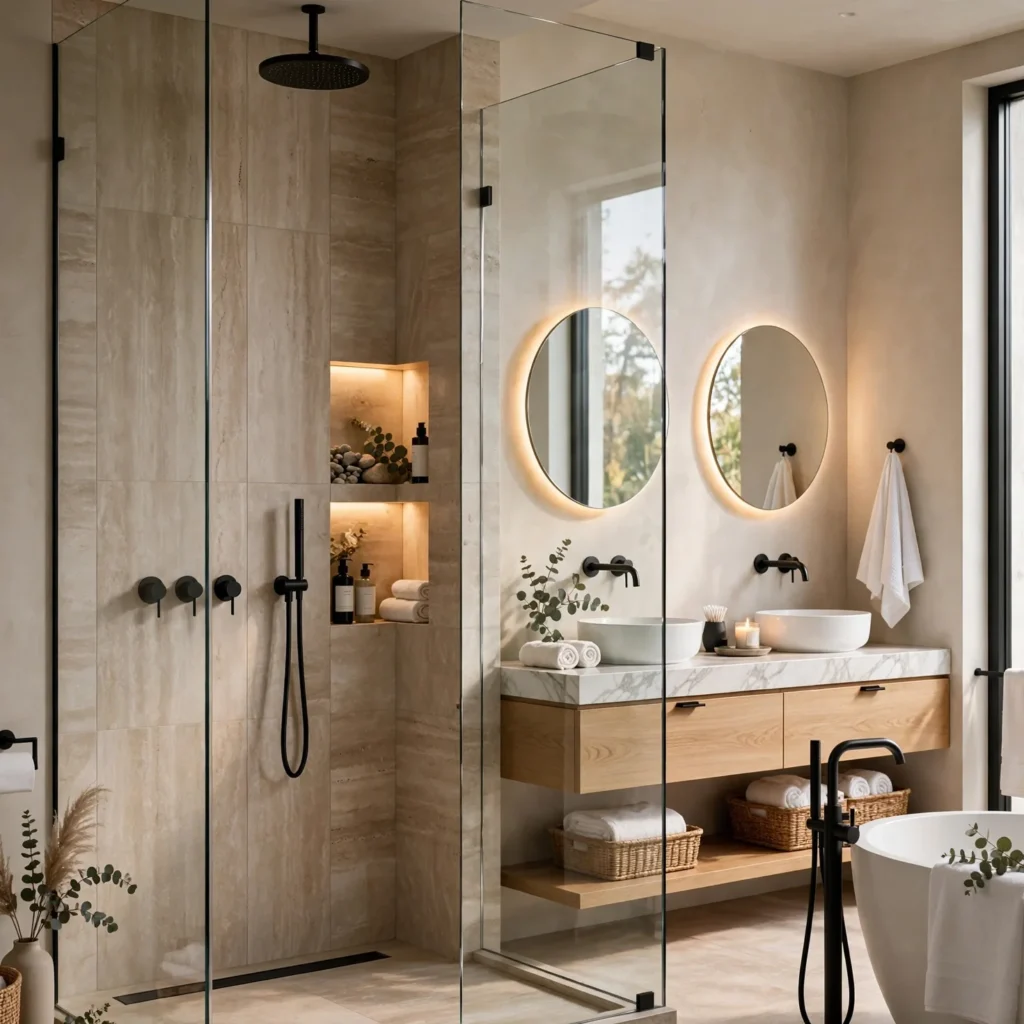
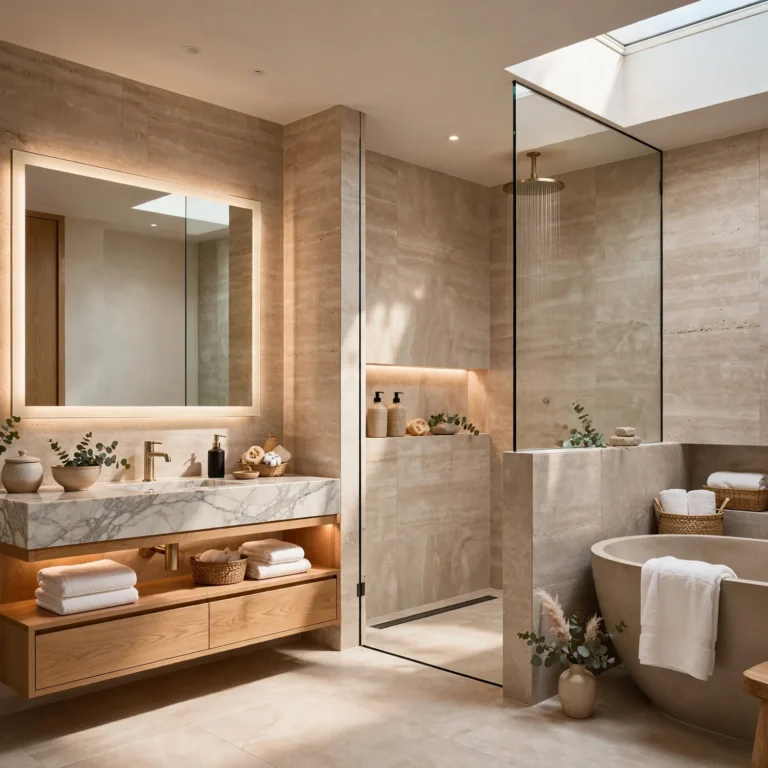
A frameless glass panel, without the metal framing found in older shower doors, keeps sightlines clear and reinforces the open, uncluttered feel central to modern bathroom design. This detail requires thicker tempered glass, typically three-eighths of an inch, to remain structurally stable without a supporting frame. It pairs particularly well with a curbless shower floor, since both details work toward the same continuous, minimal look throughout the room.
Create a relaxing retreat by browsing our bedroom design ideas for comfort and elegance.
5. Monochromatic Tile Palette
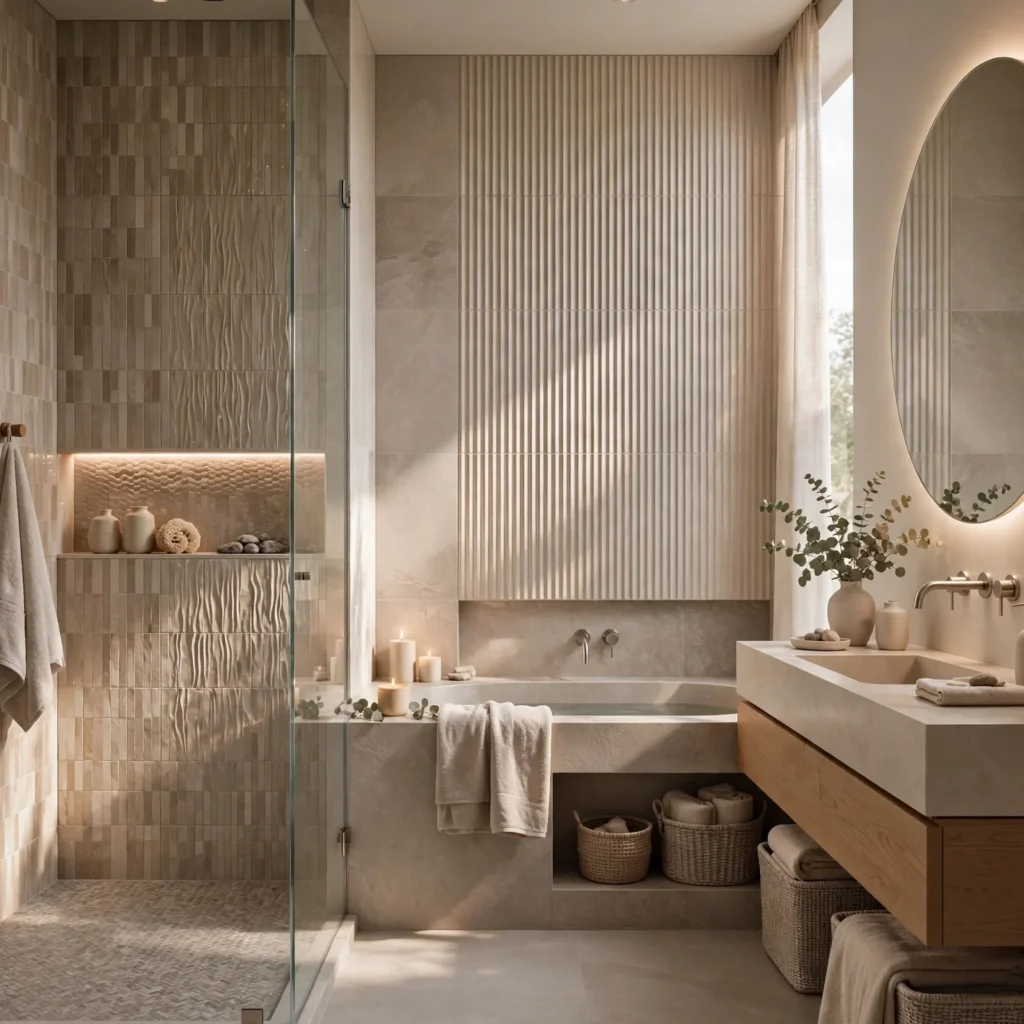
Sticking to one dominant tone, such as varying shades of gray, white, or charcoal, across floor and wall tile reinforces the calm, restrained feel modern bathroom design relies on. A single contrasting material, like a wood-toned vanity or a matte black fixture, defines without breaking the overall palette restraint. This approach depends heavily on tile format and texture variation to keep the room from feeling flat, since color contrast is intentionally limited.
6. Wall-Mounted Toilet
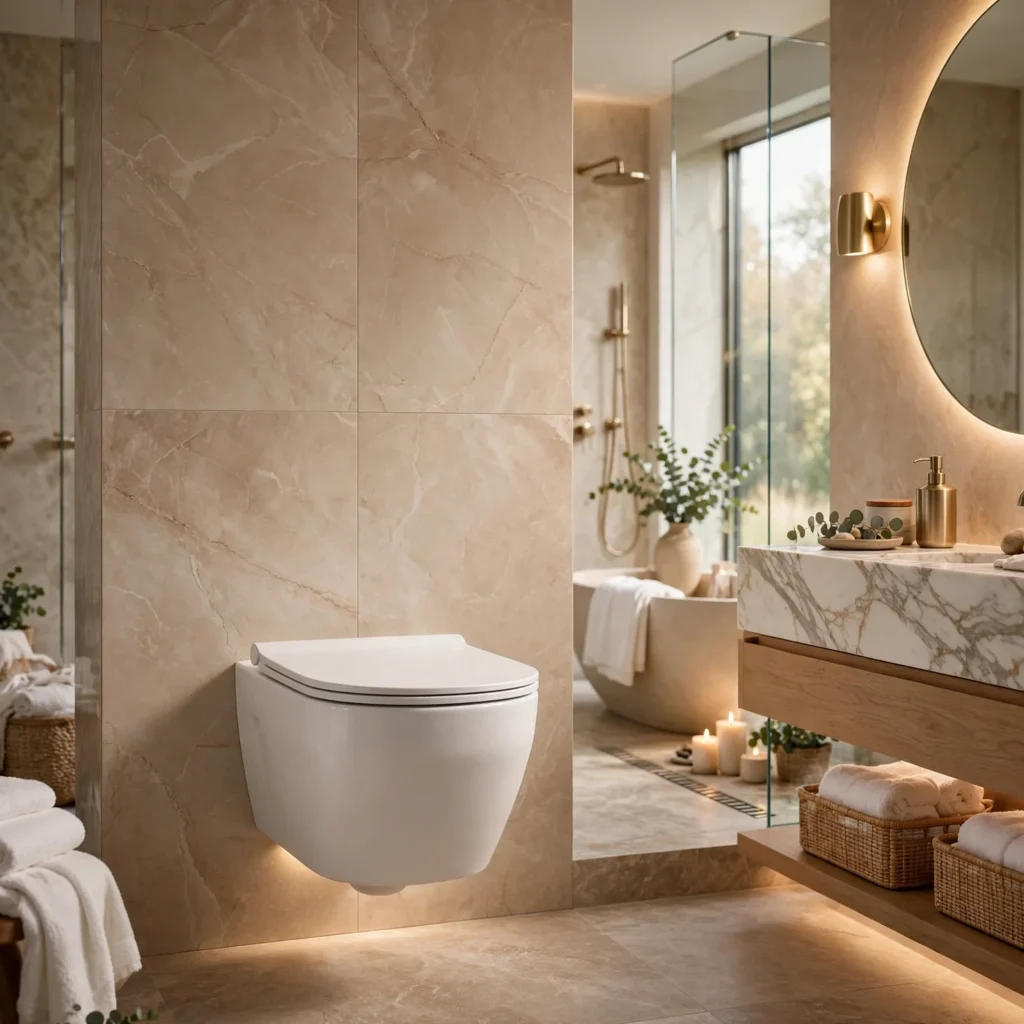
A wall-mounted toilet, with the tank concealed inside the wall and only the bowl visible, removes a bulky fixture footprint and reinforces the clean, uncluttered floor line central to modern bathroom design. It also makes floor cleaning considerably easier, since there’s no base fixture interrupting the tile surface. This installation requires an in-wall carrier system built during the renovation’s framing stage, so it’s not a simple swap for an existing toilet.
7. Matte Black or Graphite Fixtures
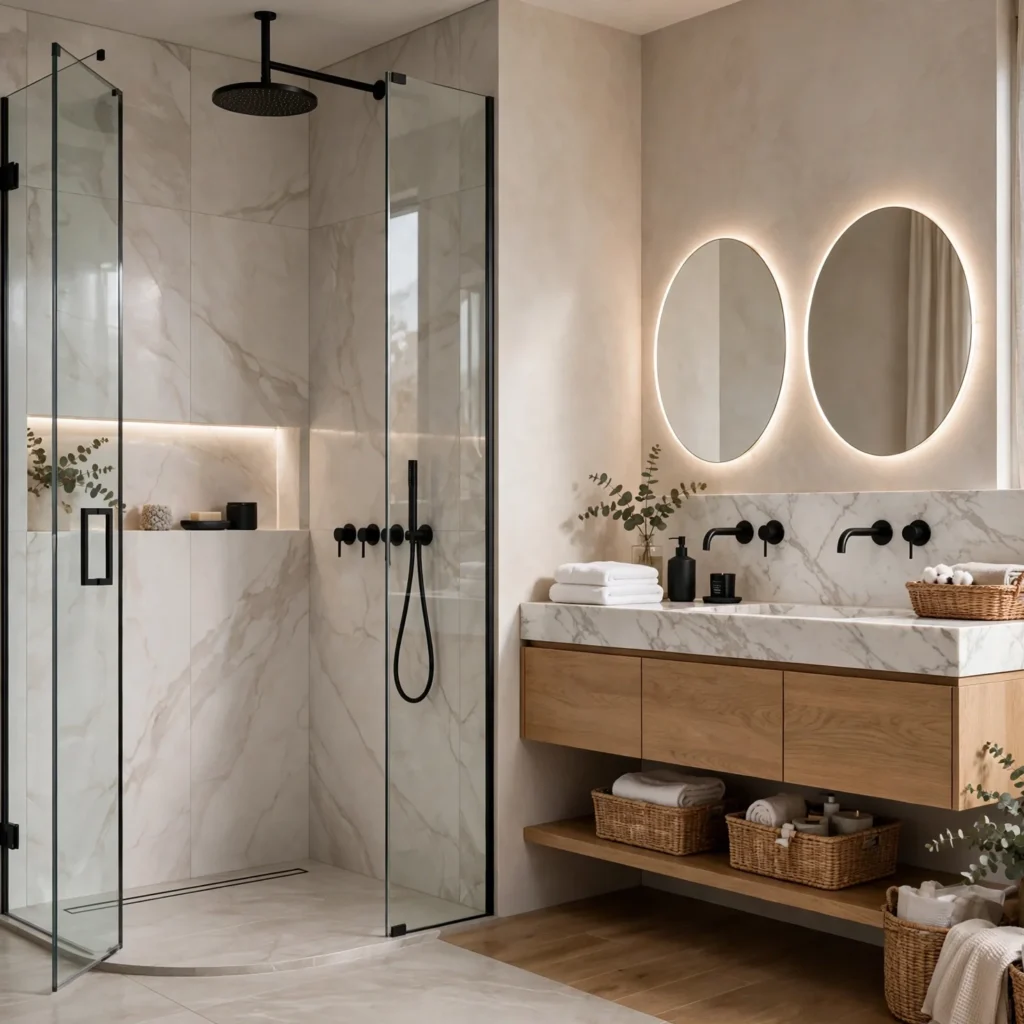
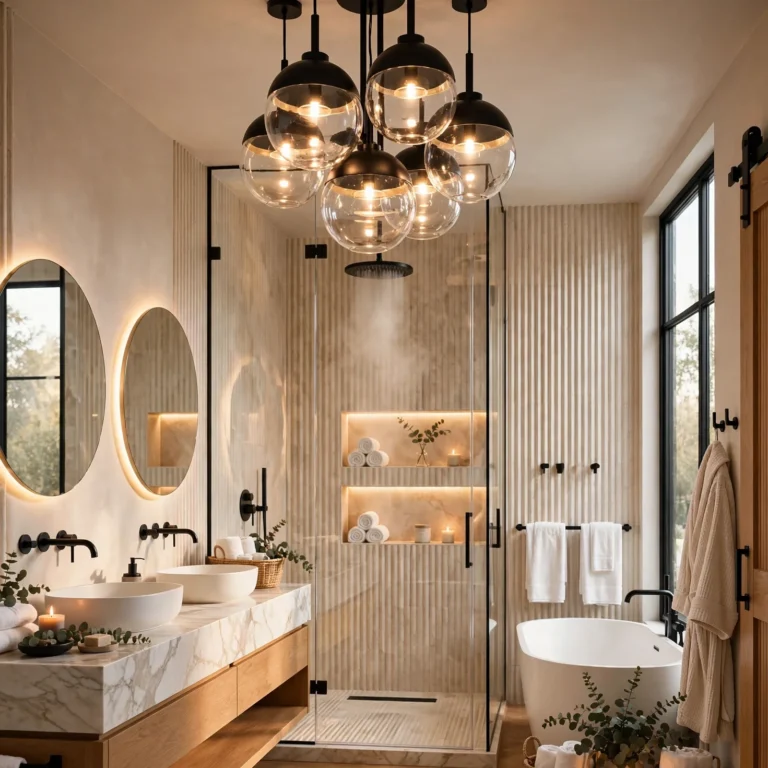
Matte black or graphite-finished faucets, shower systems, and cabinet hardware reinforce the modern palette’s preference for flat, non-reflective finishes over the polished chrome common in more traditional bathrooms. This finish pairs particularly well with a monochromatic gray or white tile scheme, adding definition without introducing a competing color. Committing to one metal finish throughout the bathroom, rather than mixing several, keeps the overall look cohesive and intentional.
8. Recessed Medicine Cabinet
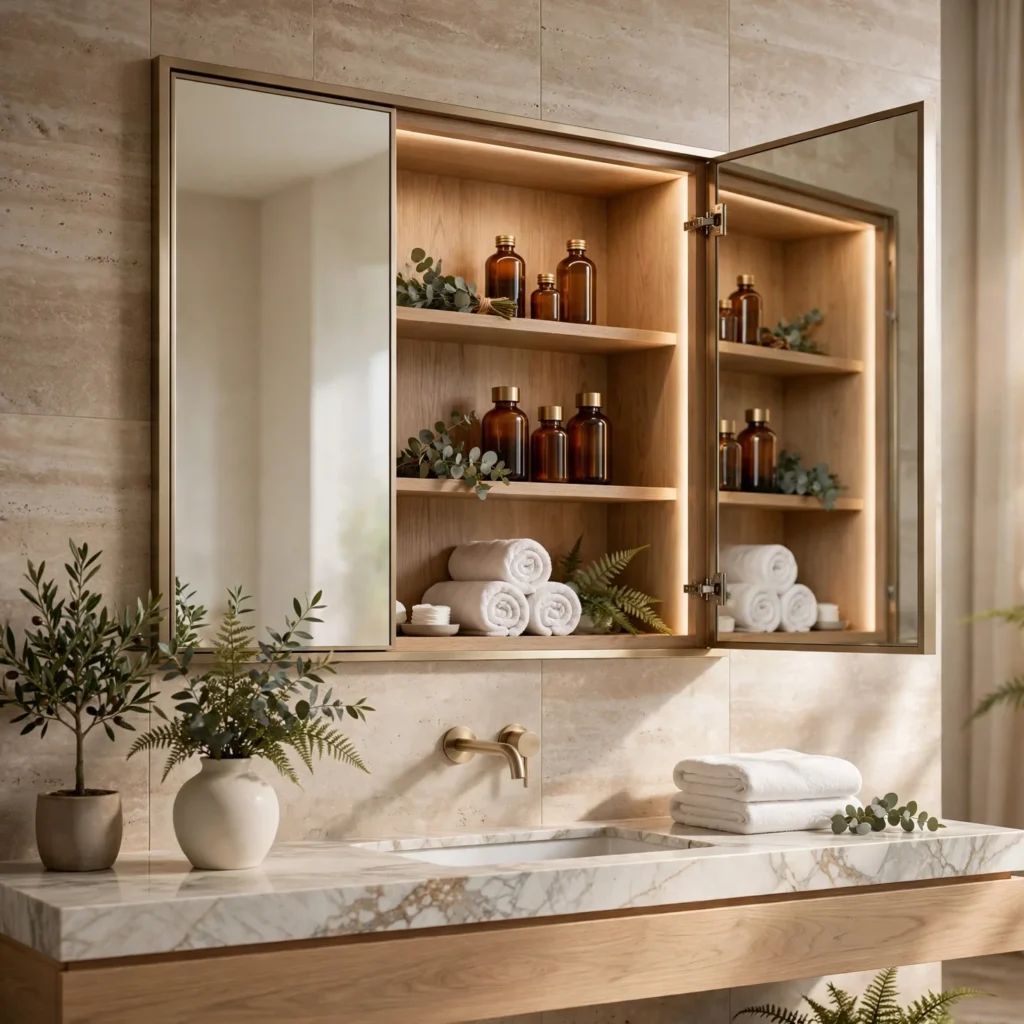
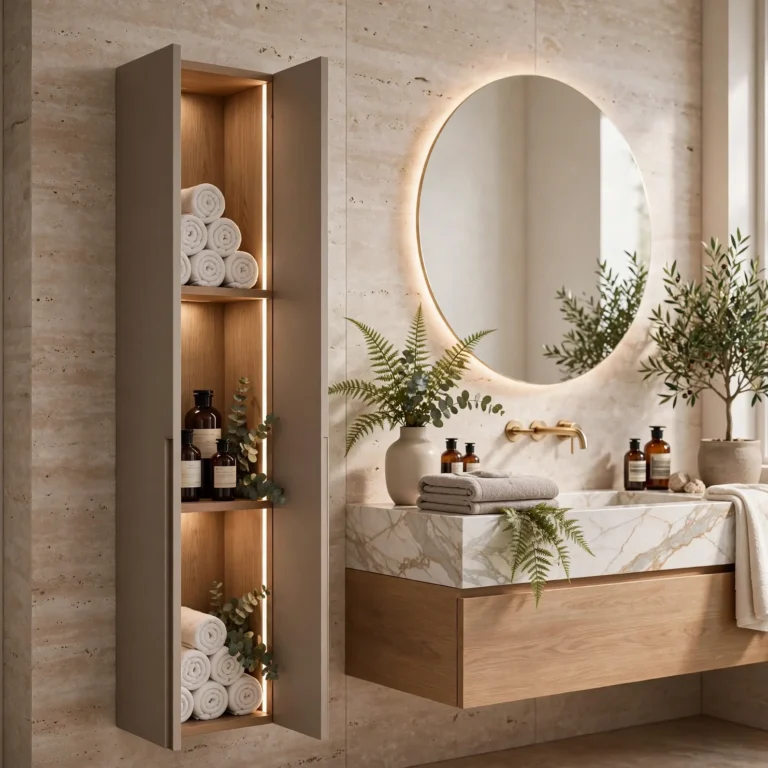
A medicine cabinet built into the wall cavity, rather than mounted on the surface, keeps the vanity wall flush and uninterrupted, supporting the flat, geometric look modern bathroom design depends on. This requires confirming there’s no plumbing or electrical conduit inside the wall cavity before installation, which is easier to plan during a full renovation than to retrofit afterward. A thin-profile mirror front on the cabinet maintains the seamless appearance from across the room.
9. Curbless Shower Entry
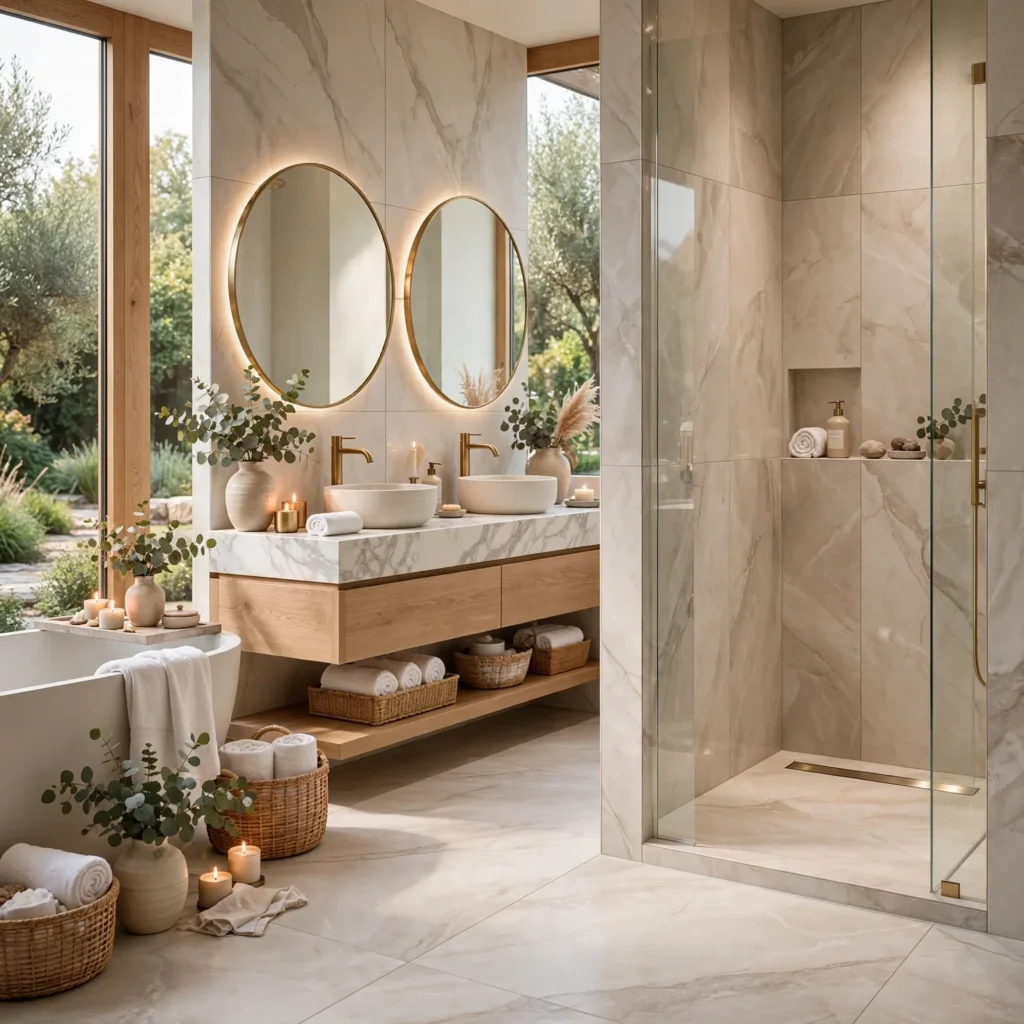
Removing the raised threshold between the bathroom floor and shower pan creates a seamless, step-free transition that reinforces the open, continuous surfaces modern bathroom design favors over a boxed-in stall. This requires a sloped floor drain system installed during the rough plumbing stage, since retrofitting it into an existing slab is significantly more disruptive. It also pairs naturally with a frameless glass panel, since neither detail interrupts the room’s clean sightlines.
10. Warm Wood Vanity Accent
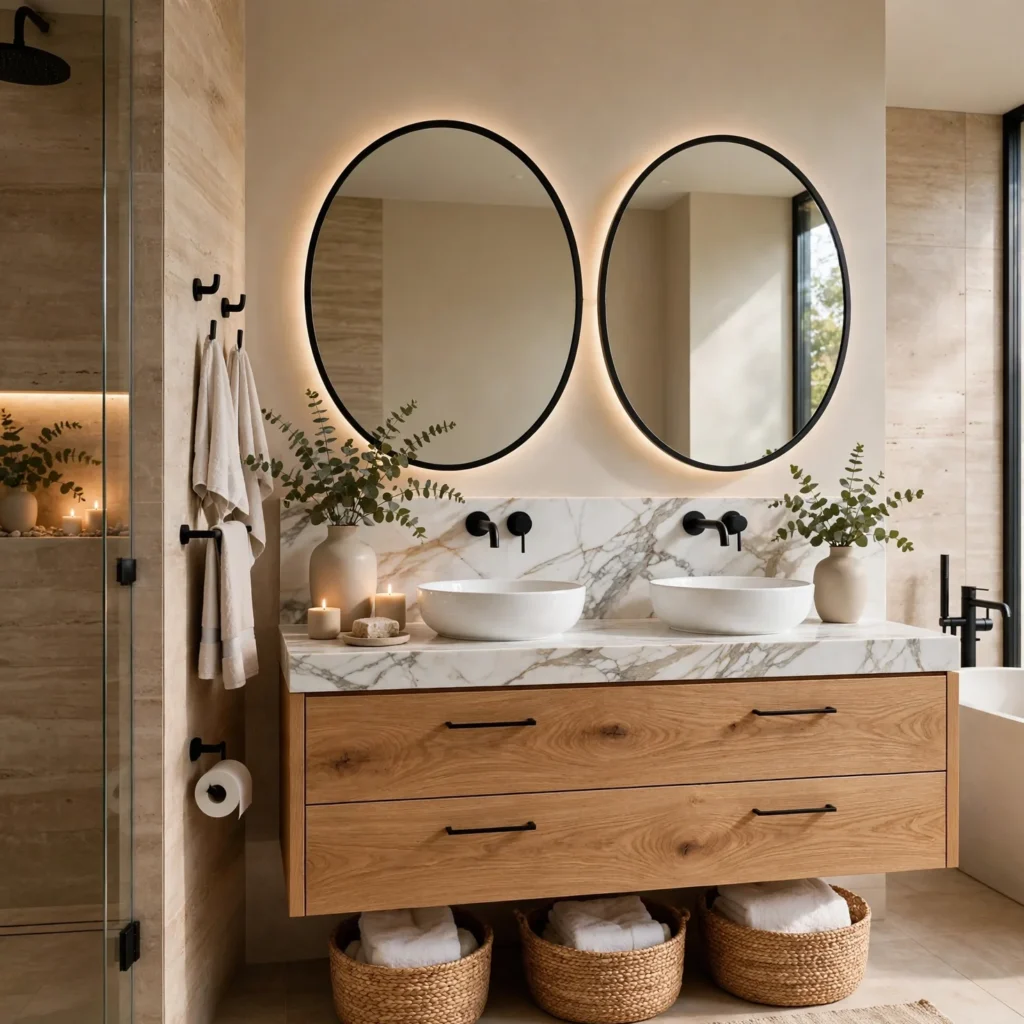
Incorporating a walnut or white oak vanity front, even within an otherwise monochromatic gray or white bathroom, keeps the space from feeling flat or overly clinical. This detail has become one of the most common ways designers soften modern bathroom design without compromising its clean-line character. Keeping the wood element to the vanity alone, rather than spreading it across multiple surfaces, maintains the overall restraint the style depends on.
11. Linear Floor Drain
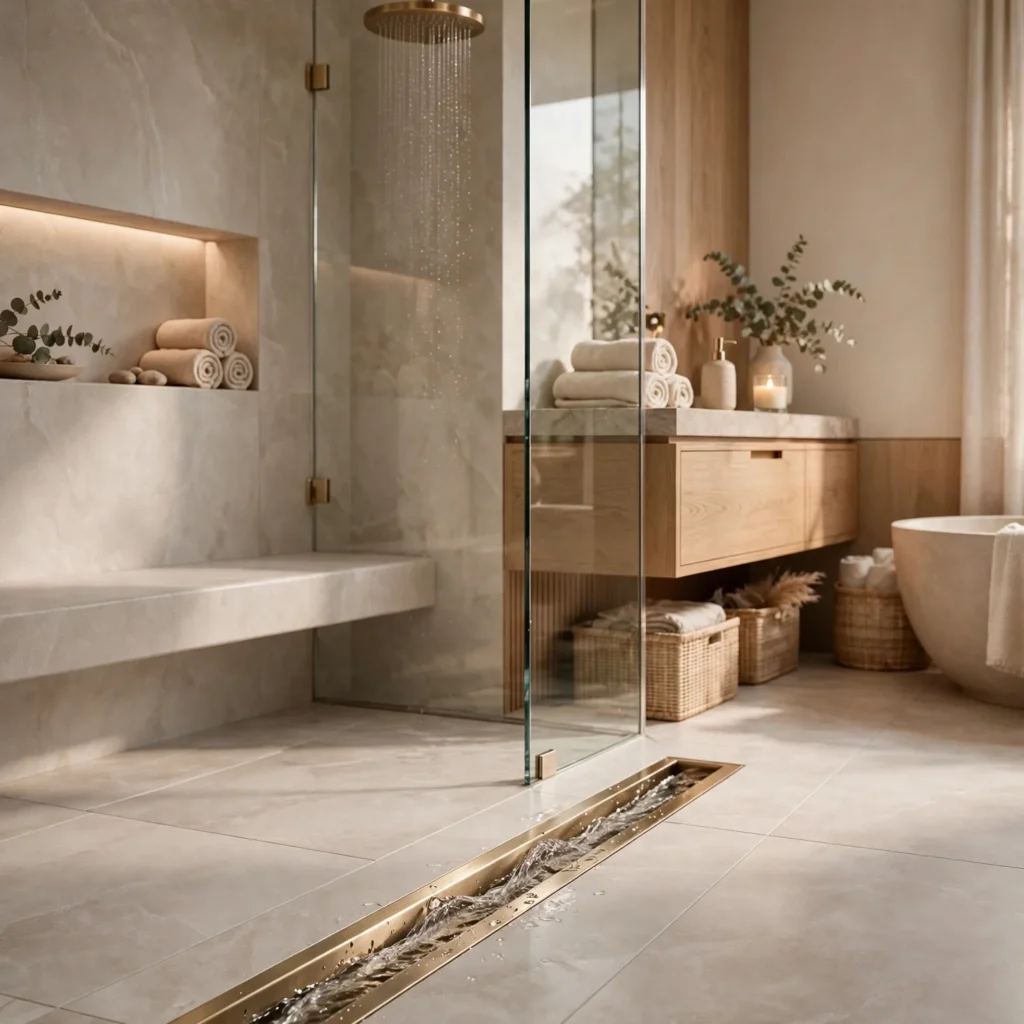
A linear drain, installed as a single trench-style channel rather than a central round drain, allows the shower floor to slope in one direction instead of toward a center point, simplifying tile layout and reinforcing the room’s geometric lines. It’s typically placed along the shower’s back or side wall, out of the main standing area. This detail pairs well with large-format tile, since fewer cuts are needed to accommodate a straight linear drain compared to a central round one.
12. Recessed and Backlit Mirror Lighting
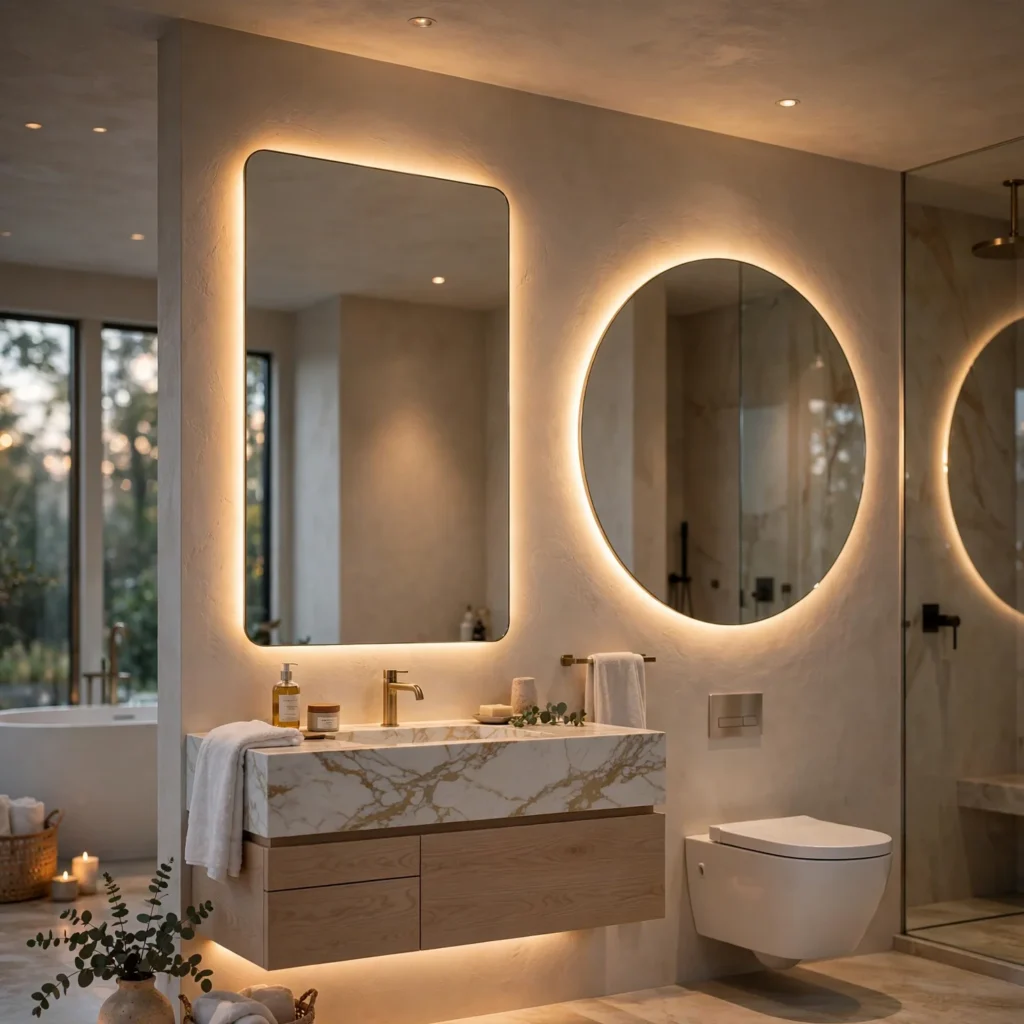
LED lighting built into the perimeter or back of the vanity mirror provides even, shadow-free illumination without the visual clutter of decorative sconces competing with the room’s clean surfaces. This approach keeps the wall uninterrupted while still delivering strong task lighting for grooming. Dimmable circuits allow the light to shift from bright task lighting to a softer glow, matching the layered lighting approach common in modern kitchen design as well.
Shop the Look
A matte lacquer floating vanity in charcoal or white establishes the base for the monochromatic palette described here. A push-to-open hardware system keeps the vanity’s surface uninterrupted for the fully handleless look. A wall-mounted toilet with a concealed in-wall tank reinforces the clean floor line central to this style. A backlit LED mirror completes the vanity wall without requiring a separate sconce fixture.
Common Mistake to Avoid
A common mistake in modern bathroom design is committing entirely to cool tones and glossy porcelain without incorporating any warm or textured material, resulting in a bathroom that reads as cold or clinical rather than intentionally minimal. This often happens when homeowners focus purely on achieving a sleek, uncluttered look without considering how the space will feel to use daily. Adding at least one warm wood vanity or textured stone element, even in a small dose, prevents this common oversight.
FAQs
What makes a bathroom look modern rather than just plain?
A modern bathroom relies on flat-panel vanities, a restrained color palette, and minimal hardware, but the difference between modern and simply plain usually comes down to intentional material choices, like a warm wood vanity accent or a linear floor drain detail. Without these touches, an all-white, all-flat bathroom can read as unfinished rather than deliberately minimal. Lighting placement and fixture scale also play a significant role in whether the room feels considered or generic.
Is a wall-mounted toilet worth the extra installation cost?
For homeowners prioritizing a clean, uninterrupted floor line, a wall-mounted toilet is generally worth the added installation cost, since it removes a bulky fixture footprint and makes floor cleaning considerably easier. The tradeoff is that it requires an in-wall carrier system installed during the framing stage, making it far more practical during a full renovation than a simple fixture swap. It also allows for more flexible toilet height, which some households find more comfortable.
How do I keep a modern bathroom from feeling cold?
Incorporating at least one warm material, such as a walnut vanity, wood-look tile flooring, or a woven light fixture, is the most effective way to soften a modern bathroom’s typically cool, monochromatic palette. Warm ambient lighting, rather than a stark cool-white bulb temperature, also makes a noticeable difference in how the space feels day to day. Many designers now describe this softened approach as warm modern, distinguishing it from starker modern bathrooms of the past.
What’s the best flooring for a modern bathroom?
Large-format porcelain tile in a matte finish is currently the most popular flooring choice for modern bathrooms, since its minimal grout lines and consistent surface reinforce the style’s clean-line aesthetic. Wood-look porcelain is a common alternative for anyone wanting warmth without the water damage risk of real hardwood in a high-moisture room. Both options resist staining and require significantly less maintenance than natural stone flooring.
Does a modern bathroom need a frameless shower enclosure?
It’s not required, but a frameless glass panel is one of the more common details in modern bathroom design, since it keeps sightlines clear and reinforces the room’s open, uncluttered feel. A framed enclosure can still work in a modern bathroom provided the frame finish, like matte black, matches the rest of the room’s hardware. The main consideration is that frameless glass requires thicker tempered panels, which adds cost compared to a standard framed door.
Conslusion
Modern bathroom design succeeds when clean lines and a restrained palette are balanced with at least one warm or textured material, keeping the space from tipping into feeling cold or unfinished. Save this guide to Pinterest for your next renovation project, and check out our related post on bathroom design for more finish and layout inspiration to round out your home.