18 Ideas for an Elevated Look Luxury Curtains Living Room
Luxury curtains living room ideas go far beyond simply choosing an expensive fabric, since proportion, layering, and hardware all play a role in whether a window treatment reads as high-end or simply heavy. This guide walks through eighteen distinct luxury curtain directions, each tied to a specific fabric, hanging technique, or styling approach so you can picture the finished window before making a purchase. By the end, you’ll have a clear shortlist of ideas matched to your existing furniture and window proportions.
Trend & Background
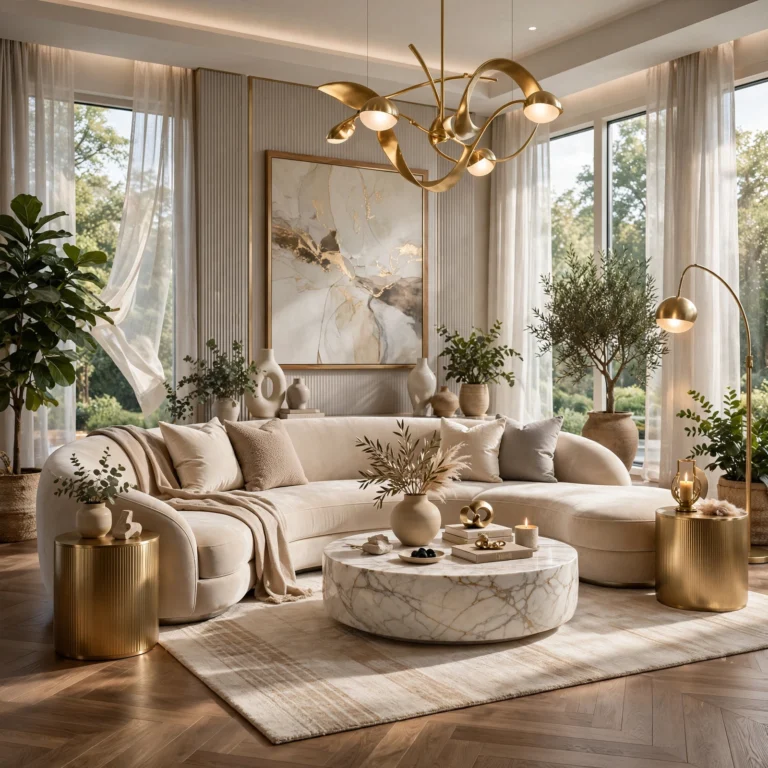
Luxury curtain styling has moved away from matched, mass-produced panel sets toward custom-length fabrics, richer textures like velvet and silk, and more considered hardware choices such as substantial metal rods and finials. This matters now because homeowners increasingly treat curtains as a foundational design element rather than an afterthought, recognizing that proportion and fabric weight communicate quality more than pattern or color alone. Layering multiple curtain types, such as a sheer panel beneath a heavier drape, has also become a leading technique for adding the dimensional depth associated with higher-end interiors.
Key Takeaways
- Luxury curtains living room ideas rely on heavier fabrics like velvet, silk, and jacquard rather than lightweight polyester blends.
- Floor-length panels hung above the window frame remain the most reliable way to make curtains read as high-end.
- Layering sheer and heavier panels together adds depth that a single curtain layer cannot achieve on its own.
- Hardware choice, particularly finial style and rod thickness, has a bigger visual impact than fabric alone in many rooms.
1. Floor-to-Ceiling Velvet Drapes
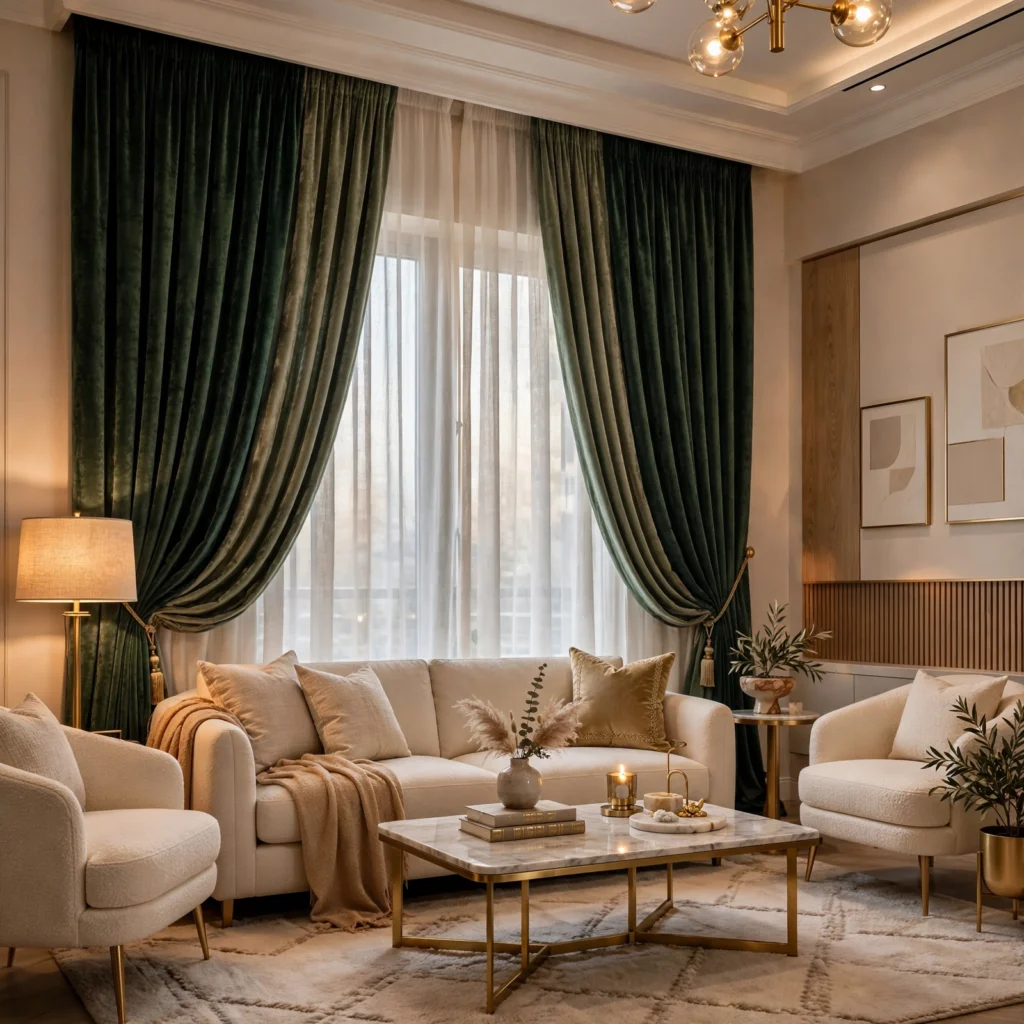
Floor-to-ceiling velvet drapes, hung from just below the ceiling line down to the floor, create dramatic height and an immediate sense of luxury in a living room regardless of the window’s actual size. This approach suits rooms with at least eight-foot ceilings, since the extended drop is what produces the elevated effect. Choose a deep jewel tone or rich neutral velvet, and mount the rod as close to the ceiling as structurally possible to maximize the vertical drama.
2. Silk Dupioni Panels
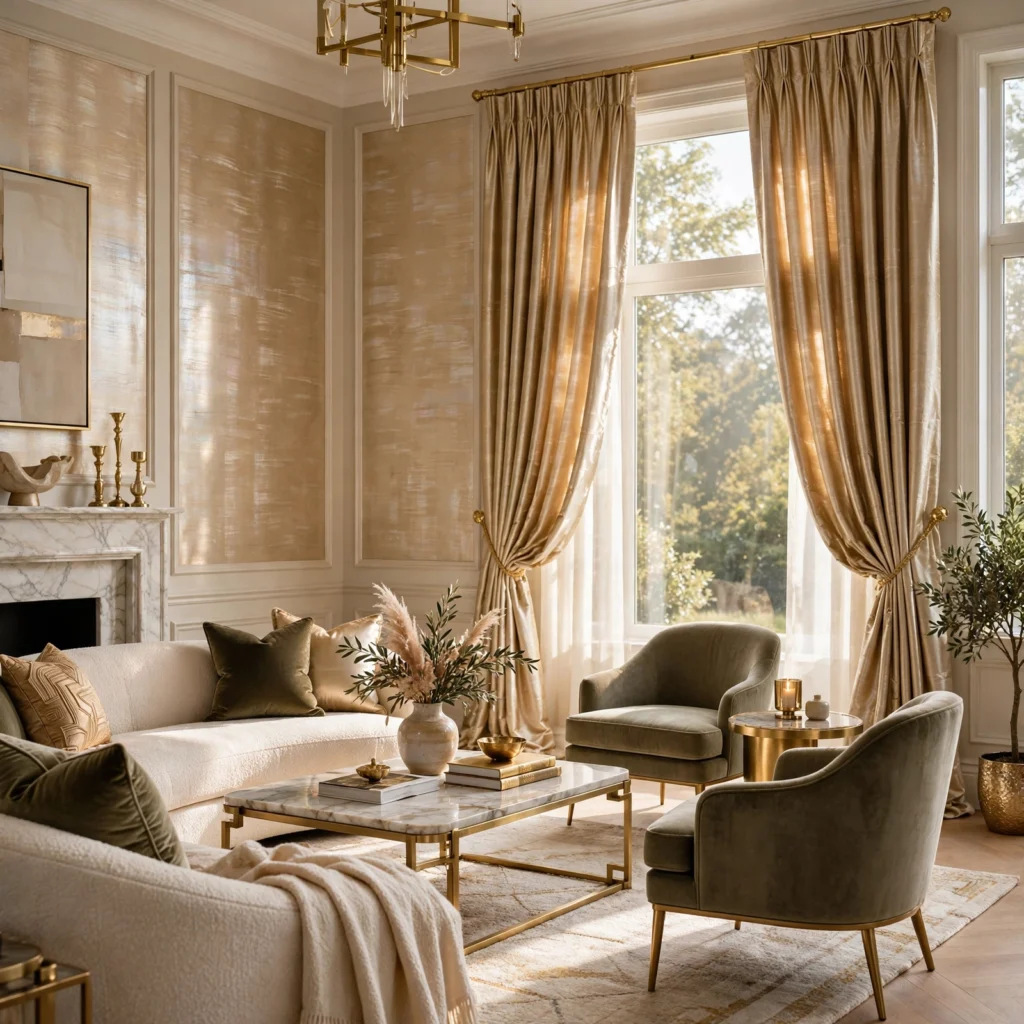
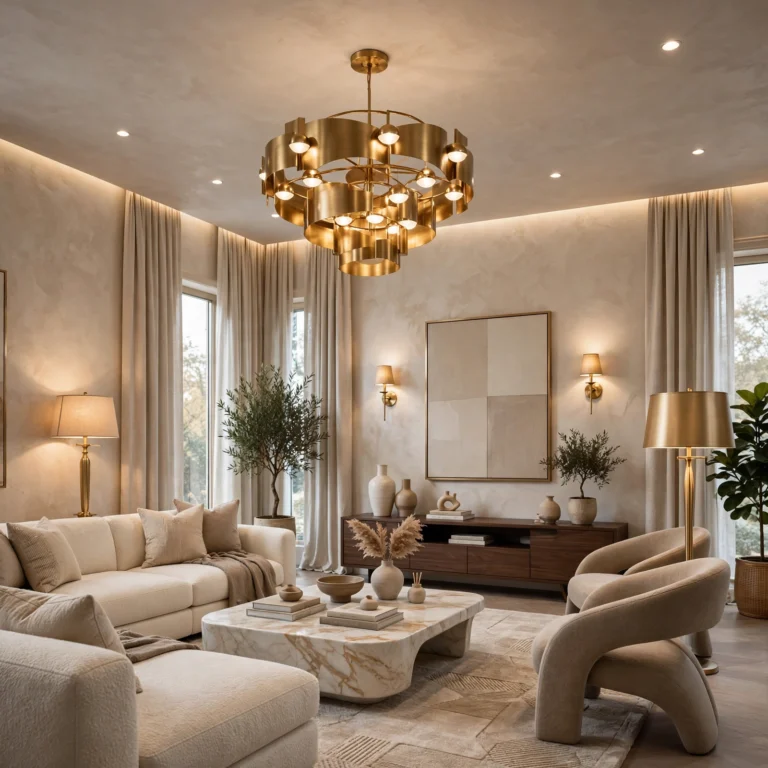
Silk dupioni panels, known for their subtle sheen and crisp texture, bring an elegant, formal quality to a living room that cotton or polyester curtains cannot replicate. This fabric suits rooms with ample natural light, since silk dupioni catches and reflects light beautifully throughout the day. Line the panels with a blackout or cotton lining to protect the silk from sun damage, and avoid direct contact with heating vents, which can cause the fabric to yellow prematurely.
3. Layered Sheer and Velvet Combination
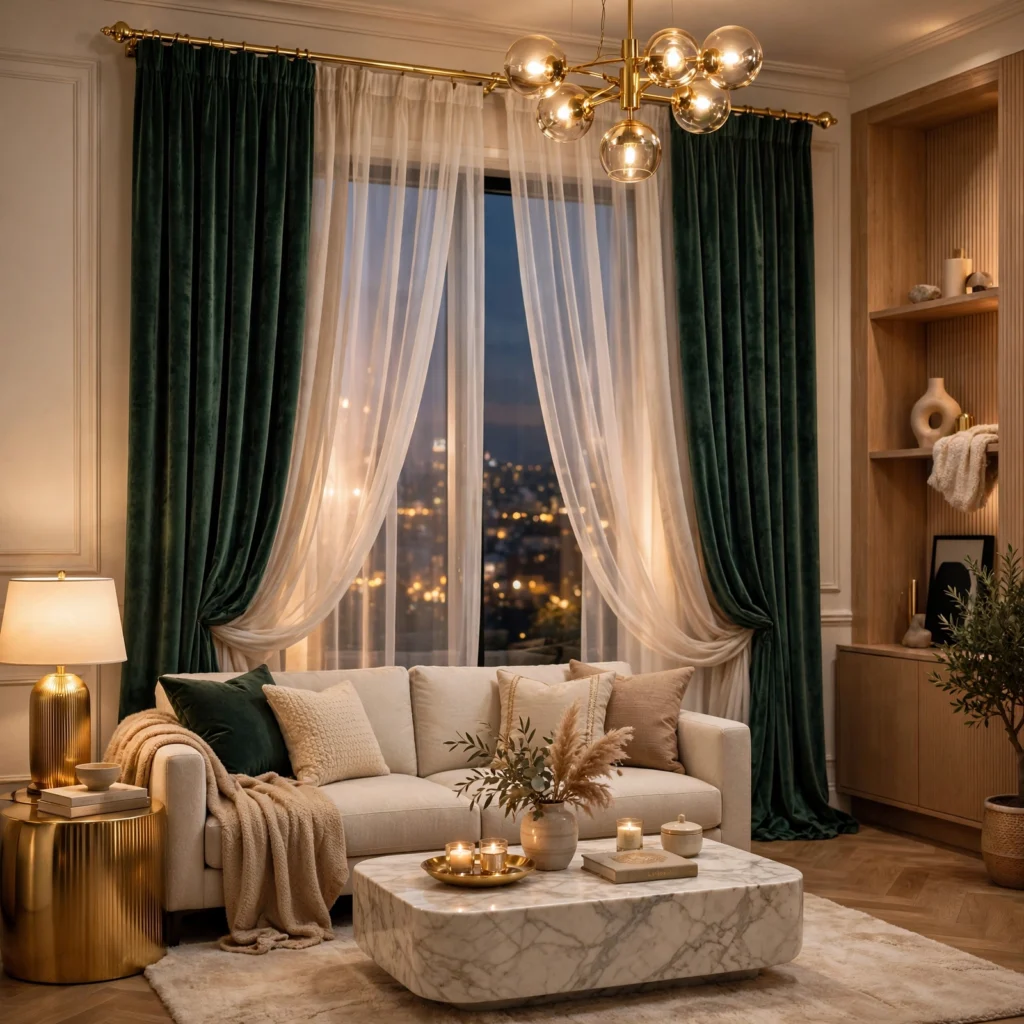
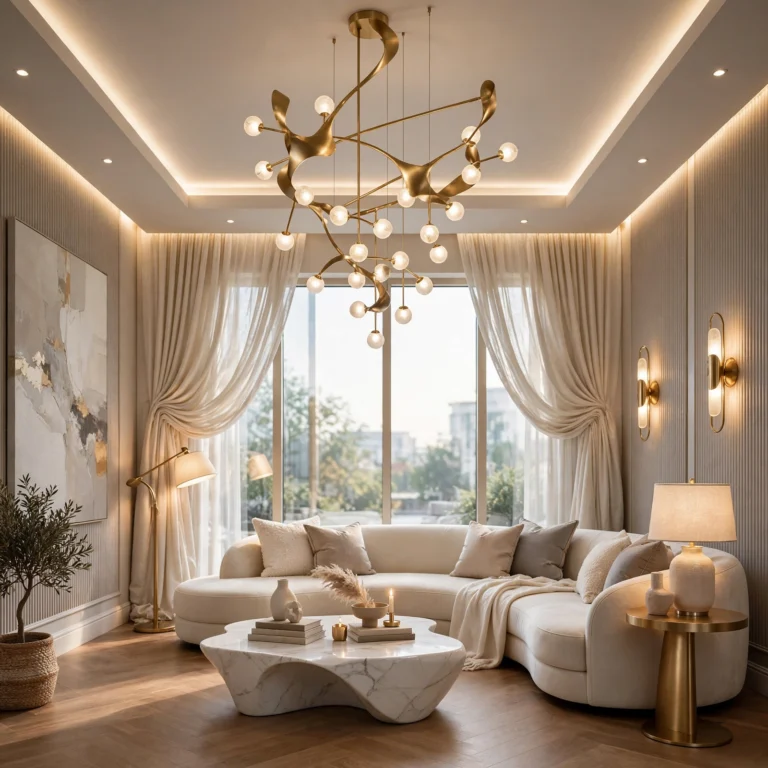
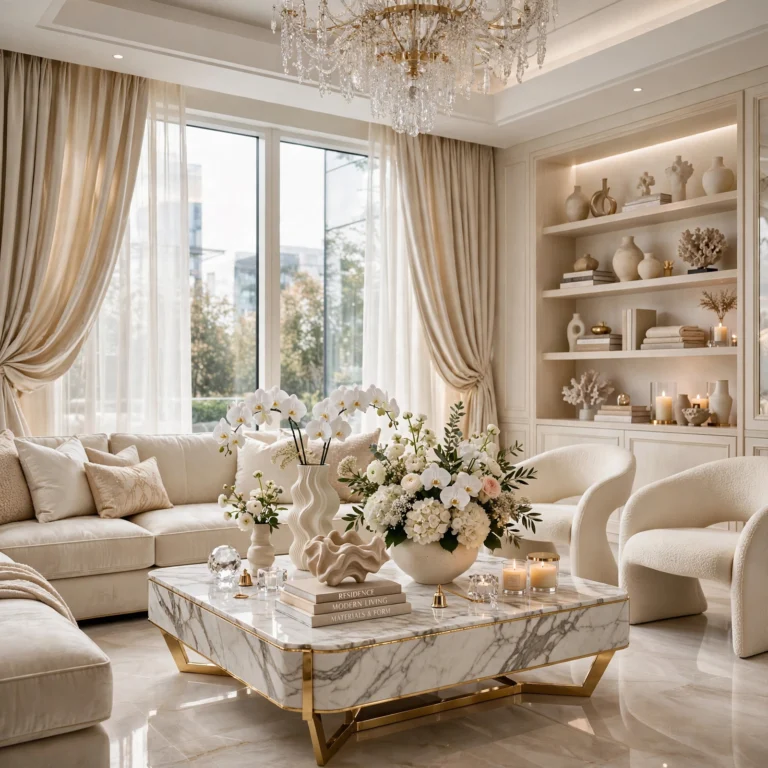
Layering a sheer linen panel beneath a heavier velvet drape adds dimensional depth to a living room window, allowing light control and privacy without sacrificing the room’s overall sense of luxury. This approach suits large windows or sliding glass doors where a single panel type would look flat. Install a double rod system, positioning the sheer layer closest to the glass and the velvet layer in front, and keep both panels the same floor-length drop for a cohesive finish.
4. Oversized Brass Rod Hardware
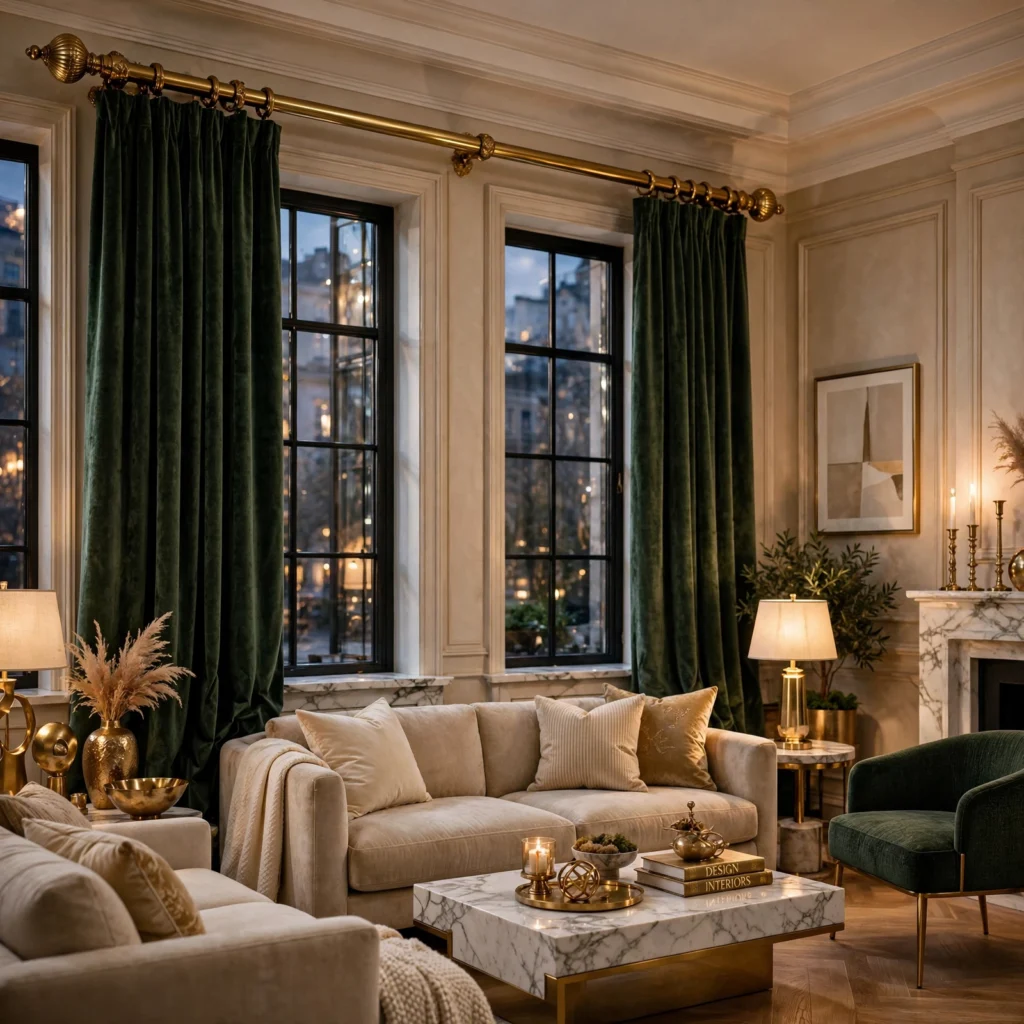
Swapping a standard thin curtain rod for an oversized brass rod with substantial finials elevates the entire window treatment, since hardware proportion is often what separates a luxury look from a standard one. This approach suits any curtain fabric, making it one of the most impactful low-cost upgrades available. Choose a rod diameter of at least one inch for larger windows, and select finials in a simple sphere or urn shape rather than ornate designs that can look dated quickly.
5. Jacquard Patterned Drapery
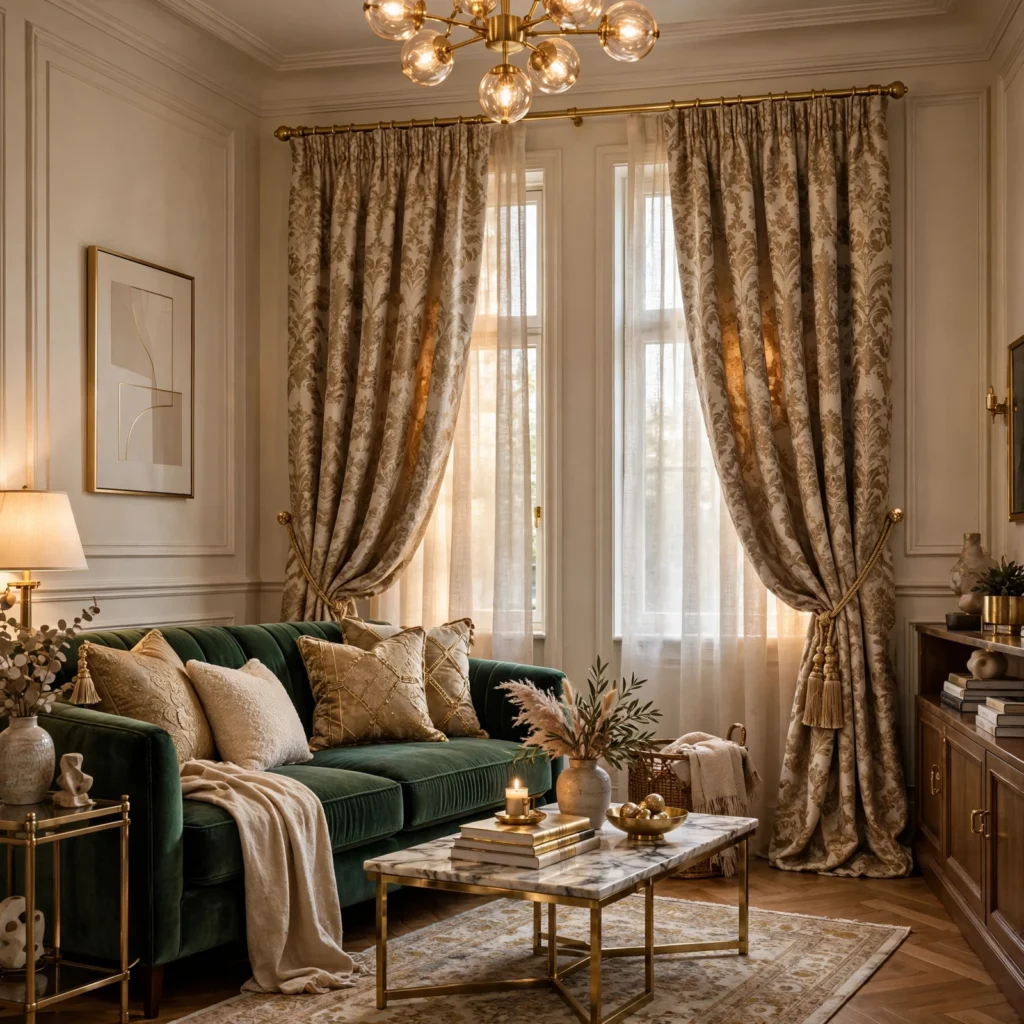
Jacquard drapery, featuring a woven rather than printed pattern, adds textural richness and a subtly formal quality to a living room without relying on bold color for visual interest. This fabric suits traditional and transitional living rooms with existing patterned upholstery or rugs. Choose a jacquard pattern in a tone-on-tone colorway to keep the look sophisticated rather than busy, and pair it with solid-colored upholstery elsewhere in the room to prevent pattern overload.
To see more options for luxury curtains living room CLICK HERE
6. Extra-Wide Panel Fullness
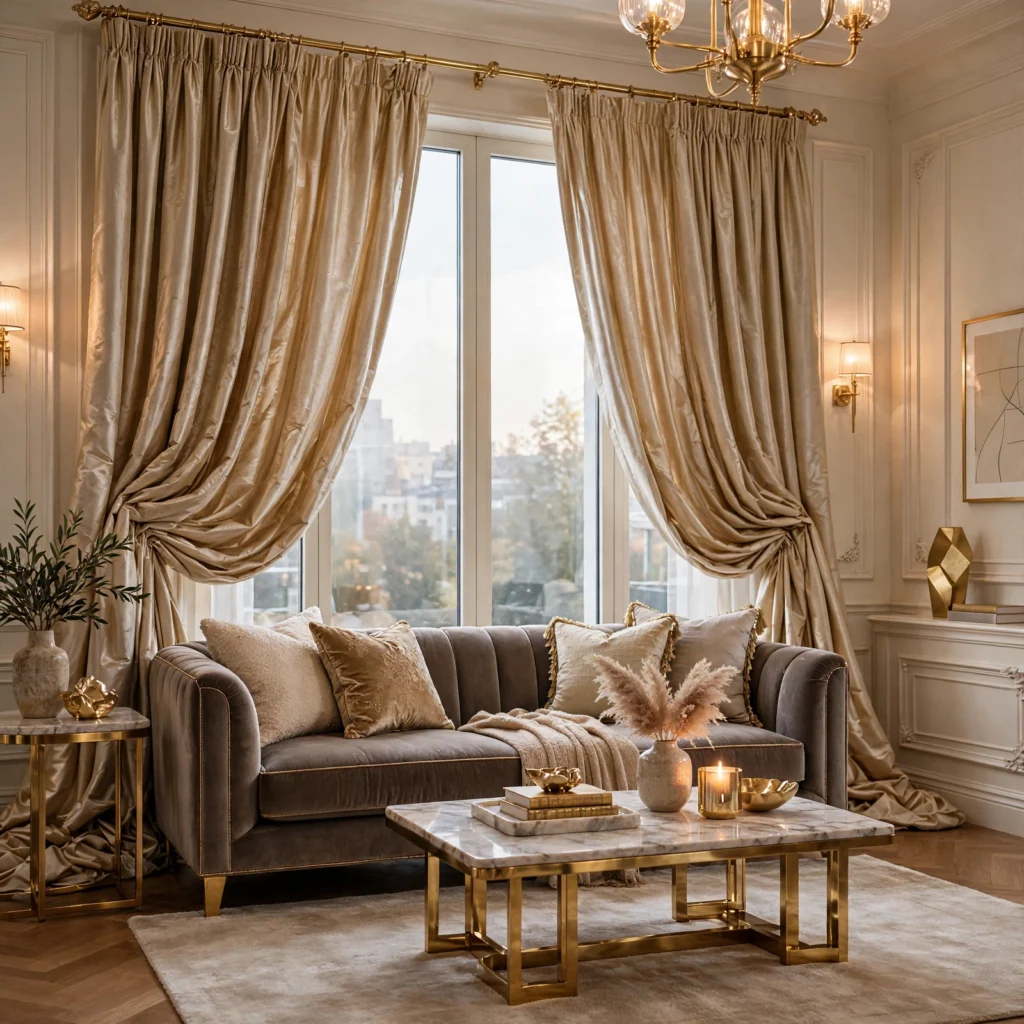
Using curtain panels with at least two and a half times the width of the window, rather than standard narrow panels, creates the deep, luxurious folds associated with high-end drapery. This approach suits any fabric choice, since fullness is primarily a matter of yardage rather than material cost. Measure the rod’s total width and multiply by 2.5, then divide by the fabric’s panel width to determine how many panels are needed for proper fullness. The table below compares common luxury curtain fabrics by weight, light control, and price range.
| Fabric | Weight | Light Control | Price Range |
| Velvet | Heavy | Full blackout possible | $$$-$$$$ |
| Silk Dupioni | Medium | Light filtering | $$$-$$$$ |
| Jacquard | Medium-heavy | Moderate | $$-$$$ |
| Linen | Light | Sheer to moderate | $-$$ |
7. Blackout Lined Velvet Panels
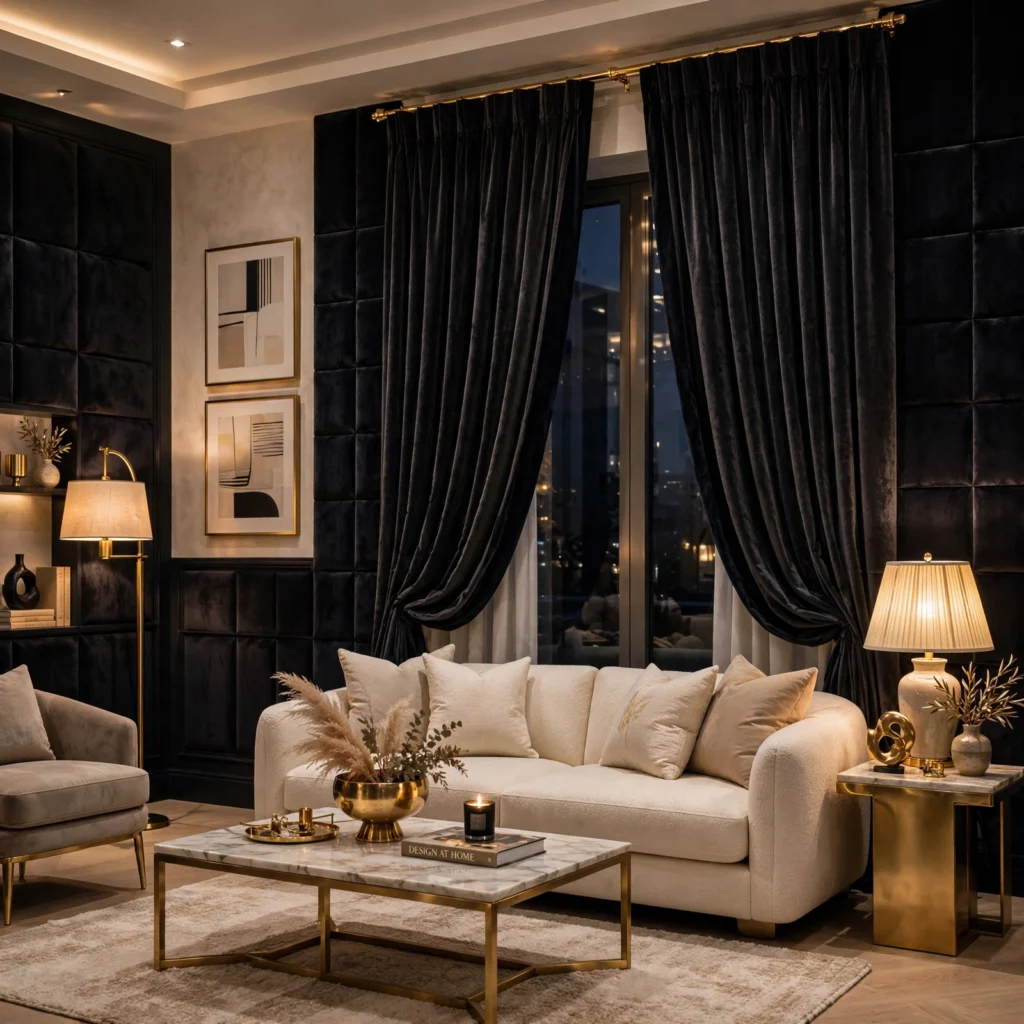
Blackout-lined velvet panels combine the rich texture of velvet with full light-blocking function, suiting living rooms that double as media or screening spaces alongside their decorative use. This approach works particularly well in west or south-facing rooms with strong afternoon sun. Choose a triple-weave blackout lining rather than a basic two-pass lining for the most complete light control, and confirm the lining doesn’t add excessive stiffness that would prevent the velvet from draping naturally.
8. Tailored Pinch Pleat Header
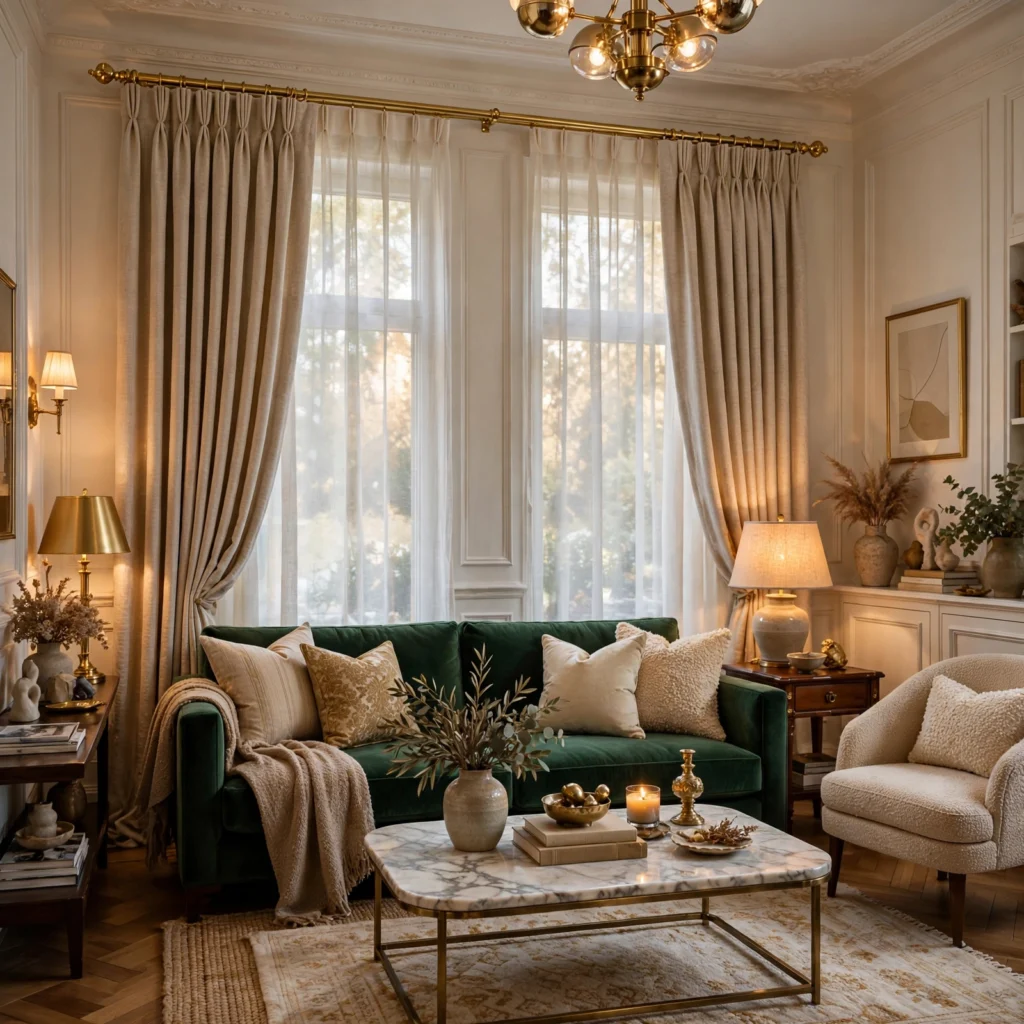
A tailored pinch pleat header, with evenly spaced triple folds gathered and stitched at the top of each panel, creates crisp, structured folds that read as more custom and tailored than a standard rod-pocket curtain. This styling suits formal or transitional living rooms wanting a polished, finished look. Have panels professionally pleated if possible, and use pinch pleat drapery rings and hooks rather than threading the rod directly through the fabric to maintain the structured header shape.
9. Monochromatic Tone-on-Tone Styling
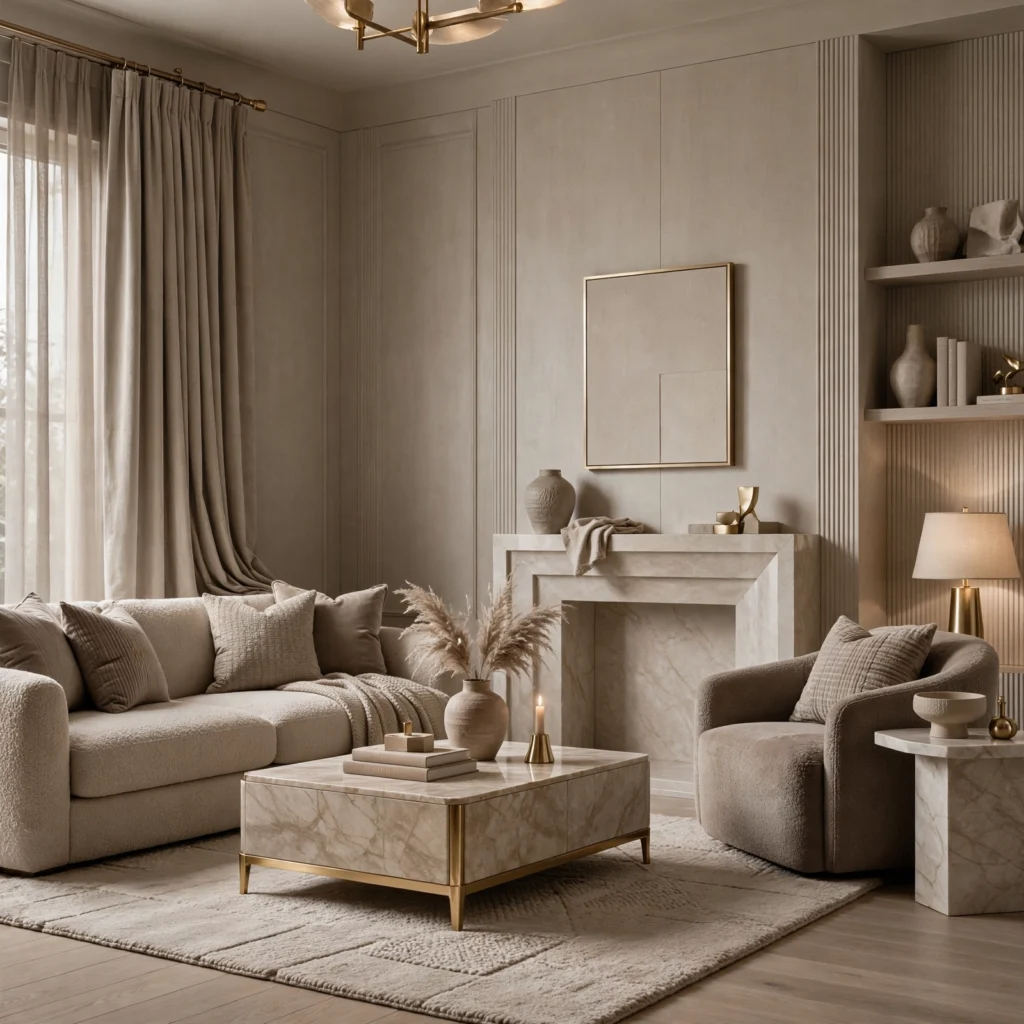
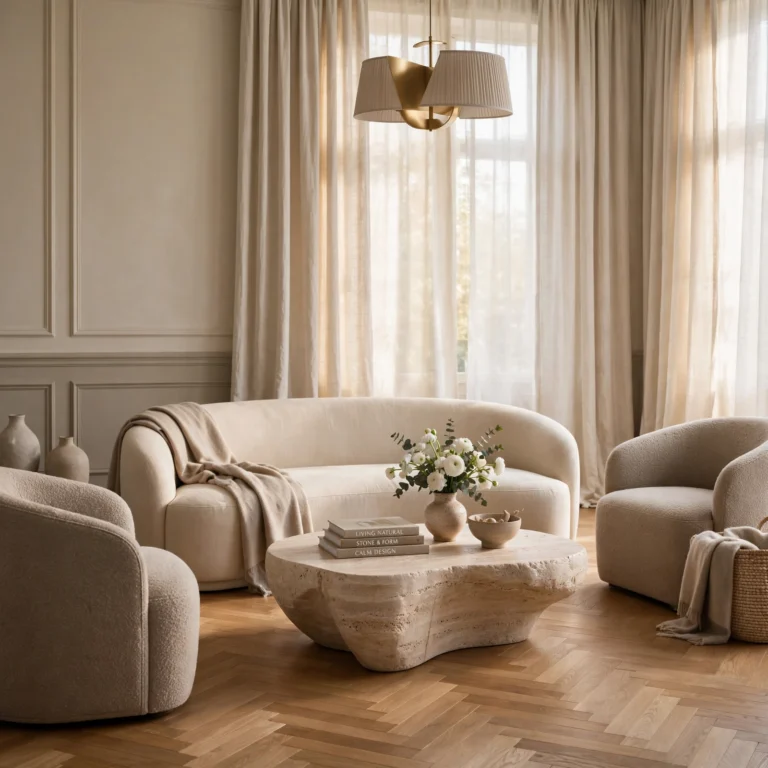
Choosing curtains in the same or a closely related tone to the living room’s wall color creates a seamless, monochromatic backdrop that makes the window treatment feel intentional and expensive rather than an afterthought. This approach suits rooms wanting the curtains to recede visually while still adding texture and softness. Select a fabric one or two shades lighter or darker than the wall paint, and rely on the fabric’s weave or sheen for visual interest rather than a contrasting color.
10. French Pleat Drapery
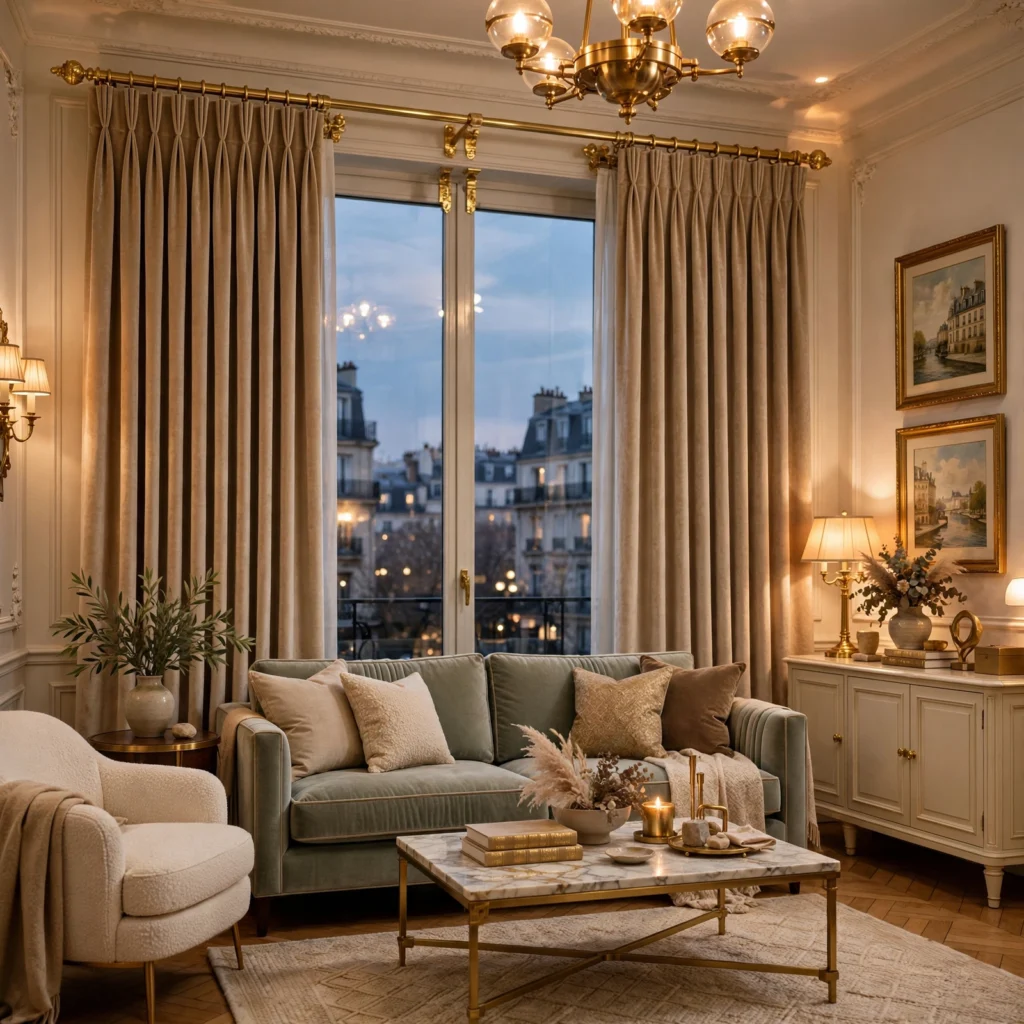
French pleat drapery, characterized by a triple-fold pleat stitched a few inches down from the top rather than at the very edge, creates a soft, rounded header that suits traditional and European-inspired living rooms. This styling works particularly well with heavier fabrics like velvet or jacquard, since the pleat structure helps the fabric hold its shape. Space French pleats roughly four to six inches apart across the panel width, and pair them with decorative rings for a polished, finished presentation.
11. Contrasting Trim or Border Detail
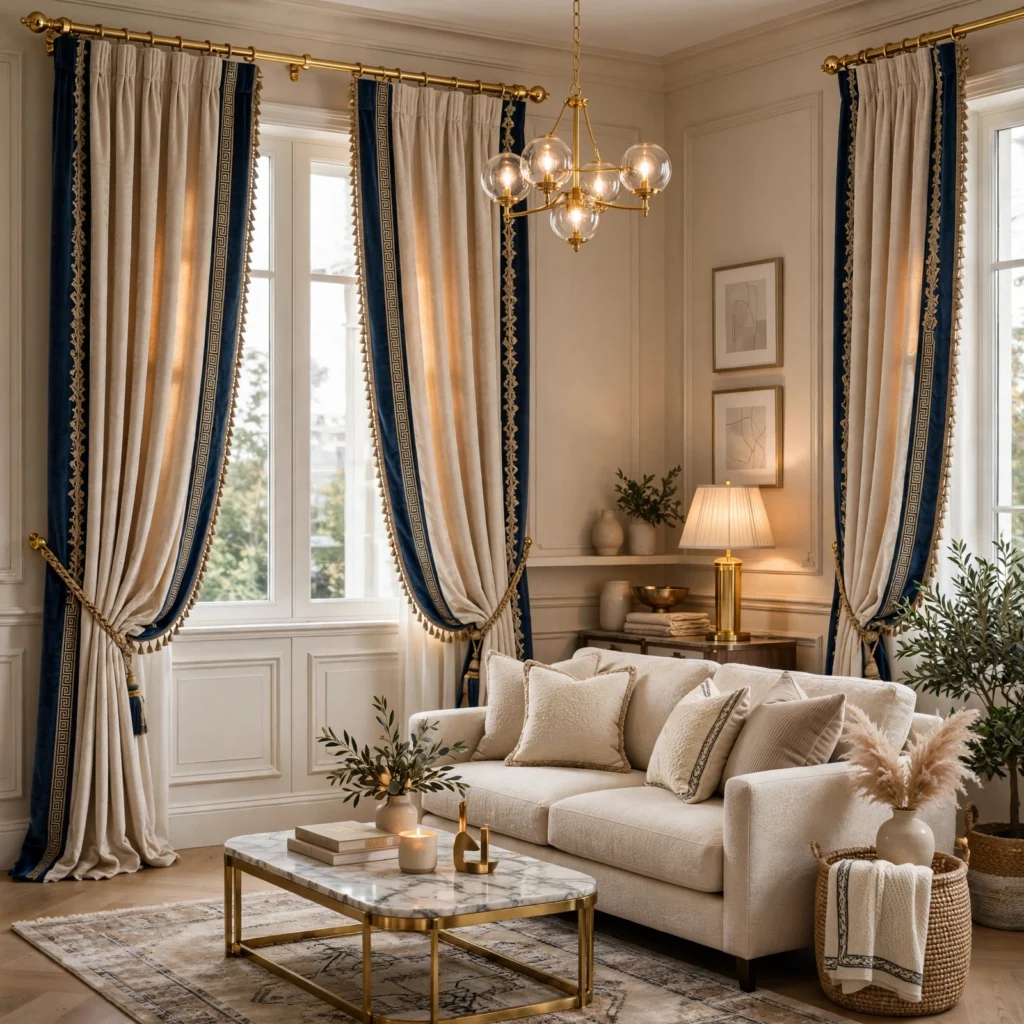
Adding a contrasting trim, such as a velvet border along the leading edge of a linen panel, introduces a tailored, custom detail that reads as a higher-end finishing touch than a plain curtain edge. This approach suits living rooms wanting a subtle designer detail without a fully patterned fabric. Choose a trim color that echoes another element in the room, such as a rug border or throw pillow accent, and have the trim professionally stitched for a clean, durable finish.
12. Puddle Length Drapery
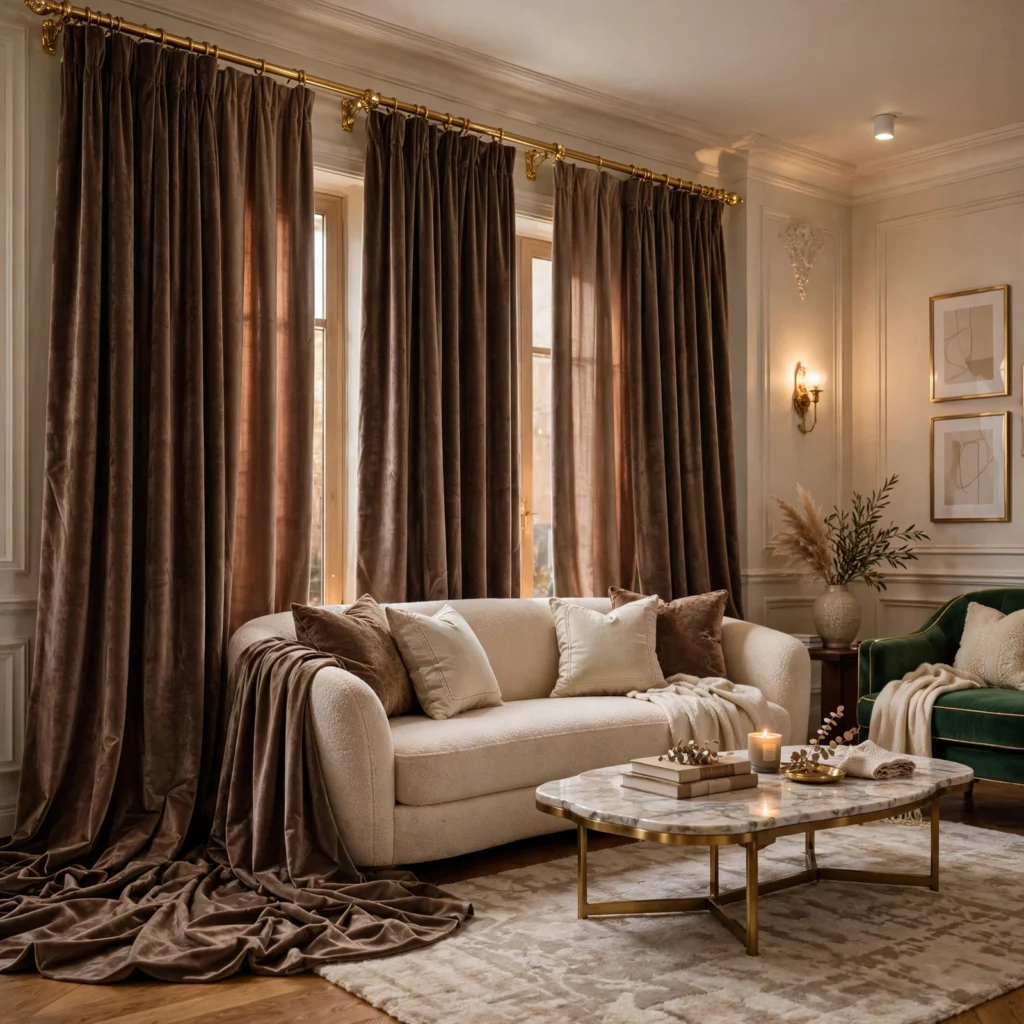
Curtains hung with a slight puddle, where the fabric pools gently on the floor rather than stopping precisely at the ground, create an old-world, formal quality suited to traditional and maximalist living rooms. This approach works best in rooms with low foot traffic near the windows, since the extra fabric can otherwise become worn or dirty. Add roughly one to three inches of extra fabric length beyond the floor for a subtle puddle, and avoid this style in high-traffic areas or homes with pets.
13. Double-Width Statement Drapery
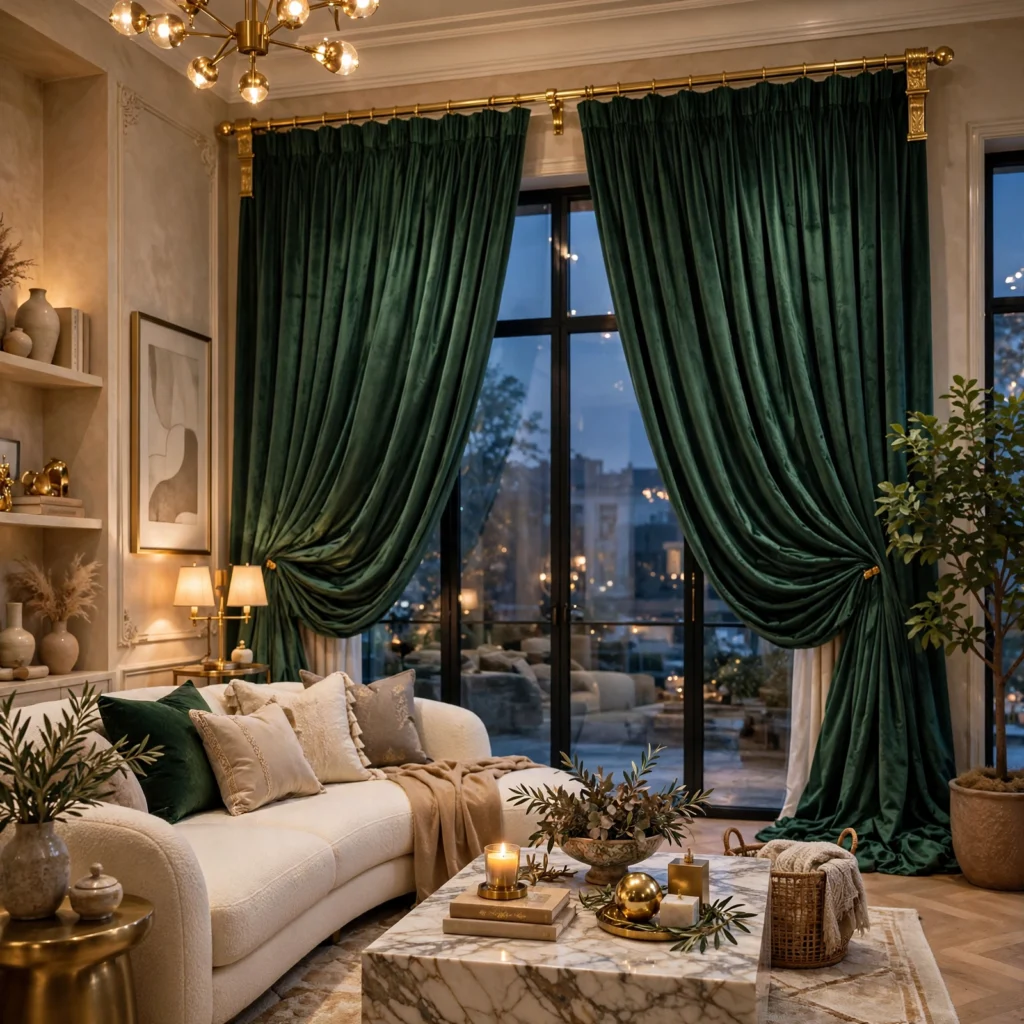
Hanging curtain panels significantly wider than the window itself, so the fabric extends well beyond the frame on either side even when open, creates a grander, more expansive look that makes windows appear larger than they are. This approach suits smaller windows in an otherwise large living room, where standard-width panels would look undersized. Extend the curtain rod at least twelve inches beyond each side of the window frame to accommodate the additional panel width when fully drawn open.
14. Tassel and Fringe Trim Accents
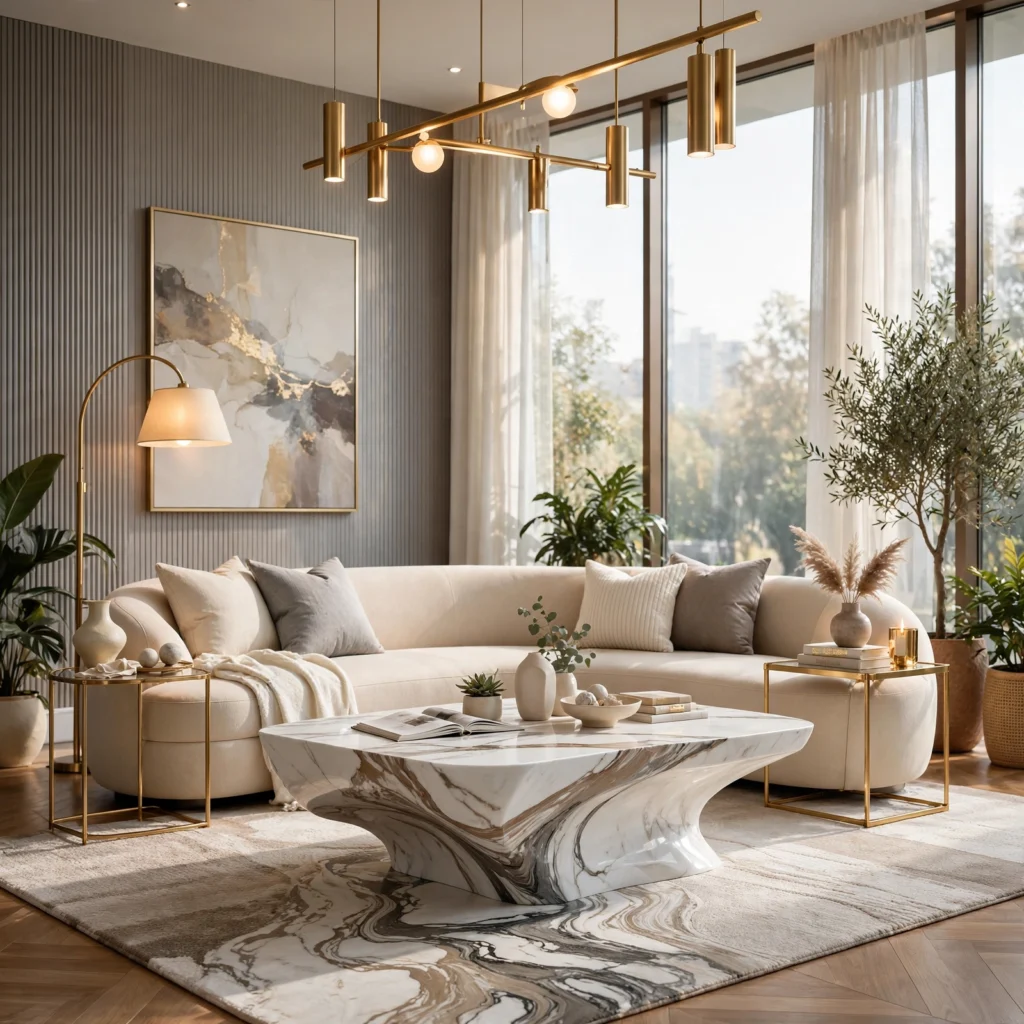
Adding tassel fringe or a decorative trim along the bottom hem of a curtain panel introduces a formal, old-world detail that suits traditional or maximalist living rooms wanting an extra layer of textural richness. This approach works particularly well on solid-colored velvet or silk panels, where the trim provides visual interest without competing with a pattern. Choose a trim color that closely matches or subtly contrasts the base fabric, and have it professionally sewn along the leading and bottom edges for durability.
15. Woven Wood Cornice with Drapery
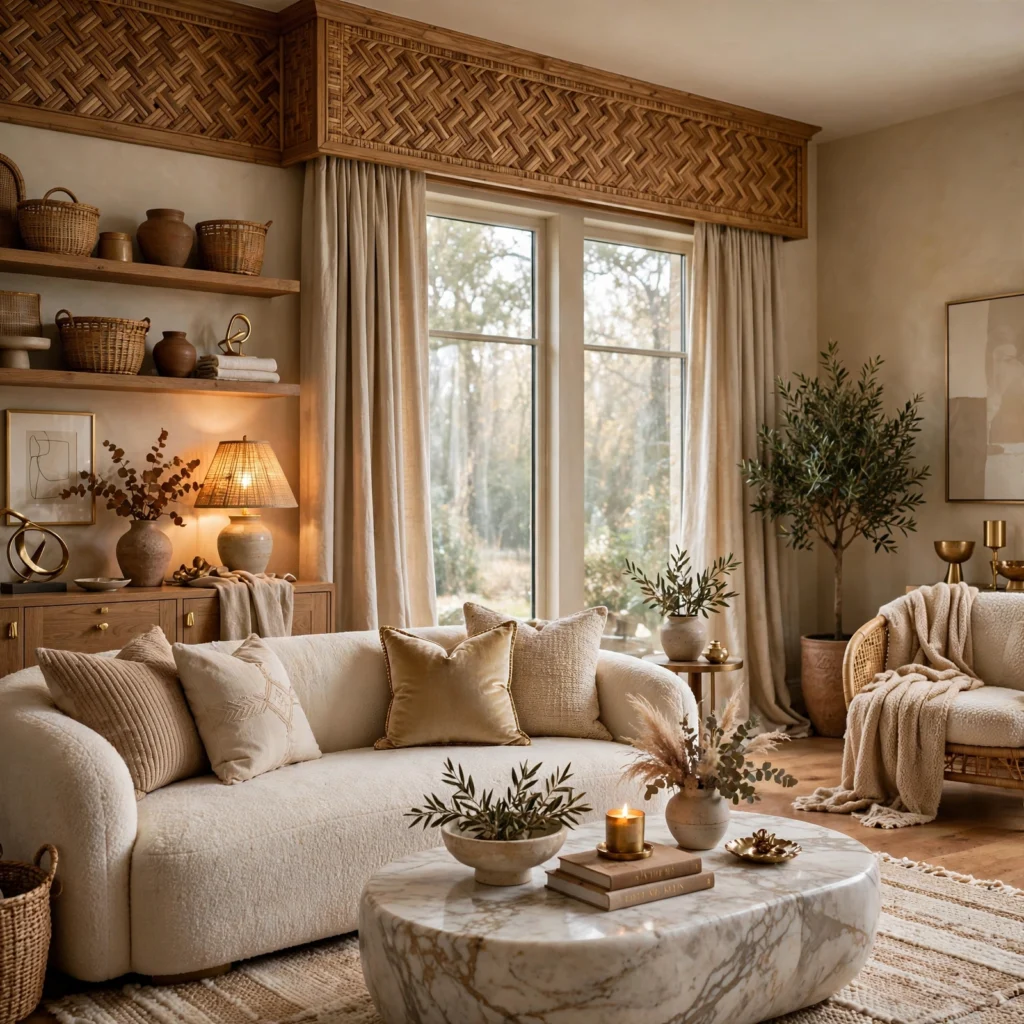
Pairing a woven wood cornice box, mounted above the curtain rod, with flowing drapery panels below adds an architectural, finished quality that a curtain rod alone cannot provide. This approach suits living rooms with a natural or coastal-luxury aesthetic, where woven textures already appear elsewhere in the room. Custom-fit the cornice to the exact window width for the most tailored appearance, and choose a drapery fabric that complements rather than matches the cornice’s woven texture exactly.
16. Rich Jewel-Tone Velvet Statement
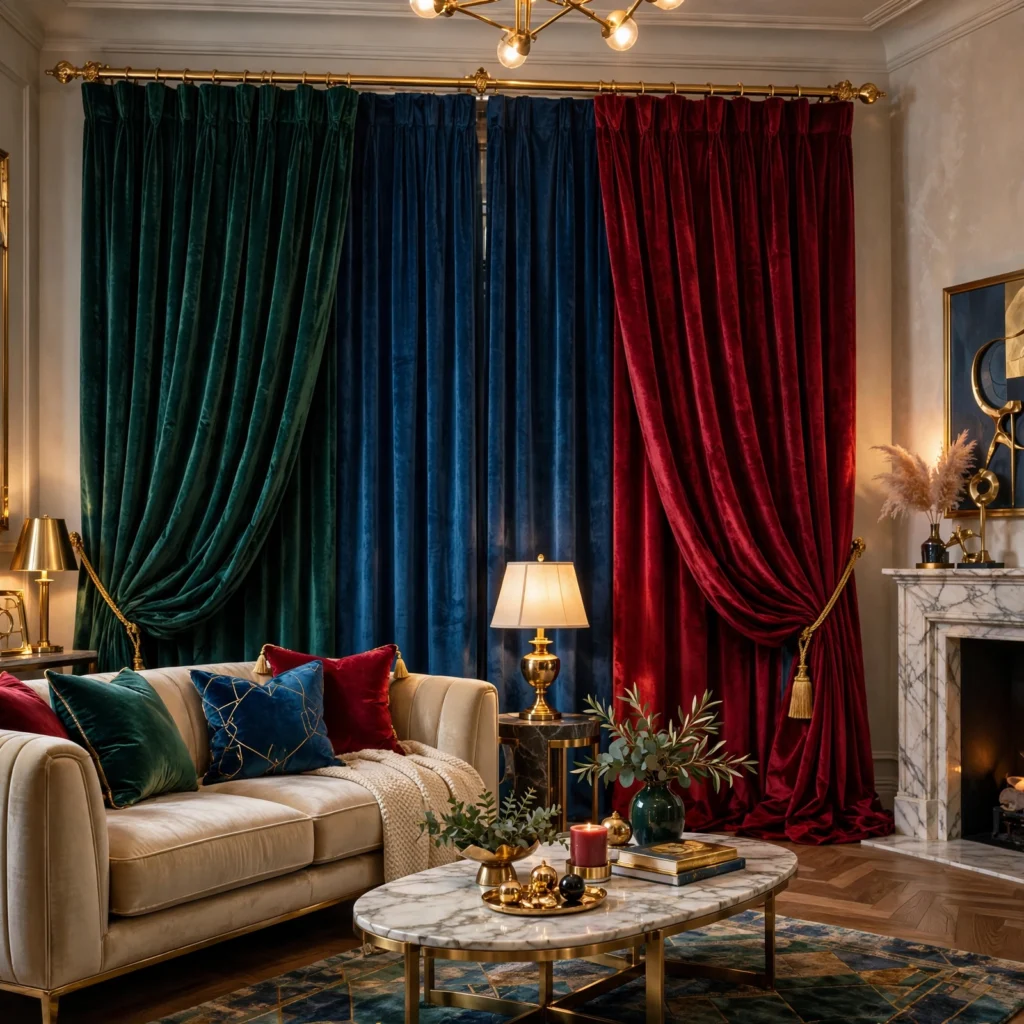
Choosing curtains in a deep jewel tone, such as emerald, sapphire, or burgundy velvet, creates a bold focal point that anchors a living room’s color palette while still reading as luxurious rather than overly casual. This approach suits rooms with predominantly neutral furniture, where the curtains can serve as the primary source of color. Balance the bold curtain color with neutral or muted upholstery elsewhere in the room to keep the jewel tone from feeling overwhelming.
17. Layered Roman Shade and Drapery
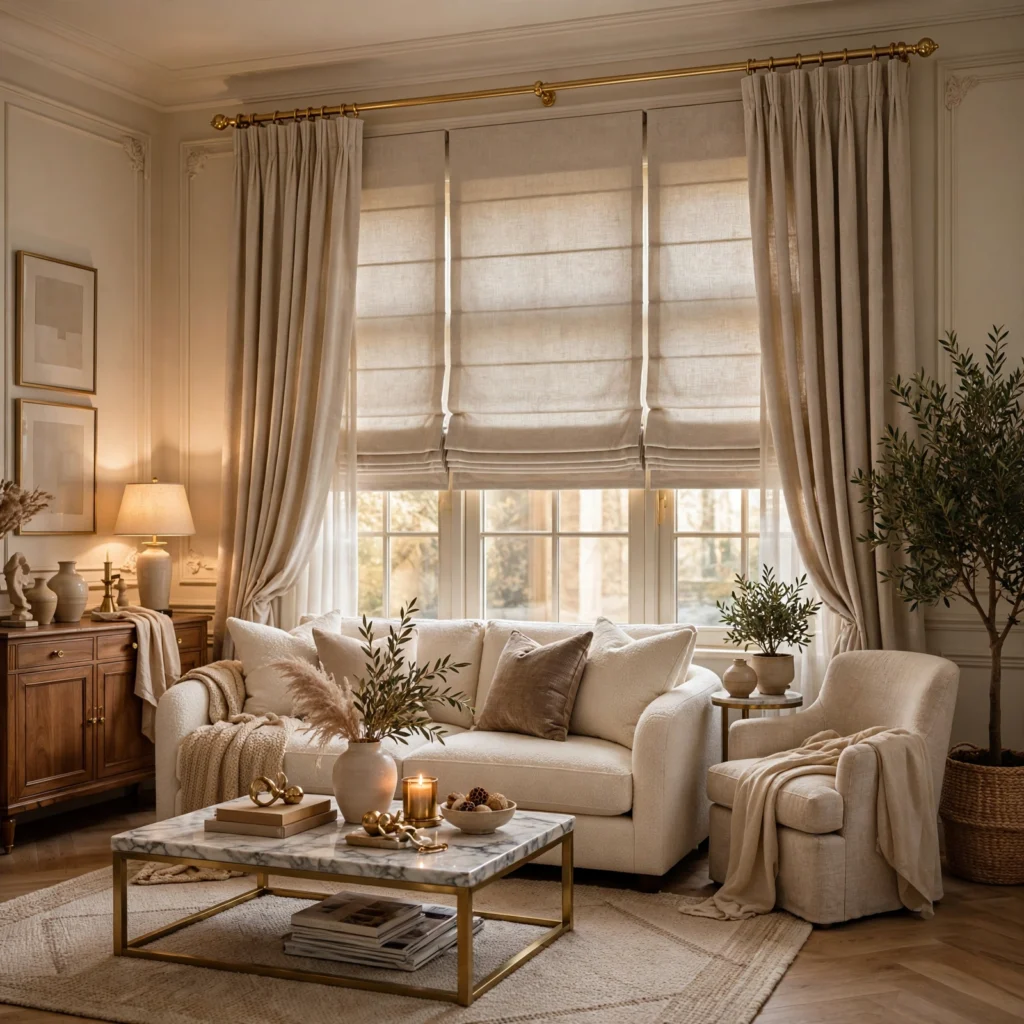
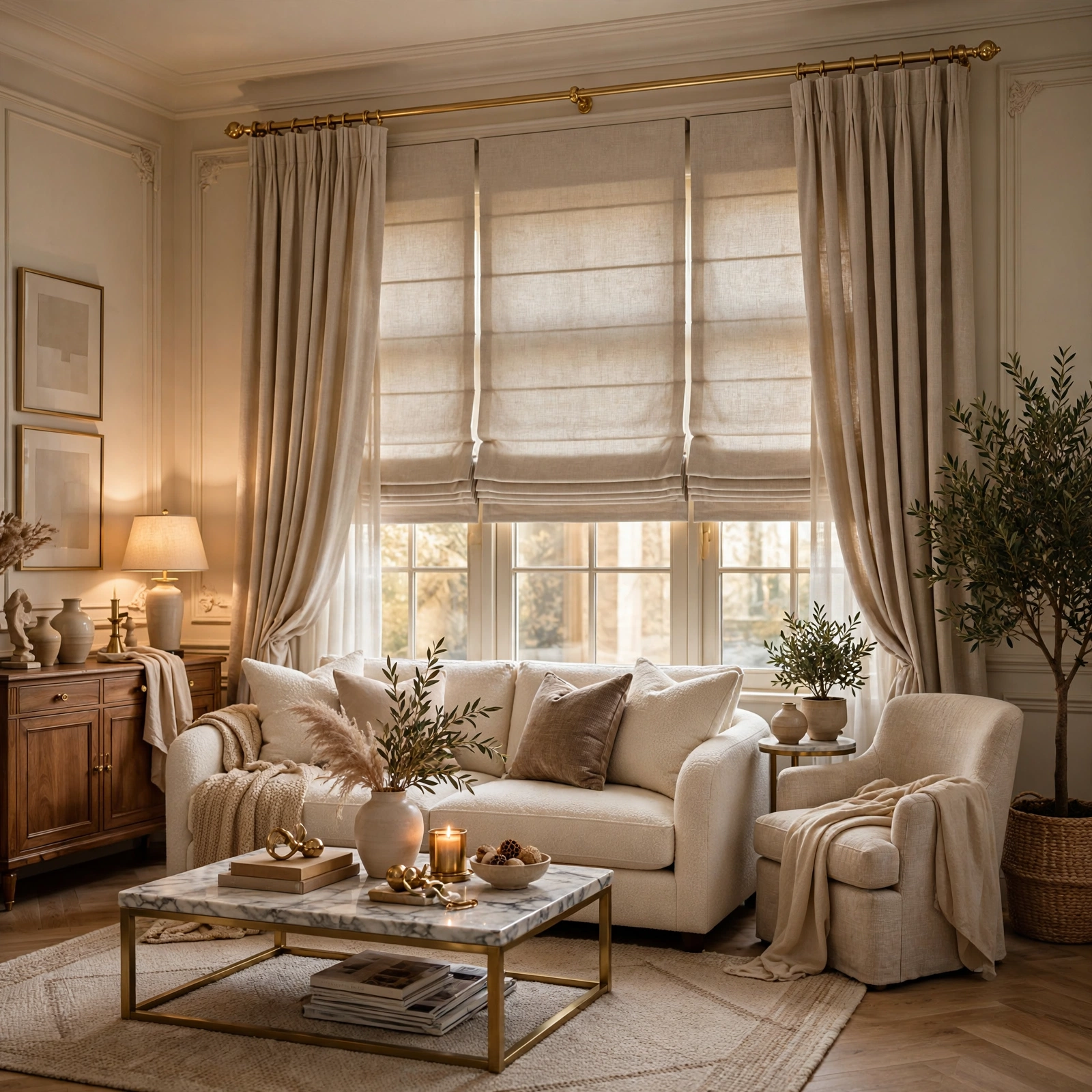
Combining a tailored Roman shade beneath flanking drapery panels creates a layered, custom window treatment that offers both function and formality, particularly on windows facing a street or a close neighboring building. This approach suits living rooms wanting privacy control without sacrificing the softness drapery provides. Choose a Roman shade fabric that complements the drapery’s color palette rather than matching it exactly, and ensure the shade fits precisely within the window frame beneath the wider drapery panels.
18. Custom Embroidered Linen Panels
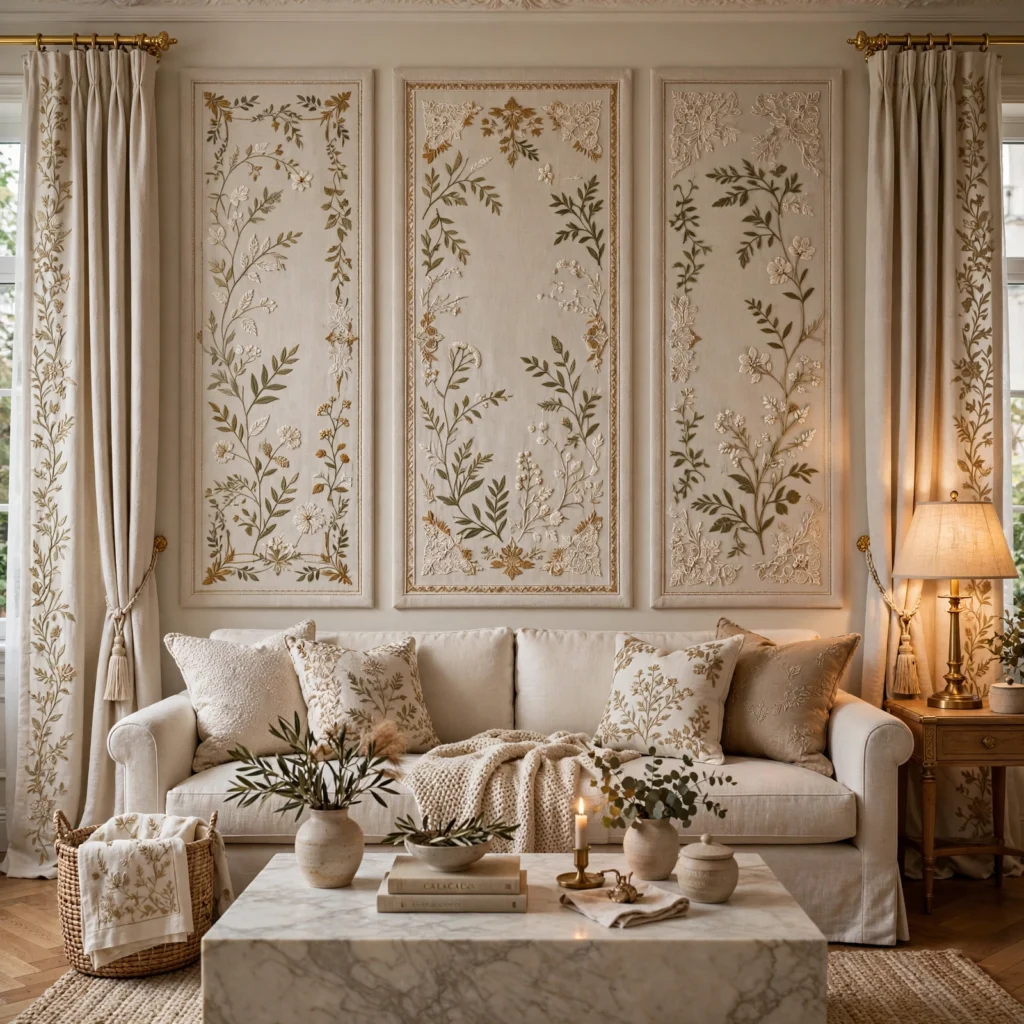
Custom embroidered linen panels, featuring subtle stitched patterns like a botanical motif or geometric design, add a bespoke, artisanal quality to living room curtains that mass-produced fabric cannot replicate. This approach suits living rooms wanting texture and detail without the heaviness of velvet or the formality of silk. Choose a tone-on-tone embroidery color to keep the design subtle, and pair the panels with simple, unadorned hardware to let the embroidered detail remain the focal point.
Shop the Look
For a velvet and brass styling, look for floor-length emerald velvet drapery panels, an oversized brass curtain rod with sphere finials, and matching brass tiebacks. For a layered sheer and drapery look, a lightweight linen sheer panel, a double curtain rod system, and blackout-lined velvet panels complete the setup. Those pursuing a tone-on-tone monochromatic look can start with jacquard drapery in a shade matching the wall color, simple metal rings, and a slim black or brushed nickel rod.
Common Mistake to Avoid
The most common mistake with luxury curtains living room ideas is hanging panels that are too narrow or mounted directly at the window frame’s edge, which makes even expensive fabric look undersized and cuts off the vertical drama that makes curtains feel high-end. Mounting the rod several inches above the frame and extending it beyond the window’s width on each side allows the panels to hang with proper fullness and immediately elevates the overall look regardless of fabric cost.
People Also Ask
What fabric is best for luxury curtains in a living room?
Velvet, silk dupioni, and jacquard are among the most requested fabrics for luxury living room curtains, each offering a different balance of texture, light control, and formality. Velvet provides the richest texture and best light-blocking capability, while silk dupioni offers a subtle sheen suited to more formal, light-filled rooms.
How long should luxury curtains be in a living room?
Floor-length curtains, either breaking precisely at the floor or puddling slightly by one to three inches, are considered the most luxurious length for a living room, as opposed to shorter panels that stop above the windowsill or floor. Mounting the rod close to the ceiling rather than directly above the window frame further enhances the sense of height and drama.
How much fullness do luxury curtains need?
Luxury curtain panels typically use two to two and a half times the width of the window when fully closed, creating the deep, structured folds associated with high-end drapery. Skimping on fabric width is one of the most common reasons curtains fail to achieve a luxurious look, regardless of the fabric’s quality or cost.
Should luxury curtains match the wall color or contrast with it?
Both approaches work, though a tone-on-tone match creates a seamless, sophisticated backdrop that lets texture and drape carry the visual interest, while a contrasting jewel tone can serve as a bold focal point in an otherwise neutral room. The choice largely depends on whether the living room already has a strong color statement elsewhere or needs one introduced through the curtains.
What hardware works best with luxury curtains?
Oversized metal rods, at least one inch in diameter, paired with simple sphere or urn-shaped finials in brass, brushed gold, or matte black, tend to read as the most luxurious hardware choice. Avoiding overly ornate or thin hardware helps keep the overall window treatment looking current and well-proportioned rather than dated.
Conclusion
Luxury curtains living room ideas rely as much on proportion, fabric weight, and hardware as they do on the fabric itself, and any of these eighteen directions offers a solid starting point depending on your window size, existing furniture, and preferred level of formality. Save this guide to Pinterest for reference while shopping fabrics, and check out our related post on choosing the right paint sheen for high-traffic rooms.