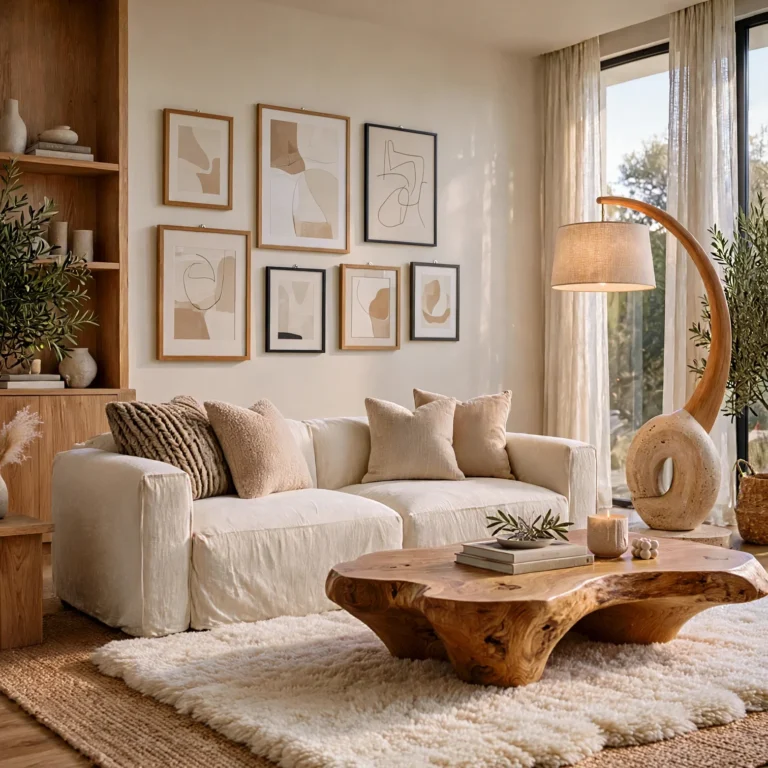
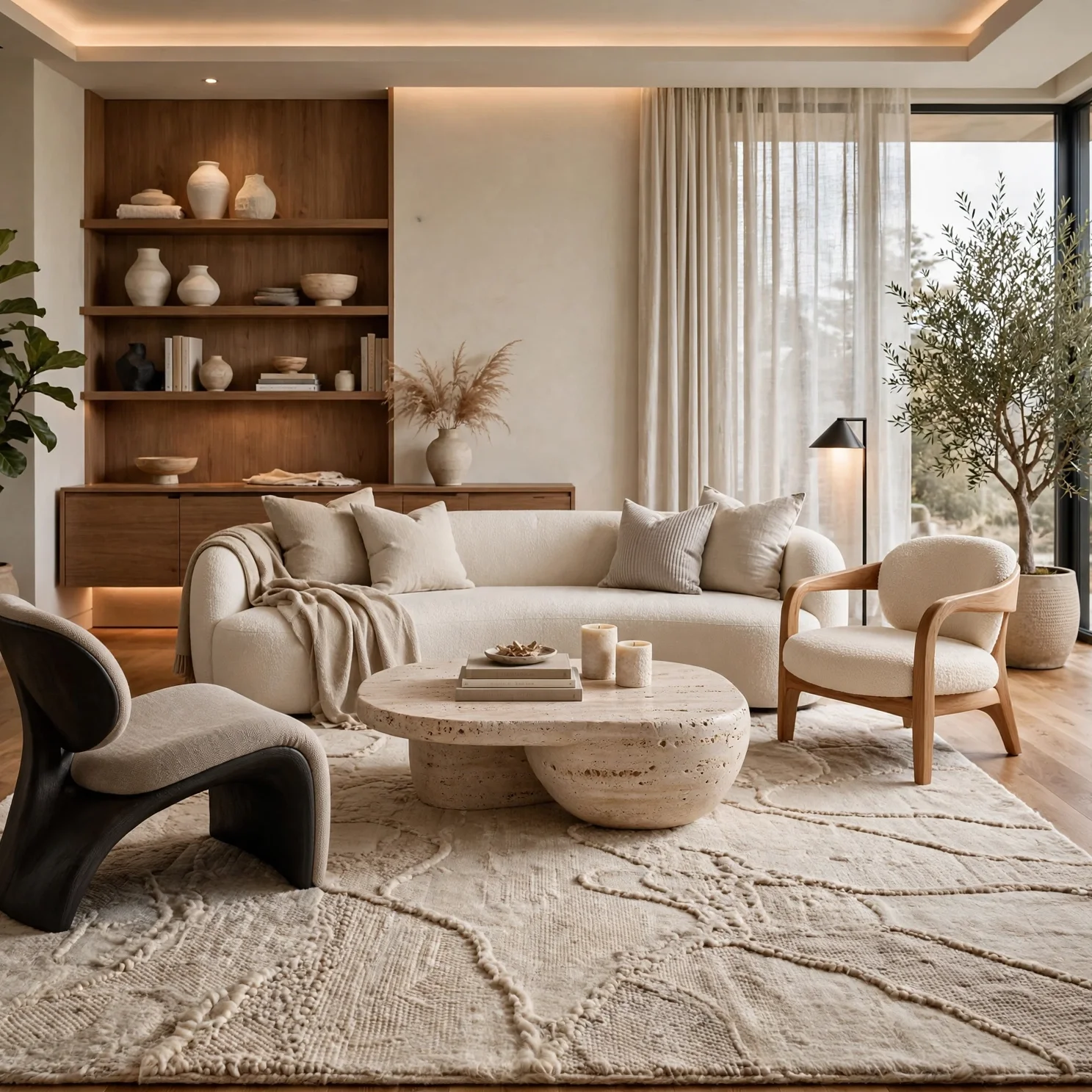
12 Minimalist Living Room Ideas That Feel Calm, Not Cold
Walk into most rooms labeled “minimalist” and you’ll find something closer to empty than intentional. A true minimalist living room isn’t about owning less for its own sake — it’s about choosing furniture, materials, and layouts that earn their place. This guide walks through twelve practical, buildable ideas for a minimalist living room, from furniture selection to lighting and storage, so the result feels lived-in rather than staged.
Trend & Background
Interest in pared-back interiors has grown alongside a broader shift toward quality-over-quantity purchasing, smaller urban footprints, and a general fatigue with maximalist trends that dominated the last decade. Japandi, a fusion of Japanese and Scandinavian design principles, has pushed the minimalist living room away from stark white boxes and toward warmer, tactile spaces built on oak, linen, and stone. This matters now because minimalism has matured past the “empty room” stereotype into something more livable and design-literate.
Key Takeaways
- A minimalist living room relies on restrained material palettes, negative space, and hidden storage rather than bare walls and cheap furniture.
- Low-profile seating, natural wood tones, and a single statement piece create warmth without clutter.
- Lighting layers — not overhead fixtures alone — do the heaviest lifting in making a pared-back room feel finished.
- Smart storage solutions let you keep the aesthetic while still living a normal, object-filled life.
1. Low-Profile Sofa
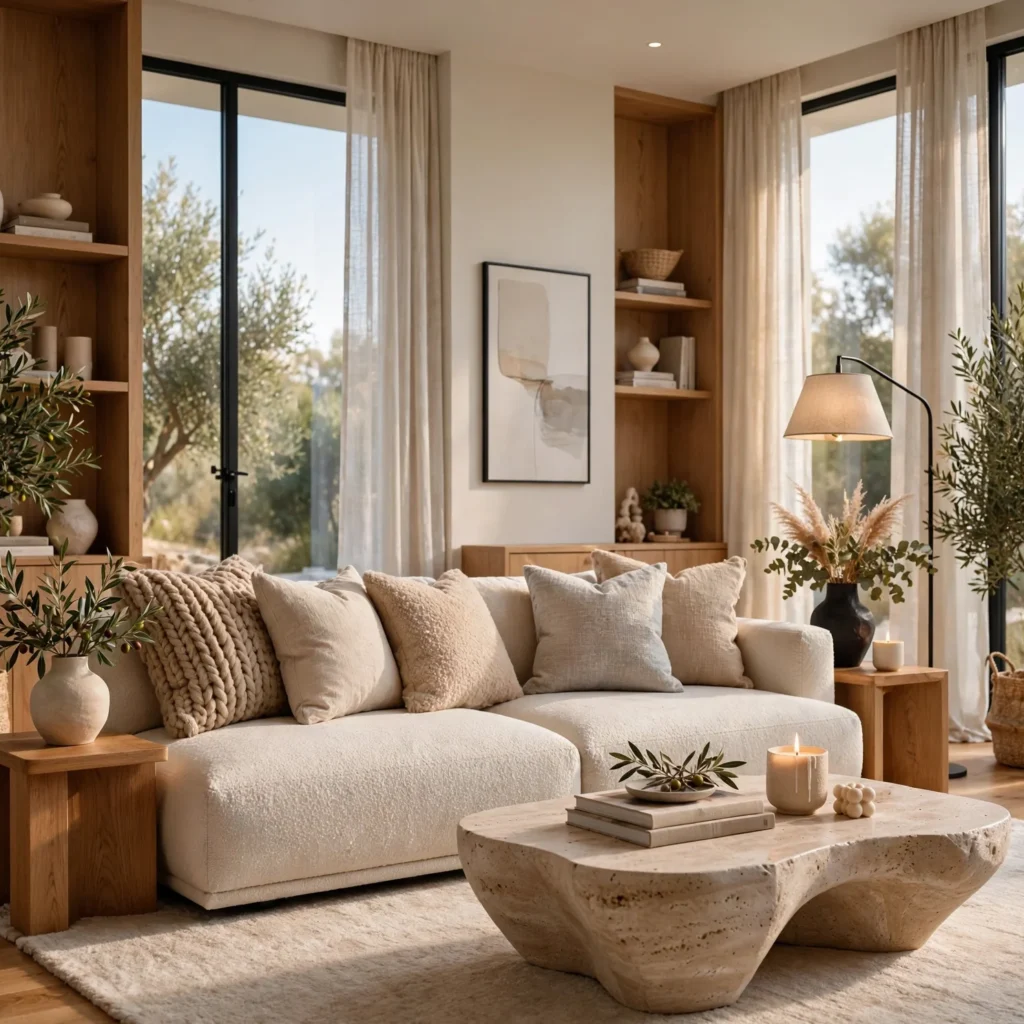
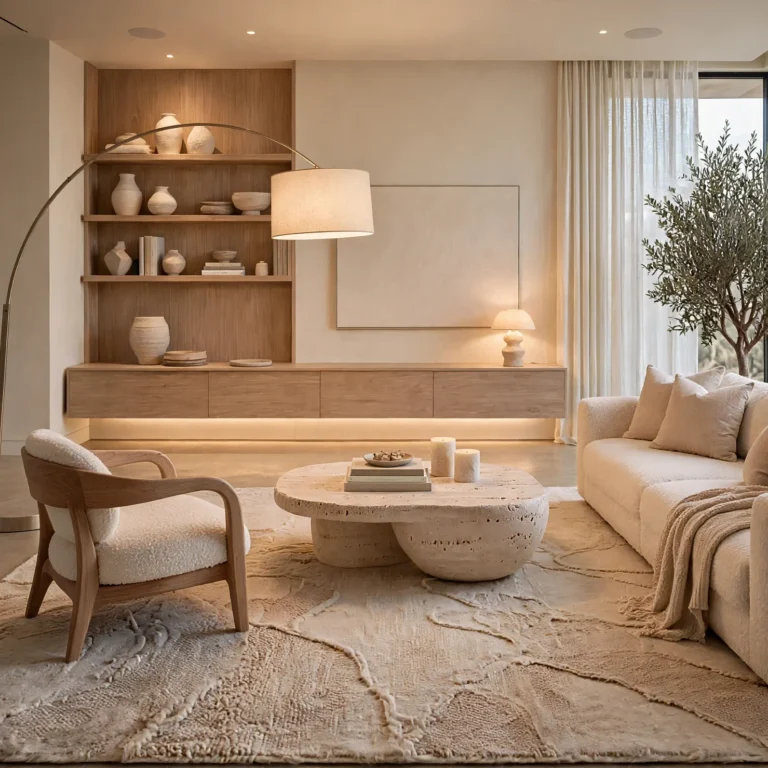
A sofa with a slim frame and low back, think 28 to 32 inches in height, anchors a minimalist living room without dominating the sightline. Look for exposed wooden legs in white oak or walnut and upholstery in a single neutral tone like oatmeal boucle or stone-colored linen. The lower profile opens up visual space above the piece, making ceilings feel taller, and rooms feel less boxed in, especially in apartments with limited square footage.
2. Floating Media Console
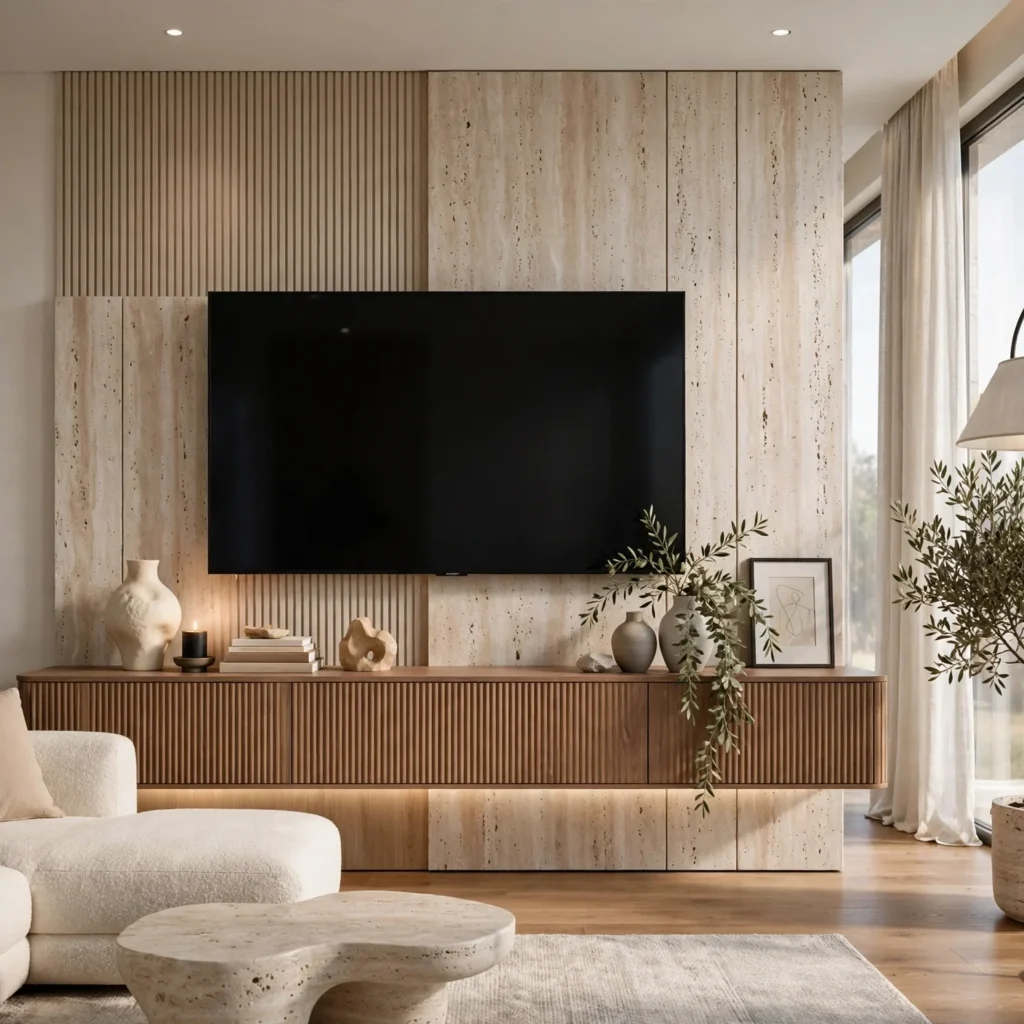
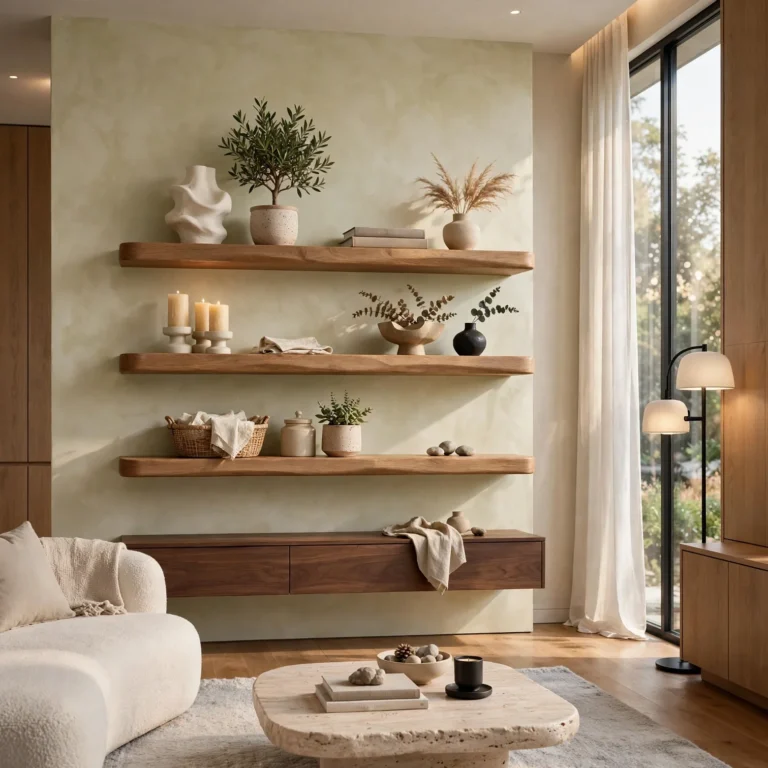
Wall-mounted consoles free up floor space and give the impression of a room with fewer objects touching the ground. Choose a console in matte walnut or white lacquer with push-to-open drawers so there are no visible handles breaking up the surface. This works particularly well in smaller rooms where every inch of visible floor contributes to a sense of openness, and it makes cleaning underneath far simpler than with a traditional cabinet.
3. Single Statement Artwork
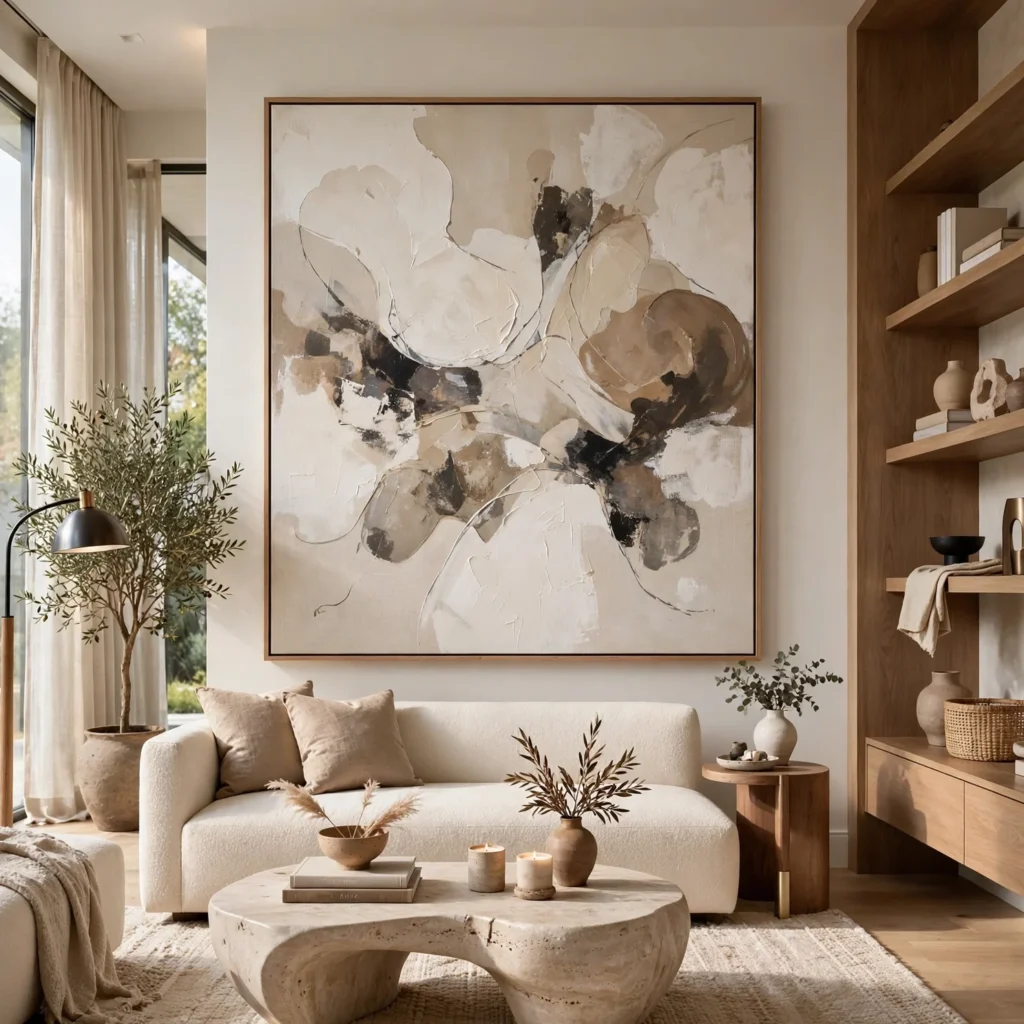
Instead of gallery walls, a minimalist living room benefits from one large-format piece of art, ideally 36 by 48 inches or bigger, hung at eye level above the sofa. Choose abstract or landscape work in muted tones that echo the room’s palette rather than contrast it. One well-chosen piece does more visual work than five small frames, and it gives the eye a clear focal point instead of scattering attention across the wall.
4. Built-In Wall Shelving
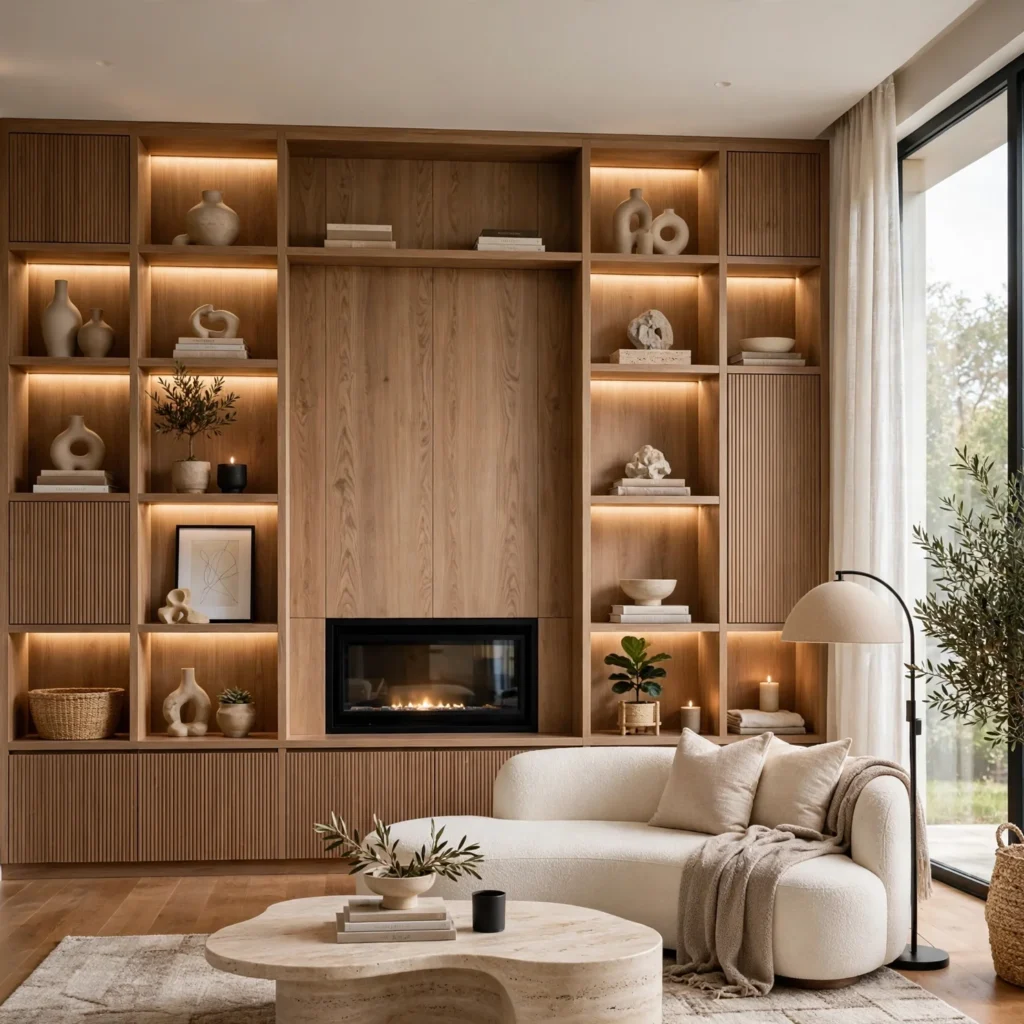
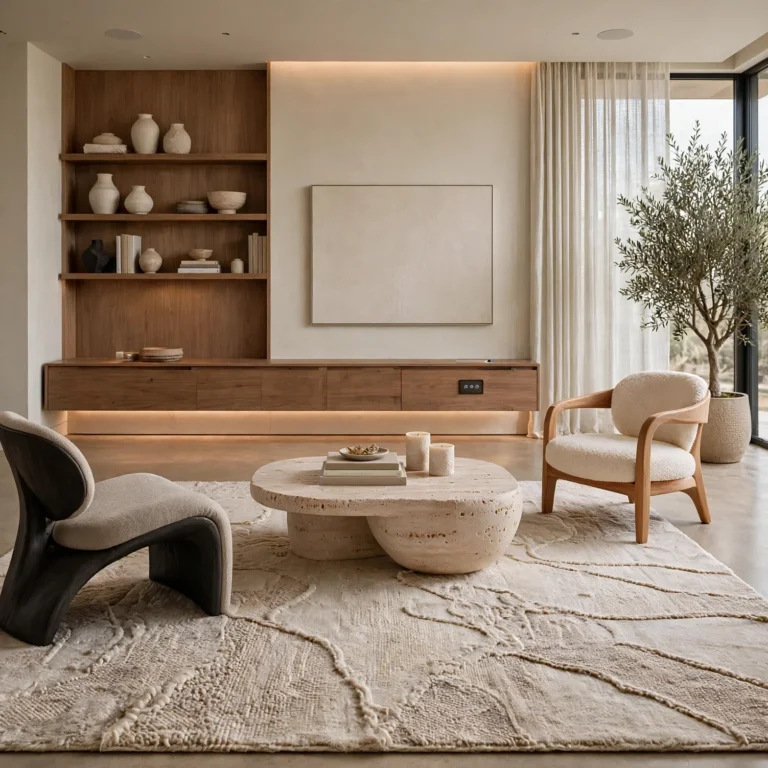
Recessed or built-in shelving keeps books and objects contained within the wall plane rather than projecting into the room. Use it sparingly three to five curated objects per shelf rather than a fully packed bookcase — and stick to a limited material story: wood, ceramic, and maybe one plant. This approach lets you keep sentimental items and reading material on display without the visual noise of a traditional bookshelf.
5. Neutral Wool Area Rug
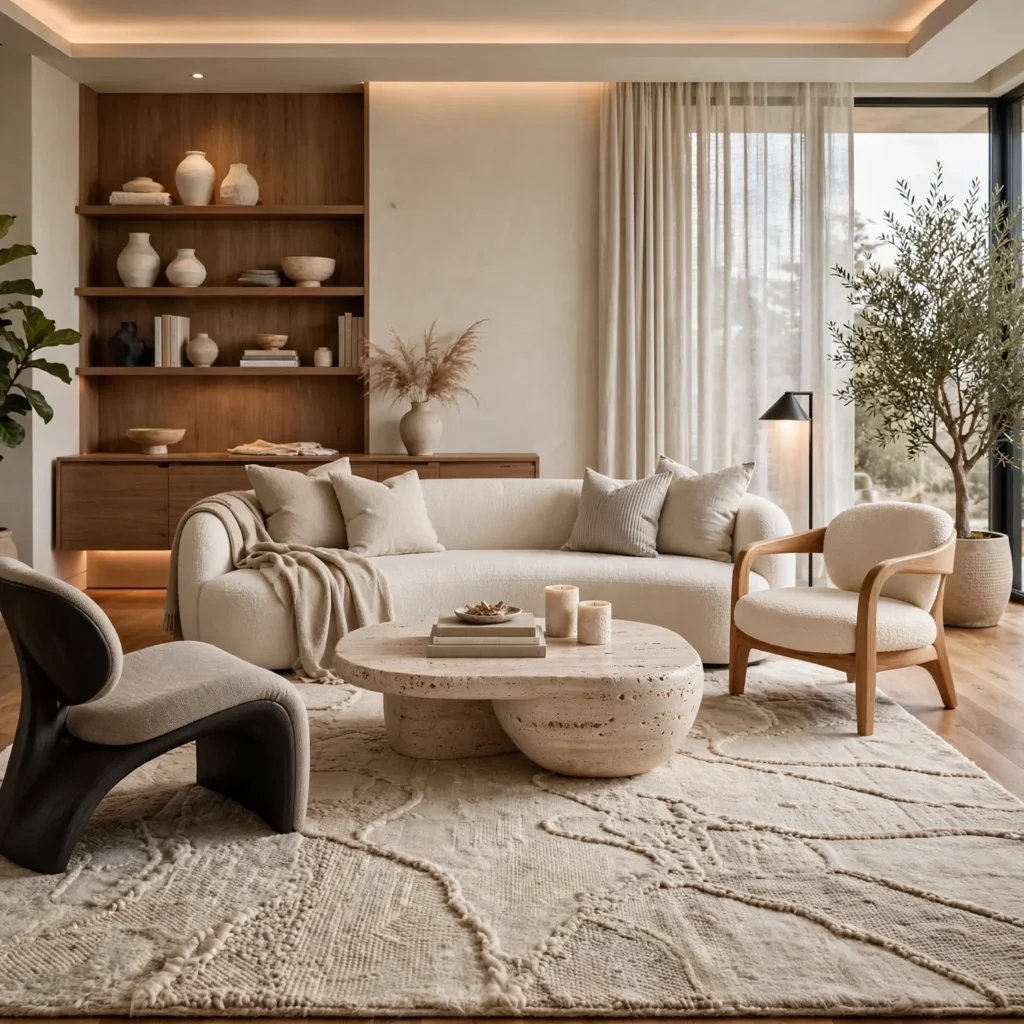
A rug in undyed wool, jute, or a flatweave cotton in ivory, sand, or charcoal grounds the seating area and adds warmth underfoot. Avoid busy patterns; a subtle texture change, like a herringbone weave or a slight color gradient, adds depth without competing with furniture. Size it so all four legs of the sofa sit on it, which reads as intentional rather than an afterthought rug thrown into the middle of the room.
| Room Size | Recommended Rug Size |
| Small (under 150 sq ft) | 5′ x 8′ |
| Medium (150–250 sq ft) | 8′ x 10′ |
| Large (250+ sq ft) | 9′ x 12′ or larger |
6. Concealed Storage Ottoman
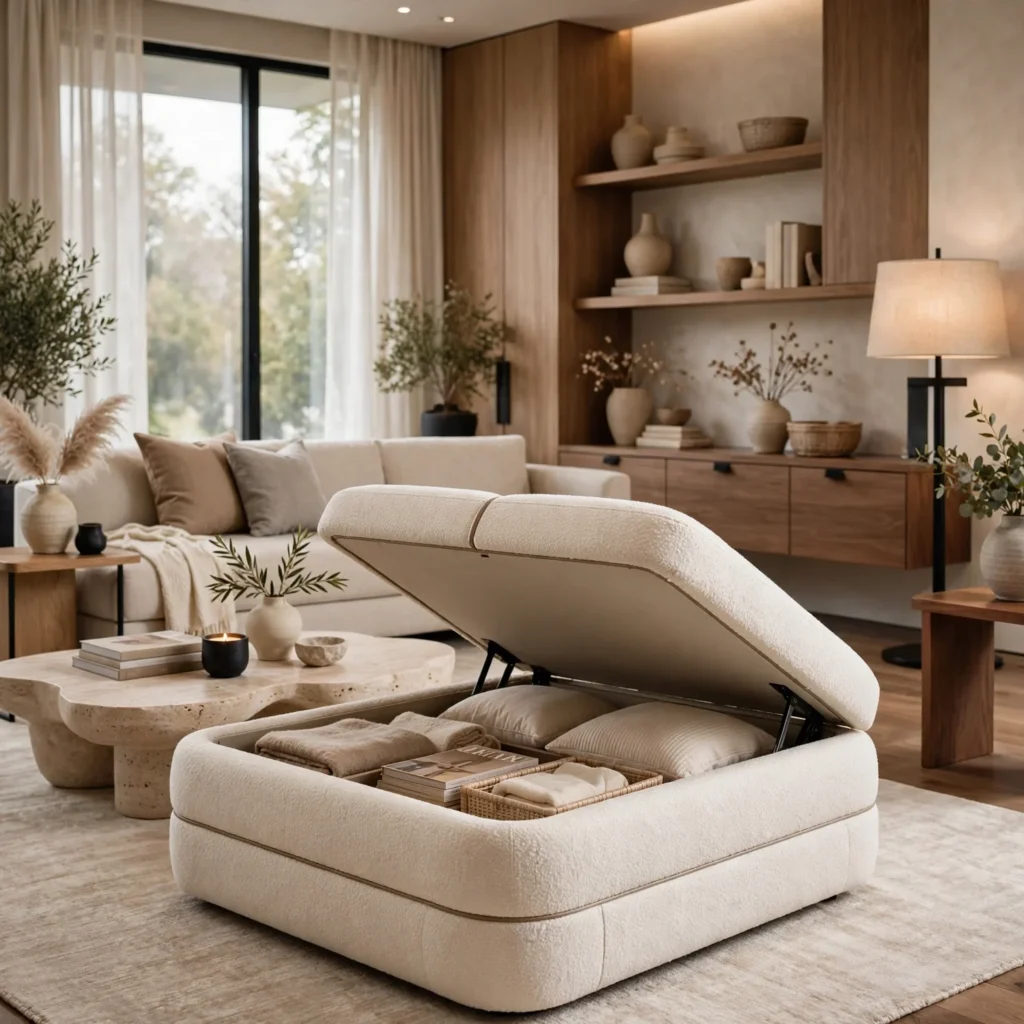
An ottoman with a lift-top lid or hidden internal compartment gives you a place to stash blankets, remotes, and coasters that would otherwise clutter a coffee table. Choose one upholstered in the same fabric family as your sofa boucle, linen, or leather, so it reads as a cohesive set rather than an add-on. This piece does double duty as extra seating when guests arrive, which matters in a minimalist living room where furniture count stays deliberately low.
Transform your home with these beautiful studio apartment ideas designed for comfort, functionality, and timeless style.
7. Warm Wood Coffee Table
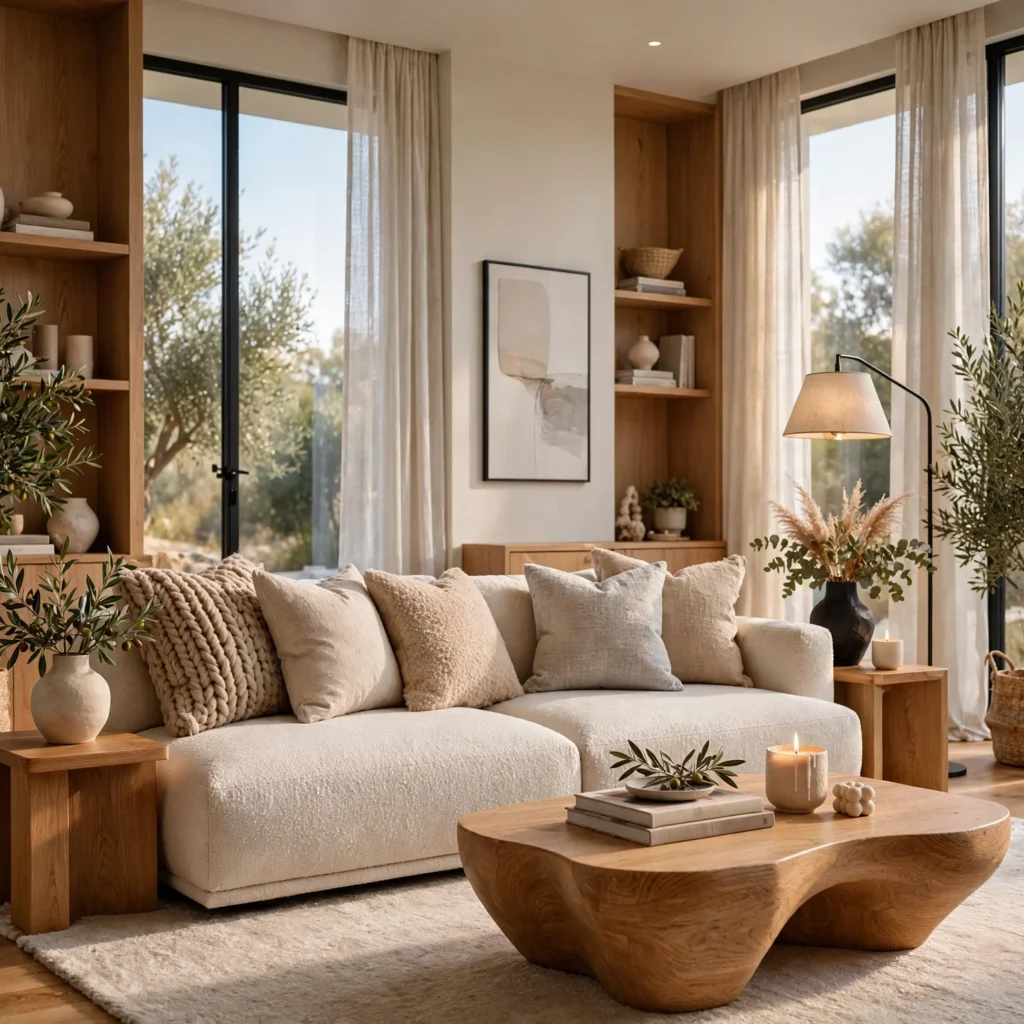
Skip the glass-and-chrome combination and choose a coffee table in solid oak, ash, or walnut with simple, rounded or gently tapered legs. A single material and a clean silhouette keep the piece from becoming a visual anchor point that fights with the sofa or rug. This idea works especially well in Japandi-leaning rooms where warm wood tones are meant to soften an otherwise pared-back palette.
8. Linear Pendant Lighting
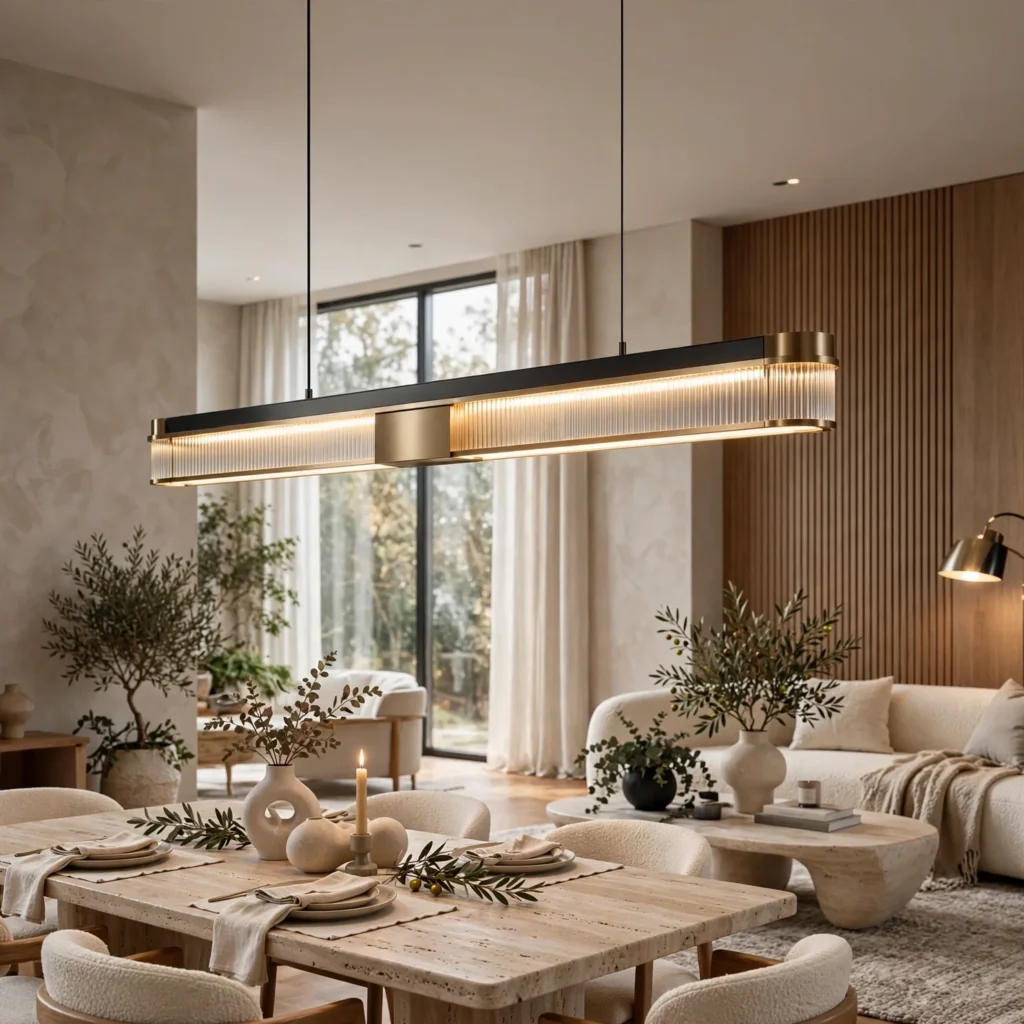
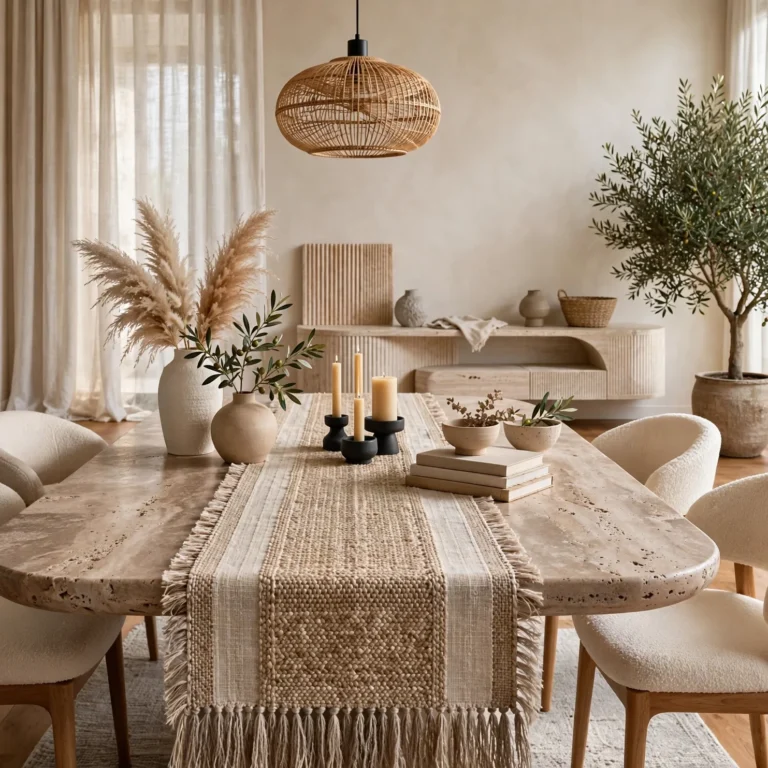
Replace a single overhead fixture with a linear or paper pendant that adds a sculptural element without extra clutter. A rice-paper lantern style or a slim brass linear pendant both work, depending on whether the room leans warm-minimal or slightly more industrial. Position it above the coffee table rather than dead-center in the room so it reinforces the seating zone instead of just lighting empty floor space.
9. Layered Floor and Table Lamps
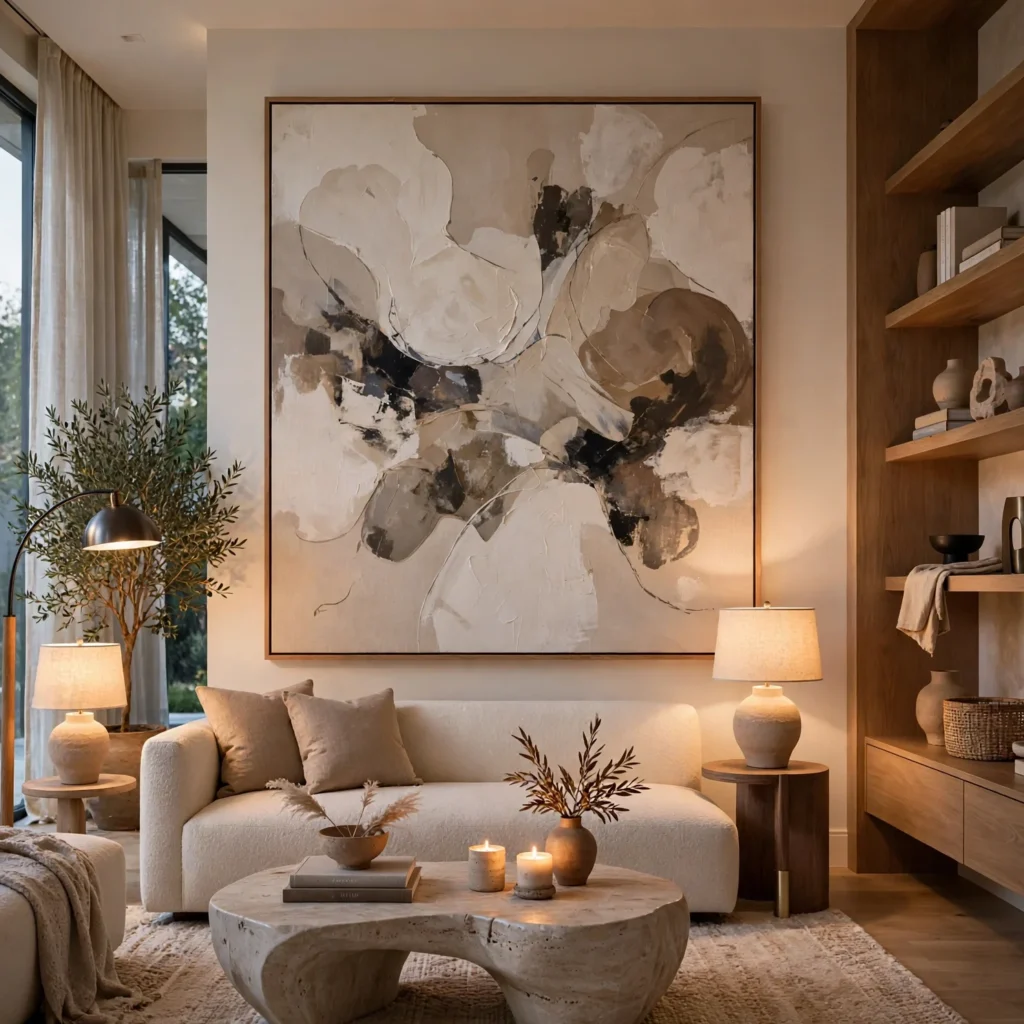
Overhead light alone tends to flatten a room, so add a floor lamp near the reading chair and a smaller table lamp on the console or side table. Stick to two finishes maximum — brushed brass and matte black is a common, safe pairing — and use warm-toned bulbs around 2700K. This layering approach lets you dim the overhead light entirely in the evening, which does more to create atmosphere than any single piece of furniture.
10. Linen Curtain Panels
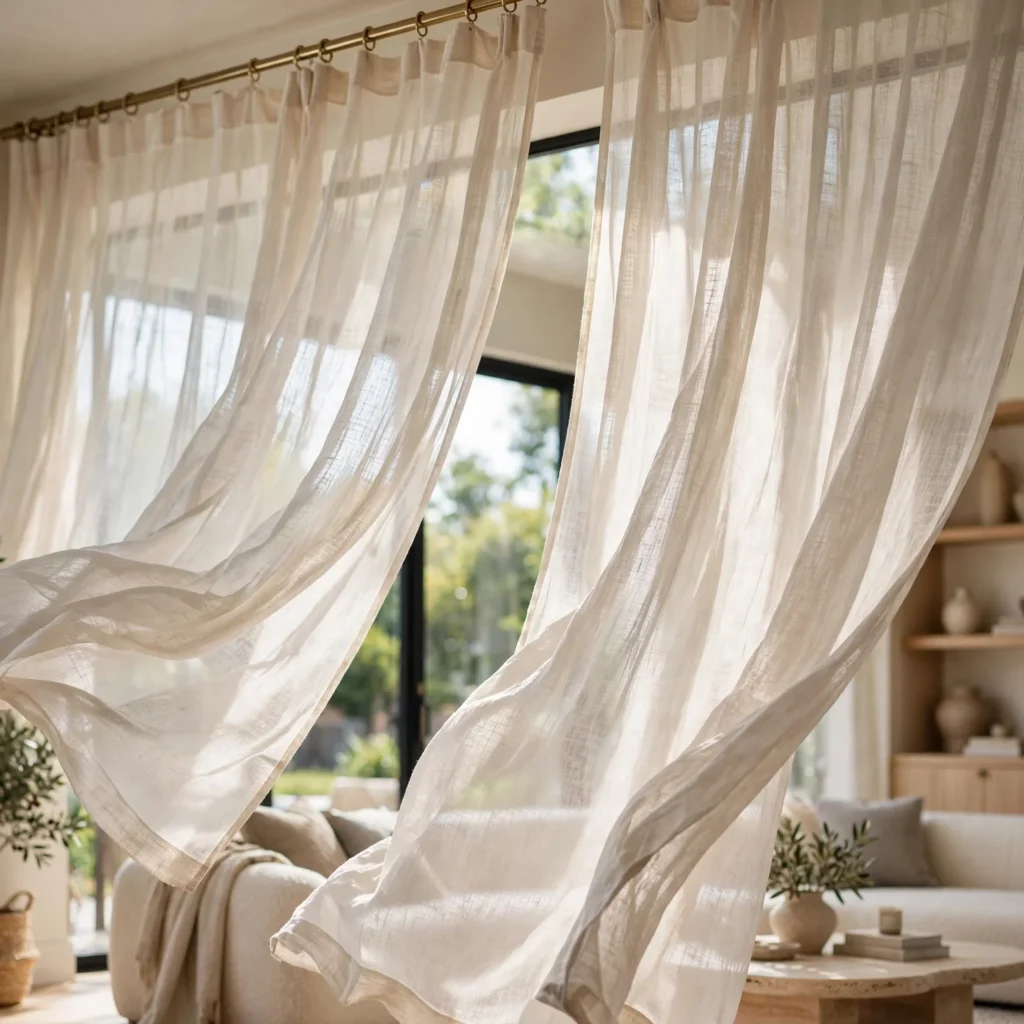
Floor-to-ceiling linen curtains in an off-white or oatmeal tone soften hard architectural lines and diffuse natural light without blocking it entirely. Mount the rod as close to the ceiling as possible, even if the window itself is shorter, since this trick alone makes the room feel taller. Avoid patterned or heavy drapery fabrics, which pull attention away from the room’s overall material restraint.
11. Single Statement Plant
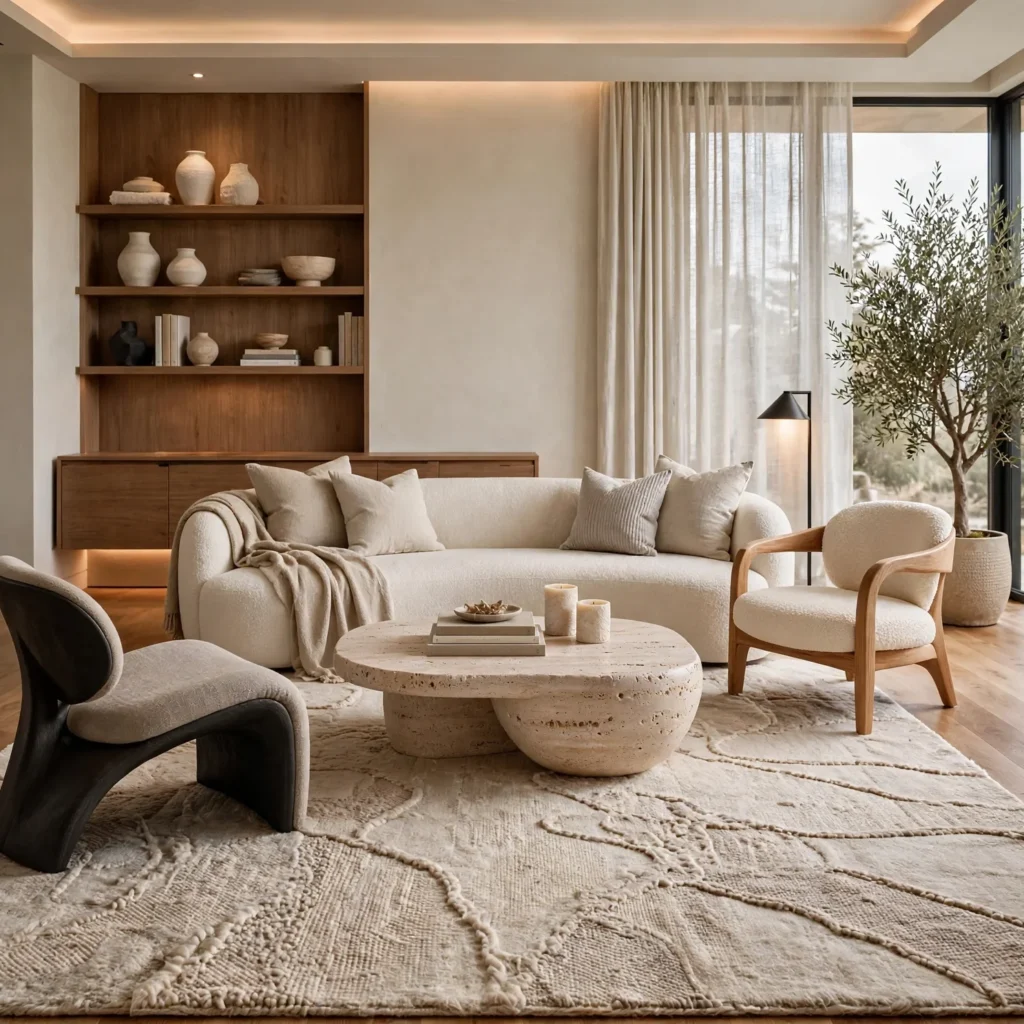
One large plant a fiddle leaf fig, olive tree, or snake plant in a simple terracotta or concrete planter brings life into the room without introducing visual clutter. Skip the windowsill collection of small pots in favor of one well-placed specimen near a window or in an empty corner. This single green element does more to soften a minimalist living room than five smaller plants scattered across surfaces.
12. Hidden Cable Management
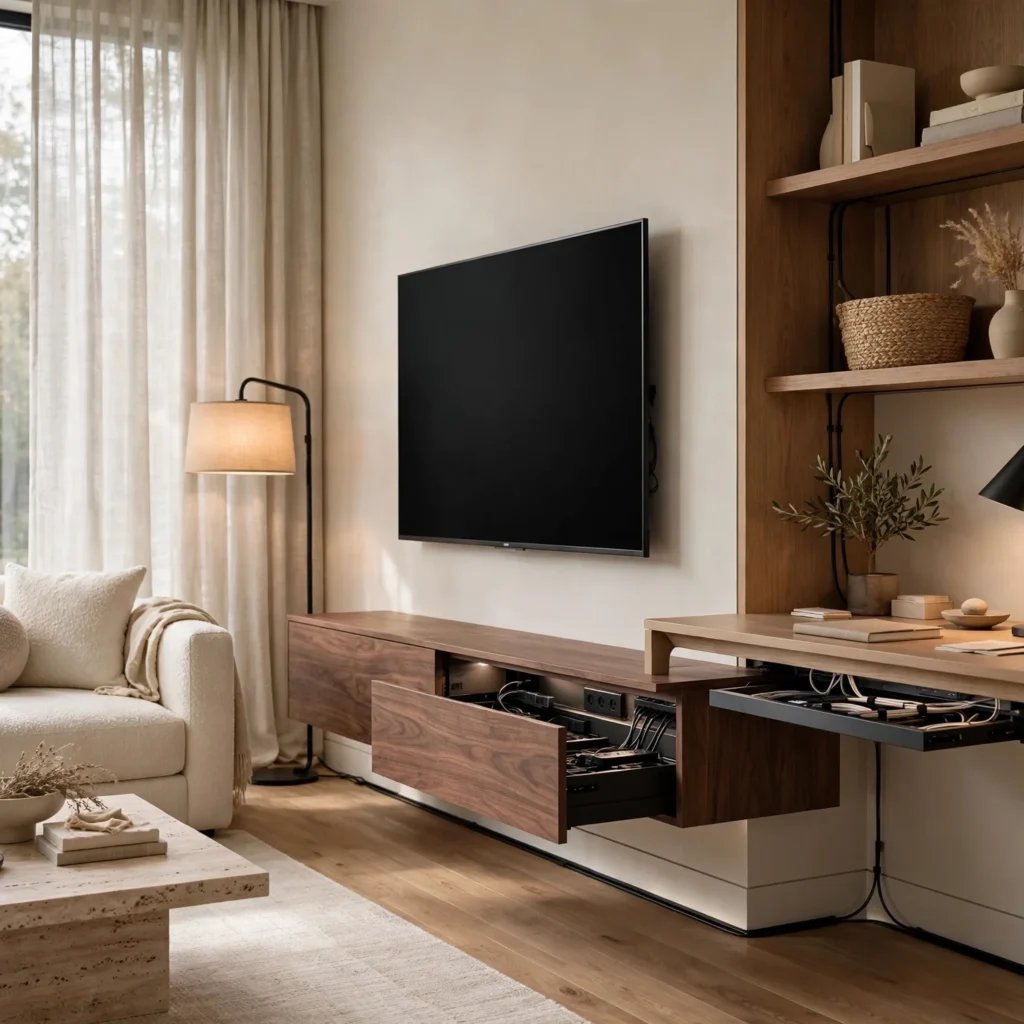
Route all visible cords TV, lamps, speakers through in-wall channels, cord covers painted to match the wall, or a cable box tucked behind the console. This is one of the most overlooked ideas on this list, yet stray cables are often the single biggest giveaway that a room isn’t as intentional as it looks. Even a modest fifteen-dollar cord channel kit can noticeably clean up the visual line of an otherwise well-designed minimalist living room.
Shop the Look
Consider a low-profile boucle sofa from a brand like Article or Sabai, a solid white oak coffee table from Crate & Barrel’s Milled collection, a wool flatweave rug from Rugs USA in an undyed tone, a rice-paper pendant light similar to Noguchi’s Akari series, and a set of linen curtain panels from West Elm in oatmeal or stone.
Common Mistake to Avoid
The most common mistake is confusing “minimalist” with “empty.” Rooms that skip rugs, plants, and layered lighting entirely end up feeling cold and unfinished rather than calm. Minimalism works because of careful material choices and restraint, not because objects are missing altogether. A room with a bare floor, one overhead light, and stark white walls will almost always read as unfinished construction rather than an intentional design decision, no matter how expensive the furniture is.
FAQs
What colors work best in a minimalist living room?
Neutral, warm-leaning tones work best, including oatmeal, sand, greige, and soft white, paired with one or two natural material tones like oak or walnut. Avoid stark, cool white paired with black-and-white contrast schemes, which can read as clinical rather than calm. The goal is a tonal palette where wall color, furniture, and textiles sit close together on the color wheel, creating a cohesive backdrop instead of competing focal points.
How do you make a minimalist living room feel warm?
Warmth comes from material choice and lighting layers rather than color alone. Incorporate natural wood tones, a wool or jute rug, linen textiles, and warm 2700K bulbs across at least two lighting sources. Avoid cool-white overhead lighting as the only light source, since this is the single biggest reason minimalist rooms feel sterile. Texture, particularly boucle, linen, and raw wood grain, does most of the work that color would otherwise need to do.
Is minimalism the same as Scandinavian design?
No, though the two overlap significantly. Scandinavian design tends to favor lighter woods, brighter palettes, and functional furniture, while minimalism more broadly refers to restraint in object count and visual clutter regardless of style. Japandi, a specific fusion trend, blends Scandinavian brightness with Japanese material warmth and asymmetry, and it’s currently one of the more popular interpretations of a minimalist living room.
How many pieces of furniture should a minimalist living room have?
There’s no fixed number, but a common approach is one sofa, one coffee table, one or two accent chairs, a console or shelving unit, and a single lighting layer beyond the overhead fixture. The goal is each piece serving a clear function rather than hitting a specific count. Rooms that feel most successful typically have five to seven total furniture pieces, including storage, rather than fewer.
What’s the biggest budget item in a minimalist living room?
The sofa is typically the largest single expense, often 40 to 60 percent of total furniture budget, followed by the rug and coffee table. Because a minimalist room has fewer total pieces, it often makes sense to spend more on the sofa and rug since they carry more visual weight with less competing detail around them. Lighting and textiles tend to be the more affordable categories where budget can flex.
Conclusion
A minimalist living room isn’t about doing less it’s about choosing better. With the right sofa, lighting layers, and a handful of intentional materials, the result feels calm rather than empty. Save this guide to Pinterest for your next redesign, or check out our related post on Japandi bedroom ideas for the same warm, pared-back approach in another room.