15 Trending Brown Kitchen Cabinets Ideas for a Rich, Warm Kitchen
Brown kitchen cabinets have moved well past the honey-oak look of decades past, now showing up in shades from soft caramel to deep chocolate across some of the most well-designed kitchens being built today. This post walks through fifteen practical ways to bring brown kitchen cabinets into a renovation, covering specific stain tones, wood species, and pairing choices for countertops, walls, and hardware, so you can land on a version of brown that suits your kitchen instead of picking a shade that fights the rest of the room.
Trend & Background
As all-white kitchens have cooled off in popularity, brown has re-emerged as one of the top requested cabinet colors in kitchen renovations, driven partly by a broader interior design shift toward warm, grounded palettes over stark, cool ones. Designers point to brown’s versatility as the reason it has outlasted many other cabinet color trends, since it reads as traditional in a farmhouse kitchen and equally at home in a modern space when paired with matte black or brass fixtures. Buyers also tend to see brown cabinetry as a safer long-term investment than bold colors like navy or forest green.
Key Takeaways
- Brown kitchen cabinets range from soft caramel tones to near-black espresso, giving homeowners a wide spectrum to match any kitchen style.
- Pairing brown cabinetry with the right countertop and wall color prevents the kitchen from feeling dark or heavy.
- Undertone matters: warm browns pair differently with metals and stone than cool, gray-leaning browns.
- Contrast through hardware, lighting, and an island color keeps a brown kitchen from reading as one flat block of color.
1. Chocolate Brown Shaker Cabinets
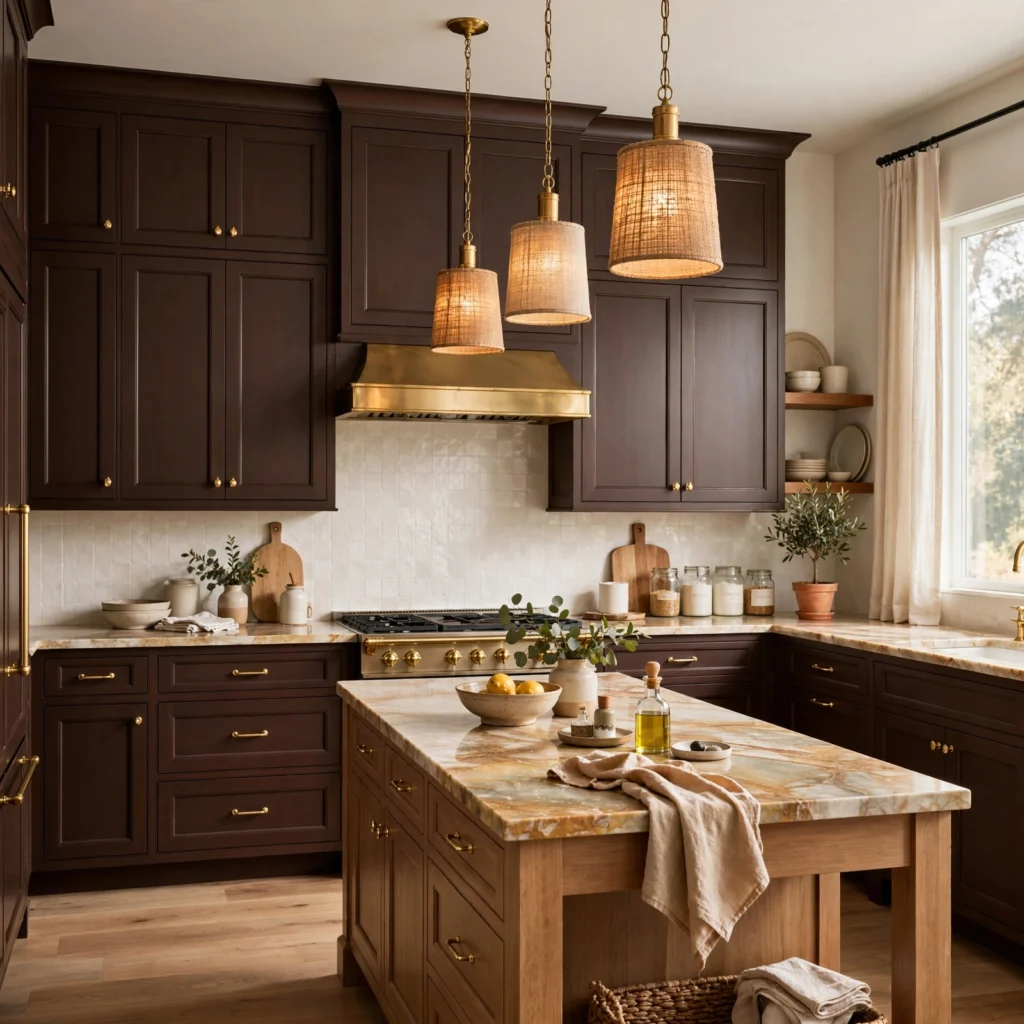
Chocolate brown shaker cabinets use a deep, near-espresso paint or stain over a classic five-piece shaker door, giving the kitchen a grounded, formal look without the starkness of black. The shaker profile’s simple recessed panel keeps the dark color from feeling overly heavy, since the flat lines don’t add extra shadow or ornamentation. This tone works particularly well in kitchens with ample natural light, where the darker cabinets absorb glare rather than making the room feel dim.
2. Caramel Oak Cabinetry
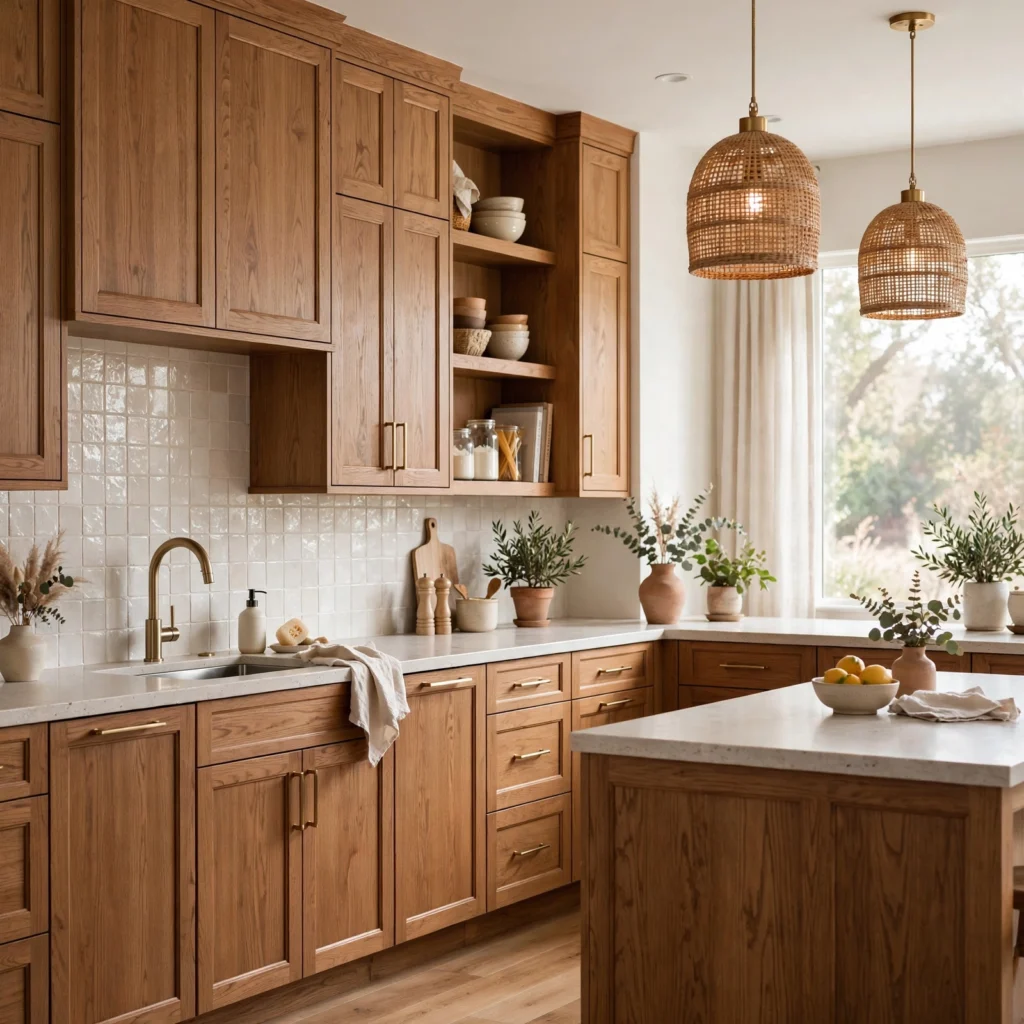
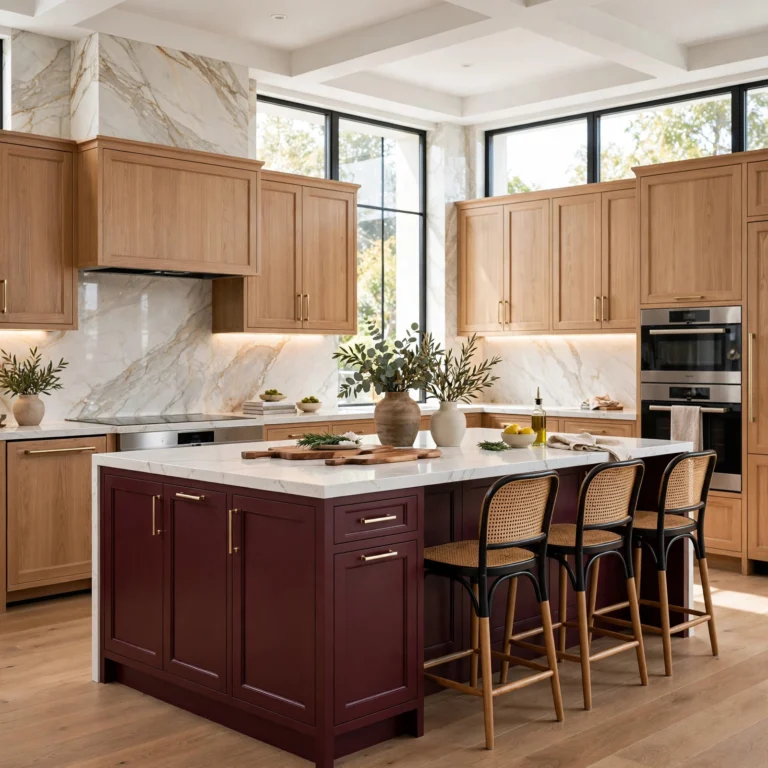
Caramel oak cabinetry keeps the wood’s natural grain visible under a warm, honey-toned stain that sits lighter on the color spectrum than traditional brown cabinets. This idea suits homeowners who want the warmth of brown without the visual weight of a darker finish, making it a strong fit for smaller kitchens or rooms with limited natural light. Caramel tones also pair easily with both brass and black hardware, which gives more flexibility during the design process than deeper browns typically allow.
3. Two-Tone Brown and White Combo
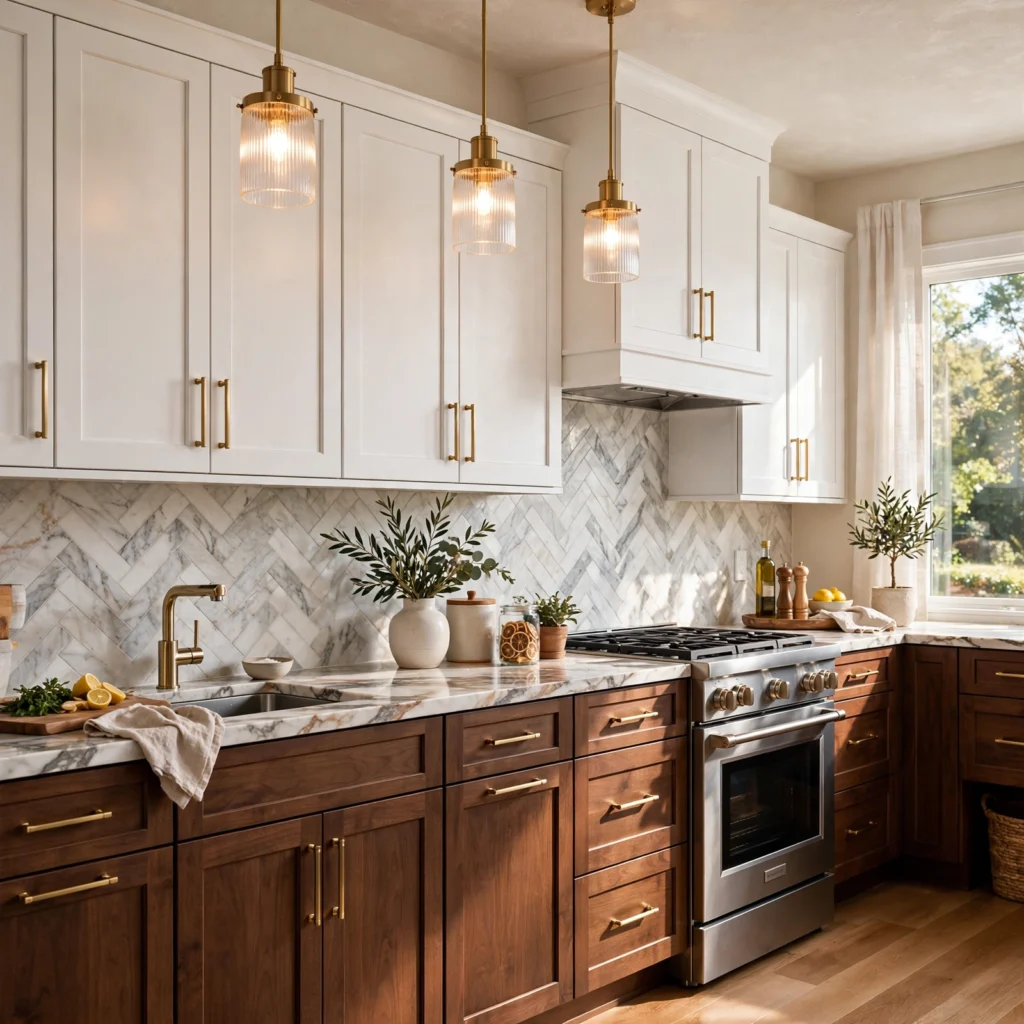
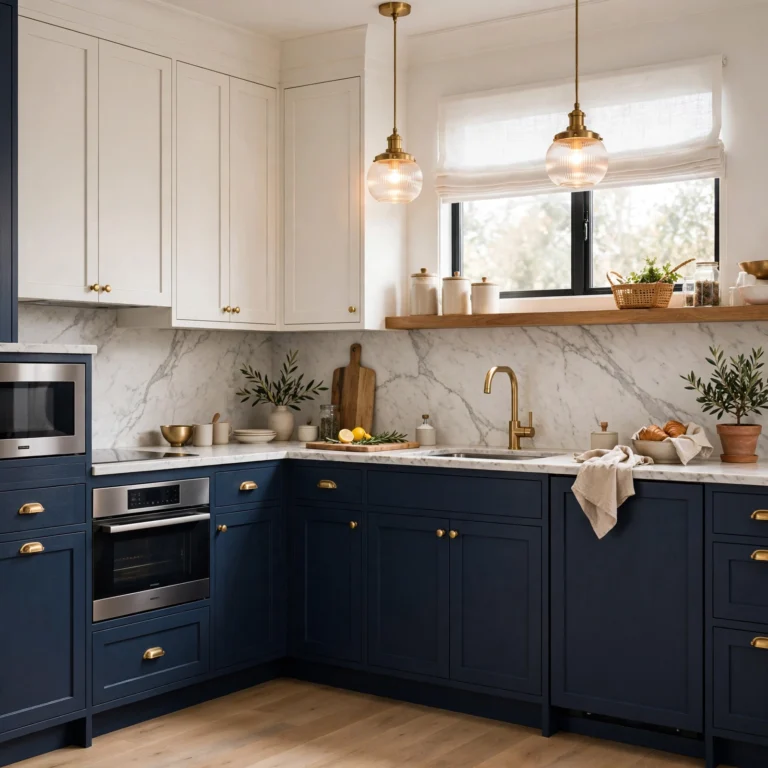
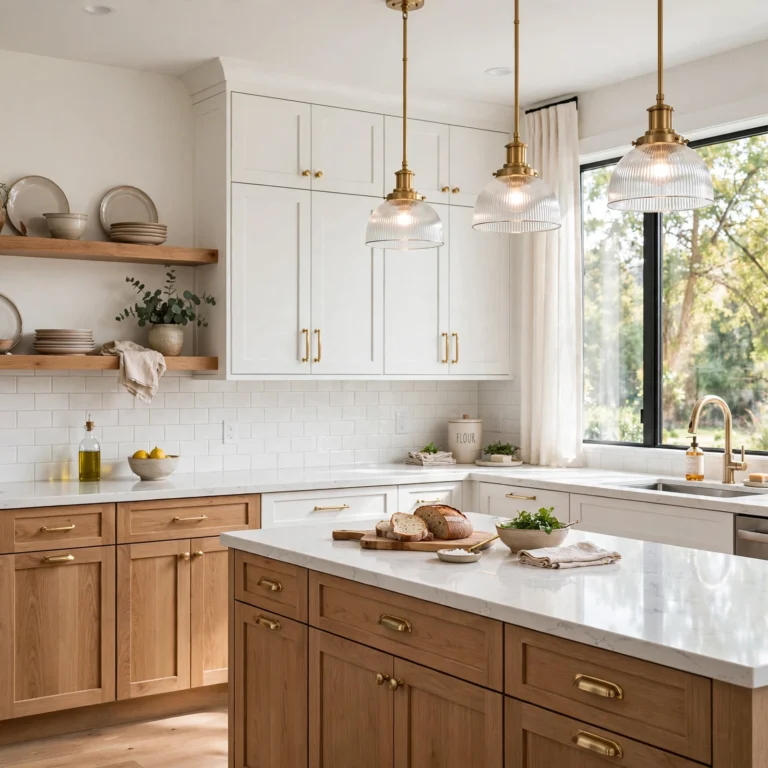
Two-tone brown and white combo cabinetry places brown on the lower cabinets or island and white on the upper cabinets, a layout that visually lightens the kitchen while still grounding it with a warm tone at eye level. This pairing works because the white uppers bounce light around the room, offsetting the natural light absorption of darker lower cabinets. It’s one of the most requested layouts for kitchens where homeowners want brown cabinetry but are wary of a fully dark room.
| Combination | Brown Placement | White Placement | Best For |
| Brown Lower / White Upper | Base cabinets | Wall cabinets | Small or dim kitchens |
| Brown Island / White Perimeter | Island only | All other cabinets | Open-concept layouts |
| Brown Upper / White Lower | Wall cabinets | Base cabinets | High-ceiling kitchens |
4. Walnut-Stained Flat Panel Cabinets
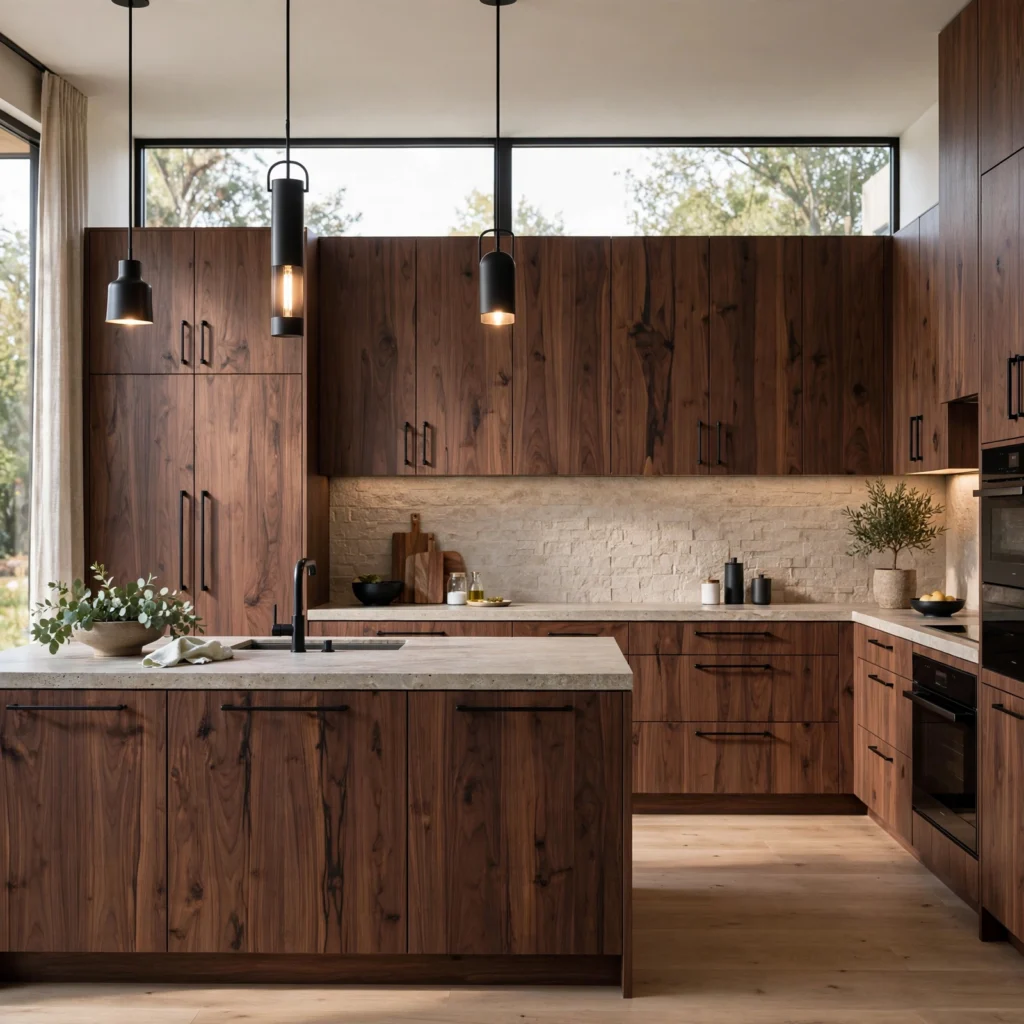
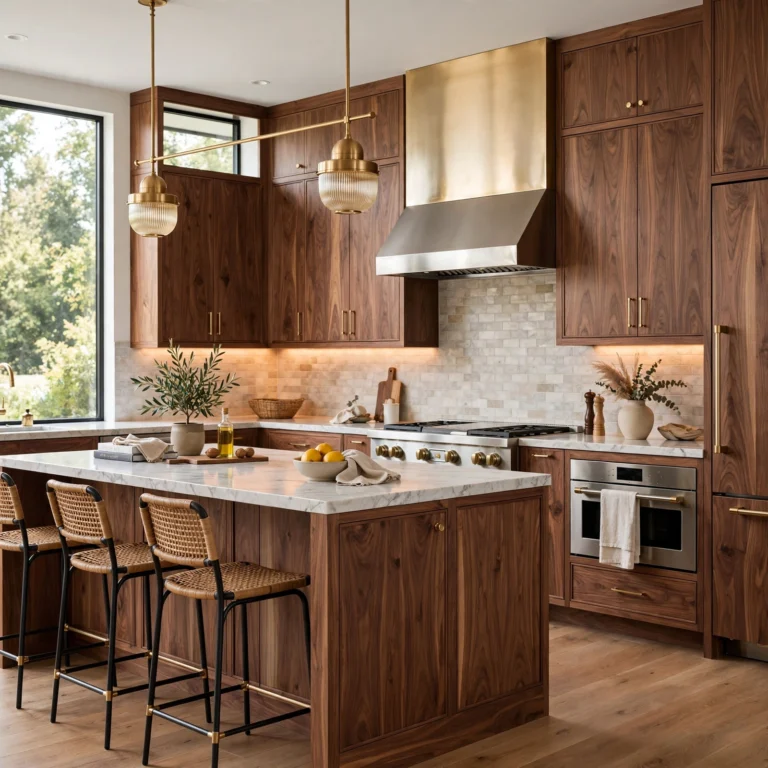
Walnut-stained flat panel cabinets use a rich, cool-leaning brown stain over a slab or minimal-profile door front, producing a cleaner, more contemporary look than traditional raised-panel brown cabinetry. The flat surface lets the walnut’s tight grain pattern read clearly without competing molding lines, which suits kitchens aiming for a modern, furniture-grade appearance. This finish typically pairs with matte black or unlacquered brass hardware rather than the polished chrome often seen in more traditional brown kitchens.
To see more options for white cabinets kitchen CLICK HERE
5. Mocha Brown Cabinets with Gold Hardware
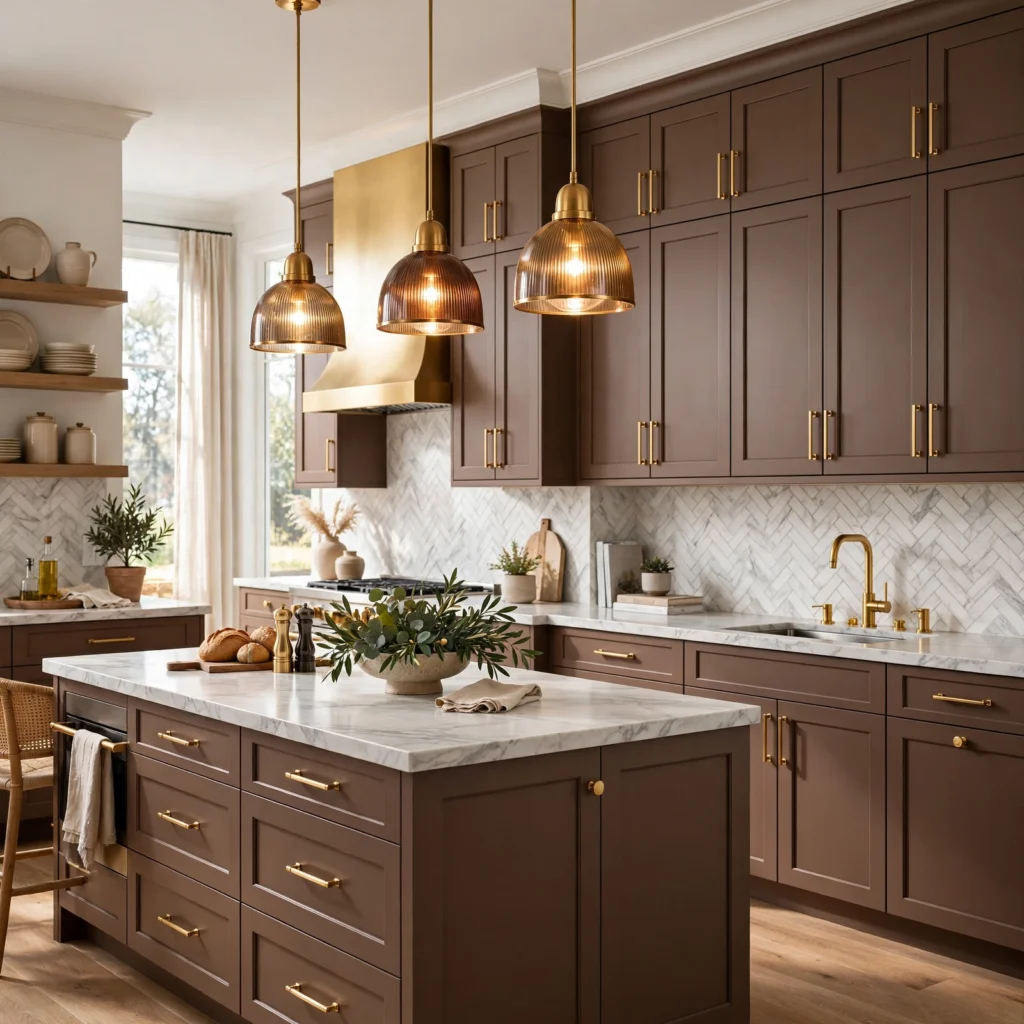
Mocha brown cabinets with gold hardware pair a mid-tone, slightly gray-leaning brown paint or stain with warm gold or brushed brass pulls and knobs, a combination that reads as upscale without feeling overly formal. The gray undertone in mocha keeps the brown from skewing too orange, which lets the gold hardware stand out rather than blending into a warmer base tone. This pairing works especially well against white or light gray quartz countertops, which keep the overall palette balanced.
6. Espresso Cabinets with Marble Counters
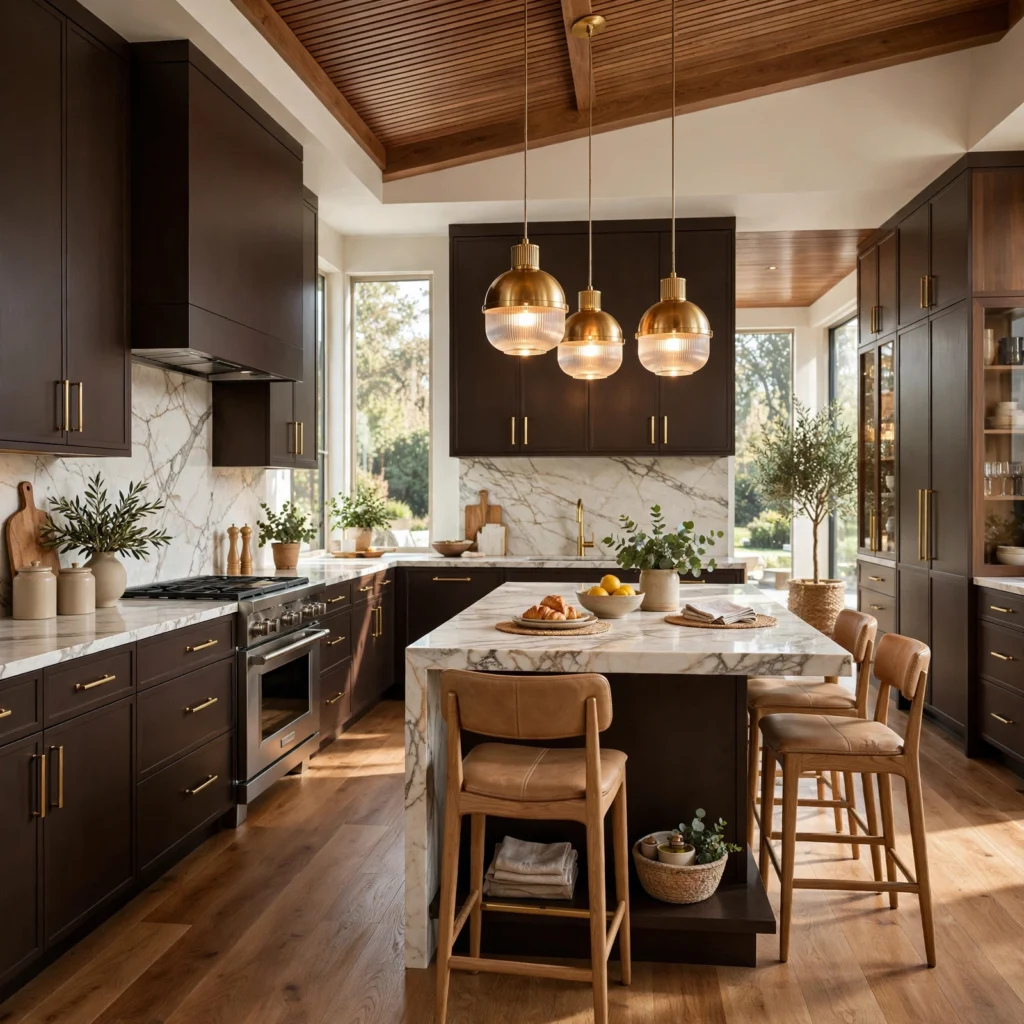
Espresso cabinets with marble counters set a very dark, almost black-brown cabinet finish against the light veining of white or gray marble, creating one of the highest-contrast pairings available in brown cabinetry. This idea suits kitchens that want a dramatic, high-end look, since the marble’s natural pattern keeps the dark cabinets from making the room feel closed in. Honed marble, rather than polished, is generally recommended here to soften the contrast slightly and reduce visible glare.
| Counter Finish | Visual Effect with Espresso Cabinets | Maintenance Level |
| Polished Marble | High contrast, glossy | Higher |
| Honed Marble | Softer contrast, matte | Moderate |
| Leathered Granite | Textured, subtle contrast | Lower |
7. Cinnamon Cherry Cabinetry
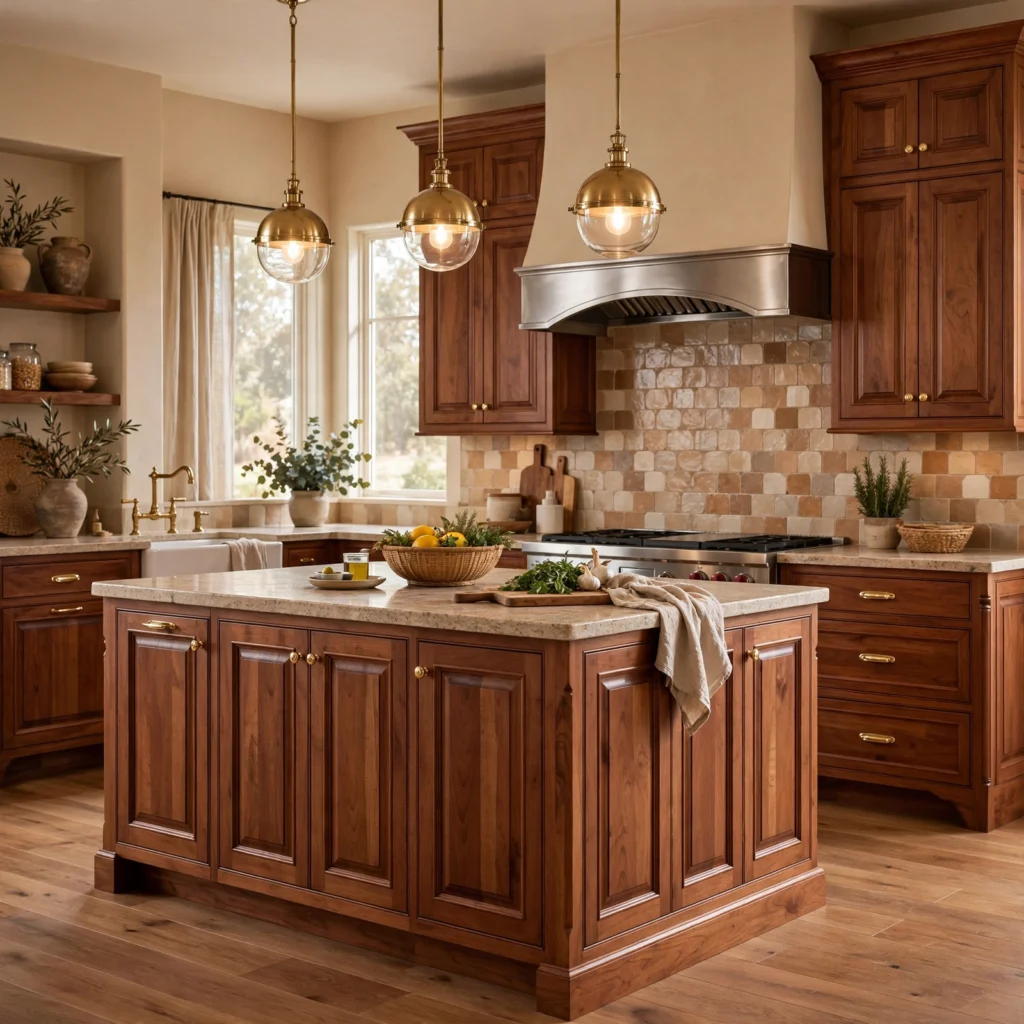
Cinnamon cherry cabinetry showcases a reddish-brown stain over cherry wood, a tone that deepens naturally over time as the wood is exposed to light. This idea appeals to homeowners who like the idea of their kitchen developing character over years rather than staying visually static from installation. Cinnamon cherry tends to look most at home in traditional or transitional kitchens, particularly when paired with cream-colored walls and oil-rubbed bronze hardware instead of cooler-toned metals.
8. Matte Black Hardware on Brown Doors
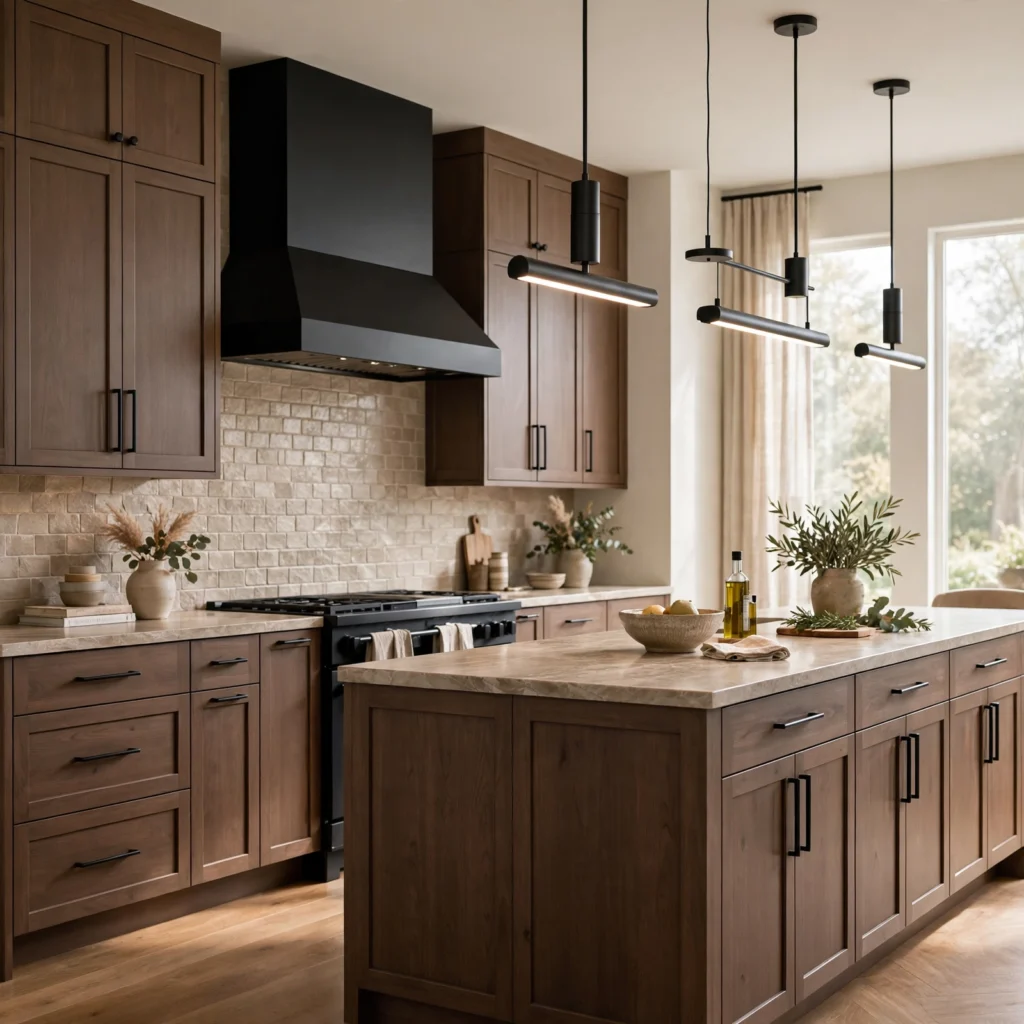
Matte black hardware on brown doors pairs black bar pulls or knobs against a mid-to-dark brown cabinet finish, giving the kitchen a modern edge without introducing a second cabinet color. Because black reads as neutral against nearly every shade of brown, this is one of the lowest-risk ways to update a brown kitchen without a full repaint. Homeowners updating an older honey-oak kitchen often start with this hardware swap alone before deciding whether to also change the cabinet finish.
9. Coffee Brown Island with Neutral Perimeter
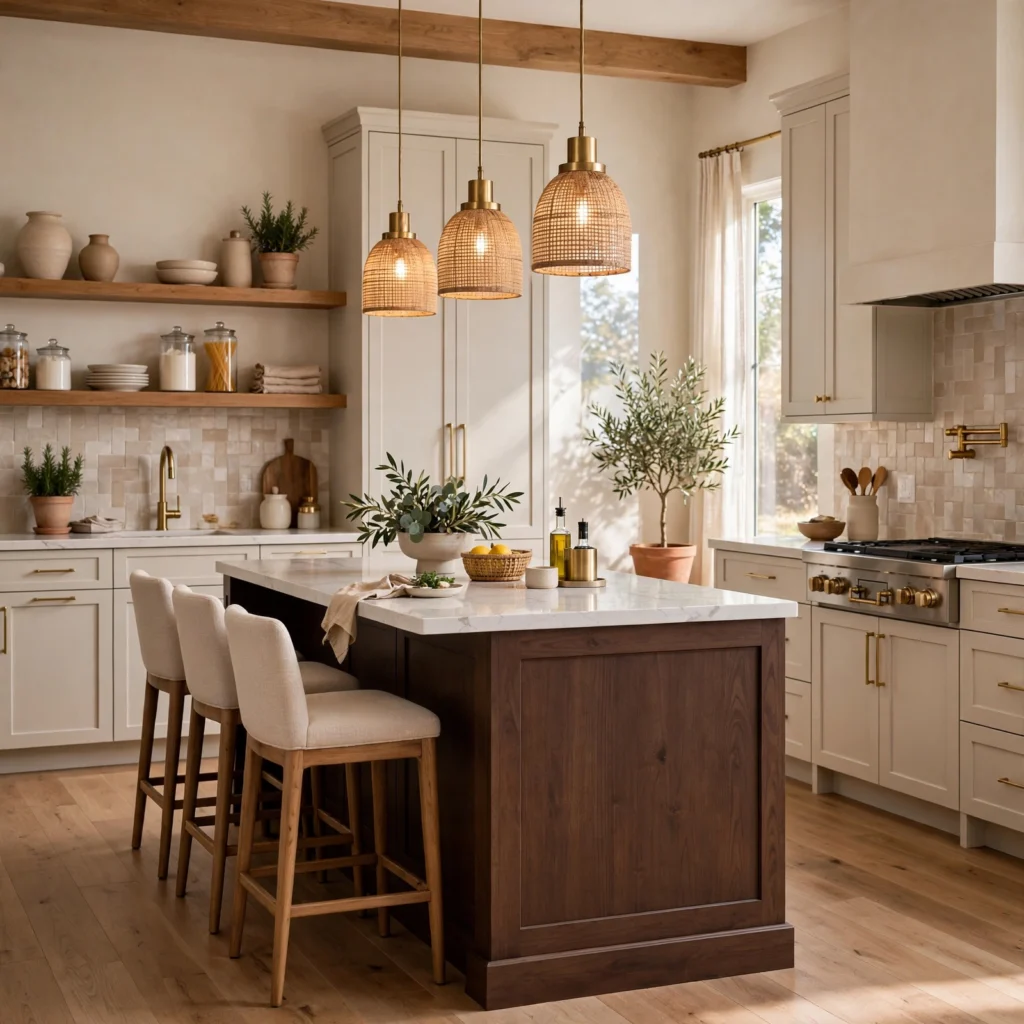
A coffee brown island with neutral perimeter keeps the surrounding cabinetry in white, cream, or light gray while concentrating a deep brown finish on the island alone, making it the visual anchor of the room. This idea gives homeowners the drama of a dark brown finish without committing an entire kitchen to it, which also keeps the room feeling brighter overall. It’s a common choice in open-concept homes where the island is visible from the living or dining area and benefits from standing out.
10. Wood Grain Laminate Brown Cabinets
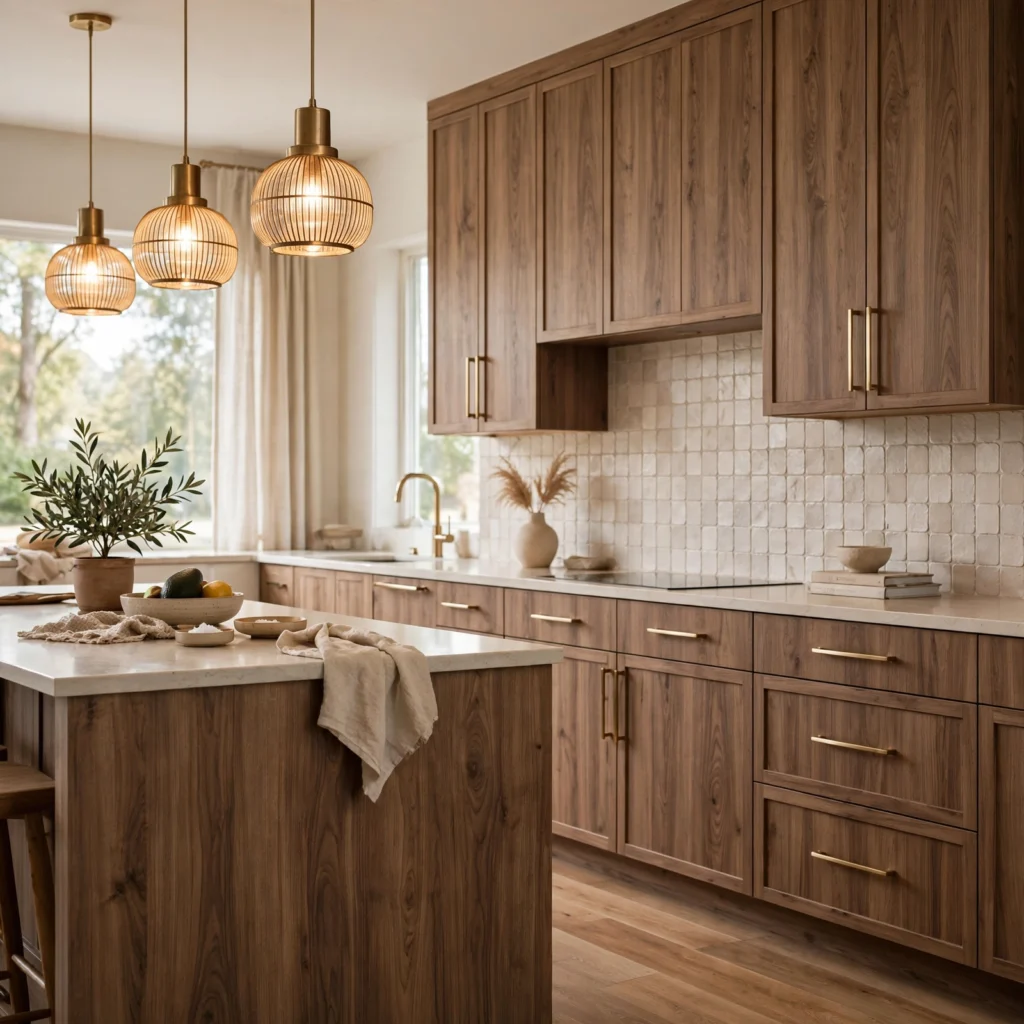
Wood grain laminate brown cabinets use a printed, textured laminate surface over an engineered core to replicate the look of stained wood at a lower cost and with better moisture resistance than solid wood. This idea suits budget-conscious renovations, rental properties, or high-moisture kitchens where solid wood isn’t practical. Higher-end laminate options now include embossed grain textures convincing enough that the finish is difficult to distinguish from real wood in finished photos.
11. Warm Taupe-Brown Cabinets
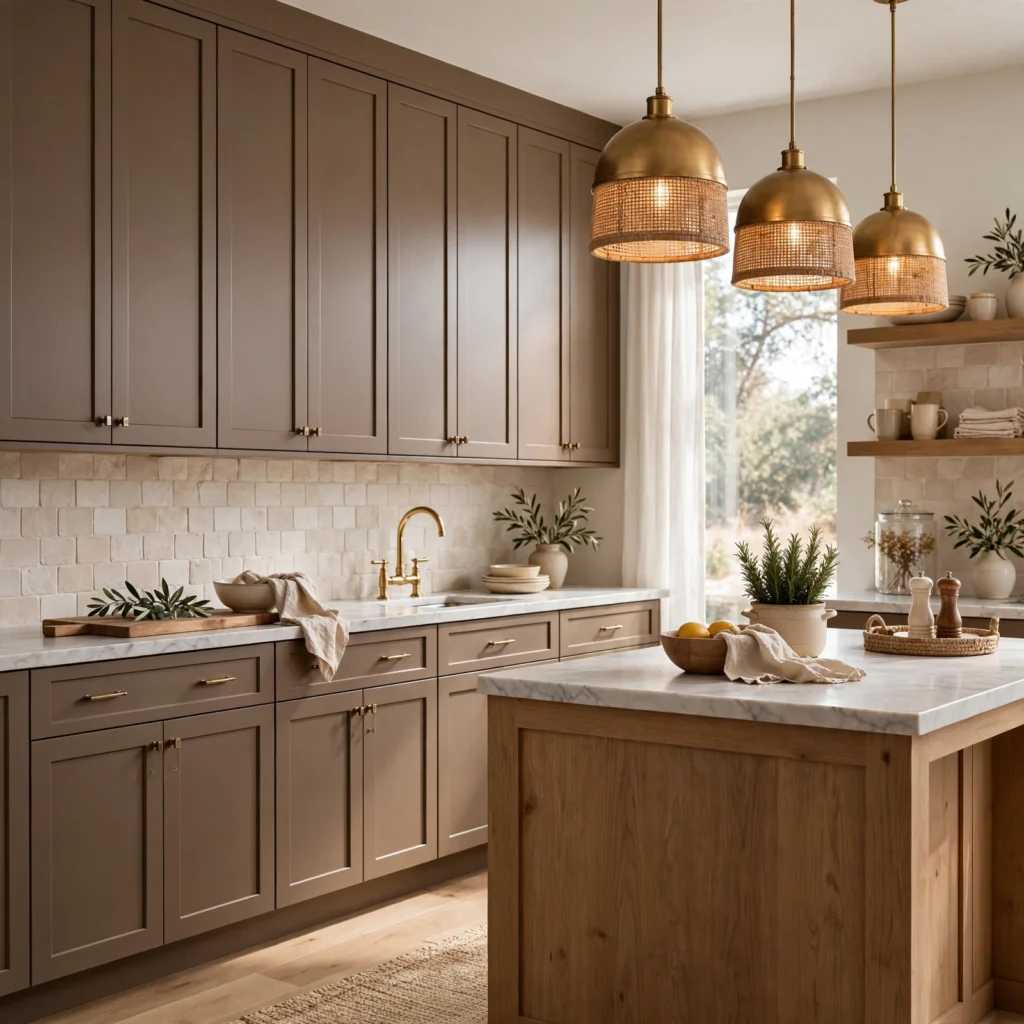
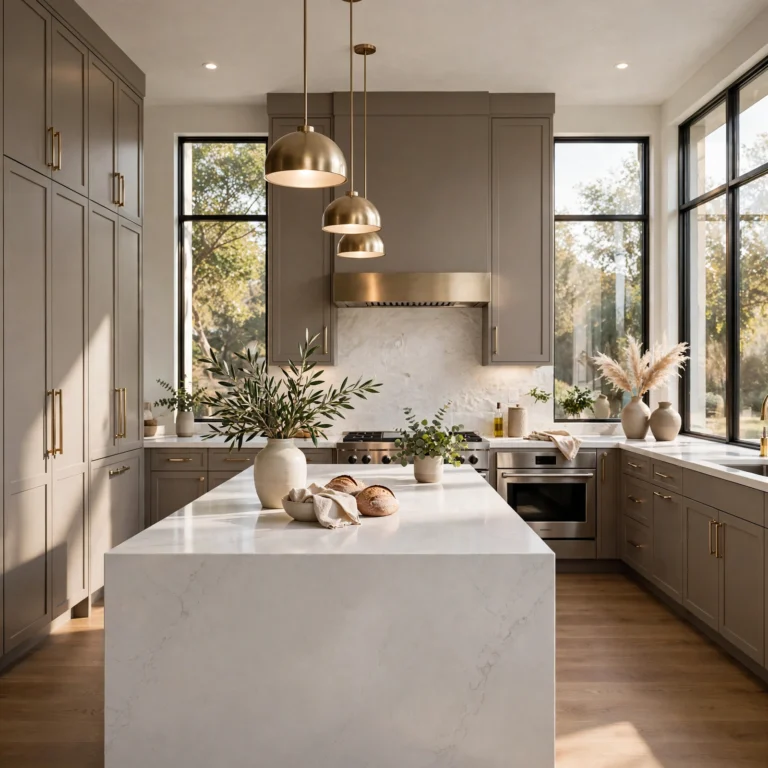
Warm taupe-brown cabinets sit at the lighter, more muted end of the brown spectrum, blending brown and gray in a way that reads as sophisticated rather than heavy. This idea works well in kitchens that want the warmth of brown without a strong wood-grain or rustic association, since taupe-brown paint finishes typically read as more contemporary than stained wood tones. It pairs particularly well with brushed nickel hardware and light oak flooring for a soft, cohesive palette.
12. Rustic Reclaimed Brown Wood Cabinets
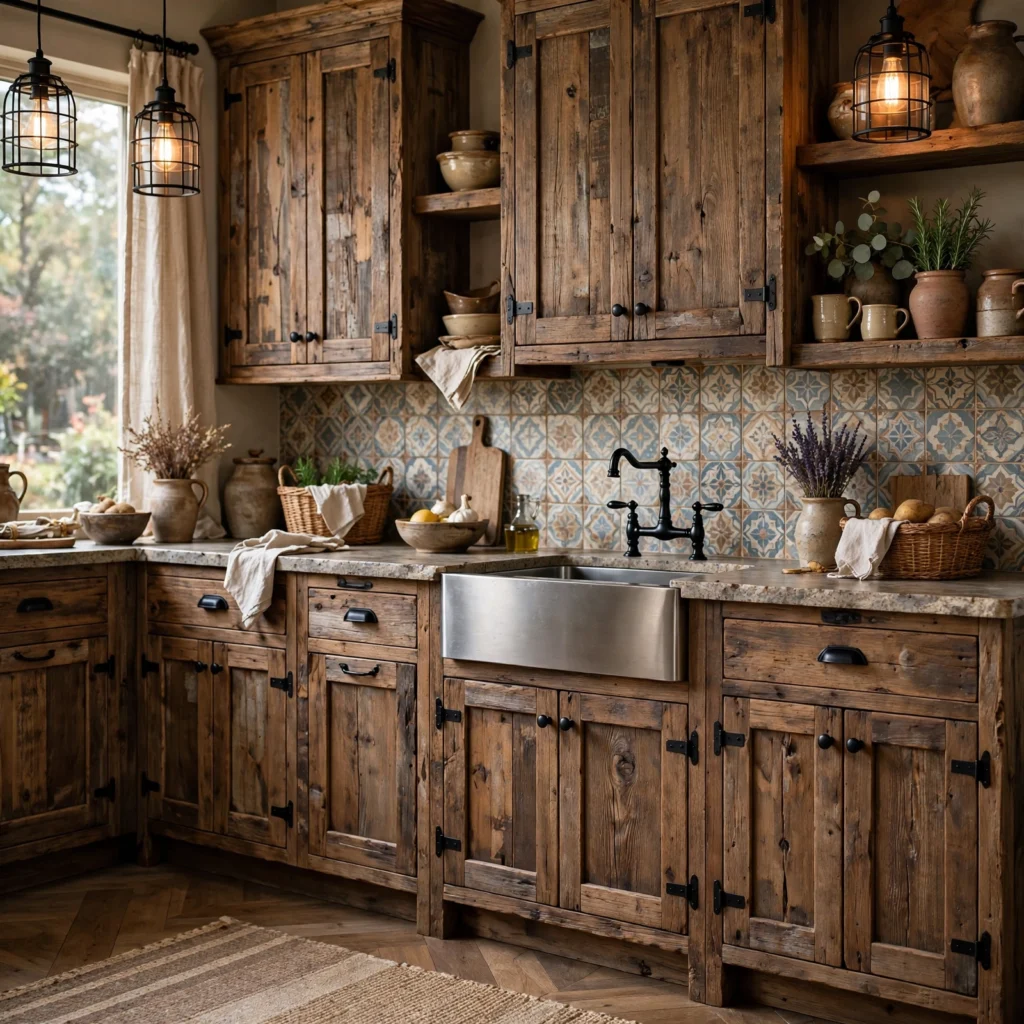
Rustic reclaimed brown wood cabinets use salvaged timber with visible saw marks, nail holes, and natural weathering, keeping the wood’s inconsistent brown tones rather than staining them uniform. This idea suits farmhouse or cabin-style kitchens where texture and imperfection are part of the intended look rather than something to be finished away. Because reclaimed wood color varies significantly board to board, it’s best ordered as a matched set to avoid an uneven patchwork appearance across the full cabinet run.
13. Deep Brown Cabinets with Brass Fixtures
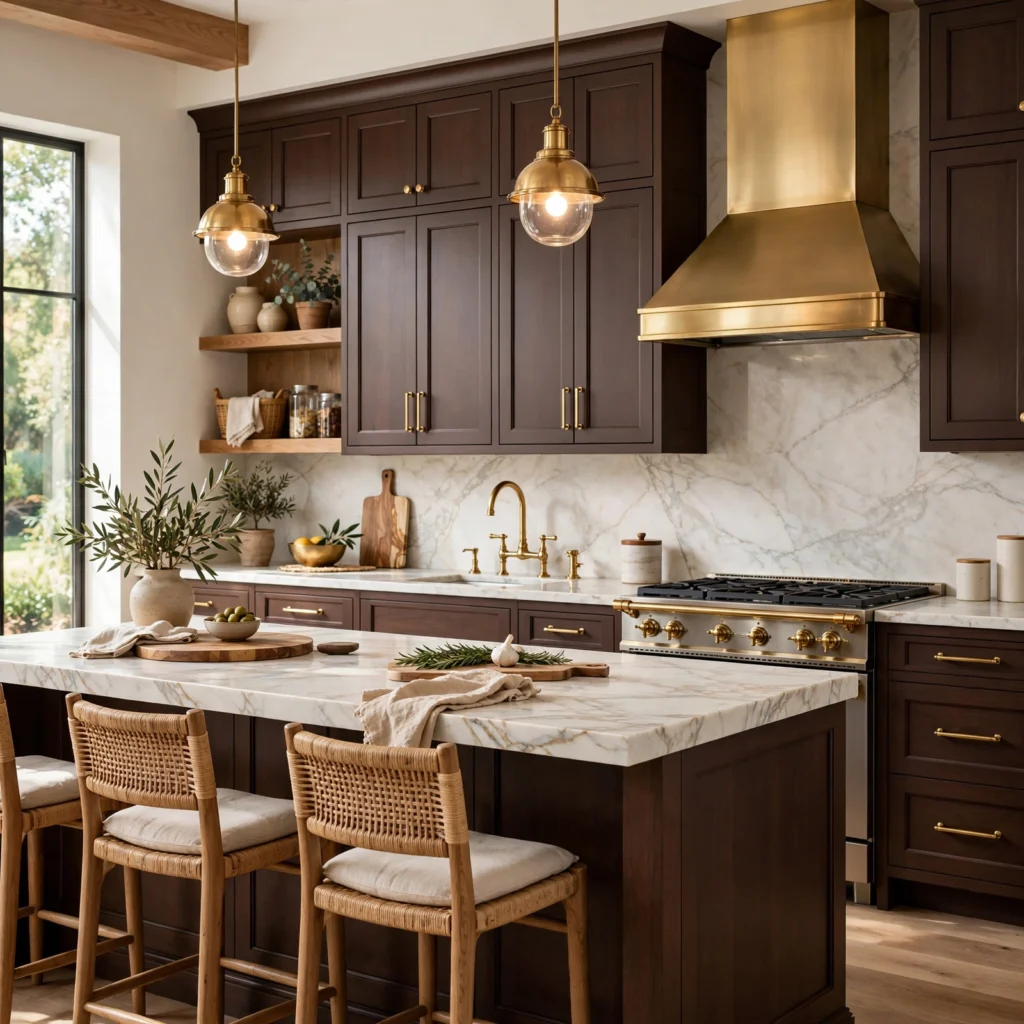
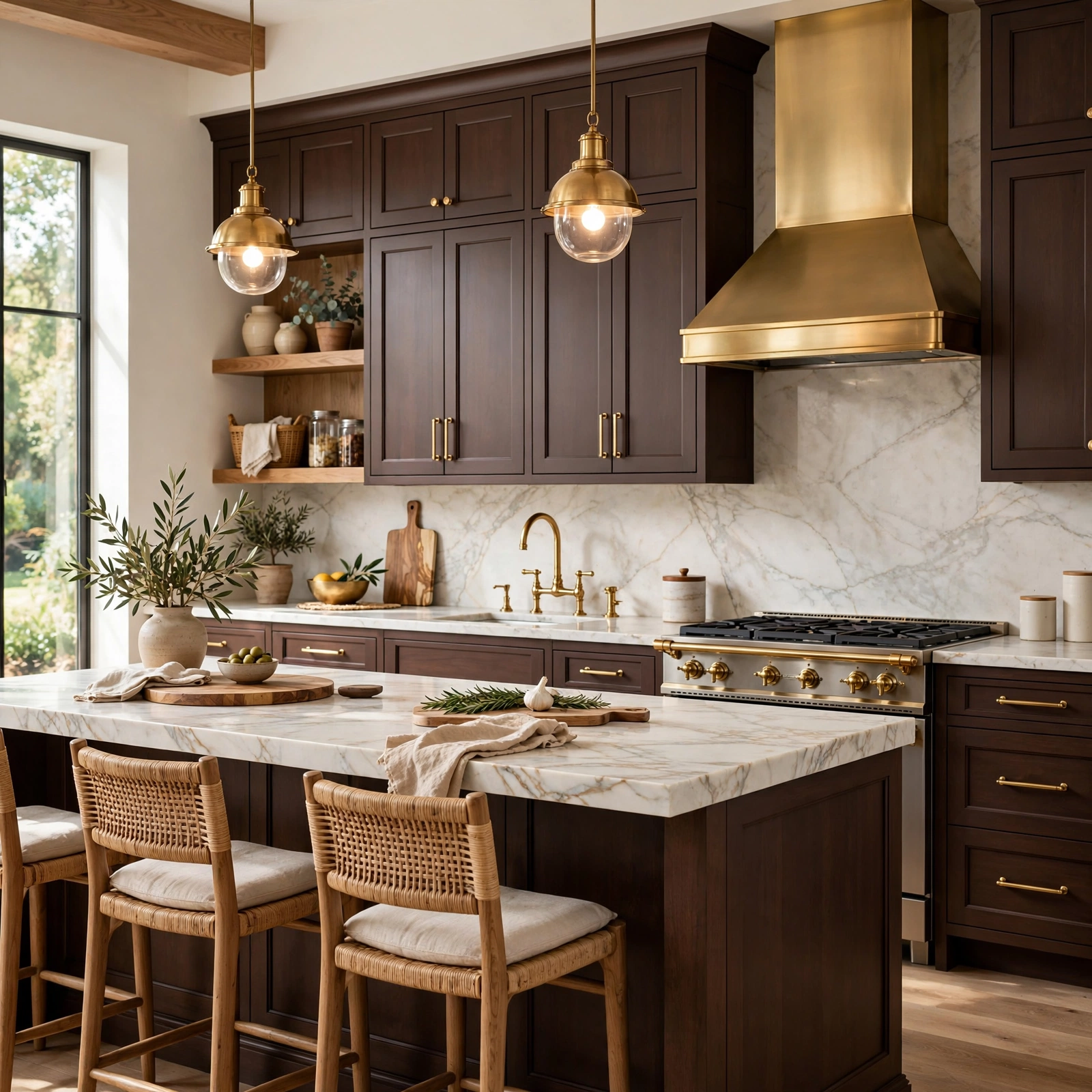
Deep brown cabinets with brass fixtures pair a dark, saturated brown finish with warm brass faucets, cabinet pulls, and pendant lighting, a combination that leans traditional and formal. The warmth of brass echoes the warm undertones in most deep brown stains, creating a cohesive palette rather than a contrasting one. This pairing tends to suit kitchens with classic architectural details, like crown molding or a farmhouse sink, more than sleek, minimalist layouts.
14. Open Wood Shelving with Brown Base Cabinets
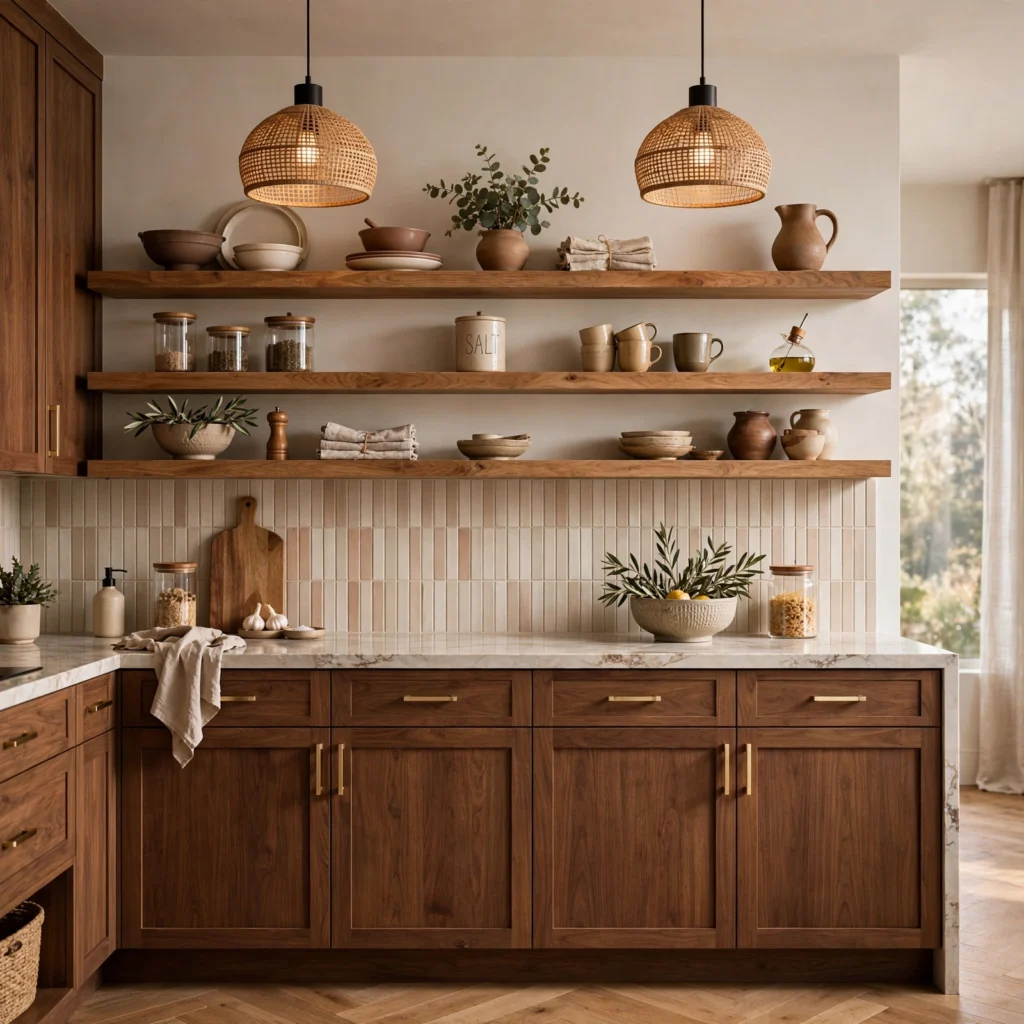
Open wood shelving with brown base cabinets pairs floating shelves in a lighter, complementary wood tone above the counter with darker brown cabinets below, breaking up the visual weight of an all-brown kitchen. This idea also gives homeowners a place to display dishware or glassware without the added cost of glass cabinet fronts. Matching the shelf wood’s undertone to the base cabinet finish, rather than choosing a clashing tone, keeps the look intentional rather than mismatched.
15. Brown Cabinets with Black Steel Windows
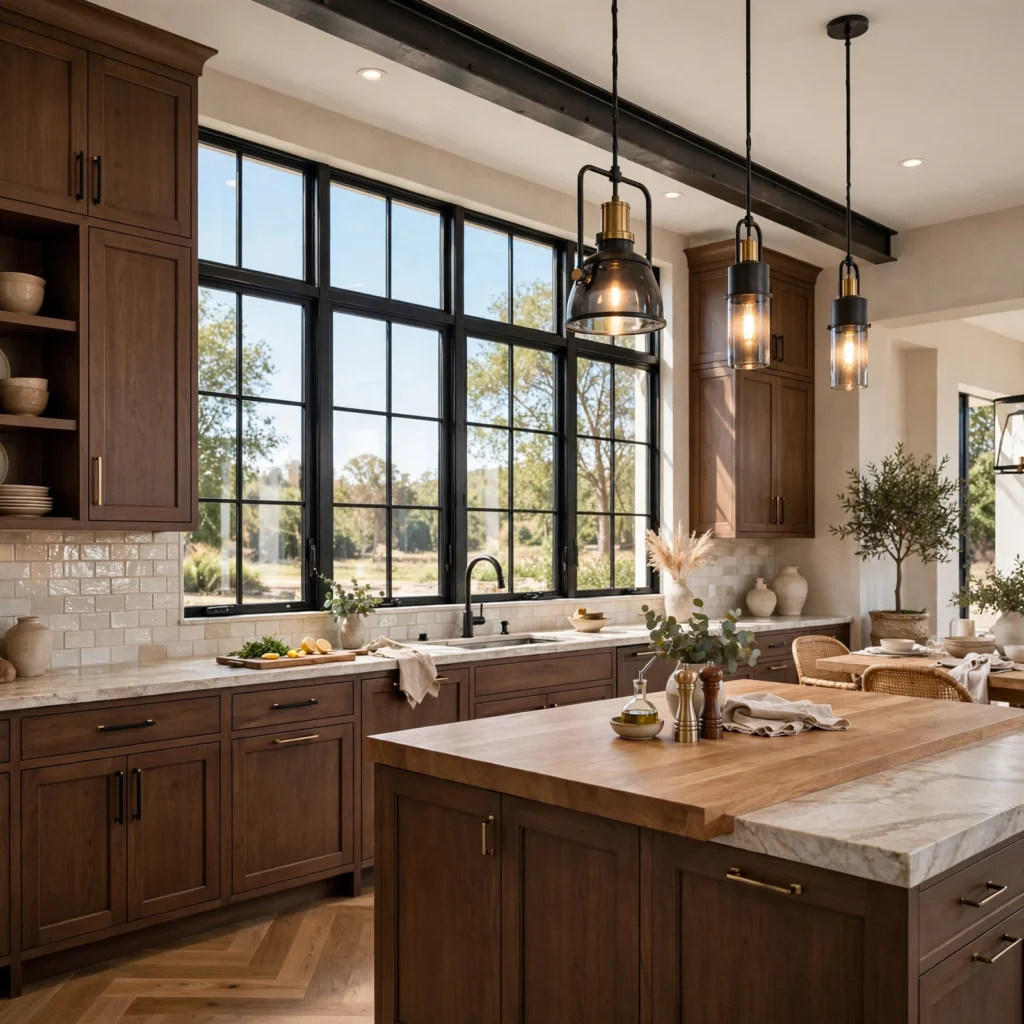
Brown cabinets with black steel windows set a warm brown cabinet finish against the thin black metal grid of steel-frame windows or interior glass partitions, a pairing borrowed from industrial loft conversions. The cool, linear steel frames offset the organic warmth of the brown cabinetry, keeping the kitchen from feeling overly heavy or rustic. This idea works best in kitchens that already have a garden window, sliding door, or interior pass-through built into the layout.
Shop the Look
For a kitchen built around brown kitchen cabinets, a soft-close hinge system in a matching tone keeps hardware from disrupting the finish. Brushed brass or oil-rubbed bronze cabinet pulls tend to complement most brown tones better than polished chrome. A honed quartzite or leathered granite counter softens contrast against darker brown cabinetry without competing for attention. For lighting, warm-dimmable pendant fixtures over an island help brown cabinets read accurately instead of appearing muddy under cool LED bulbs. A jute or wool runner in a neutral tone rounds out the palette without introducing a competing pattern.
Common Mistake to Avoid
The most common mistake homeowners make with brown kitchen cabinets is choosing a stain or paint sample without testing it against the kitchen’s actual countertop and flooring. A brown that looks warm and rich on a small chip can read muddy or overly orange next to certain wood floors or clash with a cool-gray countertop once installed at full scale. Ordering a full-size door sample and viewing it beside the actual flooring and counter material prevents a mismatch that’s expensive to correct after installation.
People Also Ask
What color countertop goes best with brown kitchen cabinets?
White or light gray quartz tends to be the most reliable countertop pairing for brown kitchen cabinets, since the light surface offsets the visual weight of darker cabinetry and keeps the kitchen from feeling closed in. Warmer countertop options, like a cream-toned granite, work well with lighter caramel or cinnamon brown tones specifically. The key is matching undertones, pairing warm browns with warm-toned stone and cooler, gray-leaning browns with cooler stone choices.
Are brown kitchen cabinets out of style?
Brown kitchen cabinets are not out of style and have in fact become more popular in recent years as homeowners move away from all-white kitchens toward warmer, more grounded palettes. Modern brown cabinetry looks different from the honey-oak trend of past decades, favoring flatter door profiles, richer stain tones, and pairings with matte black or brass hardware instead of polished brass and heavy molding. This updated approach is what keeps brown cabinets feeling current rather than dated.
What wall color works with brown kitchen cabinets?
Soft white, warm greige, or a muted sage green all work well with brown kitchen cabinets, depending on how much contrast the room needs. Lighter wall colors help offset darker brown cabinetry and keep the kitchen from feeling heavy, while a deeper wall color can work in a kitchen that already has strong natural light. Testing a sample swatch next to the actual cabinet finish is the most reliable way to confirm the pairing before painting the full room.
Do brown kitchen cabinets make a kitchen look smaller?
Brown kitchen cabinets can make a small or poorly lit kitchen feel more enclosed if the shade is very dark and used throughout the entire room without contrast. This effect is largely avoidable by choosing a lighter brown tone, limiting the dark finish to lower cabinets or an island, or pairing brown cabinetry with a lighter countertop, backsplash, and wall color. Good lighting, including under-cabinet fixtures, also helps prevent brown cabinetry from making a room feel smaller than it is.
What hardware works best with brown kitchen cabinets?
Brushed brass and matte black are the two most commonly paired hardware finishes with brown kitchen cabinets, since both complement a wide range of brown undertones without clashing. Oil-rubbed bronze remains a strong choice for more traditional brown kitchens, particularly those with cherry or mahogany-toned cabinetry. The right choice ultimately depends on the other fixed metal finishes already present in the kitchen, such as the faucet and lighting fixtures.
Conclusion
Brown kitchen cabinets offer a range wide enough to suit nearly any kitchen style, from a soft caramel oak to a dramatic espresso finish, and the fifteen ideas above show how much that range can shift a room’s entire feel. Save this post to Pinterest while you’re gathering samples, and check out our related guide on countertop pairings for brown kitchen cabinets before finalizing your renovation plan.
Author Expertise Note
This guide was compiled from firsthand kitchen renovation consultations and supplier conversations with cabinet finishing shops specializing in stained wood and painted millwork. Tone and pairing recommendations reflect current material trends as of this writing, which can shift regionally depending on supplier stock.