12 Sophisticated Bathroom Design Styles to Inspire Your Renovation
Settling on a bathroom design style before selecting individual tile, fixtures, or paint colors keeps a renovation cohesive instead of assembled from a collection of unrelated trend pieces. Bathroom design styles each carry their own material language, from the honed stone and matte black hardware of modern design to the beadboard and brass of a classic farmhouse look. This guide covers twelve distinct bathroom styles, along with the defining materials and details that separate one from another, to help narrow down a direction before committing to a full renovation.
Trend & Background
Homeowners increasingly research a specific bathroom style before meeting with a designer or contractor, using reference images to communicate intent rather than starting the conversation from scratch. This has pushed tile and fixture manufacturers to organize their product lines around recognizable style categories, making it easier to source a cohesive look without piecing together mismatched elements. At the same time, more renovations now blend two adjacent styles, like modern and organic, rather than strictly adhering to one category, giving homeowners more flexibility than a single rigid style label once allowed.
Key Takeaways
- Bathroom design styles range from minimalist modern to ornate traditional, each defined by distinct material, color, and fixture choices.
- Coastal, farmhouse, and Japandi styles have grown in popularity as homeowners move away from the stark all-white bathrooms of the past decade.
- Mixing elements from two styles, like modern fixtures with traditional tile, has become common rather than committing to one look entirely.
- Choosing a style early in the planning process guides every material decision that follows, from tile to hardware finish.
1. Modern Minimalist
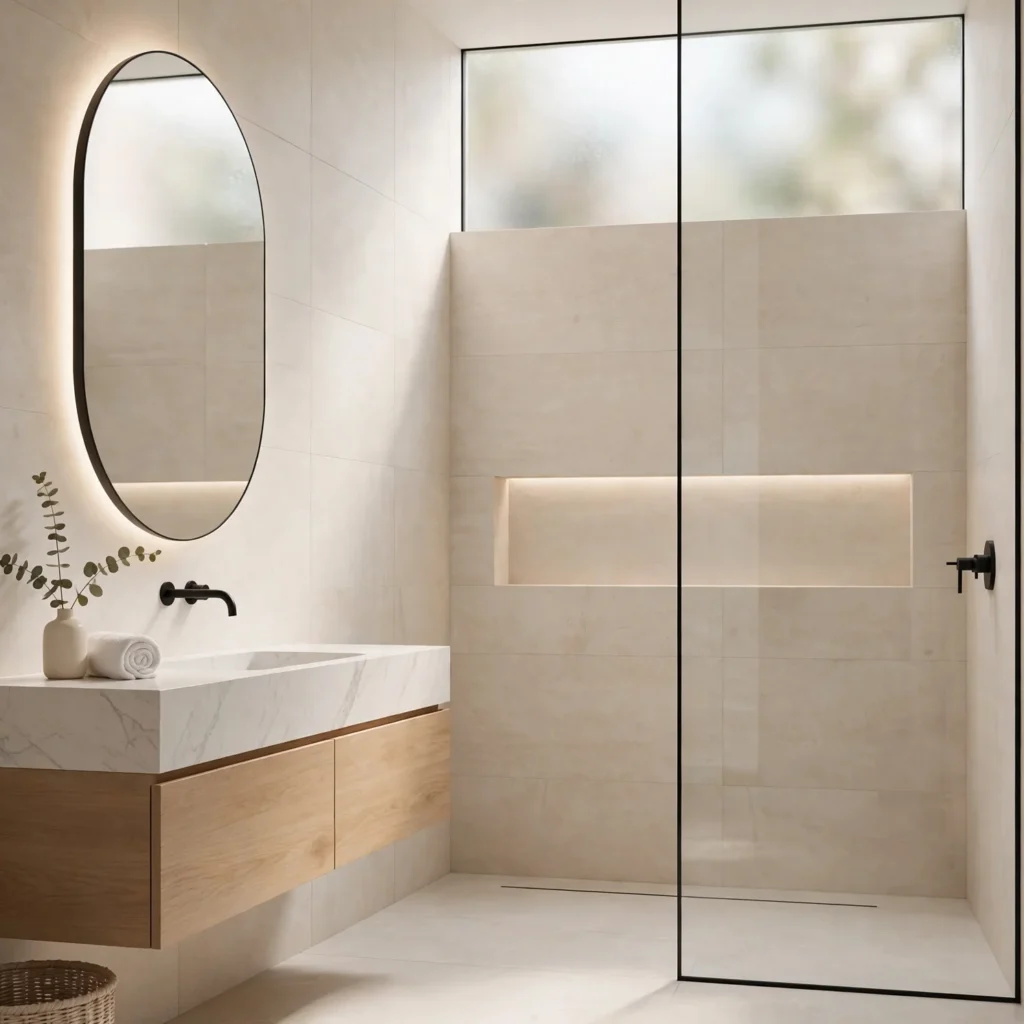
Modern minimalist bathrooms rely on flat-panel vanities, handleless hardware, and a restrained color palette, typically limited to two or three tones throughout the entire room. Large-format porcelain tile with minimal grout lines reinforces the style’s clean, uninterrupted surfaces, while fixtures stay simple and geometric rather than ornate. This style works best when paired with strong lighting design, since the lack of decorative detail puts more visual weight on how the space is illuminated.
2. Farmhouse
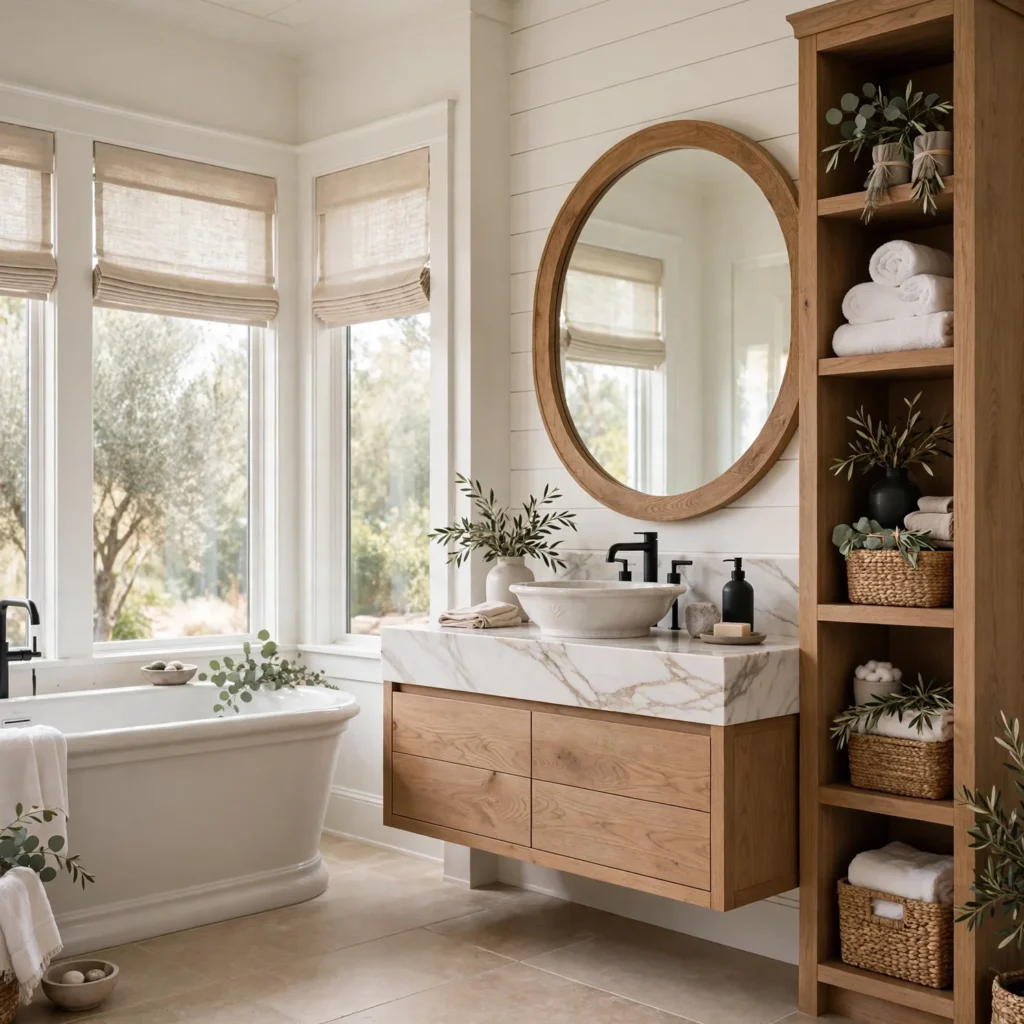
Farmhouse bathroom design pulls from traditional rural architecture, using details like a freestanding clawfoot tub, beadboard wainscoting, and shiplap walls to create a warm, collected look. Brass or oil-rubbed bronze fixtures reinforce the style’s vintage character, typically paired with white subway tile and a wood vanity in a distressed or natural finish. This style tends to favor a slightly more layered, lived-in feel compared to the restraint of a modern bathroom.
3. Coastal
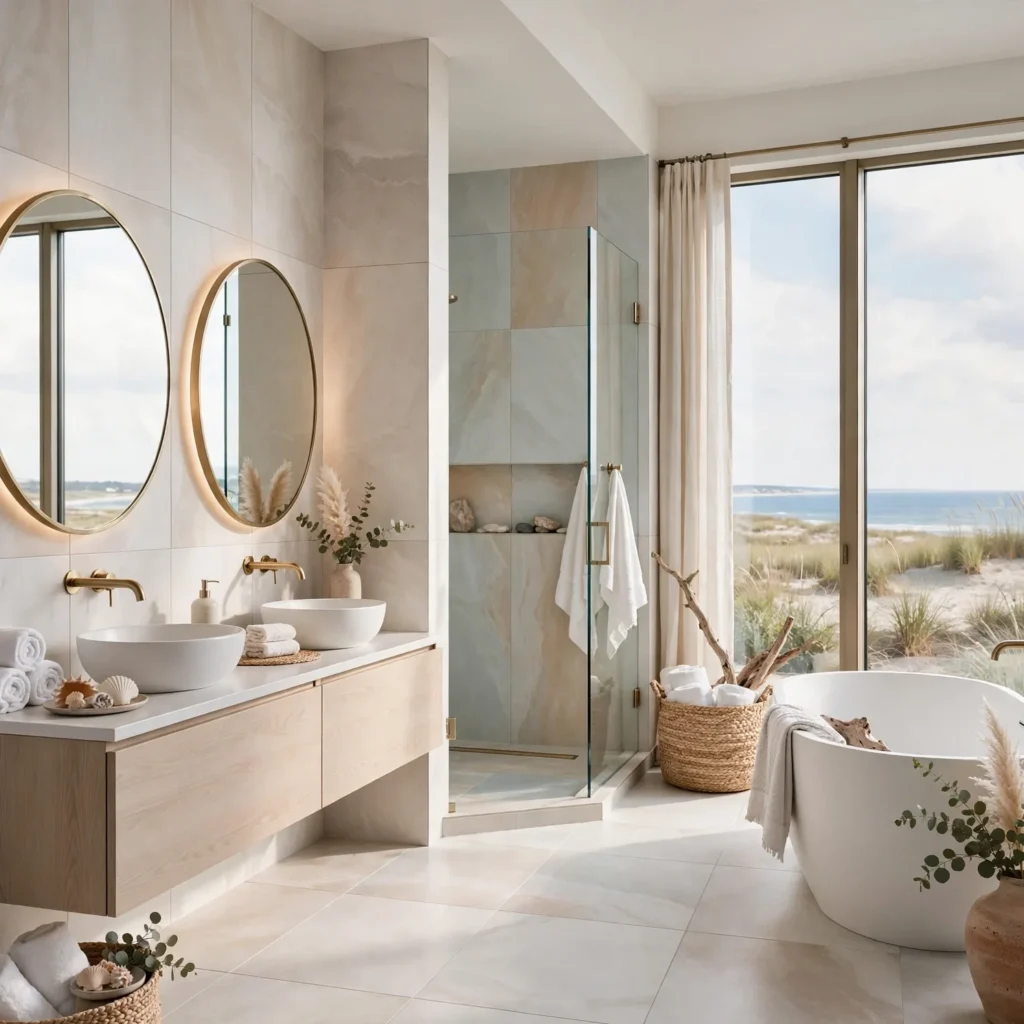
Coastal bathroom design uses a light, airy palette of white, soft blue, and sandy neutrals, often paired with natural materials like rattan, rope, and weathered wood to evoke a beach house feel without leaning into literal nautical decor. Wainscoting painted a soft blue-gray, paired with white subway tile, is a common combination in this style. Natural light plays a bigger role here than in most other styles, so window treatment choices matter more in reinforcing the airy effect.
Refresh your walls with these creative small bathroom designs that instantly brighten your space.
4. Japandi
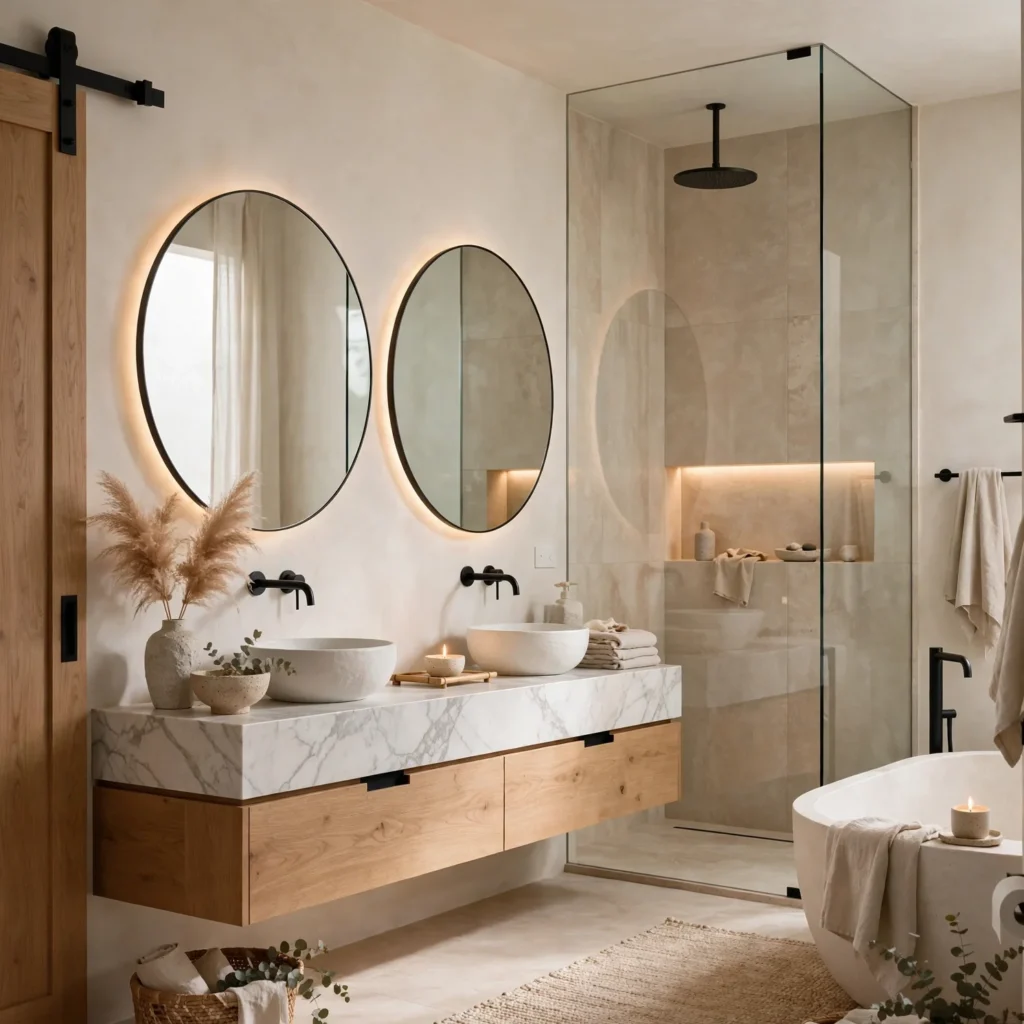
Japandi bathroom design blends Japanese minimalism with Scandinavian warmth, favoring natural wood tones, matte stone, and an intentionally uncluttered layout over decorative detail. A wood-slat accent wall or a wood-toned floating vanity typically anchors the style, paired with a neutral, low-contrast tile palette. This style shares some overlap with modern minimalist bathrooms, but leans warmer and more textural rather than sleek and flat.
| Style | Dominant Material | Color Palette |
| Japandi | Natural wood, matte stone | Neutral, low-contrast |
| Modern Minimalist | Porcelain, lacquer | Monochromatic |
| Scandinavian | Light wood, white | Soft white, pale wood |
5. Traditional
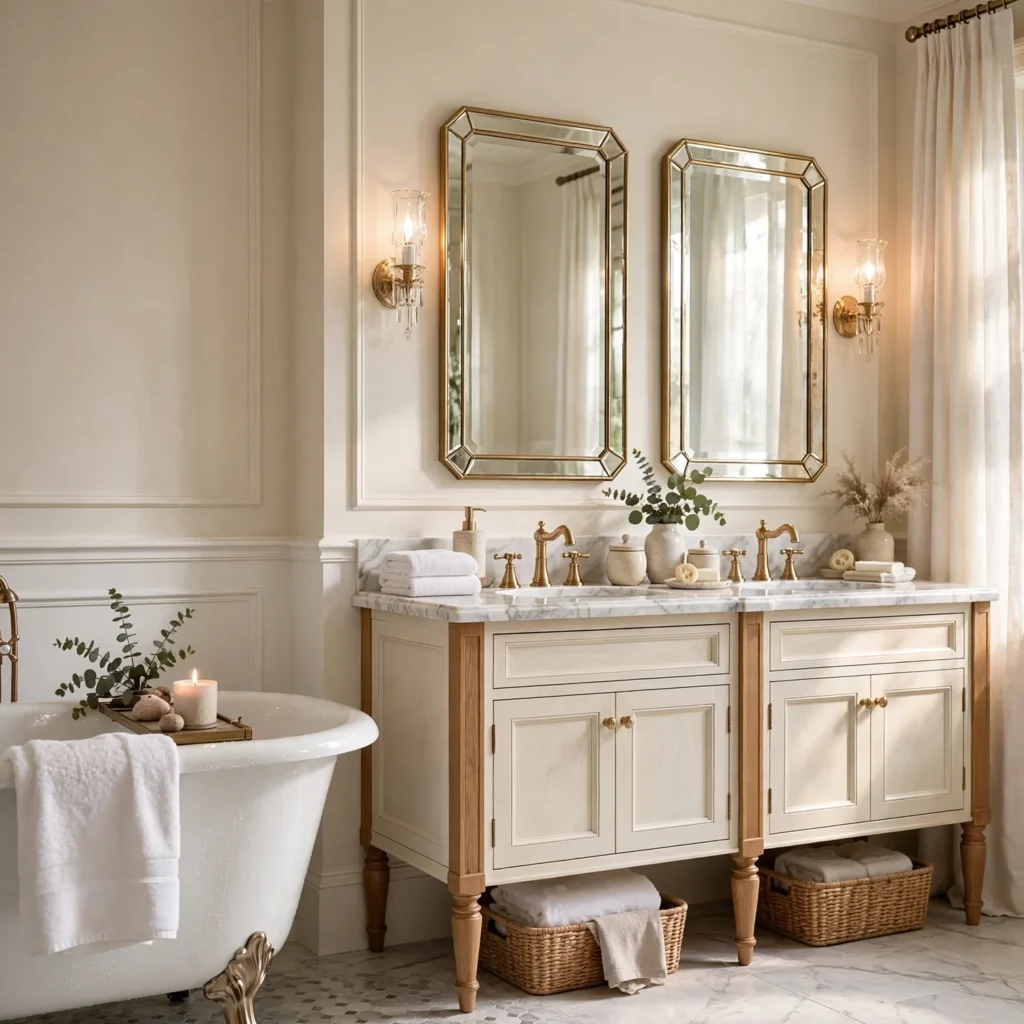
Traditional bathroom design draws on classic architectural details like raised-panel cabinetry, crown molding, and a pedestal or furniture-style vanity, favoring symmetry and craftsmanship-forward detailing over minimalism. Natural stone countertops in marble or granite are common, paired with polished nickel or brass fixtures that reinforce the style’s formal character. This style tends to hold its value well in resale, since it appeals to a broader range of buyers than a highly trend-specific look.
6. Industrial
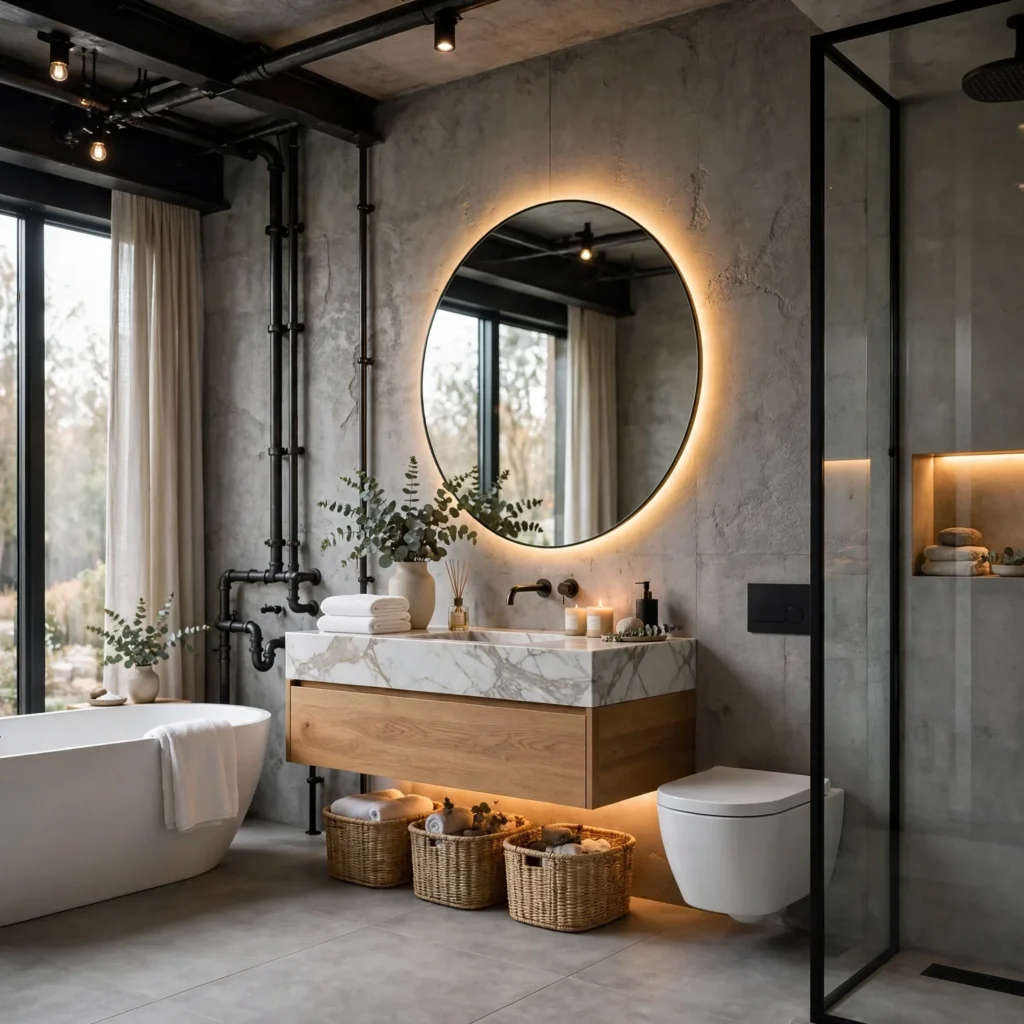
Industrial bathroom design incorporates raw or exposed materials, like matte black metal fixtures, concrete-look tile, and exposed pipe detailing, borrowing from converted warehouse and loft aesthetics. A vessel sink mounted on a reclaimed wood or metal-framed vanity is a common centerpiece in this style. It works particularly well in urban apartments or converted industrial spaces where the architecture already leans toward exposed brick or ductwork elsewhere in the home.
7. Art Deco
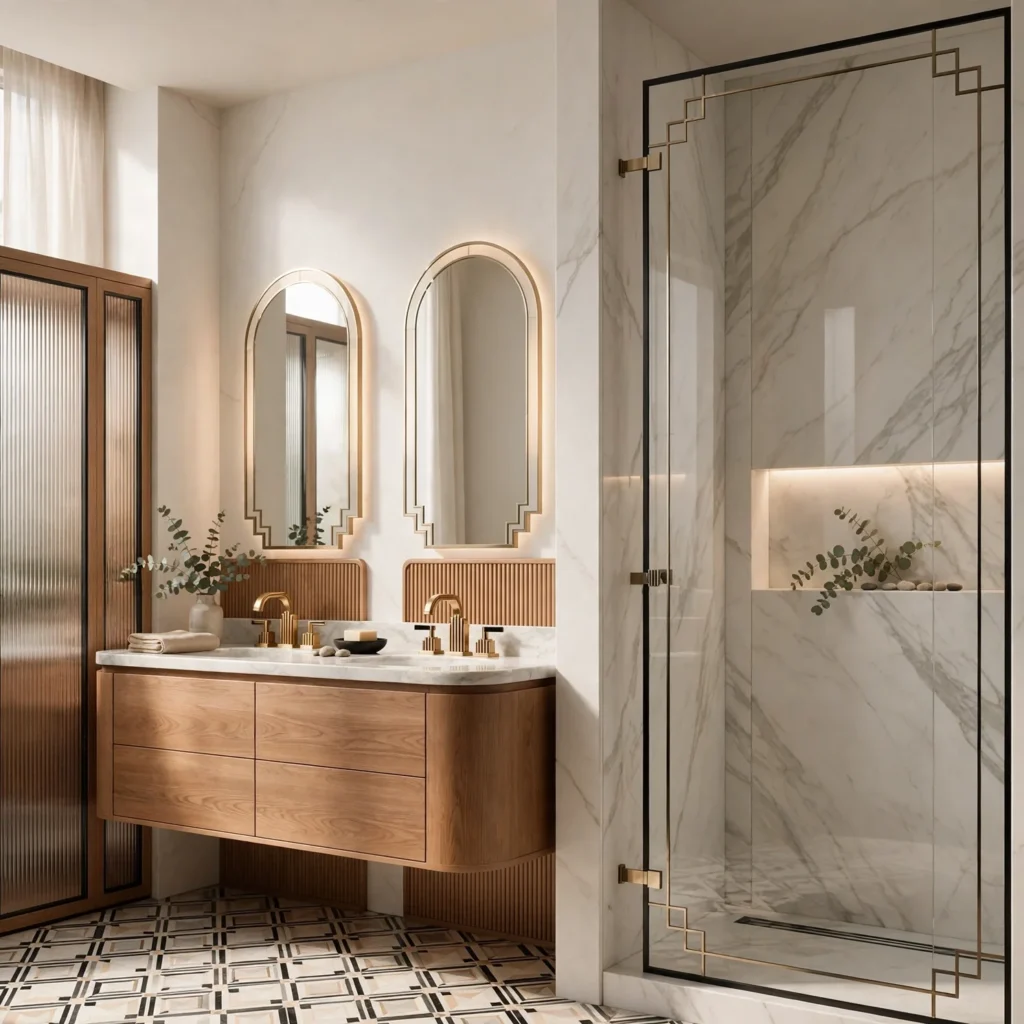
Art Deco bathroom design uses bold geometric tile patterns, often in black and white or jewel-toned color combinations, paired with brass fixtures and mirrored surfaces that echo the glamour of early 20th-century design. Hexagonal or basketweave floor tile is a defining detail, typically laid in a contrasting two-color pattern rather than a single solid color. This style requires more confidence in pattern and color than most others on this list, since restraint tends to undercut the look’s intended boldness.
8. Scandinavian
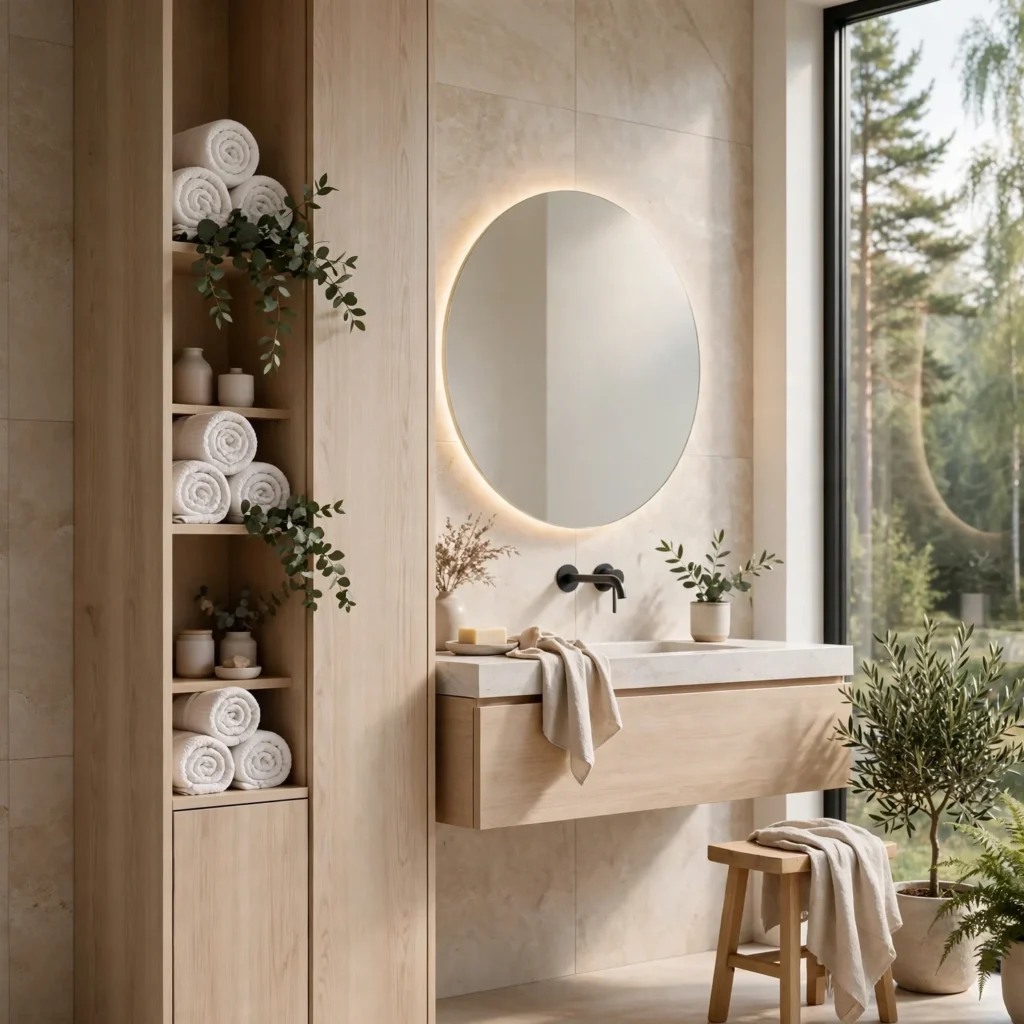
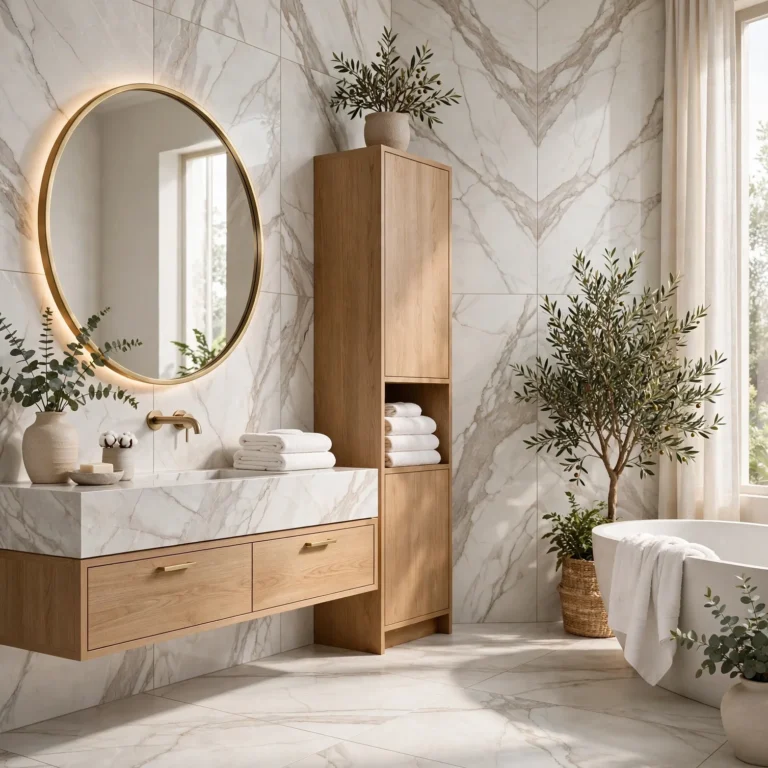
Scandinavian bathroom design favors light wood tones, white walls, and simple, functional fixtures, creating a bright, uncluttered space that prioritizes function without feeling sterile the way a stark modern bathroom can. A light oak vanity paired with white tile and minimal hardware is a common combination. This style shares some overlap with Japandi, though it leans slightly brighter and less textural, favoring simplicity over the warmer, more tactile Japandi approach.
9. Mediterranean
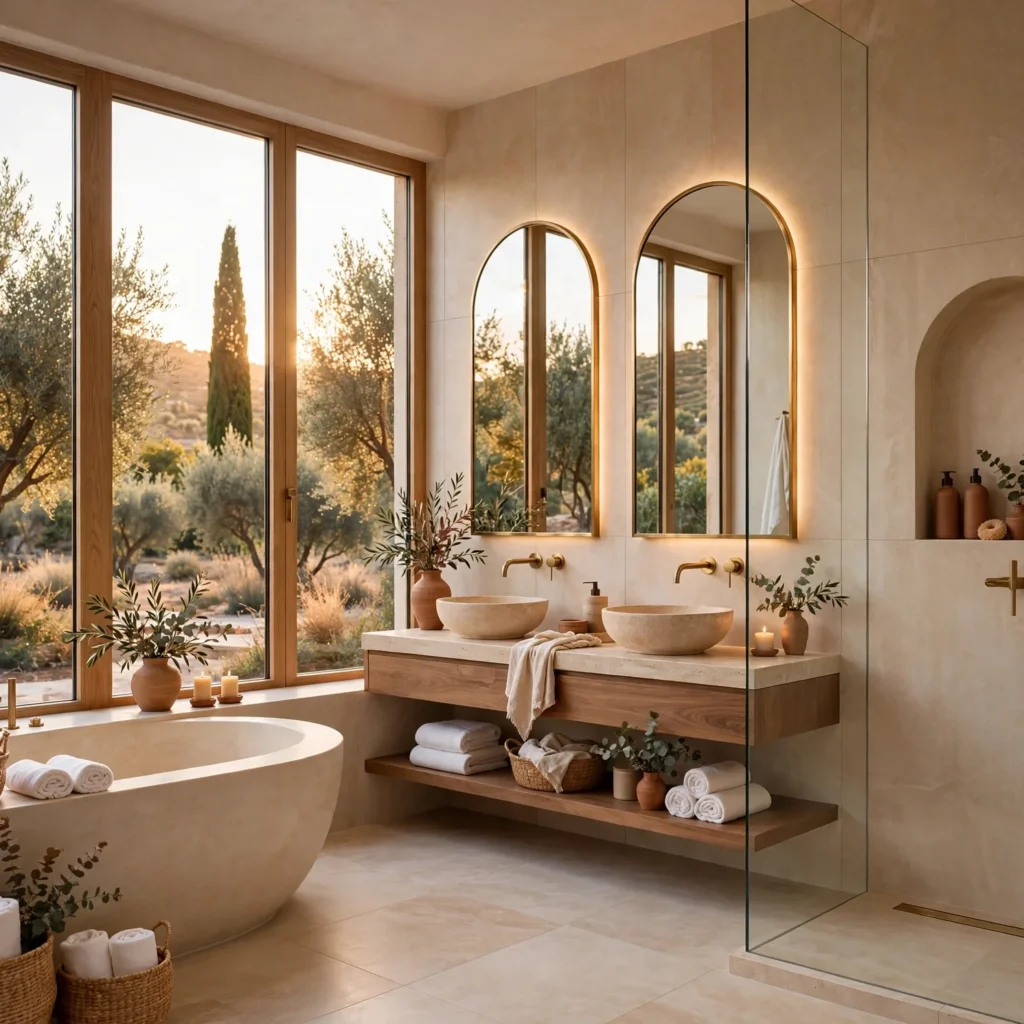
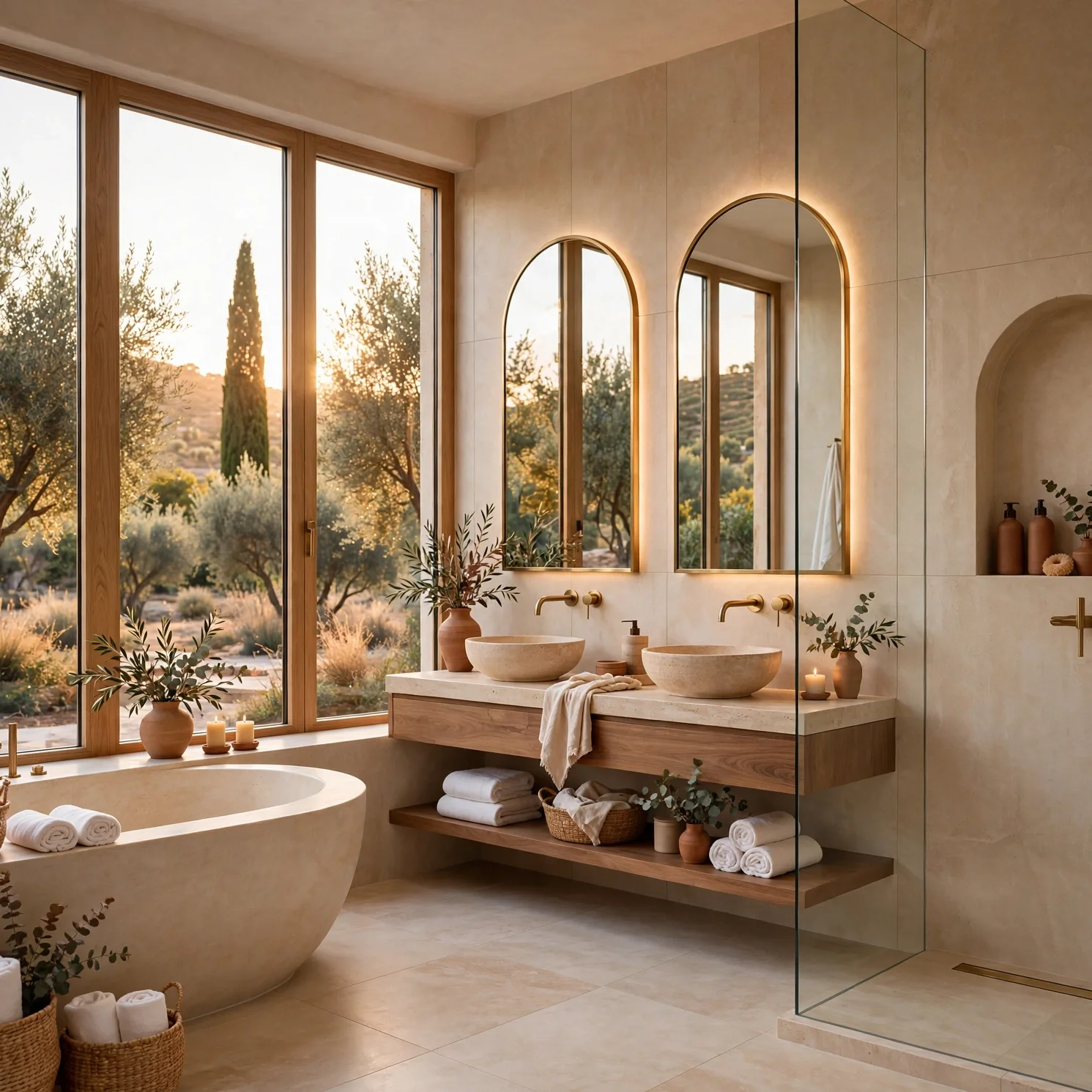
Mediterranean bathroom design incorporates warm terracotta tones, hand-painted or zellige tile, and wrought iron fixtures, drawing on the architecture of coastal Spain, Italy, and Morocco. Arched niches or mirror frames are a common architectural detail that reinforces the style’s old-world character. This style works particularly well in homes with existing Mediterranean or Spanish colonial architecture, since the bathroom detailing can echo trim and archway shapes found elsewhere in the house.
10. Contemporary Luxury
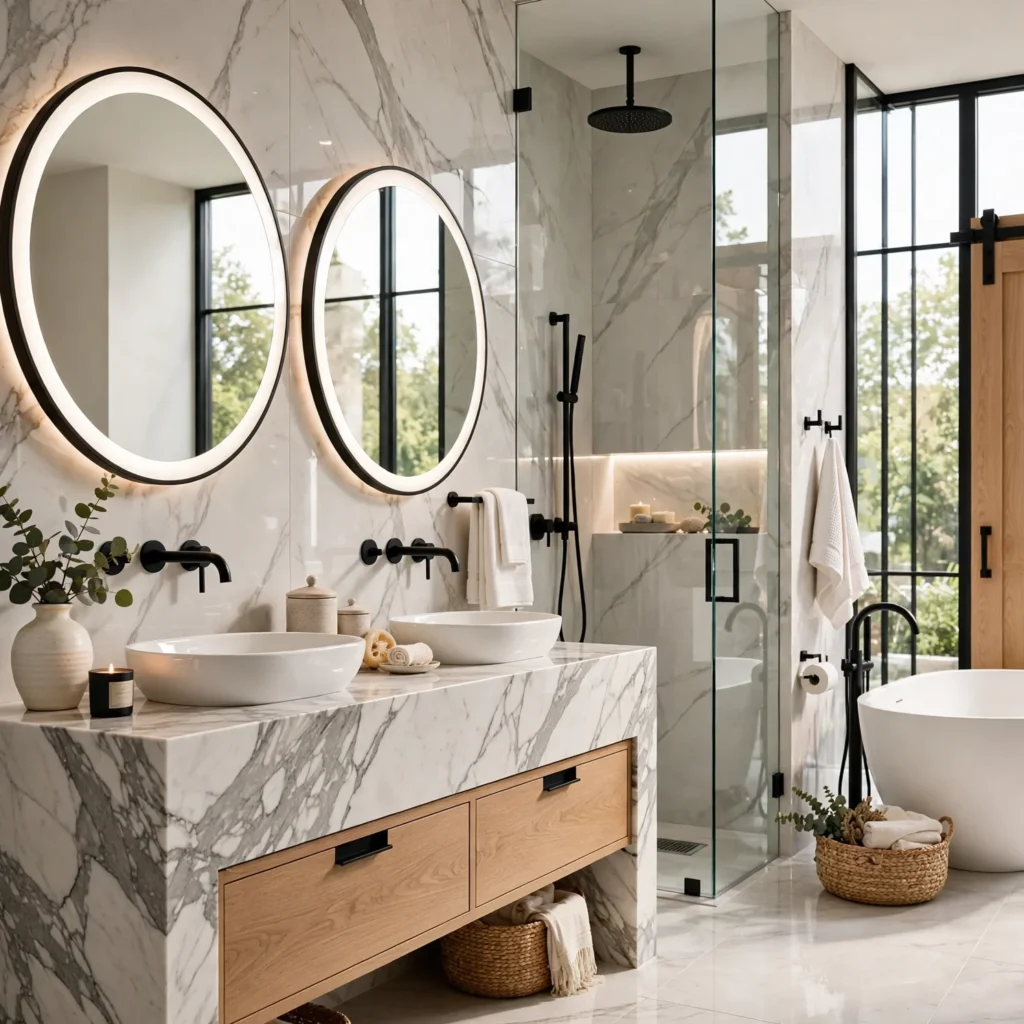
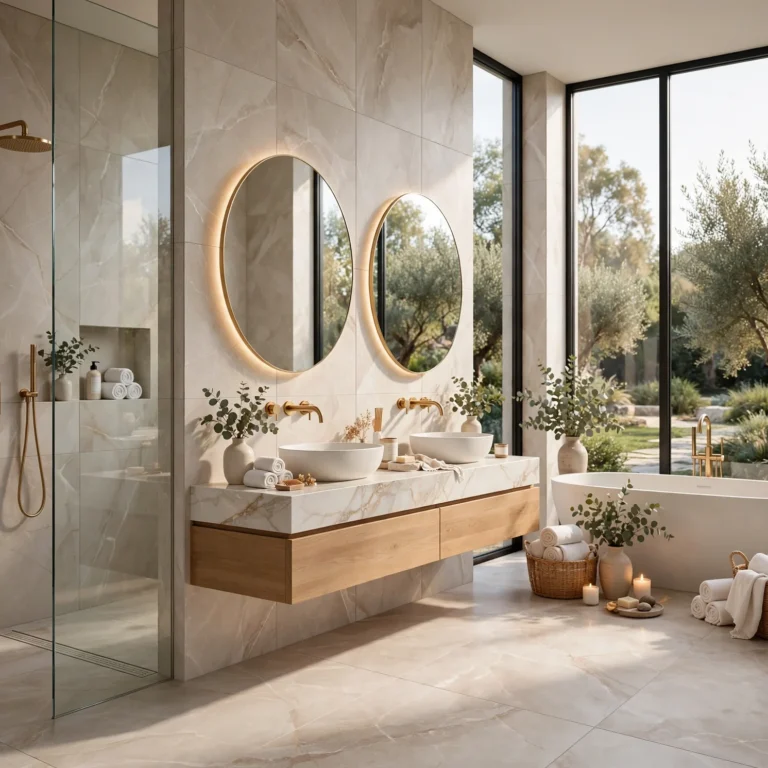
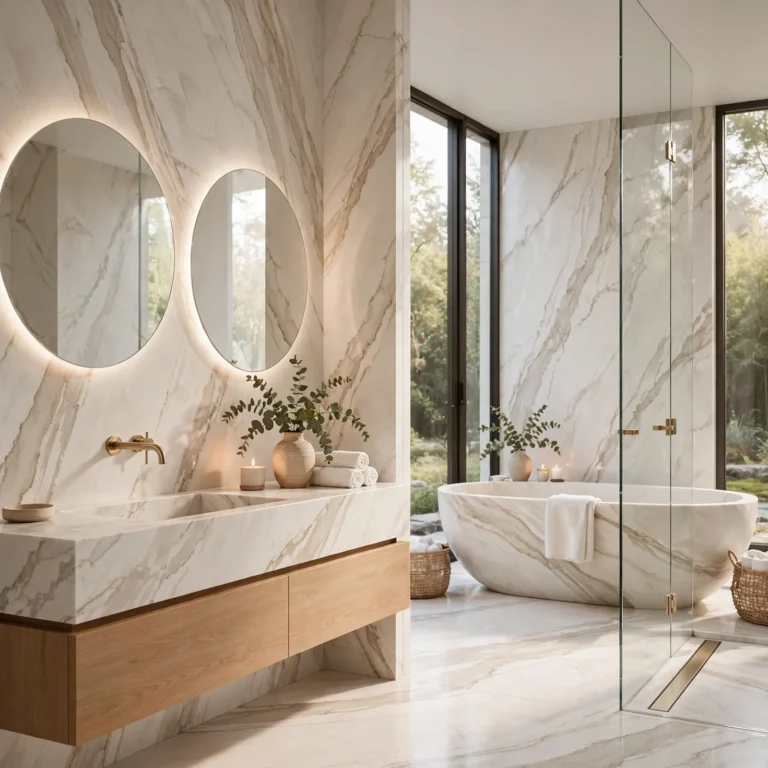
Contemporary luxury bathroom design combines clean, modern lines with high-end natural materials, like book-matched marble slab and brushed brass fixtures, creating a look that’s polished without the strict minimalism of a modern bathroom. A freestanding tub paired with a large-format stone slab shower wall is a common centerpiece in this style. Layered lighting, including a statement fixture over the tub or vanity, plays a larger role here than in a purely minimalist modern bathroom.
11. Transitional
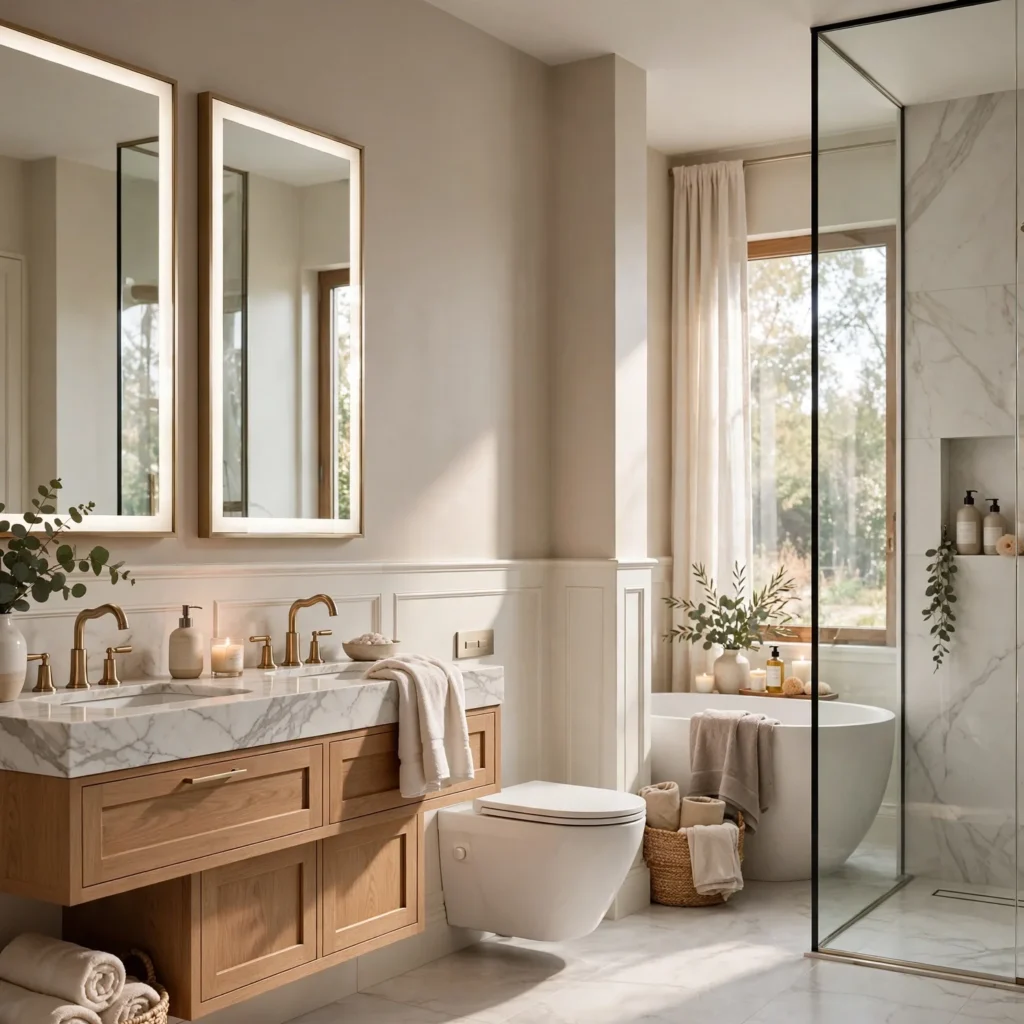
Transitional bathroom design blends traditional detailing, like shaker cabinetry, with more modern fixtures and a simplified color palette, offering a middle ground for homeowners who want warmth without full traditional ornamentation. A shaker vanity paired with matte black hardware and simple subway tile is a common transitional combination. This style has remained one of the more popular choices for resale-focused renovations, since it appeals to buyers who find modern too stark and traditional too formal.
12. Organic Modern
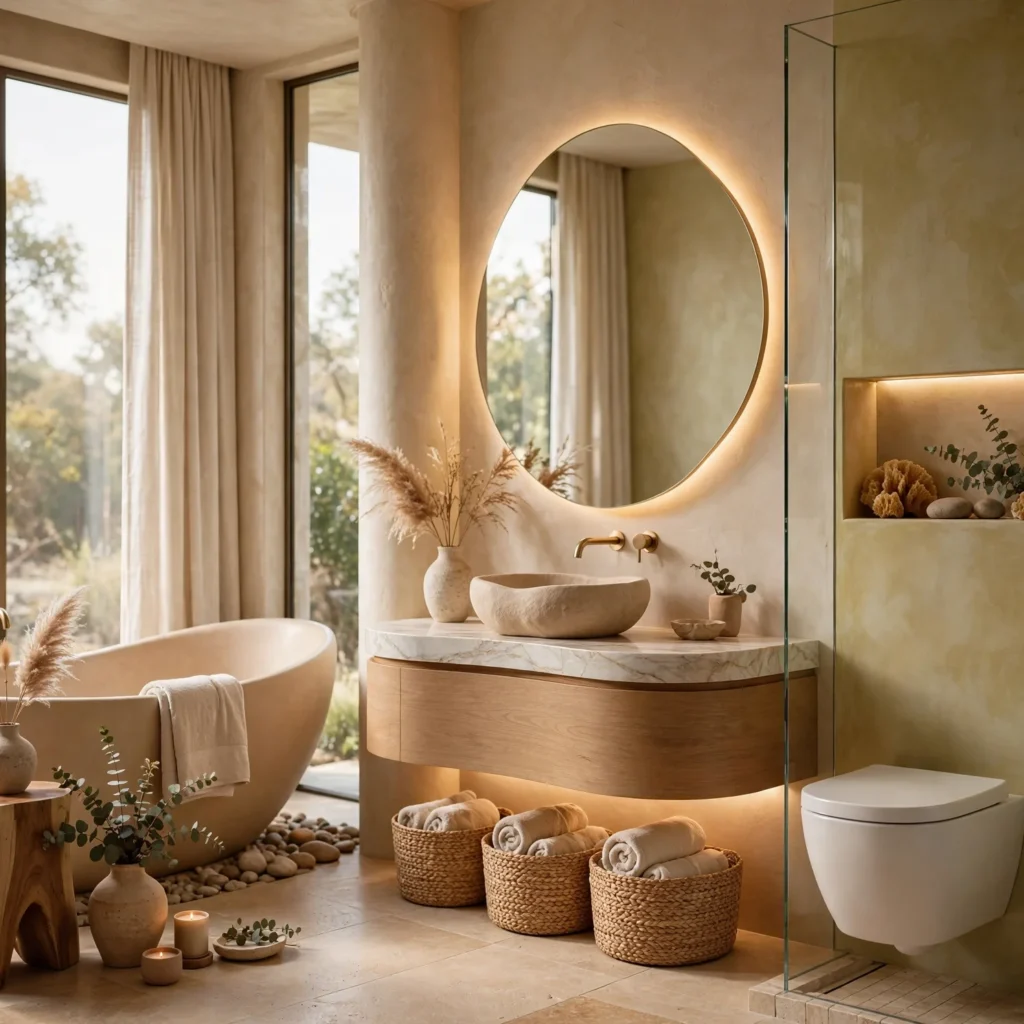
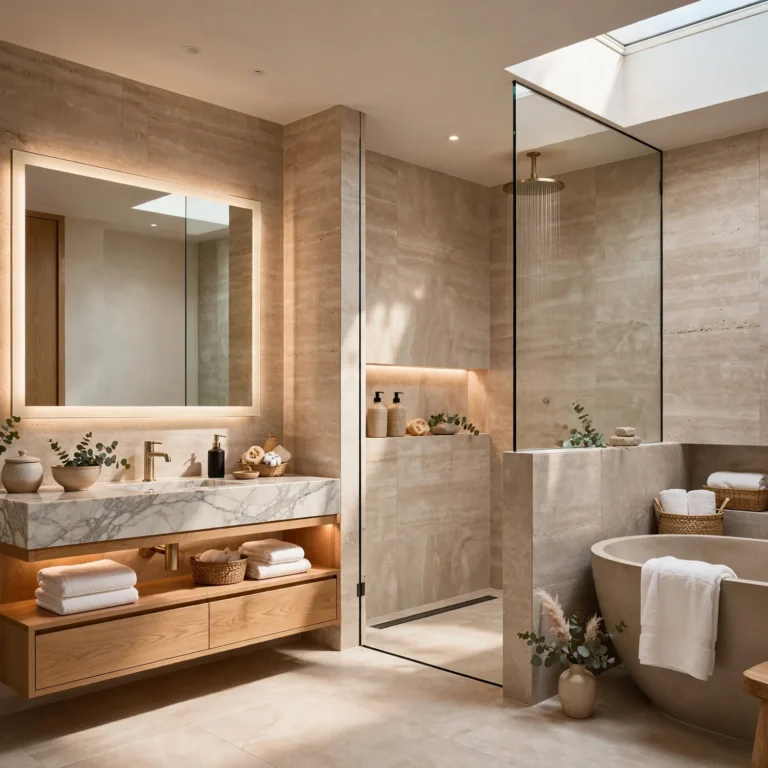
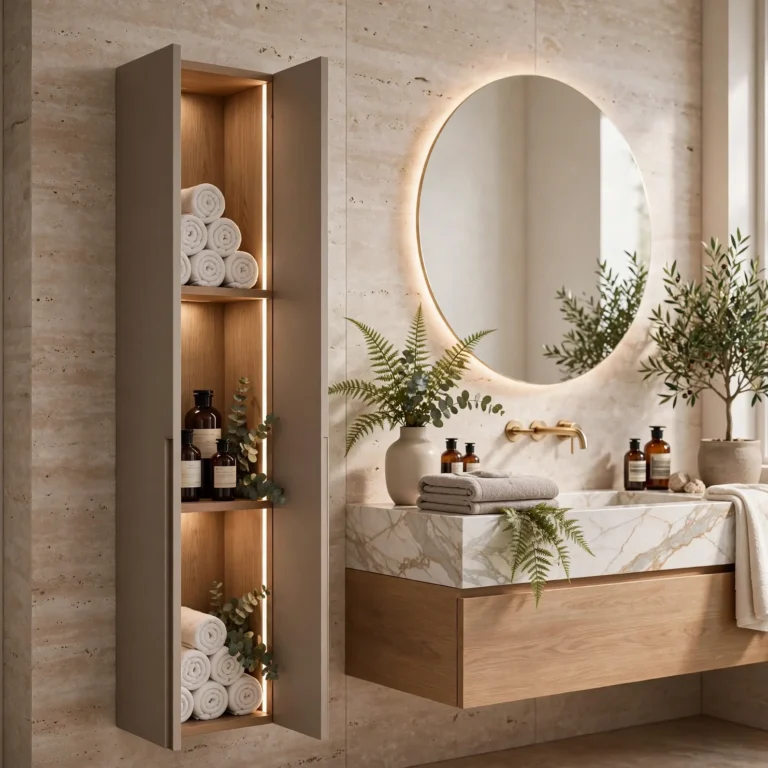
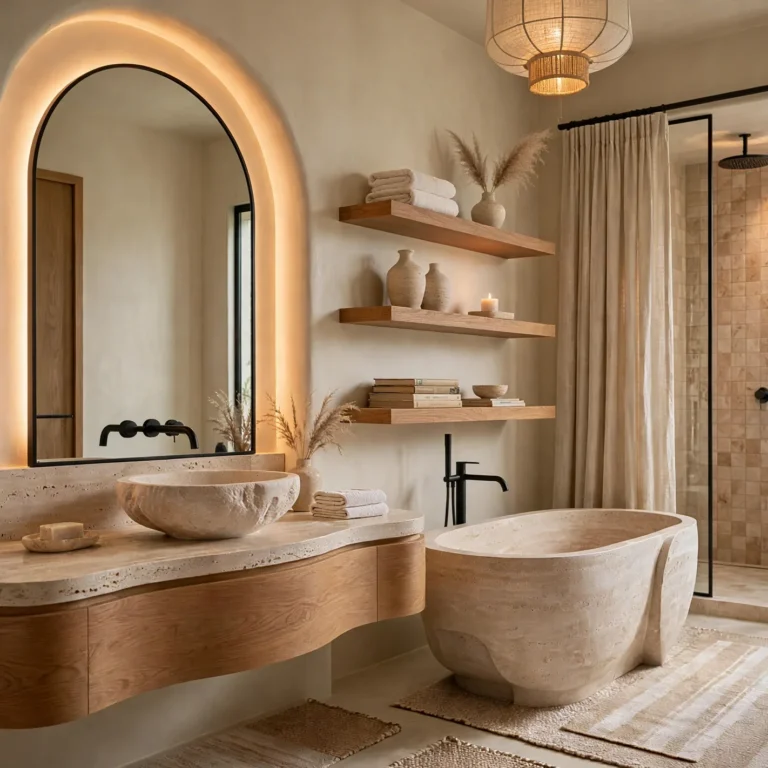
Organic modern bathroom design pairs the clean lines of modern design with natural, textured materials like unfinished wood, woven fixtures, and honed stone rather than the glossy, lacquered finishes typical of a strict modern look. A stone vessel sink paired with a live-edge wood vanity top is a signature combination in this style. It works well for homeowners who like the restraint of modern design but want the room to feel warmer and more connected to natural materials.
Shop the Look
A cast iron clawfoot tub anchors a farmhouse-style bathroom as its central fixture. A hexagonal black-and-white mosaic floor tile set supports the Art Deco pattern approach described here. A live-edge wood vanity top pairs well with a stone vessel sink for the organic modern look. A brass wall sconce set with an arched mirror frame reinforces the Mediterranean style’s old-world detailing.
Common Mistake to Avoid
A common mistake when choosing among bathroom design styles is selecting individual pieces, like a modern vanity and a traditional tile pattern, without confirming they belong to a coherent overall direction before ordering materials. This often results in a bathroom that feels visually unresolved once everything is installed together, even if each piece was well-chosen on its own. Settling on one primary style, or one clearly intentional blend of two, before finalizing any material order prevents this common renovation misstep.
FAQs
What bathroom design style is most popular right now?
Modern minimalist and organic modern styles are currently among the most requested, particularly the softer, warmer versions that incorporate natural wood and stone rather than an all-white, all-flat approach. Transitional style also remains consistently popular for its broad resale appeal, blending traditional warmth with simplified modern lines. The specific style trending in a given market often depends on the surrounding home’s existing architecture.
Can I mix two bathroom design styles?
Yes, blending two adjacent styles, such as modern and organic or traditional and coastal, has become increasingly common rather than adhering strictly to one category. The key to making a blend work is choosing styles that share some material or color overlap, rather than combining two visually opposing directions like industrial and traditional. Settling on which style will dominate, with the second used as an accent, tends to produce the most cohesive result.
Which bathroom style works best for a small bathroom?
Modern minimalist and Scandinavian styles tend to work particularly well in small bathrooms, since both rely on light color palettes, minimal ornamentation, and large-format tile that make a compact space read as more open. Styles with heavier pattern or ornamentation, like Art Deco or Mediterranean, can still work in a small bathroom but require more careful scaling to avoid feeling overwhelming in a tight footprint. The right choice ultimately depends on the homeowner’s tolerance for bold pattern in a small space.
Does bathroom design style affect resale value?
Traditional and transitional styles tend to hold resale value well, since their timeless materials and broader buyer appeal make them safer investments than a highly specific style like industrial or Art Deco. That said, resale value always depends significantly on the local market and what style buyers in that specific area tend to expect. A style that feels out of place relative to the rest of the home’s architecture can also affect resale perception regardless of its individual popularity.
How do I choose a bathroom design style that fits my home’s architecture?
Looking at the home’s existing architectural details, like trim profile, window style, and overall era, generally points toward which bathroom styles will feel cohesive rather than mismatched. A Spanish colonial home suits Mediterranean detailing far better than a stark modern minimalist bathroom, while a converted loft naturally leans toward an industrial look given its existing exposed materials. Matching the bathroom style to the home’s broader architectural language produces a more resolved renovation overall.
Conclusion
Bathroom design styles give a renovation direction and cohesion from the very first material decision, which is why settling on one, or one intentional blend of two, matters more than picking individual pieces in isolation. Save this guide to Pinterest for your next renovation project, and check out our related post on small bathroom design for space-maximizing ideas that pair with any style you choose.