12 Elegant Bathroom Tiles Design Ideas Worth Considering
Tile covers more surface area in a bathroom than any other material, which makes it one of the most consequential decisions in a renovation, shaping the room’s color, texture, and overall character. Bathroom tiles design has moved toward larger formats, handmade textures, and more intentional grout choices, replacing the uniform white subway tile that was the default for the past decade. This guide covers twelve tile ideas seen in real bathroom renovations, from floor patterns to shower wall treatments that define the room’s finished look.
Trend & Background
Tile manufacturers have expanded their large-format and handmade-look product lines significantly in response to demand for less grout-heavy, more textured bathroom surfaces. Homeowners are increasingly treating tile as a primary design statement rather than a neutral background, choosing pattern, color, and layout with the same intention given to cabinetry or fixtures. This shift has also pushed grout color into the design conversation, with contrasting and colored grout now used deliberately rather than defaulting to a matching white or gray.
Key Takeaways
- Bathroom tiles design in 2026 favors large-format porcelain and handmade zellige over the small, uniform subway tile that dominated recent years.
- Pattern tile, like hexagon and Moroccan-inspired prints, remains most popular on floors rather than walls.
- Full-height shower wall tile has become standard in mid-to-high budget renovations, replacing partial tile with painted drywall above.
- Grout color choice is increasingly treated as a design decision rather than a default afterthought.
1. Large-Format Porcelain Tile
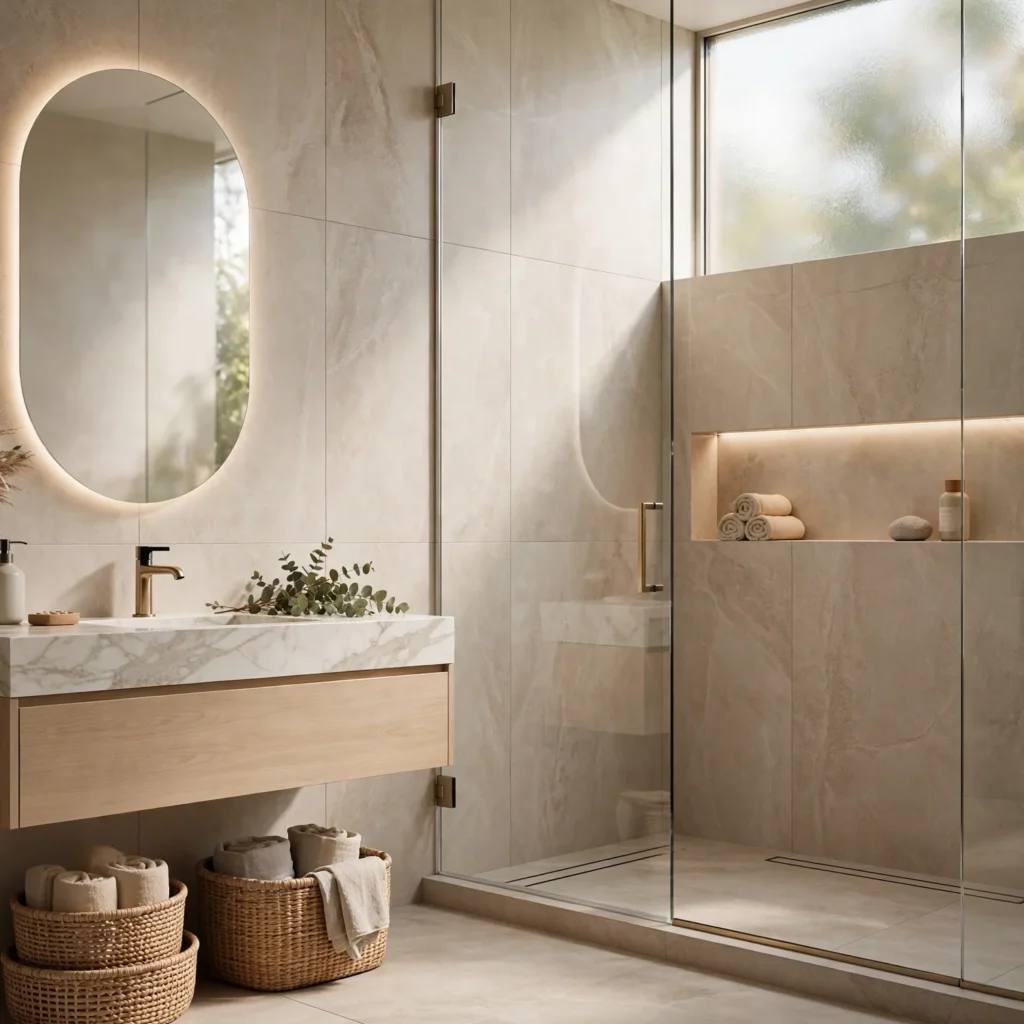
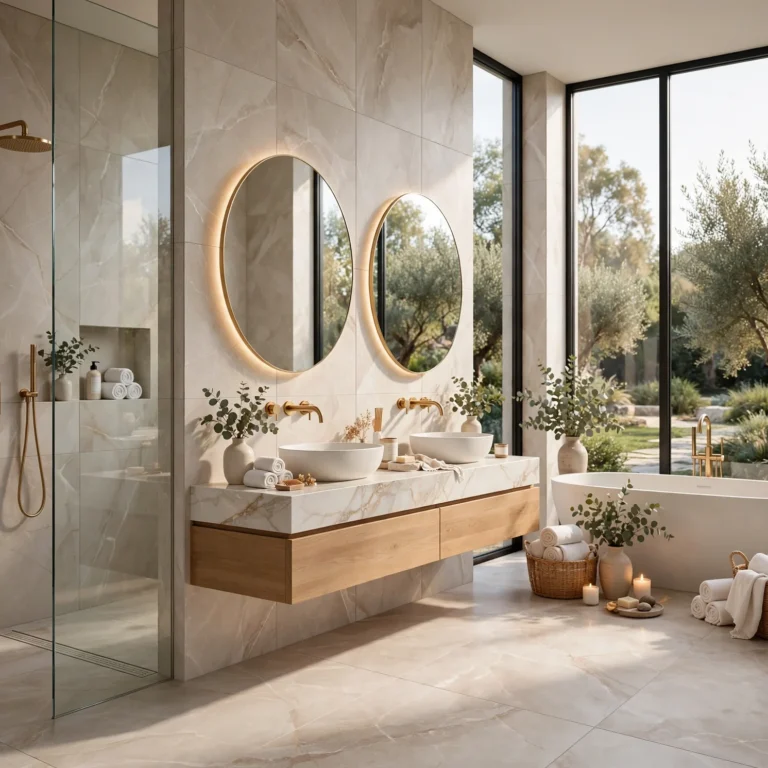
Large-format porcelain tile, typically 24 by 48 inches or larger, minimizes grout lines across floors and shower walls, giving the bathroom a cleaner, more continuous surface than standard-sized tile allows. It’s available in stone-look and concrete-look patterns that mimic natural materials at a lower cost and with less maintenance than the real thing. Running the same tile across the floor and shower wall reinforces the seamless effect even further, since there’s no visual break between surfaces.
2. Zellige Tile Wall
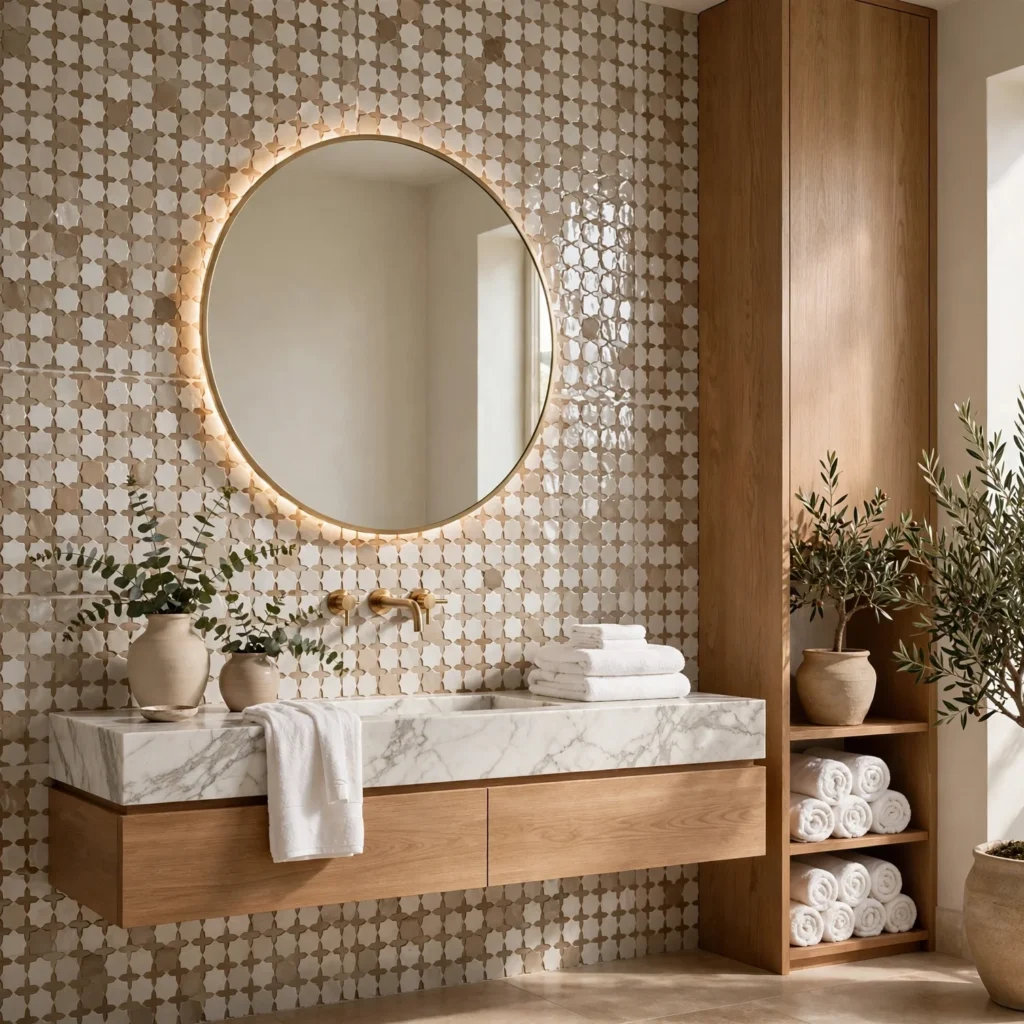
Zellige, a handmade Moroccan tile with a slightly uneven, glossy surface, adds texture and subtle color variation that machine-made tile can’t replicate, since no two pieces reflect light exactly the same way. It’s typically used on an accent wall or shower surround rather than the entire bathroom, given its higher cost per square foot compared to standard ceramic tile. Because each tile has natural imperfections, installation requires a tile setter experienced with the material to keep the layout looking intentional rather than uneven.
| Tile Type | Cost per Sq Ft | Best Use |
| Ceramic Subway | $3–$8 | Full wall coverage |
| Zellige | $15–$30 | Accent wall, backsplash |
| Large-Format Porcelain | $5–$15 | Floor, shower wall |
3. Hexagon Floor Tile
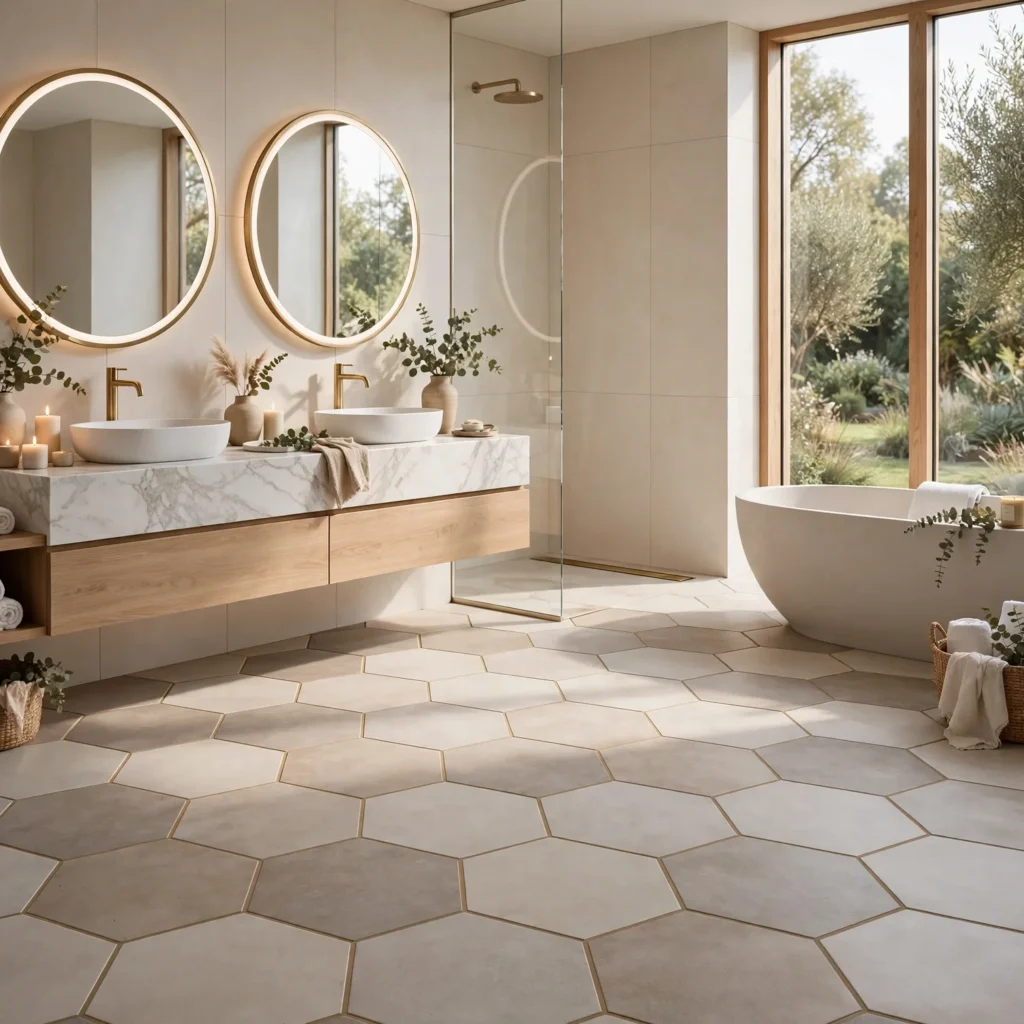
Hexagon-shaped floor tile, whether in a small mosaic sheet or a larger single-tile format, adds geometric interest underfoot without requiring a bold color choice, since the shape itself carries the visual weight. It’s a common choice in both traditional and modern bathrooms, working equally well in a classic black-and-white pattern or a single neutral tone. Smaller hexagon mosaics also provide more slip resistance than a large-format tile, thanks to the higher number of grout lines per square foot.
4. Full-Height Shower Wall Tile
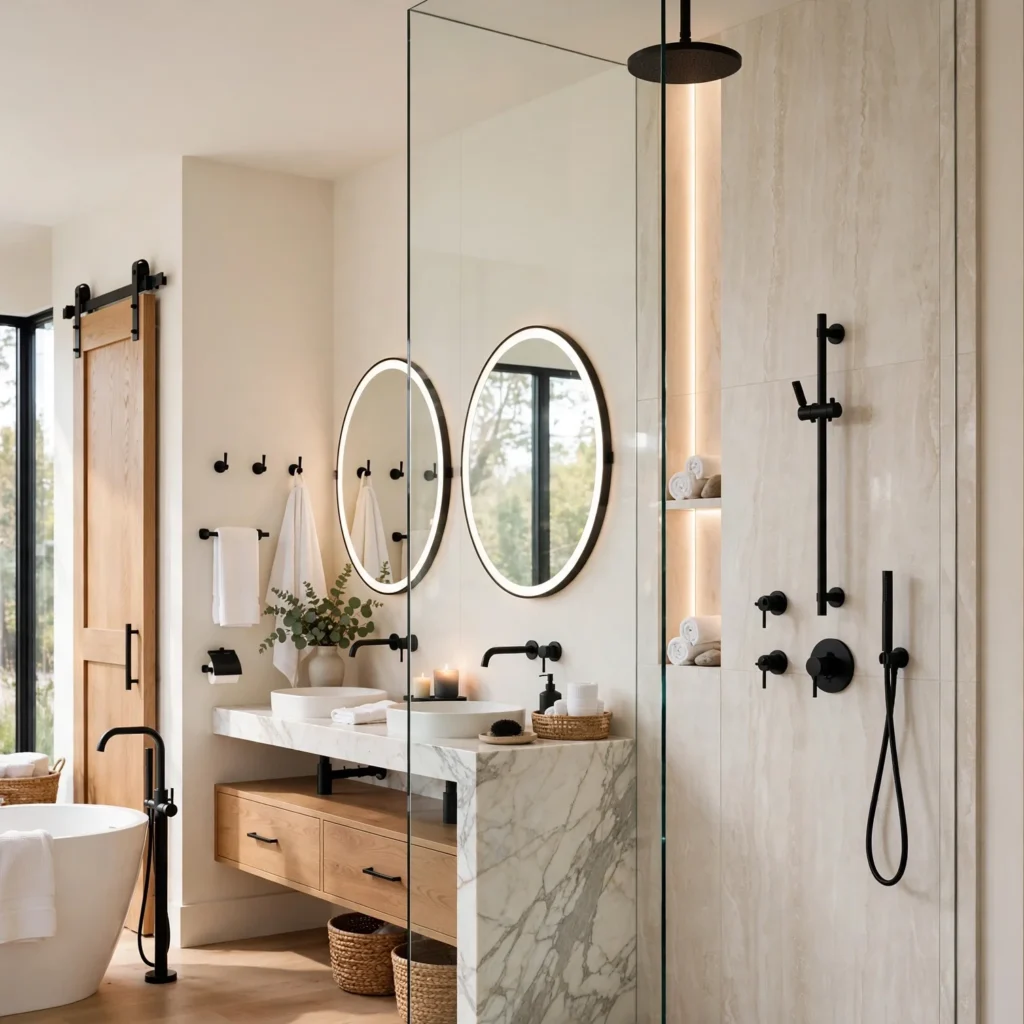
Extending tile from the shower floor all the way to the ceiling, rather than stopping partway up the wall with painted drywall above, has become the standard treatment in most mid-to-high budget bathroom renovations. This approach eliminates the moisture and mildew risk that painted drywall faces in a high-humidity shower environment. It also gives the shower a more finished, intentional look compared to the half-tiled walls common in older bathroom construction.
5. Contrasting Grout Color
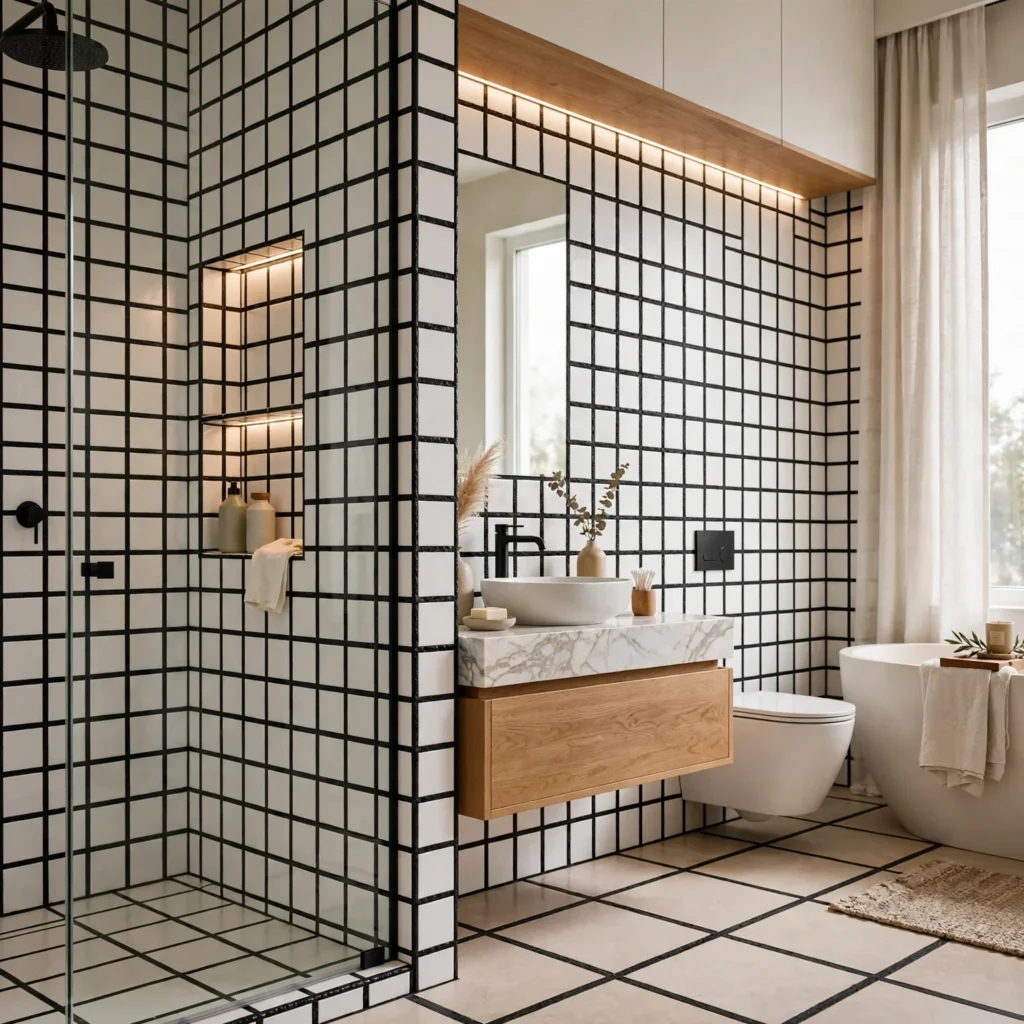
Choosing a grout color that contrasts with the tile, such as black grout with white subway tile or a charcoal grout with pale gray tile, turns the grout lines themselves into a deliberate design detail rather than something meant to disappear. This works particularly well with a simple tile shape like subway or hexagon, where the grout pattern becomes part of the overall visual effect. Matching grout to tile color remains the safer, more traditional choice for anyone wanting the tile itself to read as the dominant feature.
Complete your renovation with our modern bathroom design styles for a stylish and functional home.
6. Herringbone Tile Layout
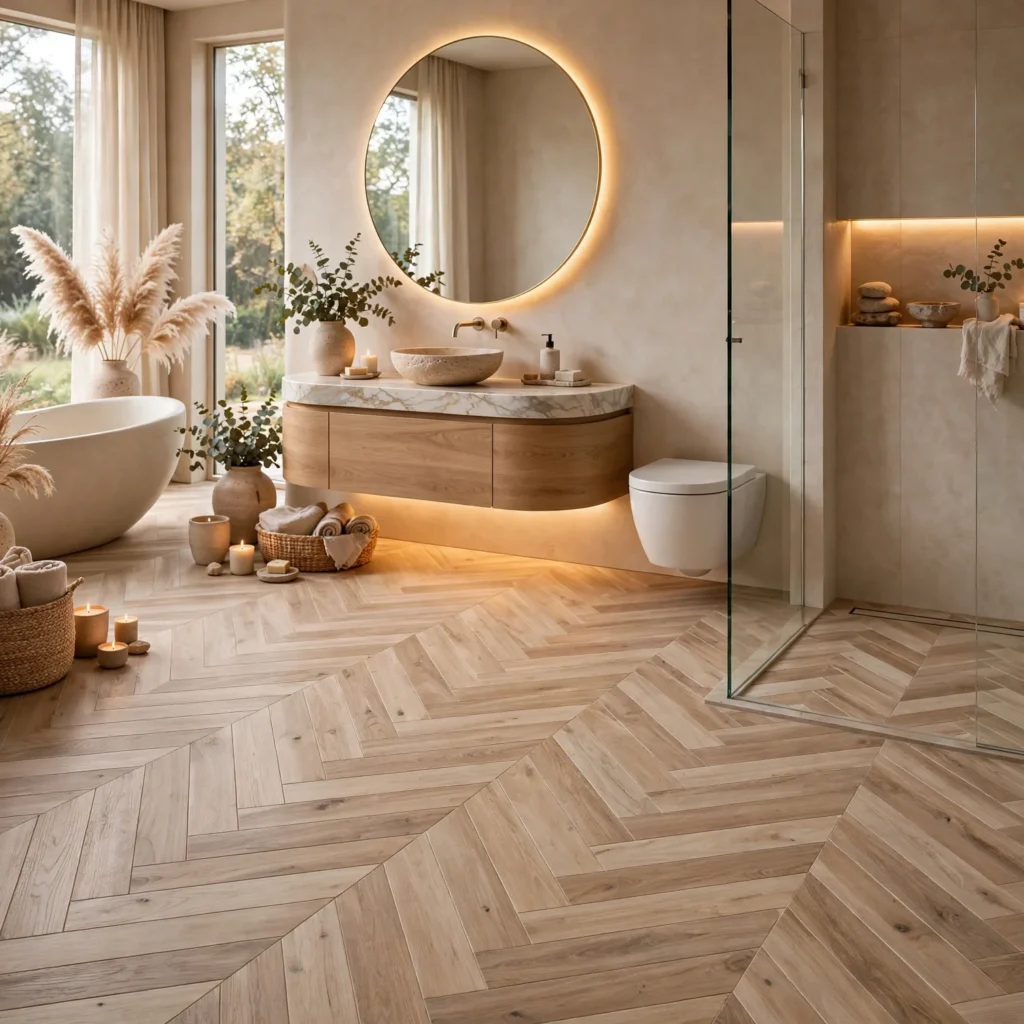
Laying rectangular tile in a herringbone pattern, rather than the standard brick offset, adds movement and visual interest to a floor or accent wall without changing the tile material itself. This layout requires more cutting and installation time than a straight brick pattern, so it’s worth confirming labor costs with a tile contractor before committing. It works especially well on a bathroom floor as a way to add pattern without introducing an additional color.
7. Moroccan Pattern Tile
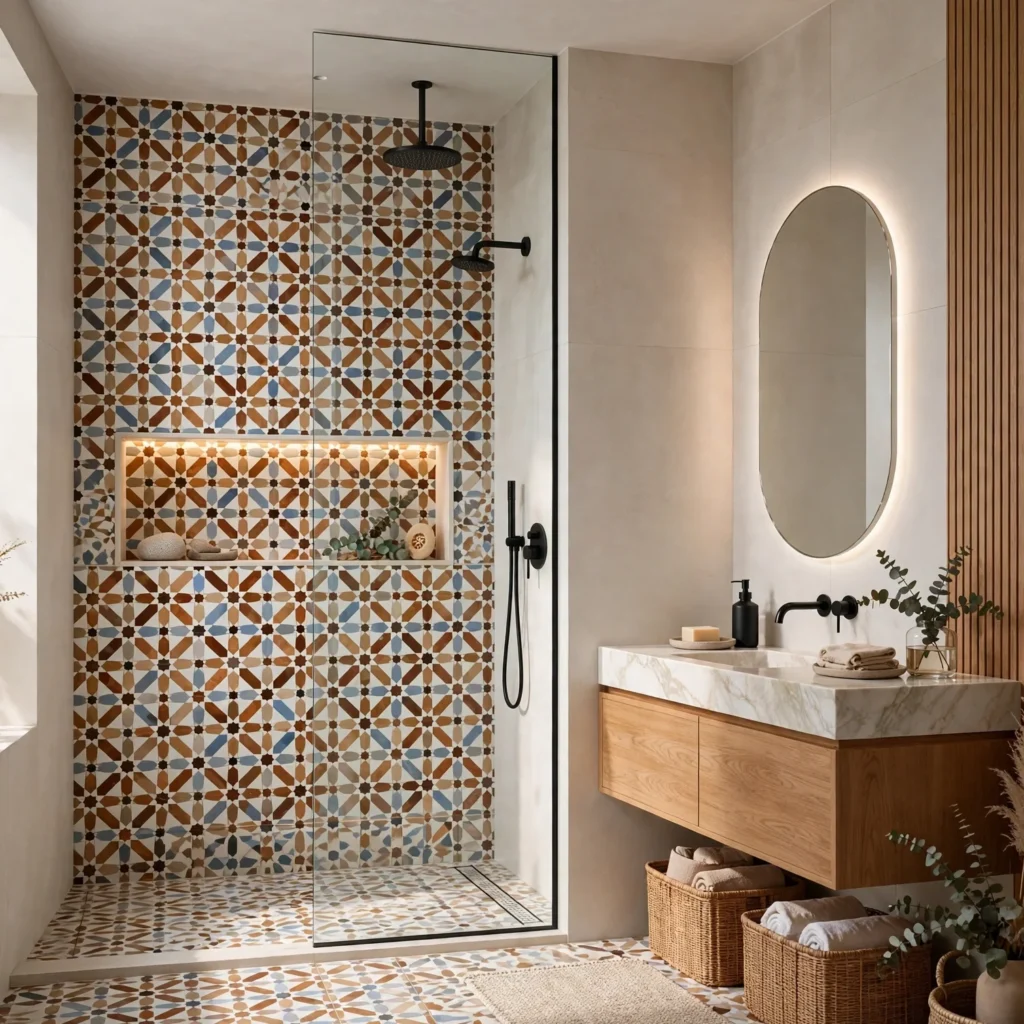
Cement or porcelain tile printed with a Moroccan-inspired geometric pattern brings bold color and shape into a bathroom floor without relying on paint or wallpaper, which don’t hold up well in a high-moisture room. It’s most commonly used on the floor rather than the walls, since the pattern carries enough visual weight on its own without needing to extend vertically. Porcelain versions of these patterns have become more common than genuine cement tile, given their lower maintenance requirements and cost.
8. Marble-Look Porcelain Tile
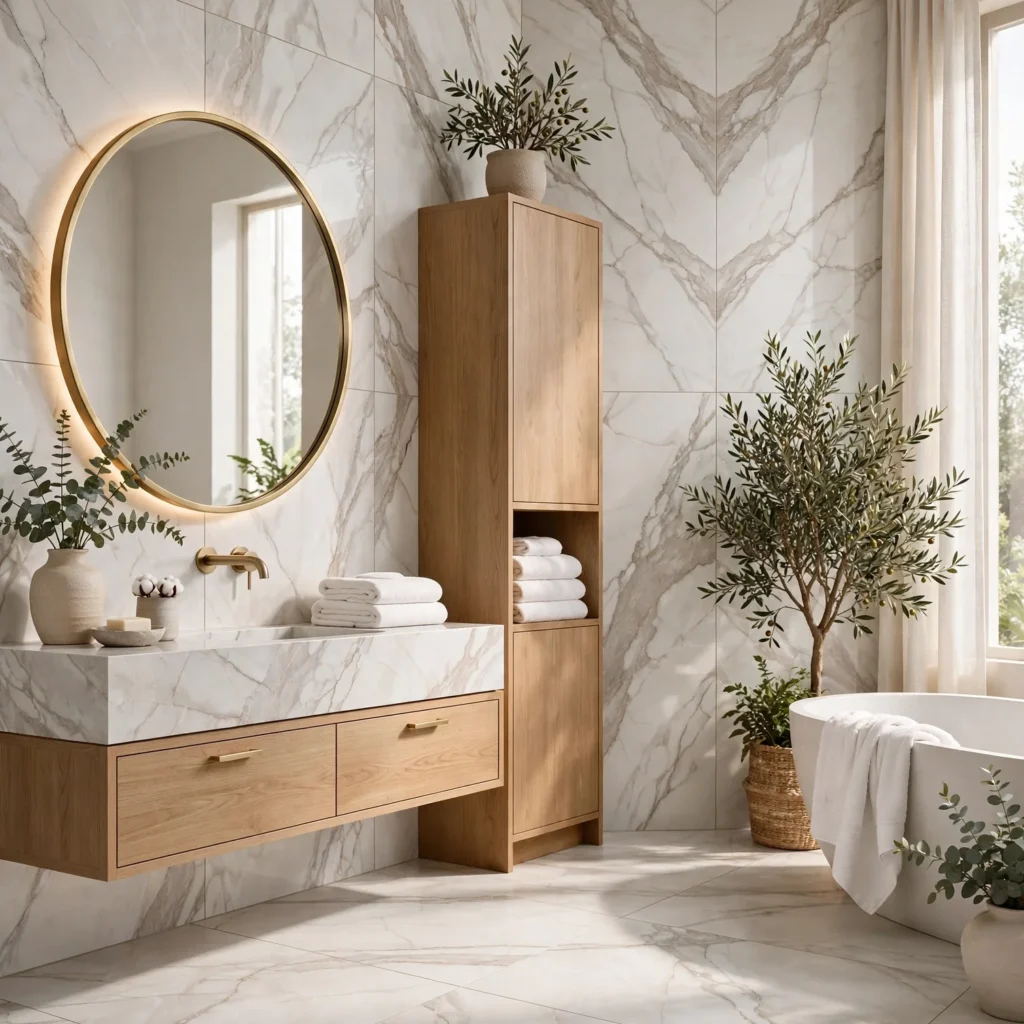
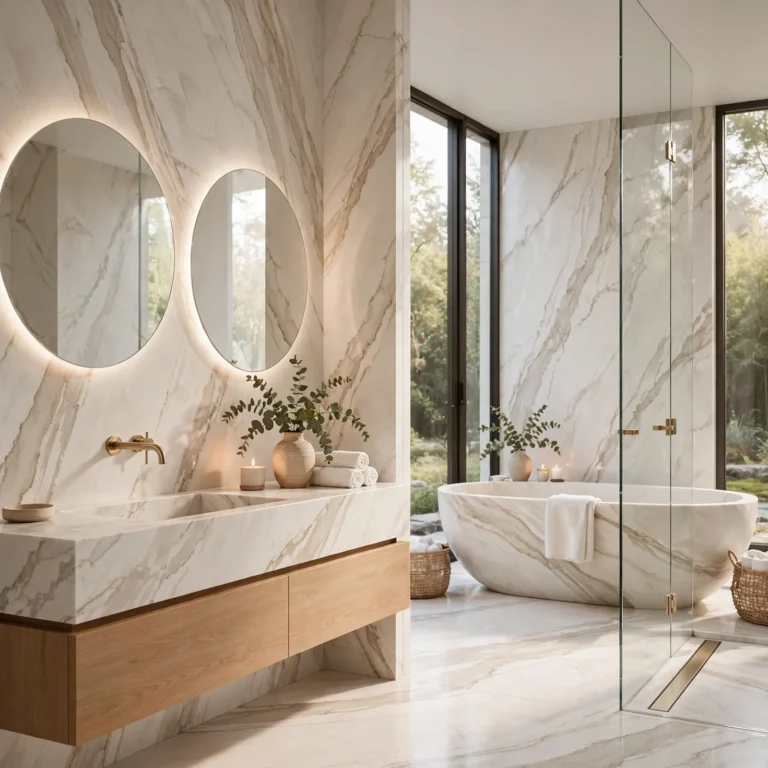
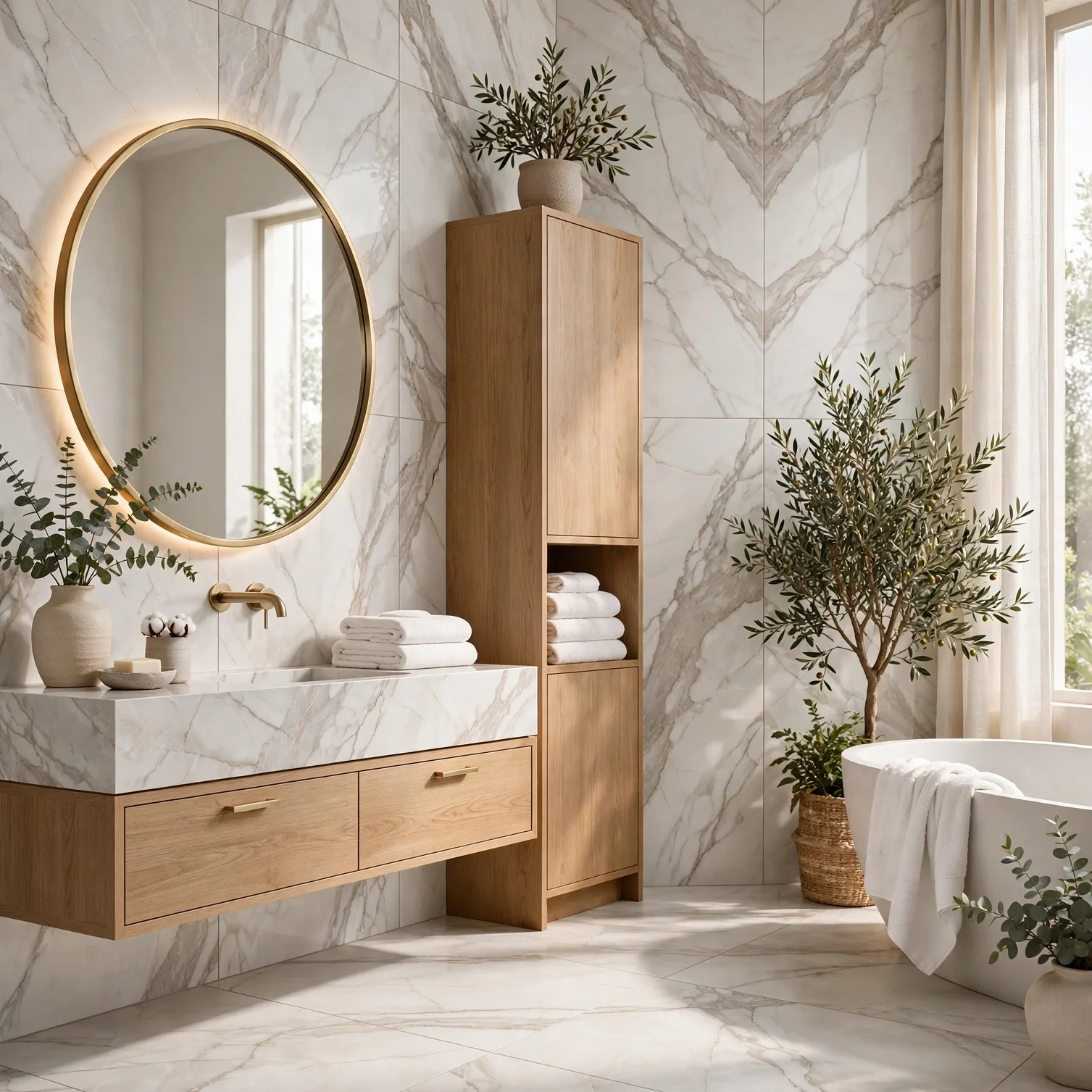
Porcelain tile manufactured to replicate the veining and texture of natural marble delivers a similar visual effect at a lower cost and with significantly less maintenance, since porcelain doesn’t require sealing the way natural stone does. This is particularly useful in a shower, where real marble’s porous surface is more vulnerable to water staining over time. Book-matched porcelain slabs, where the printed veining mirrors at the seam, replicate the high-end look of natural stone waterfall or backsplash applications.
9. Vertical Stack Bond Tile
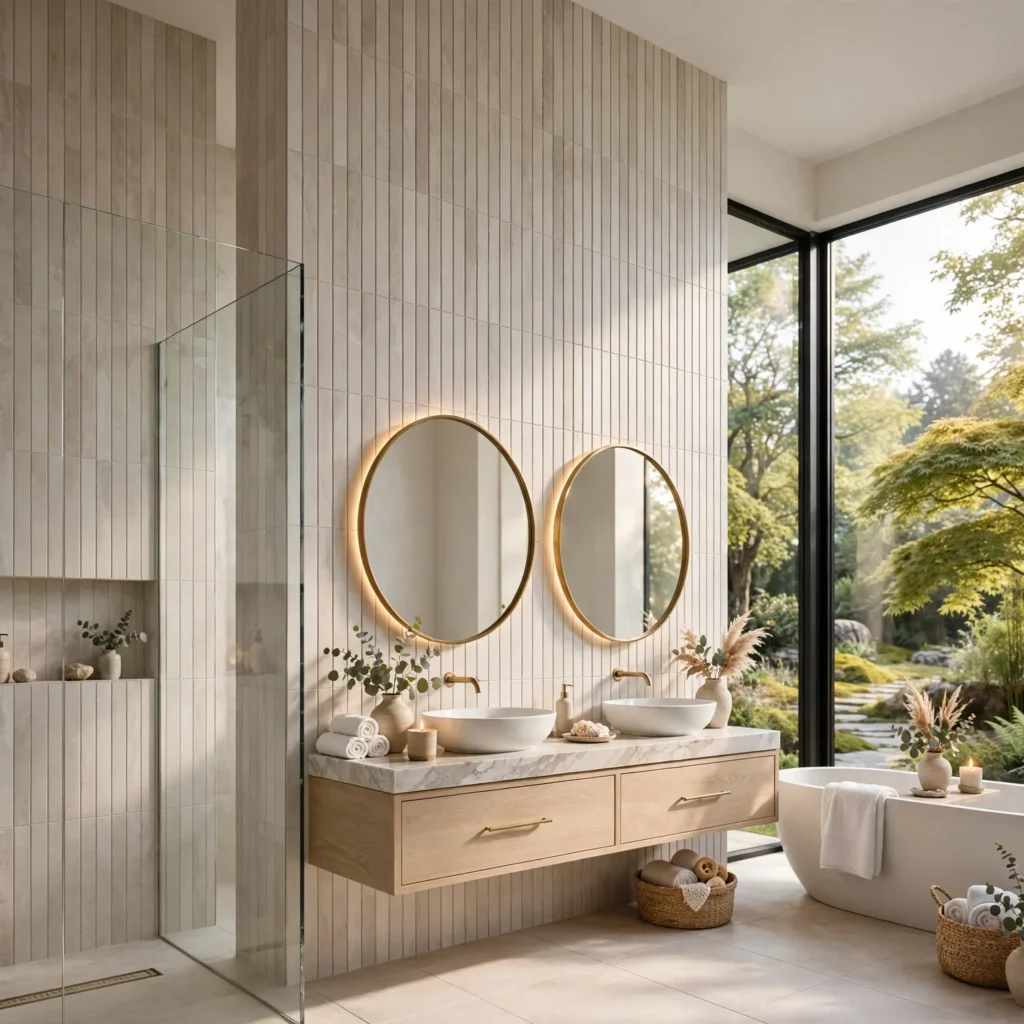
Laying rectangular tile in a vertical stack, rather than the traditional horizontal running-bond pattern, draws the eye upward and can make a bathroom with a lower ceiling feel taller than it actually is. This layout works particularly well on a narrow shower wall or a half-height tiled section, where the vertical lines have room to read clearly. It’s a subtle layout change that doesn’t require a different tile material, just a different installation approach from the standard offset pattern.
10. Textured 3D Tile Accent
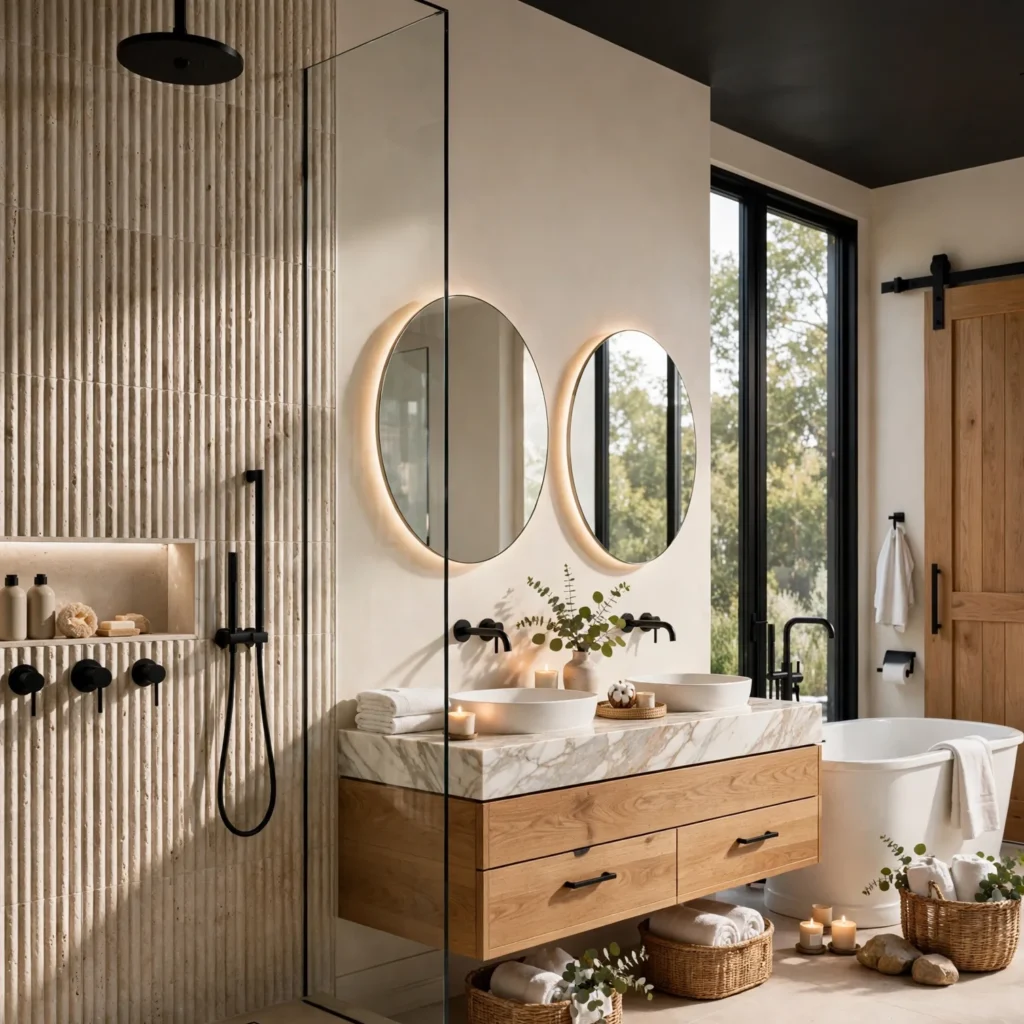
Dimensional tile, with a raised or sculptural surface pattern, adds tactile interest to a single accent wall without relying on color or pattern printing to create visual impact. It’s typically used sparingly, on one wall behind a vanity or as a shower niche accent, rather than across an entire room, since the texture carries significant visual weight on its own. Matte white or a single neutral glaze is the most common finish, letting the dimensional pattern itself be the design statement rather than competing with color.
11. Terrazzo-Look Tile
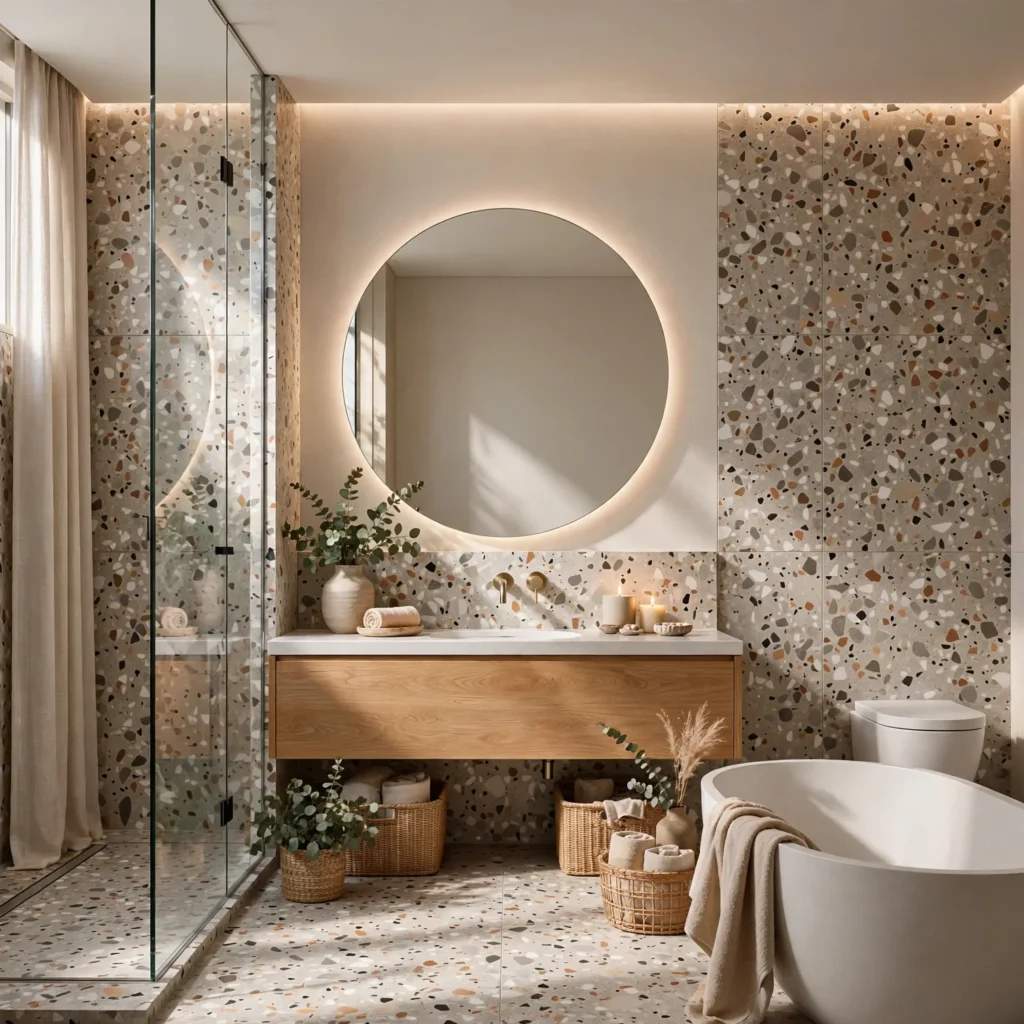
Porcelain tile printed to replicate terrazzo’s characteristic flecked pattern brings a retro-adjacent, currently popular look into a bathroom floor or accent wall without the cost of genuine poured terrazzo installation. It works well in both modern and eclectic bathroom styles, offering color variation and visual texture without a dominant single hue. This tile pairs particularly well with simple, unadorned fixtures, since the terrazzo pattern itself provides enough visual interest for the room.
12. Mosaic Shower Floor
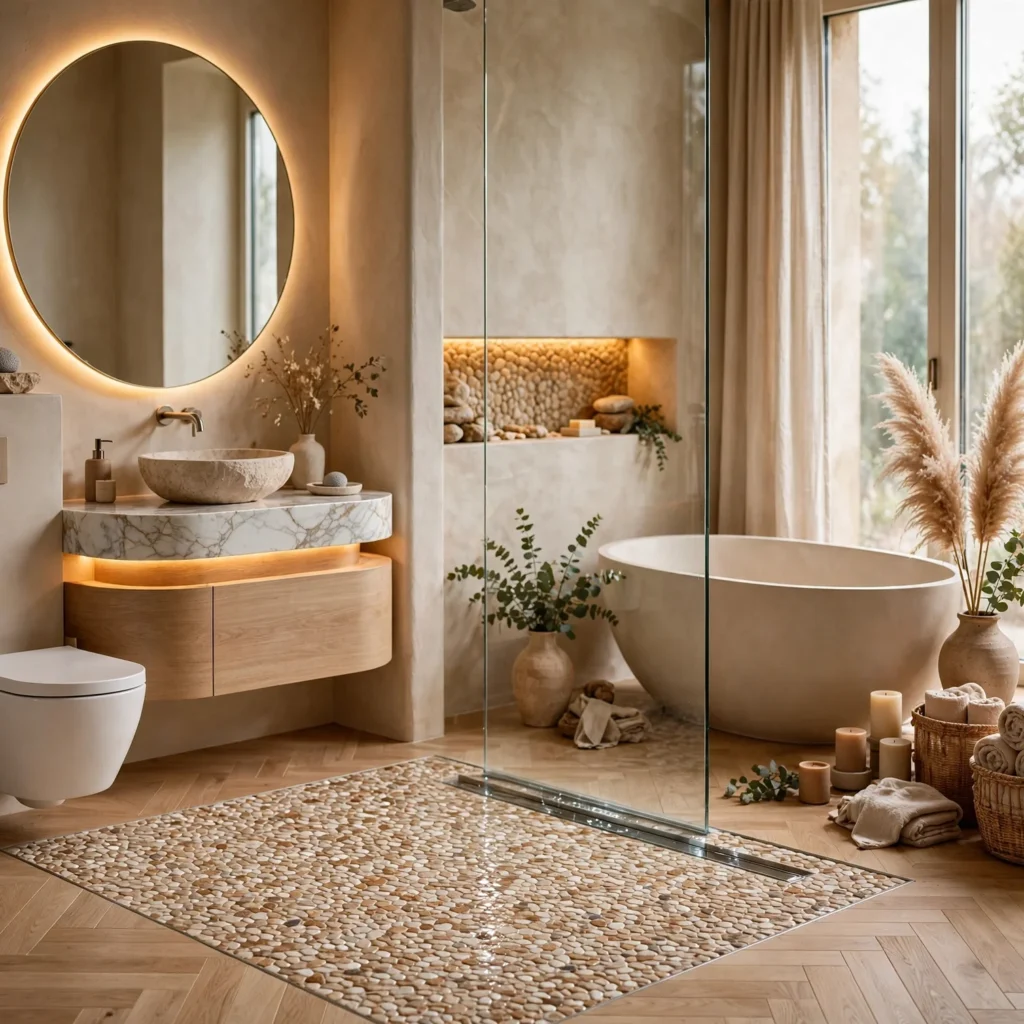
Small-format mosaic tile, typically in a penny round or small hexagon shape, remains the standard choice for shower floors specifically, since the higher grout-line density provides better slip resistance than a single large-format tile would in a wet, sloped surface. It’s common to use a coordinating but distinct tile on the shower floor compared to the walls, creating a subtle visual transition between the two surfaces. This detail matters more for safety than for design, given how much slicker a large-format tile can become when wet and sloped toward a drain.
Shop the Look
A large-format porcelain tile in a stone-look pattern works well as the primary material for floors and shower walls throughout the space. A handmade zellige tile set, sourced from a specialty tile importer, adds texture to a single accent wall or backsplash. A black cement-based grout pairs with white subway tile for the contrasting grout look described here. A penny round mosaic sheet completes the shower floor with the slip resistance a wet, sloped surface requires.
Common Mistake to Avoid
A common mistake in bathroom tiles design is choosing floor tile without confirming its slip rating, particularly with polished porcelain or natural stone finishes that look appealing in a showroom but become dangerously slick when wet. This is especially risky in a curbless shower with no threshold to signal the transition between dry and wet zones. Checking the tile’s coefficient of friction rating before ordering, rather than relying on visual appeal alone, prevents a costly and hazardous installation mistake.
FAQs
What tile size is best for a small bathroom?
Large-format tile, generally 24 inches or larger, tends to work best in small bathrooms because it minimizes grout lines and helps the space read as more continuous and open. Smaller tile, while offering more slip resistance, can make a compact bathroom feel busier and visually smaller due to the higher number of grout lines. Running the same large-format tile across both the floor and shower wall reinforces this effect further in a tight footprint.
Is zellige tile durable enough for a shower?
Zellige tile can be used in a shower provided it’s properly sealed during installation, since its handmade, glazed surface is naturally water-resistant but benefits from an additional sealant for long-term durability in a high-moisture environment. It’s more commonly used on accent walls or backsplashes rather than the full shower enclosure, given its higher cost per square foot compared to standard ceramic or porcelain tile. Working with an installer experienced in zellige is important, since its irregular shape requires more careful layout planning than machine-made tile.
Should shower floor tile match the wall tile?
It’s common to use a coordinating but distinct tile on the shower floor compared to the walls, primarily for slip-resistance reasons rather than a strict design rule, since floor tile typically needs a smaller format with more grout lines than what works well on a vertical wall surface. Matching the color family while varying the tile size and shape keeps the two surfaces feeling connected without requiring an identical tile throughout. This approach also allows the floor tile to be selected specifically for its slip rating.
Is colored grout a passing trend or a lasting choice?
Colored and contrasting grout has moved beyond a short-term trend into a more established design choice, particularly paired with simple tile shapes like subway or hexagon where the grout pattern becomes part of the overall visual effect. It does require more maintenance awareness than a matching grout color, since colored grout can show staining differently over time depending on the specific pigment used. For anyone uncertain about long-term commitment, a mid-tone gray grout offers a safer middle ground between stark white and a bold contrasting color.
How much does it cost to tile a full bathroom?
Bathroom tiling costs vary significantly based on tile material and total square footage, ranging from a few dollars per square foot for standard ceramic subway tile to well over fifteen dollars per square foot for handmade materials like zellige. Labor costs also increase with more complex layouts, like herringbone or full-height shower coverage, compared to a simple brick-pattern installation. Getting a detailed quote based on the specific tile and layout chosen is the most reliable way to budget accurately before committing to a design.
Conclusion
Bathroom tile design shapes more of a room’s overall character than any single fixture, which is why format, pattern, and grout choice deserve the same planning attention given to cabinetry or countertops. Save this guide to Pinterest for your next renovation project, and check out our related post on bathroom design styles for direction on which tile choices fit your preferred aesthetic.