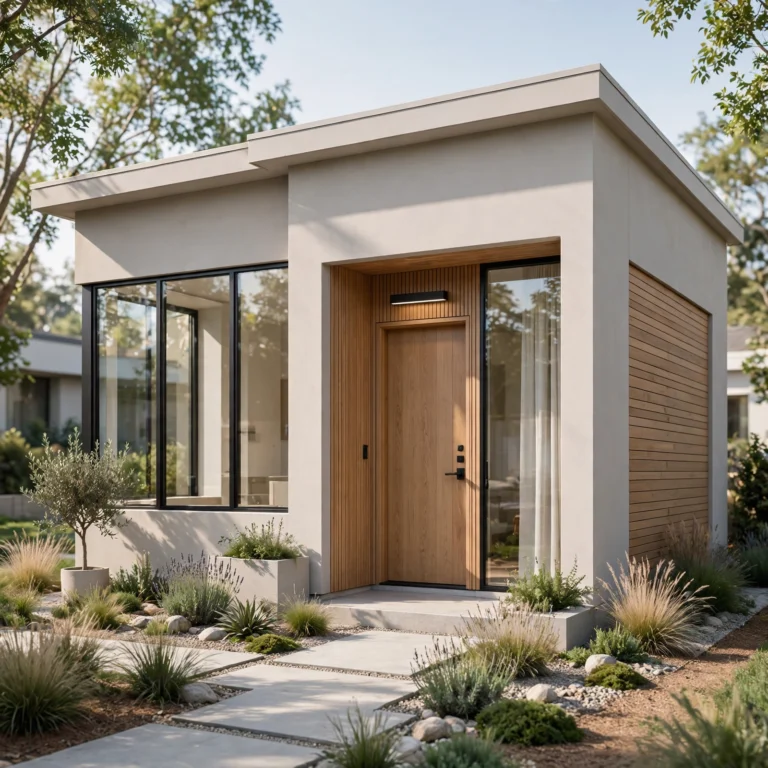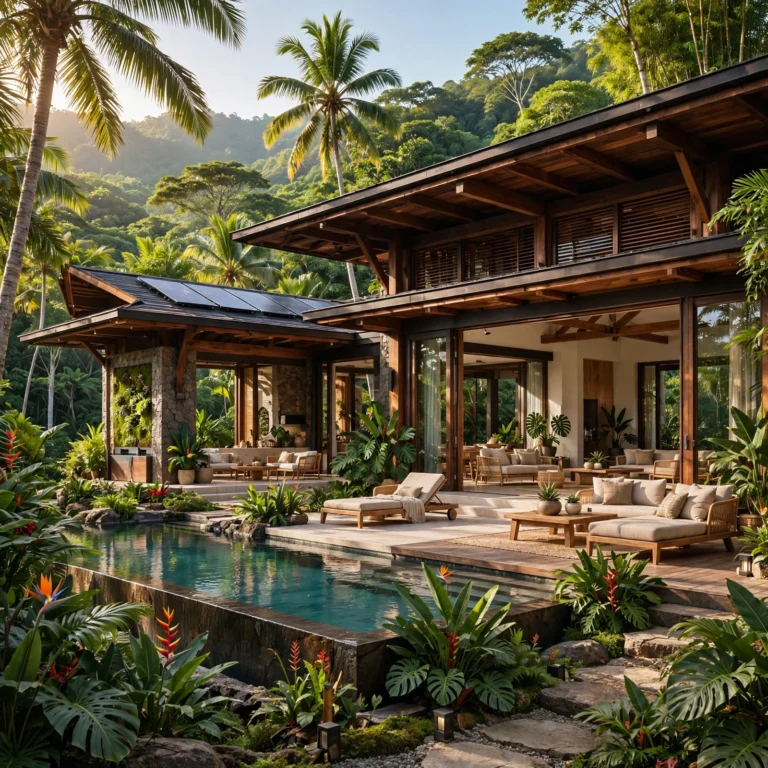
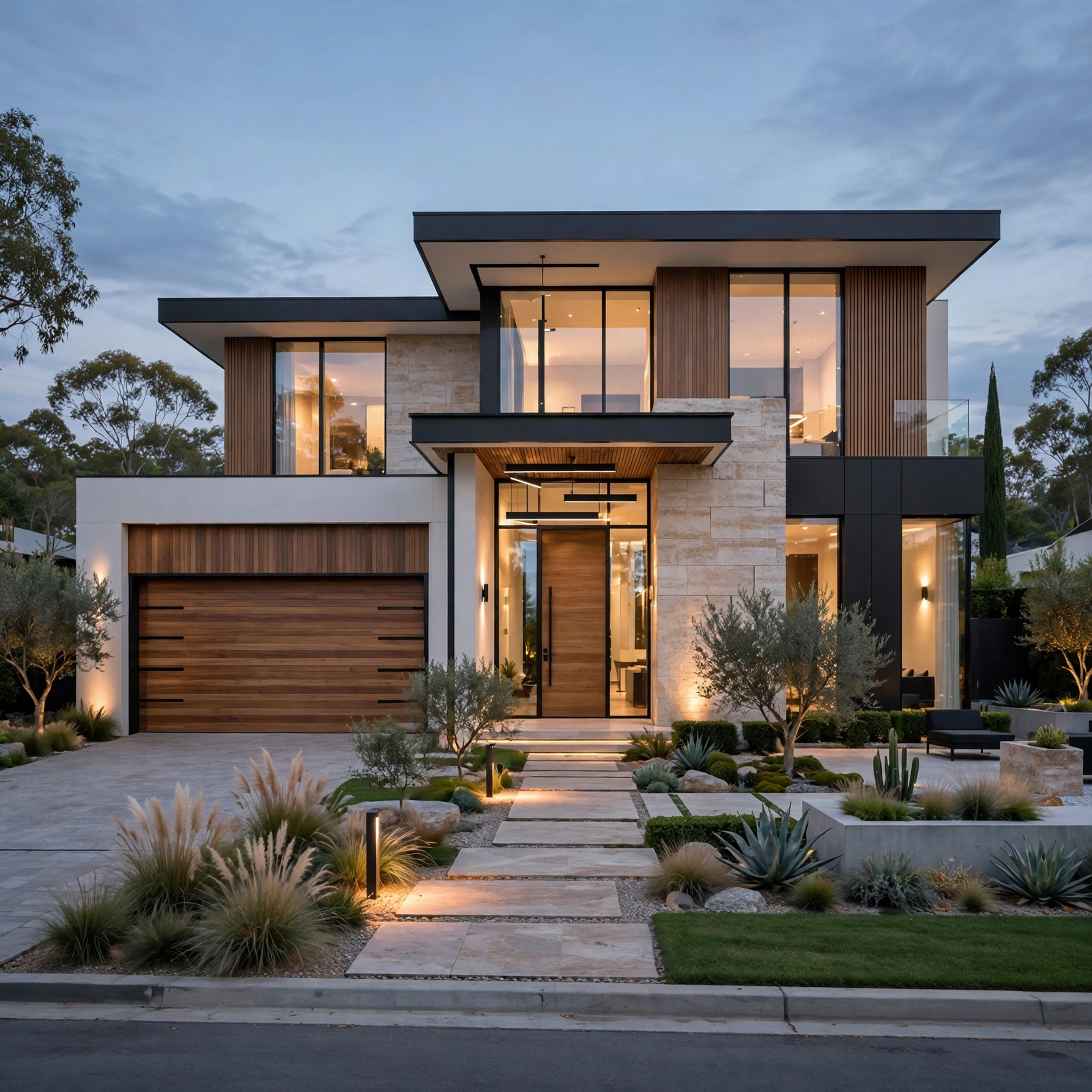
15 Fresh House Exterior Design Ideas for a More Attractive and Inviting Home Entrance
The outside of a house sets expectations before anyone steps through the front door, which makes house exterior design one of the highest-impact areas to get right. Small, low-cost changes like a new door color or updated house numbers can shift how a whole property reads, while bigger moves like siding or hardscaping change the house’s structure and value. This guide walks through fifteen ideas covering materials, lighting, landscaping, and architectural details, with real product and material names so you can prioritize based on your budget and timeline.
Trend & Background
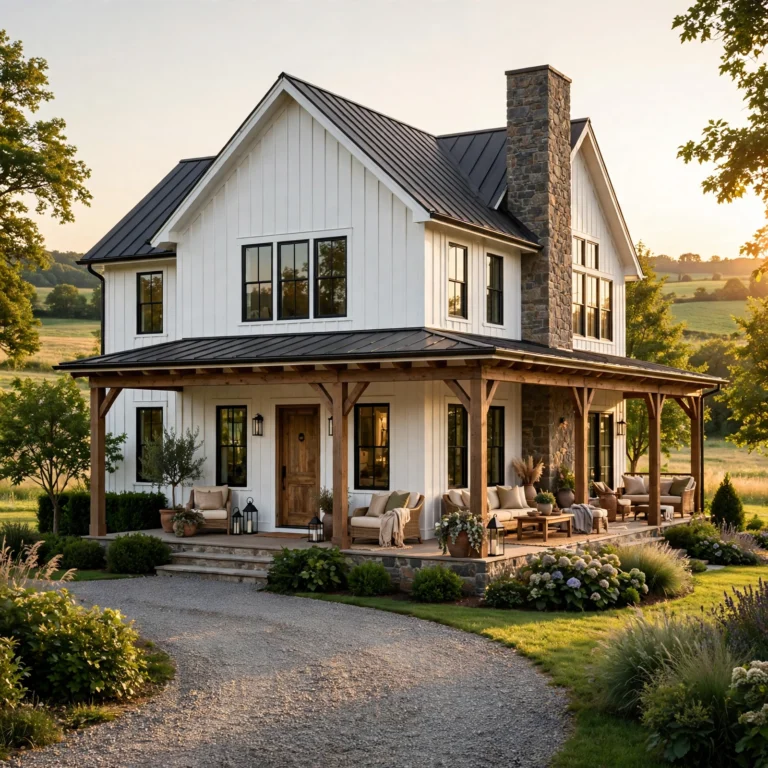
Exterior design has moved toward warmer, more textured materials, board-and-batten siding, natural stone, and matte black or bronze hardware, replacing the flatter vinyl and builder-grade finishes common a decade ago. Native and drought-tolerant landscaping has also become standard in most regions as homeowners look to cut water use without sacrificing curb appeal. Real estate data continues to show exterior updates return a higher percentage of their cost at resale than most interior renovations, which is part of why these fifteen ideas matter now, even for homeowners not planning to sell soon.
Key Takeaways
- Fifteen updates ranging from budget swaps like door color and house numbers to bigger investments like siding and hardscaping
- Renter and HOA-friendly notes are included wherever an idea might require approval or permanent changes
- Reference tables cover siding material comparisons and walkway width guidelines so you can plan before you buy
- Five FAQs cover budget, resale value, and where to start on a full exterior refresh
1. House Exterior Design Color Refresh
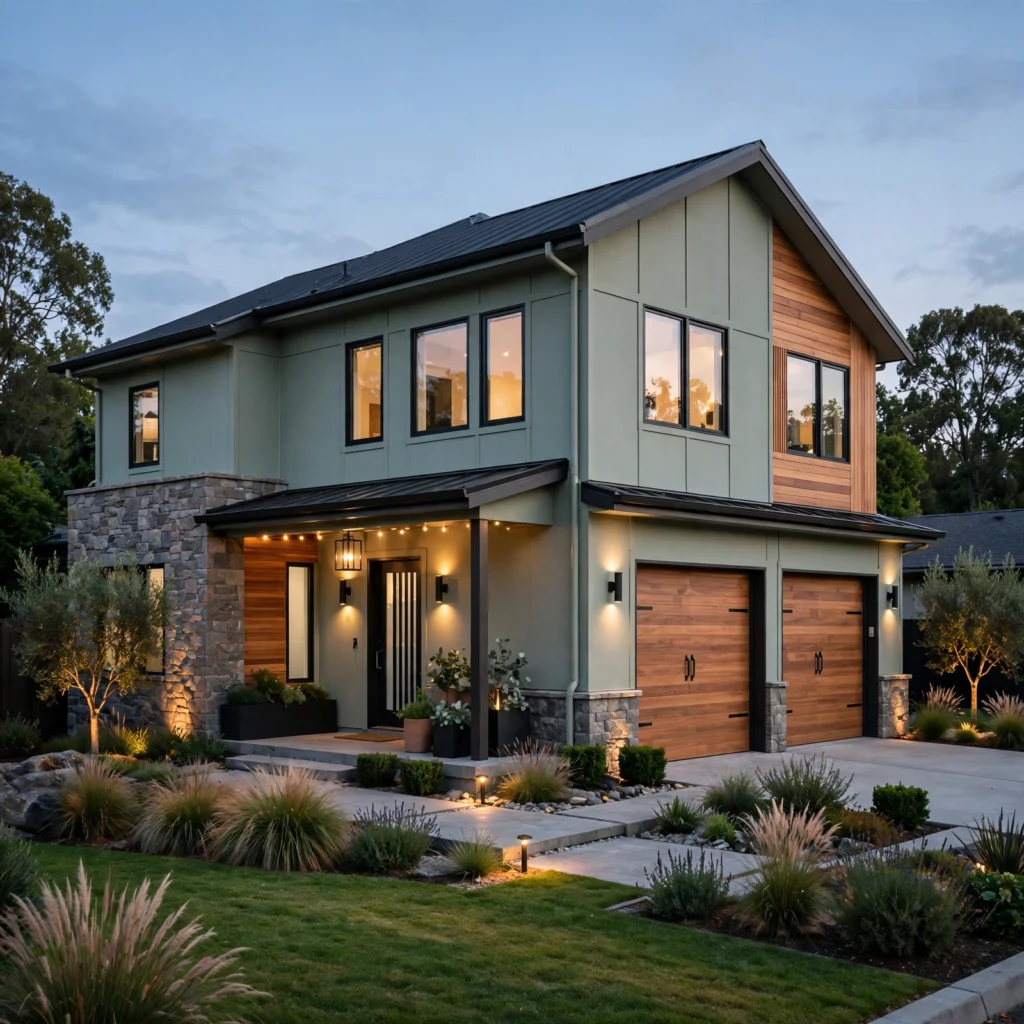
Repainting a house’s exterior in a current, warm neutral like a soft greige or clay, paired with a deep black or bronze trim, is one of the highest-return updates in house exterior design. Test large sample swatches directly on the siding and view them at different times of day, since exterior colors shift more dramatically in natural light than interior paint does. A satin or low-sheen finish on siding hides minor surface imperfections better than a higher-gloss finish, which tends to highlight every dent and seam.
2. Statement Front Door
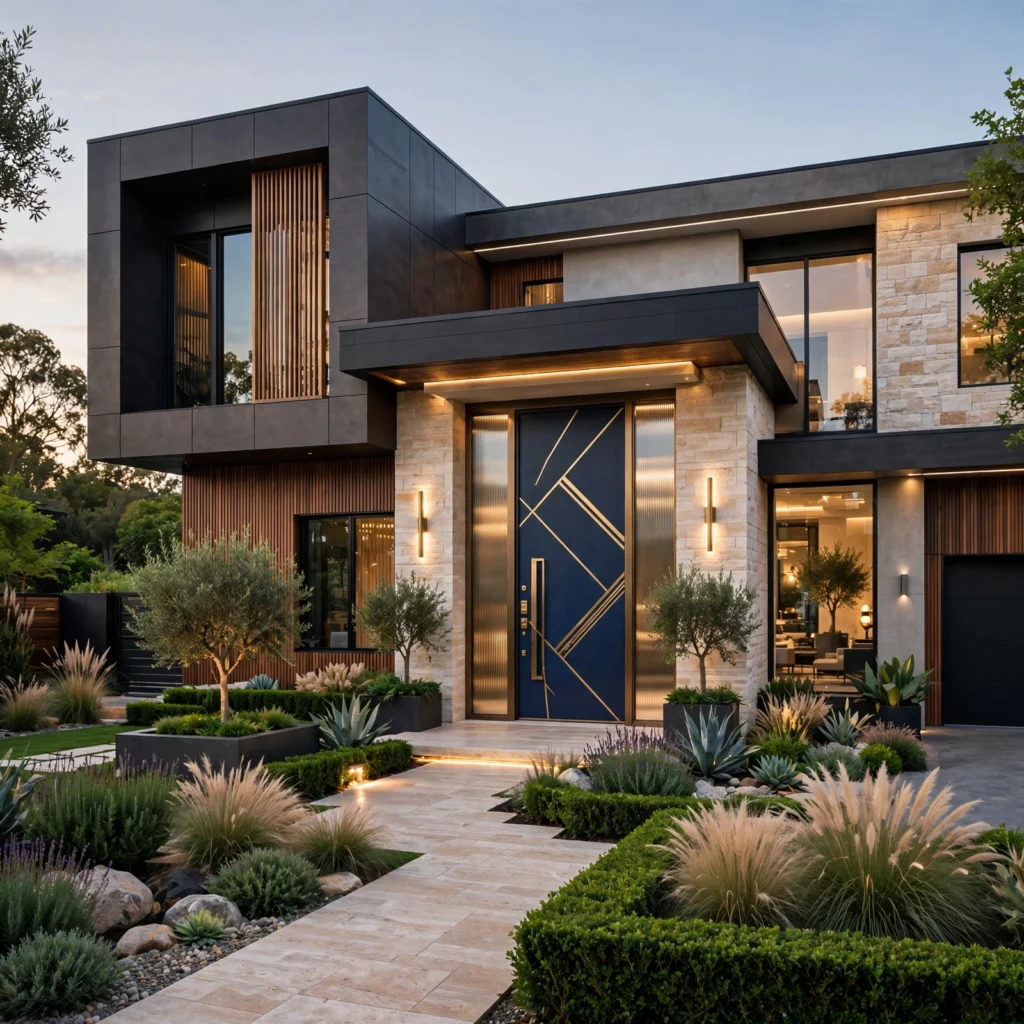
A bold front door color, like a deep forest green, navy, or burnt terracotta, gives an otherwise neutral exterior a clear focal point without repainting the whole house. Pair the door with brass or matte black hardware depending on the rest of the exterior’s metal finishes, and swap a builder-grade knob for a lever handle with a matching kickplate for a more finished look. This is one of the few exterior updates that a renter can typically reverse before moving out with a single coat of the original color.
3. Board and Batten Siding
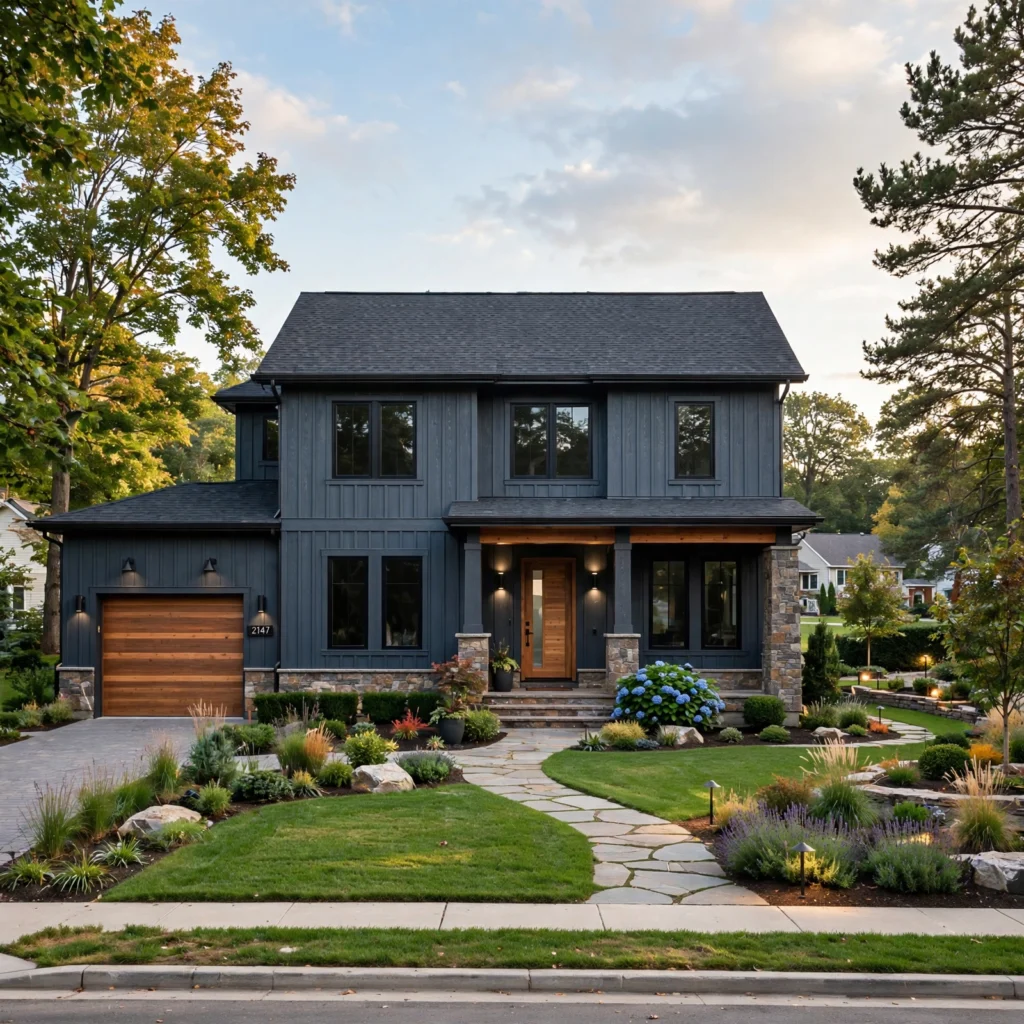
Board and batten siding, applied to a gable, porch surround, or full accent section, adds texture and shadow lines that flat lap siding doesn’t provide. Fiber cement board and batten holds up better to moisture and pests than wood, though real cedar offers a warmer, more natural look if maintained with regular sealing. Limiting board and batten to one architectural section, rather than the entire house, keeps the material feeling like an intentional accent instead of the default surface.
| Siding Material | Approx. Cost per Sq Ft | Maintenance Level |
| Vinyl | $3–$8 | Low |
| Fiber cement | $6–$13 | Low–Medium |
| Wood (cedar) | $8–$15 | High |
| Stucco | $6–$12 | Medium |
4. Natural Stone Accent
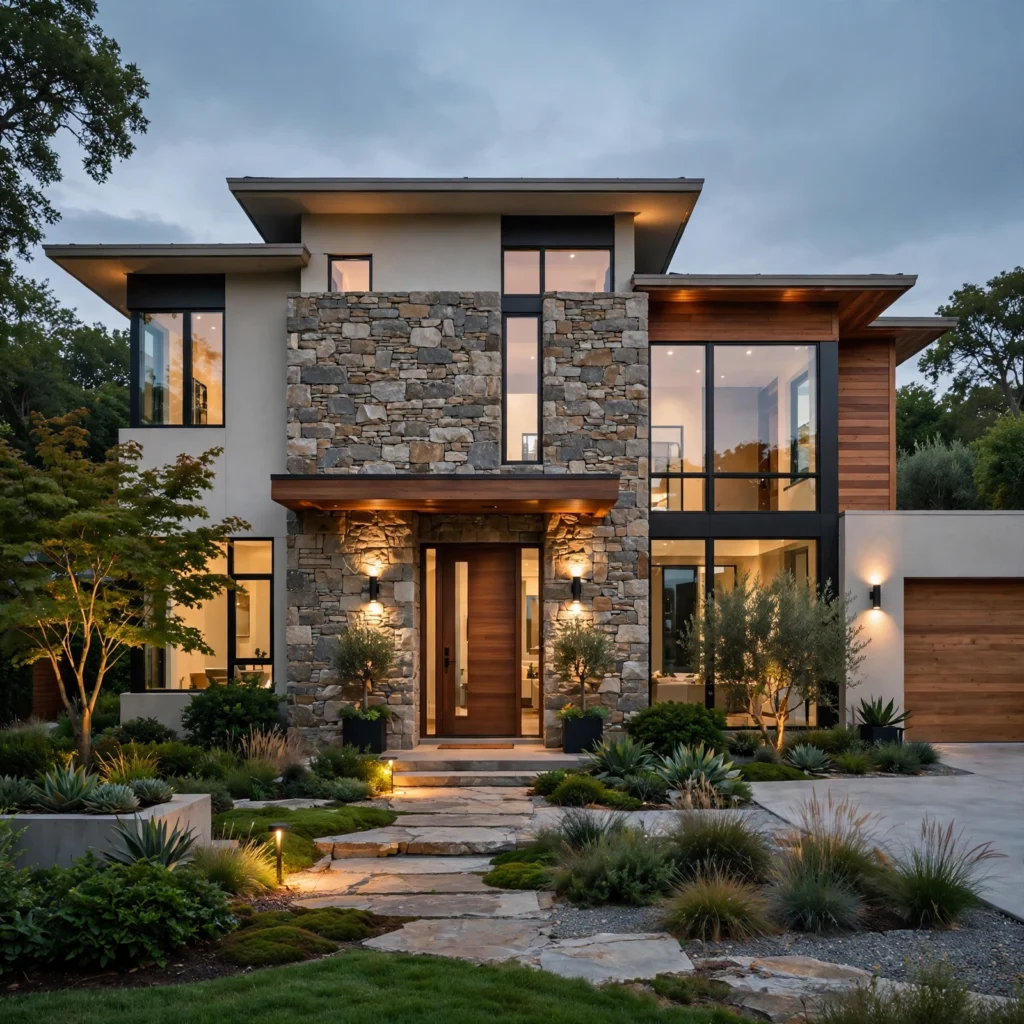
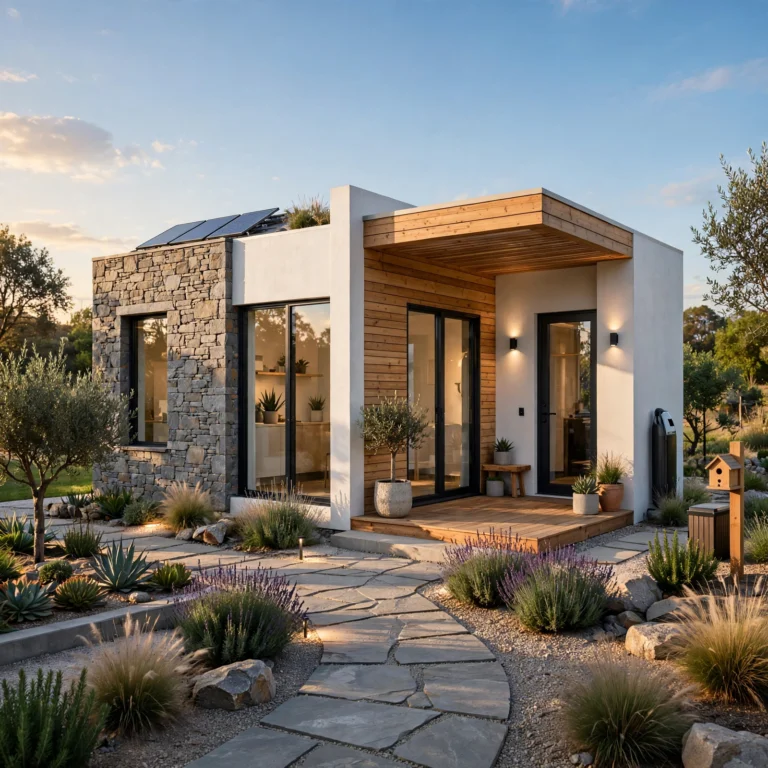
A natural stone veneer applied to porch columns, a low garden wall, or the base of the house adds weight and permanence to an exterior that would otherwise read as flat siding from top to bottom. Choose a stone with tighter, more consistent coloring for a cleaner, more modern look, or a rougher fieldstone veneer for a more rustic, cottage-style exterior. Keep stone to the lower third of the house or a single architectural feature, since full stone facades typically look best on houses originally designed for that proportion.
In order to see more options for house interior design CLICK HERE
5. Landscape Lighting Plan
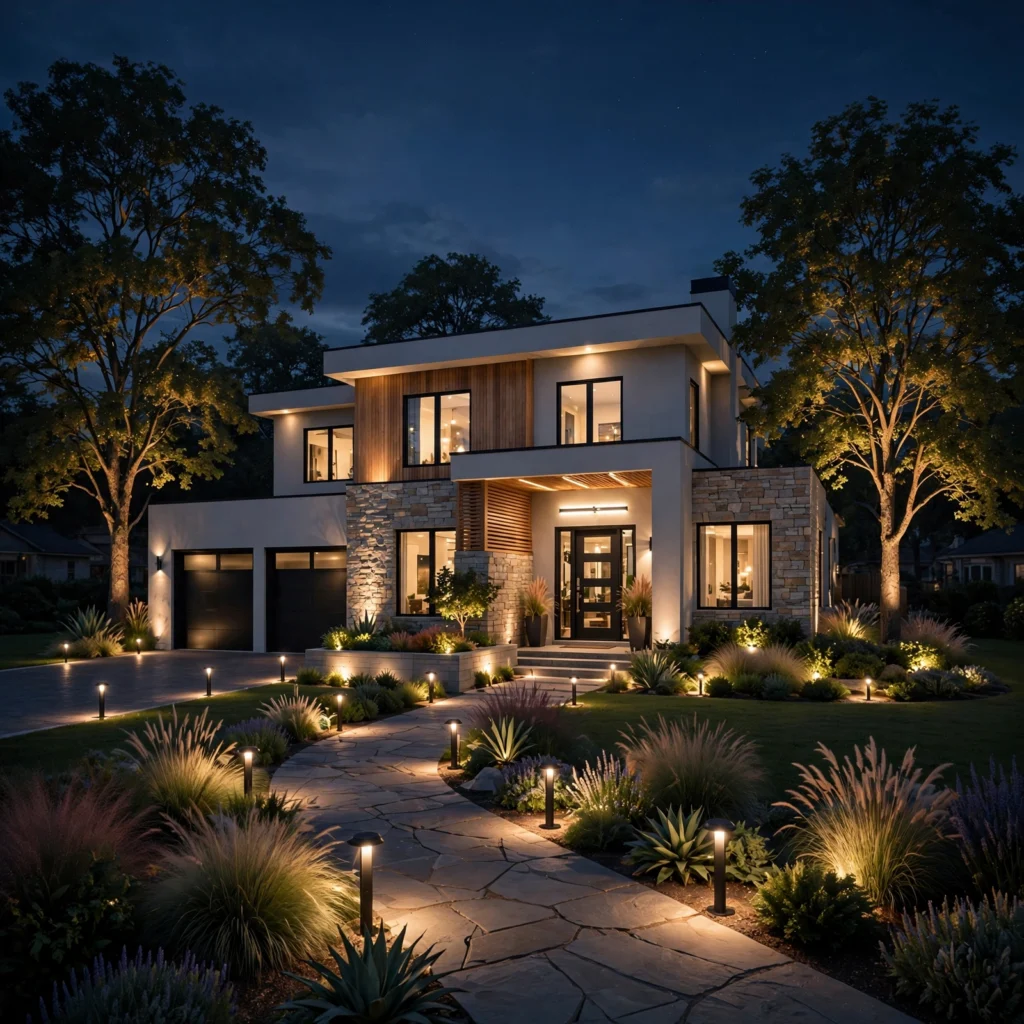
A layered landscape lighting plan combining path lights, uplights on trees or architectural features, and a fixture at the front door changes how a house reads after dark far more than a single porch light. Low-voltage LED systems are the most accessible option for homeowners to install without an electrician, running on a transformer plugged into an existing outdoor outlet. Aim uplights at any mature trees or interesting rooflines first, since those create the most dramatic shadow and depth once the sun goes down.
6. Updated House Numbers
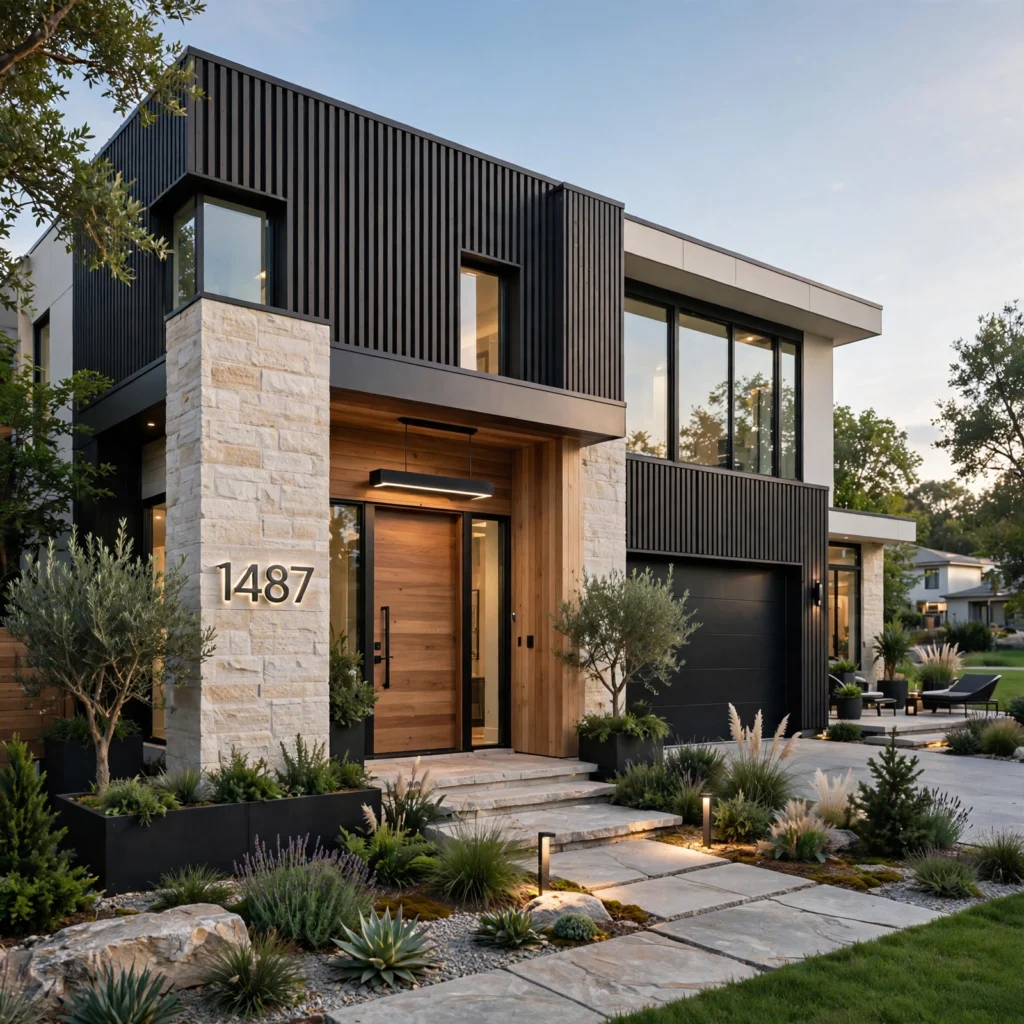
Swapping builder-grade house numbers for a modern floating or brushed metal set is one of the lowest-cost updates in house exterior design, typically costing under a hundred dollars total. Choose a font and finish that matches the rest of the exterior’s hardware, brushed brass for warmer palettes, matte black for more modern or monochrome exteriors. Mount numbers with a slight standoff from the wall using floating hardware rather than flush against the siding, since the small shadow line reads as more custom and less generic.
7. Covered Porch Addition
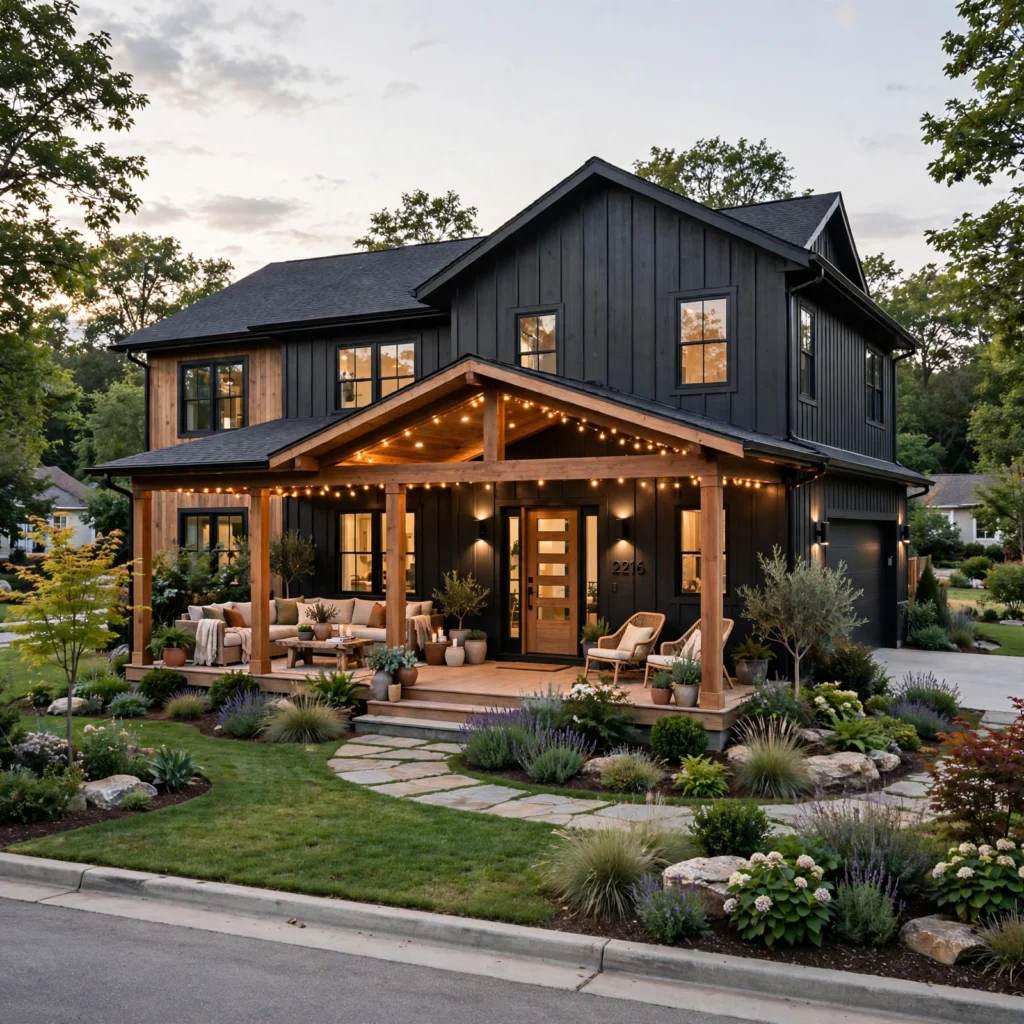
Adding or expanding a covered front porch gives a house both a functional outdoor space and a stronger architectural presence from the street. Wood columns on a stone or brick base tend to read as more traditional, while square, unadorned columns painted to match the trim suit a more modern or transitional exterior. A ceiling fan and at least one wired sconce make the space usable in the evening and through warmer months, turning the porch into real living space rather than a purely decorative addition.
8. Garage Door Upgrade
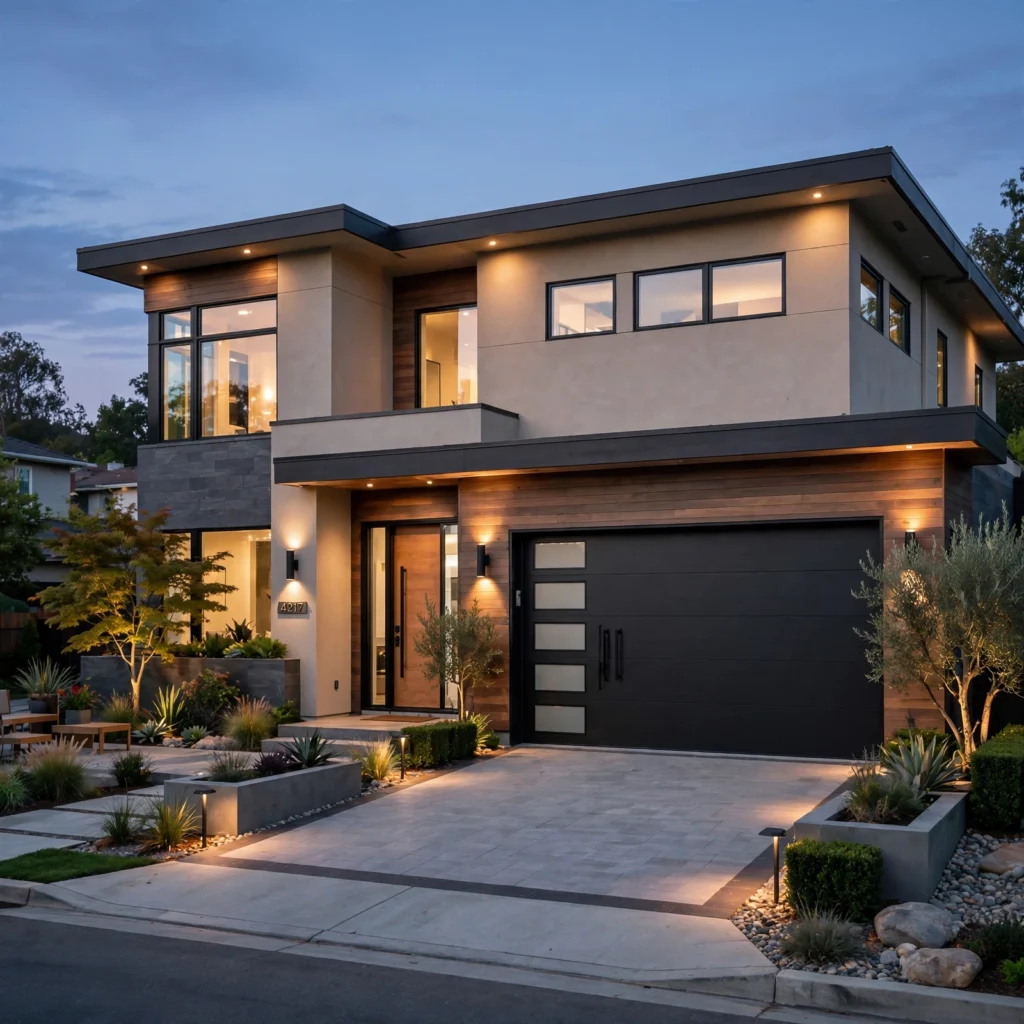
Since a garage door often makes up a large percentage of a house’s street-facing surface, upgrading to a carriage-style door with black hardware or a modern flush panel design changes the whole facade’s proportions. Choose a color that matches or closely complements the trim rather than the siding itself, so the garage door doesn’t visually compete with the front door as the house’s focal point. Insulated steel doors offer the carriage look at a lower cost than true wood, with less ongoing maintenance.
9. Native Plant Landscaping
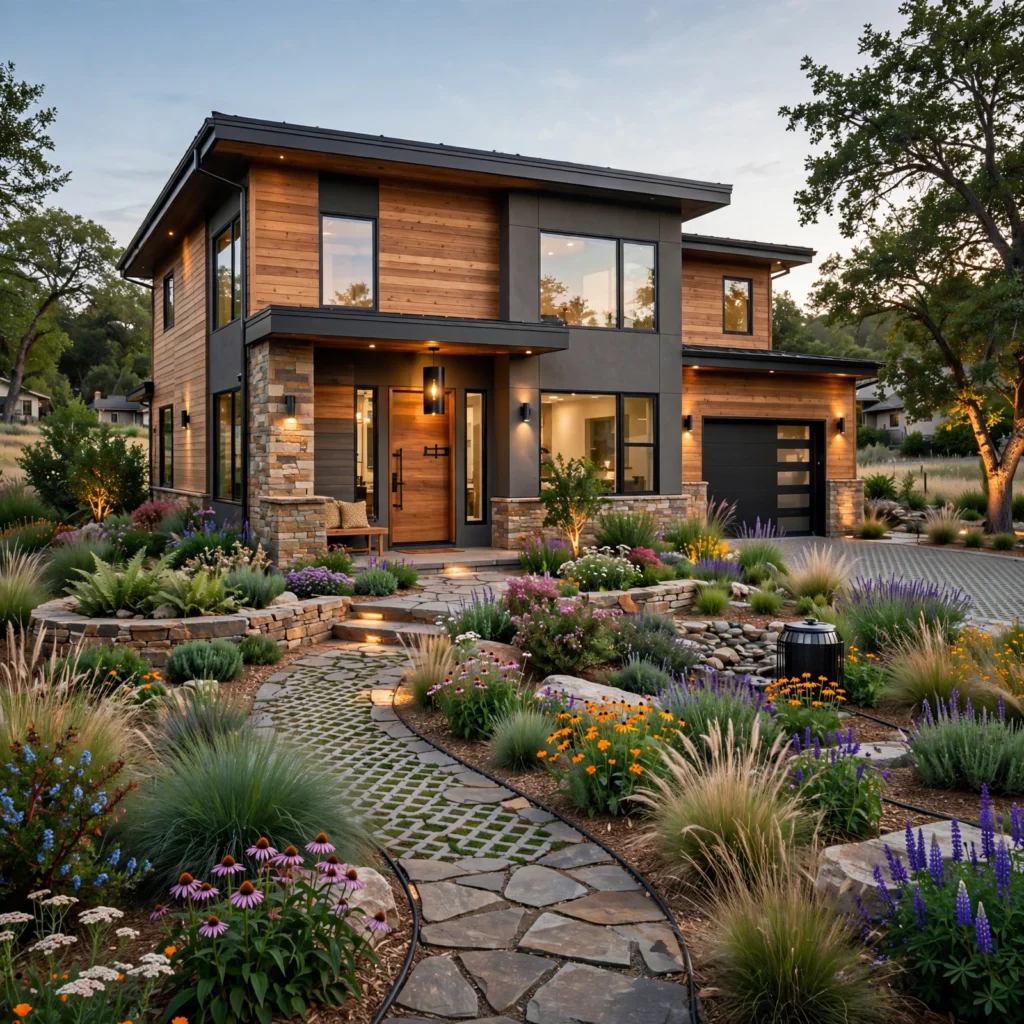
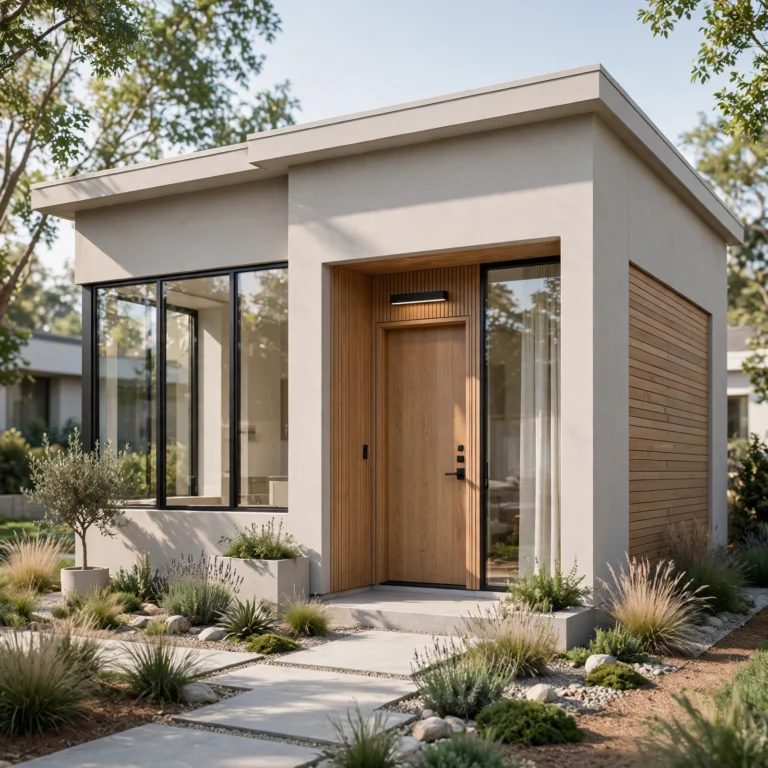
Replacing water-heavy lawn sections or overgrown foundation shrubs with native, drought-tolerant plants reduces maintenance while giving the exterior a more current, textured look. Group plants by height in odd-numbered clusters, taller grasses toward the back, mid-height flowering perennials in the middle, and low groundcover along the front edge closest to a walkway. Native plants also tend to attract local pollinators, which adds a layer of movement and life to the front of the house through most of the growing season.
10. Wraparound Walkway Update
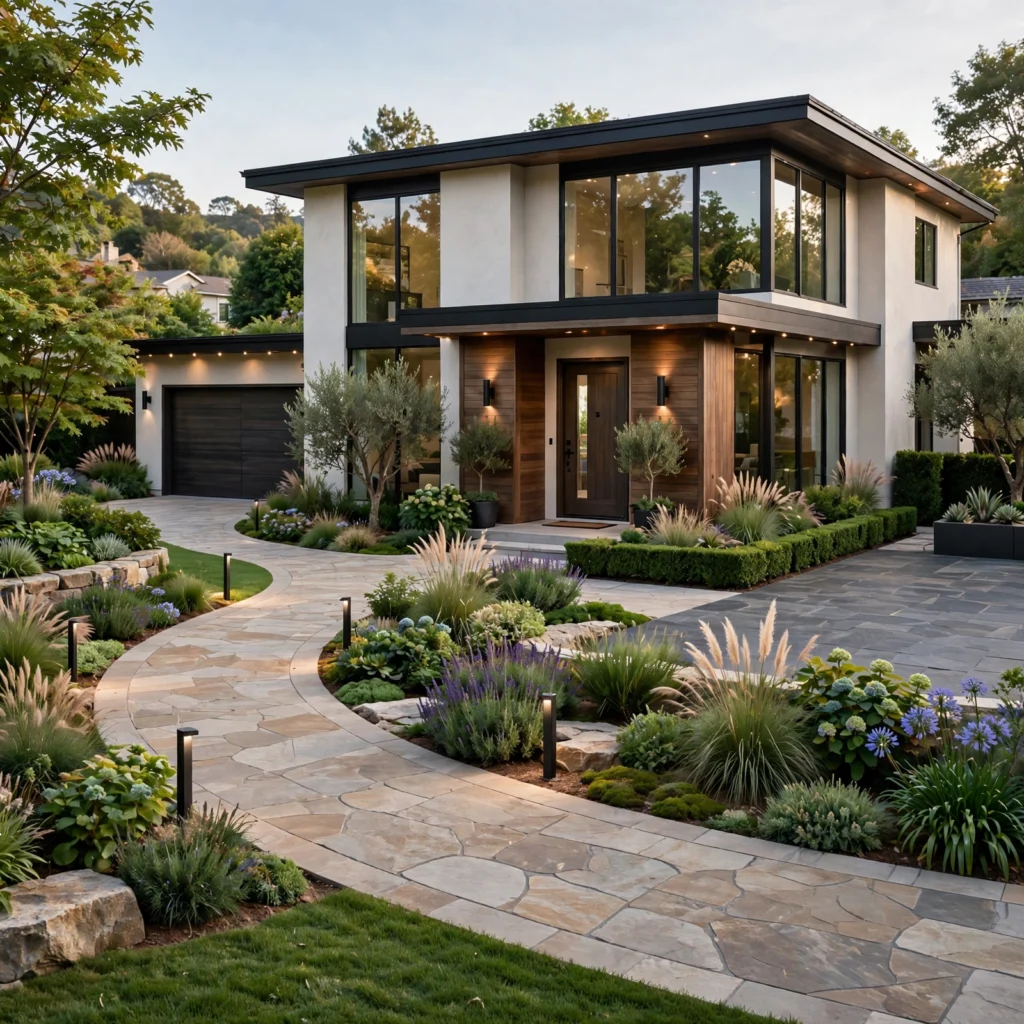
Replacing a cracked or narrow concrete walkway with natural stone pavers or a wider poured concrete path improves both the exterior’s look and its everyday function. A walkway at least four feet wide allows two people to walk side by side comfortably, which reads as more generous and welcoming than the standard thirty-six-inch builder path. Curving the walkway slightly rather than running it in a straight line from the driveway also softens the approach to the front door.
| Walkway Purpose | Recommended Width | Material Options |
| Secondary path | 3 ft | Concrete, gravel |
| Main front walkway | 4–5 ft | Concrete, natural stone, brick |
| Shared entry path | 5–6 ft | Natural stone, pavers |
11. Window Trim and Shutters
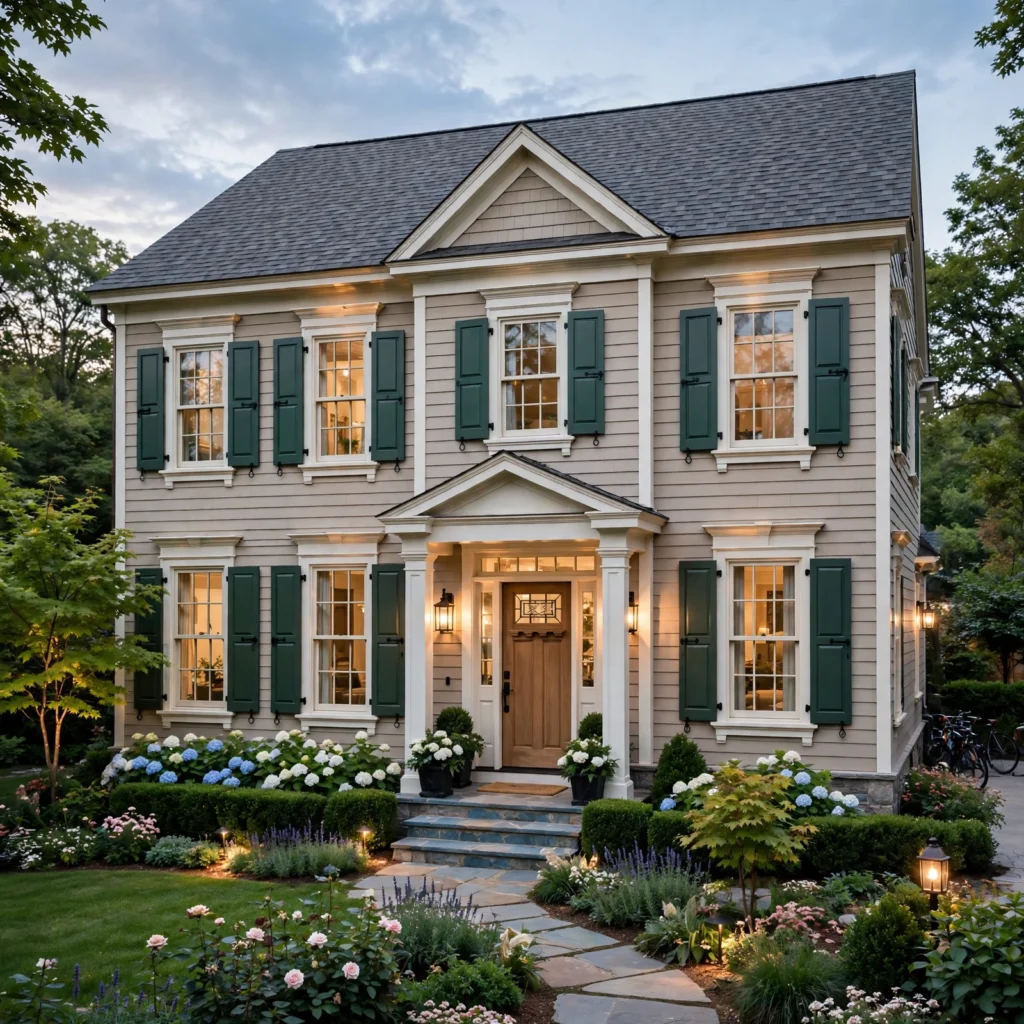
Adding or refreshing window trim and shutters gives flat window openings more definition and shadow against the siding. Size shutters to match the actual window’s width when closed, a common mistake is installing shutters visibly too narrow for the window beside them, which reads as decorative rather than functional even though most modern shutters are fixed in place. A trim color one or two shades darker than the siding, rather than stark white, tends to read as more current on warmer-toned exteriors.
12. Outdoor Living Wall or Trellis
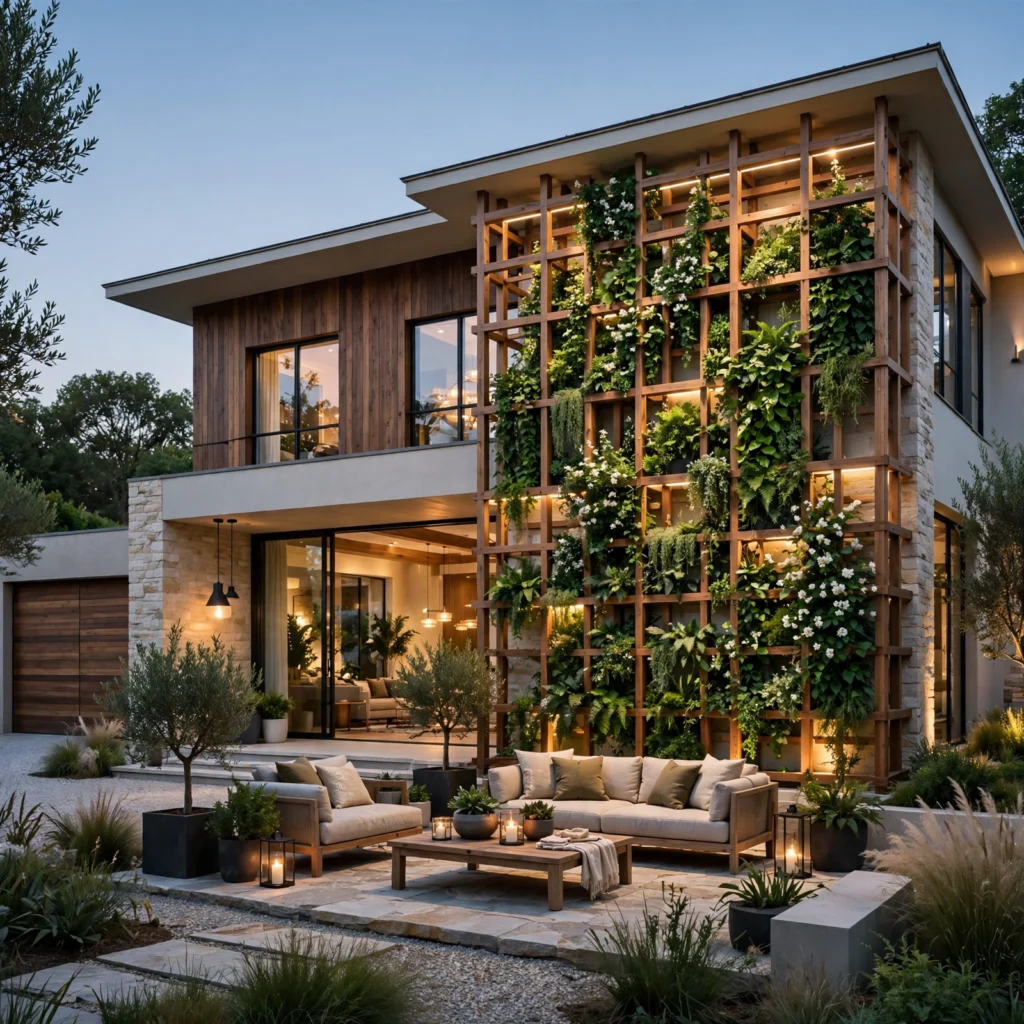
A wood trellis or cable system supporting a climbing vine, like clematis or climbing hydrangea, softens a large blank exterior wall with living texture that grows and changes through the seasons. Cedar trellises weather to a soft gray over time if left unfinished, or can be stained to match existing trim for a more uniform look. Position the trellis a few inches off the wall rather than flush against it, which allows airflow behind the vine and protects the siding from trapped moisture.
13. Modern House Number and Mailbox Set
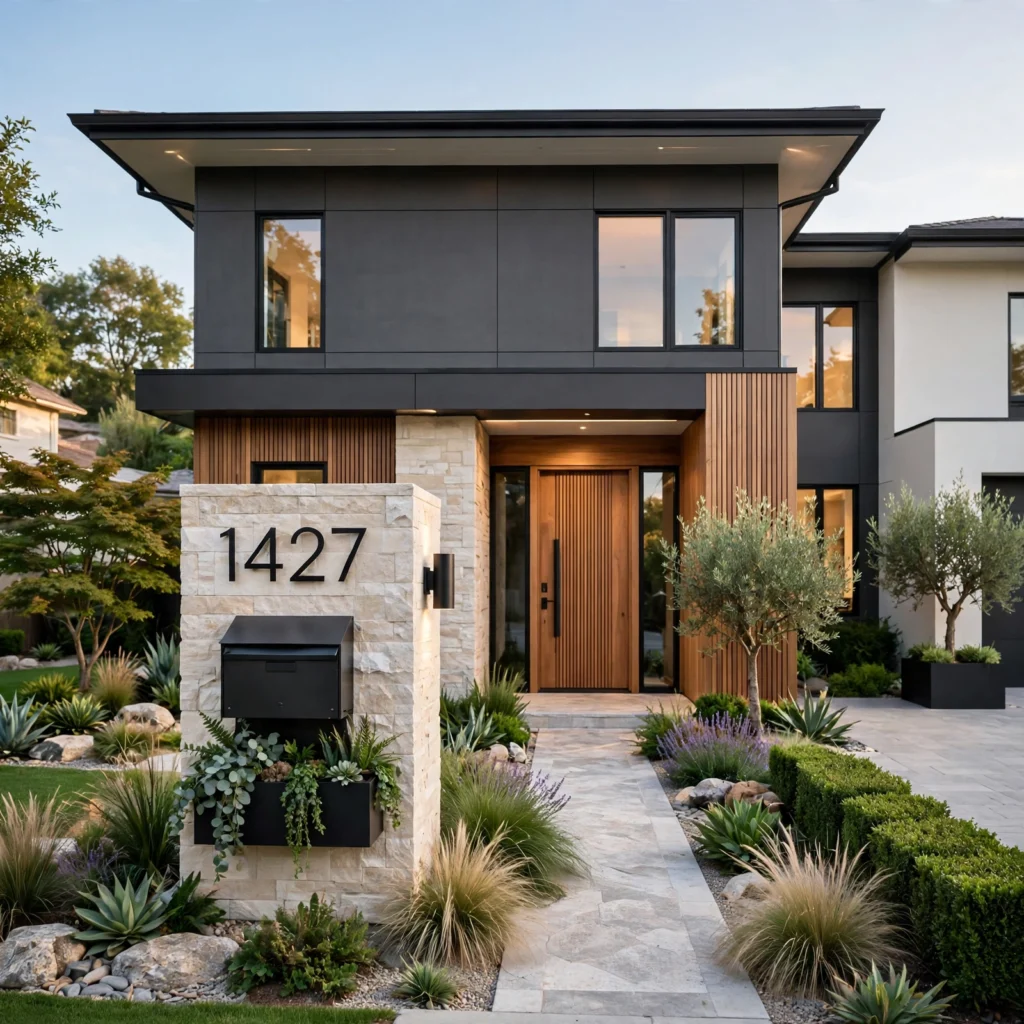
Coordinating a mailbox with the house’s updated numbers and door hardware ties smaller exterior details together into a single consistent look rather than a collection of mismatched finishes. A simple matte black or brushed metal mailbox on a wood or masonry post reads more current than a builder-grade aluminum box on a bare metal pole. This update pairs naturally with the house numbers idea above and typically costs under two hundred dollars for both combined.
14. Exterior Lighting Fixture Swap
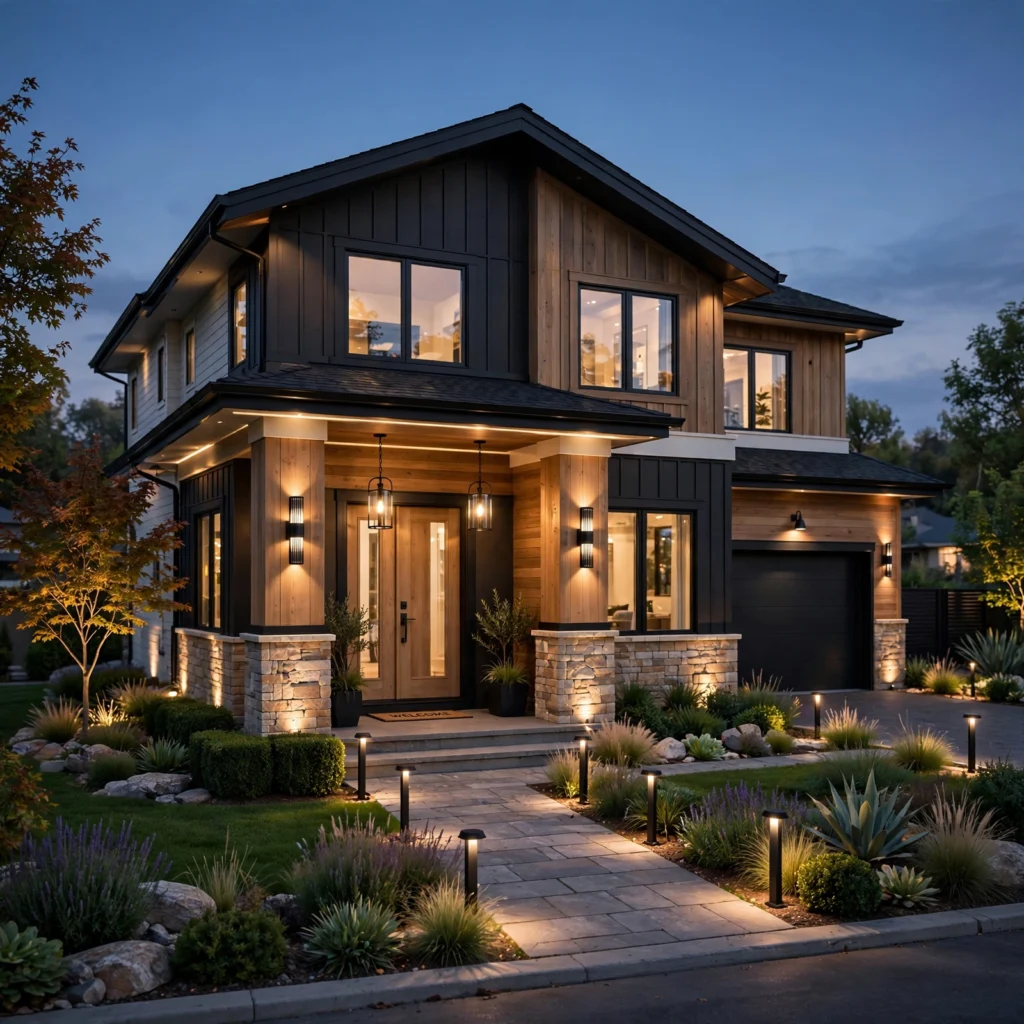
Replacing dated builder-grade porch lights with a pair of matching sconces flanking the front door, plus a coordinating pendant if the porch ceiling allows it, upgrades one of the exterior’s most noticeable details. Brass or bronze fixtures with clear or seeded glass suit most traditional exteriors, while matte black cylindrical fixtures fit more modern facades. Keep exterior fixtures on a dusk-to-dawn sensor or smart timer so the house’s lighting stays consistent without manual switching every evening.
15. Driveway and Parking Pad Refresh
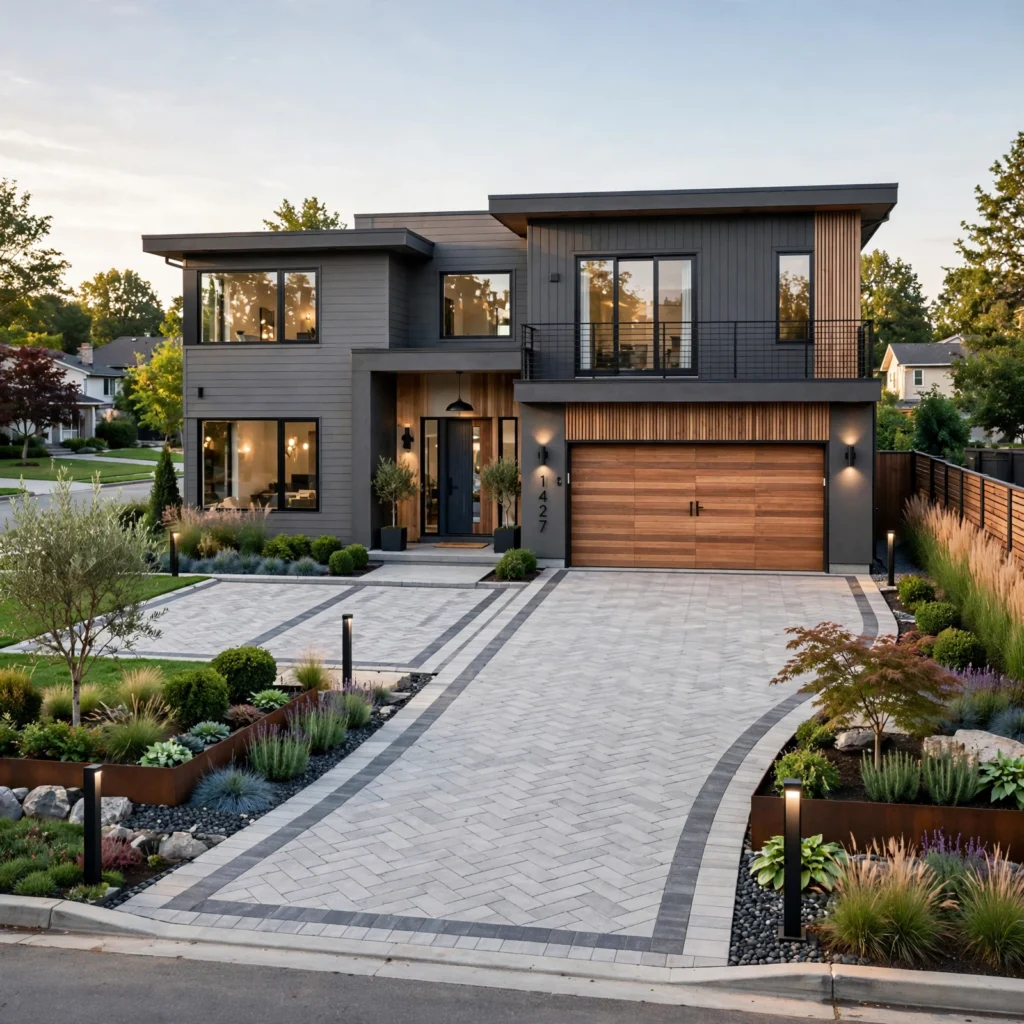
Resurfacing a cracked or stained driveway, or adding a defined parking pad with a contrasting border material, improves both function and the exterior’s first impression before a visitor even reaches the front door. A simple brick or stone border along the edge of a poured concrete driveway adds definition without the cost of a full paver driveway. Power washing and resealing an existing driveway is the lowest-cost version of this update and can often be done in a single weekend.
Shop the Look
For house numbers, look at floating brass or black sets from House Numbers Depot or Modern House Numbers. Landscape lighting kits from Kichler or Lutron cover the low-voltage lighting idea without hiring an electrician. Board and batten siding panels from James Hardie handle the fiber cement option directly. Exterior sconces from Rejuvenation or Barn Light Electric round out the door and porch lighting, and a matte black mailbox from Architectural Mailboxes matches most updated hardware finishes.
Common Mistake to Avoid
The most common mistake is updating a single visible feature, like the front door, without checking that its finish and color coordinate with the rest of the house’s hardware, trim, and lighting. A bold new door color next to dated brass house numbers and a mismatched mailbox reads as unfinished even though each piece looks fine individually. Before starting any single update, walk the front of the house and note every visible metal finish and color already present, then choose new pieces that either match or intentionally contrast with what’s already there.
What house exterior design update gives the best return on investment?
Garage door replacement and a fresh coat of exterior paint consistently rank among the highest-return exterior updates according to most annual cost-versus-value reports, often recovering seventy to ninety percent of their cost at resale. A new front door and updated landscaping also perform well, particularly for the low upfront cost involved compared to larger structural changes. Updates like a full siding replacement or a stone facade cost significantly more and generally return a lower percentage, though they can still be worthwhile for homeowners planning to stay long-term.
How much should I budget for a house exterior design refresh?
Budget depends heavily on which ideas you choose, but most of the smaller updates on this list, house numbers, a mailbox, or exterior lighting, fall under three hundred dollars combined. Mid-range updates like a front door repaint, landscape lighting, or a walkway refresh typically run several hundred to a few thousand dollars. Larger structural updates like board and batten siding, a covered porch addition, or a garage door replacement usually cost several thousand dollars depending on square footage and whether the work is DIY or professionally installed.
Where should I start with house exterior design if I’m on a tight budget?
Start with the front door, house numbers, and exterior lighting fixtures, since all three are visible from the street, relatively inexpensive, and don’t require permits or HOA approval in most cases. A fresh coat of paint on the door and trim, paired with updated hardware, typically costs under two hundred dollars in materials and can be completed in a weekend. Landscaping cleanup, trimming overgrown shrubs and adding mulch, is the next lowest-cost step and often makes the biggest visible difference for the smallest investment.
Do I need HOA approval for exterior design changes?
Many HOAs require approval for changes visible from the street, including paint colors, siding materials, fencing, and sometimes landscaping changes, so it’s worth checking your community’s covenants before starting any of the larger updates on this list. Smaller, easily reversible updates like house numbers, a mailbox swap, or landscape lighting are less likely to require formal approval, though some HOAs still have specific rules around exterior lighting brightness or color temperature. When in doubt, submitting a simple written request before starting work avoids costly changes later.
How do I choose exterior paint colors that won’t look dated quickly?
Warm, muted neutrals like greige, soft clay, or a warm white tend to age more slowly than trend-driven colors like the cooler gray tones that were common a decade ago. Testing large sample boards against the house’s existing permanent materials, roof color, brick, or stone, matters more outdoors than indoors, since exterior colors need to work with elements that can’t be changed as easily as paint. Choosing a trim color with some flexibility, rather than stark white, also makes it easier to update the main siding color again later without redoing the trim.
Conclusion
The fifteen ideas above cover color, materials, lighting, and landscaping, giving you enough range to update a house’s exterior in stages rather than all at once. Whether you start with new house numbers or commit to a full board and batten accent, the goal of any house exterior design update is a facade that feels cohesive and intentional from the street rather than a collection of mismatched details. Save this list to Pinterest for your next project, or check our related post on small living room layout ideas for more home-wide inspiration.
I’ve spent the last six years sourcing materials and consulting on curb appeal updates for residential listings, which means I’ve watched which exterior changes actually hold up to weather and resale scrutiny and which ones only look good in a single staged photo.