Eye Catching 17 Small Kitchen Storage Ideas to Make the Most of Every Cabinet Gap
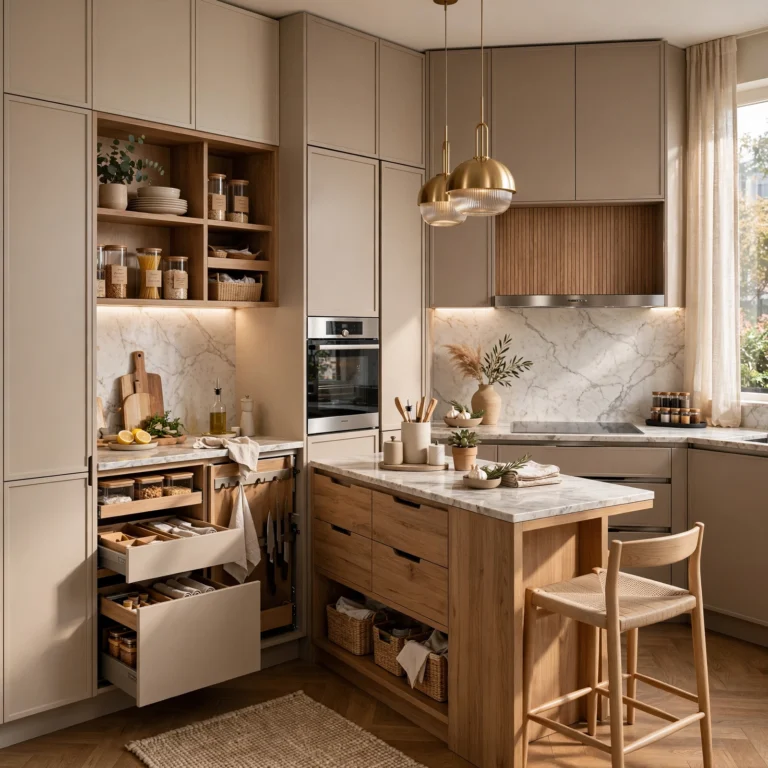
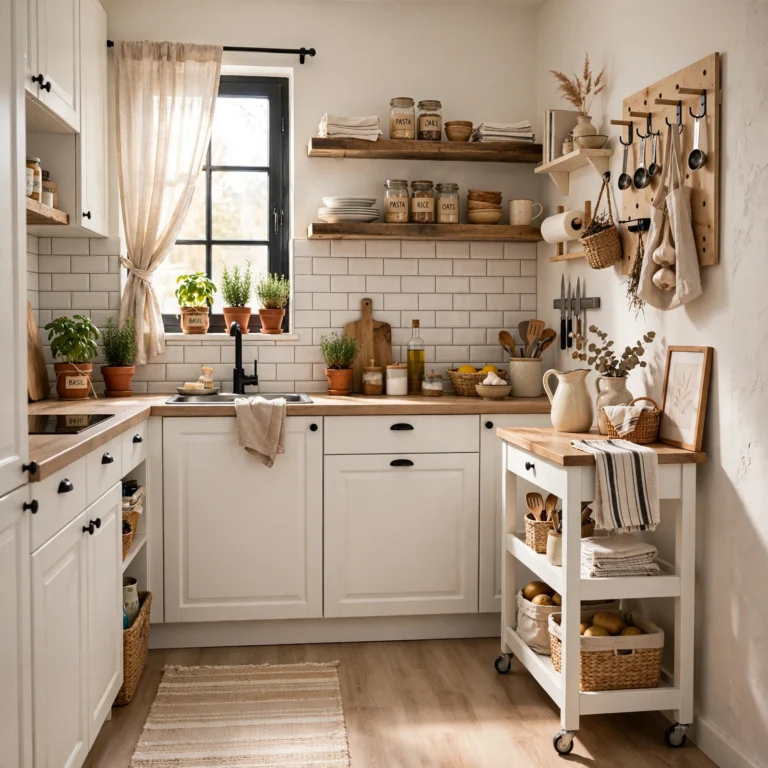
Small kitchen storage ideas tend to work best as a series of small, targeted fixes rather than one big overhaul, since most small kitchens have a handful of specific pain points, like a chaotic drawer or an unused cabinet corner, rather than a single global problem. This guide covers seventeen practical storage solutions, from door-mounted racks to drawer dividers, that address the most common trouble spots in a compact kitchen. Each idea is chosen for how much usable space it adds relative to its cost and installation effort, so you can prioritize based on your kitchen’s biggest bottleneck.
Trend & Background
Kitchen storage demand has shifted noticeably toward modular, renter-friendly products over the past several years, driven largely by a housing market where more people are renting apartments with fixed, non-negotiable cabinet layouts. Manufacturers have responded with adjustable, tension-mounted, and adhesive storage systems that require no drilling and can move with a tenant from one apartment to the next. At the same time, rising grocery costs have pushed more households toward bulk buying and pantry stockpiling, which has increased demand for storage solutions that maximize every inch of an existing small kitchen rather than assuming a renovation or expansion is an option.
Key Takeaways
- Small kitchen storage ideas work best when they target a specific problem area, like a junk drawer or an awkward cabinet gap, rather than the whole kitchen at once.
- Vertical and door-mounted storage consistently free up more usable space than adding new floor-based furniture.
- Many of the most effective solutions are renter-friendly, requiring no drilling or permanent installation.
- Clear containers and labeled bins improve how usable existing storage is, even without adding any new square footage.
1. Stackable Wire Shelf Risers
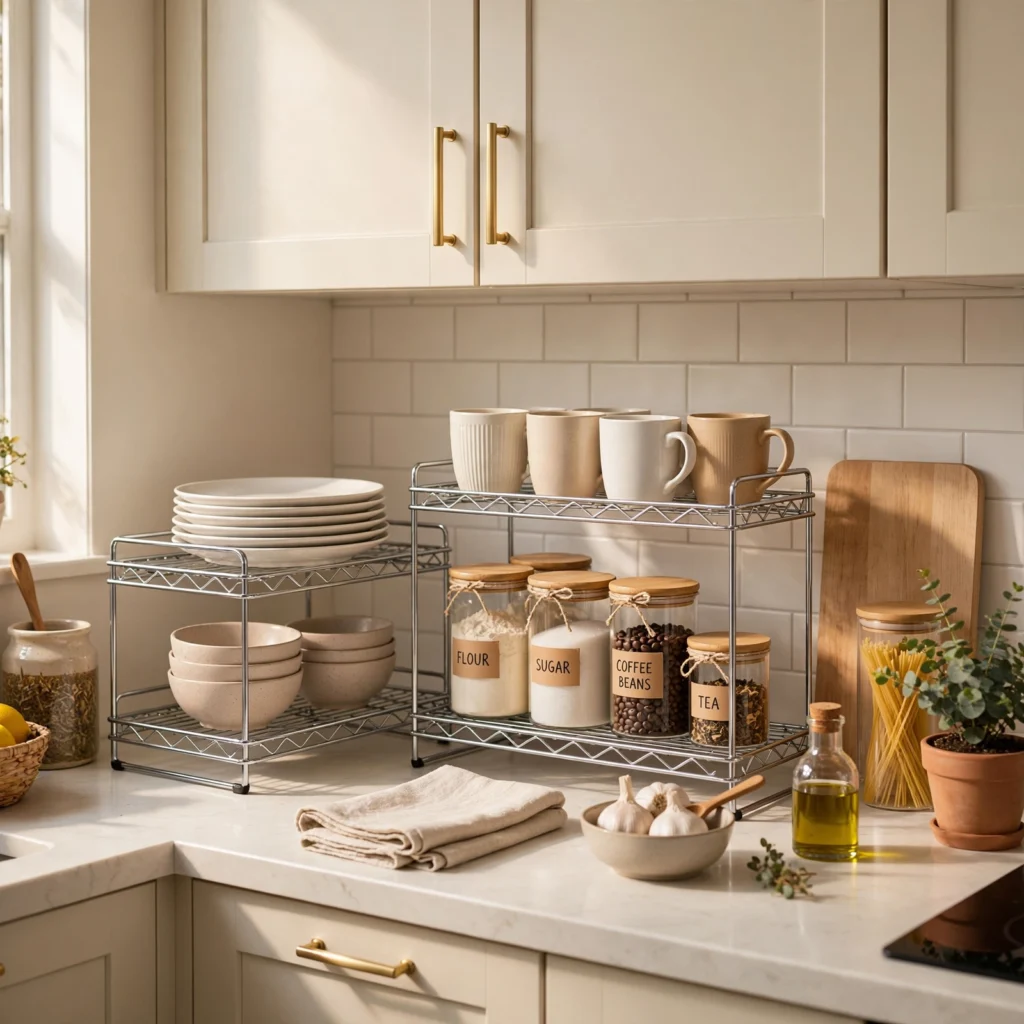
Wire shelf risers placed inside a cabinet double the usable vertical space by creating a second tier above short items like cans or spice jars, without wasting the empty air space above them. Choose a riser with a weight rating appropriate for what you’re storing, since stacked canned goods add up quickly compared to lightweight boxed items. This is one of the simplest upgrades for any cabinet where tall, unused space sits above a row of short containers.
2. Door-Mounted Pantry Rack
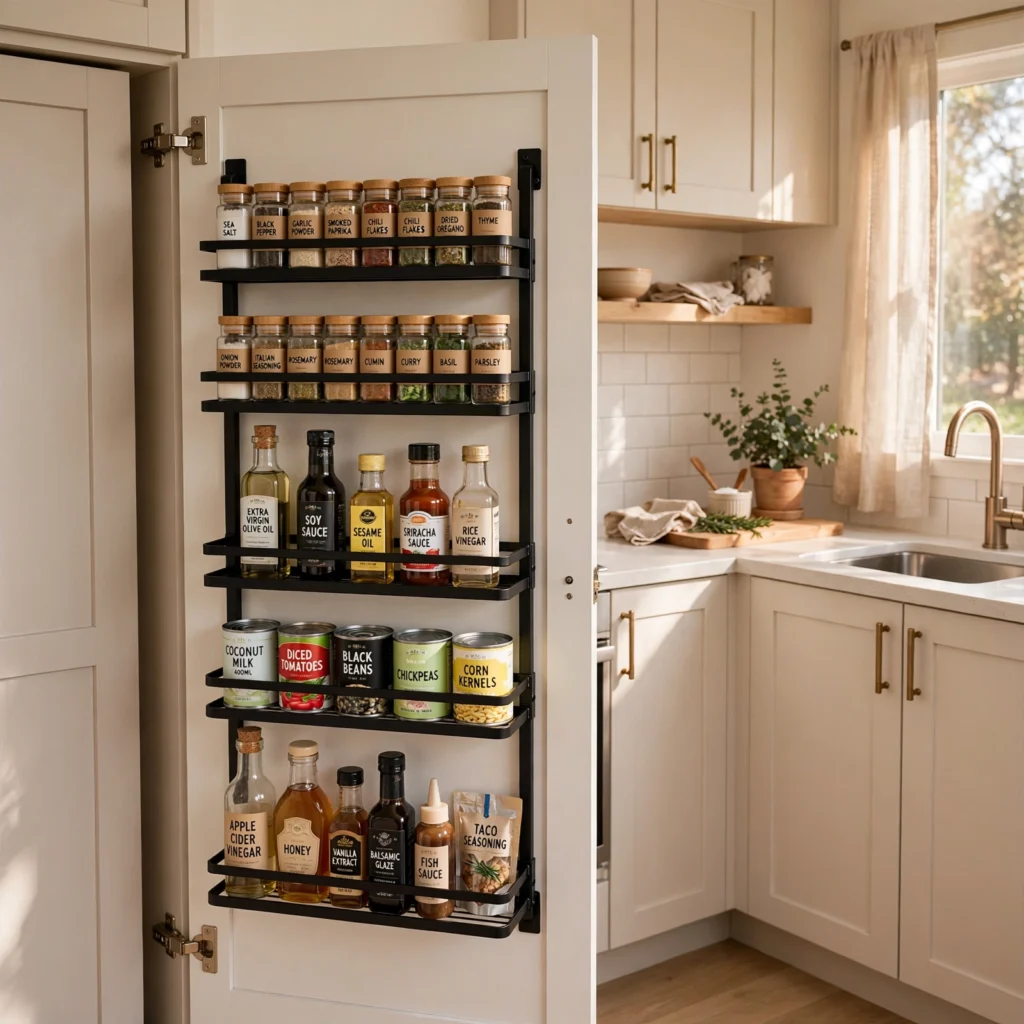
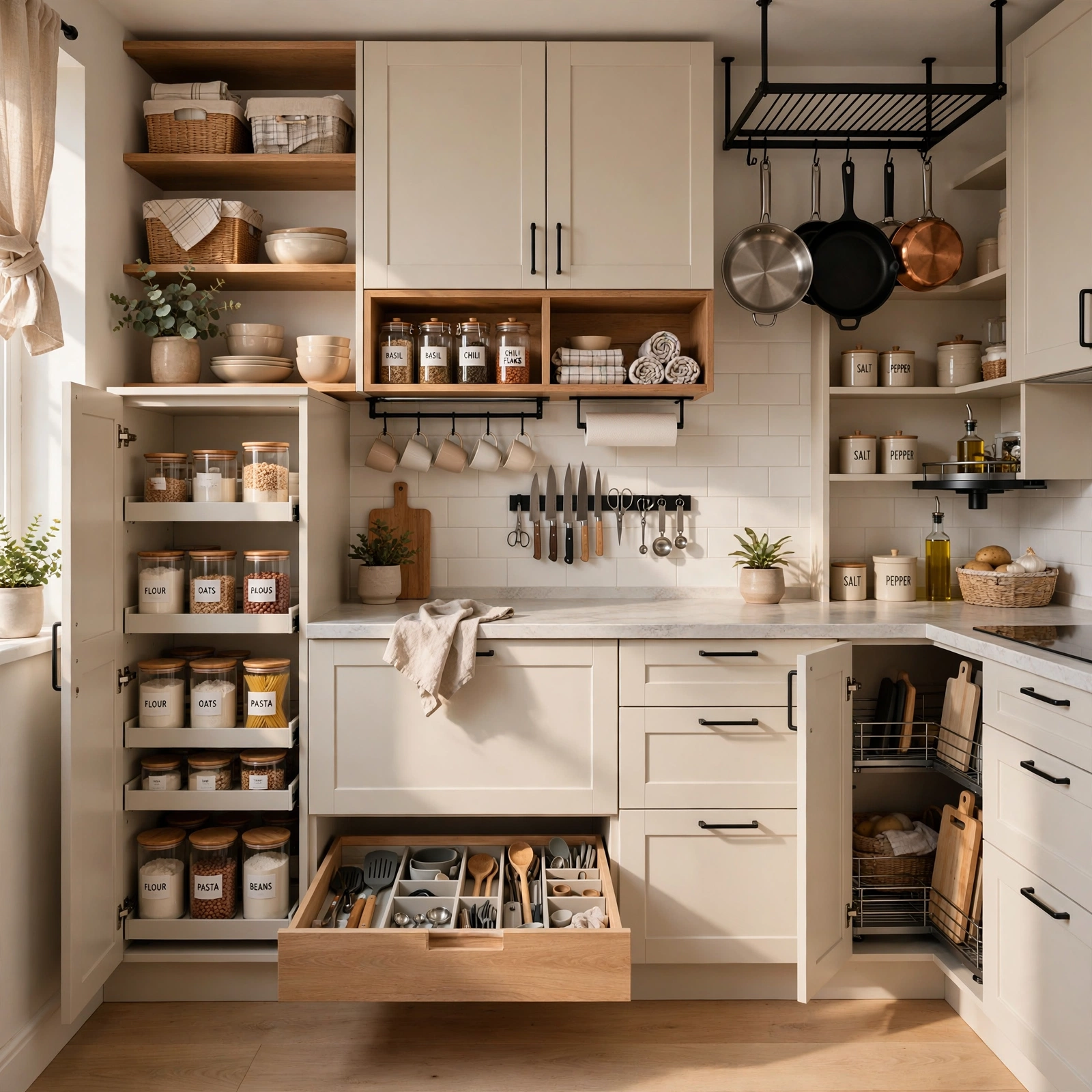
A rack mounted to the inside of a pantry or cabinet door adds a full extra layer of storage for spice jars, foil boxes, or small condiment bottles, using space that would otherwise sit completely empty. Choose an adjustable-tier rack so it can adapt to different item heights as your pantry stock changes throughout the year. This works especially well in kitchens with a single narrow pantry cabinet that needs to stretch its capacity as far as possible.
3. Drawer Divider Inserts
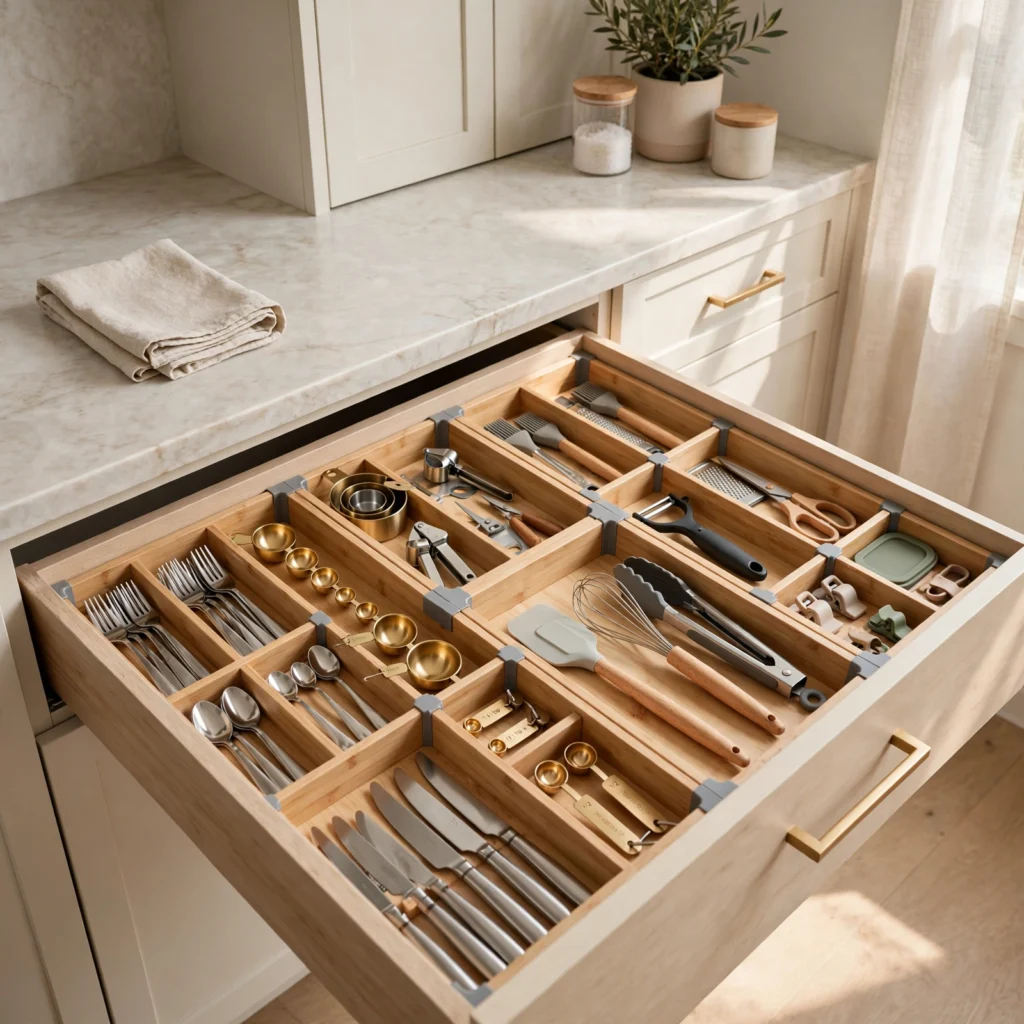
Adjustable drawer dividers turn a single deep drawer into several smaller compartments, which keeps utensils, tools, and gadgets from sliding into one disorganized pile every time the drawer opens. Choose expandable or grid-style dividers over fixed inserts, since they can be reconfigured as your utensil collection grows or changes. This is a low-cost fix that meaningfully speeds up finding a specific tool during meal prep.
| Drawer Depth | Divider Type | Best Use |
| Shallow (2–3 in) | Flat grid insert | Utensils, small tools |
| Medium (4–6 in) | Adjustable expandable | Mixed kitchen tools |
| Deep (7+ in) | Stackable tiered insert | Pots, larger gadgets |
4. Tension Rod Cabinet Divider
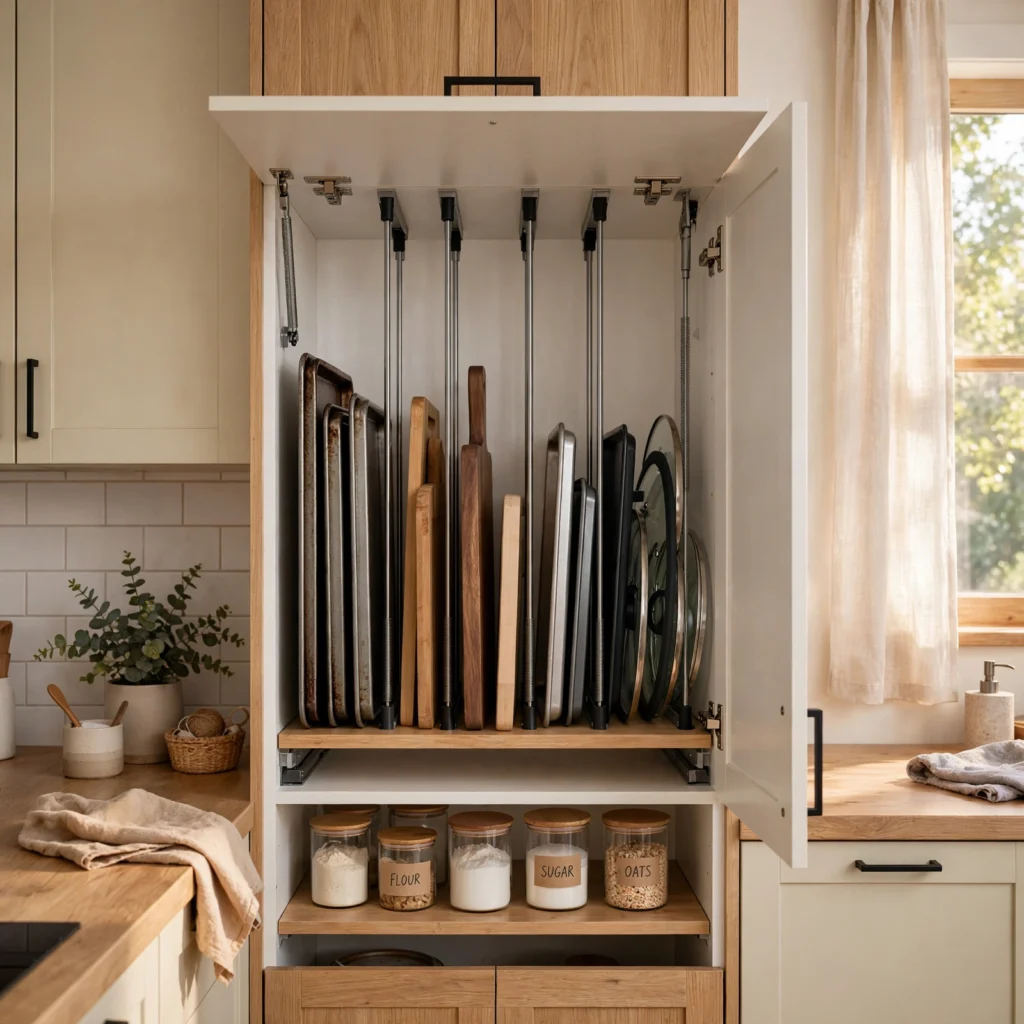
A tension rod installed vertically inside a cabinet creates a narrow slot for storing baking sheets, cutting boards, or trays upright, preventing them from stacking into a heavy, hard-to-access pile. This works especially well in a cabinet that’s otherwise too shallow for a full pull-out divider system. Choose a rod with rubberized ends to keep it from sliding as items are added and removed throughout the week.
To see more options for ideas for small kitchen design CLICK HERE
5. Hanging Pot Lid Organizer
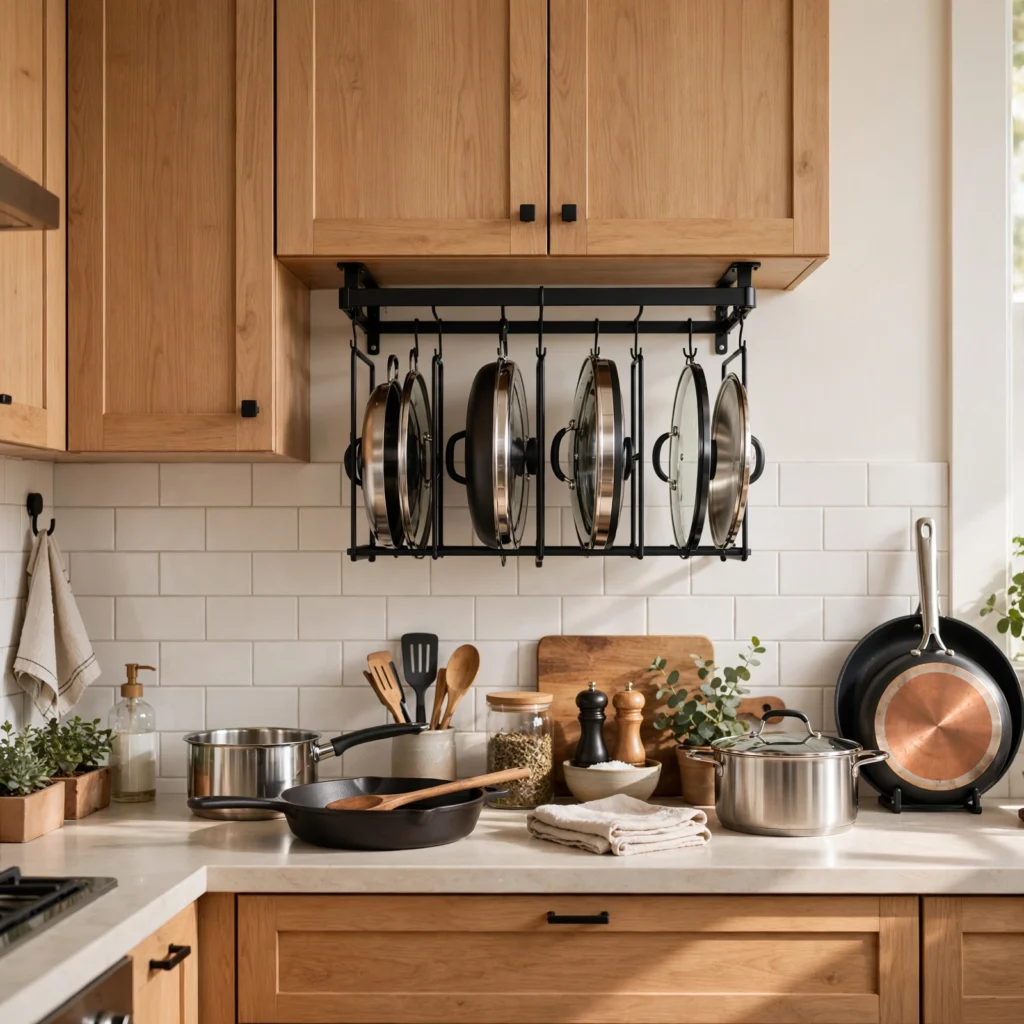
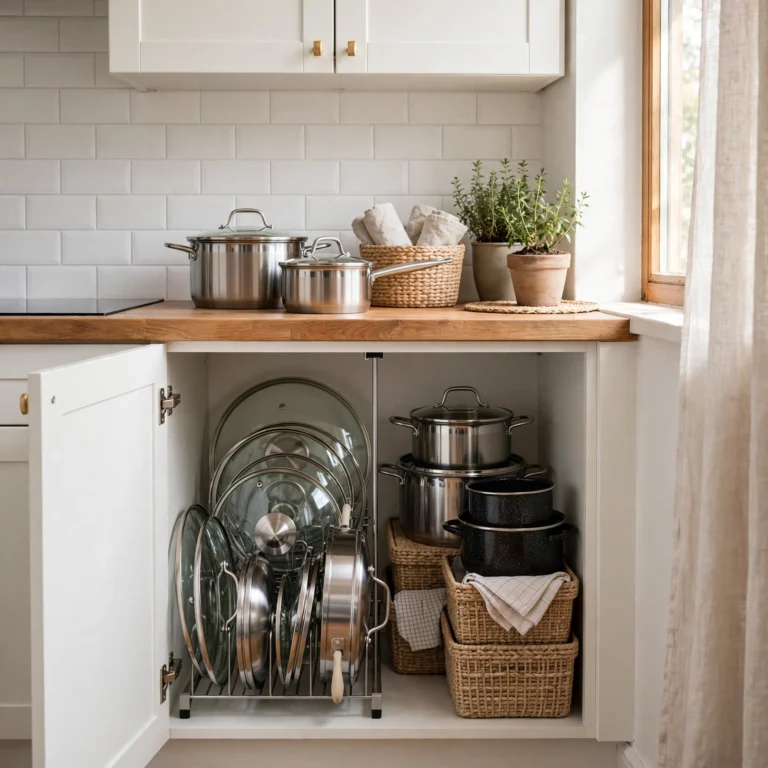
A rack that holds pot and pan lids vertically, either mounted inside a cabinet door or standing on a shelf, solves one of the most common sources of cabinet clutter in a small kitchen. Choose a design with adjustable slots so it can accommodate lids of different diameters without leaving gaps or requiring lids to lean at odd angles. This single addition often frees up enough space to stop lids from being the reason an entire cabinet feels chaotic.
6. Ceiling-Height Cabinet Extension
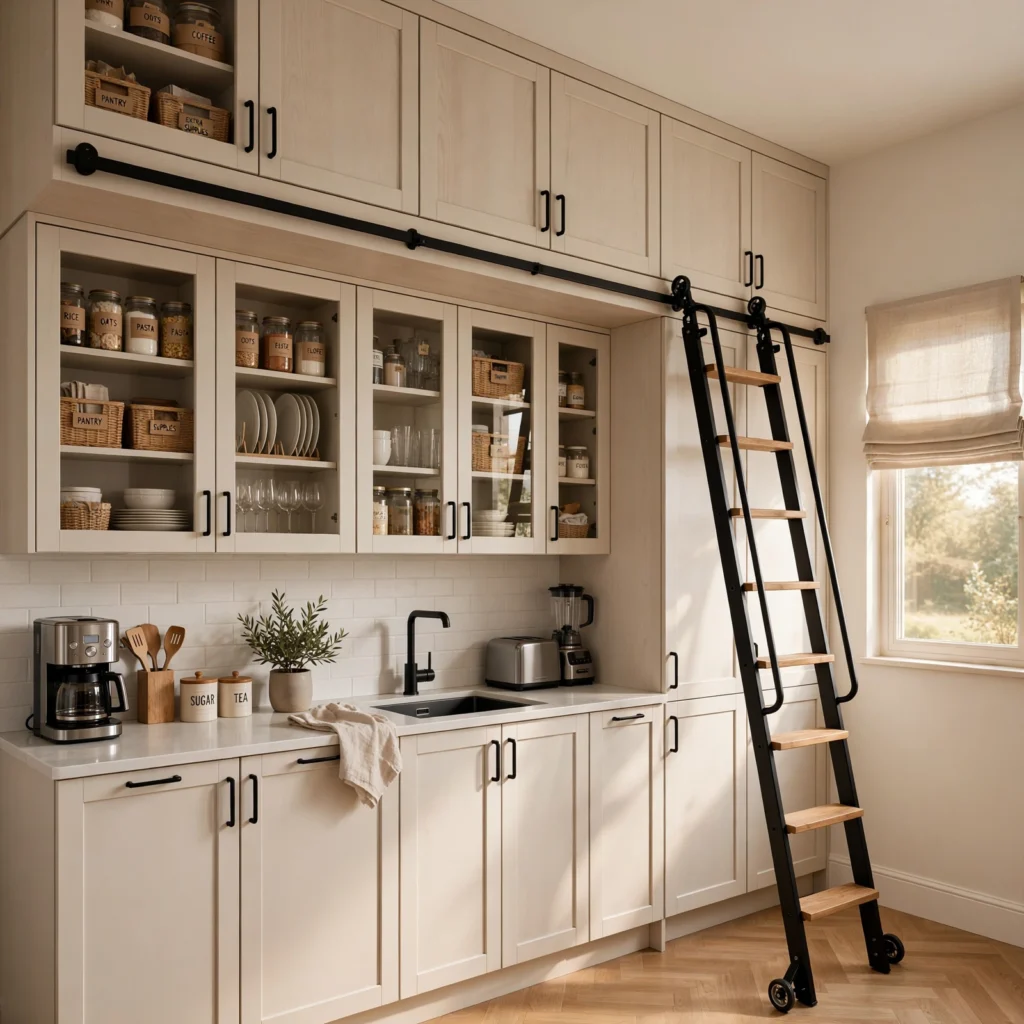
Adding a stacked storage box or bin to the top of existing cabinets uses the often-empty gap between the cabinet top and the ceiling, which is one of the most overlooked storage zones in a small kitchen. Choose matching baskets or bins so the addition looks intentional rather than like clutter piled on top of the cabinets. This space works well for rarely used items, like holiday dishware or large serving platters, that don’t need daily access.
7. Toe-Kick Drawer Storage
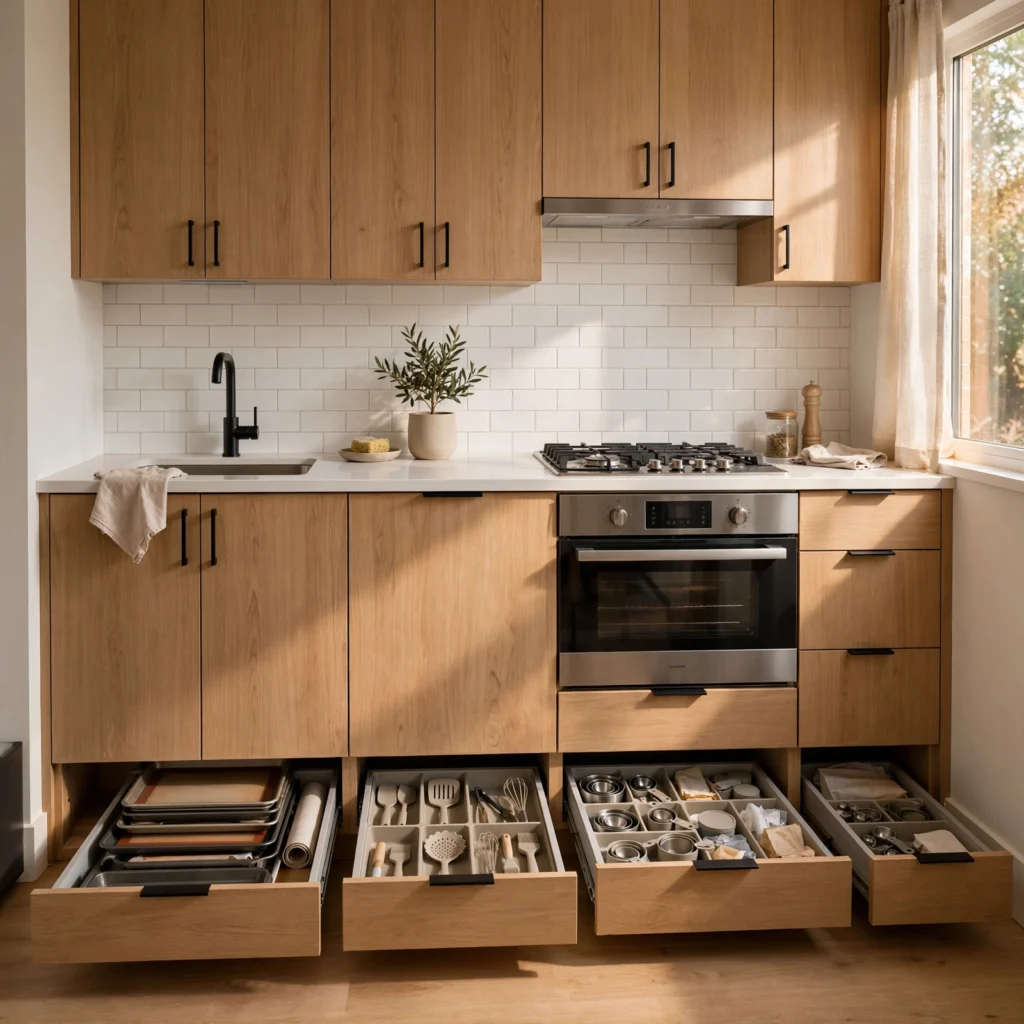
A shallow drawer built into the toe-kick space beneath lower cabinets adds storage in a zone that’s almost always empty in standard kitchen construction. This option typically requires a contractor for installation, since it involves modifying the cabinet base, but it adds meaningful capacity without touching any existing counter or cabinet space above it. It works particularly well for flat items like baking sheets, platters, or a step stool that doesn’t need frequent access.
8. Clear Stackable Bins
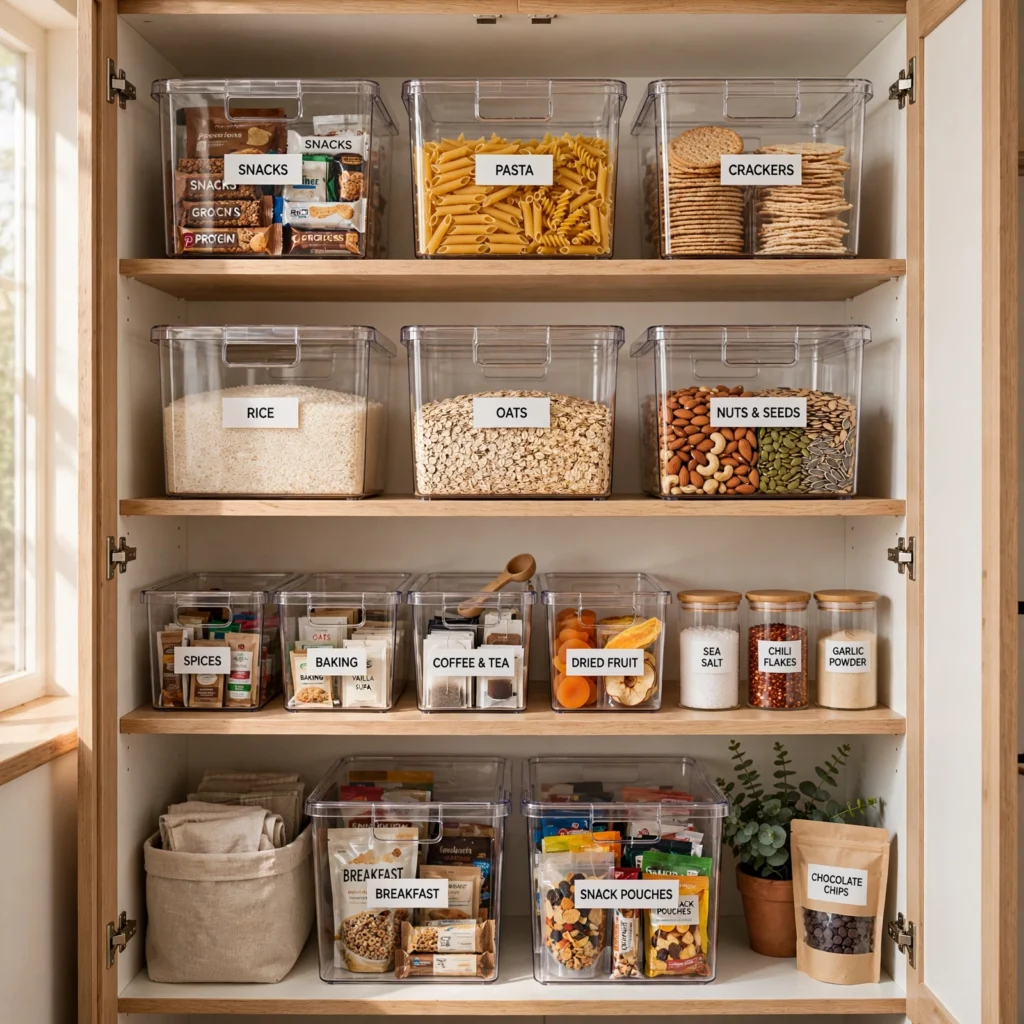
Clear plastic bins used inside pantry shelves or cabinets make contents visible at a glance, which speeds up both finding items and noticing when something is running low. Choose uniform bin sizes so they stack cleanly and use shelf space efficiently, rather than mixing mismatched container shapes that waste vertical room. Labeling each bin, even with simple masking tape, adds another layer of speed when searching for a specific ingredient.
9. Over-the-Sink Cutting Board
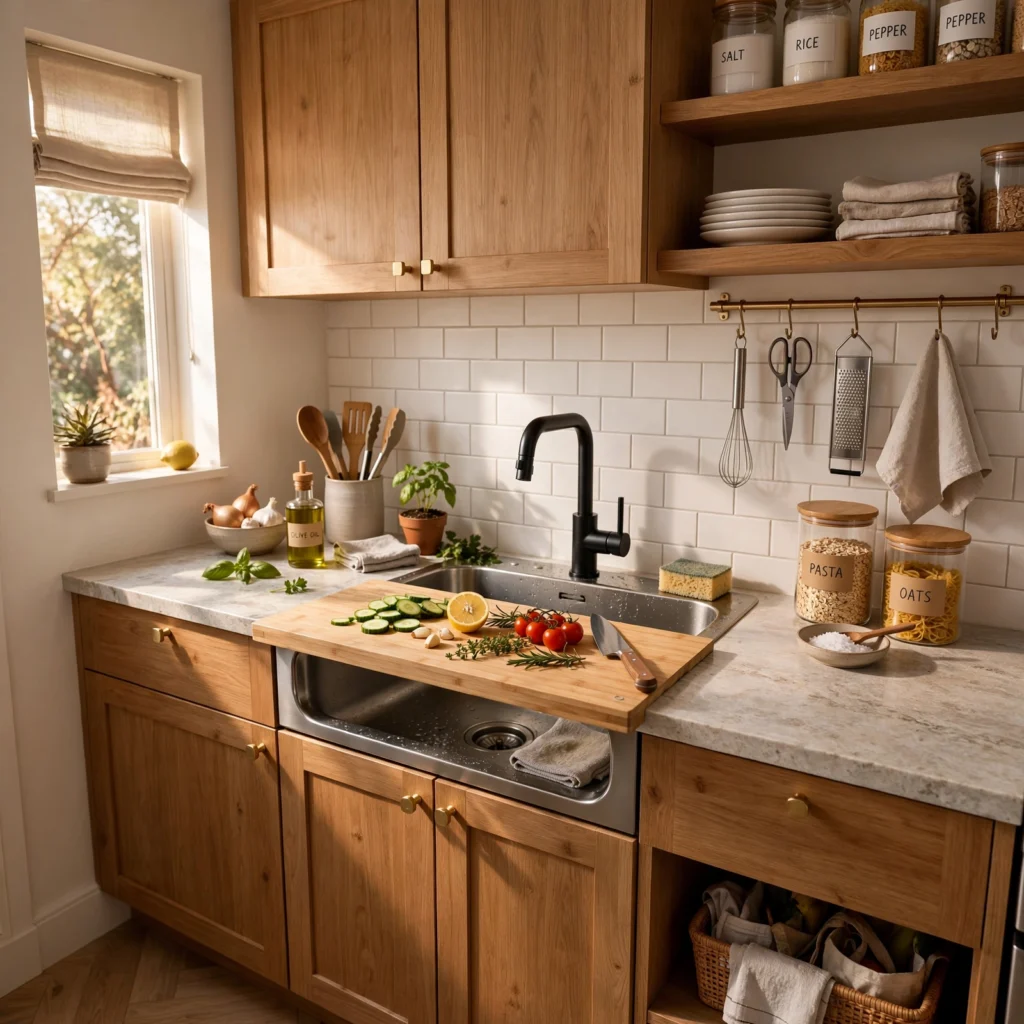
A cutting board sized to rest across the sink basin adds temporary counter and prep space directly above the sink, which is useful in a kitchen too small to spare permanent counter room for chopping. Choose a board with side supports sized to your specific sink’s dimensions so it sits securely rather than shifting during use. This isn’t a storage solution on its own, but it frees up counter space elsewhere by consolidating prep work into an underused zone.
10. Cabinet Door Organizer
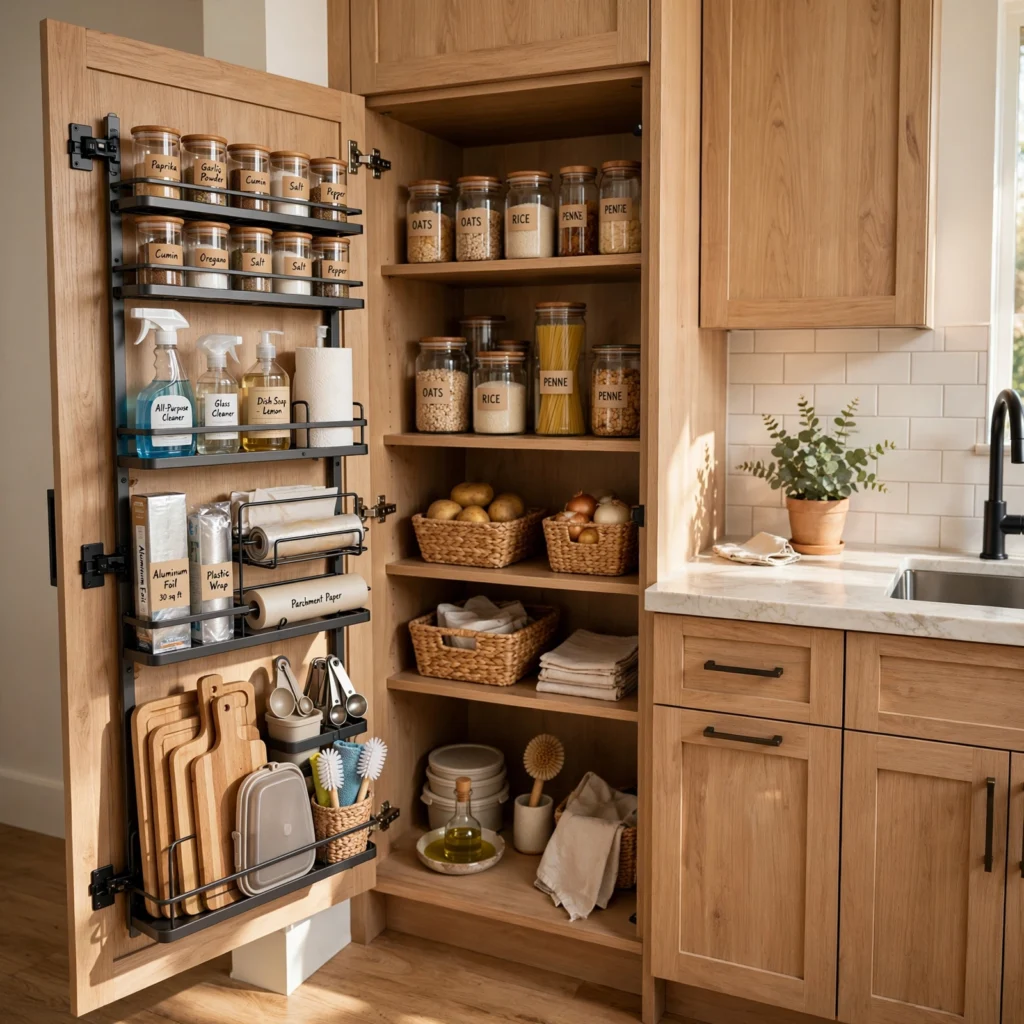
A slim organizer mounted to the inside of a cabinet door holds cutting boards, baking sheets, or foil rolls vertically, similar in concept to the tension rod divider but designed as a dedicated mounted unit rather than a improvised rod. Choose a model with adjustable compartments so it can hold a mix of item widths without wasted gaps. This works well paired with the tension rod divider idea in a kitchen with more than one cabinet needing this kind of vertical storage.
11. Vertical Baking Sheet Rack
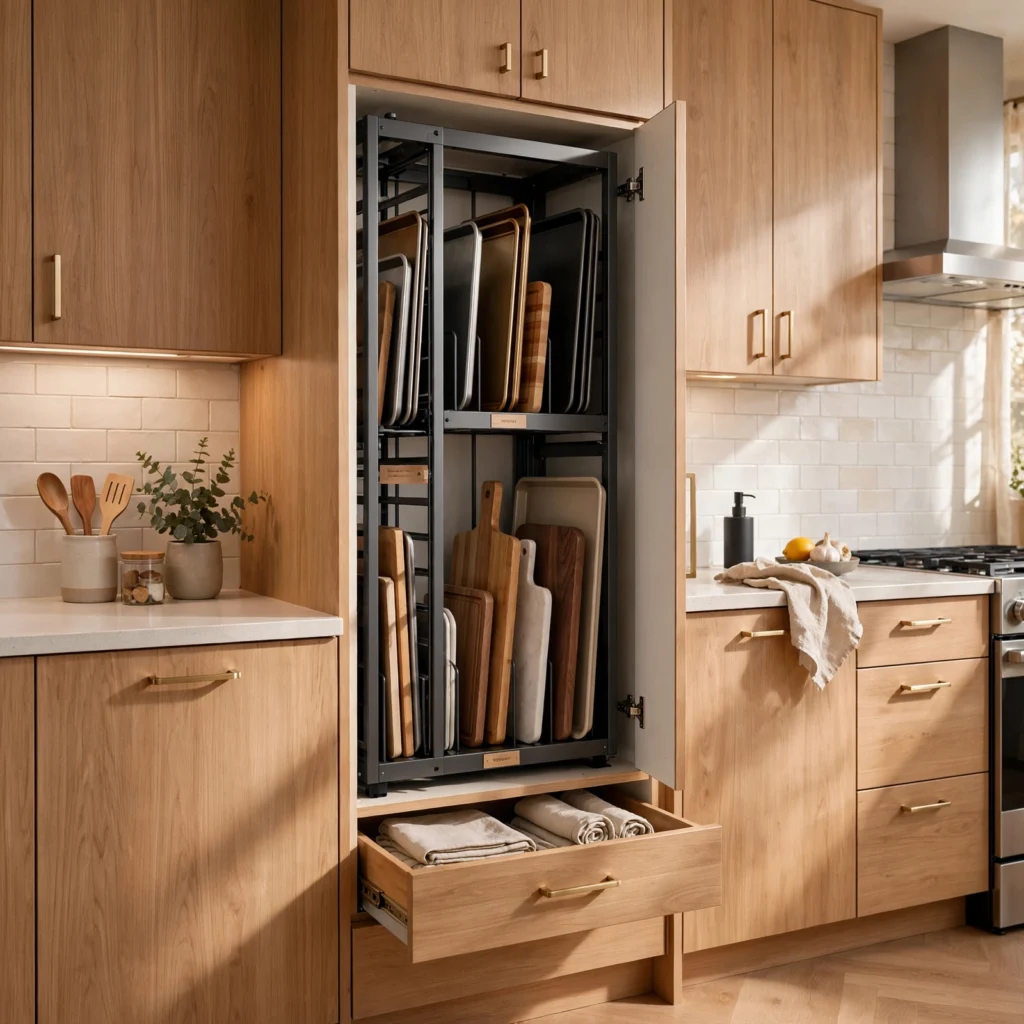
A dedicated vertical rack for baking sheets, cooling racks, and cutting boards keeps these flat, awkward items from becoming a stack that has to be fully unloaded just to reach the bottom piece. Choose a freestanding rack if cabinet space is limited, or a cabinet-mounted version if you have a dedicated slot to work with. This is one of the highest-impact single additions for anyone who bakes regularly in a small kitchen.
12. Mason Jar Wall Storage
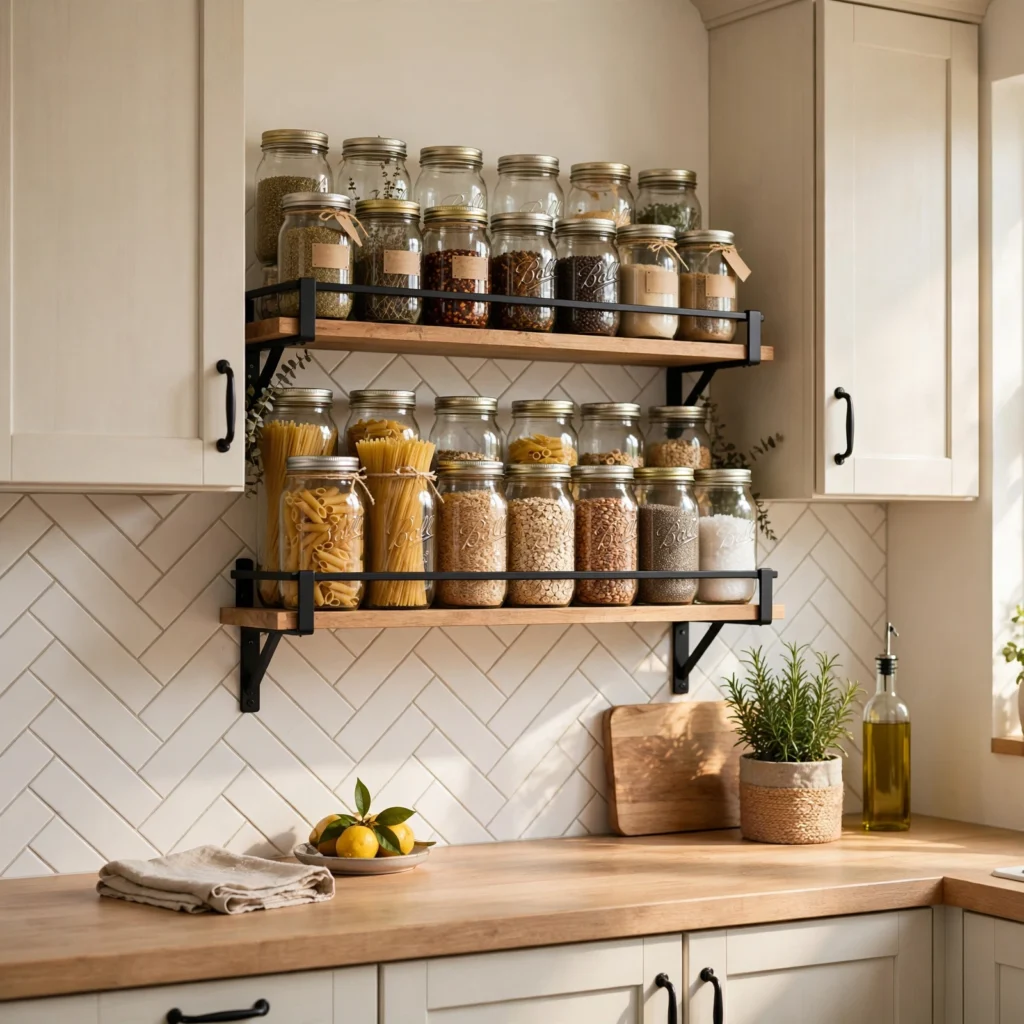
A wall-mounted rack designed to hold mason jars keeps bulk dry goods, like rice, pasta, or beans, visible and accessible without taking up shelf or cabinet space at all. Choose a rack with a secure locking mechanism for each jar, since a small kitchen wall doesn’t have room for jars that might shift or fall. This works especially well positioned near the stove or prep area where quick access to dry goods matters most.
| Jar Size | Best Contents | Wall Space Needed |
| 16 oz | Spices, small grains | Minimal |
| 32 oz | Pasta, rice, beans | Moderate |
| 64 oz | Flour, sugar, bulk staples | Larger wall run |
13. Rolling Under-Cabinet Cart
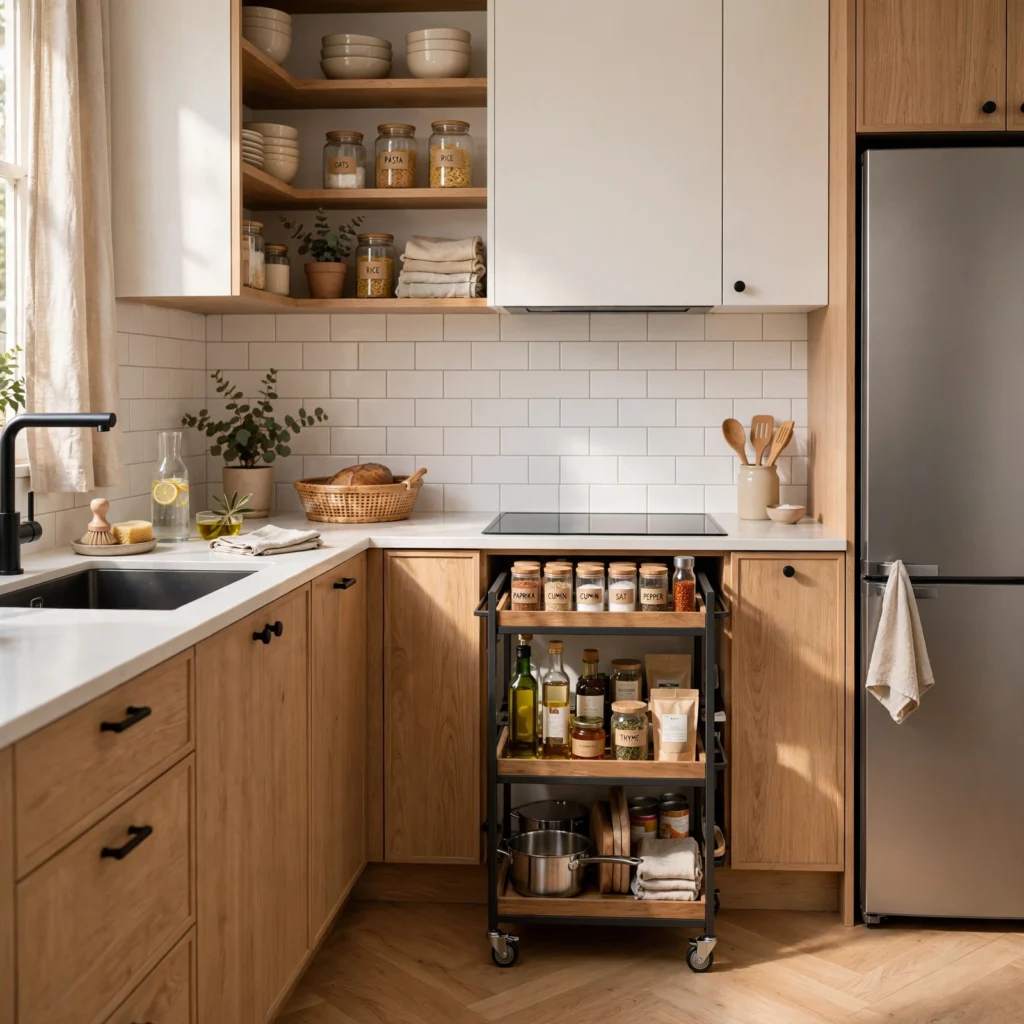
A slim rolling cart sized to fit under a counter overhang or in a narrow gap between appliances adds mobile storage that can be pulled out only when needed and tucked away the rest of the time. Choose a cart with a narrow enough profile, typically under 12 inches wide, to fit gaps a standard cart wouldn’t clear. This works well for pantry overflow, cleaning supplies, or extra small appliances that don’t need a fixed home.
14. Command Hook Utensil Rail
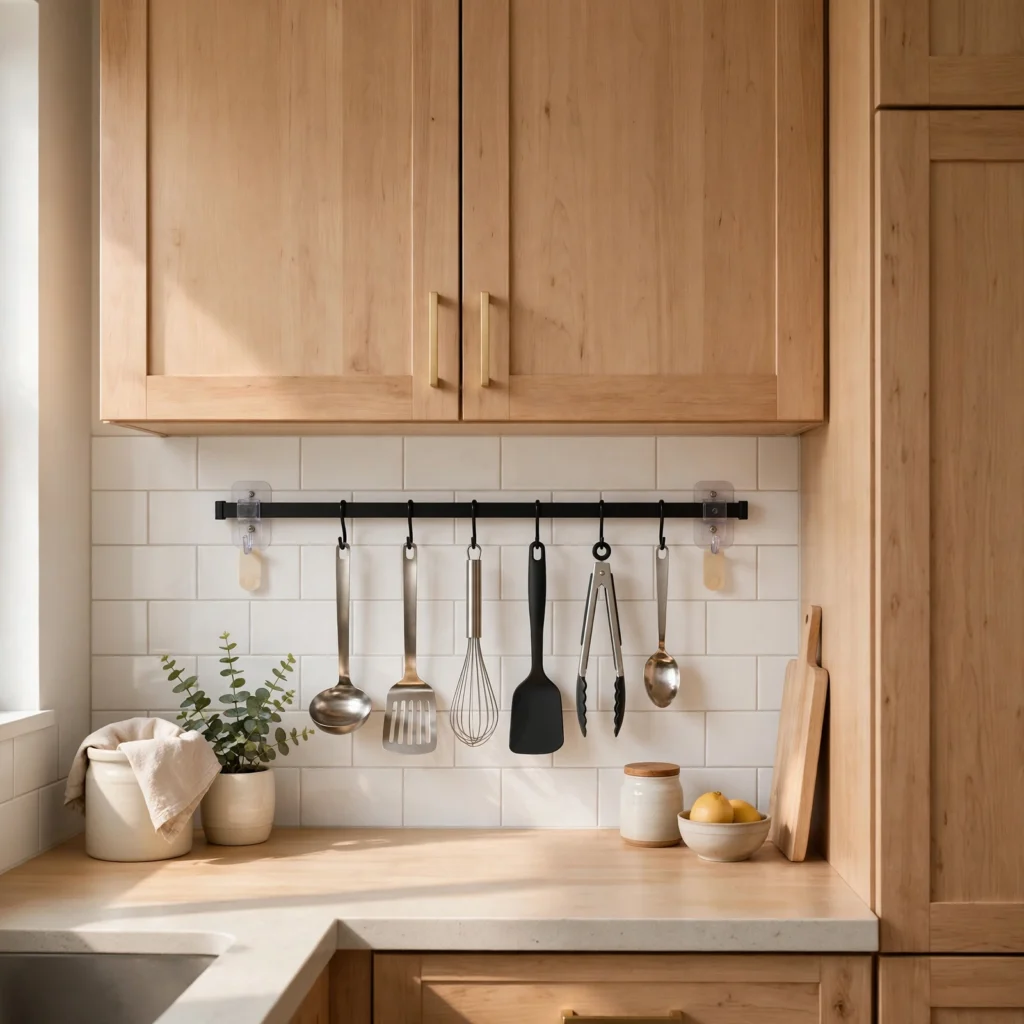
A wall-mounted rail combined with S-hooks holds frequently used utensils, oven mitts, or dish towels within arm’s reach of the stove, freeing up drawer space for less frequently used items. Choose a rail rated for the combined weight of everything you plan to hang, and mount it with hardware appropriate to your wall type. This is a low-cost, high-visibility fix that also speeds up cooking by keeping the most-used tools out of a drawer entirely.
15. Nesting Mixing Bowl Set
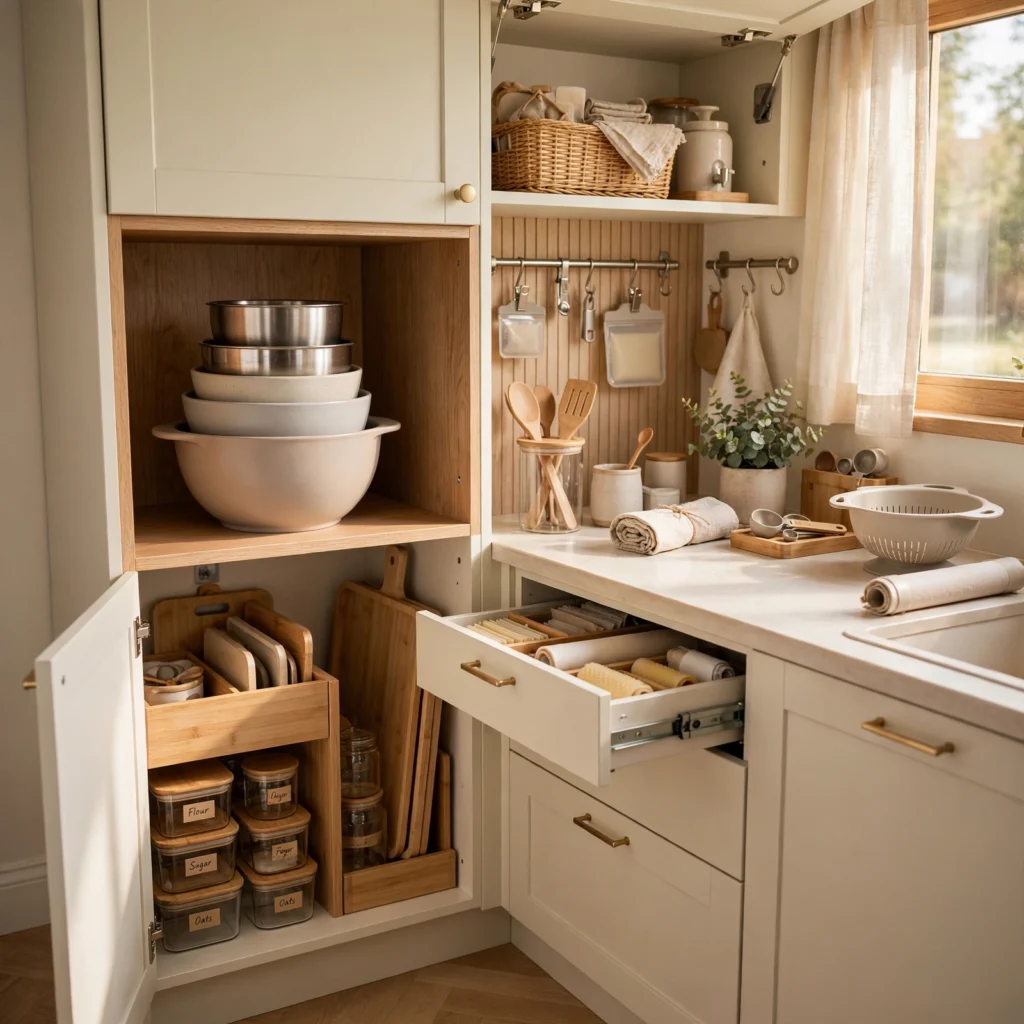
Replacing mismatched mixing bowls and food storage containers with a nesting set reduces the cabinet footprint of items that otherwise take up disproportionate space for how often they’re used. Choose a set with bowls, lids, and containers all designed to stack inside one another rather than a random assortment collected over time. This swap alone can free up an entire cabinet shelf in a kitchen where mismatched cookware has accumulated over several years.
16. Fridge Side Magnetic Storage
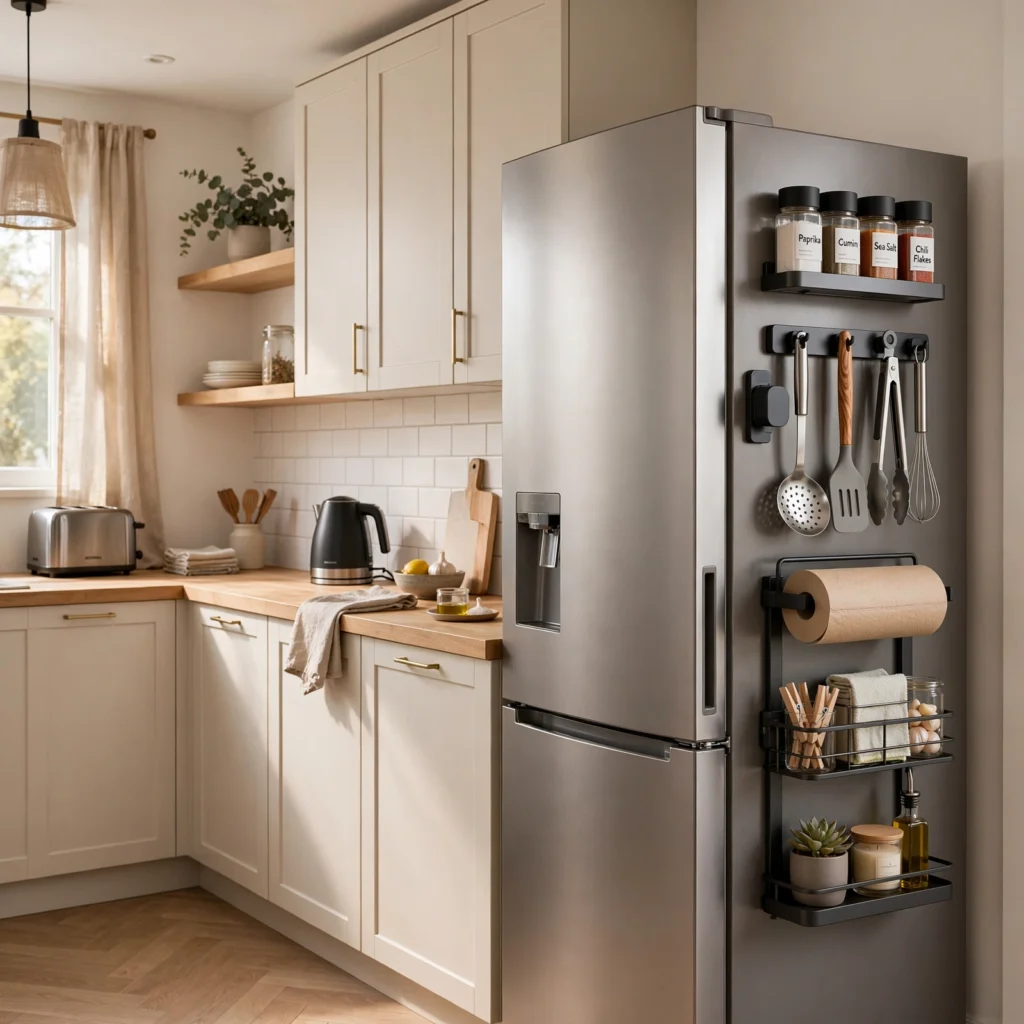
A magnetic storage rack or bin mounted to the side of the refrigerator uses a surface that’s almost always left completely empty, adding storage for spices, paper towels, or small cleaning supplies. Choose a rack rated for the item weight you plan to store, since magnetic mounts have a lower capacity than screwed-in hardware. This works especially well in a galley kitchen where the fridge’s side panel faces directly into the main walking path.
17. Expandable Shelf Organizer
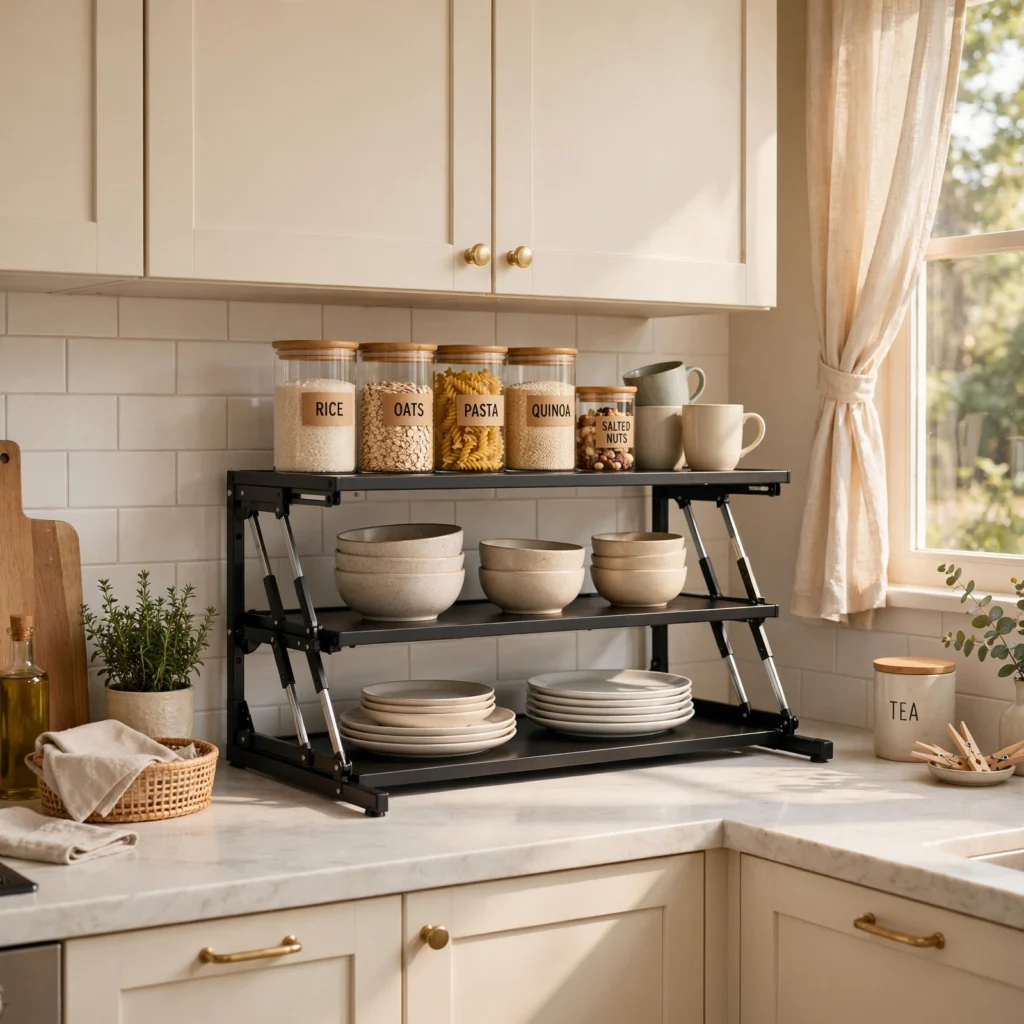
An expandable shelf organizer that fits inside a cabinet adds a stable, adjustable second tier for plates, bowls, or canned goods, similar to a wire riser but with a more solid, closed shelf surface. Choose a model that expands to match your cabinet’s exact width for the most stable fit, rather than leaving gaps at either side. This solution works particularly well for stacking dishware, which otherwise tends to pile precariously without a dividing shelf.
Shop the Look
Look for a set of adjustable drawer dividers to organize your most-used utensil drawer, paired with stackable wire shelf risers for any cabinet with unused vertical space above short items. A door-mounted pantry rack adds a full extra storage layer to a narrow pantry cabinet, while a set of clear stackable bins keeps dry goods visible and organized. Round out the kitchen with a wall-mounted utensil rail near the stove to free up drawer space for less frequently used tools.
Common Mistake to Avoid
The most common mistake with small kitchen storage ideas is buying new containers and organizers before decluttering what’s already in the cabinets, which often means expensive storage products end up holding items that should have been discarded in the first place. Sorting through cabinets and drawers first, removing duplicate tools and expired pantry items, typically reveals more usable space than any single storage product can add on its own. Once the clutter is gone, targeted solutions like dividers and door racks have a much bigger impact.
FAQs
What’s the most overlooked storage space in a small kitchen?
The inside of cabinet doors and the gap above upper cabinets near the ceiling are two of the most consistently overlooked storage zones, since both sit within an already-owned cabinet footprint but go completely unused by default. Door-mounted racks and ceiling-height storage bins can add meaningful capacity in both areas without requiring any new furniture or a larger kitchen footprint. The toe-kick space beneath lower cabinets is a close third, though it typically requires professional installation to access.
Are renter-friendly kitchen storage solutions actually effective?
Yes, tension rod dividers, adhesive hooks, and freestanding wire risers can meaningfully improve kitchen organization without requiring any drilling or permanent modification, which matters for renters who need everything removable at move-out. These solutions are generally less sturdy than permanently installed alternatives, so weight limits should be checked carefully before loading them with heavier cookware. Most renter-friendly products transfer easily to a next apartment, which adds value beyond the current kitchen.
How do I organize a small kitchen without buying a lot of new products?
Decluttering first, then reorganizing existing containers and cabinets by frequency of use, often solves a meaningful portion of a small kitchen’s storage problems before any new product is purchased. Grouping like items together, such as all baking tools in one cabinet and all cooking utensils near the stove, also reduces the feeling of clutter even without additional storage capacity. When new products are needed, prioritizing one or two high-impact fixes, like drawer dividers or a door rack, tends to deliver more value than a large one-time shopping trip.
What kitchen items take up the most unnecessary space?
Mismatched food storage containers and duplicate cooking tools, like three vegetable peelers or several nearly identical spatulas, are among the most common space-wasters in a typical kitchen. Bulky single-use appliances that only get used a few times a year, such as a fondue pot or an ice cream maker, are also worth reconsidering if storage space is limited. Auditing cabinets once or twice a year to remove duplicates and rarely used items keeps storage space from slowly filling back up.
Does adding storage make a small kitchen feel more cramped?
Not if the storage is chosen carefully, since well-organized vertical and door-mounted solutions actually reduce visual clutter by giving loose items a defined place rather than leaving them scattered across counters. Open shelving or freestanding furniture can make a kitchen feel more cramped if overused, but targeted solutions like drawer dividers, door racks, and wall-mounted rails typically improve the sense of space rather than shrinking it. The goal is adding organization within existing footprints, not adding bulk to the room.
Conclusion
Small kitchen storage ideas work best as a series of targeted fixes, from drawer dividers to door-mounted racks, aimed at whatever specific area is causing the most daily frustration in your kitchen. Starting with a declutter, then layering in a few high-impact solutions like vertical risers or a utensil rail, typically does more than any single big-ticket purchase. Save this guide to Pinterest for your next organizing weekend, and check out our related post on kitchen ideas for small spaces for more inspiration.