12 Cozy Bathroom Ceiling Design Ideas Often Overlooked
The ceiling is often the last surface homeowners think about in a bathroom renovation, even though it’s the one plane visible from nearly every angle in the room. Bathroom ceiling design has shifted toward treating this surface with the same intention given to walls and flooring, using wood cladding, architectural detailing, and integrated lighting to finish the room properly. This guide covers twelve ceiling ideas seen in real bathroom renovation projects, from moisture-resistant materials to lighting layouts that make the ceiling work as hard as the rest of the room.
Trend & Background
Bathroom renovations have increasingly extended design attention upward, driven partly by the popularity of wet rooms and steam showers, both of which require ceiling materials and slopes engineered specifically for moisture control. Designers report that clients are requesting wood-clad or architecturally detailed ceilings more frequently, moving away from the flat, painted drywall finish that’s been the default for decades. This shift has also pushed manufacturers to expand moisture-resistant material options suitable for ceiling applications, beyond the standard bathroom-grade paint most renovations relied on previously.
Key Takeaways
- Bathroom ceiling design in 2026 increasingly treats the ceiling as a fifth wall rather than a plain painted surface.
- Moisture-resistant materials, like PVC beadboard and marine-grade paint, remain essential given the room’s humidity levels.
- Recessed and cove lighting integrated into the ceiling has become a standard planning consideration rather than an afterthought.
- Wood-clad and coffered ceilings are the most requested architectural upgrades in primary bathroom renovations.
1. Tongue-and-Groove Wood Ceiling
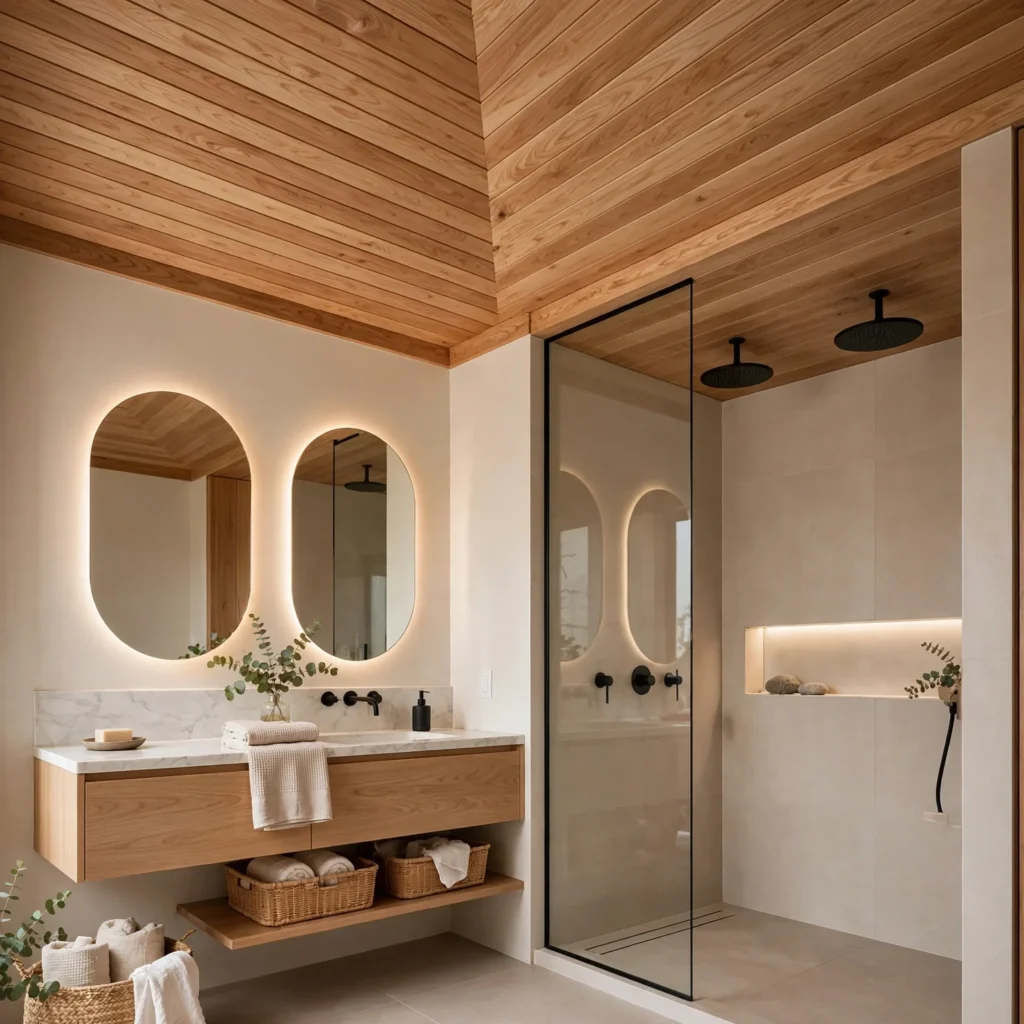
A tongue-and-groove wood ceiling, typically installed in cedar or pine, brings warmth and texture overhead that a flat painted ceiling can’t replicate, particularly in bathrooms with a wet room or steam shower where the wood also needs to tolerate consistent humidity. Cedar is the more common choice for high-moisture applications given its natural resistance to rot, though it requires a breathable sealant rather than a fully waterproof finish that would trap moisture in the wood. This detail works especially well extending down into a sloped ceiling above a tub or shower area.
2. Coffered Ceiling Detail
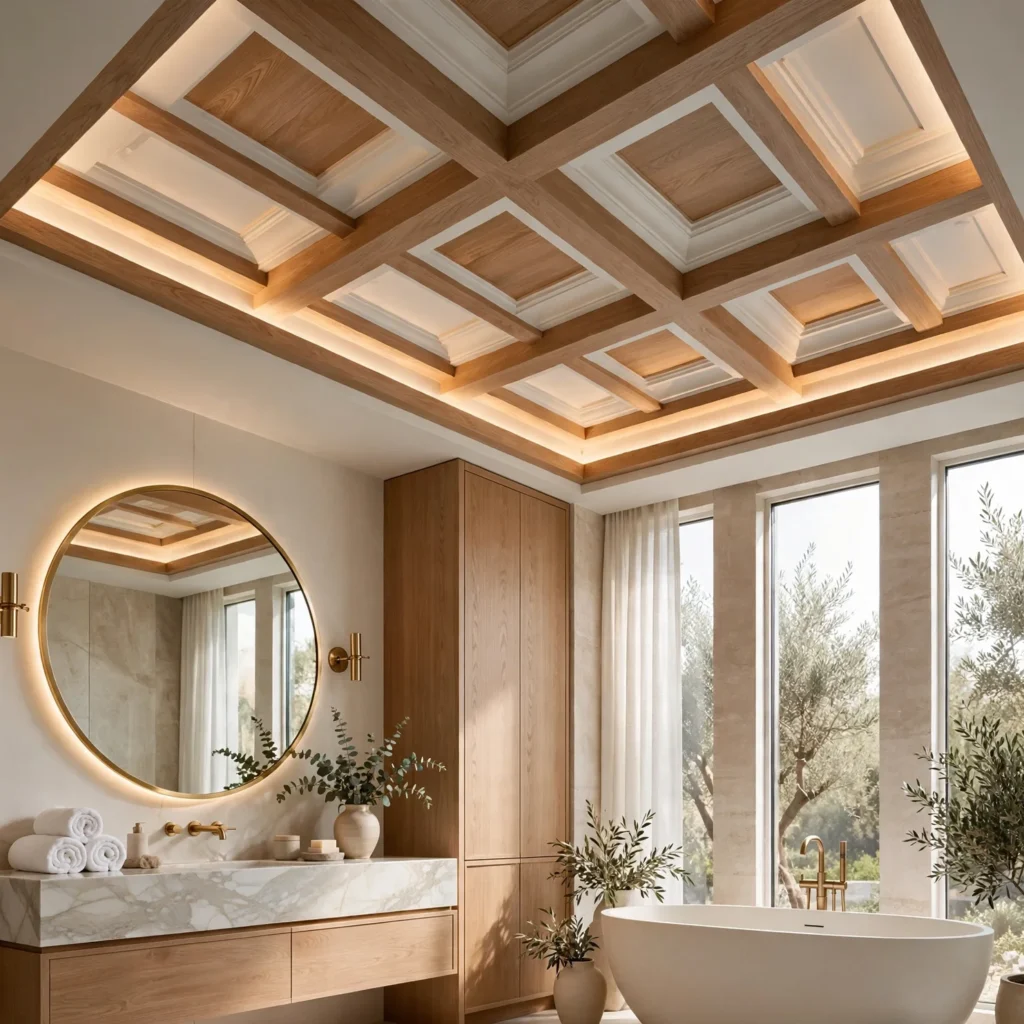
A coffered ceiling, with its grid of recessed panels framed by wood trim, adds architectural weight overhead that’s more commonly associated with living rooms and studies but has become an increasingly requested detail in larger primary bathrooms. This treatment works best in rooms with at least 9 feet of ceiling height, since a coffered grid can make a lower ceiling feel more compressed rather than more distinguished. Painting the coffers a soft white or matching the surrounding trim keeps the detail from feeling too heavy in an all-white bathroom.
| Ceiling Height | Coffered Detail Suitability |
| Under 8 feet | Not recommended |
| 8–9 feet | Shallow coffer only |
| 9+ feet | Full coffered treatment |
3. Recessed Lighting Grid
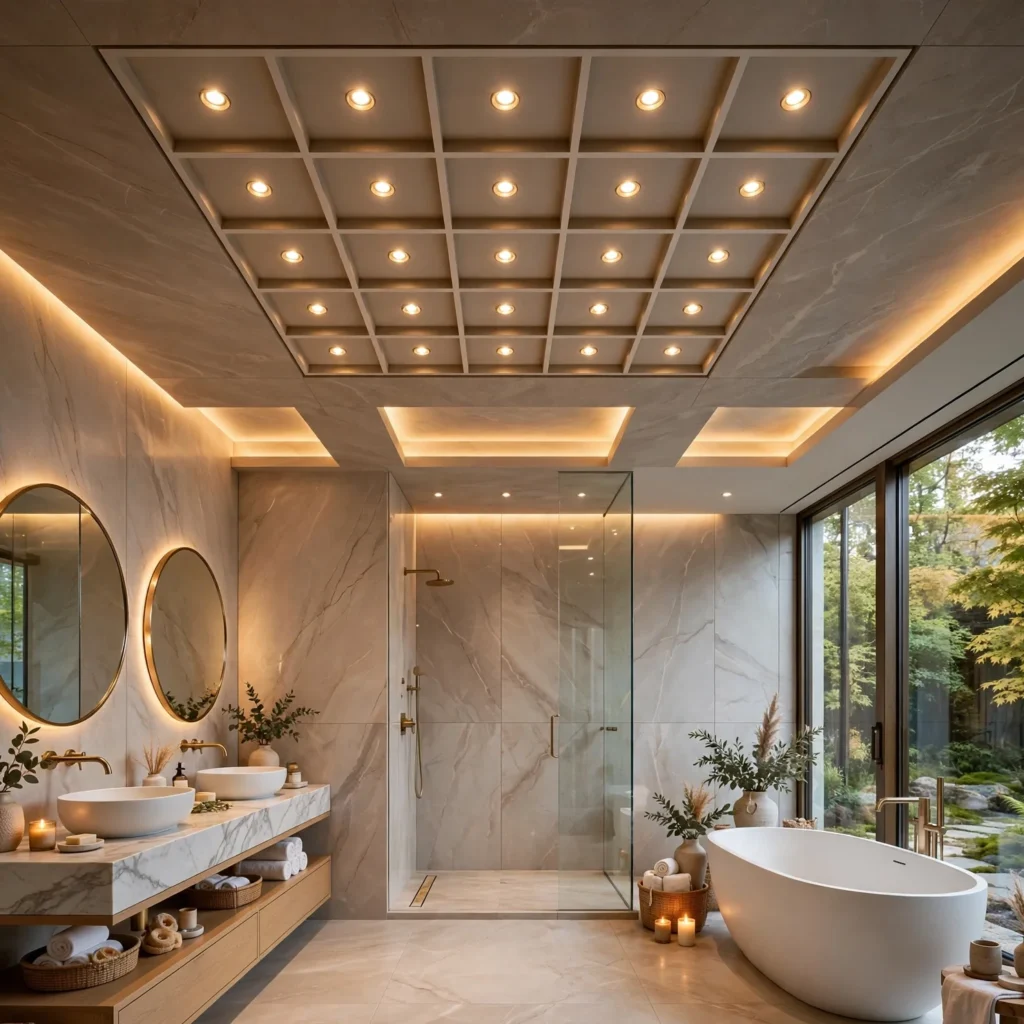
A grid of recessed can lights, spaced evenly across the ceiling rather than clustered around a single central fixture, provides even, shadow-free illumination throughout the room without adding visual clutter overhead. Wet-rated fixtures are required directly above a shower or tub, while standard damp-rated cans are sufficient elsewhere in the room. Spacing lights roughly 4 to 6 feet apart produces consistent coverage without leaving noticeable dark patches between fixtures.
Love modern spaces? Discover our minimalist bathroom design luxury for a clean and timeless look.
4. Cove Lighting Channel
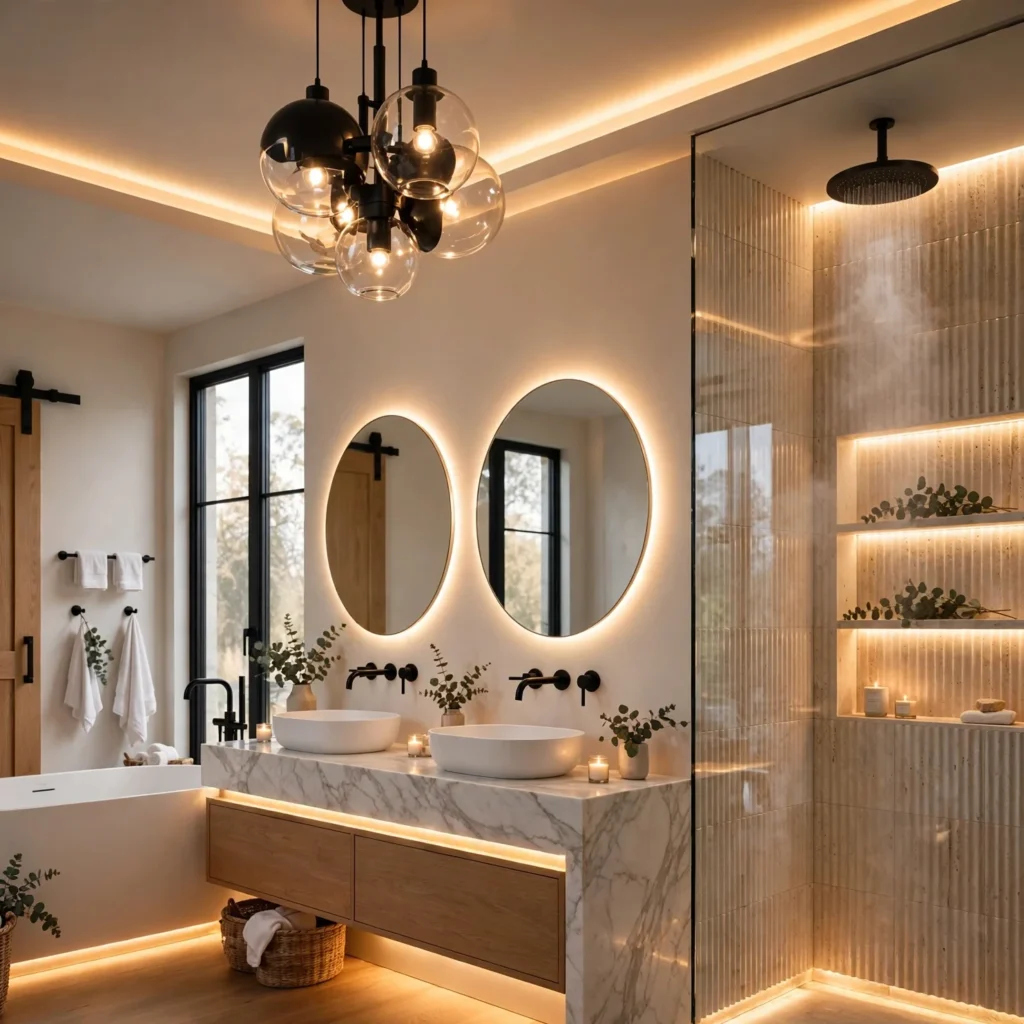
A recessed cove built into the ceiling perimeter, with LED strip lighting hidden inside, washes light upward against the ceiling surface rather than shining directly down into the room, creating a soft, ambient glow that reads as more architectural than a standard flush-mount fixture. This detail requires framing the cove during the renovation’s construction phase, since it’s not something that can be added to an existing flat ceiling without structural modification. It pairs particularly well with a matte or eggshell ceiling paint finish, which diffuses the light more evenly than a glossy surface.
5. Sloped Ceiling with Skylight
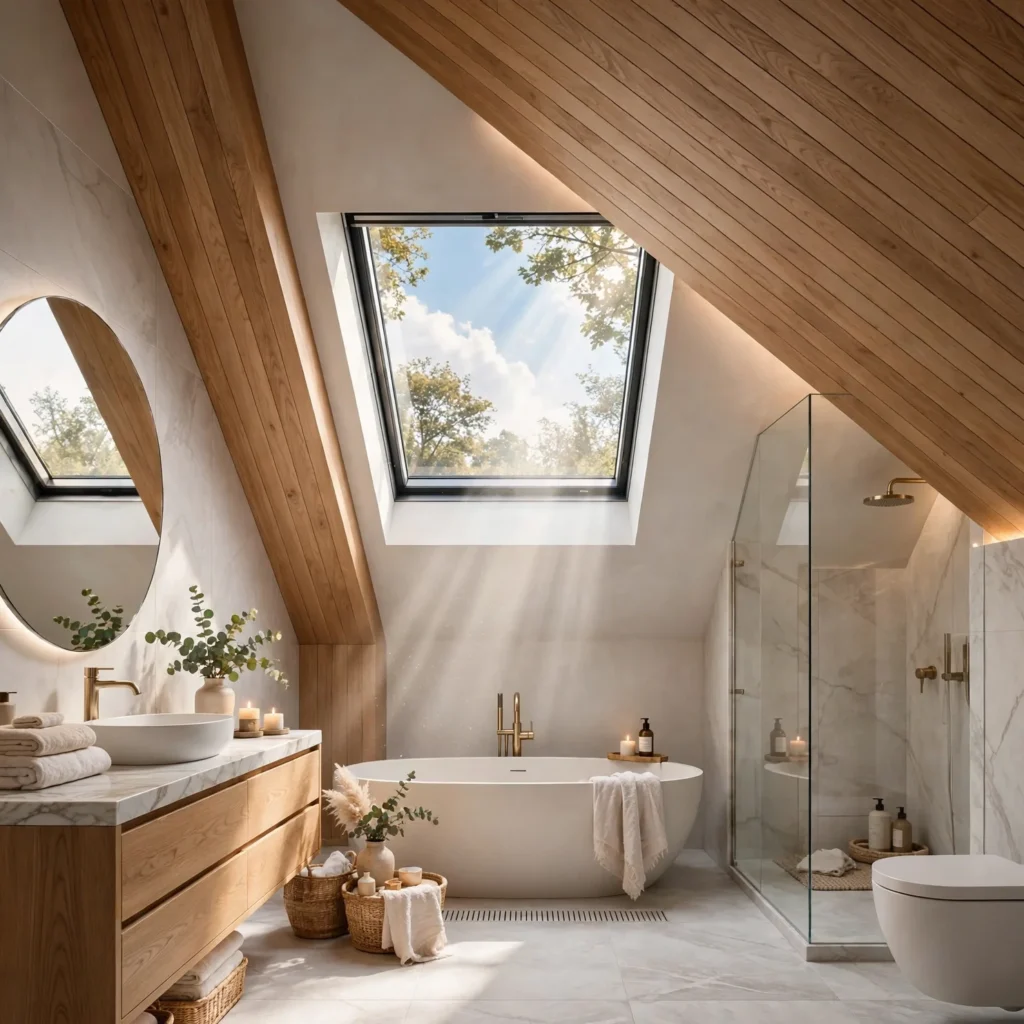
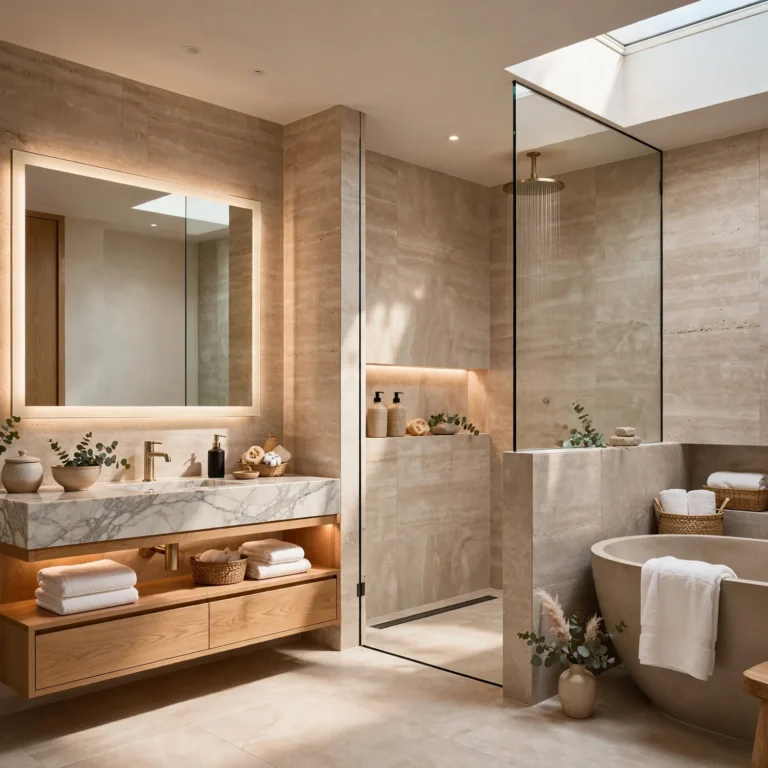
In bathrooms located under a roofline, following the natural slope of the ceiling rather than boxing it in with a dropped flat section preserves the room’s full height and adds architectural interest overhead. Adding a skylight along this sloped section brings in natural light without requiring a wall-mounted window, which matters in bathrooms with limited exterior wall space. Condensation-resistant skylight glazing is worth specifying given the bathroom’s consistently higher humidity compared to other rooms in the home.
6. Marine-Grade Ceiling Paint
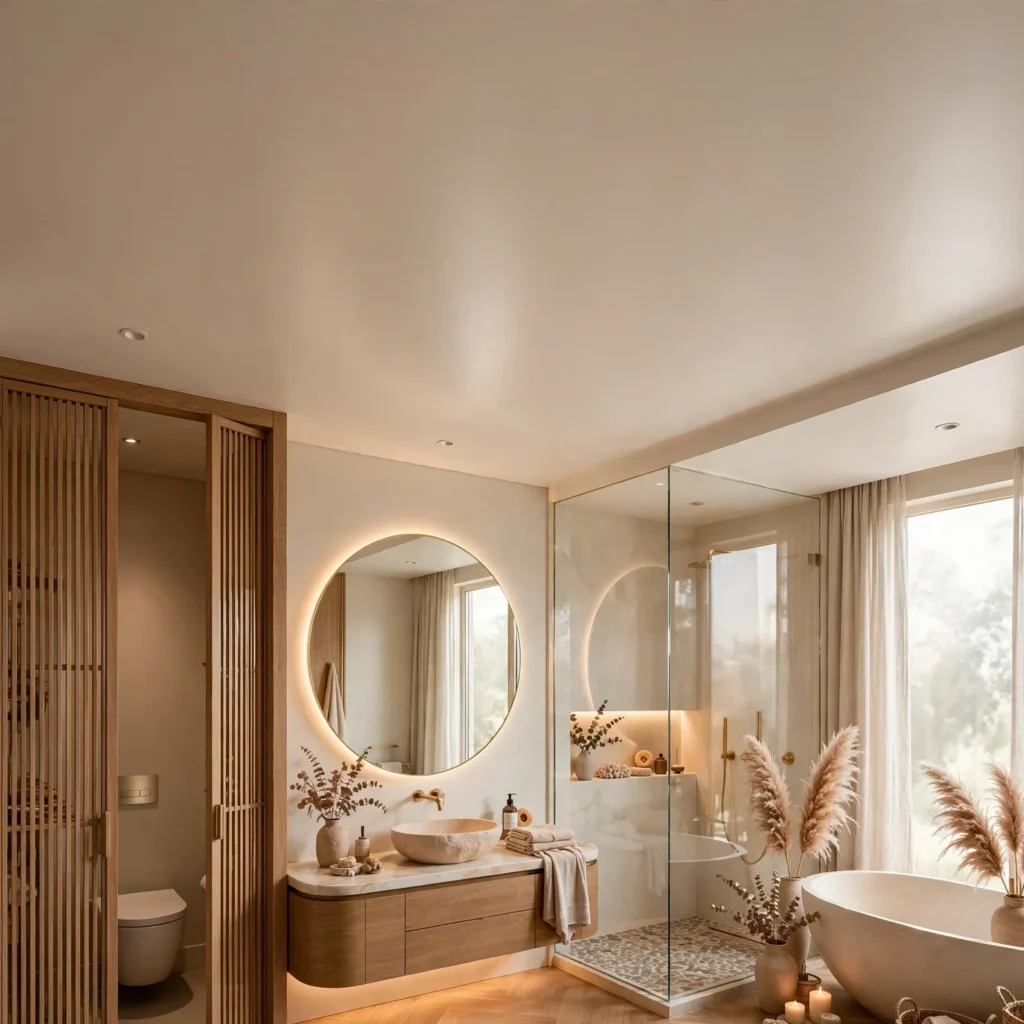
A paint formulated specifically for high-moisture environments, often labeled marine-grade or bathroom-specific, resists the peeling and mildew growth that standard interior paint develops on a bathroom ceiling over time. This is one of the simplest and lowest-cost ceiling upgrades available, requiring no structural change, just a proper primer and two coats of the moisture-resistant formula. A satin or eggshell sheen is generally preferred over flat paint, since it holds up better to occasional wiping and resists moisture absorption more effectively.
7. Exposed Beam Ceiling
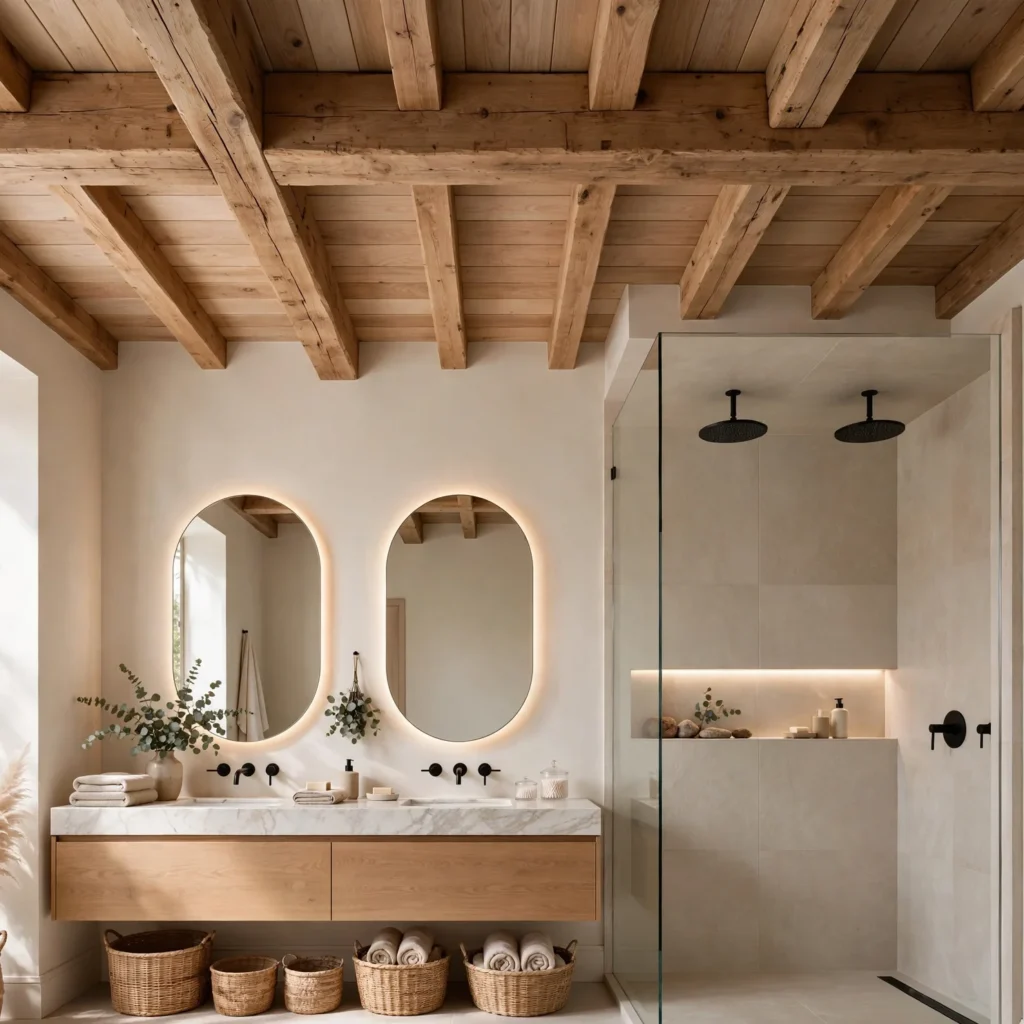
Exposing structural or decorative wood beams across the ceiling, rather than concealing them behind drywall, adds architectural character that works particularly well in bathrooms with a farmhouse, Mediterranean, or rustic design direction. Real structural beams require confirming the home’s existing framing can support the exposed treatment, while decorative faux beams offer a lighter-weight alternative that achieves a similar look. Spacing the beams evenly across the ceiling width keeps the pattern feeling intentional rather than randomly placed.
8. Statement Pendant or Chandelier
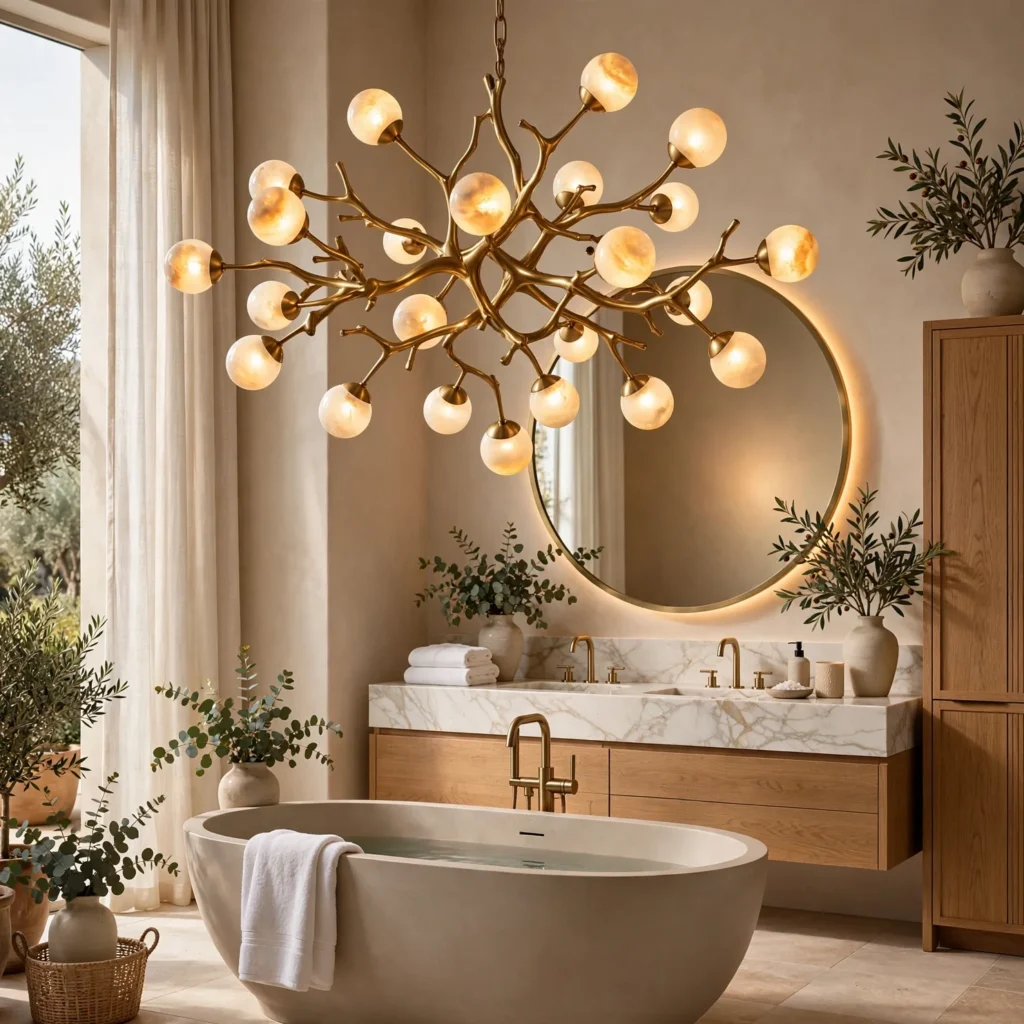
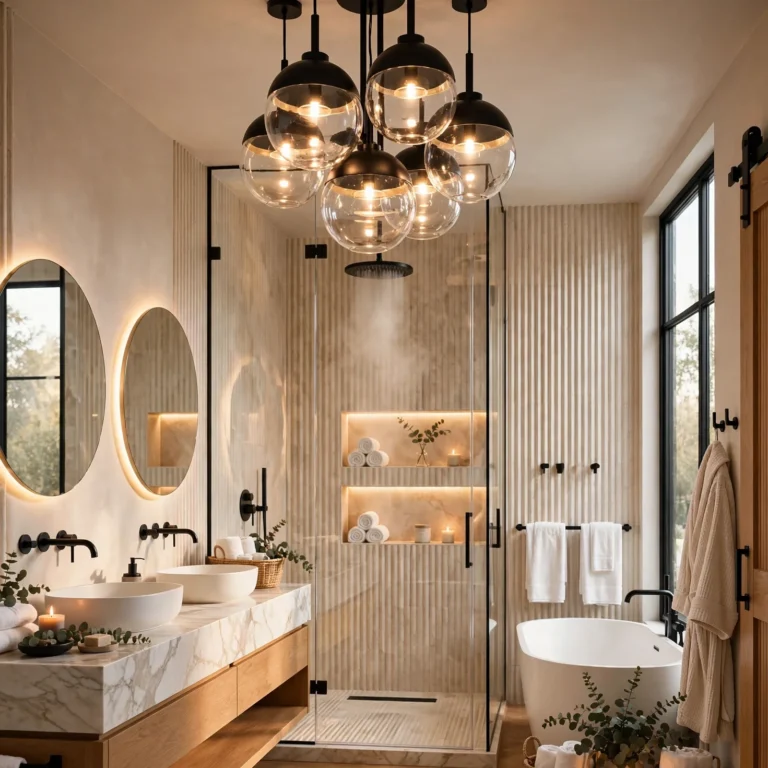
Hanging a sculptural pendant or a small chandelier from the bathroom ceiling, rather than relying solely on recessed lighting, brings the same design-forward approach used in dining rooms into a space often treated as purely functional. This fixture needs to carry a damp-rated certification if installed above or near a tub, and a wet-rated certification if positioned directly within a shower enclosure. Positioning it above a freestanding tub, rather than centered in the room, gives it a clear focal purpose.
9. High-Gloss Ceiling Paint
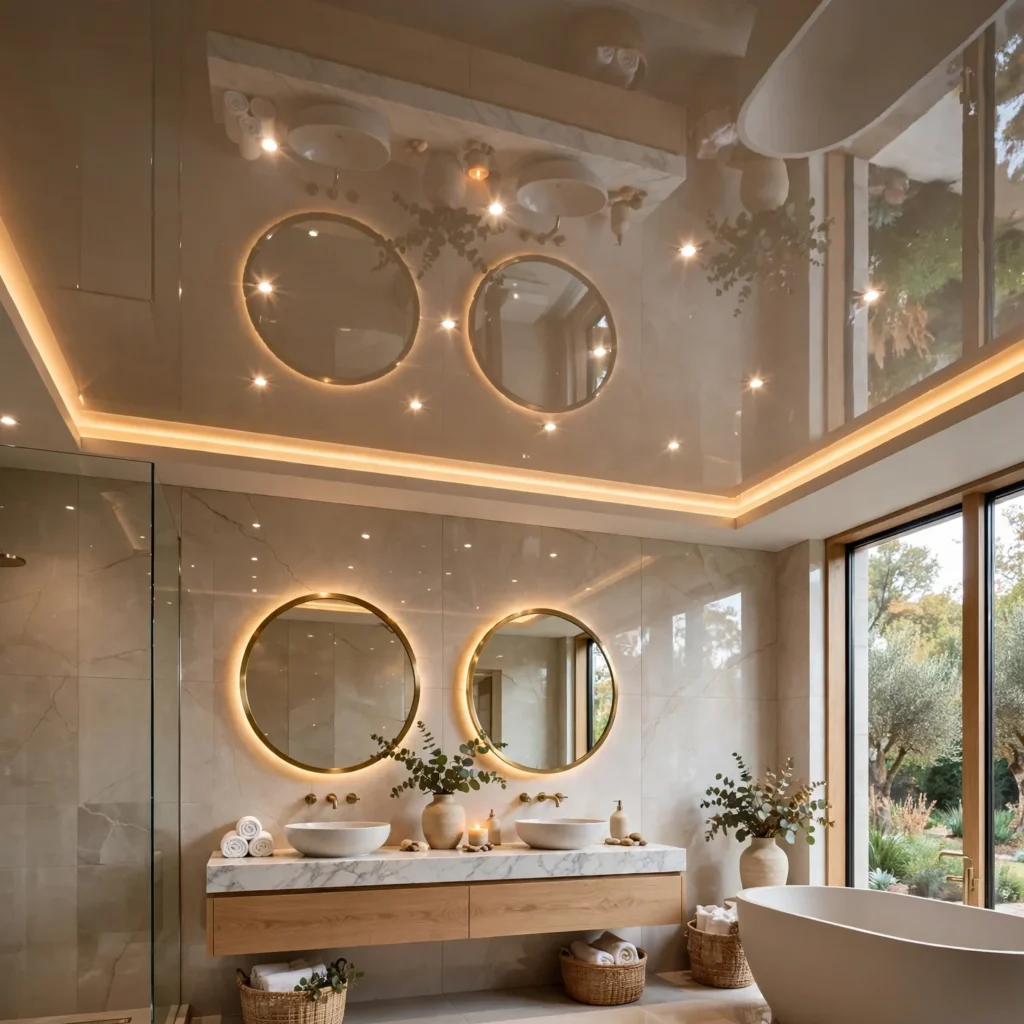
A high-gloss finish on the ceiling reflects more ambient light back into the room than a standard matte finish, which can make a bathroom with limited natural light feel brighter and slightly more expansive. This finish also resists moisture absorption better than a flat paint, holding up well to the humidity a bathroom regularly generates. The tradeoff is that gloss paint highlights any surface imperfections in the drywall more clearly, so the ceiling needs to be properly smoothed before painting.
10. Wallpaper Ceiling Treatment
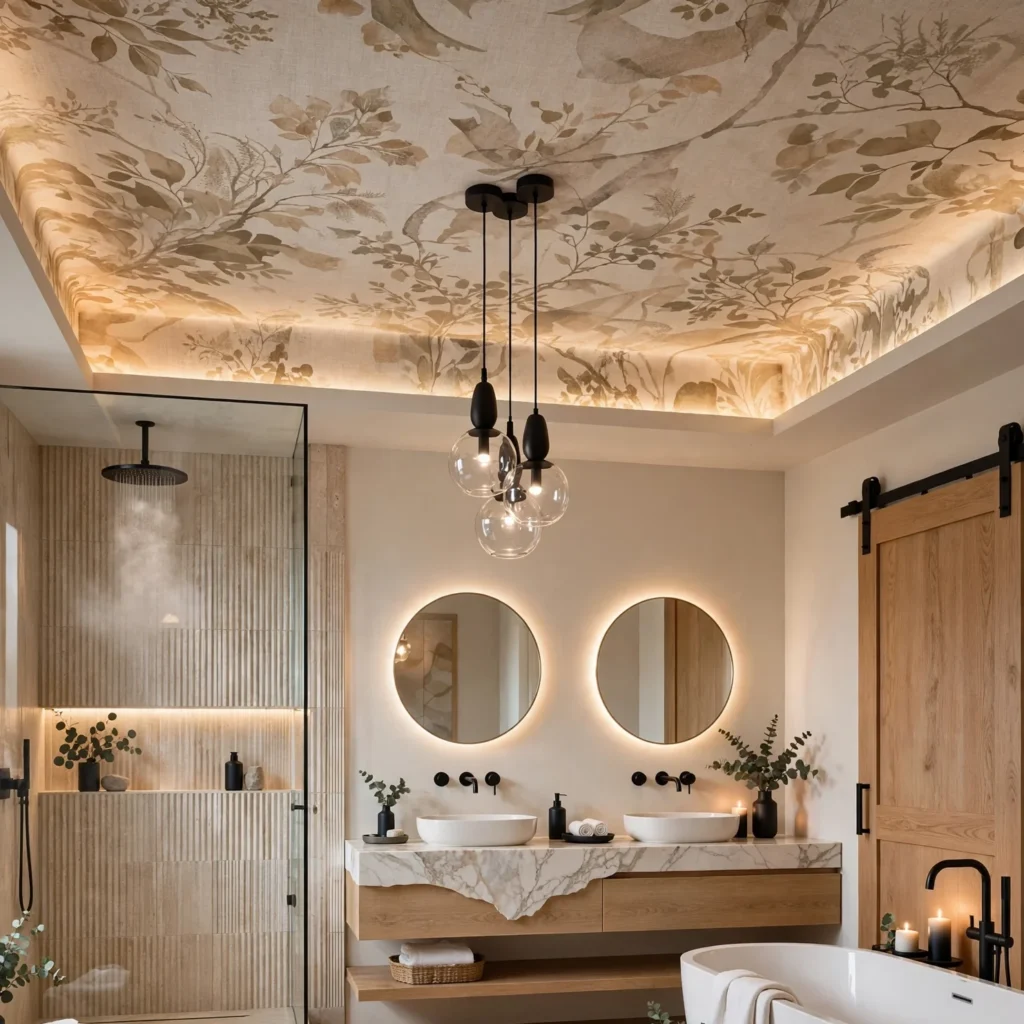
Applying a water-resistant, vinyl-coated wallpaper to the ceiling, rather than the walls, turns an often-overlooked surface into a design feature, particularly effective in a powder room or smaller secondary bathroom without a shower generating heavy steam. A botanical print or a subtle geometric pattern are common choices for this treatment, since a busy pattern reads differently viewed from below than it would on a vertical wall. This detail works best paired with a simpler wall treatment, letting the ceiling carry the room’s visual interest.
11. Ceiling-Mounted Rain Shower Fixture
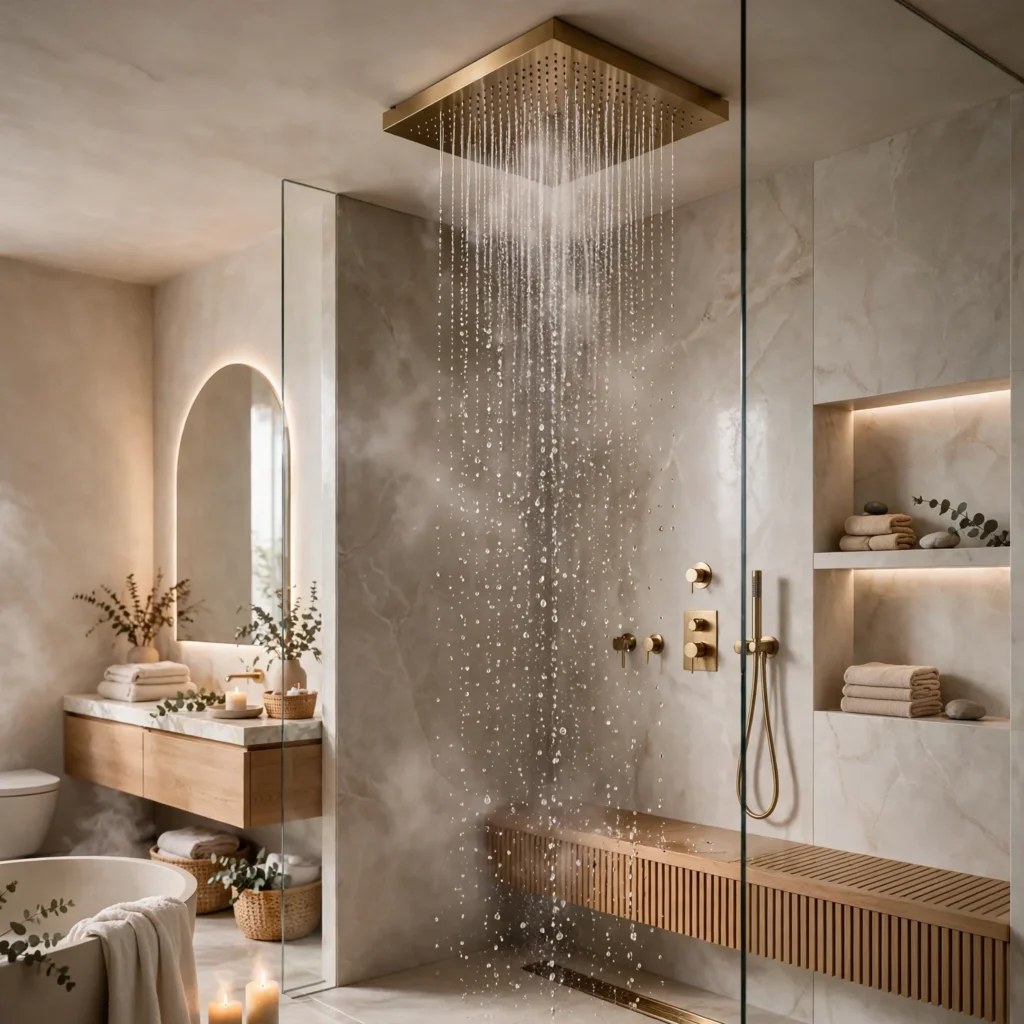
Positioning the shower head to mount flush into the ceiling directly above the standing area, rather than extending from the wall, creates a cleaner overhead line and reinforces a minimalist, spa-like feel in the shower zone specifically. This installation requires confirming the ceiling framing and plumbing rough-in can support the fixture’s exact placement before tile work begins. It’s most commonly paired with a curbless shower floor, since both details work toward the same open, uninterrupted look.
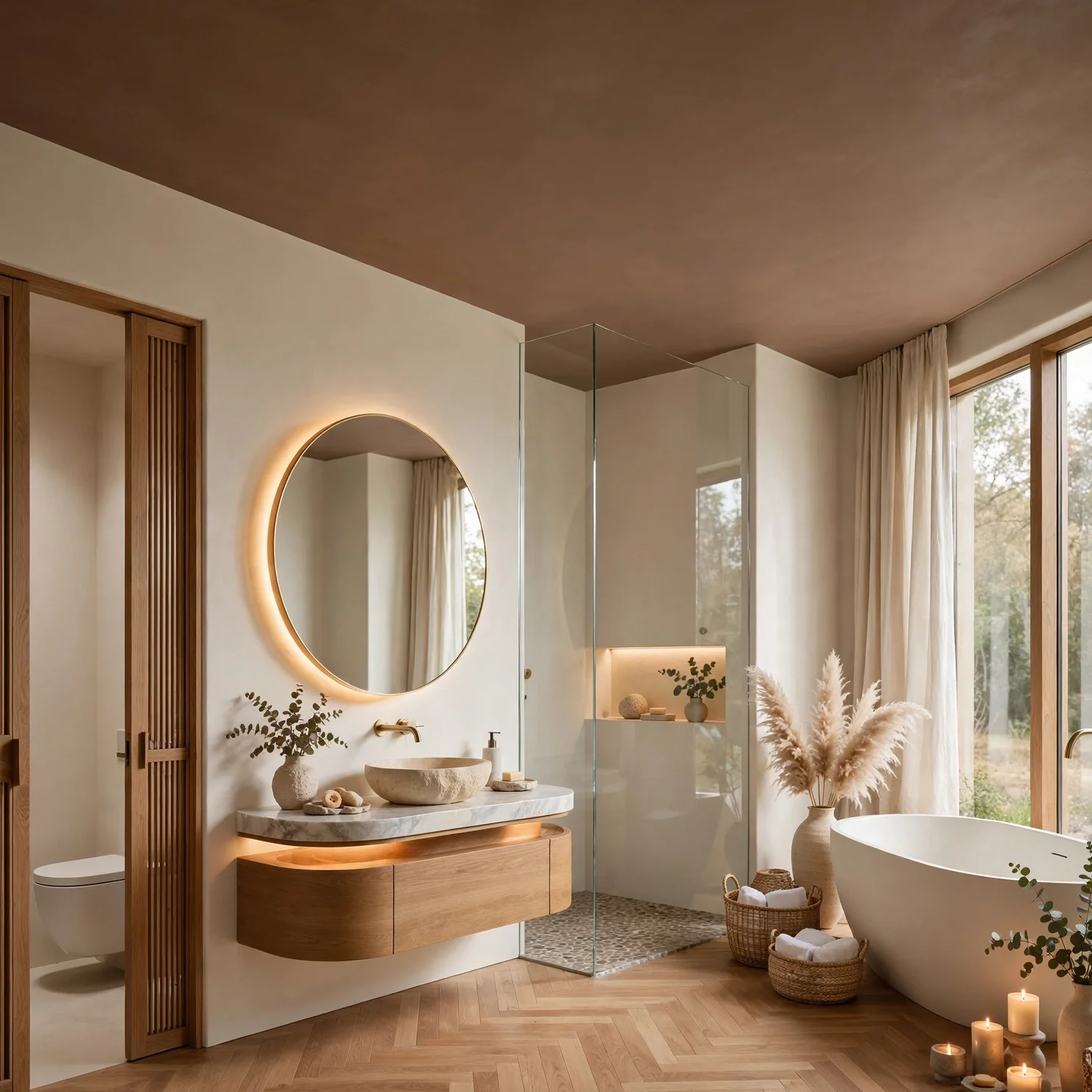
12. Painted Ceiling Color Contrast
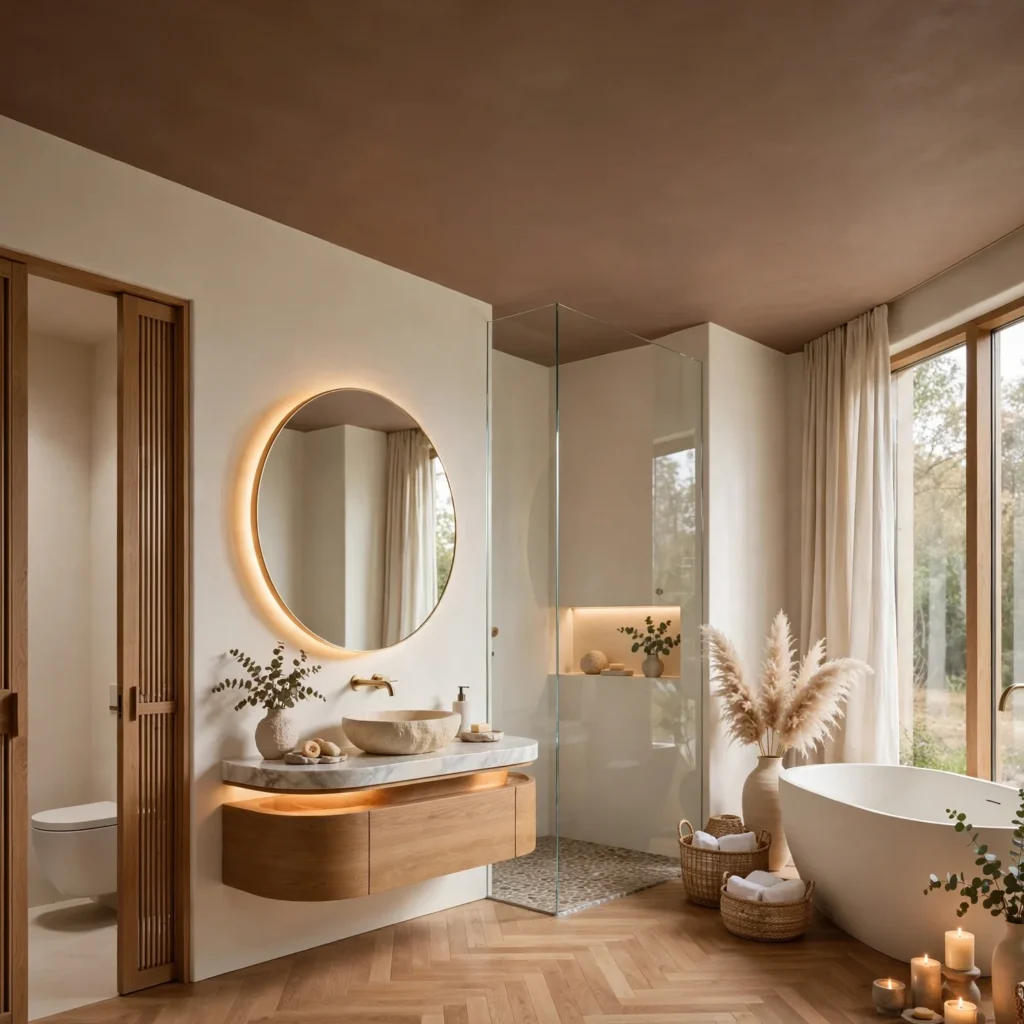
Painting the ceiling a deeper tone than the surrounding walls, rather than defaulting to white, adds a sense of intimacy and architectural definition that a plain white ceiling doesn’t provide, particularly in a smaller powder room. Charcoal, deep green, or navy are common choices for this treatment, typically paired with lighter walls and tile to keep the room from feeling too enclosed. This works best in bathrooms with strong artificial lighting, since a darker ceiling absorbs more light than a white one.
Shop the Look
A cedar tongue-and-groove ceiling panel kit works well for the wood-clad treatment covered here, particularly above a wet room or steam shower zone. A marine-grade bathroom ceiling paint in a satin finish addresses the moisture-resistance concern common to every option on this list. A damp-rated LED recessed light kit, spaced for even coverage, completes the lighting grid approach. A small brass or glass chandelier, rated for damp locations, adds the statement lighting element above a freestanding tub.
Common Mistake to Avoid
A common mistake in bathroom ceiling design is using standard interior paint or a non-rated light fixture simply because it matches the rest of the home’s finishes, without confirming moisture and safety ratings appropriate for a high-humidity room. Standard paint peels and develops mold within a year or two in a steam-heavy bathroom, and a non-rated fixture installed too close to a shower poses a genuine electrical hazard. Confirming the correct rating for each material and fixture before purchasing prevents both the cosmetic and safety issues that follow.
FAQs
What kind of paint should I use on a bathroom ceiling?
Marine-grade or bathroom-specific paint, formulated to resist moisture absorption and mildew growth, is the appropriate choice for a bathroom ceiling rather than standard interior paint. A satin or eggshell sheen holds up better than a flat finish, since it resists moisture more effectively and can be wiped down occasionally without damaging the surface. Applying a proper moisture-resistant primer beneath the paint further extends how long the finish holds up in a consistently humid room.
Can I install a wood ceiling in a bathroom with a shower?
Yes, but the wood needs to be a naturally moisture-resistant species like cedar, along with a breathable sealant rather than a fully waterproof coating that would trap humidity inside the wood and cause warping over time. This detail works particularly well in bathrooms with strong ventilation, like an exhaust fan sized appropriately for the room’s square footage. Regular ventilation after showering helps the wood dry properly between uses and extends its lifespan significantly.
Is a coffered ceiling worth the cost in a bathroom?
A coffered ceiling adds noticeable architectural character to a primary bathroom, but it’s generally only recommended in rooms with at least 9 feet of ceiling height, since the detail can make a lower ceiling feel compressed rather than elevated. The added cost comes from the custom trim and installation labor required, which is meaningfully more than a standard flat, painted ceiling. It tends to be reserved for larger, higher-budget primary bathroom renovations rather than smaller secondary bathrooms.
Do I need special light fixtures for a bathroom ceiling?
Yes, fixtures installed directly above or within a shower or tub need a wet-rated or damp-rated certification, depending on their exact proximity to water spray, since a standard interior-rated fixture poses an electrical hazard in that environment. Fixtures positioned elsewhere in the bathroom, away from direct water exposure, can generally use standard damp-rated fixtures rather than the stricter wet-rated requirement. Checking the specific rating required for each fixture’s planned location prevents both a code violation and a safety issue.
How do I make a small bathroom ceiling feel higher?
Painting the ceiling white or a very light tone, combined with recessed lighting rather than a hanging fixture that visually lowers the room’s perceived height, are the two most effective ways to make a small bathroom ceiling feel taller. Vertical elements, like a tongue-and-groove wood treatment installed in vertical planks rather than horizontal, can also draw the eye upward. Avoiding heavy architectural details, like a coffered grid, in a room with limited ceiling height keeps the space from feeling more compressed rather than taller.
Conclusion
Bathroom ceiling design deserves the same planning attention given to walls and flooring, since it’s a surface visible from nearly every angle in the room and one of the most commonly overlooked opportunities in a renovation. Save this guide to Pinterest for your next project, and check out our related post on bathroom design luxury for more high-end material inspiration.