12 Trending Kitchen Backsplash Ideas for Every Style and Budget
Choosing among kitchen backsplash ideas can be trickier than it looks, since tile size, material, and grout color all interact to change the final look far more than people expect. This post covers twelve specific backsplash concepts, each with real material names and layout guidance so you can compare options directly rather than guessing from a single photo. Whether you’re tiling a small galley kitchen or a full wall behind a range, you’ll find sizing notes and comparisons to help you plan the installation with more confidence.
Trend & Background
Backsplash design has shifted over the past few years away from perfectly uniform, glossy subway tile toward more textured, handmade-looking materials like zellige and fluted ceramic. Homeowners are also extending backsplashes further up the wall, sometimes to the ceiling behind a range, rather than stopping at a standard 18-inch strip above the counter. This matters now because a backsplash is one of the more visible, harder-to-change elements in a kitchen, so choosing a material and layout with lasting appeal helps avoid a costly retile just a few years later.
Key Takeaways
- These kitchen backsplash ideas range from budget-friendly subway tile to higher-end bookmatched stone slabs.
- Warmer, textured materials like zellige and fluted tile are replacing the flat, uniform tile looks of past years.
- Several ideas include size, spacing, or budget comparisons to help you plan grout lines and tile layout before installing.
- Small choices like tile size or grout color can change how a whole kitchen reads, even with the same base material.
1. Zellige Tile
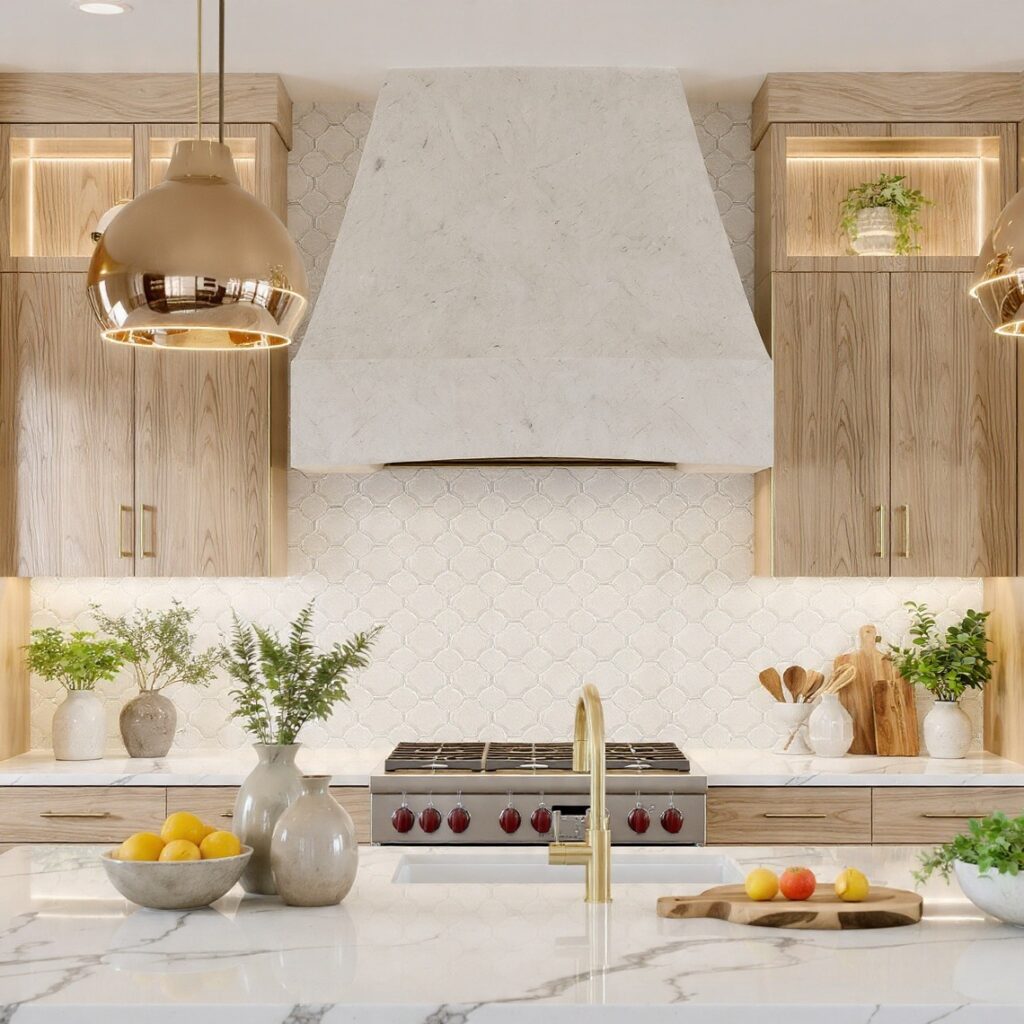
Zellige is a handmade Moroccan clay tile known for its slightly irregular surface and subtle variation in color from tile to tile, even within the same batch. This handmade quality gives the backsplash more depth and texture than a uniform ceramic tile, especially under natural light. It’s typically installed in a simple running bond pattern to let the material’s texture do the visual work rather than a complex layout. Because each tile varies slightly, it pairs well with simpler cabinetry and countertop choices rather than another highly patterned material.
2. Fluted Ceramic Tile
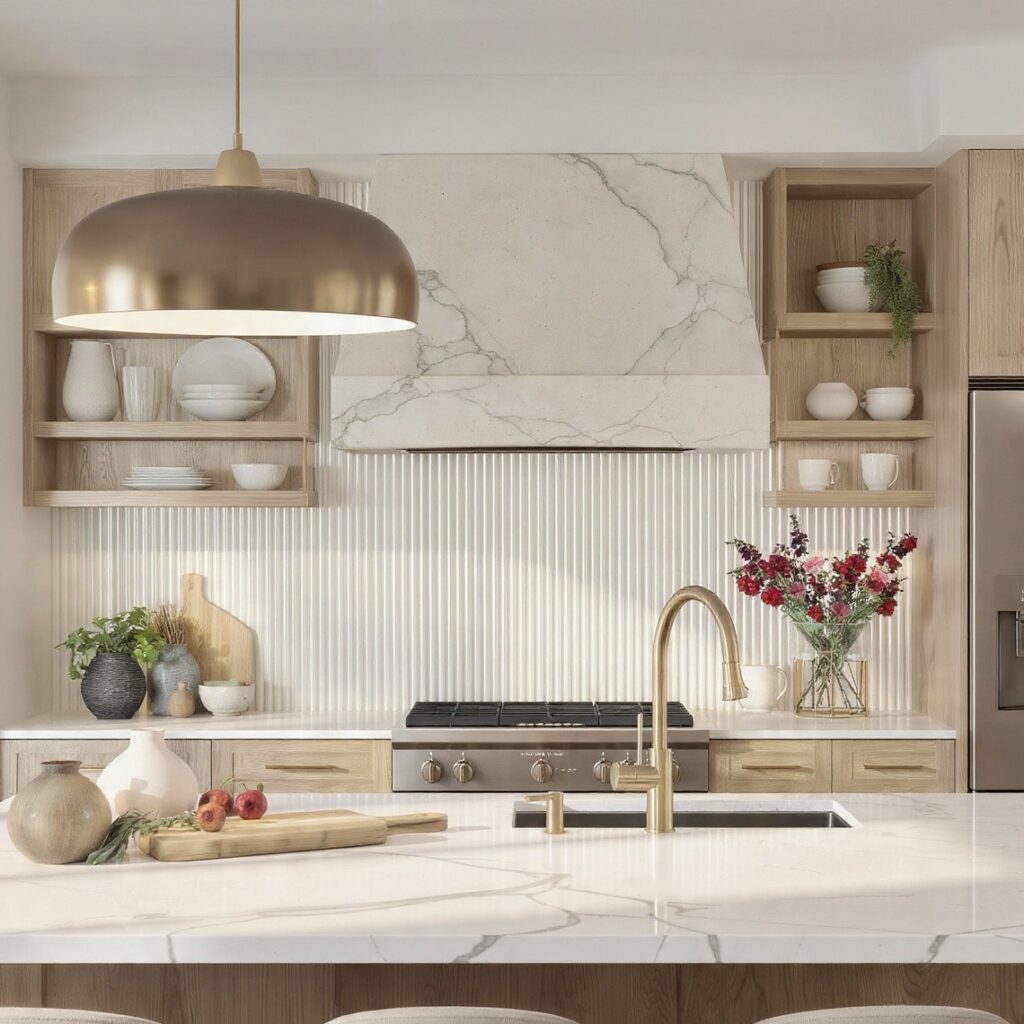
Fluted tile has a raised, ribbed surface texture instead of a flat glaze, catching light differently depending on the angle it’s viewed from. This adds dimension to a backsplash without introducing color or pattern, making it a good fit for kitchens that already have a busy countertop or cabinet finish. It’s typically installed vertically to emphasize the fluted lines running upward. This idea works particularly well as an accent behind a range or on a single focal wall rather than wrapping the entire kitchen.
3. Bookmatched Stone Slab
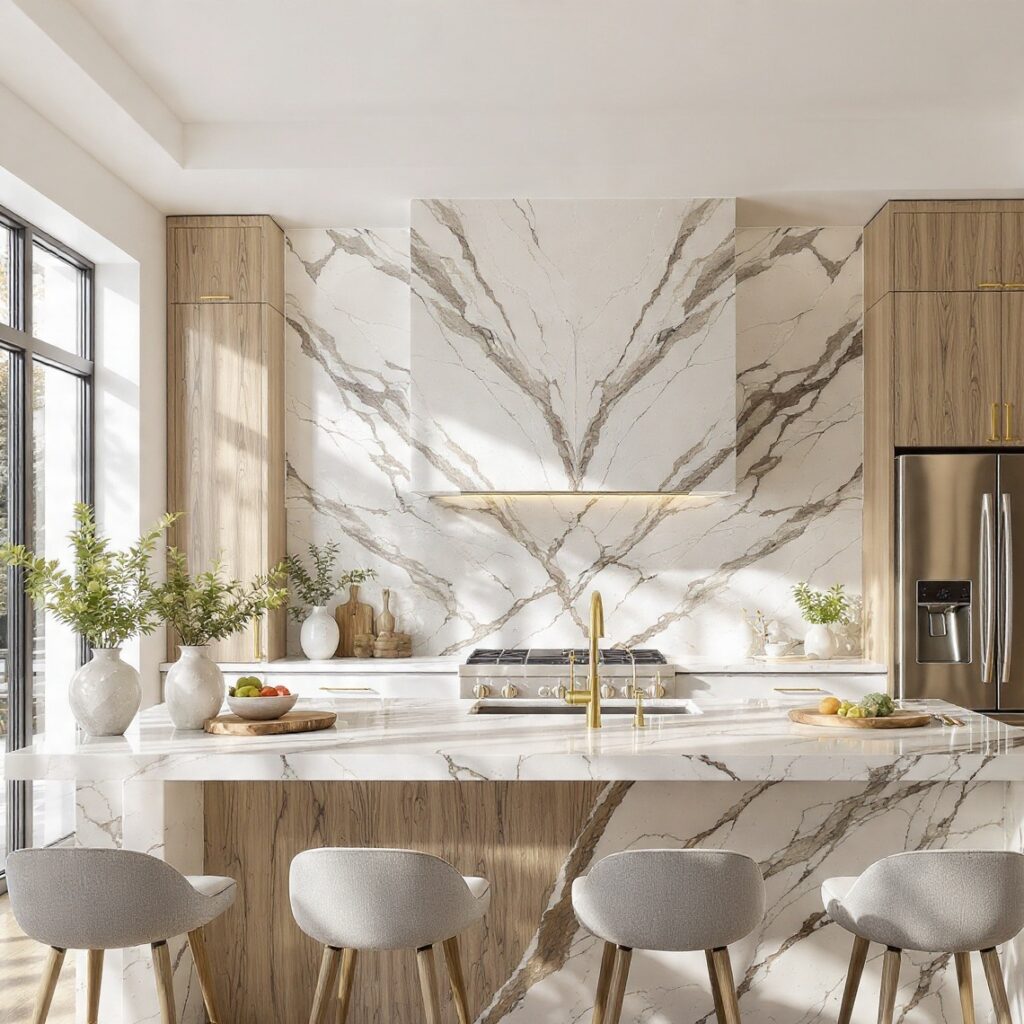
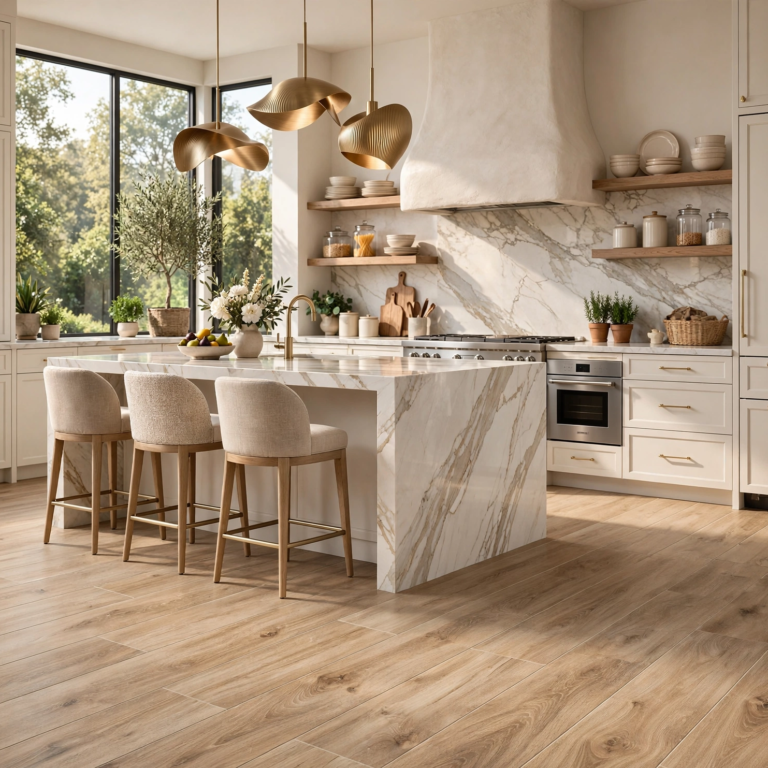
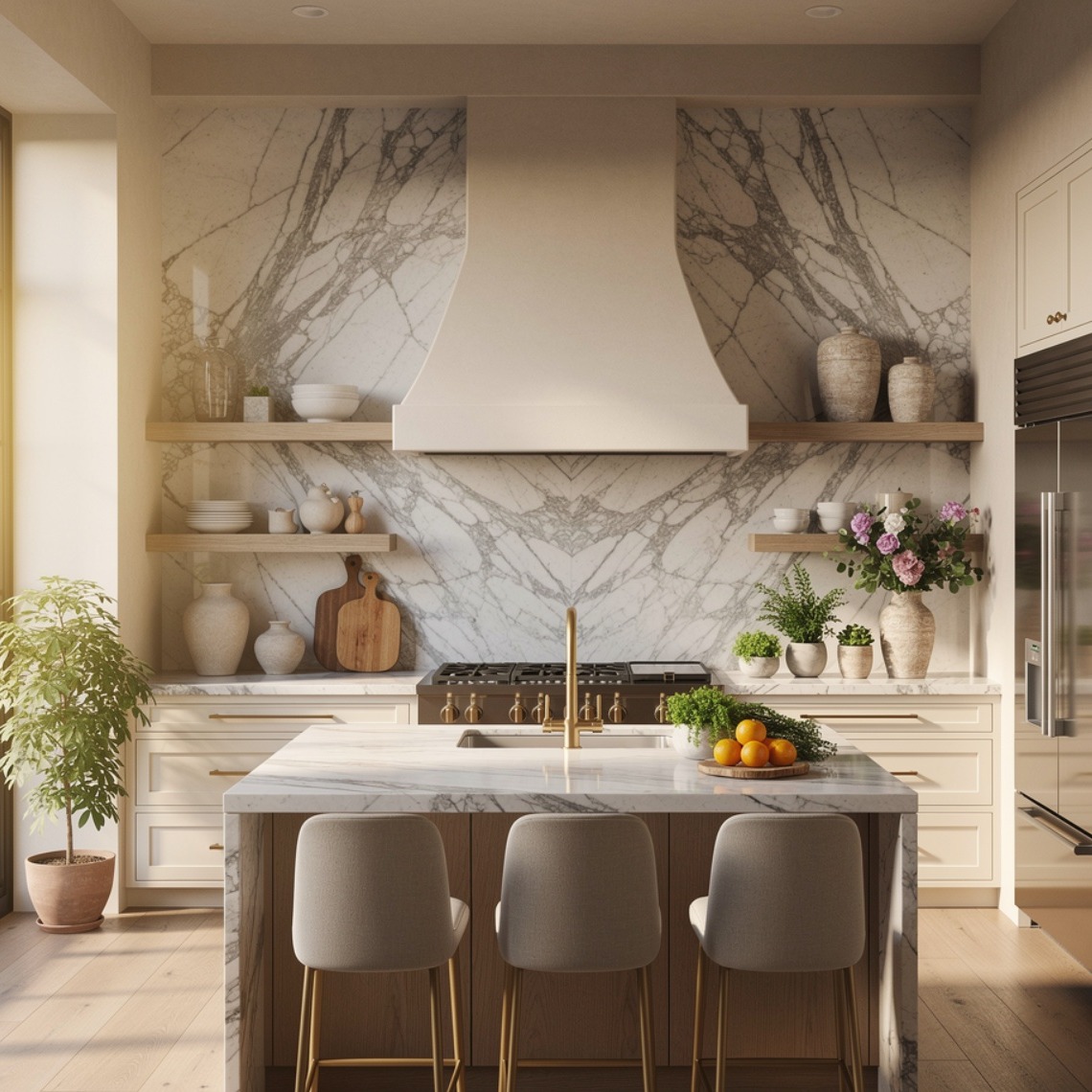
A bookmatched slab backsplash uses two adjacent stone pieces cut from the same block, arranged so the veining mirrors across a central seam, creating a symmetrical pattern behind the range or sink. This works best with dramatic natural stones like quartzite or marble, where bold veining makes the mirrored effect clearly visible. It’s a higher-cost option due to slab selection and precise cutting, but it removes grout lines entirely for a cleaner, more seamless look. This idea suits kitchens where the backsplash area isn’t broken up by outlets or a window.
| Material | Grout Lines | Relative Cost |
| Subway Tile | Many | Low |
| Zellige Tile | Some | Medium |
| Bookmatched Slab | None | High |
4. Herringbone Subway Tile
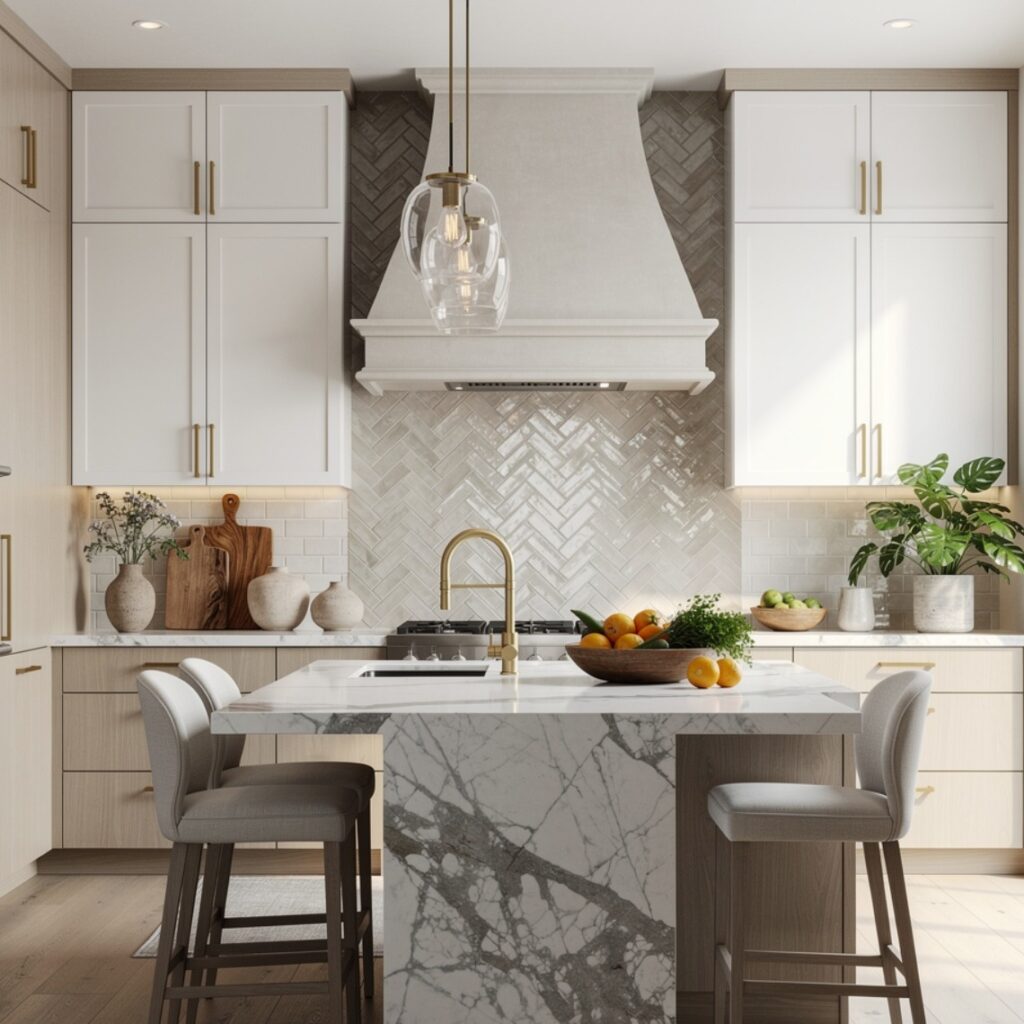
Herringbone arranges standard subway tile in a diagonal zigzag pattern instead of the typical straight running bond, adding movement to an otherwise simple material. This layout works well in white or off-white tile when the goal is texture without added color, but it also reads well in a solid dark grout for more contrast. It requires more cuts and slightly more labor than a straight layout, which adds modestly to installation cost. This idea suits kitchens that want a classic material with a slightly more elevated presentation.
Love warm and inviting spaces? Our kitchen design ideas feature charming designs with rustic touches and modern comfort.
5. Full-Height Slab Backsplash
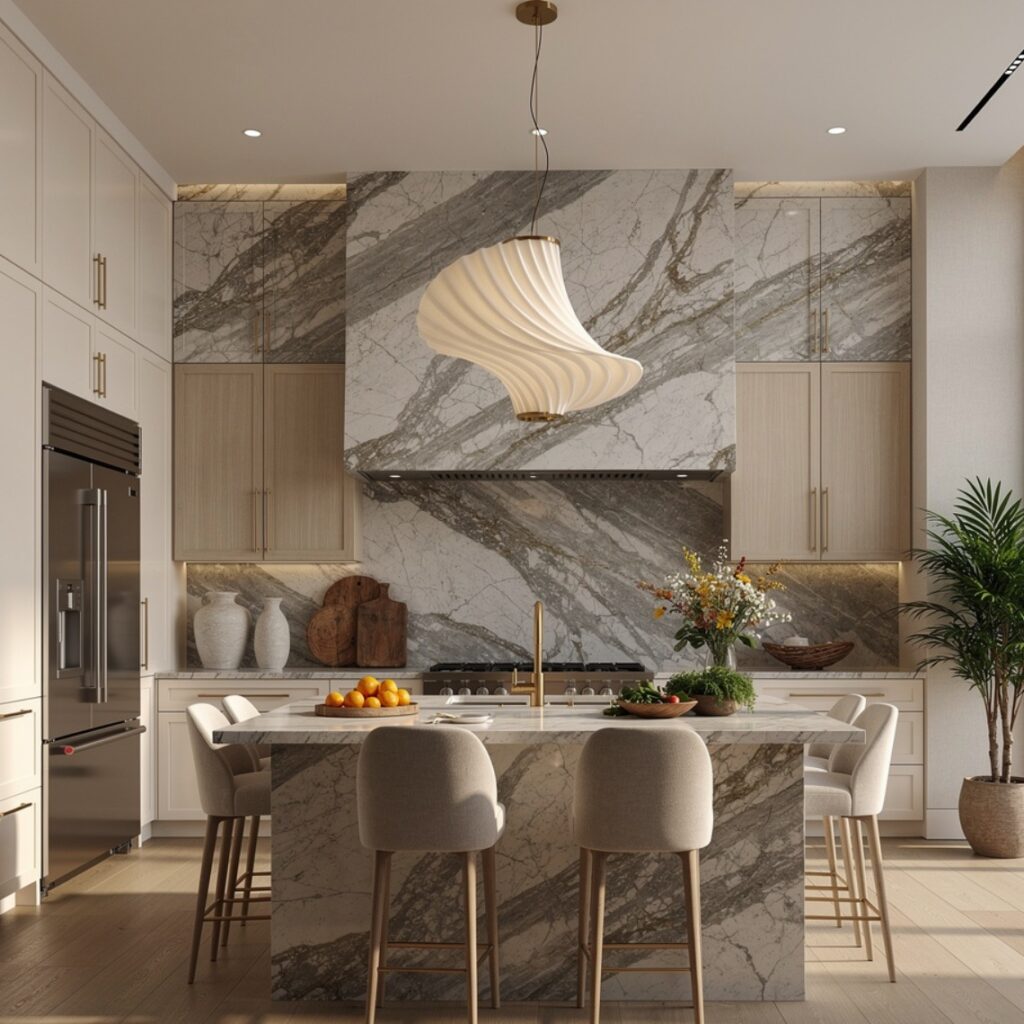
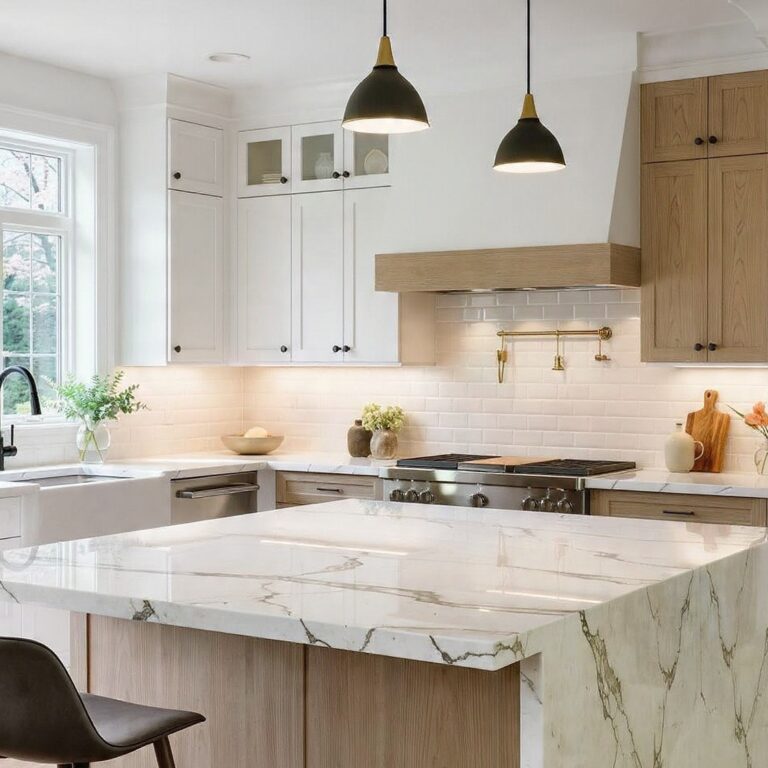
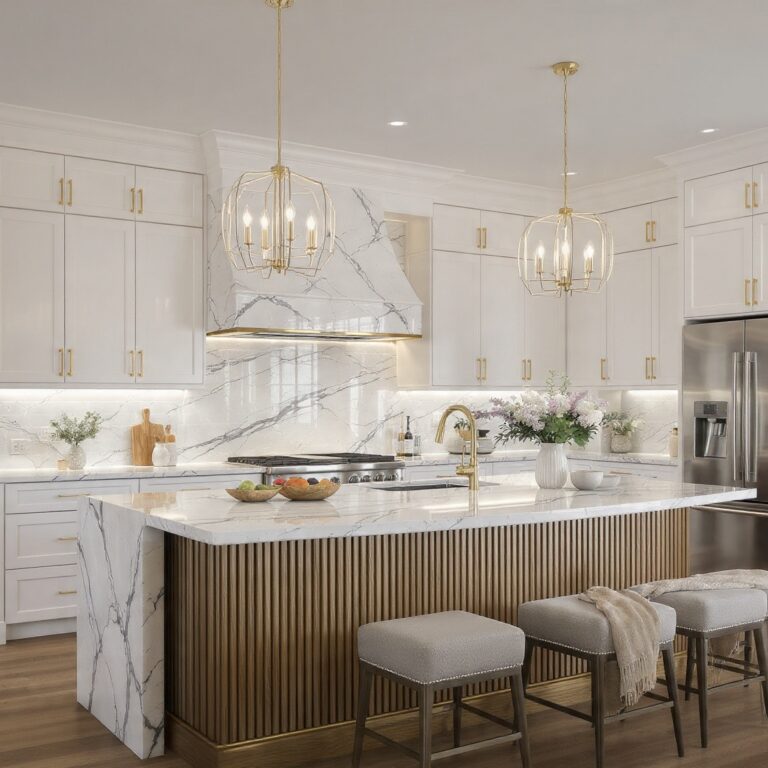
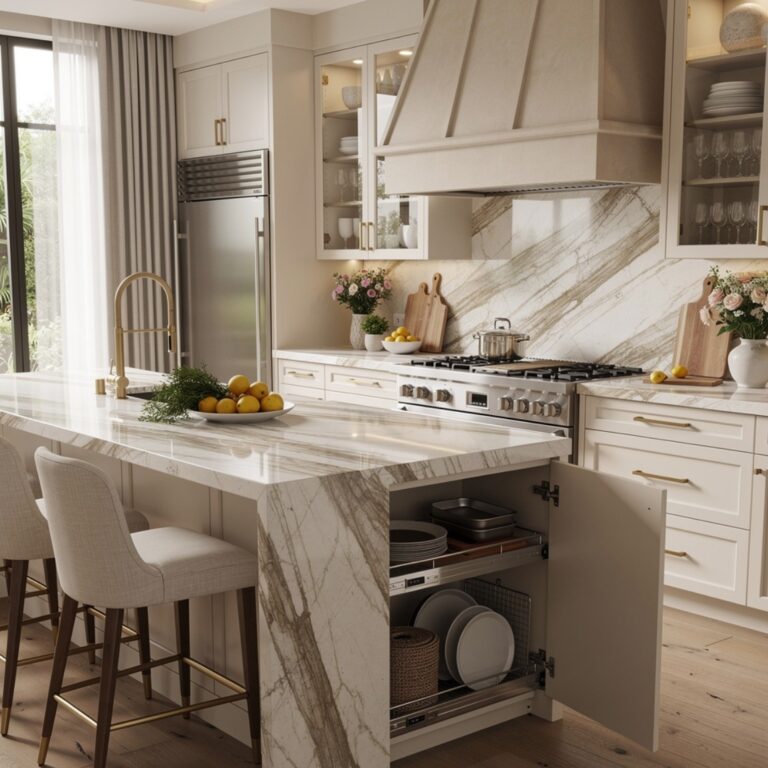
A full-height slab backsplash extends countertop material all the way up to the upper cabinets or ceiling, rather than stopping at a standard tile strip. This removes grout lines almost entirely and creates a more monolithic, high-end look, particularly with quartzite or marble-look quartz. It requires more material and precise cutting around outlets, windows, and range hoods, which adds to both material and labor costs. This idea works best in kitchens where the backsplash area is relatively uninterrupted by cabinetry or appliances.
6. Hand-Painted Tile Accent
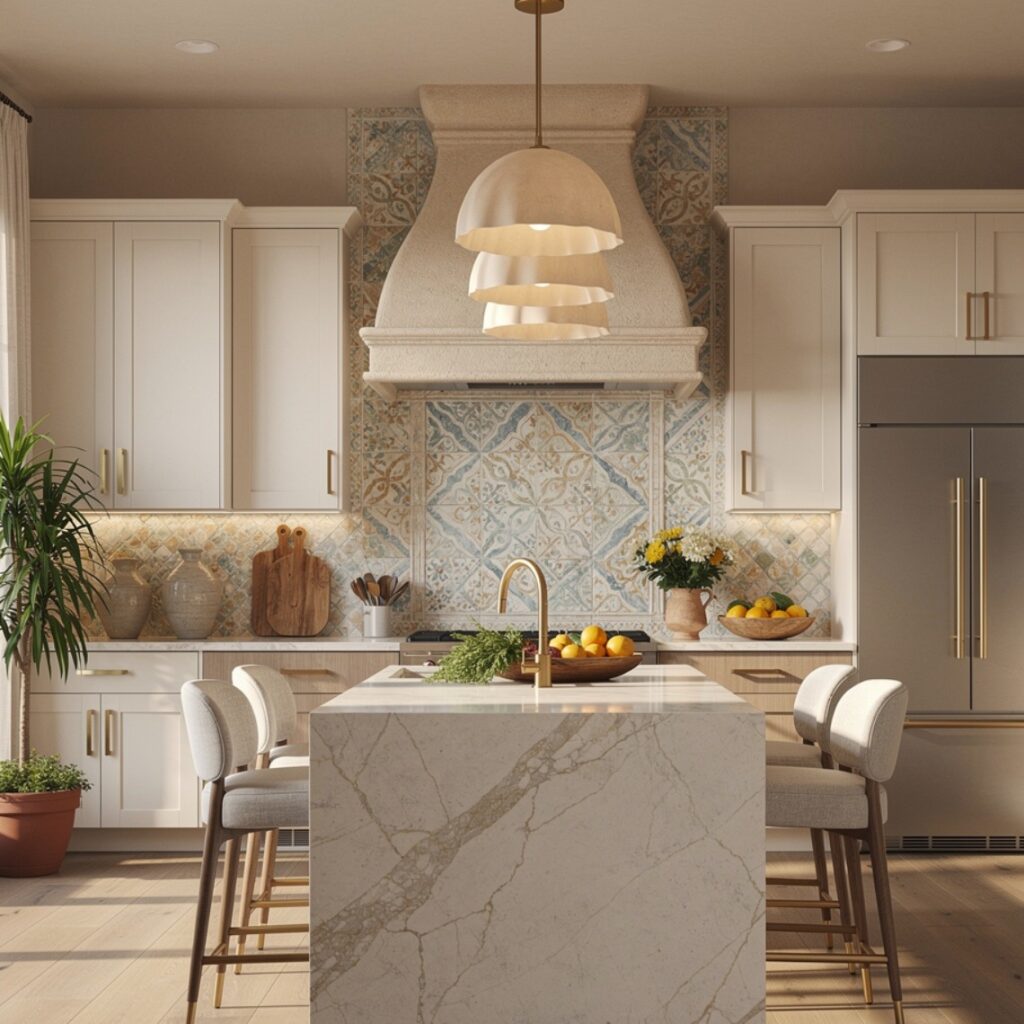
Hand-painted tile, often in a Talavera or Spanish-inspired pattern, adds color and pattern to a backsplash without covering the entire wall, typically used as a border or focal strip. This works well behind a range as a contained accent rather than across the full backsplash, keeping the pattern from overwhelming the room. Pairing patterned tile with simple, solid-color subway tile on the remaining walls balances the look. This idea suits kitchens that want a bold, personal touch without a full commitment to pattern everywhere.
7. Extended Backsplash to Ceiling
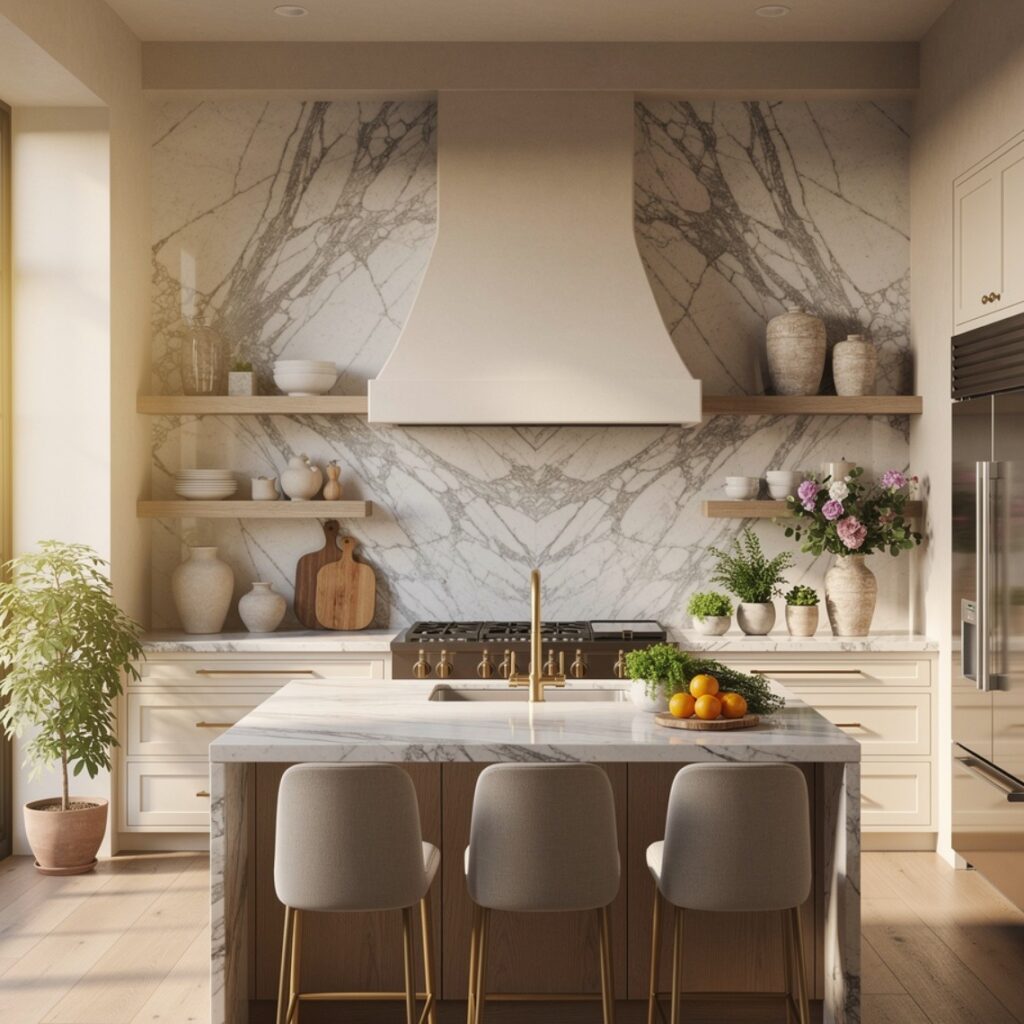
Rather than stopping at 18 inches above the counter, this idea extends tile or slab material all the way to the upper cabinets or ceiling, particularly in kitchens without upper cabinets on a given wall. This creates a more dramatic, intentional look and avoids an awkward strip of bare painted wall above a standard-height backsplash. It works especially well behind an open shelving wall or a range with a statement hood. This idea does require more material, so cost scales with the height and material choice.
8. Picket Tile Pattern
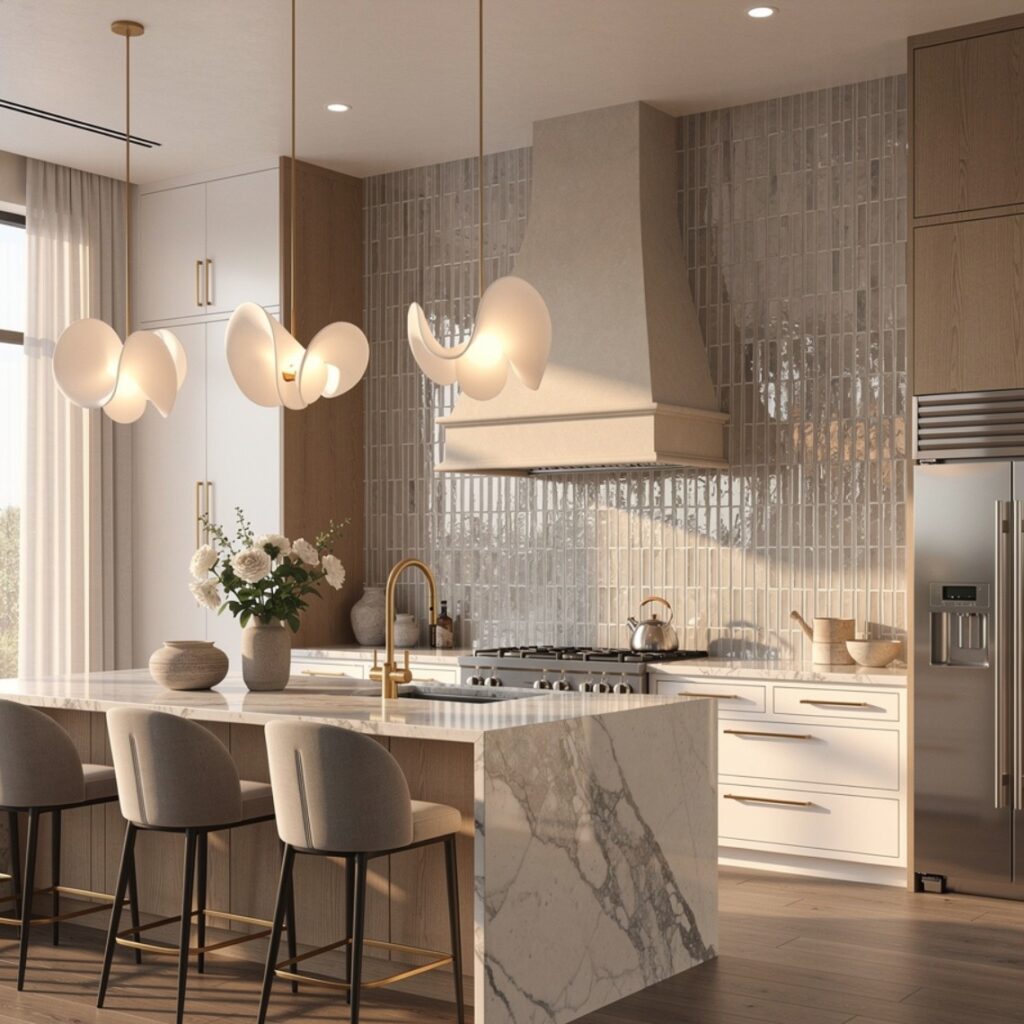
Picket tile uses a narrow, pointed tile shape, arranged either upright or on its side, creating a distinctive geometric pattern different from standard rectangular subway tile. It’s often used as a full backsplash or as an accent behind the range, depending on how bold the homeowner wants the pattern to read. Because the tile shape is less common, it usually costs more per square foot than standard subway tile. This idea suits kitchens looking for a geometric detail without relying on color for visual interest.
| Tile Shape | Pattern Style | Typical Use |
| Subway | Running bond, herringbone | Full backsplash |
| Picket | Upright or angled points | Accent or full wall |
| Hexagon | Honeycomb grouping | Full backsplash or floor |
9. Marble Hexagon Tile
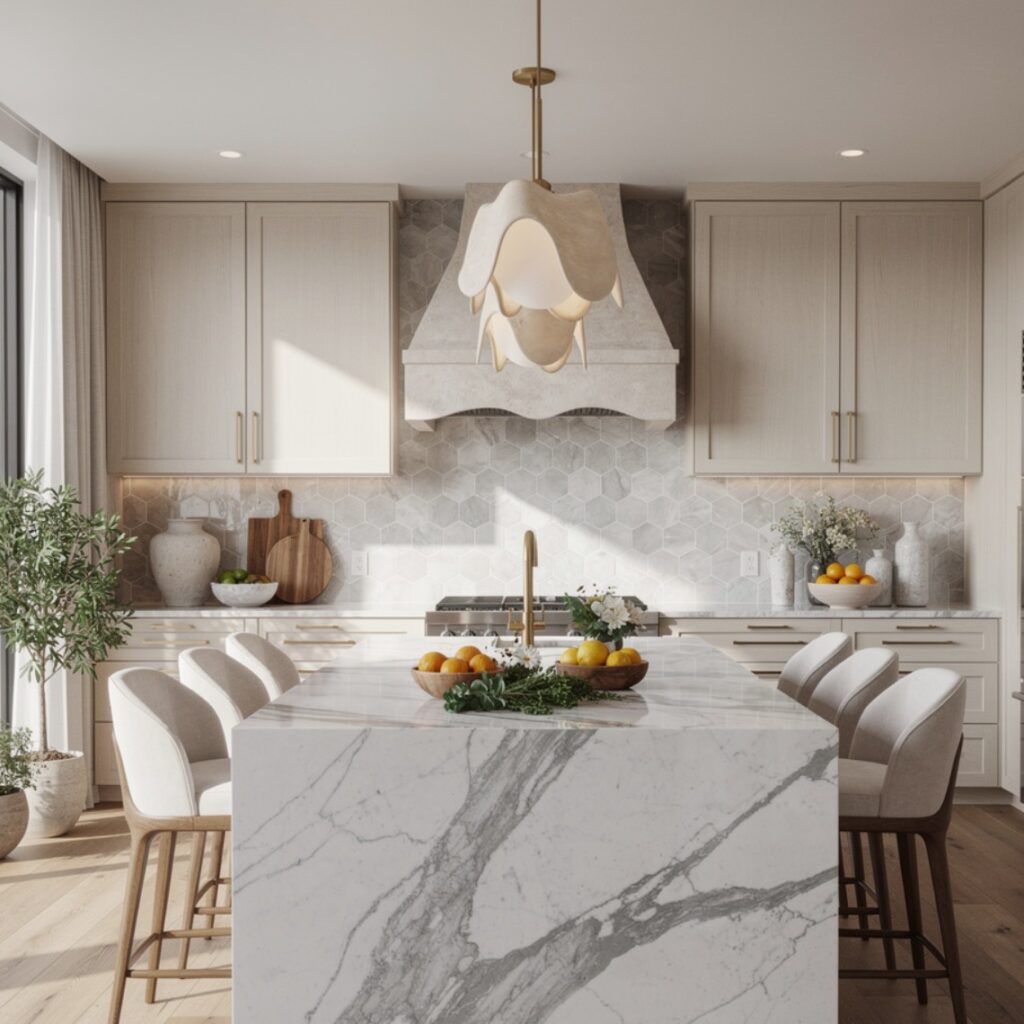
Hexagon tile in marble or marble-look porcelain creates a honeycomb pattern that reads as more traditional and detailed than a straight subway layout. Smaller hexagon sizes, around 1 to 2 inches, tend to suit tighter backsplash areas, while larger hexagons work better across a full uninterrupted wall. Marble requires sealing and is more prone to staining than porcelain, so porcelain hexagon tile is a common lower-maintenance substitute with a similar visual effect. This idea pairs well with both traditional and transitional kitchen styles.
10. Colored Grout Contrast
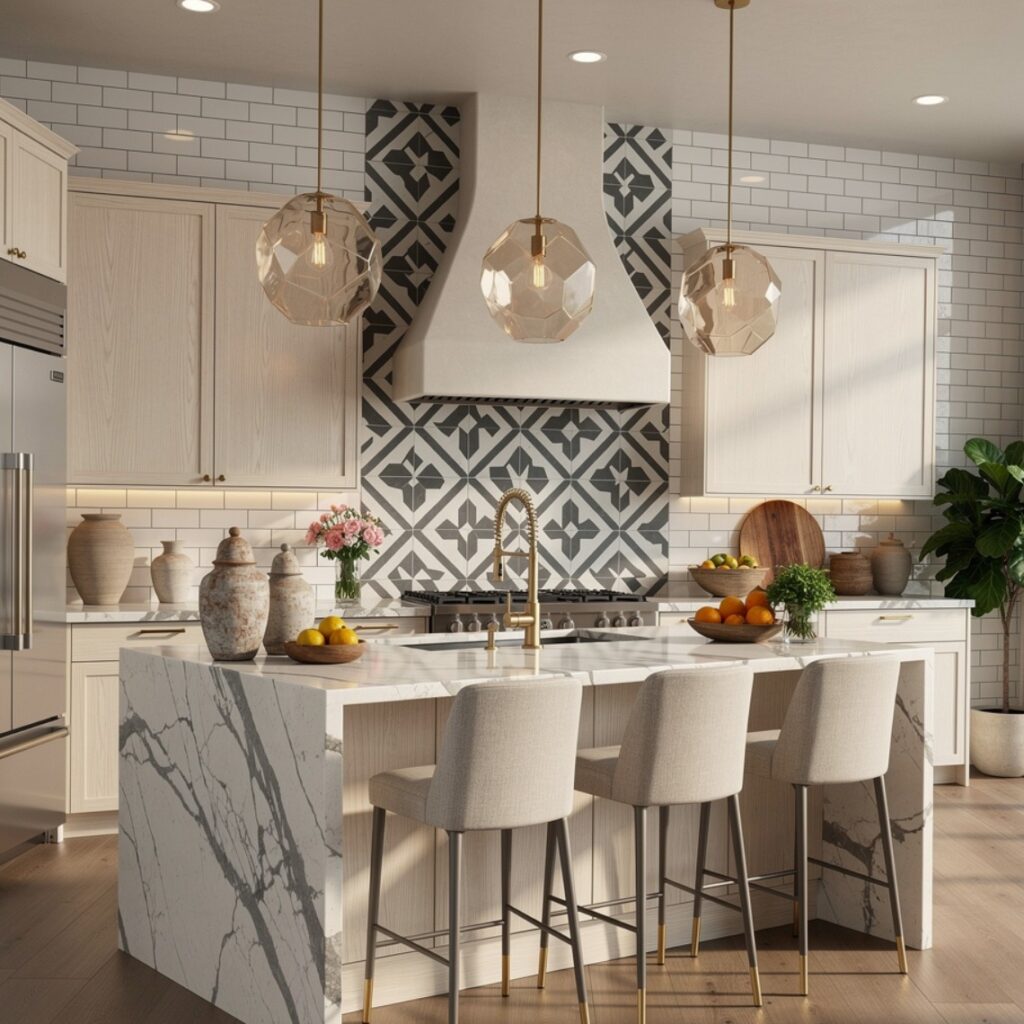
Rather than choosing tile for color, this idea uses a simple white or neutral subway tile paired with a contrasting grout color, such as charcoal or terracotta, to create pattern through the grout lines themselves. This is a lower-cost way to add visual interest compared to switching to a more expensive tile material. It also tends to hide grout discoloration better over time than a bright white grout does in a heavily used kitchen. This idea suits homeowners who want texture and definition without committing to a bold tile choice.
11. Arched Alcove Backsplash
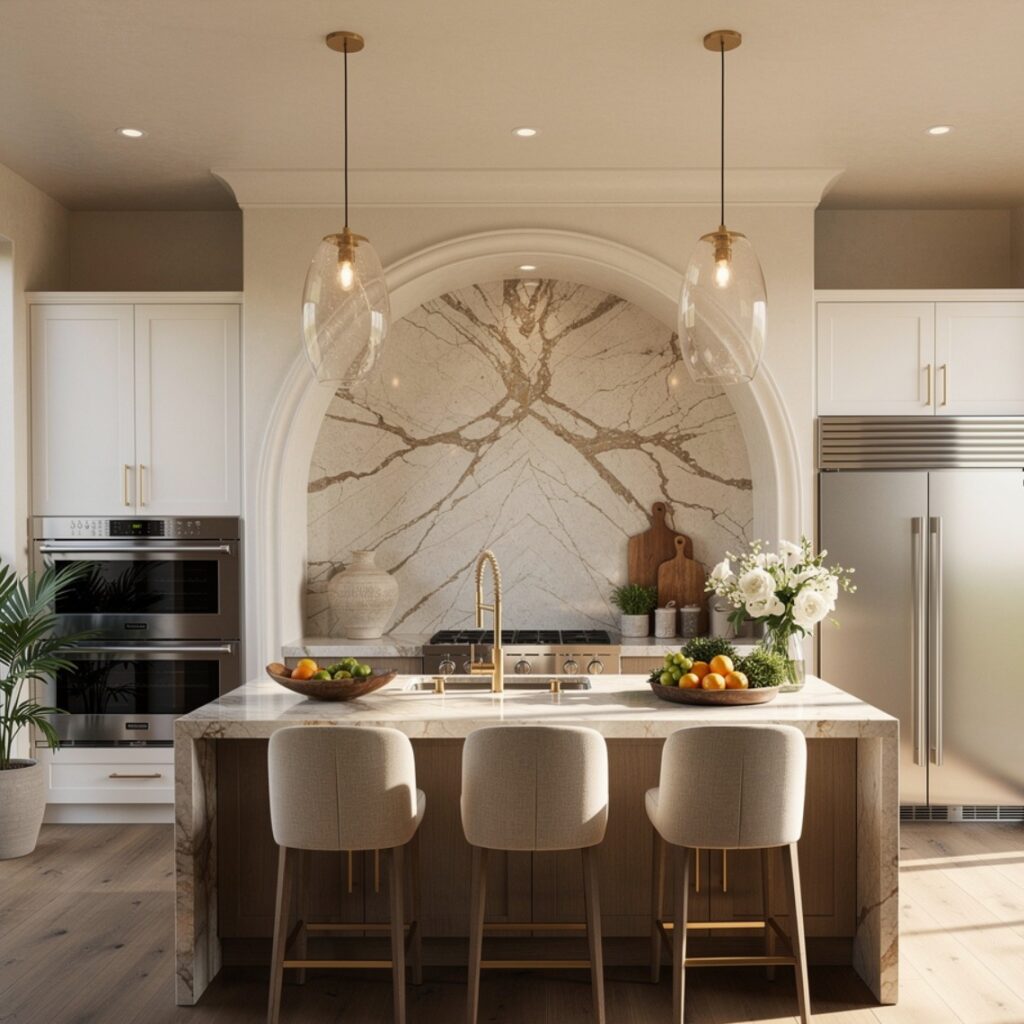
An arched alcove behind the range creates a recessed, curved niche, often tiled differently from the surrounding backsplash to frame the cooking area as a focal point. This works particularly well with a plaster or tiled arch paired with open shelving on either side. It requires more construction work than a flat backsplash since the wall itself needs to be built out or recessed. This idea suits larger kitchens where the range wall already serves as a natural focal point in the room’s layout.
12. Kitchen Backsplash Ideas for Small Kitchens
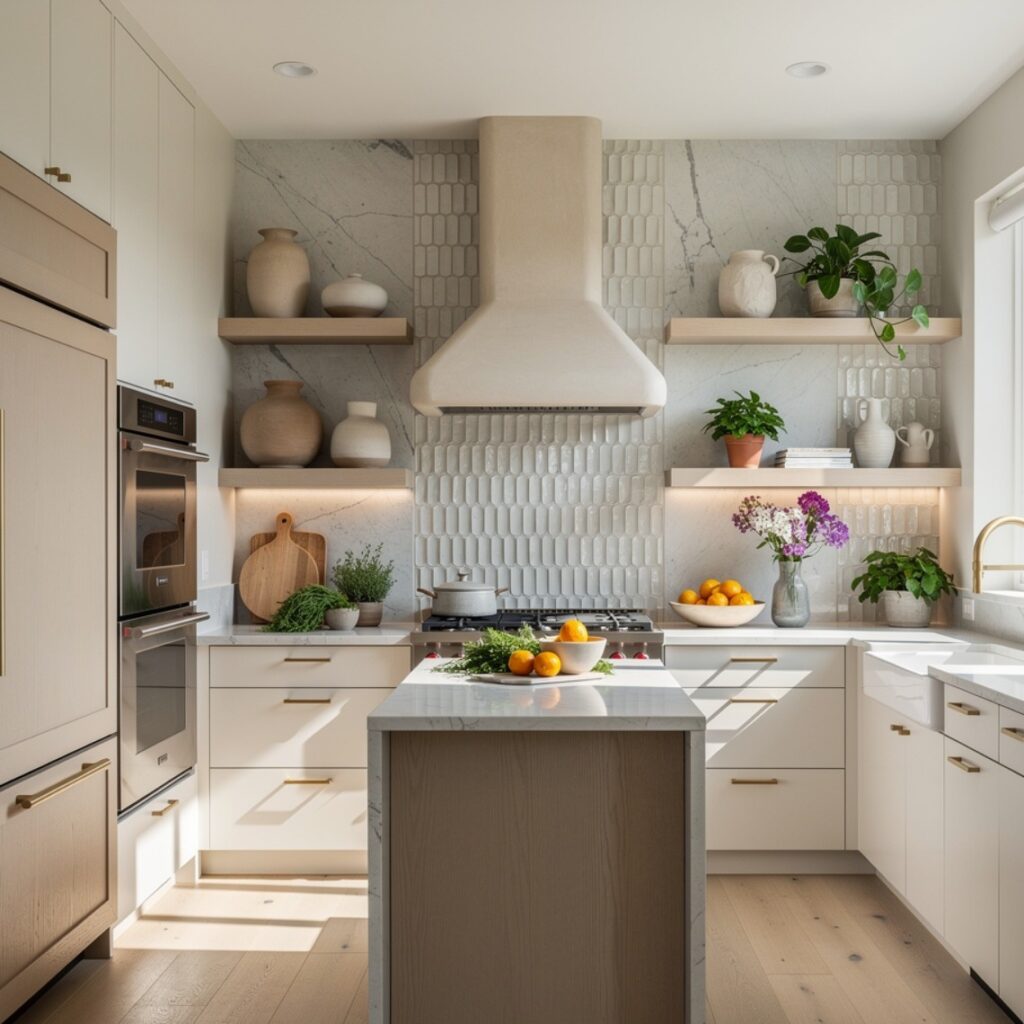
Among kitchen backsplash ideas, smaller kitchens benefit most from lighter, less busy materials that avoid making the space feel more closed in than it already is. A simple subway tile in a light color, extended slightly higher than standard to visually elongate the wall, tends to work better than a heavily patterned or dark material in a compact footprint. Keeping grout color close to the tile color also helps the backsplash read as one continuous surface rather than a broken-up pattern. This approach keeps a small kitchen feeling open rather than visually crowded.
Shop the Look
For a kitchen built around these ideas, look at handmade zellige tile from a supplier like Zia Tile or Clé, paired with a simple unglazed grout in a matching tone. A honed quartzite or marble-look quartz slab works well for the full-height or bookmatched backsplash options. Fluted ceramic tile from Fireclay Tile makes a strong accent behind a range, and a colored grout like charcoal or terracotta pairs easily with standard white subway tile for a lower-cost update.
Common Mistake to Avoid
The most common mistake is choosing backsplash tile before finalizing the countertop and cabinet colors, which often leads to an undertone mismatch that’s hard to notice until installation is complete. A white tile with cool undertones can clash with a warm-toned countertop, even though both looked fine separately in a showroom. Always bring a physical tile sample next to the actual countertop and cabinet sample in the kitchen’s own lighting before ordering the full tile quantity, since retiling later is costly and disruptive.
FAQs
What is the most durable backsplash material for daily cooking?
Porcelain tile and slab quartz are both highly durable against heat, staining, and daily wear, making them strong choices for a backsplash that sees frequent cooking. Natural stone like marble requires more regular sealing and is more prone to staining from acidic splashes, while porcelain needs no sealing at all. For a busy kitchen, porcelain or quartz tends to hold up with less ongoing maintenance than natural stone options.
How high should a kitchen backsplash go?
A standard backsplash typically runs 18 inches from the countertop to the bottom of the upper cabinets, but many kitchens now extend the material higher, sometimes to the ceiling, particularly on walls without upper cabinets. Behind a range, extending the backsplash higher, especially with a statement hood, has become increasingly common. The right height ultimately depends on cabinet layout and whether the goal is a subtle strip or a more dramatic focal wall.
Is a grout-free backsplash worth the extra cost?
A grout-free backsplash, like a full slab or bookmatched stone, does add cost but removes the ongoing maintenance of cleaning and resealing grout lines over time. It also creates a more seamless, high-end look that reads differently than tile, particularly with dramatic natural stone veining. For kitchens focused on long-term low maintenance and a more polished appearance, the added upfront cost is often considered worthwhile.
What tile size makes a small kitchen backsplash look bigger?
Larger format tile, or a slab with fewer grout lines, tends to make a small kitchen backsplash read as more open, since fewer visual breaks keep the eye moving smoothly across the wall. Smaller tile with heavy grout lines, by contrast, can visually chop up a compact space. Keeping the tile and grout color close in tone also helps a smaller backsplash feel more expansive rather than busy.
Should backsplash tile match the countertop material?
Backsplash tile doesn’t need to match the countertop material exactly, and many kitchens intentionally contrast the two, such as pairing a stone countertop with a ceramic or zellige backsplash. What matters more is that the undertones between the two materials complement each other rather than clash. A full-height slab backsplash using the same material as the counter is a specific look some homeowners prefer for a more monolithic, seamless appearance.
Conclusion
These kitchen backsplash ideas range from low-cost updates like colored grout to bigger investments like a full bookmatched stone slab, giving you a starting point no matter your budget or kitchen style. If one of these stood out, save this post to Pinterest for later, or check out our related guide on kitchen countertop materials for more planning help.