13 Trending Kitchen Cabinets Ideas for a Timeless Kitchen Refresh
Kitchen cabinets are one of the most expensive and visually dominant elements in any kitchen, yet many homeowners default to a single all-white or all-wood scheme without considering the range of styles now available. This guide walks through thirteen distinct kitchen cabinet directions, each tied to a specific color, material, or hardware choice so you can picture the finished kitchen before committing to paint or a full replacement. By the end, you’ll have a clear shortlist of ideas matched to your kitchen’s layout and budget.
Trend & Background
Kitchen cabinet trends have moved away from the all-white, high-gloss kitchens that dominated the previous decade toward warmer wood tones, two-tone combinations, and deeper accent colors like navy and forest green. This matters now because cabinets represent one of the largest single investments in a kitchen renovation, making homeowners more cautious about choosing a look that will feel dated within a few years. Mixing materials and finishes, such as pairing wood upper cabinets with painted lower cabinets, has become the leading approach for adding visual interest without the cost of a full custom kitchen.
Key Takeaways
- Kitchen cabinets set the tone for an entire kitchen, influencing everything from perceived resale value to daily functionality.
- Two-tone cabinetry and warm wood finishes remain the most requested kitchen cabinet styles for 2026.
- Hardware choice, particularly finish and shape, has a bigger visual impact than most homeowners expect relative to its cost.
- Mixing cabinet materials, such as wood uppers with painted lowers, adds dimension without a full kitchen renovation.
1. Two-Tone Cabinet Combination
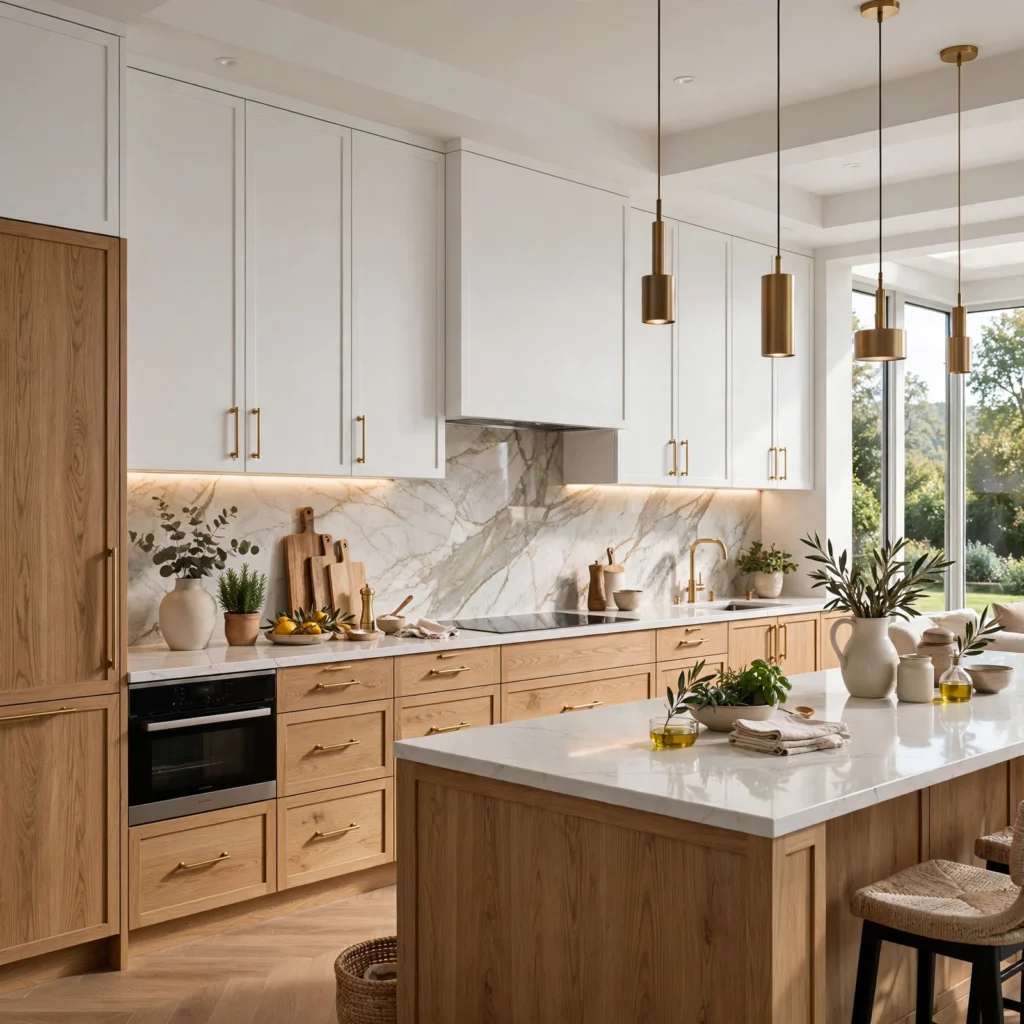
Two-tone kitchen cabinets, pairing a darker color on lower cabinets with a lighter tone on uppers, create visual balance and prevent an all-one-color kitchen from feeling flat or monotonous. This approach suits kitchens of nearly any size, since the lighter upper cabinets keep the space feeling open while the darker lowers ground the room. Choose a navy, forest green, or charcoal for the lower cabinets, and pair it with white or cream uppers, keeping the transition point consistent across the entire kitchen for a cohesive look.
To see more studio apartment ideas
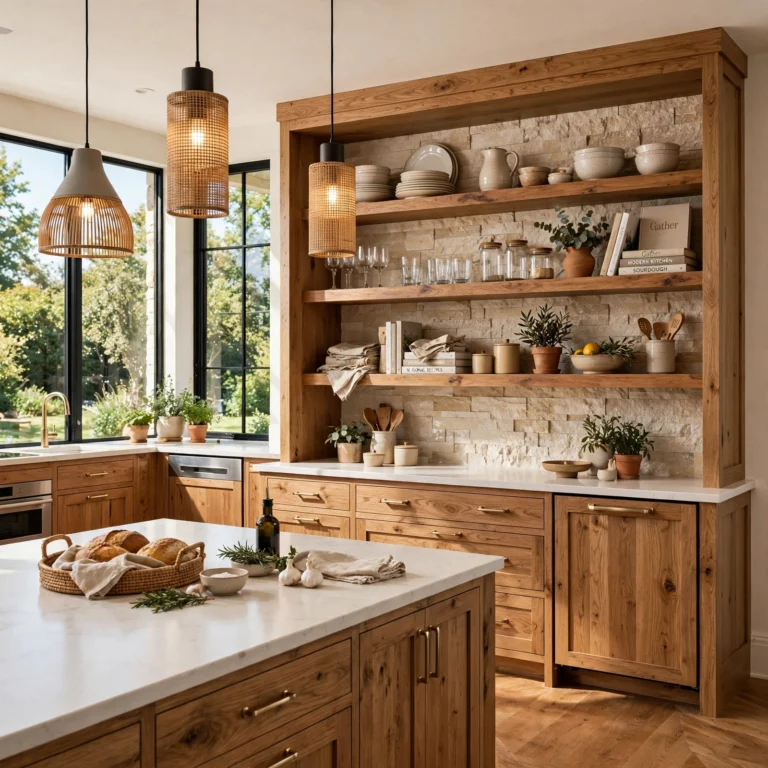
2. Warm White Oak Cabinetry
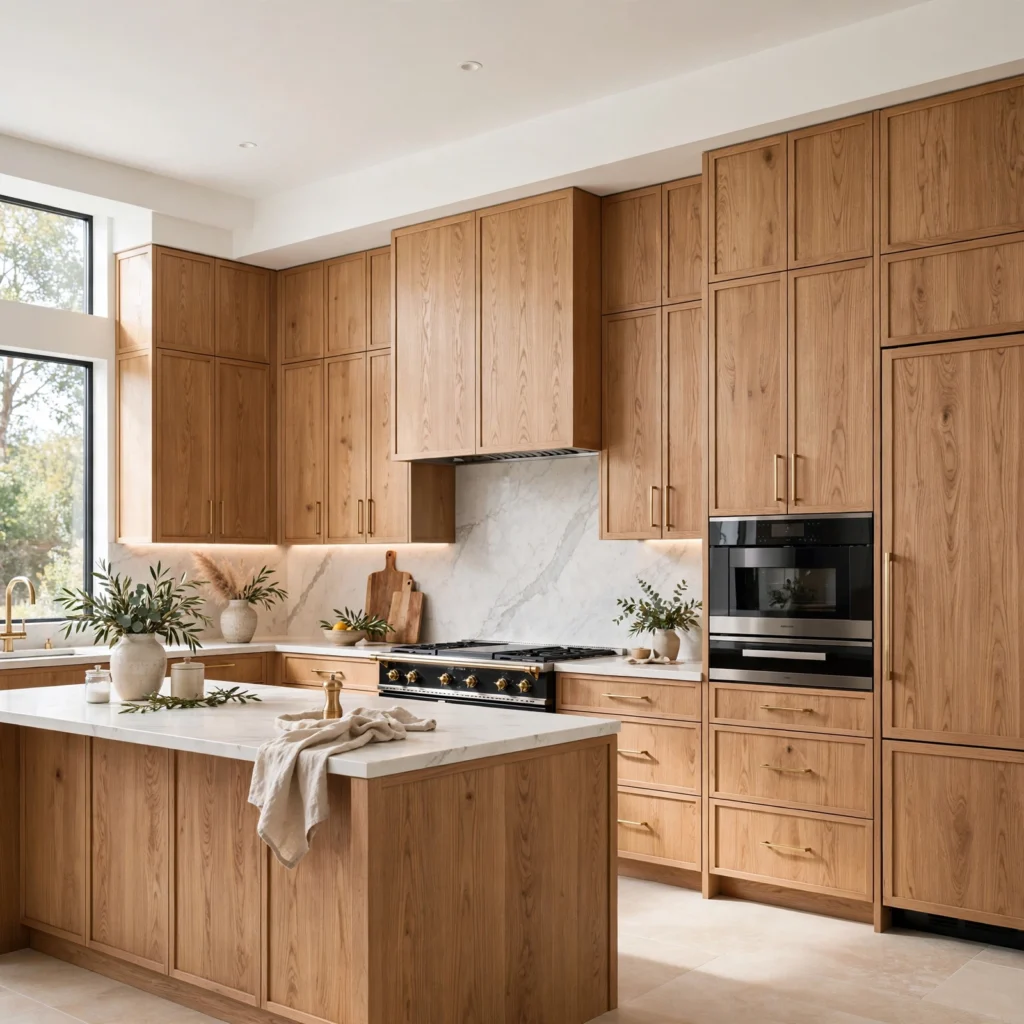
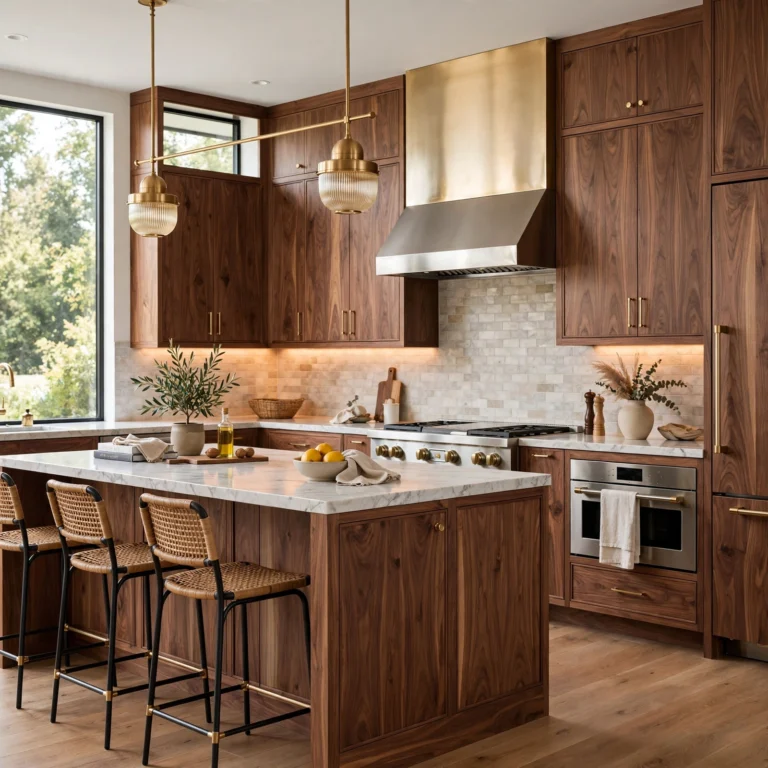
Warm white oak cabinetry, showcasing natural wood grain rather than a painted finish, has become a leading alternative to all-white kitchens, adding texture and warmth without leaning heavily traditional or rustic. This style suits kitchens wanting a Scandinavian or Japandi-inspired look. Choose a clear or lightly tinted finish that preserves the wood’s natural grain pattern, and pair the cabinets with simple, unlacquered brass or matte black hardware to keep the overall look current rather than dated.
3. Deep Navy Lower Cabinets
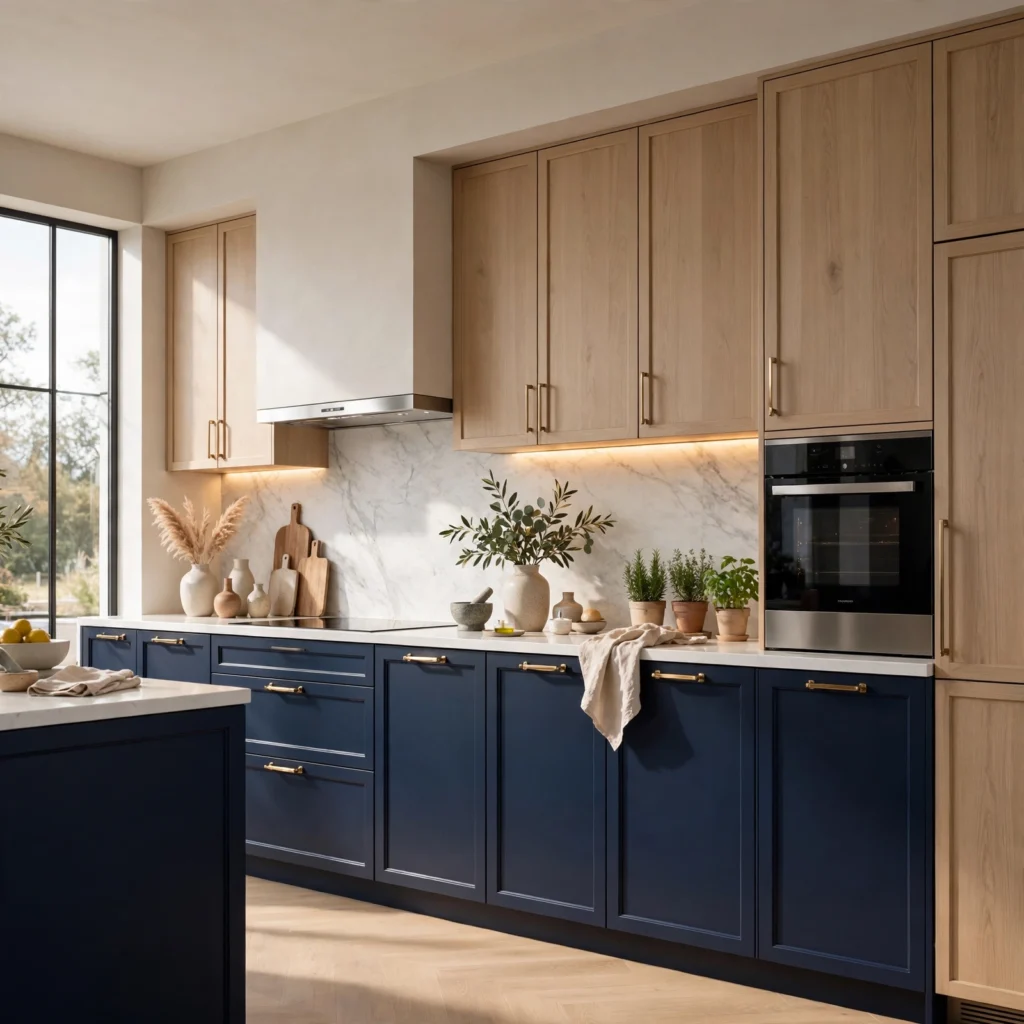
Deep navy lower cabinets, paired with white or marble countertops, create a rich, sophisticated color contrast that has remained a consistently popular kitchen cabinet choice for several years running. This approach suits kitchens with ample natural light, where the navy reads as elegant rather than heavy. Choose a matte or satin finish rather than high gloss, and pair the navy with brass or nickel hardware depending on whether the kitchen leans warm or cool overall.
4. Shaker Style Cabinet Doors
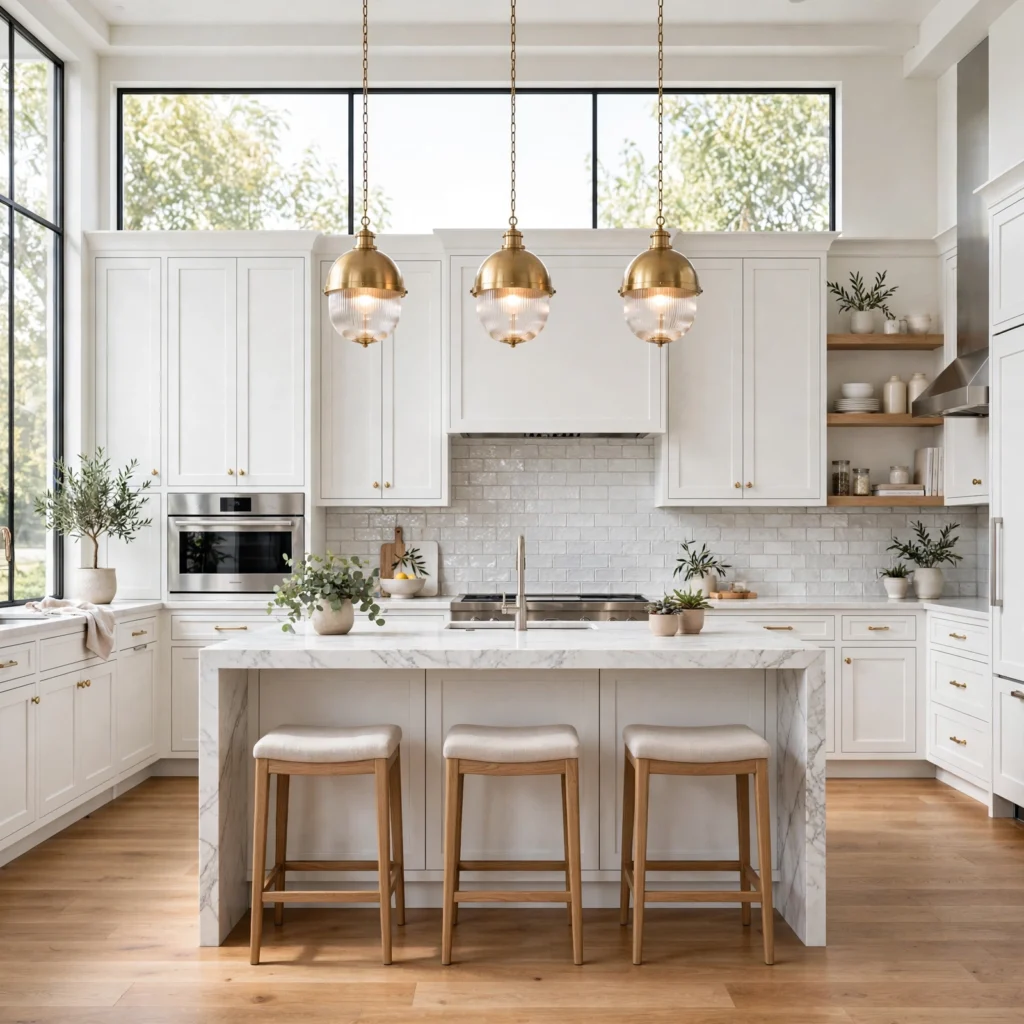
Shaker style cabinet doors, featuring a simple recessed panel with clean, flat framing, remain one of the most versatile and timeless kitchen cabinet styles, suiting both traditional and modern kitchen designs. This style works well regardless of paint color, since the door’s simplicity adapts to nearly any palette. Choose a shaker door in a solid wood construction rather than MDF for better durability, and pair it with simple bar or cup pulls to maintain the style’s clean, understated character.
5. Glass-Front Upper Cabinets
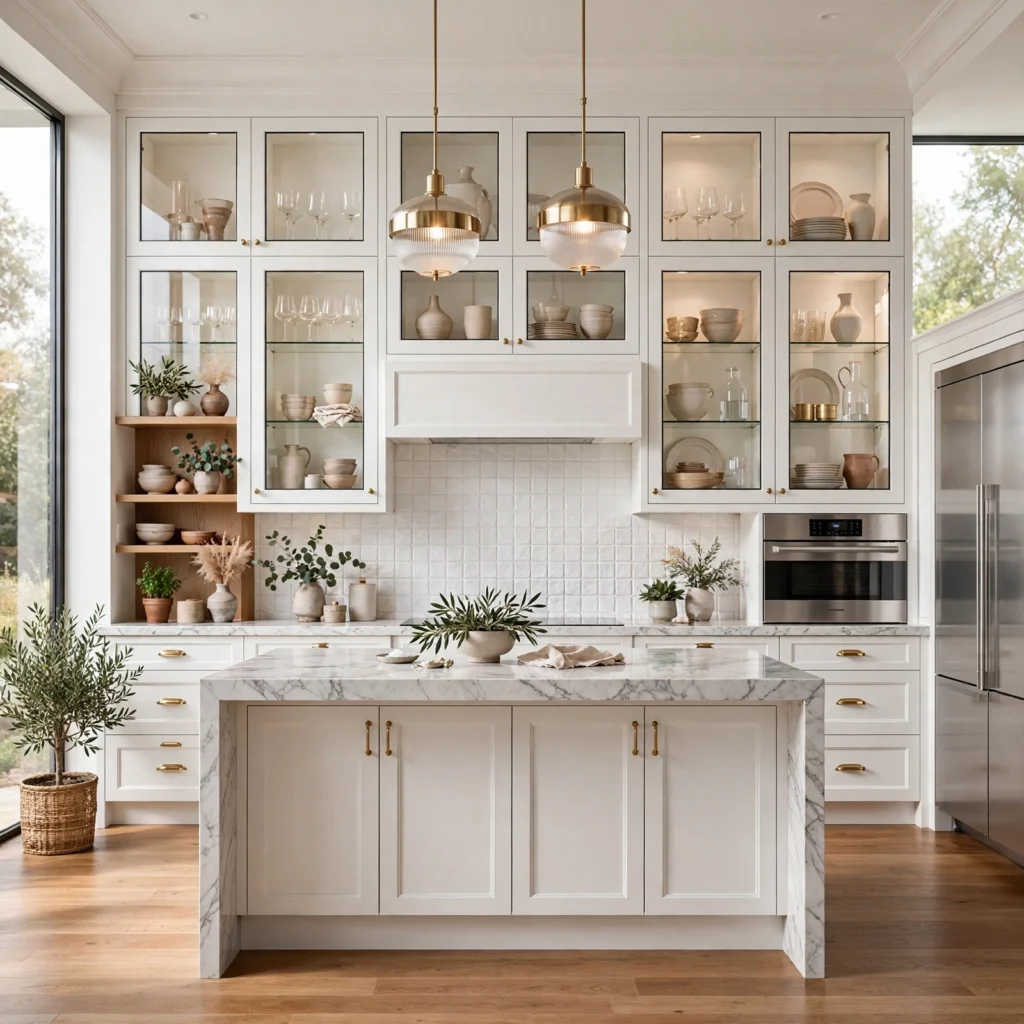
Glass-front upper cabinets, replacing solid wood or painted doors with clear or fluted glass panels, introduce visual lightness and a display opportunity for dishware in an otherwise closed kitchen storage system. This approach suits kitchens wanting a break from an all-solid cabinet look without a full open-shelving commitment. Choose fluted or reeded glass for a more textured, less exposed look, and keep the displayed dishware simple and coordinated in color for a curated rather than cluttered appearance.
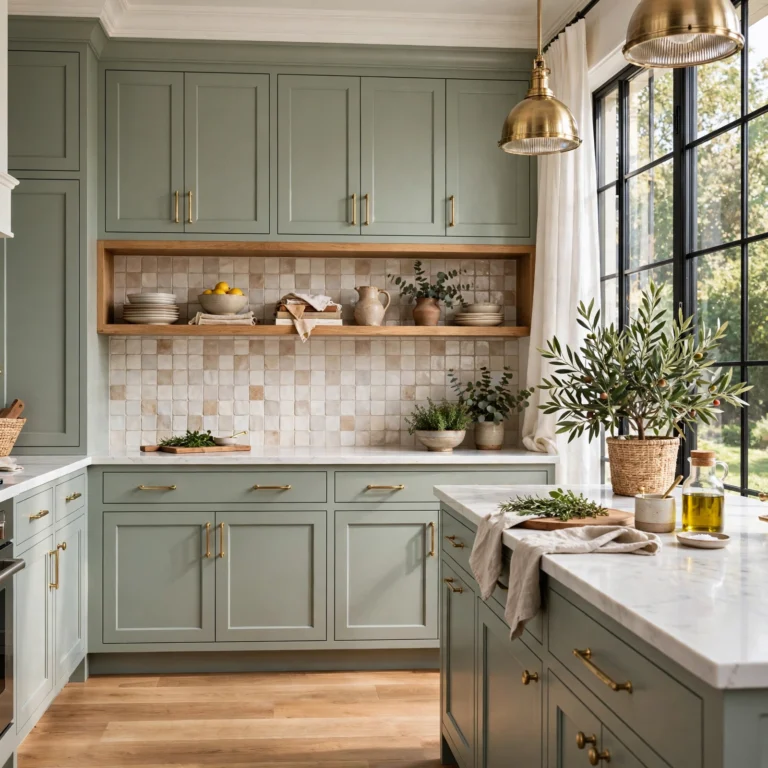
6. Forest Green Cabinetry
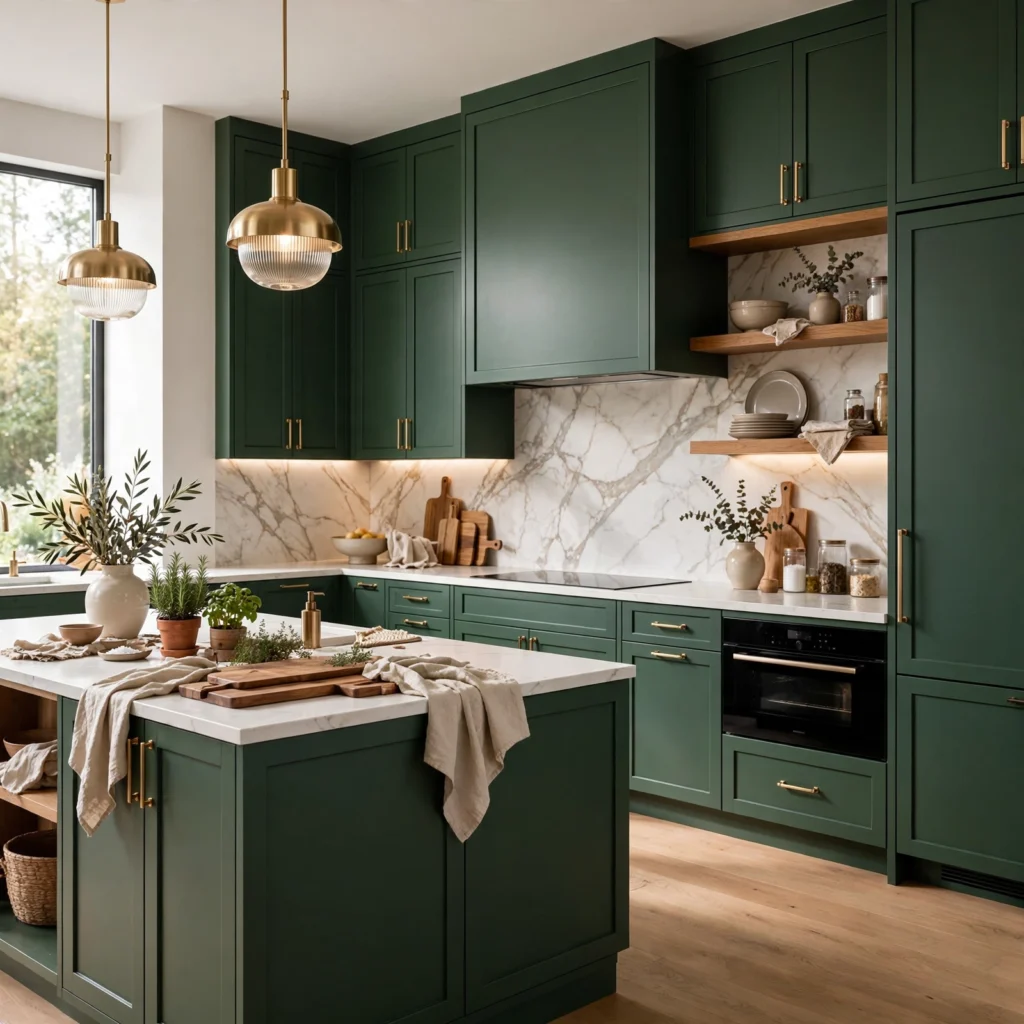
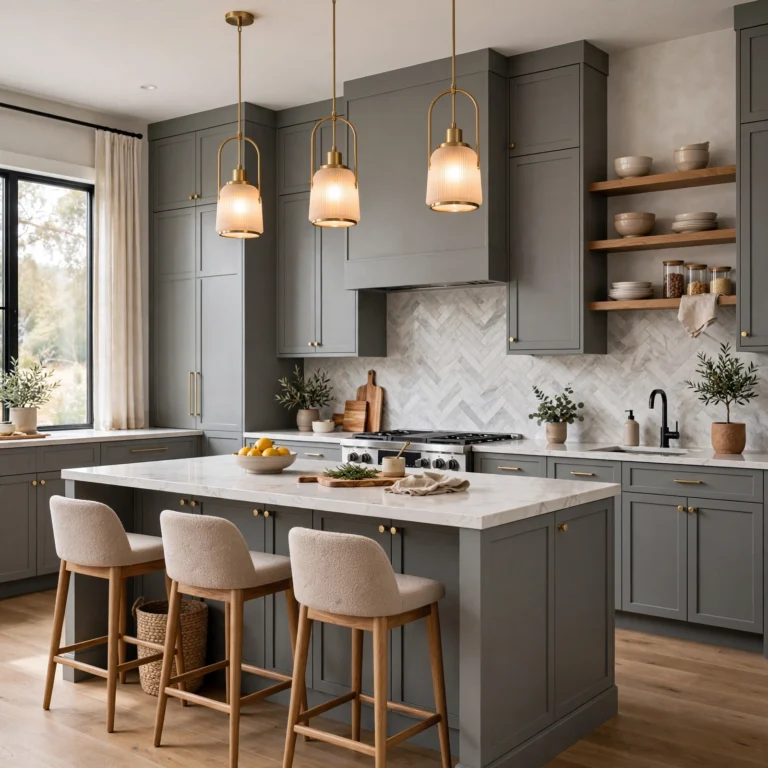
Forest green kitchen cabinets bring an earthy, sophisticated color statement that pairs particularly well with brass hardware and warm wood flooring. This approach suits kitchens with existing natural materials like wood beams or stone countertops, since the green ties naturally into those elements. Choose a matte finish for the most current look, and consider applying the green only to an island or lower cabinets while keeping the remaining cabinetry a lighter neutral tone. The table below compares common kitchen cabinet materials by durability and price.
| Material | Durability | Best Finish | Price Range |
| Solid Wood | High | Stain, paint | $$$-$$$$ |
| Plywood | Medium-High | Paint, veneer | $$-$$$ |
| MDF | Medium | Paint only | $-$$ |
| Laminate | Medium | Factory finish | $-$$ |
7. Flat Panel Slab Cabinets
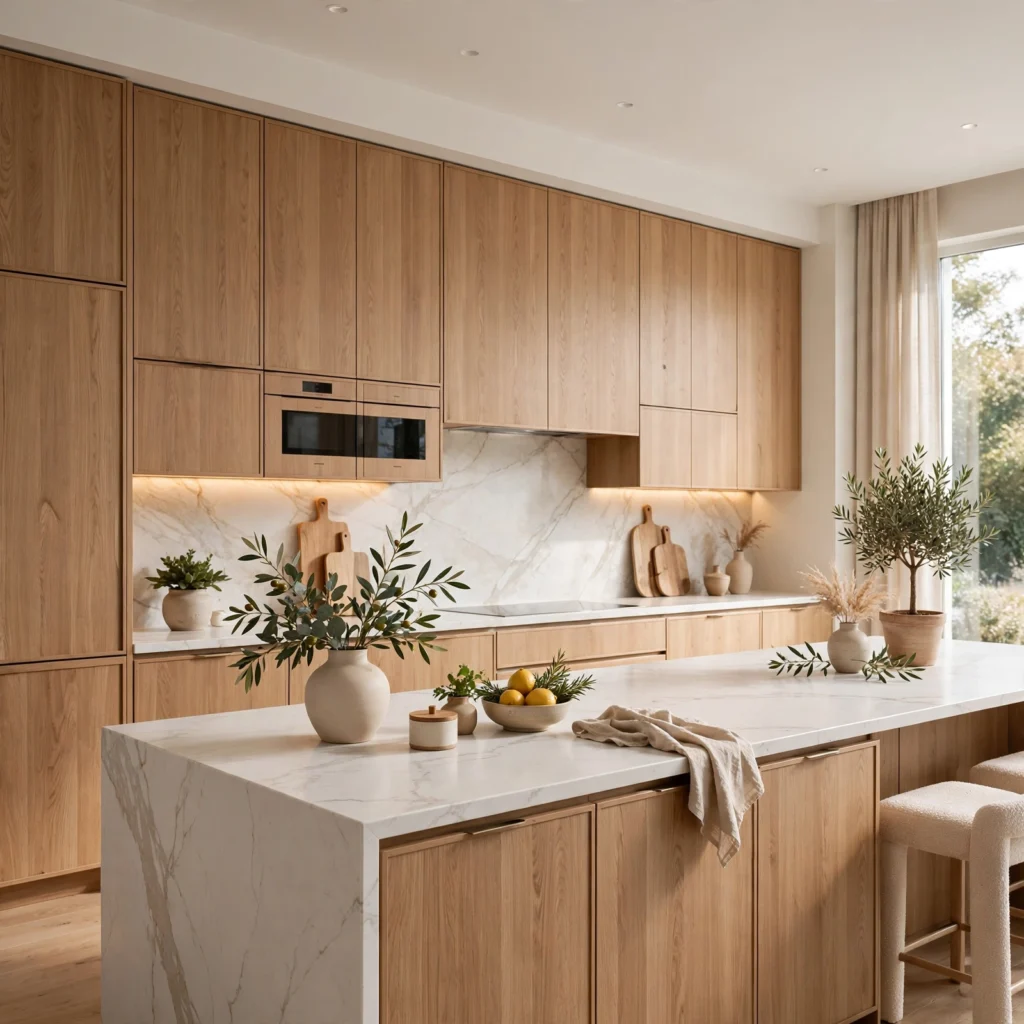
Flat panel slab cabinets, with no raised or recessed detailing on the door face, create a clean, modern look that suits contemporary and minimalist kitchen designs. This style works particularly well with integrated or handleless hardware for an even more streamlined appearance. Choose a matte finish in a neutral tone or natural wood veneer, and consider push-to-open hardware if aiming for a fully seamless, handle-free look throughout the kitchen.
8. Brass and Black Hardware Mix
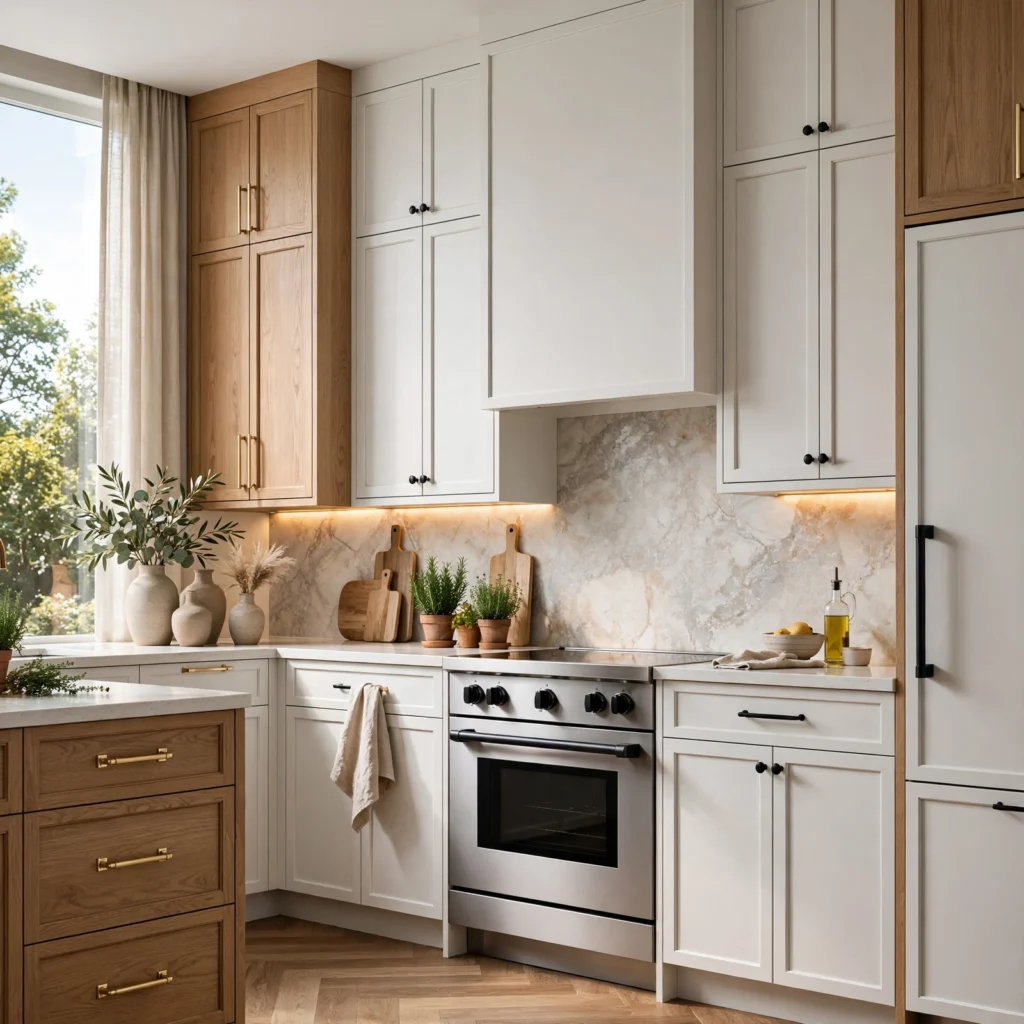
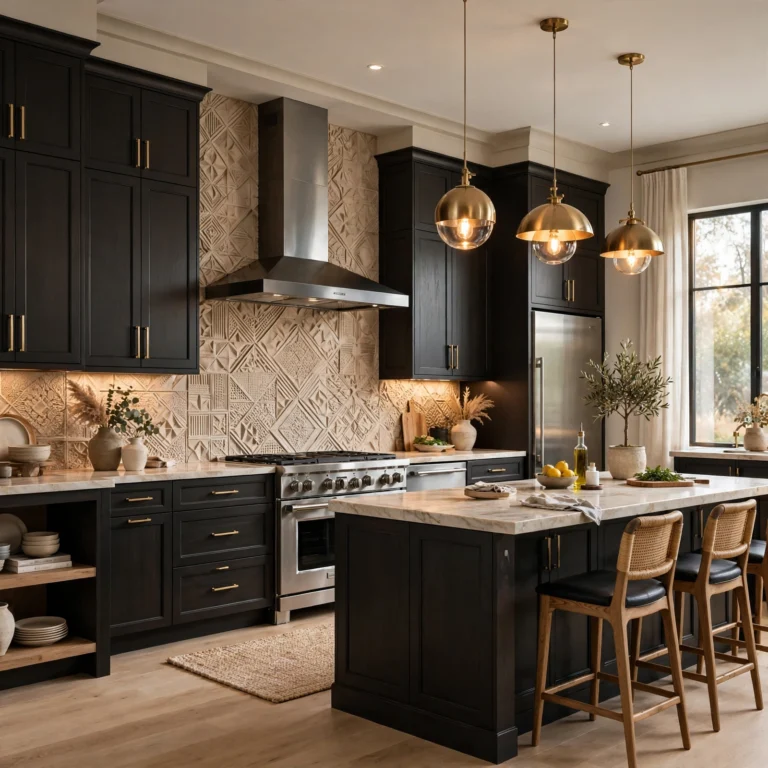
Mixing brass and matte black hardware across a single kitchen’s cabinets, rather than using one metal finish exclusively, adds intentional variation that reads as more custom and considered than a single matched hardware set. This approach suits kitchens with two-tone cabinetry, where each metal can align with a different cabinet color. Use brass on lighter cabinets and black on darker ones, or alternate deliberately by cabinet section, keeping the split consistent rather than randomly distributed throughout the kitchen.
9. Open Shelving Cabinet Replacement
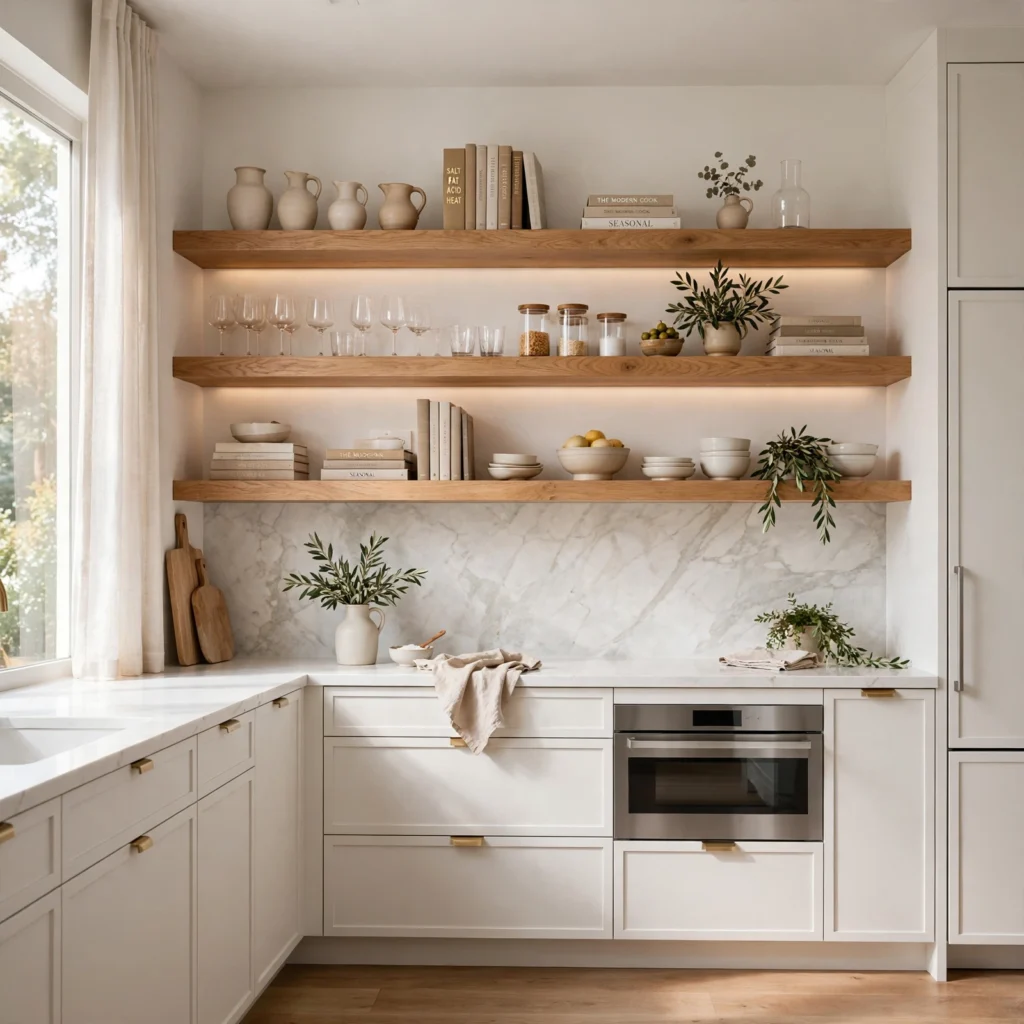
Replacing a section of upper cabinets with open wood shelving introduces visual breathing room and a display opportunity for curated dishware, cookbooks, or plants. This approach suits kitchens wanting a lighter, more casual feel in at least one section of the room. Choose shelving in a wood tone that matches or complements the remaining cabinetry, and style the shelves with an edited, coordinated collection rather than filling every inch with mismatched items.
10. Textured Cabinet Fronts
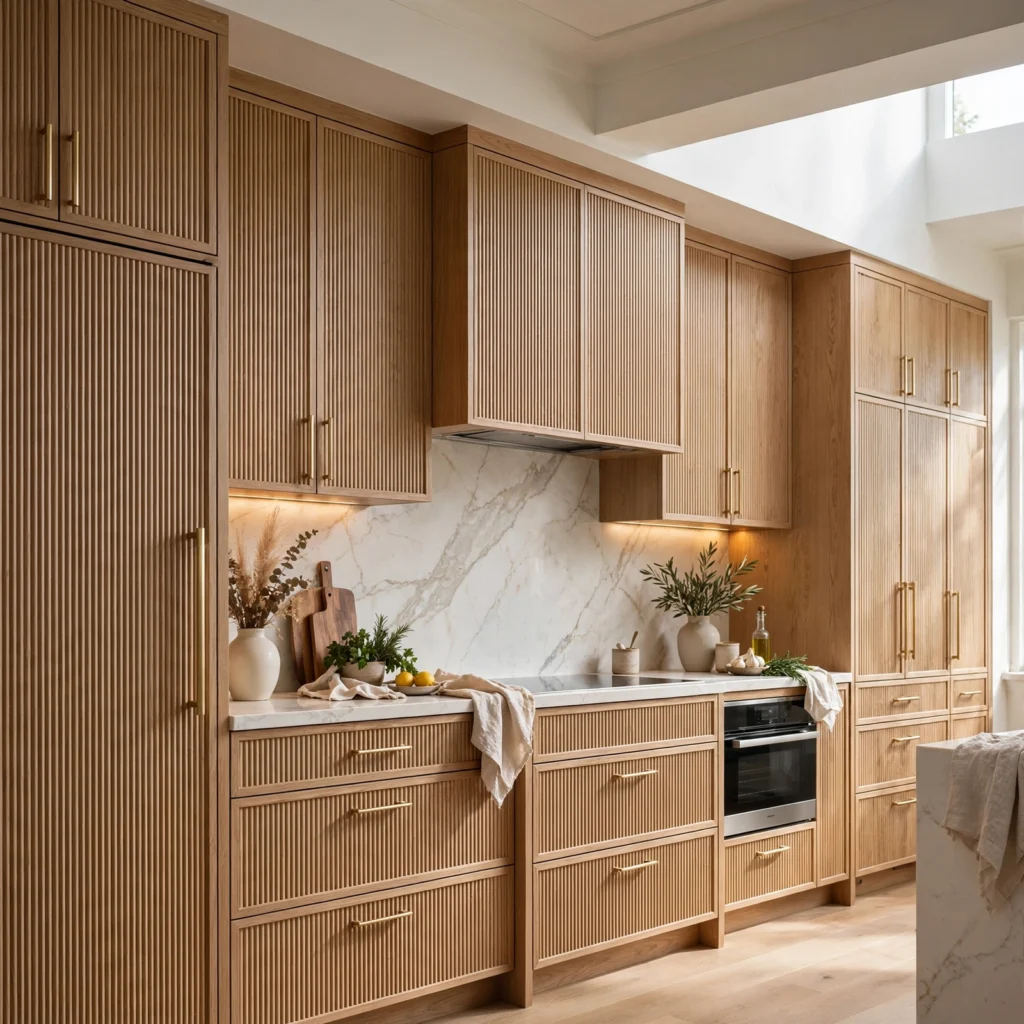
Textured cabinet fronts, featuring a subtle ribbed, fluted, or wood-grain surface rather than a completely flat finish, add dimension and tactile interest to kitchen cabinetry without requiring a bold color change. This approach suits kitchen islands or a single feature wall of cabinetry wanting a distinct focal point. Choose a fluted texture for a more contemporary look, and keep surrounding cabinetry flat and simple so the textured section reads as an intentional design choice rather than a mismatched addition.
11. Cream and Off-White Cabinetry
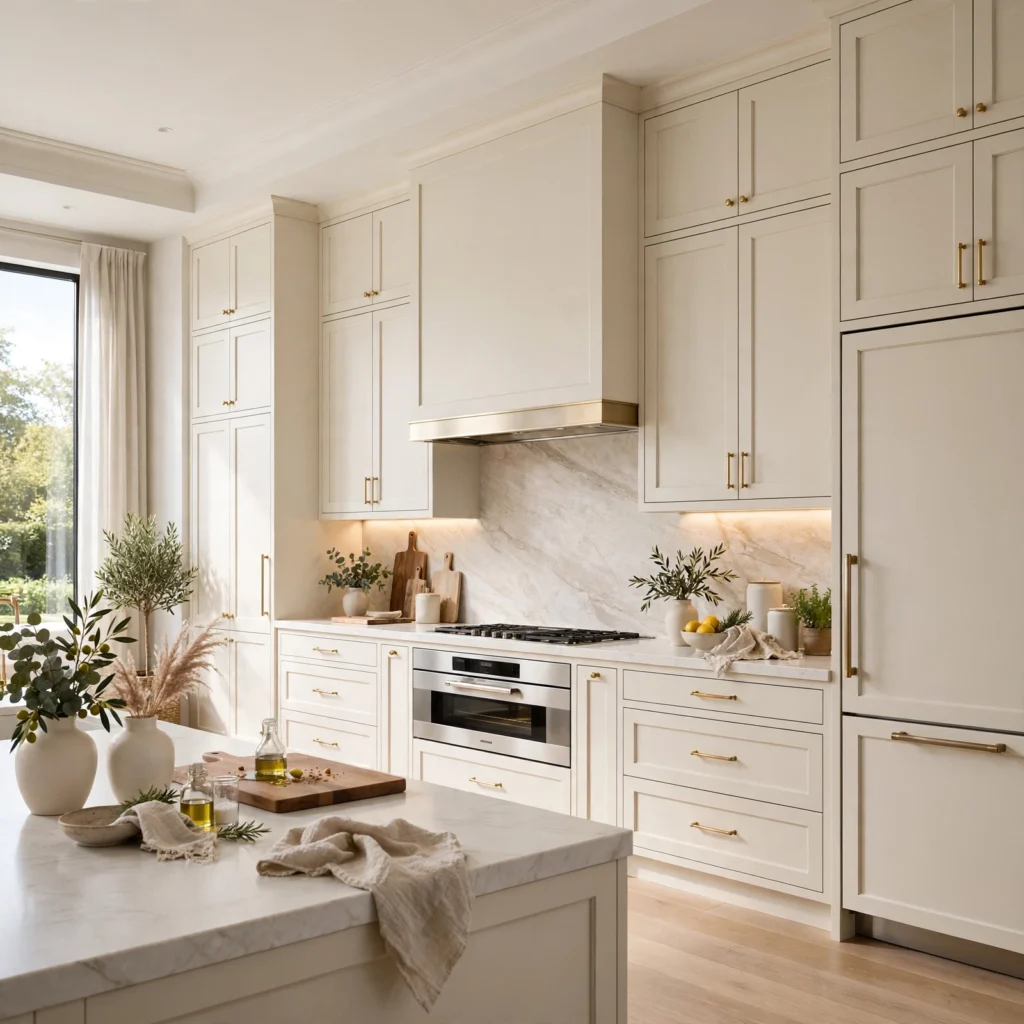
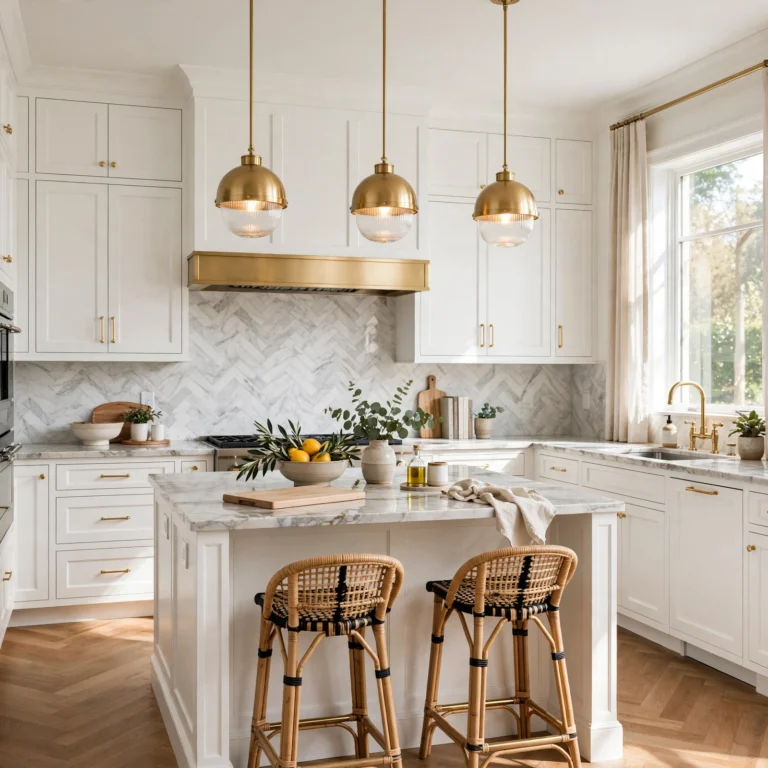
Cream or off-white kitchen cabinets, rather than a stark, cool-toned white, bring warmth to a kitchen while still keeping the space feeling light and open. This approach suits kitchens wanting a softer alternative to the high-contrast white kitchens of previous years. Choose a warm-toned cream with a matte or satin finish, and pair it with brass or brushed gold hardware to reinforce the overall warmth of the palette throughout the space.
12. Beadboard Cabinet Detailing
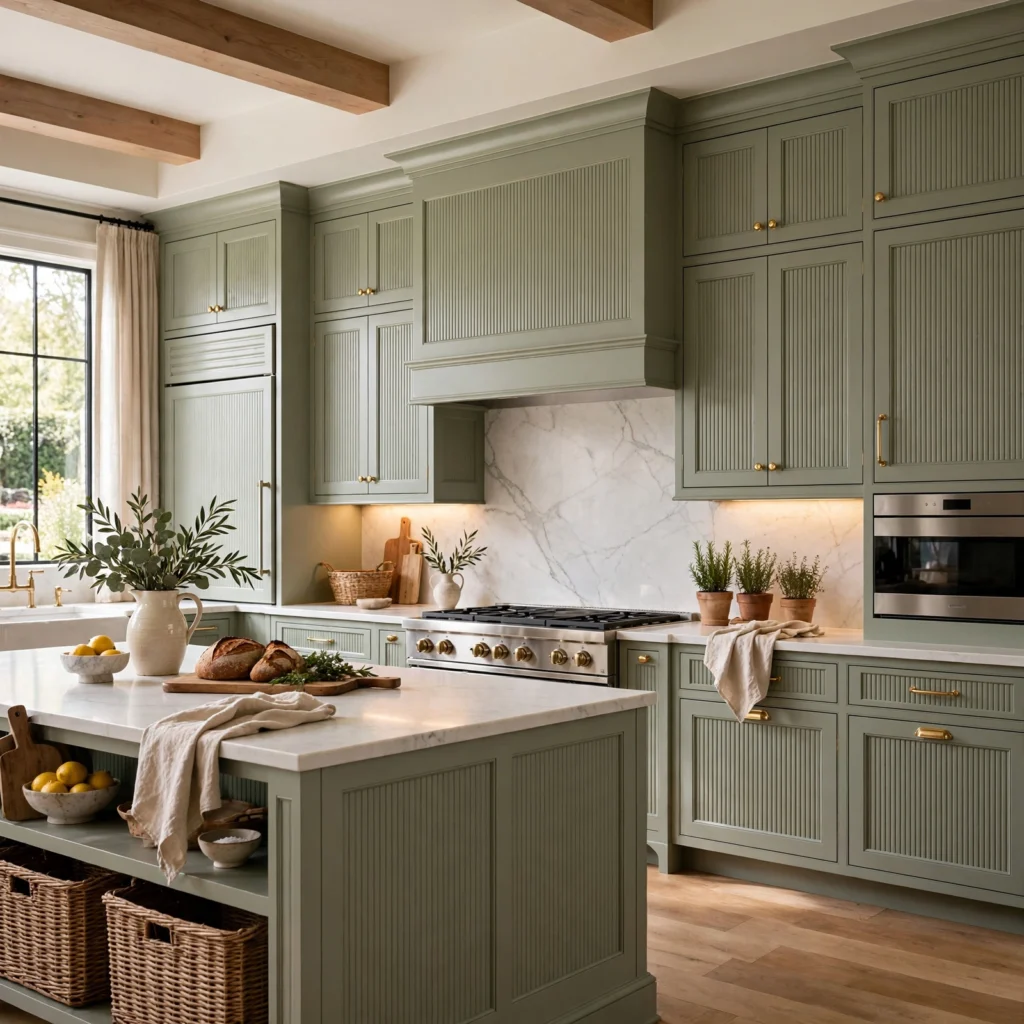
Beadboard detailing, added to cabinet doors or a kitchen island’s side panels, introduces a cottage or coastal-inspired texture that suits traditional and farmhouse kitchen styles. This approach works particularly well on an island as a distinct accent from the surrounding flat-panel cabinetry. Choose a beadboard panel with consistent, evenly spaced grooves, and paint it the same color as the surrounding cabinetry to keep the texture as a subtle detail rather than a competing pattern.
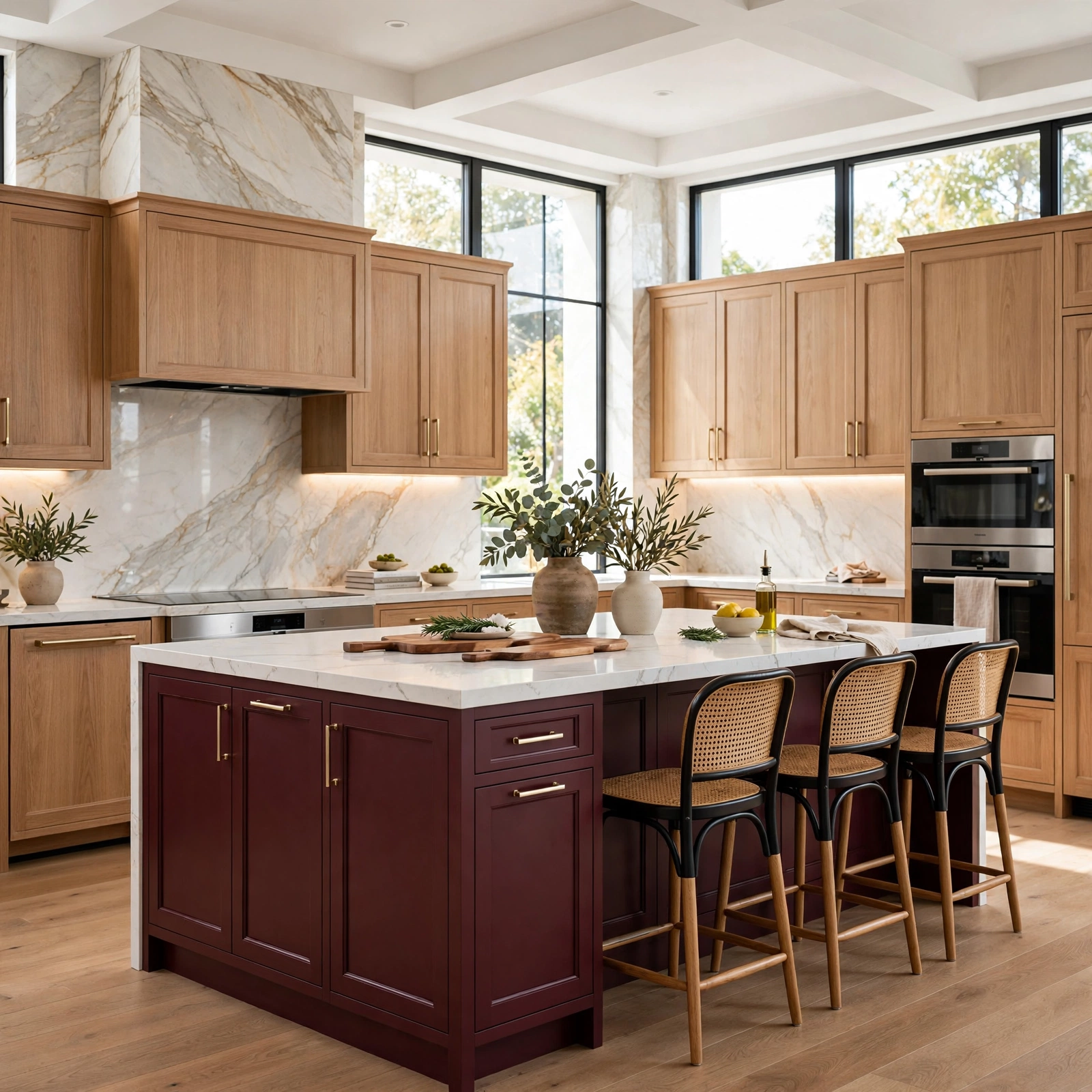
13. Statement Island Cabinet Color
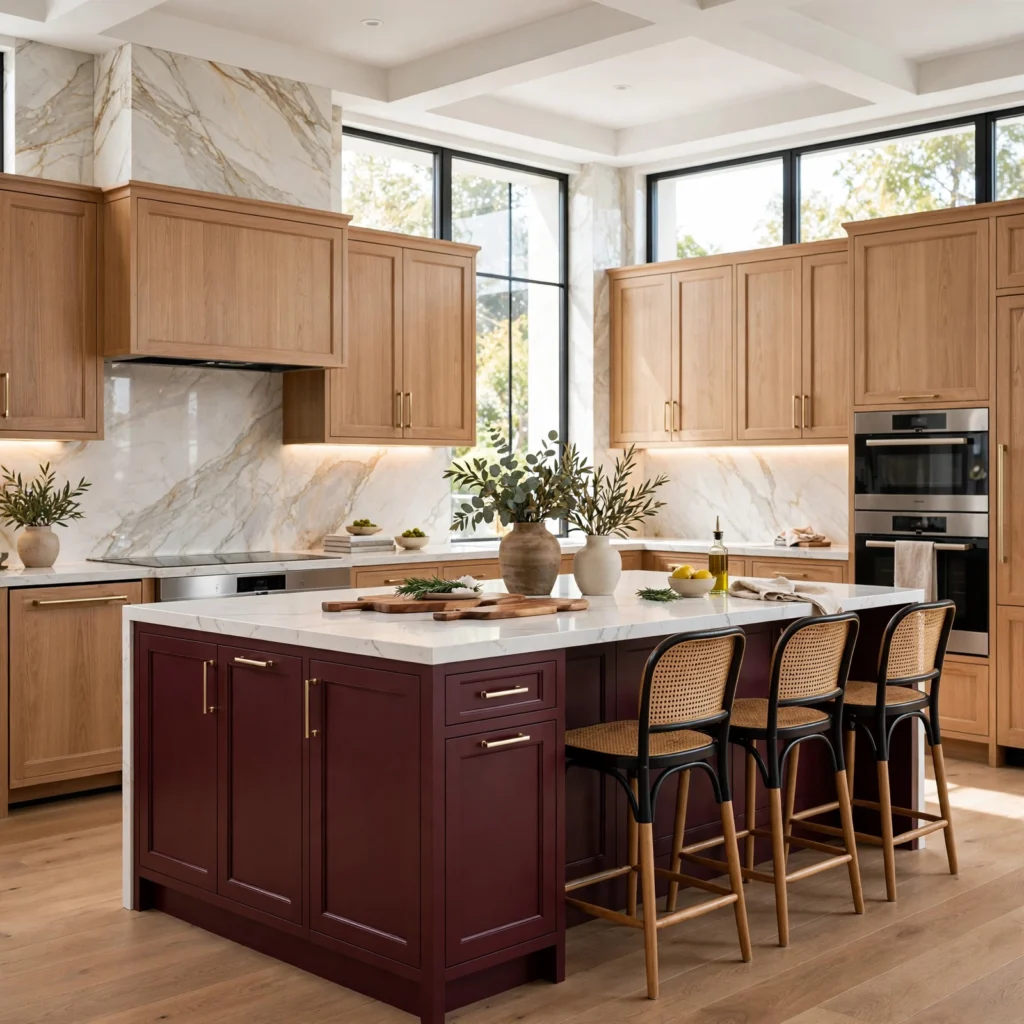
Painting only the kitchen island cabinets in a bold or contrasting color, while keeping the surrounding perimeter cabinets a neutral tone, creates a focal point without the cost or commitment of painting an entire kitchen. This approach suits kitchens with an island already serving as the room’s central gathering point. Choose a color that contrasts moderately rather than clashes with the surrounding cabinetry, such as a deep green or navy against white perimeter cabinets, and match the island’s hardware finish to the accent color’s undertone.
Shop the Look
For a two-tone kitchen, look for navy cabinet paint in a durable enamel finish, brass bar pulls, and a honed marble countertop to complete the pairing. For a warm white oak kitchen, natural wood veneer cabinet fronts, matte black hardware, and open wood shelving brackets round out the look. Those pursuing a forest green island can start with a forest green cabinet paint, brass cup pulls, and a butcher block or marble island countertop.
Common Mistake to Avoid
The most common mistake with kitchen cabinets is choosing a trendy color or finish without considering how it will read against the kitchen’s countertops, backsplash, and flooring, which often results in a mismatched or dated look within a few years. Testing a cabinet paint sample or door finish against existing fixed surfaces before committing to a full repaint or replacement prevents this costly mistake and ensures the final result feels cohesive rather than disjointed.
People Also Ask
What is the most popular kitchen cabinet color right now?
Warm white oak and two-tone combinations pairing navy or forest green lowers with white or cream uppers are among the most requested kitchen cabinet choices currently, replacing the all-white kitchens that dominated previous years. These options offer warmth and visual interest while still feeling timeless rather than tied to a passing trend.
Should kitchen cabinets match throughout the whole kitchen?
Not necessarily, since two-tone cabinetry and accent island colors have become increasingly popular alternatives to a fully matched kitchen. Many homeowners now choose one color for lower cabinets and a different, lighter tone for uppers, or paint only the island a contrasting color, creating intentional variation rather than uniform matching.
What kitchen cabinet material lasts the longest?
Solid wood cabinets generally offer the longest lifespan and the best resistance to wear, moisture, and repeated repainting compared to MDF or laminate alternatives. While solid wood carries a higher upfront cost, its durability and ability to be refinished multiple times over the years often make it a better long-term value for kitchen cabinetry.
How much does it cost to update kitchen cabinets without full replacement?
Repainting existing cabinets, updating hardware, or replacing only cabinet doors while keeping the existing boxes typically costs significantly less than a full cabinet replacement, often ranging from a few hundred to a few thousand dollars depending on kitchen size. This approach allows many of the ideas above, like two-tone painting or a statement island color, to be achieved without a complete kitchen renovation.
What hardware works best with modern kitchen cabinets?
Brushed brass, matte black, and brushed nickel remain the most popular hardware finishes for modern kitchen cabinets, with the choice largely depending on the cabinet color and the kitchen’s overall warm or cool undertone. Mixing two metal finishes across different cabinet sections has also become an accepted, intentional styling choice rather than a mismatch to avoid.
Conclusion
Kitchen cabinets have a bigger impact on a kitchen’s overall look and feel than almost any other single element, and any of these thirteen directions offers a solid starting point depending on your existing layout, countertops, and budget. Save this guide to Pinterest for reference while gathering paint and hardware samples, and check out our related post on choosing the right paint sheen for high-traffic rooms.
Author Expertise Note
Written by a design writer who has spent the last six years testing paint swatches, cabinet finishes, and hardware pairings in real client homes before recommending any kitchen cabinet approach in print.