15 Trending Beach House Interior Ideas for Relaxed Coastal Living
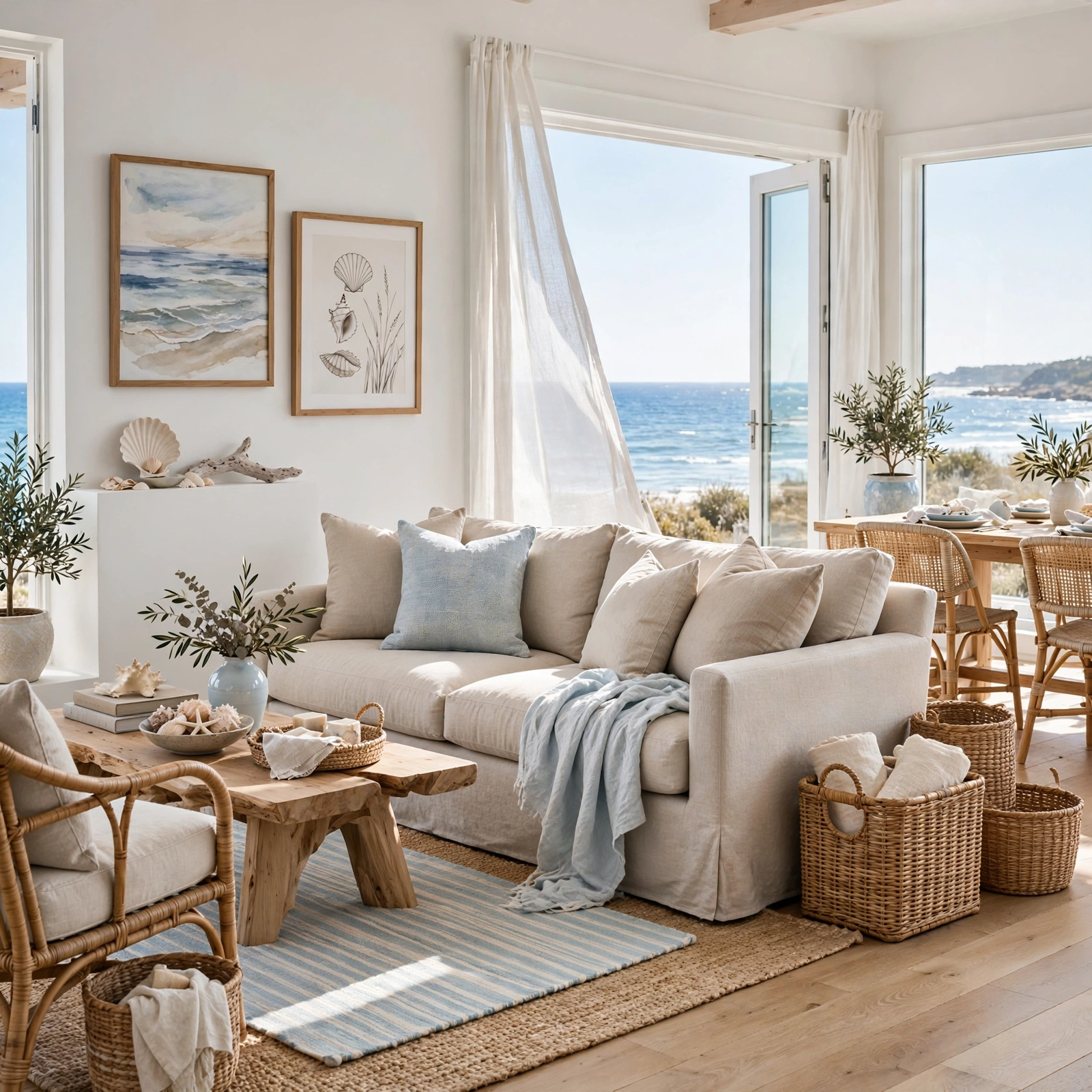
Beach house interior design has to work harder than most other styles, balancing a relaxed, breezy aesthetic against the genuine practical demands of sand, salt air, and higher humidity that a coastal property regularly deals with. This list covers both the decorative choices that define this look and the material considerations that keep it functioning well in a beach environment specifically, from whitewashed paneling to salt-resistant metal finishes. Whether you’re furnishing an actual beach house or just want to bring this relaxed coastal feeling into a home further inland, these ideas should help you strike the right balance between style and durability.
Trend & Background
Beach house interior design has evolved from the more literal nautical themes of previous decades, heavy on anchor motifs and primary navy and red color schemes, toward a subtler, more sophisticated interpretation that references the coast through material and color rather than overt decorative symbols. This shift reflects broader design trends favoring understated, natural material choices over themed decor throughout most residential styles. At the same time, the practical demands of an actual coastal property, including sand tracked in from the beach and the corrosive effects of salt air on certain metal finishes, have continued to shape material choices in genuine beach houses regardless of how the decorative style itself has evolved.
Key Takeaways
- Beach house interior design balances a relaxed, light-filled aesthetic with genuinely durable materials suited to sand, salt air, and higher humidity than a typical inland home.
- A sandy, light neutral palette paired with blue accents references the ocean without leaning into overly literal nautical themes.
- Durable, easy-to-clean fabrics and finishes matter more in a beach house than almost any other style, given the practical demands of this specific environment.
- Natural materials like rope, driftwood, and woven rattan reinforce the coastal setting through texture rather than relying on decor alone.
1. Whitewashed Wood Paneling
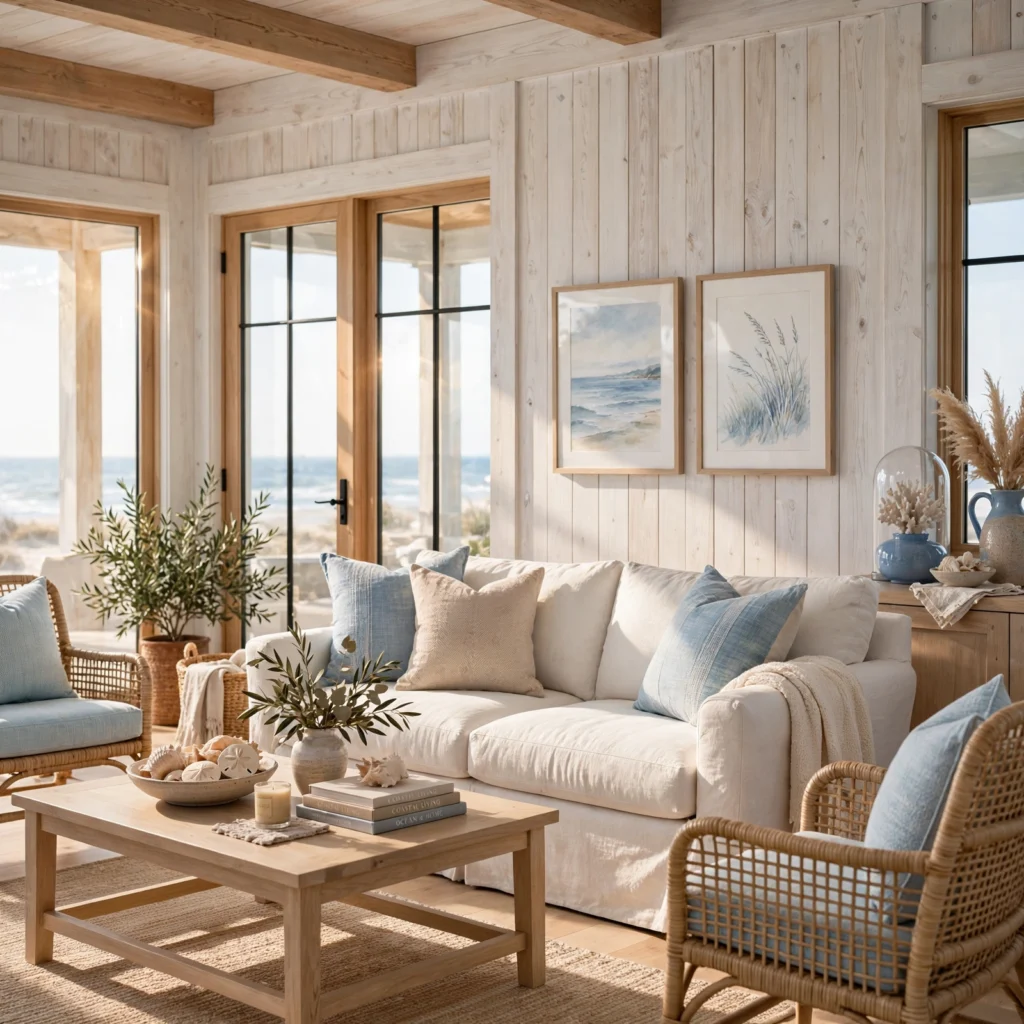
Whitewashed wood paneling applies a thin, translucent white wash over wood boards, allowing the underlying grain to show through while still lightening and brightening the overall surface considerably compared to a solid opaque paint. This detail works particularly well on walls or ceilings throughout a beach house, reinforcing the airy, light-filled quality this style depends on. Choosing a wash rather than a solid paint also allows some of the wood’s natural warmth and texture to remain visible, keeping the look from feeling too flat or uniformly white.
| Beach House Element | Material | Practical Benefit |
| Whitewashed Paneling | Wood | Bright, still shows grain |
| Sisal Rug | Natural fiber | Durable, sand-tolerant |
| Slipcovered Sofa | Removable fabric | Washable, easy to clean |
2. Sisal and Jute Natural Fiber Rugs
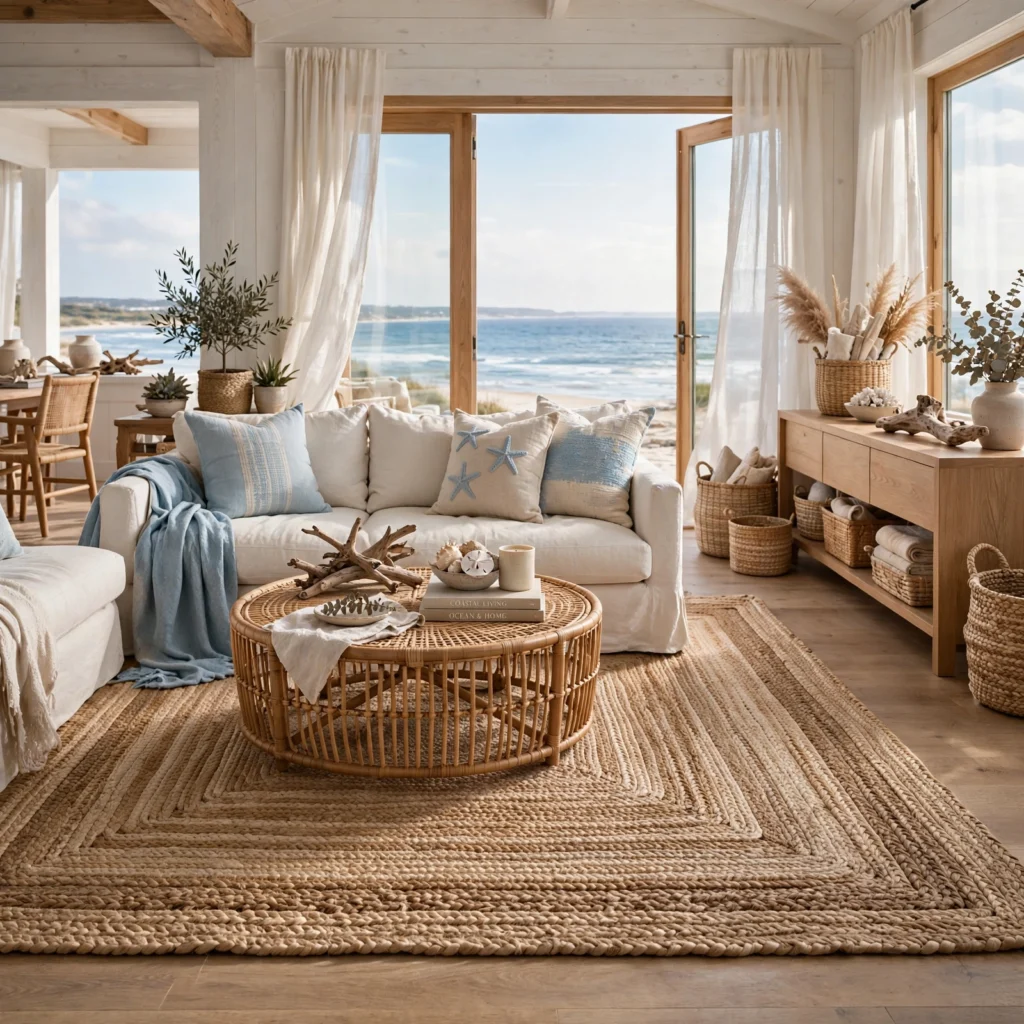
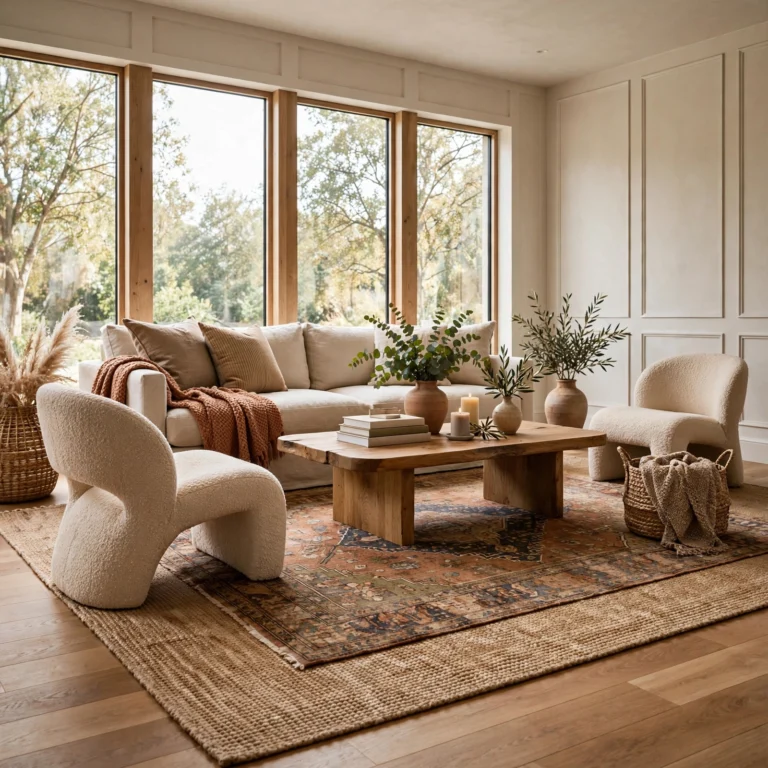
Sisal and jute natural fiber rugs bring texture and warmth to a beach house floor while standing up considerably better to sand and moisture than a plush, more delicate rug material would. These natural fibers also tend to shed sand more easily during regular vacuuming than a deep-pile carpet, which matters given how much sand a beach house floor typically encounters. Choosing a natural, undyed fiber color keeps the rug consistent with the style’s overall sandy, neutral palette while adding genuine textural interest underfoot.
In order to see more options for farmhouse interior CLICK HERE
3. Blue and White Striped Textiles
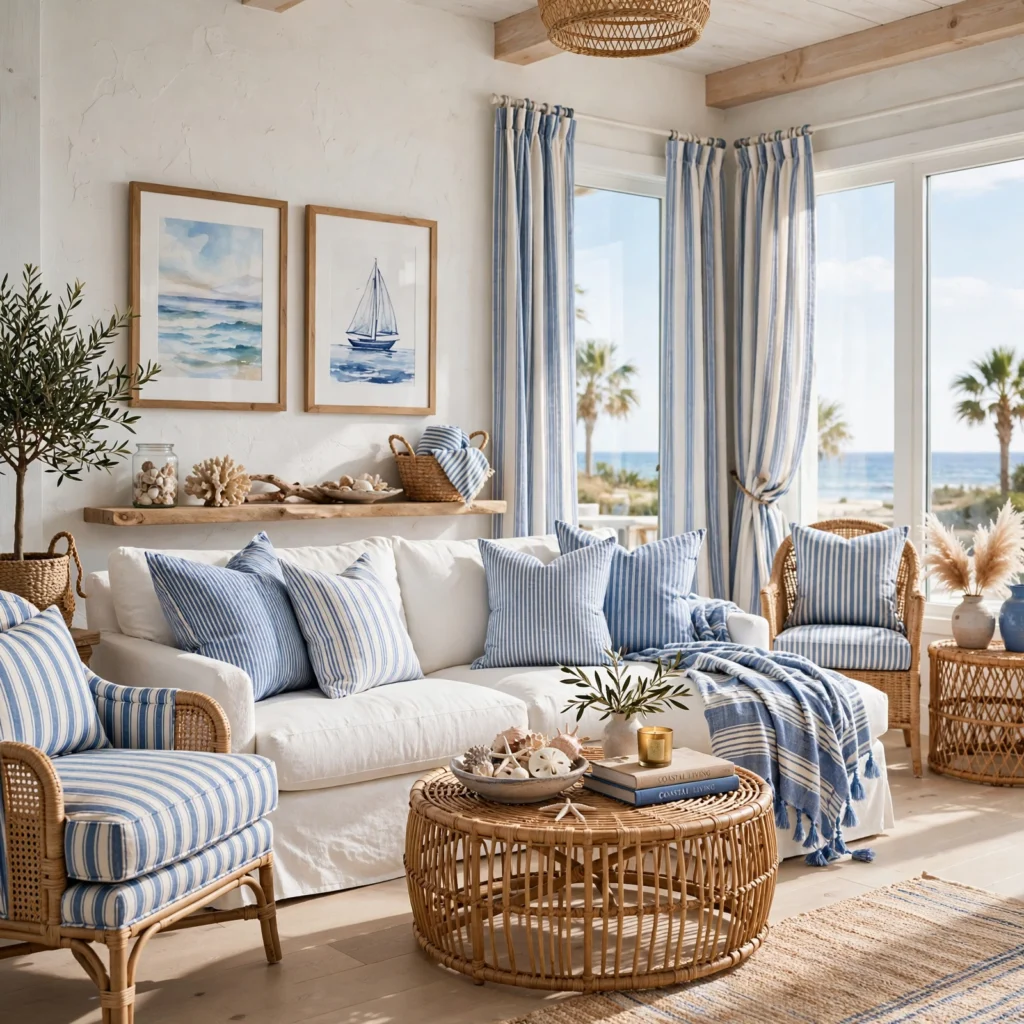
Blue and white striped textiles, used on upholstery, curtains, or throw pillows, reference the ocean and sky without relying on more literal nautical imagery like anchors or ship wheels. This pattern works particularly well as an accent choice against the style’s broader neutral, sandy base palette, providing just enough color contrast to feel intentional rather than washed out. Varying the stripe width and exact blue tone across different textiles throughout the home adds subtle variety while still maintaining the overall color and pattern theme.
4. Weathered Driftwood Accents
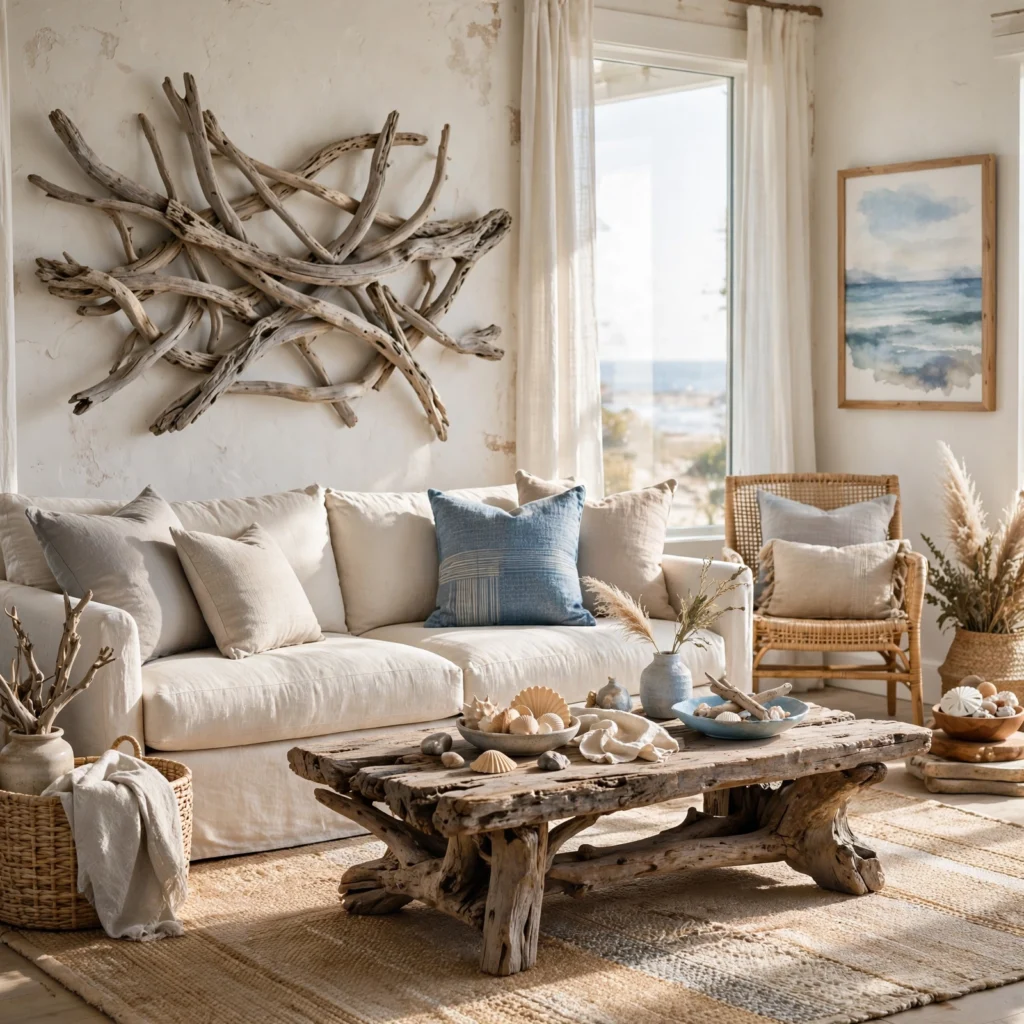
Weathered driftwood accents incorporate genuinely weathered wood, either sourced directly from a beach or purchased already prepared, into decorative objects like a mirror frame, a small sculptural piece, or a mantel display. This material brings authentic texture and a sense of place into the home, referencing the coastal setting through genuine found material rather than a manufactured imitation. Sealing driftwood pieces intended for regular handling or display protects them from shedding sand or splintering over time.
5. Slipcovered Sofa in Durable Fabric
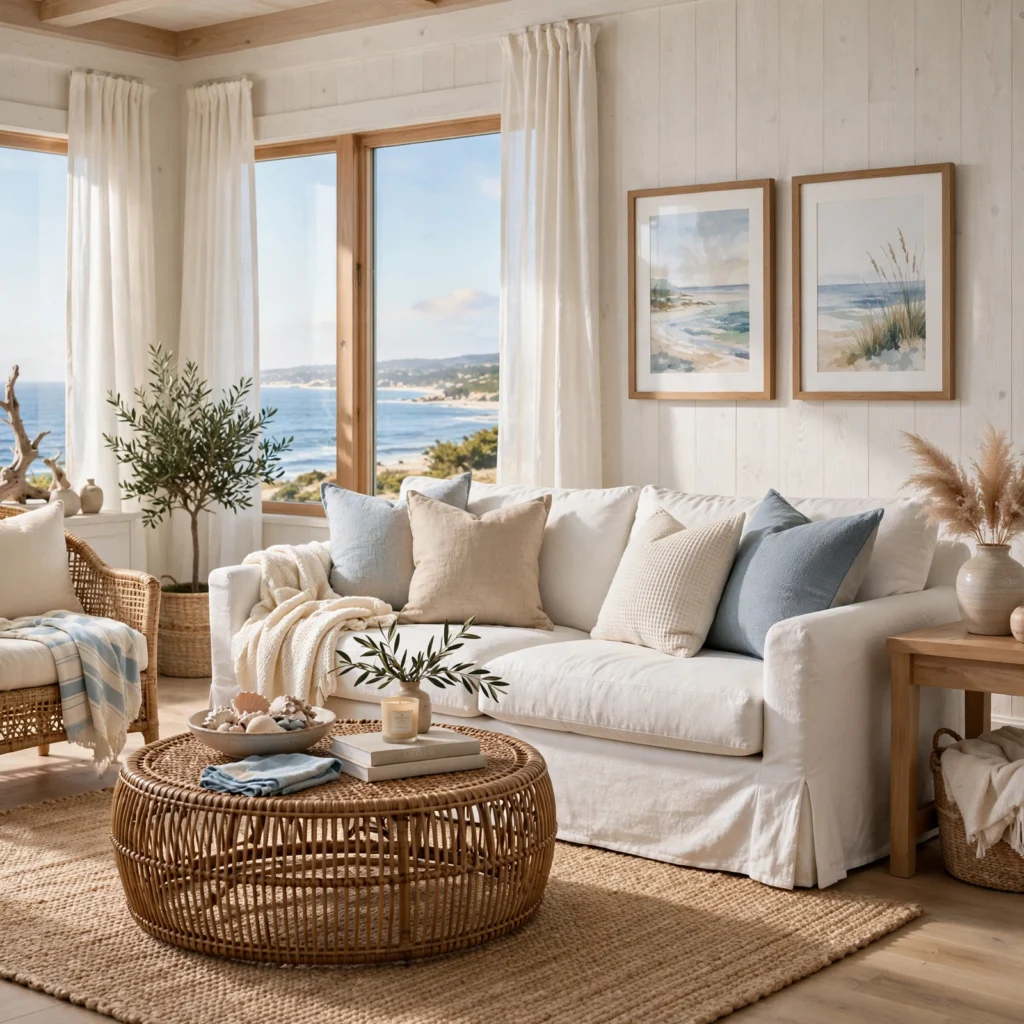
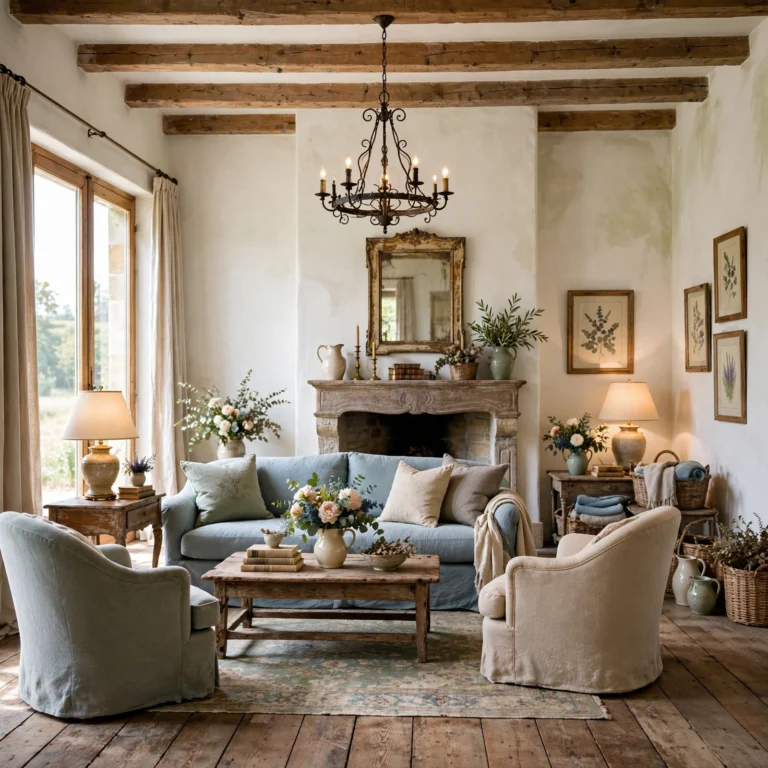
A slipcovered sofa in durable fabric uses a removable, machine-washable cover rather than a fixed upholstery, allowing the sofa to handle the sand, sunscreen, and general mess that comes with regular beach house use without permanent staining. This detail is one of the most practically important choices for an actual beach house, since furniture in this environment sees considerably more wear than in a typical inland home. Choosing a performance fabric rated for high durability, even beneath the slipcover itself, adds an extra layer of protection for the furniture’s actual structure underneath.
6. Rope and Nautical Rope Details
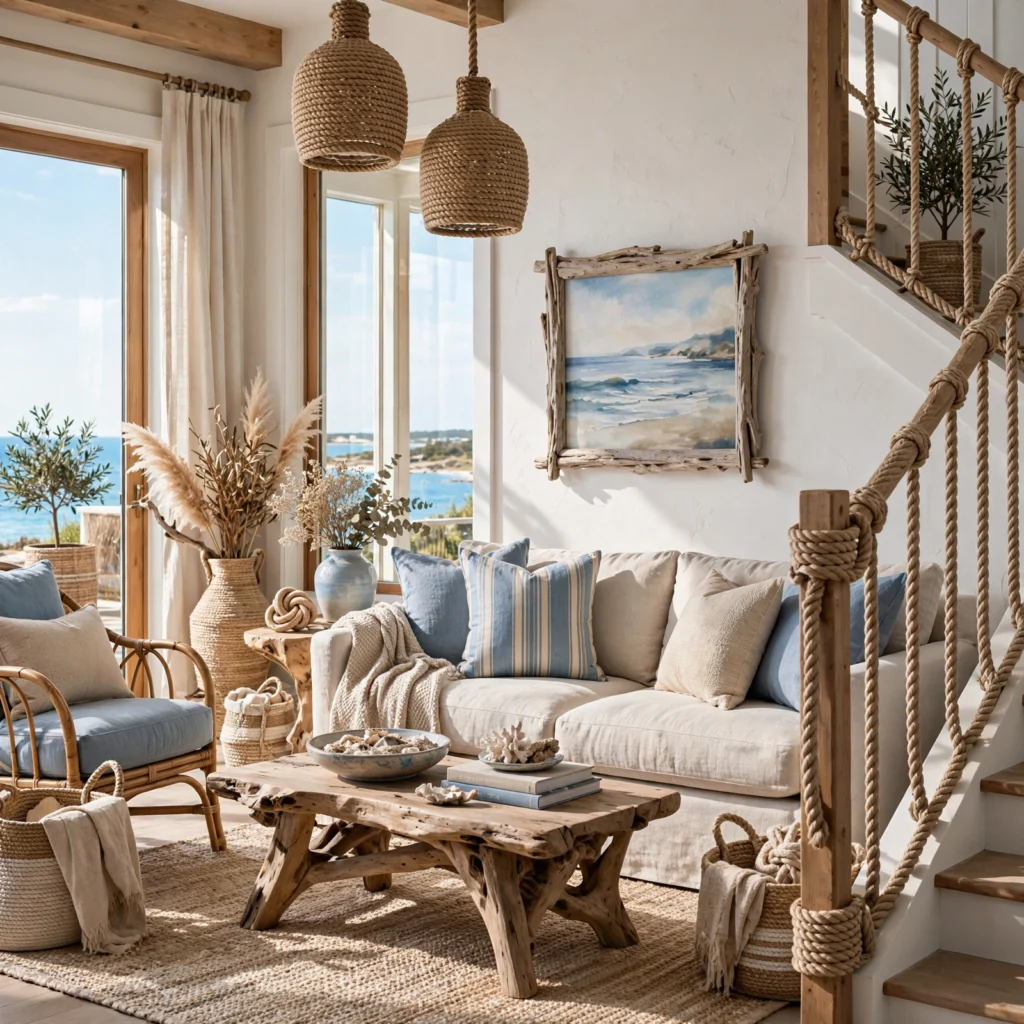
Rope and nautical rope details incorporate genuine or rope-textured materials into smaller decorative elements, like a wrapped mirror frame, a stair railing detail, or a simple decorative bundle displayed on a shelf. This detail references the coastal, maritime setting in a subtler way than more literal nautical decor, relying on texture and material rather than overt symbolism. Using rope sparingly, as an accent rather than a dominant material throughout the home, keeps this detail feeling intentional rather than overly thematic.
7. Salt-Air Resistant Metal Finishes
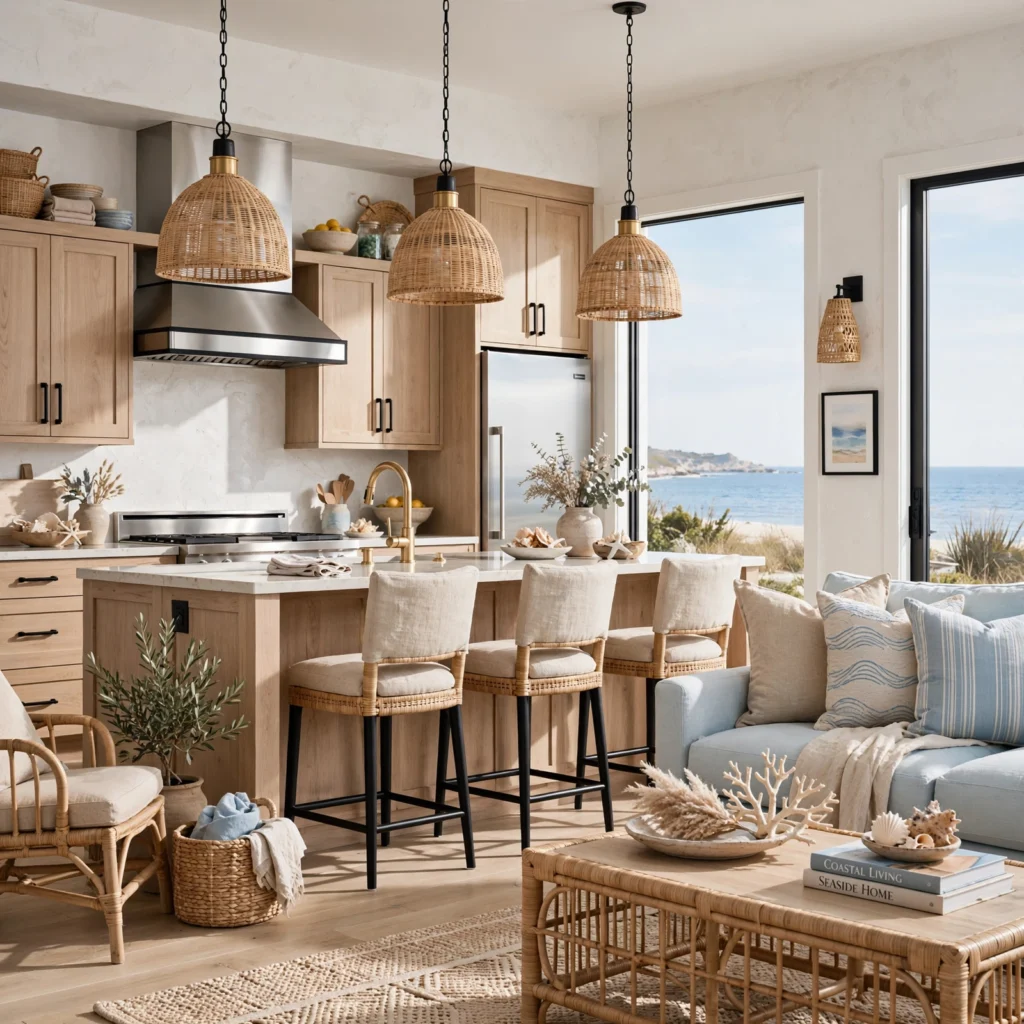
Salt-air resistant metal finishes choose fixtures and hardware specifically rated to withstand the corrosive effects of coastal salt air, which can cause standard metal finishes to tarnish, pit, or rust considerably faster near the ocean than they would further inland. Stainless steel grades specifically rated for marine environments, along with certain powder-coated finishes, hold up better in this setting than standard interior-grade hardware. This consideration matters most for exterior-facing fixtures and any hardware exposed to regular airflow from open windows or doors near the water.
| Metal Finish | Salt Air Durability | Best Application |
| Marine-Grade Stainless Steel | High | Exterior fixtures, railings |
| Powder-Coated Aluminum | High | Outdoor furniture |
| Standard Chrome | Low | Interior only, away from salt air |
8. Large Windows with Ocean Views
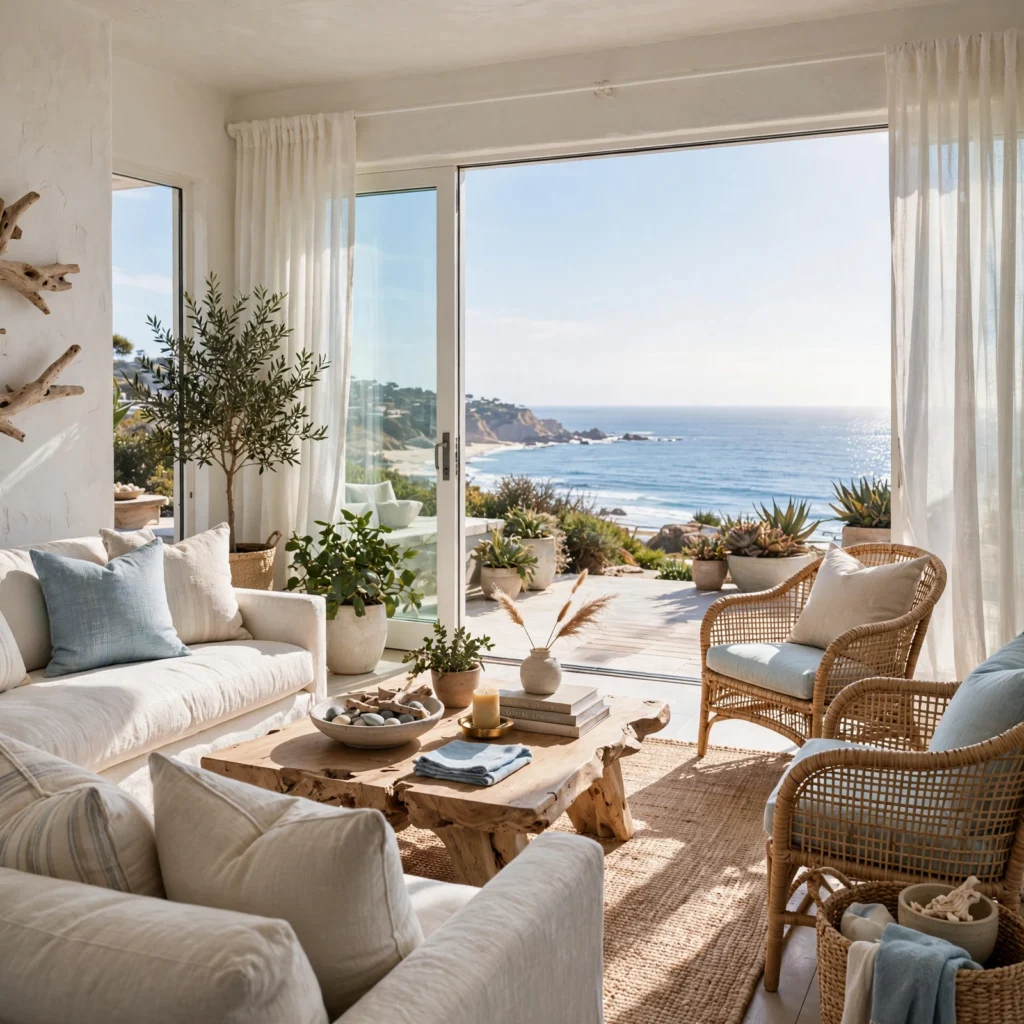
Large windows with ocean views maximize glazing throughout a beach house’s main living areas, prioritizing sightlines toward the water and allowing natural light to flood the interior throughout the day. This detail works as both a decorative and functional priority, since the view itself often becomes the room’s primary visual feature, reducing the need for elaborate decor to compete with it. Choosing minimal, slim window framing keeps the focus on the view rather than a bulky, visually distracting frame breaking up the sightline.
9. Shell and Coral Display Collections
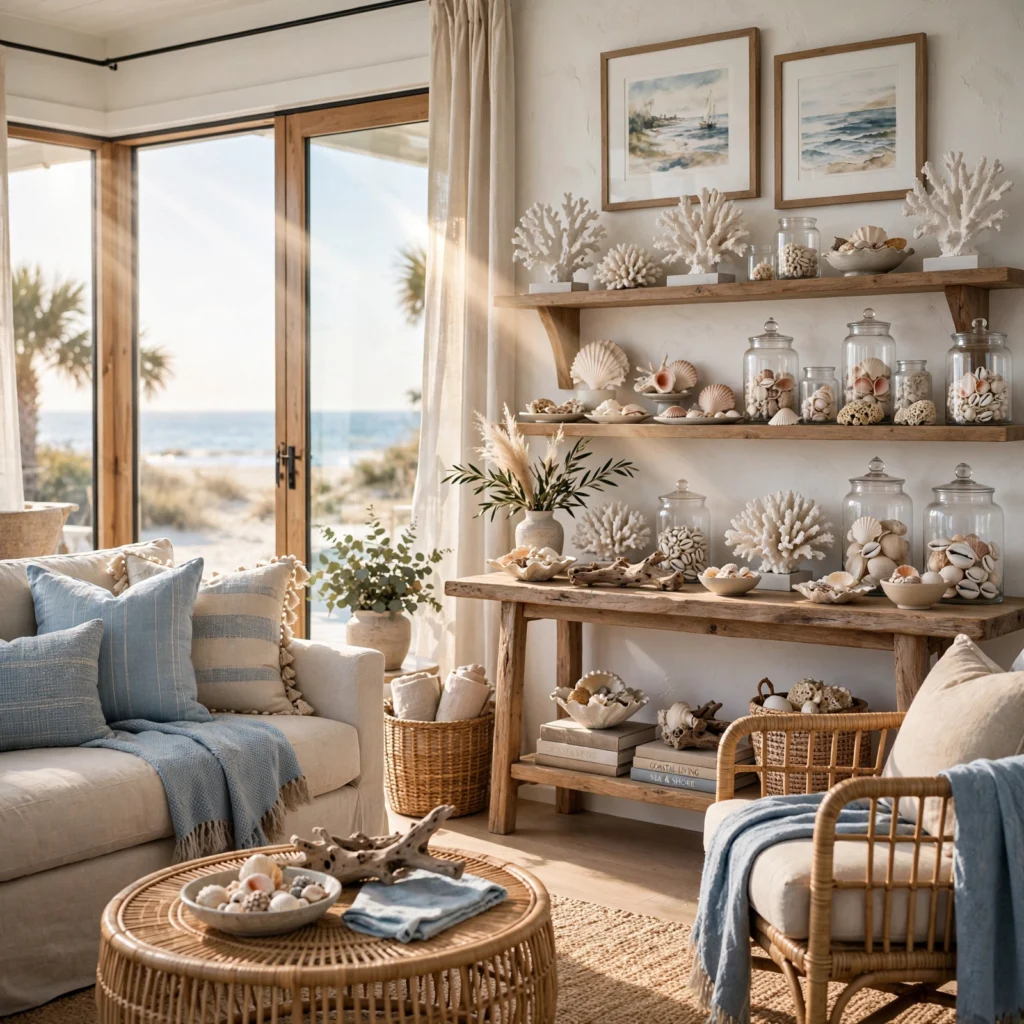
Shell and coral display collections group genuinely collected shells, coral pieces, or sea glass into an intentional grouping on a shelf or in a glass vessel, rather than scattering individual pieces loosely throughout the home. This detail works particularly well as a personal, evolving display that grows over time with items actually collected during beach visits, adding genuine history to the decor rather than relying on purchased, generic beach-themed accessories. Grouping the collection by type or color, similar to any curated vignette, keeps the display looking considered rather than cluttered.
10. Light Sandy Neutral Color Palette
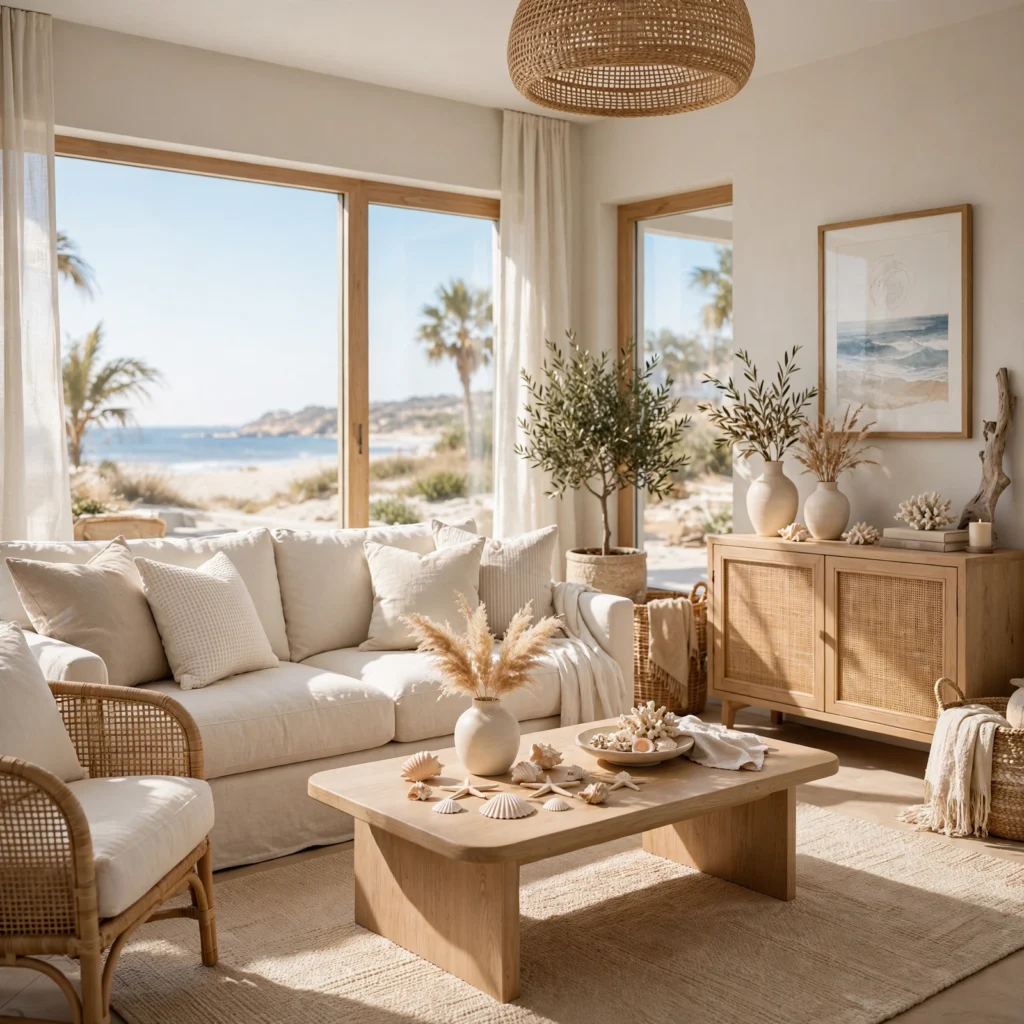
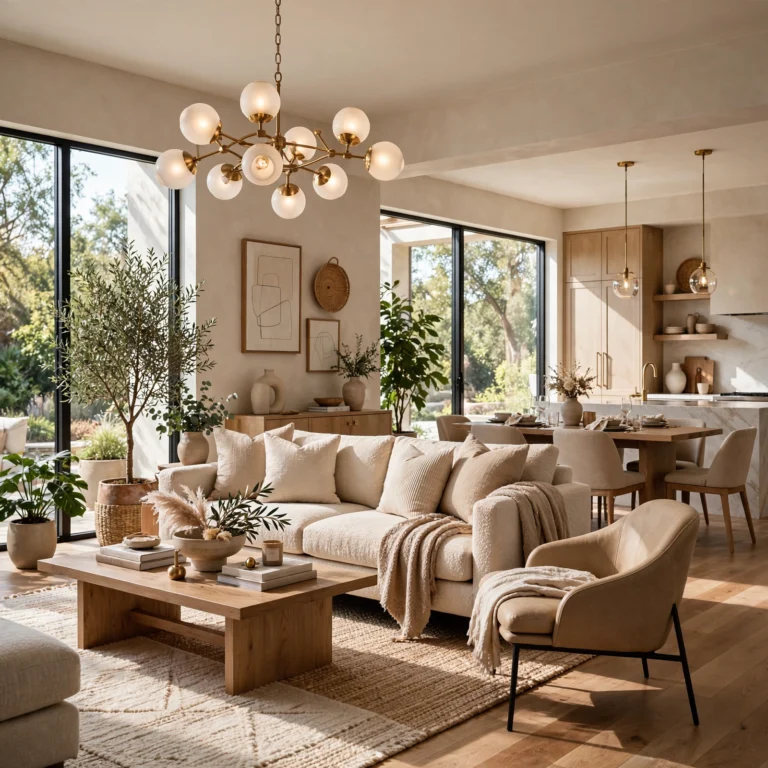
A light sandy neutral color palette forms the foundation throughout most of a beach house’s walls and larger furniture pieces, using warm beige, soft tan, and pale cream tones that reference actual sand color rather than a starker, cooler white. This palette provides a versatile backdrop for the blue accent colors and natural material textures that add most of the style’s visual interest. This warmer neutral base also tends to feel more inviting than a stark white palette, which can occasionally read as too clinical for a relaxed, coastal setting.
11. Screened Porch Living Space
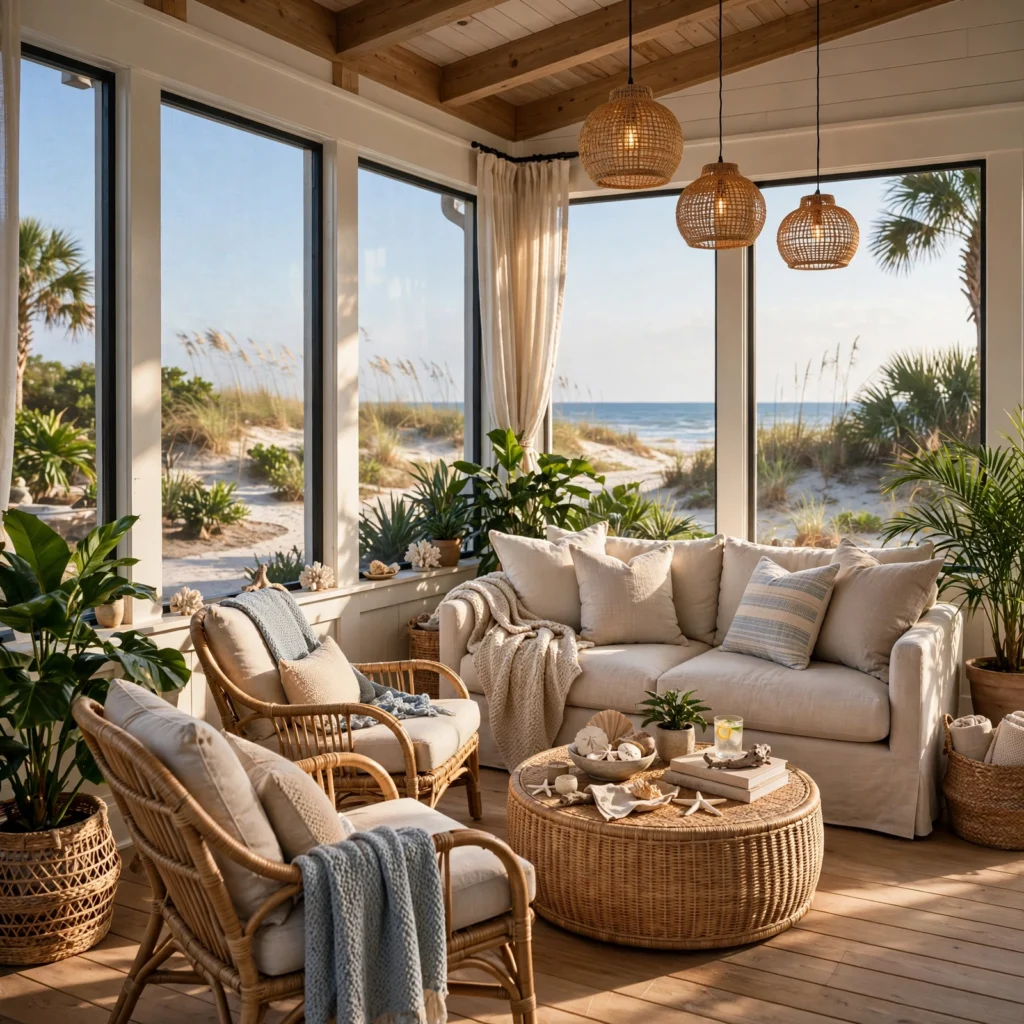
A screened porch living space extends the home’s interior living area onto a screened, covered outdoor space, providing protection from insects and direct sun while still maintaining an open-air feel appropriate to the coastal setting. This detail works particularly well as an additional living or dining area during warmer months, effectively increasing the home’s usable square footage beyond its fully enclosed interior. Furnishing this space with the same durable, easy-to-clean materials used throughout the rest of the home maintains consistency between the interior and this semi-outdoor extension.
12. Woven Rattan Furniture
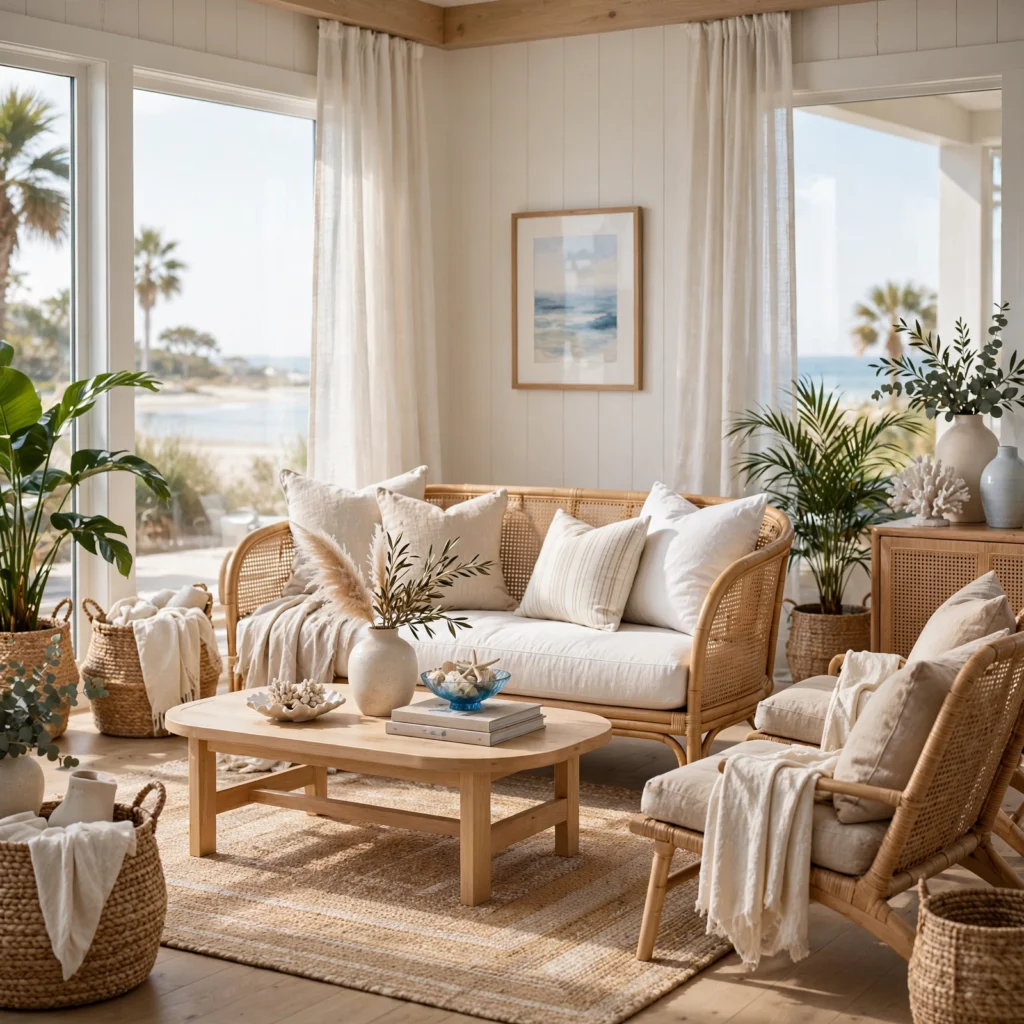
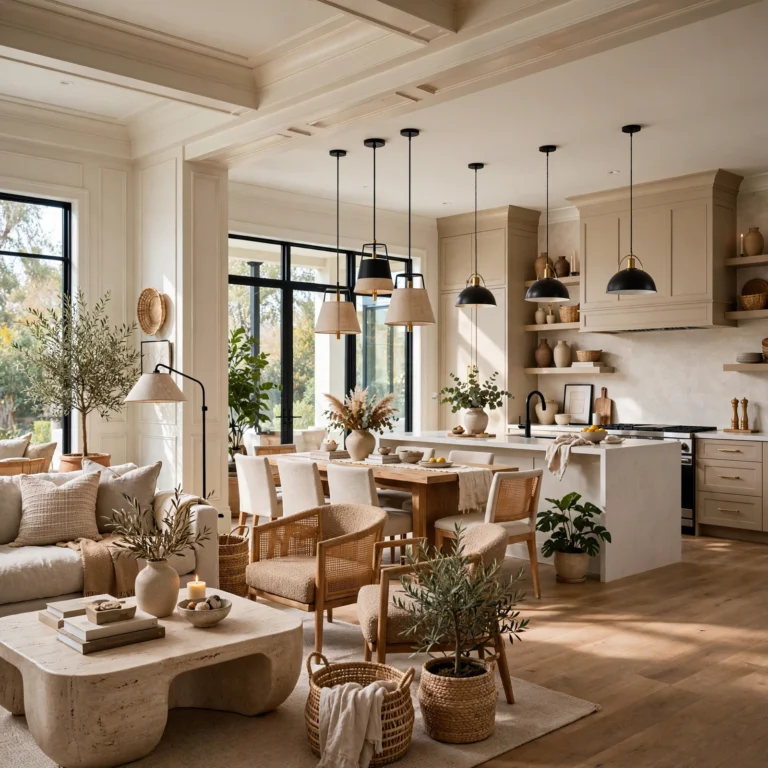
Woven rattan furniture brings natural material texture into a beach house through chairs, headboards, or light fixtures made from this lightweight, breathable material, referencing tropical and coastal furniture traditions found in many beachfront regions. This material holds up reasonably well to a beach house’s humidity, provided it’s kept away from direct, prolonged water exposure. Pairing rattan furniture with simple, durable cushions in a performance fabric balances this natural material’s texture with the practical durability a beach house environment requires.
13. Sand-Friendly Durable Flooring
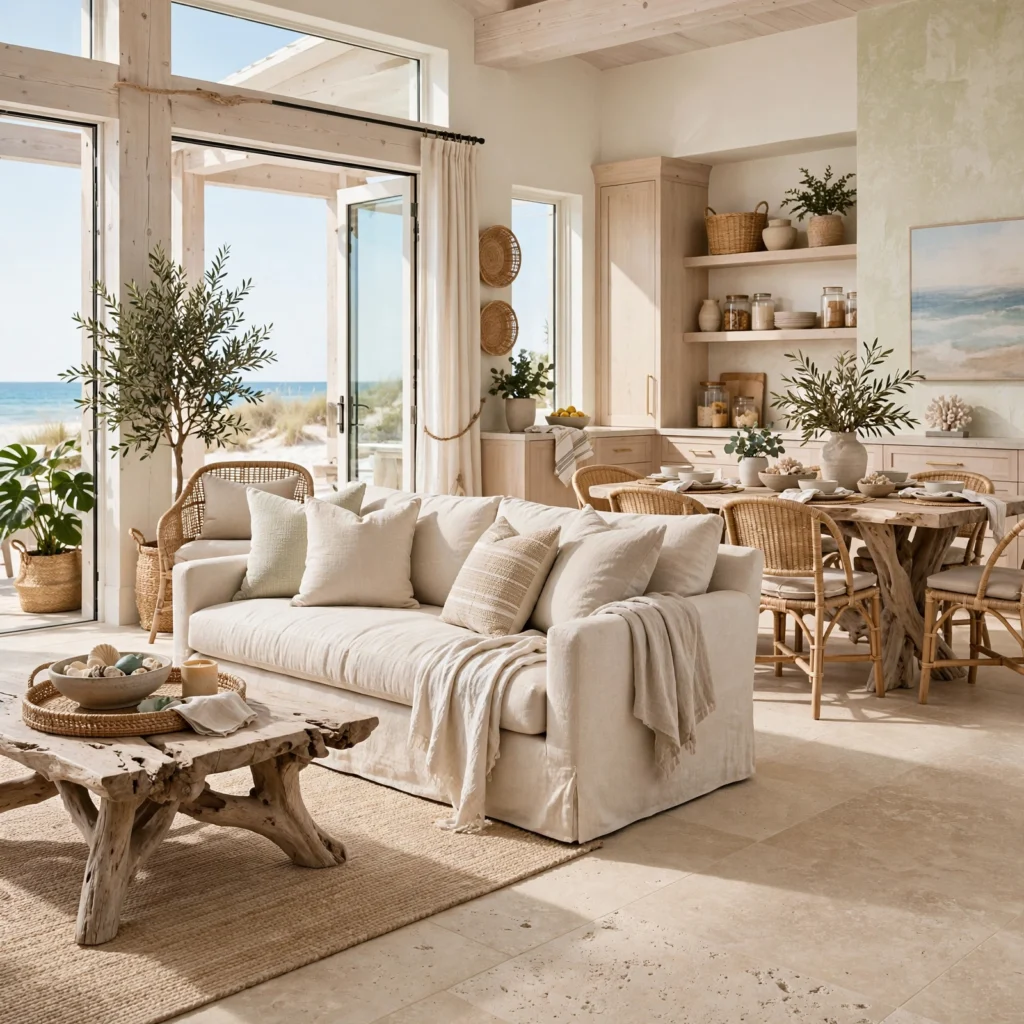
Sand-friendly durable flooring chooses materials like porcelain tile, sealed concrete, or luxury vinyl plank throughout the main living areas of a beach house, prioritizing surfaces that handle sand, sun exposure, and regular moisture better than delicate hardwood or wall-to-wall carpet would. This flooring choice matters considerably more in an actual beach house than in most other home styles, given how much sand and moisture the floors regularly encounter from foot traffic coming directly from the beach. Choosing a flooring color and texture that complements the style’s sandy neutral palette ties this practical choice into the home’s overall decorative scheme.
14. Outdoor Shower Nook
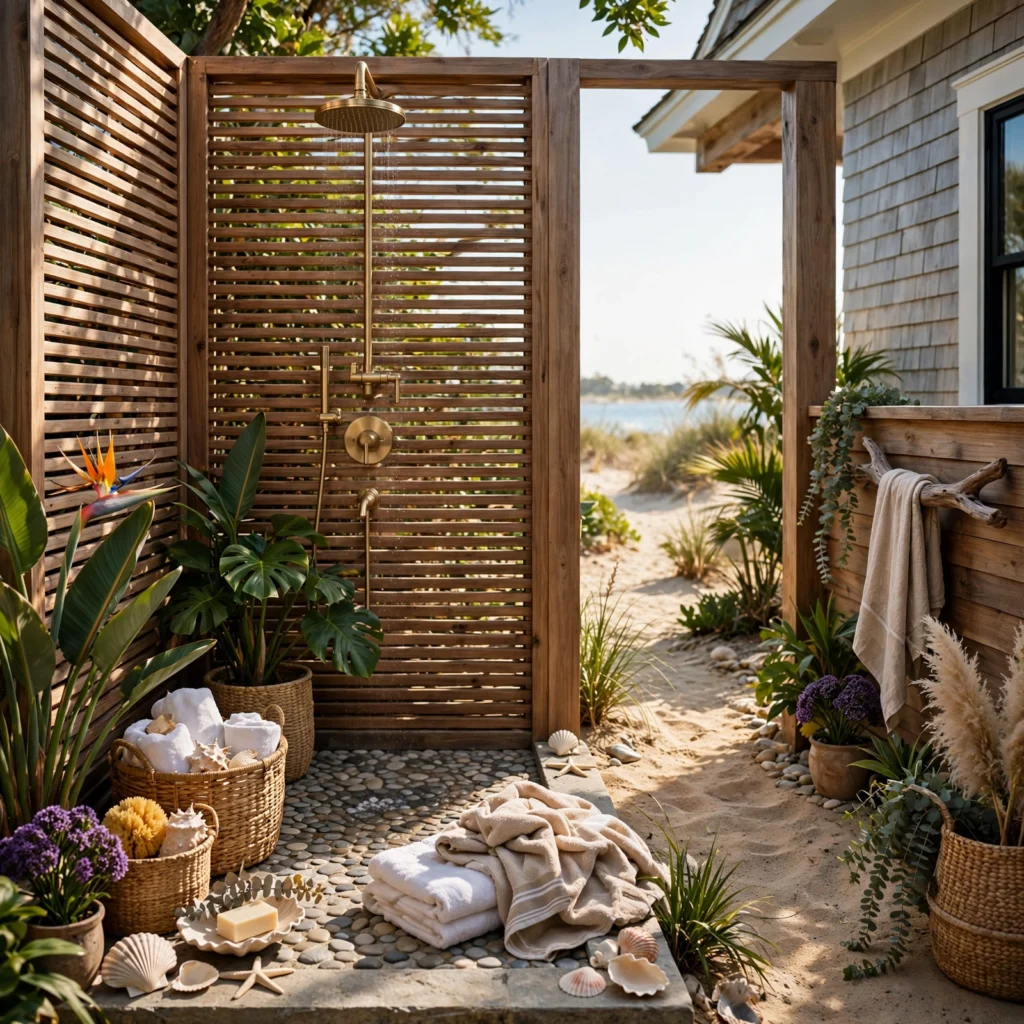
An outdoor shower nook provides a dedicated spot to rinse off sand and salt water before entering the home’s main living areas, protecting interior flooring and furniture from the mess that comes with regular beach access. This detail is a genuinely practical feature specific to beach house living, addressing a maintenance challenge that most other home styles simply don’t encounter. Positioning the outdoor shower near the home’s main entry point from the beach maximizes its effectiveness at intercepting sand before it reaches the interior.
15. Sea Glass Accent Decor
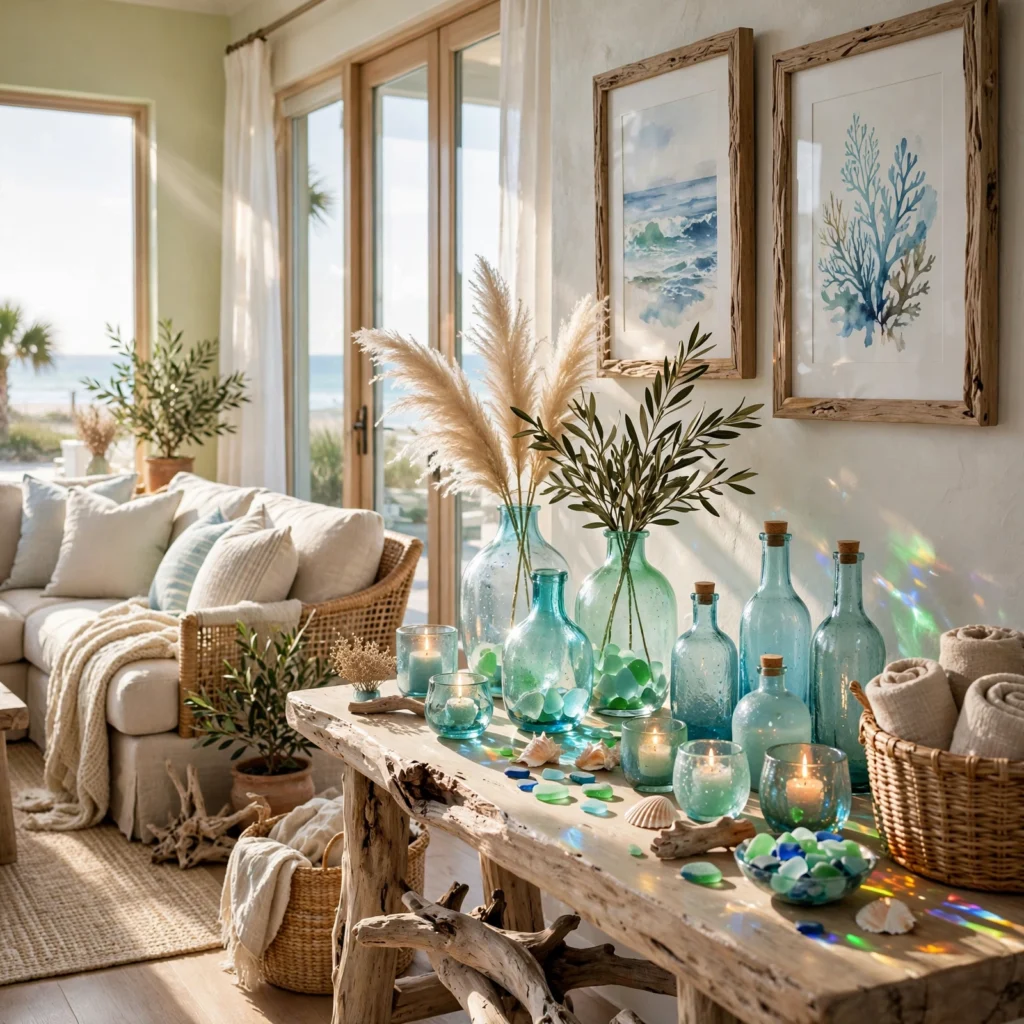
Sea glass accent decor incorporates the smooth, frosted glass pieces naturally created by ocean tumbling into small decorative displays, whether in a glass jar, embedded into a piece of art, or used as a subtle color reference throughout the home’s smaller accessories. This material brings a genuinely coastal, naturally occurring texture and soft color palette into the decor, often in soft greens, blues, and ambers that complement the style’s broader color scheme. Collecting sea glass personally, rather than purchasing a manufactured version, adds the same kind of authentic, storied quality that genuine driftwood or shell collections provide.
Shop the Look
A well-balanced beach house interior typically combines the style’s signature light, sandy palette with genuinely durable, practical materials suited to coastal living. Whitewashed paneling paired with a sisal rug and a slipcovered sofa establishes both the look and the necessary durability throughout main living areas. Woven rattan furniture and blue and white striped textiles add texture and color without relying on literal nautical themes. A collected display of shells, sea glass, or driftwood rounds out the decor with genuine, personal coastal history.
Common Beach House Interior Mistake to Avoid
The most common mistake is prioritizing decorative appeal over genuine material durability, choosing delicate fabrics, hardwood flooring, or standard interior hardware that isn’t actually suited to a beach house’s practical demands of sand, salt air, and humidity. A beautifully decorated beach house furnished with impractical materials often shows wear and damage far faster than expected, requiring costly repairs or replacements within just a year or two of regular use. Prioritizing genuinely durable, salt-air and sand-resistant materials from the start, even if they cost more upfront, produces a beach house interior that holds up to its actual environment rather than just looking good in initial photos.
FAQs
What flooring holds up best in an actual beach house?
Porcelain tile, sealed concrete, and luxury vinyl plank all hold up particularly well in a beach house, since each resists the sand, moisture, and regular foot traffic this environment typically involves better than hardwood or carpet would. Choosing a flooring texture that isn’t too slick when wet also improves safety, given how frequently beach house floors encounter water tracked in from outside.
Do beach house interiors need to include literal nautical decor?
Beach house interiors don’t need literal nautical decor like anchors or ship wheels to successfully reference the coastal setting, and many contemporary interpretations of this style favor a more subtle approach using natural materials, texture, and a sandy color palette instead. This more understated direction tends to feel more sophisticated and less like a themed, novelty decorating approach.
How do I protect furniture from sand and salt water damage?
Choosing slipcovered furniture with removable, washable covers, along with performance fabrics rated for high durability, significantly protects furniture from the sand and moisture damage common in a beach house. Providing an outdoor shower or a designated spot to rinse off before entering the home also reduces how much sand and salt water actually reaches the interior furniture in the first place.
Is a light, neutral palette necessary for beach house style?
A light, neutral palette isn’t strictly necessary, though it remains one of the most common and effective choices for this style, since lighter colors reflect available natural light and create the airy, relaxed feeling central to the beach house aesthetic. A darker or more saturated color scheme can still reference coastal living successfully, particularly through deep ocean blues, but requires more intentional balancing to avoid feeling heavy in a style generally associated with brightness.
What metal finishes should I avoid near the ocean?
Standard chrome and many decorative brass finishes not specifically rated for marine or coastal use tend to tarnish, pit, or corrode considerably faster near the ocean than they would in an inland home, due to the corrosive effects of salt air. Choosing marine-grade stainless steel or specifically rated powder-coated finishes for exterior-facing or heavily air-exposed hardware helps avoid this premature deterioration.
Conclusion
These beach house interior ideas balance a relaxed, light-filled coastal aesthetic against the genuine practical demands of sand, salt air, and humidity that an actual beachfront property deals with regularly. Prioritize durable, weather-appropriate materials for anything that will see heavy use, and let natural textures like rattan, driftwood, and sea glass carry most of the decorative coastal reference. Save this post to Pinterest for your next coastal home project, and check out our related post on house interior design for more style comparisons if you’re deciding between beach house and other coastal-adjacent directions.
This list draws on years of helping homeowners furnish genuine coastal properties, with a focus on choices that hold up to the specific practical demands of beach house living rather than just looking the part.